Problem
wc -l is pretty good at counting lines, it’s what most people use
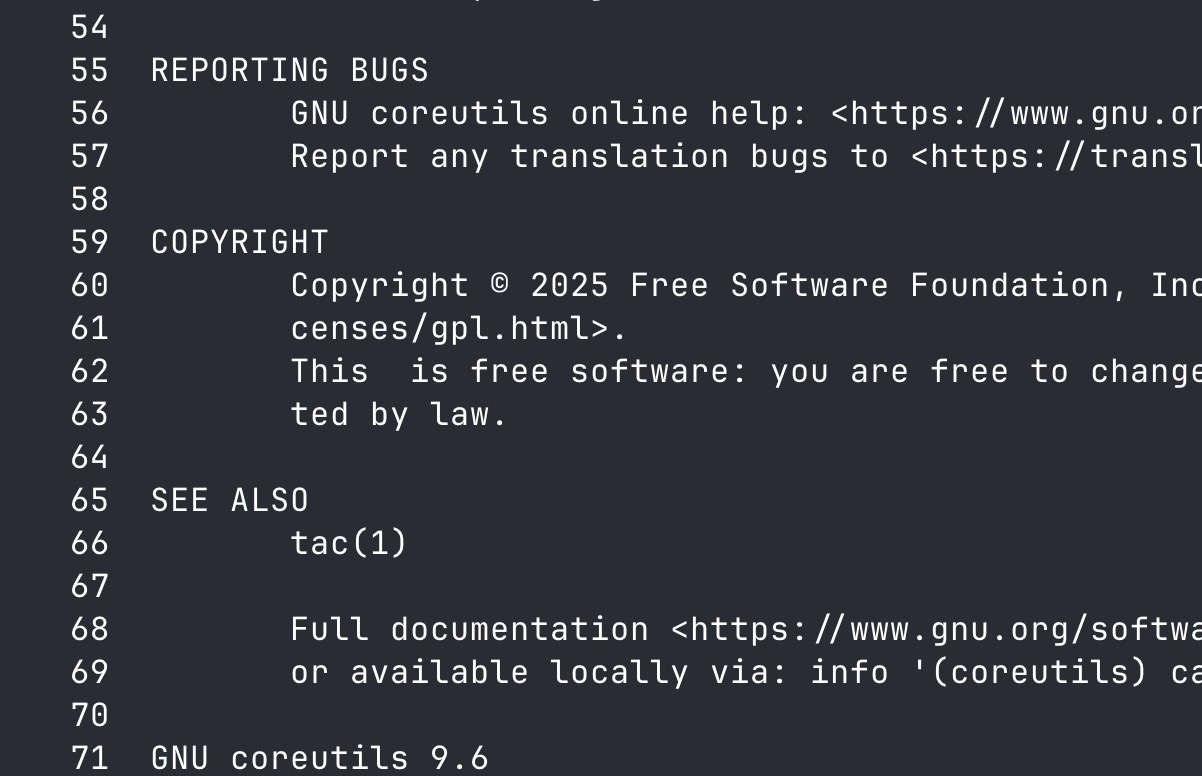
# man cat | wc -l
71
Except that it collapses all your data to a single number.
There’s nothing wrong with that if you’re only trying to get the answer.
But when you’re building long one-liners with multiple pipes, it’s useful to answer two questions at the same time
- how many lines is that?
- are those lines what I expect?
Quizzes
For example:
- does
seq 3 14include 14 or not? - how many numbers is that?
show answers
# seq 3 14 | cat -n
     1  3
     2  4
     3  5
     4  6
     5  7
     6  8
     7  9
     8  10
     9  11
    10  12
    11  13
    12  14
How about:
- how many 5-letter English words have a
bin the 2nd letter and end witht? - what are they?
- do they all start with
a?
show answers
# look . | grep '^.b..t$' | cat -n
     1  abaft
     2  abbot
     3  abdat
     4  abnet
     5  abort
     6  about
     7  abret
     8  absit
cat -n
The cat command doesn’t have too many flags, but more than I expected. The exact details will depend on the GNU or BSD variant.
-n, --number
    number all output lines
So, while it seems that you might only use cat -n to print a file with line numbers, keep in mind that the last line number is wc -l