Hugh Kenner to Guy Davenport, 27 April 1962 (I:99):
Yes, machines evolve, as Disney knows. His art utterly germane to a machine biology. The clue to decline of silent film was switch for 24 f.p.s., with introduction of sound. Before that, projection speed was 16 f.p.s., and camera speed was whatever the cameraman cranked at. Result was funny flicker, mechanizing human form. The men become machines. Note that Sennett comedies always show them contending with machines, notably cars. That was the art form cinema briefly created, a flicker-world where men & machines meet on equal terms, but machines, being normal denizens, have all the advantage. Killed, as usual, by misunderstanding of the form’s nature; people thought it was meant to be verisimilitude, and standardizing speeds made for same, for smoothness. That accursed word “photoplay.” The movies were full of Stoic Comedians, for a brief period. I think Ulysses owes much to silent film. The animated cartoon retains that allimportant flicker, because the successive frames, even when their number is correct for completing the action in a natural time, are each of them sharp; whereas in live movie the “moving” frames (swing of arm or leg between extreme positions) are blurred.
Davenport to Kenner, days later (I:101):
World’s first photo (Niépce) looks exactly like a De Chirico. I think “technology” may have anticipated (in Siegfried Giedion’s sense) a great deal of the style of modern art. Then the first movie is merely a length of film showing the arrival of a locomotive in a station. For Muybridge motion was the human body flowing from attitude to attitude, and nude — last logical nude (dismissing the academic houri of Matisse’s and Picasso’s dream-visions) to appear in art. Modern industrial man is definitely a clothed critter. Isn’t it Premier amour where the hero can’t think for any reason for taking off his hat? For the true arrival of the motion picture motion meant a steam locomotive. That locomotive (dinosaur to the horse’s tyrannosaurus, other way around I believe) has been in the movies ever since.
,_Nie%CC%81pce_1827_%E2%80%94_HRC_2020_(cropped).jpg "Untitled_(point_de_vue),_Niépce_1827_—_HRC_2020_(cropped).jpg")
,_oil_on_canvas,_61_%C3%97_50.2_cm,_Museum_of_Modern_Art,_New_York.jpg "Giorgio_de_Chirico,_1914-15,_Le_mauvais_génie_d’un_roi_(The_Evil_Genius_of_a_King),_oil_on_canvas,_61_×_50.2_cm,_Museum_of_Modern_Art,_New_York.jpg")
Kenner to Davenport, 3 May 1962 (I:103):
You are profound on motion and movies. You are in fact very often profound, merely for private eyes, and I cannot escape the reflection that there are potential aficionados … who are deprived of something. That paragraph ought to be an essay! In fact you should consider a John Pairman Brown-sized book on 19th century visual, so organized as to permit sequence of miniatures, interspersed with illustrations. Not a flowing & bloated treatise, but something that wd. use Muybridge, parts catalogues, locomotives, movies, Degas vs. Leica, etc., in ideogram.
Davenport to Kenner, 8 May 1962 (I:108):
I like the idea of a neat little book on motion, machines, metaphors, painting, photography, the nude, or
Ten Illustrated Lectures
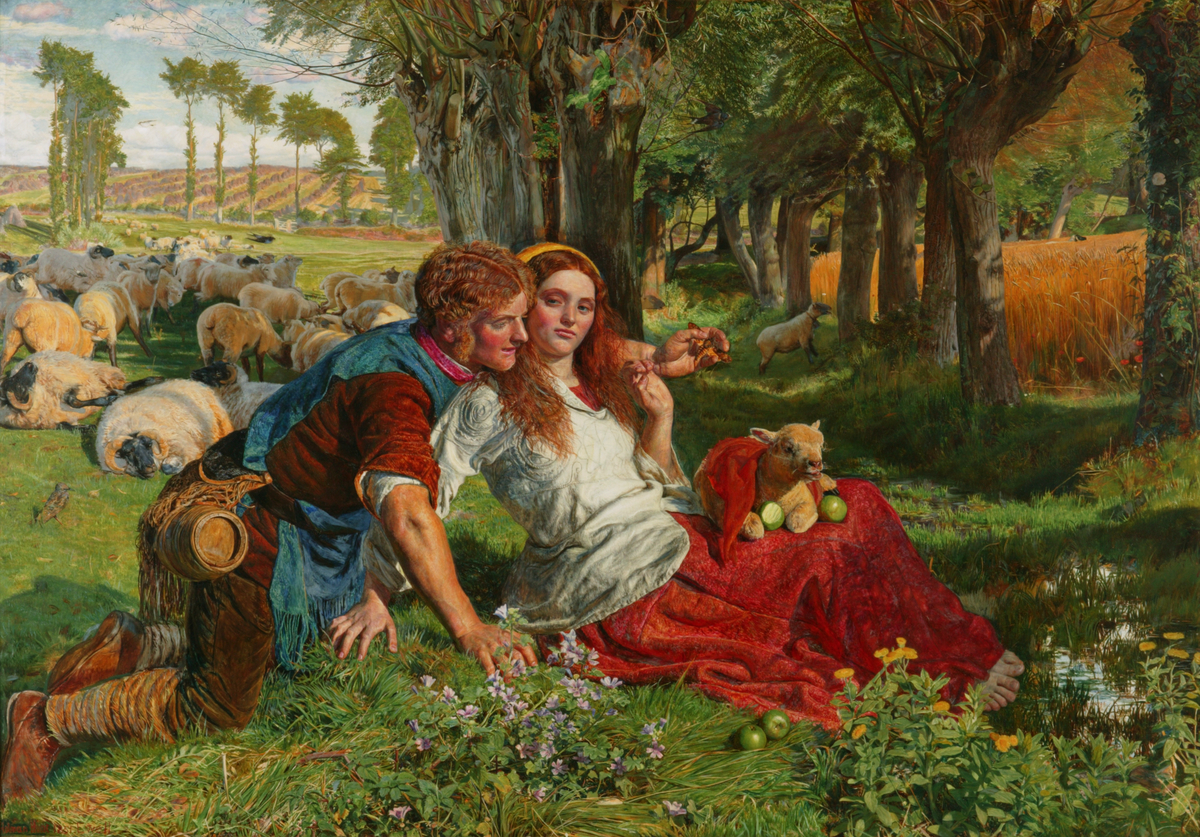
Chap. I: Mr Babbage’s Stomach Pump and Herbert Spencer’s Utilitarian Suit of Clothes. Chapt. II: PreRaphaelite Surfaces and the Seascapes of William Holman Hunt as Index of the Age.
I’m not wholly facetious. No one has ever encouraged me to do anything, and it makes me dizzy to think that anyone would. Harry Levin’s attitude was to keep me from writing anything. [Levin was Davenport’s dissertation advisor at Harvard.]
More on the “little book” as seed sprouts dicotyledonously in the mind.
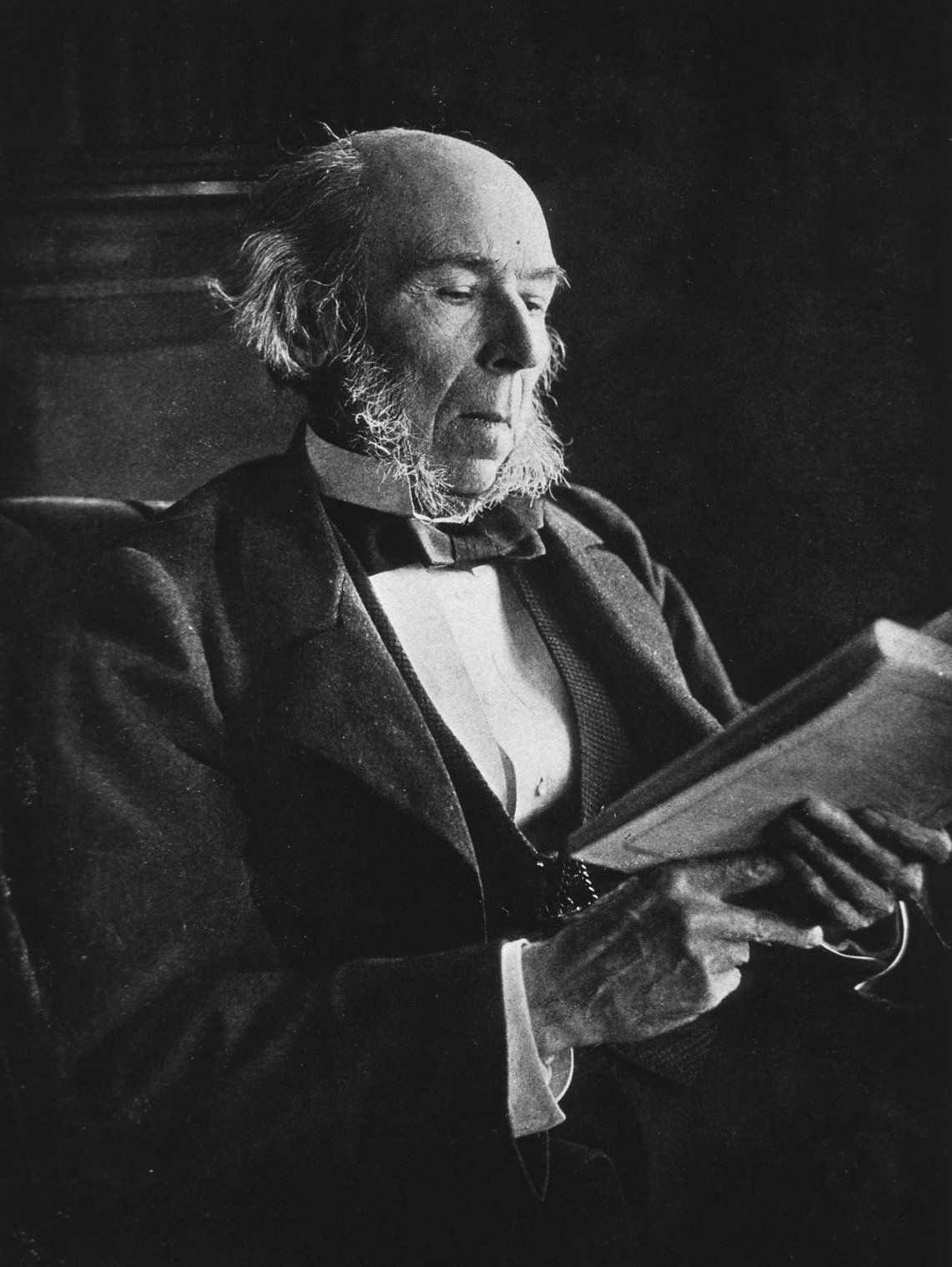

_-_Google_Art_Project.jpg "1200px-William_Holman_Hunt_-_Our_English_Coasts,_1852_(`Strayed_Sheep')_-_Google_Art_Project.jpg")
Kenner to Davenport, 10 May 1962 (I:111):
Yes yes, JOHN RUSKIN’S VELOCIPEDE. You are right, lightning strike disclosing the most prominent object (hitherto overlooked): MOTION is the 19th century theme. Everybody has thought it was morals, but that was their stasis. Our views of the age are greyly sociological; Dark Satanic Mills, etc. Babbage takes child labor for granted. IF one can simply take such things for granted, as we take slavery for granted when we consider Greece, then we can see the technological/aesthetic exhilaration. I remember the revelation in 1956 of seeing some pre-Raphaelite paintings in the original, after years of sepia reproductions: color juicy & exultant. N.B.: NO OTHER ART REPRODUCES SO BADLY. Think out why that should have been so, when all minds were on problems of reproduction, and you will have hit on the central dialectic. Old Man Mose has spoken. I do not know the answer, I merely know that that is the problem or a way of posing the problem.

Davenport to Kenner, 15 May 1962 (I.119):
For years I’ve wanted access to the gr-r-reat Muybridge study of the human body in motion (that kept Degas and Meissonier up all night, looking). I have the Dover edition: incomplete and miserably reproduced. Harvard has none. I had planned to go look at Penn’s this summer. Well, last night I was wandering about our library — elephant folder! Muybridge’s Animals in Motion! The other half of the great undertaking! I lugged it to my office, cleared the desk, and opened it. Bless Gawd, some 1887 benefactor of knowledge had bought the Human Body in Motion, disguised it as the animaux, and snuck it into our pious, clean library. I wonder if anybody has ever looked at it in all these years. I haven’t told anybody, as the depraved students will no doubt snitch the plates of surrealistic ladies, stark nekkid, taking tea, raking, washing bébé, walking upstairs. A treasure, and discovery. Since Muybridge’s name was Muggeridge (and Eadweard, Edward), I suspect him of being as great a crank and splendid genius as Babbage.
Davenport to Kenner, 24 May 1962 (I:129):
Now Disney and Babbage belong to you. I’ve picked your pockets enough, but only when you spread the contents onto a printed page. Stealing from you, though, is like dipping water from the sea. As the curious “motion book” shapes itself, I shall place all Kenner-hatched material before you, so you can object. In the matinal notes I’ve made thus far, I think I shall start with Eakins, Muybridge, and Ives. I wouldn’t venture that statement to anybody but you. I need a broad base of activity to which I can point and say, See! your ideas about the corrosive spirit of the Machine Age are whacky. Eakins & Muybridge, the first to analyse motion, gave Disney his starting place. They took apart, showing him how to put together. Eakins perceived nothing but the intelligent mind at its skill: surgeons, athletes, mathematicians: the whole oeuvre which fits together without a seam. At the Paris Exposition Eakins took no interest in the Impressionists (on view in a shed by the main gallery) but was ecstatic over the great American locomotive. Ives will be my Babbage, and my musical knowledge will have to be got up. I’ll go into all this later.
The adjective for what I want to isolate and expose can only be Counterpreraphaelite: the kind of word that Frank Meyer has been upset over lately.
If I can work with two themes, fine:
MACHINE
MOTION
Then I have a web in which I can weave Muybridge and Butler, Darwin and Birdwhistell, Morris and Ruskin, photography and Cubism, Stein and Carlos Williams. Shall try to be informative about transmutations of subjects as they pass from mind to mind.
_-_Study_in_the_human_motion.jpg "Eakins,_Thomas_(1844-1916)_-_Study_in_the_human_motion.jpg")
Kenner to Davenport, 26 May 1962 (I:131):
Dear Guy:
There is no property in the things of the mind; and if Babbage and even Disney are part of your subject for heaven’s sakes use them. I will with equal aplomb use anything handy that I pick up from you. I suspect you will need Babbage before you are finished. All rot, as you say, the corrosive influence of the machine. The machine is homeopathic therapy for the Cartesian poison. The story of technology since the 18th century is the story of Locke’s and Descartes’ metaphors being realized in hardware. Camera, tape recorder, data file. Analysis of motion (leading via Muybridge to the ciné camera) is already there in Geulinex (vide quotes in my Beckett). ENIAC, MANIAC, UNIVAC, the IBM world, all this is to the adding machine as Bach’s D Minor Toccata & Fugue is to the solo recorder; and the adding machine was excogitated by Pascal. The romantics who thought they hated machines, and gave us the cant phrases of hate, hated Locke their father. (One of the decisive gestures in i canti is the substitution of gold for the machine as counter-symbol, old Ez American enough to know that the steam-engine ain’t never done a poet no harm.)
Eakins, Muybridge, Ives — an utterly fresh beginning. On with it!