
In just twenty years, OpenStreetMap grew from a small UK-based mapping project into the largest crowdsourced and crowd-worked geospatial project of all time. Mapped and managed by tens of thousands of volunteers all over the world, OSM is the leading provider of open source geospatial data, reaching billions of people each year through a universe of applications and products that use its data for free under the Open Database License.
August 9, 2024 is the 20th anniversary of the best map of the world
“The core brilliance of OSM is that free, simple, and open tools can change the world. What will you create in the next 20 years?”
-Steve Coast, founder, OpenStreetMap
Twenty Years of OpenStreetMap
- 2004
- 2004
- 2005
- 2006
- 2006
- 2006
- 2006
- 2006
- 2006
- 2007
- 2007
- 2009
- 2010
- 2012
- 2012
- 2013
- 2014
- 2015
- 2015
- 2017
- 2017
- 2018
- 2018
- 2021
- 2022
- 2023
- 2024
- 2024
-

OpenStreetMap is Born!
2004
OpenStreetMap is Born!
Steve Coast took the first step towards revolutionizing the world of mapping by registering the openstreetmap.org domain. This act marked the official birth of OpenStreetMap (OSM), a project that would grow to become a global phenomenon.
-
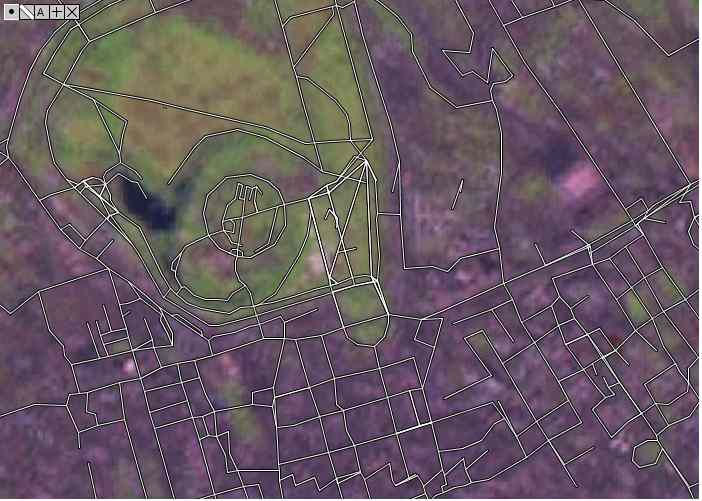
First Street and First Editing Applet
2004
-
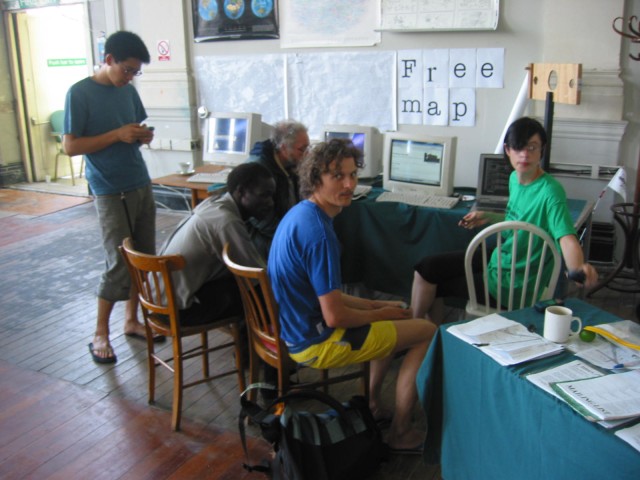
The First Mapping Party, “Map Limehouse”
2005
Map Limehouse was the first of many get-together-and-map events of the type that would become an OpenStreetMap institution: the mapping party. Steve Coast, along with Jo Walsh, and Lottie Child, both of the University of Openness faculties of Cartography, Econometrics and Physical Education led the workshop as part of an open weekend at the historic Limehouse Town Hall in London’s Docklands district.
-

Potlatch, OSM’s First Default Editor
2006
Potlatch 1, originally an Adobe Flash-based map editor, was designed by Richard Fairhurst and released mid 2006. The name Potlatch came from the name of the newsletter of the Letterist International art collective. For many years it was embedded in OSM.org and was influential in the early success of the map because it was so easy to use. Although it is no longer the default editor, it was updated in 2020 with help from a grant from the OSM Foundation and is still in use today.
Potlatch’s distinguishing characteristic is that it’s extraordinarily ergonomic for moderately familiar users, without ever having too complex an interface. With a handful of keyboard shortcuts you can zip about the map and perform common editing actions efficiently: for example, you can skip 10 nodes back/forward along a way with one keypress, jump to the other end of the way with another, then assign a set of multiple tags to the way (which you’ve previously recorded) with another single keypress. As yet, Potlatch does not run reliably on Linux systems due to Adobe AIR for Linux being discontinued.
-
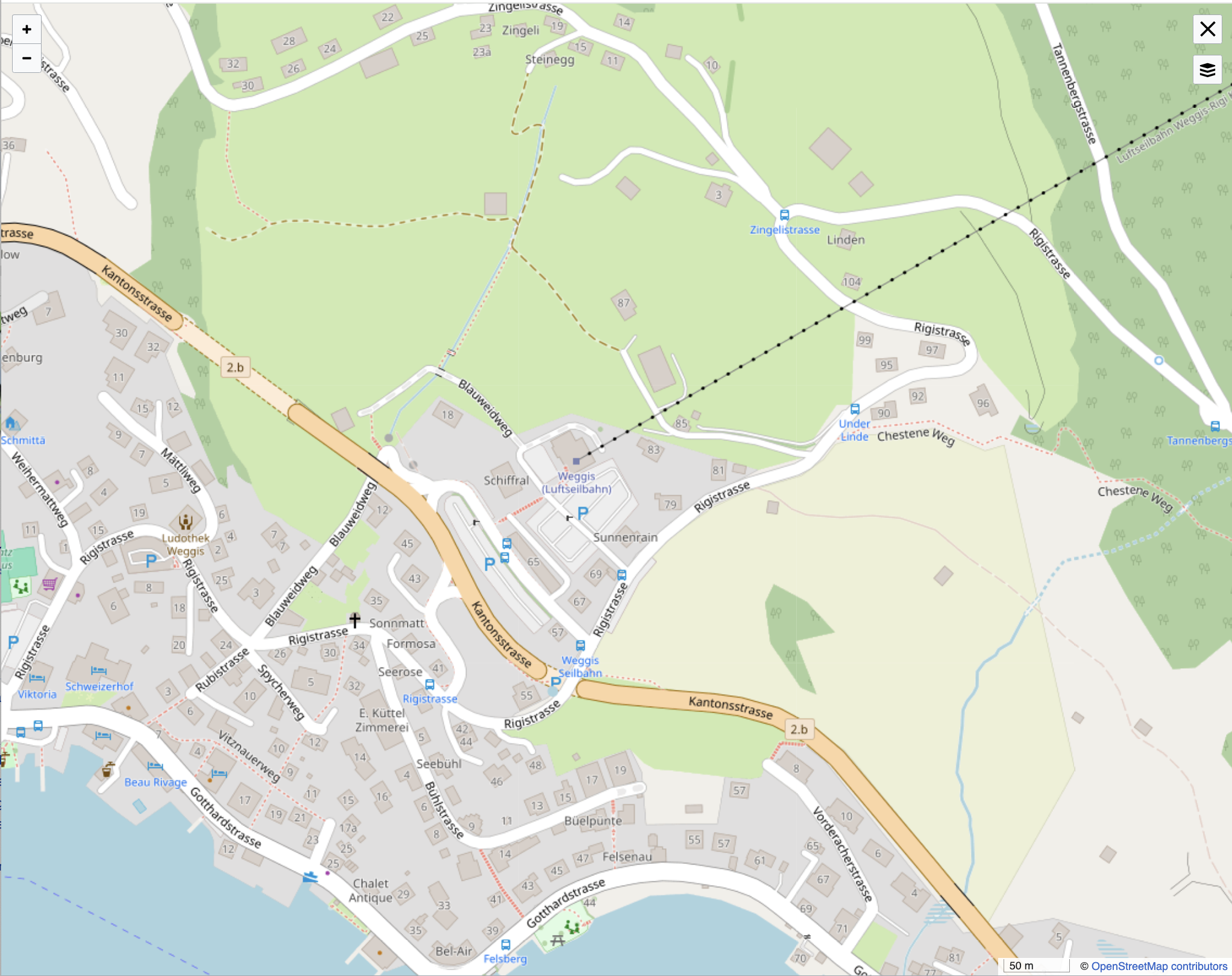
Map Features Tag Documentation Added
2006
The genius of OpenStreetMap lies in the simplicity of its model, making it easy for anyone to grasp how it works, and the versatility of its tagging system, which has near-infinite capacity to describe the physical world.
The conceptual data model is based on three types of elements: nodes (defining points in space); ways (defining linear features and area boundaries), and relations (defining how other elements work together). These elements derive their meaning from tags which are comprised of a key and a value. The key describes a topic, category, or type of feature (e.g., highway or name). The value provides detail for the key-specified feature. Commonly, values are free form text (e.g., name=”Green Arbor Memorial Highway”) (source).
Early on, developers had to work out a way to protect the necessarily unrestricted nature of the keys and values, while also describing a core set of map features. You can still see the wiki where the documentation for this base map was collectively created.As of February 2024, OpenStreetMap contained over 96 thousand distinct keys and over 155 million distinct tags.
-
The Isle of Wight Weekend Mapping Party
2006
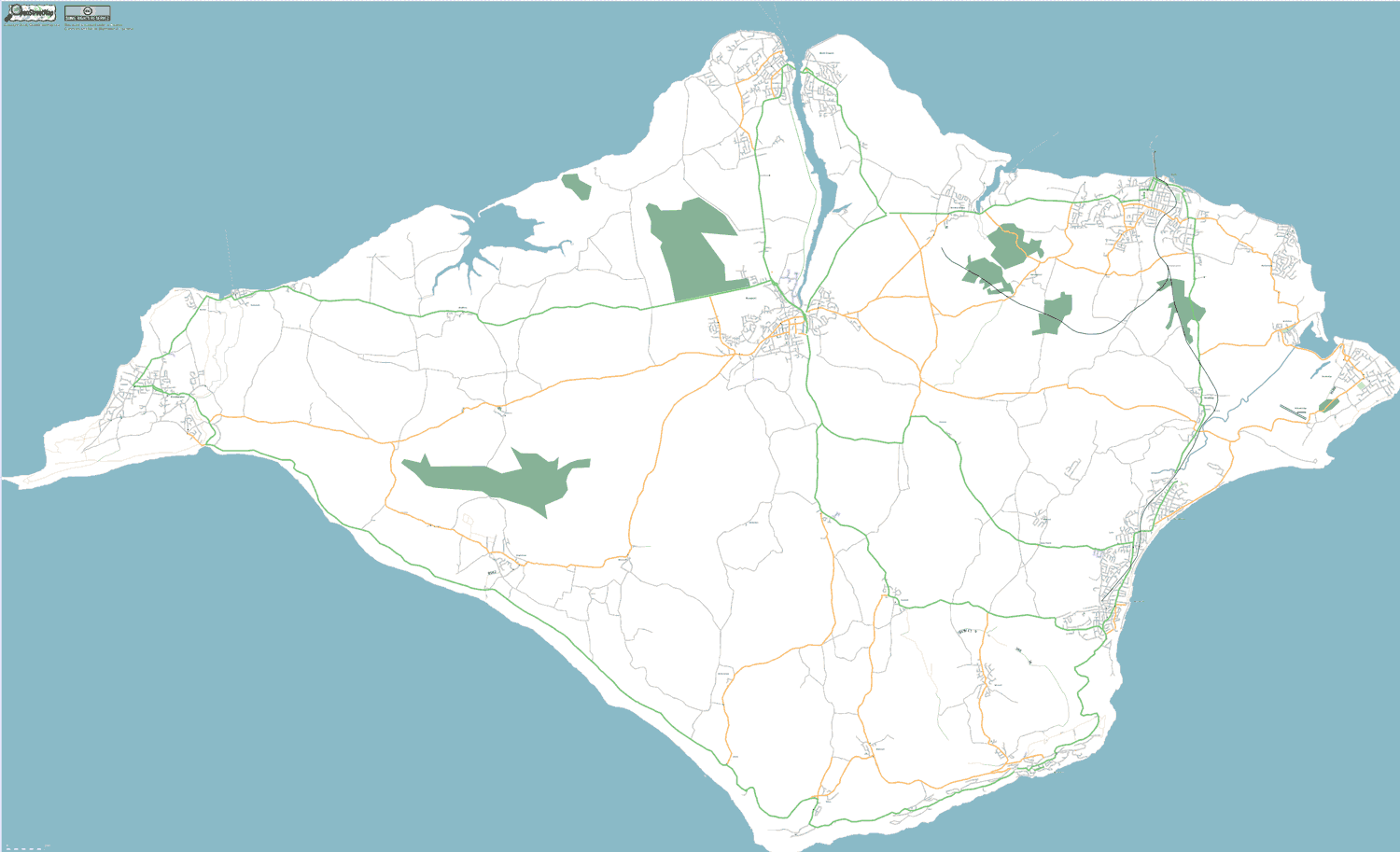
The Isle of Wight weekend drew around 40 OSM mappers who mapped an estimated 90% of the island’s roads. No existing data was used. Instead, organizers distributed older, out-of-copyright maps to aid the mappers as they biked, hiked, and walked across the island creating their own, open data GPS traces. You can still read the Guardian’s coverage of the event.
-
A Slippy Map for OSM.org
2006
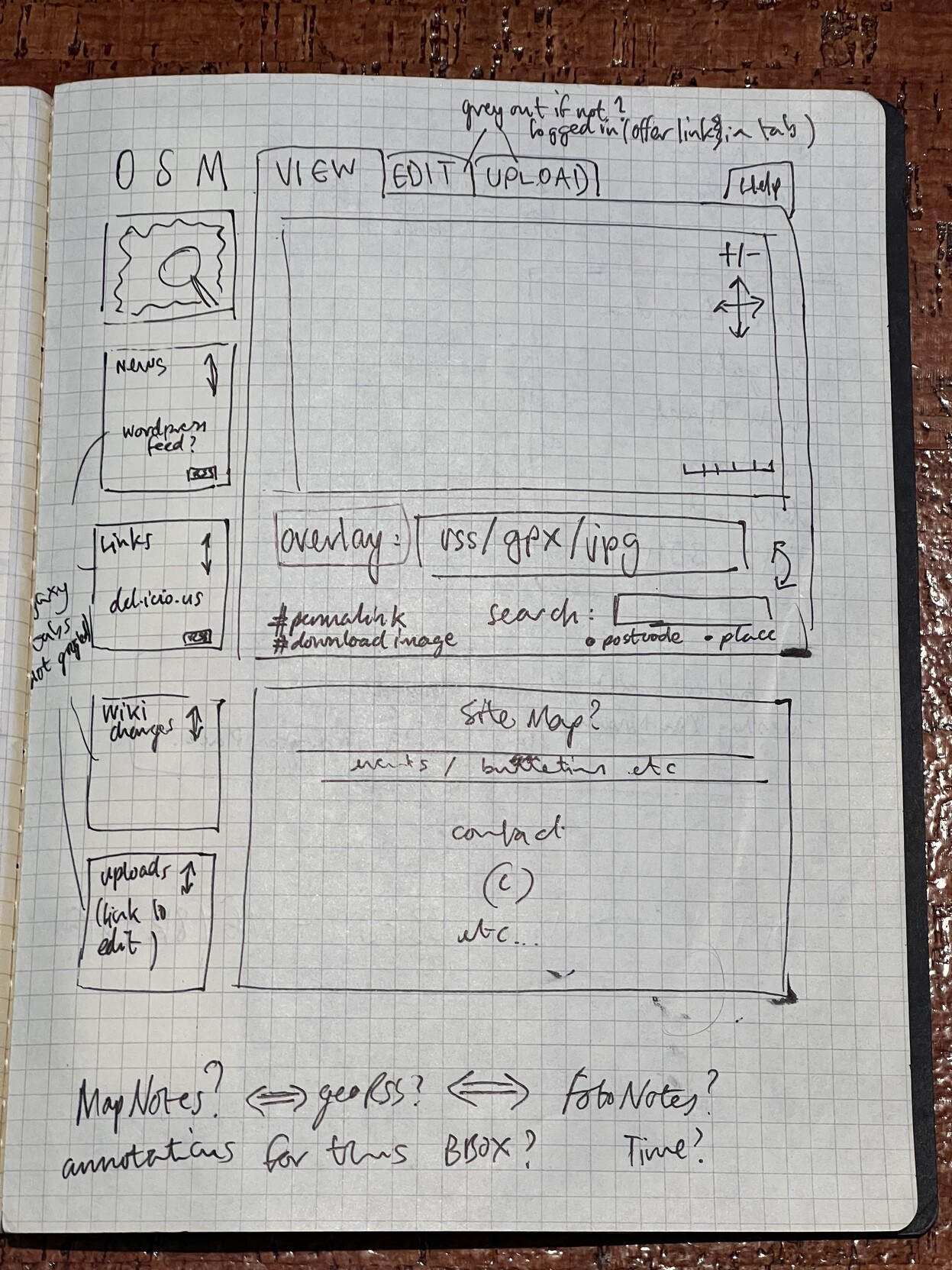
Hand drawn by Tom Carden in a London pub with input from Steve Coast and Mikel Maron, much of the layout and components are still in use today.
A Slippy Map for OSM.org
Hand drawn by Tom Carden in a London pub with input from Steve Coast and Mikel Maron, much of the layout and components are still in use today.
-
OSM Foundation is Registered
2006
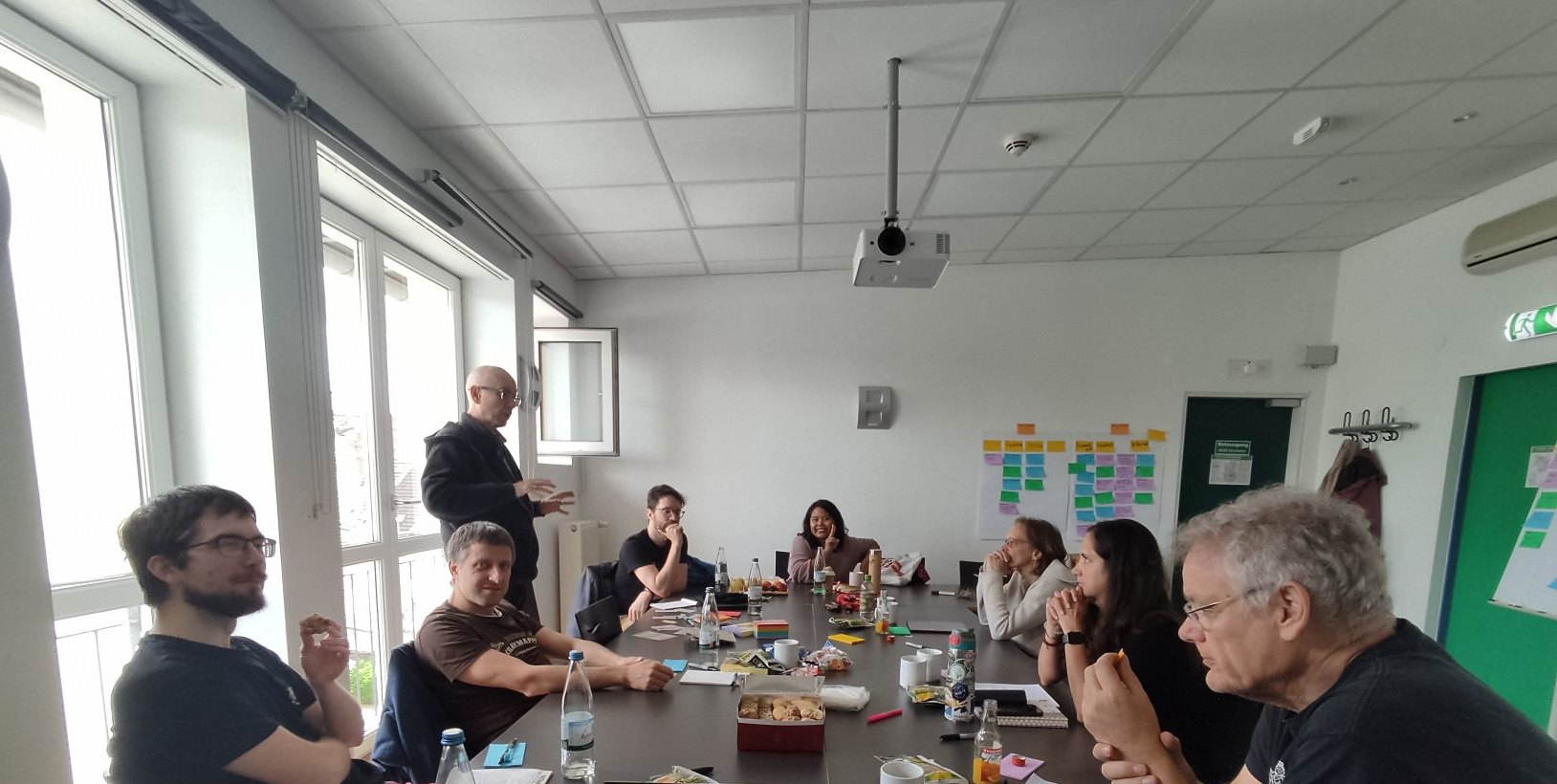
By the middle of 2006, a more formal form of governance was needed to support the rapidly growing project. In this post, Steve Coast proposes the methodology for establishing membership:
Discussion in person and on the list seemed to stall at the ‘what is a member’ stage. In person talking to a number of people (Ben deserves credit) a way out emerged that I didn’t get any major disagreement with:
For the initial vote as defined in the IRC discussion everyone on this mailing list (as of when this email goes out) or an OSM user is _eligible_ to become a member and can therefore vote. To become a member you need to PayPal me 5 pounds or write me a hand-written snail mail letter.
There are no second-class members, both methods afford the same privilege. Parallel to this, people wishing to fulfill positions can be nominated or self-nominate. The initial group of people voted in will then decide on things as per the IRC discussion.
The first vote will be held in three weeks time, the 11th June using the Single Transferrable Vote.
Learn more and/or become a member of the OSM Foundation by visiting https://osmfoundation.org/.
OSM Foundation is Registered
The OpenStreetMap Foundation was established to support the growth, development, and distribution of free geospatial data, ensuring OpenStreetMap remains a valuable resource for everyone.
-
OSM and University College London
2006
University College London (UCL) has kindly been hosting OpenStreetMap since the project started. In the early days, Steve Coast, Matt Amos, Andy Allan, Grant Slater, and many others spent many hours extending and re-organising hardware to keep up with the growth of the project.
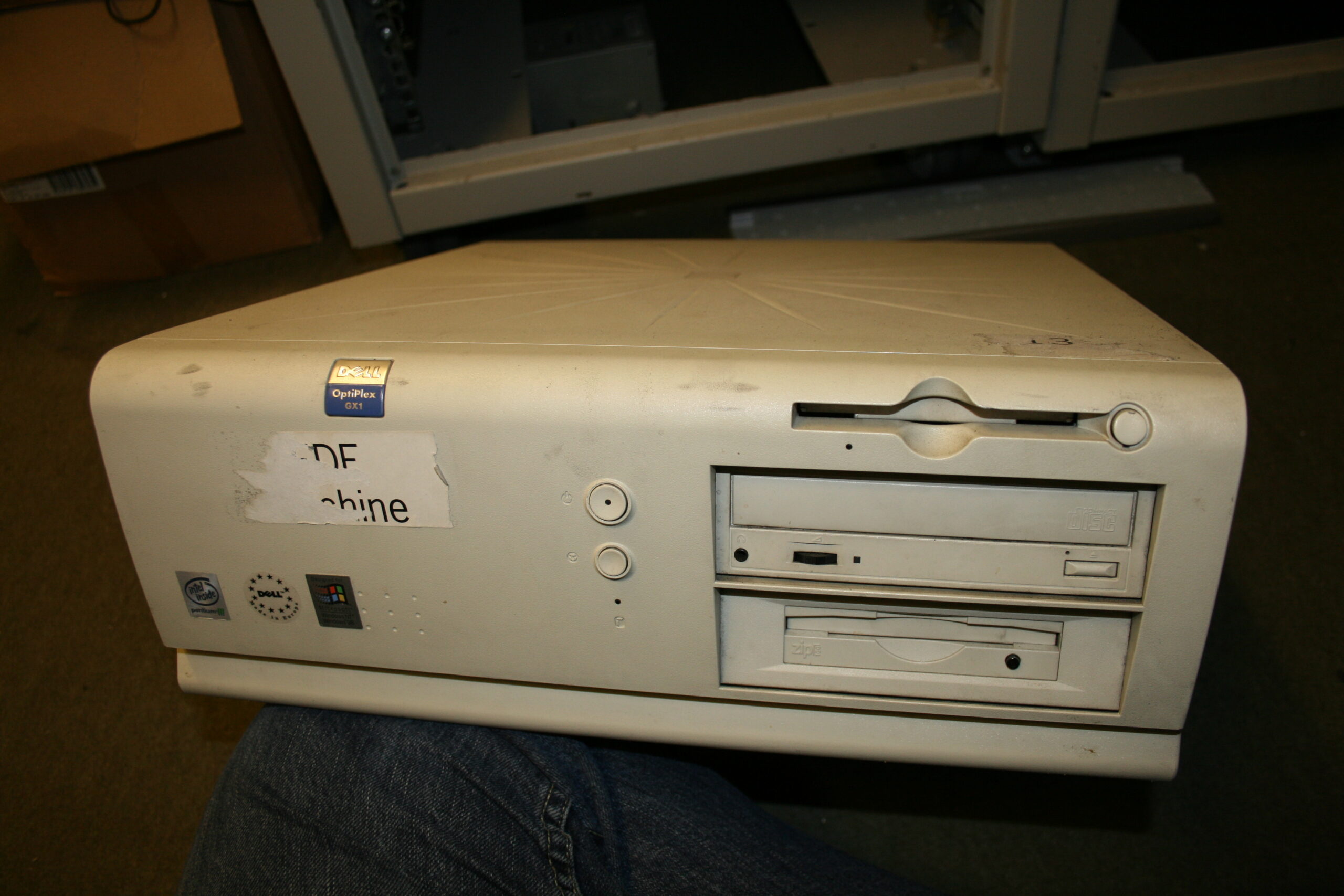
This photo is of Steve Coast’s desktop computer which doubled as OpenStreetMap’s first “server”. It’s pictured here in 2007 after it had been replaced in late 2006.
The last new database server arrived at Imperial College in 2012. This would be our last spinning rust (mechanical harddisk) database server and had 36 drive bays! Future database servers used SSD disks.
OSM and University College London
University College London (UCL) has kindly been hosting OpenStreetMap since the project started. In the early days, Steve Coast, Matt Amos, Andy Allan, Grant Slater, and many others spent many hours extending and re-organising hardware to keep up with the growth of the project. This photo is of Steve Coast’s desktop computer which doubledContinue reading "OSM and University College London"
-
The First State of the Map, Manchester, UK
2007
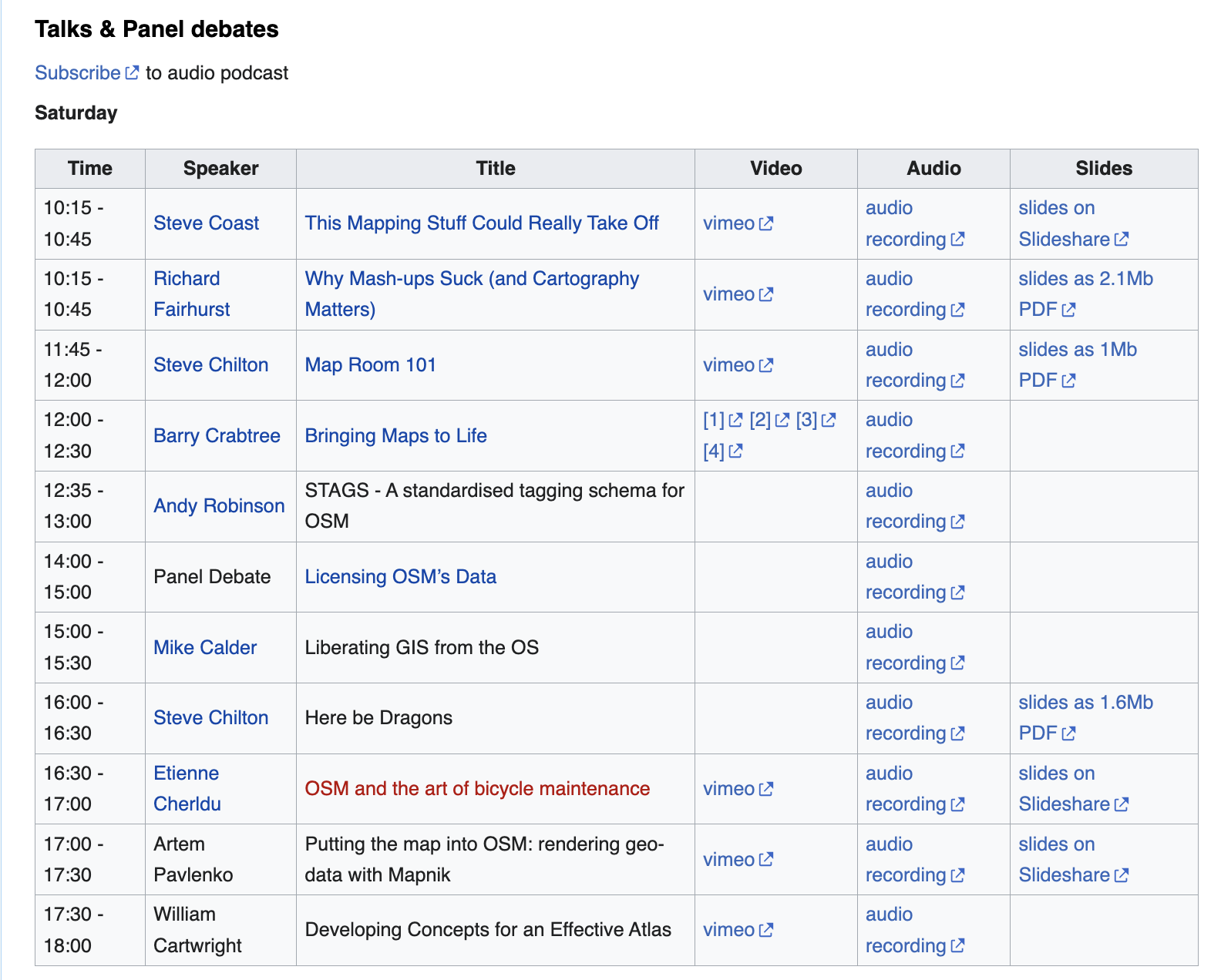
OSM mappers organize annual State of the Map (SotM) meet-ups as a way to build the community and the map. SotMs come in all sizes and are organized locally, regionally and globally, but the goal is always the same: to get together to talk about mapmaking, GIS research, new tools and software and other community topics. Local and regional SotMs are organized by local communities and the global SotM is organized by the OSM Foundation.
The first SotM was in Manchester, UK and featured talks, panels, and an OSM favorite that has lasted for 20 years, lightning talks.
-
Yahoo! Aerial Imagery Allowed for Editing
2007
OSM is known for being a map that is made by local eye witnesses, but the ability to use aerial imagery to trace maps expedites mapmaking and is essential to accurately map remote parts of the world.
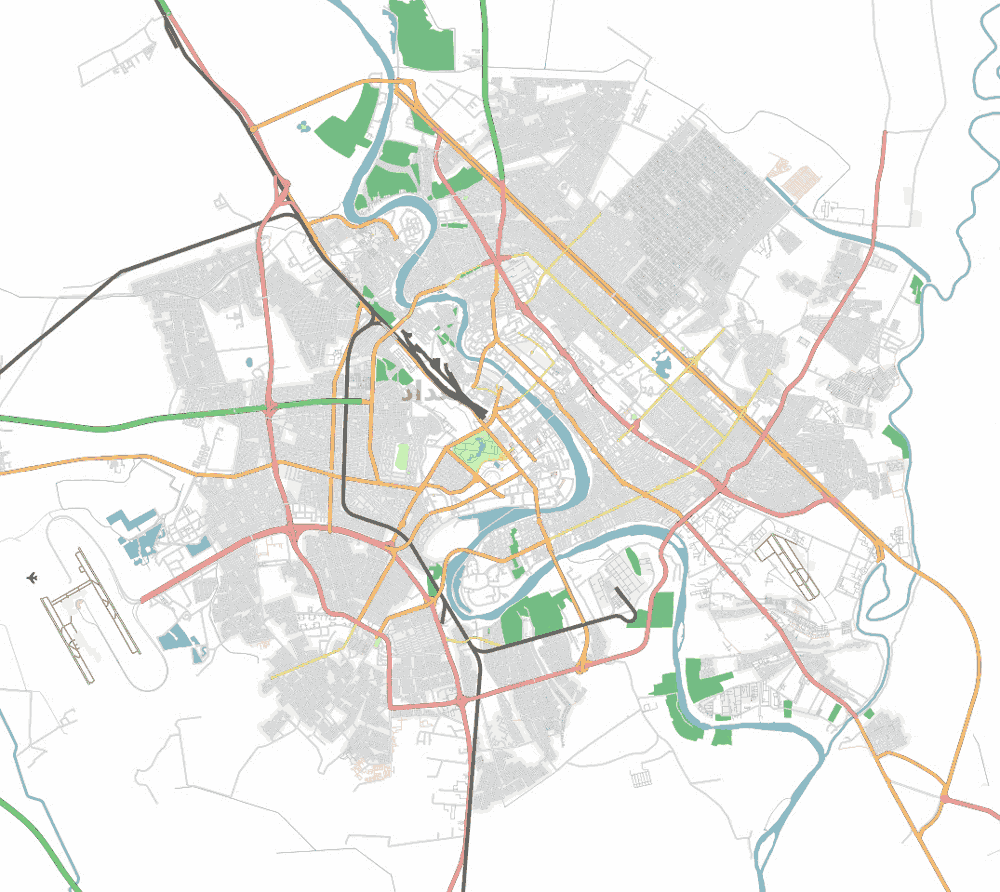
In 2007 Yahoo! gave permission to use its imagery in OSM editors, an arrangement that lasted until 2011. The availability of this imagery made possible a number of projects, including the London Congestion Charging Zone, the road and rail network of Baghdad, Iraq, the greater metropolitan railway network of Sydney, Australia, and the highway between Darwin and Port Augusta, Australia, together with the highway to Ayers Rock and the Olgas.
In November 2010, it was announced that Bing had granted the right to trace from their aerial imagery for the purpose of contributing content to OpenStreetMap. Access to Yahoo! and Bing data accelerated OSM mapping and established a precedent for future OSM/corporate partnerships.
-
Map Kibera and OpenStreetMap
2009
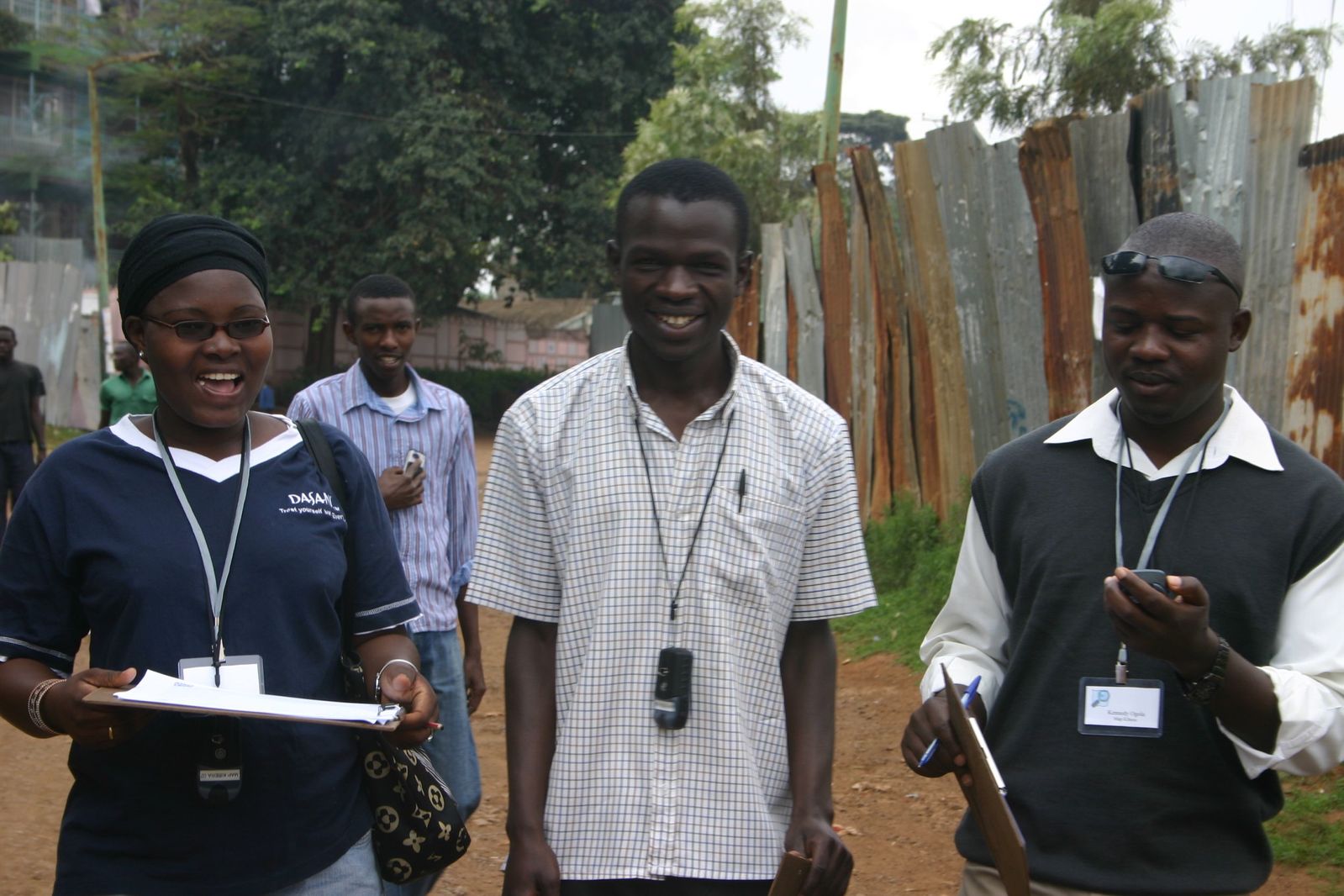
The partnership with Map Kibera and OpenStreetMap was one of the first big humanitarian OSM projects. Map Kibera was first conceptualized in October 2009 by Erica Hagen and Mikel Maron of GroundTruth, a global technology and media company specializing in community-based participatory projects. The first free and open map of Kibera was completed in 2009, paving the way for many future mapping projects including election mapping, school mapping, and budget mapping.
Map Kibera and OpenStreetMap
The partnership with Map Kibera and OpenStreetMap was one of the first big humanitarian OSM projects. Map Kibera was first conceptualized in October 2009 by Erica Hagen and Mikel Maron of GroundTruth, a global technology and media company specializing in community-based participatory projects. The first free and open map of Kibera was completed in 2009,Continue reading "Map Kibera and OpenStreetMap"
-
Humanitarian Mapping in Haiti
2010
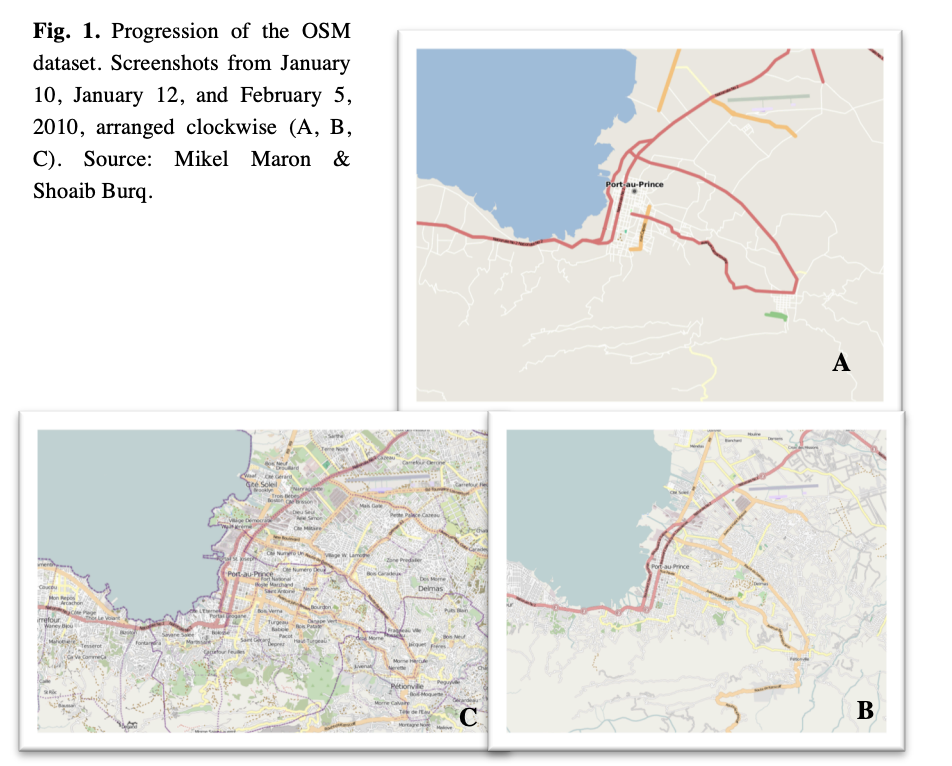
In January 2010, Haiti experienced a devastating earthquake: one of the worst disasters in recent history. Within 48 hours of the earthquake, the OpenStreetMap community started using high-resolution, post-event satellite imagery to map the area impacted by the earthquake, and it would forever change crisis mapping.
Within weeks, over 600 contributors volunteered their time and skills to build a base map of Haiti on OpenStreetMap. It would become the default map for organizations responding to the crisis, including urban search and rescue teams and NGO partners. (source) OSM received major media coverage for its humanitarian role in this crisis, including in Wired magazine, the New Yorker, the Guardian, and many others.
Humanitarian Mapping in Haiti
In January 2010, Haiti experienced a devastating earthquake: one of the worst disasters in recent history. Within 48 hours of the earthquake, the OpenStreetMap community started using high-resolution, post-event satellite imagery to map the area impacted by the earthquake, and it would forever change crisis mapping. Within weeks, over 600 contributors volunteered their timeContinue reading "Humanitarian Mapping in Haiti"
-

State of the Map Japan
2012
The State of the Map 2012 was held in Tokyo, Japan from the 6th-8th September 2012. It was the first SotM to be hosted outside of the US and Europe.
State of the Map Japan
The State of the Map 2012 was held in Tokyo, Japan from the 6th-8th September 2012. It was the first SotM to be hosted outside of the US and Europe.
-
The Open Database License (ODbL)
2012
In 2012, the Open Database License ODbL was chosen as the best option to make sure OSM software and data would remain free and open to all who wish to use it.
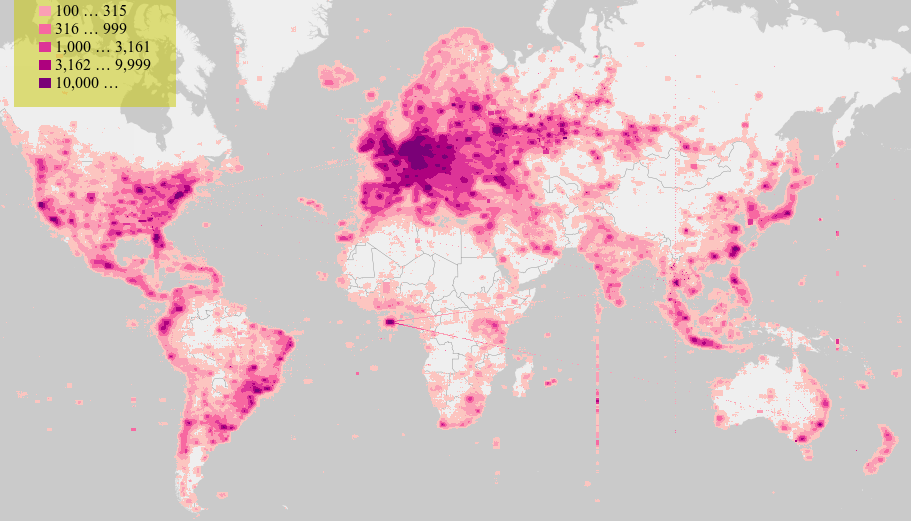
Today, OSM data is used under the ODbL by most major location services companies and thousands of companies and organizations from many different sectors. Users include Microsoft, Meta, TomTom, Grab, the Red Cross, the United Nations, and many small companies, NGOs, and governments, especially in the area of urban planning, climate research, and transportation. This tool visualizes the organizations that access OSM’s data on a monthly basis. A conservative estimate is that a billion people benefit from OpenStreetMap every day.
-
The Growth of OSM Science
2013
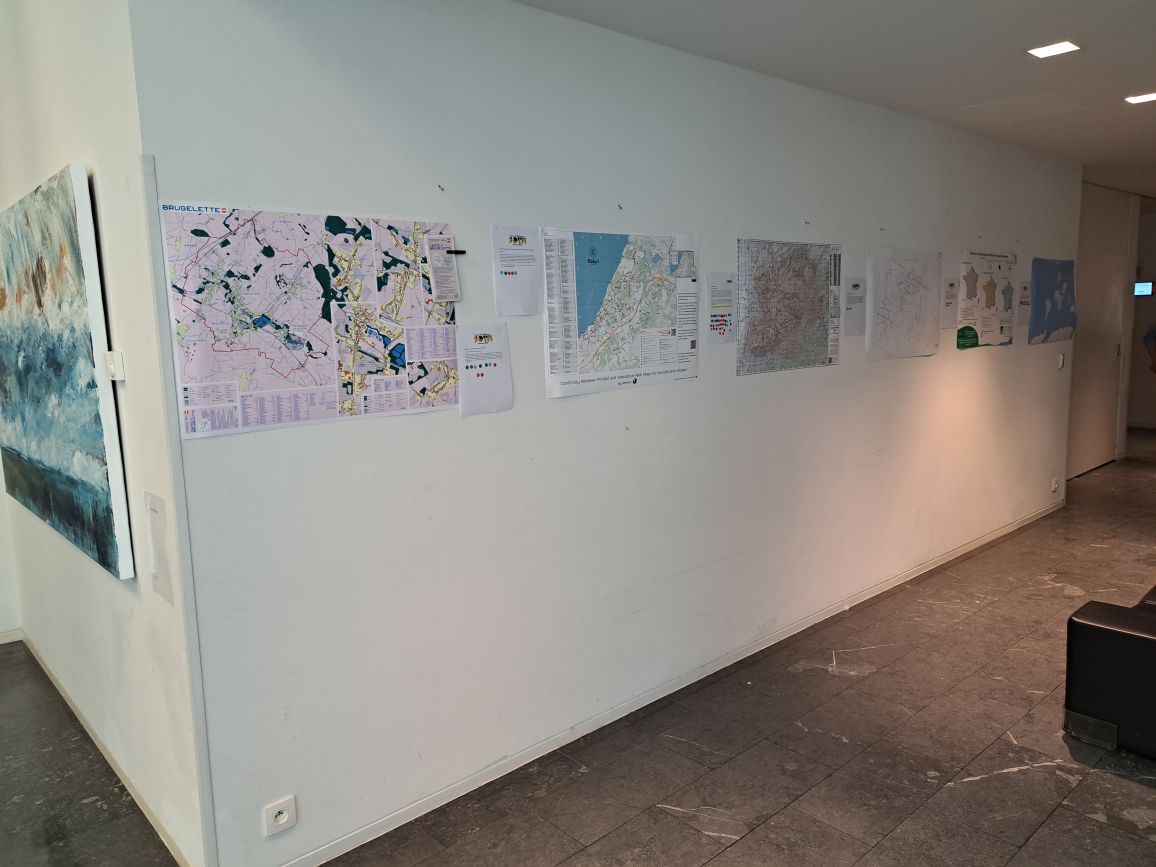
In 2008, Muki Haklay and Patrick Weber published the first research paper about OSM, titled “OpenStreetMap: User-Generated StreetMaps,” helping to ignite a lively and wide-ranging culture of research based on OSM data.
By 2013 and continuing to today, many State of the Maps were offering a science track within the regular conference programming, or adding an additional OSM Science day. Academic researchers, involved from the beginning, are now numerous, and companies who use OSM fund studies, as well. Research is conducted in dozens of countries and languages and informs fields such as GIS, cartography, climate change, and the sociology of open source communities.
The Growth of OSM Science
In 2008, Muki Haklay and Patrick Weber published the first research paper about OSM, titled “OpenStreetMap: User-Generated StreetMaps,” helping to ignite a lively and wide-ranging culture of research based on OSM data. By 2013 and continuing to today, many State of the Maps were offering a science track within the regular conference programming, orContinue reading "The Growth of OSM Science"
-
Tenth Anniversary of OpenStreetMap
2014
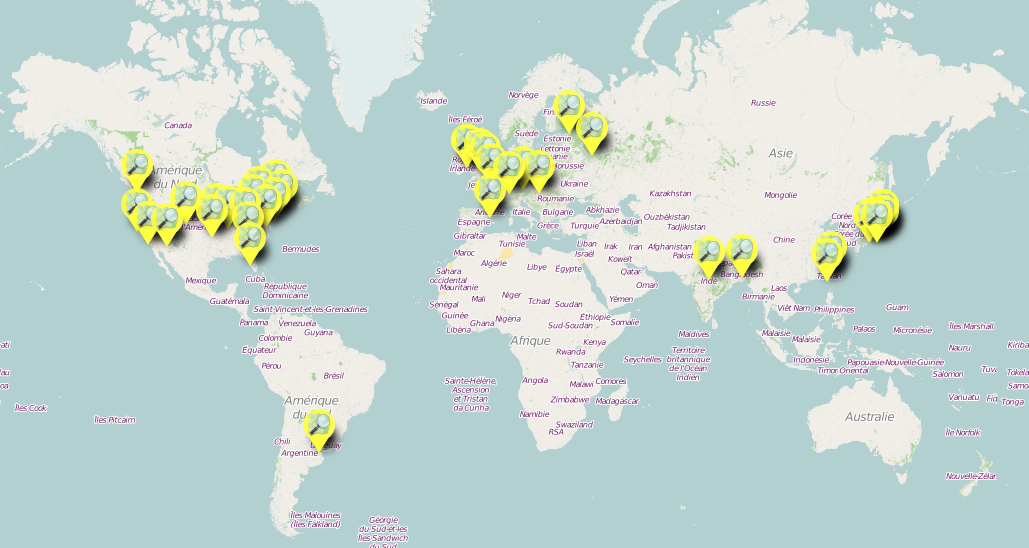
By 2014, the annual celebration of OSM’s birthday on August 9th was a well-established tradition. OSM mappers host mapping parties, mapathons and similar get togethers all over the world–and many parties include an OSM birthday cake.
Tenth Anniversary of OpenStreetMap
By 2014, the annual celebration of OSM’s birthday on August 9th was a well-established tradition. OSM mappers host mapping parties, mapathons and similar get togethers all over the world–and many parties include an OSM birthday cake.
-
Iceland Becomes the First Recognized Local Chapter of OSM
2015
OSM works because of its vast network of mapping groups, located in almost every country of the world. These diverse organizations come in many sizes and with many different missions. What they have in common is their ability to engage OpenStreetMap contributors within their local language, culture, and customs.
The idea of creating a process for formalized local chapters that could support a relationship between regional OpenStreetMap organizations and the OpenStreetMap Foundation was borrowed from the Wikimedia Foundation.
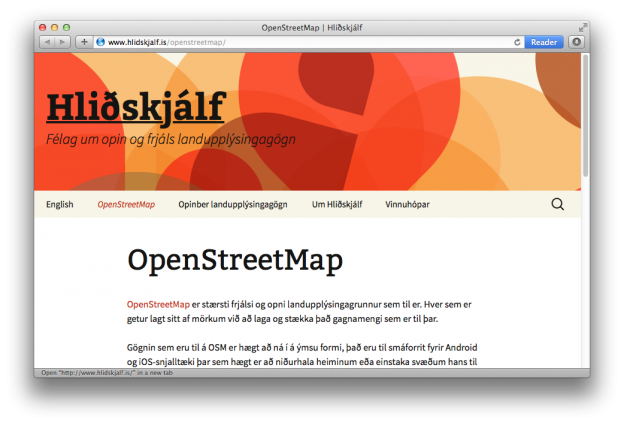
In 2015, Iceland became the first recognized Local Chapter:
“OpenStreetMap á Íslandi” is a subgroup of Hliðskjálf, an Icelandic society for open and free geographic information data. Well done to Jóhannes from Hliðskjálf who went through the process of getting this organisation set up as an OpenStreetMap Chapter! (source)
In 2019, the Democratic Republic of the Congo was established as a Local Chapter, the first one on the continent of Africa. In 2020, Argentina joined as a Local Chapter, the first one in South America. (source)
-
“The Book of OSM”
2015
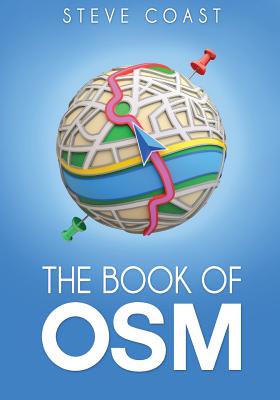
In 2015, Steve Coast kickstarted this collection of interviews with many of the founding contributors to OpenStreetMap. It contains fifteen interviews with the people who created and launched the project, starting in 2004, including: Andy Allan, Tom Carden, Kate Chapman, Martijn van Exel, Richard Fairhurst, Ben Gimpert, Sean Gorman, Muki Haklay, Henk Hoff, Pavel Machalek, Mikel Maron, Randy Meech, Ed Parsons, Andy Robinson, Grant Slater, and Steve Coast.
The interviews provide a compelling story of how a rag tag collection of volunteers was able to produce a map that would go on to inspire a global community to map the known world.
You can buy “The Book of OSM” at Bookshop.org and other booksellers.
“The Book of OSM”
In 2015, Steve Coast kickstarted this collection of interviews with many of the founding contributors to OpenStreetMap. It contains fifteen interviews with the people who created and launched the project, starting in 2004, including: Andy Allan, Tom Carden, Kate Chapman, Martijn van Exel, Richard Fairhurst, Ben Gimpert, Sean Gorman, Muki Haklay, Henk Hoff, Pavel Machalek,Continue reading "“The Book of OSM”"
-

Niantic Uses OpenStreetMap for Pokémon Go
2017
Since Niantic began using OpenStreetMap as the Pokémon Go basemap , many Pokémon Go players have edited OSM in an attempt to improve their gameplay. Many players have made good-faith edits, such as adding buildings and roads that reflect reality on the ground, and the game helped increase the number of OSM editors.
On the other hand, there have also been many cases of Pokémon Go players adding spurious parks or other points of interest or deleting schools in an attempt to essentially tag for the renderer. This is, in fact, vandalism of OpenStreetMap. Pokémon Go players are strongly encouraged to improve the map but are expected to follow good practice like any other mappers. (source)
-
One Million Notes Added to OSM since 2013
2017
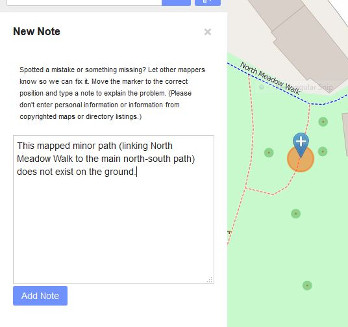
The OSM.org Notes feature was released in OSM.org in 2013. It enabled users to add a comment on the map to assist others in mapping/editing OpenStreetMap. Other users can respond to these notes, for example to ask for additional details if necessary. Importantly, Notes enabled users to add information about the map, even if they didn’t know how to make the correct edit. The feature allowed both registered users and the wider public to quickly indicate where there are errors or omissions in the OpenStreetMap data, accelerating the progress of the map.
On 25 May 2017, the millionth note was created since the introduction of the feature in 2013.
-
User Moderation in OSM
2018
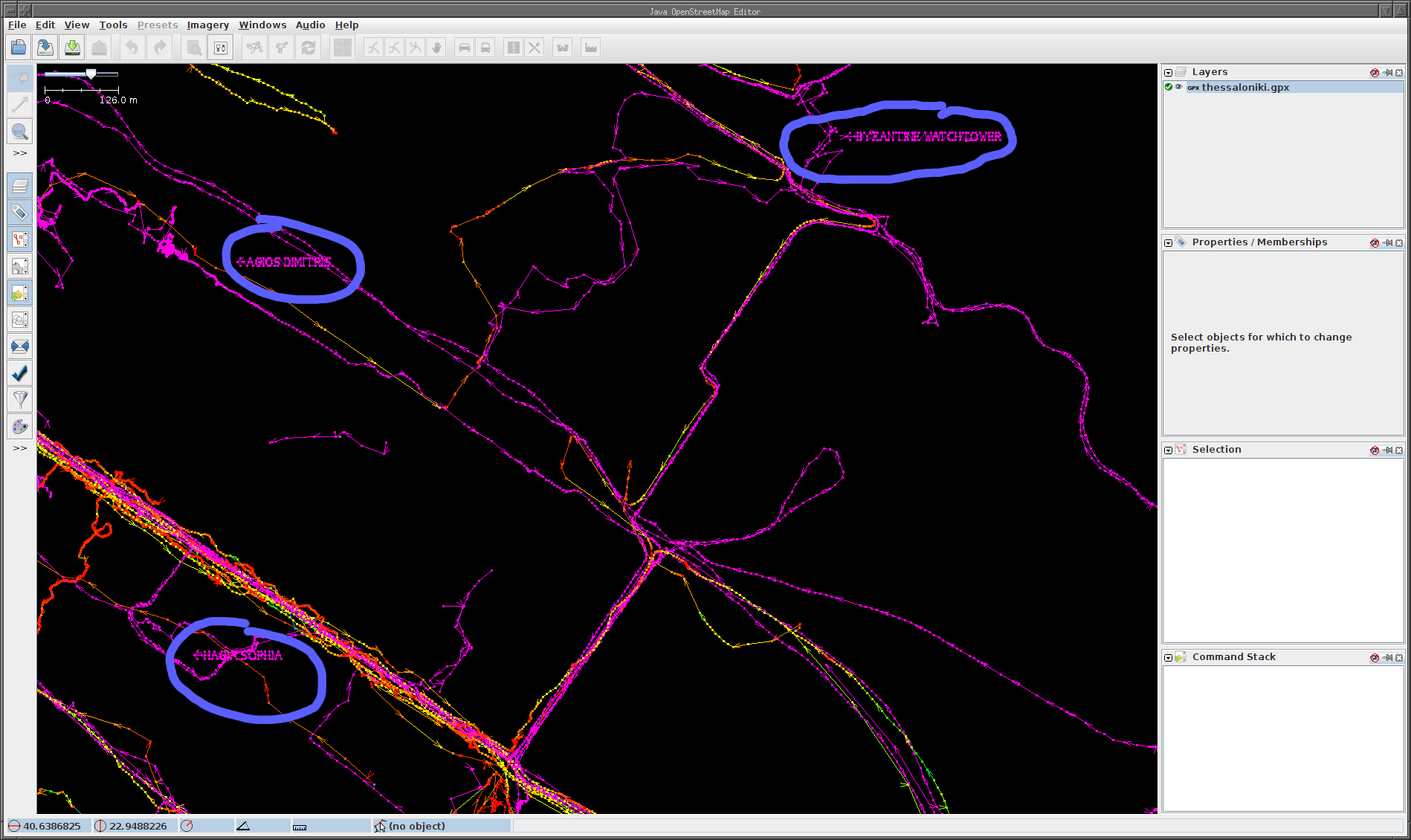
OSM, like all publicly editable maps, can be vulnerable to vandalism. Because the community is so large and so engaged, most vandalism is identified quickly by OSM editors and is quickly reversed. In 2018, the moderation queue was added to OpenStreetMap making it much easier for users to report spam to moderators and administrators directly–an important addition for OSM editors or users who could see the vandalism, but might not have the skills to fix it.
The Data Working Group, one of OSM’s many Working Groups through which volunteers administer and guide the project, is authorized by the OSM Foundation to deal with more serious vandalism.
User Moderation in OSM
OSM, like all publicly editable maps, can be vulnerable to vandalism. Because the community is so large and so engaged, most vandalism is identified quickly by OSM editors and is quickly reversed. In 2018, the moderation queue was added to OpenStreetMap making it much easier for users to report spam to moderators and administrators directly–anContinue reading "User Moderation in OSM"
-

Ten Years of Participation in the Google Summer of Code
2018
Google Summer of Code (GSoC) is a global program that offers student developers stipends to write code for various open source software projects. OpenStreetMap has participated almost every year for a long time, and did participate again as a mentoring organization in 2018. Through Google Summer of Code, accepted student applicants are paired with a mentor or mentors from the participating projects, thus gaining exposure to real-world software development scenarios and the opportunity for employment in areas related to their academic pursuits.
OpenStreetMap has been participating since 2008 – here’s a list of all the projects.
-

The Rise of Map Editors like StreetComplete
2021
In 2021, StreetComplete became the 2nd editor by number of users, with 21.9k users, second only to the original OSM editor, iD.
StreetComplete was created as an easy-to-use OpenStreetMap editor for Android phones and tablets that can be used for mapping in the field. It’s made specifically for casual contributors and beginners, and no prior knowledge about OpenStreetMap (such as tagging schemes) is required to contribute with this app. StreetComplete also offers gamification and statistics that aim to introduce and inspire users to venture deeper into the world of OpenStreetMap.
Other mapping apps include:
- SCEE – a fork of StreetComplete with some more powerful features which are not usable by inexperienced mappers
- OpenStop – similar to StreetComplete but dedicated to public transport
- GoMap!! – a fully featured editor for iOS
- Vespucci – a fully featured editor for Android with full and direct access to OSM data
- Osm Go! – an easy to use POI editor for mobile devices
- Every Door – an efficient editor for iOS and Android
- MapComplete – an efficient way to add OpenStreetMap info on a single theme
-

The First Full-Time Employee
2022
The OSM project is run by volunteers, who organize their work through OSM’s Working Groups. They edit and expand the map, keep it legally compliant and safe from vandalism, resolve licensing issues, organise conferences, keep hardware and software up to date, and develop new mapping tools.
In more recent years, with the addition of a corporate membership program and corporate giving to OSM map projects, the OSM Foundation was able to increase its budget, making it possible to hire its first paid, full time Senior Site Reliability Engineer, Grant Slater.
The First Full-Time Employee
The OSM project is run by volunteers, who organize their work through OSM’s Working Groups. They edit and expand the map, keep it legally compliant and safe from vandalism, resolve licensing issues, organise conferences, keep hardware and software up to date, and develop new mapping tools. In more recent years, with the addition ofContinue reading "The First Full-Time Employee"
-
Ten Million Registered Users
2023
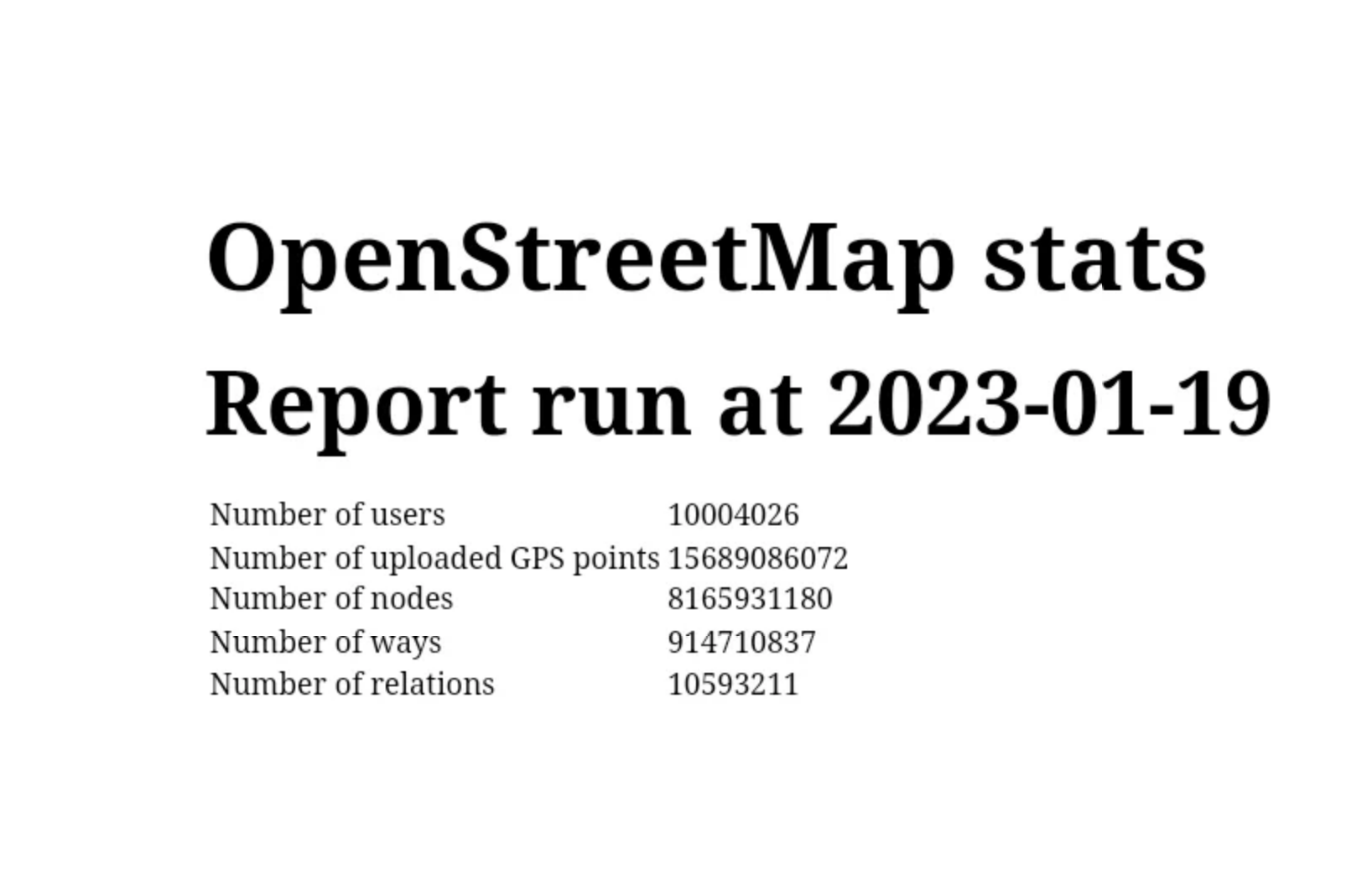
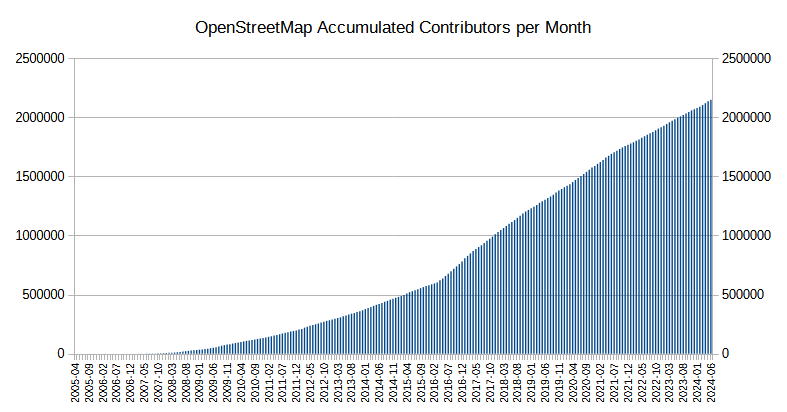
In January 2023, OSM reached 10 million users over the life of the project.
As user janjko pointed out on r/OpenStreetMap, most of the edits are produced by about .1% of the users. However, as user joostjakob pointed out in the same thread, “while you need the power users to do most of the work, those millions of other eyes can fill in the gaps. While power users might touch a million nodes when remapping land use, a thousand people adding one or two extra POIs have as much added value.”
-
The Best Map of the World
2024
The Best Map of the World
OpenStreetMap marks two decades of collaborative mapping, celebrating 20 years of community-driven geospatial innovation.
-

Your Turn! Submit a Timeline Idea
2024
Do you have an idea for a timeline milestone or event? Let us know! Send an email to the CWG with the date, a 1-3 sentence summary of the milestone or event, an image, and any links that will help us fill out the story.
Your Turn! Submit a Timeline Idea
Do you have an idea for a timeline milestone or event? Let us know! Send an email to the CWG with the date, a 1-3 sentence summary of the milestone or event, an image, and any links that will help us fill out the story.
Add or Find an OpenStreetMap Birthday Celebration