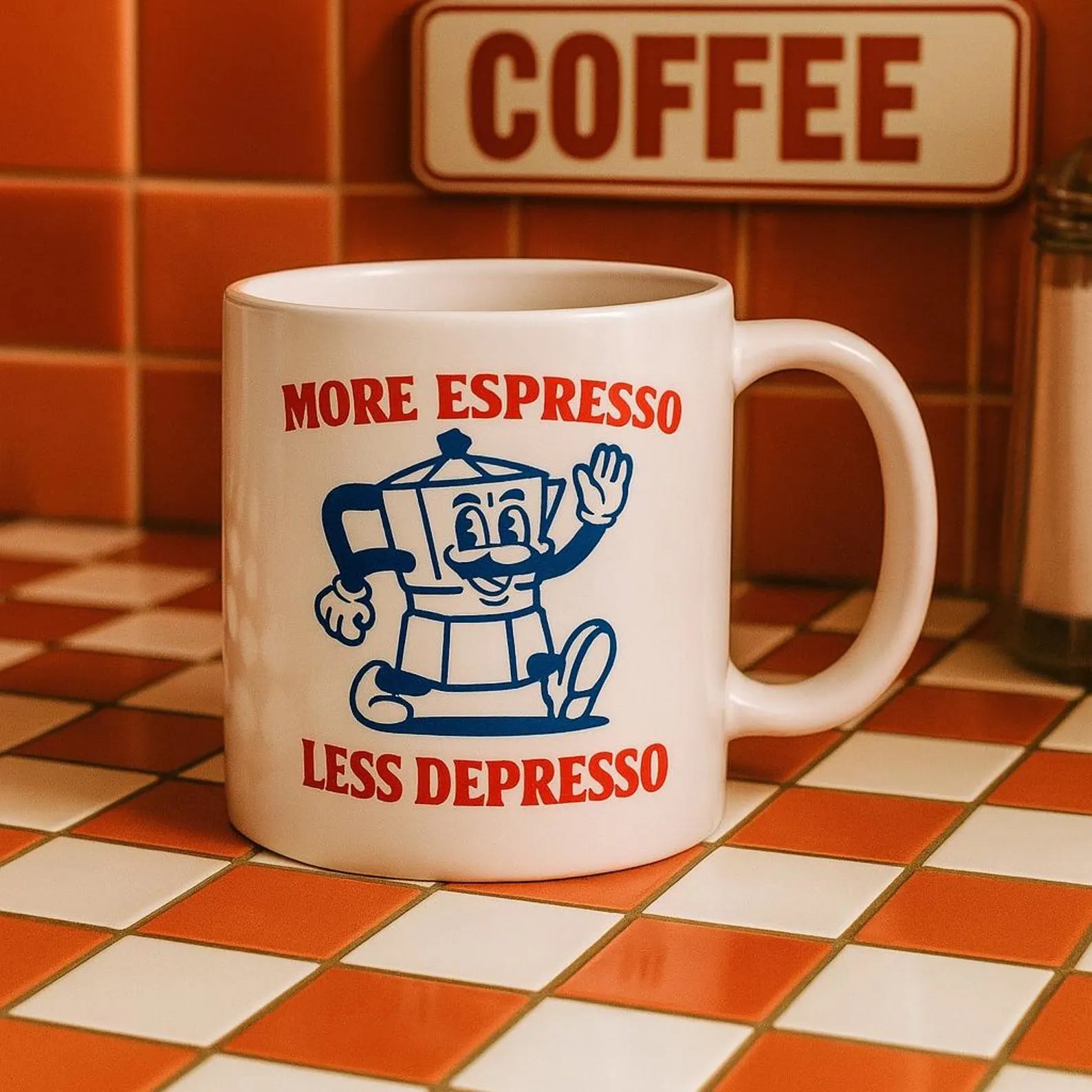
I like coffee. I like the culture around coffee. I like it when you go into someone’s house and they have a “don’t talk to me before I’ve had my morning coffee” mug 😍
I’ve been drinking coffee for a little over eighteen years. It is the most inviolable part of my routine to have a morning and afternoon black coffee. I don’t believe, except for one incredibly painful two-day experience, that any day during those eighteen years I did not consume some kind of caffeine.
I am in good company as something like 85% of Americans consume at least one caffeinated beverage per day. It is culturally ubiquitous, and perhaps a necessary requirement for our industrialized civilization.1
And, as of three weeks ago, I have not had any. I’ve instead been consuming “paraxanthine”, the thing caffeine turns into after your body starts to process it.
I learned about paraxanthine from an excellent LessWrong post written by kman about caffeine’s half life:
Very little circulating caffeine is directly excreted. Instead, it’s converted (metabolized) into other similar molecules (primary metabolites), which themselves undergo further steps of metabolism (into secondary, tertiary, etc. metabolites) before reaching a form where they’re efficiently excreted.
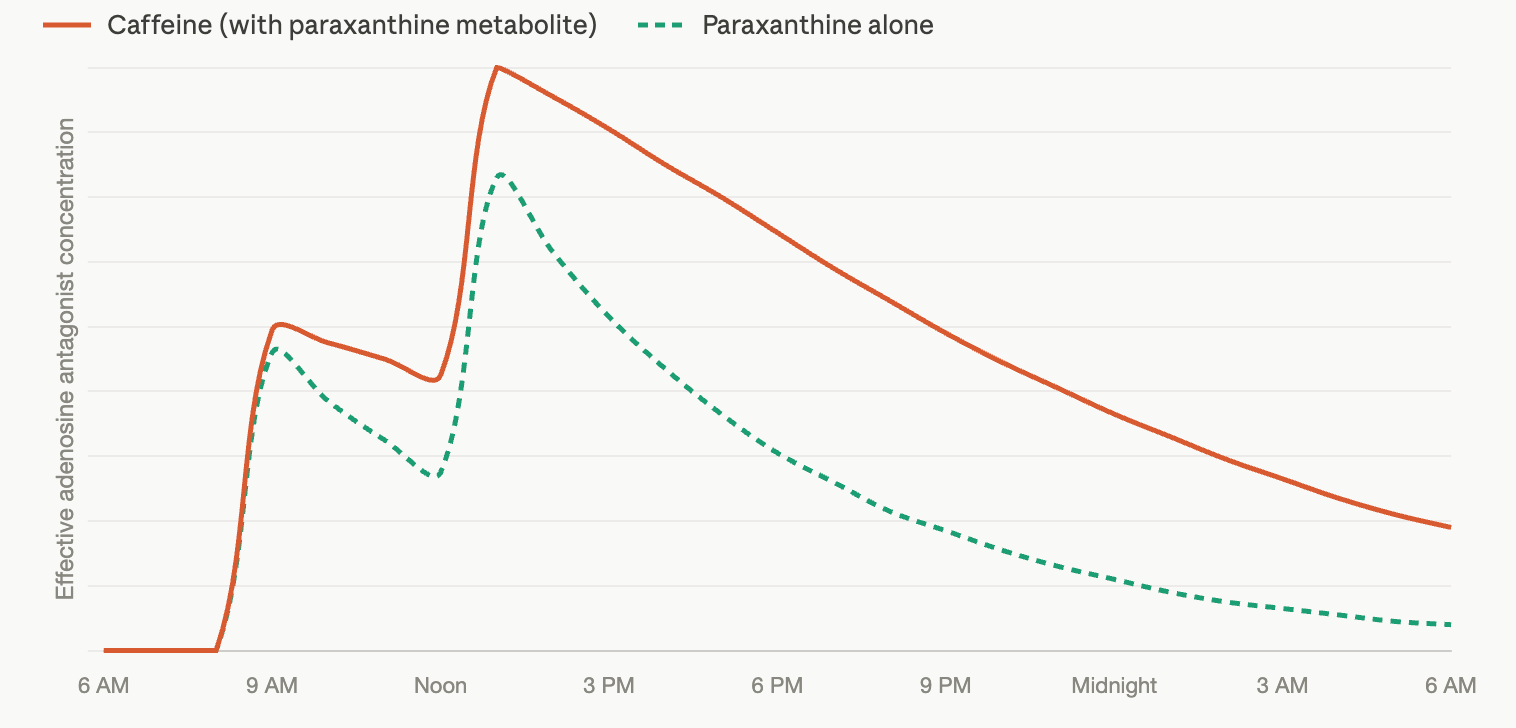
Importantly, the primary metabolites also block adenosine receptors. In particular, more than 80% of circulating caffeine is metabolized into paraxanthine, which has a comparable binding affinity at adenosine receptors to caffeine itself. Paraxanthine then has its own 3-5 hour half-life as it’s metabolized into a handful of other things.
This intrigued me because I’ve had sleep trouble for years. I routinely wake up at 3 or 4am and am an incredibly light sleeper - there’s a possum that paces around my house in the Matins hours, and I’m always aware of it. Since caffeine seems like a likely culprit, a substitute with a shorter effective half-life was promising.
Other draws are its plausible that you develop less tolerance to paraxanthine than caffeine, since the active molecules don’t linger as long.2 And, because paraxanthine is what your body naturally turns caffeine into, it should have a similar safety profile.
Most importantly, trying out new drugs is cool and fun.
Day one was great. I took ~100mg of paraxanthine in the morning.3 In about an hour I felt a noticeable kick of energy. It’s much “smoother” than caffeine, and seemed to leave me less prone to task switching. It’s hard to say exactly how the onset compares to coffee, since I’ve never had a break from caffeine. In the afternoon I took another 100mg, and had similar positive effects without an afternoon crash.4
Day two was similarly good.
And then overnight I hit a wall of caffeine withdrawal. Around 2am I woke up with a splitting headache, muscle pain, and an anxiety that I had defied the gods and they were making their displeasure known.

This was not terribly fun, in fact I would describe it as miserable, but I took comfort in the affirmation for my thesis that caffeine was still doing something to me overnight. Clearly my eighteen years of caffeine adenosine blockage was happening round the clock, and now from midnight to morning there was nothing sitting in those receptors.
Days three through five brought similar but diminishing overnight headaches. During the day I was generally tired with some fuzziness and brain fog. By the end of day five, the withdrawal subsided.
Now, three weeks in:
Improved sleep. Most nights I’ve either slept through the night or woken up briefly and been able to fall back asleep, staying asleep until 6am.5 I’ve also been having memorable dreams for the first time in a while.
Subtle phenomenological differences. Paraxanthine has a more subtle effect, while caffeine feels more like “alertfulness” and seems to increase my reactivity. So I’m less anxious. In between the scylla and charbidis of not energized enough to read my email, too energized to stay on any one tab for more than ten seconds, paraxanthine helps sail the gap well.
More noticeable when it wears off. I can feel it come down around 1pm from a 100mg dose at 8:30am. With caffeine I never noticed a discrete wearing-off.
I wake up “more tired” in a certain sense. Like, bed feels more good, and I’m less wired in the morning.
Better for evening use. I took 50mg at 6pm and felt energized through the late evening without it affecting my sleep. I am excited to announce my new startup PxMartini, the paraxanthine take on the espresso martini.
I asked people around me if they’d noticed any difference in my behavior; one person said I seem somewhat calmer, though the main reported change is that I talk about paraxanthine a lot.
I’m still only a few weeks in, so hold this all with appropriate uncertainty, but I pretty strongly endorse trying the switch. I’m using Vitamin Shoppe’s brand because they have 100mg capsules, though there are a lot of providers on amazon that are probably good. I’m drinking it with decaf coffee every morning6 because it makes me sad to just take a pill.
To again echo kman’s post, this feels like such a clear example of civilizational inadequacy. Over a billion people around the world drink coffee every day, it has been around for hundreds of years, and paraxanthine supplements were only introduced a few years ago. We are clearly still so early!
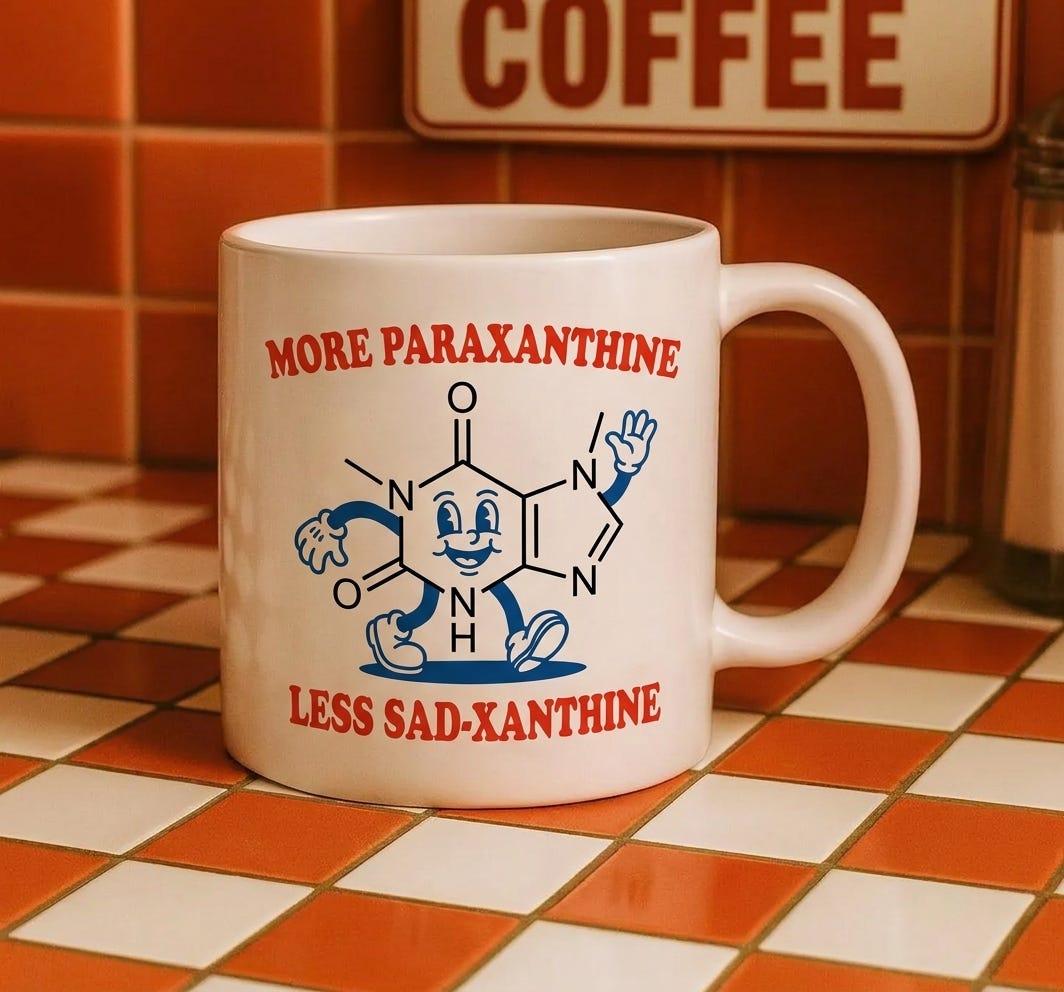
Thanks to Kman for spreading the good word, and Kave Rennedy for telling me about the post and having paraxathine readily on hand to try.