First, to everyone who read through my story, Vimeo's Slow Fade: An Engineer's Front-Row Seat to the Fall of a Web Icon, here on Substack: Thank you! That article went mini-viral, and got > 3500 visits, according to the Substack dashboard, and even got picked up by TLDR Newsletter. I’m flattered that so many people took the time to read (or at least clicked into) such a long piece (which ended up being twice the length I thought it would be). I hope you all had as much fun reading it as I had writing it.
If you haven’t read it yet, go check it out!
Vimeo's Slow Fade: An Engineer's Front-Row Seat to the Fall of a Web Icon

This is a retrospective of my years at Vimeo, and I’m writing it because I’ve been asked to write it. I’m also writing it because it was one of the worst work experiences I’ve had in my career as a software engineer. As unbecoming as it may be for me to do this, such a storied piece of internet culture deserves to have the story told.
The purpose of this post, then, is not to write another narrative, but to answer some of the questions people left on my previous article, as well as on HackerNews.
No, the title of this article isn’t a typo - I really did intend to write Venmo. Stick around and you’ll soon see why. 😏
Ted Hayes wrote:
Do you have any idea why the company never just committed to the “cool underdog” thing? Was it a shareholder problem?
One of the reasons I (admit) that I lost belief that Vimeo could recover after the stock tanked was because of the brand itself. It was oddly controversial. Our site users, mostly that creative base, truly did love Vimeo. Most people in the tech world took Vimeo for granted, if not sneering and laughing at the company.
One need not look further than the HackerNews comments to find the skeptics:
Was it? "Beloved" I'll grant because who knows, someone or another loves almost anything, I guess, but was it ever "major"?
Vimeo sounds like it would have been better off as the basis for a product or service division of a much larger business, not undiversified and standing alone competing with social media. Why was that not the obvious play to follow when they saw Google buying YouTube? Seems like a lot of opportunities passed Vimeo by over the decades.
The biggest problem for the Vimeo brand was that at one point, it had been toe-to-toe with YouTube. It lost that battle for reasons I explore in my previous article, but that old framing still held, all the way until the inglorious BendingSpoons finale. The brand was just too big and had too much of a legacy to settle as a cozy, mildly profitable SaaS company.
For example, if a solo-hacker like LevelsIO or Marc Lou had built and launched Vimeo, had reached the revenues and user growth that Vimeo did, the project would be considered another smash success by one of the golden boys of the indie SaaS community. However, through the lens that framed Vimeo as a legacy company that once used to be relevant, Vimeo was considered an abject failure and prime for ridicule.
Another profitable, sustainable company sacrificed on the Altar of Unicorn(tm).
This, of course, affected our stock price, as well, because yes, the investors felt similarly. I did listen in on some of the investor calls when I was inside of Vimeo as background noise, and the investors (from a bigger picture) weren’t so much as concerned with Vimeo’s solvency - as I said previously, Vimeo was sitting on north of $300m in cash - nor were they concerned so much with Vimeo’s costs/overhead. Investors were most concerned with growth, which is why holding our self-serve users at gunpoint over bandwidth was so idiotic.
Some of those users affected by the enterprise sales tactics had cachet and clout within creative communities, and word spread quick.
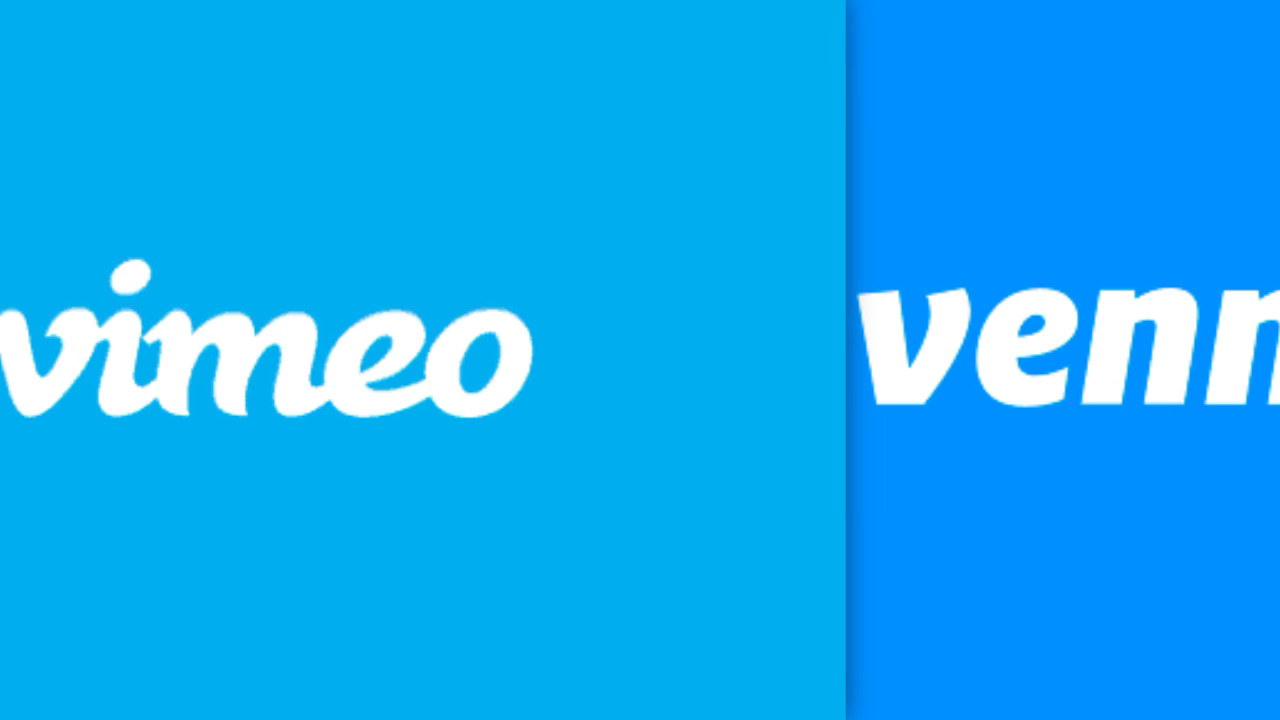
The unfair thing about the Vimeo brand having such a legacy that opened it for ridicule is that it was so often confused with Venmo, whose name sounded way too similar and had a logo that was basically the inverse of Vimeo’s (white on blue, vs blue on white).
Inside of Vimeo, it was a long-running joke among staff that when relatives misheard us during the holidays, when they’d think we had said our employer was “Venmo” instead of “Vimeo,” we’d just let them.
This schism was another one of those whipsaw issues that affected Vimeo negatively, and unlike the internal chaos described in my previous article, this was all external and something we couldn’t actually control.
Vimeo’s brand:
Represented something “old” and “outdated.”
Was haunted by its own legacy of competition with YouTube.
Was something most people not in marketing, tech or creative jobs knew about (otherwise they wouldn’t be confusing us with an online payments app).
How can you win at marketing if people that know about you think you’re a failure because you used to be a bigger and more relevant brand, while having shareholders also demanding more growth which would require a bigger and stronger brand presence? You’d try to lean on that past glory.
Hubris, or desperation, or maybe a mix of both? The C-Suite indeed appeared as if they thought that Vimeo used to be really big, so it still was.
Plenty of Vimeo customers have been asking where this acquisition leaves them and their video content. Should they move off of Vimeo? Is there another competing service?
I’m not sure. All I can tell you is that it took a lot of human capital to keep that website running, and something like 85-90% of Vimeo’s staff is now living off of severance packages. Maybe the team at BendingSpoons who takes over will be able to do it, but I have the right to remain skeptical until I see evidence otherwise.
The truth is that many people could get away with simply throwing MP4 files onto a shared hosting provider like Dreamhost, or by spinning up a Lightsail instance and installing Apache or NGINX, and embedding the videos using HTML’s <video> tag. It works surprisingly well, as both web servers are able to hint and segment video files properly. The thing you’d be missing is the ability for your video file to adapt to network conditions (automatically scale down to 480p on a LTE mobile connection), as well as some of the interactive and branding features. But you’d own the whole stack, and you could get away with a bill of as little as $5/mo. You probably don’t need a fancy online video platform.
There’s also YouTube, but you risk having ads injected into the player, and their player isn’t responsive if doing embeds (Vimeo’s player was fully responsive). Maybe some of the platforms Vimeo’s users left for, like Frame.IO, FrameMaker, or Muvi would be good options as well.
Sevitz left a very insightful comment about the realities of running a SaaS video platform on my previous article, and is very much worth checking out.
I should be finishing my FastGooey-Stripe integration right now, but I’m not and I should fix that.
I leave you with the following videos:
Lip Dub - Flagpole Sitta by Harvey Danger (via Sevitz)
Oddly similar to the melody of “Gucci Gang” by Lil Pump