This is not a regular post and not part of the schedule, only the result of a momentary inspiration and a few train journeys with spare time. For the proper post, see you, hopefully, on Wednesday! (but probably closer to Friday)
Remember this image from a footnote last post?
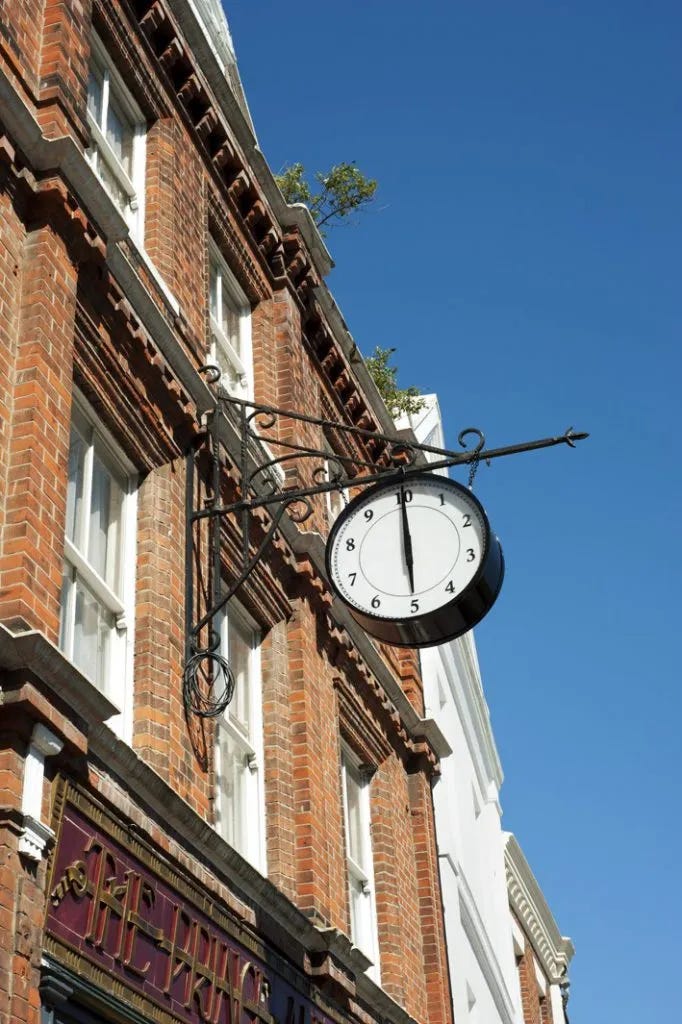
A while ago I sent the PDF that I’m converting into this blog (which contains the clock image) to my friend M. A few days ago, I got this back:
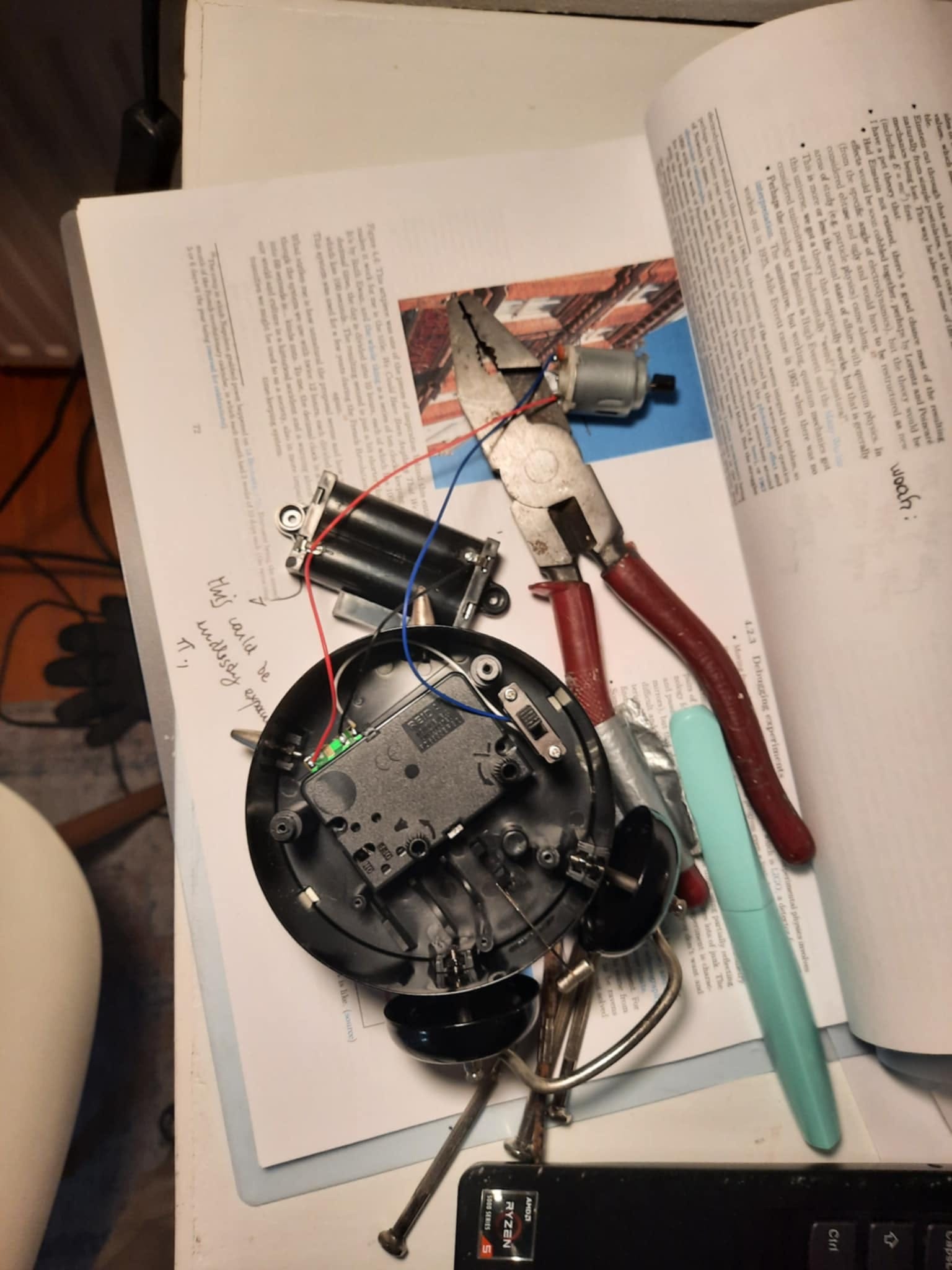
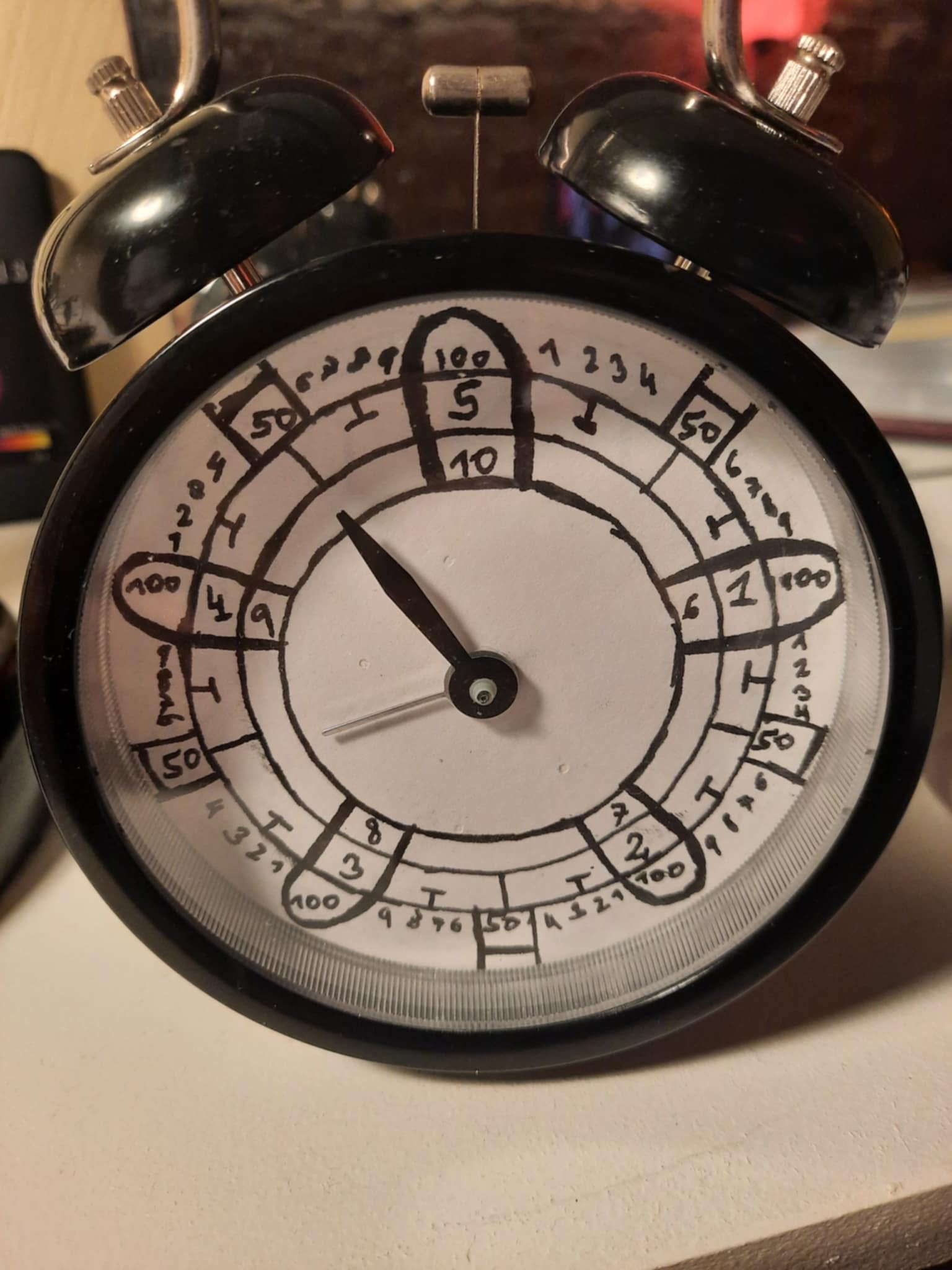
I had considered making a decimal clock myself, but only thought of making it from scratch, which was far too complicated a project to ever get started. I suppose this is a reminder that I tend to chase the perfect solution and get intimidated when there are imperfect but attainable things out there. (This is also the spirit in which I’m making this quick post on the train.)
Anyway, this is actually about the note from the first image: This could be endlessly expanded. I got inspired and thought of a few more things.
The framework for this is: if there were an apocalypse, you survived it, and had to rebuild civilisation, what opportunities for change would you take? You need something that could stay stable, so no complete utopian visions, but you’re free of all the historical reasons that our world has accumulated for all sorts of strange things.
It’s an interesting exercise not only for its own sake, but also because surprisingly often, things can be changed when the right opportunity comes.
This one is another practically defining example. The circle constant we use of π = 3.14159... is wrong, because the number that comes up in all kinds of contexts is double that: τ = 6.28318... Here is the central reason, the size of angles measured in radians:
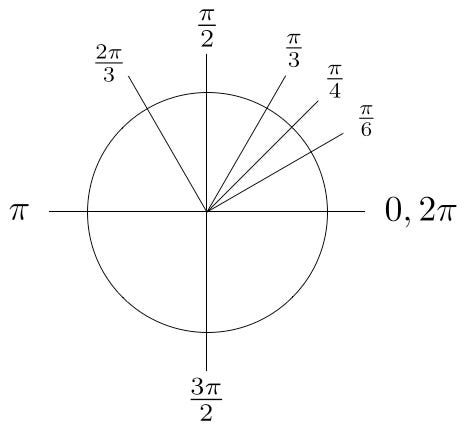
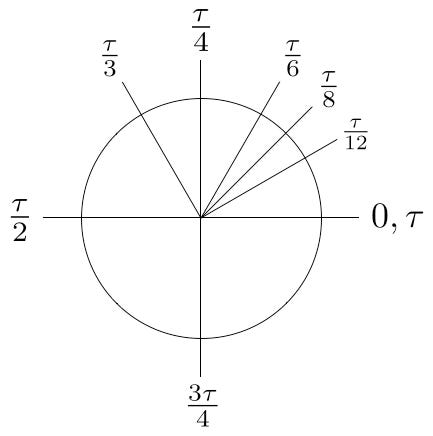
I won’t reinvent the wheel: all the arguments, counterarguments, counter-counterarguments, and applications are nicely summed up in the Tau manifesto by Michael Hartl.
This shouldn’t be a controversy at all, and the only reason it is is that it’s annoying to change notation. I tend to use τ in my own calculations, but:
τ or T or t sometimes come up as time, which sometimes comes up in a cyclical process, and then the letters clash.
When following calculations of somebody else, or a textbook, this introduces an extra layer of possible errors, so it’s not really worth it.
Neither of those would be relevant in the post-apocalypse, because then we could just change the value of π to the correct 6.28318... and be done with it. For now, the place where this matters the most is in early education, where this can actually make trigonometry more confusing for kids than it needs to be. If Hartl can be trusted, there is some success with τ already out there.
English spelling is a monstrosity, but most languages could do with some simplification. In a post-apocalypse, I see no reason not to move to something like the International Phonetic Alphabet (IPA): phonetic spelling that can be used for different languages.
There would be some problems with this: for starters, you would have to pick an accent to use for the transcription. But this is not such a huge issue: in some languages (such as my native Czech) the writing is nearly1 phonetic, but in a formal tone that people rarely use in actual speech, not corresponding to the accent of any particular group, and the regional changes follow more-or-less regular rules, so the not-perfectly-phonetic spelling is still useful.2
More annoyingly, the IPA is most straightforward for Germanic and Romance languages, and once you go further you get more complicated notation like rʲɪʂɛnʲɪje for Russian решение, which I can’t imagine anybody would want to write. Probably this could be simplified in each language at the cost of interlanguage compatibility.
There is some historical precedent: e.g. the whole history of simplified Chinese characters, or a reform of German from 1996 that removed some exceptions, but most changes have been either gradual and tiny or not accepted (like Ortofasil for French). The Russian reform of 1917 was bigger (it removed several letters and unified grammatical rules), but it had the benefit of happening in the middle of a complete social and political revolution when such things are easier to arrange and enforce.3
But there is one huge historical success story of this idea. Until 1446, Korean was written using Chinese characters despite being a completely unrelated language, which was both hard to learn and inconvenient to use. Then king Sejong the Great decided this was unacceptable and invented Hangeul, the writing system Korean uses to this day.4
Hangeul is phonetic, but the letters are arranged in a way that gives the writing the same shape as Chinese characters. Thus for example Hangeul’s Korean name is 한글, which decomposes into ㅎㅏㄴㄱㅡㄹ, or ha̠ngɯɭ in the IPA.5 There’s just 22 letter shapes to learn6 and a few rules, so somebody new to the language can learn to use Hangeul fluently within a week.
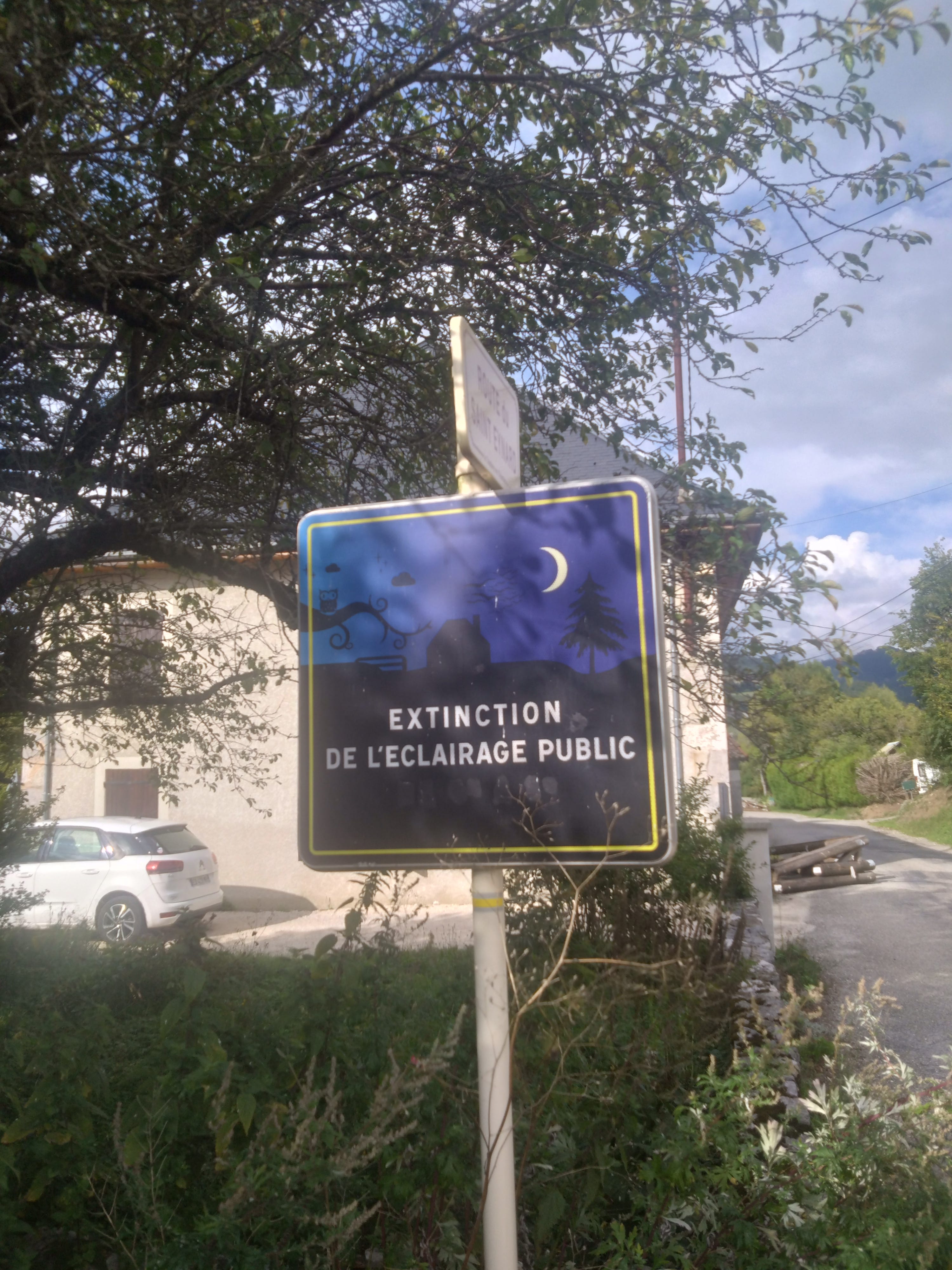
Now for something with a bit of tragedy of the commons thrown in. It would be awesome to turn off all inessential lights for a few minutes each night to get an undisturbed view of the night sky. Not just for astronomical purposes, but simply because a starry sky is nice and inspiring to look at. We could avoid things like the 1994 earthquake in Los Angeles, which caused a blackout and led to people calling the nearby observatory, confused by the strange sky above — just the Milky Way, seen for the first time in their lives.
Obviously you can’t turn off lights in hospitals or car headlights, so it should be at a time when there’s minimal traffic (probably somewhere between 2 and 3 AM, inspired by daylight saving time) and cover as much of the rest as possible (street lights, advertisements...).
The obvious objection is safety against criminals, but I think that if this time was established and widely known about, there would be more activity in the streets at the time and thus it would not be a good time for sneaky violence. More persuasively, this is already being done in an increasingly big part of France.
This is a personal pet peeve. The current way we divide the year into winter, spring, summer, and autumn is this (the sine curve roughly plotting the amount of sunlight and the colors corresponding to different seasons):
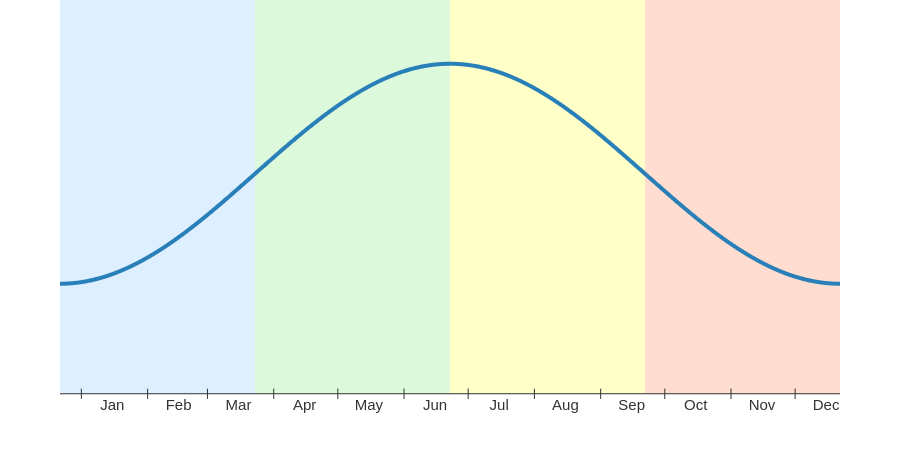
This division does not capture how different times of the year feel at all. Here in central Europe, early June is usually already hot and the days are long, while September is the time to sometimes carry a sweater around. Calling most of December autumn is absurd.
The first step we can take is shift everything back half a season to get summer into the peak sunlit time and winter into the dark period:
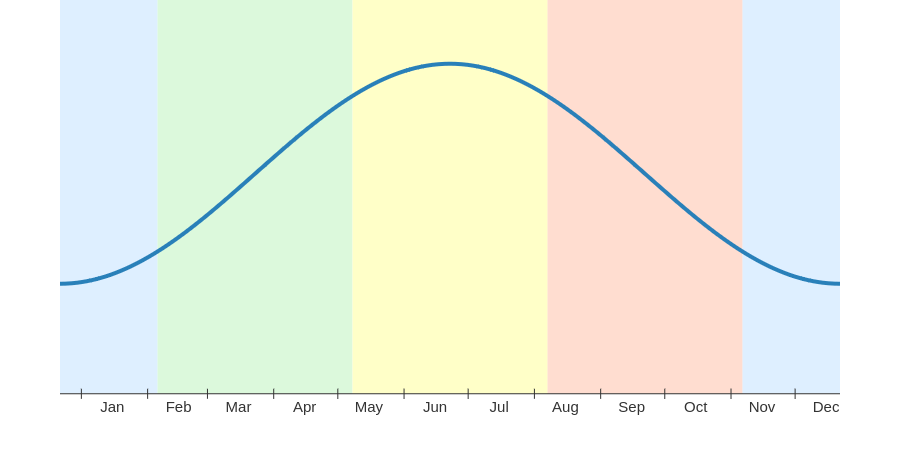
Better, but spring and autumn now have a wider range of day length than winter and summer. If we make the season equal in the range of day lengths they cover, instead of in duration, we get this:
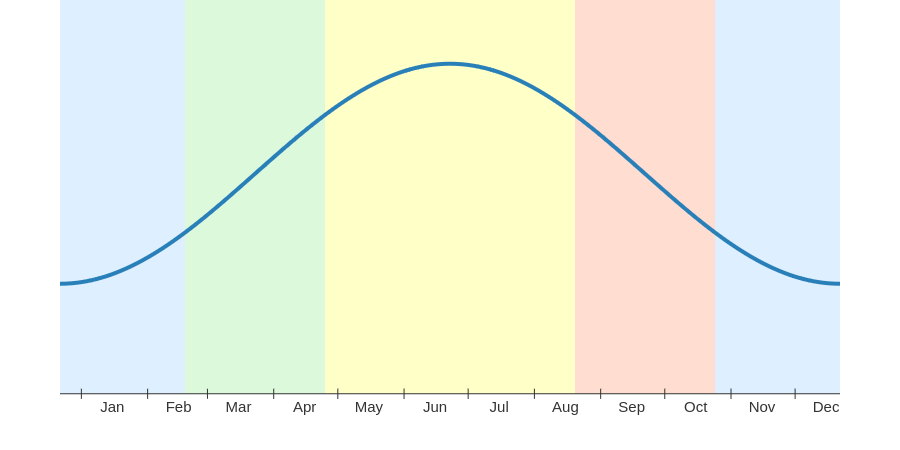
Perfect! This makes it clear that spring and autumn are both blink-and-you-missed-it transition periods because of the shape of the sine curve, while summer and winter are both long stretches of near-constantness. The seasons are not equivalent in character!
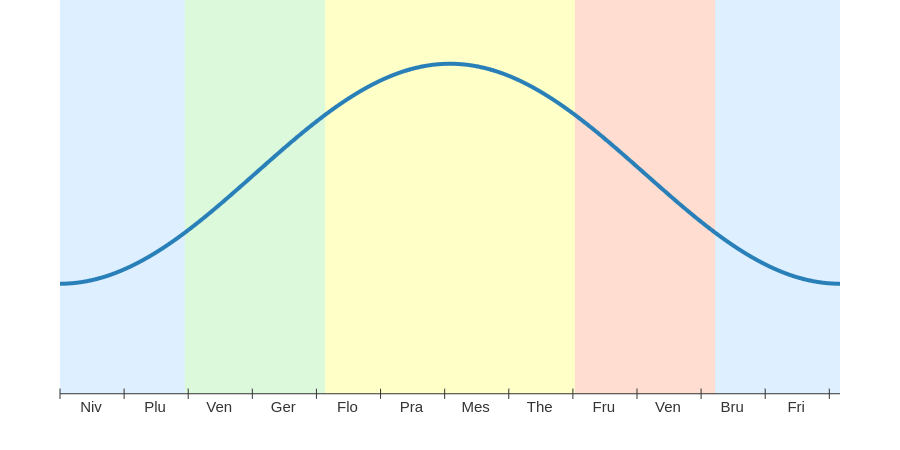
But if you’d like, you can also use the French republican calendar from the revolution, which conveniently starts at the winter solstice:
Courtesy of M., a few unfortunate conventions (my comments in italics):
The charge of the electron being negative, which makes the direction of current opposite from the direction of the flow of electrons. (relevant xkcd)
The conventional positive angle direction in mathematics being counterclockwise — unify this one way or the other.
The base-10 system is arbitrary — but I think it’s an empirical question whether counting on fingers is helpful pedagogically. It might be sensible (in the post-apocalypse) to move to a base-12 system and keep the clocks as they are. That would also save one from messing with SI seconds.
A postapocalyptic SI might include a slightly longer meter to move the speed of light from 299,792,458 m/s to 300,000,000 m/s, though admittedly there is little justification for this but simplicity.
Since M. is an astrophysicist, his list included some astronomical conventions:
Spectral types of stars: from a quick look at Wikipedia, it seems that for historical reasons, the main categories are O, B, A, F, G, K, M and the “extended" part of the system is a hodgepodge of other letters and multiletter codes.
The astronomical azimuth in Czech texts is counted from south clockwise, while most of the world counts from north.
Then there are more significant arbitrary decisions, like the various age thresholds (for voting etc.) and oh-so-many possible changes to the educational system, but that starts to enter serious territory beyond the scope of this post.
This can indeed be endlessly extended (e.g. there’s probably a bajillion historical errors in computer science), and I would be curious to read your own examples in comments below or email responses :)