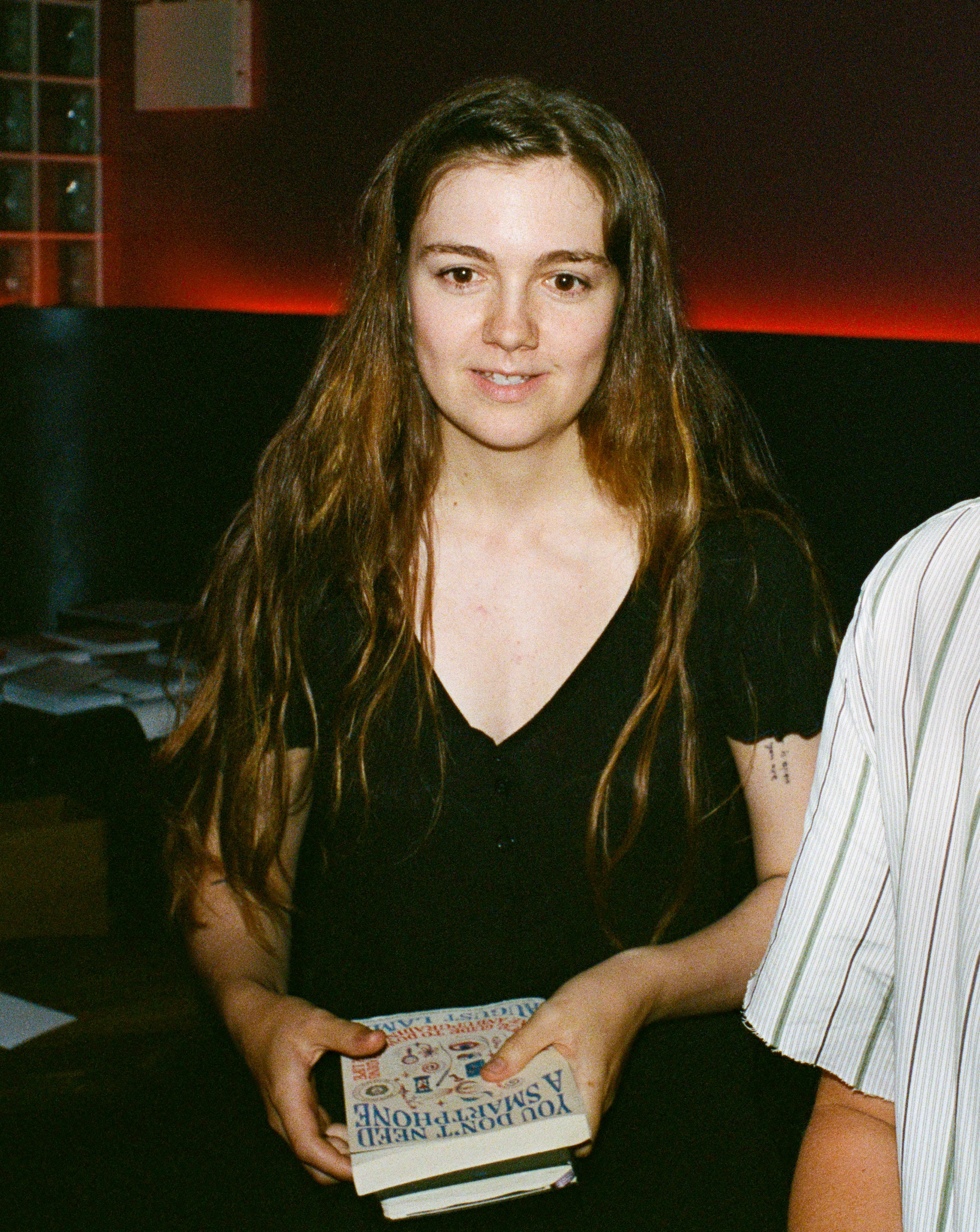
My book, You Don’t Need A Smartphone, is now available for pre-order! It’s a greatly expanded version of my pamphlet. The best way to show your support is by ordering the book now, before it comes out. This tells booksellers that there’s an audience for my writing. Thank you!

When I sold my computer last year, I was in the middle of writing a book. Or, I was supposed to be writing a book. The deadline was just three months away, and all I’d done so far was buy a stack of other books for inspiration.
In an incredible feat of avoidance, I had hand-built a custom bookshelf to hold those books. There was sawdust all over my apartment. I had also taped the table of contents to my wall, and filled a small metal box with index cards. “Convenience,” one said. “Dating,” said another.
Understandably, my editor was starting to get nervous.
How does one write a book without a computer? I did not know, which is why I was stalling. I tried reminding myself that every book published prior to the 1980s was composed on paper. But it was no use: I had grown up in the age of the delete key. In my writing career, I had rarely needed to think through a sentence before typing it out. The thinking came later, in the editing phase.
Now, the only computer I had access to was in the public library, where I could sit for an hour or so before my allotted session automatically ended.
But did it even make sense to compose an anti-technology manifesto on an internet-connected device? Would I be able to resist the pull of email, news, and “research” in a time of unbearable stress?
No, I needed to write my book the old way. I needed to prove it was still possible.
And so, I wrote. As with all difficult tasks, I tricked myself into beginning. Instead of buying a dedicated notebook (which would only become a symbol of doom), I wrote the draft in my existing diary. And I wrote in public, to stop myself from turning inward and contemplating the toil ahead. There was no time for contemplation: the book was now due in a month.


My favorite spot to write was a jazz jam in the West Village. The jam happened daily, after midnight. In the dark of this noisy basement, I would write until four a.m. then I would walk home and collapse into bed, sleeping into the afternoon.
It took a full band, plus six college kids doing back-to-back saxophone solos (if you know, you know), to silence the millennial voice within me, screaming that I couldn’t possibly write a book by hand.
After a few weeks of this, my notebook was crammed with writing. Far from reassuring me, my progress only increased my dread by bringing me nearer to the worst part: typing it all up on the computer.
I dreaded the screentime, yes, but I also dreaded confronting my nocturnal scribblings in the fluorescent glare of the library lights. The draft needed to be good. There wasn’t enough time to start over.
I was right to dread the typing, which entailed many miserable hours spent hunched over a sticky keyboard, holding in my pee, subsisting on protein bars, and periodically pleading with staff to extend my time before my session expired.
But as I worked, I was pleasantly surprised at how polished the handwritten draft was, how “book-like” it already seemed. I had been unusually careful in the drafting process—handwriting being much slower than typing—and this care had paid off.
When the edits came back a few weeks later, I borrowed an old PC from my sister and got to work on the second draft. It was strange to have a computer again. Now, like everyone else in my Manhattan apartment building, I spent the day staring at a screen. Once a low-tech sanctuary, my room was now tainted with tech-stress.
Still, this wasn’t the level of tech I’d grown up with. There was no wifi, and the laptop was worryingly slow, missing some crucial keys. To produce a space, I had to press a small rubber nub. (I have rarely felt as discouraged as when that nub fell off.)
That draft took me two screenbound weeks. Likewise for the next one. And the next one. Two weeks of concentrated, undistracted, offline work.
And then I was done. The manuscript was finished, copy-edited, sent off to the printers.
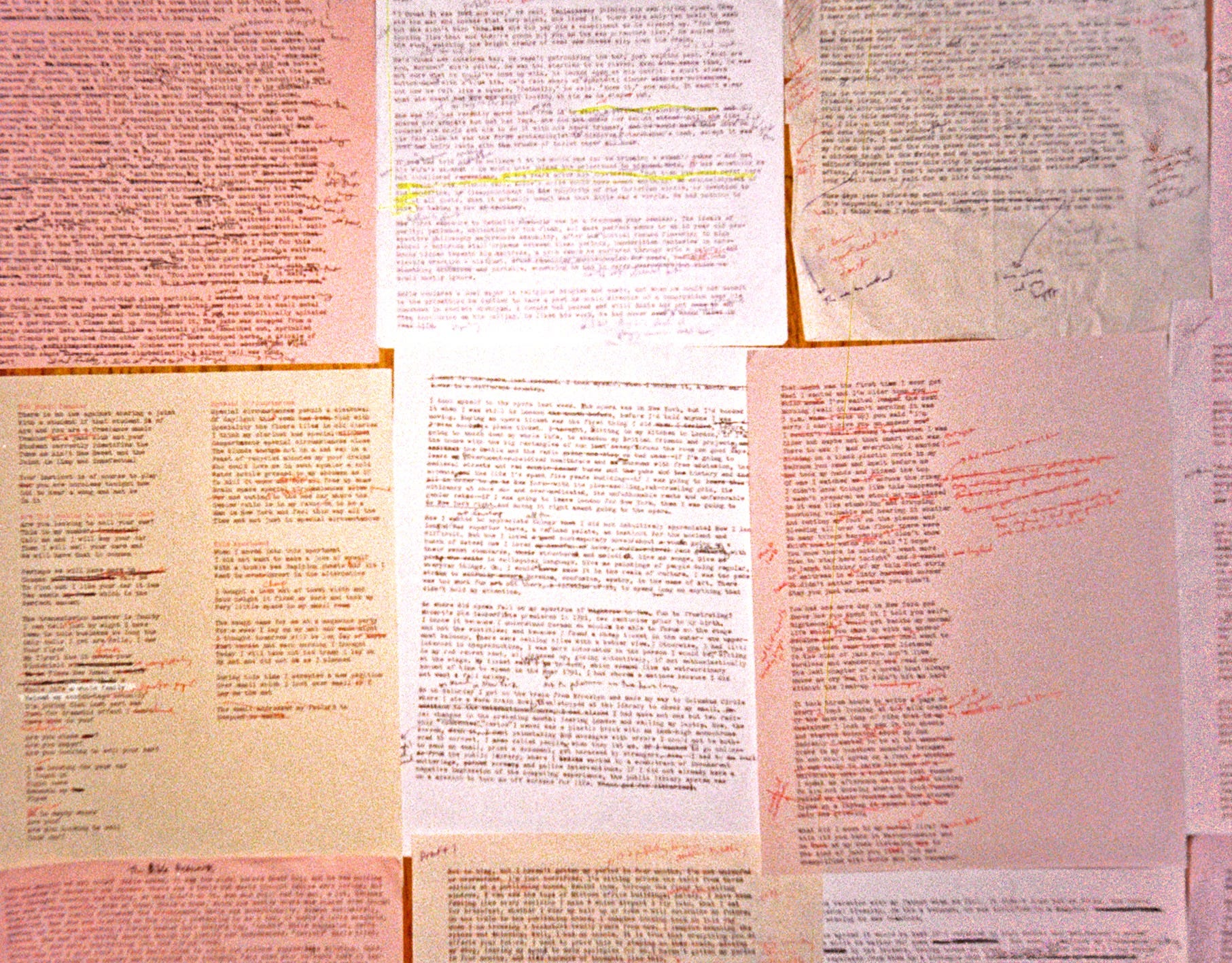
After that, I continued to draft all my stories and essays by hand. I edited the drafts with a red pen, typed them up on the typewriter, made pen edits on the typewritten drafts, brought them to the library, and finally emailed them to an editor.
“That must take forever,” people said. But here’s the thing: it didn’t. It was actually faster.
On a computer, the process of composing and editing is scattershot, roundabout. You might write half of a piece, then go back and edit the first paragraph, then scroll down to the fifth, then work on the ending, then come back to the middle, perfecting one section while neglecting another.
And that’s assuming you’re writing offline. When there’s wifi, detours are inevitable, and every road leads back to the internet.
Distracted writing is bad writing. Have you ever considered that the vast majority of books published today were composed in a cycle of app checks, email replies, news headlines, and social posts?
Distraction is not a new thing, of course, but I think we can all agree that there’s a difference between old-school distractions—looking out a window, flipping through a book, tidying the office, calling a friend—and modern ones.
I wouldn’t mind reading a book whose author compulsively snacked, or smoked, or paced the room after every page. I do mind reading a book whose author was inundated with the voices of a thousand other people, platforms, brands, algorithms.
I learned to type in elementary school computer class. I grew up believing that the most effective way to write was to vomit text as fast as I could type. Just get it all out. As if sentences were rats: dangerous things, disturbing to consider for longer than a brief, blurred flash.
If we’re doing animal analogies, I’d prefer to think of sentences as foster dogs. You live with them for a period of time, feed and nurture them, encourage them not to bite or bark or piss on the carpet. Then you send them out into the world, and move onto the next one.
In this age of non-stop, tech-fueled, internet-hosted, instant-feedback publishing, the best thing we can do as writers is to step away from the screen for the first draft. Our attempts to digitally “streamline” the creative process have only flattened it, bound it up with tools of commerce, entertainment, and communication.
Enough of the multi-purpose writing device. Let’s give creativity its own place, separate from everything else. Sure, the process might take longer. But if we want our writing to stand the test of time, speed should be the last of our concerns.
You can pre-order my book here. And if you’re looking to try writing offline in a communal setting, you should check out my new low-tech residency in upstate NY. Applications now open for the winter session.
