
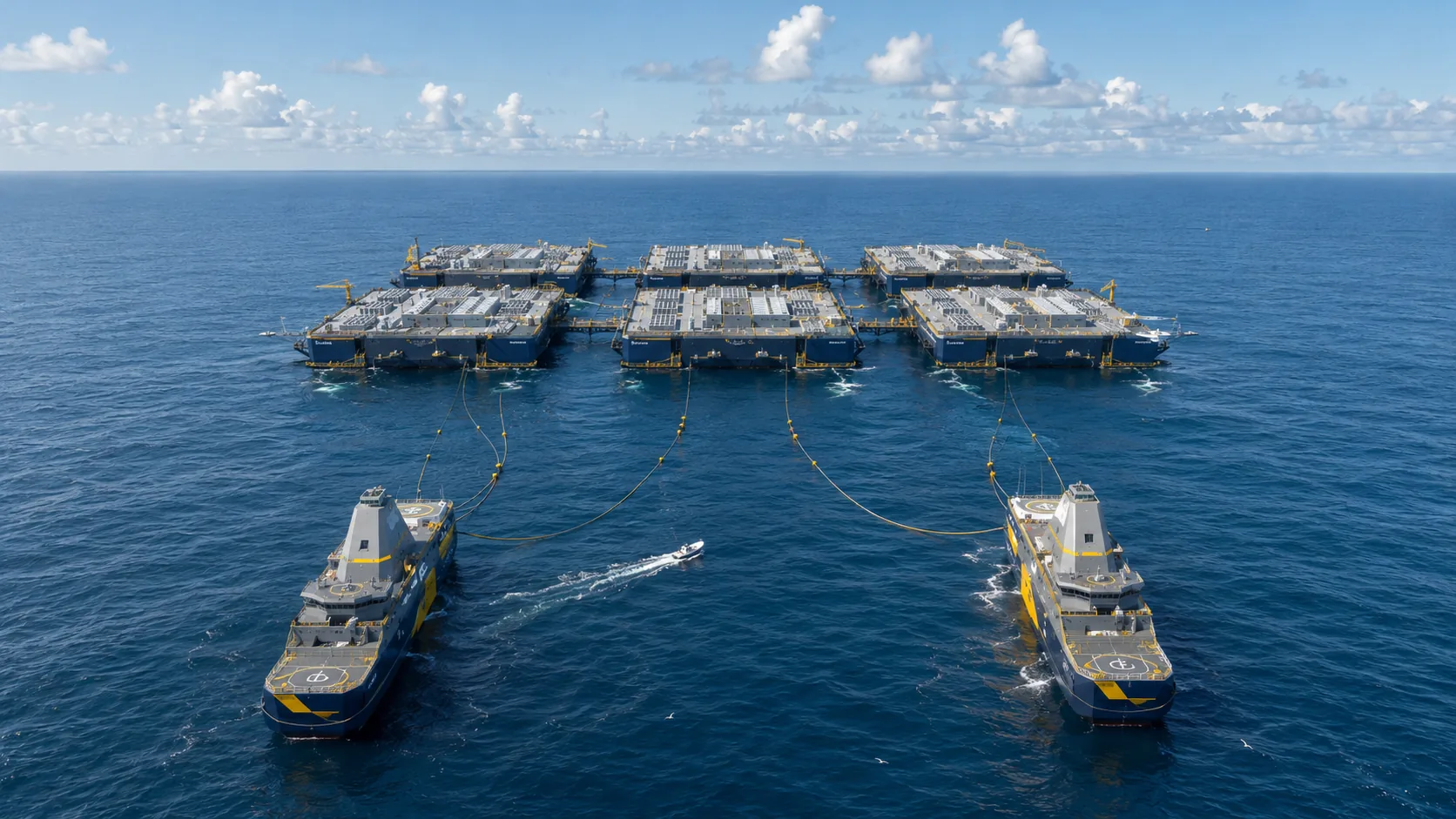
Offshore power & compute infrastructure
Nuclear data centers at sea.
Floating platforms for high-performance computing.
Standalone power, seawater cooling, location-agnostic deployment.
4–5×
faster deployment than on land
~1.1 PUE
seawater cooling, modeled
20–40 yr
infrastructure life
01The constraint
AI's bottleneck is access to power
- 01
A grid connection takes four to seven years, while new chips install in months.
- 02
Firm power is projected to fall 35 to 49 gigawatts short by 2030.
- 03
On land, cooling and water are among a site's largest costs.
- 04
A land campus locks billions into one site, chosen for queues and zoning rather than demand.
02The platform
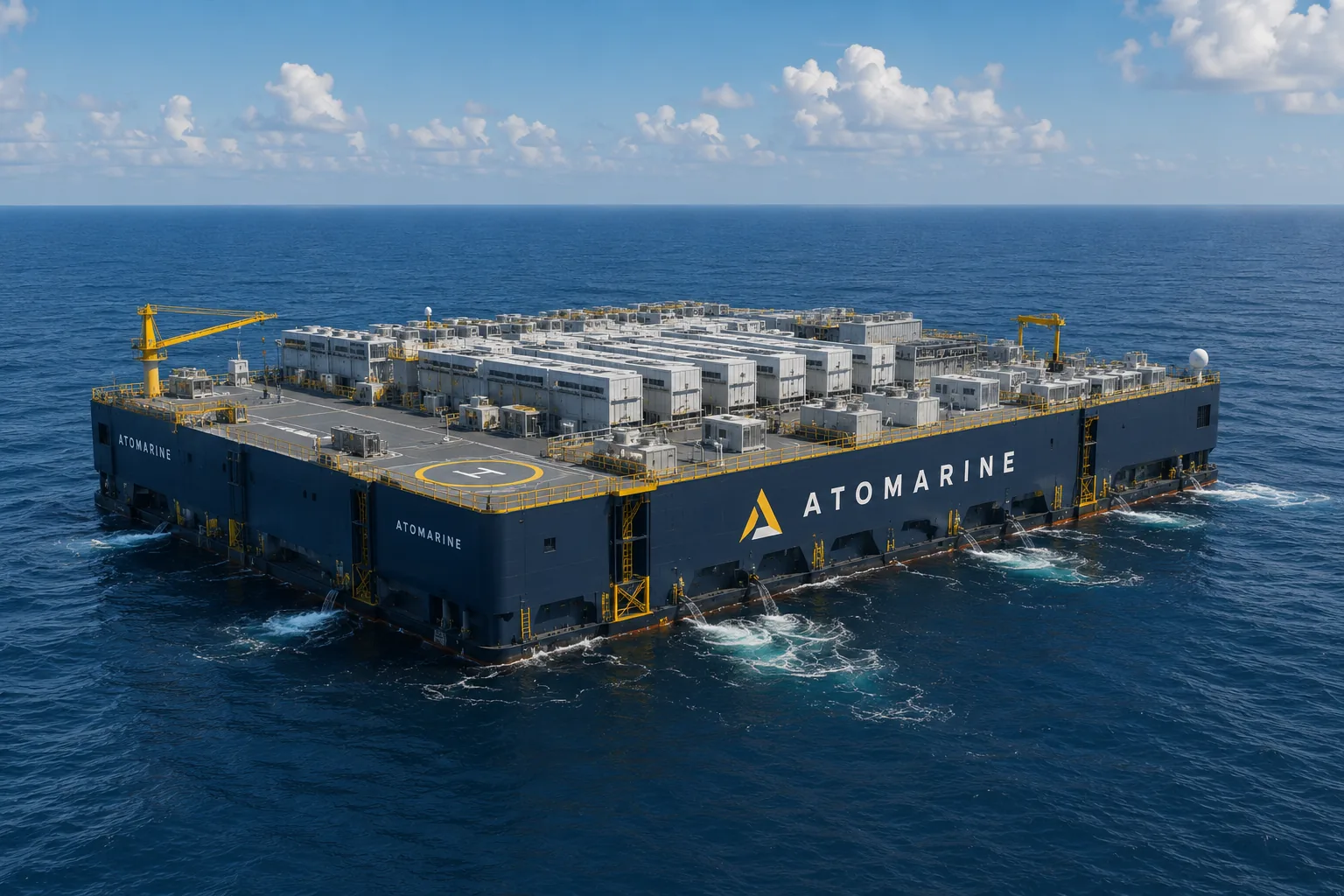
We move compute offshore.
70% of the world is water. Humanity can already start taking advantage of it.
01
Power on site
Generation is built into the campus. No interconnection queue.
02
Location Agnostic
Standalone systems can deploy anywhere on Earth.
03
Centralized manufacturing
Standardized units, produced in shipyards with tight deliverability.
04
Cooled by seawater
A closed seawater loop, no cooling towers, modeled PUE around 1.1.
03Scale
The campus grows with demand.
Each platform is built in a shipyard, towed to site, and moored beside the last. From first barge to 450 megawatts, without breaking ground.
04Power
Gas today, nuclear tomorrow.
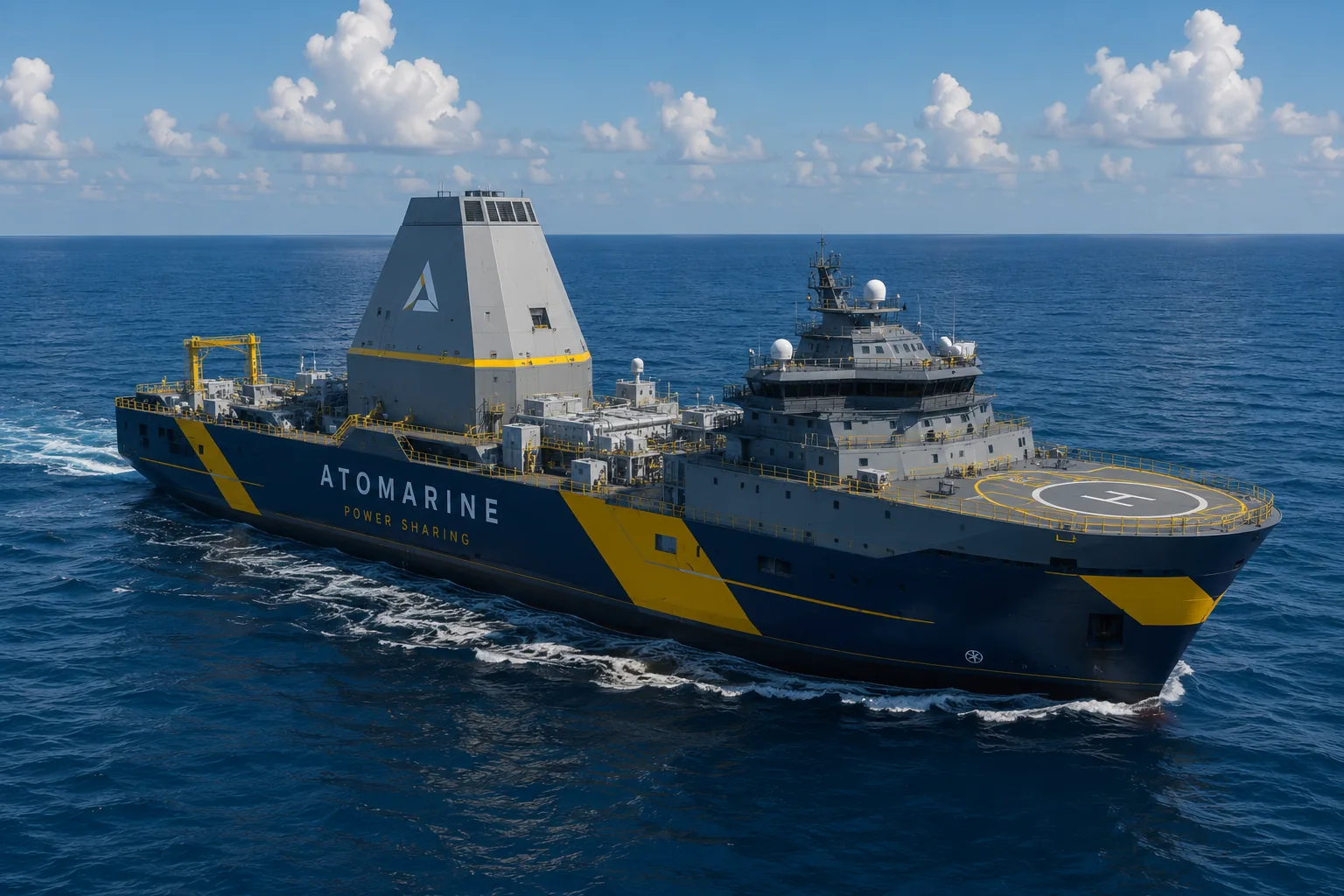
Each campus is powered by a vessel moored alongside it, so the energy source can change without touching the data halls.
Today · Gas turbines Tomorrow · Marine reactors
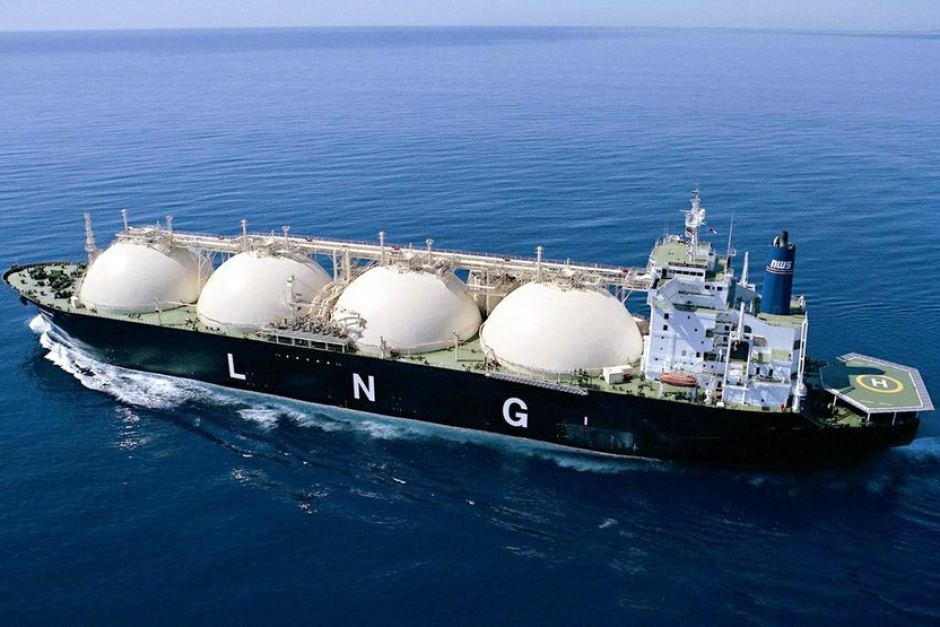
The first power vessels run on natural gas, proven equipment that already exists.
As compact marine reactors come online, a nuclear vessel takes the same berth and the campus switches to steady, carbon-free power.