Autopilot false advertising case
Tesla fights DMV complaint that Autopilot is falsely advertised as autonomous.
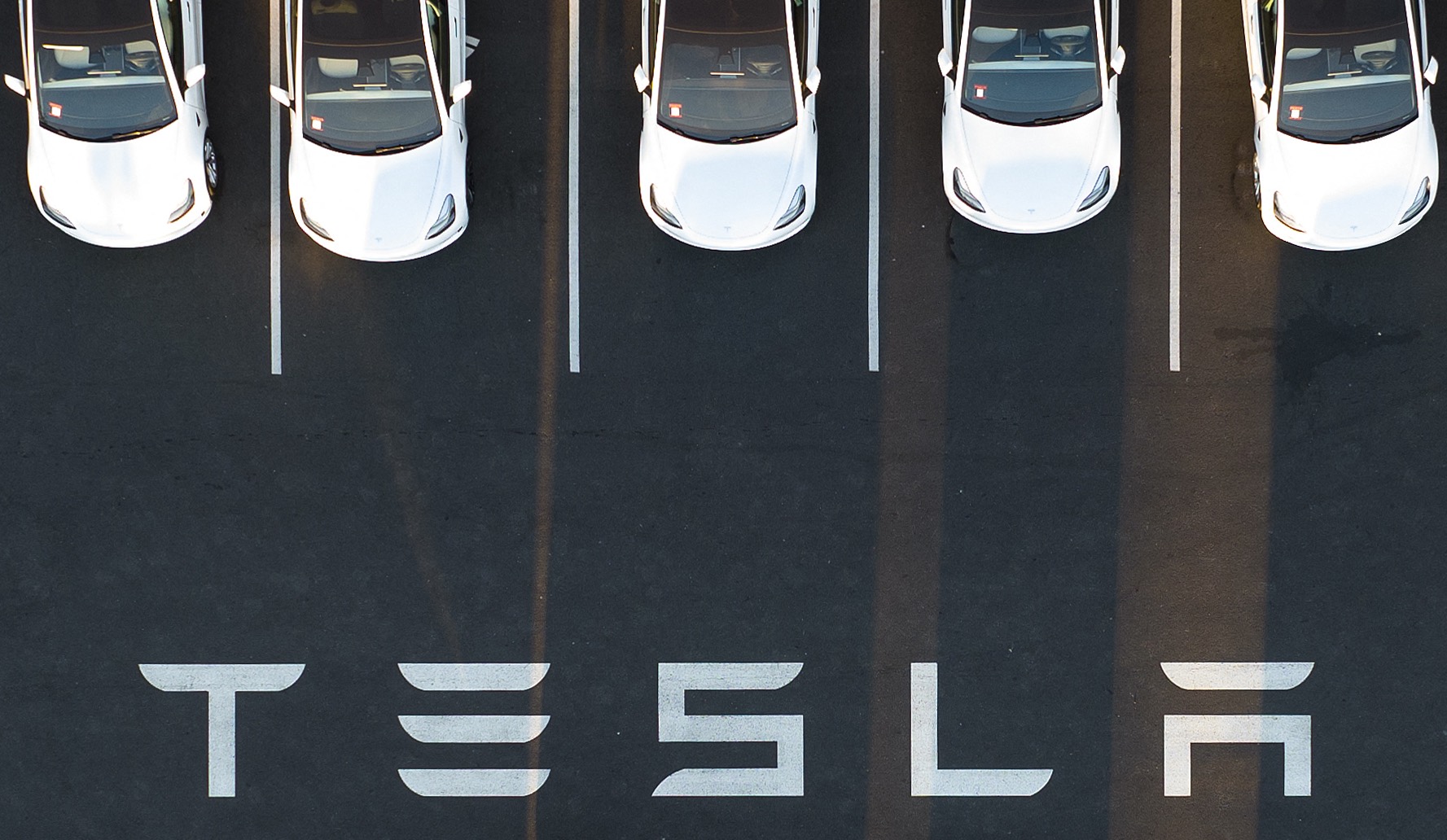
Cars parked at the Tesla factory in Fremont, California, on February 10, 2022. Credit: Getty Images | Josh Edelson
Cars parked at the Tesla factory in Fremont, California, on February 10, 2022. Credit: Getty Images | Josh Edelson
Tesla is trying to use a free speech argument to defeat a complaint that it falsely advertised “Autopilot” as an autonomous vehicle system. In response to the California Department of Motor Vehicles allegation about Autopilot, Tesla claims the state laws cited by the DMV violate the US Constitution’s First Amendment.
The DMV’s July 2022 complaint alleges that Tesla falsely advertises its Autopilot-enabled cars as operating autonomously and seeks a suspension or revocation of Tesla’s manufacturer license.
Tesla’s response, which was filed last week and published yesterday in a story by The Register, says that several California statutes and regulations cited by the DMV “are unconstitutional under the First Amendment to the United States Constitution and Article I, Section 2, of the California Constitution, as they impermissibly restrict Tesla’s truthful and nonmisleading speech about its vehicles and their features.”
One of the state laws that Tesla complains about is Cal. Veh. Code § 24011.5, which says that companies “shall not name any partial driving automation feature, or describe any partial driving automation feature in marketing materials, using language that implies or would otherwise lead a reasonable person to believe, that the feature allows the vehicle to function as an autonomous vehicle.”
Tesla: Law “invalid under the First Amendment”
That California law, according to Tesla, “is facially invalid under the First Amendment to the United States Constitution” and the state Constitution because “a substantial number of the statute’s applications impermissibly restrict constitutionally protected speech that is truthful and nonmisleading.”
Despite Tesla’s free speech claim, the US and state governments can enforce laws banning deceptive practices that harm consumers. “Beyond the category of common-law fraud, the Supreme Court has also said that false or misleading commercial speech may be prohibited,” a Congressional Research Service report last year stated. “For constitutional purposes, commercial speech is speech that does no more than propose a commercial transaction or that relates solely to the speaker’s and audience’s economic interests. Accordingly, the Federal Trade Commission (FTC) and the Federal Communications Commission (FCC) can regulate deceptive commercial speech without violating the First Amendment.”
The California DMV’s 2022 complaint, alleging deceptive practices that violate state law, said that Tesla “made or disseminated statements that are untrue or misleading, and not based on facts, in advertising vehicles as equipped, or potentially equipped, with advanced driver assistance system (ADAS) features… Instead of simply identifying product or brand names, these ‘Autopilot’ and ‘Full Self-Driving Capability’ labels and descriptions represent that vehicles equipped with the ADAS features will operate as an autonomous vehicle, but vehicles equipped with those ADAS features could not at the time of those advertisements, and cannot now, operate as autonomous vehicles.”
The agency argued that a Tesla disclaimer, which says the “features require active driver supervision and do not make the vehicle autonomous,” is not enough to make the advertising truthful. The “disclaimer contradicts the original untrue or misleading labels and claims, which is misleading, and does not cure the violation,” the DMV said.
Tesla also says DMV waited too long
The case is being heard in California’s Office of Administrative Hearings. “The DMV launched its investigation in May of 2021. It filed its administrative complaint in July 2022 and spent the next year researching the case before requesting trial date hearing,” a Los Angeles Times article said.
Tesla offered several other defenses in addition to its free speech argument. The company said the case being heard by an administrative law judge “violates Tesla’s right to a jury trial.” Tesla also said the DMV waited too long to make its complaint and that it is thus barred by the applicable statute of limitations.
“Claimant has been aware that Tesla has been using the brand names Autopilot and Full Self-Driving Capability since Tesla started using those names in 2014 and 2016 respectively… Before Claimant filed the original Accusation in July 2022, Claimant had never told Tesla to stop using these brand names or otherwise indicated to Tesla that these brand names or its advertising were in any way problematic,” Tesla said.
Tesla said the DMV investigated Tesla’s self-driving advertising in 2014 and 2017 and “chose not to take any action against Tesla or otherwise communicate to Tesla that its advertising or use of these brand names was or might be problematic.”
“Claimant is therefore estopped from asserting the myriad false advertising claims in the FAA [First Amended Accusation] against Tesla because it knew of Tesla’s use of the brand names Autopilot and Full Self Driving Capability and Tesla’s advertising of these packages for over five years and failed to take any action,” Tesla wrote. “Tesla relied upon Claimant’s implicit approval of these brand names. Claimant is estopped from now attempting to hold Tesla liable for conduct that Claimant implicitly approved.”
DMV cited Tesla advertising from 2022
The DMV complaint cites Tesla statements that were on the company’s website in 2021 and 2022. One such marketing statement said, “The system is designed to be able to conduct short and long-distance trips with no action required by the person in the driver’s seat.”
Another Tesla statement cited by the DMV said, “From Home—All you will need to do is get in and tell your car where to go.” The DMV complaint alleged that Tesla’s “acts or omissions are cause for suspension or revocation of Respondent’s manufacturer license and special plates under Vehicle Code § 11705.”
Separately from the DMV’s action, a class-action complaint filed on behalf of shareholders in February 2023 alleges that Tesla and CEO Elon Musk repeatedly made false statements about the capabilities and safety of Autopilot and Full Self-Driving technology. The US National Highway Traffic Safety Administration (NHTSA) has also been investigating Tesla Autopilot safety in response to crashes, including some causing deaths.
Listing image: Getty Images | Josh Edelson
Jon is a Senior IT Reporter for Ars Technica. He covers the telecom industry, Federal Communications Commission rulemakings, broadband consumer affairs, court cases, and government regulation of the tech industry.