On Tuesday, the US Copyright Office declared that images created using the AI-powered Midjourney image generator for the comic book Zarya of the Dawn should not have been granted copyright protection, and the images’ copyright protection will be revoked.
In a letter addressed to the attorney of author Kris Kashtanova obtained by Ars Technica, the office cites “incomplete information” in the original copyright registration as the reason it plans to cancel the original registration and issue a new one excluding protection for the AI-generated images. Instead, the new registration will cover only the text of the work and the arrangement of images and text. Originally, Kashtanova did not disclose that the images were created by an AI model.
“We conclude that Ms. Kashtanova is the author of the Work’s text as well as the selection, coordination, and arrangement of the Work’s written and visual elements,” reads the copyright letter. “That authorship is protected by copyright. However, as discussed below, the images in the Work that were generated by the Midjourney technology are not the product of human authorship.”
Last September, in a story that first appeared on Ars Technica, Kashtanova publicly announced that Zarya of the Dawn, which includes comic-style illustrations generated from prompts using the latent diffusion AI process, had been granted copyright registration. At the time, we considered it a precedent-setting case for registering artwork created by latent diffusion.
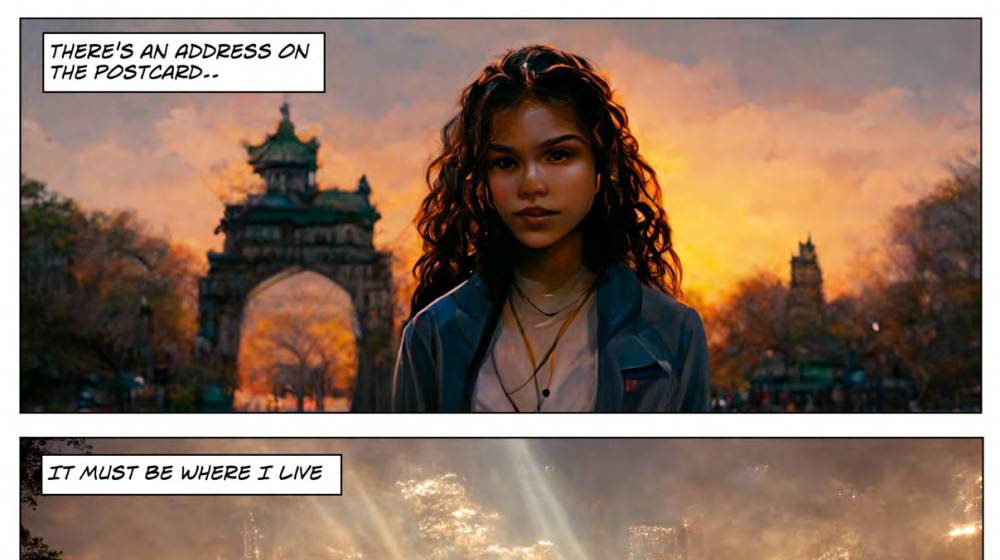
An excerpt from the AI-assisted comic book Zarya of the Dawn, which initially received a US copyright registration in September, now revised.
An excerpt from the AI-assisted comic book Zarya of the Dawn, which initially received a US copyright registration in September, now revised. Credit: Kris Kashtanova
However, as the letter explains, after the Copyright Office learned that the work included AI-generated images through Kashtanova’s social media posts, it issued a notice to Kashtanova in October stating that it intended to cancel the registration unless she provided additional information showing why the registration should not be canceled. Kashtanova’s attorney responded to the letter in November with an argument that Kashtanova authored every aspect of the work, with Midjourney serving merely as an assistive tool.
That argument wasn’t good enough for the Copyright Office, which describes in detail why it believes AI-generated artwork should not be granted copyright protection. In a key excerpt provided below, the Office emphasizes the images’ machine-generated origins: