“TinyTendo utilizes real NES chips that have been physically cut and ground down smaller,” wrote Redherring32. “A simple run down is that I sand away the bottom of the chip till I hit the die and leads, then I cut the chip smaller with a Dremel. The end result is 10x10x2mm, and surface mountable.”
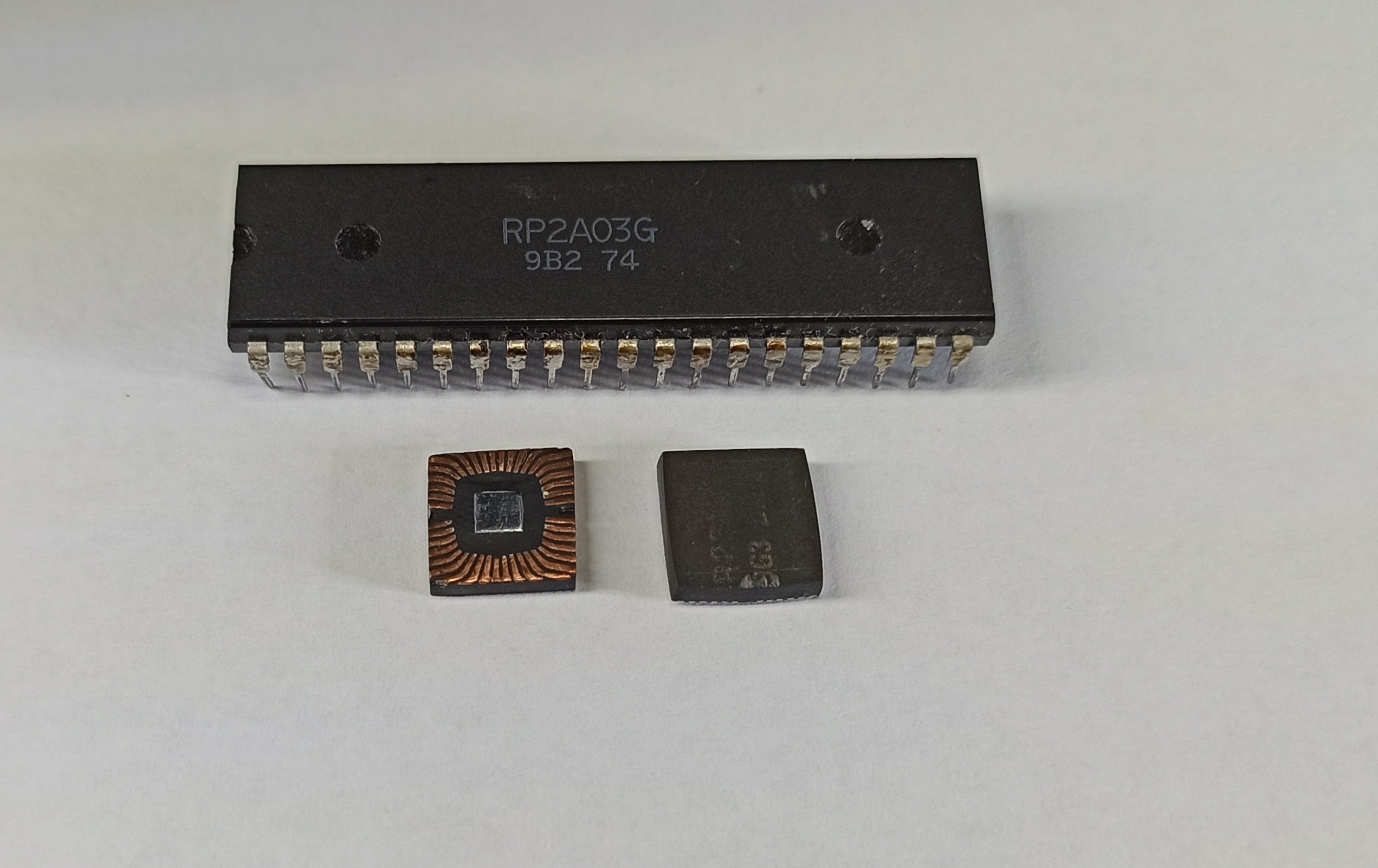
The hand-cut chips save a substantial amount of space by losing the pins and packaging. Credit: Redherring32/Twitter
Soldering the hand-cut chips to a custom PCB creates a fully functional NES board that is “smaller than a Raspberry Pi 3,” though the design also integrates a power management PCB, a button PCB, and other boards for audio and other functions. The console has a built-in LCD screen, charges over USB-C, and plays miniaturized (non-original) game cartridges, though full-size carts could be played with an adapter.
The downside of this project is that it requires the sacrifice of an actual NES to make it work. This prototype was made from an NES with a “very damaged motherboard,” and we would encourage anyone who wants to make their own to harvest parts from non-functional consoles rather than destroying functioning hardware.
Redherring32 is responsible for several other modding and preservation projects, including open source PCB designs for the original front– and top-loading NES motherboards and the “PicoPad,” a functional controller that’s considerably smaller than the connector that plugs it into the NES.