Canada’s Inuit culture has come to Instagram and Facebook.
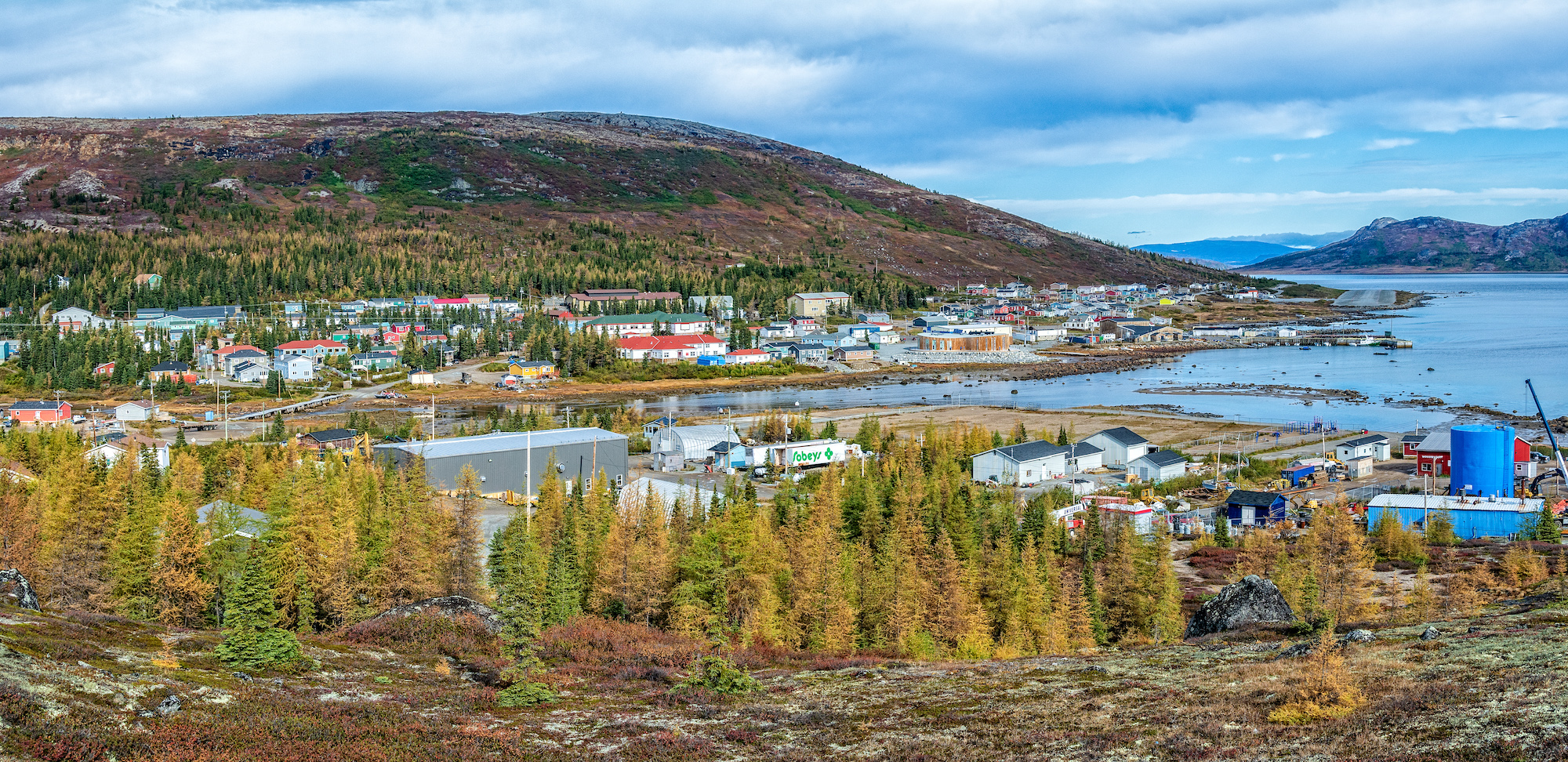
The town of Nain. Credit: Dennis Minty/Adventure Canada
The town of Nain. Credit: Dennis Minty/Adventure Canada
Moravian missionaries arrived in Canada in the 1700s, forever altering the future of the country’s Inuit population. Beginning in the 19th century, Inuit children were taken away from their families and forced to attend residential schools (boarding schools), where they were not allowed to speak their own language. In the 1950s, hundreds of Inuit in Nunatsiavut (the easternmost of Canada’s four Inuit regions) were forcibly removed from their land and stripped of their native language and customs. As a result, a generation of students that lost their culture gave birth to children who are now, themselves, searching for new ways to reclaim it.
Restoring that culture is a challenge, because many Inuit currently live in remote communities that lack roads and transportation infrastructure, leaving them isolated from each other. But technology has started helping them to connect with other Inuit across the country, to preserve traditional cultural practices, and to create a space for young people to learn about and participate in their heritage.
Of the 65,000 Inuit spread across Canada, about 7,200 are Labrador Inuit. About a third of these Labrador Inuit reside in Nunatsiavut, which has five major Inuit communities scattered along the coastline of Newfoundland Labrador province. None of the communities are connected to each other—or to anywhere else for that matter— by road, and they can only be reached by airplane or boat. Nain, with a population of approximately 1,200 people, is the largest and northernmost Inuit community.
But Nain has a key advantage in terms of integrating into the wider Inuit world: it’s the only one of these communities with mobile cellular service. Up until a year ago, web surfing and social media usage was largely confined to the home in Nain. In July 2019, however, mobile phone service arrived in Nain.
Some Inuit parents have the same concerns as parents in more connected regions, such as whether their children are spending too much time online. But some of those children are using the technology to connect with Inuit communities—and their traditions—that they might never experience otherwise.
Life before cell coverage
I arrived in Nain in September 2019 on an Adventure Canada expedition ship, just two months after cell service arrived in the city. We were the first (and only) expedition ship to visit the town of 1,100 people all year. After seven days of sailing and hiking without Internet access, the town’s new cell service was a very welcome surprise to the mostly Canadian and American passengers on board. Many of those passengers immediately logged on to social media.
Even though cell phone coverage wasn’t available until recently, some Nain residents had cell phones that they used to connect to the Internet using home Wi-Fi connections. But until 2019, they had no reason to take their phones with them outside the house unless they were traveling to another part of Canada that had service.
Many residents—the younger ones, especially—had learned to work around the limited access. Megan Dicker, a 20-year-old geography student from Nain, said of the new cellular plans, “It wasn’t really that big of a change from before. We knew all the houses with Wi-Fi so we’d just stop to connect along the route to wherever we were going.” Dicker firmly believes that the new cell phone service is a good thing, but she noted that it must be used “in moderation.”

Megan Dicker shows off her traditional tattoos.
Credit: Cassandra Brooklyn
Megan Dicker shows off her traditional tattoos. Credit: Cassandra Brooklyn
According to Bert Pomeroy, the Nunatsiavut Government’s Director of Communications, Inuit communities have long struggled with not only access to cellular coverage, but to adequate Internet speeds. As recently as two years ago, bandwidth was so limited in Nain that even the local government employees had difficulty sending files among each other. “Someone trying to send time sheets or a PDF to the payroll department may have to wait a few minutes for it to go through,” Pomeroy said. “It got even worse in the afternoon when kids got out of school and got on Xbox or Netflix.”
When cell service arrived, Nain’s new mobile phone plans included data usage limits, so there was a need to educate the community on how these plans worked. Until this time, the only experience most people had with the Internet was with the unlimited access they enjoyed on a home Wi-Fi connection.
To help their neighbors avoid overage charges, the local Nunatsiavut Government and some individual citizens took it upon themselves to inform the community. Local residents who understood the data plans began posting explanations on their personal Facebook feeds to help inform their friends and family. In other words, they were using technology to educate others about technology.
The social media debate
There are some obvious practical benefits to the expanded access. The Inuit-led Nunatsiavut regional government in Nain has also embraced social media, sharing posts about upcoming cultural commemorations and doctor visits. Optometrists and dentists only visit the community every month or two, so it’s crucial that residents know when they can make appointments. When COVID-19 hit Canada, the Nunatsiavut Government and local politicians used social media to share information about social distancing.
Though Facebook and social media had already been available on desktop computers, locals in Nain have noticed a significant increase in its use since mobile phone service arrived. Some parents and elders are upset to see their children and grandchildren whipping out their phones during community events. They lament that instead of engaging with their neighbors and participating in celebrations and sporting events, some youth now prefer to stare at their screens.
At least half a dozen community members I spoke with expressed concern with the increasing amount of time they and their neighbors now spend online. One woman said she enjoys browsing her family and friends’ Facebook pages for about 15 minutes, after which she begins feeling depressed. Several residents also expressed concern with “over sharing” and “inappropriate” Facebook posts—a symptom of social media culture that just about anyone with a Facebook account has witnessed firsthand.
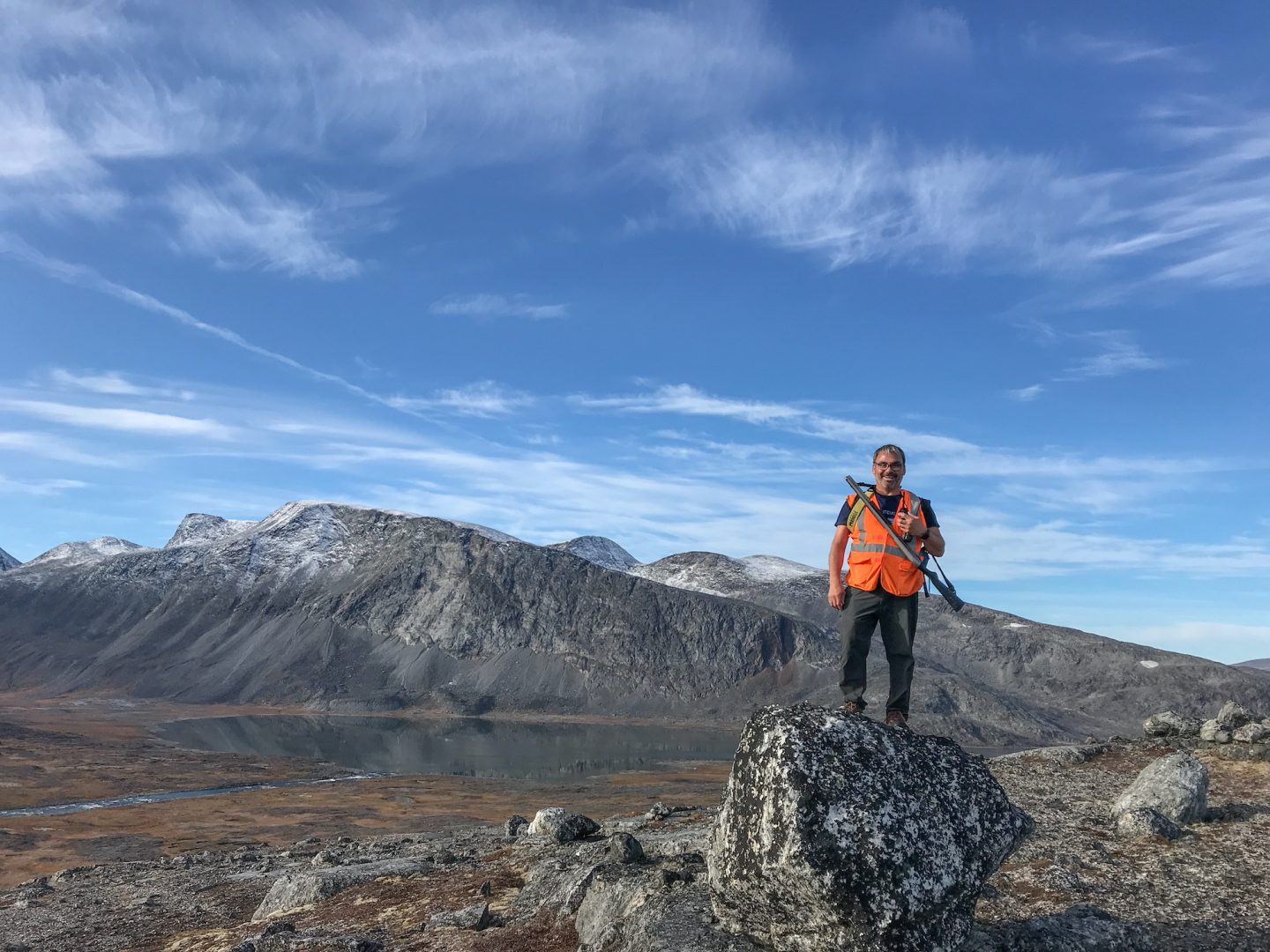
Wayne Broomfield worries that a focus on devices will lessen the younger generation’s connection to the land.
Credit: Cassandra Brooklyn
Wayne Broomfield worries that a focus on devices will lessen the younger generation’s connection to the land. Credit: Cassandra Brooklyn
Young people see the experience a bit differently. They are finding Inuit peers in other communities through mutual friends on social media. Teenagers search through their friends’ Instagram followers and Facebook friends to find other Inuit youth with similar interests. They follow each other online and then share cultural information with each other, sometimes by live streaming from community gatherings.
Wayne Broomfield, the assistant expedition leader on Adventure Canada’s tours through Nunatsiavut, accepted the good aspects of social media but voiced a different worry. “A lot of young Inuit aren’t connecting with the land anymore because they can do it so much more easily online,” he said. “It’s good that they’re learning more about their culture on social media, but you can’t get the same connection online as you can from actually going out on the land.”
Social media as culture-sharing platform
While the land may be a central feature of Inuit culture that can’t be replicated online, others aspects do translate. Belinda Webb, the Deputy Minister of the Nunatsiavut Government, says her team saw a noticeable increase in Facebook followers and post engagement when they introduced a “word of the day” program in Inuttitut (the Inuit language that’s also sometimes spelled Inuktitut). Webb, a mother herself, is also concerned with the potential negative consequences of youth spending more time online, but she supports the live streaming of community events.
“The more we can share our cultural experiences with each other and the rest of the world, the better,” she says.
Inuttitut-langauge Facebook pages serve as a not-judgmental zone where Inuit can ask translation-related questions without feeling embarrassed or being teased for misspellings or lack of understanding.
Youth and some parents I spoke with noted that the ability to access Internet at social gatherings was allowing them to connect and share important cultural moments with Inuit across Canada. While some young people may be “guilty” of mindlessly scrolling through their social media feeds at a community event, many are actually streaming the event so that Inuit who live hundreds or thousands of miles away can also participate. Given the remoteness of most Inuit communities, where lack of roads means that travel is costly and only possible via airplane or ship, the significance of this increased connection cannot be understated.

A mother uses cell service to watch her child’s cross-country race.
Credit: Cassandra Brooklyn
A mother uses cell service to watch her child’s cross-country race. Credit: Cassandra Brooklyn
Krissy Holwell, a mother of three in Nain, kindly drove me to interview a non-profit social youth enterprise in town. She waited in the car while I conducted the interview, and when I hopped into the back seat, she was staring at her screen, cheering. She was watching a live stream of a cross-country competition in Happy Valley-Goose Bay—a three-hour flight from Nain. She had just watched her son cross the finish line.
Flights to Happy Valley-Goose Bay run about $1,000 Canadian dollars (~$750 USD), a prohibitive sum for most parents. During a family trip to Toronto the previous year, Holwell and her husband spent nearly $20,000 to bring their four children to watch a hockey tournament. Live streaming can never fully replace real-life experiences, but it can be an excellent option for the majority of Canadian Inuit that don’t have the means or opportunity to travel.
Social media as an educational tool
Youth are not only using social media to connect with other Inuit people across Canada—they’re also using it to learn about Inuit traditions like throat singing and female tattoos.
Inuit women are known to have tattooed their bodies for generations, a practice that was virtually wiped out by colonization. The significance of some tattoos remains unclear, but many believe that vertical lines down a woman’s chin and markings on her forehead and cheeks may have indicated that a girl was ready for womanhood, or that a woman had borne children or lost her husband.
Chin tattoos are returning slowly, more so among Greenlandic Inuit women and Alaskan Inuit women; wrist and thigh tattoos are more common among Inuit women in Canada. Youth in small Inuit communities research tattoo designs and their meanings on Instagram, then fly to Ottawa, St. Johns, and Happy Valley-Goose Bay, where tattoo artists like Jessica Coffey apply the tattoos using the traditional poke method.
Moravian missionaries from Saxony, Germany, arrived in Labrador in 1752 and considered traditional Inuit drum dancing and throat singing to be un-Christian. They actively prohibited the practices, and some older Moravian Labrador Inuit still frown on these “heathen” activities. Young people, on the other hand, are taking drum dancing and throat singing classes in their communities and searching for related videos on YouTube. Lena Onalik, an archeologist in Newfoundland and a culturalist with Adventure Canada, learned throat singing from her grandmother but now looks to YouTube to learn new songs.

Nain’s Illusuak Cultural Centre.
Credit: Dennis Minty/Adventure Canada
Nain’s Illusuak Cultural Centre. Credit: Dennis Minty/Adventure Canada
After Newfoundland and Labrador joined Canada in 1949, Inuit were required to learn English. As a result, very few Inuit are fully fluent in Inuttitut. Inuit musicians and bands now travel around Canada’s Inuit communities, performing songs in Inuttitut. Youth I spoke with said that hearing songs in their native tongue is both a source of pride and also an opportunity to practice their language skills. They follow Inuit artists on Facebook and Instagram, search YouTube to learn the lyrics of popular songs, and buy the music on Apple and Spotify.
”Many young people aren’t aware of how much Inuttitut they actually know,” Dicker, the geography student, tells me. “Hearing the songs and being able to understand them is comforting and encouraging.”
Podcasts are relatively new to Inuit Canada, but youth are embracing those that speak to a variety of issues in their community. These podcasts tend to be produced by Alaskan Indigenous people and discuss, in English, issues ranging from native foods and traditional tattoos to de-colonization and LGBTQ matters. Two such podcasts are All My Relations and Coffee and Quaq (Inuttitut for “frozen meat”, a popular snack in Inuit culture that tastes far better than it sounds).
Language apps and remaining challenges
Up until a few years ago, Rosetta Stone was the best and sometimes only way for Nain residents to practice Inuttitut. Unfortunately, the Inuttitut edition of Rosetta Stone is only available on CD-ROM for PCs (sorry, MacBook users). Desktop computers are becoming less popular and CD drives are being removed from many laptops, so the demand for mobile apps has been growing.
The Tradition and Transitions Project, a partnership between Memorial University in St. Johns, Newfoundland and the Nunatsiavut Government, helped foster the development of an Inuttitut phrase book which was later developed into the Inuttut Kautamât uKauset mobile app.
Prior to COVID-19, the Nunatsiavut Government was looking into creating a live Inuttitut webinar series for government staff, teachers, and residents without a home Wi-Fi connection. Webb, the Deputy Minister, had hoped that school teachers would be able to use the live webinars and recordings to freshen up their own Inuttitut to incorporate into their classroom lessons.
The government had also sponsored free in-person language classes as part of a pilot program, but the classes were halted due to COVID-19. Interest was high and Sarah Townley, one of few fully-fluent Inuttitut speakers, is now leading live language classes on the Nunatsiavut Government Facebook page. Webb said that the government is currently looking at all avenues of language learning, and that once more restrictions have been lifted, some in-person classes could resume, albeit with some restrictions.
The new normal
Julie Dicker (no relation to Megan Dicker), a physical education teacher in Nain, says that up until a year ago, she never took her phone with her outside the house. “Now I take my phone everywhere and even if I’m standing in line somewhere for 30 minutes, I’ll take out my phone to call someone,” she says. “We used to think it was weird to see people walking down the road talking on their cell phones but now it’s normal.”
Just as Nain’s youth knew exactly which houses had a Wi-Fi connection before cellular service arrived, everyone in town now knows exactly where the cellular connection boundaries begin and end.
“Once you get to the air strip, you can no longer connect with your data,” says Dicker. “If you’re at the airport and need to get a hold of someone, everyone knows the exact spots around the airport to connect. You actually have to leave the airport and go stand by a pole to connect.”
This spring, Dicker rode her snowmobile (“skidoo,” if you’re Canadian) to go fishing at her family’s cabin. While returning from the trip, her snowmobile broke down “almost in the middle of nowhere,” about 15 miles from Nain. For the first time ever, she was able to call to town to tell her partner what happened, noting that she was able to hook to another snowmobile, which would drag her back to town.
A week later, three people making the same journey on two snowmobiles found the ice to be covered with 2-3 feet of water. One of the snowmobiles broke down and it felt unsafe to continue. The group took out their phones, took pictures of where they were, and posted them on the Facebook Nain bulletin board. Shortly after, a few men from the community drove out on their snowmobiles to lead the group safely into town.
Listing image: Dennis Minty/Adventure Canada