Appliance boot loaders, ftw
Cory Doctorow’s book, Radicalized, is up for a CBC award. To celebrate, here’s an excerpt.
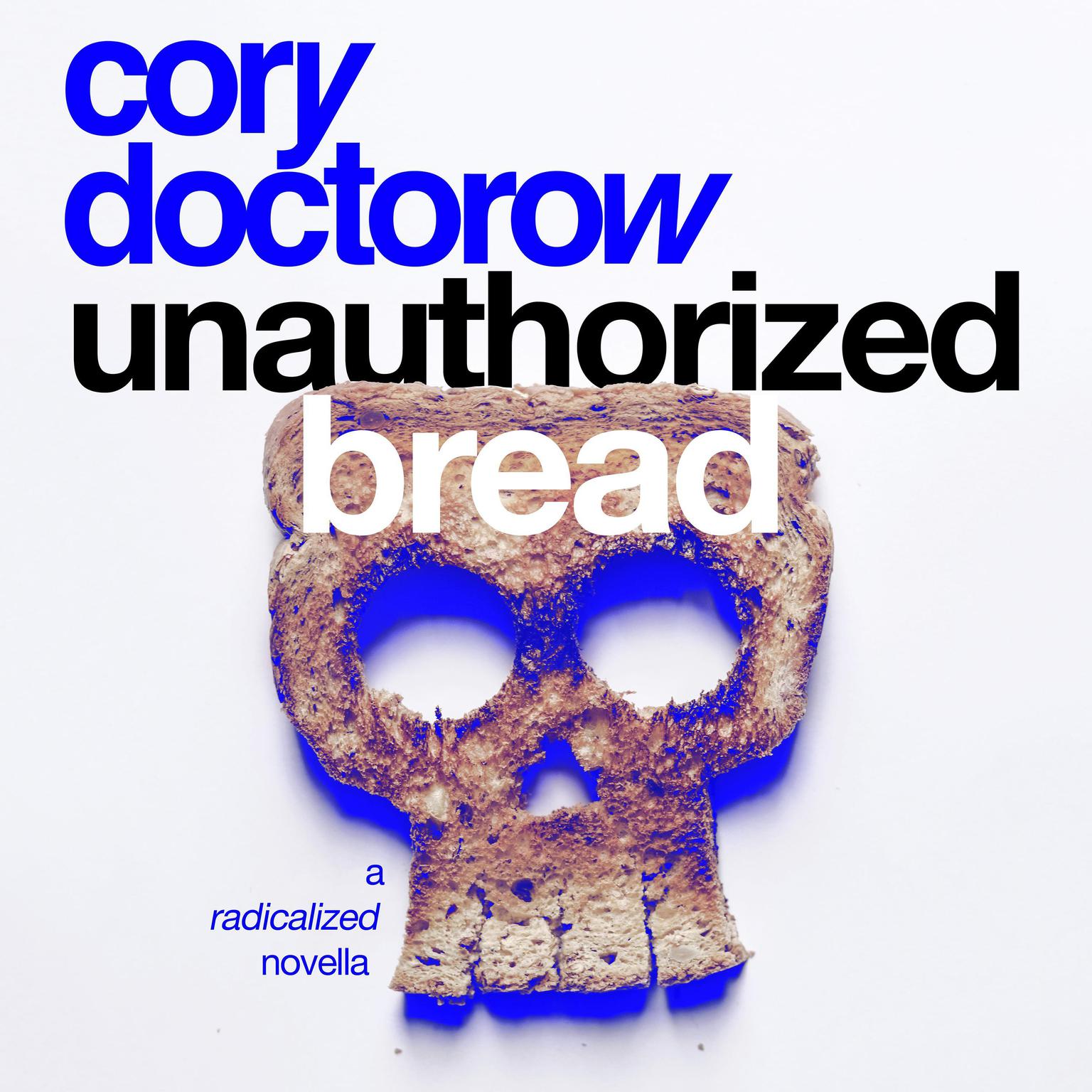
Now that is some artisanal toast. Credit: Tor Books
Now that is some artisanal toast. Credit: Tor Books
"Unauthorized Bread"—a tale of jailbreaking refugees versus IoT appliances—is the lead novella in author Cory Doctorow's Radicalized, which has just been named a finalist for the Canadian Broadcasting Corporation's national book award, the Canada Reads prize. "Unauthorized Bread" is also in development for television with Topic, parent company of The Intercept; and for a graphic novel adaptation by First Second Books, in collaboration with the artist and comics creator JR Doyle. It appears below with permission from the author.
The way Salima found out that Boulangism had gone bankrupt: her toaster wouldn’t accept her bread. She held the slice in front of it and waited for the screen to show her a thumbs-up emoji, but instead, it showed her the head-scratching face and made a soft brrt. She waved the bread again. Brrt.
“Come on.” Brrt.
She turned the toaster off and on. Then she unplugged it, counted to ten, and plugged it in. Then she menued through the screens until she found RESET TO FACTORY DEFAULT, waited three minutes, and punched her Wi-Fi password in again.
Brrt.
Long before she got to that point, she’d grown certain that it was a lost cause. But these were the steps that you took when the electronics stopped working, so you could call the 800 number and say, “I’ve turned it off and on, I’ve unplugged it, I’ve reset it to factory defaults and…”
There was a touchscreen option on the toaster to call support, but that wasn’t working, so she used the fridge to look up the number and call it. It rang seventeen times and disconnected. She heaved a sigh. Another one bites the dust.
The toaster wasn’t the first appliance to go (that honor went to the dishwasher, which stopped being able to validate third-party dishes the week before when Disher went under), but it was the last straw. She could wash dishes in the sink but how the hell was she supposed to make toast—over a candle?
Just to be sure, she asked the fridge for headlines about Boulangism, and there it was, their cloud had burst in the night. Socials crawling with people furious about their daily bread. She prodded a headline and learned that Boulangism had been a ghost ship for at least six months because that’s how long security researchers had been contacting the company to tell it that all its user data—passwords, log-ins, ordering and billing details—had been hanging out there on the public internet with no password or encryption. There were ransom notes in the database, records inserted by hackers demanding cryptocurrency payouts in exchange for keeping the dirty secret of Boulangism’s shitty data handling. No one had even seen them.
Boulangism’s share price had declined by 98 percent over the past year. There might not even be a Boulangism anymore. When Salima had pictured Boulangism, she’d imagined the French bakery that was on the toaster’s idle-screen, dusted with flour, woodblock tables with serried ranks of crusty loaves. She’d pictured a rickety staircase leading up from the bakery to a suite of cramped offices overlooking a cobbled road. She’d pictured gas lamps.
The article had a street-view shot of Boulangism’s headquarters, a four-story office block in Pune, near Mumbai, walled in with an unattended guard booth at the street entrance.
The Boulangism cloud had burst and that meant that there was no one answering Salima’s toaster when it asked if the bread she was about to toast had come from an authorized Boulangism baker, which it had. In the absence of a reply, the paranoid little gadget would assume that Salima was in that class of nefarious fraudsters who bought a discounted Boulangism toaster and then tried to renege on her end of the bargain by inserting unauthorized bread, which had consequences ranging from kitchen fires to suboptimal toast (Boulangism was able to adjust its toasting routine in realtime to adjust for relative kitchen humidity and the age of the bread, and of course it would refuse to toast bread that had become unsalvageably stale), to say nothing of the loss of profits for the company and its shareholders. Without those profits, there’d be no surplus capital to divert to R&D, creating the continuous improvement that meant that hardly a day went by without Salima and millions of other Boulangism stakeholders (never just “customers”) waking up with exciting new firmware for their beloved toasters.
And what of the Boulangism baker-partners? They’d done the right thing, signing up for a Boulangism license, subjecting their process to inspections and quality assurance that meant that their bread had exactly the right composition to toast perfectly in Boulangism’s precision-engineered appliances, with crumb and porosity in perfect balance to absorb butter and other spreads. These valued partners deserved to have their commitment to excellence honored, not cast aside by bargain-hunting cheaters who wanted to recklessly toast any old bread.
Salima knew these arguments, even before her stupid toaster played her the video explaining them, which it did after three unsuccessful bread-authorization attempts, playing without a pause or mute button as a combination of punishment and reeducation campaign.
She tried to search her fridge for “boulangism hacks” and “boulangism unlock codes” but appliances stuck together. KitchenAid’s network filters gobbled up her queries and spat back snarky “no results” screens even though Salima knew perfectly well that there was a whole underground economy devoted to unauthorized bread.
She had to leave for work in half an hour, and she hadn’t even showered yet, but goddamnit, first the dishwasher and now the toaster. She found her laptop, used when she’d gotten it, now barely functional. Its battery was long dead and she had to unplug her toothbrush to free up a charger cable, but after she had booted it and let it run its dozens of software updates, she was able to run the darknet browser she still had kicking around and do some judicious googling.
She was forty-five minutes late to work that day, but she had toast for breakfast. Goddamnit.
The dishwasher was next. Once Salima had found the right forum, it would have been crazy not to unlock the thing. After all, she had to use it and now it was effectively bricked. She wasn’t the only one who had the Disher/Boulangism double whammy, either. Some poor suckers also had the poor fortune to own one of the constellation of devices made by HP-NewsCorp—fridges, toothbrushes, even sex toys—all of which had gone down thanks to a failure of the company’s cloud provider, Tata. While this failure was unrelated to the Disher/Boulangism doubleheader, it was pretty unfortunate timing, everyone agreed.
The twin collapse of Disher and Boulangism did have a shared cause, Salima discovered. Both companies were publicly traded and both had seen more than 20 percent of their shares acquired by Summerstream Funds Management, the largest hedge fund on earth, with $184 billion under management. Summerstream was an “activist shareholder” and it was very big on stock buybacks. Once it had a seat on each company’s board—both occupied by Galt Baumgardner, a junior partner at the firm, but from a very good Kansas family—they both hired the same expert consultant from Deloitte to examine the company’s accounts and recommend a buyback program that would see the shareholders getting their due return from the firms, without gouging so deep into the companies’ operating capital as to endanger them.
It was all mathematically provable, of course. The companies could easily afford to divert billions from their balance sheets to the shareholders. Once this was determined, it was the board’s fiduciary duty to vote in favor of it (which was handy, since they all owned fat wads of company shares) and a few billion dollars later, the companies were lean, mean, and battle ready, and didn’t even miss all that money.
Oops.
Summerstream issued a press release (often quoted in the forums Salima was now obsessively haunting) blaming the whole thing on “volatility” and “alpha” and calling it “unfortunate” and “disappointing.” They were confident that both companies would restructure in bankruptcy, perhaps after a quick sale to a competitor, and everyone could start toasting bread and washing dishes within a month or two.
Salima wasn’t going to wait. Her Boulangism didn’t go easily. After downloading the new firmware from the darknet, she had to remove the case (slicing through three separate tamper-evident seals and a large warning sticker that threatened electrocution and prosecution, perhaps simultaneously, for anyone foolish enough to ignore it) and locate a specific component and then short out two of its pins with a pair of tweezers while booting it. This dropped the toaster into a test mode that the developers had deactivated, but not removed. The instant the test screen came up, she had to jam in her USB stick (removing the toaster’s hood had revealed a set of USB ports, a monitor port, and even a little Ethernet jack, all stock on the commodity single-board PC that controlled it) at exactly the right instant, then use the on-screen keyboard to tap in the log-in and password, which were “admin” and “admin” (of course).
It took her three tries to get the timing right, but on the third try, the spare log-in screen was replaced with the pirate firmware’s cheesy text-art animation of a 3-D skull, which she smiled at—and then she burst into laughter as a piece of text-art toast floated into the frame and was merrily chomped to crumbs by the text-art skull, the crumbs cascading to the bottom of the screen and forming shifting little piles. Someone had put a lot of effort into the physics simulation for that ridiculous animation. It made Salima feel good, like she was entrusting her toaster to deep, serious craftspeople and not just randos who liked to pit their wits against faceless programmers from big, stupid companies.
The crumbs piled up as the skull chomped and the progress indicator counted up from 12 percent to 26 percent then to 34 percent (where it stuck for a full ten minutes, until she was ready to risk really bricking the damned thing by unplugging it, but then—) 58 percent, and so on, to an agonizing wait at 99 percent, and then all the crumbs rushed up from the bottom of the screen and went back out through the skull’s mouth, turning back into toast, each reassembled piece forming up in ranks that quickly blotted out the skull, and the words ALL DONE burned themselves into the toast’s surface, glistening with butter that ran down in rivulets. She was just grabbing for her phone to get a picture of this awesome pirate load-screen when the toaster oven blinked and rebooted itself.
A few seconds later, she held a slice of bread to the toaster’s sensor and watched as its light turned green and its door yawned open. Halfway through munching the toast, she was struck by an odd curiosity. She held her hand up to the toaster, palm out, as though it, too, were a slice of bread. The toaster’s light turned green and the door opened. She was momentarily tempted to try and toast a fork or a paper towel or a slice of apple, just to see if the toaster would do it, but of course it would.
This was a new kind of toaster, a toaster that took orders, rather than giving them. A toaster that would give her enough rope to hang herself, let her toast a lithium battery or a can of hairspray, or anything else she wanted to toast: unauthorized bread. Even homemade bread. The idea made her feel a little queasy and a little tremorous. Homemade bread was something she’d read about in books, seen in old dramas, but she didn’t know anyone who actually baked bread. That was like gnawing your own furniture out of whole logs or something.
The ingredients turned out to be incredibly simple, and while her first loaf came out looking like a poop emoji, it tasted amazing, still warm from the little toaster, and if anything, the slice (OK, the lump) she saved and toasted the next morning was even better, especially with butter on it. She left for work that day with a magical, warm, toasty feeling in her stomach.
She did the dishwasher that night. The Disher hackers were much more utilitarian in their approach, but they also were Swedish, judging from the URLs in their README files, which might explain the minimalism. She’d been to an Ikea, she got it. The Disher didn’t require anything like the song and dance of the Boulangism: she popped off the maintenance cover, pried the rubber gasket off the USB port, stuck in her stick, and rebooted it. The screen showed a lot of scrolling text and some cryptic error messages and then rebooted again into what looked like normal Disher operating mode, except without the throbbing red alerts about the unreachable server that had haunted it for a week. She piled the dishes from the sink into the dishwasher, feeling a tiny thrill every time the dishwasher played its “New Dish Recognized” arpeggio.
She thought about taking up pottery next.
IoT(oast)
Credit: Björn Birkhahn / EyeEm / Getty Images
IoT(oast) Credit: Björn Birkhahn / EyeEm / Getty Images
Her experience with the dishwasher and the toaster changed her, though she couldn’t quite say how at first. Leaving the apartment the next day, she’d found herself eyeing up the elevator bank, looking at the fire-department override plate under the call screen, thinking about the fact that the tenants on the subsidized floors had to wait three times as long for an elevator because they were only eligible to ride in the cars that had rear-opening doors that exited into the back lobby with its poor-doors. Even those cars wouldn’t stop at her floor if they’d picked up one of the full-fare residents on the way, because heaven forfend those people should have to breathe the common air of the filthy commoners.
Salima had been overjoyed to get a spot in her building, the Dorchester Towers, because the waiting list for the subsidy units that the planning department required of the developer was years deep. She’d been in the country for a decade at that point, spending the first five years in a camp in Arizona where they’d watched one person after another die in the withering heat. When the State Department finally finished vetting her and let her out, a caseworker met her with a bag of clothes, a prepaid debit card, and the news that her parents had died while she was in the camp.
She absorbed the news silently and didn’t allow herself to display any outward sign of her agony. She had assumed that her parents had died, because they’d promised to meet her in Arizona within a month of her arrival, just as soon as her father could call in his old debts and pay for the papers and database fiddling that would get him on the plane and to the U.S. Immigration checkpoint where they could claim asylum. She’d been a teenager then, and now she was a young woman, with five years’ hard living in the camp behind her. She knew how to control her tears. She thanked the caseworker and asked what had become of their bodies.
“Lost at sea,” the woman said and donned a compassionate mask. “The ship and all its passengers. No survivors. The Italians scoured the area for weeks and found nothing. The wreck went straight to the bottom. Bad informatics, they said.” A ship was a computer that you put desperate people inside, and when the computer went bad, the ship was a tomb you put desperate people inside.
She nodded like she understood, though the sound of her blood in her ears was so loud she couldn’t hear herself think. The social worker said more things, and gave her some paperwork, which included a Greyhound ticket to Boston, where she had been found a shelter bed.
She read the itinerary through three times. She’d learned to read English in the camp, taught by a woman who’d been a linguistics professor before she was a refugee. She’d learned geography from the mandatory civics lessons she’d gone to every two weeks, watching videos about life in America that were notably short on survival tips for life in the part of America where they slept three-deep in bunk beds in a blazing desert, surrounded by drones and barbed wire. She’d learned where Boston was, though. Far.
“Boston?”
“Two days, seventeen hours,” the social worker said. “You’ll get to see all of America. It’s an incredible experience.” Her mask slipped for a moment and she looked very tired. Then she pasted her smile back on. “Get to the grocery store first, that’s my advice. You’ll want some real food to eat.”
Salima had got good at being bored over her five years in the camp, mastering a kind of waking doze where her mind simply went away, time scurrying past like roaches clinging to the baseboard, barely visible in the corner of her eye. But on the Greyhound bus, the skill failed her. Even after she found a window seat—twenty-two hours into the journey—she found her mind returning, again and again, to her parents, the ship, the deep fathoms of the Mediterranean. She had known that her parents were dead, but there was knowing, and there was knowing.
She debarked in Boston two days and seventeen hours later, noting as she did that the bus didn’t have a driver, something she’d missed, boarding and debarking by the rear doors. Another computer you put your body into. Given the wrong informatics, the Greyhound could have plunged off a cliff or smashed into oncoming traffic.
There’d been a charge port on the armrest, and she’d shared it with the seatmates who’d come and gone on her bus, but she made sure she had a full charge when she stepped off the bus, and it was good she did, as she used up almost all of her battery getting translations and directions in order to find the shelter she’d been assigned, which wasn’t in Boston, but in a suburb called Worcester, whose pronunciation evaded her for the next six months.
All her groceries were consumed, and everything she owned fit into a duffel bag whose strap broke as she was lugging it up a broken escalator while changing underground T trains on her way to Worcester. She’d spent half the funds on her debit card on food, and had eaten like a mouse, like a bird, like a scurrying cockroach. She had started with nearly nothing and now she had nothing.
The hardest part of finding the shelter was the fact that it was in a dead strip mall, eleven stores all refitted with bunks and showers and playrooms for kids, arranged along the back plane of an empty parking lot that was half a mile from the nearest bus stop. Salima walked past the mall three times, staring at her phone—whose battery was nearly flat again; it was so old it barely held a charge—before she figured out that this row of shops was her new home.
The reception was in an old pharmacy that had anchored the mall. It was unattended, a cavernous space walled off by a roll-down gate, with a row of touchscreens where the cash registers had sat. It smelled of piss and the floor was dirty, with that kind of ancient, ground-in grime you got in places where people trudged over and over.
Only one of the touchscreens was working, and it took a lot of trial and error before she figured out that she needed to tap about 1.5 centimeters south-southwest of the buttons she was hitting. Once she clocked this, things got faster. She switched the screen to Arabic, let the camera over it scan her retinas, and repeatedly pressed her fingers to the pad until the machine had read her. Once it had validated her, she had to tap through eight screens of things she was promising: that she wouldn’t drink or drug or steal; that she didn’t have any chronic or infectious diseases; that she did not support terrorism; that she understood that at this stage, she was not permitted to work for wages, but that also and paradoxically, she would be required to work in Worcester in order to pay back the people of the United States for the shelter bed she was about to be assigned.
She read the fine print. It was something she’d learned to do, early in the refugee process. Sometimes the immigration officers quizzed you on the things you’d just clicked through and if you couldn’t answer their questions correctly, they’d send you back to the back of the line, or reschedule your hearing for the next month, because you hadn’t fully appreciated the gravity of the agreement you were forging with the USA.
Then she found out which of the former stores she’d be living in, and was prompted to insert her debit card, which was topped up with credits she could exchange for food at specific stores that catered to people on benefits. As she tapped through more screens, entering her phone number, choosing times for medical checkups, she became aware of a low humming noise, growing closer. She turned around and saw a low trolley trundling through the aisles of the derelict pharmacy, with a cardboard banker’s box on it. It steered laboriously around corners, then moved to a gate set into the roll-down cage, which clunked open. The screen prompted her to retrieve the box, which contained linens, a towel, a couple six-packs of white cotton underwear, t-shirts, a box of tampons, and a toilet bag with shampoos, soaps, and deodorants. It was the most functional transaction she’d had in … years … and she wanted to kiss the stupid unlovely little robot.
She couldn’t carry her box and her duffel bag at the same time, and she didn’t want to let either out of her sight, so she staged them down the face of the strip mall, moving the box ten paces, setting it down and getting her duffel and carrying it ten paces past the box, then leapfrogging the box over the duffel. Her pile of papers from the kiosk included a map showing the location of her storefront, near the end (of course), so it was a long way. At the halfway mark, a woman came out of the store she’d just passed and regarded her with hands on hips, head cocked, a small smile on her face.
The woman was Somali—there’d been plenty in the camp—and no older than Salima, though she had a small child clinging to her legs, gender unknown. She wore overalls and a Boston University sweatshirt and had her hair in a kerchief, and for all that, she looked somehow stylish. Later, Salima would learn that the woman—whose name was Nadifa—came from a long line of seamstresses and would unpick the seams on any piece of clothing that fell into her hands and re-tailor them for her measurements.
“You are new?”
“I am Salima. I’m new.”
The woman cocked her head the other way. “Where are you staying? Show me.” She walked to Salima and held out her hand for the map. Salima showed it to her and she chupped her teeth. “That’s no good, that one has bad heat and the toilet never stops running. Gah—here, let us fix it.”
Without asking, the woman hoisted her box, and led her back to the office, Salima trailing after her alongside the little child, who kept sneaking her looks. The woman knew which screen worked and could land her finger at the exact south-southwestern offset needed to hit the buttons. Her fingers flew over the screen and then she had Salima stand before the retina monitor and put her fingers on the scanner again, and new paper emerged in the kiosk’s out tray.
“Much better,” the woman said. Salima felt confused and a little anxious. Had this woman just moved her in with her family? Was she to be a babysitter for the child who was staring at her again?
But she didn’t need to worry. Single women stayed in one of three units, and families in two more. Salima’s new home—thanks to the woman, who finally introduced herself—had once been a nail salon, and its storeroom still had a few remnants from those days, but it was now hung with heavy, sound-absorbing blankets made out of some kind of synthetic fiber that turned out to be surprisingly good at shedding dirt and dampening sound. The woman and her kid left her there, and she pulled the fabric corners shut and tabbed them together and spent a moment in the ringing silence of the tiny curtained roomlet, a place that would truly be hers, shared with no one, for some indeterminate time.
Later, she’d discover all the ways that the other shelter-dwellers had decorated their little spaces, which most of them called cells, with heavy irony, because every one of them had spent months or years in literal cells, the kinds with concrete walls and iron bars. She’d decorate her own room, and Nadifa’s children would come to poke their heads in without warning and demand stories or someone to play a game with or ideas for pictures to draw. She wasn’t exactly roped into being a babysitter, but she wasn’t exactly not roped into it, either, and she liked Nadifa’s kids, who were just as bold and fearless as their mother, who was also a lot of fun, especially when she found a bottle of wine and sent the kids out to play in the common room, and they’d perch at opposite ends of Salima’s narrow bunk, telling lies about men, and sometimes the odd truth about their lives before the shelter would slip in, and there’d be a tear or two, but that was all right, too.
Nadifa already had her work papers and she showed Salima how to get papers of her own, which took months of patient prodding at the one working kiosk to get it to emit pieces of paper that she’d have to bring to government offices and feed into other kiosks, sneaking the trips in between her work details. The irony of being too busy working to get a work permit did not escape her, and oh, how she laughed at the irony as she scrubbed graffiti and picked up trash in the parks and cleaned city buses in the great bus-barns in places even more out of the way than her Worcester strip mall.
Getting her work papers wasn’t the same as getting a job, but Salima was smart and she’d spent her years in the camp pursuing different qualifications by online course—hair braiding and bookkeeping, virus removal and cat grooming—and she felt sure there’d be something she could do. She searched the job boards with Nadifa’s help, enrolled with temp agencies, submitting to their humiliating background checks, which included giving them access to her social media and email history, an invasion that was only made worse when she was later quizzed on the messages she’d saved from her parents, videos and picture-messages sent after they’d been separated, but before they’d both died.
Work trickled in, a few hours here and there, shifts dwarfed by the long commutes on the bus to and from the jobs, but she cherished hope that taking these shitty jobs would build her rep with the agencies that were sending her out, that she’d pay her dues and start getting real shifts, for real money. She bought a couple external batteries for her ailing phone so that she could work on the bus rides. She and Nadifa had divided up the entirety of New England and every day they ran hundreds of searches to look for new high-rise approvals that came with subsidized apartments and then made a note of the day that the waiting list for each would open. They knew the chances of either one of them getting accepted were vanishingly small, and if they were both accepted, it was pretty much impossible that they’d end up in a place together.
Which is why the Dorchester Towers were such a miracle. It was bitter December and the shelter hadn’t ever gotten its promised shipment of winter coats, so everyone was making do with multiple layers of sweaters and tees, which didn’t read as “professional” and had cost Salima a very good weeklong bookkeeping job for a think tank that was closing its quarterly books. She’d been worried sick about losing the job and, worse, getting a black mark with the temp agency, which had got her several other great bookkeeping jobs that had fattened her tiny savings account more than a dozen cleaning jobs.
Rattling around the strip mall with the other denizens trapped by the weather and the inadequate clothes, she pondered raiding her savings for a coat, trying to figure out how much work she’d have to lose before it would be a break-even proposition and estimating the probability that the long-delayed winter-coat shipment would finally arrive before too much work was lost. Her phone let her know she had a government message—the kind that she would have to retrieve from the kiosk in the shelter office—so she put on three sweaters and stuffed her hands into three thicknesses of socks and fought the gale-force winds to the office.
Standing in a puddle of her own meltwater, she logged into a kiosk—they’d fixed them all, including the one that sort of worked, and now all of them were equally unreliable and prone to falling into an endless reboot cycle—and retrieved the message. She was just absorbing the impossibly good news when Nadifa staggered in from the cold, carrying her smallest one close to her for body heat.
“Does that one work?” She pointed at Salima’s kiosk and Salima smiled to herself as she wiped the screen and stepped away from it.
“It works!” Her joy was audible in her voice, and Nadifa gave her a funny look. Salima stifled her grin. She’d tell Nadifa when—
“Oh my God.” Nadifa was just staring at the screen, jaw on her chest. Salima peeked and laughed aloud.
“Me too, me too!”
The message was that Dorchester Towers had approved Nadifa’s residency, with a two-room flat on the forty-second story that would be ready to move into in eighteen months, assuming no construction delays. The rent was income-indexed, meaning that Nadifa and her kids would be able to afford to live there no matter what happened to them in the future. Nadifa was sometimes loud and pushy, but she was never squeaky, so it amused Salima quite a lot when Nadifa threw her hands into the air and bounced up and down on her toes, making excited noises so high-pitched they’d have deafened a dolphin.
She didn’t even stop bouncing when she hugged Salima, pulling her along as she jumped up and down, laughing with delight, and Salima laughed even harder, because of what she knew.
She logged Nadifa out of the kiosk and logged herself in and quickly tapped her way into her official government mailbox, and simply pointed wordlessly at the screen until Nadifa bent and read it. Her jaw dropped even further.
“You’re on the thirty-fifth floor! That’s only seven floors below us! We can take the stairs to each other’s places!” Nadifa’s smallest child, confused by all the shouting and bouncing, chose that moment to set up a wail, and so Nadifa pulled him out of his sling and twirled him around over her head. “We’re getting a place, a place of our own! And Auntie Salima will be there, too! We’ll have a kitchen, we’ll have bedrooms, we’ll have—” She broke off and cradled the boy under one arm, used her free hand to grab Salima and shake her by the shoulder. “We’ll have bathrooms. Our own bathrooms! Our own bathtubs! Our own toilets!”
“Our own toilets!” Salima shouted, and the little one said something that was almost toilets and that set them both to laughing like drains, laughing until tears streamed down their faces, and the kid laughed with them.
The coats arrived after dinner that night, too.
Salima and Nadifa clubbed together to rent a van the day they moved out, and they filled it to the ceiling with the detritus of Nadifa’s years and Salima’s months at the shelter—kids’ toys, clothes, shampoo bottles with enough left inside for three more careful washes, drawings, picture books, scrap paper for drawing and paper dolls painstakingly cut out of old printouts from the kiosk. The car inched its way through the Boston traffic, which they could only glimpse intermittently through the tiny bits of windshield that weren’t covered in shopping bags full of possessions.
The van pulled into Dorchester Towers’ back alley two hours later. It was a hot June day and the kids had needed two toilet breaks and several water breaks, which had blown up their plans to beat rush hour traffic, landing them squarely within it. But the two women were stoic. They had been on journeys that were much, much longer and far, far more difficult.
The poor-doors for Dorchester Towers weren’t finished yet, and so they had to go through a temporary plywood tunnel to enter the building. The lobby was in the same condition as the doors—raw drywall, open electrical receptacles, rough concrete floor with troughs cast into it for conduit. They lugged their things into the lobby in stages, leaving Nadifa’s eldest to stand guard and watch the kids as they went back and forth to the van, trying to get everything out before the sixty-minute mark, when they’d be billed for another hour’s rental. They squeaked in.
There in the lobby, sweating and humid, they met the Dorchester Towers elevators. The touchscreen asked you for your floor, then tracked the passage of the cars up and down the shafts. Cars would touch down in the lobby and they’d hear the doors on the other side sigh open and shut, but the doors facing them never opened.
They debated what to do. Eventually, they decided that the doors on this side must not be working at all, that it was yet another thing that had to be completed, along with the lobby and the doors and please god, air conditioning.
Kids, belongings, themselves—somehow they got them out of the doors again, down the alley and around the building’s circumference to its lobby doors, which, they couldn’t help but notice, were finished, chromed, shined, smudge-free, and guarded.
The guard on the other side of the door buzzed the intercom when they tried the handle. He was white and wearing a semi-cop outfit, some kind of private security, which was unusual because that was the kind of job you saw brown people in, most of the time. They noticed this, too.
“Yes?”
“We live here, we’re moving in today. On the…” Salima waved down the road. “On the other side? But the elevators aren’t working there yet. We can take the stairs, after we move in, but she’s on the forty-second floor, and I’m on the thirty-fifth, and we have all this—” The pile of bags and clothes and drawings and children and themselves, all so disreputable, especially contrasted against the shining chrome, the unsmudged glass, which now had two of Nadifa’s kids’ faces and hands smearing slowly across it. Oops.
The security guard tapped his screen. “Elevators are working.”
“Not on that side. The elevators came down, but the doors didn’t open.”
“Step aside please.” He said it so sharply that even Nadifa’s kids snapped to attention. There were some people trying to get in, pressing their thumbs to a matte place on the doorframe that didn’t smudge. The doors gasped open and let out a blessed gust of air conditioning that almost brought them to their knees. The beaded sweat on their backs and legs and faces and scalps spilled as much of their heat as it could in the brief wind. Then the fine people were through the door, not having looked once at them. They were preppy, a look Salima had come to understand since moving to this city of colleges and universities, with floppy blond hair and carefully scuffed tennis outfits and sweaty, shining faces. The security guard greeted them and chatted with them, words inaudible through the closed doors. They were amiable enough, and waved good-bye as they stepped into the elevator. As the doors closed, Salima saw the doors on the opposite side, the doors that opened into that other lobby.
The security guard gave them an irritated look and shook his head like he couldn’t believe they were still hanging around, blocking his doorway. “Your entrance is around back.”
“The elevators don’t work,” Salima reminded him. “We waited and waited—”
“The elevators work. They just give priority to the market-rent side. You’ll get an elevator when none of these folks need one.”
Salima grasped the system and its logic in an instant. The only reason she’d been able to rent in this building was that the developer had to promise that they’d make some low-income housing available in exchange for permission to build fifty stories instead of the thirty that the other buildings in the neighborhood rose to. There was a lot of this sort of thing, and she knew that there were rules about the low-income units, what the landlords had to provide and what she was forbidden from doing.
But now she saw an important truth: even the pettiest amenity would be spitefully denied to the subsidy apartments unless the landlord was forced by law to provide it. She had spent enough time as Auntie Salima, helping to raise Nadifa’s three kids, to recognize the logic of a mulish child who wanted to make their displeasure known.
“Come on,” she said, as she picked up a double armload of bags and slogged back around the building to the poor-door.
The apartment was wonderful. The promised luxury of a private shower and a bathtub she could lie down in if she squinched her legs and put her chin on her chest (but it was her bathtub!) and a single bed with a good mattress that no one else had ever slept upon, and when she folded that up, she could fold down the sofa slab with its bright cushions. Raise that slab up a little higher and twist the coffee table so that its legs extended and it became a dining table and you could seat three, or four if they were all very good friends. The walls had good insulation, and what little sound leaked in from the units around her was inaudible so long as she ran the fan in the HVAC at the lowest setting, something she could automate with the apartment’s sensors so it just happened whenever she was home.
The kitchen had “all major appliances,” just as advertised: the toaster, the dishwasher—a small thing that would hold all the dishes from a meal for one, along with a mixing bowl or one of the toaster’s baking pans—the fridge. They all started working once she’d input her debit-card number, and they presented her with menus of approved consumables: the dishes that would work in the dishwasher, the range of food that would work with the toaster, from bread to ready-meals. The washing machine would do a towel and sheets, or two days’ clothes, and there were dozens of compatible detergents she could order from its screen. The prices all included delivery, or she could shop for herself in approved stores, but there was always the risk that she’d pick up something that was incompatible with her model, so it would be better for everyone concerned if she’d do her shopping right there in her kitchen, where it was most convenient for everyone.
It was only a short walk to the T, and the stairs weren’t that bad going down in the morning. Coming back up was another story: thirty-five floors was seventy flights of stairs. She braved them about once a week and told herself that she was making herself healthy with such an intense aerobic workout.
Having a place to live that was truly hers made a huge difference in her life. Something about the stability, the confidence—hell, just having a reliable place to do laundry every night—it all added up to the sense that she was finally exiting the endless limbo she’d lived in all her life. Her earliest memories were of being on the move with her parents, one camp and then another, then an uncle’s house for a while, then another camp, then temporary apartments, then the crossing to America, the camp, the shelter. All that time, she’d had the sense that her life was on hold, that she was floating around like a leaf in the breeze, sometimes snagged on a branch and sometimes lofted up to the clouds, but never touching down, never coming to rest. It meant that she never really thought about her life more than a few days in advance. Now, in her own home, she was thinking about what her future held.
Some combination of luck and self-confidence was with her, and within a month she’d landed a full-time job as a bookkeeper for a company that serviced little mom-and-pop shops. She had half a dozen clients and she’d try to see each of them once a week, even if she could have done most of the work from home. She preferred setting up in the back room of a dry cleaner or a convenience store or a little ice-cream parlor and going over the logs from the registers and the invoices, scheduling payments and chatting with the staff and the owners. She learned that people liked to be warned of impending cash-flow crunches and other potential snags she could see in their books and within a few months she was more like a trusted advisor than a contractor. She remembered their birthdays and brought them cards, and then when her twenty-fifth rolled around, the owner of a vintage clothing store surprised her with a gorgeous Japanese satin jacket from the previous century, the back embroidered with a tiger that had faded beautifully over the years, with a patina like a Persian rug.
Nadifa’s kids got into school and Nadifa even started to fill in; the breathing room of time to herself meant that she could get a decent meal, could take care of her hair and clothes. She’d always had a regal bearing, but it warred with a natural overburdened-mother’s shoulder-slump, the exhaustion lines, the hands always full of kids or toys or laundry, the stains on her beautifully tailored clothes. With some stability in her life, Nadifa’s underlying nature asserted itself. Her clothes were impeccable, the lines in her face made her look serious, and then when she’d crack a wicked joke and her eye would gleam, the contrast between the seriousness and the humor was like something you’d see in an old painting.
Nadifa’s kids never lost their mischief, but school was good for them, gave them some structure to work within and fight against. They were behind, especially Abdirahim, the eldest at twelve, and Nadifa rode his ass, making him work through his remedial homework assignments on his phone or even the big screen in their living room provided the littlies could be tamped down to mere chaos. Nadifa’s place had two rooms, one for the kids and the living room, which was exactly like Salima’s, turning into a bedroom by folding down the table and folding up the sofa and folding down the bed, a magic trick that had to be done in the right order or everything snagged everything else in the middle of the room in an unholy knot that had to be carefully worked to loosen it.
Things were good, until the appliances started to disobey her.

Your scientists were so preoccupied with whether or not they could, they didn ‘t stop to think if they should. #IoT
Credit: Werayuth Tessrimuang / EyeEm / Getty Images
Your scientists were so preoccupied with whether or not they could, they didn ‘t stop to think if they should. #IoT Credit: Werayuth Tessrimuang / EyeEm / Getty Images
She did the washing machine just because she could. Once you had a kitchen full of devices that would obey you, the one that wouldn’t loomed ever larger and grew less and less tolerable. Besides, she was single, had no interest in swiping right on randos who never failed to disappoint. She had become an obsessive watcher of jailbreaking videos, especially since she’d followed a breadcrumb trail of ever-more daring videos, until she found the one that told her how to download the darknet tools that would get her to the real-deal sites where you could download new firmware images, swap tips and complaints, and jolly along with thousands of lawless anarchists like herself who were toasting any damned thing they felt like.
The washing machine was the hardest yet and involved uncoupling a lot of water hoses. She kept messing up the ring clamps, which she’d never had to use before, but she bore down on it with a bookkeeper’s resolve, methodically trying one variation after another, keeping a pan beneath the join to catch the leaks when she tested it out by turning on the water. While she worked, she switched to bread-making videos because that was her new passion, and now every time she saw Nadifa’s kids they begged her for whatever her latest creation was. She was making braided loaves now, an egg bread called challa, basting the rising dough with egg whites to give the crust a high gloss.
A week later, she made two important discoveries: first, shopping for detergent in the grocery store was a lot cheaper than buying it through her machine’s screen, and second, that her persistent eczema was actually an allergic reaction to something in the authorized laundry soap. Spring was springing and she’d been dreading sweating out the hot days in long sleeves to cover her flaking, itchy arms. She bought three vintage short-sleeved blouses and asked Nadifa to alter them to fit her as beautifully as all of Nadifa’s clothes.
She stopped short of jailbreaking her thermostat. For now. The thermostat was integrated with the building’s sensor grid, including the camera over her door, the cameras sprinkled around her apartment. It recognized her even before she entered, and spun the HVAC system up to speed before she’d even closed the door behind her, giving her just a moment of the claustrophobic, gasping air of the shut-up apartment before the white noise of the fan whisked a soft air current around and around. What’s more, it would watch her place while she was out at work and send her a video stream if it detected anyone in her place when she wasn’t there. She liked that, it comforted her. She’d been robbed twice in the shelter in Arizona, and had gotten used to carrying everything she owned of any value with her at all times. It was such a relief to be able to amass more valuable goods than she could easily carry.
The elevator was another matter.
When she’d moved into Dorchester Towers, the building had only been in service for a few weeks and was at less than half occupancy. As the apartments had filled up, the number of market-rate people using the elevators had increased to the point where it could take a full forty-five minutes to get a ride up to the thirty-fifth floor, and when the elevator finally came for the poor-door’s lobby, there were so many people waiting that she’d end up riding in a squash of people, face in someone’s sweaty armpit, and if she was lucky she’d be pressed against a wall behind her and not up against some strange man. She was nearly certain that the times it had seemed like she was being creeped on it had been an accident of the press of bodies and not actually creepiness, but she couldn’t be sure, and anyway, it still felt creepy.
One day she was sitting in Nadifa’s living room, drinking tea and watching Nadifa’s eldest do his extra homework. She and Nadifa had been complaining about the elevators for a good twenty minutes—it was a well-established subject among all the subsidy tenants and they could really work themselves up about it—when Abdirahim, Nadifa’s eldest son, looked up from his math.
“Mama, why don’t we just use elevator captains?”
“Do your homework.” Nadifa operated on pure reflex when it came to her kids and homework, but after a moment she added, “What’s an elevator captain?”
Abdirahim’s smile was luminous. “It is so cool. If you’re the first person in the elevator in Japan, you’re the elevator captain. You have to hold the door-open button until everyone boards, and then you have to press the door-close button and all the floor buttons. If the elevator captain gets out before the elevator is empty, the next closest person has to do it.”
“Where do you hear this?”
“We did a unit on unspoken rules in social studies. I’m doing an extra-credit on the unspoken rules of refugee detention in America. The teacher loves that, she gets all solemn when I talk about it. The other refugee kids think it’s hilarious.”
“I don’t think it’s hilarious.” Nadifa was deadpan. “I think it’s very respectful.” She turned back to Salima, opened her mouth to start talking again, and then turned back to Abdirahim. “Why would we use an elevator captain?”
His smile was twice as big. “We could just take turns staying in the elevator in the morning and the afternoon, during the busy times. It won’t stop for a poor if there’s a rich who needs it, sure, but if there’s a poor in it, it won’t stop for a rich until the poor is out.”
Nadifa mouthed a poor to Salima and rolled her eyes. Salima covered her smile. The kids knew what was what and they told it like it was. Meanwhile the plan was dawning on Salima and Nadifa. It was weirdly elegant: simple, so there weren’t many things that could go wrong. Plus, it used the fact that the rich people didn’t want to have to ever see one of them used against them.
“Do your homework.” Nadifa used her stern voice, but her smile to Salima was the twin of Abdirahim’s. Salima mouthed smart kid and Nadifa nodded.
The two weeks of the elevator captains were the best in the building’s short history. From 7:30 to 8:45 in the morning and 5:15 to 6:30 at night, there was effectively one elevator exclusively reserved for the use of the poor side of the building, serving the ten floors out of fifty-six. That left fifteen elevators for the rich people to use, and so at first they may not have even noticed that their unseen neighbors living in their building’s off-limits spaces were getting up and down in a matter of minutes, rather than waiting an hour or trudging the stairs.
But someone figured it out. Nadifa called Salima at work, using anger to mask her worry. “They were waiting in the lobby. Three security guards! Three! And of course it had to be Abdirahim who was elevator captain.” It was Abdirahim’s idea and he was the most enthusiastic captain in the building. Salima had even bought him a little peaked military cap from her vintage store client’s stock, and he wore it at a jaunty angle during his shifts, looking almost indecently cute.
He’d just brought the elevator back down to the ground floor and was mashing the close-door button with the lightning reflexes of a thirteen-year-old raised on video games when the other door opened, the rich-person door, the door that never, ever opened while any of them were in the car.
The three security guards demanded Abdirahim’s name and papers—and when he told them that they were in his home, on the forty-second floor, they refused to let him go get them. Instead, they took him down into the basement, using their security-guard fobs to override the elevator’s controls. They locked him in a windowless room with a reinforced door and conspicuous cameras in each ceiling corner and slammed the door on him.
After a long time, they came in to question him. He knew that he was late getting home and that his mum would be getting worried, though not frantic, because Nadifa didn’t do frantic. Furious, yes. Frantic, never. Furious was a lot more worrying, honestly. That was the thought that was in his head when he explained the whole elevator captain business to the security guards, who questioned him and denied him water or the use of the toilet until it seemed that every drop of water in his body was in his bladder and trying desperately to escape.
They went over the story again and again, and he began to cry, because it reminded him of the questioning they’d had in the camps, when he was tiny, and again when they got to America, when he was small. Those had been hard times, with his father dying and refusing to show it, sitting up ramrod straight and answering question after question, praying they wouldn’t detect his illness and use it as an excuse to turn away the family.
The memory of that time overcame him and he sobbed and couldn’t answer their questions anymore, and that’s when they called Nadifa, finally, and she was furious, but not at him; she yelled at them about re-traumatizing a child and demanded their names and their badge numbers and even got out her phone and recorded it all, even him crying, which made him ashamed, but still, he couldn’t stop.
There would be a reckoning, Nadifa swore, and Salima thought she was probably right, but that they would get the worst of it.
They did.
The elevators had cameras in them, of course, and it took the face-recognition software all of ten seconds to produce a list of all the poor-door residents who’d used the elevator captain system, with times and dates of each ride. It took a day for the building management to merge those records with form letters informing everyone who’d participated that they were in violation of their lease, which forbade “tampering with, reverse engineering, disabling, bypassing, disconnecting, spoofing, undermining, damaging, or subverting” any of the building’s systems. Further violations would result in eviction proceedings. Be warned. Be told.
It was humiliating to be addressed in this manner. Even for Salima, who had been subjected to the most humiliating of depredations over the years—strip searches and confiscations, collective punishments, and scouring of her most private data and memories to find an excuse to deny her humanity—it burned. After years of spinning in place, she had finally started her life in earnest, with a place and a job and friends who were nearly family. This was a reminder that her current life was a tissue-thin surface covering the world she’d lived in before.
For her whole life, the world had been divided into the people around her, people who knew her, and who she was. Most of those were people who wished her well and supported her and she supported them back. Some of those people were bad people and meant her harm—the camps were not paradise—but even for them, it was personal.
But there was another world, vast beyond her knowing, of people who didn’t know her at all, but who held her life in their hands. The ones who thronged in demonstrations against refugees. The politicians who raged about the scourge of terrorists hidden among refugees, and the ones who talked in code about “assimilation” and “too much, too fast.” The soldiers and cops and guards who pointed guns at her, barked orders at her. The bureaucrats she never saw who rejected her paperwork for cryptic reasons she could only guess at, and the bureaucrats who looked her in the eye and rejected her paperwork and refused to explain themselves.
Now there was a new group in that latter class, distant as the causes of the weather: the building management company and its laser printer, blasting out eviction threats to people whose names they didn’t know and whose faces they’d never seen over transgressions so petty and rules so demeaning.
The elevator captains had been a good chuckle, a way for everyone from the poor-doors and the poor-floors to feel like they were mice outsmarting the cats. The letters put them in their place: roaches, facing exterminators.

Someone’s always watching, eh?
Credit: Susie Adams / Getty Images
Someone’s always watching, eh? Credit: Susie Adams / Getty Images
The elevators weren’t any better programmed than the Disher or the Boulangism or the thermostat or anything else, really. The big difference was access. She could take her Disher to pieces in her kitchen without having to explain herself to anyone, but let her try that in the hallway, in sight of the cameras and her neighbors, and the situation would be very different.
To take out the elevators, she’d need to take out the cameras, and then work in the very small hours, and still she would risk discovery, so she’d need a disguise, a maintenance outfit, and maybe she could also take out the lights and replace them with working lights—she began to visualize the tableau: her down on one knee in shapeless coveralls with a hard hat pulled way down, the lights out and illumination from floodlights that would shine right into the eyes of anyone who tried to snoop. It was a fun daydream, and she enjoyed the game of thinking of how someone might catch her and how she might avoid being caught. It was an especially good way to recover from the exhaustion of trudging thirty-five flights up, or the frustration of waiting for forty-five minutes with a cooling pot of tagine from the corner deli in her hand, the smell driving her crazy.
She pushed around the wreckage of her tagine with a glass of cheap and delicious retsina—a favorite among so many refugees who’d made the passage through Greece, and now a staple of refugees who hadn’t, thanks to its popularity in the camps—and looked out her tiny window at Boston far below her, the Charles swollen to its levees, the ant-like people swarming home under the streetlights as autumn’s early night fell swiftly upon them. She daydreamed about hi-viz and work lights, about the tools she’d use to remove the firefighter’s override panel to reveal the USB port beneath, the subtle ways in which she would alter the building’s algorithms so that the faceless people would never discover her intrusion.
There was a ding at the door and the screen showed her Abdirahim, weirdly distorted by the camera’s autofocus on his face, which was a good foot below the adult-height camera mounting. She waved the door unlocked and he let himself in, looking from her to the tagine to the wine and then back to her.
“Have you eaten?” It was a phrase she remembered her mother saying to everyone who came through their door, even when there was no food to share. It had irritated her once, and now she said it automatically on those rare occasions when someone came through her door.
“Yes.” Abdirahim said it too quickly.
“But you’re still hungry.” It wasn’t a question. She remembered being a thirteen-year-old: hungry all the time. She got him a plate and spooned some tagine onto it and then found a pita and popped it in her toaster to warm it. When it was done, he looked at her with wide eyes.
“Yours works?”
It took a moment for her to figure out what he meant. The toaster. “It works,” she said. “I fixed it.” Then, with a little pride: “The dishwasher, too. And the thermostat. And the fridge.”
“Show me.”
“Eat first.”
The food barely touched his throat on the way down. She felt like she should probably make him eat slowly in her capacity in loco parentis, but she was as eager to show him as he was to be shown. When he said show me it made her realize that she’d been bursting with secret knowledge that she’d wanted more than anything to share.
When he was done, she put his dishes in the dishwasher and gestured him over to her so that she could show him the boot screen as she put the Disher through its paces, with the fanciful graphics she’d installed, of anthropomorphic dishes with bad attitudes showering angrily in the trademark Disher spray. He clapped and laughed and demanded to see the rest, and then to be shown how to do it.
They say you don’t really know how to do something until you can teach it to someone else. As Salima looked up the instructions again, she realized how much of it had just been recipe-following the first time around and how much she’d come to understand since, so that the steps made sense. She was able to explain to Abdirahim the why of each step, nearly as much as the what and how, and her heart beat and her blood sang with the experience of mastery.
This was the antidote, she realized, to the feeling of distant people whom she’d never meet who held the power of everything over her. To be able to control the computers around her, rather than being controlled by them.
“You see,” she said at last, as a realization came out of the blue to her and left her wonderstruck and thunderstruck, feeling like a revelating prophet. “You see, if someone wants to control you with a computer, they have to put the computer where you are, and they are not, and so you can access that computer without supervision. A computer you can access without supervision is a computer you can change, because all these computers are the same, deep down. When you get down to the programs underneath the skin, a toaster and a dishwasher and a thermostat, they’re all the same computer in different cases. Once you can seize control over that computer, all of them are yours.”
As the words left her mouth, her messianic fervor was replaced by nagging self doubt, the knowledge that she was shouting triumphantly at a small boy who had only gotten out of temporary refugee housing a few months before, and she felt foolish and small. But then she saw the gleam in Abdirahim’s eyes, and it was the same as the gleam in her eyes, and she knew that the two of them were sharing the vision.
“Our dishwasher and cooker haven’t worked in weeks,” he said.
“Oh, dear.” She hadn’t even thought of that. She had reflexively kept her work a secret from Nadifa, because she was doing something potentially dangerous and she didn’t want Nadifa to point this out. But that was before her vision. “We should do something about that.” She held out her hand. “Let’s go see your mother.” She remembered to take the retsina with her on her way out the door.
Perhaps Nadifa would have been upset at the idea of hacking the family’s appliances, but that was before she had spent two weeks parenting without a toaster or dishwasher. The hardship of eating everything cold or shelling out money she didn’t have for takeaways had softened any concerns she might have had, and as she watched Abdirahim show his sisters how to jailbreak all the apartment’s major appliances, she radiated motherly pride.
“He’s good at it,” Salima said. “I only showed him once and now—” She gestured.
“Do you think we’ll get in trouble? With the building, I mean? They own the appliances.”
Salima shrugged. “They were getting a share of the money we spent before, for the special bread and soap and so on. But with both companies bankrupt, they won’t be expecting any new money. Now, if the companies do ever come back from bankruptcy and still no one here is using their products…”
Nadifa nodded. “That would definitely be trouble.” She watched her kids, who had the cover off the thermostat and were avidly watching a video on the big screen next to it, where a person whose body had been mapped to a giant animated rabbit was explaining how to get it to fall back into a debug mode from which it would accept commands that let you override central commands to it. “But if it’s just the two of us, will they even find out?”
Salima shrugged again. “If the system is designed well, then yes. It would be very weird for our apartments to generate much lower revenues than any of the others. I once did a job where I saw that two of the self-checkouts at a pharmacy were generating twenty percent less money than the rest. At first I thought it was that they were broken, but even when they were serviced and even moved, they were always twenty percent down from the average. They got sent away for analysis and they’d been hacked and were being skimmed.”
“But you are good at your job, and you care about that sort of thing.” Unspoken: no one good at their job, who cared about anything, was involved in the poor-floors of Dorchester Towers.
“I’m sure they care about money. But perhaps they’re not so well designed.” She pondered it. “I don’t know. They certainly care a lot about making money, so the parts that help them make as much money would probably have the most attention. I’ll search for it. There must be other people in this situation.”
The kids successfully tested their modifications to the thermostat and closed it up, looking this way and that for something else to attack.
“Don’t forget the refrigerator,” Nadifa said. “That’s a fun one. Very tricky.”
They raced to the screen and started typing, sending Idil, the eldest girl, to read the model number off the label on the inside of the fridge door.
Salima knew that the kids wouldn’t stop at their own apartments, of course. She’d pass them in the hallways, sometimes, rushing from one apartment to the next. The feeling this gave her was hard to pin down: pride and excitement, but also trepidation and a sick, impotent sensation, the echo of the slow roll her stomach had done when she came home to find that laser-printed threat stuck to her door, to all their doors.
On the elevators, Salima heard whispers: Have you done your place yet? It’s so easy. I’m baking bread again! We found some beautiful dishes at a thrift shop, such a treat to be able to wash them in the machine. My little boy did it so easy!
Then one night, a knock at her door, urgent and low. She opened it and found Abdirahim, wide-eyed and stressed, and her pulse quickened, her armpits slickened, and she thought, Oh no, this is it.
“Tell me,” she said, bringing him in.
“I did the same as always,” he said. “A toaster. I’ve done so many of them. But something went wrong and now it won’t even turn on.”
She whooshed out a sigh of relief. He’d bricked some poor person’s toaster, but he hadn’t gotten them all evicted. “Let’s go see.”
There were message boards for this eventuality, of course. Abdirahim wasn’t the first person to brick an appliance. There were tricks to get it to boot into an emergency shell from which the original factory operating system could be laboriously reinstalled, and then they could start over. She used Abdirahim as her helper, reading her instructions and searching for help when they got unexpected error messages.
The toaster’s owner was an old Serbian man, who’d never spoken a word to her, though they’d shared elevators and waited in the lobby together often enough. She had assumed that he was a racist, because that was usually the reason that white people didn’t speak to her. She didn’t take it personally. Some people were just ignorant.
But it seemed that he was painfully shy and awkward, and not (necessarily) racist. He offered them tea and served them biscuits he counted out carefully from a packet that he took from a nearly empty cupboard in which she spotted a huge jar of food-bank peanut butter and not much else. He excused himself to use the toilet four times while they worked, and she heard the painful dribble of an old man struggling with an enlarged prostate.
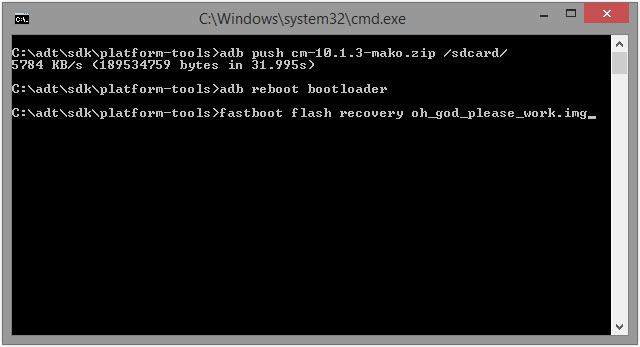
So frustrating when you can’t get the kitchen bootloader screens to load…
At one point, she was ready to give up. The toaster wouldn’t even show her a bootloader screen—it was in worse shape than when she’d started. But the old man looked so concerned, and she knew he wouldn’t be able to afford a new toaster—she imagined the cold meals of biscuits and peanut butter he’d been surviving on since Boulangism had shut down.
So she and Abdirahim went back to step one, checking everything, everything, very methodically. Finally, they noticed that the toaster was actually an earlier model than the ones that everyone else had in the building—cosmetically identical, but with a model number that was a single letter off, and when she searched on that, she found a completely different set of instructions, and these worked. It was after 1:00 A.M. when they finished, but she still went down to her place and came back up with the makings of grilled cheese sandwiches on homemade bread, and they had a midnight feast that gave her heartburn, but it was worth it.
The next time, it was a kid she didn’t even know, tapping at her door and asking for help with a bricked screen. Abdirahim had apparently told his army of Dorchester Towers Irregulars that she was a reliable source of level 2 emergency tech support.
The third time it happened, she realized she needed to get ahead of the phenomenon if she ever wanted to have another moment to herself.
“Abdirahim.” She stared intently at the kid until he met her eyes. Nadifa’s presence helped.
“Yes, Auntie?” He only called her that when he was in trouble. The rest of the time it was “Salima,” or, with learned American familiarity, “Sally,” which was a new one on her that she wasn’t entirely happy about.
“The way you are doing this, you and your friends, it’s dangerous. You’re going to get caught and you’re going to get the people who live here caught, too. Do you remember the elevator captains, and what happened?”
“Yes, Auntie.”
“We don’t want that again, do we?”
“No, Auntie.”
“We don’t want to get everyone here thrown out onto the streets, either.”
“No, Auntie.”
“So I want you to get all your friends to come to my place, tomorrow, after school. Five pm. Tell them, anyone who doesn’t come is not allowed to jailbreak anything ever again.”
He registered surprise. “You mean that if we come, we can still jailbreak?”
She smiled and met Nadifa’s eye. “Oh yes, my boy. We’re not going to stop breaking the rules. We’re just going to be smart about it.”
She bought snacks for the kids, more than she thought she’d need, but it wasn’t enough. They just kept coming, scratching at her door until she just propped it open, and still they came, cramming into her flat. Ten kids. Twenty. Forty. Then she lost count. They stood in the bathroom and passed around bags of sweets and pretzels, filled her kitchen and stood on the counter. One of them sat in her kitchen sink.
“Quiet please, quiet.” They shushed each other. She turned to Abdirahim. “Is this everyone?”
He made a show of craning his neck around the room, nodded. “I think so.”
She shook her head at him. “Close the door, please, and someone turn up the air conditioning?” The smell was that goaty, musky smell of many children at various stages of puberty in an enclosed space, a smell that brought her back to the kids’ dorms in the camps she’d lived in.
“I want to start by saying that I’m very proud of you all. You’ve taught yourselves some important skills, you know, and you’ve helped your neighbors when they needed it. But you know that what you’ve done—what I did, too—is against the rules, and now that it’s happening so often, it’s going to be harder and harder not to get caught. Getting caught is not an option. Can anyone tell me why?”
A forest of arms shot up and the smell buffeted her again. She pointed to a young girl, chubby, with a face full of clever mischief. “Because we’ll all get thrown out of the building?”
Salima nodded. “What else?”
The girl thought for a moment. “Also, everyone we’ve helped will get thrown out?”
Salima nodded again. “Very good.” It was good to hear that the kids knew the stakes. It was also scary to hear them uttered aloud, and scarier still to think of the level of recklessness the kids had exhibited, even though they’d understood those stakes.
“I’ve been researching this, because I don’t know any more about this than any of you. I learned by watching the same videos and reading the same message boards as you. But we’re not the only ones going through this and there’s been a lot of talk about it. The companies that made Disher and Boulangism have been bought up by new owners who say they’ll be back online soon, and so we need to figure out how to stay safe once that happens.”
She checked to see whether they were following all this. It was pretty esoteric, this idea of bankruptcies by distant companies. What did these kids think about the appliances they jailbroke? Did they see them as just weirdly nonfunctional gadgets they had to work around, like the bad touchscreens at the shelter? Or did they see them as the enemy, something that they were at war with, the weapons of a distant adversary who wanted to subjugate them to its will?
“The truth is that no one seems to know exactly how the companies will monitor what we do, especially after they have new owners. A lot of the original programmers were fired and some of them are on those same message boards, or at least they claim to be those original programmers, and there’s a real race on to see who can come up with a reliable way to trick the monitors into thinking that we haven’t been jailbreaking. We’re definitely going to have to change people’s appliances so that they generate some billings for the companies, because they’d notice if no money was coming from Dorchester Towers, right?” There was nodding. They were following along. They were bright kids, she thought, kids who’d spent their whole lives outsmarting gadgets that were designed to control them.
“Here’s the assignment: we’re going to read all those message boards and bring back what we find, figure out which people seem to know what they’re talking about, then we’re going to go back to every apartment and tweak all those appliances so that they’re safe.
“That’s assuming we come up with a decent plan. If we decide that no one knows what they’re talking about, we’re going to restore every appliance to its factory defaults, un-jailbreak everything.” That prompted groans and even a few cries of protest, but she held her hands up. “I know, I know. But better to have bad appliances than no home. There are millions of people around the world in the same situation as us, anyway, and they’re all trying to solve this problem, so perhaps it won’t be so hard as all that. I know that reading message boards isn’t as much fun as messing about with gadgets, but if you want to be able to keep jailbreaking, you’ll have to do the research, too.”
It was too crowded for much Q&A, but Abdirahim put his hand up anyway. She called on him. “Auntie, there’s one thing I can’t figure out.”
“Only one?” She smiled and he smiled back.
“For now. When I bring a notepad to school, I can write anything I want on it. I don’t need to ask the company that made the pen or the store that sold me the notebook how I can use it. I can tear out the pages and make paper airplanes, or doodle, or copy down what the teacher says. When I put on a pair of shoes, I can wear any socks I want. I can walk anywhere I want to go on my shoes. I can wipe myself with any sort of toilet paper—” That got a laugh. “But I can’t toast any bread I want in my toaster.”
She waited. He was struggling to find the words. “What’s the question, Abdirahim?”
He shook his head, shrugged. “I guess I don’t know. I just want to understand, how can it be against the law to choose your bread but not your socks? What makes a toaster different from shoes?”
She opened her mouth to answer, but discovered she didn’t know the answer. Right up until that moment she’d felt like she had some intuitive sense of which things were objects-with-rules and which ones were objects-without-rules, felt it so readily that she hadn’t even named the two categories until just that instant. Now that she tried to come up with a rule to explain the difference between the two, she found she couldn’t.
“That is an excellent question,” she said at last. “Why don’t you research the answer and tell us all what you find out.”
He rolled his eyes and let out a showy groan but he looked excited by the challenge. He really was a bright little fellow. She chased the kids out of her flat, buzzing with conversation, joking and shoving and posturing in the way of kids. The smell lingered after they were gone and she turned up the HVAC to 140 percent of its nominal capacity, a feature whose purpose had mystified her when she’d jailbroken the thermostat. But now she was thankful for it.
She tried to go to sleep, but Abdirahim’s question nagged at her, so she raised her bed until it was a sofa and worked on the big screen for a couple hours, discovering to her relief that reading about technology law was better than a sleeping pill.

“Unplug it,” feels like good universal advice.
Credit: Dennis Lane / Getty Images
“Unplug it,” feels like good universal advice. Credit: Dennis Lane / Getty Images
There was something about the woman standing over her on the T that snagged her attention. She wasn’t anyone Salima knew, but something about her seemed so familiar. She kept sneaking glances, and then it hit her: the logo on the woman’s ID badge, dangling from a lanyard at eye height. Salima knew that logo, though she hadn’t seen it in months: it was the Boulangism logo, a stylized slice of bread in a single continuous line, three squiggly heat lines radiating off it.
The woman caught her staring, and they made eye contact. She was young and white and had messy brown hair and those contacts the computer people wore to help them stare at screens all day without messing up their sleep schedules. The light from the ads lining the top third of the car cast a rainbow sheen over them.
“Boulangism?” Salima said.
The woman nodded enthusiastically. “That’s right.”
“They’re in Boston?”
“They are now. They got bought out by a fund on Route 128, and then they recruited a bunch of us MIT kids to bash them back into shape and get them stood up again.” The woman was younger than Salima had thought—an undergrad, or maybe a young grad student. Salima tried to picture the kids who crammed into her apartment as a classmate of this young woman, getting tempted away from their studies by a deep-pocketed company. They were smart, but were they smart enough? How smart did you have to be? She suddenly wanted to know more about the woman.
“Do you have a Boulangism?”
Salima nodded. “Do you?”
The woman snorted. “God, no. I mean, that business model, authorized bread? I wouldn’t put one of those in my house if you paid me. Why’d you buy one?”
“I didn’t. It came with the apartment.”
“Unplug it and put it in a closet. Get a real oven.”
This had literally never occurred to Salima. She had no idea how much a toaster oven cost. She could probably afford it. Not that she had any closet space. And then there were all the other people on the poor-floors, the old ones, the ones with kids, the ones who didn’t have her skills or who couldn’t speak English. She couldn’t buy ovens for all of them—let alone dishwashers and all the other appliances.
“You don’t seem to think much of them.”
The woman rolled her eyes. “It’s a good job, and the technical challenges are interesting. Hell, even the basic units do a good job, as far as that goes. But the lockdown is ob-nox-ious.”
Salima couldn’t help herself. “I think so, too.”
“They’ve brought in a whole team to find people who’re jailbreaking their units, a snitch squad. Now that’s a job I wouldn’t do. A girl’s gotta have standards.”
They’d gone past Salima’s stop. She didn’t care. She could always ride back the other way. The conversation was too good to end. “I’m Salima.”
“Wyoming,” the girl said, and shook. Her hands were slim and clever, typist’s hands.
Though they were in a very public place, Salima felt a bubble of inattention around them—that urban thing, where you pretended you couldn’t see the people pressed up against you. It was something she’d gotten good at in the camps, where there were so many times when the skill was necessary to keep her sanity.
“When do you think you’ll have the servers up again?” Salima said. The guy next to her stood to debark as they pulled into a station. How many more stops would they have? Salima thought she’d stay on one stop past Wyoming, get off and cross to the opposite platform and ride back. If she got off at the same stop, she’d seem like a creepy stalker.
Wyoming startled at the question. “Oh, shit! I didn’t even think of it. This must have sucked for you. How long has it been? Four months? Five? With no oven? You must be so sick of waiting for us, huh?”
“Five months,” Salima said. “It certainly has been a long time.”
“You poor thing. I would have just jailbroken mine. There’s been so much of that, honestly, it’ll be months before they sort it out. I don’t blame the users, either. I mean, ugh.”
“I agree.” They both laughed. The car was mostly empty now, and there were only two more stops left before they reached the end of the line. Where did this girl live? With a fancy coder’s salary, she could afford a beautiful place in the middle of Cambridge, not a place out here in Needham.
Salima took a risk. She liked this woman. “Is it hard, jailbreaking?”
“No, it’s not hard at all—I mean, how could it be? Look, it’s just basic security, basic math. You want to run a program on your toaster that lets you override the bread-check. We don’t want you to run that. So we have something in the operating system, it checks to see whether the program you’re running is one that we’ve approved. To check that, we look at a cryptographic signature, we check to see whether the program has been signed by a private key that we keep secret.
“Let me back up. In crypto, we have this idea of private keys and public keys. They come in pairs. Anything the private key scrambles, only the public key can unscramble, and vice versa. If the public key unscrambles it, it must have been scrambled by the private key. If the private key can unscramble it, it must have been scrambled with the public key. Do you get it?”
Suddenly, so much of what she’d read on the message boards made sense. Public keys and private keys, coming in pairs. What one does, the other undoes. “I can code a message with your public key and my private key, and only you can read it, and you know only I have written it.” It came out slowly, but understanding was flooding through her. It was so elegant.
“That’s exactly right. Well, a Boulangism ships with the company’s public key, and all the code updates that get sent out are signed with the private key. If the public key can unscramble that signature, then the toaster knows to trust the update, because it has to have been signed by someone using the company’s keys.” More understanding, like the final act of a murder mystery, where all the clues slot together and the confusion is transformed into an orderly series of events. She almost jumped in to say something, but stopped herself, because she thought she knew where this was about to go and she didn’t want to tip this stranger off by knowing too much. She was a nice lady, sure, but she worked for the enemy.
“That would work a hundred percent of the time, because the math really works. Something that’s been scrambled with one half of the keypair can only ever be unscrambled with the other half. Like, it would take billions of years to fake it, even with all the computers in the world working on it together. But there’s a weakness.”
Salima’s heart pounded. She knew what Wyoming would say next, because the mystery was in its final act and she was frontrunning the detective as he revealed the killer and the details of the crime.
“The public key that your Boulangism checked is stored on your Boulangism itself. It’s buried in a secure chip that’s not supposed to be changeable, but there are so, so many ways around that. Sometimes there’s a mistake in the secure chip, something that lets you change the key. More often, there’s the boot-up sequence, where the computer in the Boulangism learns what kind of computer it is and where it needs to look for public keys. That’s also in a secure storage, but there has to be ways to update it, because programmers make mistakes and when we do, our stuff can be hacked by bad guys, so we want to be able to send you new code for your appliances.
“So a Boulangism owner goes online, figures out how to change the key, or change where the computer looks for the key, and swaps in a key that the owner has a private key for, and now they can sign any code and get the Boulangism to run it. Boulangism hired skilled engineers to spend years locking down their products and they get defeated in hours by teenagers with amateur equipment. It’s not that those coders were stupid, but they were sure doing something stupid.”
Salima smiled. “But you don’t do the stupid part? You work on something else?”
Wyoming smiled back. “That’s right. I’d rather eat glass than do that stupid shit. I work on the adaptive cooking—you know, using sensors to make sure the food is perfect. It’s super-satisfying, and delicious, because I get a test bench where I actually cook stuff from time to time.”
“That’s a nice perk.”
“Yeah, and there’s a gym, too, which is a good thing because it’s only two weeks in and I’ve gained three pounds.”
The train pulled into a station and there was an incomprehensible garble from the PA as the conductor announced something. With a start, Salima realized that he was telling them they’d pulled into the end of the line and everyone had to get off. She stood up and tried to figure out how she could remain on the platform and ride back without tipping off Wyoming that she’d stayed on the train just to pump her for info.
Wyoming shrugged into her backpack and Salima slung her purse and put it under her arm, and they stepped off the train and drifted toward the escalator up to the surface level. Salima resigned herself to wasting a subway fare by going up to the street level and walking around the block and then heading back into the station.
At the foot of the escalator, Wyoming put one of her clever, long-fingered hands on her arm and drew her to one side. “I have a confession.” She was blushing.
“Oh?”
“My stop was about eight back. I was just enjoying talking with you, so I stayed on the train. I, uh, don’t really get to talk about my work much. And you’re a good listener.”
Salima couldn’t help herself. She laughed. “My stop is also several back. Green Street. I was enjoying our talk so much that I—”
Wyoming’s eyes widened and she put her hand to her mouth. “You’re not serious—” She giggled, and that set Salima off, and their laughs fed one another until they were both gasping as the conductor announced that the train they’d just debarked was ready for boarding and they staggered right back to the seats they’d just vacated.
On the ride back, Salima learned that Wyoming had come from Cincinnati, that she’d done an undergrad in electrical engineering and computer science at MIT, and then started a master’s in applied math when the Boulangism recruiter had offered her a huge signing bonus, stock in the new company that the hedge fund was spinning out, and a big monthly paycheck.
Salima told a little of her own story, cautiously, because she’d met lots of very nice white people who were not very nice at all when she said the word “refugee.” By the time they reached her stop, Wyoming had texted her a set of messaging addresses and her number and offered to help Salima any time her Boulangism was “acting up.” They shook hands when she got up to go, and Salima looked back at Wyoming—Wye, she’d said, call her Wye—and found her looking back at her, and they smiled one last time and waved good-bye.
Riding up the escalator, she had a brief bout of paranoia. Their conversation had been so easy and warm and pleasurable, could it be a setup? Did Boulangism have spies who tried to entrap suspected pirates, befriending them on the T by positioning themselves with prominent ID badges at eye height?
She shook her head and lined up for the crush at the turnstiles. It was absurd. The world was merely a small and odd place, and there was no disputing that.
Waiting in the lobby that night, she ran into three of the kids she’d lectured in the crush of her apartment, along with assorted parents, sweating in the unexpectedly warm early spring thaw, coats draped over their arms with wooly hats and scarves poking out of the pockets.
The kids called her “auntie” and she smiled at them and introduced herself formally to the adults, two moms and a grandfather, familiar faces she’d seen in the elevators and corridors but never had cause to chat with. The adults knew who she was, that was clear, and they treated her with an odd reverence as the bringer of technological freedom. She recognized the relationship from the camps, where there were always fixers and hustlers who could get things done, lay hands on special food and liquor, get you a phone voucher or fix your phone after it gave up the ghost. She had never thought of herself in those terms, but with her newfound understanding, it made perfect sense, even to her.
The small talk with these neighbors seemed like a continuation of the chatter with Wye on the train, part of a long conversation about the subject that had taken over her life: taking charge of the technologies around her, the ones that were used by those distant and faceless forces to take charge of her. Wye had made a big deal out of the hopelessness of trying to control someone with a gadget that they could take home and abuse in private, and that made perfect sense to her now, and it was a revelation. The sense of hopelessness at being surrounded by sensors and devices that were designed to push her around was transformed into a sense of inevitable triumph over the fools who thought they could make that work. What had Wye said? “It’s not that those coders were stupid, but they were sure doing something stupid.”
That newfound confidence sang in her as she heated a bit of goat curry and jolof rice in her Boulangism and sat down in front of the living room’s big screen to poke around for a way to keep all their gadgets under their control without tipping off the manufacturers. She didn’t find any immediate solutions, but that didn’t matter: she was reveling in her new expertise, rereading message-board threads she’d puzzled over before, chasing down references and learning more, and more, and more.…
The ding at her door brought her out of her reverie, and she glanced up at the corner of her screen to see Abdirahim at her door; the clock read 8:45pm, nearly his bedtime. She let him in and got him an apple from her fruit bowl. He was always hungry.
“I found out how a toaster isn’t like a pair of shoes,” he said around a mouthful of apple.
She sat back and made a go-on gesture.
“It’s copyright law, you know, like the warnings at the start of movies?”
That didn’t sound right to her, but she tried not to let it show on her face. If he was wrong, they could figure it out together. In the meantime, he was a thirteen-year-old boy who’d gone off and read a bunch of boring explanations of technology law because she’d told him to, and that deserved a respectful hearing.
“I know them.”
“A long time ago, in the last century, they made it a crime to”—he scrunched up his face as he struggled with an awkward, memorized phrase—“to ‘circumvent an effective means of access control.’ If there’s a copyrighted thing, you know, a movie or whatever, and there’s something else that controls access to it, you can’t remove that control or do anything with it. Not even for a good reason. They can send you to jail for doing it, five years and a $500,000 fine! For a first offense!”
“OK, that sounds like it could be true, but what does that have to do with toasters? Is there copyright bread?”
He shook his head. “That’s where I got confused, too. But it’s not the bread that’s copyrighted, it’s the software in the toaster, all the stuff we change when we jailbreak it. The part where you have to reset it and do something weird and complicated to get the fix to work, that’s the cir-cum-vent-ing”—she could tell he’d practiced the word—“and the copyright, that’s the code we’re changing. So if it has code in it, and there’s an access control, you’re not allowed to change the code. Even if it belongs to you!”
Another huge piece of comprehension was sliding into place for her now, more of the half-understood posts from half-remembered threads slotting themselves into orderly procession. She nodded vigorously. “Abdirahim, I think you’re right—that sounds exactly right. You did very well, you should be proud of yourself.”
He beamed around a mouthful of apple. He was down to the core and was gnawing away at every bit of flesh on it with the practice of someone who’d grown up hungry. What a strange world, where this boy was teaching her about copyright law from another century.
DMCAs, always delivering a bit of terror. Credit: James Farmer
“Just talking about it is a crime, which is why you can’t find anything on the regular net, why you have to use darknet tools to find out more. Telling someone how to jailbreak a device is the same as jailbreaking it, it’s called ‘trafficking,’ like with drugs, and it’s the same, five years in prison for a first offense!”
Her guts did a slow roll. How many people had she taught to jailbreak? How many five-year prison sentences had she amassed? She missed her old ignorance, just a few hours ago, when none of this had occurred to her and the forums were all a mystery. From the joy of comprehension to terror, in minutes.
“What was the name of that law?”
Abdirahim consulted his phone. “It’s Section 1201 of the Digital Millennium Copyright Act of 1998.”
She made a note. “Thank you, Abdirahim. I’m going to do some more reading.”
He let her give him another apple on the way out of the apartment. She made herself a cup of coffee—just regular drip, though she wished she could go up to Nadifa’s for a pot of strong, gritty Ethiopian coffee in tiny cups—and started to read about the law.
Salima was glad when Nadifa came down the next night, after she’d come home from a day at a little sandwich shop, going over their books and dragging her thoughts back, over and over, from their endless loop of worry about the risks she’d subjected all her neighbors to.
Nadifa brought down a bottle of retsina and a plate of little kaymak-filled pieces of baklava, dripping with honey. Salima’s earliest memory was of this flavor, a pure sense-memory from a time when she was a very little girl, maybe even a baby just starting on solid food. It was a taste she’d forgotten in her years in the camps, and the first time she’d encountered it in Boston it had been a revelation, a shock that had her crying and thinking of her parents, so long lost. It was so easy for an old normal to make way for a new one, so easy to blot the memories of that old normal. That was a skill that had served her well, but in that bite and its honey, she’d counted the cost for the first time.
Nadifa knew about this, but she also knew how much Salima liked the cakes, because she understood what it was like to embrace the unthinkable parts of your past, that had made you who you were. It was a bond the two women shared.
“I haven’t seen you in so long, I have to hear about you from Abdirahim.”
She used a swallow of wine to sluice away the honey, the tartness and sweetness mixing. “He’s such a bright boy, you know.”
“I know. Too bright. Always, since he was small. Asking why, why, why all the time, and never being satisfied with ‘because I said so.’”
“It’s a sign of good character. I was that way, once.”
“Once?” Nadifa snorted. “You’ve spent the past six months reprogramming all our apartments, Salima. You’ve never stopped, girl.”
She shook her head. “I think I made a mistake.”
“Yes, I know you do. That’s what Abdirahim told me. He thinks you’re scared.”
“I never told him that.”
“Yes. He’s a smart boy, remember?”
“I am scared.” She tapped her screen, showed Nadifa her search alert. “Two weeks ago, Boulangism got restarted. Today it was Disher.” She tapped again. “Look at this: Compliance Assurance LLC, a new company, received twenty-eight million in funding for a product to discover hacked appliances. That’s just today’s news.”
Nadifa nodded and looked thoughtful. “I don’t pretend to understand all of this, but I know some of it, enough to appreciate why you’d be scared. The question is, what will you do about it?”
Salima stared at her screen. She didn’t want to meet Nadifa’s eyes. “I’ve been trying to find a solution. There are so many people in the same situation as us, people who jailbroke everything after the companies started to go under and now don’t know what to do. I could tell the kids to go around and put everything back the way it was.”
Nadifa snorted again. “No, you couldn’t.”
“I could tell them to. But they might not do it.”
“They wouldn’t do it. They’re kids. If they understood risks, they wouldn’t join uprisings and march in the streets and the world would be a simpler place. Not a better one, of course. But simpler.”
“Then I’d better keep searching for a solution. Those Assurance Compliance LLC people are coming for us.”
Nadifa patted her shoulder. “You’ll find something.”
She did, an hour later, and it wasn’t good.
“Hello?”
“Is this Wye?”
“Yeah.” She sounded tired, though it was only 9:00pm Weren’t techies all supposed to be night owls? “Who’s this?”
“It’s Salima. We met on the T?”
“Oh! Uh, hi. Sorry. Rough day and I was just dozing on the couch. What’s up?”
Salima had known that if she’d planned this call out she’d have chickened out before she could make it. She opened her mouth and nothing came out.
“Salima?”
“It’s—it’s kind of an emergency.”
“Are you OK?” She was much more awake now, anxious.
“I’m OK. But—” She broke off. “Can you meet me somewhere? I can come to you. Maybe a coffee shop?”
A pause. It stretched. Then: “Yeah, OK. I’ll text you a place, OK?”
“OK. I’ll let you know when I get off the train.”
“Perfect. It’s just around the corner from me.”
Salima didn’t really think that enforcement agents for Boulangism or Disher were listening in on her phone, but she still instinctively thought that it would be better to have this talk with as little technology in the loop as was possible. She fretted on the T, and texted from the escalator.
The diner was fully automated, which meant that there weren’t any humans around to eavesdrop on them, but it also meant that there were cameras and mics everywhere. She grimaced and tried not to stare at them as she waited for Wye to show up.
She came in wearing a jean jacket over a faded t-shirt with a picture of an anthropomorphic baseball with arms and legs and a big C on its jacket, which Salima deduced had something to do with Cincinnati. Salima didn’t have any tees with logos from back home. Was there a Libyan baseball team? The Benghazi Bengal Tigers?
“Hi there,” Wye said, and tapped out a quick order on the table with long-practiced ease, and the conveyor that snaked around the backs of the booths lurched into life and started juddering toward them with a squeak.
“Thank you for coming.”
The hot-box on the conveyor reached their table and gasped open, lid yawning wide. Wye extracted a cup of tea with a packet of cookies balanced on its pressed-cornstarch saucer. “Sure. Have you ordered anything? The grilled sandwiches are good, if you’re hungry. They’ve also got really good boba.” Was this how MIT students ate?
Good taste, Salima.
Good taste, Salima. Credit: Amazon
“Thanks,” Salima said. She quickly scanned the menu and jabbed at a celery soda, which sounded vile but cost exactly the minimum-per-person amount noted at the bottom of the menu. The hot-box closed itself and the conveyor started to move again. “And thanks again for coming, I mean it.”
“Like I said, it’s no problem. Normally I’d be wide awake at this hour but my sleep’s been screwed up from work stress lately and I had a bad night last night. It was good to hear from you again, honestly.” She smiled. It was pretty, with good white teeth and a lopsided dimple. She was so young, even if she was a year older than Salima.
“I called you because I didn’t know who to talk to. I—” She breathed. “I helped my neighbors jailbreak their things.”
“Their things?”
“Everything. Dishers. Boulangisms. Thermostats, fridges, TVs, phones. Everything.” She checked herself. “Not the elevators, though.”
She laughed—laughed! “The elevators?”
“I live on a poor-floor—low-rent. The elevators only stop for us if there’s no one from the regular floors waiting or riding. It can take a very long time.”
She stopped smiling. “And that’s why all your appliances needed jailbreaking?”
“They came with the apartments. We’re not allowed to touch them, it’s in the lease. We could get thrown out. I mean, all of us.”
She stared at Salima with wide eyes. She opened her biscuits and ate one, still looking at Salima. “That. Sucks.”
It was Salima’s turn to smile. “We think so, too.”
“So, what, you want to revert everything before you get caught?”
“We don’t want to get caught.”
“Oh. Ohhh. You want to keep doing it. Huh. I know there’s some stuff out there that’s supposed to work.”
“I’ve been looking. There’s a lot of advice, and it all contradicts itself. I can’t tell what works.”
“Yeah, that sounds like online tech advice all right.” She sipped her tea. Salima tried the celery soda, prepared to discreetly spit it back down the straw, but it wasn’t bad. Wye had a faraway look and she said, “Gimme a sec.” She got a screen out of her pocket and poked at it a while, showing it her retinas after a few seconds, then tapping some more. “I think I have an idea.”
“You’ll help us?”
She snorted. “Why wouldn’t I help you?”
“You could lose your job.”
She shrugged. “I wasn’t gonna last there anyway, I can tell that already. There’s other jobs.”
Salima had never been fired in her life. She couldn’t imagine it. When things were hard at work, she worked twice as hard. She felt gratitude to Wye, who was risking a job for her, but there was a slithering serpent of disapproval of Wye’s breezy attitude toward her career. Did she even understand how lucky she was? Perhaps if she did, she wouldn’t be so quick to help. Salima kept her face carefully neutral.
“What about getting arrested? It’s a five-year prison sentence for jailbreaking.”
“Only if it’s commercial. If I don’t charge, all they can do is sue me. I’ll cover my tracks.…
“I have an idea, anyway. Do you know what a virtual machine is?”
Salima didn’t, and she could tell that if she just said no, then Wye would explain something to her and that would lead to Wye doing something to help her, and wasn’t that what she’d hoped for? But she couldn’t just go along.
“Please stop,” Salima said. “It was a mistake. I can’t ask you to risk yourself for us. There’s—” She blinked hard at the tears that had sprung up in her eyes. “The kids in my building, I showed them what I was doing and they took it up, and now they could all be punished, along with their families, because I wasn’t careful about letting other people take my risks. This is a bad situation, but ‘I’ll cover my tracks’ isn’t going to save you. Everyone who ever got in trouble thought they’d covered their tracks. I thought I’d covered my tracks. I’m sorry, Wye, I really shouldn’t have called you.”
She picked up her jacket and started to stand. Wye put her hand on her arm and squeezed, stopping her. “Please don’t go, Salima. I can cover my tracks. It won’t be hard. At the very least, I can help you figure out how to restore everything so that you won’t get into trouble. Look, I’m a grown adult, and I can decide what risks I take.”
The tears were going to breach any moment. Salima firmly pulled her arm free. “Thank you, Wyoming. I’ll call you when it’s all sorted out and we can have a drink to celebrate, all right?”
She didn’t give her a chance to answer. The tears came out when she reached the street, and she wished she’d grabbed some napkins on her way out of the diner. She never cried, never. Not since her parents had died, anyway. Why was she crying now?
She was almost asleep when she answered her own question: she cried because she had something to lose, for the first time since she’d lost her parents. It was a terrible realization, like she’d been betrayed by her own happiness. Everything she’d attained was something she had to lose.
If she had only not tried to make a life for herself, she wouldn’t have anything at stake. If she hadn’t made friends, she wouldn’t have any friends to have betrayed with her knowledge-drunk recklessness. If she hadn’t basked in the admiration of those kids, the kids wouldn’t have put themselves and their parents in harm’s way.
She wasn’t almost asleep anymore. She went back to her screen, dug into the darkweb, and got the recipes to put everything back the way it had been. She practiced on her own kitchen, making sure she had it down cold. Once she’d mastered it, her whirling brain finally decided to let her sleep, but the sun was already rising. She set an alarm for one hour later, and when it went off, she made four pods of dried-out, nearly undrinkable coffee she found at the back of a drawer, and drank it as a penance. The sour, acid liquid scalded her tongue and roiled her guts all the way to her first job of the day.
When she got back that night, there was a crowd of kids and their grownups waiting in the lobby, as usual. They called out to her and she hustled past them and climbed the stairs, sleeplessness weighting her legs, sweat coursing down her neck and back, down her face and into her eyes. The exhaustion was like a dead thing on her back as she staggered into the apartment, flopping down on the sofa and letting her eyes close, just for a moment that turned into an hour as she crashed, only to awaken with a guilty start. She had work to do.
She walked up to Nadifa’s apartment. After the thirty-five floors she’d climbed on her way home, another six should have been easy, but her legs and butt were sore and tired and she had to drag herself by the handrail. She realized that she’d forgotten to eat dinner and then realized she couldn’t remember if she’d eaten lunch. It had been a long time since she’d missed any significant amount of sleep. She was out of practice.
Nadifa took one look at her and led her into the apartment and plied her with mint tea and small cakes that she’d have sworn she had no appetite for, but which she couldn’t stop eating. Abdirahim was nominally doing his homework, but Salima could tell that he was burning with curiosity and eavesdropping, so after her second cup of tea, she called for him to join them. He turned around on the screen seat and raised it up to table height.
“Abdirahim, I’ve made a decision and you’re not going to like it.”
He had a good poker face. Kids who grew up in the camps got good at controlling the information they transmitted to the people around them. She could tell he knew what was coming, though, and that he didn’t like it.
“When I started jailbreaking, I didn’t know what I was doing. I didn’t understand the risks. But now I do, thanks to you and my own reading. And Abdirahim, the risk is just too great. There is no way to know for sure what the companies will do to catch us, and if they do, we could lose everything. Even if we could fool the companies, the management of the building will notice when they don’t get their share of the money, now that the companies are being restarted. The people your friends have helped out didn’t appreciate what they were being signed up for, none of us did, but now that we do, we have a responsibility to help them out.”
His poker face was slipping. His bottom lip was trembling. His knuckles were white where he gripped the table’s edge. Nadifa gave him a warning look. Salima’s heart broke for him. After all he’d been through, he’d found a way to take charge of a world that had never given him the tiniest amount of control, and she was going to make him undo it all. She wanted to cry, and she could only marvel at his self-control. She put her hand on Nadifa’s arm.
“I’m sorry, Abdirahim. You have a right to be angry. It’s not right, but it’s necessary. That’s the most difficult kind of situation.” She took a deep breath. “I can’t do it without you. That’s not me trying to make you feel good. You are the one who taught the other kids, and only they know which apartments they worked on and what they did. I couldn’t get the other kids to even listen to me without your help.
“Abdirahim, will you help me?”
She could tell Nadifa wanted to order him to say yes, and she squeezed Nadifa’s arm gently but firmly. Let him make up his own mind.
He stared at his hands for a long, long time. His breath was ragged. She wondered if he was going to cry after all. But then he raised his head and blinked his wet eyes at them. “I’ll do it, Auntie.”
She knew he’d taken the time to really think it through and had come to the right conclusion after that careful deliberation, and not because an adult had told him so, not even because his mother would never have tolerated refusal.
“I knew you would, Abdirahim.” She squeezed Nadifa’s arm one more time. “You should be very proud of this one.”
“I am,” she said. She patted her son’s hand. She knew what this had cost him, too.
Suddenly, Salima was so very tired. She’d been tired before, but this was an all-new height, or maybe depth. For a moment, she literally couldn’t stop her eyes from closing. She fought them open again. Nadifa was looking at her with concern.
“We’ll take you downstairs.”
They each got a shoulder under her arms—Abdirahim was as tall as his mother already—and drunk-walked her to the elevators and pushed the button. Time wavered. It felt like an hour before the car arrived and sighed open, and it smelled of expensive perfume from someone from the parallel universe of non-poor-floors who’d finished their ride and freed the elevator for a grudging ride for the likes of them.
Nadifa sent Abdirahim back upstairs once they were in Salima’s apartment, then helped her change into a nightie and adjusted the sofa to bed configuration, screwing the table down and dropping its leaves so it became a bed table. She brought out the comforter and draped it over Salima, and in her half-conscious state, Salima recovered a memory long buried, of a time before time, when she lay in her crib and her mother had tucked her in. The memory was so sweet, without any of the sorrow that usually went with memories of her mother, and she drifted away into dreams with a smile that was still with her when she got up a few hours later to pee and swipe at her teeth to clear the rotten taste from her mouth before falling back into bed.

Pod-life.
Credit: Vlad Fishman / Getty Images
Pod-life. Credit: Vlad Fishman / Getty Images
A sense of purpose is a wonderful tonic for anxiety. Now that Salima knew what she had to do, the helpless fretting was replaced by a boundless energy. After an early breakfast, she rang Nadifa to confirm that Abdirahim was awake, and she bounded up the stairs two at a time and showed him how to reset the factory defaults on everything in their apartment. Just as she’d done in her own place, she made him run through it twice to make sure he had it and then made him write out the procedure from memory on a notepad. He was a quick study, as she knew he’d be.
“Now you need to spread the word. Can you have the children come to my place again tonight, after school and before supper, say 6pm?”
He wasn’t happy about it. “They will hate this.”
“I know. I hate it. It’s like giving up. But giving up is smarter than fighting a battle you can’t win. That’s as important a lesson as any, you know.”
Nadifa nodded. “There are much harder ways to learn that lesson.” She got a faraway look.
Abdirahim looked miserable.
“I know this is very hard,” Salima said. “You were a hero when you taught your friends, now you’re going to be that frightened boy who made them put it all back. I’ll take the blame. I’ll explain it to them. Just bring them to my place, all right?”
A night’s sleep had done her so much good. Her day went so smoothly it might as well have been oiled. She found some small systematic errors in the books of the dry cleaner’s that explained why his profits had been consistently down and he confessed that he’d been about to fire his sole employee for stealing, and was so relieved that he hugged her. She got a seat on the T both ways. Spring had finally stopped oscillating between freezing and basting and settled on a sunny, breezy happy median that scudded the fluffy clouds overhead like a screen saver, and the new buds on the trees all seemed to have burst open overnight.
She bought a much bigger bag of snacks for that night’s meeting, mindful of the previous meeting’s shortcomings. She had to shop in the Boulangism aisle of the corner market for bread, and she bought coffee pods and dishwasher soaps in the adjacent sections.
That brought her down, making the last block home a slow march. She thought back to her first meeting with Wye, about Wye’s horror that anyone would use a Boulangism. Salima was earning well now, even saving money every month—a savings that had grown for the months when she’d been able to choose her groceries from anywhere in the shop. There were places to live that weren’t Dorchester Towers. Places where she could choose which appliances she used. They were more expensive—so many of the rental ads had fine print notifying prospective tenants that their lease prohibited alteration of the landlord’s revenue-earning appliances. But they existed. With a roommate or two, she could afford one.
But Dorchester Towers wasn’t just where she lived, it was a little community, a place where she fit, where she had friends and people who were something like family, like Nadifa and the kids who called her “auntie.” People who understood what she had been through. Imagine living in a house full of Wyes, girls who seemed so young, with an unbridgeable canyon between their life experiences and her own.
The kids in the elevator lobby asked her excitedly about the meeting that night, and she understood that Abdirahim hadn’t given them any hints about the agenda. She couldn’t blame him.
They crowded in and ate all the snacks. There may not be enough snacks in the world to fill all those little bellies.
“This isn’t going to be easy to hear.” The whispering and grins and fidgeting ended in an instant and every eye was on her. So much for her perfect day.
“Since our last meeting, I’ve learned some things. Important things.” She told them, about the law, about the prison sentences, about the new companies that had been formed out of the remains of the old ones, and the teams they’d hired to catch cheaters like them. The risks to them and their families. Eviction and worse. She watched their faces go grave and then graver.
The chubby girl, the bright one who’d put up her hand last time, was the first to speak when Salima finished. “How do we solve it?”
It was a terrible moment. The worried faces brightened and the whole room’s attention was intensely fixed upon her. These kids were bright enough to understand the risks, but not bright enough to figure out that she couldn’t do anything to fix it.
“We can’t. We have to put it all back the way it was. Undo it all. Factory defaults for everything.” Before anyone could say anything, she said: “It’s over.”
The kids’ faces said it all. Shock, then disbelief, then defiance. Muttering. The word no, quietly and then louder and then racing from kid to kid.
“Yes!” she shouted, holding her hands up. “I’m sorry—I’m so, so, so sorry—but yes. We have to do this. It was a mistake.” She held her hands higher. It was getting louder. “I mean it. We’ll find something else. You can help me. But first, we have to do this.”
Some of the kids were leaving. She saw Abdirahim shake his head.
“It has to be this way.” More of them left.
“Please.”
Abdirahim was the last one there.
“I’m sorry,” was all he said, before he, too, left.
She wouldn’t surrender, of course. She started with the people she’d serviced, working from the upper floors downward, doing two or three per night. Abdirahim came along sometimes and helped, but he was clearly unenthused about the work and he made mistakes that set her back as often as he helped. She didn’t think it was exactly on purpose, but it certainly wasn’t exactly an accident, either.
Many times, she was tempted to text Wye and set up a meeting to pump her for information about the state of Boulangism and how long she had before they were up and running again. She had reasoned that the building’s owners wouldn’t expect full revenue straightaway after the toasters started working again—it would take a while for people to notice that their appliances were working again and switch from whatever arrangements they’d made during the outage—but there would come a time when it would be obvious that it had all been fiddled, unless she put it back.
Working in her neighbors’ apartments, she saw their kids, kids who had watched her jailbreak their apartments and gone on to do the same for their neighbors. The kids who’d walked out on her when she told them they’d have to put it all back the way they’d found it. Kids who watched her out of the corners of their eyes, pretending to do their homework. She made a point of describing the consequences of getting caught for their parents in a loud voice and in eye-watering detail.
It took her five nights and all weekend to work through the apartments she’d personally jailbroken. On Monday night, she came home from work, bolted a humiliating prepackaged, approved dinner from the microwave, and headed out to the top poor-floor, seven floors above. She waited briefly for the elevator, then admitted that the only reason she’d tried for an elevator was that she knew it was a prime time and she might kill half an hour or even forty-five minutes waiting for a car to come, putting off what would come next by that much.
She took the stairs, and knocked on the first door beside the stairwell after carefully noting its number in a little notebook she’d brought with her, in her neat bookkeeper’s hand.
The woman who answered was a little familiar, someone she’d shared an elevator with once or twice, Salvadoran or Honduran she’d thought. “Yes?” She was a little older than Salima.
“Hi.” She had rehearsed this, but her mouth dried up and the words wouldn’t come. “Hi. I live in the building and—” That was wrong. “Did some of the building’s kids help you with your kitchen appliances? Or maybe your thermostat?”
The woman looked suspicious. This wasn’t how it was supposed to go. “I don’t think so.”
Salima’s cheeks and ear tips burned. “I’m sorry to bother you, honestly. But, look, the day the toasters stopped working? I figured out how to get mine to work again. Then I showed some of the kids and they went all over and did it for everyone else. But then I found out that the manufacturers can tell who’s done this, and they can come after us for it. The landlords, too—they got a cut of the money we spent. So I’ve come to put it all back, before you get in trouble, and before we all get in trouble.” She gave her best, most trustworthy smile.
The woman shook her head. “I never had any kids around here.”
Salima was sure she was lying—the quickness of her answer, the way she looked around as she said it. “Look, if I don’t do this, you will get caught. You could lose your home. Worse—they can send the kid who did it to jail.” That wasn’t quite true, based on what Wye had told her, but it was nearly true. The kid could get in trouble, she was sure, and of course, so could she. “Please.”
“I told you, no kids.”
“Can I see then?” The woman looked angry. “I mean, maybe you forgot. Can I check, just to be sure?”
“I have to go.” The door clicked shut before she could get another word in. She was conscious of the camera on her, so she kept her face neutral as she made a note in her notebook and then took a deep breath and moved on to the next apartment.
It was going to be a long night.

Going door-to-door in an apartment building is always… less than ideal.
Credit: Mint Images / Getty Images
Going door-to-door in an apartment building is always… less than ideal. Credit: Mint Images / Getty Images
Work became a kind of dream, or waking nightmare, in which she returned over and over to the real job, racing through the floors of the building, knocking on doors, begging near-strangers to let her make them poorer and make their lives worse. Word had gotten around and she got curious stares and sometimes hostile ones in the elevators, and Abdirahim wasn’t even pretending to help her anymore. She didn’t complain to Nadifa because she didn’t want to have to confess all her sins to the last real friend she had.
She got better at pitching her case at the door, anyway, and almost everyone let her into their places to do her business, which she’d also gotten better at, working through appliances with a quick, practiced hand.
In private moments at night, searching for elusive sleep, she admitted to herself that some of the kids were probably going around undoing everything she’d done, with the complicity of the adults who should have known better.
Every time she rode home from the dry cleaners, she looked for Wye on the T, not sure if she would be happy or frightened to see her. She never found her, but then one afternoon as she was trying to find her own errors in the work she’d done closing the quarter for an ice cream shop, numbers swimming before her eyes, her phone chirped.
> I need to talk to you-Wye
She opened her little notebook and looked at the apartment numbers. She’d gotten through more than three-quarters of the places, and most of them had let her work. Some would have been reverted by kids, but perhaps it was still enough. Maybe Wye had found a trick that would let them keep their jailbreaks after all, something foolproof.
(But only fools believed in foolproof tricks)
> I finish at 5. I’m on Mass Ave today, near Harvard Square
> I can meet you. 515 at the cannon in Cambridge Common?
> Kk
A foolish hope grew in Salima despite her best efforts. She’d never forgotten the excitement that Wye had spoken with when she’d started thinking about how to help them all beat Boulangism, the absurd certainty she’d radiated that she could outsmart the whole industry. Perhaps she could, though of course she couldn’t.
Summer was in full roast and it was hot and sticky, with few students left this late in the year. She fanned herself with a folding Chinese fan she’d bought from a cart a few days before, when the heat came on and the humidity soared. She’d thought that Arizona was hot, but this humidity was trying to strangle her from the inside out, a feeling that called to mind dark and buried memories of the Mediterranean crossing when she’d been a small child, sense memories of thirst and nausea and stink.
She fanned herself and looked around but she didn’t see Wye until she was right there, because she’d cut her ash-blond hair sensibly short for the heat and put some pink tint in it. She was thinner than the last time they’d met, too, and paler. Long hours, Salima guessed.
“You came,” Wye said.
“Hi,” Salima said. “I came.” She was still embarrassed by their last meeting. “I’m sorry about before. It was very nice of you to offer, but—”
“Yeah. I know, the risk. I understand it. Sort of. I mean, I know I can’t really understand what you’ve gone through, but—” She armed sweat from her forehead. “I mean, I get it. Sorry, too. And don’t be sorry.” She was really sweet.
“I’ve been putting it all back, everything reset to factory defaults. No one wants to help me though. The kids hate me for it.”
“That sucks.”
“It does.”
“Look, I wanted to meet with you because there’s something happening at Boulangism I thought you’d be interested in, but you can’t talk about it because I’m not supposed to be telling anyone without getting a nondisclosure first. Is that OK? I mean, can I tell you and you’ll keep it a secret?”
She nodded. “Of course.”
“So, we were almost ready to relaunch and then the new owners bought two more of our competitors and folded us all together into a single platform. Now we’re a lot bigger and they have all these plans, like, letting people buy jailbreaks by the day or the week, so they can cook anything they want. They’ve been watching the darknet boards, they know that everyone’s been figuring out how to jailbreak their shit while we’ve been getting restarted, and they figure all those people could be customers, but instead of paying for food we sell them, they’d pay us to use food someone else sold them.”
Salima almost laughed. It was a crime if she did it, a product if they sold it to her. Everything could be a product.
“It’s weird, I know. But here’s where you come in. They’ve got this research unit, anthropologists and data scientists and marketers, and they want to talk to people like you, find out what you’d pay for different kinds of products. They want to see if you’d sell the package to your neighbors, if you could get a cut of the money from them, like a commission? They’ve got one plan, you could teach those kids you were working with to sell paid unlocking to the people in your building, and they’d get a commission and you’d get a commission because you recruited them.”
“It’s a pyramid scheme?”
“It’s an affiliate program. The kids wouldn’t be allowed to recruit people to work under them—we’d handpick the affiliate recruiters and they’d be the only ones who’d get the double commissions. Leaders. It’s still just an idea, but when I heard about it, I immediately thought of you. I mean, it solves all your problems, doesn’t it? Your kids get to go legit, even make some pocket money. You get to use your skills and the respect of your neighbors to help them out and earn some money for yourself. Oh, and of course, you’d get to permanently unlock everything that we make, so you could demonstrate it for your neighbors. Like I say, it’s not a sure thing, but I thought you could come in and meet the team, talk it over, make a call…” She trailed off, searching Salima’s face for a clue about her reaction. Salima carefully maintained a neutral expression.
“Wye,” she said. “It’s so kind of you to think of me. Really.”
“But?”
Salima slumped. “I don’t know. There’s a but, but I can’t say what it is, exactly.”
“It’s a weird idea,” Wye said. “I know. But maybe you could think about it for a while? I don’t need an answer right now.”
Salima wanted to just say no, but she didn’t. Even as something inside her was recoiling at the offer, another part of her understood that Wye might be right, this could be the very best option.
“How long do you think we have?”
“Until you have to decide?”
Salima had thought of Wye as her ally, every bit as offended by the locked-down world of Dorchester Towers as she was. But Wye had been working long hours for Boulangism and its new sister companies. She thought the problem was that Salima didn’t want to get into trouble. Salima had been thinking that, too. But that wasn’t the problem. Boulangism itself, that was the problem. The whole rotten business, that was the problem.
“Until Boulangism finds out what we’ve been doing and gets us evicted.”
Wye shook her head. “Didn’t you hear me? That won’t happen—they’re trying carrots these days, not sticks. They want to treat people like you as customers, not crooks.”
“OK, sure. But how long until that happens?”
Wye looked hurt. “I don’t know. Soon, though. A week or two. They’re really excited about the unlock upsell, but they want to do a little research on the price point before they roll it out so that’ll delay things awhile. But the owners aren’t going to keep paying everyone’s salaries forever without any money coming in.”
“A couple weeks.” She could get through the places she’d missed, then start over again on the top floor and work her way down again, impressing on people that it was essential that they tell her if they’d let one of the kids fiddle their stuff again.
“Yeah. Look, Salima, I think you should really consider this. It’s a good plan, good for everyone.”
“I will.” Her voice sounded unconvincing, even to her own ears.
Wye looked even more distraught. Salima felt bad. She’d only wanted to help.
“Salima, have you had dinner? I’m crazy hungry. Do you like fish? There’s a fish place near here that’s amazing, the kind of place where visiting parents take their kids for a good meal during the school year. Ever since I started taking home a paycheck, I’ve been meaning to go back, but I’ve been too busy. Would you join me? I’ll pay. I don’t want to have to eat alone.”
No, she wanted to say. No, I have to go home and get back to work. No, I can’t afford your charity, because you might have to testify against me. No, I don’t need to be friends with anyone from your world.
“Yes,” she said. “That would be very nice.” She was too hungry to say no, and she was sick of overpriced prepackaged microwave meals.
She got home after ten, much too late to ring anyone’s doorbell and have an awkward conversation about their appliances. The elevator had been blessedly responsive, which was a good thing, since between the wine and the stress of the recent weeks, she wasn’t going to be able to climb the stairs or even stay awake very long in the lobby.
The elevator smelled of expensive hair product, telling her that it had been recently vacated by someone who’d gone out the other doors on the way to a nice date night, or maybe on the way back, relieving the babysitter and making a midnight snack in an oven that cooked anything you told it to.
The smell lingered in her nostrils, citrus and tobacco, as she trailed her hand down the corridor wall to her apartment. She was about to open her door when she saw the words scrawled there in fat, permanent marker: FUCK OFF. The letters were large, angry, and yet uncertain, like they’d been written by a child, or perhaps by someone who was just learning English.
She was so tired.
She licked her finger and rubbed at the ink. It didn’t even smear. She let herself in and went to the camera feed for her door, and discovered that it was blank, perfectly erased. So, maybe it was a kid who’d written it, a kid who’d learned to search the darknet for ways to control technology designed to control them. A kid who was outraged at being asked to forget how to do that and go back to being meekly controlled.
Would a kid like that ever work on commission, installing official unlocking codes in the poor-floor apartments of Dorchester Towers? Was there enough money in the world?
And if there was, did she want to be the one who used that money to convince a kid to give up on that uncompromising ferocity?
She’d buy some solvent on her way home from work the next day.

Mark it unread
Credit: d3sign / Getty Images
Mark it unread Credit: d3sign / Getty Images
She ran into Nadifa on the stairs the next morning, struggling with a stroller, chivvying Idil, the older girl, and carrying Yasmiin, the toddler. Salima took the stroller and Idil, leaving Nadifa to sling Yasmiin around on her hip and hold the handrail with her free hand. Nadifa sighed and thanked her.
“You look terrible,” Nadifa said, three flights down.
“I didn’t sleep very well.”
“You haven’t been by in so long. The retsina is starting to pile up in my refrigerator.”
Her eyes welled up and she blinked hard. She’d missed Nadifa, and missed the days when she’d overflowed with the excitement of mastering the building. The rearguard action of putting everything back had filled her with a buried and unspeakable shame, and just thinking of showing her face to Nadifa made her feel sick.
But it was so good to see her again.
“I’m sorry. It’s been … hard.” She swallowed. Then she told Nadifa about the words on her door, using careful euphemisms in front of the kids. She told Nadifa about the cameras. She stopped short of telling her about Abdirahim abandoning her. She wanted a friendly shoulder to lean on, not retribution for a thirteen-year-old.
“That’s terrible. I’ll come by when you get home from work and we’ll clean it together.”
“It’s OK, I can do it.” She thought of telling Nadifa about the offer from Wye, but she didn’t. Nadifa might tell her to do it. Or tell her not to.
Her arms and back were on fire when they reached the ground level.
“Thank you so much,” Nadifa said as she unfolded the stroller. “Normally I wouldn’t try to leave until the rush was over, but Idil has to see the dentist this morning.” Idil smiled up at her, showing cute gaps in her teeth. Nadifa strapped the baby into the stroller and then she swept Salima up into a fierce hug. “It will be OK. You’ve been through so much worse than this. You’re strong.”
Salima embarrassed herself by snuffling up snot, but the alternative was leaking it all over Nadifa’s shoulder, and Nadifa had the manners to pretend not to notice anyway, so she was able to salvage a little dignity, at least.
She didn’t get a seat on the T that morning, and as she hung from the strap, rocking back and forth with the train’s motion, she stared idly at the ad over her head, eyes unfocused with sleepiness, and it was only as she got off the train that she realized it had been an ad for the new Boulangism.
She got a text from Wye on the escalator.
> Affiliate program is go. I can hold a place for you in it. You in?
She marked it unread so she’d remember to reply to it later. Every time she looked at her screen that day at work, she saw the alert for it. It was very hard to concentrate. She made a mistake early on and ended up spending an hour unraveling it.
It wasn’t a good day.
“I think I need to talk to Abdirahim.”
Nadifa looked puzzled. “Then talk to him.”
Salima swirled the wine in her glass. “The problem is that he hasn’t been very eager to talk to me. He’s angry.”
“Adi! Come here!”
He came out of his room wooden faced. “I’m doing homework.”
“Auntie Salima would like to talk to you.”
“All right.” (Said in a tone that made it clear it was anything but.)
He got the idea of the pay-to-unlock as quickly as she laid it out for him, quicker than she had. “It’s like my schoolbooks. I can read them at school or home, but if I want to study in the park, I have to pay to unlock them.”
“I didn’t know they worked that way.”
He shrugged. “It’s OK, I don’t need to study in the park.”
She told him about the affiliate program. “So you could make money for your family, to help out around the house. Your friends, too.”
“And Auntie Salima would make money, too,” Nadifa said. “So she can save to get a place of her own.”
She looked sharply at Nadifa. “Why would I want to leave Dorchester Towers?”
Nadifa snorted. “Who wouldn’t want to leave if they could? Move somewhere with a proper elevator, with real appliances? A place where you were wanted?”
Nadifa, trapped in her apartment every day until the elevator rush ended, or having to drag her stroller and the baby and a small child down forty-two floors’ worth of stairs. Of course she wanted to go. But how would that ever happen? She’d been a tailor in Somalia, but she hadn’t worked in a shop in more than a decade, and by the time Yasmiin was in school for full days, it would be nearly twenty years. Even if she could find work, a seamstress’s salary wasn’t going to pay full rent in Boston and support three kids.
Salima was careful with money, careful like a bookkeeper. She lived on her own and had saved up some real money, especially when she’d been able to cook any food she wanted and could buy ingredients instead of ready-to-eat meals. She could move out now if she wanted to find a housemate, and if she signed up one or two more bookkeeping clients, she’d be able to get a place on her own within the year. But she never thought of leaving Dorchester Towers. It was where she belonged.
“I wouldn’t go. I want to see your kids grow up.”
“Don’t be ridiculous. We’d come and visit. As soon as you can go, you should.”
Abdirahim watched the two grown women politely argue and Salima wondered how much of the subtext he was getting. She wondered how much she was getting.
“It’s not right to charge your neighbors to use their own things,” he said, breaking in.
Nadifa was about to say something to him about respecting his auntie, but Salima cut her off.
“Do you think so?”
“Of course.” He said it so quickly, so firmly, that she knew there was no room for argument.
“Why?”
“Because it’s their homes. Why should they have to pay to use the things in their homes?”
“I agree with you, but the company would say it’s because they chose to live in a place where the rent was lower because the landlord thought he’d make money from their appliances. It was a deal, and that’s their end of it, and they can pay more somewhere else if they want that choice.”
“Can we pay more?”
Nadifa snorted. “Not until you graduate from college and get a good job, Adi.”
He looked at Salima.
“I know. I didn’t say I agreed with it. It’s just what they’d say. There are lots of deals you can make and the deal here is that you have to use their products the way that makes them the most money or pay to unlock them. They’d say that you’re getting more choice, because they’ll let you buy an unlocking.”
“But we already have that choice.”
She looked sharply at him. “No you don’t. Not if you’ve restored your appliances to defaults.”
He looked guilty for an instant, then said, “OK, we had that choice, and we can get it for ourselves again. For free. You showed us.”
That slow roll in her guts again. He’d unlocked it all, everything in their home, and they were going to get caught. Everyone was going to get caught. If Abdirahim wouldn’t do as she asked, who would?
She took a deep breath. “What I’m about to say isn’t how I see things, but it is how the company sees them. They say that you don’t have that choice, that they have that choice, and they’ll sell it to you. But if you take it without paying, that’s stealing. Again, that’s what they think.”
He was fast. “But you’d be able to unlock all your things without paying, right? So why isn’t that stealing?”
A sharp little boy, with the smarts of someone who had to think fast all the time, with bad consequences for getting it wrong. “Because I’d be working for the company.”
“Against your neighbors. But you say you wouldn’t leave here because you belong here. But you get treated like you’re better than us!” He was losing his cool. Still a boy, after all. She didn’t let herself get angry. Sneaking a look at Nadifa, she saw her friend was very thoughtful, forgetting to tell off her son for disrespecting his elder.
“I don’t think I’m better. The company just saw my skills and offered me a job. Like your mother getting money when she sews someone’s clothes. They’d pay you, too, remember.”
“I wouldn’t take their money.” He looked at his mother. “I have homework to do.”
“Do your homework.”
He got up and went into the other room. They didn’t look at each other. “What will you do?” Nadifa asked.
Salima shrugged. “I’ll have to think about it.”
Wye sent her two more texts before bed, which she didn’t answer. She fell asleep, at last, with the hum of the air conditioning and the fridge compressor in her ears.
Her phone rang while she was brushing her teeth. Wye. She spat and rinsed and didn’t answer. It rang again.
And again.
“Hello?”
“I’m sorry to be such a nag, but it’s all kicking off here. The board loved the affiliate ID and they’ve pressed ahead with it, throwing tons of engineers at it. They want to do a big release next week, press conference and everything, with the affiliates, in eight countries. They love your story, and want to feature you. You’d even get some money for the publicity work, you know, to help you out with missing work. I’ve been at the office since six a.m. It turns out I’m the only one here who knows a real-life jailbreaker and that makes me the resident expert.” She giggled nervously. “I’m sorry, it just happened. But we need to move, everything is waiting on you.”
She couldn’t think of anything to say.
“Hello? Salima?”
“Wye—”
“Salima, I know it’s crazy, but this solves everyone’s problems. Please say you’ll come down, at least, and talk to them?”
“I have to work.”
“Where? We can come to you.”
She felt trapped. “I’m working at home today.” She got to do that, every week or two, when there were a lot of little reconciling jobs to do.
“Perfect! That’s just perfect! I’ll text you when we know our arrival time, OK?”
“Wye!”
But she’d already hung up.

Keep your notebooks close.
Credit: Pornanun / Getty Images
Keep your notebooks close. Credit: Pornanun / Getty Images
After that, Salima couldn’t concentrate at all. She listened to the sounds of her neighbors leaving for work, then the mothers with little kids moving through the halls, heading to one another’s places accompanied by piping children’s voices for playdates and friendly commiseration.
The numbers swam on her big screen, refusing to cohere. She paced the tiny apartment, then the corridor. Her little notebook was in her pocket, the apartment numbers and the dates and her notes. She’d been in so many of these places.
> ETA 15 mins. OK?
She sighed.
> OK
She went back into her place to listen for the downstairs buzzer. At least they were arriving after the morning rush, so they wouldn’t have to wait too long for an elevator. Indeed, they were at her door just minutes after she buzzed them in, Wye and two guys, one white and one Indian, both in Boulangism tees, both with youthful haircuts and big, polished, straight-toothed smiles.
“Thank you for seeing us,” the Indian one said. He was called Paul, but his business card said “Pritpaul.” He’d refused tea and water, as had the white guy (“Rog”), but Wye had accepted a coffee and watched intently as Salima fed a pod into the machine and put a cup beneath, then ejected the pod and threw it out.
“It’s OK,” she said. “Wye was very excited about it.”
Wye had the good grace to look a bit chagrined.
Paul didn’t notice. “She’s been very excited about you, too. We’ve heard a lot about you and honestly, you couldn’t be more perfect for what we have in mind. We think it could be very big.” He held his hands up, arms spread as wide as he could in her crowded room. “Very big. Good for us, good for you, and good for people like you.”
“People like me?”
“People who fall between the cracks—people who can’t afford to pay full price for everything, but who sometimes want to splurge on more features for a special occasion. It’s really the best of both worlds, a new kind of flexibility. The old Boulangism owners were blind to that, but we’re totally energized about the possibilities of working with our customers, not against them. We hope you’ll be a part of that.”
There was a space in the conversation here where Salima would say something positive. Everyone in the room wanted her to say something positive. The conversation had a shape, or maybe a direction, and she could pat it on the back, give it a little push in that direction, and the next stop would be something glad from Paul or Wye or the white guy, and then back to her, push and push and push, until it had picked up enough velocity that no one could stop it.
It seemed petty to refuse then, but she could see that a positive word here was a ticket on an express train with no more stops.
“That sounds very nice, but I don’t think I’m the right person for you.”
Wye looked shocked. Paul and the white guy looked wooden for a moment and then pasted on smiles. “Of course we respect your decision, but I wonder if you could tell us why? We’ve come a long way to talk about this with you, after all. Maybe if you explain your reservations we can learn something from you that will help us do better in our next meeting?”
She didn’t say that she hadn’t asked them to come over. “I just don’t feel right about it. I understand your idea here, that you’re selling us more freedom. But that’s only because our appliances take away so much freedom to begin with, and then sell it back.”
“But no one forced you to choose Boulangism. You chose a product that came with restrictions, and in return, you got a deal on your rent.”
“Do you have a Boulangism toaster?”
“No, I don’t.”
“Why not?”
“It’s not the choice we’ve made,” the white guy said. “We chose a different deal. That’s the great thing about freedom: we all get to choose the proposition that suits us best.”
Salima managed a tight little smile. “You keep talking about choosing. This is the only place I could get into, and it took months. How is that a choice?”
“You were living somewhere before this place, right?”
“A refugee shelter.”
“You could have chosen to stay there, right?”
She wanted these people gone. “I don’t think that is much of a choice.”
He shook his head. “The point is that you had a choice, and that’s because appliances like ours made it economical for landlords to build subsidy units.”
She didn’t say anything. She was getting angry and she didn’t like to be angry, didn’t want to show these people that she was angry.
“We want to help you people, let you get more out of your lives, give you more choices.”
What about the choice to jailbreak my things? She didn’t ask it.
“Honestly, I can’t understand your decision here.”
Choice is good, so long as I don’t choose not to help you? She didn’t say it.
“Can’t you see we want to help you?”
I can see that you want me to help you get more money from “people like me.”
She still didn’t say it.
“Maybe we should go,” Wye said. Unlike the two men, she was paying attention to Salima’s reactions.
“We’re just having a friendly conversation,” the white guy said. “We don’t have to be back at the office for an hour, anyway. Salima, can you just tell me what the problem is?”
She heard herself say: “I would rather help my neighbors save their money than spend it.”
“What is that supposed to mean? Unlocking your toaster could save tons, if you’re smart about bulk groceries and what you cook.”
Again, her voice said, “We’d save more money if we didn’t have to pay to unlock our toasters.”
“I don’t see what that—” He stopped. “Oh. Yeah, sure, but you know what happens if you get caught doing that.”
“I would rather help them not get caught.”
He snorted. “Everyone gets caught.”
“How would you know? The people you never caught would be people you never knew about.” She met his eyes. He was angry now, red-flushed, a vein showing in his forehead.
“Yeah, maybe so, but that’s not going to be you, lady. We know what’s going on here, you know. You’re on our radar. I mean, I hope you’ve got all your shit right, because if there’s anything out of order here, we’ll see it. We’ll know who to talk to first, too.”
Wye opened her mouth, shut it. She gave Salima an apologetic look. She was also flushed. Paul stood up. “I think we’d better be going. Thank you very much for your time, Salima.”
She watched them leave; then, after the door closed, opened it silently and put her eye to it to watch them call the elevator, wanting to be sure they left without talking to her neighbors. Moments after they pressed the call button, the doors opened and there was a surprised-looking woman already in the car, a woman she’d never seen before, dressed in a smart summerweight suit, smart makeup, smart little haircut. Someone from the other side, whose elevator should never, ever open on a poor-floor.
The three Boulangism employees nodded at her as though nothing was amiss and stepped into the car. When they turned around, she caught Wye’s eye for a moment, and Wye shrugged and grimaced in an eloquent expression of ambiguous apology. Was she sorry for the way her boss had spoken, for the threat, for the fact that the elevators came for them when they called them, but not for Salima?
Salima climbed seven floors to Nadifa’s floor and rang her bell.
They only had to wait a few minutes in the school office before Abdirahim appeared. “Mama?” He looked worried, and then, when he saw Salima, confused.
“Come on, we’ll talk about it as we walk,” Nadifa said, giving him a complicated look that silenced any questions. That was a look that they must have had a lot of cause to use over the years, though not for some time.
When they were out on the street and hustling toward the bus stop, Salima said, “We need to restore everything in the building to factory defaults.”
He shook his head. “I thought you’d already done that.”
“Yes, and you and your friends have undone it.”
He started to deny it. She cut him off.
“I’m not a fool, Abdirahim. I don’t even disagree. But I turned them down today, told them I wouldn’t help them sell unlock codes to our friends. They’re angry with me and they’re going to try to punish me for it. They’re going to watch us all very closely, and they’re working with the owners of Dorchester Towers.” That was a guess, but it was a good one. After all, the landlords were getting a commission from them, so they had to have some kind of relationship. “So we need to get everything put back, before they catch us.”
He walked several steps in silence. Then: “It won’t stay that way. Too many people know how to jailbreak.”
“I know that,” she said. “But we need to invent a better way.”
Wye had talked about virtual machines, and there was a clue in there. The message boards were, as usual, full of disagreements, speculation, insults, boasts, spam, and obscenity.
Abdirahim had grudgingly gone through Salima’s notebook and pointed out the apartments that he knew to be jailbroken, including a few that she’d never been able to get to admit to it. Working together, they’d gone door to door again, bringing along Nadifa for moral support, ringing doorbells long after any decent hour, working until they were so tired that they started making foolish mistakes. They’d take turns working in each apartment, one of them reverting devices and the other one talking to the people there, especially the kids, about the importance of leaving everything as is, just for a little while, until they could come up with a better solution.
Searching for “virtual machines” on the message boards made things a little clearer, but it also sent them down a rabbit hole of reading about computer science ideas neither of them really had the background for. Thankfully, there were a lot of Boulangism and Disher owners around the world who were also unqualified to understand virtual machines, but nevertheless insistent that someone explain them, and they were able to piece together something like comprehension. It helped that between them, Nadifa, Salima, and Abdirahim could read seven languages.
Computers, it seemed, were in some important way all the same. Every computer shared a common heritage, an “architecture” that let it run any program that could be written in computer languages, in software code. Some computers were faster or had more memory than others, and some of them expected the instructions to be written in different ways, but even the slowest computer could run the most complicated programs, though it might take years to accomplish a task that another computer could complete in an eyeblink.
But you didn’t need to translate computer code to get it to run on a different computer. Instead, you could write a computer program that was, in effect, a computer itself. You could write a computer program that could run on a Disher, whose purpose was to run Boulangism programs. Yes, you could convince your dishwasher that it was a toaster. When the toaster inside your dishwasher gave the instruction to turn on a heating element or take a picture of the food in its bay to test its doneness, the dishwasher running its computer could send it any data it wanted, and it would blindly trust it.
This was the “virtual machine,” an imaginary computer inside another computer. As if that wasn’t weird enough, you could run a Boulangism virtual machine inside a Boulangism, making the toaster pretend to be another toaster. Which seemed like a kind of flourish or game to Salima, until Abdirahim got it in a flash and explained it.
“If you have a toaster that has been jailbroken, you can run a virtual toaster inside it. Then you can run a regular, factory version of the toaster software on the virtual toaster. Whenever the factory contacts your toaster, it sends the communications to the virtual toaster. The virtual toaster tells it how to answer to seem like it’s unmodified. It’s like taking an enemy hostage and making him tell you what to tell his commanding officer so he won’t get suspicious.” He rubbed his hands together.
“Does it work?”
He shrugged and pointed at his screen. “They say it does. But they wouldn’t know for sure, would they?”
“I wish I could ask Wye,” she said. “She would know.”
“You said she told you about virtual machines—”
“Yes, but she was just thinking out loud. Maybe she thought it over and found a flaw in the plan.”
He didn’t even look up from the screen where he’d been avidly reading about virtual machines. “You could ask her.”
“It wouldn’t be fair to her.”
“Nothing is fair.” He said it so nonchalantly that it shocked her. Such a small boy, such a big thought.
She went so far as to look up Wye’s number, but she didn’t dial it. Instead, she got her Boulangism and helped Abdirahim install a virtual machine on it. They were going to have to get very good at this.
The day that Boulangism relaunched, every virtual machine in every toaster and Disher dishwasher chimed awake and announced the new, exciting unlocking offer. These alerts loaded in little windows they had to tap to upsize and read, before dismissing them.
They all spent the day with tight shoulders and quick movements, jumping every time they got a buzz, sure it was someone at home telling them they’d been raided or that everything had stopped working, or that the landlords were at the door telling them to get out.
But the day passed, and then the next, and the next.
Cautiously, one muscle at a time, they relaxed.

Mmmm, sourdough.
Credit: Jordan Lye / Getty Images
Mmmm, sourdough. Credit: Jordan Lye / Getty Images
Salima was very good at baking. She had discovered Nordic breads and made four little cardamom buns every morning, dusted with cinnamon. She ate one and gave three to the first three people she met in the stairwell on the way down, still warm, leaving behind a smell that was better than the nicest whiff of perfume you might encounter in the elevator after it had been vacated by someone from the other side.
She was waiting for the Boulangism to chime when her screen rang. She almost didn’t answer it—blocked number and early hour, almost certainly a spammer—but she slid her finger across it.
“Salima.” Wye’s voice was tight, a little out of breath. Salima’s shoulders wound themselves as tight as tennis rackets. Somewhere in her mind, she’d always expected this call.
“Yes?”
“The virtual machines you’re using aren’t fooling them anymore. They sent out an update that is designed to break on VMs. I just checked your building. You’re just hanging out there now. There’s no way they’ll miss it.”
“Oh.” She squeezed her eyes shut. The Boulangism chimed and its door swung open. The smell of cinnamon and cardamom and fresh bread. The sound of her blood, thundering in her ears. “Oh.”
“But there’s a fix.”
“A fix.”
“The VM I use for testing. It’s undetectable. Has to be, or I wouldn’t be able to do simulations in my lab. I’ve packaged it and—”
“No, Wye.”
“Yes, Salima.”
“You aren’t going to risk everything for me.”
“You aren’t going to get caught because I didn’t help you.”
Salima hadn’t thought of it like that. The people in her building would get caught if Salima didn’t help them. That would destroy her. Salima would get caught if Wye didn’t help her. So—
“Yes, Wye.”
Wye actually laughed, a tiny and tight sound. “I’ll send you something.” She named a darknet site, one that Salima had an account on, though she’d never discussed it with Wye. She wondered how much Wye knew about what she’d been up to, in the weeks since they’d spoken.
Abdirahim hadn’t left for school yet and Nadifa didn’t even hesitate when Salima said she’d need him for the day. Her notebook was scuffed and dog-eared from being carried from apartment to apartment so many times.
“You trust her?”
She nodded. “If all she wanted to do was get me in trouble, it would be so much easier than this.”
The new VM and its control software was much tidier than anything they’d downloaded from the darknet. It hid itself very well unless you knew the multitouch pattern to swap your screen from the real, jailbroken controls to the sham controls of the VM. The notes with it promised that it would also be perfectly hidden from Boulangism’s network tools. It was easy enough to install, just an update to the settings that they already had in place, but it was also morning, when so many people were heading out for the day, leaving their appliances exposed to the company’s snoopy probing.
They worked out a system. She’d knock on a door, explain things quickly to whomever answered, and send in Adi to start working. Then she’d go on to the next door and the next, talking urgently, begging people to leave their doors unlocked for them. Adi finished one apartment and then the next, letting himself into the unlocked places. They’d get to the old people, the disabled people, the stay-at-home moms, but they had to get to these places before their occupants left. She raced from one place to the next, and managed nearly all of them and got phone numbers for the four she’d missed and trekked up the stairs back to Adi, frantically dialing them, getting two and leaving messages for the other two. She’d call them back.
It was a good thing that Wye’s software was so slick and easy to install because Salima was a wreck, though Abdirahim was all teenaged cool and bravado, making short work of each place, chest puffed out and an easy smile playing over his lips as he concentrated.
But they were doing it. By lunch they were more than halfway through, and they knocked on the door of the old Serbian man, and he insisted on giving them peanut butter on crackers, which they both gobbled, surprised at how hungry they were. Salima remembered that she had four cardamom buns in her toaster and ran to get them and they each ate one and left the extra for the Serb. He smiled and waved at them as they walked down the hall to the next place.
Just as they were descending the stairs to the next floor, Salima’s screen rang.
“Nadifa?”
The voice was an urgent whisper. “The landlords are knocking on the doors.”
“Where?”
“Starting on forty-one. They were just at our place, inspecting the appliances.” They’d done their own apartments first, partly to make sure they knew what they were doing, partly because they thought that the landlords might start with them.
“OK.”
“They didn’t find anything. Whatever you did, it worked.”
“OK.”
“They’re getting in the elevator.”
“OK.”
For a moment, all she could hear was the whoosh-thud of blood in her ears. She realized she was staring at her phone blankly. Abdirahim was looking at her with alarm.
“How many left?”
He pulled out her notebook, tattered, with annotations in both their hands, ran his finger down the columns, moved his lips as he counted.
“Twenty-four,” he said.
She closed her eyes and took a deep breath. Twenty-four. The landlords in the elevators. Her place was safe, and that’s where the landlords would go next. The remaining places were scattered among the seven poor-floors. There were four floors above them, three below.
She took the notebook from Abdirahim and tore out the pages for the four floors above and folded them and put them in the back pocket of her jeans. “Do the bottom three,” she said. “Be careful. Check before you go into the hallways. Don’t let the landlords see you. If they catch you, don’t let them get the notebook.”
He had gone a shade paler, his teenaged bravado drained. He swallowed audibly. He looked at the remaining notebook pages, scanned down them. “OK.”
“OK,” she said. He turned, but she caught him and gave him a fierce hug. “Go,” she whispered, and turned on her heel and raced up the stairs.
A calm descended on her as she stepped out onto the next floor. There were three unlocked apartments on this one, no person she’d have to talk to, and so she stepped into the first one, eyes moving around to take in the appliances, matching them to her list, one-two-three. She pulled the USB out of her pocket—she hadn’t remembered to warn Adi to ditch that if he was in danger, but he would know that (wouldn’t he?)—and stepped to the toaster and lifted it with sure, economical motions.
One apartment. Two. Three. Stairwell. Two more here. People in them. Ring the first doorbell, exposed and anxious, the hum of the elevators in their shafts a few yards away. Heart thudding. Armpits slick. USB gripped so tight in her fist it hurt.
The woman who answered was old, but she stood tall and clear eyed, thin and wrinkled and brown. Salima remembered that she’d been a pediatrician in Damascus. She had once played violin, but the arthritis that had swollen her knuckles took that from her.
“Landlords in the building,” Salima whispered as she slipped past the woman. The woman stepped to one side and let her get to work. When Salima was done, the woman stopped her and clutched at her hand, fingers brittle and dry and bent.
“Thank you,” she said and gave a small squeeze. The feeling lingered on Salima’s hand as she consulted her notes and rang the next doorbell.
She ducked into the stairwell and her phone buzzed. She checked it.
> Landlords in the stairwell
Oh.
She could hear stealthy movement now, the soft tread of a shoe, someone ascending and trying to keep it silent. There was another stairwell at the other end of Dorchester Towers, reserved for emergencies, with an alarmed door. The steps drew closer. She opened the door again and went back into the hallway.
She could knock on someone’s door, try to get rid of the notebook and the USB before the landlords came. And if she failed? They would all be in trouble.
She and Adi had nearly done it. Perhaps half a dozen apartments remained. Too few, she thought, for the landlords to be able to evict them all for conspiracy.
She could hear the steps from the stairwell now. They weren’t bothering to be quiet. They must have heard the door shut behind her.
The elevator hummed. She was trapped. She crossed her arms over her chest, spread her feet apart, and waited.
The elevator doors opened before the stairwell door. She turned to face it, not letting any fear show. A cool mask, that’s what she’d show them.
Abdirahim was inside.
“Get in!” he hissed.
The doors closed and the elevator lurched into motion.
Abdirahim pushed the lobby button. “They’re in the lobby, too,” he said. “So we can’t go there.”
The elevator was descending rapidly. The floor counter hit thirty-five and then displayed the two hyphens—“- -”—it showed as they raced past the full-price floors. They’d be in the lobby in seconds.
“Adi—”
He smiled and pressed a rapid sequence on the elevator panel, fingers racing and sure. The elevator slowed, stopped. The doors opened.
The other doors.
The doors that opened into the rich floor.
“Come on,” he said.
They stepped into the hallway. Its carpet was a rich, purpley brown, and it had neat lines from a robot vacuum that had swept its nap into a uniform direction.
“Adi—”
He smiled again. “I figured out the elevators the day after they stopped the elevator captains. It wasn’t hard.”
On the poor-floors, the elevators’ infographics only showed the positions of the cars when they were traversing the floors they were allowed to stop at, seeming to vanish between forty-two and the penthouse, thirty-five and the lobby. Here, the infographics showed it all. A car stopped at thirty-seven, went up to thirty-eight. No resident of the poor-floors would waste their time calling an elevator for a single floor’s ride. That was the landlords, with special fobs that would summon an elevator directly, even to the poor-floors.
“Now what?” she said. She was still making sense of what Adi had done.
He showed her the notebook, with tick marks beside every entry. “Now we finish your list.”
Two more floors to go. Thirty-five and thirty-six. She handed him a sheet, took one herself, and then he summoned another elevator and pressed another fast sequence, then thirty-five and thirty-six.
When the doors opened, he sprinted into the hallway, all recklessness, not even checking to see whether the landlords were waiting for him. She was more careful when the doors opened on thirty-six, peering around the door before stepping into the hall, then she, too, sprinted for the last door on her list.
> Another VM for you-update’s going in next week. That enough time?
Salima tapped her screen and replied.
> You are a very bad employee, Wyoming
> I suppose I am
> But you are a good friend
> I suppose I am
> Thank you, Wye
> Any time.
Salima stretched and stood. She had to go to work now. The ice cream parlor. They were doing a roaring trade now, thanks to an unusually warm spring. They had a new flavor she adored, too: black olive brittle and goat’s cheese, which was the weirdest ice cream she’d ever tasted, but also the best.
She collected her cardamom buns and checked her hair in the mirror. The screen buzzed.
> Send me the cardamom bun recipe please!
She did, and left for work.