The rise of robotic unmanned ground vehicles
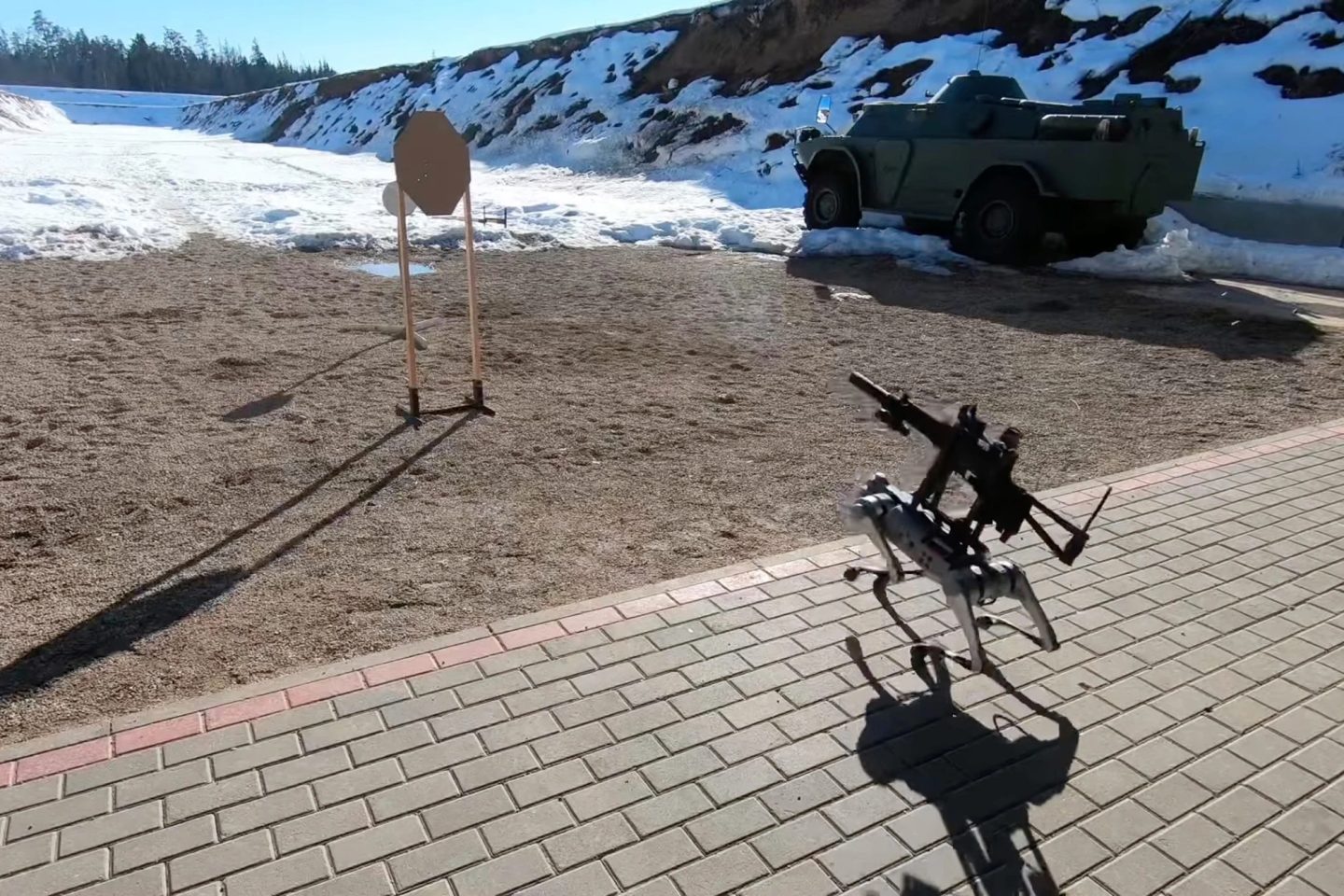
An unauthorized video of a gun bolted onto a $3,000 Unitree robodog spread quickly on social media in July 2022 and prompted a response from several robotics companies.
Credit: Alexander Atamanov
An unauthorized video of a gun bolted onto a $3,000 Unitree robodog spread quickly on social media in July 2022 and prompted a response from several robotics companies. Credit: Alexander Atamanov
The evaluation of armed robotic dogs reflects a growing interest in small robotic unmanned ground vehicles for military use. While unmanned aerial vehicles (UAVs) have been remotely delivering lethal force under human command for at least two decades, the rise of inexpensive robotic quadrupeds—some available for as little as $1,600—has led to a new round of experimentation with strapping weapons to their backs.
In July 2022, a video of a rifle bolted to the back of a Unitree robodog went viral on social media, eventually leading Boston Robotics and other robot vendors to issue a pledge that October to not weaponize their robots (with notable exceptions for military uses). In April, we covered a Unitree Go2 robot dog, with a flame thrower strapped on its back, on sale to the general public.
The prospect of deploying armed robotic dogs, even with human oversight, raises significant questions about the future of warfare and the potential risks and ethical implications of increasingly autonomous weapons systems. There’s also the potential for backlash if similar remote weapons systems eventually end up used domestically by police. Such a concern would not be unfounded: In November 2022, we covered a decision by the San Francisco Board of Supervisors to allow the San Francisco Police Department to use lethal robots against suspects.
There’s also concern that the systems will become more autonomous over time. As The War Zone’s Howard Altman and Oliver Parken describe in their article, “While further details on MARSOC’s use of the gun-armed robot dogs remain limited, the fielding of this type of capability is likely inevitable at this point. As AI-enabled drone autonomy becomes increasingly weaponized, just how long a human will stay in the loop, even for kinetic acts, is increasingly debatable, regardless of assurances from some in the military and industry.”
While the technology is still in the early stages of testing and evaluation, Q-UGVs do have the potential to provide reconnaissance and security capabilities that reduce risks to human personnel in hazardous environments. But as armed robotic systems continue to evolve, it will be crucial to address ethical concerns and ensure that their use aligns with established policies and international law.