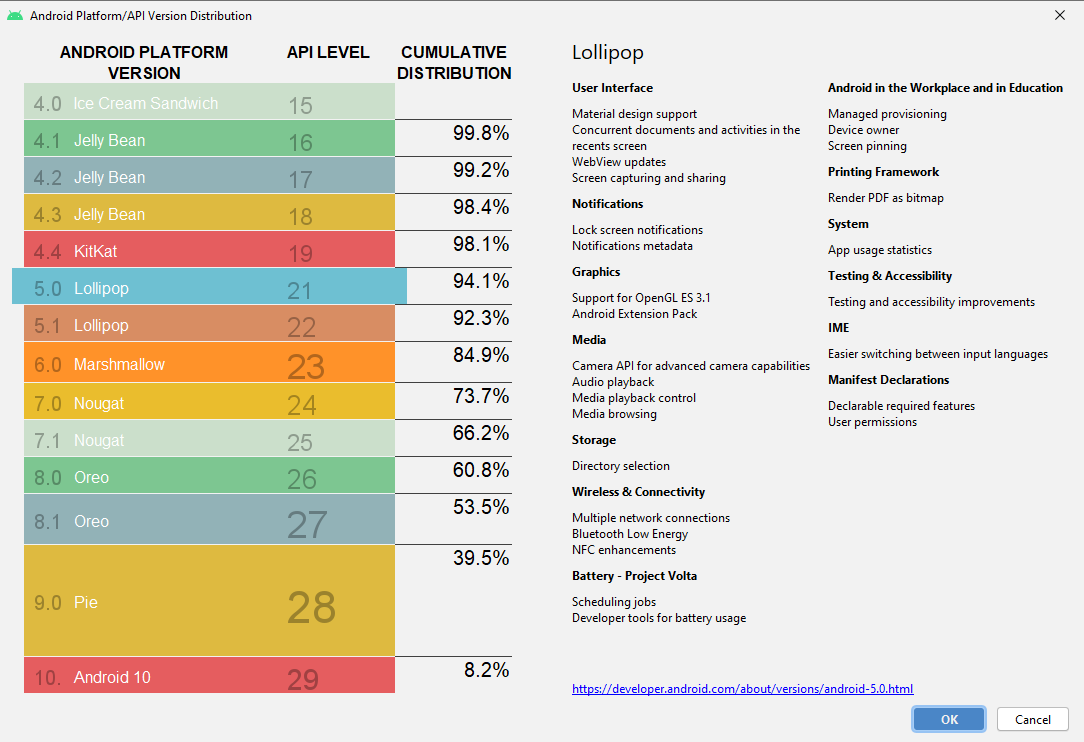
The current Android user base. Android 2.3 Gingerbread doesn’t even make the list.
Credit: Google
The current Android user base. Android 2.3 Gingerbread doesn’t even make the list. Credit: Google
After September 27, the oldest version of Android you’ll be able to sign in to is Android 3.0 Honeycomb, which is only for tablets. This OS still isn’t modular, but Google realized that login security updates would start to be an issue in the future, and Honeycomb added a “sign-in via browser” option to the initial setup. The hard-coded Android login can still be broken, but “sign-in via browser” will kick you out to a webpage—which can be updated with newer technology—and can then forward that login to the OS. It’s still not enough to save Honeycomb from the “less-secure app” designation and doesn’t work well with 2FA, but it’s enough to keep the OS trucking for now.
The login procedure became updatable in Android 5.0 Lollipop, which checks for initial setup updates before you even log in.
These devices have been obsolete for a while, so it’s not a big deal for day-to-day usage, but Google’s server shutdowns are a nightmare for preservationists. Today, anyone can fire up an old Apple II or install Windows 1.0 on an old computer and see the full experience, but once Google cuts off login support, old versions of Android are dead. If you can’t log in to Google, say goodbye to the Android Market, Gmail, Google Maps, and Google Talk. The base OS will still work, but you won’t be able to do anything people actually did on these phones. You’ll never be able to see these apps work on the phones again, barring some kind of crazy login emulation system.
This isn’t the first time Google has killed off older versions of Android because of higher login security. The Android 1.0-era apps have been broken for years. Here at Ars, we saw all this coming and documented every early version of Android in this giant article. The apps might not work anymore, but we’ll always have the screenshots.