Fitness bands are still around, and one of these might be the best tracker for you.
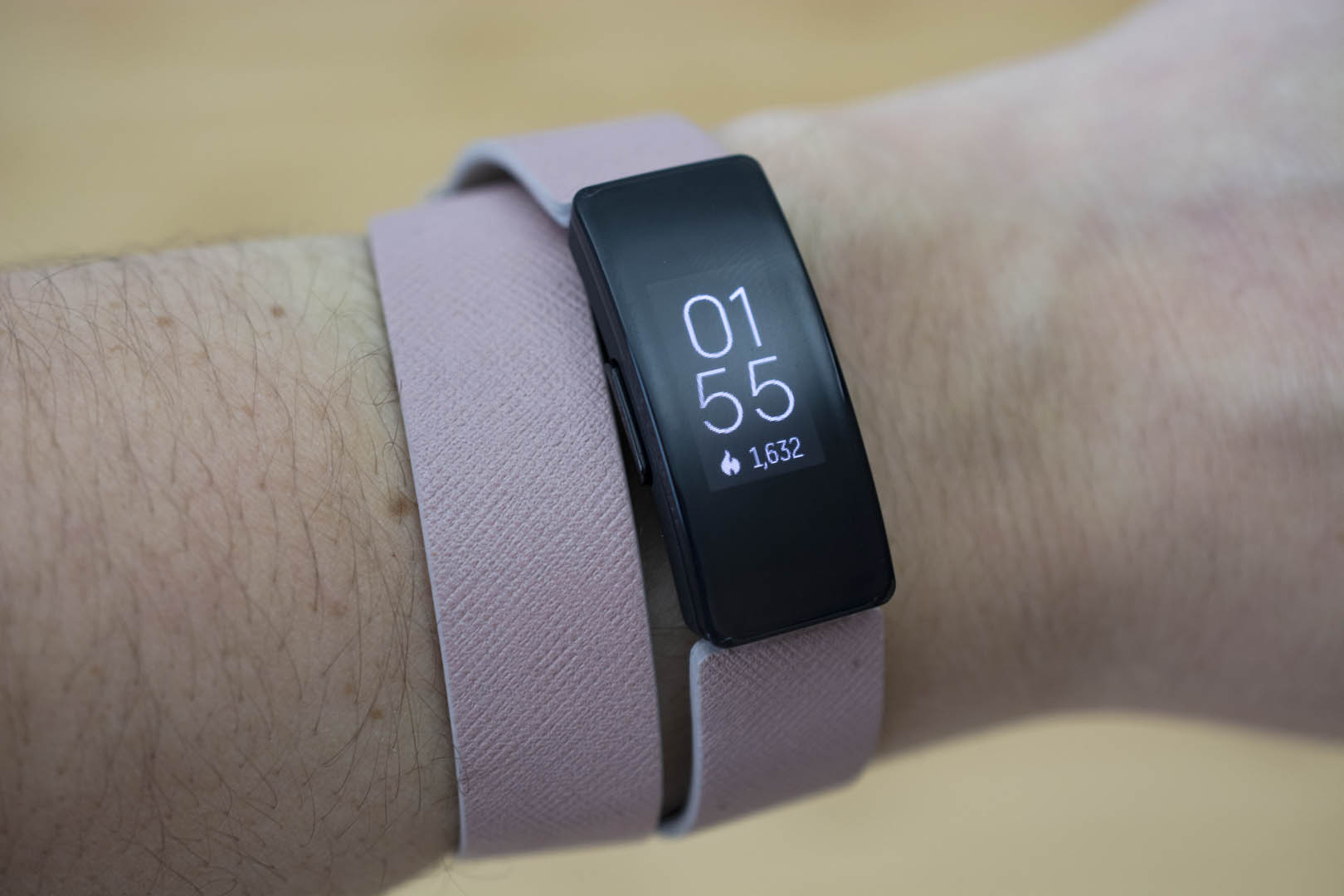
A different band can change the entire look of the Inspire HR. Credit: Valentina Palladino
A different band can change the entire look of the Inspire HR. Credit: Valentina Palladino
Update: To help all the readers out there considering health-related New Years resolutions, we've been testing the latest and greatest fitness trackers in recent months in order to update our Fitness Tracker Guidemaster. We originally put together our list of favorites in January 2018, but below you'll find our recommendations updated to include the best devices you can get in 2020.
The smartwatch hasn’t swallowed up the fitness tracker yet. While many are intrigued by the powers of the Apple Watch, Wear OS devices, and the like, old-school fitness trackers still have their uses—and they’re usually much easier on your wallet, too. The goal of the humble fitness band remains the same as it was when these devices were new: track daily activity in all its forms, from daily steps to intense workouts, from heart rate dips and spikes to the calm waves of sleep. Most of today’s fitness trackers haven’t changed much aesthetically, either. They’re still, by and large, wristbands.
With so many devices sharing the same basic goals and set of features, it can be hard to deduce which tracker is right for you. But from our testing, there are some fitness trackers that stand out among the rest—some for their thoughtful applications, others for their versatility, and some for their focused approach to fitness training. We’ve looked back at the fitness trackers we’ve reviewed and selected the best devices that are most likely to help you get and stay in shape.
Note: Ars Technica may earn compensation for sales from links on this post through affiliate programs.
The short version
- The best fitness tracker for most people is the Fitbit Inspire HR because it does a lot for a low price of $79. It improves upon our original favorite, the Fitbit Alta HR, with a slightly larger touchscreen and a more user-friendly OS that brings some of Fitbit OS (the company’s smartwatch software) over to the fitness band design. Not only is the screen easier to use because it’s a full-on touchscreen (as opposed to a tap-only screen), but you can also do things like set timers and alarm and change up the clock face. The Inspire HR does everything the Alta HR did, which means it’s a solid daily activity and sleep tracker that monitors workouts, be it manually or through SmartTrack, well. While it doesn’t have the seven-day battery life that the Alta HR had, its solid five-day battery life means you’ll only have to charge it once per week. We like that the Inspire HR gives you all the essential features a fitness tracker should have at a great price, in addition to accurate, all-day heart rate monitoring.
- The runner up is another Fitbit device—the Charge 3 fitness tracker. Again, Fitbit expands upon the abilities of a more affordable tracker to make the Charge 3. In this case, the Charge 3 does everything that the Inspire HR can do plus more—key among those things is track stairs climbed using an embedded altimeter. The Charge 3 also lasts a bit longer than the Inspire HR with its seven days of battery life. If you’re willing to spend about $50 extra, you can get the special edition Charge 3 which has NFC for Fitbit Pay as well, giving you NFC technology to pay for a cup of coffee or groceries after a workout without having your wallet handy.
- The best tracker for newbies is Moov Now, a unique motion tracker that you can wear a variety of ways—on your wrist, strapped to your ankle, in boxing gloves, and others. The tracker is simple enough, but paired with Moov’s mobile app it becomes a powerful fitness tool. The app gives you real-time audio coaching for a number of activities including running, biking, boxing, swimming, and more. If you’re new to working out and haven’t found the best type of exercise for you, Moov Now can both track your progress and help you decide how you like to exercise.
- On the flip side, the best tracker for gym-goers (or just the more dialed-in athletes) is Garmin’s Vivosmart 4. Exercise recognition makes this band stand out—it’ll identify certain exercises like crunches and barbell lifts as you complete them and even keep count of your reps. Like other Garmin devices, the Vivosmart 4 also has special features like pulse ox and all-day stress monitoring, VO2 max and Body Battery calculations, and more. There will be some athletes who prefer a more capable fitness smartwatch, but for those that want something more subdued that they can wear all day long and track exercise and daily activity, the Vivosmart 4 is the one to get.
Best overall
Fitbit Inspire HR
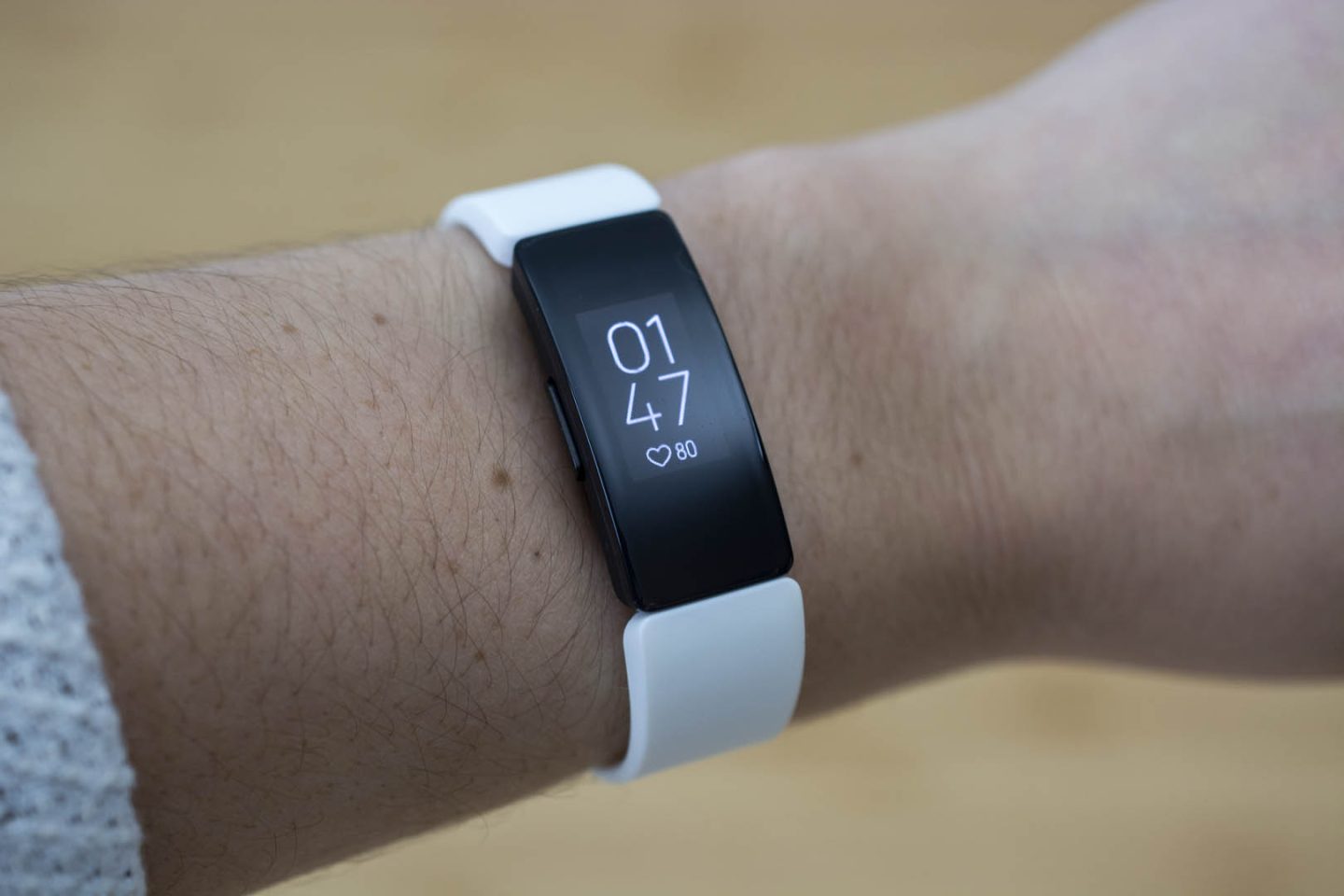
Credit: Valentina Palladino
Credit: Valentina Palladino
| Specs at a glance: Fitbit Inspire HR | |
|---|---|
| Price | $78.98 |
| Heart rate monitoring | Yes, continuous |
| GPS | Connected only |
| Water resistance | Swimproof |
| Smartphone alerts | Yes (call, text, and calendar) |
| Sizes | One size (includes small and large bands) |
| Battery life | Five days |
While we still have love for the Fitbit Alta HR, our previous favorite, the new Fitbit Inspire HR has replaced it in Fitbit’s lineup. Thankfully, it’s just as good as the Alta HR and comes in at just $79. Almost everything we loved about the Alta HR still stands in the Inspire HR—the tracker with interchangeable bands tracks all-day activity, sleep, continuous heart rate, and workouts including swimming.
Fitbit improved the workout-tracking experience in the Inspire HR by giving it a slightly larger touchscreen than the tap-only screen on the Alta HR. Combined with Fitbit’s refined fitness tracker OS, the Inspire HR feels a bit more smartwatch-like than the Alta HR ever did.
Not only can you pick and choose which exercise you want to track using the touchscreen, but you can also set timers and alarms and choose from a few different watch faces to personalize the device. The device can receive smartphone alerts as well. While the Inspire HR can’t do everything the Fitbit Versa or Versa Lite can do, Fitbit distilled some of the most important smartwatch features down so they could work properly and conveniently on the Inspire HR.
The Inspire HR also has Fitbit’s SmartTrack feature, which automatically tracks certain workouts after a period of time, and its connected GPS feature, which lets you use the band in tandem with your phone’s GPS to map outdoor runs and bike rides. The continuous optical heart rate monitor on the module’s underside not only measures your pulse during workouts, but it also keeps track of it at night and that data helps Fitbit’s software measure your time in various stages of sleep.
While the Alta HR lasted about seven days on a single charge, the Inspire HR lasts around five days. We wish the battery lives were comparable, but five days (with nighttime sleep tracking) is still stellar in comparison to most smartwatches. Fitbit’s software is also top-notch—not only are the Android and iOS mobile apps friendly and easy to use, but the company has added numerous new features over the past year or so including guided workouts with Fitbit Coach, menstrual health tracking, social exercise challenges, and more. We’re still waiting for Apple Health integration, but in the meantime, the $79 Inspire HR remains the best fitness tracker for most people.
The Good
- Solid all-purpose fitness and health tracker at a great price.
The Bad
- No altimeter.
Fitbit Inspire HR
Runner up
Fitbit Charge 3
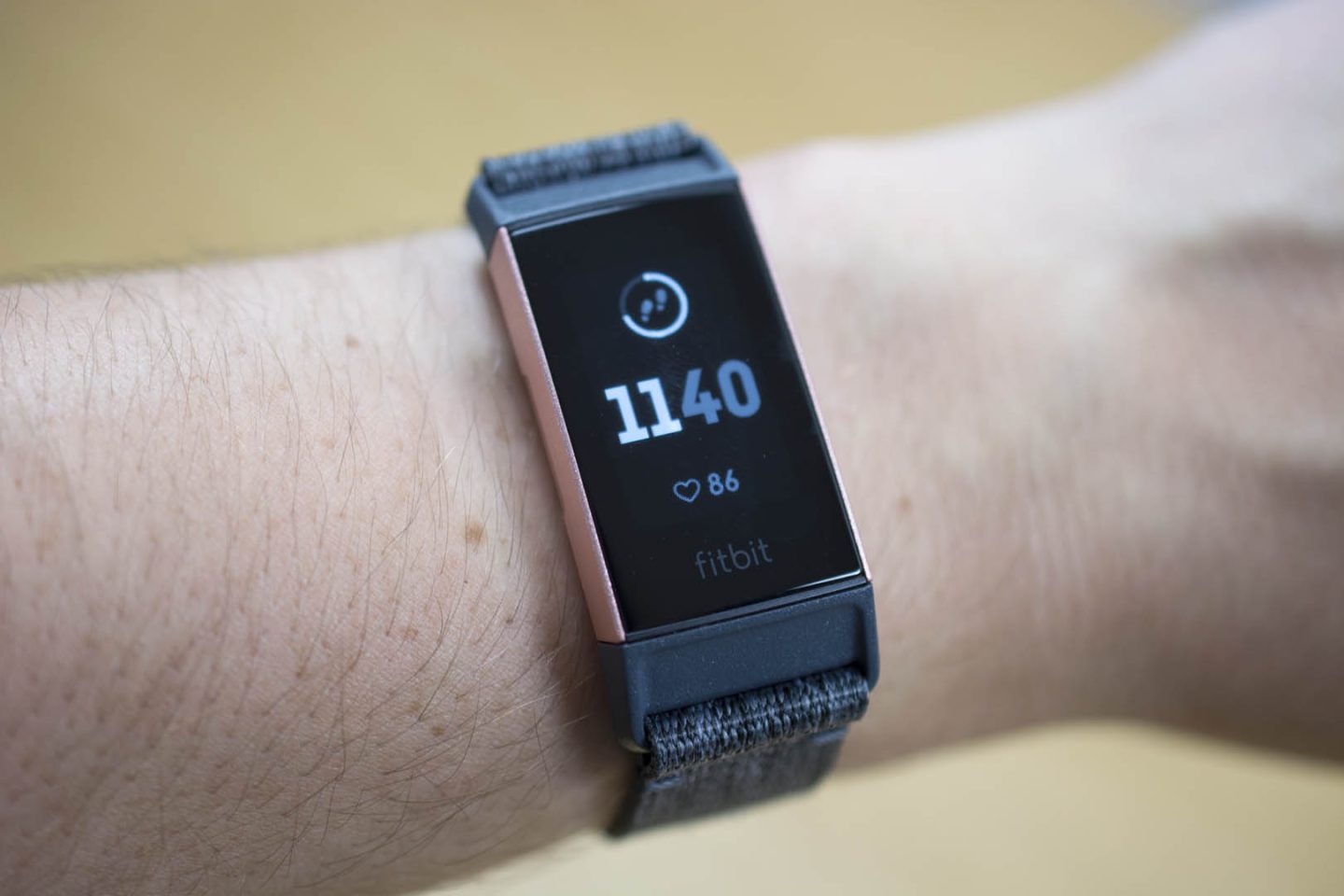
Credit: Valentina Palladino
Credit: Valentina Palladino
| Specs at a glance: Fitbit Charge 3 | |
|---|---|
| Price | $99.95 |
| Heart rate monitoring | Yes, continuous |
| GPS | Connected only |
| Water resistance | Up to 50 meters |
| Smartphone alerts | Yes |
| Sizes | One size (includes small and large bands) |
| Battery life | Seven days |
The Fitbit Charge 3 has all of the features that the Inspire HR has, plus a few extras. It’s slightly wider than the Inspire HR, but that doesn’t make it hard to wear. It tracks all-day activity and sleep comfortably, and uses your input as well as Smart Track technology to record workouts.
In terms of activity, the Charge 3’s included altimeter is an important differentiator between it and the Inspire HR. An altimeter allows the Charge 3 to track floors climbed, so if you feel particularly accomplished when you take the stairs instead of the elevator and want your wearable to reflect that effort, the Charge 3 is the better device of the two.
Fitbit also included an SpO2 monitor in the Charge 3 which should track blood oxygen levels and allow Fitbit’s software to learn more about your sleeping habits (when Fitbit actually enables the sensor).
If you’re willing to pay a bit extra, you can get the Charge 3 Special Edition which includes NFC technology for Fitbit Pay. The company’s contactless payment system lets you hold your Charge 3 up to an NFC reader to pay for things like coffee, groceries, and the like. If you’re ever out on a run and forgot your wallet, you can still pay for things using Fitbit Pay.
Like the Inspire HR, the Charge 3 also has Fitbit’s connected GPS feature so you can map outdoor workouts if you have your phone with you. The gap between the Inspire HR and the Charge 3 isn’t a big one, but those that value battery life and want option to get NFC payment tech in their fitness tracker should opt for the Charge 3.
The Good
- Good fitness tracker that tracks floors climbed and has a longer battery life than the Inspire HR.
The Bad
- No on-device music controls.
Fitbit Charge 3
Best for newbies
Moov Now

Moov Now
Credit: Valentina Palladino
Moov Now Credit: Valentina Palladino
| Specs at a glance: Moov Now | |
|---|---|
| Price | $48.99 |
| Heart rate monitoring | No |
| GPS | No |
| Water resistance | Waterproof (can track swimming) |
| Smartphone alerts | No |
| Sizes | One size |
| Battery life | Up to six months (replaceable coin cell battery) |
Moov Now is a funny little tracker—not just because it’s a quarter-sized motion detector, but because it focuses on something bigger than simply tracking motion. The Moov Now sensor can be worn a number of ways, including on your wrist or on your ankle, and it tracks myriad activities. Indoor and outdoor running, cycling, swimming (yes, it’s waterproof), and boxing (yes, one on either wrist can be used together) are only a few of the exercises the Moov Now monitors.
But instead of just recording your movements, the Moov Now uses its mobile app to train you to be better at those exercises. It uses a voice coach that comes through your smartphone or connected headphones to tell you which types of punches to throw while boxing or when you’re landing too hard while running.
You can set goals or areas of improvement within the app so the voice coach knows what to focus on when you’re exercising. After a completed workout, the app will provide you more tips in addition to showing you all your movement data. Moov also makes an HR version of its sensor, meant to be worn in a tiny pocket of a headband resting on your temple, so you can pair both to track movement and heart rate at the same time.
The value of Moov Now is remarkable: roughly $49 gets you a motion sensor with different harnesses so you can wear it a variety of ways, a well-designed companion app, and a voice coach to help you get started with any number of exercises. For someone new to fitness with no idea where to start working out, it doesn’t get much better than that. Moov Now gives users the chance to try out different forms of exercise, and it removes any excuse to use a fitness tracker for counting steps alone.
The Good
- App monitors sensor’s movements in real time to let voice coach help you get better at different exercises.
The Bad
- Cannot be used to track daily movement.
Moov Now
Best for gym-goers
Garmin Vivosmart 4
Credit: Valentina Palladino
Credit: Valentina Palladino
| Specs at a glance: Garmin Vivosmart 4 | |
|---|---|
| Price | $129.95 |
| Heart rate monitoring | Yes, continuous |
| GPS | No |
| Water resistance | Swim- and shower-resistant |
| Smartphone alerts | Yes |
| Sizes | Small/medium, large |
| Battery life | Five to seven days |
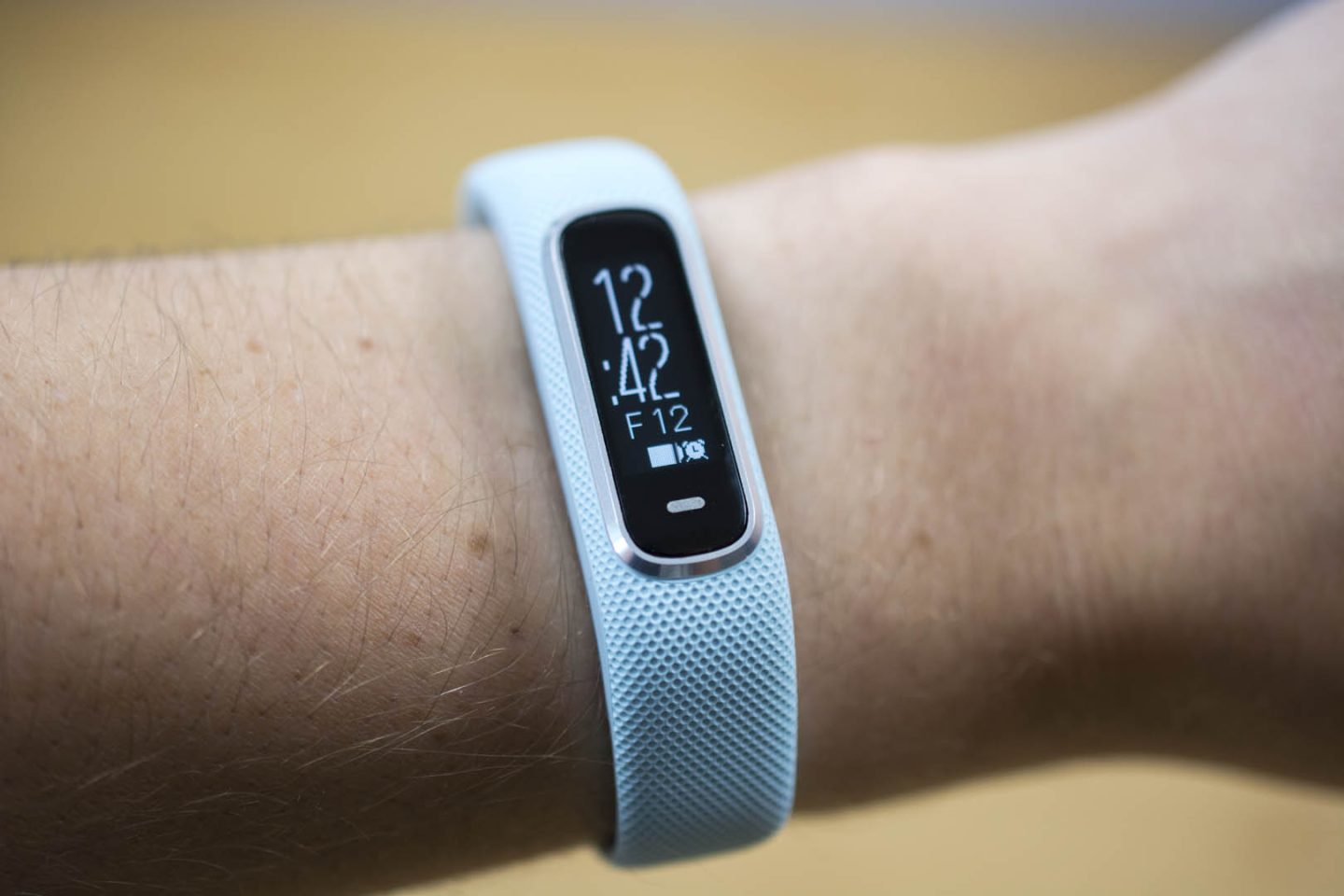
Garmin packs a lot of features into its small and fairly affordable devices. The $129 Vivosmart 4 is one of the best examples of this, as it includes nearly all of the essential fitness tracker features in addition to rep counting and an SpO2 sensor for pulse ox monitoring.
Rep counting was first introduced in the Vivosmart 3, and it plus Garmin’s exercise recognition feature continue to improve with time. It’s fairly accurate and a convenient feature for those who lift weights frequently or do anything other than running or cycling. Exercise recognition allows the device to identify which exercises you’re completing; it can, for example, differentiate dumbbell curls from ab jabs and other moves. It’s still not foolproof, but it’s a great feature to have—and even if it mischaracterizes a particular exercise, you can edit it to the correct move in the Garmin Connect mobile app.
Pulse ox monitoring recently made its way to Garmin’s elite wearables in addition to the more affordable Vivosmart 4—and unlike in Fitbit devices, the Vivosmart 4 actually puts this sensor to good use. It measures blood oxygen saturation when you’re asleep, potentially catching breathing irregularities that could be signs of disorders like sleep apnea. If you’re fairly healthy, you won’t see very interesting numbers come out of this sensor. But all it takes is one abnormal measurement for you to be more informed about your overall health.
On top of all that, the Vivosmart 4 can do most of what any entry- to mid-tier Garmin wearable can—which is a lot. Garmin redesigned it so now it’s thinner and lighter than before, and has a more attractive look to it. Its OLED display shows the time, a bunch of daily fitness stats, music controls, and more. It also lasts at least five days on a single charge with pulse ox monitoring turned on, meaning you could get more than a week’s worth of life if you choose to turn that feature off.
The Good
- Pulse ox monitoring on an affordable device with a great battery life.
The Bad
- No interchangeable bands.
Garmin Vivosmart 4
Listing image: Valentina Palladino

Valentina reviews consumer electronics for Ars Technica, testing all kinds of gadgets with a focus on mobile devices and wearables. She has a soft spot for Chromebooks.