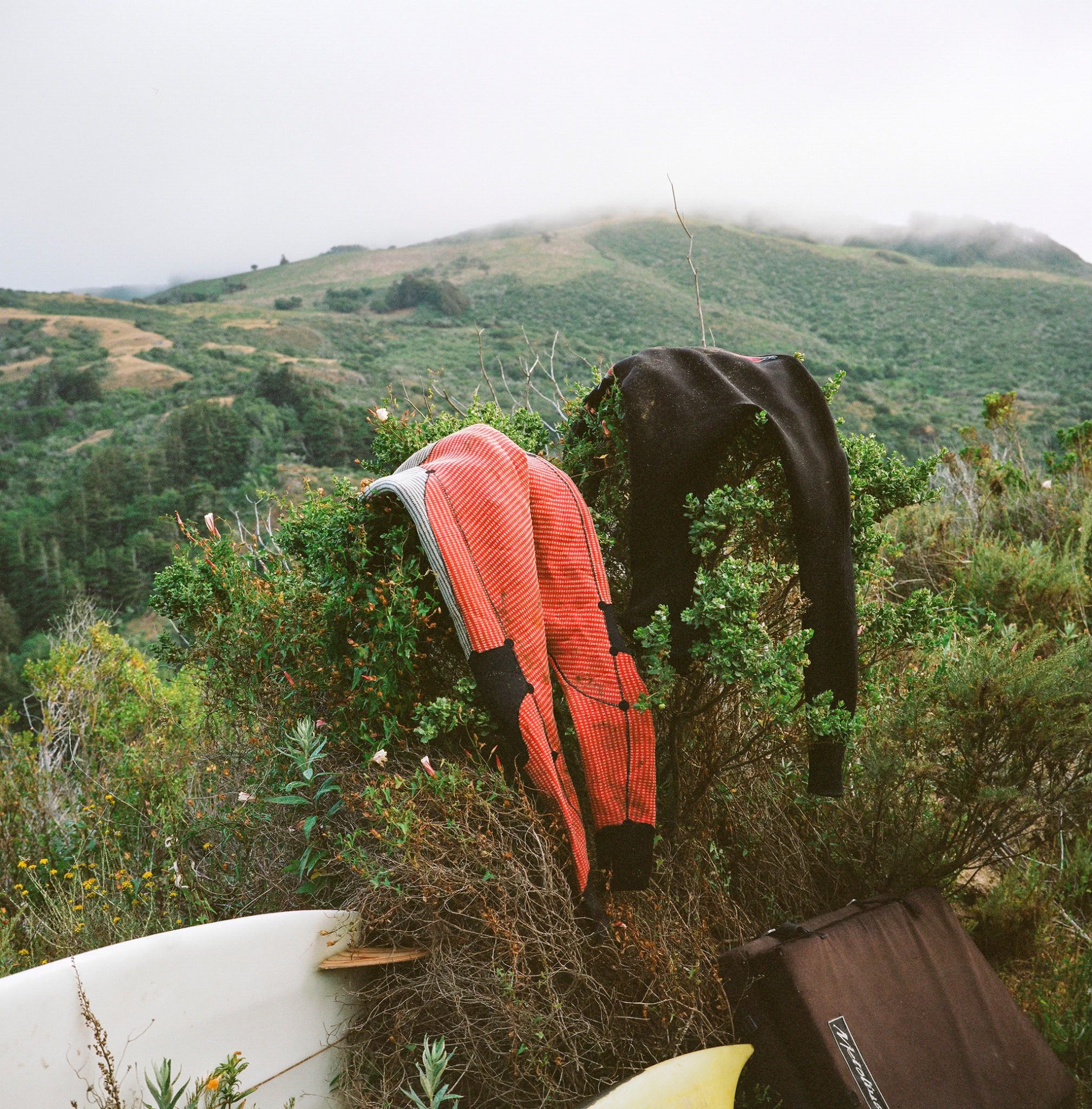
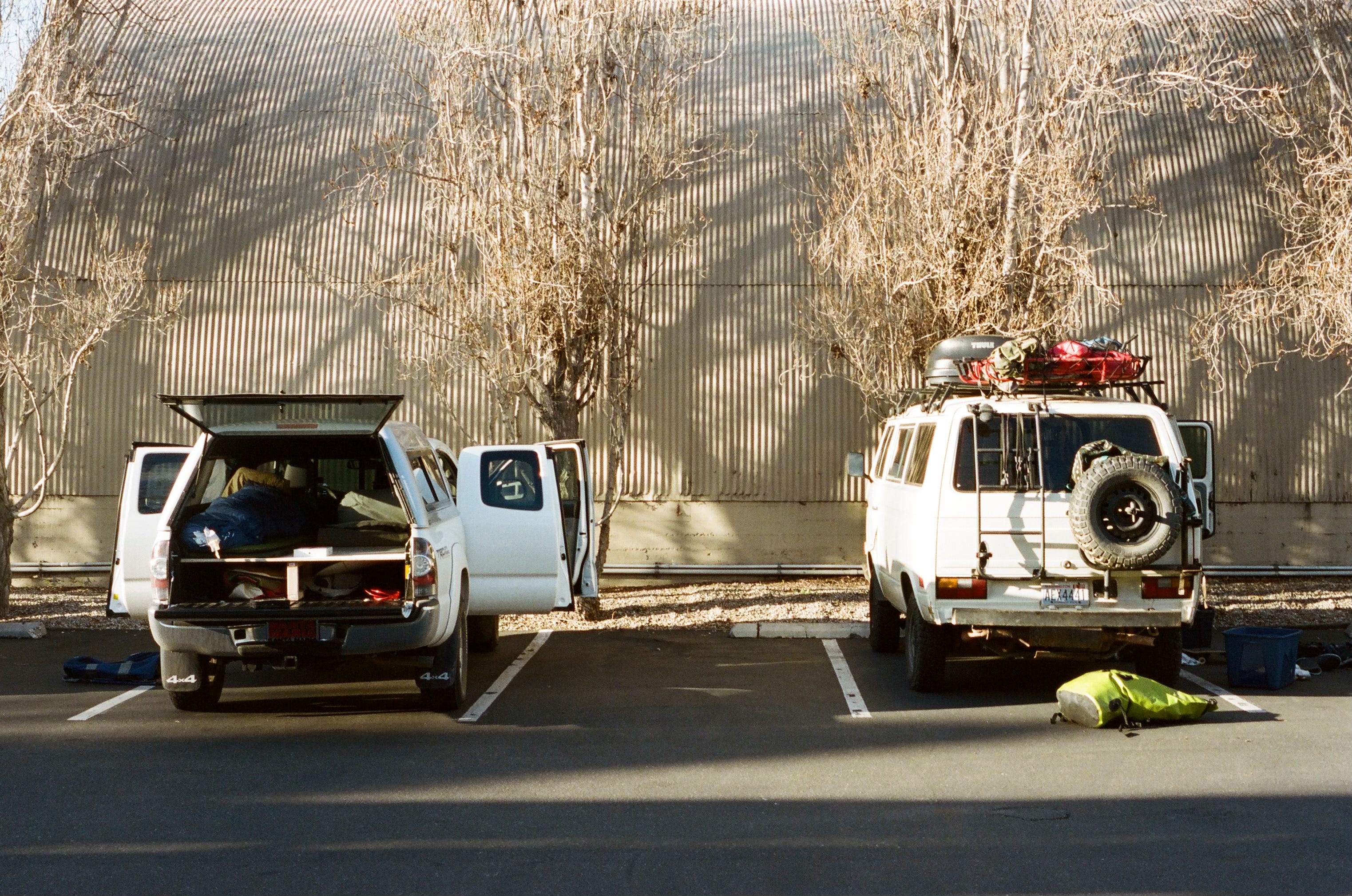
In the late spring of 2012, the cash from my advance for The Burning House photobook was running low and I was in no mood to return to anything resembling a traditional office. I was less than a year into living in my van, had just fallen in love with surfing empty point breaks in Baja and was working on a photo project that turned into Vanlife. Neither of these options had any prospects of producing cash on the time frame that I needed. I started rattling trees back on the East Coast to see if I could find any freelance work. A creative director that I knew from his time working at a Philadelphia area retailer had moved out to Ventura and was working at Patagonia. He was running their digital business, and had been following what I was doing on Instagram, Tumblr and my blog. He was keen to talk. At the time, I was bumming around LA, waiting for south swells to hit the points north of Malibu and drove up to Ventura for the day.
The book Let My People Go Surfing and the film 180 Degrees South were incredibly influential to me at this time in my life and informed a lot about what I wanted to do professionally. The prospect of doing some work with them and helping in a small way to tell their story seemed like a great opportunity and a timely source of cash. Patagonia had a blog and a facebook page. They needed help. There was no reason that a brand with such a strong visual history wasn’t on these new platforms. We talked for a few hours about what a Patagonia Instagram page could look like. At the time they had the username saved and had a few hundred followers but no posts. I wasn’t ready to have a desk, but I could definitely help if I had the right position. At the end of the conversation, he gave me the password to the Patagonia Instagram account and I was off to the races. I could park my van in the parking lot if need be and was introduced to their photo department. A college friend, who was an apparel designer, showed me the ropes and gave me a tour around the headquarters. For the next year and a half I tagged along on trips, hung out with athletes, sat in on design meetings, and threw in my two cents in on marketing ideas.
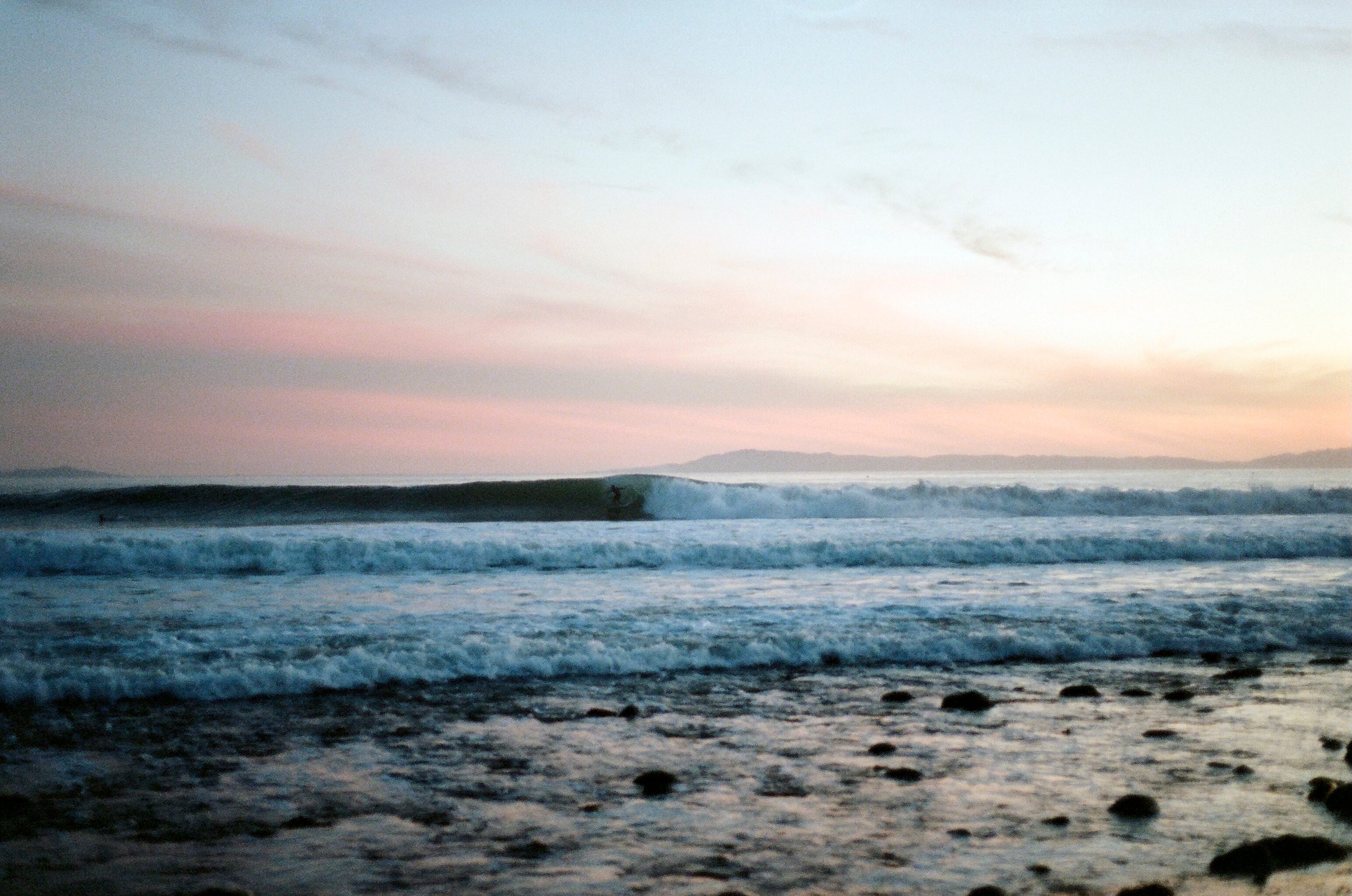
Yvon Chouinard and his wife Melinda ruled through a series of emails and by proxy, with a handful of people connected to the family. In this power vacuum, executive assistants and old friends of the Chouinards held power that far exceeded their job titles. To fill administrative positions, Patagonia hired a rotating slew of MBA’s from places like Levi’s, Nike and other fortune 500 companies. These executives would come, do a few projects, put Patagonia on their resumes and then move on to another company wanting some of Patagonia’s secret sauce. Between these hotshot executives and the proxy leaders, fell the majority of Patagonia’s employees, bulk of whom were locals to the Ventura and Santa Barbara area. Most of them were lifestyle employees, showing up with their kids a little late, leaving to go surf sloppy C street during lunch and checking out at 4:30 to head home. As I soon learned, Patagonia was the only gig in town and their primary motivation was maintaining their jobs through the political struggles between the proxy leaders and hired gun executives. Into this fray, I leaped head first, overly confident and excited, believing in the environmental mission and irreverence echoed in their marketing.
Prior to my recent gig as an aspiring surf bum living in my van, traversing the west coast burning through a book advance, I lived in Manhattan and worked at Ralph Lauren. During my time on the men’s design team, I got to spend a fair amount of time around Ralph Lauren, the man, during my team’s biweekly meetings presenting creative direction ideas to him and working on collections. Ralph, as everyone called him, was an incredibly kind, thoughtful, and passionate guy. He was always enthusiastic to talk about clothes, things he’d seen recently, how the stores were looking and ideas for collections. In the two years I spent in the halls of 650 Madison Ave, I only once heard Ralph get upset in a meeting when he clashed horns with the head of merchandising about how he felt a collection was too commercial and diverged from the original idea he loved so much. His largest concern, always, was maintaining the spirit of the brand. Ralph often hired from within and promoted from the stores to corporate design. Of the members of my team, only two, including myself, were not people he had personally picked from stores to work in design. His memory was amazing. Despite being the youngest and least important person in the room, Ralph always remembered my name. When a member of my team fell terminally ill with Lymes disease, Ralph personally paid for him to get stem cell treatment, flew him to treatments on his jet and demanded to keep him on payroll even when he became bedridden. To this day I am incredibly thankful for this time and the amazing people I met working with there. Ralph, his brother Jerry, John Wrazej and Charlie Schaefer all set the bar very high for what creative leads could be. At 24 years old, I assumed all places were like this.
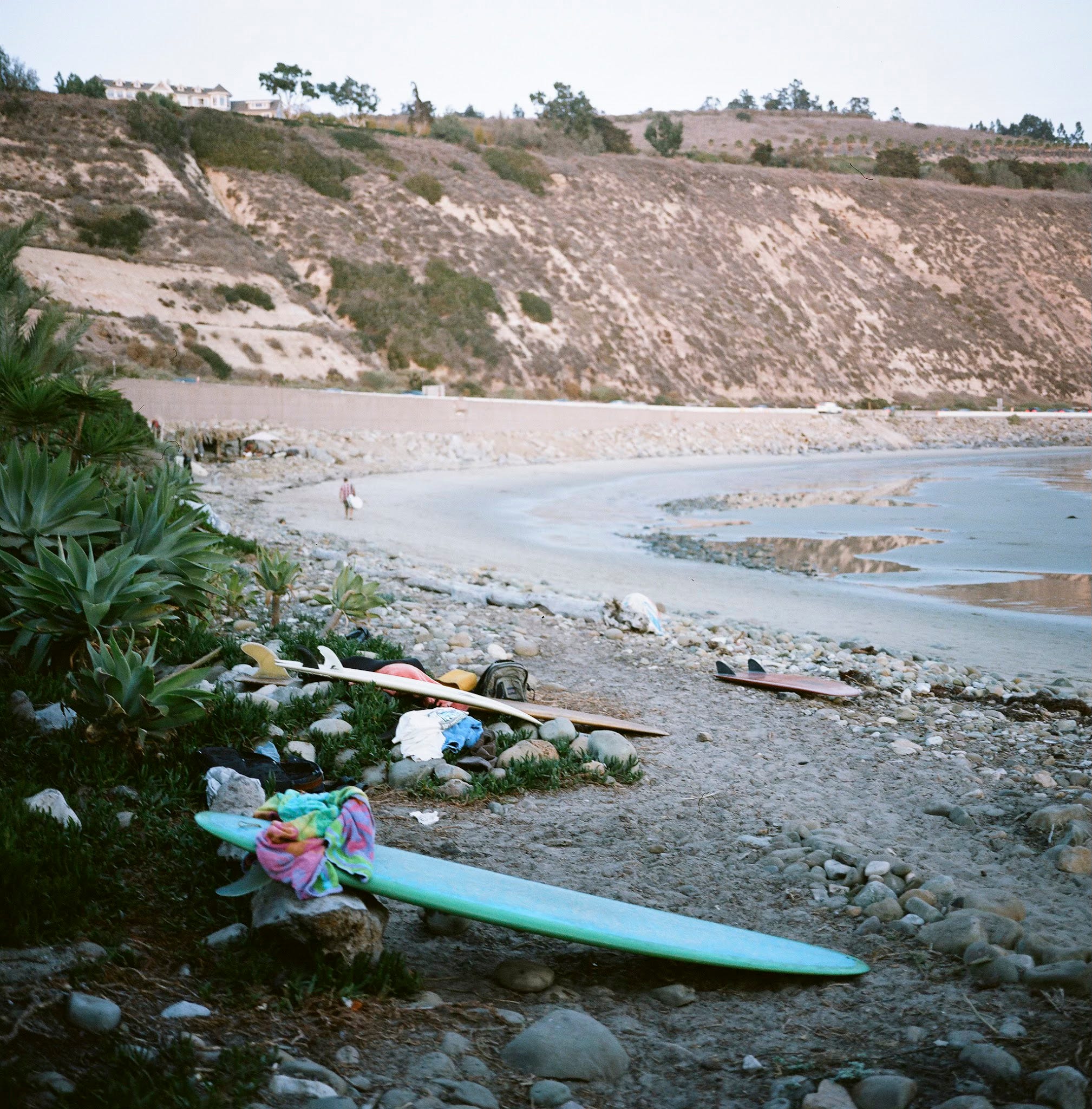
Unlike Ralph, Yvon wasn’t around the Ventura office much. He spent most of his time at the family property in Jackson Hole, surfing at their house on Hollister Ranch, an exclusive beach front community home to the likes of James Cameron and Julia Roberts, and fly fishing with other business tycoons. I only spent a limited time around Yvon; a lunch one day with a few surf ambassadors and a design session where he gave feedback on clothes. During the design session, which included the entire technical design team, Yvon persisted to say the pants he’s tried on recently were the worst fitting pants he’d ever owned and that he was embarrassed to wear them. Yvon lacked the self awareness to realize, and no one on the design team had the balls to point out that the pants he hated were not designed for his 75 year old, 5’4”, 175 pound frame and that they were the most successful pants in the line. The design director profusely apologized and said they will re-evaluate their fit guidelines. Yvon then proceeded to berate the guy that had designed the pants publicly, in front of the entire department in some form of public shaming that reminded me of the scene in Full Metal Jacket when Sergeant Hartman found a donut in Private Lawrence’s personal effects. After finishing his tirade about the pants not fitting him, the conversation then shifted to a discussion about why Patagonia wasn’t selling more technical clothing in Europe. “There’s no reason we shouldn’t be selling twice as much stuff there,” he kept saying. For those unfamiliar with how a clothing business works, there are people that design the clothes and there are separate groups of people that sell them. Yvon was voicing his frustrations to the wrong audience. I remember looking over at my boss, who was also sitting in on the meeting, and both shaking our heads and mouthing, “WHAT THE FUCK.” After the meeting, everyone went back to work unfazed.
Three things about this amazed me; first that Yvon, the proponent of so many environmental, social causes, and alternative structures of business would ever think it was appropriate to talk to anyone like that, secondly why was the “reluctant businessman” so focused on sales numbers when publicly everyone acted like it wasn’t about selling clothes, and thirdly why the hell did the employees of Patagonia just sit there and take it, reaching the conclusion that they were doing a bad job instead of realizing that he was just an asshole.


As Patagonia’s Instagram grew from a few hundred followers to a few hundred thousand, the work I was doing gained scrutiny. I specifically remember meeting with the head of the photography department after returning from a surf trip to Kamchatka, Russia. On the trip, we traveled and lived out of an old 6x6 military vehicle and explored the coast by a cold war era helicopter and documented many of our travels in real time.
“We don’t post or share images of things that consume fossil fuels. Melinda always calls it out.”
“Well that’s how we got around. How does she think we got to Kamchatka in the first place, swam across the Aleutian islands? Social media is about showing people behind the curtain,” I argued.
Most people, especially not die hard Patagonia fans, don’t know, that for decades, Patagonia’s largest client, by a notable margin, is the US military. Prior to walking around the Patagonia campus and wondering who the tattooed, football player looking people that worked on a floor that no one went into were, I had no idea either. During the Global War On Terror, Special Operation units like the Navy Seals and Green Berets wore Patagonia on missions in Africa, Asia, South America and the Middle East, all while Patagonia outwardly condemned the administrations in charge and waxed poetic about the environment. At the very same moment that I was getting lectured about how Patagonia doesn’t show imagery of people with fossil fuel consuming vehicles in their marketing, there were in fact Special Operation Soldiers on multiple continents engaged in combat operations protecting US oil interests, wearing Patagonia head to toe. The irony is unmatched and strangely omitted from conversations about the brand.
At the time I was working with Patagonia, 2012-2013, ‘Made in America’ was having a resurgence in high end clothing and Patagonia designers were interested in doing some domestic manufacturing. In order to make clothes for the US Department of Defense, Patagonia set up an entire supply chain to make clothes that were Berry Compliant, sourced and built domestically in the United States. Despite having these supply chains already for their military business, Patagonia both internally and externally stated that they couldn’t maintain the quality necessary for their technical clothing, seemingly forgetting their entire military business. “Either the reason for not making clothes in the states is an economic question about reducing profitability or the military clothes were sub par quality... and well if that’s the case, they are certainly selling a lot of garbage to the DOD...”
Over time, the issue of the military clothing led me to reevaluate their entire environmental messaging. Ostensibly, according to the marketing, books and interviews, Patagonia exists to be a shining light of how business can be run in a way that’s less environmentally destructive. This idea has been so pervasive, that it’s spread to all sorts of different businesses. It’s an attractive argument, until you start unpacking it. Companies, by design, exist to make money. If Patagonia, or any of the companies that emulate this approach, primary concern was really saving the environment, they wouldn’t make clothes in the same factory as every other outdoor business, only with slightly different materials, or sell anything other than refurbished clothes. The most sustainable jacket is not one made from bamboo fibers grown in Indonesia; it’s a used jacket refurbished with a new zipper and patched elbows. The most sustainable car is not a modern electric, but keeping an old car on the road. This idea isn’t sexy and it doesn’t continue the cycle we’re all invested in. In a way, believing that making a jacket that’s marginally less bad for the environment is a mechanism to stop global warming is akin to believing that the solution to alcoholism is drinking light beer.
When Keith and Lauren Malloy came to me with an idea for telling stories about people and their used Patagonia clothes, I worked with them and pulled what strings I could on a project called Worn Wear. To my surprise, this idea met with a bunch of pushback, especially from the head proxy, one of Yvon’s best friends. “Why would we promote stories about old clothes? How does that help us sell stuff?” This point of view was shared by lots of the higher ups. Clandestinely, we built a website and started taking submissions from people in the community. Eventually, the project gained enough momentum that it rolled over the sales-focused proxy’s and into existence.
After a year and half, I decided to focus on my own work and left Ventura in the fall of 2013. The more I thought about the brand and saw people proselytizing it as if they were promoting a 509(c)3, the more puzzled I got. For years I’ve had this same conversation as outlined here, with people when they asked me about Patagonia. Never before had I experienced such a discrepancy between the consensus and what I observed. A few years ago I read that Patagonia restructured their business and ditched the military clothing line. The timing made me laugh, as just a few months before the US government had pulled out of Afghanistan and drastically scaled down the rest of the post 9/11 conflicts. Thats like a gambling addict patting themself on the back for not betting on football in February, after the Super Bowl. As for restructuring the business and giving all the money to charity, I’m certainly not a forensic accountant, but I sleep easy each night believing wholeheartedly that whatever Yvon and the cultists in Ventura did was little more than a tax scheme.
On a recent trip to Arizona to bow hunt for mule deer, I drove down the 101 on the coast with my girlfriend and our dogs. Along the way, we camped and saw places close to my heart that I enjoyed during the two years I lurked in the Ventura/Santa Barbara area. On a rainy New Years eve, we drove out the winding road to Jalama County Park. Since I’d been there last, The Cojo Ranch was purchased by the Nature Conservancy and the old no trespassing signs have been replaced by a more sophisticated batch of signs with a lot more fine print. They are still running cattle out there and it’s still just a playground for super wealthy people.
“Conservation for whom?” I fumed. “It’s no different than what Zuckerberg is doing in Hawaii,” I explained, referring to the Facebook founder buying up thousands of acres of Kauai for his private oasis. “Buying up these ranches and only letting donors and handpicked biologists enjoy it is the same fucking thing. The only difference is that these assholes think they are saving the world.”
The next day we drove on the 101, past Rincon and Mussel Shoals. Out of habit, I slowed at the overpass by Emma Wood and watched some perfect knee high waves break. At the Ventura river mouth, I looked to the North and saw that Patagonia offices had doubled in size since my time there. Like with the Nature Conservancy land, a tall fence with “No Trespassing” signs surrounded the pale yellow office buildings, presumably keeping the swarms of homeless people in the riverbed out. The place I once held in such high regard, I realized, looked like any other billion dollar company’s offices you’d pass while driving through a suburb, and think little of.
“The only difference is that these assholes think they are saving the world,” I mumbled to myself and drove on.