A rack of 48 Mac minis now powers Overcast's podcast transcripts, as developer Marco Arment bypasses cloud AI in favor of local Apple Silicon.
Arment chose Apple Silicon hardware to dodge the rising costs and limitations of cloud AI services. His system launched in March with Overcast's new transcript feature.
Now, the app can generate podcast transcripts on a large scale using Apple's speech recognition models. Instead of running on listeners' devices, the processing happens on the Mac mini backend.
Arment explained that cloud pricing would have cost Overcast thousands of dollars daily. In contrast, the Mac mini cluster offers a predictable monthly expense after the initial giant one, once it's set up.
Cloud AI services are convenient for adding features, but they can rack up the costs. Podcast transcription isn't just a one-time job, since new episodes keep coming and back catalogs keep expanding.
Arment decided to tackle the complexity head-on by running the workload locally on Apple hardware. Apple's speech models are speedy on Apple Silicon, and distributing tasks across multiple machines keeps the process efficient.
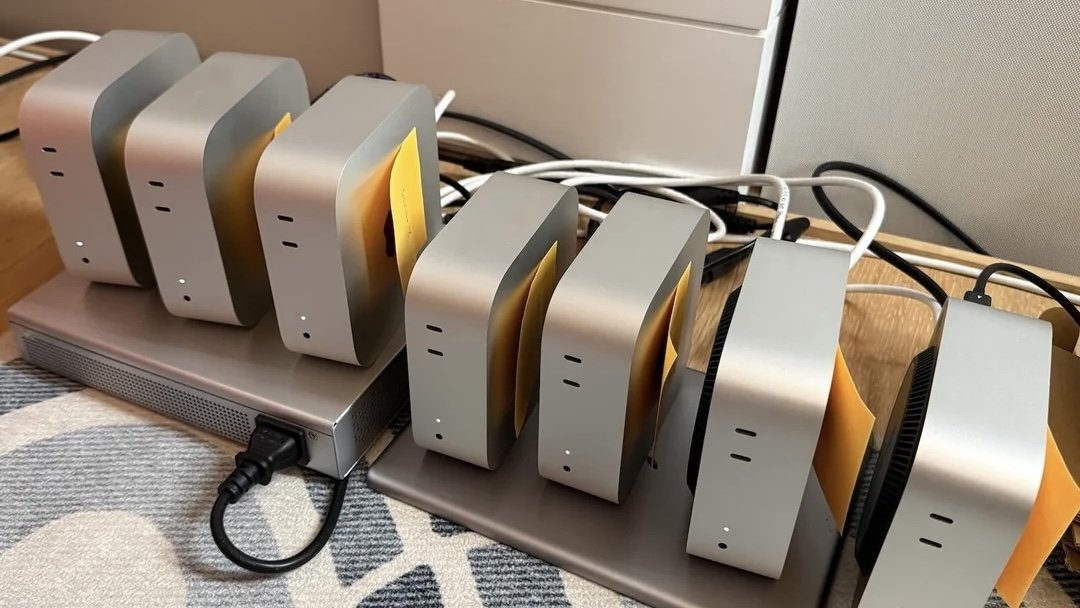
Arment chose Apple Silicon hardware to dodge the rising costs and limitations of cloud AI services. Image credit: Overcast
The approach avoids linking each transcript to a costly cloud AI API call, acting as a custom compute cluster rather than a typical app backend. Each Mac mini processes audio much faster than real time.
Apple Silicon's power can fill a server role
Mac minis, not designed for data centers, can now be used effectively due to Apple Silicon's strong performance per watt, unified memory, and efficient local model execution. These features make them well-suited for inference workloads like speech recognition.
Arment's cluster demonstrates how consumer Macs can handle sustained back-end tasks when the workload is predictable. Apple frames on-device AI as a privacy and responsiveness feature, but Overcast applies the same technology to back-end processing.
Podcast distribution introduces problems generic AI services don't handle well. Dynamic ad insertion causes different listeners to receive slightly different audio, complicating transcript alignment and reuse.
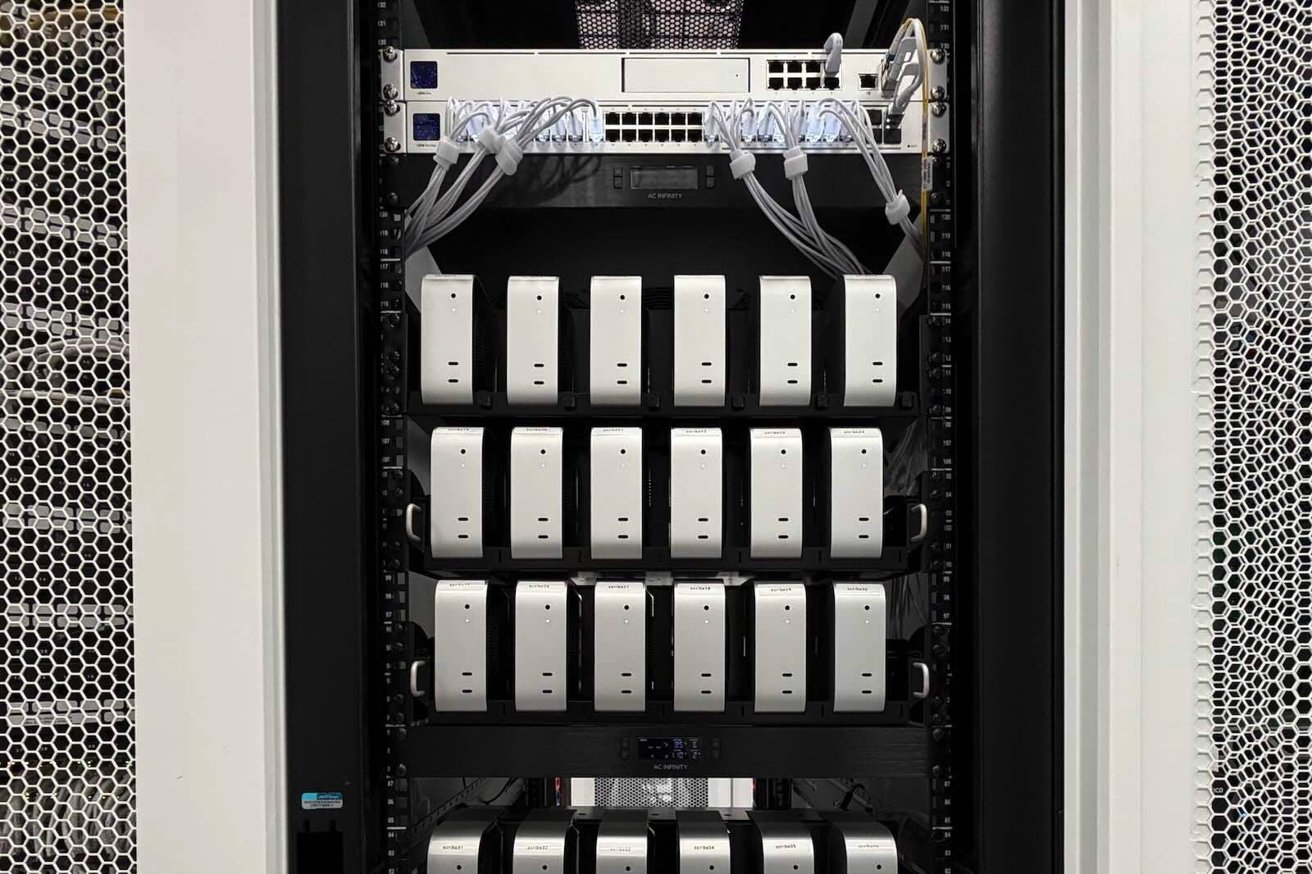
Mac minis mounted into a data center rack. Image credit: Difficult-Maybe-6131 on Reddit
Arment addressed this with audio fingerprinting and de-duplication. Overcast generates one transcript and maps it across multiple episode versions, reducing redundant processing while maintaining consistency.
Overcast, a small app, showcases a major shift in AI. Apple Silicon's performance now supports sustained AI workloads outside traditional cloud environments, especially for inference tasks with consistent demand.
Arment's cluster challenges the idea that scalable AI requires hyperscale infrastructure. Affordable machines can provide predictable costs and decent performance for practical use cases.
Apple continues to position its chips as the foundation for on-device intelligence. Overcast shows how the same hardware can also support independent back-end systems, reducing reliance on cloud providers.