The negative is the score, and the print is the performance. — Ansel Adams
Pressing the camera shutter merely started a process ending when the on-screen picture looks like the one you had in mind. Ansel proposes to put the artists back at the center of the creative process and enables them with an interface to manipulate images with precision and nuance, using state-of-the-art color science and independent color controls.
Install
The links above always point to the latest nightly build of the “fairly stable” branch. If you want a particular version or need to roll back, you can find all intermediate versions on Github .
Why Ansel ?
Many solutions already exist to produce ready-to-consume photographs for masses, from smartphones filters to out-of-cameras JPEGs, followed recently by AI-driven automagic toy filters. These make photography easier than ever, but are the produced images really your images and, in any case, the images you expected ?
Ansel lets you interpret your raw photographs much like a music instrument, when most software tries to automatically play the score for you. It aims at being an underwhelming, boring, tool that just does what you ask of it, without getting in your way.
Get excited by your results
Not by your toys
When you like music, you can choose between learning how to play or buying recordings. It’s easier to buy, but more satisfying to play. Photo editing applications have lied to users for decades, pretending they could play without learning, because the software would deal with technical complexities for them, and entirely hide them.
It turns out that users have only been fighting applications they understand less and less, for control over their results, and to recover those tricky cases where automation fails. As time will go by, expect to lose more and more time fighting AIs to get natural-looking results… manually. Why not simply cut the middle-man ?
What can Ansel do for you ?
Ansel allows you to manage your collections of pictures, to edit your raw digital photographs and film scans non-destructively and to export the result to common file formats. It stores your editing histories as text and lets you go back in time at any editing step you like, anytime.
Color work
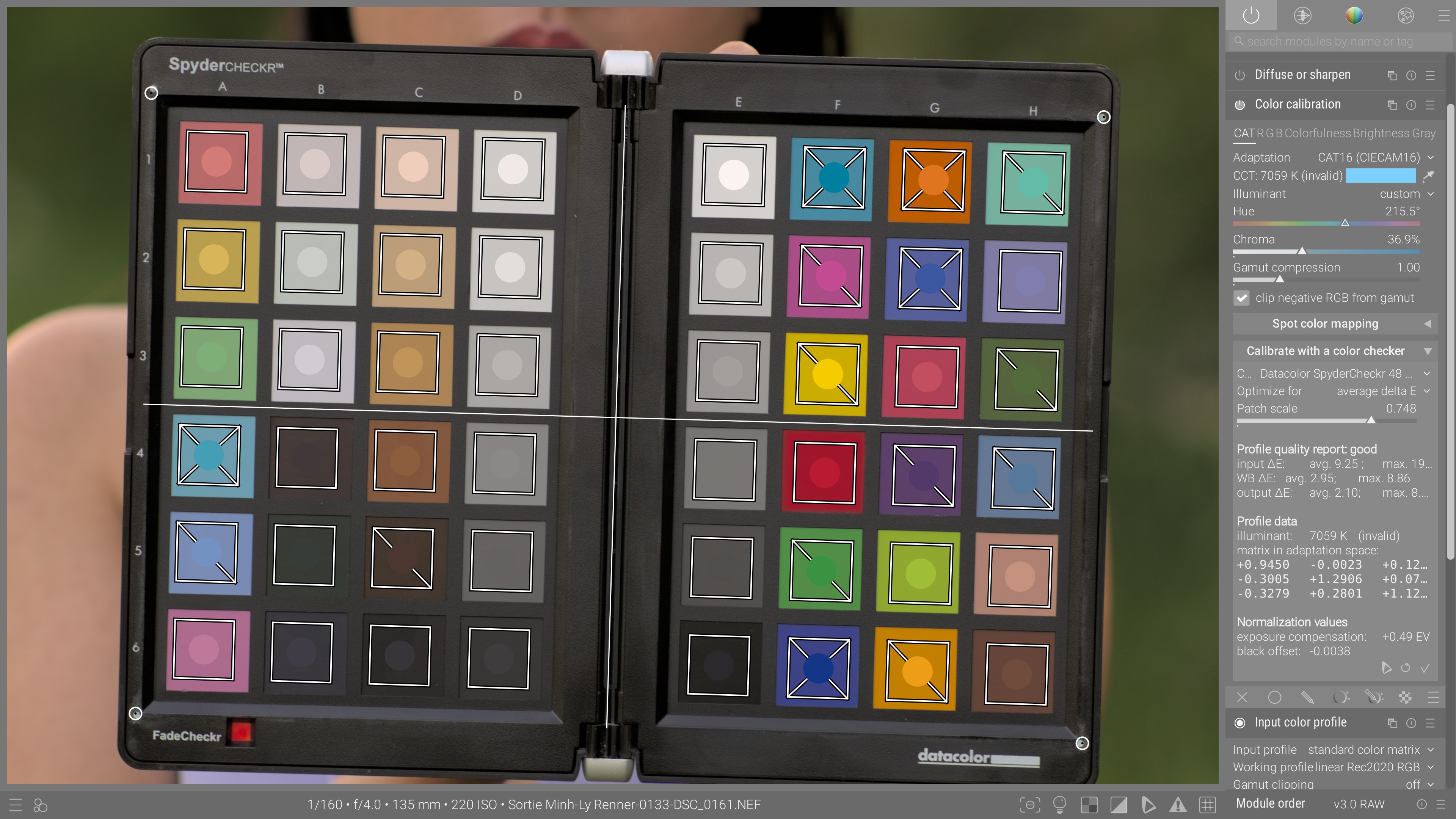
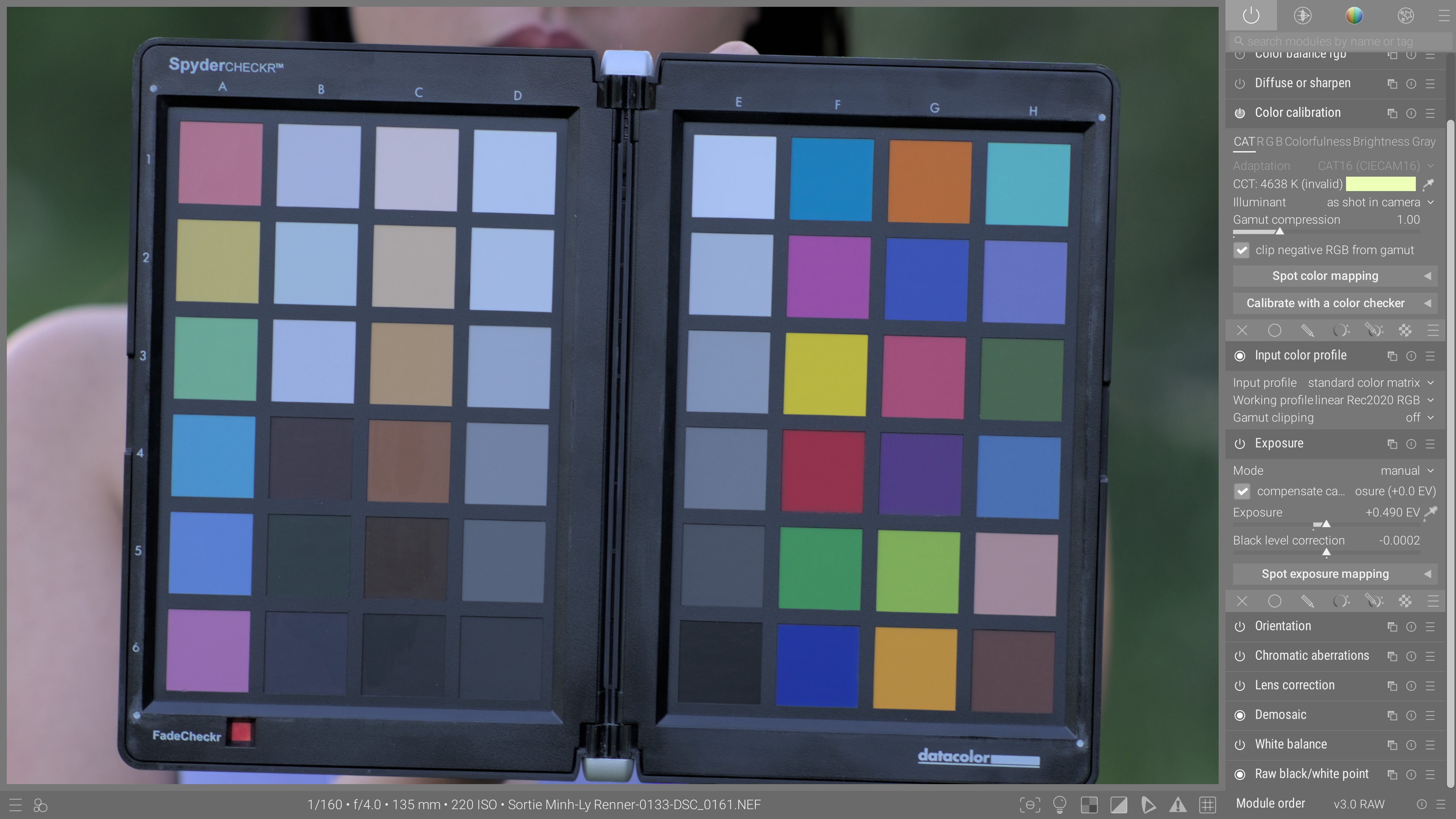
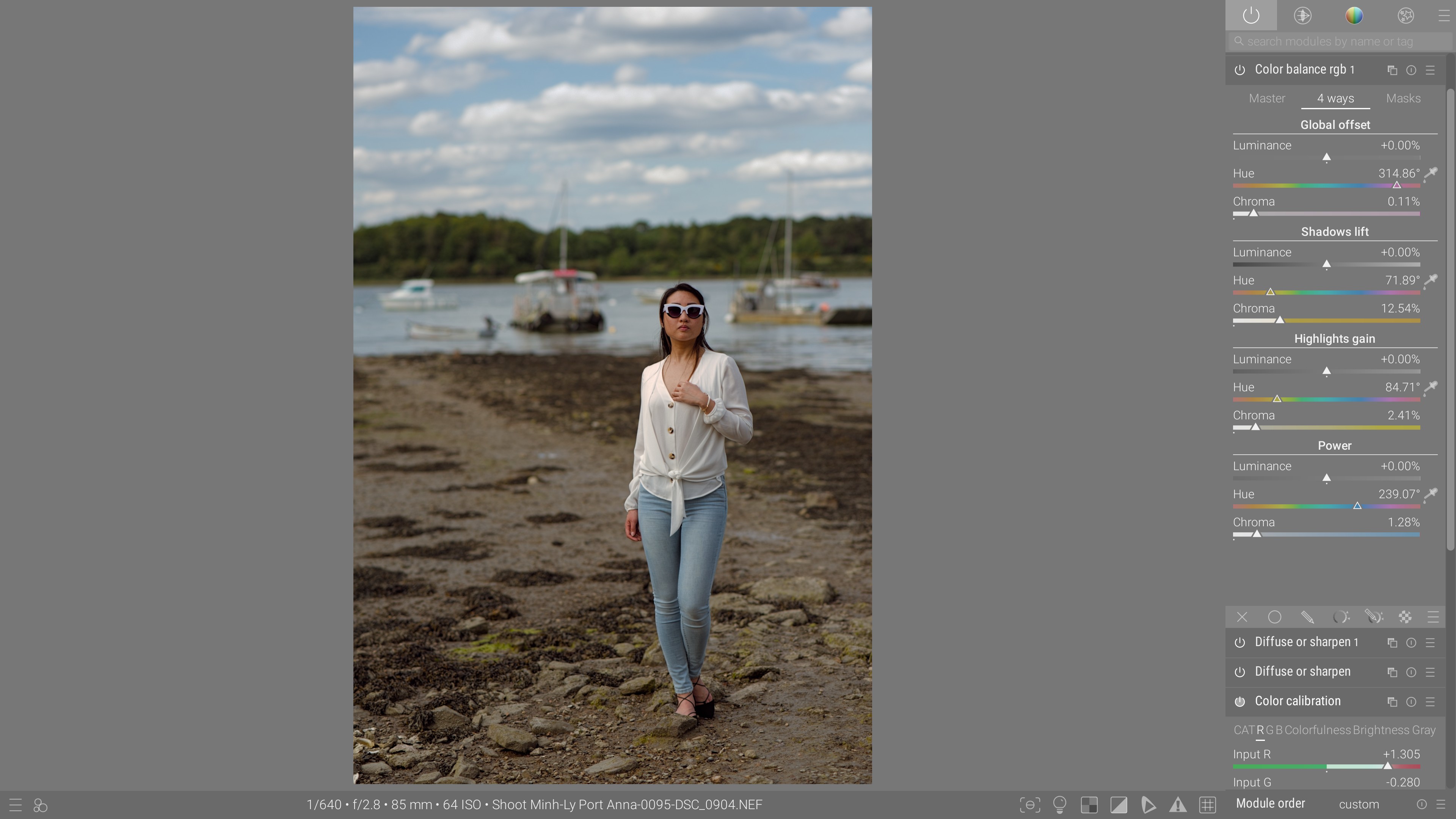
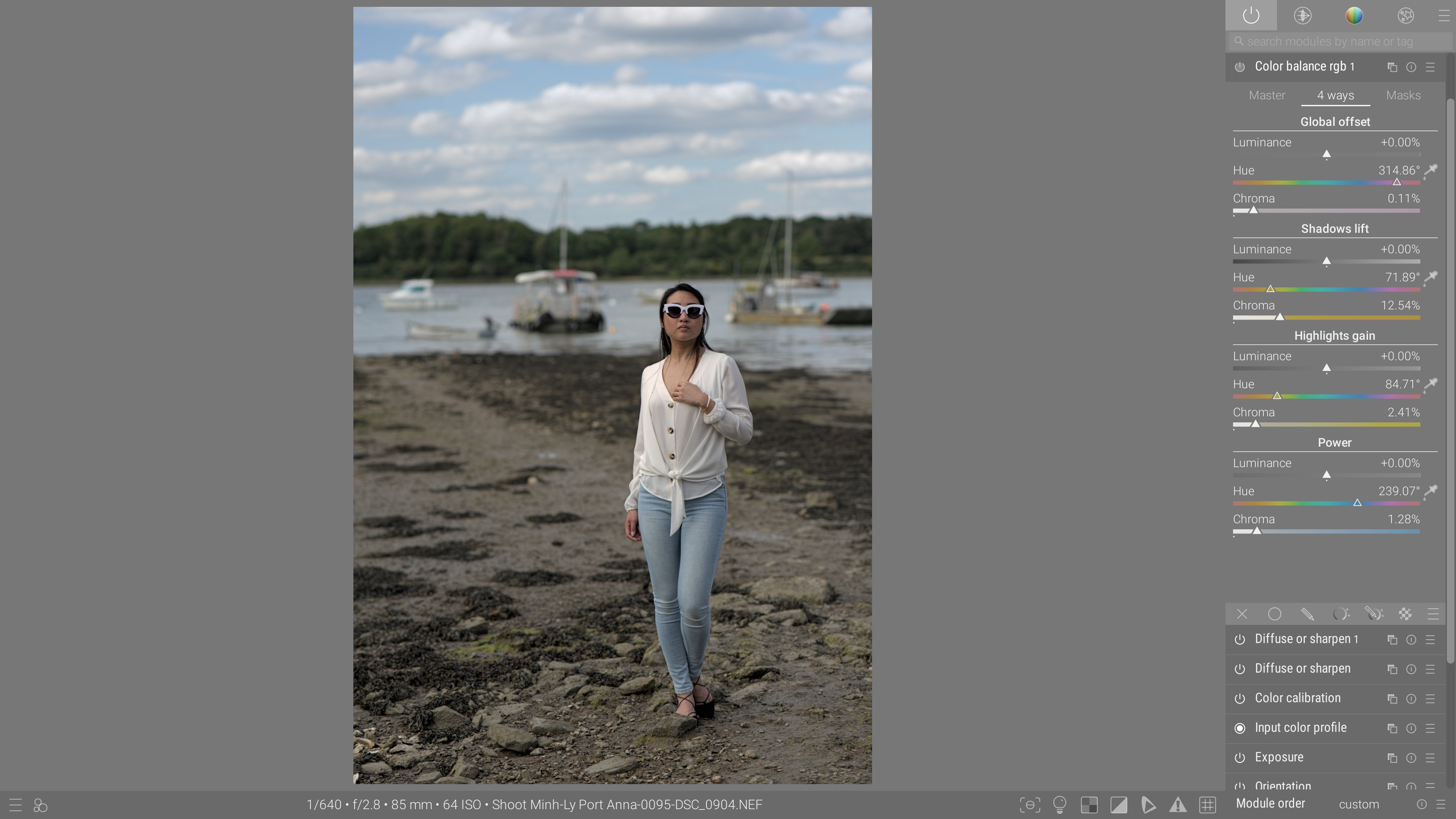
Ansel ships a recent color science, compatible with HDR : the chromatic adaptation CIE CAT 2016, the HDR color space JzAzBz (2017) and the perceptual color space darktable UCS 2022, developed specifically to manipulate color saturation without the fluorescent effect.
Color calibration
After
Before
Color-grading
After
Before
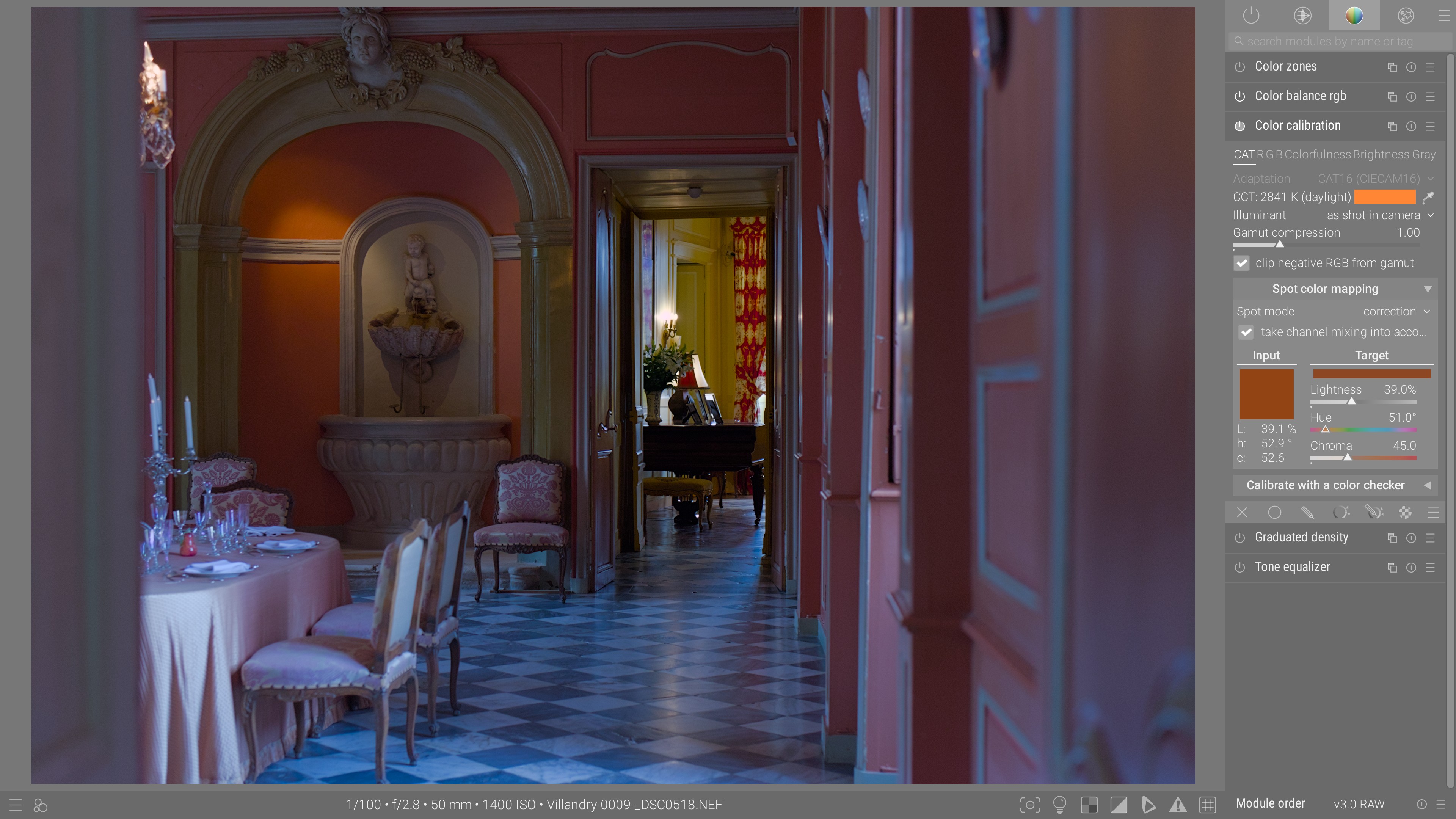
Color matching
After
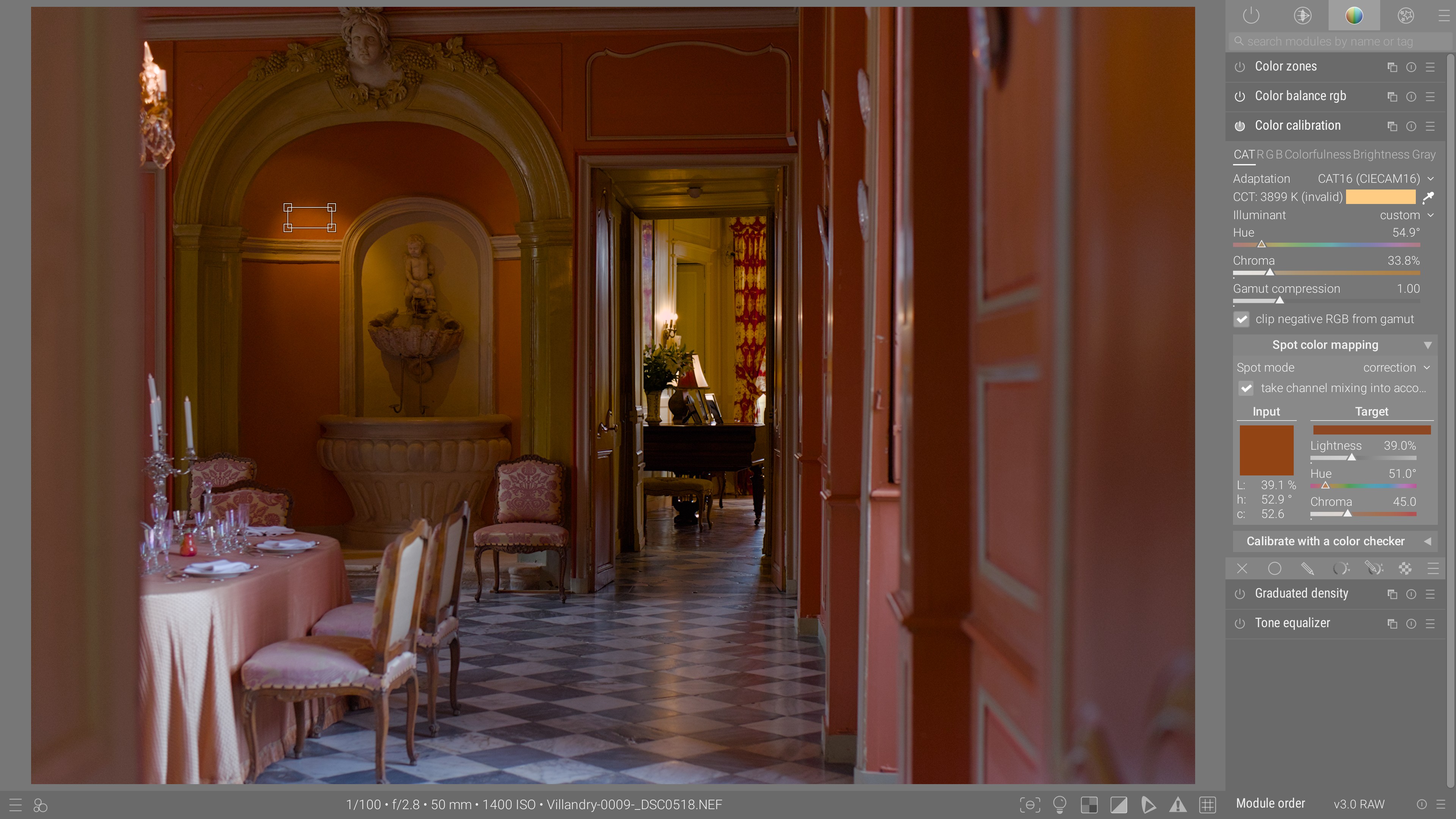
Before
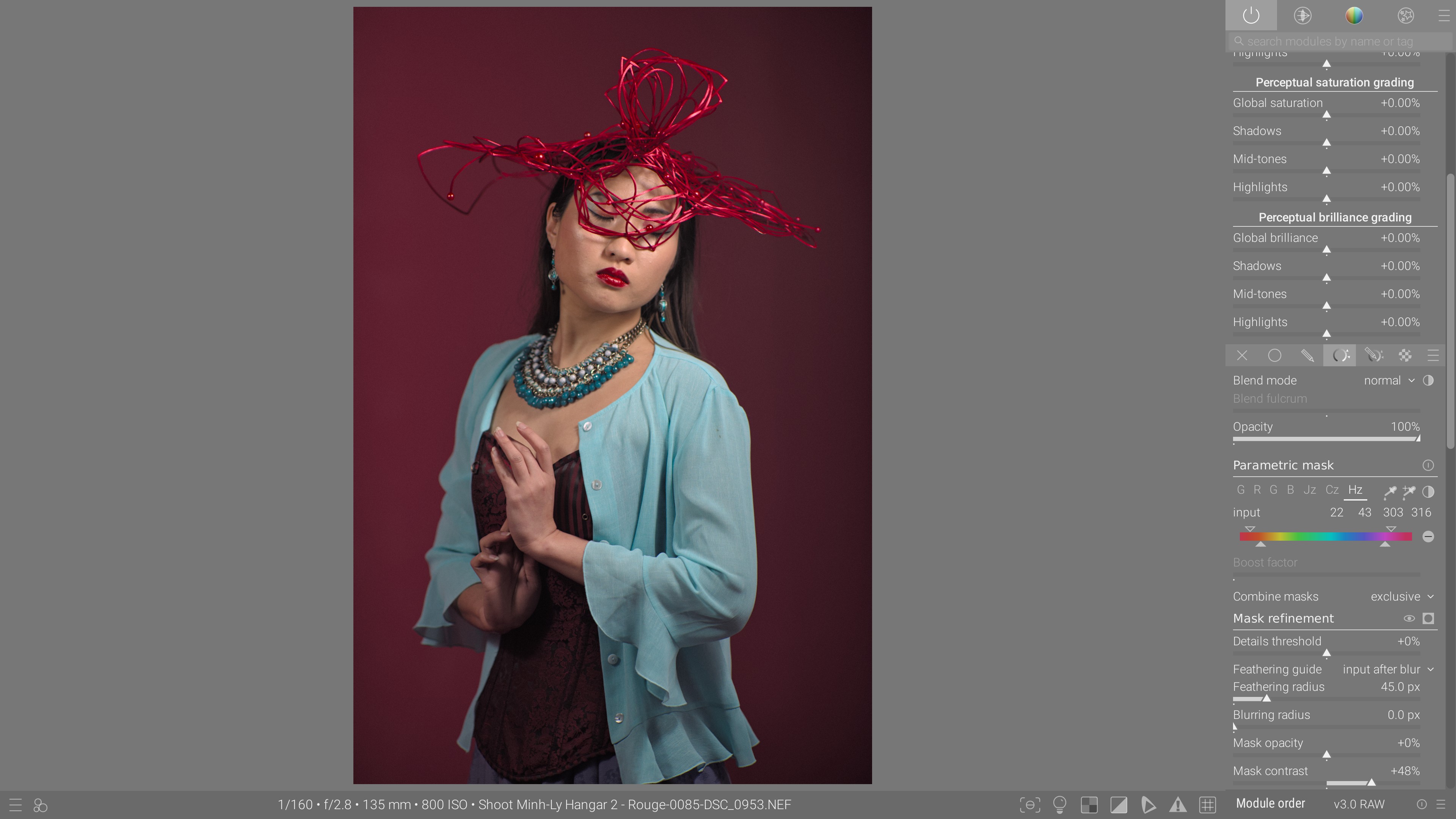
Hue qualifying and keying
After
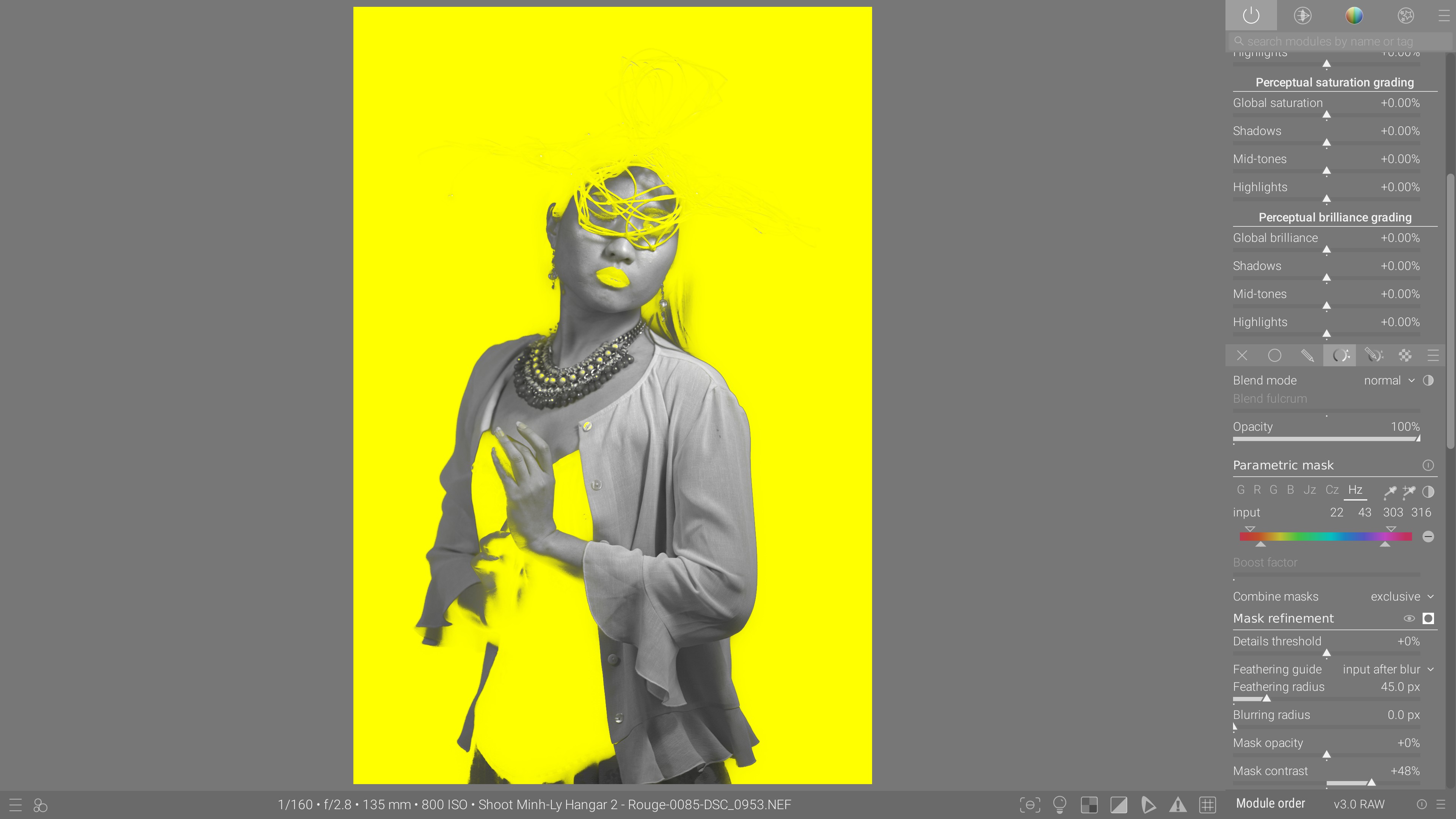
Before
Tonal work
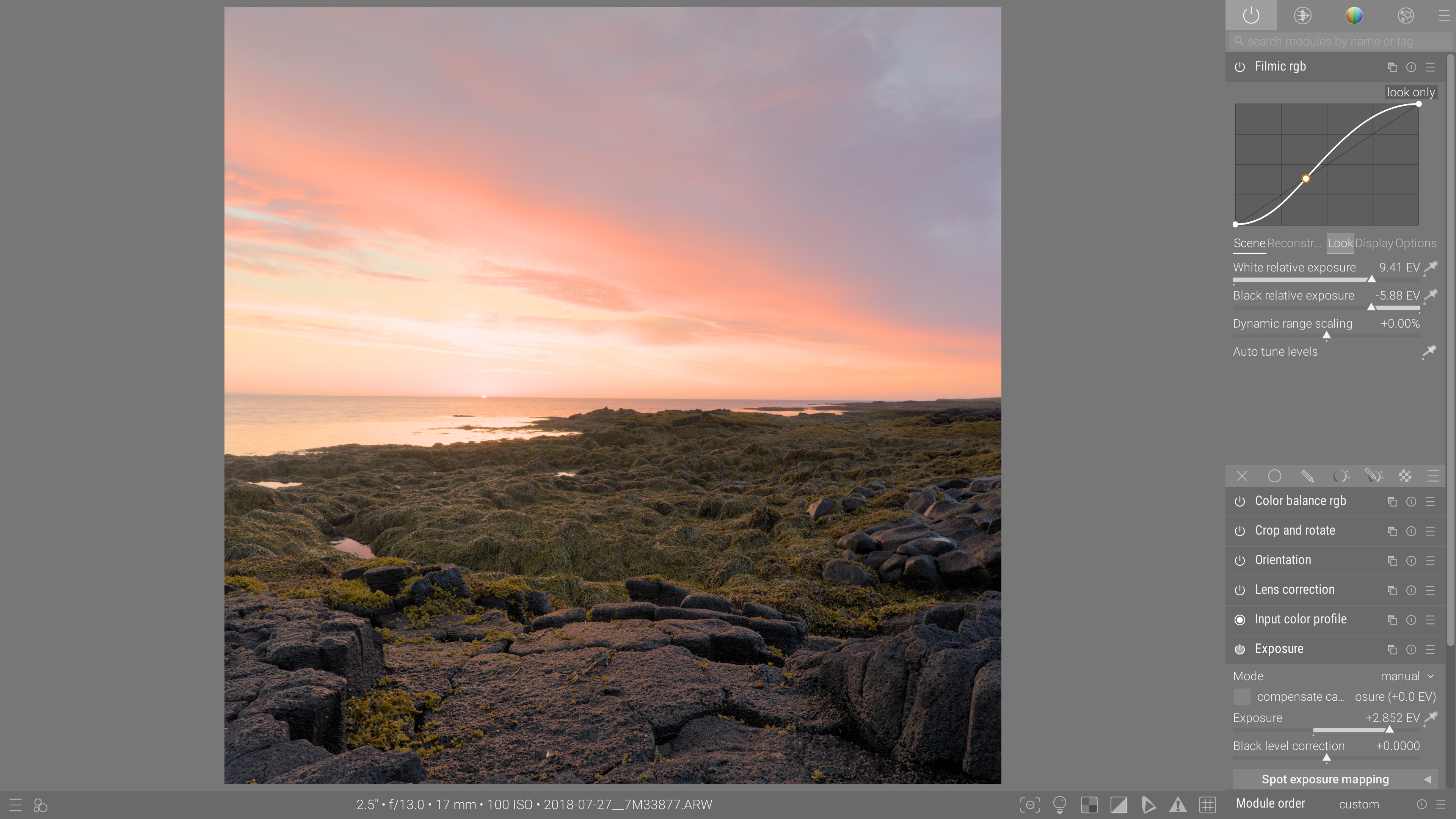
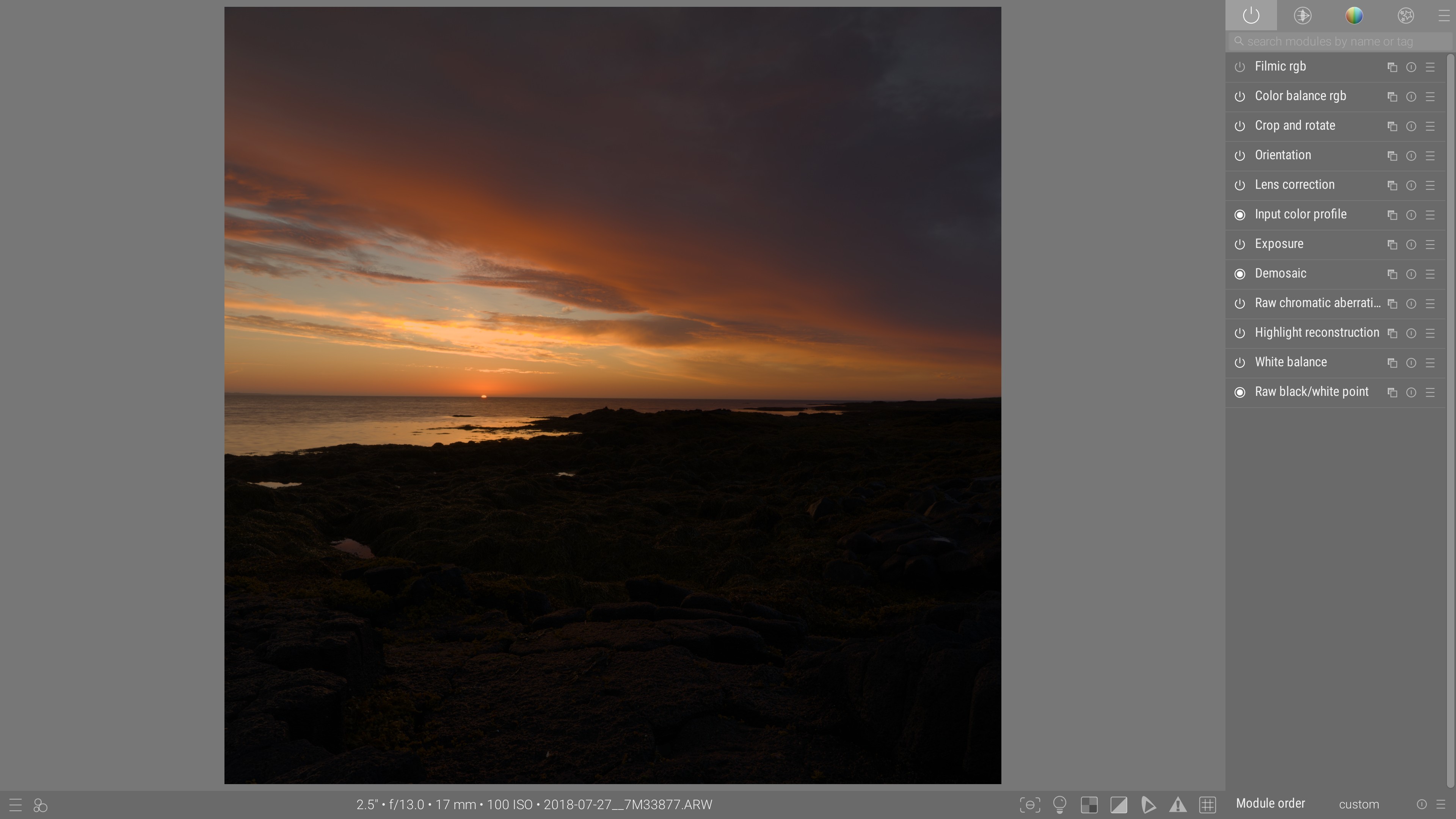
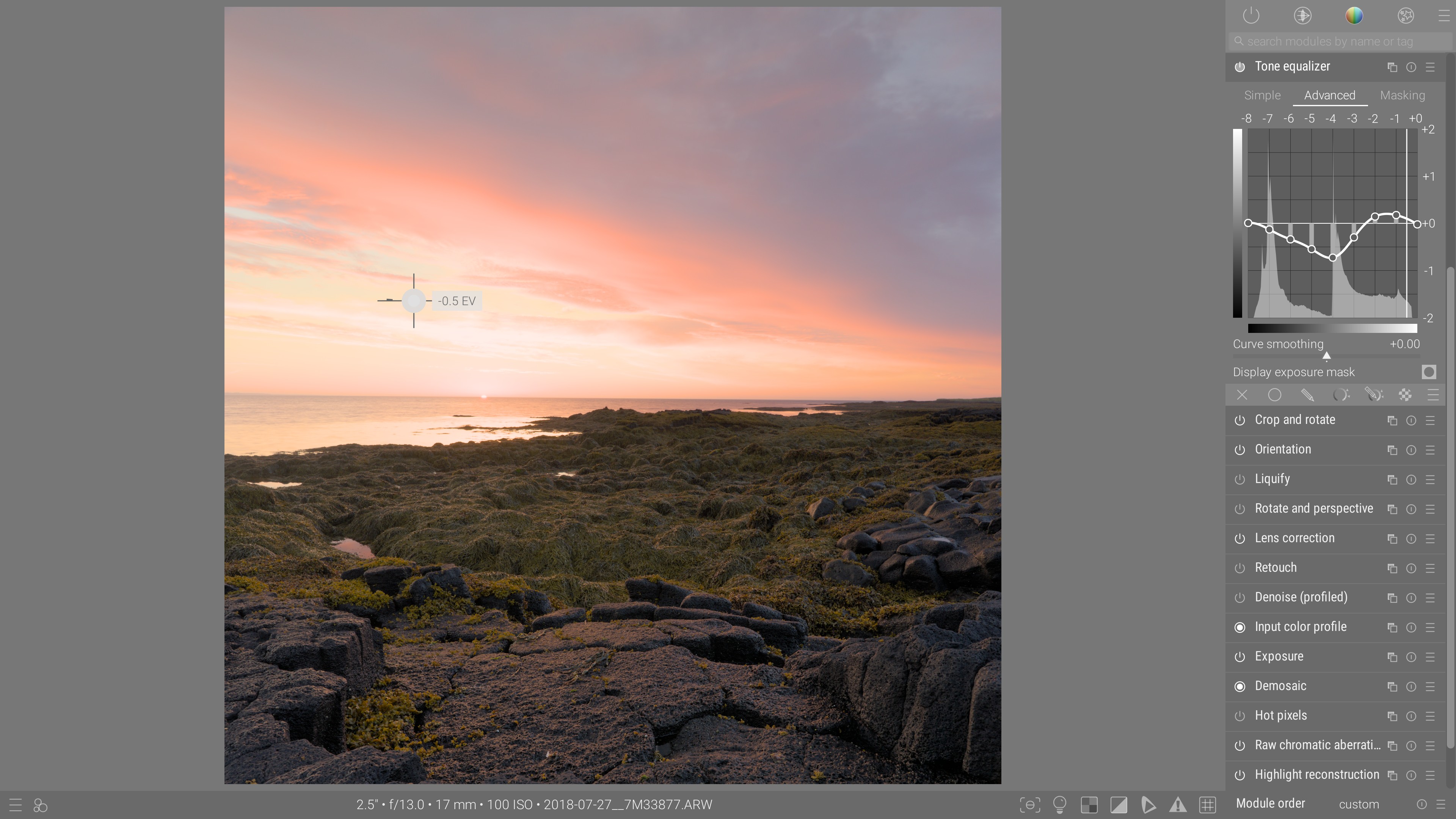
The tonal working methods are designed to manipulate luminance without affecting hue nor saturation, in order to respect the color work, done apart.
HDR tone mapping
After
Before
Zone-system editing
After
Before
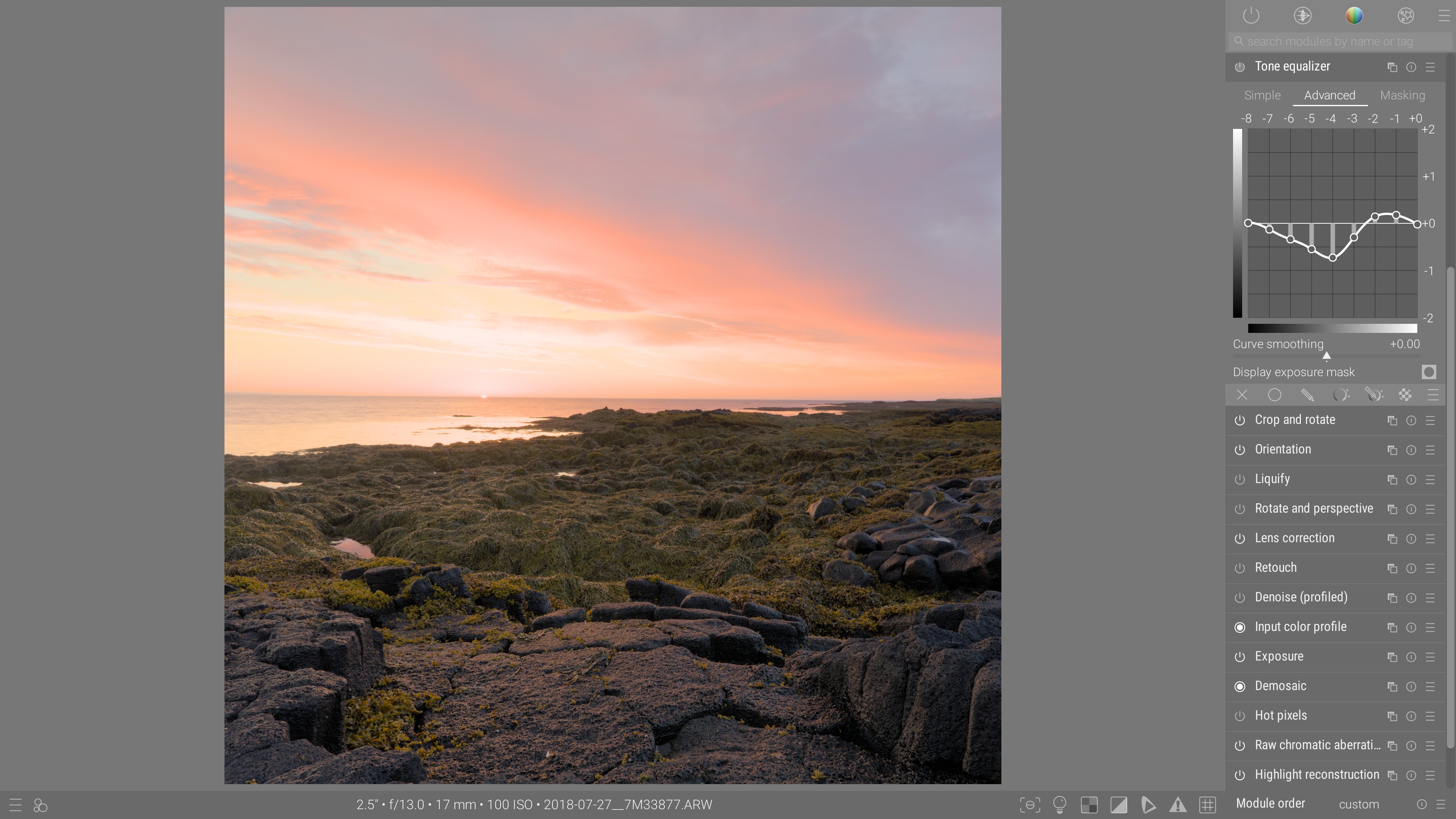
Image reconstruction
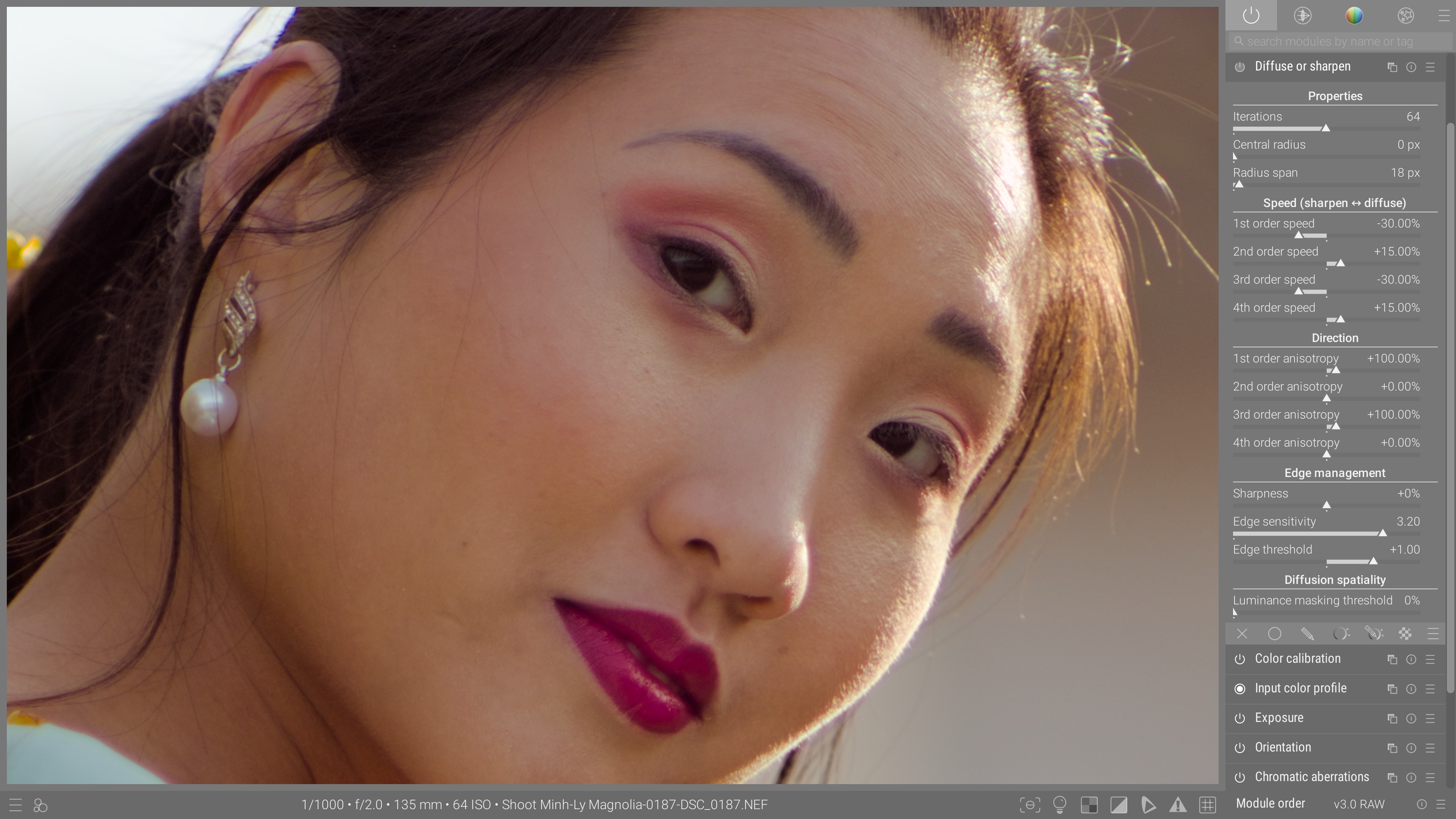
Lens deblurring
After
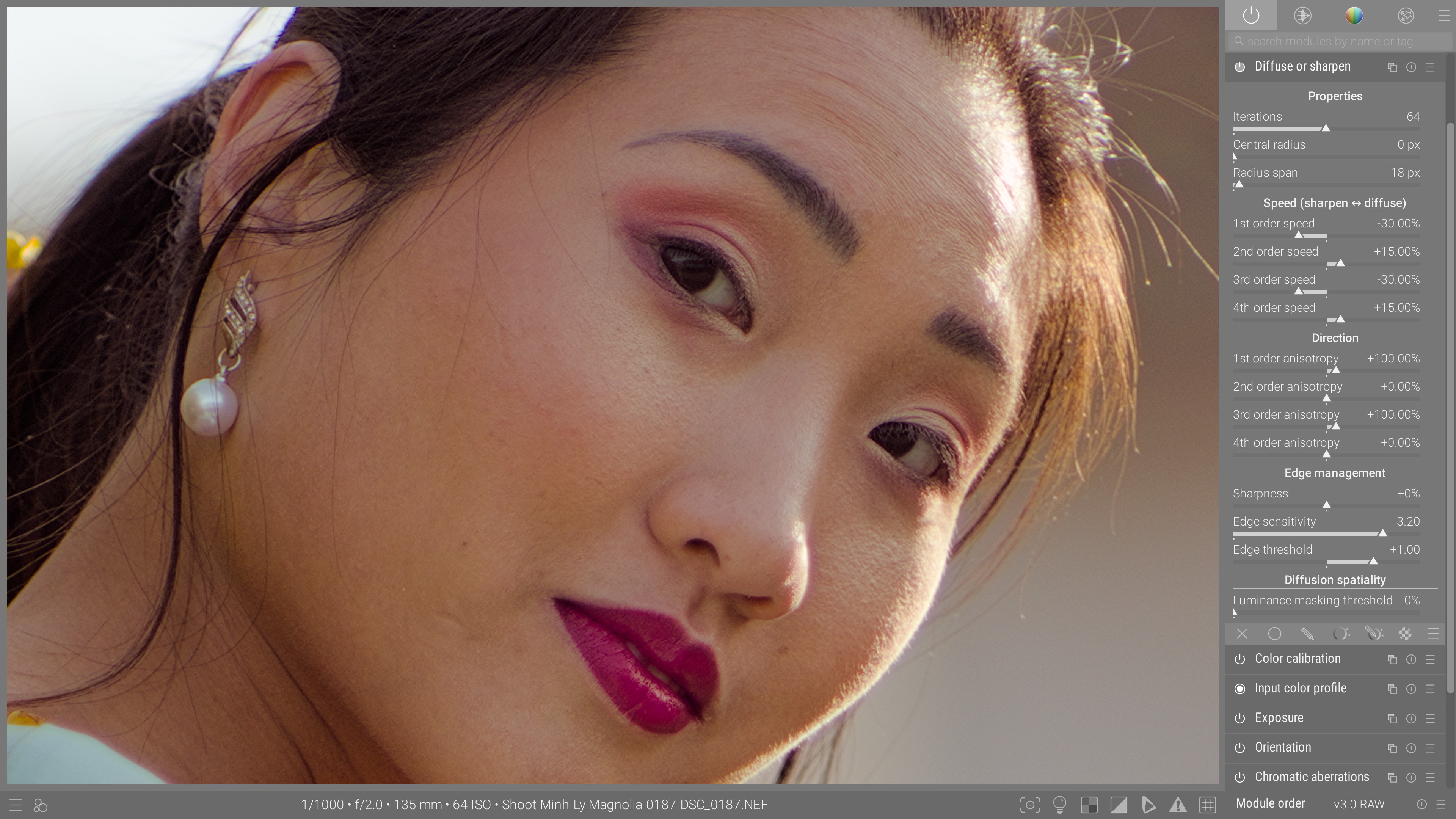
Before
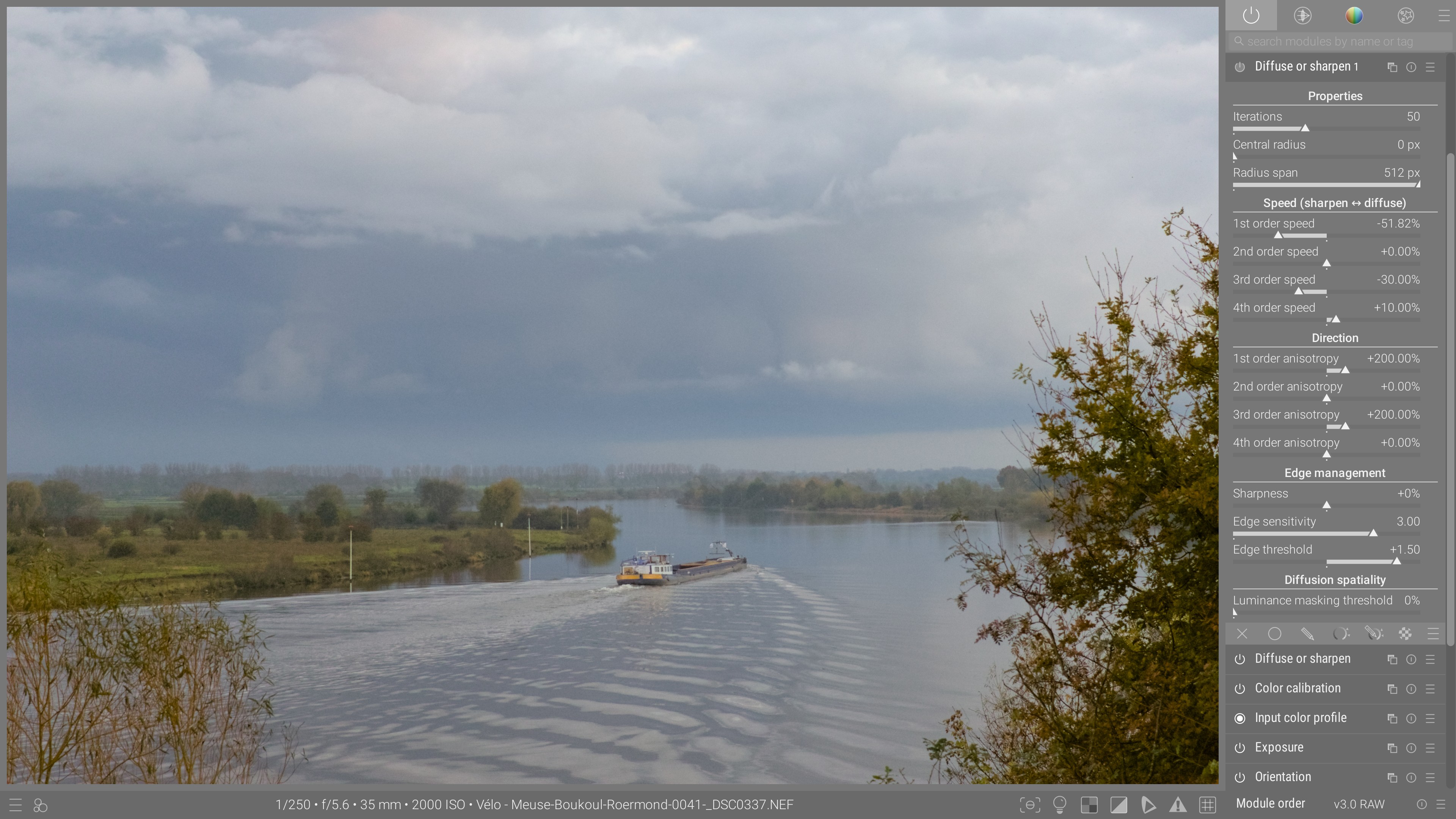
Dehazing
After
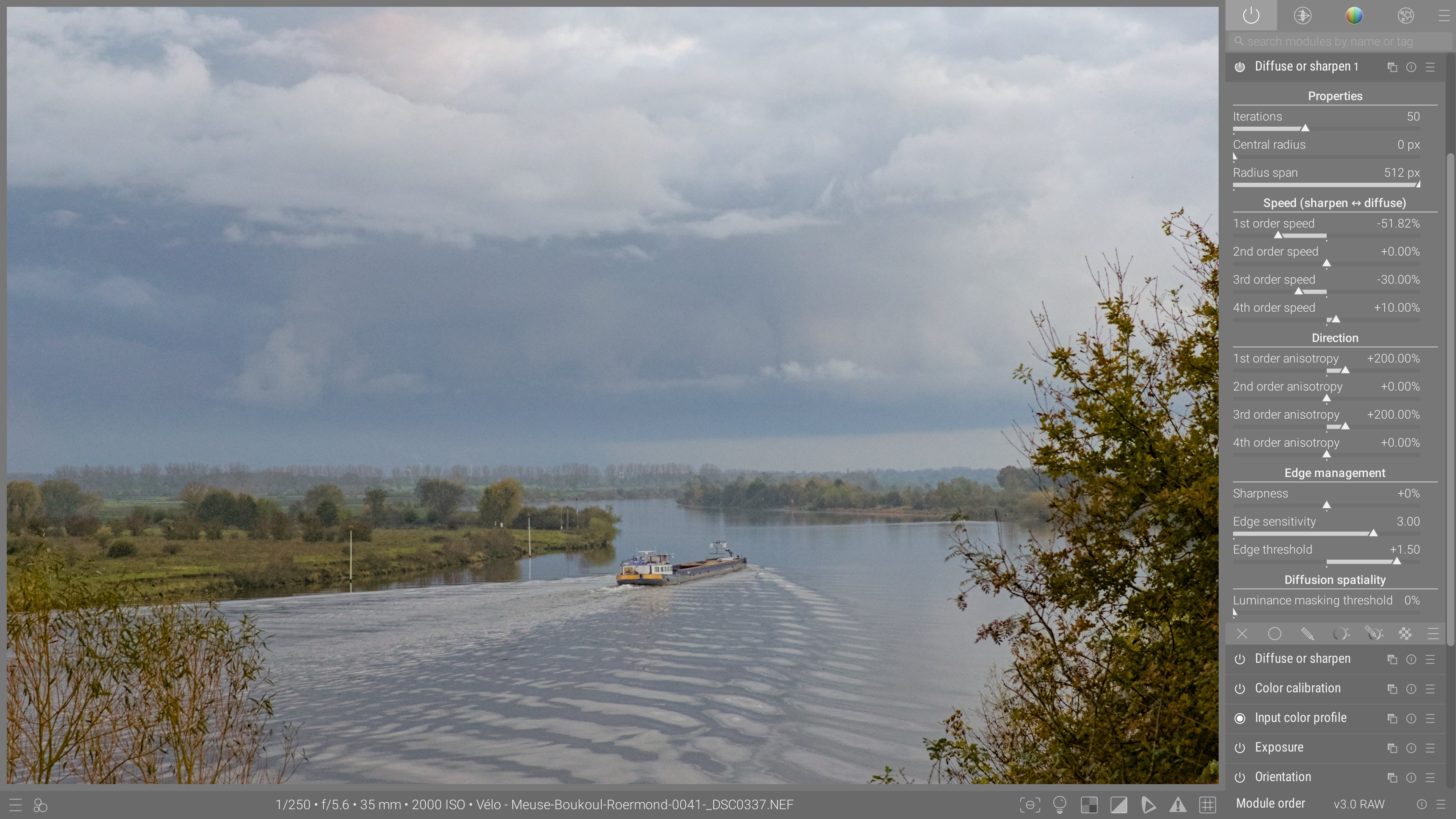
Before
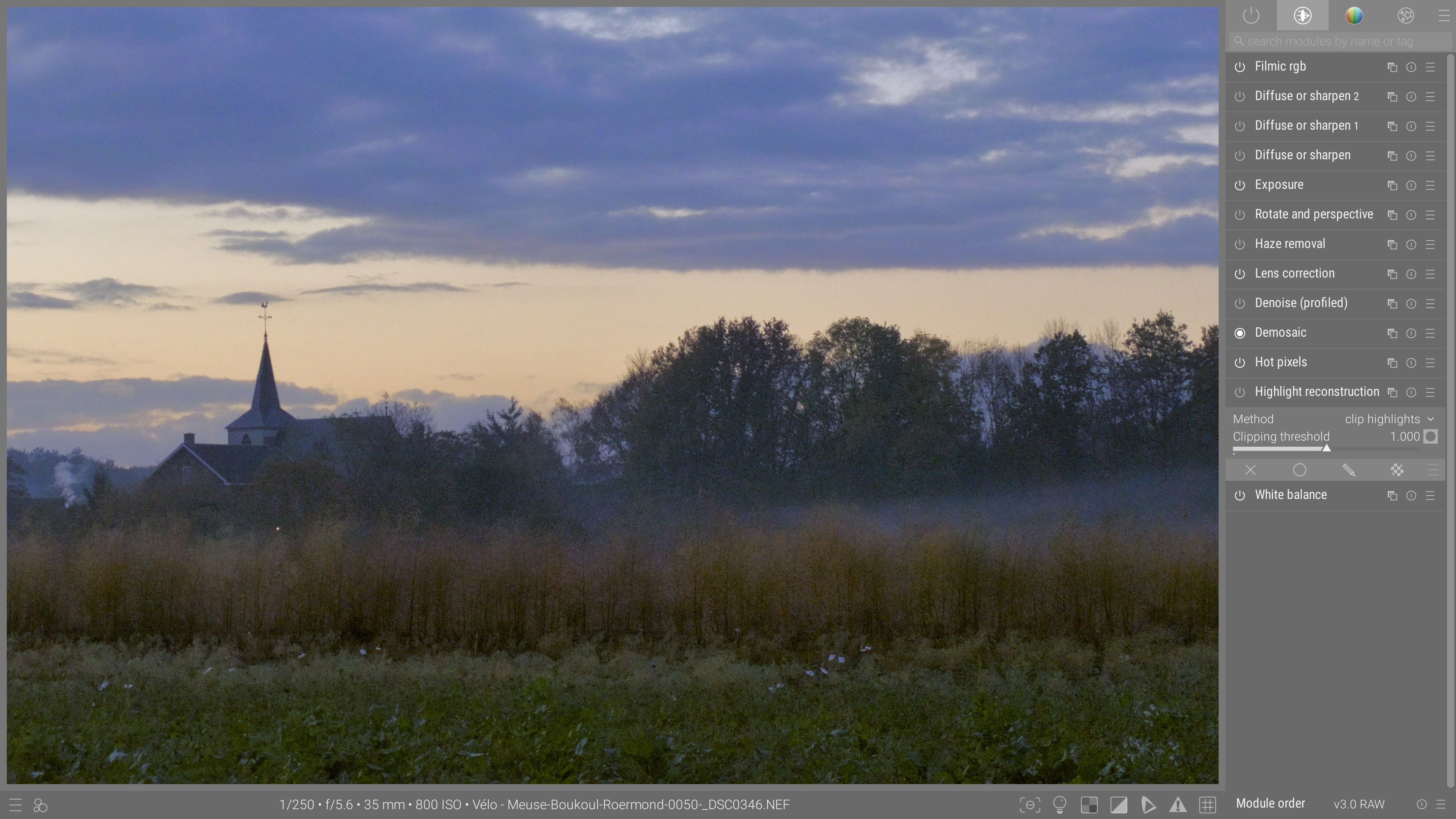
Denoising
After
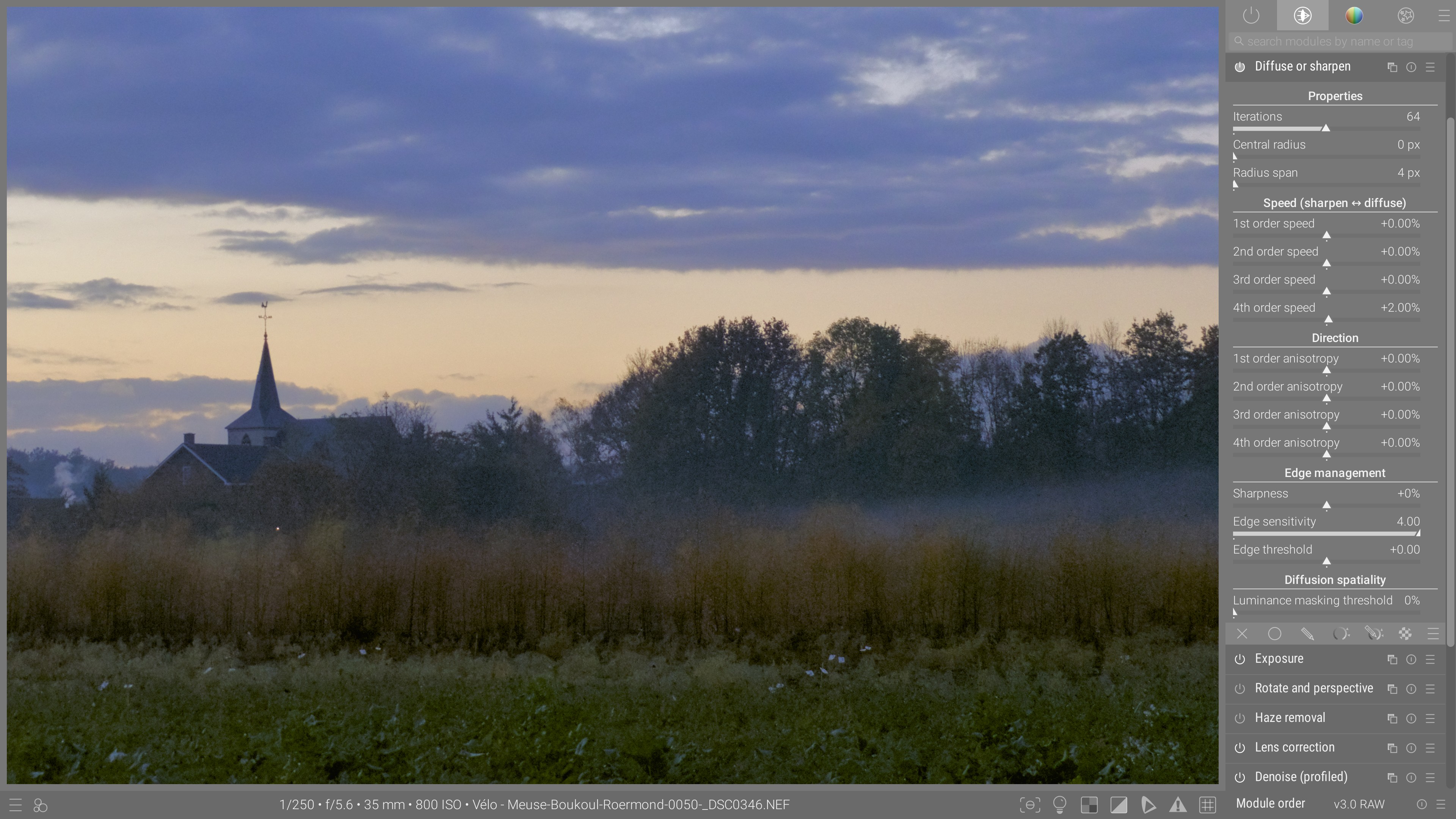
Before
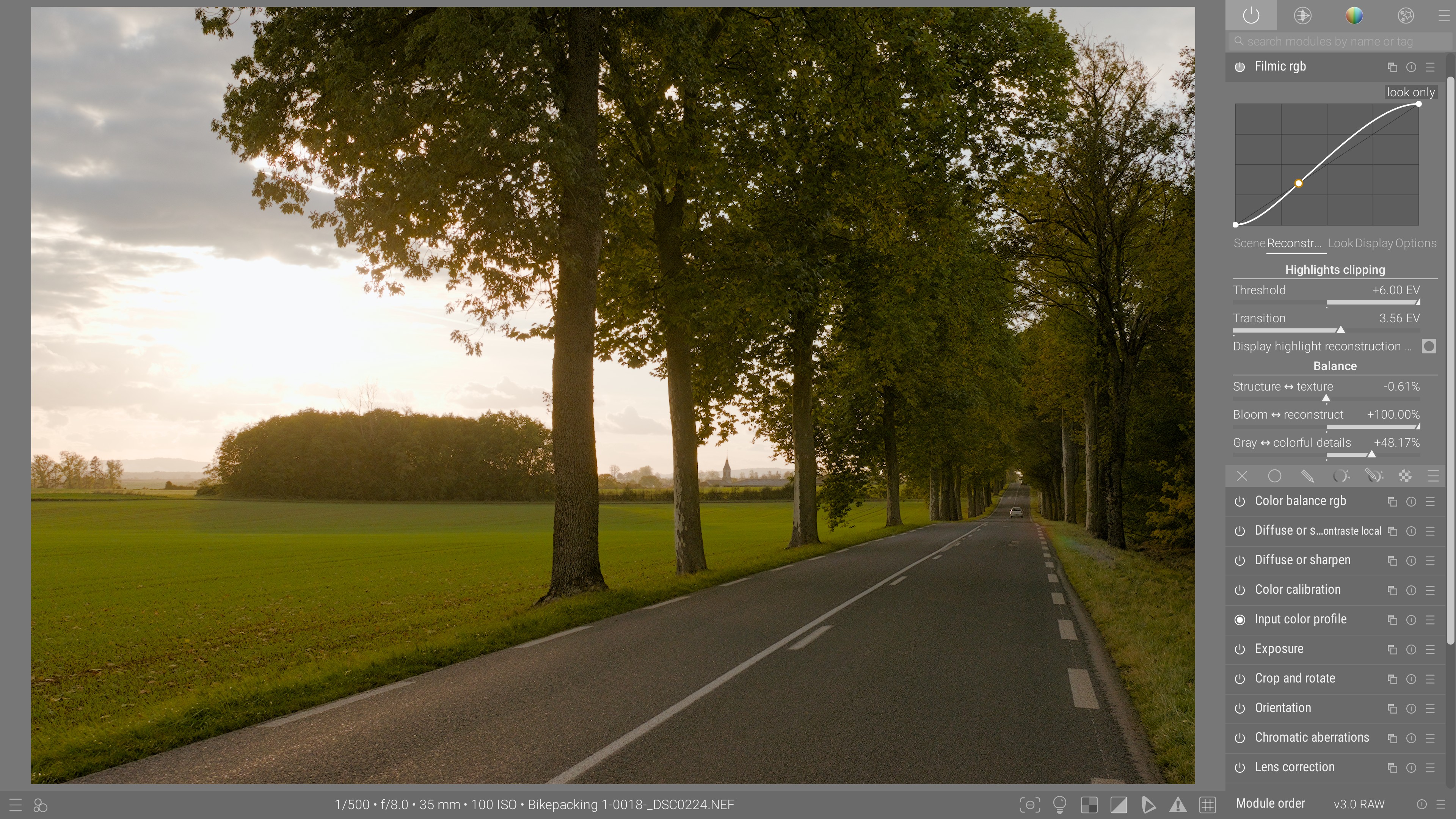
Highlights reconstruction
After
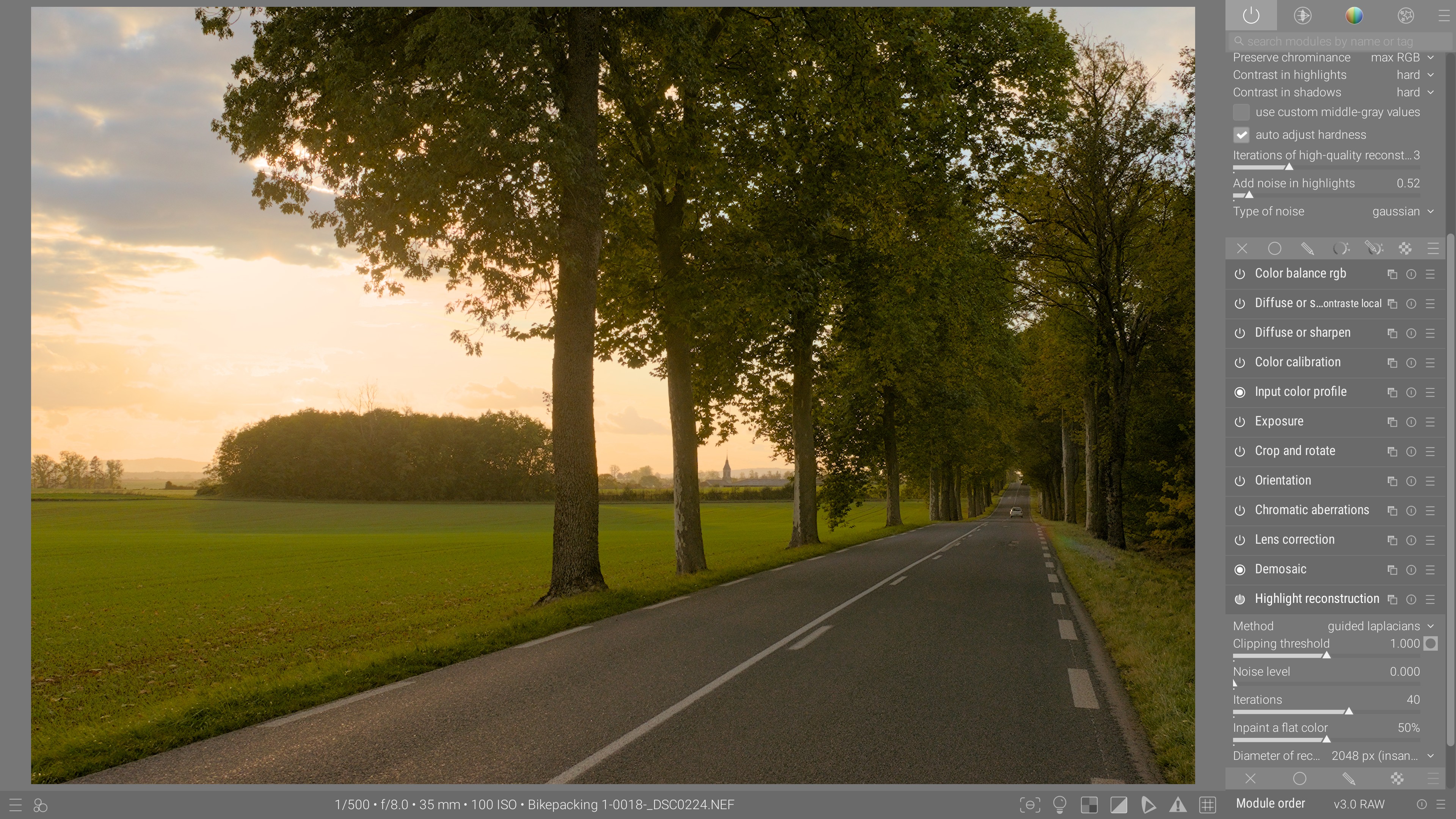
Before
Specialized features
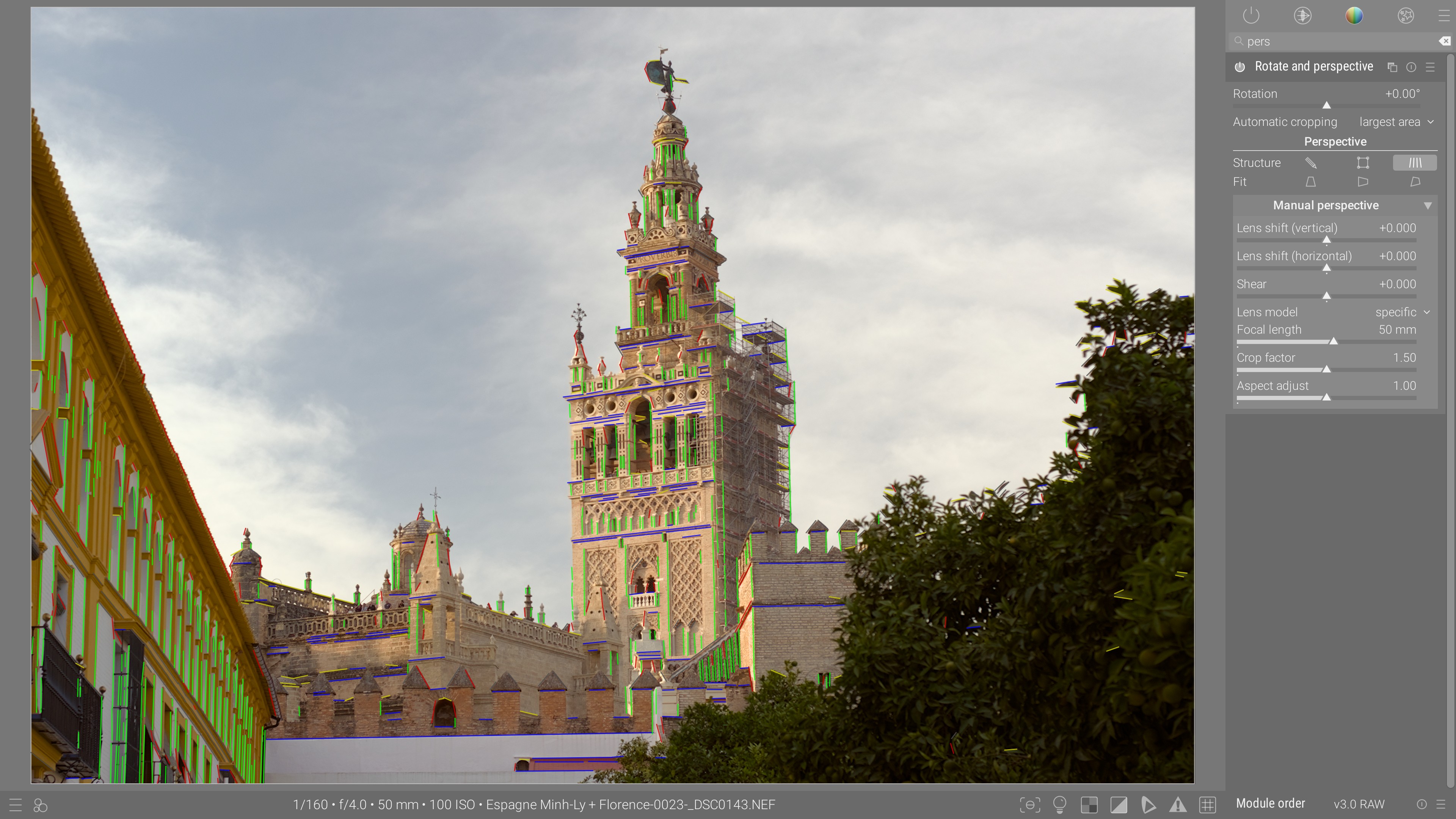
Automatic perspective correction
After
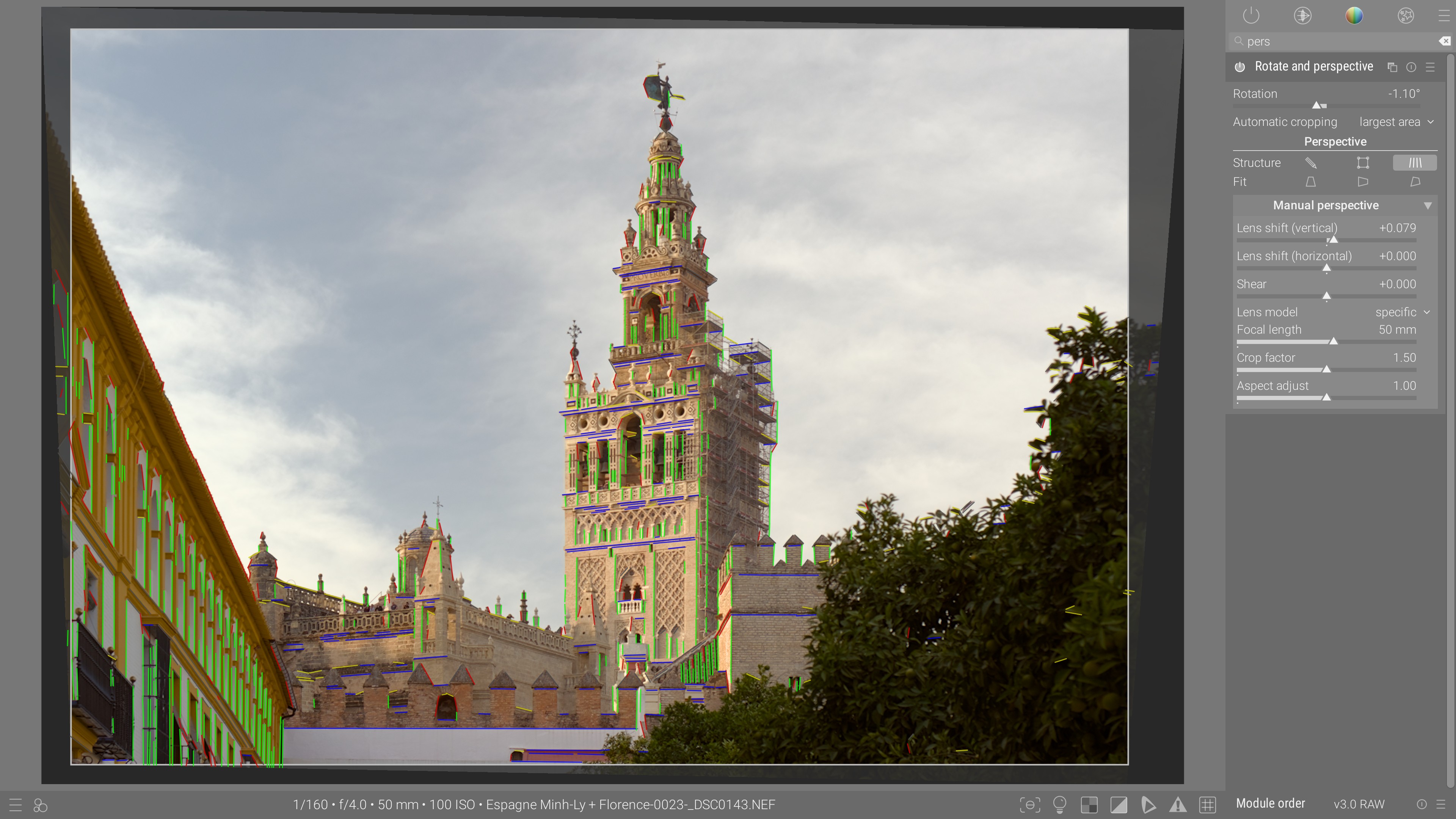
Before
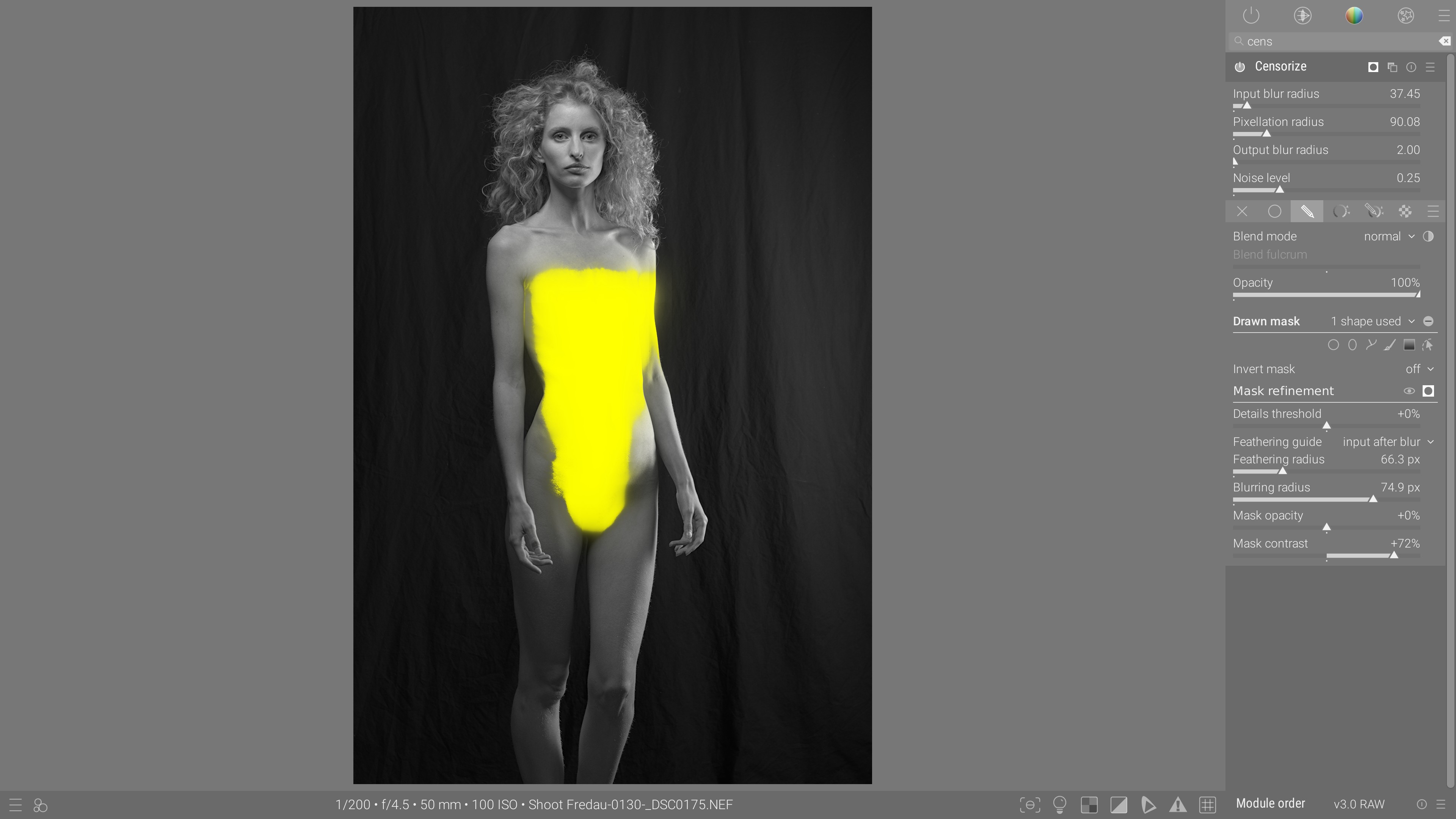
Censoring
After
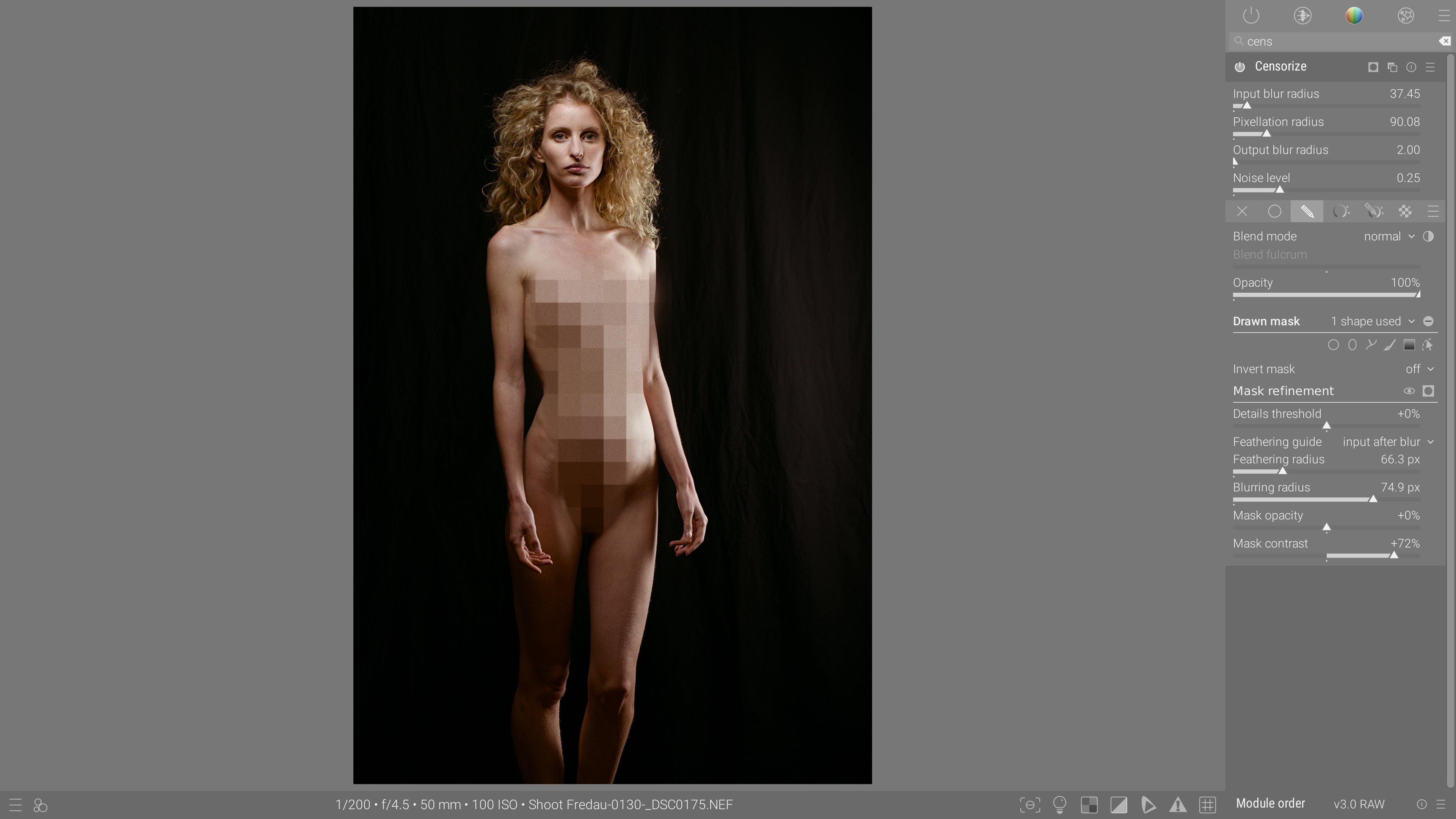
Before
Compatibility
Edits
Ansel is based on darktable 4.0 and is fully compatible with darktable 2.x up to 4.0 database and XMP files. Coming from darktable ?
Cameras
Ansel uses Rawspeed and Libraw to decode raw photographs. New cameras may need up to 24 months to be fully supported after their commercial release.
Languages
The software is integrally translated in English, French, Italian and simplified Chinese. Partial translations are available in German, Spanish, Portugese, Ukranian, etc.
Darktable, but better
Ansel is what Darktable 4.0 could have been if it didn’t die of feature creep .
Between 2020 and 2023, Darktable has suffered
<a href="/en/news/darktable-dans-le-mur-au-ralenti/" title="" rel="dofollow" >massive code additions of peripheral features</a>, often ill-coded, poorly designed and penalizing usability, performance and maintenance. Too many workarounds failed to fix bugs, but layered new problems on top of legacy code : welcome in maintenance nightmare.</p>
In fairness, without project management or feature planning, this was bound to happen. Darktable has always struggled to be more than a pack of individual plugins.
The result is a weird, frustrating, app trying to reinvent GUI paradigms on its own, trying to do everything for everyone, slower and less stable than before, and absolutely terrible to debug.
With a scene-referred-centric user interface, many modules merged into a global menu, rewritten import tool and sparing image pipeline recomputations, Ansel is a Darktable 4.0 variant where 30.000 lines of poorly-written code and half-broken features have been removed, and 11.000 lines rewritten : it runs faster, smoother, uses less power and requires less configuration.
With a decreased code complexity, its maintenance should be easier in the future too.
Beyond documentation
The typical, recurring painpoint of open-source software projects is documentation. When there is none, users complain about it. When there is one, they complain it is too long, not complete enough, or it doesn’t include use cases. Developers expect users to have a linear reading of the project documentation. It will simply not happen and developers will serve as parrots. That only builds up frustration on both ends. Documentation is not enough.
Chantal is a bilingual (French-English) language model trained specifically for image processing, color theory and photography, that understands technical slang, synonyms and some translations. Its web interface allows search queries through a central index of open-source software documentation, bug reports, user forums, YouTube channels, scientific publications and standards organizations (CIE, ICC, ACES).
Meet Chantal
your image processing AI librarian
Chantal is Ansel’s knowledge infrastructure :
- quickly find relevant information among trusted sources,
- avoid asking questions already answered.
Designed to make users cleverer, instead of making the software dumber. The artificial intelligence feeds you learning material on topics of your choice. Let’s invest in natural intelligence.
Source code
Ansel software and documentation are released under the GNU/GPL v3 license and versionned with Git. The website is copyrighted but publicly readable. The work repositories are hosted on Github and are mirrored on Gitlab for backup.