2025 saw the highest number of international concerts in India. Buoyed by the unprecedented scale and success of Coldplay’s shows in Ahmedabad and Mumbai, event organisers brought chart-toppers like Travis Scott, international festival IPs like Rolling Loud and evergreen acts like Guns N’ Roses to Indian soil. Alongside a packed calendar of dance music festivals and the emergence of warehouse-size shows, 2025 was the year where the international concert market in India came of age.
However, both audiences and organisers began to show signs of stress. Audiences were delighted with several options in the aftermath of Coldplay’s India shows. Yet as the year went on, there were just too many shows to choose from— meaning fans had to prioritise and be more intentional with their choices. For organisers competing for the same audience this increased intentionality demands better lineups, but also infrastructure, production and pricing.
Another outcome of this quickly maturing industry is the emergence of informal ticket resale groups. These are decentralised communities, usually on WhatsApp, that connect gig-goers interested in selling or buying tickets. These groups operate outside of the law and without any central governing structure, making them fully trust-based and informal. Yet, these communities provide a clear insight into how audiences value concerts.
Ticketing platforms like BookMyShow and District are opaque and clearly operate for profit maximisation. While ticket resale groups are largely ungoverned, they are made by and for concert-goers. The only central principle is that no scalping is permitted. Admins enforce a strict no-profit rule: tickets cannot be sold above face value. The result is a free market outside the opacity and rigidity of pricing tiers set by profit-chasing behemoths.
If we look beyond the boastful press releases and slick video editing from event organisers, we see an industry still finding its feet. The secondary ticket market never lies (though it may sometimes be inaccurate): every oversupply, scheduling conflict, and genuine frenzy is recorded in real rupees gained or lost.
Methodology
Our sample set included chat logs from four ticket resale WhatsApp groups which focus primarily on Mumbai events, with around 4000 members in total. We converted these unstructured chat logs into structured data — identifying event name, buy/sell intent, listed price, original price and timestamp. After cleaning and deduplicating, we analysed 17000 listings from November 2023 to January 2026, covering over 1000 events. Each entry was tagged by genre and event date. Events with fewer than 50 data points were excluded.
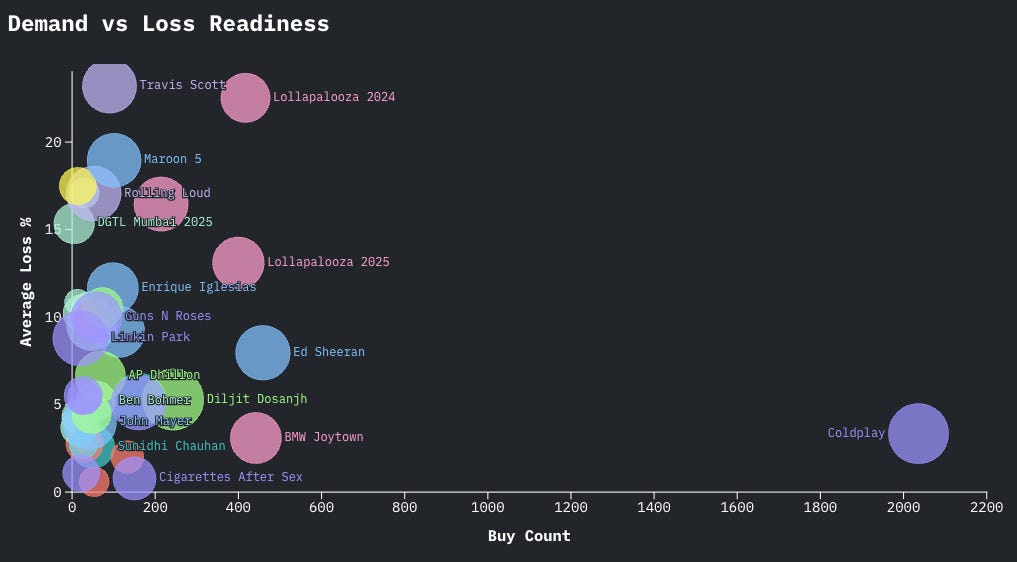
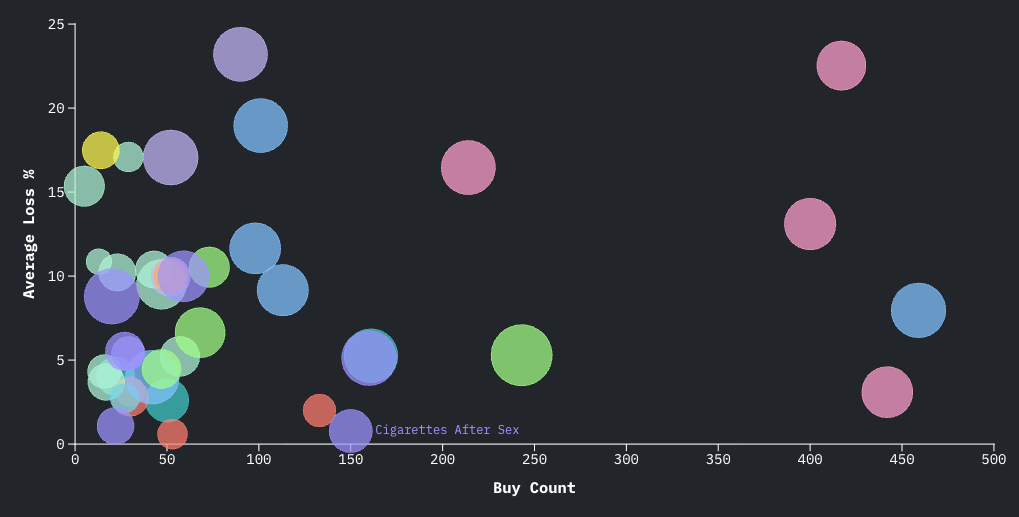
The following chart maps three variables:
X-axis: demand (number of buy requests).
Y-axis: average seller loss (%).
Bubble size: average ticket price.
Rightward movement indicates stronger demand for tickets; upward movement indicates sellers absorbing greater losses.
Average loss measures how far below face value sellers list tickets. Higher percentages indicate sellers absorb higher losses.
Larger bubbles reflect higher average ticket prices, typically driven by premium tiers such as VIP or Fanpit.
This methodology has limitations. Our sample set is only a small section of Mumbai’s gig-going audience. We also do not know the actual final price of the transaction, which would be a better indicator of utility. Fan behaviour is a composite of many factors and cannot be reduced to a few variables. Still, we are confident that this dataset and analysis captures the post-Coldplay correction we observed firsthand.
For a fully interactive view of our findings, visit our website!
Findings
Multi-genre resilience
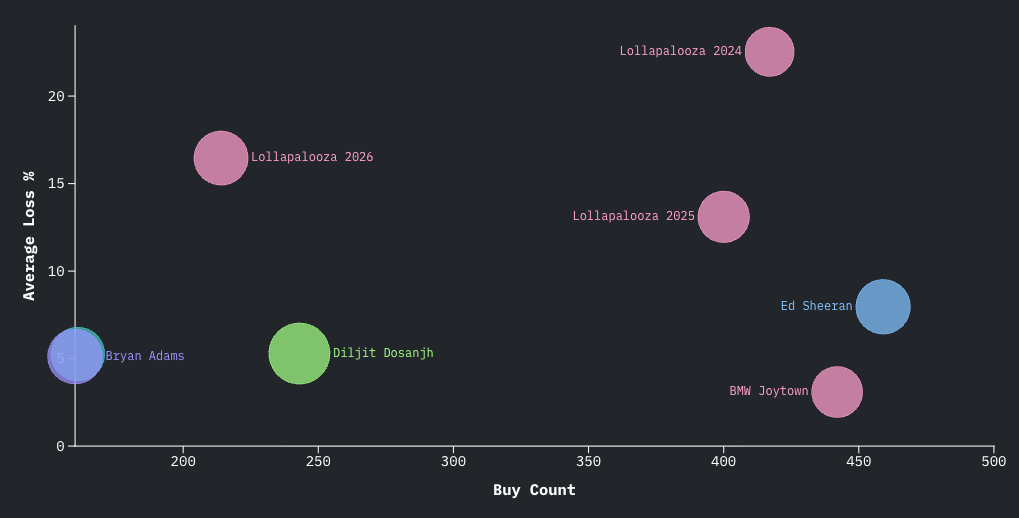
Across four editions, Lollapalooza has built rare brand trust in India. As the country’s only multi-genre festival at scale, it encourages early buying — audiences purchase before lineups drop, confident at least one global headliner will justify the spend. That confidence also creates volatility: when a headline act feels unappealing, resale listings rise. Ambivalent buyers then step in late, securing discounted tickets. The festival’s breadth enables both conviction and ambivalence, making it the only IP elastic enough to sustain this cycle.
Too big to fail
Coldplay sat at the peak of pure demand, but only a handful of artists approach that stability: Ed Sheeran and Bryan Adams through decades of repeat touring, and Diljit Dosanjh and Arijit Singh through cross-demographic and Bollywood-adjacent mass appeal. These acts convert familiarity into resale resilience. Their audiences are less speculative, more committed. Only a handful of acts can compare (eg. Taylor Swift), but for promoters, booking them reduces volatility as demand will surely follow.
Band for band
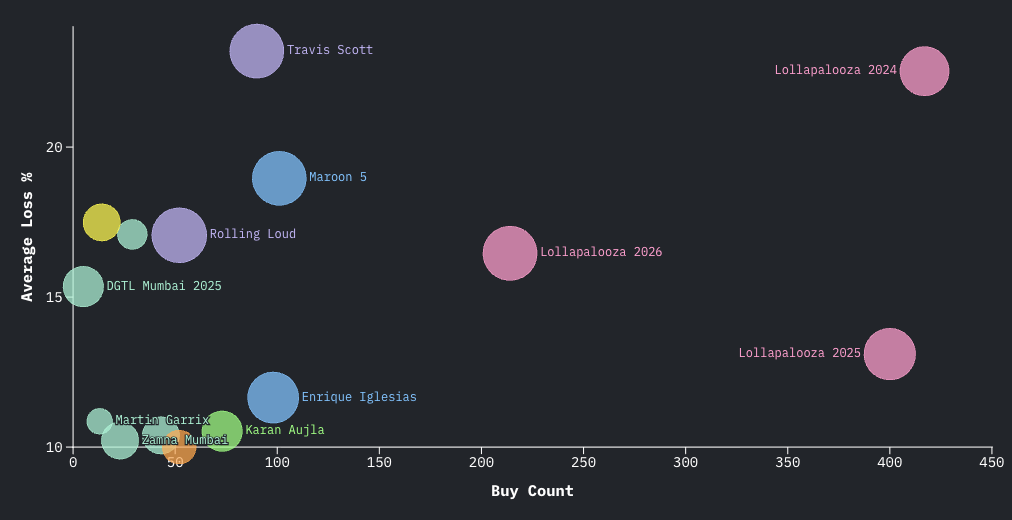
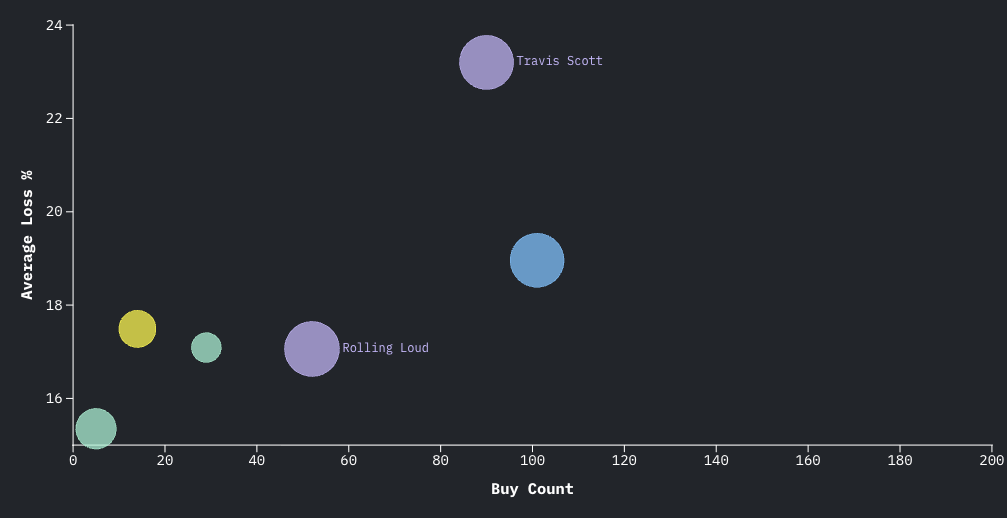
In late 2025, BookMyShow and District sparred for the hip-hop calendar between Travis Scott and Rolling Loud. Initial frenzy around Travis’ Delhi announcement led to added shows, fragmenting demand — especially for out-of-city buyers. Mumbai dates then overlapped with Rolling Loud, cannibalising attention and liquidity across both. The result was steep resale losses. Timing the market would have allowed audiences to breathe, and perhaps improved outcomes for both.
Loyalty at scale
Cigarettes After Sex occupy a precise middle tier: no longer niche, not yet stadium. Since their Nh7 Weekender appearance in 2017, their audience has deepened rather than broadened chaotically. They are neither small enough to be cult nor big enough to command a co-headlining slot at Lollapalooza. This in-between position works in their favour. By drawing loyal crossover fans to large but proportionate venues, they avoid the hype volatility attached to mega-pop tours, signalling a durable mid-market category.
Stable Subcultures
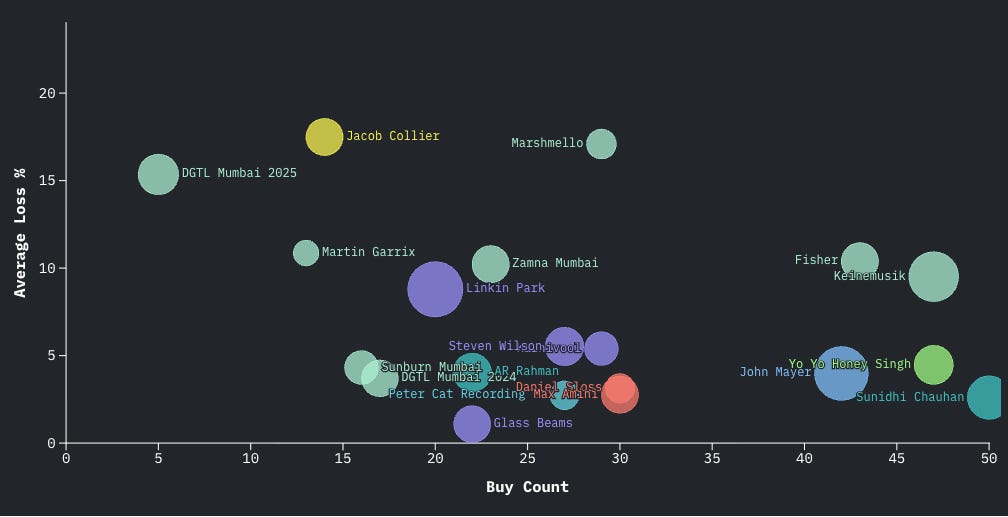
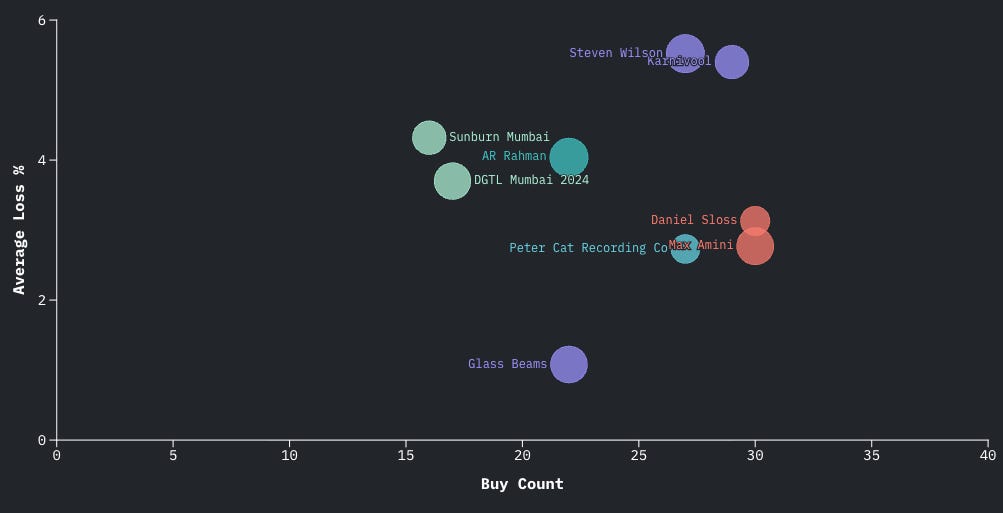
This quadrant reflects tight, self-selecting fandoms. In these niches, buyers and sellers are typically genuine fans, not speculators. For example, Steven Wilson’s cult metal following and PCRC’s reign as indie darlings ensure much lower levels of speculation and hype These communities move tickets quietly and predictably. With limited hype and little overreach, resale trends show healthy alignment between scale and audience depth.
If you would like access to our base data, please write in to after.eod@gmail.com, or DM us on Instagram.