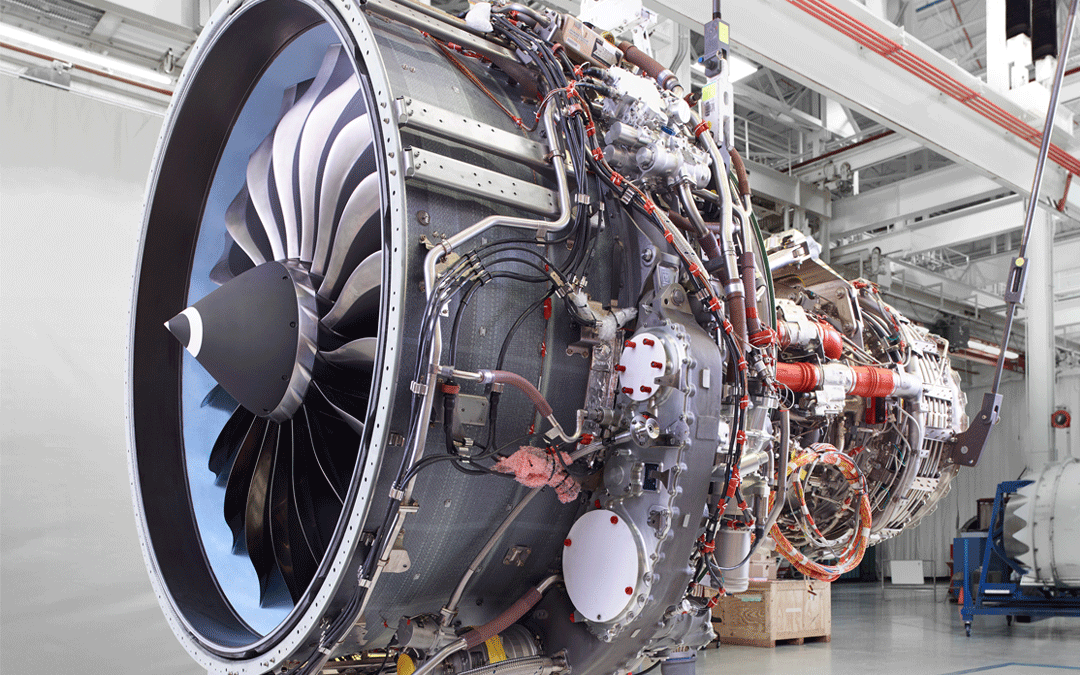
In my recent article contrasting Chinese dynamism with American sloth, I described how the Chinese state-capitalist system has an unusual tolerance for social disruption, which, when paired with prescient leadership, enables massive societal uplift. Many of the comments, however, extrapolated this observation about state capacity into prophecies of inevitable American decline that I did not intend to imply. Perhaps the slight polemical detour gave some of the audience license to veer towards doomerism.
So let’s be clear: this is an incorrect assumption. A united Western alliance possesses many structural advantages the Chinese state will struggle to replicate. Instead, I think China-hysteria is largely just a belated overcorrection. After two decades disparaging the idea that any other power could pose a challenge to Western hegemony, we’re now astounded by the very existence of competition.
But this overreaction blinds us to nuance. China is not a national wunderkind: it is a technologically-advanced state that has an extraordinary capability to marshal national resources. Most of its successes involve utilizing this advantage to scale a mature technology, become its dominant provider, and use the synergies that affords to expand horizontally and vertically. This strategy finds success in some industries but meets with failure in others.
The pattern of where it fails is informative.
One illustrative example of failure is in jet engines. China has tried and failed for some fifty years to produce military and commercial jet engines at parity with the West. Why did it fail? Because, as I explore below, jet engines are almost uniquely designed to expose the weaknesses in the Chinese system. They’re a low-margin market focused on long-term reliability where manufacturing quality and consistency are paramount. Iteration speed is very slow and there’s a pervasive, internationally enforced, regulatory barrier for every finished product. These together neutralize the usual Chinese advantages in skilled labor, capital, and speed-to-scale. They also prevent traditional domestic protectionism from adding much value.
Analyzing the Chinese failure to produce viable jet engines gives us important lessons about the nature of the West’s remaining comparative advantage.
A high-pressure turbine blade in a modern jet engine is expected to sit in gas hotter than lava, rotating faster than the maximum redline of a Formula One engine, while sustaining a consistent centrifugal load heavier than a Ford Focus. And it’s expected to do this without stretching, melting, or cracking for 30,000 hours—about 4 years—of continuous flying time. A failure in these blades would be catastrophic, resulting in the destruction of the engine, likely followed by the plane itself.
Achieving these requirements has made it one of the most complex manufacturing outputs in the world. The initial challenge comes from fabricating the material.
Frank Whittle’s first jet engines used Nimonic-75: a nickel-chromium-titanium alloy that crept (i.e. elongated under stress) over 700C, with a service lifespan of only for tens of hours. The breakthrough came in the late 1940s, when a British metallurgist realized that adding more titanium and some aluminum produced dramatic strengthening. This yielded Nimonic-80A, which is the base of every subsequent superalloy. Each subsequent generation then added new elements to the mix to solve the previous generation’s failure modes. Second-generation alloys added rhenium for creep resistance, a metal so rare its annual world production is fifty tons. Third-generation alloys doubled the rhenium content, which improved temperature capability but created brittleness under load, so the most recent iteration adds ruthenium, an ever rarer metal only produced as part of South African platinum mining.
The other major challenge is casting. Molten metals do not cool uniformly. Instead, different parts of the metal solidify at the same time, and these simultaneous solidification processes form multiple crystals in the final solid. These crystals meet at grain boundaries. Historically, the most common failure mode for a turbine blade is a fissure along these grains. To mitigate this, the modern turbine blade is cast using the single-crystal method. Developed in the 1980s, this method maintains a uniform temperature gradient along the molten metal’s surface to pull solidification in one direction, and combines that with a grain selector, a helical “pigtail” shape in the caster that compresses the solidifying metal to ensure that only a single nucleation process succeeds. This creates a final metal that has no grains at all.
The biggest complication here is yield. During the single-crystal casting process, dozens of variables need to be maintained within very small tolerances. Any disturbances during the process, any imperfections in the base material, any trace dissolved gases during nucleation, and you have micro-grains that cause the blade to fail certification. Established manufacturers still only reach 50-70% yield; a new entrant would be in the low tens for years.
Consequently, there are only seven companies in the world that can build turbine blades at scale. First are the three main engine manufacturers: General Electric, with casting facilities in Quebec and South Carolina, Pratt & Whitney in Connecticut, and Rolls Royce in Bristol, UK. The other four are specialty manufacturers: Howmet Aerospace in Michigan, PCC Airfoils in Ohio, Consolidated Precision Products in California, and Doncasters, a British company with plants in the UK, Germany, and Alabama.
Each of these companies relies on a deep network of suppliers. The alloys are produced by four companies across the US, who source the elements from around the world. Ceramics are sourced from two companies: CoorsTek in Colorado or Morgan Materials in the UK. Injection dies come from Japan, Germany, or Switzerland. The Bridgman furnaces to cast the blade are built by four companies: ALD in Germany, Consarc in New Jersey, Retech in California, and ECM in France. Coating is sourced from companies in the US, Switzerland and Germany. And finally, inspection and certification equipment is a broad category coming from a swath of companies in Japan, the US, Germany, and the UK.
All in all, a single turbine blade contains products from some 100 different companies, spread across 25 different US states and 15 different countries.
And turbine blades, as complex as they are, form just one component of a jet engine. A complete engine has over 40,000 parts, each of which operates under similarly extreme conditions that stretch the boundaries of conventional fabrication, and consequently, has its own exotic material composition and manufacturing process, optimized through decades of continuous engineering effort. This creates a final product that is dependent on a massive horizontal network of suppliers, with production centered in the US, the UK, France, and Germany and raw minerals sourced worldwide. In the modern day, the largest engine manufacturers are Rolls-Royce, General Electric, Pratt & Whitney, and Safran, who, through various joint ventures, produce the vast majority of the most advanced commercial and military jet engines in the world. This is a longstanding equilibrium. For the past half-century, these four companies have powered most aircraft produced in the world. The major notable exception is the Soviet Union/Russia’s domestic industry, which has consistently remained a decade behind the West.
But there is another—far smaller—player in the industry: China. Since 1986, when Deng Xiaoping established a strategic imperative for indigenous jet engine production, China has invested hundreds of billions in creating their own, parallel industry. This mirrors a massive outgrowth in Chinese investment in all sectors, in service of China’s nebulous goal of “strategic autonomy”—better known in the west as autarky. And in most industries, China has had unadulterated success. China’s vast pools of high-skilled labor and near limitless state-provided capital have allowed it to take over each technological frontier, squeezing out incumbent players. Notable examples here are electric cars, renewable energy, electronic components, and mature-node semiconductors. This pattern of Chinese industrial dominance has become so consistent that the West almost deems it prophecy.
It may be surprising, then, that in jet engines, China remains at least a full decade behind the West. Even after forty years of state-directed investment, China’s flagship commercial jet, the C919, is still powered by the LEAP-1C, made by CFM, a GE-Safran joint venture. China’s prospective competitor, the CJ-1000A, has faced numerous delays, and is now not slated to enter production until at least 2030. Meanwhile, China’s first fifth-generation fighter, the Chengdu J-20B, relied on a thirty-year old Russian AL-31 for a full decade until its domestic WS-15 program, which was started in the 1990s, was deemed ready for production. Even then, it’s projected to be far behind the Pratt & Whitney F135, the F-35’s engine, in durability, reliability, and efficiency. Its other fighter uses an outdated, 20-year-old Chinese engine. Indeed, China, which has otherwise mastered the catch-up growth formula, and has built a massive bank of manufacturing talent and capital, has not managed to produce any asymmetric speedup in jet engine manufacturing. The frontier remains clearly western.
Why? Because China’s most visible successes—the ones we cite most often when we ruminate on the “death of Western dynamism”—have broadly similar market structures. Jet engines are notably distinct.
China has excelled in industries with legible technological targets, well-known manufacturing processes, and fast iteration cycles. Their strategy has been to choose technologies with mature fundamentals but underserved demand, and then deploy capital to scale up production very quickly. These industries have fast iteration cycles, allowing Chinese companies to rapidly improve their designs, while their scale allows them to undercut Western manufacturers on price and quantity. The Chinese state helps this along by protecting nascent industries from foreign competition, giving them a domestic market to expand in before moving into exports.
Together, these factors allow Chinese firms to define a new, much lower floor in the market which they can own entirely. This allows them to accumulate knowledge and optimize their manufacturing process, eventually enabling them to move upmarket into higher-margin segments where they compete directly with Western incumbents.
The jet engine is the antithesis of each of those properties. Reliability targets are not like battery range or solar panel yield. They depend on alignment between every component in an engine, making them hard to directly optimize for. Iteration speed is very slow because reliability is very difficult to know a priori: it requires extensive testing and real-world monitoring. And jet engines do not have any lower-tier market with underserved demand: there’s a small set of customers with very strict requirements and a mature set of incumbents to supply them.
China’s jet engine program is stuttering because it’s applying a scale-focused method to an industry where the moat is accumulated knowledge.
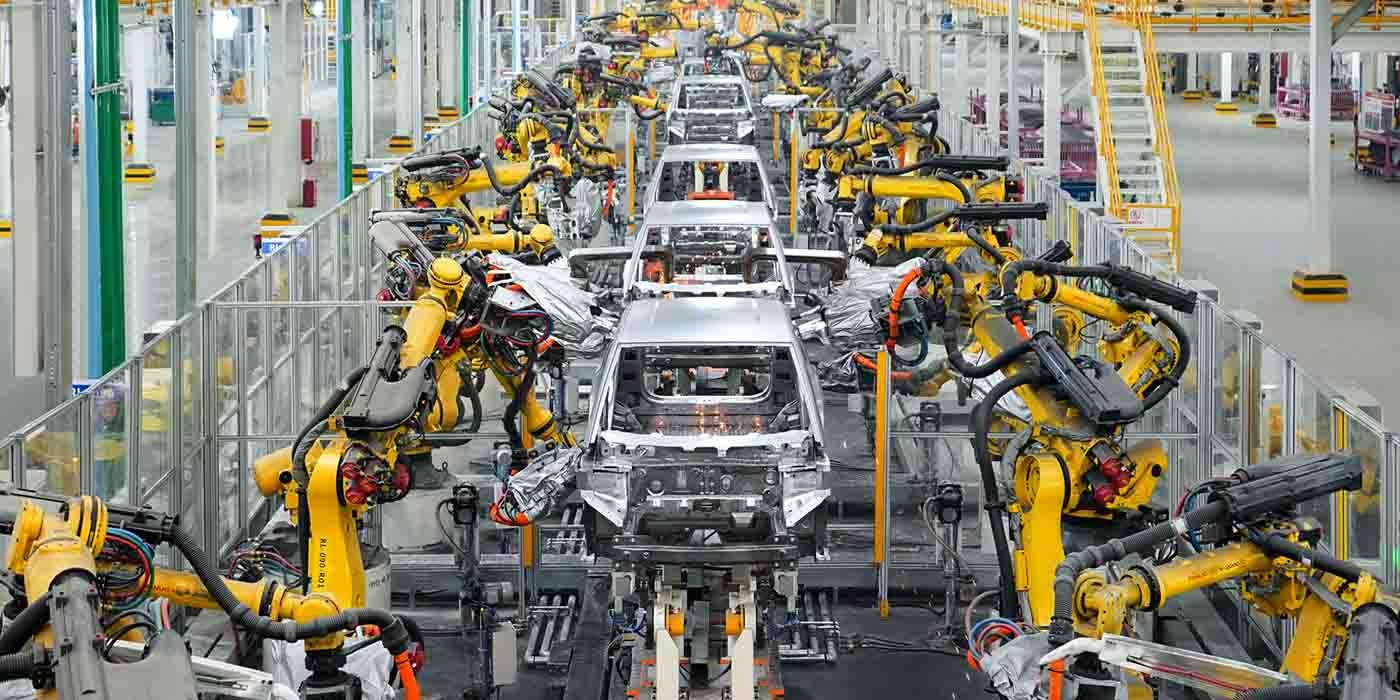
The most illustrative example of Chinese catch-up growth is its domination of electric vehicle production. China started building EV capacity in 2009, when Tesla was still a limited-capacity luxury brand and Western manufacturers were focused on building hybrid cars to preserve the value of their internal-combustion engine investments. Chinese manufacturers thus entered a wide-open market without any real incumbents. They were starting fresh—they didn’t need to retool their workforce or rebuild their factories. Electric vehicles are also considerably easier to manufacture than gas cars. Instead of 2,000 part internal-combustion engines built on decades of mechanical engineering expertise, with transmissions, fuel injection, and emissions controls, electric cars are driven by a single commoditized component: the brushless motor. The Chinese state helped them along by creating domestic demand, where Chinese citizens were given expansive subsidies to buy EVs, while quotas were set for the number of imported gas cars that could be registered any given year.
Additionally, there was existing synergy China could exploit. Chinese EV success was predicated on earlier successes in battery manufacturing. BYD actually was founded in 1995 as a battery manufacturer, as part of a state-directed initiative that saw batteries as a core strategic component. The pattern here is similar: China deployed almost $100 billion in the industry to subsidize scale-up, and used import controls to artificially create early demand. Chinese companies initially focused on lithium-iron-phosphate (LFP) chemistry rather than the previously dominant nickel-manganese-cobalt (NMC) for two reasons: LFP was largely untouched by Western companies, and Chinese companies controlled most of the supply chain for LFP batteries. This allowed them to expand rapidly on the lower-end of the market. Korean and Japanese companies had a long history in NMC for customer electronics. Success in LFP gave China advantages in scale and manufacturing process knowledge, that allowed them to expand into that contested NMC market and in general, higher-end EVs.
This state-directed industrial policy created China’s version of the Korean chaebol or Japanese zaibatsu: a vertically integrated corporation that dominates entire segments of the economy. BYD, now the world’s largest EV producer, started in batteries as discussed above, and now also makes its own semiconductors, its own motors, its own software, and its own charging infrastructure. Huawei, which started in telecom infrastructure, now designs its own CPUs and GPUs, manufactures a wide range of consumer electronics, and even has its own AI foundation models. Nowadays, it also sells high-end electric cars. Verticalization, in both cases, gives companies pricing power over the entire supply chain, and—equally important in industrial policy—gives the state a small set of target companies to optimize.
But jet engines are a technological challenge that China’s state-capitalist model is uniquely unsuited for. Jet engines necessarily have slow iteration speeds. Their technical challenges are centered around optimizing long-run reliability, preventing catastrophic failure, and minimizing maintenance. Understanding these properties really only happens through an extensive testing regime and then, real-world deployment—together, that takes years. Additionally, as we’ve described, every component of a jet engine has undergone over half-a-century of continuous development, sprouting a network of firms each focused on one specific manufacturing process. Decades of built-up process knowledge have allowed them to build the intuition to optimize their yield and innovate on their formulae. In a world where simulation is still primitive, where physical data is used to refine the simulation rather than vice-versa, this procedural intuition is critical.
Together, this means that jet engine manufacturing has a much lower threshold for capital saturation. Capital can build out massive facilities and hire skilled operational engineers, but it cannot replicate process knowledge or specialization. This, in turn, defeats the traditional strategies China usually applies for manufacturing catch-up. Demand subsidization and import substitution doesn’t work when your domestic industry is two decades behind and cannot produce asymmetric growth.
And unlike many other areas, reverse engineering doesn’t add much value, because the real moat is in manufacturing yield, not one-off success. China has spent decades attempting this exact approach. In 1975, well before Deng’s modern launch of Chinese jet program, the Chinese government bought the rights to produce Rolls-Royce Spey MK.202, a state-of-the-art turbofan engine. They expected to have production up within a decade, but the WS9, China’s first successful turbofan, didn’t start large-scale production until 2013—almost forty years later. The core problem is that building a fully indigenous jet engine production line requires replicating the West’s entire vertical network of suppliers, from component manufacturers to tooling producers. China still depends on the West—mostly, Germany—for much of its heavy industrial tooling, and engines are no different.
Reexamining our turbine blade example, the core intellectual property is not the base material formula, nor the science of single-crystal manufacturing. These are well-understood. Instead, the IP is in the trace elements used in the blade to mitigate particular failure modes that are visible only under long-term sustained load, the process knowledge that tells the casters what parameter to change when yield is unexpectedly low, and the institutional memory that allows for faster iteration on each of the above. When it takes months to determine whether a single change has produced a positive impact, directional intuition is critical to faster development, and that lives entirely as tacit knowledge amongst generations of aerospace, materials, and mechanical engineers.
Another important factor is that the market for commercial jet engines is notably different from that of other Chinese successes. Unlike EVs, electronics, and batteries, jet engines do not have a low-margin market that China can use as its initial target. They are a highly specialized technology with only two real buyers: commercial aircraft producers and military-industrial complexes. We will discuss the military next, but commercial aircraft suppliers are part of the airline supply chain, which is one of the lowest margin sectors in the world.
The average airline is extremely capital intensive, as it needs to acquire a full fleet of aircraft, hangers, and maintenance facilities. They also have very large operational expenses, as they employ a massive workforce of pilots, crewmembers, and mechanics, and pay for ongoing maintenance on every component in aircraft. And, the industry is incredibly competitive. Most major routes have multiple airlines attempting to undercut each other, and they can’t differentiate on much beyond price. And, despite all of these issues, new airlines are constantly entering the industry, creating competition and driving down prices.
All told, this produces an industry with an average profit margin of 3.9%—one of the lowest in the world.
Airlines are thus extremely price elastic, a proclivity that percolates down through their entire supply chain. Consequently, engine manufacturers usually sell each engine at-cost and make most of their profit on maintenance, servicing, and part replacement. Each new engine generation involves hundreds of millions in capital expenditure for incremental gains in fuel efficiency and reliability. Usually, Boeing or Airbus, the world’s only scaled-up commercial aircraft manufacturers, partner directly with an engine company to produce a new engine optimized specifically for their latest plane design, so they can harmonize the entire architecture to achieve an overall fuel efficiency or reliability target.
On top of this, the certification regime for jet engines is one of the most complex regulatory processes in any industry. America’s FAA and Europe’s EASA together define a rigorous certification process that has been adopted by most of the world. Both certifications are the price of admission to global commercial aviation. For one example, consider the GE9X engine. It alone had 5,000 hours of testing across several test engines, with 8,000 test cycles simulating takeoff, landing, and cruise operations. It faced a litany of specific tests that simulated altitude, weather, ice, wind, bird ingestion, stalls, dust ingestion, and reliability. And this was for a derivative engine—a from-scratch engine would require considerably more. These tests are all essential for safety, but they squeeze the margins of the industry even more.
This together paints a picture of an industry that combines extreme cost sensitivity with an extensive regulatory burden. These are nearly impossible conditions for new entrants to succeed in. Is it any surprise, then, that China’s CJ-1000A has faced interminable delays? The program was started in 2009 and initially projected to reach production by 2015. Instead, prototypes only launched in 2017, in-flight testing (as a redundant engine on a four-engine freighter) began in 2023, and domestic certification isn’t projected until at least 2027. 2030 is the earliest it will be attached to the C919, China’s domestic airliner, which currently relies on CFM’s LEAP-1C. FAA or EASA certification is not on the horizon at all, meaning the engine is likely to remain a domestic backstop for the foreseeable future.
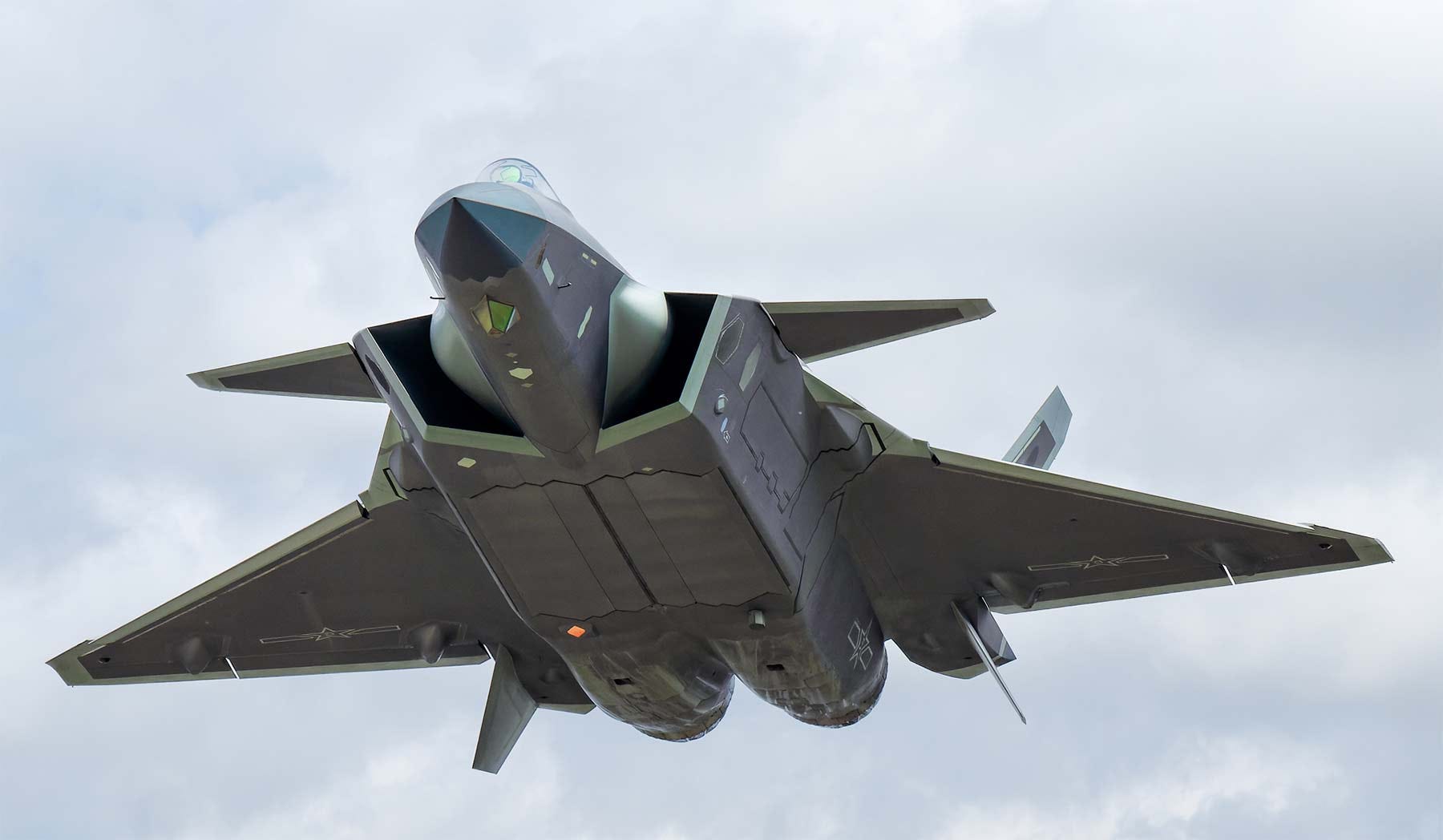
China has had more success in military engines, which makes sense: the military doesn’t have the same requirements around efficiency or reliability where the thorniest engineering problems lie. China has two fifth-generation fighters, the Chengdu J-20B and the Shenyang J-35A, intended to be analogues of the US F-22 and F-35 respectively, and each is intended to be fitted with a domestic powerplant: the WS-15 for the J-20B, and WS-19 for the J-35A.
Both of these engine programs have ballooned in time-of-delivery and in cost. The J-20B entered service in 2017 with a Russian AL-31, transitioning first to an outdated Chinese engine before the WS-15 entered production in 2023. China claims it has roughly comparable performance with the F119 (which powers the F-22): 18.4 tons of thrust to the F119’s 15.9 tons, using single-crystal turbine blades and strong afterburning performance. It’s unknown whether it has comparable supercruise performance (sustained supersonic speed without afterburning): China claims it can cruise at Mach 1.3, slower than the F-22’s Mach 1.8, but this has not been demonstrated. The WS-19, on the other hand, is still five years off of production, leaving the J-35 using a 20 year-old WS-21.
Chinese military statements do need to be caveated. The F-35’s many operational issues are public because of a Western engineering culture that prioritizes shared learning. China has no equivalent. It has nothing like our annual Pentagon reports. F-35 crashes make worldwide news, but Chinese military aviation accidents are not reported. Maintenance issues remain classified. Given how little public operational data exists on the WS-15, it’s quite hard to believe that its performance matches its optimistic claims.
But even if we take Chinese claims at face value, China remains some two decades behind the West. The F119 started production in 2001, and the first F-22 was delivered in 2005. It’s now a mature engine with 21 years of service history and proven reliability. The F-35’s engine, the Pratt & Whitney F135, started production in 2009. America is now developing its sixth-generation fighter aircraft, and has two engine prototypes designed around adaptive cycling, where the turbofan ratio changes for efficiency in both high-thrust usage and long-range cruise. This is slated for 2028. China, on the other hand, hasn’t started development yet on its equivalent, and with its WS-19 issues, probably will not until the mid-2030s.
Putting all of this together, we see an industry with massive technical complexity, extremely thin margins, and very high regulatory requirements. It has huge barriers to entry, both in terms of capital but also the amount of learning and time it takes to reach viability. Any new entrant faces decades of investment with negative cashflow before any return is possible. This type of industry is almost tailor-made for long-standing oligopolies, who made their investments incrementally, one innovation at a time, with positive cash-flow at every stage.
Why would anyone else ever enter this industry?
For military usage, at least, the logic is sound. Yes, China’s air force is a captive market likely paying higher unit costs for weaker performance, but this is a necessary condition. No country that has ambitions to become a global power can depend on someone else for the propulsion of its fighter jets, the most important tool in the modern military. Before the WS-15, China relied on Russian AL-31’s, and Russia actually tried to stop selling them the engine because they feared China developing its own program. India’s “indigenous” fighter jet program faces this deficiency. They cannot make an engine, despite decades of trying, so they will rely on a GE engine with the subservience to American foreign policy that implies. Similarly, Turkey’s KAAN fifth-gen fighter will launch with the F-16’s engine. They’ve had their own turbofan in development since 2010, but this likely won’t bear fruit until at least the mid-2030s.
But for commercial engines, the strategic case is hazier and the economic case is terminal.
China’s main stated reason for building a commercial jet engine is quite simple: airlines are a strategic industry, and China wants all strategic industries to be indigenized. China constantly cites an episode in 2025, where export controls haphazardly applied by the Trump administration blocked the export of GE LEAP engines for the C919 for two months—and it is clear why this would induce fear in the CCP. But the actual strategic returns on indigenization break down once you consider the details.
First, the C919, China’s only domestic airliner, depends almost entirely on Western components. Its avionics, flight control systems, auxiliary power systems, weather systems, navigation systems, and a multitude of other components are all Western-produced, and all are about as hard to replicate as a jet engine is. Fully indigenizing the C919 is a multi-decade endeavor.
Second, the CJ-1000A is only one engine, tuned for one aircraft. The C919 aims to be comparable to the Airbus A320neo or the Boeing 737-MAX, but with a shorter range. It will handle a limited set of flights, mostly within China or to neighboring countries. It won’t, for example, replace the widebodies used for trans-Pacific travel. Building those requires another massive multi-decade project, with a new supply line, new capacity, and new engineering constraints. Engines are not all variations on the same.
And third, in doing this, China signs itself up to a constant zero-sum race to improve its engines to match the Western frontier. Any lag and it will lose its foreign buyers and condemn its domestic airliners to irrelevance. The western manufacturers, to mitigate this, constantly reorganize themselves into various joint ventures (CFM, Engine Alliance, IAE, etc) to share knowledge and costs. China would have to manage this alone.
Another explicitly stated reason is spillover. Jet engines require technologies that are used across a variety of other industries. For example, single-crystal engine turbine blades are also useful for power-generation turbines. Yet, the problem here is that jet engines are not an “easier” industry that allows you to generate cashflow and test your production: they are the hardest entry point possible. If you wanted to build power turbines, or maritime turbines, for example, then wouldn’t you just spin up a project specifically for that instead?
The other reason is civil-military fusion: that military jet engines are a necessity, and commercial engines share enough of the underlying infrastructure and engineering that the marginal cost of the civilian program is far lower. And in one sense, this is true. The WS programs both have significant crossover with the CJ-1000A program. They both require single-crystal turbine blade casting, and the casting facilities can be shared between them. The same applies for powder-metallurgy turbine disks, for superalloy supply chains, along with shared manufacturing equipment, testing infrastructure, and engineering talent. Given this, once you’re committed to building a military engine, the obvious follow-up is to reuse that infrastructure for commercial jets.
This is, after all, the same logic that seeded both the Western and the Russian commercial jet engine programs in the 1950s. However, in the modern day, commercial jet engines have many additional requirements that complicate the proposition—requirements the Western or Russian programs didn’t have to deal with. The modern commercial engine is optimized for efficiency and reliability to a massive degree, well surpassing military requirements. Civilian aircraft also face an intensive certification process, another separate engineering effort. And finally, as we will see next, the payoff for commercial engines is quite weak, as they face a contested international market with very low margins.
The only dimension left is the economic case, which is, by the basic arithmetic, deficient. China has spent between 49 and 72 billion on commercial jet engine development over the past 30 years, and a substantial fraction of that was on the CJ-1000A commercial engine program. The engine, if it ever reaches its own lofty goals, will replace the LEAP-1C on the C919. China wants to produce about 100 C919 aircraft per year, so this is about 200 engines. At 15 million per engine, that’s $3 billion per year in engine costs. Against that, you have that capital investment, the (higher than the LEAP) unit costs of the CJ-1000A, the continual R&D expenses to stay on the technological frontier, and the operational expense of maintaining and expanding the production line. These ongoing costs alone will exceed the LEAP’s purchase price. And the commercial market here is limited. Because FAA and EASA certification is not on the horizon, China is limited to domestic sales, which isn’t enough for the program to provide a financial return.
Altogether, this is why most others have not bothered entering the market. Japan, South Korea, Germany, and Italy—all wealthy countries with large manufacturing sectors—have decided it’s better to buy engines and focus elsewhere. The USSR, now Russia, entered in the 1950s, when the technology was still new and the Western advantage was much smaller, and they still, over their entire history, did not produce a civil or military engine that had parity with West. Their commercial airliners were almost entirely limited to domestic use, and every country that could buy Western hardware chose it instead. China is a much stronger technological power than the USSR ever was, but it’s entering this market at a much more difficult time, and in doing so, it risks the same folly as the Russians.
China obviously knows all of this, but it still stubbornly persists, because its goal is autarky and indigenizing jet engine manufacturing is a core ideological pillar. The CCP sees interdependence as a strategic vulnerability—a position that has hardened in recent years after Western technology denial has escalated. Under this framing, even the attempt to build the CJ-1000A is a triumph. The CJ-1000A program is not an expensive, contingent R&D project in a low-margin industry, but a symbol of national sovereignty that gleams even brighter because of its unattainability.
This matters because at this moment, China has the highest opportunity cost it will ever have. Right now, it has a massive, high-skilled workforce and dominance in a number of critical industries. The modernization that Deng Xiaoping launched, and that each subsequent premier faithfully nurtured, has now fully blossomed into massive domestic industrial capability. Xi Jinping now individually commands more state capacity than any historical leader before him. The confluence of this power structure with China’s awesome technological capabilities mean that right now, he could achieve almost any strategic imperative he chooses.
But this apogee is a mere temporary summit. China faces many headwinds going forward. Its demographics are dire, with a population set to age and shrink over each upcoming decade. Its Western rivals are currently flailing, but their decline is neither assured nor expected—and despite its rhetoric, China knows this. And even now, China’s many advantages and achievements still only grant it regional preeminence, not global hegemony.
China needs to use this moment to expand its highest-leverage bets. This is what they’re doing in AI, which matches the rough criteria for Chinese success. In AI, western competitors are chasing peak performance at the top of the market, leaving underserved demand that China can swallow. AI only has a decade of tacit knowledge accrual, and software has the fastest iteration cycle of any major engineering project. China’s models are about a year behind, but they’re open-source, cheap to run, and easy to finetune, which opens a huge market of companies that don’t need the cutting-edge.
Semiconductors are another success. China already produces the majority of mature-node conductors, which are sufficient for most of its electronics and much of its defense usage. It now is forced to embark on building EUV lithography, which is the exact long iteration cycle, deep tacit knowledge catch-up pattern that has doomed China’s jet engine program, but at least this is a high-leverage bet worthy of the effort.
Commercial jet engines, on the other hand, do not match this criteria. The several-hundred billion dollar outlay (at minimum) that China is embarking on could be spent better in the industries where it has more synergy, more comparative advantage, and a higher expected value. That China continues to push forward is a limitation of a system that hyper-focuses on legible targets and deliberately ignores market feedback.
The West, in a counterfactual world, would never embark on this program at this time because it relies on private capital, and private capital demands returns.
Instead, that private capital is making asymmetric bets that try to leapfrog the state-of-art and, by doing so, undermine incumbent advantage. Boom Supersonic and Hermeus have raised billions to build supersonic commercial jets that the airline oligopoly will not fund. Anduril and Shield AI are producing autonomous fighter jets that usual Boeing-Lockheed-Northrop defense cartel will not build. These bets are a direct product of the West’s decentralized capital infrastructure that doesn’t need politically legible goals or consensus: it can make contrarian bets with high-failure probabilities if the potential return is high enough. The future will be determined by the long-run innovation capability of each approach. Will China’s focus on scaling well-known technologies accrete into an unsurpassable capacity advantage? Or will Western focus on asymmetric technology create more new industries than China can catch up to?