Google ranking factors are signals used by Google’s search algorithms to determine where websites rank in the organic search results.
Google’s algorithm prioritises high-quality content that answers search intent and demonstrates E-E-A-T (Experience, Expertise, Authoritativeness, Trustworthiness).
There isn’t an official list of Google ranking factors released by Google.
But there are estimated to be over 200 ranking factors that SEOs have worked out over the years. This doesn’t even include factors for ranking in Google AI Overviews.
The list of Google ranking factors below comes from a combination of:
- Official sources from Google themselves
- Case studies on search engine optimisation
- Experience with Google’s ranking algorithm
- My own personal experimentation
Here’s the thing – While it is impossible to know if the list of Google ranking factors below is complete…
I can say with great confidence that the vast majority of them are covered. Implementing each of them means you’re ahead of 90% of your competitors.
That’s what matters most.
And with AI search tools like ChatGPT now pulling in over 1 billion weekly active users and Google AI Overviews reaching 2 billion people, SEO has evolved.
That means understanding ranking factors has evolved to include:
- Search Engine Optimisation (SEO) strategies
- Generative Engine Optimisation (GEO) strategies
- Answer Engine Optimisation (AEO) strategies
It is also important to note that not all of the important ranking factors below are strictly Google ranking signals.
Some of them are crawling and indexing signals, which are part of the overall search process.
It’s also worth knowing that Google’s algorithm doesn’t look at just 1 ranking signal.
Google’s ranking algorithm tends to ‘stack signals’ to build a bigger picture.
I have broken down all the known Google ranking factors into their respective categories.
AND
Whether they are a positive or negative ranking factor.

Domain Ranking Factors
This is a list of Google ranking factors that can affect your search rankings positively or negatively at a domain level.
This is one of the most important categories in Google ranking factors.
Here’s a quick list of the most important domain ranking factors:
Negatives
- Private Whois Data
- Penalised Whois Owner
- Country TLD Extension
Take a look at the full list of positive and negative Domain ranking factors that may affect your Google search rankings below-
+ Positive Domain Ranking Factors
#1 – Exact Match Domain
Exact match domains or EMD’s as they are known in search engine optimisation, used to rank very easily.

However Google’s algorithm cracked down on this ranking factor with the EMD update.
You still get a small amount of benefit from an exact match domain.
But now you have an extra quality layer (patent) to please with your web page… thanks to the EMD update!
#2 – Keywords In Domain
A domain containing a target keyword doesn’t help you rank any higher than a branded domain.
Although having a keyword in your domain may help people searching better understand what your website is about therefore encouraging more clicks from relevant people.
#3 – Domain History
The history of your domain also has an impact on how your site performs in search engines.
If the domain has been in trouble with Google search in the past, through link spam or bad neighbourhoods it will be harder to rank.
Take a look at what Google crawlers check for.
Click here to learn how to check your domain ownership history & historic domain authority.
#4 – Domain Age
John Mueller has confirmed through Twitter that whether you have an old domain or a brand new domain –
It will not affect your ranking in Google search results.
But older domains tend to have more inbound links, which DOES have an impact on Google rankings.
Learn more about how to use aged domains for SEO.
#5 – Domain Registration Date
In a patent filing Google said-
The date that a domain with which a document is registered may be used as an indication of the inception date of the document.
#6 – Domain Renewal Date
In the same patent Google also said-
Certain signals may be used to distinguish between illegitimate and legitimate domains. Valuable (legitimate) domains are often paid for several years in advance, while doorway (illegitimate) domains rarely are used for more than a year. Therefore, the date when a domain expires in the future can be used as a factor in predicting the legitimacy of a domain and, thus, the documents associated therewith.
#7 – Country TLD Extension
Having a TLD like a .es domain does help with geo-targeting indication in search engines.
But at the same time, it doesn’t mean they are inherently easier to rank in their target country. You could rank a .com in the Spanish Google just as easily.
– Negative Domain Ranking Factors
#1 – Private Whois Data
Having private Whois data on its own isn’t a problem.
Matt Cutt originally suggested that private Whois data can be combined with other ranking factors as a negative signal.
But John Mueller recently clarified that it’s ok to use, especially in Europe.
Private Whois data is certainly used to identify patterns in blog networks so pay attention!
#2 – Penalised Whois Owner
I cannot find any official Google search reference for this…
But there are a couple of examples where it seems the Whois owner is penalised by Google’s algorithm.
Granted the examples I have seen were extreme examples of abuse from 2 well known SEO’s and Google search wiped out every single web property whether it was abused or not.
However this is far from confirmed officially.
#3 – Country TLD Extension
Where the cTLD will count as a negative ranking signal is if you have a Spanish domain but are trying to rank it in the Russian market. But the domain extension on its own isn’t enough.
If you put Russian content on a Spanish domain it will rank in Russia’s Google search results.
#4 – Parked Domain
If you have a parked domain Google are actively removing them from their index after the parked domains update.
#5 – Same URL Parameters & Same Shared Hosting
Two domains that are on shared hosting and the same URL parameters, Google’s algorithm will assume they are the same site. Ensure you have different URL parameters to avoid this.
#6 – Changing Hosting Provider
The reasons for changing your hosting provider may outweigh this negative ranking factor.
But, you should still be aware that when changing your provider Google crawlers will temporarily reduce your crawl rate.
This is because it cannot yet figure out what load the server can stand.
#7 – 503 Status Misuse
If you keep a 503 status in place for a few days, Google’s algorithm may think that the web page will not be put back up. They will also reduce your crawl rate.
Then the crawling and indexing will stop completely if a robots.txt file request is returned 503.
#8 – Google Sandbox
Newly launched websites on brand-new domains may experience a temporary ranking suppression known as the “Google Sandbox effect”.
The Google sandbox is a temporary filter that Google places on new websites for the first 3 to 6+ months.
Regardless of your SEO – The website won’t rank well for keywords / search terms during this time.
To avoid the Google sandbox, use an expired domain or purchase an aged domain from a marketplace like ODYS.
It really is that simple!
While Google has never formally confirmed the Google sandbox, many SEOs have run independent tests and found evidence to support it.

Page Level Ranking Factors
A list of page-level factors that can affect your search rankings positively or negatively. These ranking factors affect where abouts each page ranks in Google.
Here’s a quick list of the most important page-level ranking factors:
Positives
- URL Contains Keyword
- Title Tag Contains Keyword
- Meta Description Contains Keyword
Negatives
- Duplicate Meta Descriptions
- Duplicate Title Tags
- Underscores In Title Tags
Below, I have broken out all of the different page ranking factors you need to consider from a search engine optimisation perspective.

+ Positive Page Ranking Factors
#1 – URL Contains Keyword
John Mueller has confirmed that including your target keyword in your URL is a Google ranking factor.

BUT:
It is a very small ranking factor that would not be worth your time in restructuring your site for.
#2 – Title Tag Contains Keyword
Having target keywords in your title tags is a massive help to your SEO.
It gives Google search a clear indication of what your content is about and also helps to increase relevance when users are searching for your target keyword.
#3 – Meta Description Contains Keyword
You should include target keywords in your meta descriptions. Just like with your title tags, it helps Google see what the topic of your page’s content is.

WARNING: Do not confuse meta description with meta keywords.
#4 – H1 Tag Contains Keyword
The H1 tag is a strong ranking signal for Google. You should take advantage of this ranking factor and ensure you include your target keyword.
#5 – Other Headings Contain Keyword
Having your target keyword present in other headings such as your H2 or H3 tags will also help with Google rankings.
However…
It is much better to use these headers to include LSI keywords and avoid over-optimising.
#6 – Main Body Content Contains Keyword
You should mention your target keyword a couple of times in your page’s main body content.
This will help improve relevancy.
#7 – Keyword Order
The order of your target keywords also has a small impact on Google rankings.
For example, someone searching for ‘download antivirus software’ will see different search results than someone searching for ‘antivirus software download’.
Even though the search intent is the same.
#8 – LSI Keywords
Latent Semantic Indexing keywords help search engines work out the exact topic.
For example ‘Orange’ could be:
- Orange the colour
- Orange the fruit
- Orange the mobile phone network
You should include LSI keywords in your title, description and main content.
This helps Google search index & understand the topic of your page better.
#9 – Site Speed
We know that if you speed up website load time, you will rank higher in Google search results.
The rendering and loading times are specifically relevant.
Average response time for a web page should be somewhere around 100ms.
Faster websites provide a better user experience, increase engagement, and convert more organic traffic.
Fast-loading sites are also favoured by AI search tools like ChatGPT, Gemini and Perplexity that summarise content into AI answers.
#10 – Unique Content
Having unique relevant content across your entire website is a strong quality signal.
Make sure the content is original and not duplicate content. Whether it is a blog post or a product description – make sure your page’s content is unique.
This is especially crucial for AI search. AI platforms like ChatGPT prioritise unique, authoritative sources for generating responses.
Unique content is now more important than ever.
#11 – Length Of Content
Longer content ranks better and converts better, period.
The average content length for sites in the top 10 is at least 2,000 words.
Longer content attracts more:
- User engagement
- Inbound links
- Social Signals
Oh… and it converts better.
#12 – Table Of Contents
Including a table of contents (TOC) in your content will improve user experience and help Google search understand the structure of your content.

Use appropriate headings in your TOC to help people quickly find the information they are looking for in search results.
#13 – Schema / Rich Snippet Markup
Rich snippets can be added to your SERP’s to make them more attractive.
And you can add it easily with RankMath (read my Rank Math review and see why I consider it as the best SEO plugin for WordPress site) or Yoast SEO.

Once set up, this will spoon-feed data to Google search which is then shown in the search engine results pages.
This will help to attract a higher click-through rate and more organic traffic from Google search.
PRO TIP: Don’t forget to check the quality of your schema with a schema tester.
#14 – Multimedia
Having unique images and videos to support your main content is a quality signal. I recommend investing in a good graphics design team that will produce unique images.
#15 – Image Optimisation
Google search will also look at your usage of images.
Make sure that you use your target keyword in the file name and the image alt text.
But don’t over-optimise by including your keyword in everything such as:
- File name
- Image alt text
- Title tag
- Description tag
Check out this image SEO guide and infographic by SEO Sherpa to learn the exact steps for optimising images for search engines.
#16 – Exif Data
Exif stands for “exchangeable image file format”.
It’s metadata embedded in images containing extra information about the image like:
- Where it was taken
- Camera settings used
- Timestamps
And more. Google search uses the Exif metadata to better understand and rank the images in the search results.
Think of Exif data like a hidden Google ranking factor that can significantly impact your search rankings.
Check out my image SEO guide to learn more about Exif data.
#17 – Fresh Content
Way back in 2010 Google released the Caffeine update. This was designed to return fresher and more up to date search results.
This was a significant shift in how Google’s algorithm indexes the web and favours fresher content.
#18 – Updated Content
Updating older content will also see a positive impact on Google rankings.
You need to do a little more than just changing the date though. Google is looking for significant updates to content in order to label them as ‘fresh’.
#19 – Updated Dates
Freshness is a part of Google’s search algorithm.
Regularly updating the content on your website tells Google that your site is providing fresh and relevant information.
Update your content every 9-12 months and make sure that you display the updated date on the page.
This will prompt Google crawlers to re-crawl your content and reevaluate its rankings in the search engine results.
Note: Simply changing the “updated date” without updating any content won’t improve SEO.
You need to add new content, remove irrelevant content and make sure your article answers the user’s search intent.
#20 – Outbound Links
Although outbound links have been widely believed as a Google ranking factor this is not the case.
Having outbound links on your site could add value to your own content which Google may view positively but the links themselves are not a ranking factor.
John Mueller explains this in his Q&A video.
#21 – Internal Links
Just like external links affect your rankings so do internal links as well.
More specifically the number of internal links and quality of those pointing to a given page on your website. It was shown just how important internal links are on Google ranking.
#22 – Syndicated Content
A lot of people are terrified of posting syndicated content.
This is in case they get flagged for duplicate content. However there are a couple of bits of advice.
Syndicating content is fine, but make sure you are linking back to the original source and pray the syndicated content doesn’t outrank you in the search results.
#23 – Supplementary Content
Having supplementary content is a strong quality signal.
The 2014 version of the Google Quality Rater Guidelines make this very clear.
Google provides the example that a recipe page might have a feature to multiply or divide the recipe based on how many people you are serving.
#24 – Reading Level
Google measures the reading level of pages and label them as either:
- Basic
- Intermediate
- Advanced
You can access this by doing a Google search…
Then, clicking on search tools > all results > reading level.

As you can see my website is ‘basic’ but it still ranks very well in the Google search results. It doesn’t appear that Google are using this as an active ranking signal – but they certainly have the data.
#25 – W3C Validation
W3C code validation is not a Google ranking factor period.
#26 – Domain Authority
The overall domain authority also has an impact on how your page ranks.
Assuming everything is equal the page on the more authoritative domain will rank higher.
This is something I see with my own authority sites where they have what I call ‘page 1 pull’ where I can publish an article and have it appear on the first page for its target keywords.
#27 – Keyword At The Start Of Title Tag
Moz’s data shows that title tags that begin with a target keyword…
Outperform those with the keyword at the end of the tag in Google search results.

So when publishing new relevant content, ensure you have your title tag optimised with your target keyword at the beginning. This really does make a difference.
#28 – Keyword Frequency
Your target keyword should be the most frequently used phrase within your article.
There is no super special keyword density secret but you should make sure that it appears more than other search terms or phrases.
Also keeping it natural for user experience.
#29 – Rel=Canonical
Google’s algorithm may use this tag to identify a particular piece of content as not duplicate.
But you should be aware – they may choose to ignore it! So it’s better not to rely soly on the canonical tag!
#30 – Historical Page Updates
Google may not only be tracking the recency of content updates…
But how often these updates are occurring.
Updating your content-
- Weekly
- Monthly
- Annually
…could have a strong influence on how a web page ranks.
#31 – Size Of Content Update
How much content you’ve changed could also influence Google ranking.
Updating:
- Whole paragraphs
- Images
- Links
…is way more noticeable than just updating the grammar in a sentence.
#32 – Outbound Link Theme
Moz’s research suggests that the theme the link points too can influence your relevancy.
Linking to pages that don’t tie with the content’s theme could cause problems. This is because it could add doubt to the topic of your content.

– Negative Page Ranking Factors
#1 – Duplicate Meta Descriptions
John Mueller says that having duplicate meta descriptions aren’t really a problem.
Which is backed up by Yoast’s study which show’s a lot of the time Google actually using sentences from the beginning of your content as the meta descriptions.
So you should optimise the first paragraph of content with your meta description in mind.
#2 – Duplicate Title Tags
Just like with Meta Descriptions you should ensure every web page has a unique meta title tag.
Ensure there are no duplicate title tags across your site.
#3 – Underscores In Title Tags
Matt Cutt’s specifically said not to use underscores as seperators in your title tags.
Instead, you should use commas, pipes or dashes to separate your title.
#4 – Keyword Stuffed Meta Tags
Having a keyword-stuffed title tag or meta description will negatively affect your Google rankings.
For example, if your title tag is:
That is keyword-stuffed!
Instead you should have something more natural like:
‘Link Building Services – Fast & Efficient’
#5 – Meta Keywords
While not strictly a negative ranking factor, the meta keywords tag was originally used to help software indexing. Google have never used the meta keywords tag as a ranking signal.
They do read the tags – but they are not a Google ranking factor.
#6 – Keyword Density
Way back when we used to build sites to have the perfect keyword density for search engines.
It seemed that around 3% was the ‘sweet spot’.
But since then Google’s algorithm has got much better at processing language and they can understand the topics of web pages better. So when optimising for keyword density…
It is very easy to over optimise and get caught out.
So ignore keyword density and make sure your target keyword is mentioned in:
- The title tag
- The meta description
- H1 tag
- Once or twice in the main content
#7 – Slow Load Times
Just like having fast page speed serves as a positive Google ranking factor…
Having a slow loading site will act as a negative ranking factor if all other things are equal in the search results.
#8 – Duplicate Content
John Mueller walks us through what Google’s algorithm classes as duplicate content.
This comes after Google releases a duplicate content warning.
#9 – Autogenerated / AI Content
Google prioritises content quality.
Generic AI-written content is about as far away from quality content as you can get.
AI rewrites what’s already out on the internet. It doesn’t add any unique perspectives, experience or authority.
Worst of all?
Our own AI content detection tests show that AI-written content can be heavily plagiarised, leading to duplicate content issues.
Lots of AI-generated content on your website can lead to a Google ranking drop and even have your website labelled “unhelpful” by Google search.
Don’t get caught in the AI hype.
Stick to human-written, unique, trustworthy and quality relevant content that your readers will love.
#10 – Hidden Content
This was the old stance on hidden content…
“Hiding page’s content specifically to manipulate search engines, increase word count or increase the number of search terms on a web page can get you penalised.”
Now John Mueller has revealed that with the mobile first index you can contain/hide content in tabs because of user experience purposes.
Ranking just as well as normal content in the Google search results.
#11 – Irrelevant Image Alt Tags
For a long time we have been using ALT tags to tell Google what our images are about. Typically we use the image alt text to include a relevant target keyword.
However Google’s algorithm can understand images now!
So if you have a picture of a Zebra with the alt text:- ‘best iPhone deals’
You are going to have a hard time!
#12 – Outbound Links
If you are not careful you could end up with a site wide penalty. Google do hand out penalties for outbound links…
Even if it’s just 1 bad outbound link across your entire site and having too many outbound links can hurt your site’s Google rankings.
The Quality rater document clear states:
“Some web pages have way, way too many links, obscuring the page’s content and distracting from the Main Content”.
#13 – Broken Links
Having too many broken links is a sign of a low-quality site according to Google’s rater guidelines.
However you should not be worried about having the odd broken link.
But broken links are quick to fix so if you have them on your page, fix them for better user experience.
#14 – Too Many Affiliate Links
Google and affiliates historically do not get on.
For the most part, affiliates are a pain for Google as they contribute a huge amount of spam and low-quality websites.
Having affiliate links isn’t a problem, but if your spamming affiliate links throughout your content you are going to run into trouble with Google.
Either way, you should be nofollowing all of your affiliate links .
#15 – HTML Errors
W3C code validation and HTML errors are not Google ranking factors.
Unless…
Those errors interfere with how Google crawls and indexes web pages. Stay on top of HTML errors and fix them as they are reported in Google Search Console.
#16 – URL Length
It has been widely believed that the length of your URL has a negative impact on Google rankings.
It has now been confirmed that Google has no real preference with URL length. But be aware that if your URL contains a hash ‘#’ then Google crawlers will not index it.
#17 – Spelling & Grammar
John Mueller answers the question…
“Does bad spelling and grammar affect your rankings?
The answer is “not really”. However, it is not as simple as that…
He explains that Google doesn’t really have an issue with poor grammar and spelling. But your visitors will!
If your page’s content is packed full of bad spelling and awful grammar inevitably you will lose the trust of your audience, which will only have one result for user experience.
#18 – Interstitial Ads
Interstitial Ads are pop up ads that force a user to view an ad before seeing the page’s content. They can appear before the page loads, when the web page loads or when a user scrolls.
Google doesn’t like intrusive interstitials ads.
They ruin the user experience and they will impact your search engine optimisation negatively.
#19 – Real Business Information
Ensuring your business information is up to date is crucial to your local SEO strategy.
This includes things like:
- NAP (name, address, phone number)
- Listing your business on Facebook, Google My Business & relevant directories
You should also take care of your reviews on each site.
Although this should happen naturally through great customer service.

Site Level Ranking Factors
A list of site level Google ranking factors that can affect your search rankings positively or negatively.
These factors are all changes you can make to your website to rank higher in Google search.
Here’s a quick list of the most important site level ranking factors:
Negatives
- Site Downtime
- Duplicate Meta Content
- Not Optimised For Mobile Devices
But there are a lot of other site level Google ranking factors you need to consider which I have broken down below-

+ Positive Site Ranking Factors
#1 – Domain Trust
Having a good standing history of trust with Google has a huge influence.
Trusted websites can get away with more and enjoy higher Google ranking across the board. Trust is measured across a range of signals including inbound links from highly trusted sites.
#2 – E.E.A.T Signals
Google’s algorithm evaluates the content quality of all websites using E.E.A.T.-
- Experience
- Expertise
- Authoritativeness
- Trustworthiness
E.E.A.T signals show Google search that you produce quality relevant content they can trust.
It also demonstrates that you have the appropriate experience and expertise to write about the subject.
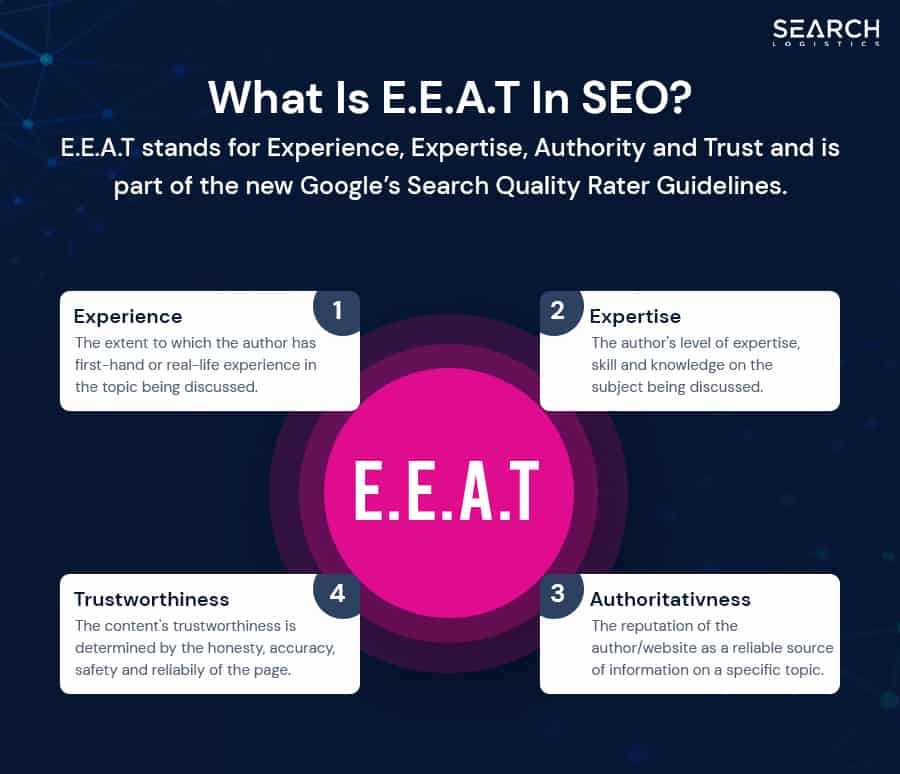
This is especially important for YMYL (Your Money Your Life) topics in the Google search results.
#3 – Contact Us
Google’s Search Rater guidelines says…
Sites should have easily accessible contact information to help build trust with search engines.
#4 – Privacy Policy & Terms
Having a privacy policy and terms of use pages also provide relevant trust signals. If you use Google Adsense for example, these pages are required.
This could introduce the possibility of duplicate content but Google say its not a problem.
#5 – About Us Page
Just like having contact us & privacy policy pages help to build trust with Google.
So does having a detailed about us page.
#6 – Site Structure
Organizing your site into a silo structure is a positive ranking signal for your website. Many people have a flat structure like – domain.com/post-name
But its much better to have a silo structure.
This would look something like –
domain.com/seo/google-ranking-factors
OR
domain.com/social-media/facebook-marketing
But even more important than the URL structure…
Google’s algorithm looks at the number of clicks from the homepage to the destination page. This is considered of greater importance out of the two when it comes to ranking factors.
Check out my advice to create the best permalink structure for your site.
#7 – Site Freshness
Just like freshness has an impact at page level, it also has an impact at domain level.
Make sure your website is fresh and upto date at all times.
#8 – Number Of Pages
The number of pages a site has is not a Google ranking signal on it’s own.
However…
More indexed web pages does mean you have more chances to rank for different keywords. You are more likely to attract incoming links which does have an impact on Google rankings.
#9 – XML Sitemap
Having an XML sitemap will help Google spider your site easily. This doesn’t guarantee that Google is going to index all of the pages in the sitemap.
But it does help them get around your website.
However not having a sitemap isn’t a negative ranking factor assuming that your site structure is correct and Google crawlers can crawl the site properly.
#10 – HTML Sitemap
Why stop at just an XML sitemap when you can have a HTML sitemap as well? Although this seems to be an old practice that is rarely seen now.
But it can help your users and Google bots.
#11 – Server Location
Server location isn’t a massive issue if you can set geotargeting. You can do this in either Webmaster Tools or ccTLD.
It plays a very small role according to Google’s John Mueller.
#12 – HTTPS/SSL
Google are officially using HTTPS as a Google ranking signal.
Although at the moment it is a very minor ranking signal. It is used more like a tiebreaker rather than a strong ranking factor.
When you make the transition be sure to redirect all the http addresses to https addresses with clear 301 redirects in place.
#13 – Breadcrumb Rich Snippets
Having breadcrumb navigation on your site will help the overall site structure.

What helps even more is having the RichSnippet mark up for breadcrumbs in place for search engine optimisation.

#14 – Structured Data
Using structured data markup (or schema markup) helps Google better understand specific aspects of your page’s content.
It can also get you more visibility in the search results as Google displays extra information about your page in the search results.

Structured data is one of the best ways to increase click-thru rates and win rich snippets.
Use this schema tester to see if you already have structured data on your site.
#15 – Mobile Optimisation
If your site has a responsive design and displays well on mobile devices it’ll perform well.
Google recently introduced mobile first indexing and have a mobile friendly testing tool and a mobile pagespeed testing tool.
#16 – Core Web Vitals
Google is hell-bent on providing the best user experience.
Core web vitals are how they measure the user experience your website provides.

Improving your site’s core web vitals metrics can improve Google rankings and increase your overall page experience signals.
Read my complete core web vitals tutorial to learn 6 simple ways to boost your core web vitals quickly.
#17 – User Experience
I’ve said it once, I’ll say it again…Google takes user experience seriously.
Their algorithm actively measures how long people spend on your site, whether you answered their user’s search query and even how many pages they visited.
Recently Google search has even started surveying users after they click from a website back to the search engine results:

Your website should-
- Load quickly
- Be easy to navigate
- Work well on mobile devices
- Offer engaging content
All of these can impact your Google search rankings significantly. Make sure that your site provides a great user experience.
#18 – Hreflang
Hreflang tags (when implimented correctly) are used to organise content by language.
They sort multiple regions with one language or one region that has multiple languages.
Although the Hreflang tags don’t directly impact your SEO ranking, if you have a website that’s international it’s important that you get the correct pages in front of your visitors…
– Negative Site Ranking Factors
#1 – Site Downtime
A day or two of downtime will not inherently hurt your rankings.
However…
Google search will remove your site entirely if is unavailable for around a week or more.
On the bright side once your site is backup – Google will reinclude it in the index.
#2 – Crawling / Indexing
You must make your site as easy to crawl and index as possible.
It costs money for Google to crawl the internet. The easier you make it for Google to crawl your website, the higher your search rankings will be.
#3 – Duplicate Meta Content
We already discussed how important it is to have a unique meta title and meta description.
Having duplicate meta information across your site can lead to less visibility.
#4 – Not Optimized For Mobile
While not having a responsive design won’t hurt your Google rankings in desktop search results…
Having a mobile friendly design is very important to show up in mobile search.
#5 – Poor User Engagement
Google knows how many pages people visit and how much time they spend on each page. They know if the user bounces or keeps reading.
They know this regardless of whether you have Google Analytics installed or not.
Sites with poor user engagement signals such as:
- High pogo rates
- High bounce rate
- Low time on site
- Slow load times
Will drop in the Google search rankings.
#6 – Negative Reviews
If your site has a bad reputation on websites like:
- Yelp.com
- RipOffReport.com
- Google Places
You will suffer in the long term for that.
This was addressed after someone came up with the ingenious way to earn links…
By treating customers badly.
#7 – Adverts Above The Fold
If your site is ‘top heavy’ with adverts above the fold that distract from the main content…
You will suffer in the Google search results.
#8 – Pagerank Sculpting
Pagerank Sculpting is the practice of:
- Nofollowing all outbound links
- Nofollowing specific internal links
This is done in order to control the flow of PageRank.
Abusing this will get you in trouble.
#9 – Panda Penalty
Google specifically targets low quality websites with the Panda update.
If your site is penalised you will see huge drops in search visibility.
#10 – Orphaned Pages
Orphaned pages are website pages that have not been linked to from any other pages or sections of your site.

This makes them hard for both users and search engines to find.
Orphaned web pages on your site can lead to Google not properly discovering and indexing your content.

Backlink Ranking Factors
A list of backlink related factors that can affect your search rankings positively or negatively. Paying attention to these link building factors can make a big difference to your Google rankings!
Here’s a quick list of the most important backlink ranking factors:
Doing link building in the right way can be tricky so take a look at all of the factors below or just use a service like LinksThatRank or any of these other guest posting services to help.
+ Positive Backlink Ranking Factors
#1 – Number Of Links
The number of sites linking back to your site is one of the most important Google ranking factors.
Quantity does help in terms of number of linking domains.
#2 – Anchor Text
The anchor text of the backlink helps Google understand the topic of the linked page.
You should be mixing generic and branded anchor text to steer clear of Penguin.
#3 – Link Title
The title of a link also helps indicate the topic of a web page although it is a much weaker ranking signal than anchor text.
But if you can get a link from a page that has your target keyword in the title and the anchor text – that’s power!
#4 – Domain & Page Relevancy
A link from a domain and/or page that is relevant… is much more valuable than a link coming from an irrelevant site.
For example:
You wouldn’t want a link from this blog if you sold garden furniture online.
But having an industry leader like Matt Diggity link to this blog is very valuable for Google rankings.
#5 – Link Sentiment
The text around a link does a few things:
- It helps Google work out the relevancy
- It helps work out whether the link is a positive or negative citation
So it’s definitely worth paying attention to.
#6 – Keyword In Title
Links from web pages that have either the same or tightly related keywords / search terms in their title…
Are much more valuable than those that don’t.
#7 – Domain Authority
Getting backlinks (such as edu backlinks and gov backlinks) from domains with high levels of domain authority and trust is a significant Google ranking factor that you should be focusing on.
Learn how to increase your domain authority.
#8 – Page Authority
The overall authority of the page that you are getting a link from also plays a big role.
A link from an relevant page on an authoritative domain is the holy grail.
#9 – Age Of Backlink
Google have a patent that shows the age of a backlink is relevant.
In short: Older backlinks are more powerful than newly created ones.
#10 – C-Class IP’s
The number of inbound links from domains only count if they are on separate class-c IP’s.
You want to have links from lots of different domains and IP ranges for maximum effect.
#11 – Diversity
Make sure you have backlinks coming in from a range of sources.
Relying on just 1 ‘link type’ such as guest posts, for example, stands out. You want a diverse mix of link types coming from relevant and authoritative sources.
#12 – Competing Pages
Links from web pages that are in the top 10 ranking positions for your target or related keywords will boost your Google rankings so you should focus on building links from these sites.
#13 – Social Authority
A link from a relevant page that has a high number of social shares is worth more so include this as part of your keyword research when prospecting other sites for link building outreach.
#14 – Guest Posting
John Mueller’s view on guest posting is to make any links back to your site ‘no follow’. He believes visitors coming to your website via ‘no follow’ links are the people you want.
Check out my list of the 5x best guest posting services that I’ve tried and recommend.
#15 – Homepage Links
Links coming from the homepage of a particular site carry more weight.
This is because other links are found further away from the homepage in structure.
#16 – Contextual/Editorial Links
Links coming from the main content of a page are known as contextual or editorial links. These links carry the most weight compared to any other link.
An editorial link is an awful lot more powerful than a footer link from the same page.
#17 – User Generated Content Links
Google search knows the difference between user generated content and site published content.
Links coming from the actual site are more powerful.
#18 – 301 Redirects
A link that reaches your site via a 301 redirect is just as powerful as a normal link. You wouldn’t think so, right? But it’s true.
#19 – Wikipedia
Although links from Wikipedia are Nofollow, Wikipedia backlinks are highly authoritative.
If you get your site listed as a source of information you will also receive targeted organic traffic.
#20 – Positive Link Velocity
Link velocity is a measurement of how many links you gain over time.
It is much better to maintain a positive or neutral velocity than one that is degrading.
#21 – Nofollow Links
John Mueller explains that no follow links aren’t included in Google’s algorithm.
So this means they do not contribute negatively towards your search engine optimisation.
#22 – Sponsored / UGC Tags
Using “sponsored” or “UGC” (User Generated Content) link tags helps Google search understand the nature of your inbound links.
When you link out to other websites, make sure you tag the link appropriately.
These tags are essential to maintain the integrity of your own link profile and follow SEO best practices.
#23 – Word Count Of Page
A link from a page with 2,000 words is worth more than a page with 100 words. This should help you when finding sites to reach out to.
#24 – Number Of Outbound Links
A link from a page that has hundreds of links to other sites is worth a lot less than a link from a relevant page that only has a few links to other sites.
#25 – Sitewide Links
A link from the sidebar that is present on every web page of the particular site is treated as a single link.
– Negative Backlink Ranking Factors
#1 – Bad Neighbourhoods
Having links from sites that have been identified as a “Bad Neighbourhood” by Google will hurt your site.
If Google’s algorithm has uncovered a blog network and your site has a lot of links from that network
You are in trouble.
#2 – Same C-Class
Having lots of links from IP addresses in the same C class is not natural.
This is usually an indication of link manipulation to search engines.
#3 – Guest Posting
Guest posting was a great way to get backlinks a couple years back. However spammy guest posting will get you penalised.
So if your throwing together poor quality articles to guest post purely for the sake of links…
Make sure you are nofollowing them! Google are actively cracking down on this activity.
#4 – Buying Links
You will be penalised if you get caught out buying or sponsoring links.
The official rules are you should apply the NoFollow tag to all paid links, but trust me – nobody actually does that.
#5 – Selling Links
Just like buying links can get you in trouble, so can selling links. There are numerous examples of well known sites selling links and being penalised.

Again, that only happens if you get caught by Google. And some people are more stupid than others as you can see above.
#6 – Negative Link Velocity
Link velocity is a measurement of how many links you gain or lose over time.
A negative link velocity will have a negative effect on your visibility.
#7 – Reciprocal Linking
Reciprocal linking used to be very effective but an update many years ago killed that.
It is now seen as a link scheme and should be avoided.
#8 – Forum Profiles
Links from forum profiles used to be highly effective for Google ranking.
However, this will now get you penalised if systematically abused.
#9 – Linking Relevancy
Sites with a high percentage of inbound links coming from unrelated or irrelevant sites rank lower. So make sure any links pointing to your site are relevant to your niche.
#10 – Penguin Penalty
The Google Penguin penalty tends to focus on your backlink profile.
This can affect you on a page and domain level.
Want to remove a Google penalty? Check out my Google penalty recovery guide.
#11 – Unnatural Link Profile
Link building is an essential part of SEO.
But an unnatural link profile with tons of low-quality or spammy backlinks can trigger Google penalties.
This is the fastest way to destroy your Google search rankings and organic traffic.
ONLY build high-quality, natural links and use trusted link building services.

User Engagement Ranking Factors
A list of user engagement Google ranking factors that can affect your search rankings.
Knowing the user engagement of your site is the first step, then just implement these ranking factors.
Here’s a quick list of the most important user engagement ranking factors:
Positives
- Page Level SERP Click Through Rate
- Domain Level SERP Click Through Rate
- Dwell Time / Pogo Sticking
Negatives
- Page Level SERP Click Through Rate
- Domain Level SERP Click Through Rate
- Dwell Time / Pogo Sticking
I’ll explain what each of those user engagement Google ranking factors mean below and whether each of them can help you, or hurt you.
+ Positive Engagement Ranking Factors
#1 – Page Level SERP Click Through Rate
Pages that get a higher click-through rate in search engine results get a boost in Google rankings.
Mark my words, this is one of the most effective ways to rank today. Given the choice between the perfect backlink profile and a high SERP CTR…
I would choose the CTR every day.
#2 – Domain Level SERP Click Through Rate
If your domain attracts high click-through rates across all web pages…
You will be rewarded with higher visibility across the site.
#3 – Dwell Time / Pogo Sticking
Pogo sticking occurs when people visit your site and click back to the search results…
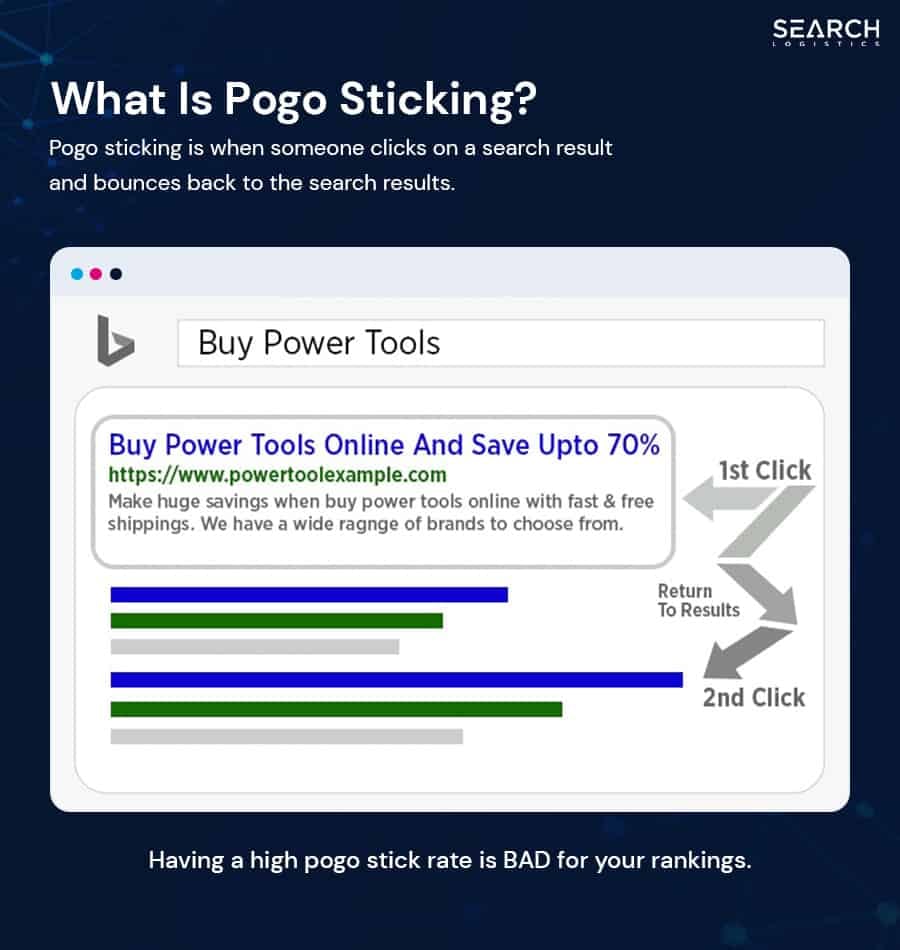
Google measures if people stay on your page after visiting it from a Google search.
If the user visits your site and doesn’t return to the results…
This is a clear sign to Google that your page is of excellent quality.
#4 – Low Bounce Rate
Google knows exactly which web pages you visit and how much time you spend on them. Regardless of which browser you use or if your site has Google Analytics.
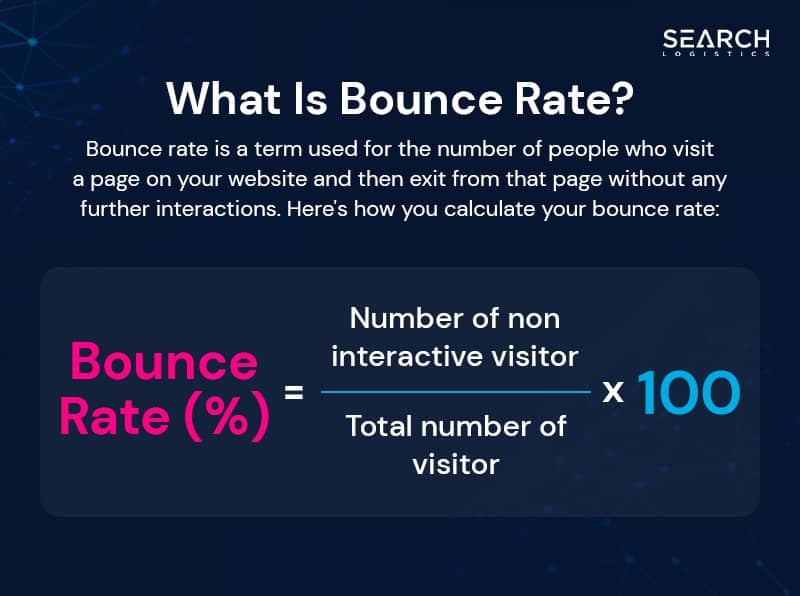
A lower bounce rate attracts higher visibility in the Google search results.
#5 – Pages Per Visit
Sites that engage users for long periods of time or visit multiple web pages are ranked higher. Therefore both content quality and internal links play a big part in the pages per visit metric.
#6 – Direct Traffic
A site that gets a lot of direct traffic is deemed to be of higher quality than a site that doesn’t get much direct traffic.
#7 – Returning Visitors
Sites that have a high percentage of returning visitors are deemed to be of higher quality than sites that don’t get many return visitors.
#8 – Comments
Pages that attract user engagement in the form of comments are a clear signal of quality and user interaction.
– Negative Engagement Ranking Factors
#1 – Page Level SERP Click Through Rate
Pages that get a low click-through rate in search engine results will drop from the first page.
Regardless of other factors.
Backlinks get you there, CTR keeps you there.
#2 – Domain Level SERP Click Through Rate
Domains that have a low click-through rate across their web pages will have less visibility.
#3 – Dwell Time / Pogo Sticking
Google measures if people stay on your page after visiting it from a Google search.
If the user returns to the search results quickly this is a strong negative ranking signal.
#4 – High Bounce Rate
Sites with a high bounce rate will see a negative effect on their rankings across the board. This is a clear sign to Google that your site is not giving value to it’s visitors.
Google pays attention to user engagement and so should you.

Social Signal Ranking Factors
A list of social media related Google ranking factors that can affect your rankings positively or negatively. Pay attention to these factors and you’ll see a boost in rankings.
Here’s a quick list of the most important social signal ranking factors:
Positives
- Tweets
- Facebook Shares
- Facebook Comments
Negatives
- Negative Social Velocity
But take a look at the full list of social signal based ranking factors you might want to consider below-
+ Positive Social Signal Ranking Factors
#1 – Tweets
The number of tweets a given URL or domain will influence Google rankings so having a robust Twitter strategy is important.
#2 – Facebook Shares
It is generally thought that Google do not have access to Facebook’s data. But that is not true.
The number of times your web pages are shared on Facebook impacts your rankings.
This is the most valuable Facebook signal.
#3 – Facebook Comments
The number of comments a given URL has received on Facebook will impact rankings.
Although less important than shares.
#4 – Facebook Likes
Facebook Likes of a URL/Domain also has positive traction in the SERPs.
This Facebook signal is the weakest of the 3.
#5 – Pinterest Pins
Having your URL pinned and re-pinned on Pinterest is a strong social signal. This platform may not be relevant to your niche but if it is… take advantage!
#6 – YouTube Links
Native YouTube content, or links from YouTube itself, could influence Google rankings.
This is because Google search owns the platform and video content is often given priority.
#7 – Relevancy
Relevancy of your social ranking signals is also important.
For example:
Having an industry leader like Matt Diggity mention this blog on social is very valuable.
#8 – Positive Social Velocity
Just like you can have a positive link velocity you can also have a positive social velocity.
I have used positive social velocity to bring Penguin penalised sites back to the #1 spot in Google search.
– Negative Social Ranking Factors
#1 – Negative Social Velocity
Negative social velocity will see your site drop in Google rankings.
For example:
If you bought 1,000 Tweets today and 3 days later 900 of them were removed…
That would damage your Google rankings.
I mentioned bringing penalised sites back to the #1 spot with positive social velocity. As the velocity drops off – so does the ranking.

Brand Signal Ranking Factors
A list of brand signals that can affect your Google rankings positively or negatively. Use your brand to give your Google search engine rankings a boost!
Here’s a quick list of the most important brand signal ranking factors:
Positives
- Branded Anchor Text
- Branded Searches
- Brand Mentions / Citations
Negatives
- Negative Reviews
- Low Branded Click Through Rate
But please make sure you take advantage of the full list of brand based ranking factors below-
+ Positive Brand Ranking Factors
#1 – Branded Anchor Text
Anchor text that include your brand a very strong ranking signal to Google.

For example: ‘Matthew Woodward Link Building’
Is much more powerful than just – ‘Link Building’
#2 – Branded Searches
Similar to branded anchor text, when people search Google and include your brand with associated keywords this offers a huge boost in rankings.
For example:
People searching for – Matthew Woodward SEO

Tells Google my brand is important to SEO.
#3 – Brand Mentions / Citations
Having your brand mentioned on popular sites with your keywords is a clear ranking signal to Google.
You can use this Google search to see what Google search see’s-

#4 – Facebook & Twitter Presence
Popular brands have a presence on Facebook with a strong following, they use this following to increase social ranking signals and drive organic traffic to their own website.
#5 – LinkedIn Company Pages
Popular brands have a dedicated LinkedIn page for their business.
This also shows employees.
#7 – Social Activity
Brands that are more active on social media/engaging with people are more popular than brands that do not. It’s worth putting in the extra effort.
#8 – Shareable Website
Writers who produce share-worthy relevant content are much more likely to earn natural backlinks and get shares on social media.

These are essential brand ranking factors that will positively influence your Google search rankings.
Encourage social sharing on your website by adding easy-to-use social sharing buttons to your web pages. You’d be surprised how much of a difference it can make!
#9 – Brick & Mortar Business
The majority of real businesses have physical brick & mortar premises.
Listing your address in the website’s footer along with a Google My Business listing is a strong ranking signal.
– Negative Brand Ranking Factors
#1 – Negative Reviews
If your brand has a bad reputation on sites like:
- Yelp.com
- RipOffReport.com
- Google Places
You will suffer in the long term for that.
#2 – Low Branded Click Through Rate
If people are searching for your brand and associated keywords but don’t click to your site.
That is a negative brand signal.

Check out my complete search engine optimisation checklist.
Stuck in the Google sandbox period? Read my guide to learn how to get out of Google sandbox as quickly as possible.

Wrapping It Up
So there you have it – all known Google ranking factors in one place for your convenience!
With this knowledge in hand, you now know how to improve your Google search rankings.
Just to recap, we covered Google ranking factors in these areas:
- Domain
- Page Level
- Site Level
- Backlinks
- User Engagement
- Social Signals
- Brand Signals
To put it simply: If you are not paying attention to these Google ranking factors, you are going to have a hard time ranking.
And do not forget!
Google doesn’t look at just 1 ranking signal.
They ‘stack signals’ together to build a bigger picture.
But Google isn’t the only search engine with ranking factors you should be paying attention to…
…because Bing SEO is something that needs to be taken seriously as well.
PRO TIP: If you want to learn more about Google ranking factors and/or SEO in general, why don’t you take an SEO certification/SEO course or read an SEO book?
