Highlights from PS2025
Search the Virtual Trip
Psychedelic Science 2025
See our latest video selection from PS2025 which took place June 16-20, 2025, in Denver, Colorado
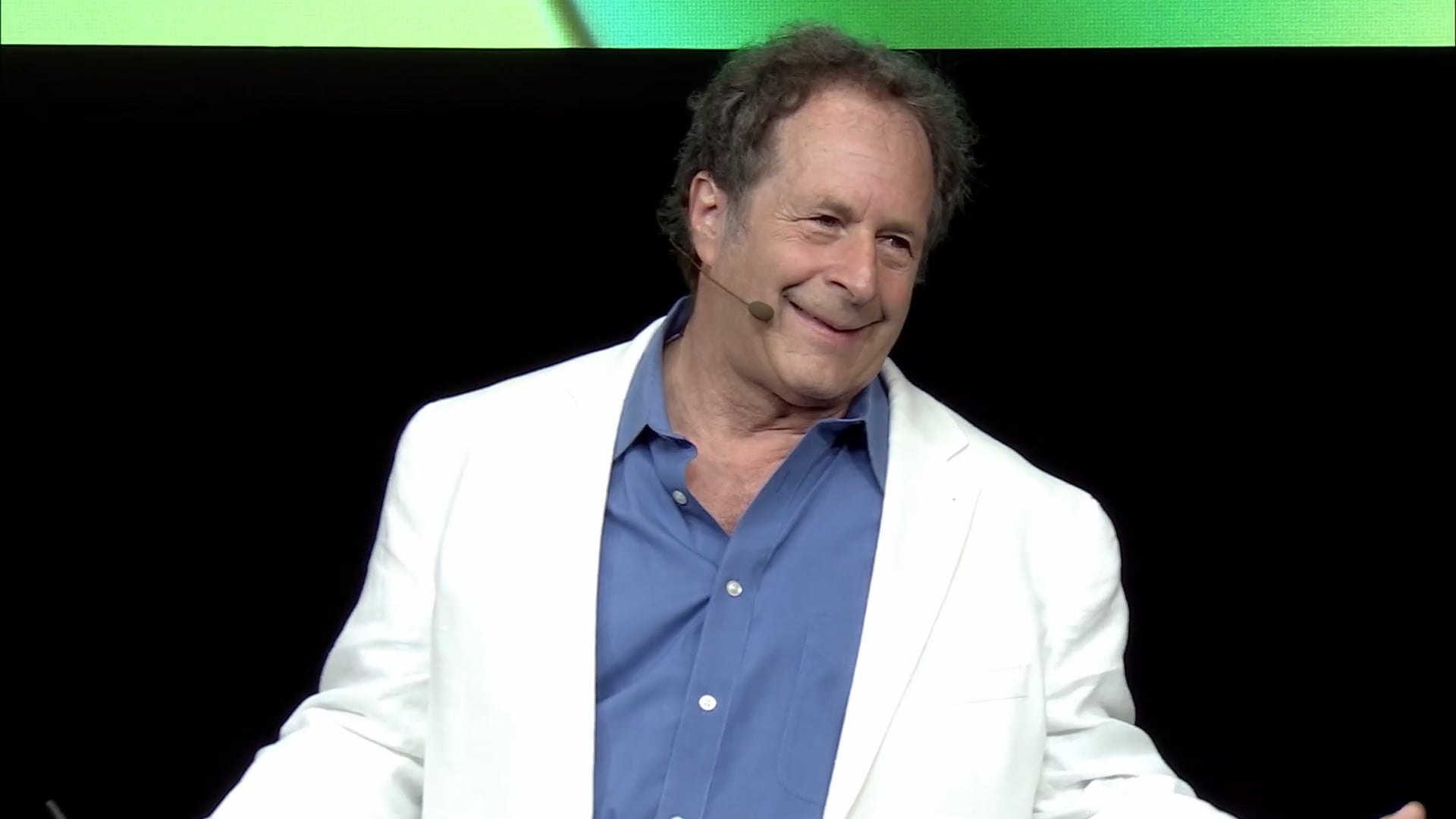
The official Opening Plenary of Psychedelic Science 2025. This 90-minute session brings the full community together to mark the start of the conference. No other programming is scheduled during this time—we invite everyone to be part of this collective moment.
Rick Williams, Ismail Lourido Ali, Betty Aldworth, Rick Doblin, Vicky Dulai
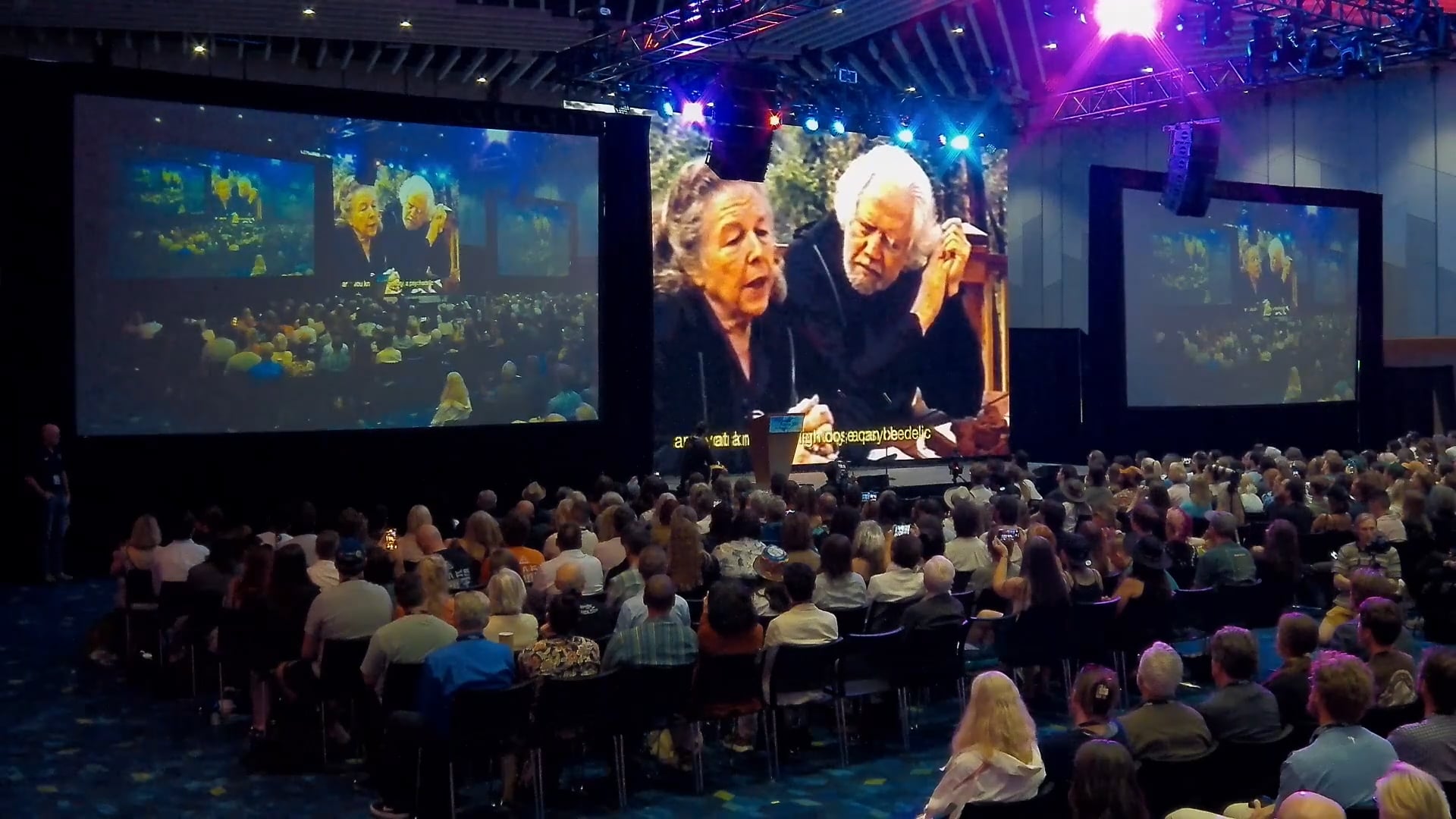
After a week of deep learning, connection, and exploration, this final session brings us back together to reflect on where we’ve been and where we’re going.
Ismail Lourido Ali, Betty Aldworth
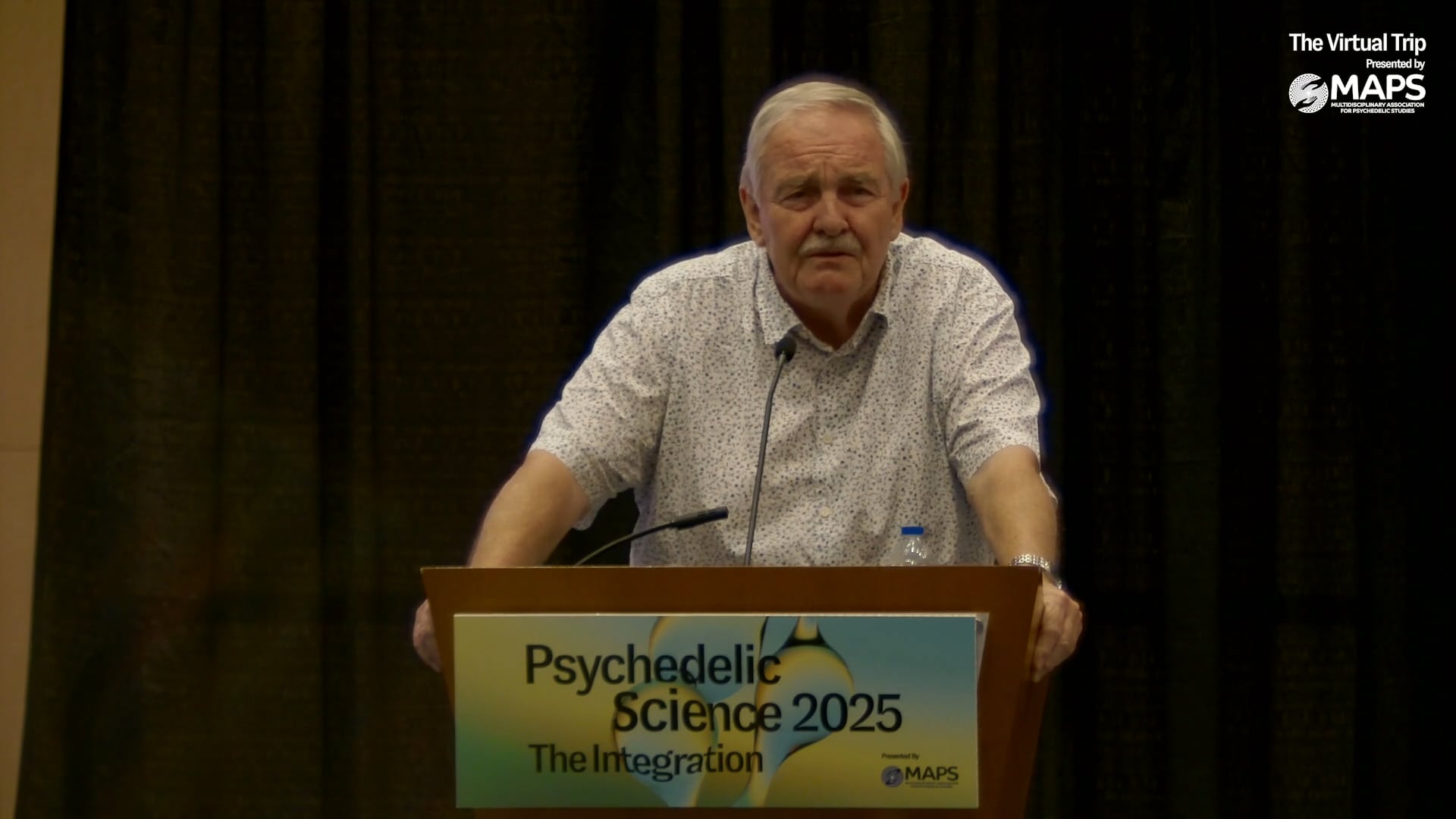
In 2025 it will be 20 years since the Centre for Psychedelic Research began its study of psychedelic drugs in humans, first at Bristol University and then since 2008 at Imperial College London. What started out as an imaging study of the brain mechanisms of psilocybin in collaboration with Robin Carhart-Harris and Amanda Feilding has turned into a life changing body of research that has encompassed many hundreds of colleagues: doctors psychologists and neuroscientists.
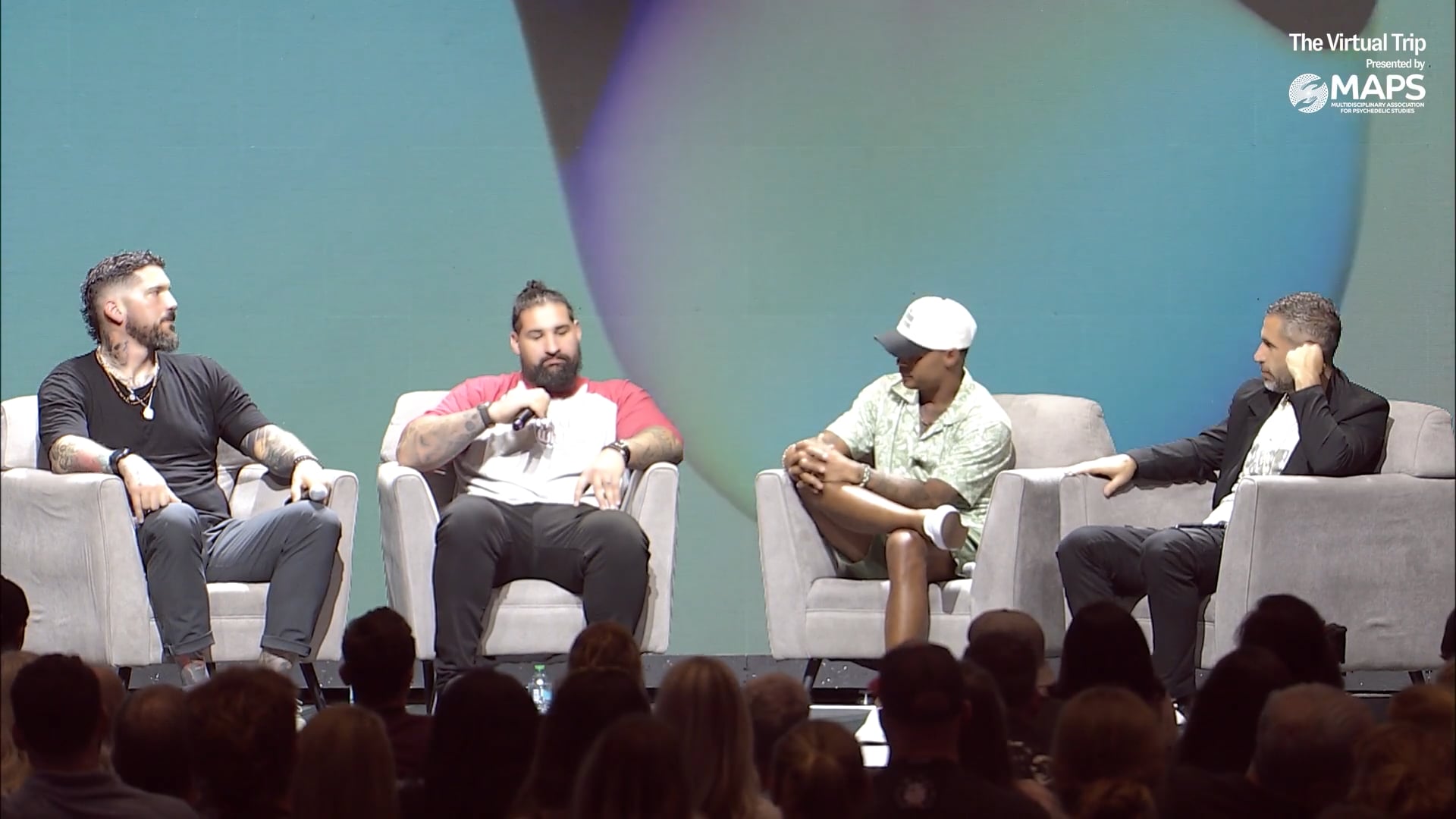
A growing number of professional athletes are turning to psychedelics, not for performance enhancement, but for healing, reflection, and deeper self-understanding.
Aubrey Marcus, Jordan Poyer, Jon Feliciano, and Robert Gallery
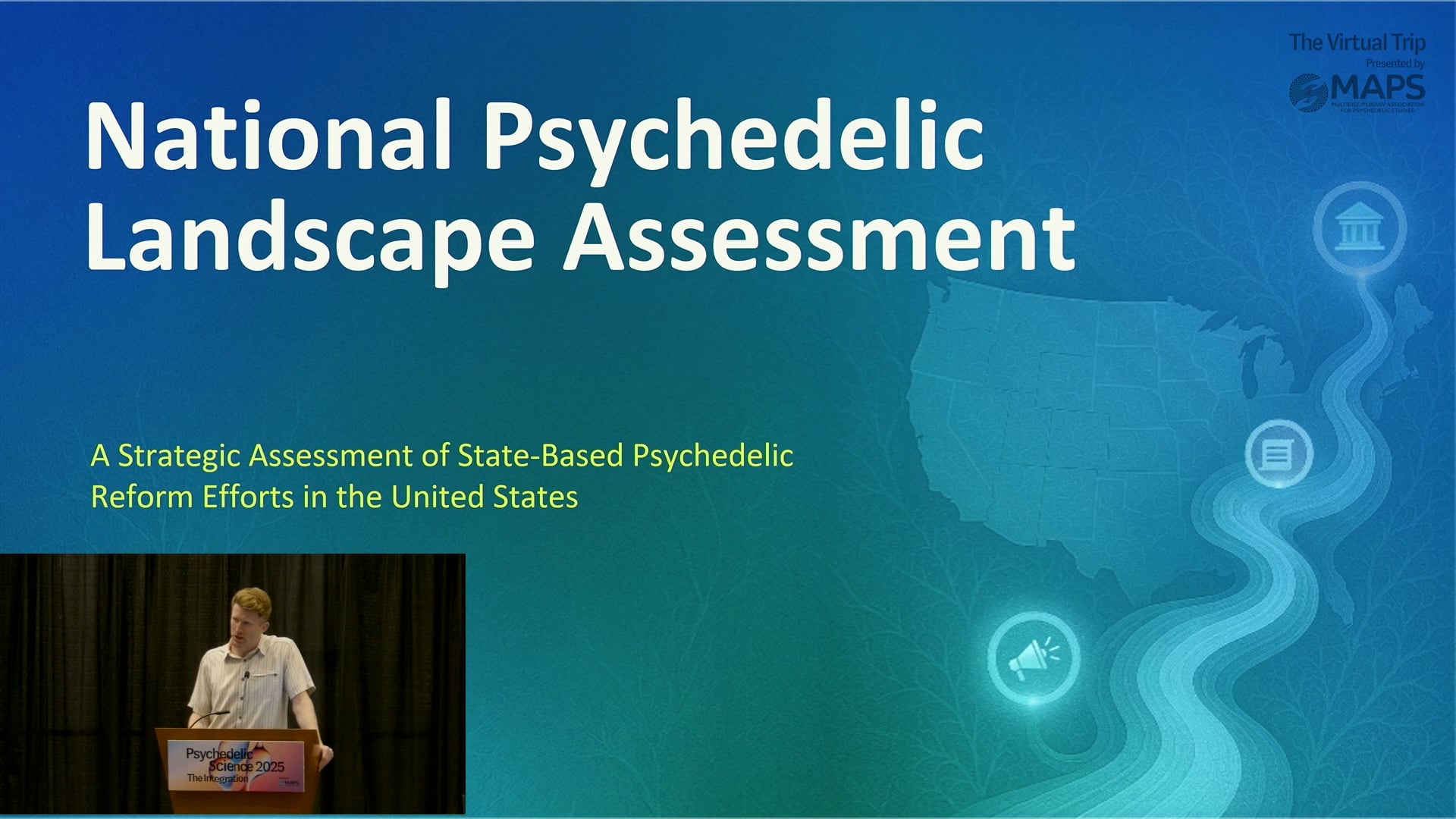
The momentum behind psychedelic policy reform has surged over the past five years—especially within state legislatures. With over 220 bills introduced across 38 states and D.C. since 2020, the field is evolving rapidly. But sustained progress requires a clearer understanding of what’s working—and what’s not.
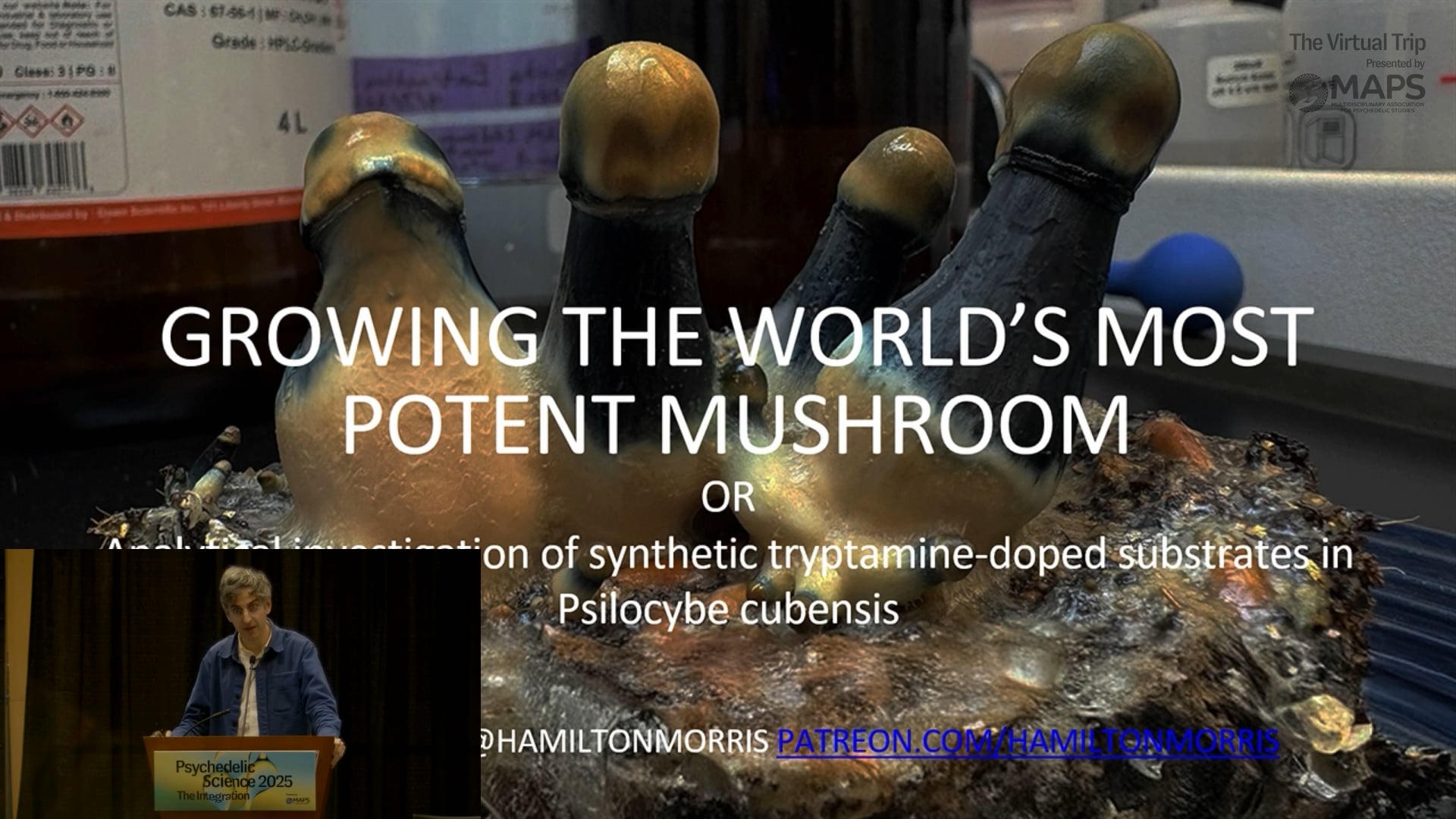
In the 1980s the German mycologist Jochen Gartz published a series of provocative scientific papers that detailed a process for introducing synthetic tryptamines into the substrate of Psilocybe cubensis leading to the growth of mushrooms with an unprecedented concentration of psilocin. This presentation represents the results of the first effort to reproduce Gartz's research with quantitative chemical analysis.
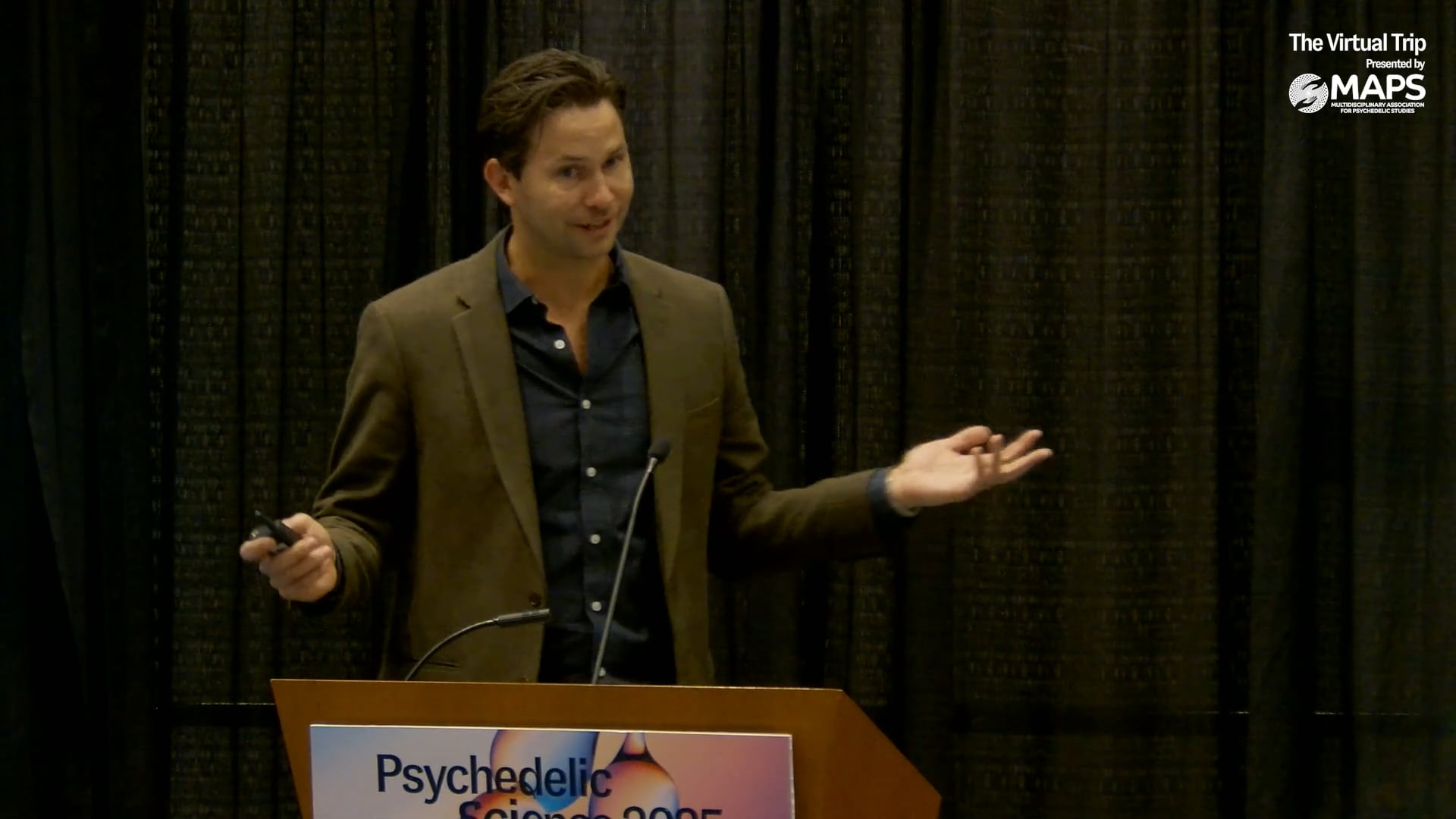
Watch for hot-off-the-press public opinion research on Americans’ beliefs, understanding, and policy support around psychedelics.
Abel Gustafson, Matt Goldberg

Ketamine has surged to the forefront of psychedelic medicine and pop culture alike ,but alongside the accolades is a growing shadow.
Hamilton Morris, Liana Gillooly, Gita Vaid
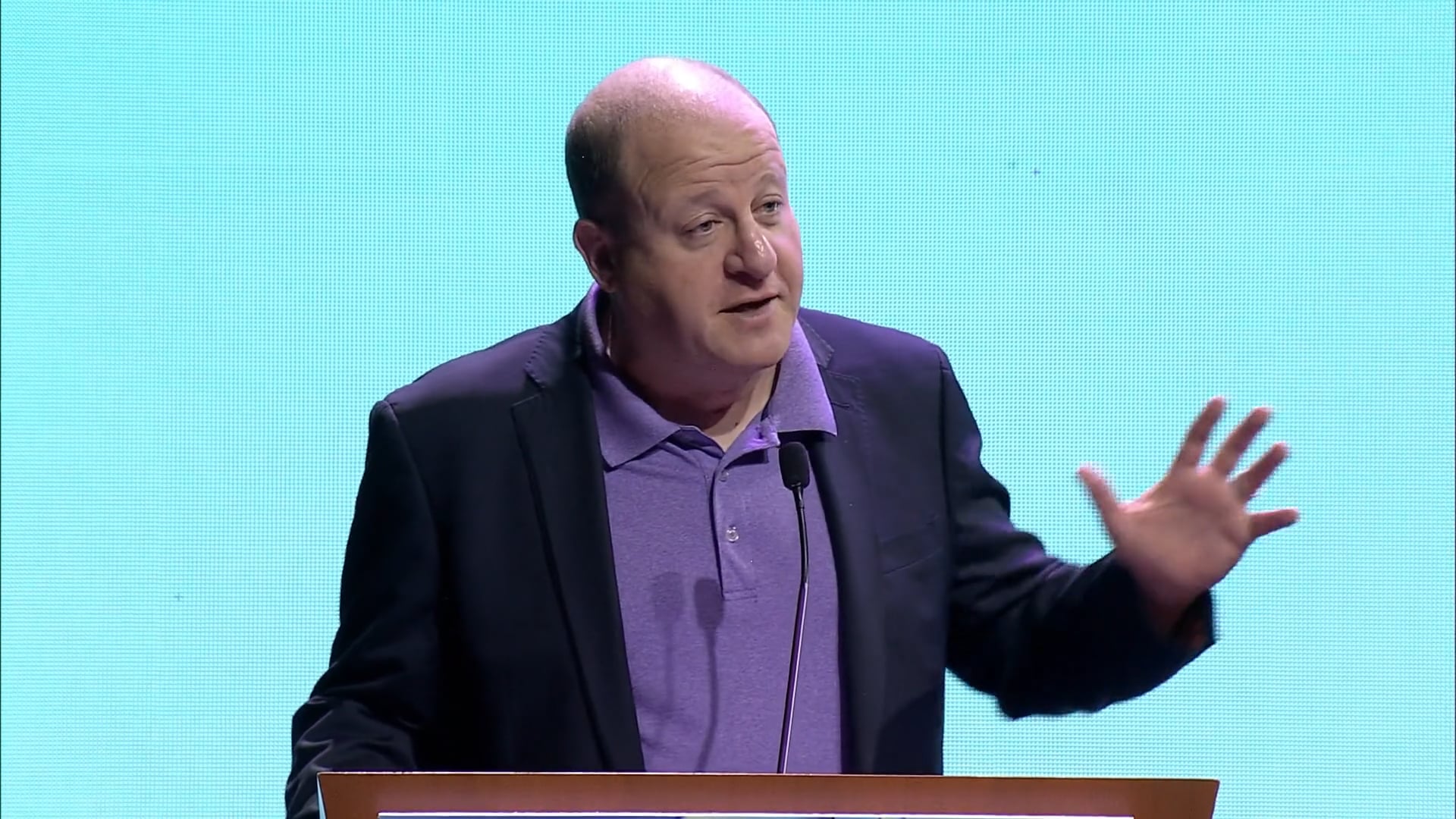
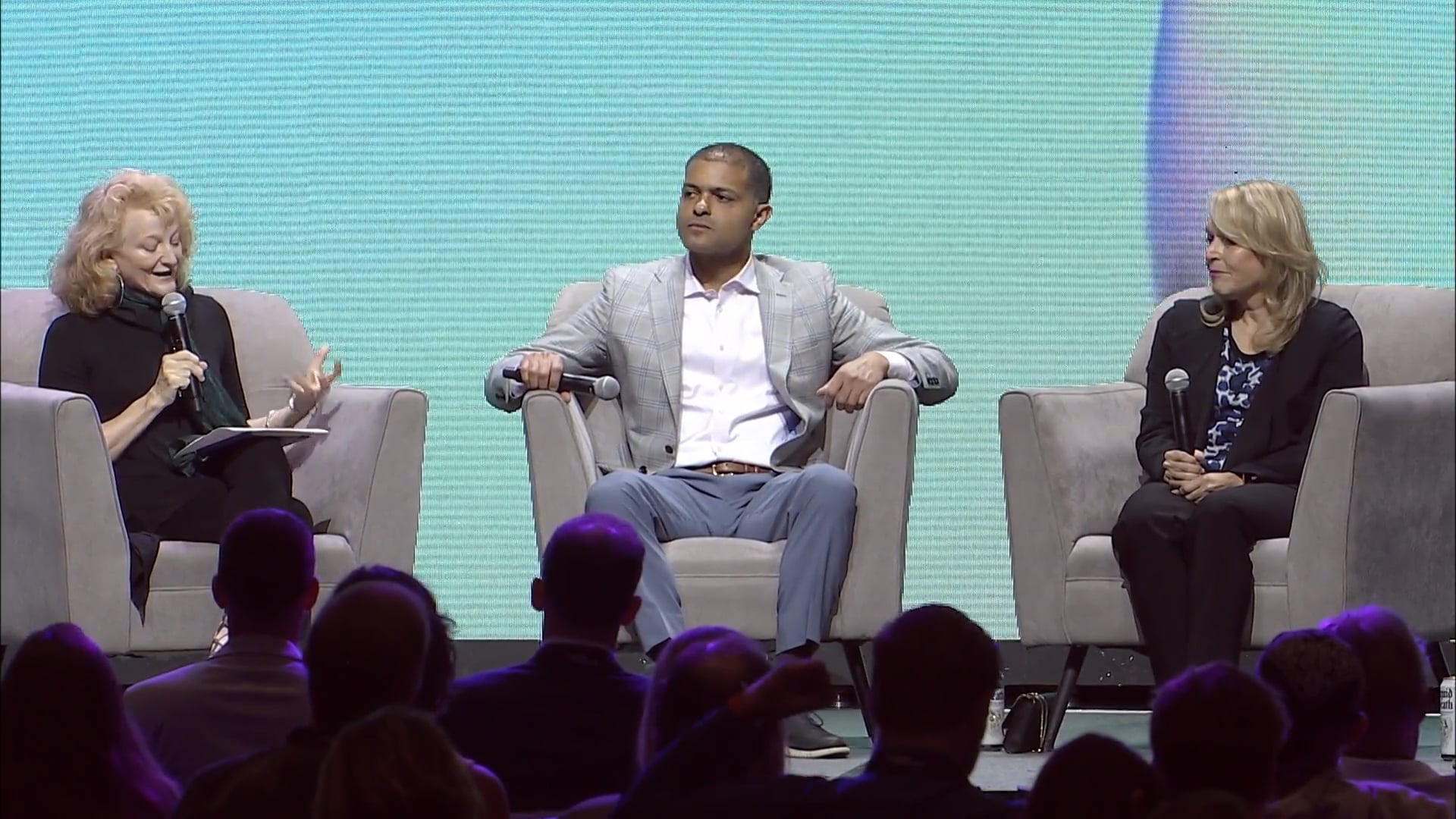
As interest in psychedelic therapies grows, the conversation needs to shift from promise to practice. This panel brings together voices with unique perspectives to engage with some of the most important questions of the moment.
Shereef Elnahal, Krista Tippett, Amelia Bergman, Rachel Yehuda
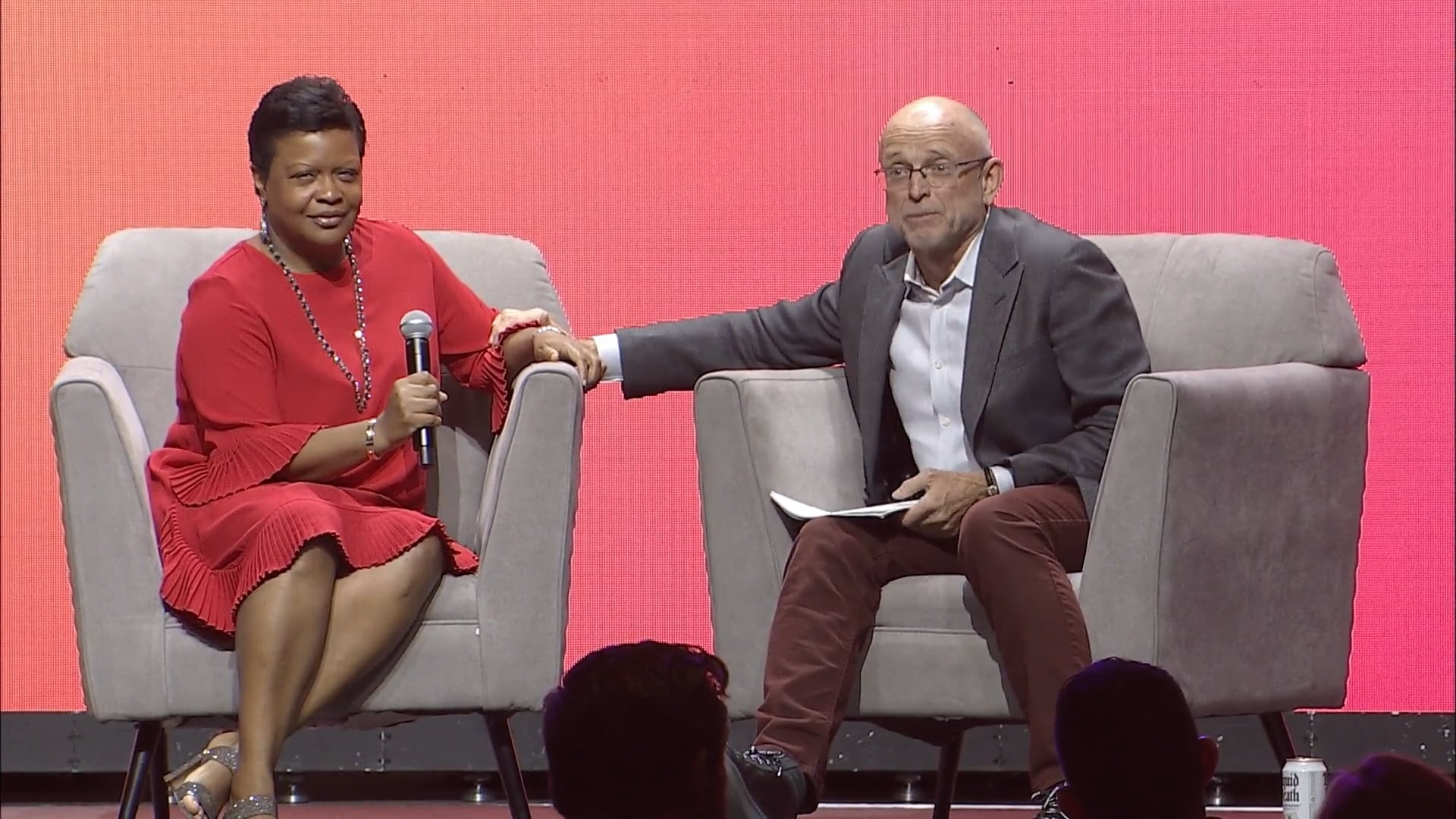
This special conversation with Dr. Marketa Wills, the new CEO and Medical Director of the American Psychiatric Association, explores the potential for the community and institutions of psychiatry to integrate the findings of the last decade of psychedelic research, and prepare for new therapeutic treatments that may become available in the next few years.
Marketa Wills, Tyler Norris, Jessica Punzo

What happens when psychedelic insight meets cosmic data, and sound becomes a tool for transformation? Dr. Scott Bolton, lead scientist on NASA’s Juno Mission, joins Grammy-nominated artists Maejor and Vic Mensa to explore how altered states, planetary frequencies, and spiritual practices shape their creative work.
Devon Phillips, Maejor Green, Vic Mensa, Scott Bolton

A lively, fun and freewheeling conversation about psychedelics in creating art and facilitating healing featuring My Morning Jacket lead singer Jim James, and comedian/psychonaut Reggie Watts hosted by writer/producer Donick Cary (The Simpsons, Have a Good Trip: Adventures in Psychedelics)
Donick Carey, Jim James, Reggie Watts
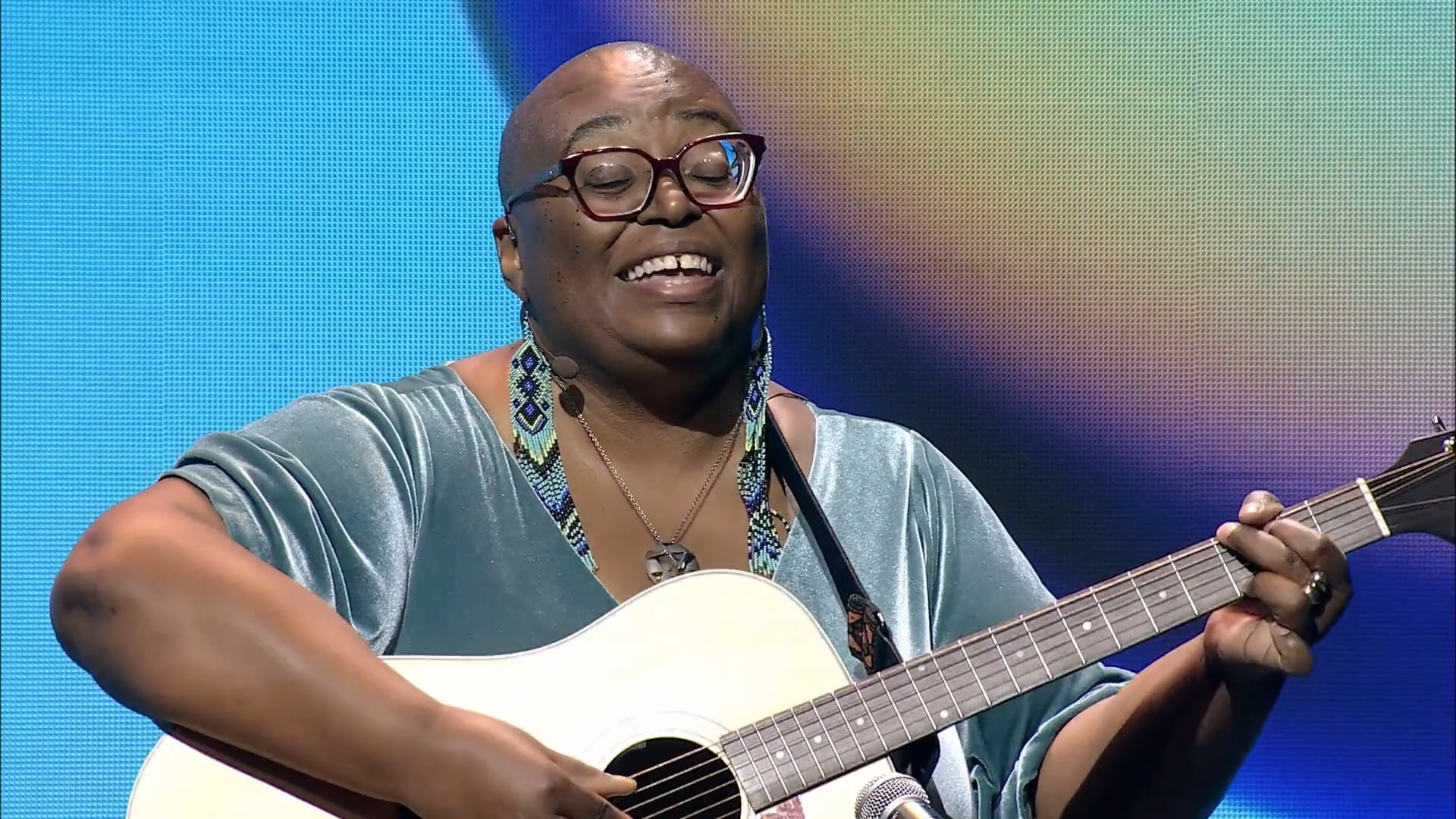
his opening performance and collective ceremony invites attendees to center and ground themselves in the meaning and purpose of Juneteenth as they move throughout the rest of the conference. Together, we honor the millions harmed by the transatlantic slave trade, and celebrate the still-to-be-realized promise of freedom that Juneteenth represents.
Hanifa Nayo Washington, Pamela Roundtree
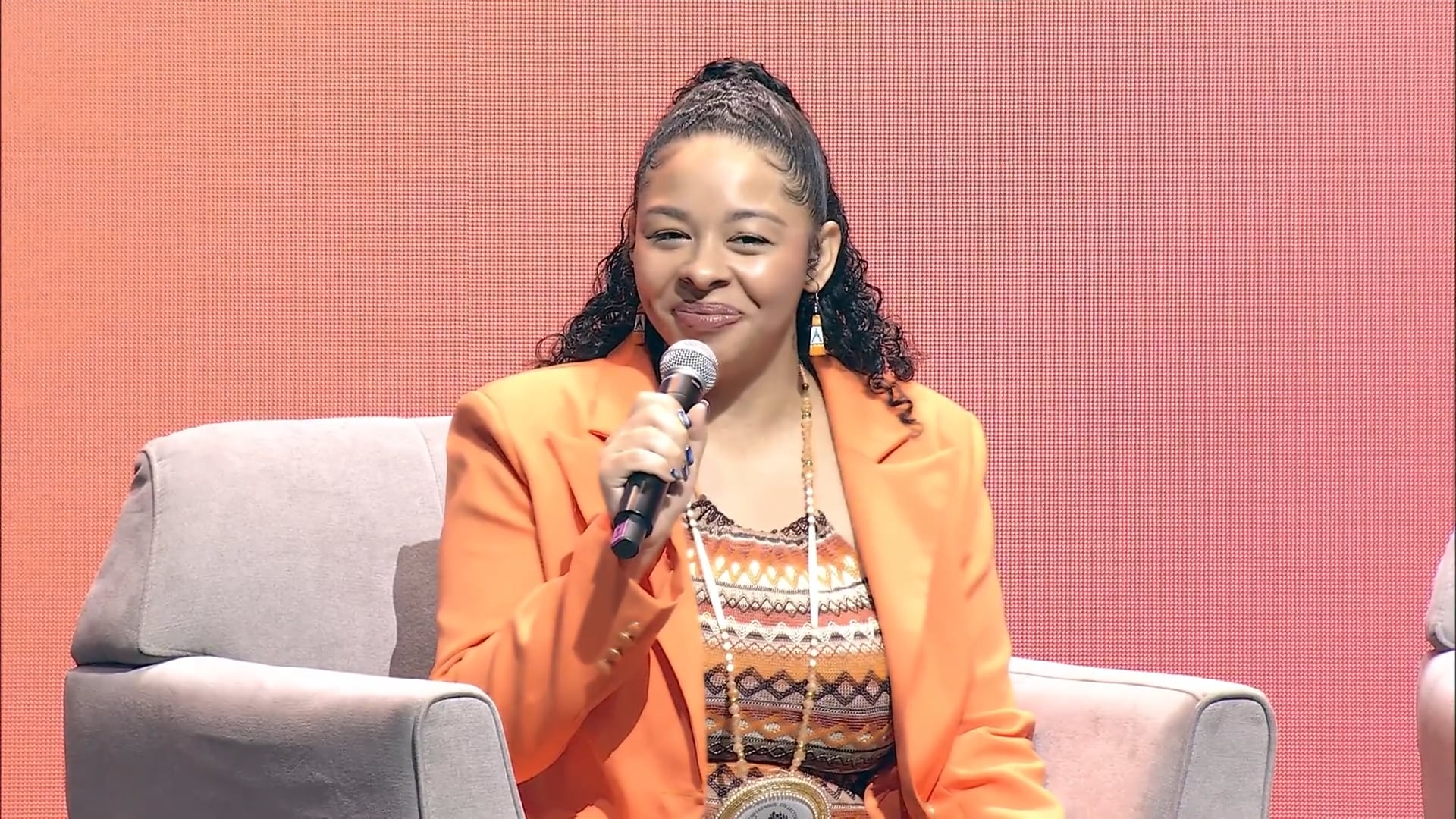
In celebration of Juneteenth, this special opening panel features racial justice activists, criminal and juvenile legal system reform advocates, and visionary leaders in the fight for Black liberation and healing. Panelists will explore socioeconomic and race-based trauma in the US and the role of innovation, Black leadership, and psychedelics in healing that trauma.
Sutton King, Veronza Bowers, Kempis Songster, Reggie Harris, Harry Grammer
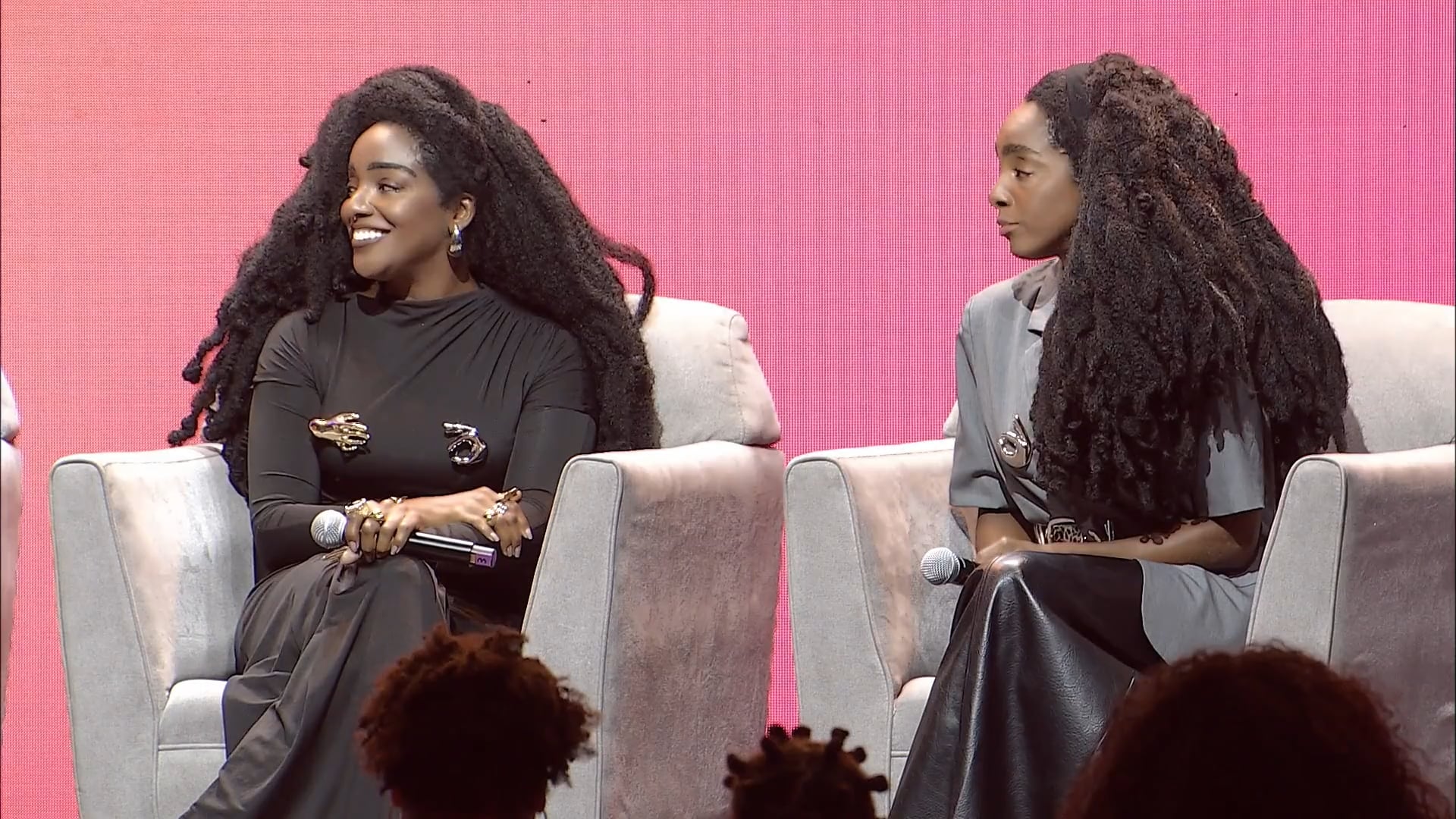
As identical twin sisters that experienced sexual, physical, and emotional childhood abuse everyday for over 10 years—and developed identical coping mechanisms that evolved into food addictions—the Quann sisters know firsthand just how seminal psychedelics can be to trauma and healing journeys.
Cipriana Quann, TK Quann, Vicky Dulai
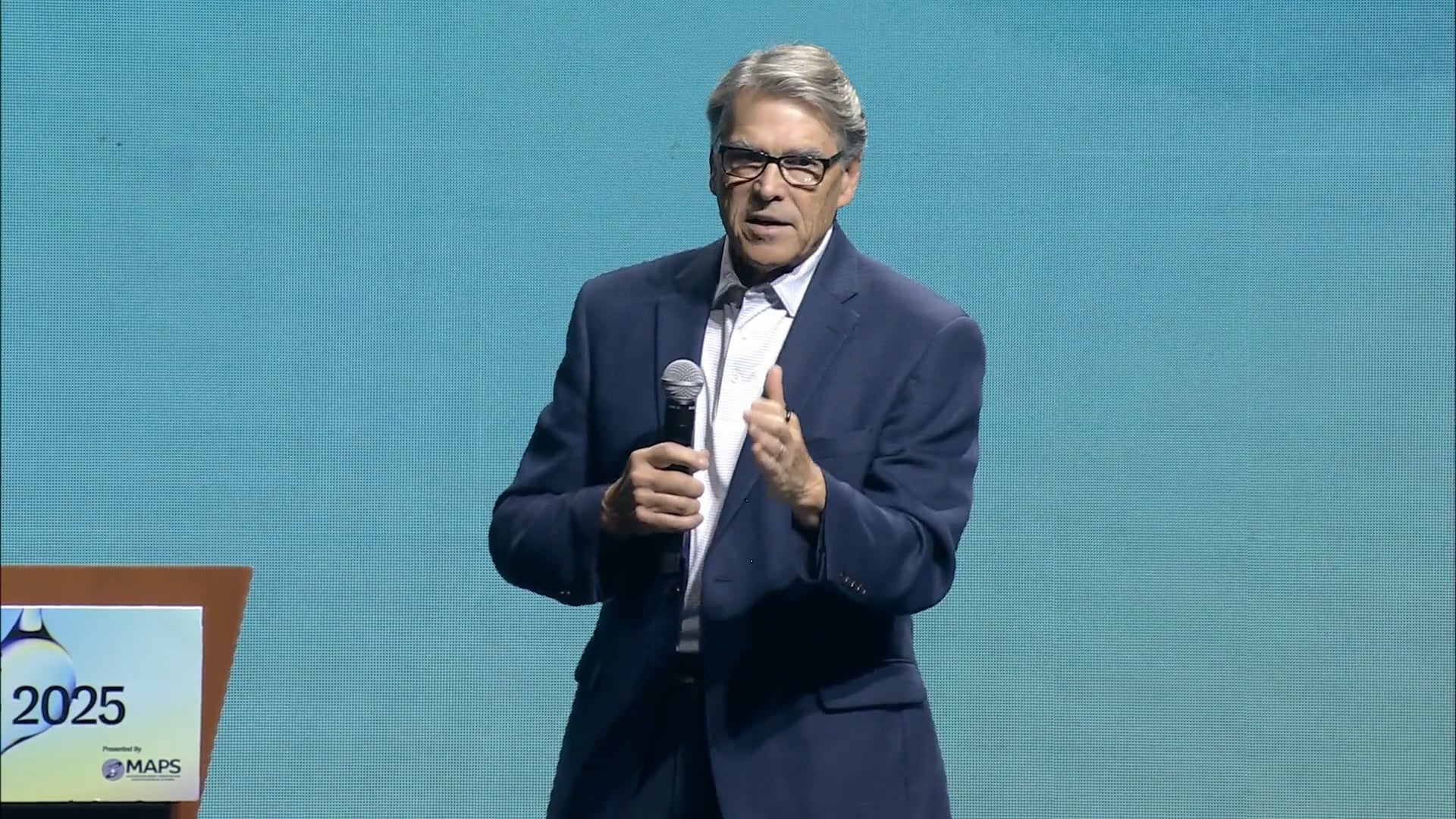
Rick Perry, W. Bryan Hubbard
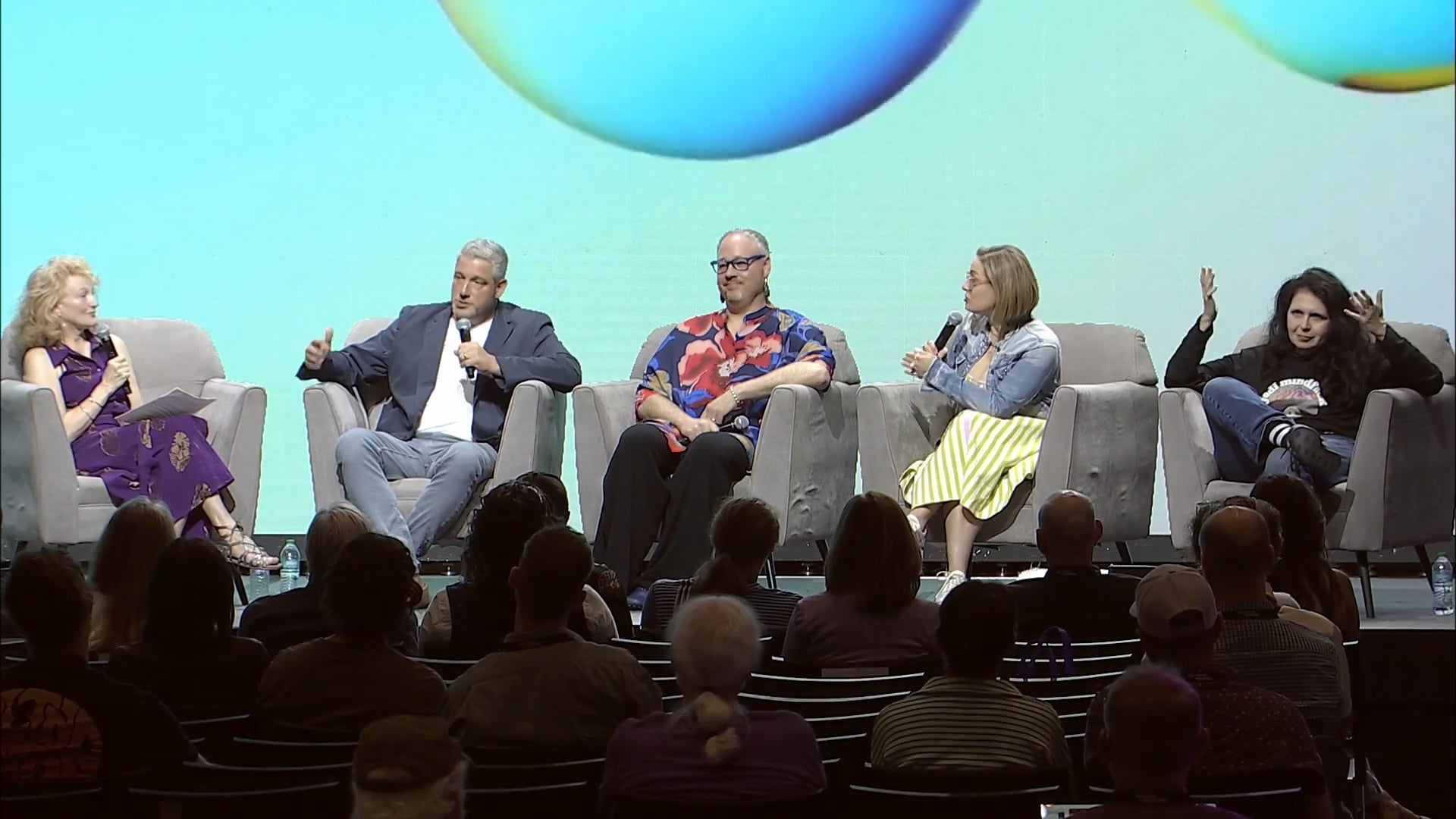
It was not so long ago that psychedelic researchers struggled for public support and alliances. Now, numerous high-profile political leaders are eager to develop psychedelic science programs in their states. In this unique session, we will hear from two sets of scientists and political allies who advocate for expanding psychedelic research in their states.
Sue Sisley, MD, Kyrsten Sinema, Tim Ryan, Krista Tippett, Alan Davis
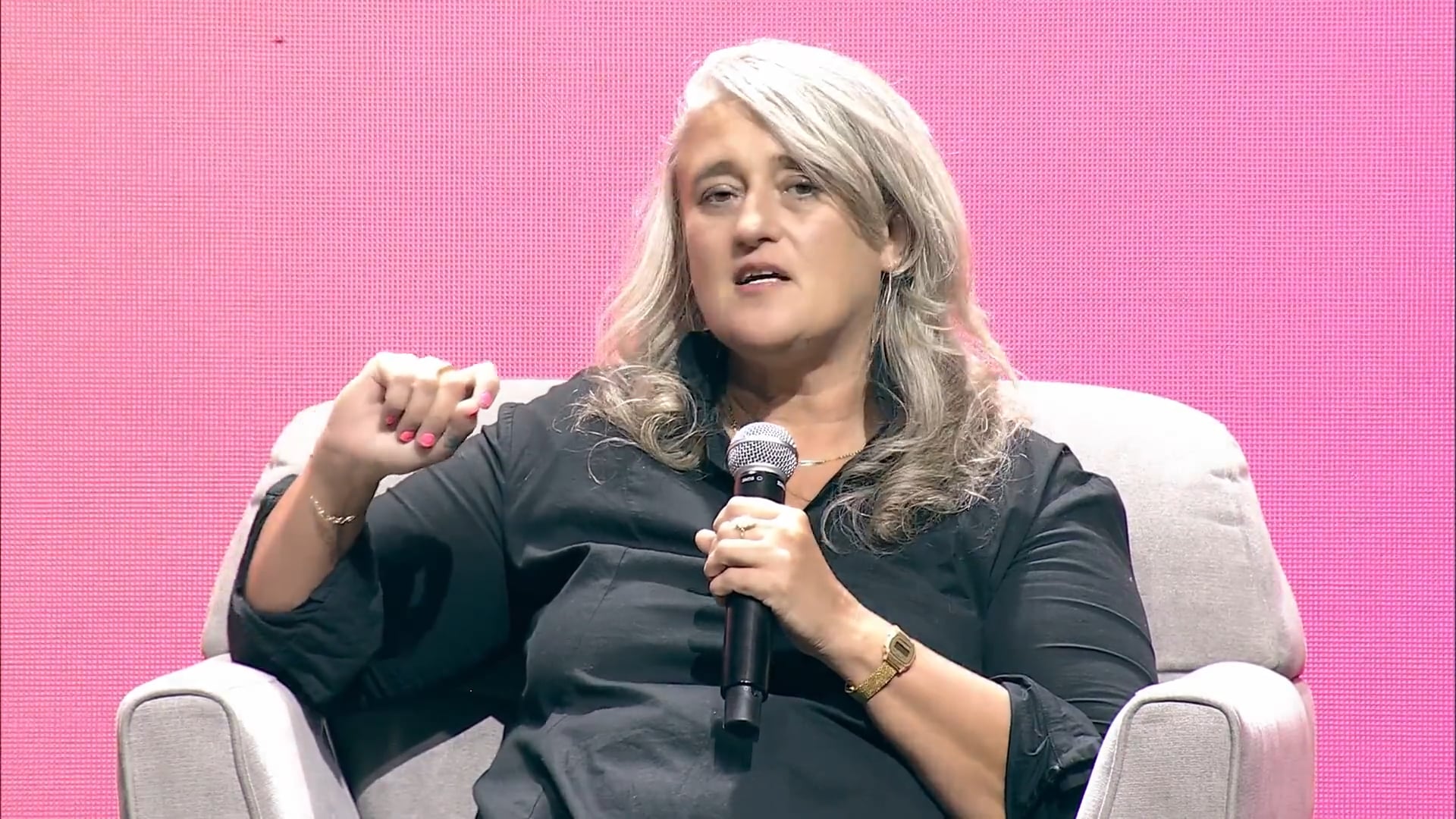
What if psychedelics could help the brain relearn how to learn? Dr. Gül Dölen shares her groundbreaking research on how psychedelic compounds can reopen “critical periods” of brain plasticity.

This special conversation between Oprah Daily Editorial Director Pilar Guzman and Krista Tippett explores the ways in which psychedelics can help women reckon with the cultural constraints around womanhood at every stage of life– but especially its second half.
Pilar Guzmán, Krista Tippett
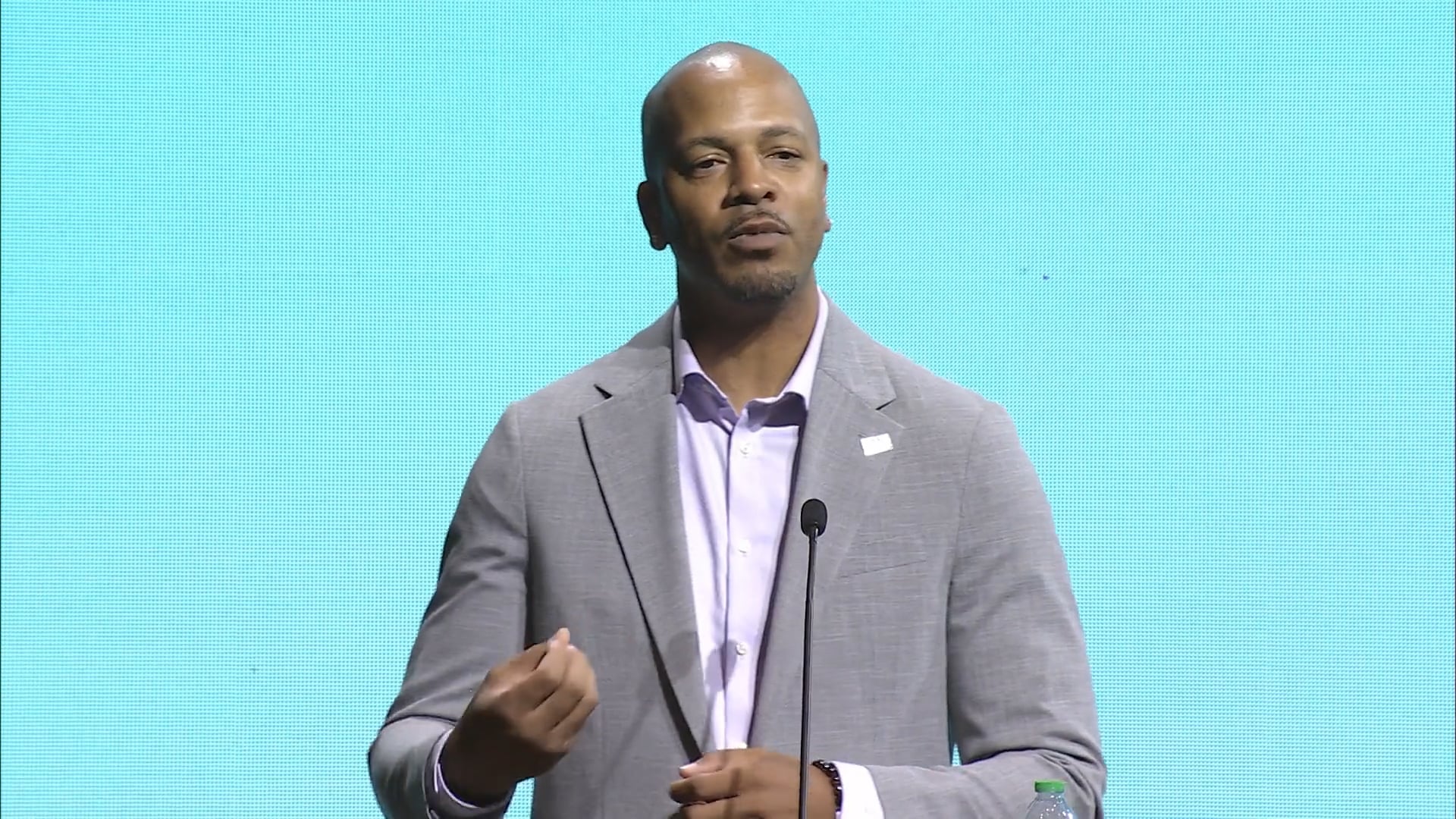
In this keynote, Dr. Anthony Estreet makes the case social workers are essential to the future of equitable psychedelic care.
Tyler Norris, Anthony Estreet

In this Keynote we will take a close look at some of the remarkable results of the large Lykos MDMA Study for PTSD which showed that MDMA opens traumatized people up to experience themselves with a deep sense of compassion and kindness.
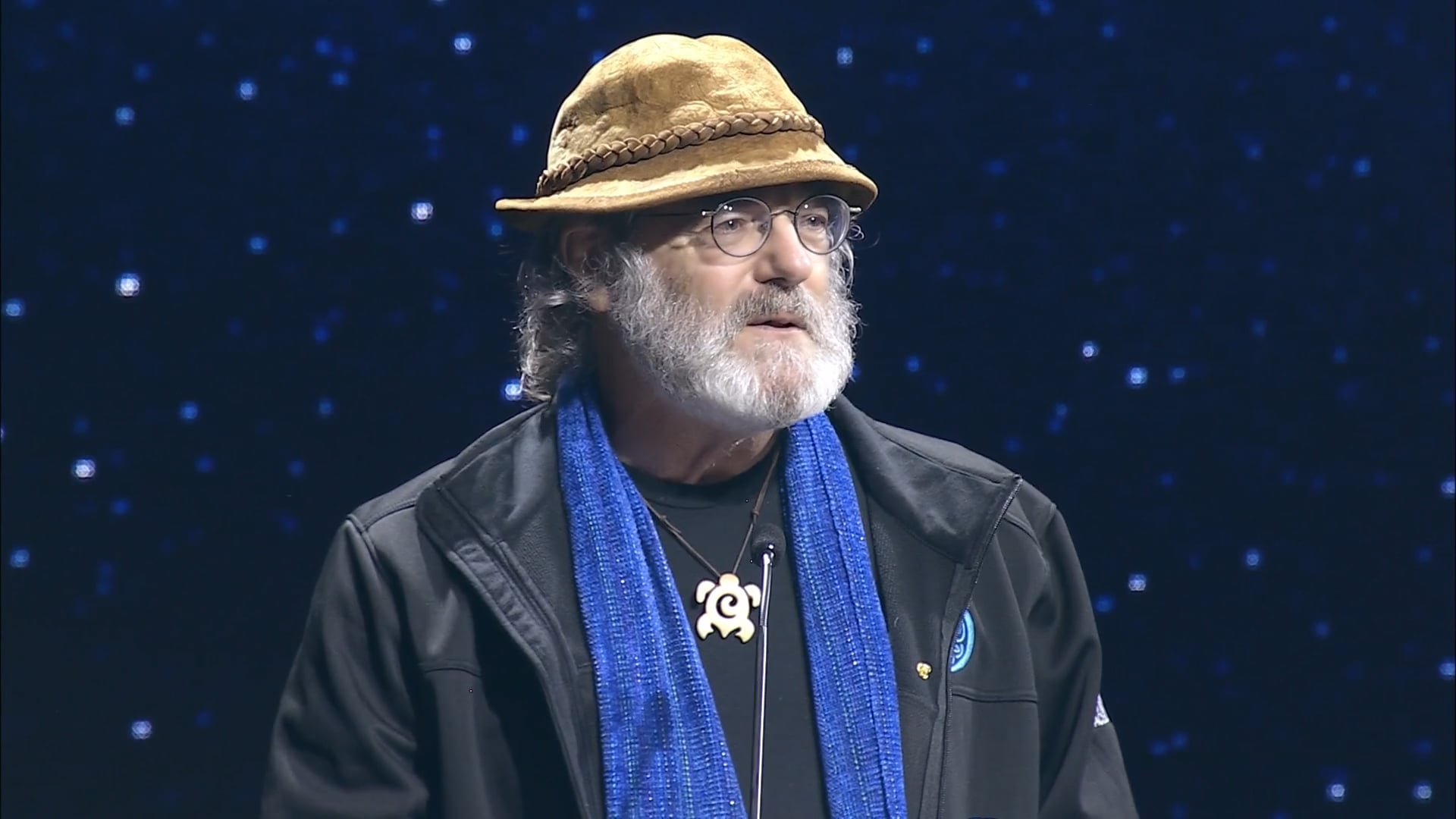
Paul's talk is a deep dive into psilocybin mushrooms, their past, present and future uses.
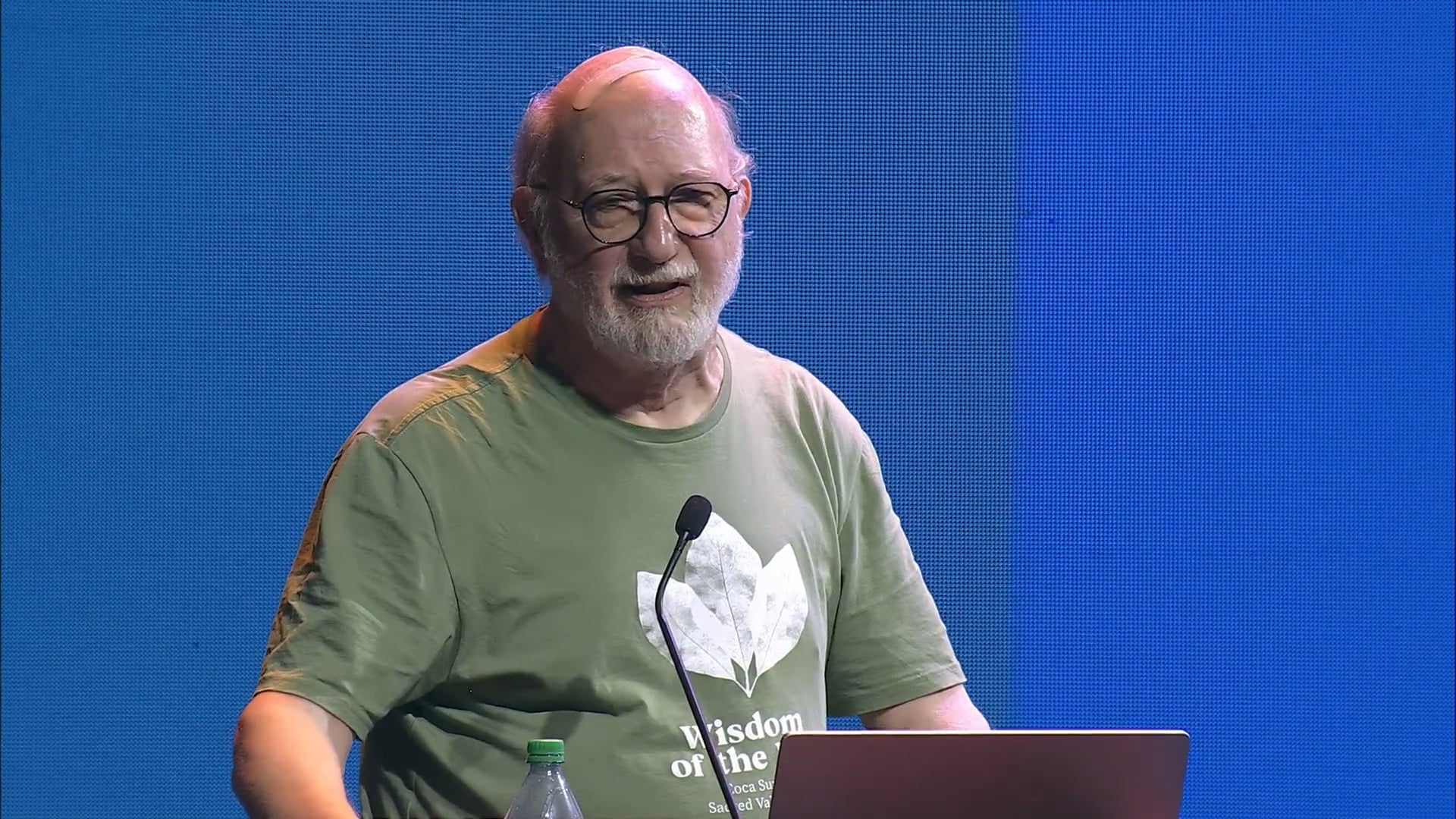
Within the last decade, we have witnessed a remarkable shift in cultural perceptions and narratives with respect to psychedelics. Once vilified and prohibited, psychedelics are now being hailed as catalysts for a new revolution in mental health care – even as they remain largely prohibited on the federal level.
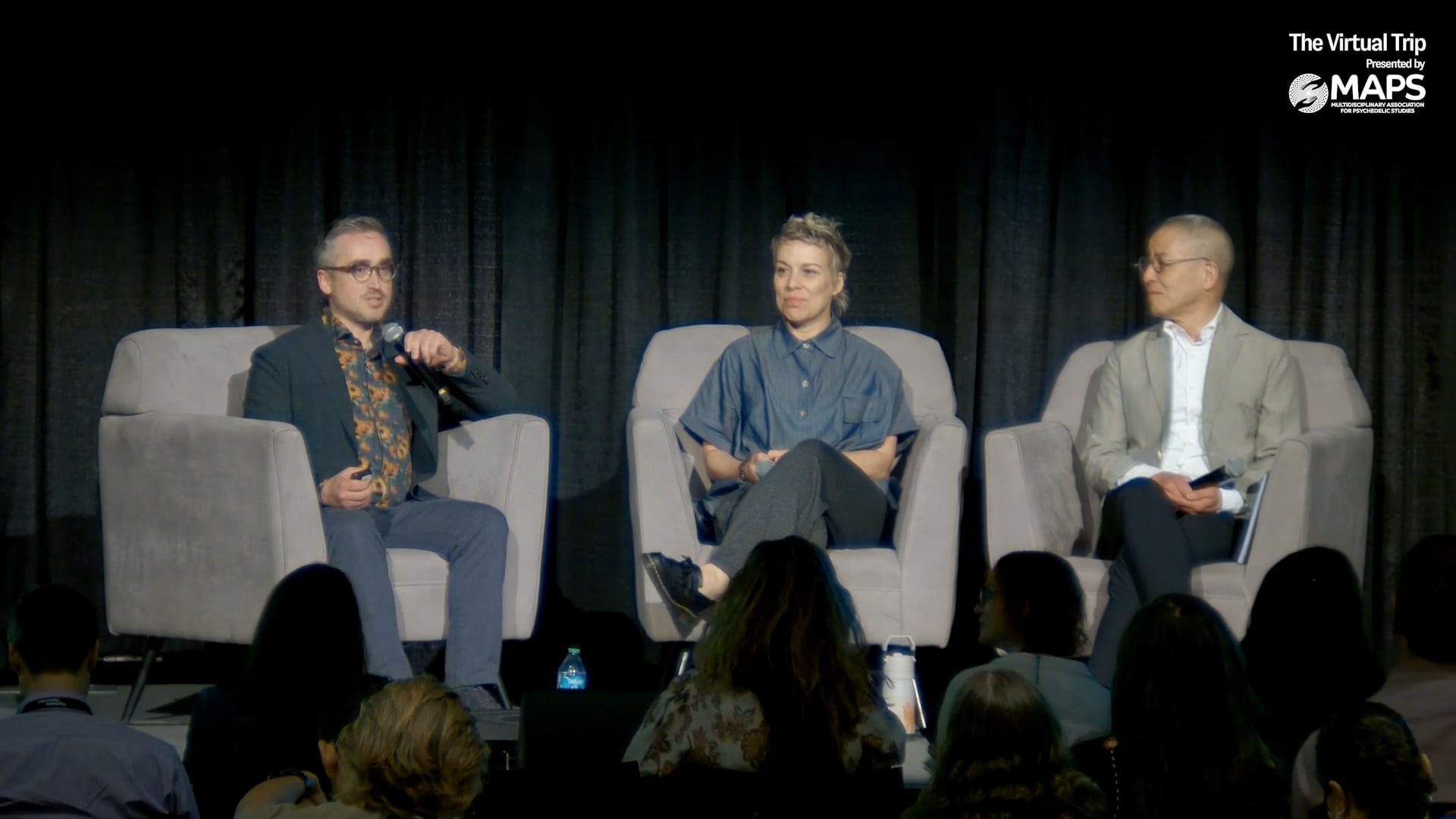
As interest in group psychedelic-assisted therapy grows, researchers are exploring diverse protocols, populations, and psychedelic medicines to enhance therapeutic outcomes and accessibility. This panel brings together experts conducting groundbreaking studies on group-based psychedelic therapy, offering insights into how different approaches can foster healing, connection, and transformation.
Chris Stauffer, Jae Sevelius, Anthony Back
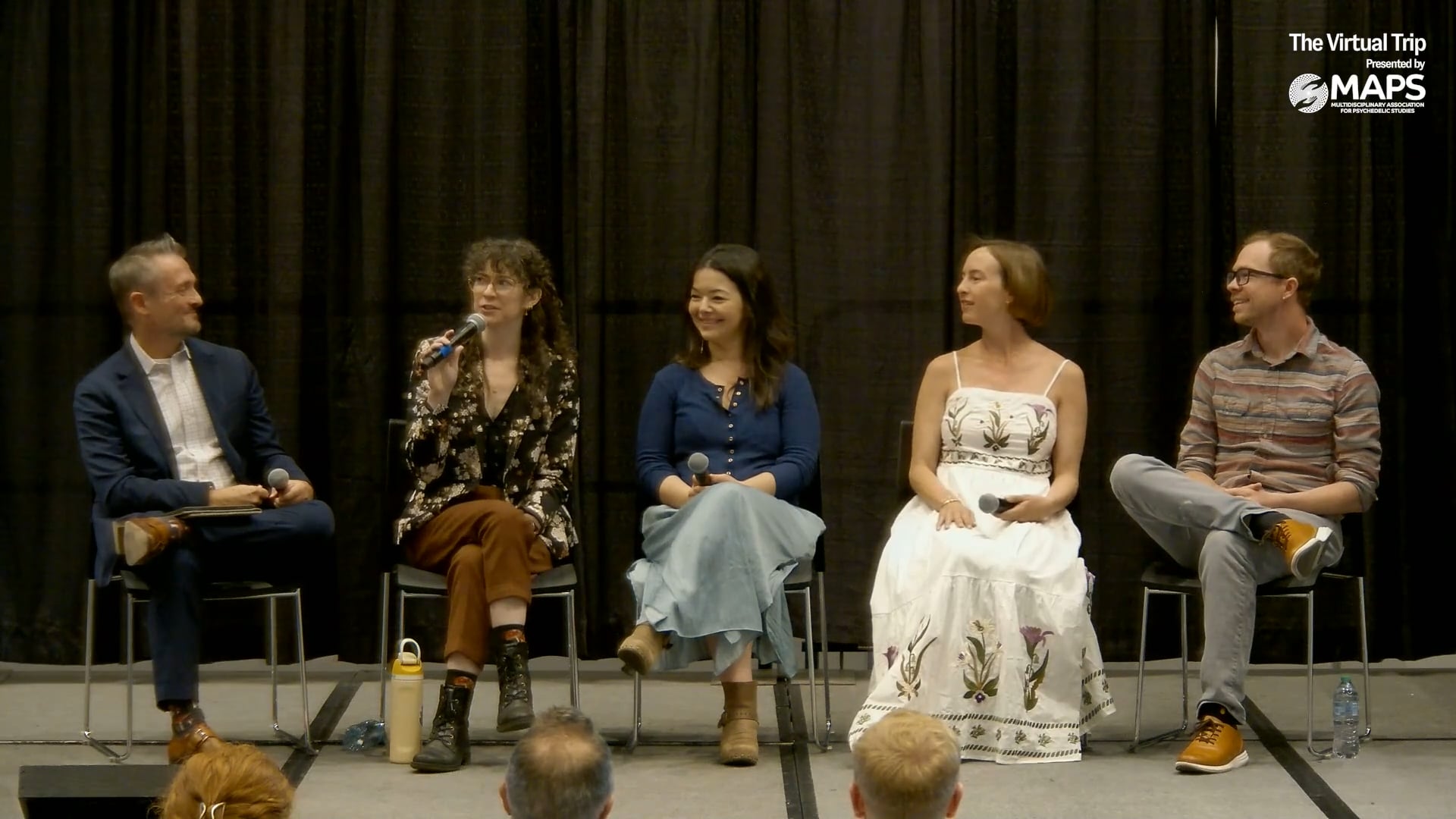
Oregon and Colorado have pioneered and iterated on the first state-regulated psychedelics markets. But there are many additional ways beyond the Oregon and Colorado models to establish a market.
Leonard Gilroy, Barine Majewska, Courtney Barnes, Jared Moffat, Allison Hoots
As global momentum builds around psychedelic reforms, the United Nations’ Common Position on Drug Policy offers a critical framework for shaping a humane, rights-based approach to this issue on the international stage. This panel will explore how the UN’s focus on public health, human rights, and sustainable development can support decriminalization efforts, while aligning with the goals of the 2030 Agenda for Sustainable Development.
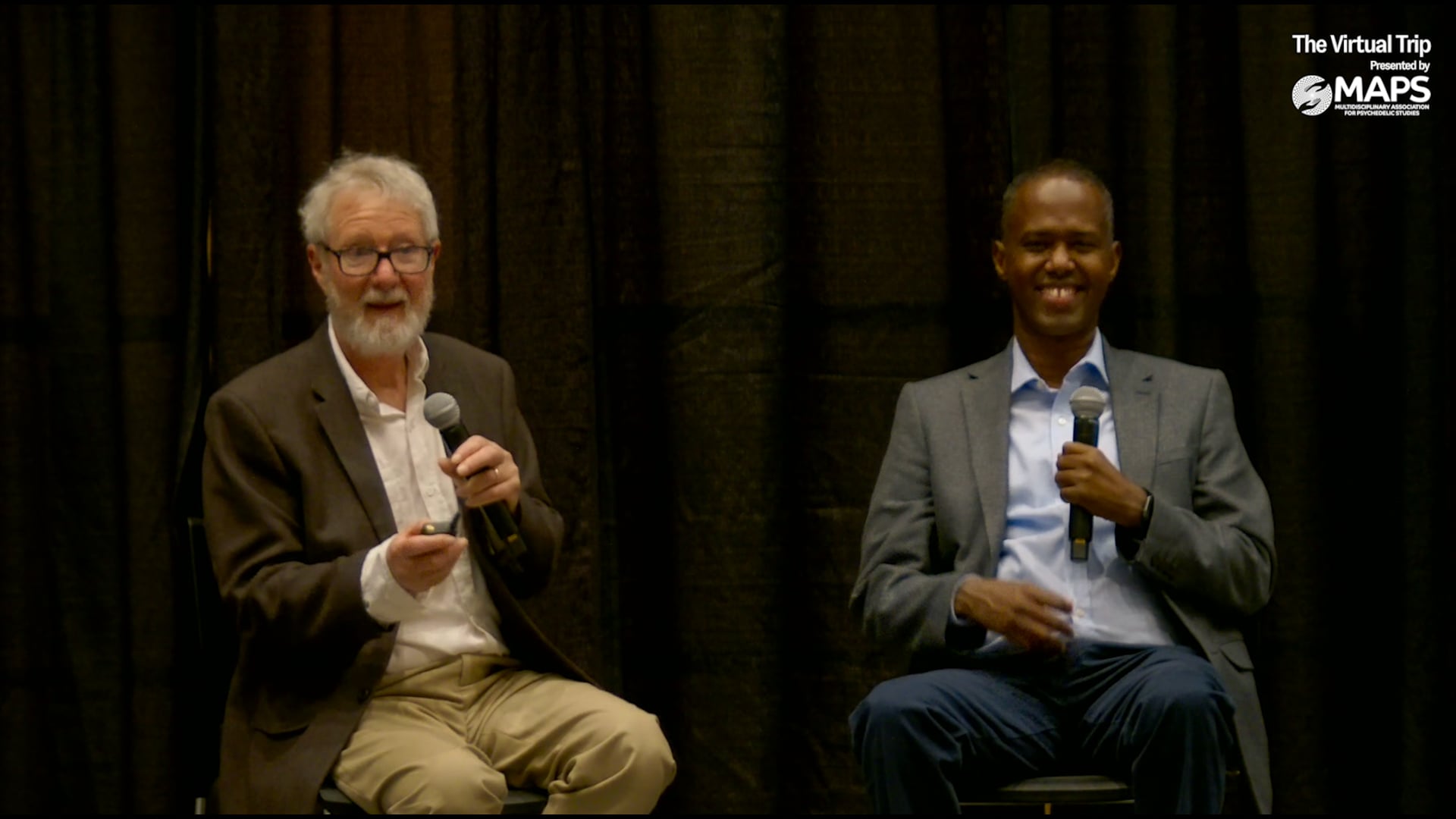
Since 2018, ACFH has trained Somali therapists in PTSD treatments, including MDMA-assisted therapy. Supported by MAPS, five therapists participated in MDMA sessions and reported it could help treat trauma in Somaliland. Strong therapist bonds and thorough follow-up are essential. A protocol for community use is in development.
Dale Armstrong, Salah Ahmed
Alexander Belser, Amod Lele, Andrew Gallimore, Hemal Trividi
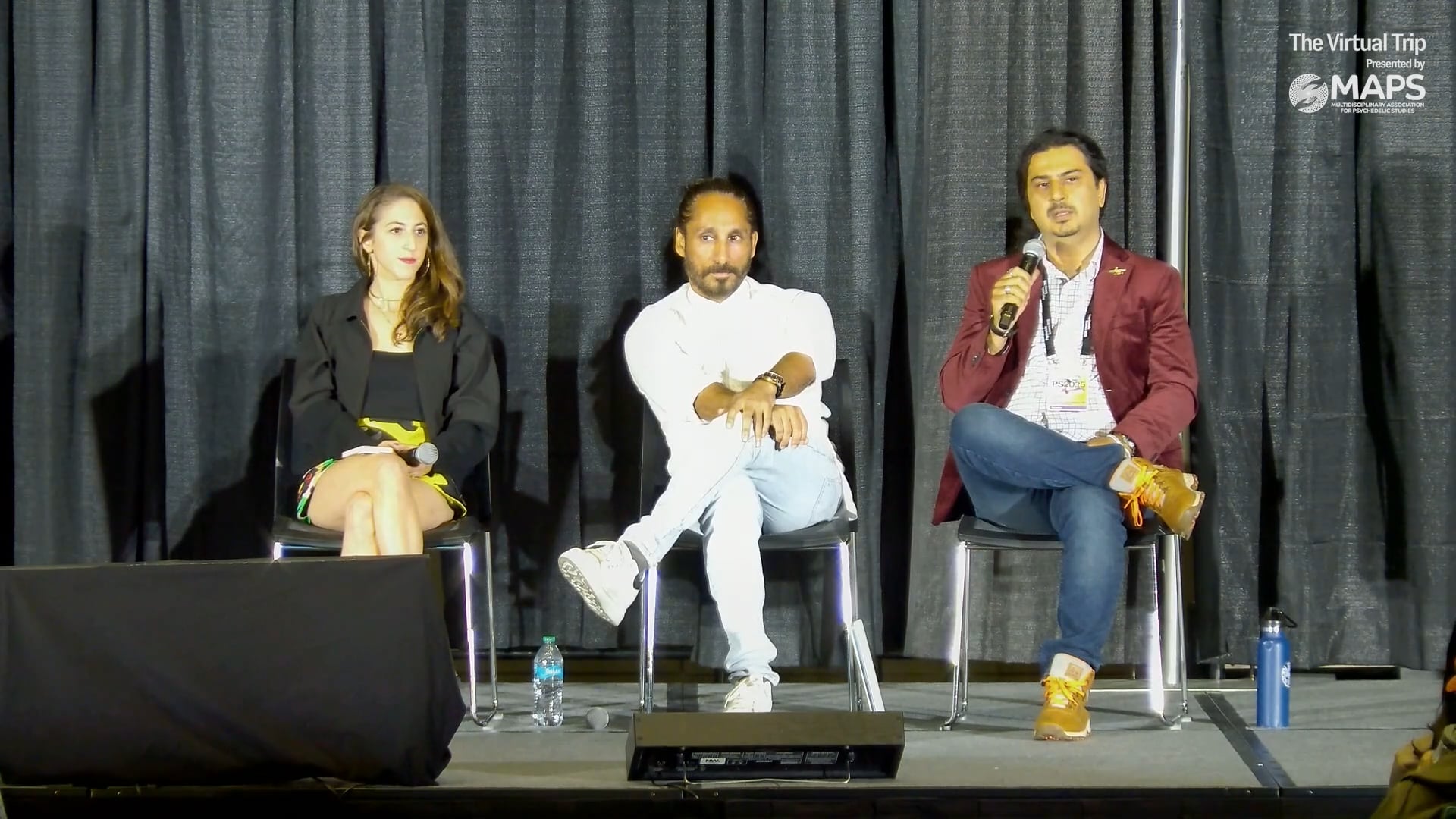
Natalie Ginsberg, MSW, Chezard Ameer, Parham Farsi
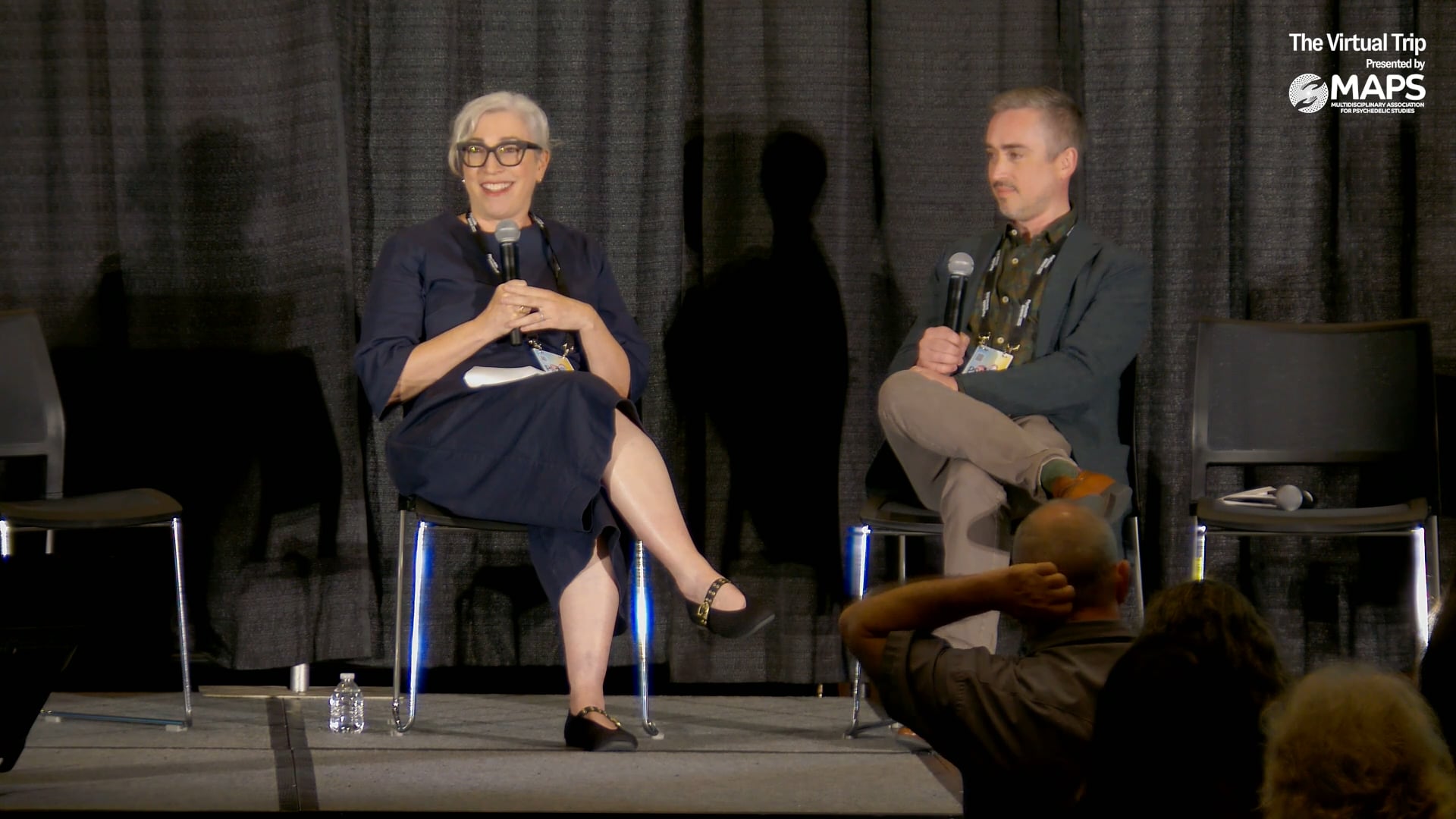
VA researchers Dr. Chris Stauffer and Dr. Amy Lehrner share insights on their pioneering studies of psychedelic-assisted therapy for PTSD, depression, and substance use in veterans, highlighting clinical models, set and setting, and peer support involvement.
Amy Lehrner, Christopher “Chris” Stauffer
Moderator Juliana Mercer leads a panel with Senator Kyrsten Sinema and policymakers discussing evolving psychedelic therapy policies for veterans, legislative efforts, challenges, and research influencing federal decisions in Washington, DC.
Juliana Mercer, Congressman Jack Bergman, Sen Kyrsten Sinema (I-AZ), Congressman Morgan Luttrell, Dr. Shereef Elnahal, VAH
Moderator Dr. Grace Blest-Hopley leads a panel with experts discussing the latest research on psychedelic treatments for veteran trauma and PTSD, covering clinical findings, ethical issues, and future care integration.
Grace Blest-Hopley, Brandon Weiss, Dylan Orion, Lynnette A. Averill
David Nassim, Christine Diindiisi McCleave, Lorey Bratten, Santiago Guerra
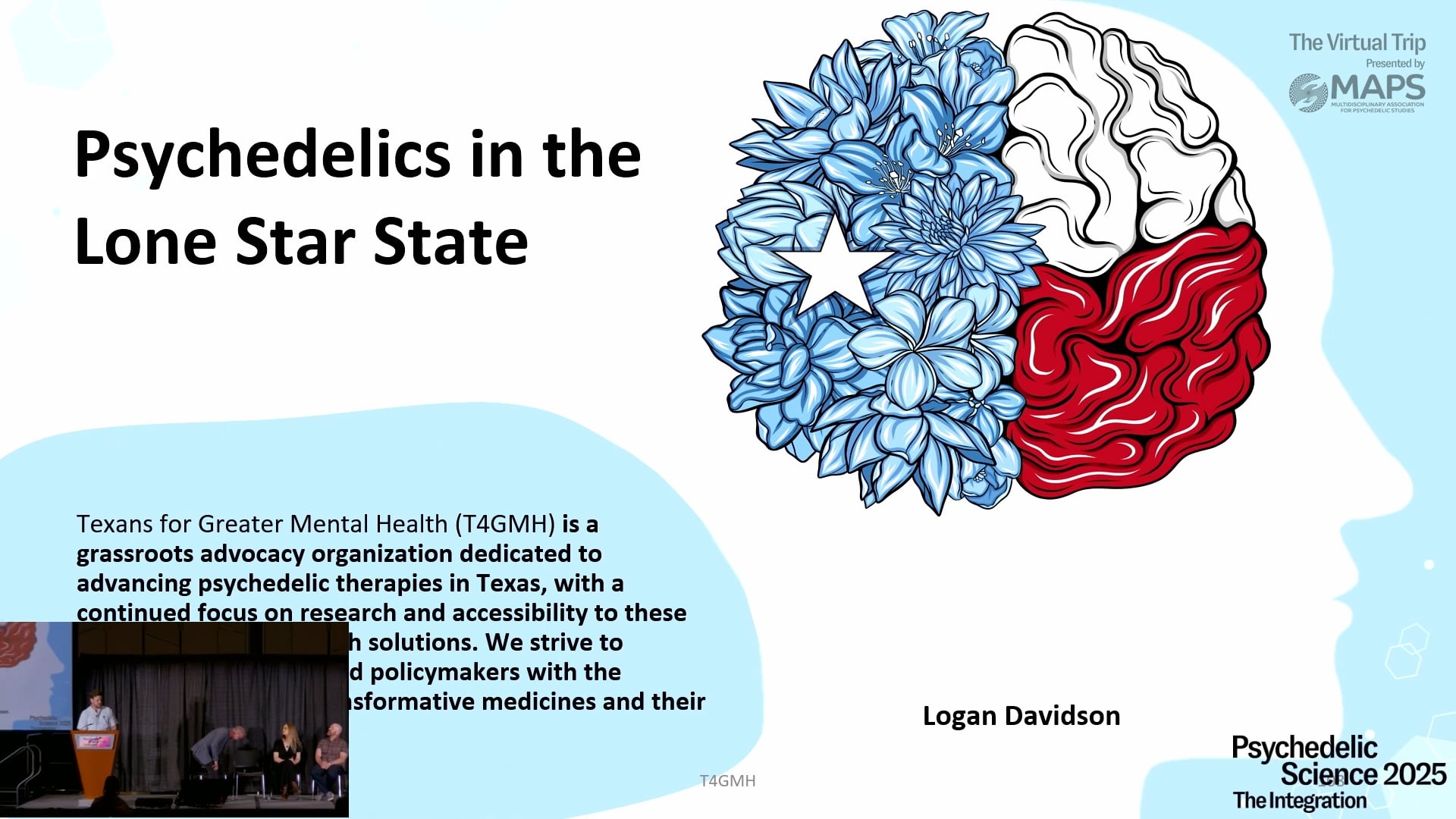
Jon Dalton, Logan Davidson, Jessica Nielson, Gary French
Gabe Charalambides, Kayli Howard, Ryan Reese
John Bates, Chris Russell, Diego Ugalde, Itzel Barakat, Noah Galloway
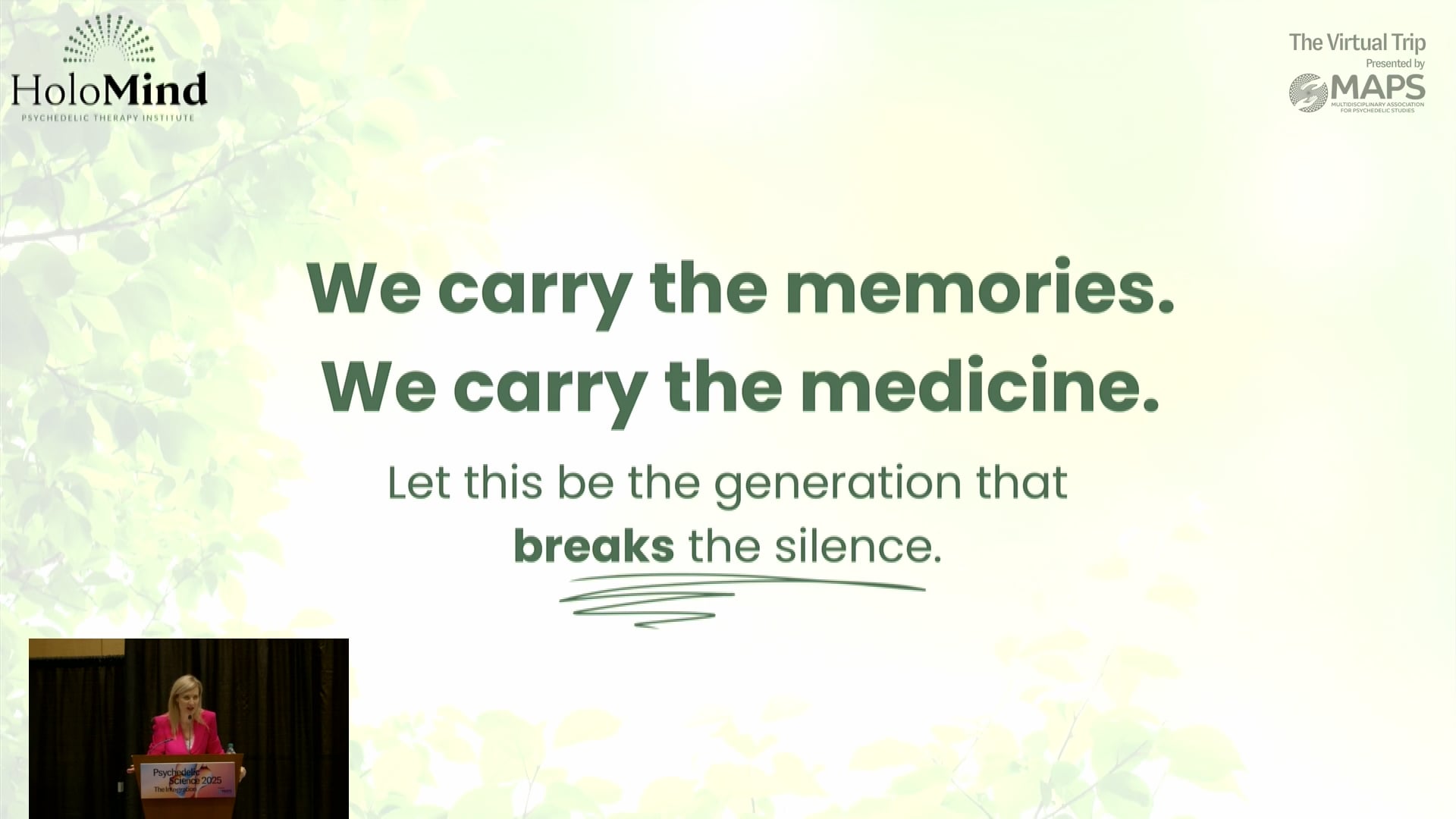
Magdalena Kaspryszyn explores how unspoken trauma from war and displacement echoes across generations, sharing her family story and the mission of HoloMind Institute to advance trauma-informed psychedelic therapy and education in Central and Eastern Europe.
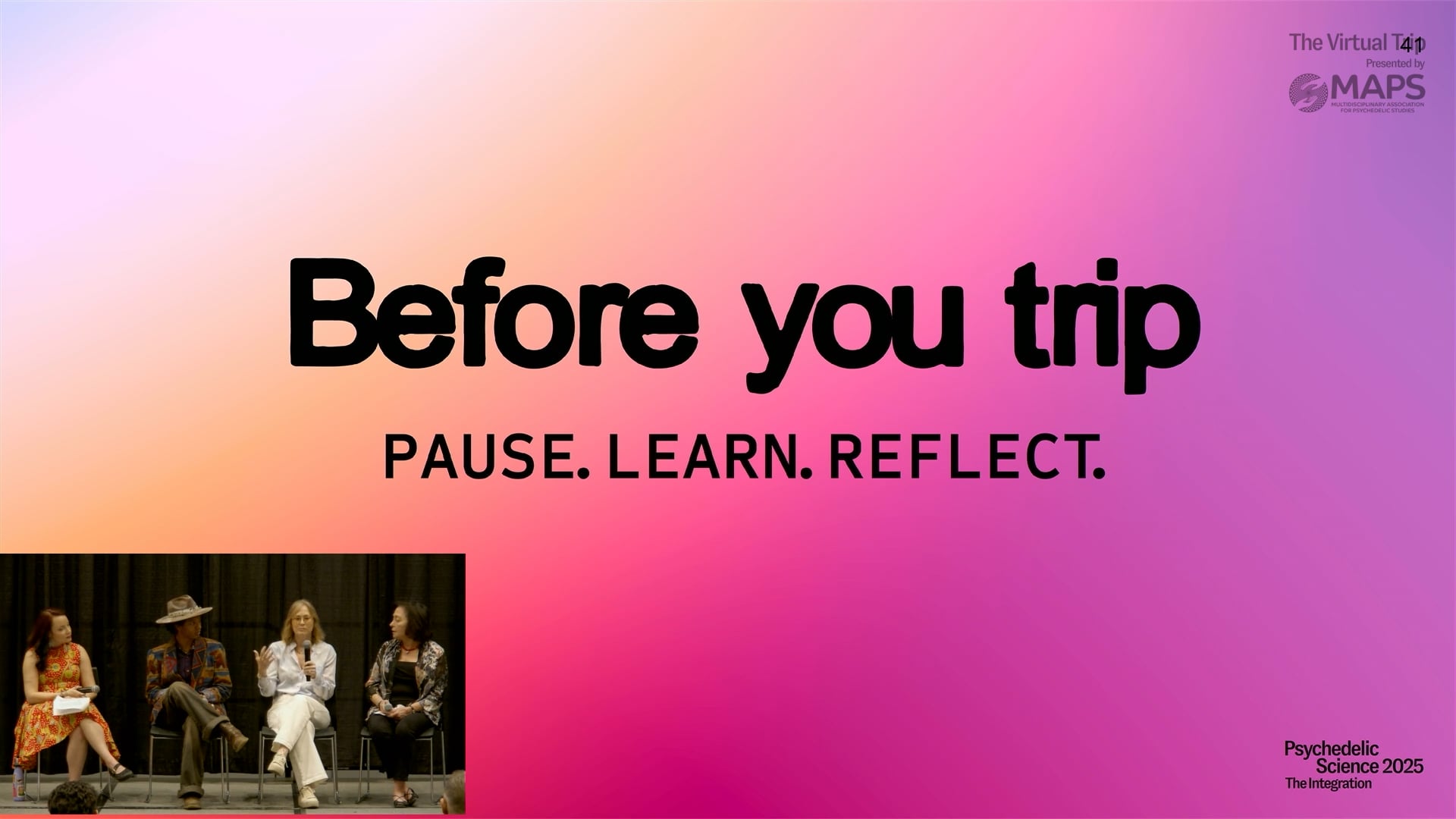
“Before You Trip” is a Gen Z-led public health campaign addressing gaps left by ineffective drug education like D.A.R.E. It promotes informed, safe psychedelic use through social platforms, aiming to reduce harm and influence policy reform.
Vilmarie Fraguada Narloch, Kristin Nash, Marsha Rosenbaum, Ronan Wood
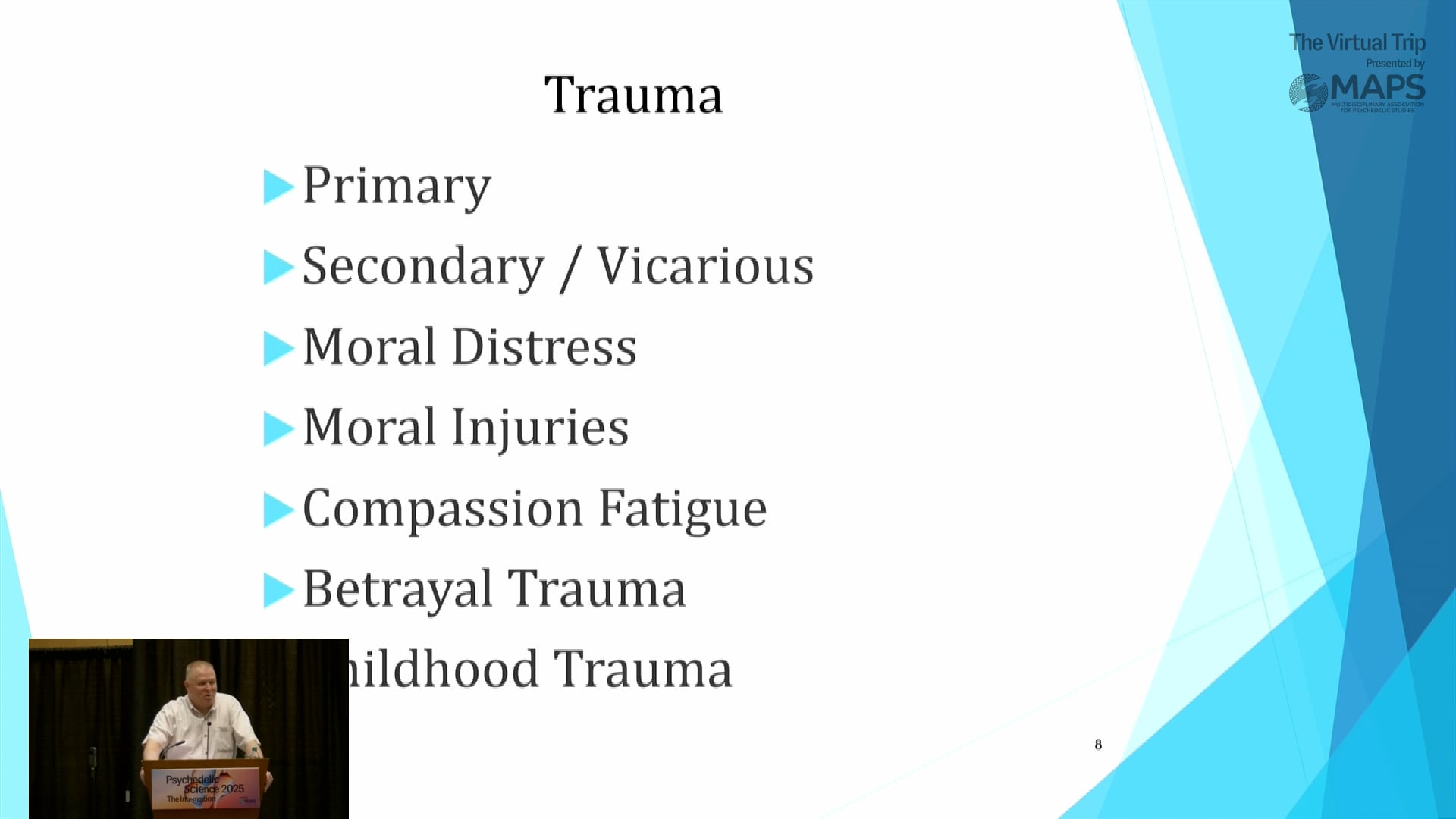
This talk explores various trauma types—Primary, Secondary, Betrayal, Moral Injuries, and Compassion Fatigue—and how different psychedelics like MDMA, 5-MEO DMT, and Ketamine offer unique healing pathways for their specific symptoms.
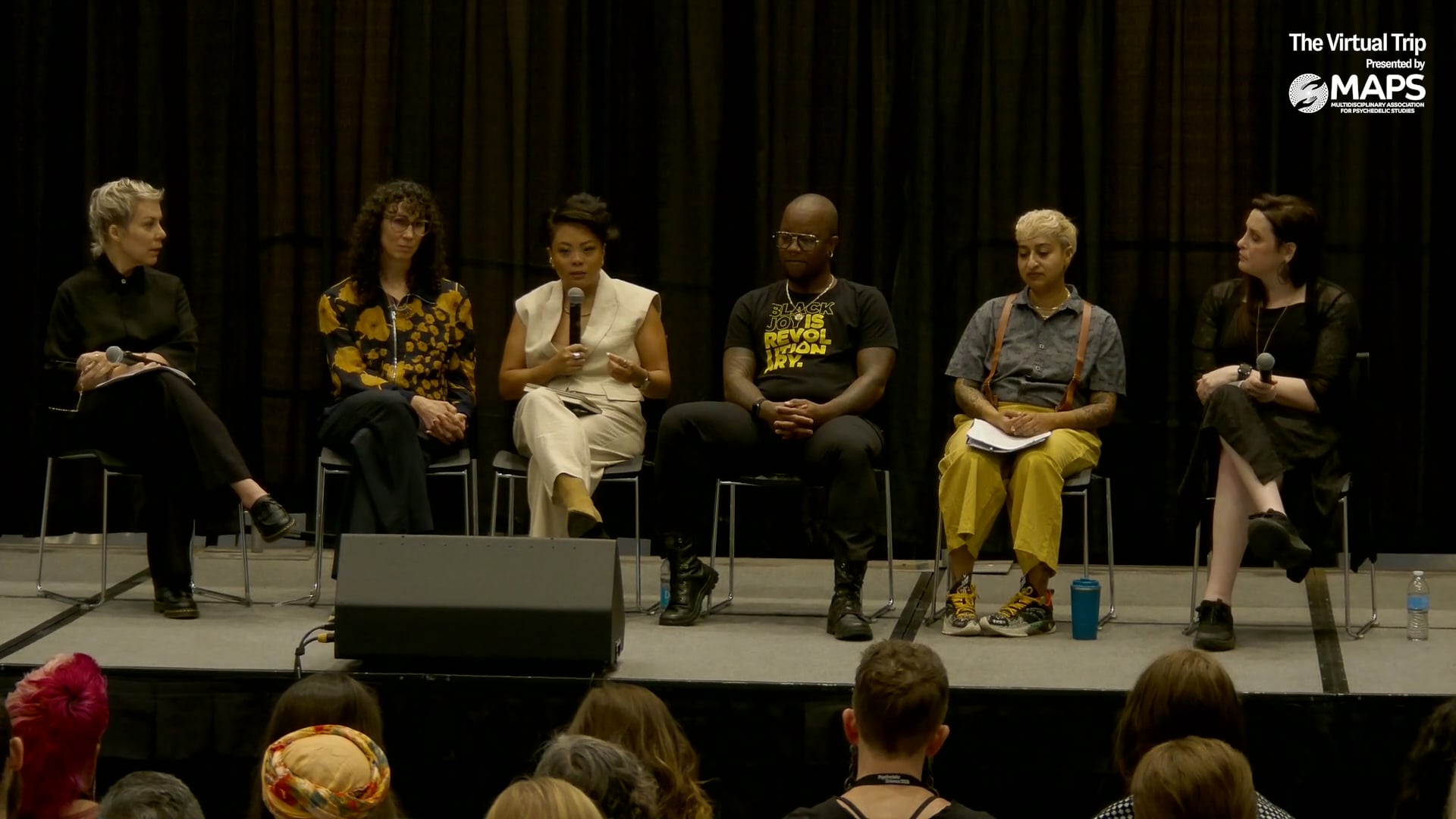
This panel explores how queer and trans communities reclaim psychedelics for healing, resistance, and liberation, highlighting anti-oppressive practices and transformative justice to build inclusive, joyful futures amid systemic challenges.
Jae Sevelius, Brooke Stott, Rachel Golden, Ronica Mukerjee, Syre Saniyah, Wilhelmina De Castro
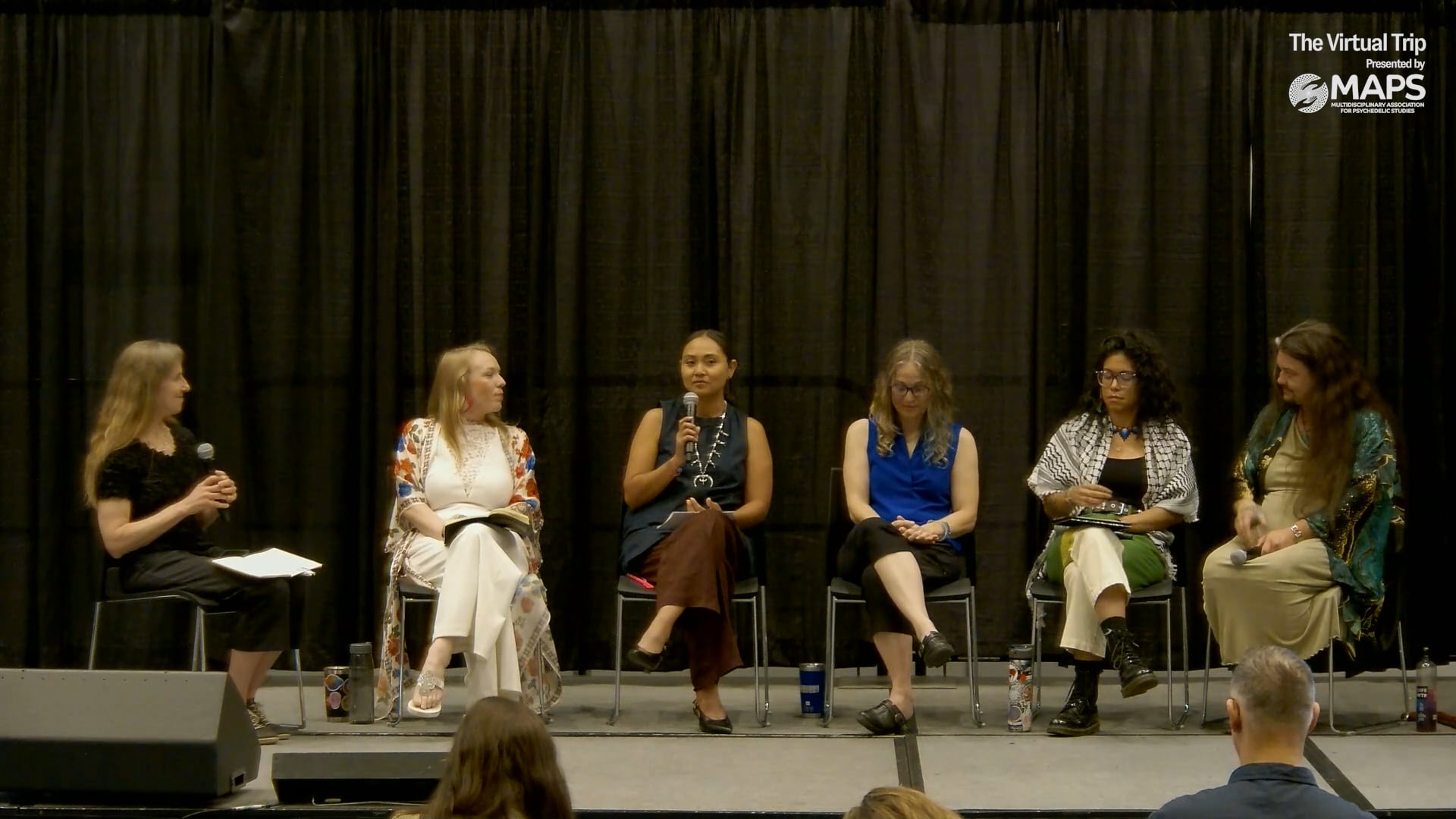
This session explores the emerging field of psychedelic public health, emphasizing community-centered, equitable approaches to expand safety and benefits at scale. It highlights gaps in collaboration with public health professionals and outlines frameworks for policy, practice, and Indigenous inclusion.
Heather Kuiper, Missi Wooldridge, Yarelix Estrada, Angela Carter ND, Marlena Robbins, Pam Kryskow
Ismail Lourido Ali, Leith States
Ismail Lourido Ali, Melissa Lavasani, Amy Rising
This panel explores how psychedelic churches can legally operate by combining strong legal protections with ethical integrity, health and safety standards, and self-regulation. It highlights challenges in administrative processes and the importance of best practices to build public trust and reduce government oversight.
Beth Topczewski, Allison Hoots, Isaac Meadow
Canada is a global leader in psychedelic-assisted therapy and safe access. This panel highlights innovations in research, regulation, care models, and community access, offering practical insights on the future of psychedelic care and lessons for global policymakers.
Philippe Lucas, Crystal Hare, Houman Farzin, Jagpaul Deol
This presentation outlines a global health approach for low- and middle-income countries that integrates psychedelics with indigenous healing and mind-body practices, emphasizing research, policy reform, and culturally tailored, ethical, community-based care.
Julia Urrutia, Veronica Magar
Two movement lawyers of color share insights from working with BIPOC and Native land-based communities, exploring legal, ethical, and cultural challenges in the Psychedelic Renaissance. They discuss decolonizing frameworks, Indigenous laws, and relational healing with land and community.
Roman Haferd, Ariel Clark
Policy experts share insights from drafting and implementing psychedelic regulations in Oregon, Colorado, and New York, comparing state approaches and identifying best practices for future campaigns nationwide.
Hannah Hetzer, Dave Kopilak, Ean Seeb, Tamar Todd
This session explores Indigenous-led psychedelic policy reform in Alaska, focusing on decriminalization and regulated medical access. It highlights how Indigenous communities shape policy to honor traditional teachings and guide equitable, culturally respectful psychedelic practices.
Kevin Matthews, David Karabelnikoff, Regina Randall, Richard Porter
Advancing Research
Discover the cutting-edge studies, molecular insights, and clinical breakthroughs that are propelling psychedelic science into a new era.
Clinical Trials
Psychedelic-Assisted Therapy
In 2025 it will be 20 years since the Centre for Psychedelic Research began its study of psychedelic drugs in humans, first at Bristol University and then since 2008 at Imperial College London. What started out as an imaging study of the brain mechanisms of psilocybin in collaboration with Robin Carhart-Harris and Amanda Feilding has turned into a life changing body of research that has encompassed many hundreds of colleagues: doctors psychologists and neuroscientists.
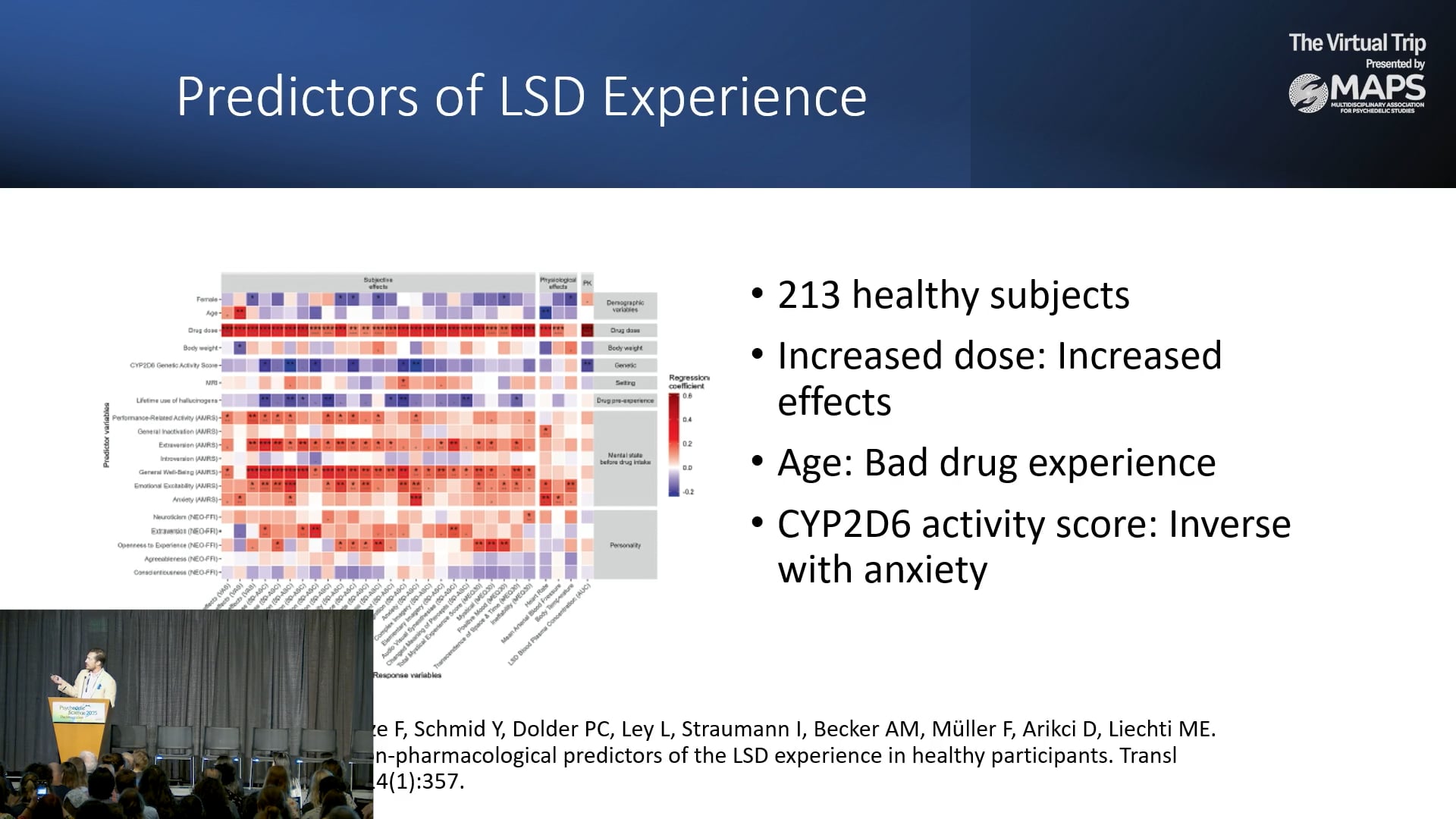
Patil Armenian, Benjamin Hatten
VA researchers Dr. Chris Stauffer and Dr. Amy Lehrner share insights on their pioneering studies of psychedelic-assisted therapy for PTSD, depression, and substance use in veterans, highlighting clinical models, set and setting, and peer support involvement.
Amy Lehrner, Christopher “Chris” Stauffer
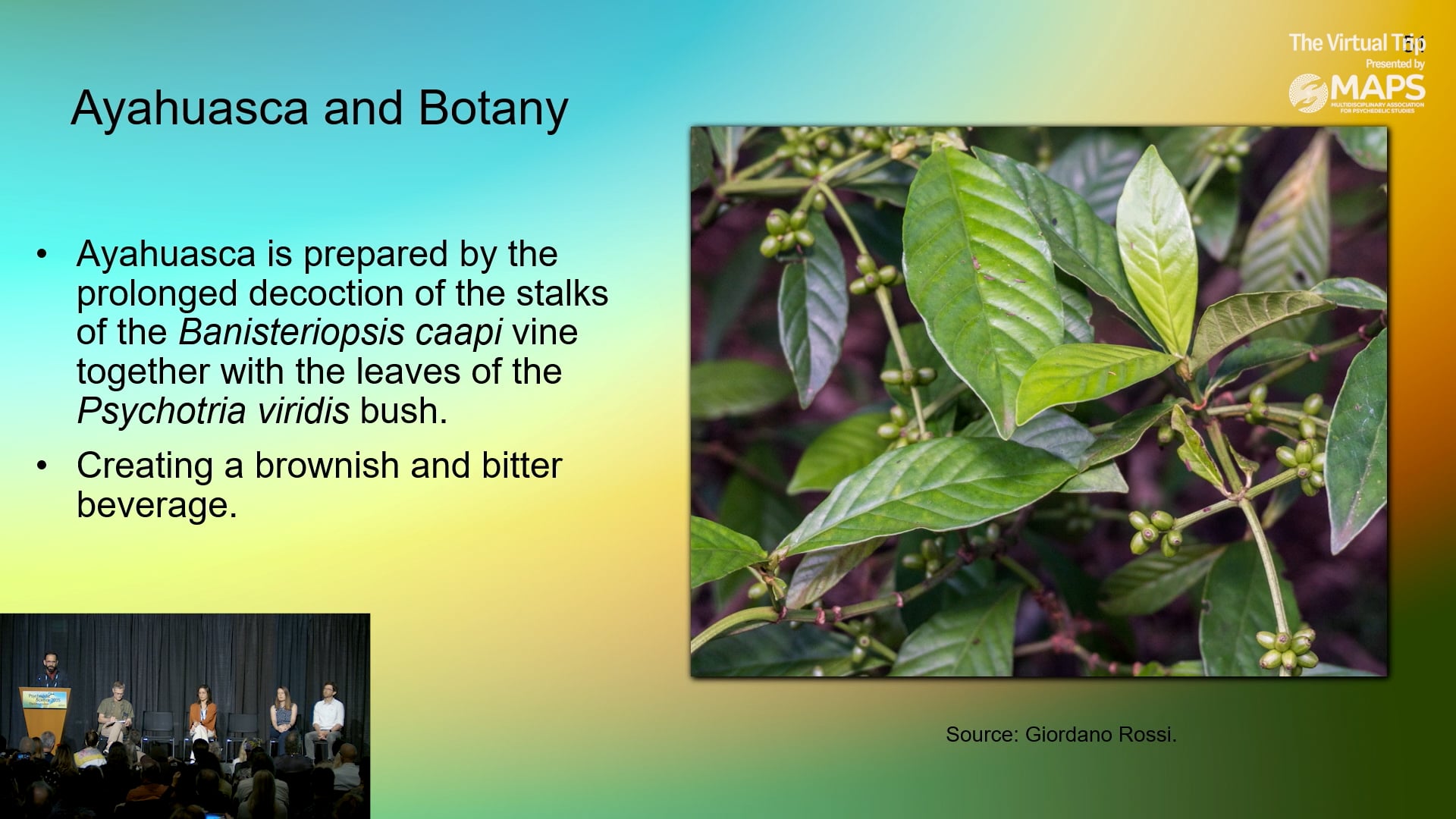
Rafael Guimarães dos Santos
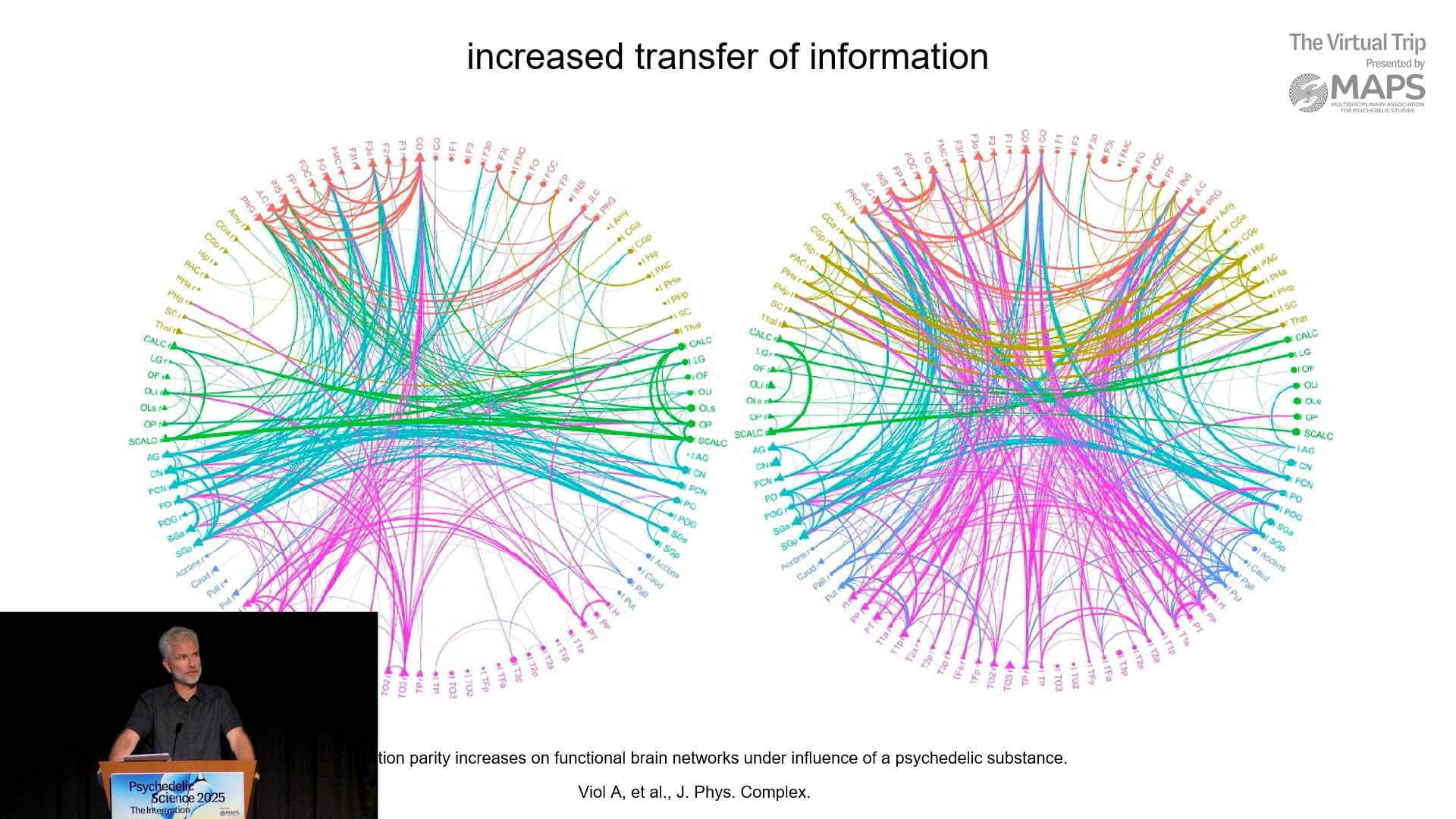
Dráulio Araújo, Fernanda Palhano-Fontes, Marcelo Leite, Nicole Galvão-Coelho
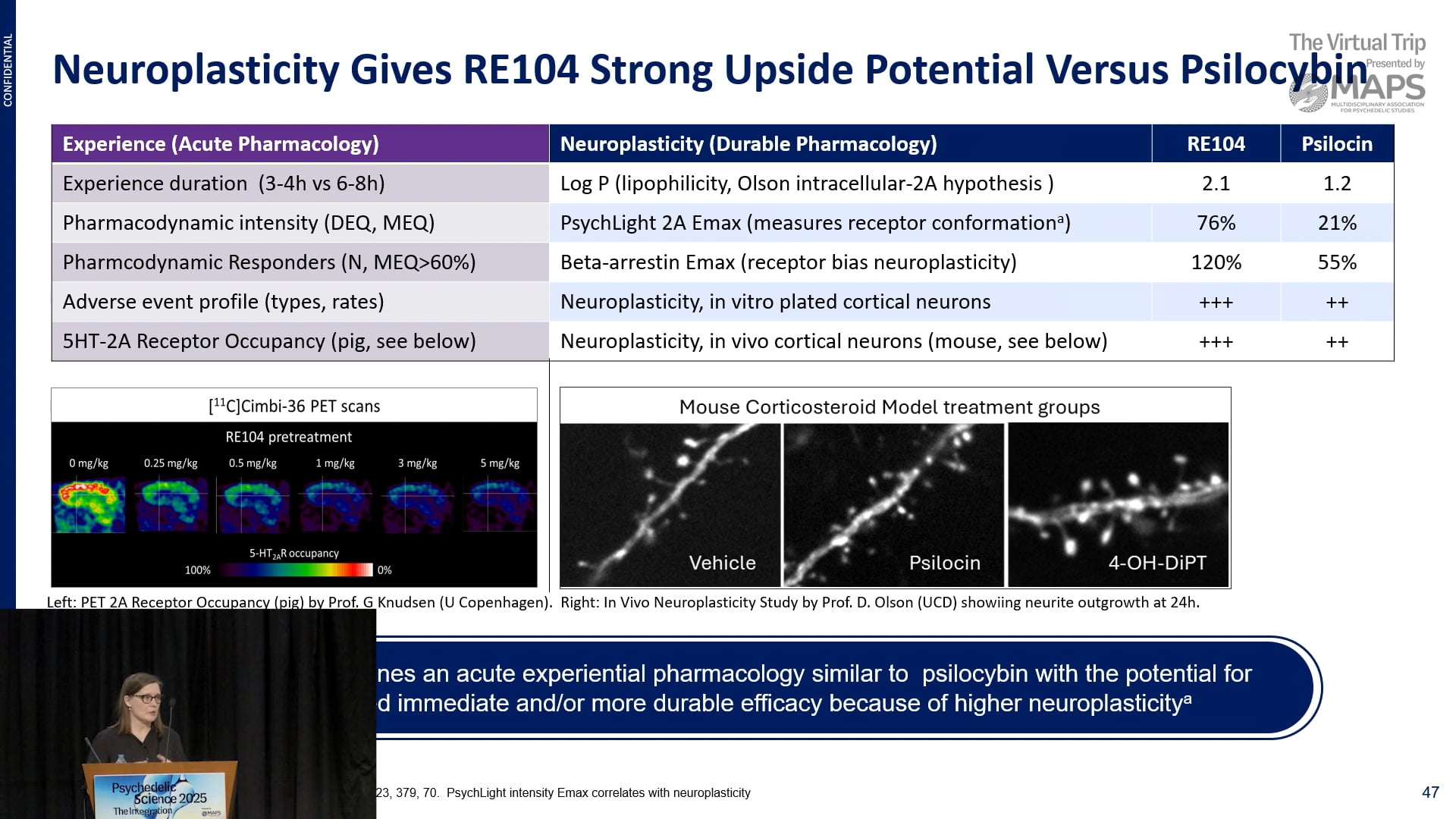
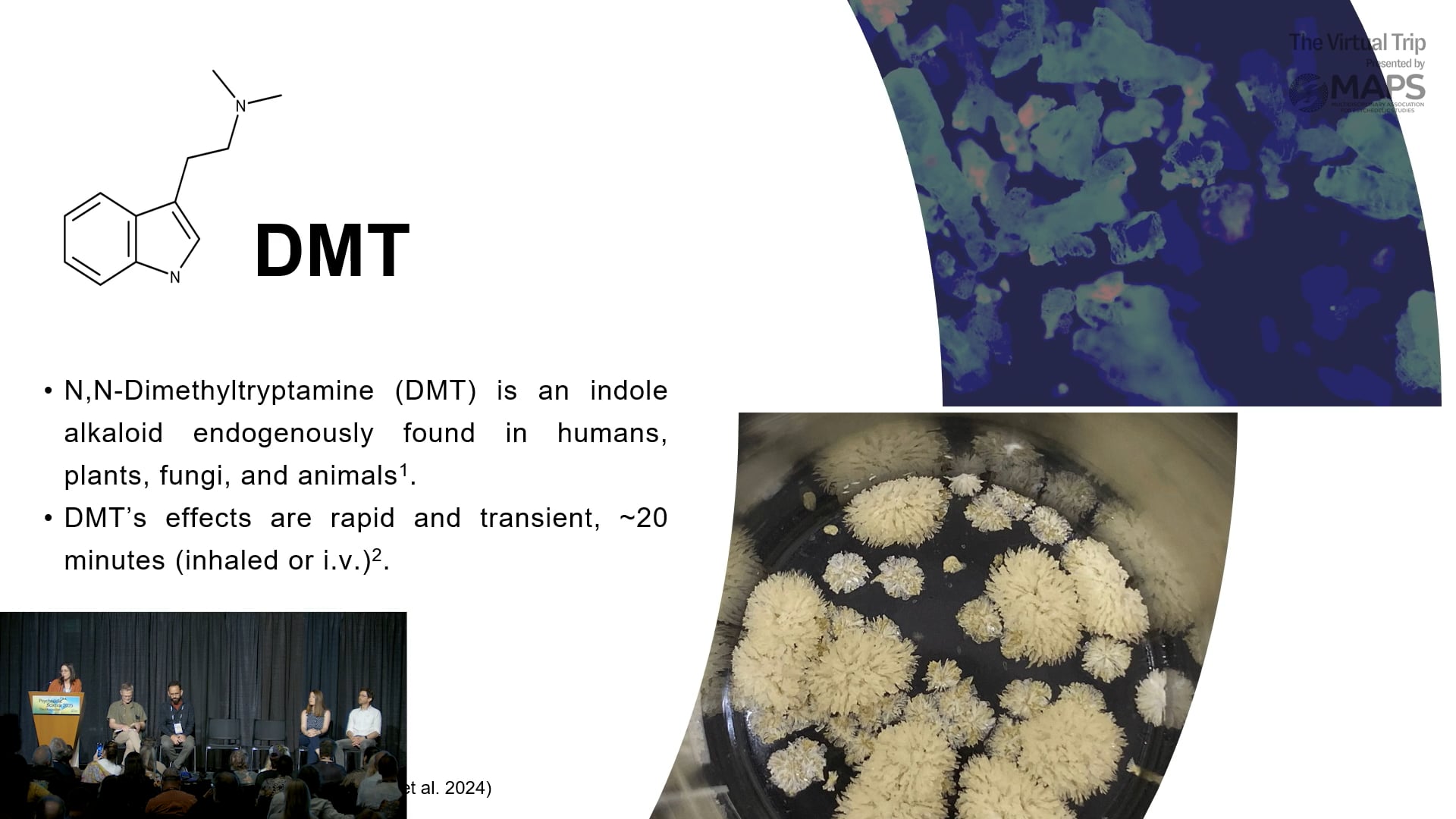
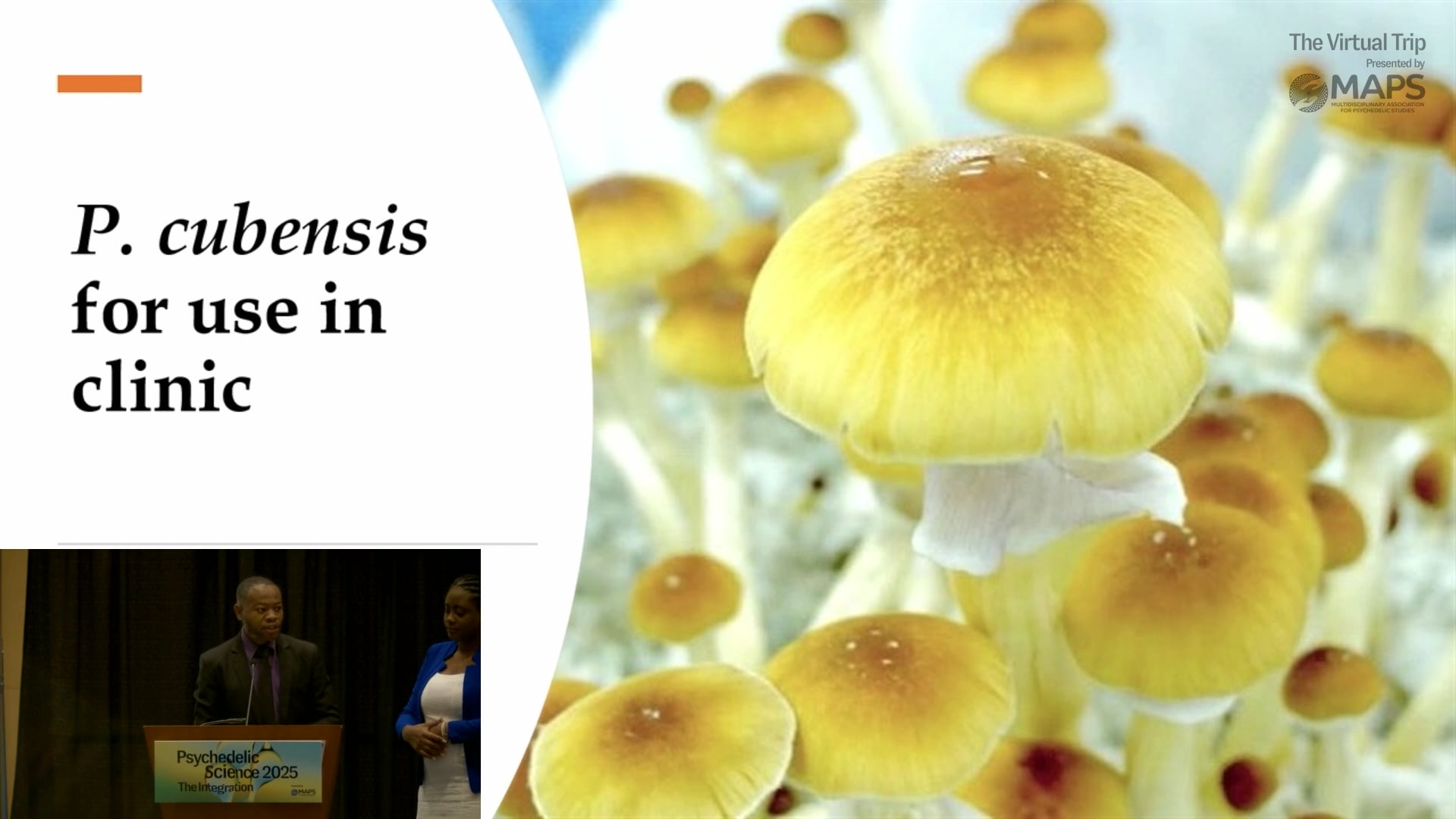
Rupika Delgoda, Kimberly Foster, William Irvine, Isaac Morrison
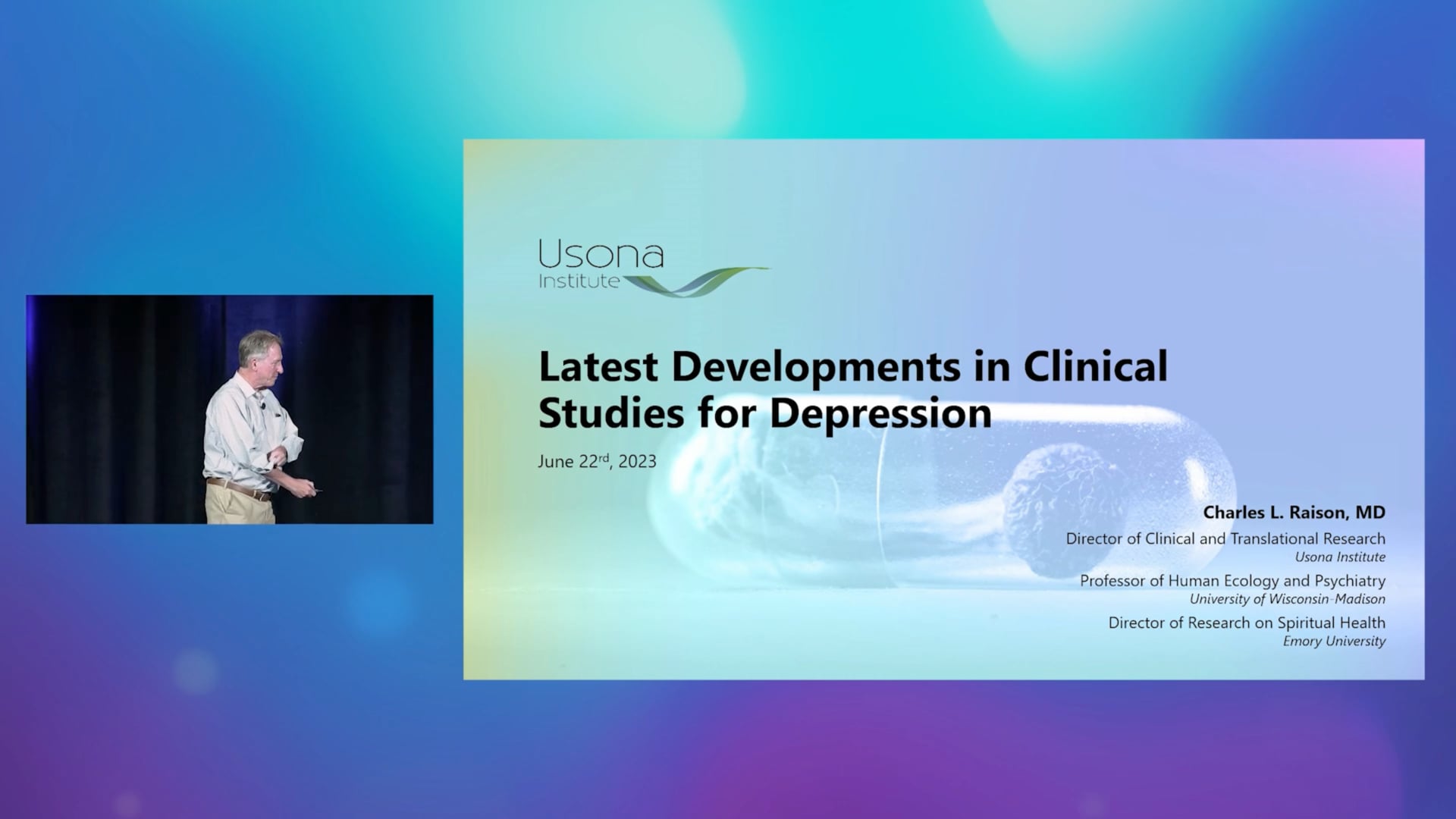
Depression remains a major unmet medical need globally, with current medications often providing inadequate relief and leading to high costs. Psychedelic therapies, like psilocybin, show promise in revolutionizing mental health
Dr. Sloshower presents results from a psilocybin-assisted therapy study for major depression, showing larger antidepressant effects than placebo, with lasting mood improvements. Dr. Kilpatrick discusses longitudinal case studies.
Jordan Sloshower, Stephanie Kilpatrick
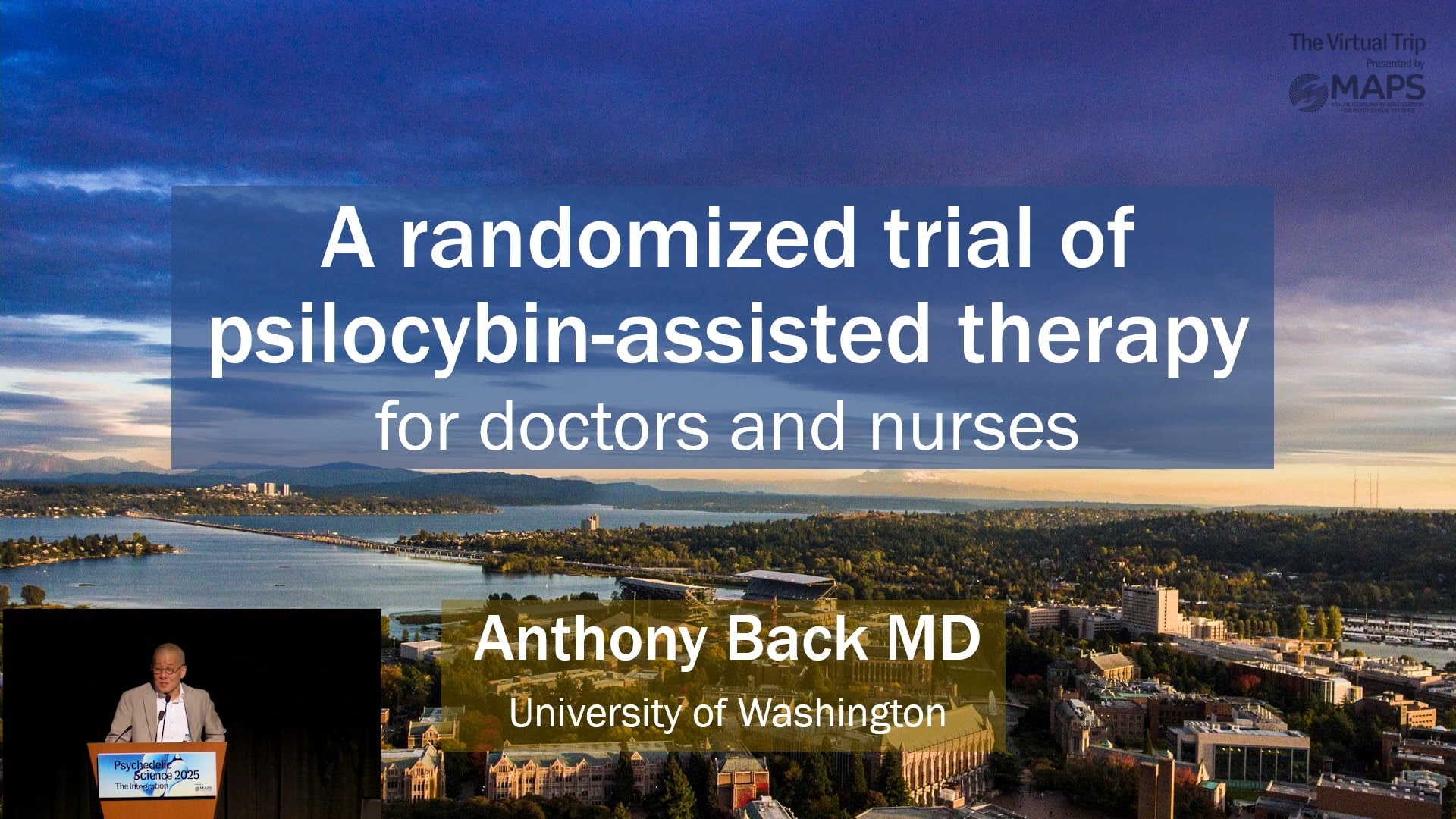
Study investigates psilocybin's effects on depression and burnout in healthcare clinicians post-COVID frontline work with pre- and post-dose psychotherapy. Trial registration: NCT05163496.
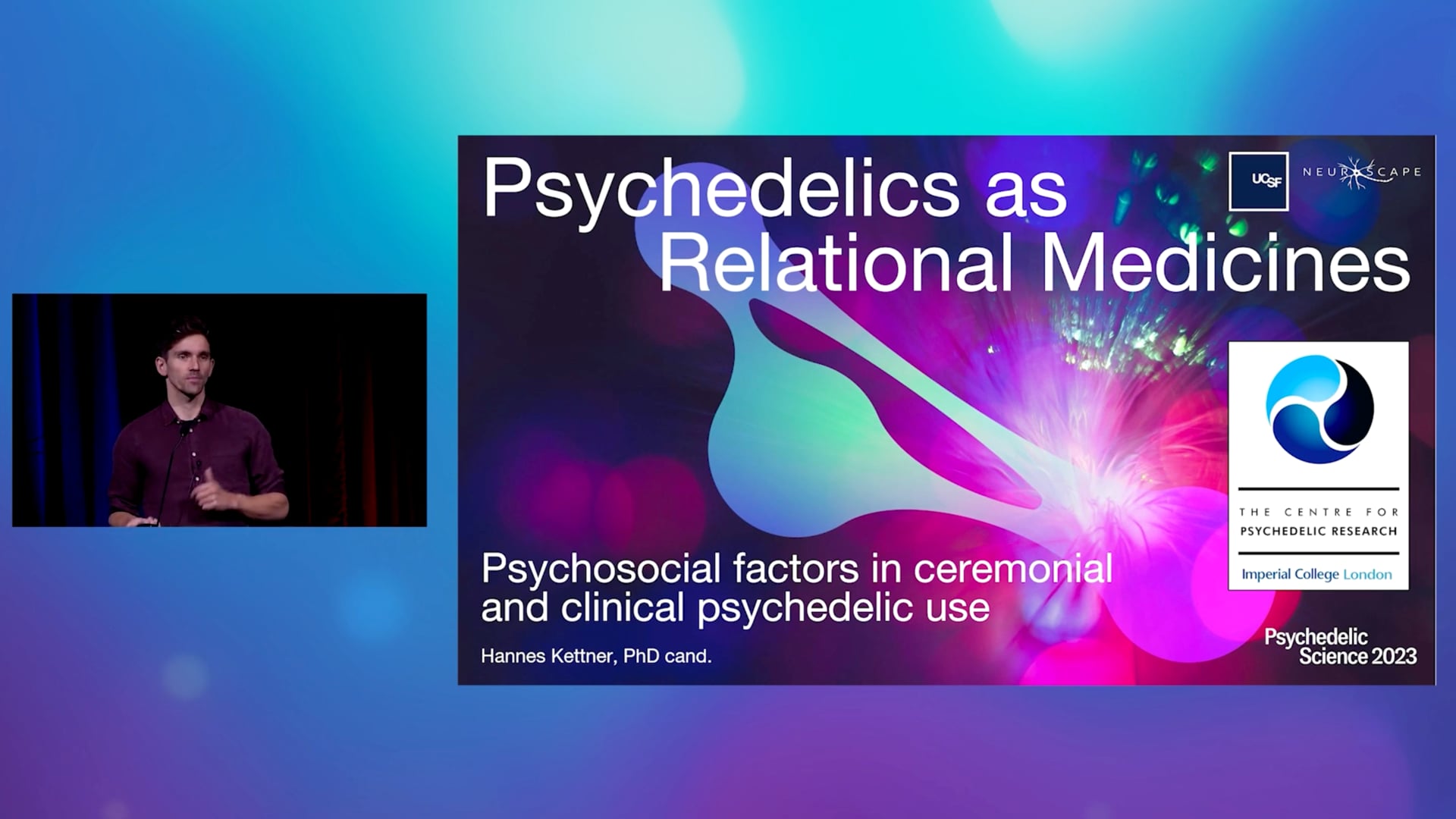
Psychedelics are studied for psychiatric disorders; research emphasizes 'set and setting.' Study explores psychosocial factors in psychedelic use, linking communal experiences to improved mental health outcomes.
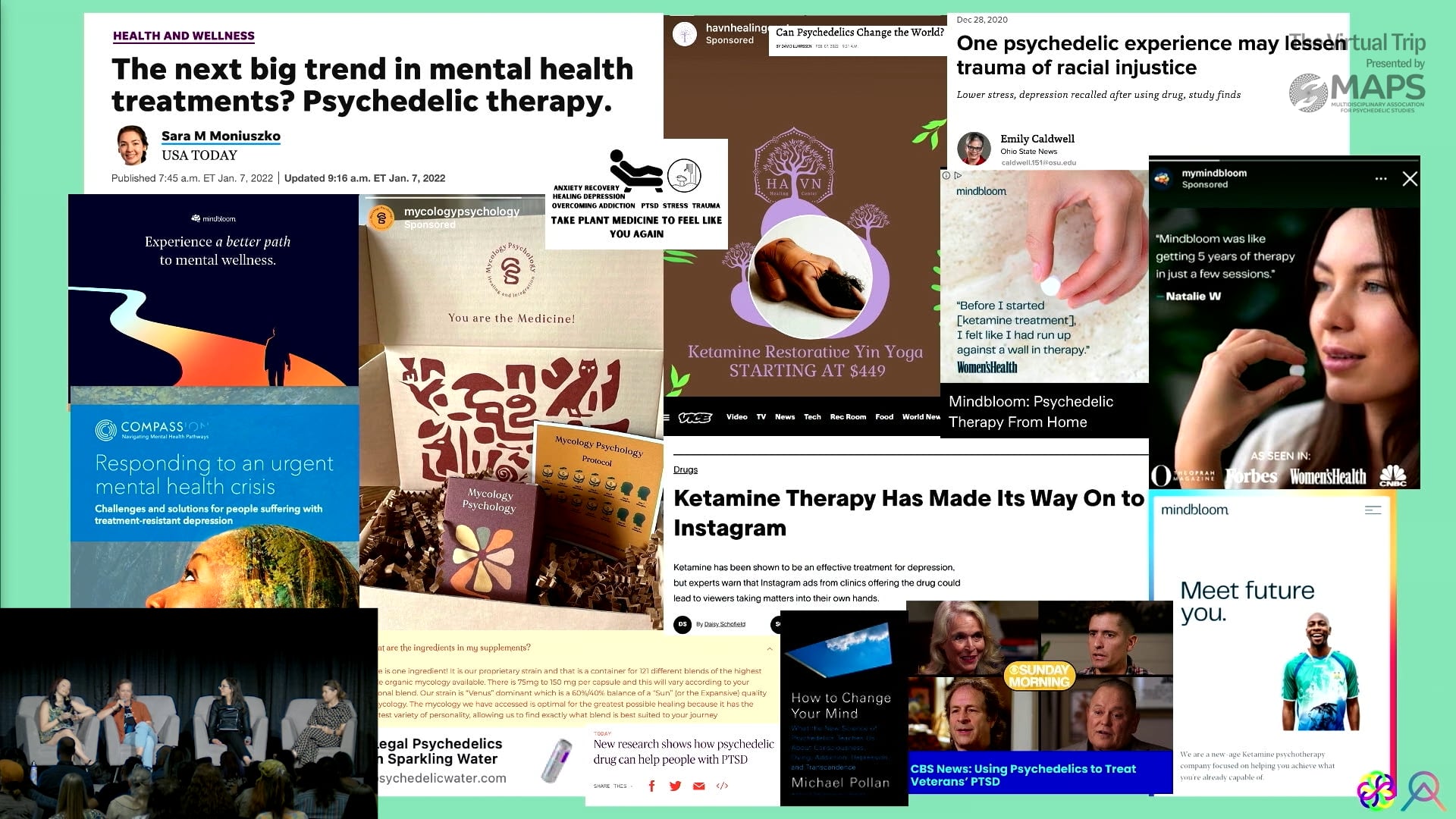
Heidi Allen, Irina Alexander, Vilmarie Fraguada Narloch, Heather Spiegel
As interest in group psychedelic-assisted therapy grows, researchers are exploring diverse protocols, populations, and psychedelic medicines to enhance therapeutic outcomes and accessibility. This panel brings together experts conducting groundbreaking studies on group-based psychedelic therapy, offering insights into how different approaches can foster healing, connection, and transformation.
Chris Stauffer, Jae Sevelius, Anthony Back
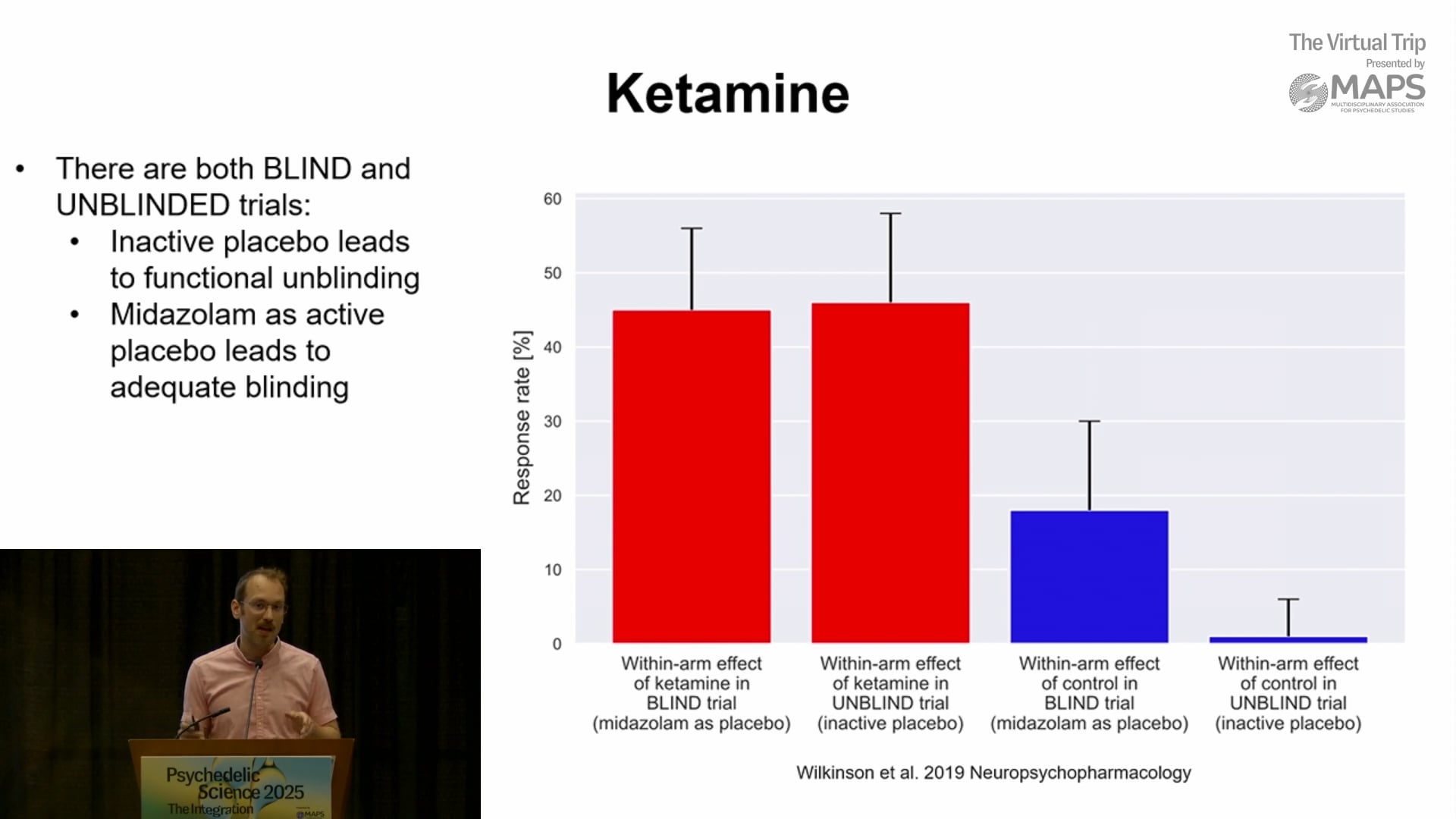
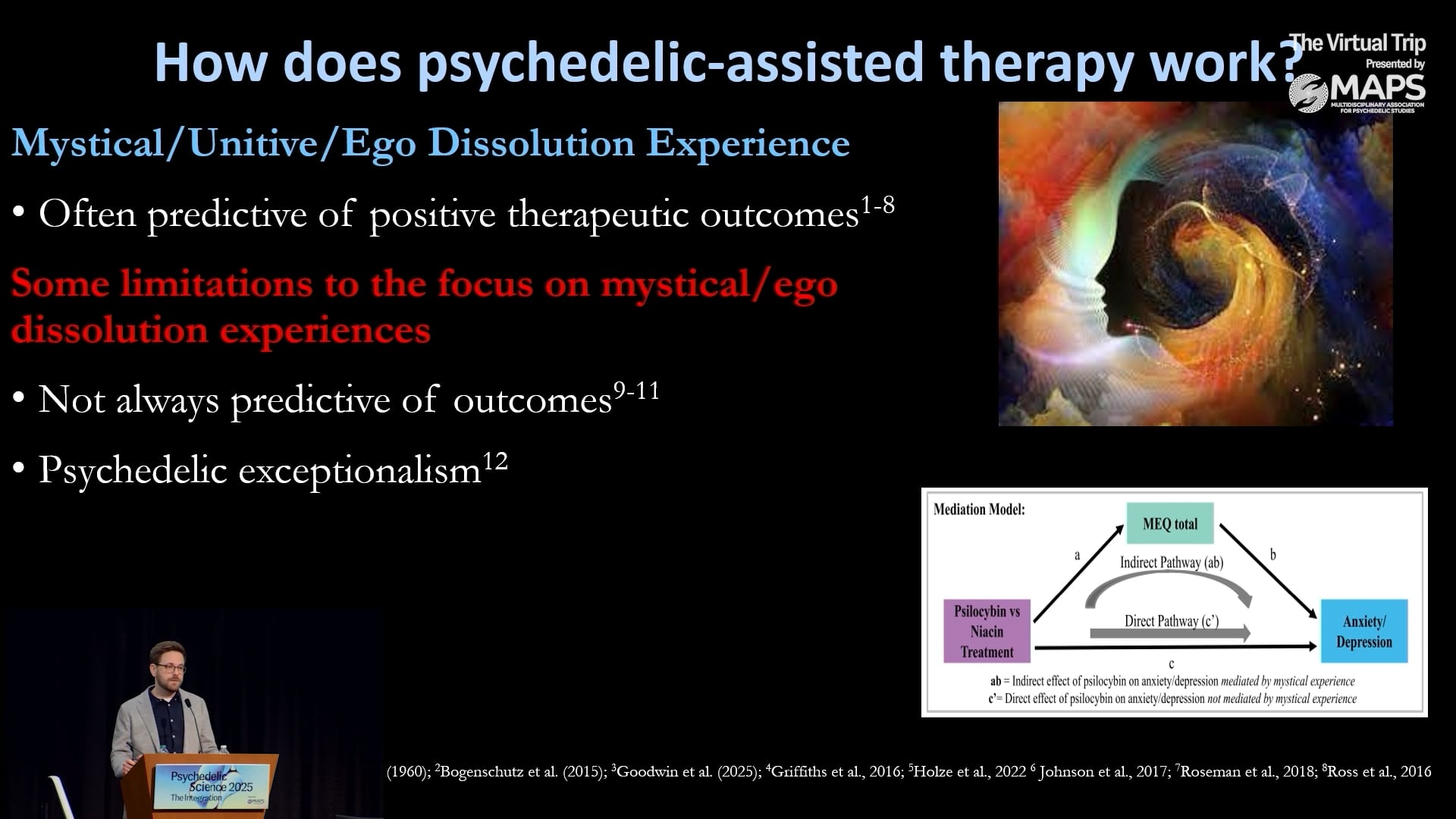
Richard Zeifman, Gabrielle Agin-Liebes
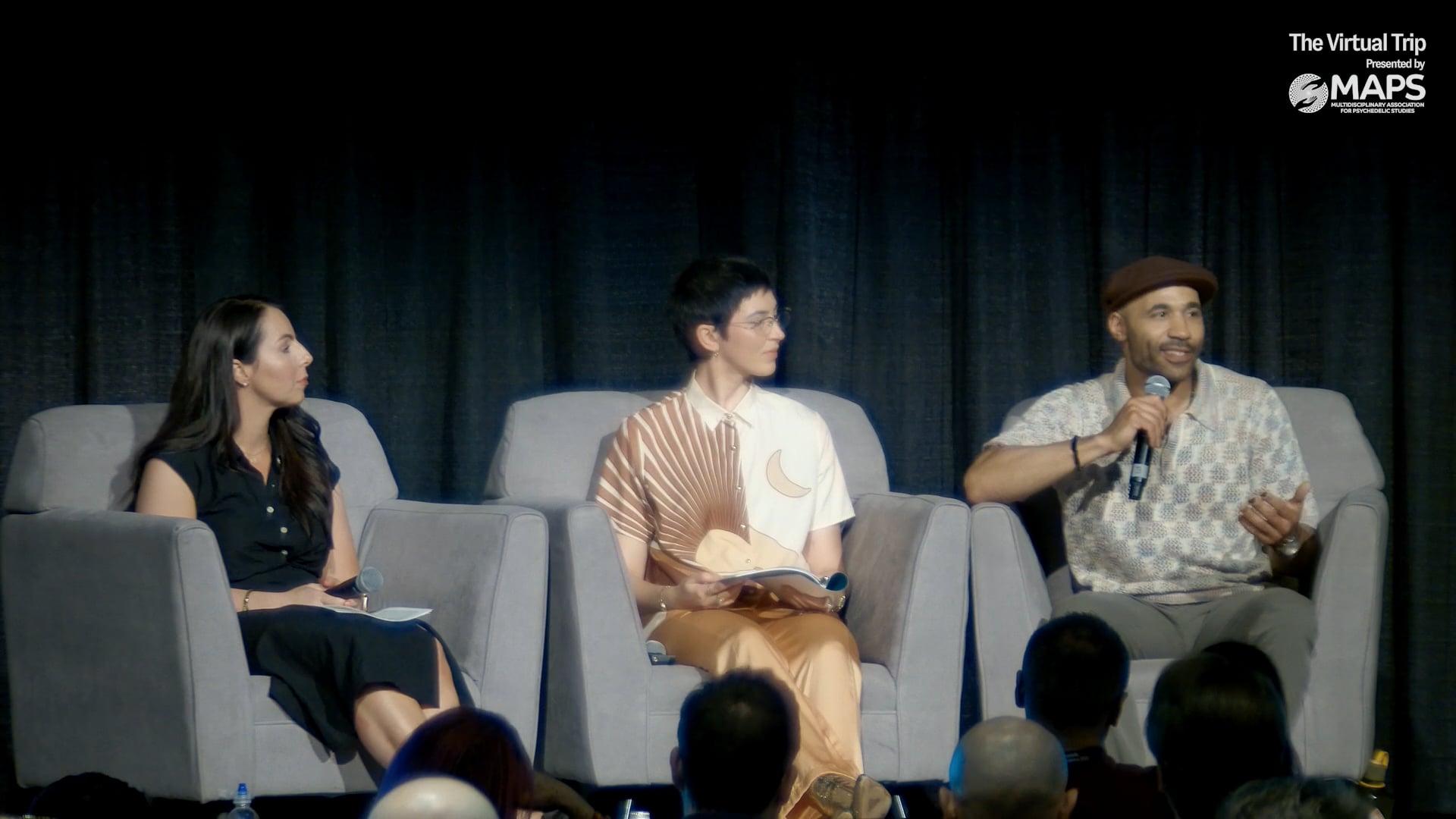
Joseph McCowan, Mia Sarno, Psy.D., Jessica Punzo
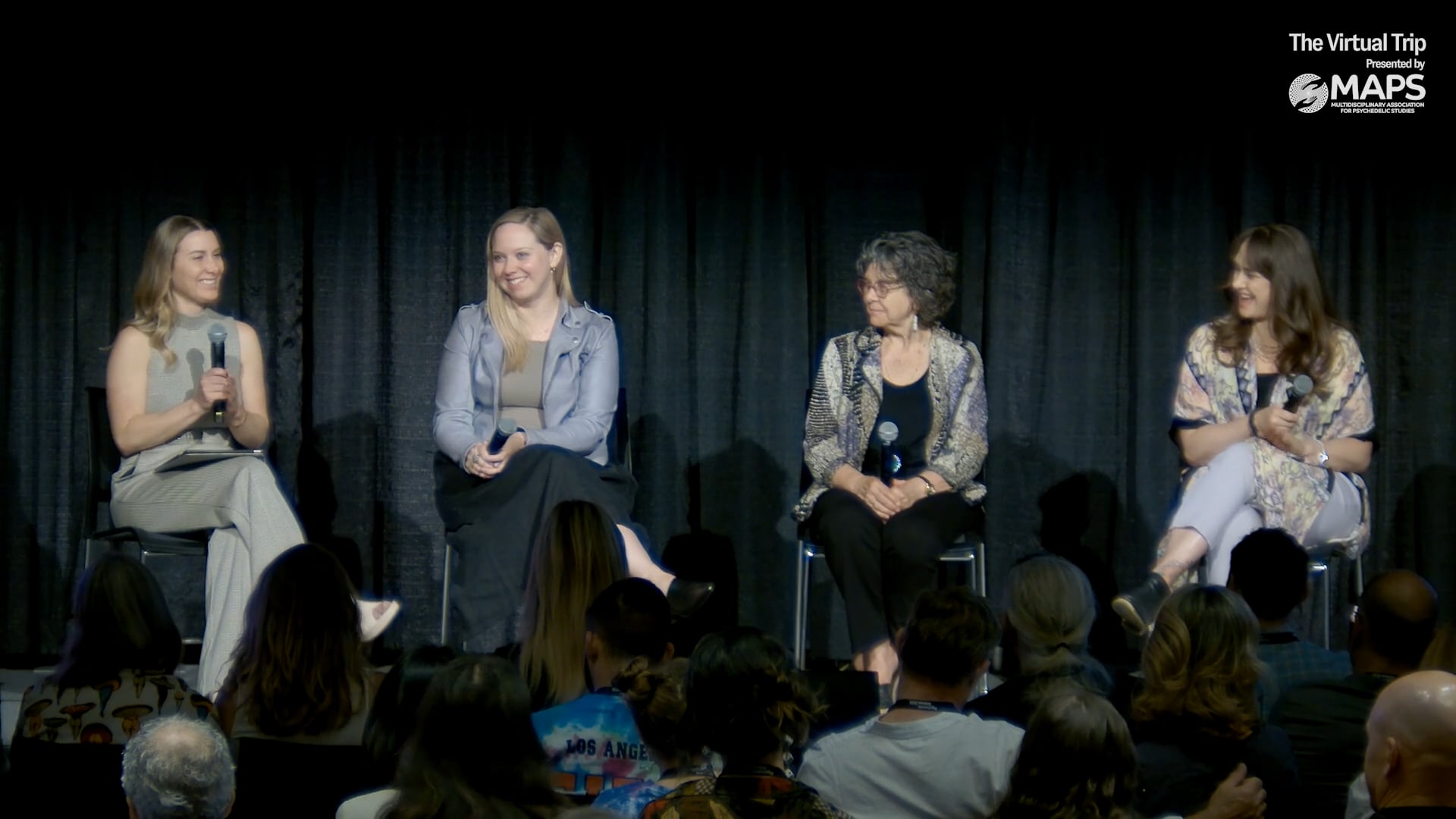
Chandra Khalifian, Anne Wagner, Ph.D., Kayla Knopp, Susan McBride
Patil Armenian, Benjamin Hatten
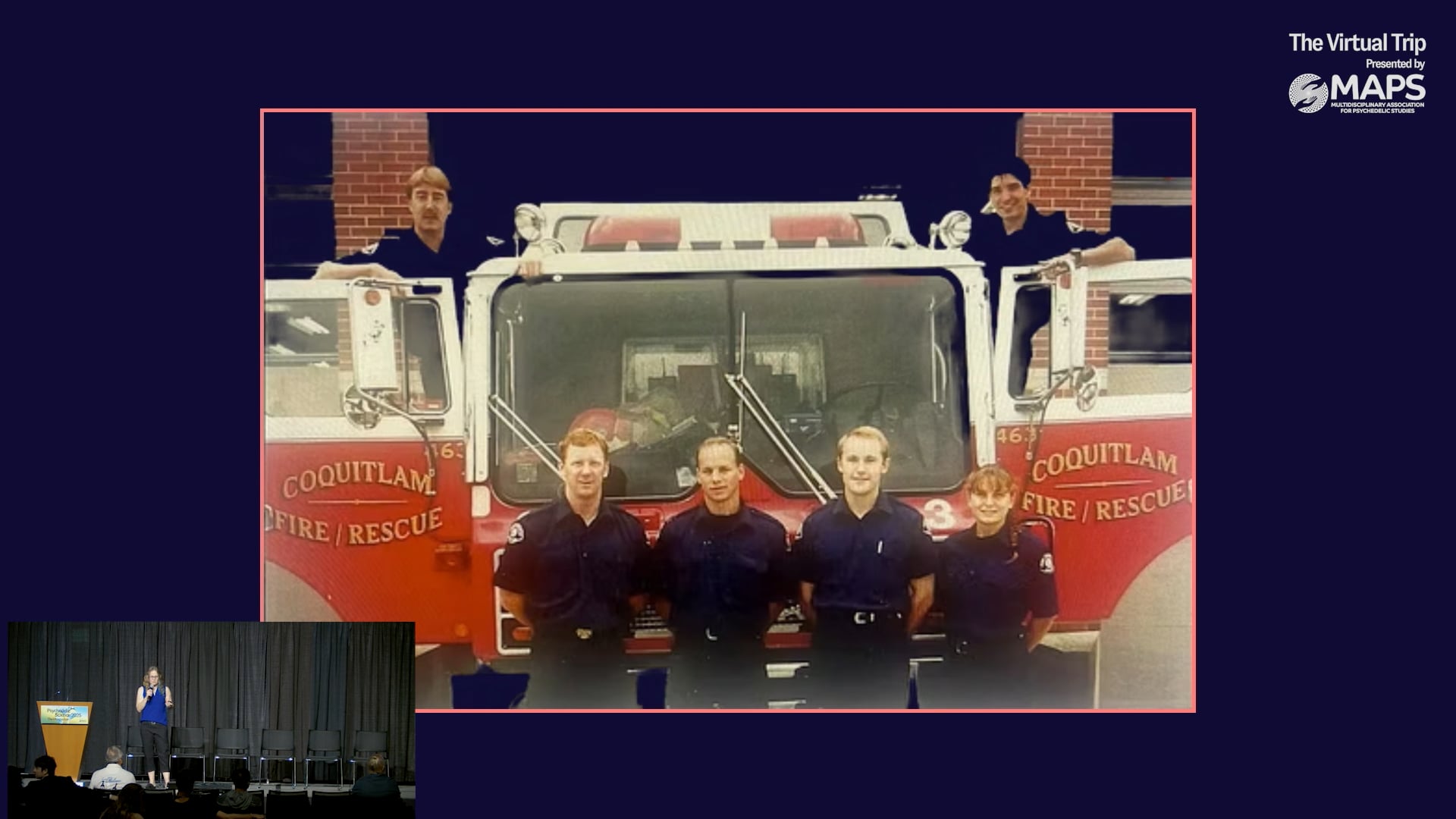
Tadeusz Hawrot, Oksana Gryshchenko, Zina Besirevic, Elise Wilson
Since Australia legalized regulated psychedelic-assisted therapy in 2023, The Psychedelic Consultancy has supported psychiatrists becoming Authorised Prescribers. This presentation reviews early lessons, challenges, and risk management in this psychiatrist-led model.
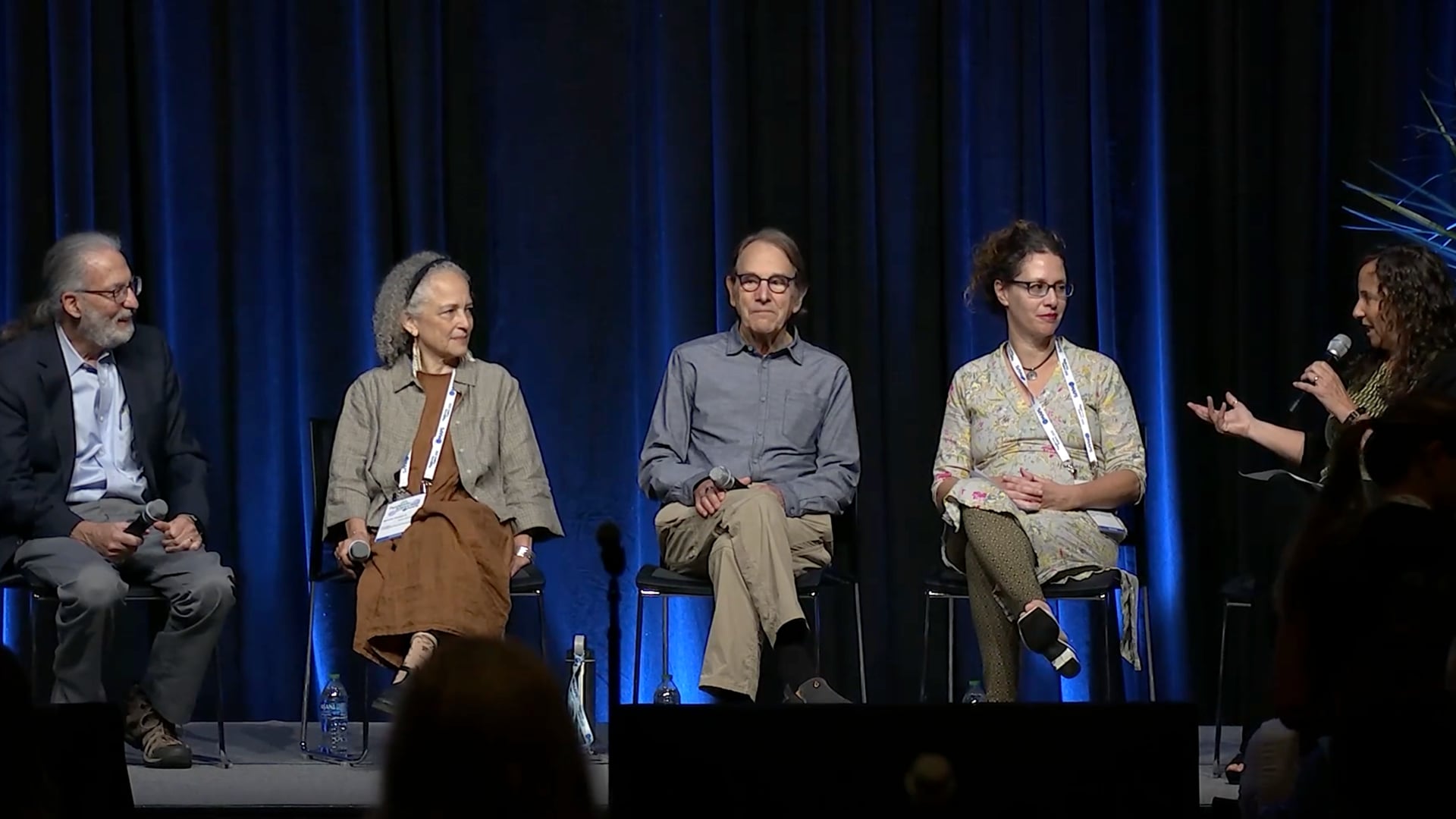
MAPS completes Phase 3 study for MDMA-AT in PTSD treatment, marking historic milestone in psychedelic drug research. Safety and efficacy of MDMA-assisted therapy still under investigation.
Keren Tzarfaty, Michael Mithoefer, Julie Holland
Changing Policy
Chart the evolving laws, social justice movements, and harm-reduction strategies that are reshaping access to psychedelics.
Community Engagement
Global Perspectives
Harm Reduction
Psychedelic Policy Reform in the U.S.
Dive into initiatives ensuring that psychedelic therapies reach underserved communities with respect and fairness.
Session explores health equity challenges and opportunities in mainstream psychedelic therapy, focusing on experiences of 3 women of color. Topics include overcoming inequity, cultural trauma, power dynamics, and ancestral healing.
Claudia Cuentas, Sara Reed, Deran Young
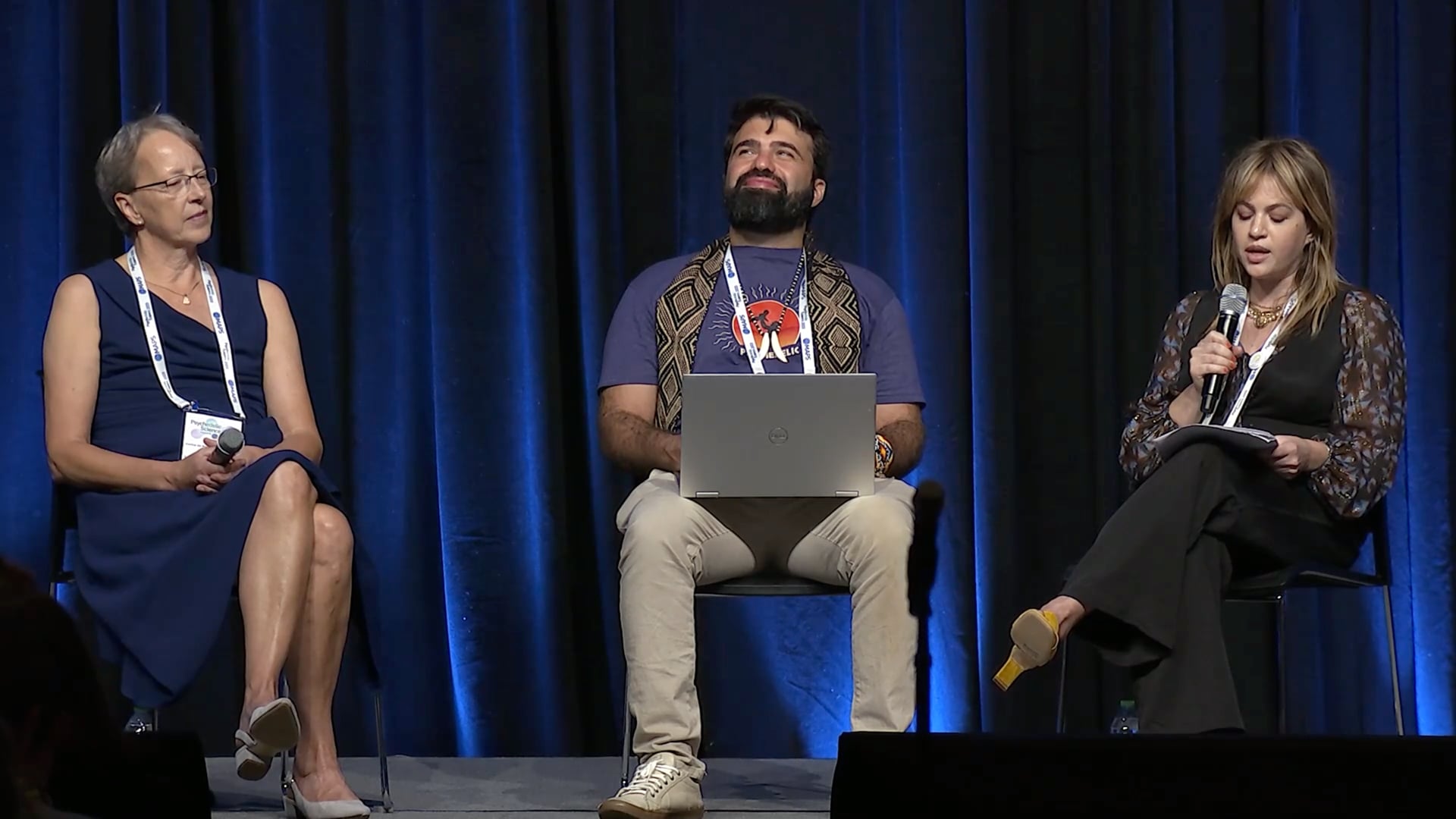
Psychedelic-assisted therapies for adolescents are discussed, including the use of ketamine for treatment-resistant depression and the need for further studies and careful consideration of risks. Traditional use of plant medicines
Corine de Boer, Rebecca Kronman, Glauber Assis
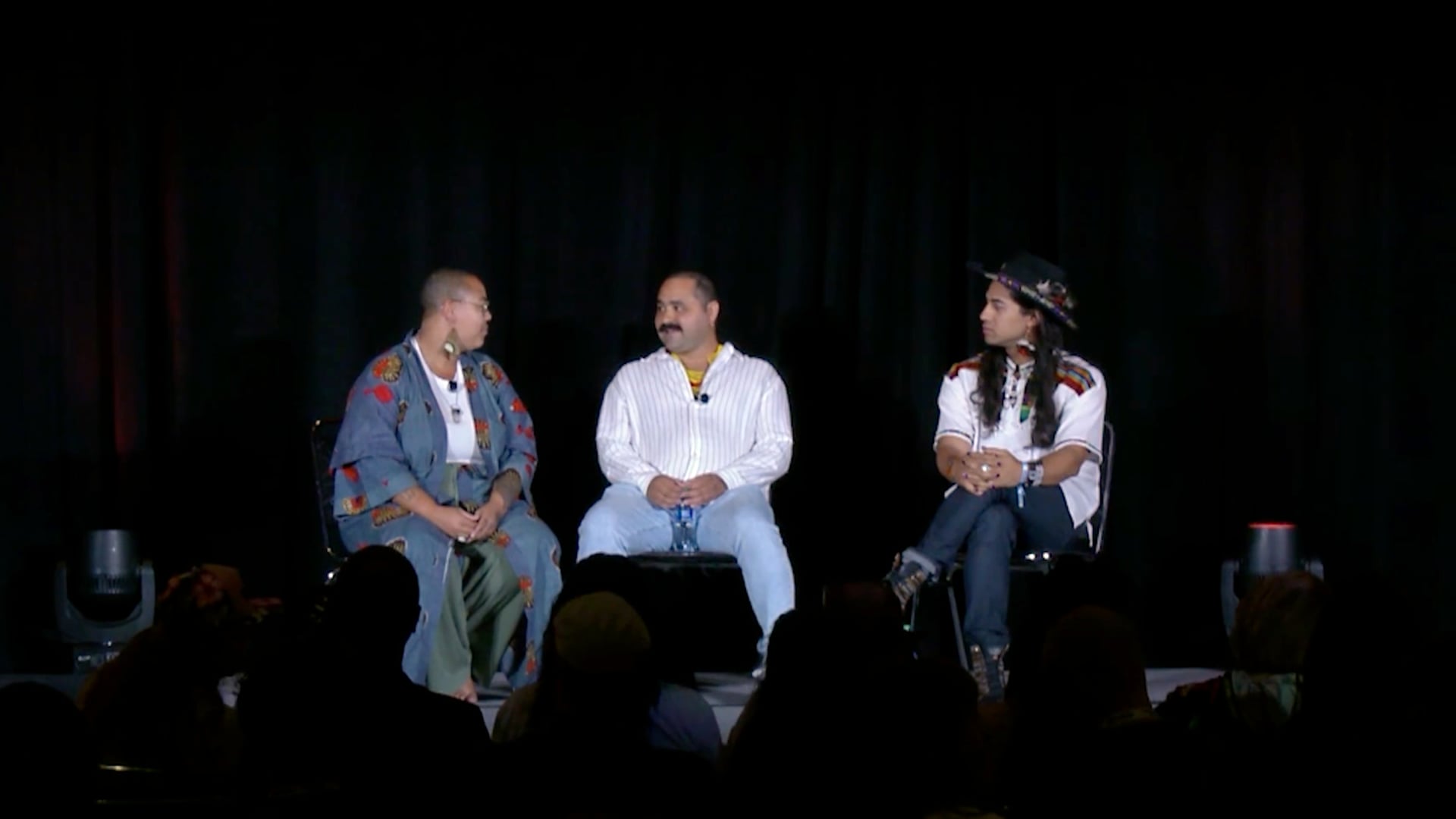
Young elders explore merging tradition and modernity, addressing political, ecological, and epistemological challenges. Discussion aims to balance tradition and progress in a changing world.
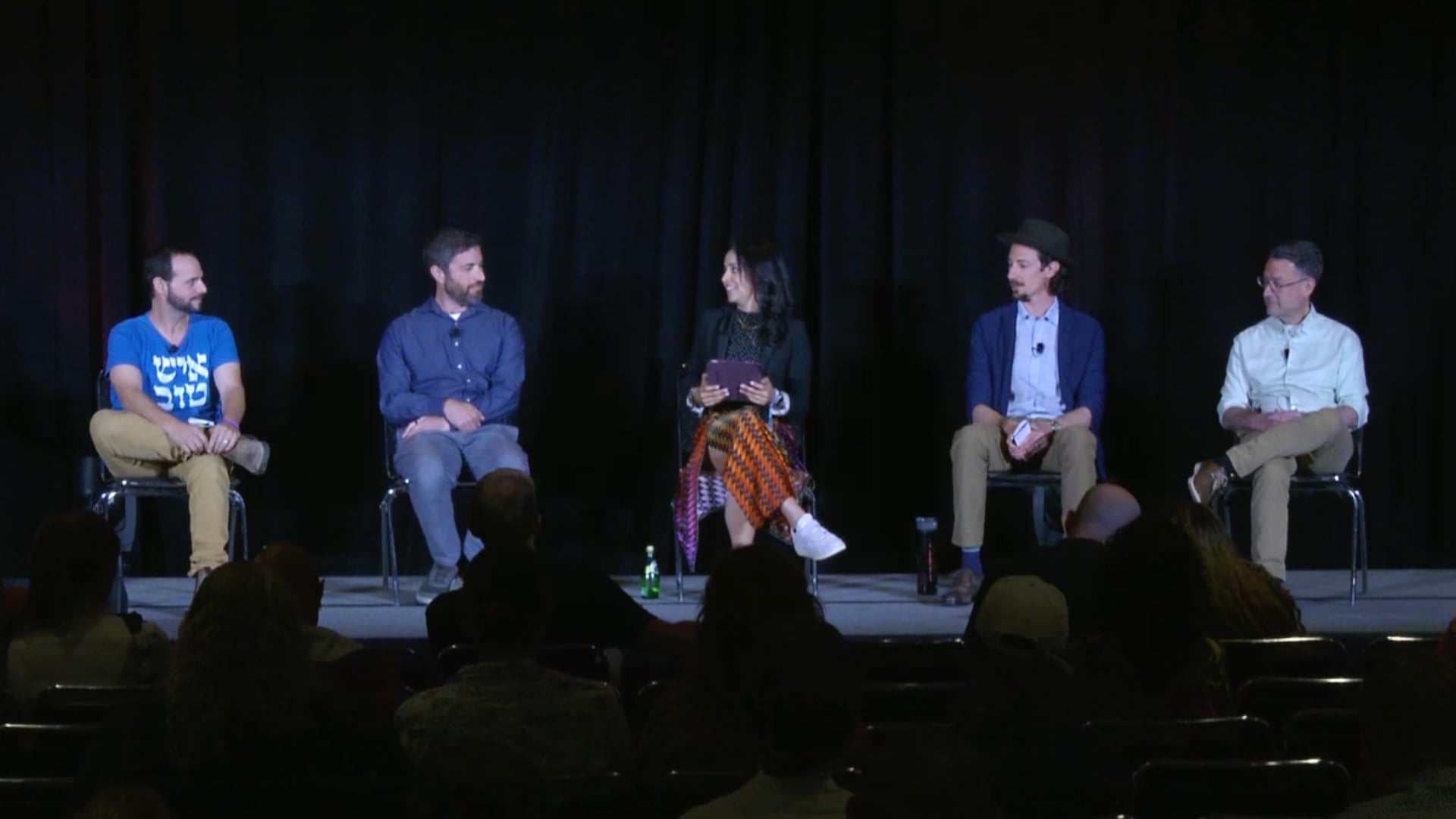
Panelists from Zendo Project, Fireside Project, Kosmicare, and Anashim Tovim discuss harm reduction strategies in the psychedelic ecosystem, emphasizing innovation, compassion, and scientific expertise in diverse settings. They provide case
Joshua White, Daniel E Martin, Pinni Baumol, Shirelle Noble, Ben Halper
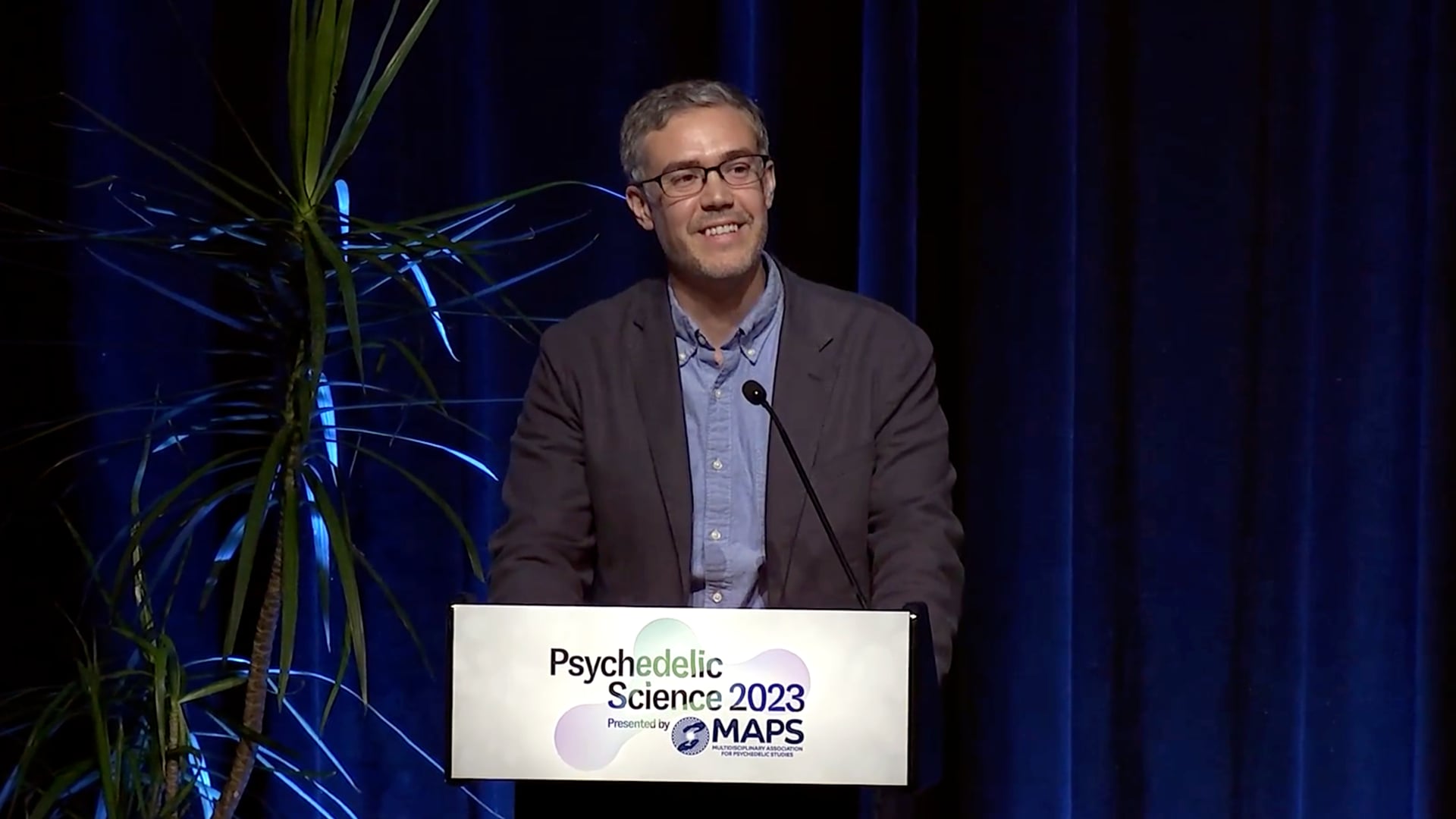
Panel explores challenges of managing expectations and risks in psychedelic-assisted therapy amid growing media coverage. Participants, patients, and practitioners often lack information on risks.
David B Yaden, Xiaojue Hu
Understand how environmental, cultural, and indigenous rights inform policy on a worldwide scale.
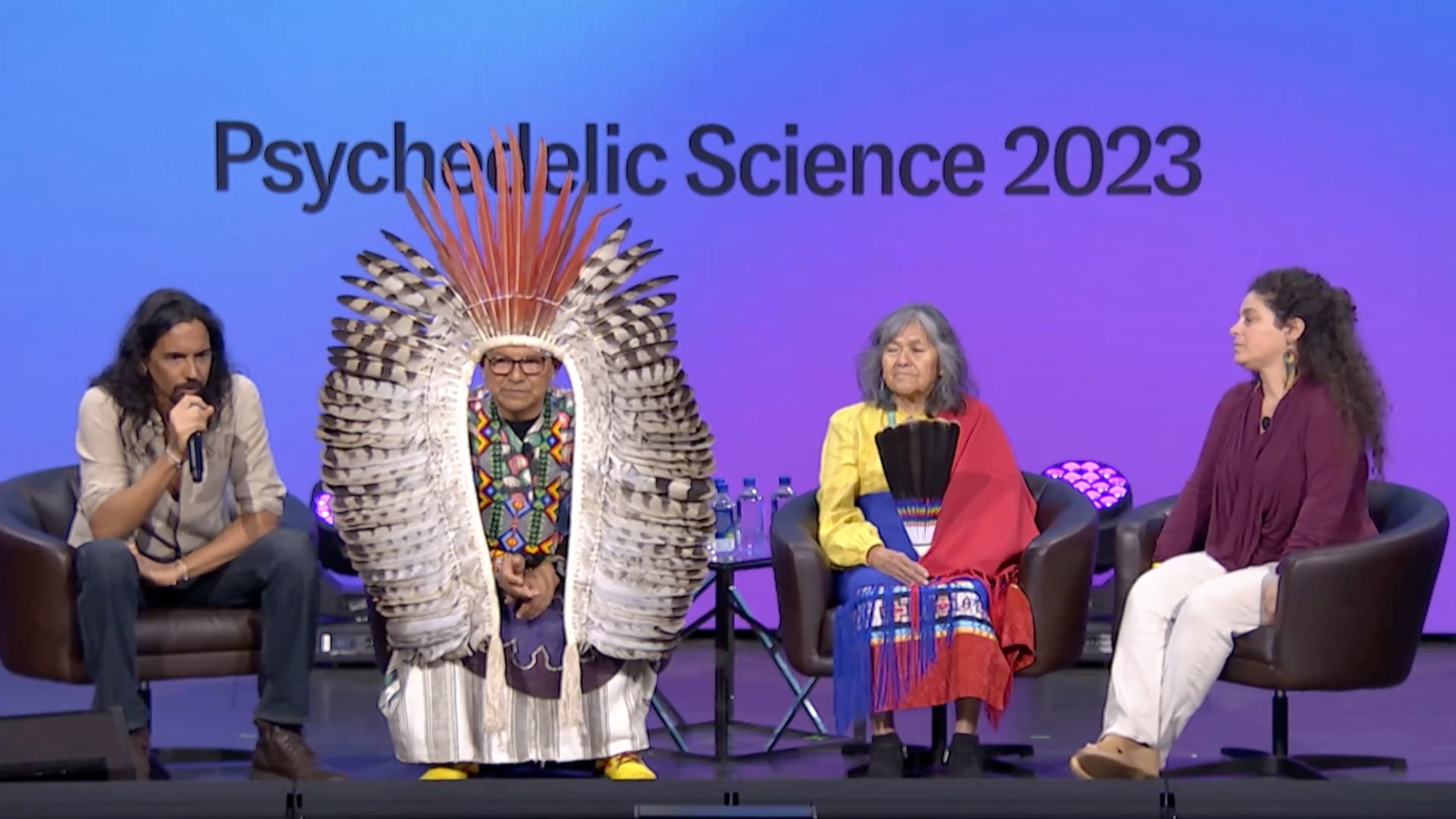
Indigenous plant medicines and practices are threatened by colonialism, extraction, and climate change. Supporting traditional Indigenous Medicine conservation directly supports climate and biodiversity conservation.
Miriam Volat, Mona Polacca, Chief Nixiwaka Biraci Yawanawa
Traditional Indigenous medicines like Ayahuasca have become global phenomena. Psychedelic companies are exploring them for drug development, posing challenges for Indigenous and ceremonial communities.
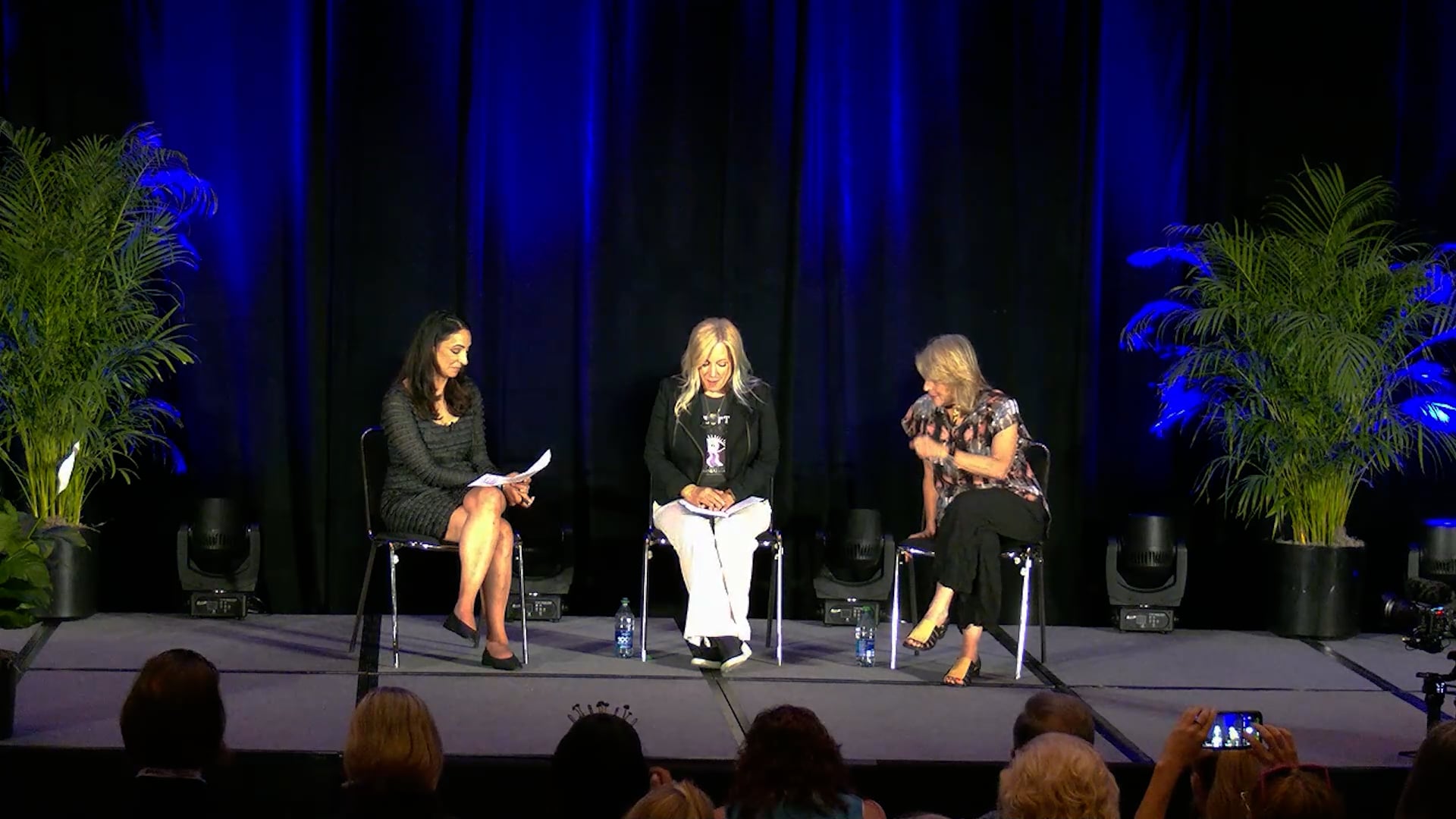
Vicky Dulai of Compassion For Addiction moderates a discussion with Amy Emerson of MAPS Public Benefit Corporation and Rachel Yehuda of Icahn School of Medicine on leadership in the psychedelic
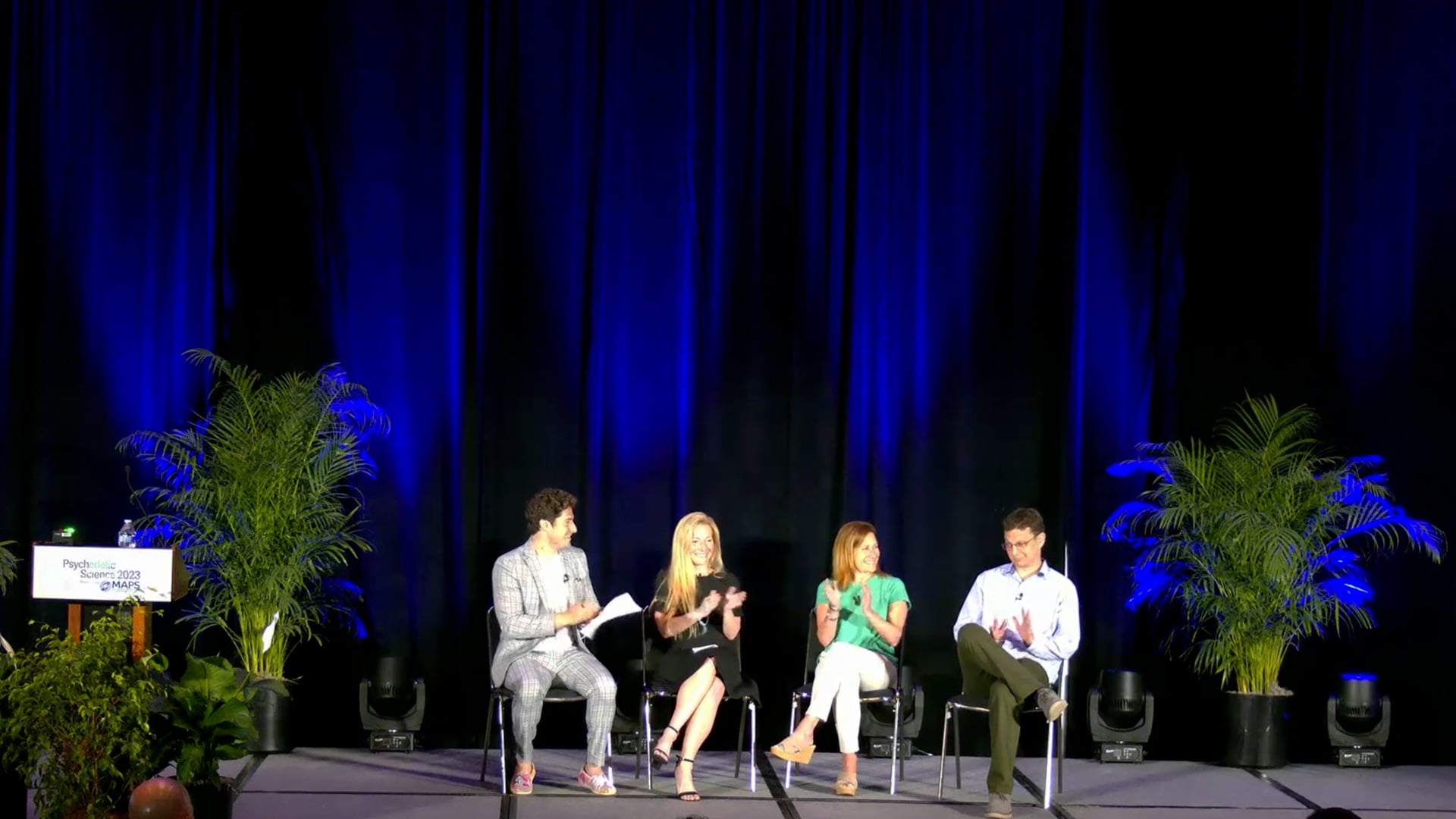
Philanthropy and investors can support crucial psychedelic research and initiatives beyond commercial interests to shape the field and promote equity and social value in the psychedelic economy.
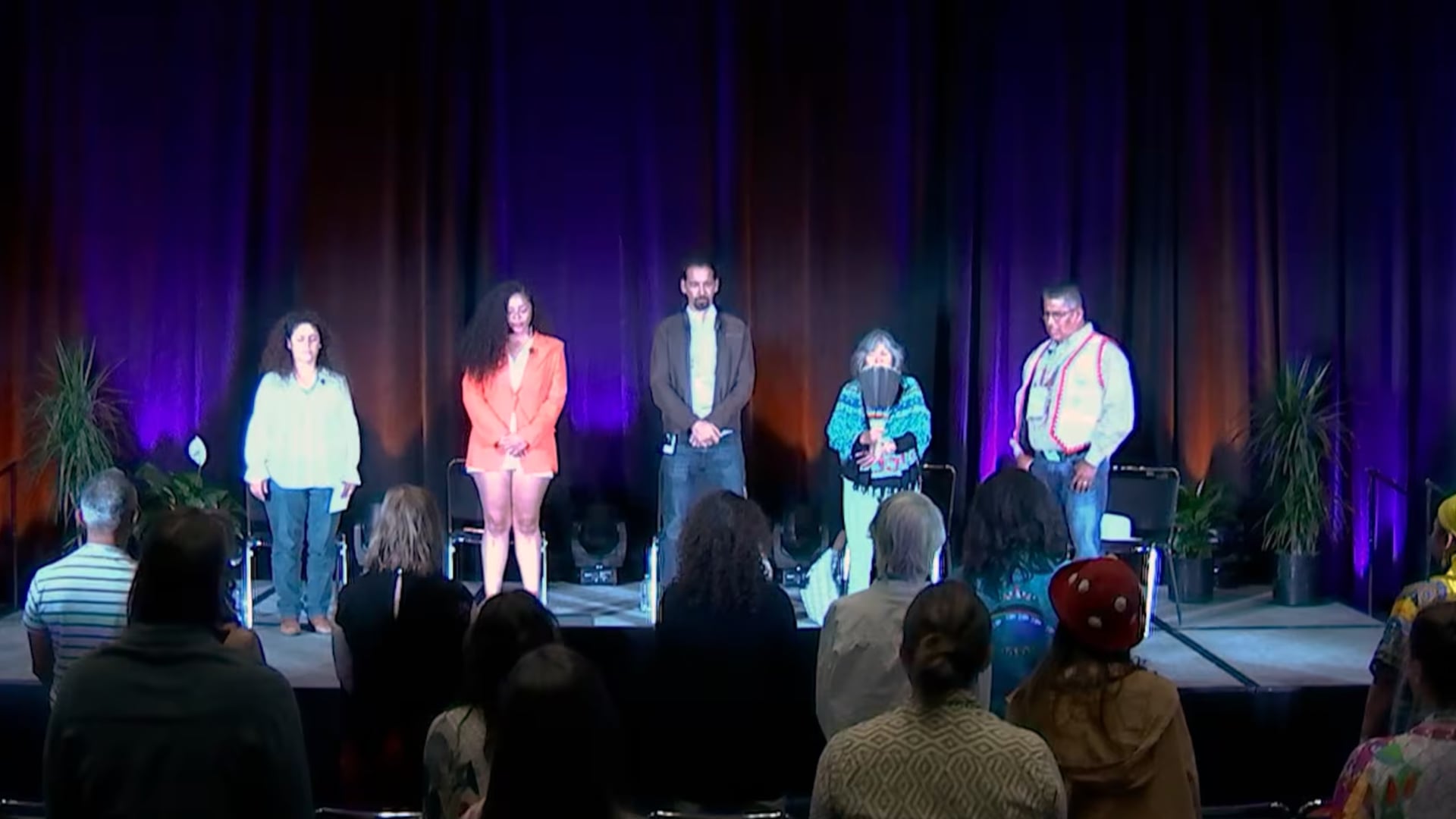
Address delves into peyote's historical, cultural, and colonial impact, challenging dominant narratives and exploring paths for cultural preservation and religious freedom. Speakers illuminate untold narratives and complexities.
Learn the strategies and ethics behind safe, equitable, and community-centered psychedelic use.
Panelists from Zendo Project, Fireside Project, Kosmicare, and Anashim Tovim discuss harm reduction strategies in the psychedelic ecosystem, emphasizing innovation, compassion, and scientific expertise in diverse settings. They provide case
Joshua White, Daniel E Martin, Pinni Baumol, Shirelle Noble, Ben Halper
Panel of experts explores psychedelics' role in conflict resolution, restorative justice, and peace-building. Discussion includes research, experiences, and ethical considerations for integrating psychedelics into transformative processes.
Traditional Indigenous medicines like Ayahuasca have become global phenomena. Psychedelic companies are exploring them for drug development, posing challenges for Indigenous and ceremonial communities.
Session explores health equity challenges and opportunities in mainstream psychedelic therapy, focusing on experiences of 3 women of color. Topics include overcoming inequity, cultural trauma, power dynamics, and ancestral healing.
Claudia Cuentas, Sara Reed, Deran Young
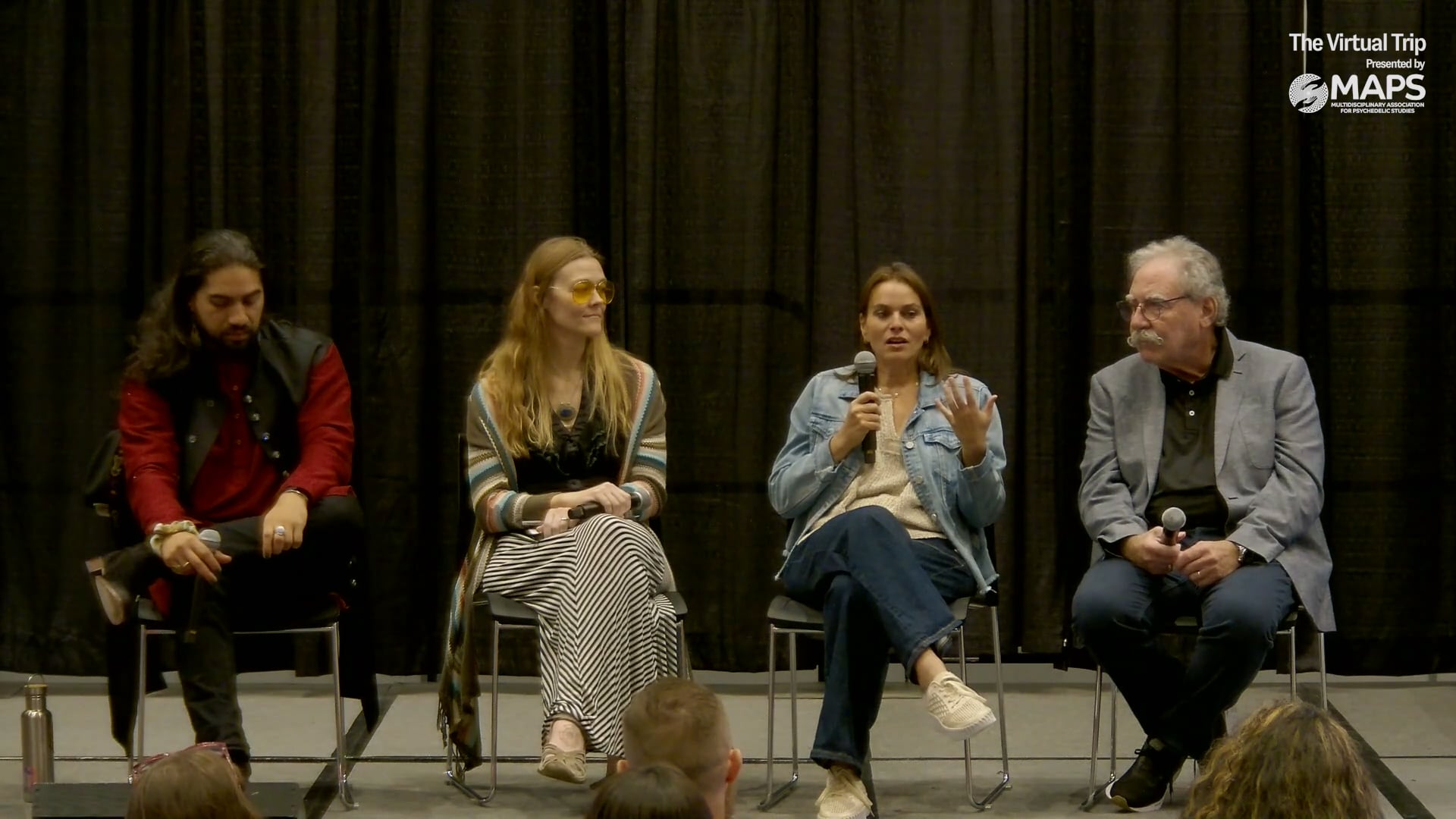
Traditional medicines and indigenous communities attract outsiders, but interactions can unintentionally harm. How can outsiders respectfully engage and contribute to traditional cultures?
Sandor Iron Rope, Claude Guislain, Sutton King
From ballot initiatives to state legislatures—see who’s writing the next chapter of psychedelic policy.
The momentum behind psychedelic policy reform has surged over the past five years—especially within state legislatures. With over 220 bills introduced across 38 states and D.C. since 2020, the field is evolving rapidly. But sustained progress requires a clearer understanding of what’s working—and what’s not.
Ismail Lourido Ali, Mark Rasenick, Amy McGuire, Jessica L Nielson
Oregon and Colorado have pioneered and iterated on the first state-regulated psychedelics markets. But there are many additional ways beyond the Oregon and Colorado models to establish a market.
Leonard Gilroy, Barine Majewska, Courtney Barnes, Jared Moffat, Allison Hoots
Nara Dahlbacka, Allison Hoots, Beau Kilmer, Ismail Lourido Ali
Expansion of psychedelic policy in the US includes decriminalization, adult use regulations, and increased research funding. Elected state lawmakers discuss challenges, opportunities, and lessons from proposed psychedelic legislation.
Rep La Shawn Ford (IL), Rep Alex Dominguez (TX), Tamar Todd
Discussion between experts on pragmatic frameworks, demographic considerations, and evidence-based practices shaping psychedelic policy reform for diverse contexts, addressing regulatory challenges and fostering nuanced understanding.
Tatiana Quintana, Melissa Lavasani, Logan Davidson
Address delves into peyote's historical, cultural, and colonial impact, challenging dominant narratives and exploring paths for cultural preservation and religious freedom. Speakers illuminate untold narratives and complexities.
Young elders explore merging tradition and modernity, addressing political, ecological, and epistemological challenges. Discussion aims to balance tradition and progress in a changing world.
As interest in psychedelic therapies grows, the conversation needs to shift from promise to practice. This panel brings together voices with unique perspectives to engage with some of the most important questions of the moment.
Shereef Elnahal, Krista Tippett, Amelia Bergman, Rachel Yehuda
Evolving Education
From specialist training to public outreach, see how learning about psychedelics is adapting to new needs, technologies, and audiences.
Clinical Skills
Ethical Foundations
Learning Resources
Public Awareness
Traditional Knowledge
Equip yourself with evidence-based protocols, ethical frameworks, and hands-on approaches for therapeutic practice.
Therapists and clinicians must collaborate to integrate psychedelic therapy into the behavioral health system, engaging professional organizations, providers, payers, and policymakers. Key steps for integration and clinician involvement will be
David Esselman, Sarah Abedi
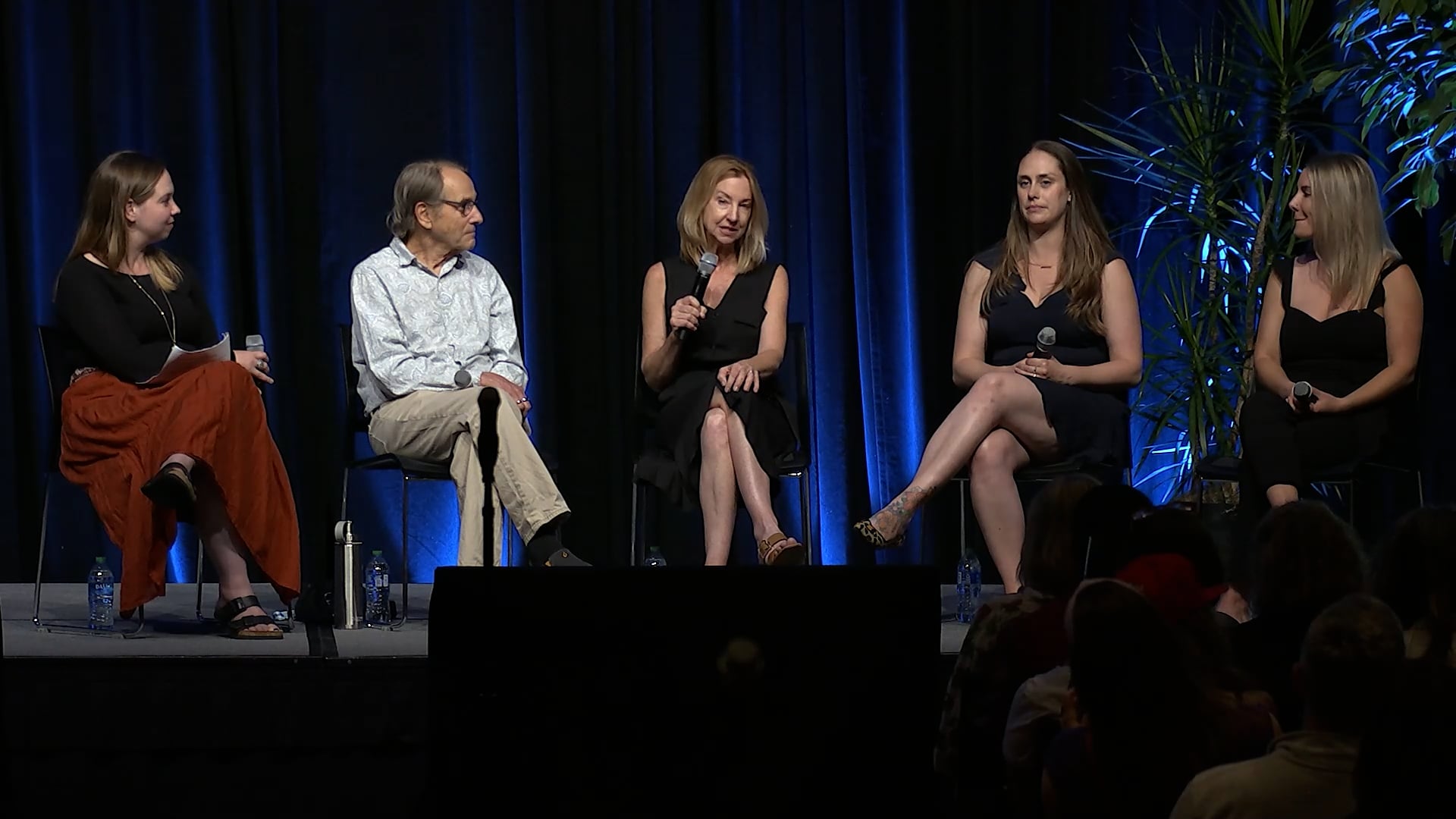
Dr. Anne Wagner and Dr. Michael Mithoefer discuss therapeutic potential of MDMA for couples, sharing insights from their MDMA-assisted couples therapy trials and ongoing research with Dr. Chandra Khalifian and
Chandra Khalifian, Leslie Morland, Kayla Knopp
Psychedelic-assisted therapies for adolescents are discussed, including the use of ketamine for treatment-resistant depression and the need for further studies and careful consideration of risks. Traditional use of plant medicines
Corine de Boer, Rebecca Kronman, Glauber Assis
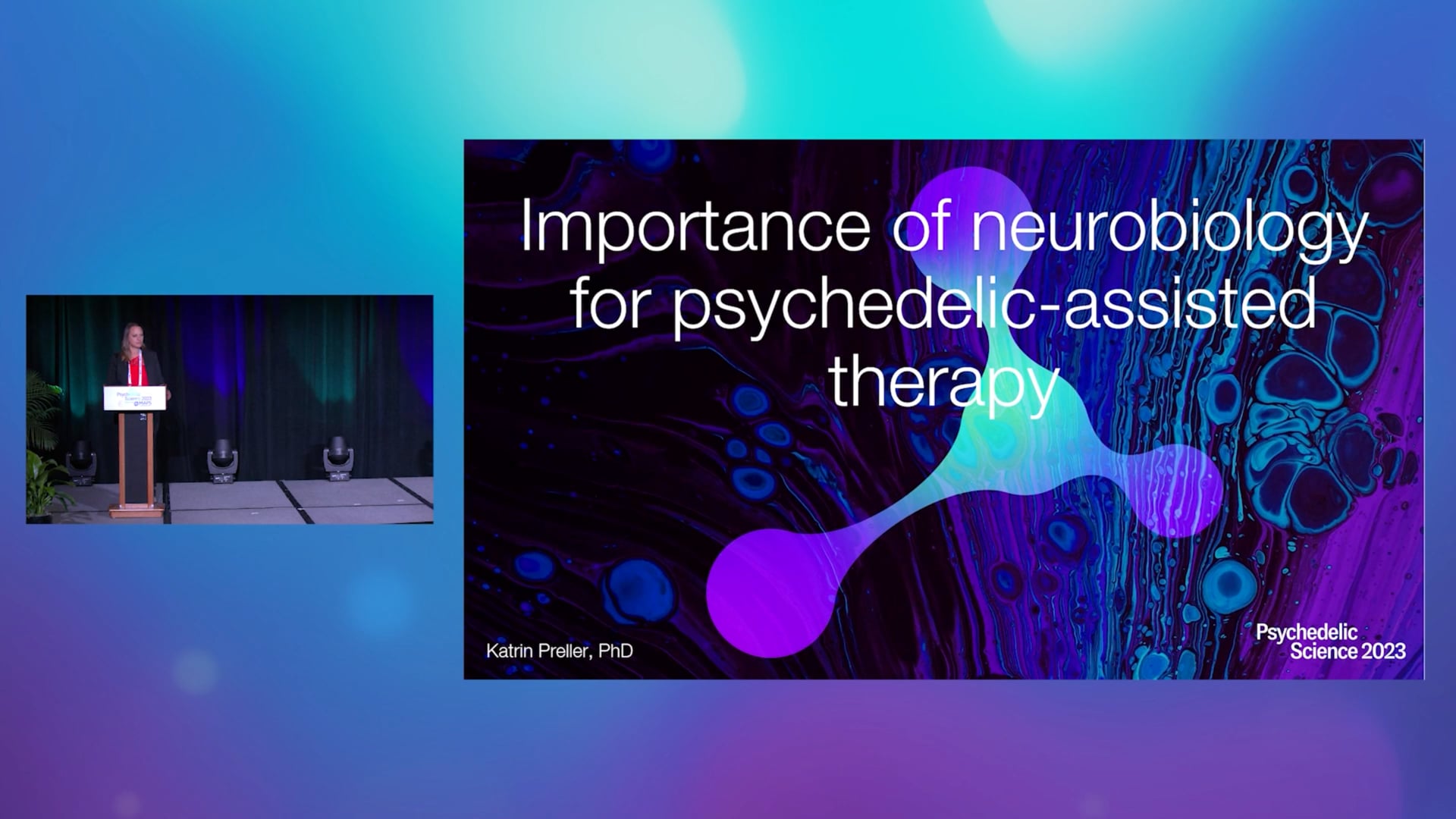
Clinical trials show potential of psychedelics for psychiatric treatment, but studies note varied responses. Unclear clinical mechanism discussed in talk on neurobiology and optimizing psychedelic therapy.
Panel explores challenges of managing expectations and risks in psychedelic-assisted therapy amid growing media coverage. Participants, patients, and practitioners often lack information on risks.
David B Yaden, Xiaojue Hu
Ground your understanding in respect for diverse traditions, informed consent, and justice-oriented pedagogy.
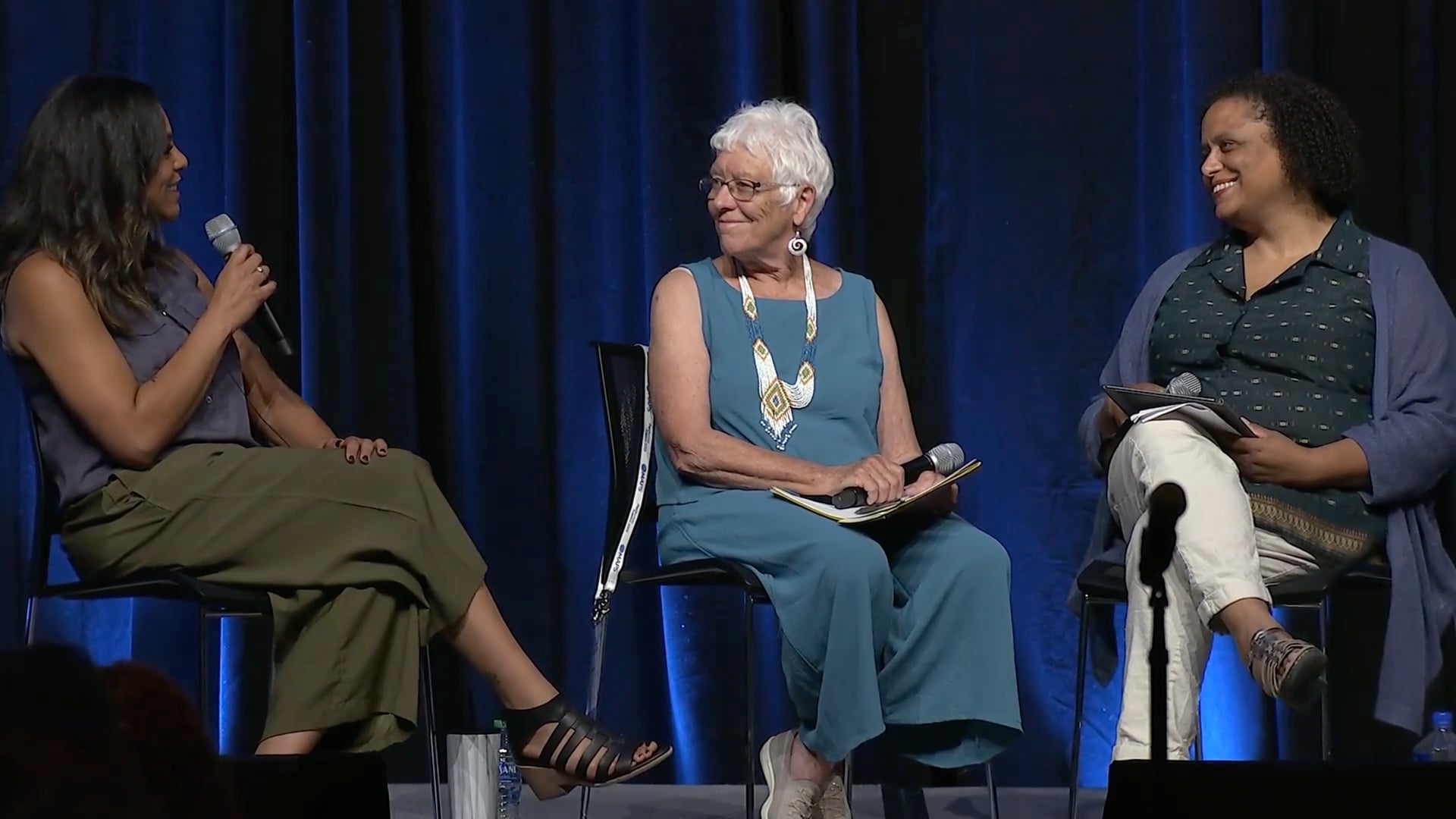
Therapists and religious professionals discuss ethical considerations in using psychedelics with vulnerable individuals, emphasizing the need for integrity and accountability in the psychedelic profession.
Cedar Barstow, Jennifer C Jones
Traditional medicines and indigenous communities attract outsiders, but interactions can unintentionally harm. How can outsiders respectfully engage and contribute to traditional cultures?
Sandor Iron Rope, Claude Guislain, Sutton King
Session explores health equity challenges and opportunities in mainstream psychedelic therapy, focusing on experiences of 3 women of color. Topics include overcoming inequity, cultural trauma, power dynamics, and ancestral healing.
Claudia Cuentas, Sara Reed, Deran Young
Panel of experts explores psychedelics' role in conflict resolution, restorative justice, and peace-building. Discussion includes research, experiences, and ethical considerations for integrating psychedelics into transformative processes.
Young elders explore merging tradition and modernity, addressing political, ecological, and epistemological challenges. Discussion aims to balance tradition and progress in a changing world.
Explore the tools, platforms, and funding models that are expanding how and where psychedelic education happens.
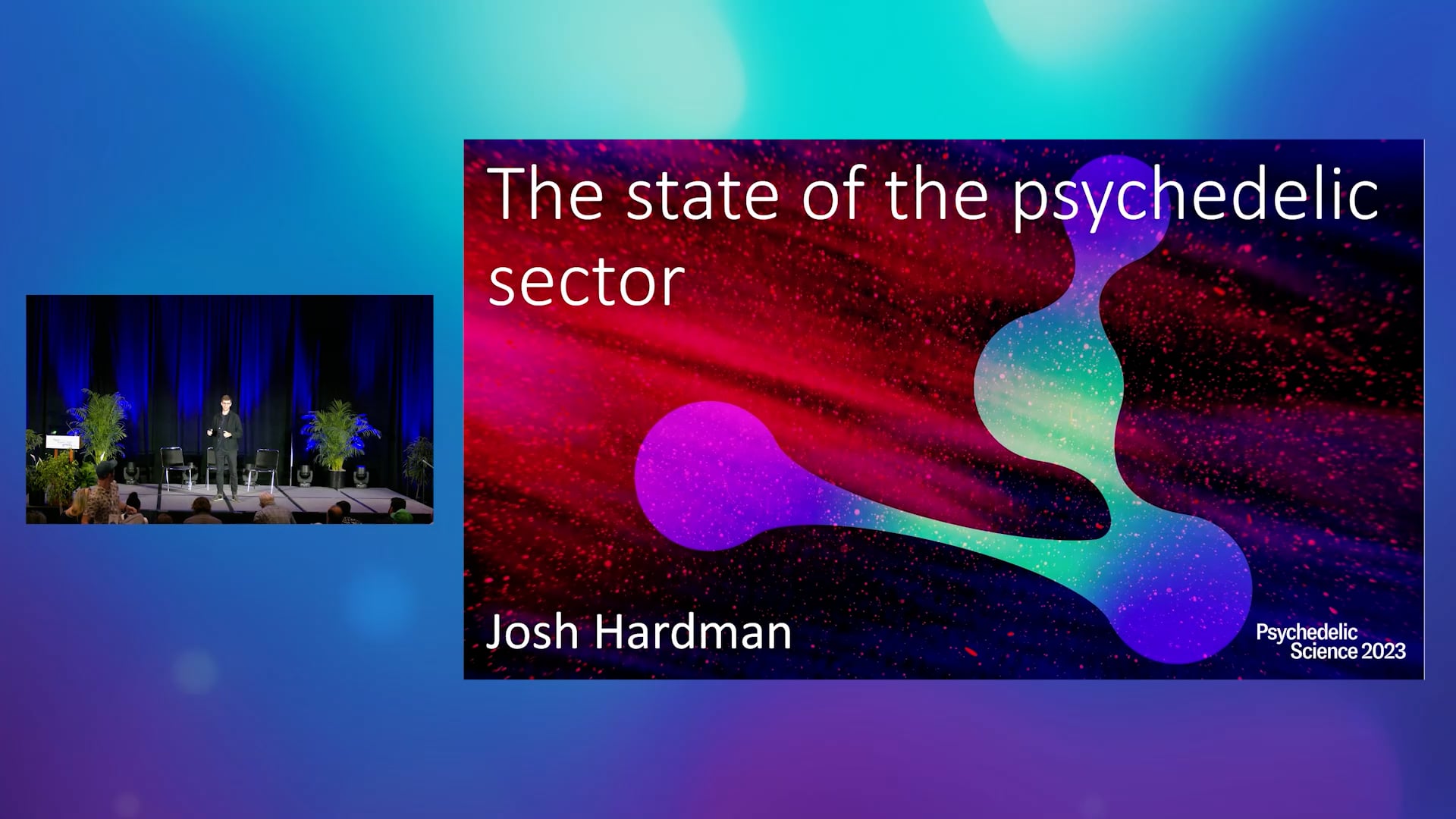
Hardman provides a quick overview of the emerging psychedelic sector, covering financial, research, and policy landscapes with data visuals. He also explores unanswered questions about the sector's future.
Indigenous plant medicines and practices are threatened by colonialism, extraction, and climate change. Supporting traditional Indigenous Medicine conservation directly supports climate and biodiversity conservation.
Miriam Volat, Mona Polacca, Chief Nixiwaka Biraci Yawanawa
Panel explores challenges of managing expectations and risks in psychedelic-assisted therapy amid growing media coverage. Participants, patients, and practitioners often lack information on risks.
David B Yaden, Xiaojue Hu
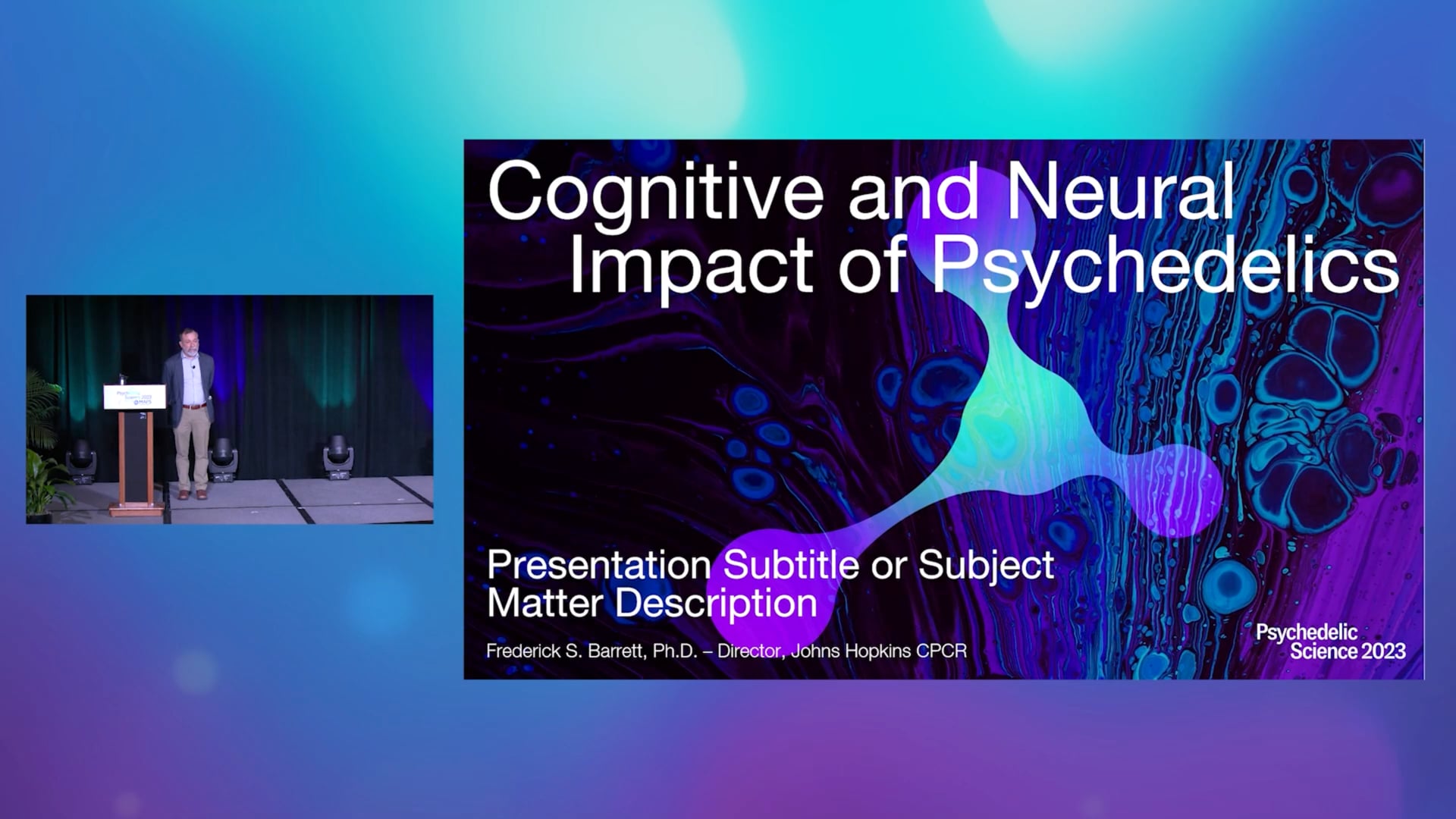
Manoj Doss discusses psychedelic impact on episodic memories, highlighting FLUX theory. Fred Barrett explores psychedelic therapy's potential for lasting shifts in psychological and cognitive flexibility across disorders.
Frederick Barrett, Manoj K. Doss
Capture the most inspiring moments and conversations that are bringing psychedelics into mainstream discussion.
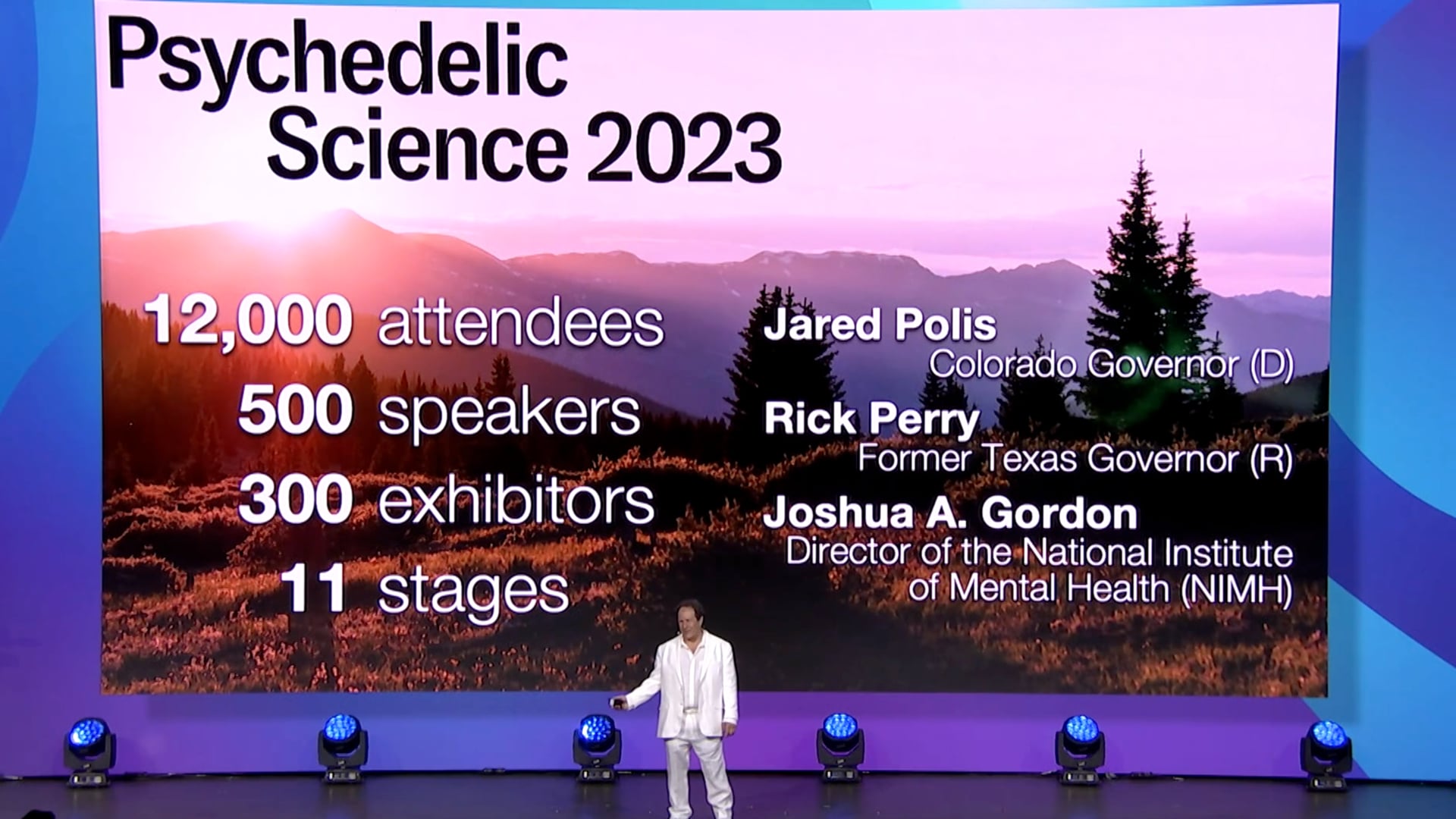
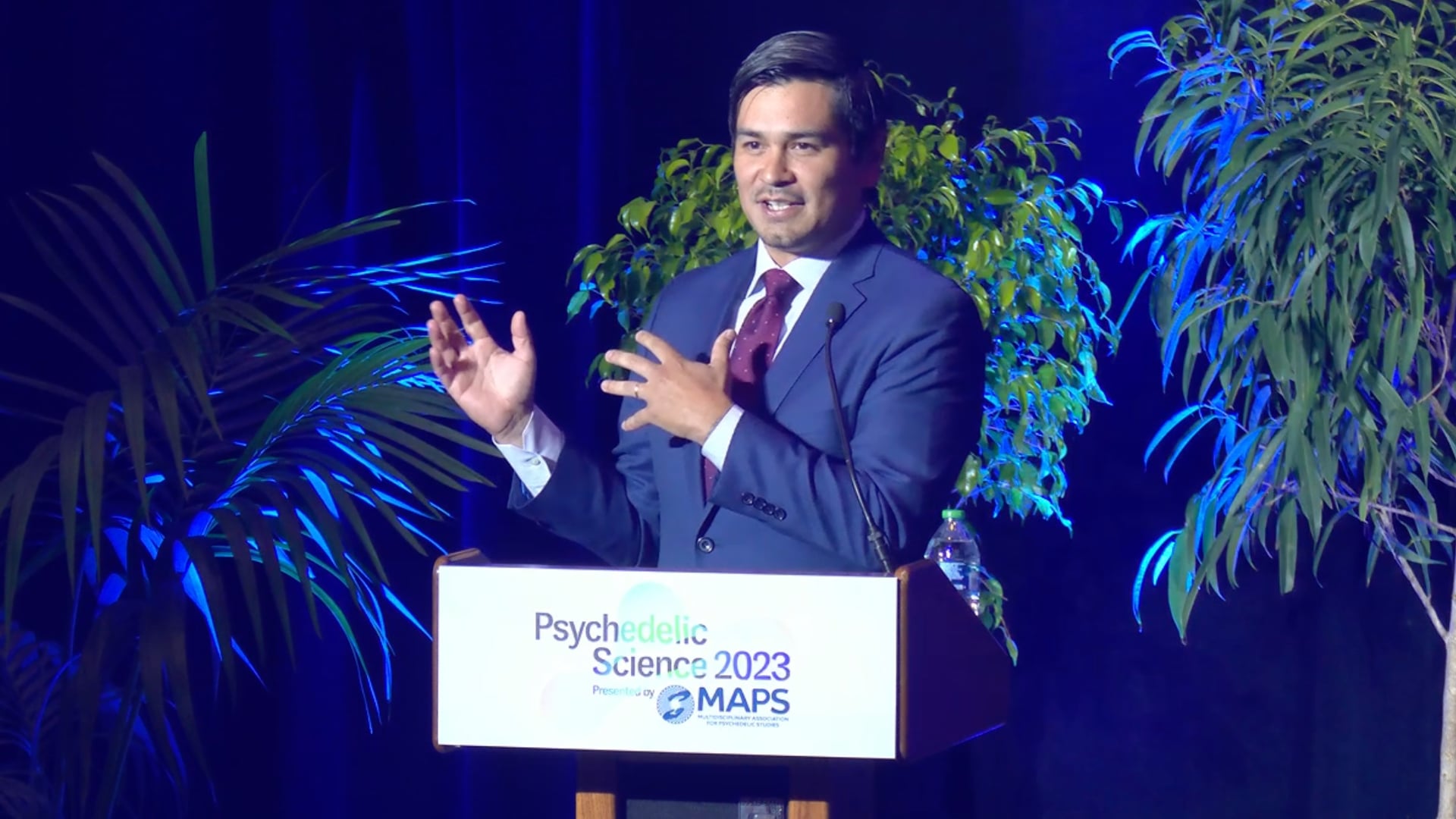
Psychedelic Science 2023 features opening land acknowledgement and addresses by Rick Doblin, Governor Rick Perry, and Governor Jared Polis.
Gov. Rick Perry, Governor Jared Polis, Maya Padilla
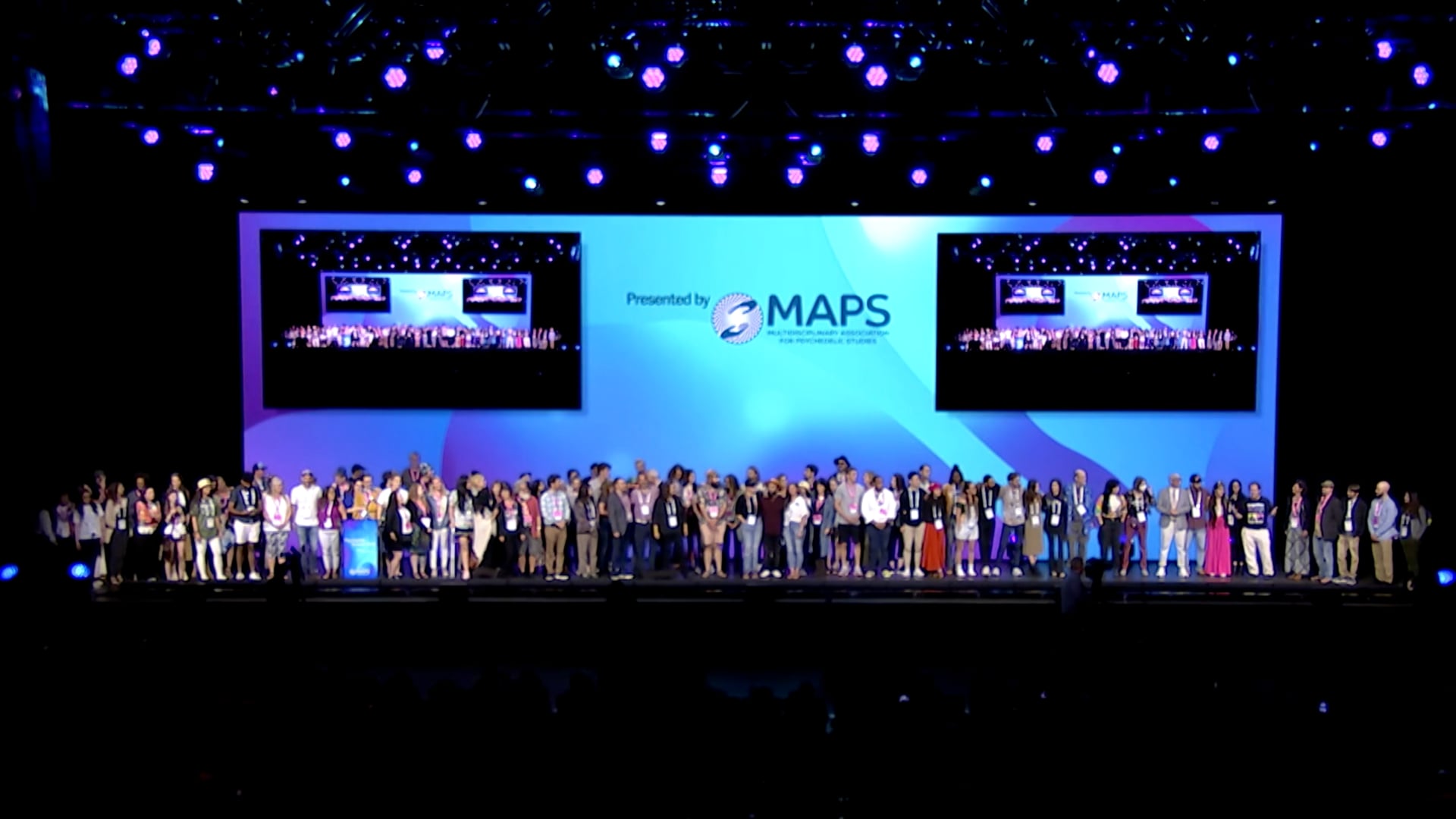
Key themes at Psychedelic Science 2023 included examining access, affordability, and reciprocity. The community was urged to address the impact of colonial systems on Indigenous communities and ensure equity for
Marwan and Noam, Snow Raven
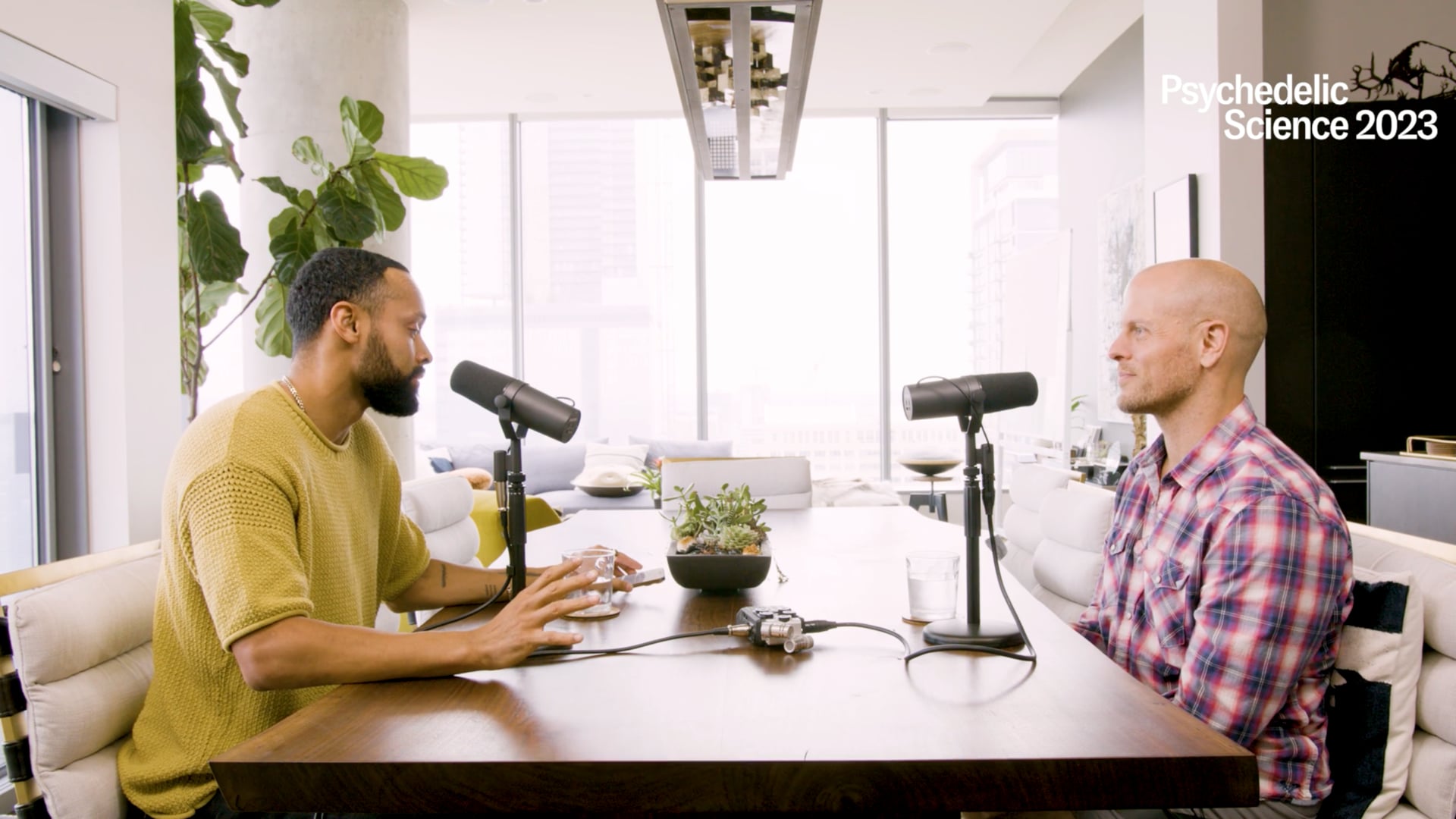
Tim Ferris, Devon Philips
Michael Pollan, an influential author, sparked interest in psychedelic research with his book "How to Change Your Mind." Bob Jesse, a key figure in the resurgence of psychedelics, has made
Robert Jesse, Michael Pollan
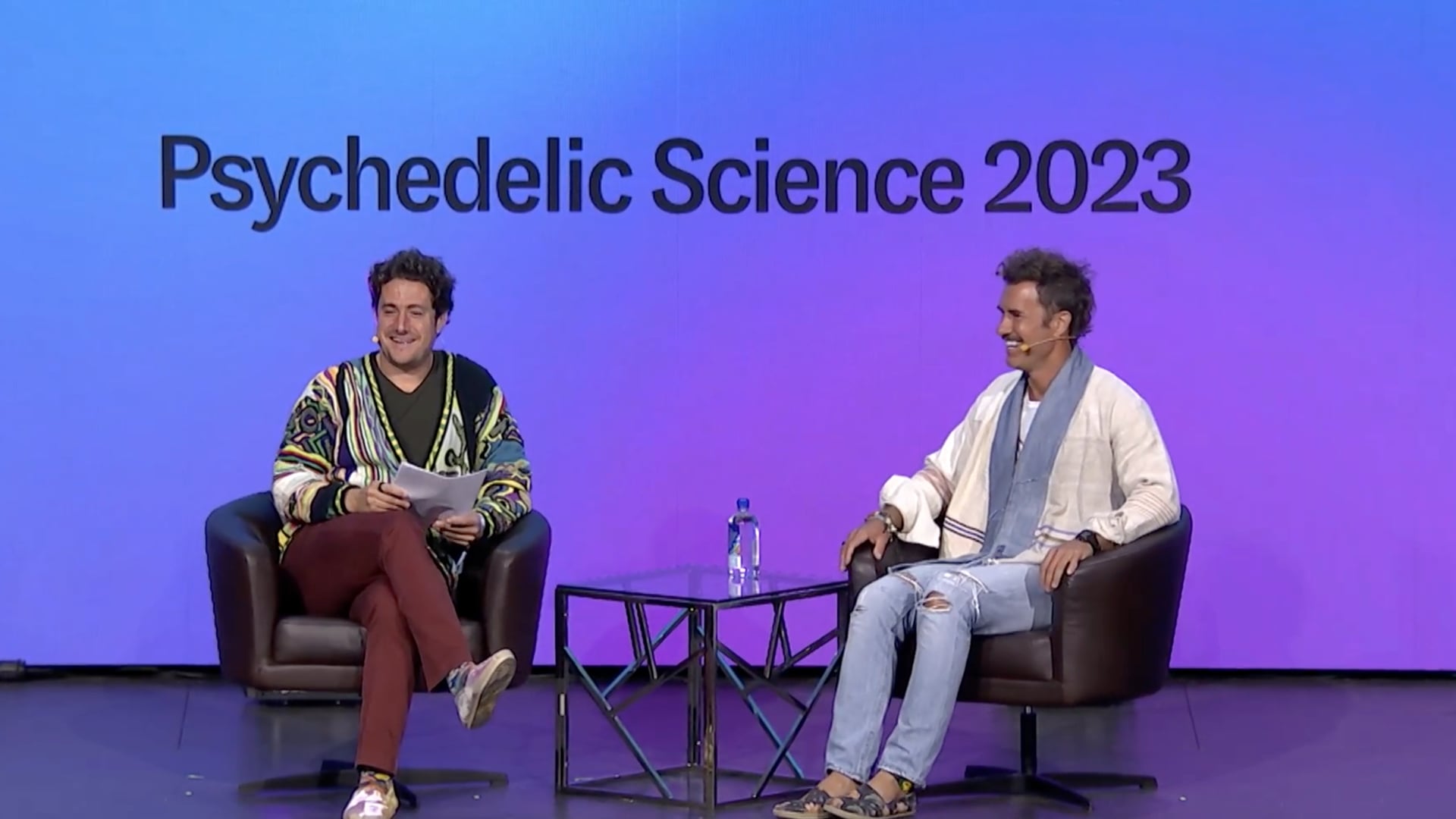
Blake Mycoskie founded TOMS Shoes with the One for One® model, providing shoes to children in need globally. He also co-founded Madefor to promote positive habits and practices.
Joe Green, Blake Mycoskie
Vicky Dulai of Compassion For Addiction moderates a discussion with Amy Emerson of MAPS Public Benefit Corporation and Rachel Yehuda of Icahn School of Medicine on leadership in the psychedelic
Whether you’re a clinician, practitioner-in-training, or simply curious about therapeutic models, this playlist equips you with real-world insights, safety protocols, and ethical considerations for responsible integration.
Dr. Anne Wagner and Dr. Michael Mithoefer discuss therapeutic potential of MDMA for couples, sharing insights from their MDMA-assisted couples therapy trials and ongoing research with Dr. Chandra Khalifian and
Chandra Khalifian, Leslie Morland, Kayla Knopp
MAPS completes Phase 3 study for MDMA-AT in PTSD treatment, marking historic milestone in psychedelic drug research. Safety and efficacy of MDMA-assisted therapy still under investigation.
Keren Tzarfaty, Michael Mithoefer, Julie Holland
Therapists and clinicians must collaborate to integrate psychedelic therapy into the behavioral health system, engaging professional organizations, providers, payers, and policymakers. Key steps for integration and clinician involvement will be
David Esselman, Sarah Abedi
Panel explores challenges of managing expectations and risks in psychedelic-assisted therapy amid growing media coverage. Participants, patients, and practitioners often lack information on risks.
David B Yaden, Xiaojue Hu
Therapists and religious professionals discuss ethical considerations in using psychedelics with vulnerable individuals, emphasizing the need for integrity and accountability in the psychedelic profession.
Cedar Barstow, Jennifer C Jones
Session explores health equity challenges and opportunities in mainstream psychedelic therapy, focusing on experiences of 3 women of color. Topics include overcoming inequity, cultural trauma, power dynamics, and ancestral healing.
Claudia Cuentas, Sara Reed, Deran Young
Psychedelic-assisted therapies for adolescents are discussed, including the use of ketamine for treatment-resistant depression and the need for further studies and careful consideration of risks. Traditional use of plant medicines
Corine de Boer, Rebecca Kronman, Glauber Assis
Become a MAPS Member with a monthly donation
As a Member, you’re not just making a donation — you’re joining a community that is at the forefront of advancing research, changing policy, and evolving education around psychedelics. Join us in shaping a future where these life-changing tools are available to those who need them most.