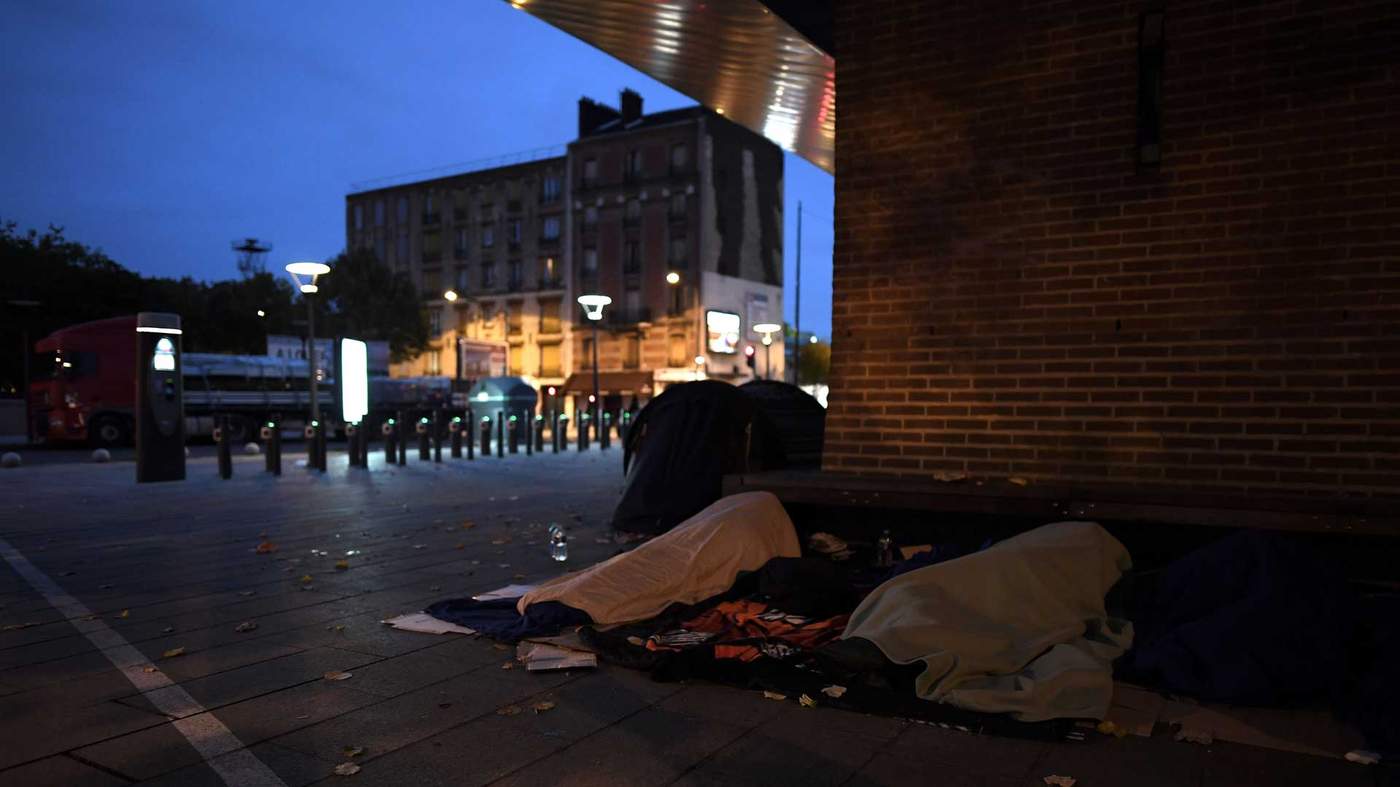
The number of rough sleepers is rising quickly in England.
Across the Channel, French President Emmanuel Macron has said he wants to eradicate rough sleeping entirely.
Will a solution be found?
Who was Tango?
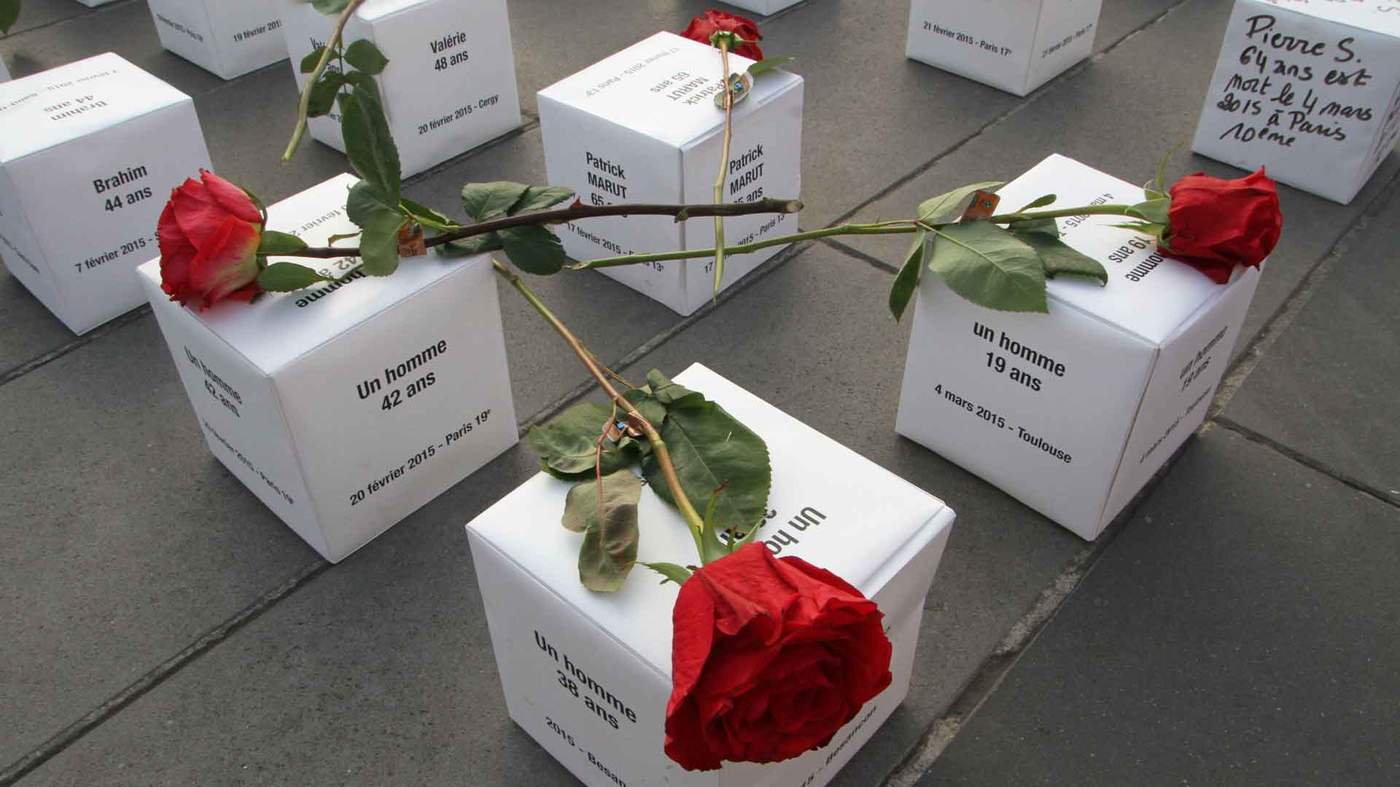
They are short, brutal tributes.
Darius, who “livened the area” around rue Lafitte, and was dead at the age of 43.
Or Pierre, “found by a local resident, near the bins in rue Jacques Kellner”.
Or Michel, who died on 21 January in rue Matignon, “in a parking lot where he lived for 20 years”.
Clement Etienne runs a cafe in a quiet street not far from Tango’s park. The doors open promptly at 08:00 most mornings and there’s often a queue for the coffee machine. Unlike most cafes, the windows of this one are carefully painted over to provide privacy - you can eat, drink and even sleep there for free, and the whole operation is housed in a retired double-decker bus. It’s part of a project by the organisation Enfants du Canal to combat the exclusion of homeless people in Paris.
Tango had been living on the streets for 20 years when he first met Clement, and was already a local fixture - known throughout the area only by his nickname. He almost never told people his real name, says Clement. “He was too ashamed - worried that reports about his situation would get back to his family.”
For this article, too, we have concealed his real identity, and even his real nickname, at the request of those who worked with him.
“He was more victim than thug,” remembers Clement. “He drank a lot but he was adorable - always joking, he wouldn’t hurt a fly. He wasn’t a cultivated man, but he had a real sense of kindness.”
Slowly, over the years, as the two men got to know each other, Tango’s story began to emerge.
“He had a dream, that he would return to Morocco,” Clement says. “It was more of a fantasy, really - and I think he knew that deep inside.”
Tango had arrived in France illegally, 30 years before - a young man from France’s former North African colony following one of the many migrant trails towards Paris.
Back in the 1980s, as an illegal immigrant, Tango had no right to social housing in France, and rough sleeping was against the law.
But back then, Clement says, it was easy for even those who arrived illegally to get official papers. Tango secured French residency, found work in a factory, and began sending money home to Morocco.
He might have hoped that his story would end, decades later, with a comfortable old age and a peaceful death, supported by the structures of French society, and surrounded by close family and friends.
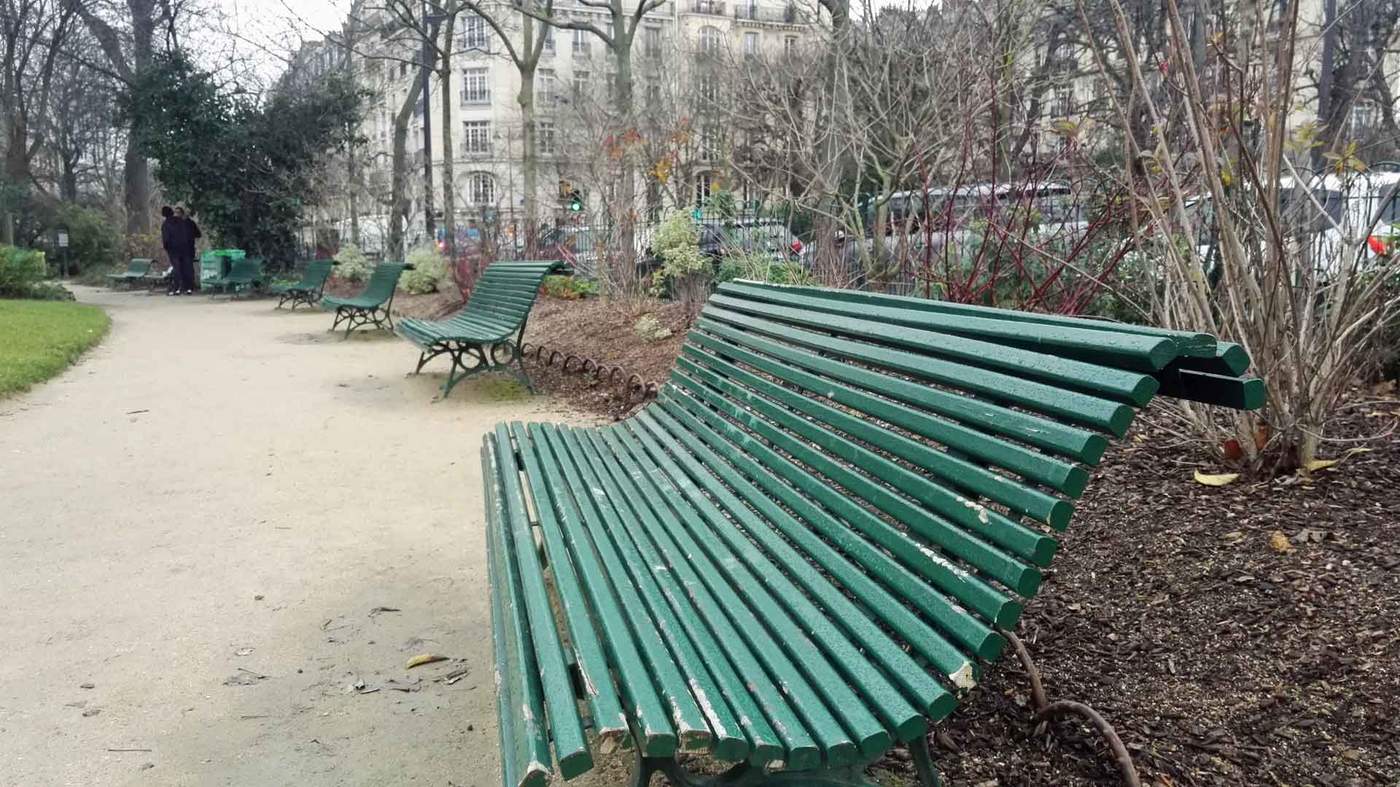
Instead, the end came on a bench in a city park.
A friend, sleeping nearby, woke one winter morning to find the middle-aged dreamer from Morocco coughing up blood. He called Clement for help. Tango died shortly after reaching hospital, from pulmonary embolism.
The park benches where Tango slept - and where he died
Becoming homeless
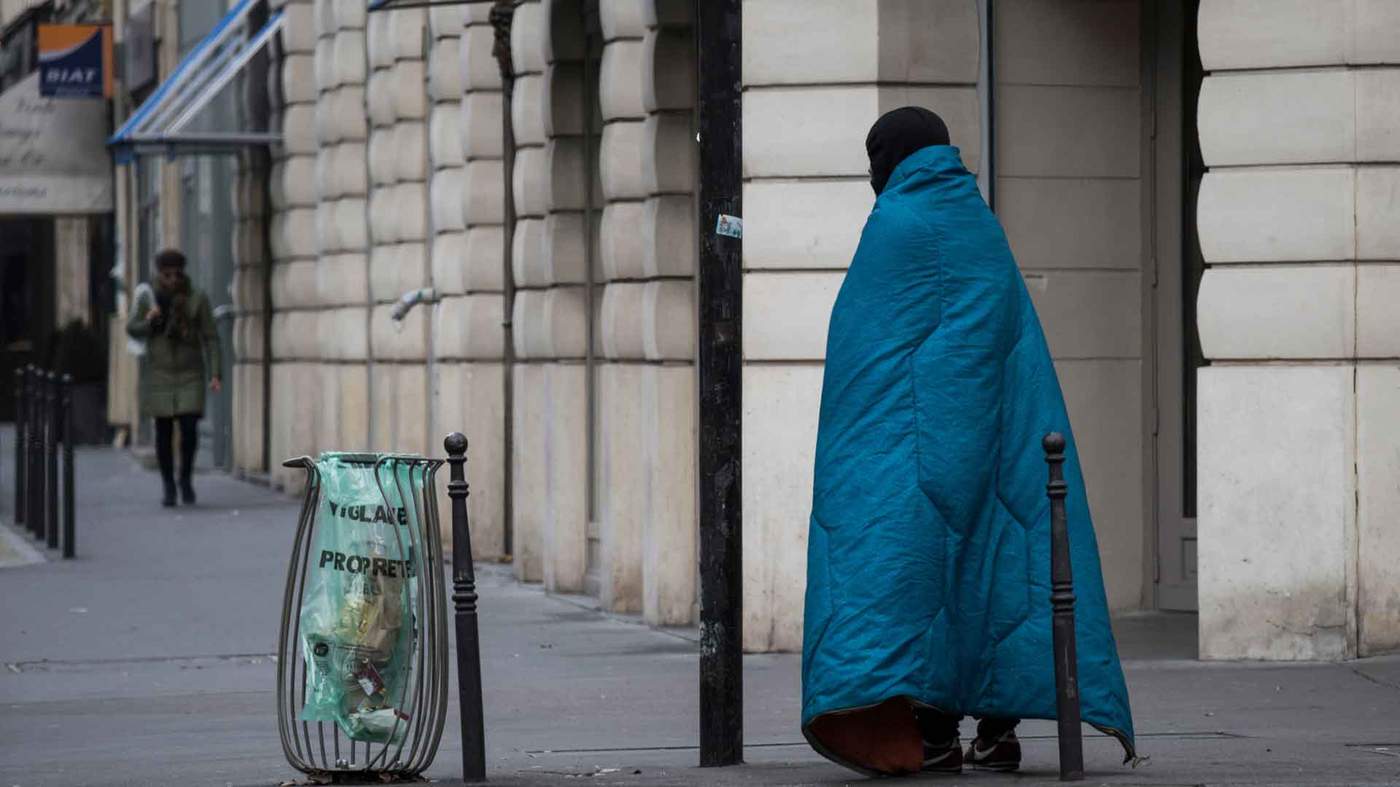
For the first decade of his life in France, Tango wasn’t homeless. By day, he worked in the factory alongside dozens of other men just like him - by night he shared overcrowded living quarters with them.
It’s a pattern familiar to many Moroccan men of his generation. The lack of a wife or children would have allowed him to send most of his earnings back home. But it also left him isolated.
“He would have been surrounded by people,” says Clement. “It’s a community, but it’s a community made up entirely of men, all the same age, from the same place, with the same illusions. They’re all together, but they’re isolated from the rest of society, so they’re precarious.”
In that situation, it takes little for the structures fall apart. In Tango’s case, says Clement, it was probably a combination of alcoholism and losing his job. One may well have prompted the other.
Ten years after he arrived in France, Tango entered a new kind of social isolation - living on its streets.
It’s often difficult to pinpoint a single trigger for homelessness. The French talk about a “rupture” - of health, of relationships, of work or rental contracts - that leads someone down the path to living on the streets.
One of the homeless people who currently uses the ShelterBus puts the date of his own “rupture” as 6 May 1991 - the day his mother died without sorting out the right documents for their living quarters. But for many others the slide towards homelessness is slower, more blurred - a gradual fall through social safety nets that fail, or are simply not there.
“When you spend all day without doing anything... you get lost and people can see it in your eyes”
Bruno, homeless
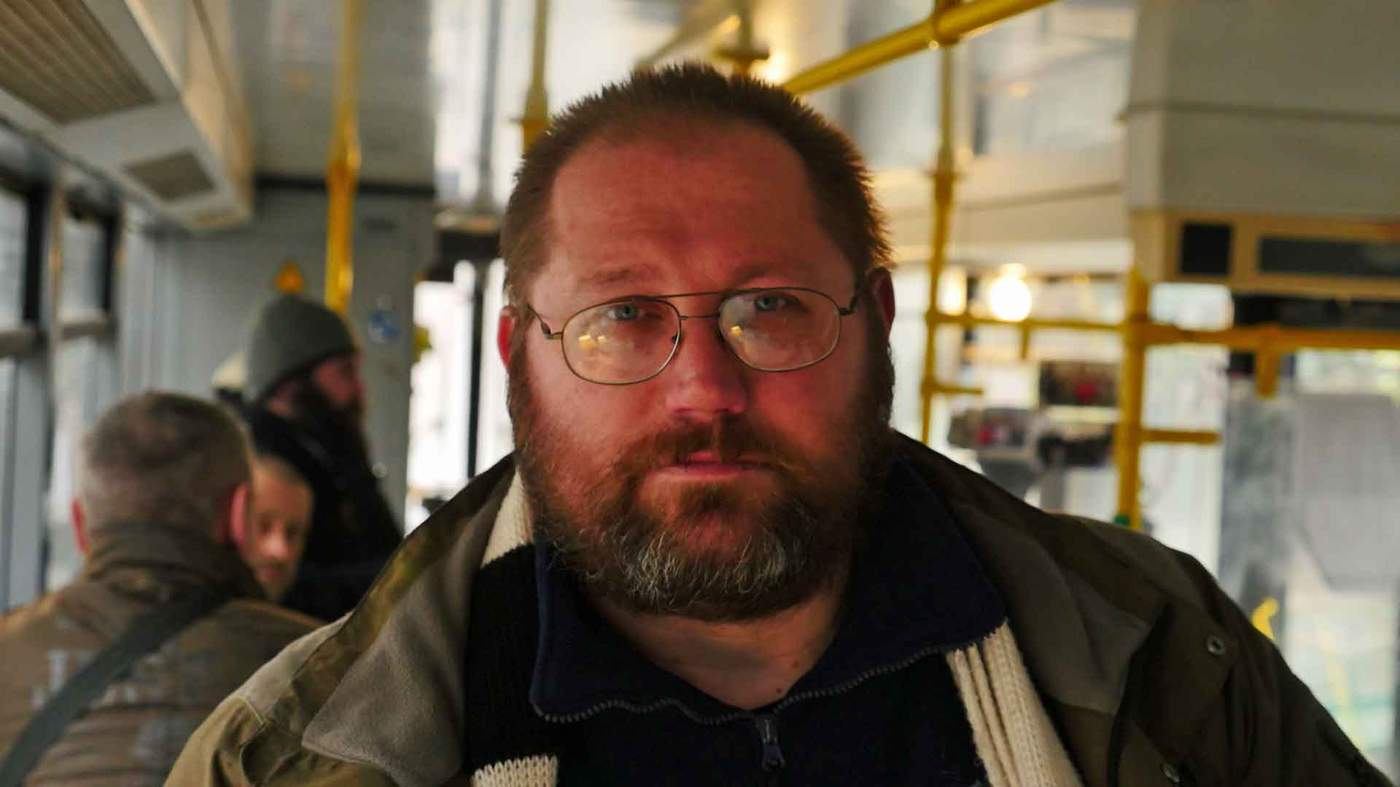
Bruno is another of the regulars at Clement’s ShelterBus, and at first glance could pass for someone living in regular accommodation. He stands tall and broad, and looks very clean, with an undamaged pair of glasses. He has been on the streets for the past four months, after losing first his job, and then his benefit payments.
“There’s a big problem with the way people look at you,” Bruno says. “They can see you are a bit lost. Because when you spend all day without doing anything, you go round and round in circles in your head - you get lost and people can see it in your eyes.”
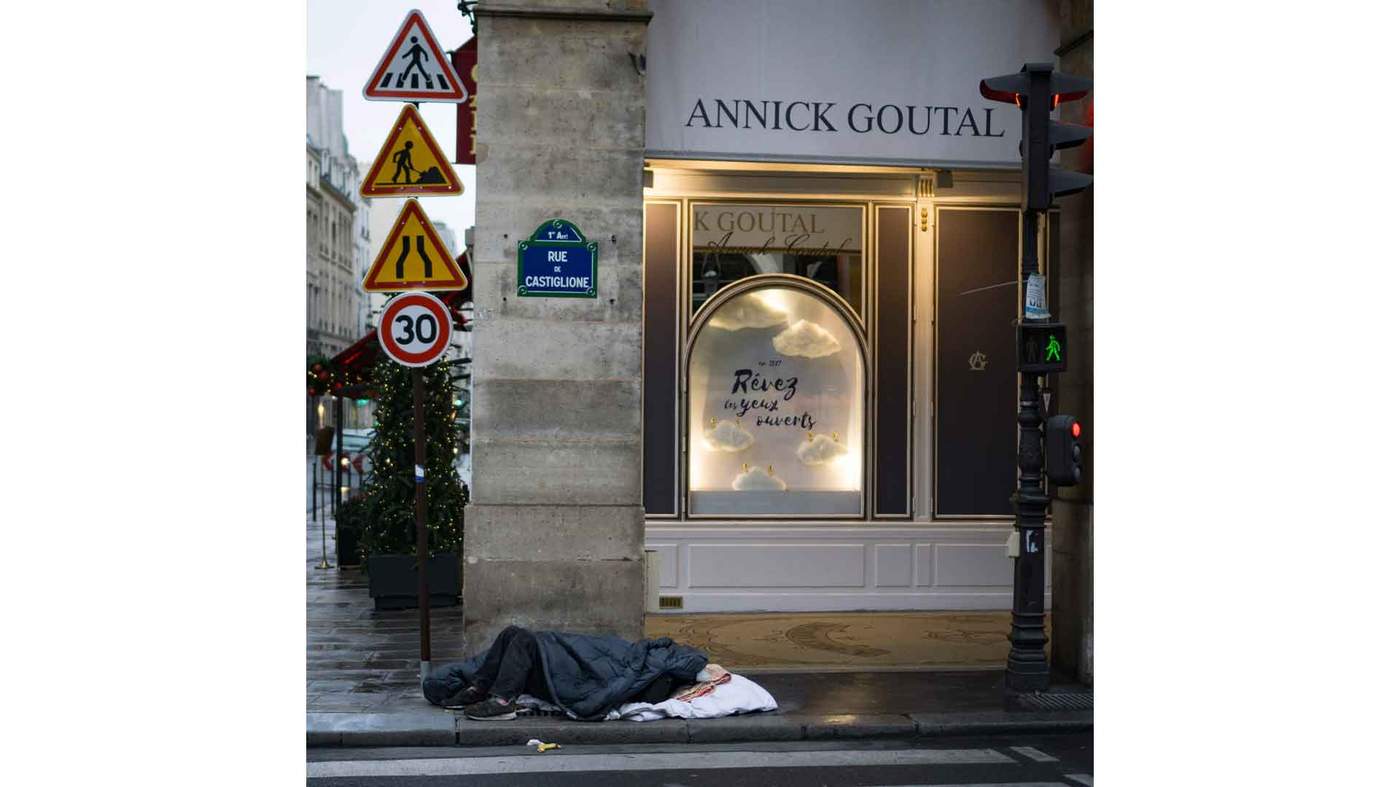
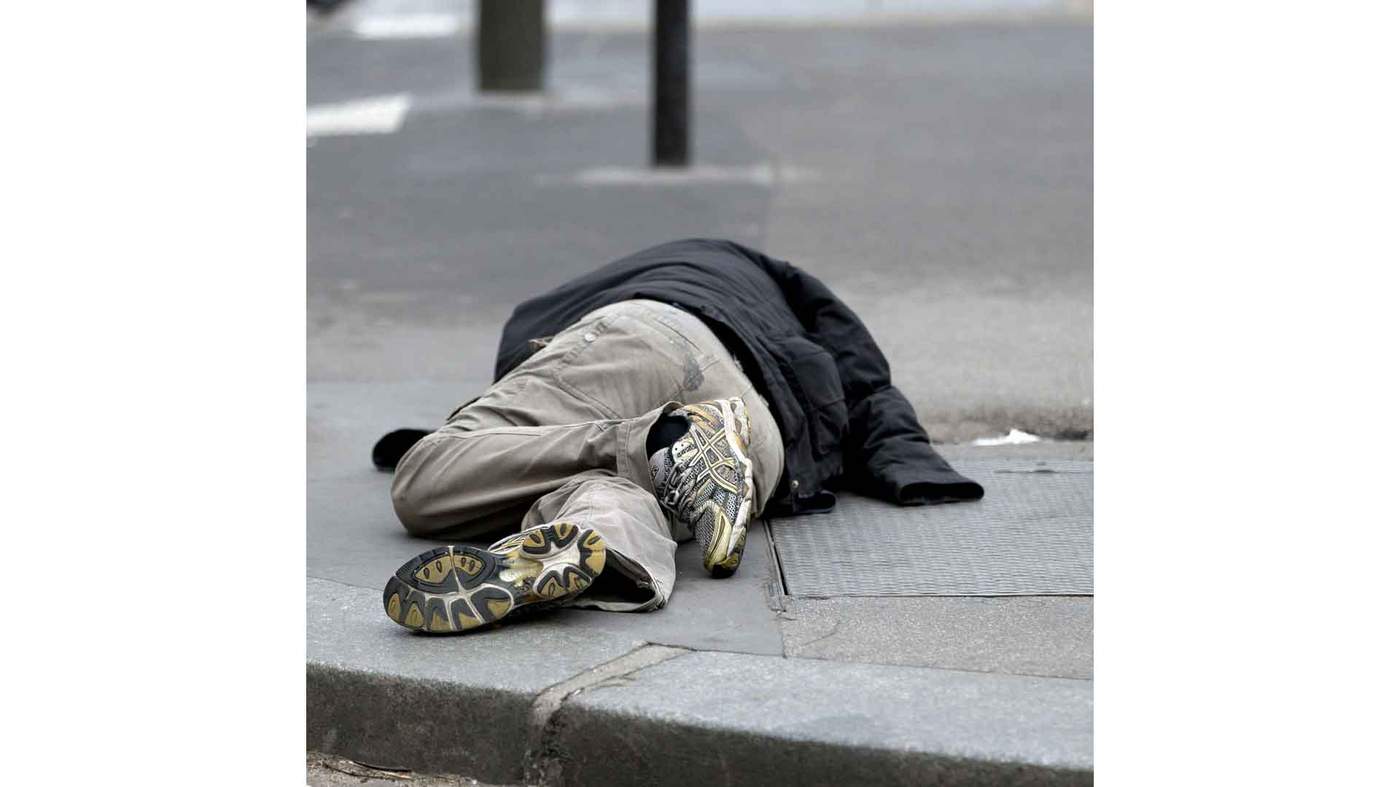
For Gilou, another long-time customer at the bus, this month marks 28 years of living rough in Paris. He sits down to chat with his half-empty bottle of rose wine, which he has given the surreal nickname “Titine Rosenbach”.
“I worked in the building trade,” he says. “I was a painter, an iron-worker and a chef in a kitchen. I’ve done all kinds of things. It all stopped when I had a breakdown and ended up in the psychiatric hospital, then in prison. I’ve been in prison 14 times.”
He shows me his tattoos, which include a series of hyphens around his wrist to indicate a thief, and a symbol meaning “death to the police”.
The most difficult part of being on the streets is finding lunch, he says. “Dinner is fine, because if I’ve done a good day’s begging, I always have some food.”
He pulls out three pieces of cheese he’s been given from a nearby fromagerie.
“I beg three times a week in the marketplace here. All the shopkeepers know me, and they like me. The neighbourhood is really nice. But sometimes people are cold, and sometimes residents accuse me of peeing, though it’s not true.”
7-8,000 rough sleepers on the streets of Paris
29,000 homeless people in the Paris Metropolitan Area
Estimated 141,500 homeless people in France in 2012, up 50% from 2001
Source: INSEE
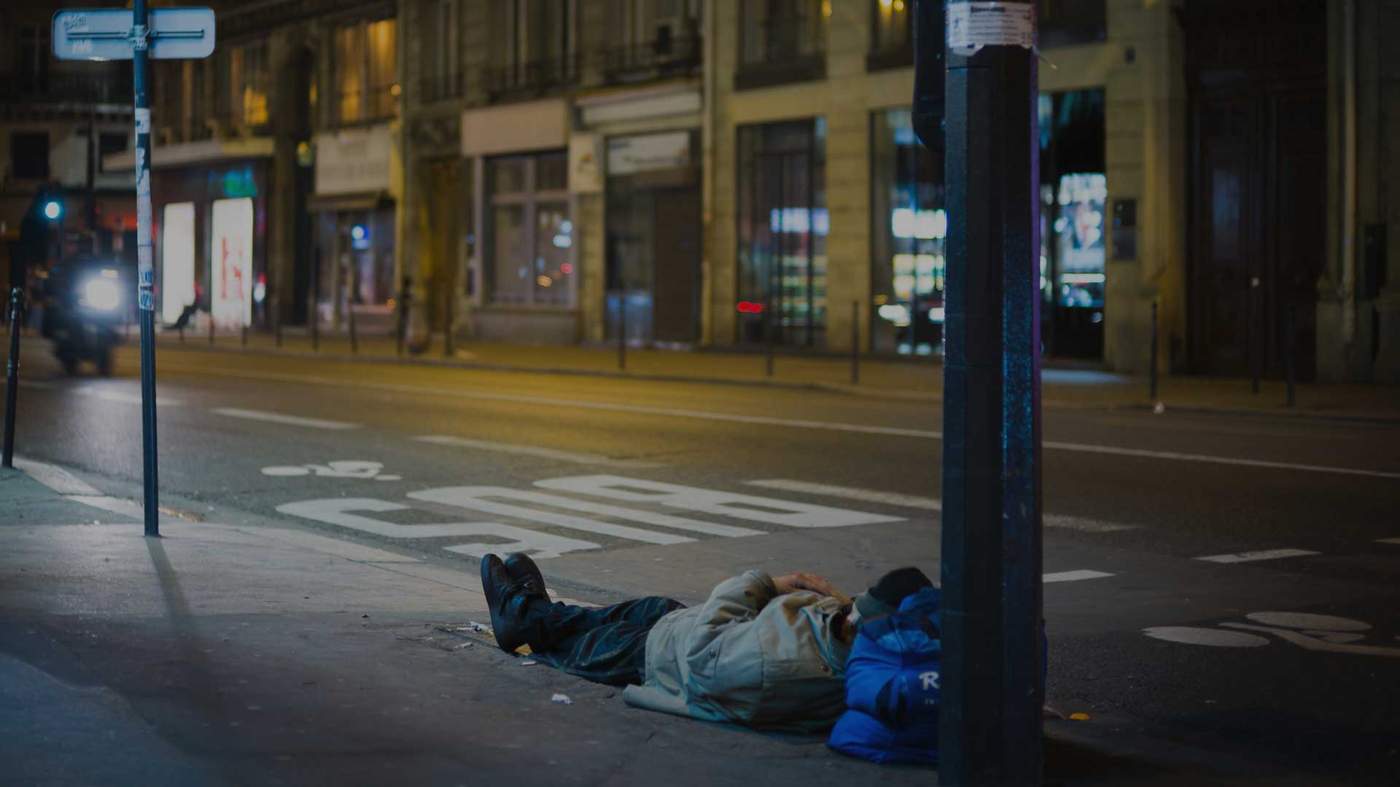
Attitudes
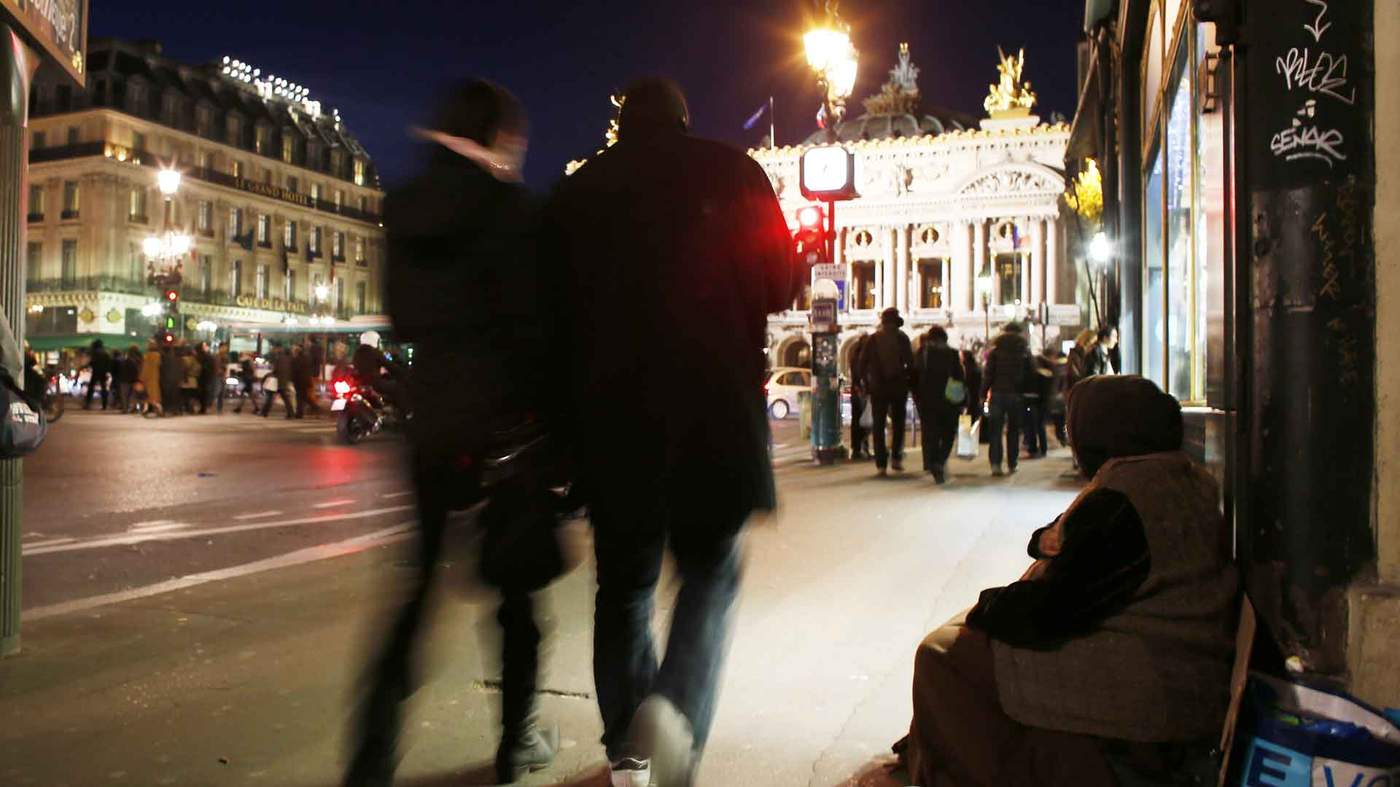
Atittudes towards homeless people in France are complex. There are plenty of people who view them as a nuisance - an unsightly disturbance bringing down property prices, relying on hand-outs, and posing a vague, unformed threat.
The French believe homelessness is a structural issue... British people believe more that it comes from individual responsibility and addiction”
But Prof Julien Damon, from the prestigious university, Sciences-Po, believes Paris is more tolerant and welcoming than London, for example.
“The French believe homelessness is a structural issue - it’s about unemployment, the housing market - that the individuals are not responsible for their situation. British people believe more that it comes from individual responsibility and addiction.”
When British people were asked about their views of homeless people by the polling agency YouGov four years ago, the biggest group (35%) said they believed that homeless people had “probably made bad choices in life that got them into their situation”.
In contrast, a 2009 survey in France by the polling agency CSA and one of the country’s main homelessness organisations found that the majority of those polled - almost two-thirds - thought that the state was primarily responsible for people ending up living in the streets, and that three-quarters felt solidarity with homeless people.
Staying on (and getting off) the streets
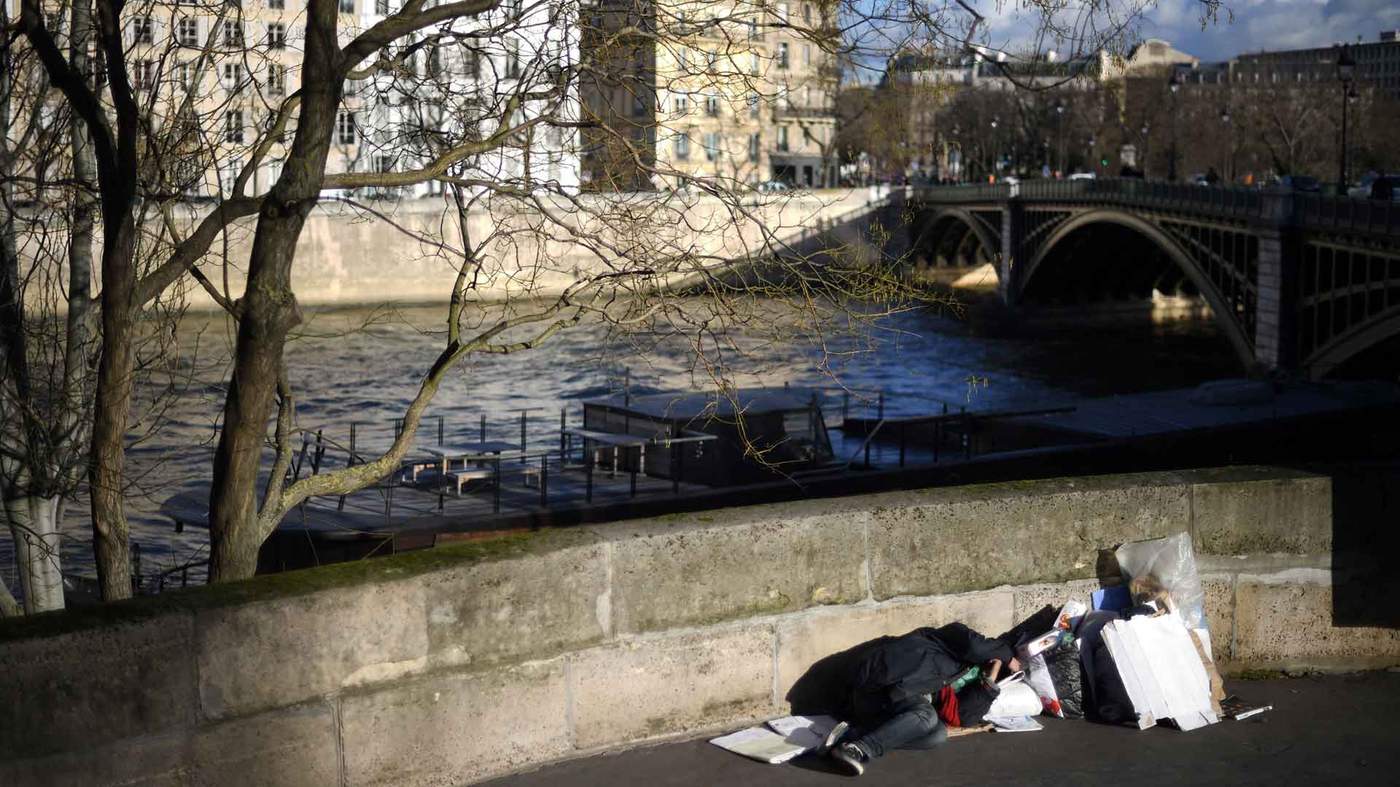
With pressure continuing to grow, says Serme-Morin, shelters are not the whole solution.
“There’s been a real shift in attitude following the change to the law in 2007 - it’s starting to realise that the solution is long-term housing, and to think about Housing First.”
Housing First is a model from Finland that turns on its head the traditional approach towards homelessness that trapped Tango and others like him.
“Previously, it was: sort out your addictions and psychiatric problems first, then we’ll give you temporary accommodation to see if you can handle it, and then if you’re ready, you’ll get permanent accommodation,” explains Serme-Morin. “Housing First means long-term housing is a precondition for sorting out everything else.”
The real sticking point is a lack of social housing stock.
Eric Constantin, of Fondation Abbe Pierre, says that to solve the problem in the Ile-de-France region around Paris, 70,000 homes need to be built each year from 2010-2030, with half of these set aside for social housing. So far, that target has gone unmet for all but one year.
Almost three-quarters of residents in the Ile-de-France region qualify for social housing, he says. “The French model is unique, but now it’s under threat, because the government thinks it should start to focus on the poorest of the poor - which is London’s approach.”
A long-term home, without conditions attached, might well have been the key to getting Tango off the streets, but it would have meant Paris having enough social housing to go around.
As it is, he chose to sleep on a bench in a Paris park, drinking away his days while dreaming of rebuilding his life.
The end