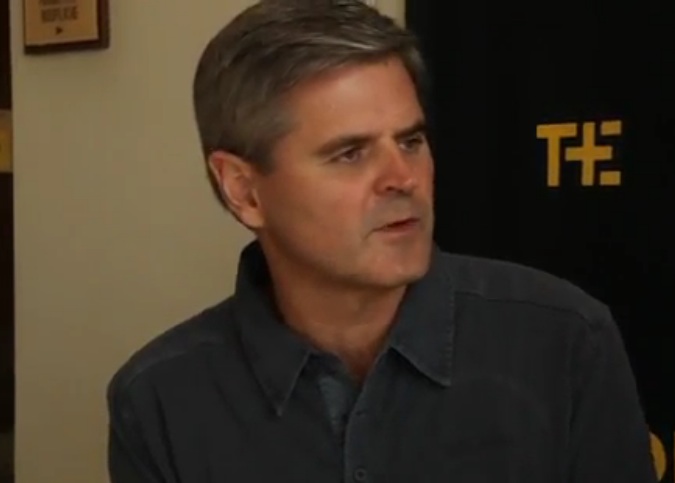
AOL founder Steve Case has a three-point plan to get job growth back on track in America, and it all revolves around ways the government can spur more entrepreneurship. Over the past three decades, high-growth companies created 40 million jobs. “It accounts for all the net job creation,” Case tells me in the video interview above.
I sat down with Case yesterday at the Techonomy conference. Case is the chairman of the Startup America Partnership and sits on the White House Jobs Council. He thinks the U.S. should:
1. Reform its immigration policy to make it easier for skilled workers and entrepreneurs to come to this country. “We are losing the global battle for talent,” he says.
2. Unlock access to capital by making crowdfunding legal and changing capital gains for certain types of investments
3. Change regulations and Sarbanes-Oxely to make it easier for smaller companies to go public.
His crowdfunding proposal would require the government to relax the rules around accredited investors (i.e., wealthy individuals) being the only ones allowed to invest in private companies. Some crowdfunding proposals out there would allow anyone to invest up to $10,000 in a private company without being an accredited investor. “It seemed crazy to me that you have to be an accredited investor to invest in a company,” says Case, “but you can go to Las Vegas and lose $10,000 at the table in an hour but you don’t have to be an accredited gambler to do that.”
More startups will create more jobs. Case also thinks the threshold for Sarbanes-Oxley reporting requirements for public companies should be raised from today’s $75 million market cap to only kicking in for companies with $1 billion or more of market value. When he took AOL public the first time twenty years ago, “80 percent of offerings were under $50 million.” Now it’s the reverse. Smaller companies simply aren’t going public, they are being sold instead. And that actually hurts jobs, because “job growth decelerates” after most acquisitions, says Case. He adds that “90% of job growth is after a company goes public.”
In the video clip below, Case talks about the “Second Internet Revolution” and the sharing economy that he is personally investing in with LivingSocial And Zipcar. (He talks more about LivingSocial and Groupon in this third outtake here). We also discuss why Internet startups haven’t yet had a big impact on sectors like education and healthcare.
(TechCrunch is owned by AOL, although Case is no longer involved with the company).
Techcrunch event
Boston, MA | June 23, 2026
Erick has been discovering and working with startups his entire professional career as a technology journalist, startup event producer, and founder. Erick is President & Founding Partner at Traction Technology Partners. He is also a co-founder of TouchCast, the leading interactive video platform, and a partner at bMuse, a startup studio in New York City. He is the former Executive Producer of the DEMO conferences and former Editor-in-Chief of TechCrunch (where he helped conceive, lead and select startups for the Disrupt conferences, among other duties). Prior to TechCrunch, which he joined as Co-Editor in 2007, Erick was Editor-at-Large for Business 2.0 magazine, and a senior writer at Fortune magazine covering technology.
At TechCrunch, he oversaw the editorial content of the site, helped to program the Disrupt conferences and CrunchUps, produced TCTV shows, and wrote daily for the blog. He joined TechCrunch as Co-Editor in 2007, and helped take it from a popular blog to a thriving media property. After founder Michael Arrington left in 2011, Schonfeld became Editor in Chief.
Prior to TechCrunch, he was Editor-at-Large for Business 2.0 magazine, where he wrote feature stories and ran their main blog, The Next Net. He also launched the online video series “The Disruptors” with CNN/Money and hosted regular panels and conferences of industry luminaries. Schonfeld started his career at Fortune magazine in 1993, where he was recognized with numerous journalism awards.