D&D Meets the Electronic Age | Original D&D Discussion

33 min read Original article ↗

Post by krusader74 on Dec 31, 2015 6:13:35 GMT -6

D&D Meets the Electronic Age

In 1979, Gangbusters creator and Original D&D Discussion contributor Rick Krebs had a D&D campaign called "Realm of the Celestial Wizard" when he wrote the following:

We were one of those fortunate groups to gain the use of a 4K (4,000 bit) memory, BASIC speaking microcomputer. We mentioned to several fellow DMs and gamers of our plans to program it to handle role playing games (D&D, Boot Hill), and to my surprise there was a lot of concern about letting a machine become a part of role playing games.

Quoted from the article "D&D Meets the Electronic Age" in Dragon (Issue 26 - Jun 1979), p. 26.

The purpose of this thread is to discuss the relationship between early D&D and computers. It sometimes seems today's grognards still don't like to mix computers and D&D. And I'm not sure why. Not oldschool? D&D's founding fathers both got into the computer gaming industry---

Dave Arneson: Computer company founder and Professor of computer game design. Quoting from Dave Arneson's official website: In 1978,

Arneson stepped into the computer industry. He founded 4D Interactive Systems, Inc., a computer company in Minnesota that is still in business today. He also did some programming and worked on several games. He eventually found himself consulting with computer companies.

Living in California in the late 1980s, he had a chance to work with special education children. Upon returning to Minnesota, he pursued teaching and began speaking at schools about educational uses of role-playing. In the 1990s, he began working at Full Sail, a private university that teaches multimedia subjects, and continues there as a professor of computer game design.

According to their projects page, 4D Interactive Systems, Inc. programmed several game titles for Avalon Hill, including Guns of Fort Defiance, Computer Acquire, Computer Stocks & Bonds, and Computer Baseball Strategy.

Gary Gygax: computer RPG game developer. Let me get this out of the way first: Gary Gygax did made some negative comments specifically about online computer games, as quoted in a New York Times article:

"There is no intimacy; it's not live," he said of online games. "It's being translated through a computer, and your imagination is not there the same way it is when you're actually together with a group of people. It reminds me of one time where I saw some children talking about whether they liked radio or television, and I asked one little boy why he preferred radio, and he said, 'Because the pictures are so much better.'"

But in a previous interview with Ciro Alessandro Sacco, Gygax expresses love for computer games and has even worked on developing them!

  • "I do have several builder/strategy and tactical historical games around that I would love to see as computer ones,..."
  • "I'm [in] the process of developing RPG-like games for the computer"---a reference to Lejendary Adventure, which began as a computer roleplaying game and became a tabletop game because of "two botched deals, not [Gary's] fault"

In Krebs's article, he finds a balance between the DM's imagination and the cold mathematical logic of the computer:

An analysis of D&D reveals that movement around a dungeon (which way to go, which door to open, should we fight or run, how do we disarm the trap, etc.) is basic logic (sometimes good logic, sometimes bad) problem solving that can be broken into a mathematical or a computer flow chart. But, the contents of the rooms, how monsters react, what a chamber looks like is an art that a DM develops from experience and use of his/her imagination. So why not let the computer handle the mechanics and the DM handle the material. With the computer doing part of the job it leaves the DM more time to be creative and interact with the players.

So what did Krebs's computer program, SAGE, do for his campaign? (And Rick: If you're reading this, can you please talk about SAGE? Do you still have the BASIC source code to SAGE???)

  • hit charts and damage allocation
  • name generation (for the thousands of minor NPCs)
  • creating requisites and levels of non-player characters
  • handling the bookkeeping details on player characters
  • basic Dungeon that runs itself

Krebs concludes:

the fear that the use of a micro computer will destroy the creativity of role playing games if used in them is groundless. Our experience in recent months has been very positive in SAGE's use in both D&D and Boot Hill (our program for Gamma World is not finished yet), and if anything, has helped this DM in handling his chores...

The micro computer has its place in role playing gaming as long as its limitations are understood, and the human programmer remembers that his duty is in creativity, while the computer can and should only speed up the mechanics. The computer provides the skeleton for gaming, and the DM still creates the flesh of the campaign.

Oldschool computer games

"The computer in gaming ha[d] been around awhile" when Krebs penned this article for Dragon in 1979. Will Crowther programmed Colossal Cave Adventure for his daughters after playing D&D in 1975. This early computer game would later became the highly successful interactive fiction game, Zork, along with numerous sequels. "Adventure" was originally written in 700 lines of FORTRAN. (The code is archived here.) Here's a screenshot of the beginning of "Adventure":

Inspired by "Adventure," Glenn R. Wichman wrote Rogue in 1980. This was also a dungeon crawl, but it differed from "Adventure" in two main ways. (1) The dungeon was randomly generated on-the-fly, not fixed. (2) A map of the dungeon was written to the screen in ASCII characters---it wasn't an interactive fiction game. "Rouge" begat many other "Rogue-like" games, like Nethack in 1987, which is still going strong today. "Rogue" was originally written in C on a UNIX machine, but later got ported to PC and Mac in 1984. Here's a screenshot of the first level of "Rogue" after clearing it of monsters and treasure:

So "Adventure" was FORTRAN and "Rogue" was C. But by the early 1980s, BASIC would become the lingua franca of computer games and game aids, because every brand of personal computer (TRS-80, Commodore, Apple, IBM, ...) had a BASIC interpreter. I already mentioned that that Rick Krebs's program SAGE was written in BASIC.

In 1978, David H. Ahl compiled a book of 101 BASIC computer games. It's important to note: He didn't write these games, merely compiled them together in one book. Many of the games are combat simulators. These programs are all available online today on a few sites in several flavors of BASIC: (1), (2), and (3). I seem to remember some of them getting discussed in Dragon, like StarTrek (Issue #38?).

Besides computer game reviews, Dragon published more than a few BASIC programs in the early '80s, particularly in "The Electric Eye" column by Mark Herro. Here's an excerpt from the Dragon index on the subject of computers:

Computers:
ADVENTURE game "Electric Eye, The" Mark Herro 42(42) Adventure
As game aid "D&D Meets the Electronic Age" Rick Krebs 26(26) OD&D
"DM's Right-Hand Man(?), The" Roy Earle 36(42) D&D1
"Dungeon Master's Familiar" John Warren 80(17) D&D1
"Role-Player's Best Friend, A" M. D'Alfonsi 158(45) --
Avalon Hill games "AH Meets the Computer" Tom Wham 41(32) --
Basic information about "Electric Eye, The" Mark Herro 33(50) --
Character creation program "What Do You Get When You..." Joseph C. Spann 74(42) D&D1
Combat "Combat Computer" L. & T. Hickman 74(40) D&D1
Dice "Electric Eye, The" Mark Herro 45(56) --
Dungeon Master utilities "Electric Eye, The" Mark Herro 41(44) D&D1
"Electric Eye, The" Mark Herro 49(76) D&D1
Glossary of terms "Electric Eye, The" Mark Herro 39(40) --
Home "Electric Eye, The" Mark Herro 46(70) --
Online gaming: Getting started "Online Gaming: Get In the Game!" Michael Blake 312(90) --
Programming: BASIC "Electric Eye, The" Mark Herro 40(46) --
Purchasing "Electric Eye, The" Mark Herro 50(70) --
Quiz "Electric Eye, The" Mark Herro 54(74) --
Answers "Electric Eye, The" Mark Herro 55(48) --
Software "Electric Eye, The" Mark Herro 36(62) --
SPACE GAMES-3 "Electric Eye, The" Mark Herro 43(70) --
Sports games "Electric Eye, The" Mark Herro 47(70) --
TRAVELLER use of "In Defense of Computers" Paul M. Crabaugh 51(13) Traveller

Dungeon Master's Personnel Service

It cannot be simply coincidental that there are so many roleplaying game enthusiasts among our nation's rapidly growing number of "computer hackers." Or perhaps it would be more accurate to say "so many computer hackers among the ranks of RPG players," as evidenced by the presence of computer-oriented columns and information in gaming magazines like this one. At any rate, the balance of this commentary consists of some speculations concerning this commonality of interests.

Quoted from the article: "Q: What do you get when you cross a Dungeon Master with a computer? A: Programmed character creation - without human hesitation!" by Joseph C. Spann in Dragon (Issue 74 - Jun 1983), pp. 42--48.

In that article, Spann describes a BASIC program for generating D&D characters, which he calls the "Dungeon Master's Personnel Service." Here is a listing of the program: DUNGEON MASTER'S PERSONNEL SERVICE BY JOSEPH C. SPANN. Language: QBasic. 515 lines of code. Size: 18.11 KB. I've run this code successfully as-is on Windows XP using QB64, an MS QBasic retro-clone that provides an IDE and compiler. I remember laboriously typing this program into my IBM PC's BASIC REPL the summer of '83 and giving it a go. Here is an animated GIF demonstrating the character creation process using this program:

(As an aside, the character name I used here for this cleric, Luveh-Keraphf, refers to the High priest of Bast during Egypt's 13th Dynasty and writer of the Black Rites. It's the name that Robert Bloch used to pay homage to Lovecraft.)

Here I'm using the Bywater BASIC Interpreter on Ubuntu (bwbasic runs on Windows too). Changing from QBasic to bwbasic required a couple of minor syntactic changes (pm me if you want the changes). That's one of the BIG problems for BASIC---it lacks the kind of standardization you find in other legacy programming languages like FORTAN and C...or in modern languages like JavaScript and Python. Every computer maker had their own flavor of BASIC, and you often had to make changes to get code from a magazine running on your system.

Does anyone else remember using this program or any of the other computer programs printed in the pages of Dragon? Please share!

Purple Worms and Punch Cards

My dad was a mainframe programmer, and my first exposure to programming was in the late 1970s when he took me to work and showed me a keypunch and yellow punch cards with COBOL punched in them. He explained how columns 1-6 were for line numbers, 7 for indicating comments, 8-11 (area "A") for headers and variable "levels", and 12-72 (area "B") for code. I learned the COBOL commands for arithmetic, flow of control and so forth. In school in 1980, I was given a "Paper and Pencil" computer. It had 32 8-bit memory locations with programs that we simulated using paper-and-pencil... A "Paper and Pencil" computer is to a real computer what a pencil-and-paper roleplaying game is to a video game. In 1981, my school got an Apple II plus, and I learned BASIC on it. In 1982, we got an IBM PC at home. After I got bored with BASIC, I quickly learned Assembly, C, Prolog and Pascal.

I got into roleplaying games in 1981, around the same time I started programming. So it's only natural I coded a bunch of roleplaying game aids in the early 80s. Unfortunately, most of this stuff got trashed some time ago---the punch cards were taking up too much space in the basement ;-) Feeling nostalgic, I recently began reconstructing an OD&D character sheet in COBOL. The splash screen shows a dragon in oldskool ASCII art with disclaimers about WotC owning all the IP on the trademarks, game mechanics, etc.

On the main screen, the program first prompts for the player's name. Then it rolls abilities and gold. Then it prompts for a character name, race and class. You can type in 1- or 2- letter abbreviations and it will canonicalize the text. It checks to make sure the class is compatible with the race. Then it prompts for alignment (again, 1 letter suffices). Next it prompts for the level number. It fills in the level name, starting XP, and rolls for HP. Next, it prompts for your AC number (it fills in the full name of the armor) and weapon-in-hand. Finally, it displays your saving throws, to-hit target numbers, spells per day, and turn undead info (if applicable). At this point, you can either quit or roll another character.

Here is an animated GIF demonstrating rolling up several characters. (Note that this animated GIF runs much s-l-o-w-e-r in a typical web browser than it actually took to run the program in a terminal).

And here are a couple sample lines of the source code on oldschool punch cards...

Line 143: Rolling a D6

Line 186: Describing a Veteran (1st level Fighting-Man) with a long string of digits

The entire program listing is just short of 500 lines of code. You can view it online in my Pastebin. (Unfortunately Pastebin's syntax highlighter for COBOL screws up around line 312, but the RAW Paste Data there is correct and should compile OK.)

This is only a first draft of this RPG retro-clone software. There are no doubt bugs, anachronisms, and typos in the tables I use to fill-in fields automatically. If you are interested in running it, it compiles under GnuCOBOL, which works under Windows.

Epilogue

There have been a number of computer games and computer game aids mentioned on these boards. Here are a few:

Paul Hughes wrote a dungeoncrawl in a randomly generated dungeon using Adobe Flash. It's called Dungeon Robber. And there's a thread here devoted to it.

Paul Gorman ( ) wrote a Python script in the thread on Analysis of OD&D treasure types.

Former board contributor "aher" wrote a Lisp program and some Mathematica in that thread on the "Analysis of OD&D treasure types." Also, a text-based OD&D combat simulator in Perl as well as a graphical combat simulator in Logo for the thread on A Veteran's Odds.

I wrote a JavaScript fiddle for the thread on Alternative Post Melee Morale. I also wrote a JavaScript virtual dice roller and probability calculator called Palamedes discussed in this thread.

Lastly, while not a computer program, I want to mention this bust of Gary Gygax in ASCII computer art. There are many "easter eggs" hidden in the ASCII text in the image here in my pastebin.

Once again, if you have any experiences using or coding oldschool computer games or computer game aids, please share your stories!!!

Last Edit: Dec 31, 2015 9:30:54 GMT -6 by krusader74: Added screenshots of "Adventure" and "Rogue"

Nothing reveals humanity so well as the games it plays. --- David Hartley, 18th c. English Philosopher

Finarvyn
Site Owner
*****
Dungeon Master

Finarvyn Avatar

Posts: 9,103


Post by Finarvyn on Dec 31, 2015 6:32:03 GMT -6

Fantastic post, and one that brings up some neat memories!

krusader74 Avatar

Oldschool computer games

"The computer in gaming ha[d] been around awhile" when Krebs penned this article for Dragon in 1979. Will Crowther programmed Colossal Cave Adventure for his daughters after playing D&D in 1975. This early computer game would later became the highly successful interactive fiction game, Zork, along with numerous sequels. "Adventure" was originally written in 700 lines of FORTRAN. (The code is archived here.)

Inspired by "Adventure," Glenn R. Wichman wrote Rogue in 1980. This was also a dungeon crawl, but it differed from "Adventure" in two main ways. (1) The dungeon was randomly generated on-the-fly, not fixed. (2) A map of the dungeon was written to the screen in ASCII characters---it wasn't an interactive fiction game.

Wow. This brought back some memories. I remember playing "Adventure" in 1978 or so on a computer that was built by a friend of my father's. Very linear, overall, but still a blast. I remember that you had to say XZZY or something like that in order to enter the gate to the dungeon, and if you encountered a maze of twisty passages that all look alike you'd best turn around right away or you might be lost for hours. Much fun, but toally text based.

I played a lot of "Rogue" in the mid-1980's on old Apple-II computers in college. To this day my sister and I refer to quaffing potions that taste like mango juice (which was the potion of restore strength). Rogue had a lot of really cool ideas -- somewhere around 26 monsters (each was a letter of the alphabet) and over a dozen different potions, and lots of magical items, and so on. A lot more visual, since you could see those maps on screen and watch little letters (monsters) follow you around until you killed them. Also, one potion made you blind and if you got attacked by a monster you would have to try attacking in random directions until you hit something back. I think I still have a copy of "Rogue" on my computer, but you have to get into c:\ mode in order to play it.

Marv / Finarvyn
DCC playtester (2011) S&W WhiteBox author (2009) C&C playtester (2003)
Builder of the TrollBridge for T&T; Amber Diceless player since 1993
OD&D Player since 1975; Metamorphosis Alpha since 1976

"Don't ask me what you need to hit. Just roll the die and I will let you know!"
- Dave Arneson

"5E is an encyclopedia. OD&D is a compass"
- Finarvyn on the Piazza

mindcontrolsquid
Level 4 Theurgist
**

mindcontrolsquid Avatar

"There is a fifth dimension beyond that which is known to man..."

Posts: 118Male


Post by mindcontrolsquid on Dec 31, 2015 7:44:46 GMT -6

Excellent post! Very informative.

"Sometimes I think the surest sign that intelligent life exists elsewhere in the universe is that none of it has tried to contact us."

-Calvin and Hobbes

Post by krusader74 on Dec 31, 2015 9:43:28 GMT -6

Finarvyn Avatar

Wow. This brought back some memories. I remember playing "Adventure" in 1978 or so on a computer that was built by a friend of my father's. Very linear, overall, but still a blast. I remember that you had to say XZZY or something like that in order to enter the gate to the dungeon, and if you encountered a maze of twisty passages that all look alike you'd best turn around right away or you might be lost for hours. Much fun, but toally text based.

I played a lot of "Rogue" in the mid-1980's on old Apple-II computers in college. To this day my sister and I refer to quaffing potions that taste like mango juice (which was the potion of restore strength). Rogue had a lot of really cool ideas -- somewhere around 26 monsters (each was a letter of the alphabet) and over a dozen different potions, and lots of magical items, and so on. A lot more visual, since you could see those maps on screen and watch little letters (monsters) follow you around until you killed them. Also, one potion made you blind and if you got attacked by a monster you would have to try attacking in random directions until you hit something back. I think I still have a copy of "Rogue" on my computer, but you have to get into c:\ mode in order to play it.

Thanks! I added screenshots of "Adventure" and "Rogue" to the OP. If you have access to Ubuntu or a similar OS, you can install these games in a terminal like so:

sudo apt-get update
sudo apt-get install bsdgames bsdgames-nonfree

Then you can play "Adventure" or "Rogue" just by entering their names in all lower-case.

Nothing reveals humanity so well as the games it plays. --- David Hartley, 18th c. English Philosopher

Post by krusader74 on Dec 31, 2015 9:53:02 GMT -6

I haven't seen it yet, but there was a documentary film about text adventure games in the early 80s called "Get Lamp." The official movie website is here. There's a trailer on YouTube here. Anyone seen this?

Nothing reveals humanity so well as the games it plays. --- David Hartley, 18th c. English Philosopher

Otto Harkaman
Level 7 Enchanter
****

Otto Harkaman Avatar

Now is the feasting of swords!

Posts: 648


Post by Otto Harkaman on Jan 11, 2016 22:07:09 GMT -6

Excellent post!

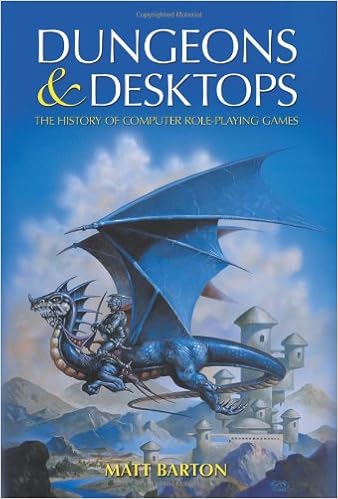
I don't know why I didn't notice it till now. Thanks for the links, crazy I just recently started to look at BASIC books to mess around with the various DOS and Apple II emulators I have on my Android and PC. Did you know about this book?

Last Edit: Jan 12, 2016 7:36:36 GMT -6 by Otto Harkaman

"A DM only rolls the dice because of the noise they make." - Gary Gygax

rsdean
Level 7 Enchanter
****

rsdean Avatar

Posts: 602


Post by rsdean on Jan 15, 2016 4:29:32 GMT -6

The first computer in my circleof gaming friends was a TRS-80 Model 1. We didn't, so far as I recall, do anything rpg related with it, but we did write a program with the combat tables for Knights and Magick, a miniatures game with some dice rolling that became inconvenient if a game got too big. My high school had access to a time-sharing computer as early as 1976, so I learned BASIC and FORTRAN programming before anybody I knew had a home computer.

My own first computer was a Commodore-64, in 1983. I learned FORTH so that I could squeeze utility to do High Guard fleet combat die rolling (and spit out the results) for Traveller, so that I could work out a section of the Fifth Frontier War for a game. Instead of using the endless question and answer form of the typical BASIC program, FORTH allowed you to get everything into a command line, where you could do things like tell it to roll 200 attacks against one defense number, 70 against another, and 300 against a third, add all the hits together, roll damage and then display the total result. Something like "200 5 roll 70 7 roll 300 6 roll + + damage print" ...

Post by verhaden on Jan 15, 2016 8:47:39 GMT -6

It's... interesting. Some good insight into the beginnings of the genre and perspectives from both designers and fans. The interviewees, however, can be a little awkward.

I grew up with an Apple ][ and when I wasn't playing Kung Fu, I was enamored with Zork and Hitchhikers Guide to the Galaxy.

rick krebs
Level 4 Theurgist
**
Creator/designer of Gangbusters

rick krebs Avatar

Posts: 177


Post by rick krebs on Feb 22, 2016 17:43:46 GMT -6

Rick Krebs
Creator/designer of Gangbusters
Contributor to AD&D DM's Guide-1st edition
"D&D meets the Electronic Age" Dragon #26
"Non-Player Characters have Feelings, too" Dragon #29
Founder/owner: Original Gamer's Guild game store
Designer of EAMON Adventures
Pubisher/Editor: Phanta Carta
Gangbusters blog: bloody20s.blogspot.com/

Eric's Grampa

Zenopus
Global Moderator
*****

Zenopus Avatar

Drafting the Forgotten Smugglers' Cave, a dungeon for Holmes Basic or OD&D

Posts: 2,891Male


Post by Zenopus on Feb 22, 2016 21:06:33 GMT -6

FYI, you can currently play Adventure (aka Colossal Cave) on the AMC website; it's a tie-in to their series Halt and Catch Fire:

www.amc.com/shows/halt-and-catch-fire/exclusives/colossal-cave-adventure

The play screen emulates a green monochrome monitor.

I first played Adventure at my best friend's mom's workplace, after hours. Sometime in the early '80s. The computer we played on didn't have a monitor; every single line of text was outputted to a paper print out. :o

* * * * *

There's a neat blog, Renga in Blue, where the author is trying to play through every text adventure (aka interactive fiction) game from the '70s on. There were many more of these in the late '70s (after Adventure) than I had realized.

Last Edit: Feb 22, 2016 21:11:44 GMT -6 by Zenopus

kesher
Regular Patron
*****

kesher Avatar

Hobbyist of the Absurd & Recumbent Strategist

Posts: 3,202


Post by kesher on Feb 23, 2016 9:53:56 GMT -6

This is, again, one of those threads that makes this the best frakking forum on the Internet. Period.

The punch card programs made my day. :)

Post by robertsconley on Feb 23, 2016 10:42:30 GMT -6

Having lived through this, the short answers about D&D computers is this.

By the late 70s there was a fork in the road. One path lead to the use of the computer as a roleplaying utility. Mainly in Character Generator and automating random tables. While D&D utilities were big because of the sheer size of the fan base, it was a small part of the hobby back then. However among the fans of Runequest and Traveller, computer utilities were a bigger deal as their respective mechanics lend themselves well to automated utilities.

The other bath attempted were people attempt to recreate the RPG Campaign on the computer. This path ultimately lead to the CRPG and the computer gaming industry as we know it now. Nearly every major form of computer games owes a debt to the folks trying to figure out how to replicate the entirety of D&D and other RPGs using a computer. Aside from the popularity of RPGs, I think this was because RPG mechanics provided a ready source of algorithms that programmers could use to code up these games.

RPG Utilities are very minor player in all this until the advent of the internet and social networking. Now it has a much more significant role than previous years. This is because the heart of any RPG campaign is the social interaction between members of the group. The referee running the game, everybody bantering among each other and so forth and so on. Once people figured out how to have conversations and social interaction on the internet, RPGs soon followed along.

Deleted
Deleted Member

Deleted Avatar

Posts: 0


Post by Deleted on Feb 27, 2016 12:52:39 GMT -6

"It sometimes seems today's grognards still don't like to mix computers and D&D. And I'm not sure why."

Firstly, playing a D&D type game on a computer is, at best, a poor substitute for a real referee. I have heard many people say that "if I want a dungeon crawl I'll just play (some computer game)." All I can say is that you must have had some really, really crappy referees. The best computer game I've ever done is nowhere near as much fun as even an average referee.

Secondly, in terms of "utilities" for creating characters, generating treasure, etc, I have reached the point where if character generation is so bloody complicated that a computer is actually useful, the game is more complicated than I want to play. Using a computer to roll 3d6 in order 6 times is using a computer for the sake of using a computer, not because it actually relieves anybody of any work. And as far as treasure generation et al, with 42 years of experience my own "gut instinct" is quicker, easier, and more reliable than any mechanical spitting out of numbers.

Further, I don't want to go through the time and effort to create such a program, I'm sure as HELL not going to pay money for one, and the utility is so low it's not even worth the time to download one free.

Last Edit: Feb 27, 2016 12:55:02 GMT -6 by Deleted

ritt
Level 7 Enchanter
****

ritt Avatar

Posts: 556


Post by ritt on Feb 27, 2016 16:05:17 GMT -6

gronanofsimmerya Avatar

I have heard many people say that "if I want a dungeon crawl I'll just play (some computer game)." All I can say is that you must have had some really, really crappy referees.

I've had a couple of people use that line with me and it baffles me, insults me, and sorta breaks my heart. It's kinda like a chef hearing "Why should I go to your fancy steakhouse when I've got half a two-liter of flat Diet Faygo and this little pot of paste".

derv
Regular Patron
*****

derv Avatar

"Not all who wander are lost."

Posts: 2,303


Post by derv on Feb 27, 2016 18:01:58 GMT -6

I'm not sure that I can express the nostalgia that this thread evokes for me. For the current generation all these things appear antiquated and of low quality. But, for anyone coming of age during this time, we were on the geek frontier. For me and some of my friends, D&D and computers were breakthroughs made for one another. We dreamed of ways of incorporating the two. It was different and new to us. Apple computers were being pushed in the classrooms. We learned BASIC programming...very basic. Having a personal computer was a status symbol. Being competent with a computer was a mark of keen aptitude. Everyone knew computers were going to open up new opportunities in the future.

My family didn't purchase a personal computer until much later than many of my friends. I was always enthralled by their Apples, Commodores, or IBM's. I was thrilled when we finally got a TRS-80 (Tandy) from Radio Shack. At the time, it was a big purchase in our household.

I can't say that I remember much about that computer or the games and software I fooled with. I do remember it did not have a hard drive. Everything was run from floppy's. Of course I did not have a modem either. So, no internet.

Sorry Mom, unfortunately I didn't become a programmer or an astronaut like the salesman told you ::)

Last Edit: Feb 27, 2016 18:05:03 GMT -6 by derv

"War is a game which were their subjects wise, kings would not play at."
-William Cowper

"War does not determine who is right- only who is left."
-Bertrand Russell

The Primary Rule: "Nothing can be done contrary to what could or would be done in actual war."
-Fred T. Jane

"There is only one rule to our war game: simulate reality."
-Michael F. Korn

"Only the dead have seen the end of war."
-George Santayana

Deleted
Deleted Member

Deleted Avatar

Posts: 0


Post by Deleted on Feb 27, 2016 18:43:19 GMT -6

I programmed a mainframe to generate random monsters and treasure for my dungeon back in 1974 in FORTRAN, using punch cards, and the tables in Volume 3.

rick krebs
Level 4 Theurgist
**
Creator/designer of Gangbusters

rick krebs Avatar

Posts: 177


Post by rick krebs on Feb 28, 2016 9:02:20 GMT -6

TRS- 80 gold: Around the Horn by the Rev George Blank

I loved writing fantasy adventures with EAMON on the Apple. Good way to learn Basic programming.

Rick Krebs
Creator/designer of Gangbusters
Contributor to AD&D DM's Guide-1st edition
"D&D meets the Electronic Age" Dragon #26
"Non-Player Characters have Feelings, too" Dragon #29
Founder/owner: Original Gamer's Guild game store
Designer of EAMON Adventures
Pubisher/Editor: Phanta Carta
Gangbusters blog: bloody20s.blogspot.com/

Eric's Grampa

Post by capvideo on Feb 28, 2016 11:25:02 GMT -6

rsdean Avatar

The first computer in my circleof gaming friends was a TRS-80 Model 1. We didn't, so far as I recall, do anything rpg related with it...

My first computer was a Model I as well. I wrote a complete AD&D character generator on it, including equipment and first-level spells, that beginning players could use to create a character very quickly to play in a game we might be about to play.

I still kick myself for not keeping that program when I finally sold the computer after a house fire. The Model I still worked after the fire, but it looked like sludge, and by the time we were allowed into the house, many of the 5.25-inch disks had mold on them—despite that, many of them did still work. The wonders of low data density. But it was 1987, and I decided to sell the Model I to someone who needed it for parts, and switched to a modern operating system: OS-9!

Post by capvideo on Feb 28, 2016 11:35:12 GMT -6

The tables in “Square Pegs and Round Holes” from Dragon 165 were created on my Model I. When I sent in the first draft of the article, the Dragon editor who responded asked me to rewrite it and include “a simple formula” to determine the probabilities of rolling any number on any collection of dice. Of course, no such formula exists, so I included the tables and the BASIC program to generate them. (They chose not to publish the BASIC program with the article.)

derv
Regular Patron
*****

derv Avatar

"Not all who wander are lost."

Posts: 2,303


Post by derv on Feb 28, 2016 13:02:51 GMT -6

Here's a cornucopia of computer games programming books in BASIC for those that want to take a walk down memory lane.

AtariArchives.orgI particularly like the "Creating Adventure Games on Your Computer", the two "Basic Computer Games", and "Big Computer Games".

"War is a game which were their subjects wise, kings would not play at."
-William Cowper

"War does not determine who is right- only who is left."
-Bertrand Russell

The Primary Rule: "Nothing can be done contrary to what could or would be done in actual war."
-Fred T. Jane

"There is only one rule to our war game: simulate reality."
-Michael F. Korn

"Only the dead have seen the end of war."
-George Santayana

Zenopus
Global Moderator
*****

Zenopus Avatar

Drafting the Forgotten Smugglers' Cave, a dungeon for Holmes Basic or OD&D

Posts: 2,891Male


Post by Zenopus on Feb 28, 2016 16:20:43 GMT -6

The first PC our family had at home was also a Tandy, but a later model - the 1000 SL. I'd been using PCs/Apples for in school but it took a while for my dad to get one for us at home. I played a lot of Infocom games on it - Zork, Planetfall, etc. and also finished Pool of Radiance and some of the other SSI games. Had dual floppy drives (5.25 and 3.5 inch) but no hard drive. Wasn't until my first college computer - a 286 - that I had a hard drive and a modem. Used that one for a lot of MUDing my freshman year, Hero's Quest was fun on that too.

Last Edit: Feb 28, 2016 16:26:14 GMT -6 by Zenopus

derv
Regular Patron
*****

derv Avatar

"Not all who wander are lost."

Posts: 2,303


Post by derv on Feb 28, 2016 16:36:12 GMT -6

Oh boy, you had a Tandy with a fancy color monitor. :D

Interestingly, since reading this thread, I've been poking around the internet and reading some old articles. I knew our Tandy was considered a "lower grade" computer, but I had never heard it called the Trash-80. Supposedly that's what it was derisively referred as.

"War is a game which were their subjects wise, kings would not play at."
-William Cowper

"War does not determine who is right- only who is left."
-Bertrand Russell

The Primary Rule: "Nothing can be done contrary to what could or would be done in actual war."
-Fred T. Jane

"There is only one rule to our war game: simulate reality."
-Michael F. Korn

"Only the dead have seen the end of war."
-George Santayana

Zenopus
Global Moderator
*****

Zenopus Avatar

Drafting the Forgotten Smugglers' Cave, a dungeon for Holmes Basic or OD&D

Posts: 2,891Male


Post by Zenopus on Feb 28, 2016 17:11:14 GMT -6

I remember the Trash-80 term from my middle school which had a TRS-80 lab. I took a computer class on them learning to program "Turtle" graphics (actually Logo).

I also remember having to correct myself from calling them "TSR-80s" for obvious reasons.

* * * * *

Gateway to Apshai was a fun dungeon crawl game I played on my friend's C-64 around the same time.

Last Edit: Feb 28, 2016 17:15:24 GMT -6 by Zenopus

Post by krusader74 on Feb 28, 2016 23:10:15 GMT -6

rick krebs Avatar

TRS- 80 gold: Around the Horn by the Rev George Blank

I loved writing fantasy adventures with EAMON on the Apple. Good way to learn Basic programming.

I was able to track down the BASIC source code listings of both these programs!

The BASIC listing of "Round the Horn" was published in SoftSide Magazine Issue 4, January 1979, which is available online at archive.org in a variety of formats, including plain text. Unfortunately, the text version was OCR'd from scanned images, and there are numerous errors in it, so it would take some work to reconstruct.

The MS-DOS version of Eamon is available to play for free on archive.org. There is also an Unofficial Homepage for Eamon with more links and resources. The Interactive Fiction Archive has a zip file purporting to be a 1994 DOS port of Eamon to GW-BASIC.

Nothing reveals humanity so well as the games it plays. --- David Hartley, 18th c. English Philosopher

Post by capvideo on Feb 29, 2016 10:15:27 GMT -6

derv Avatar

…I had never heard it called the Trash-80. Supposedly that's what it was derisively referred as.

I’m sure the term started derisively, but in our circle at least (and I think even in 80-Micro) the term was latched onto as a self-deprecating term of endearment. When I went to college, the two guys next door each had a TRS-80 Model I, which they referred to as Trash-80s occasionally; even while they brought me to the local Radio Shack and showed me exactly what I needed to buy to connect my own Model I remotely to the computer science department’s main computers. (Mainly, an acoustic 110 or 300 baud modem.)

tkdco2
Level 10 Necromancer
*****

tkdco2 Avatar

Posts: 2,598Male


Post by tkdco2 on Mar 2, 2016 4:24:39 GMT -6

Last Edit: Mar 2, 2016 5:02:47 GMT -6 by tkdco2

Grognard Day: If an old-school D&D player sees his shadow, it means his group will spend six more weeks playing 5E.

The primary lightsaber colors are red, green, and blue. The primary pigment saber colors are cyan, magenta, and yellow.

RIP: Levius Heights, Oscar Schipps, Benvolio Bucket, Sojisk Ulmevi. I wish I could have played you longer.

Post by Stormcrow on Mar 2, 2016 10:00:56 GMT -6

krusader74 Avatar

if you have any experiences using or coding oldschool computer games or computer game aids, please share your stories!!!

A couple of years ago, for the hell of it, I converted the Dungeon Master's Familiar from Dragon #80 into a form more suitable for the (fully expanded) VIC-20. You can download the PRG here, for use in VICE.

krusader74
Level 7 Enchanter
****

krusader74 Avatar

Posts: 520


D&D Meets the Electronic Age Dec 31, 2016 6:00:49 GMT -6 and like this

Post by krusader74 on Dec 31, 2016 6:00:49 GMT -6

Kent David Kelly, the author of Hawk & Moor, avidly played D&D until his parents banned him from the game after watching Mazes and Monsters in 1982. Mazes and Monsters is the fictionalized account of the disappearance of James Dallas Egbert in 1979. This simply forced Kelly to re-channel his obsession with D&D into CRPGs:

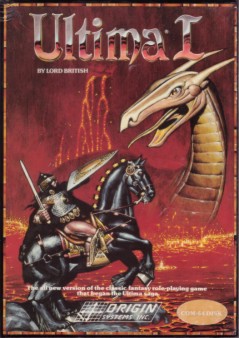
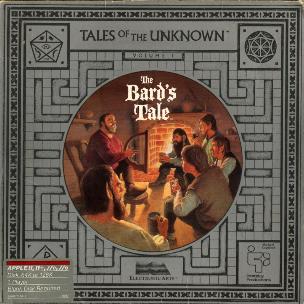
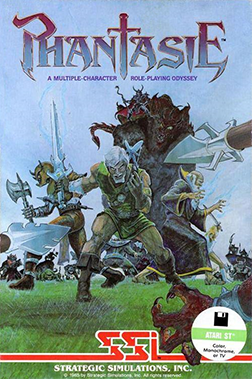
Here's a list of the 10 referenced CRPGs:

GameCommercial Release DatePublisherPlatformCover Art
Zork1980Infocommulti-platform
Telengard1982Avalon Hillmulti-platform
Temple of Apshai1979Automated SimulationsTRS-80
Ultima1981California Pacific Computer CompanyApple II
Tunnels of Doom1982Kevin KenneyTI-99/4A
The Bard's Tale1985Interplay Productionsmulti-platform
Phantasie1985Strategic Simulationsmulti-platform
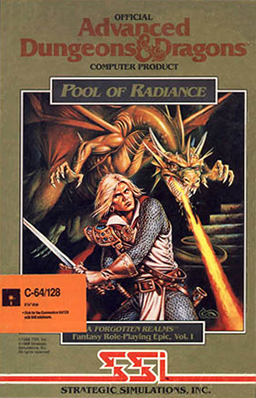
Pool of Radiance1988Strategic Simulationsmulti-platform
Wizard's Crown1985Strategic Simulationsmulti-platform
Wasteland1988Interplay ProductionsApple II

Last Edit: Dec 31, 2016 15:35:35 GMT -6 by krusader74

Nothing reveals humanity so well as the games it plays. --- David Hartley, 18th c. English Philosopher