(TorrentFreak)
In a notable new development, the American music industry is
determined to challenge this notion by suing
GM and Ford and two suppliers for $2,500 for every
vehicle they have sold for the last three years that includes CD ripping technology. See here and here and here.
The music industry litigation arises under the Audio
Home Recording Act (“AHRA”).
This law now forms Chapter 10 of the U.S. Copyright Act. The car companies have
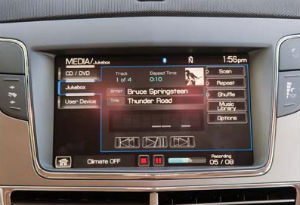
been selling cars that have devices that are capable of “CD Ripping” – namely loading
CDs that consumers have bought and paid for into memory so that they can play
them back through the car’s entertainment system while driving without having
to perform manual and mental gymnastics on thruways in rush hour. The irony, of
course, is that likely hardly anybody uses this CD ripping technology now –
since almost everyone with a new car will use a Bluetooth connection from their
smart phone or iPod technology to hear their personal collections of music.
The AHRA was passed in 1992 and almost from the
beginning was seen as something of a
dead letter and useless law conceived to deal with technologies that were then
almost and now are virtually completely obsolete – such as DAT and Minidisc technology.
It has enormous scope for exemption for devices and media the “primary” purpose
of which is not to copy music. Even in its heyday, the royalties that it
generated were miniscule and maxed out at $5.3 million in 2000,
ironically a small fraction of what the now moribund Canadian private copying levy scheme once generated.
One wonders why, apart from common sense, the
lawsuit was not launched a long time ago. This new litigation may be the result
in part of a recent US Supreme Court case
that allows, in effect, for rolling three year limitation periods in copyright
litigation. Perhaps the American music industry
believes it can make up for lost time and craves more attention now by making
new and even more powerful enemies. If suing a single Native American mother
and a Boston university student for millions isn’t sufficient to get their
desired level of attention, then why not sue the biggest automobile companies?
This now seems to the music industry’s latest example of “innovation” – at least
in litigation.
In any event, we have dodged this bullet – perhaps more like a mortar bombardment - in Canada. There has been successful litigation on two occasions to stop the Canadian Copyright Board from imposing a levy (which even Ministers of the Crown now call a “tax") on the memory permanently embedded in “devices” and then on the “devices” themselves. See here and here. And the current Government has decisively rejected any legislation enabling an “iPod tax”, which the current Industry Minister, James Moore, when he was Heritage Minister, bluntly referred to as a “really toxic and, frankly, really dumb” idea. This government has also decisively implemented a regulation to stop the Copyright Board from imposing a “tax” on microSDs. I should disclose that I have been involved in these Canadian developments over many years on behalf of the Retail Council of Canada.
In fact, we did talk about the AHRA in the Canadian
proceedings back in the day. In 1999 and 2003, I brought James M. Burger, a prominent
Washington lawyer and one of the architects of the AHRA, up to talk about how it
works and what lessons was could learn about levies on media and devices. His
testimony was very helpful and even prophetic. The then Chairman of the Copyright
Board, Justice John Gomery, welcomed him on his second visit by referring to him on the
record as “probably the oracle from on high on these subjects, as far as I can
see.”
HPK