Features
Explore the Etymology Tree
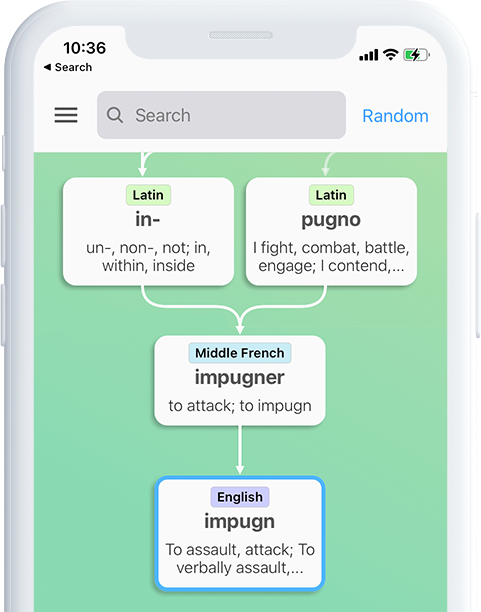
Scroll through thousands of years of language development. Start at a new word, or one you want to explore deeper, then move backwards in time through Latin roots, Ancient Greek words, and Proto-Indo-European reconstructions from 10,000 years ago!
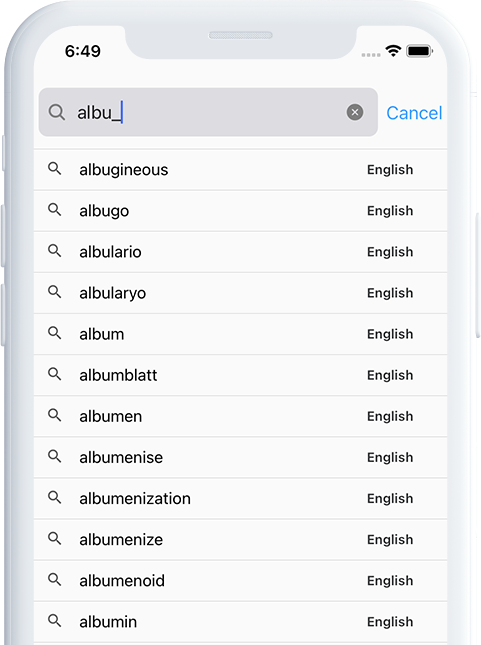
Over 1,400,000 words to explore
With over 1.4M words to explore, you’ll always find that words you’re wondering about, and you’ll never run out of new words to learn. In the English language alone, the app houses 300k words. The rest are spread throughout other languages.
Full detail page
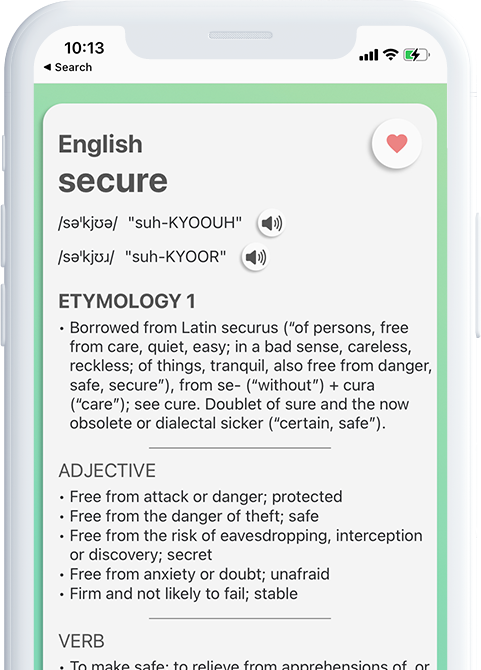
The connections aren’t the only thing interesting. Check out the full details of the word including the part-of-speech, the full written etymology, the pronunciation, definitions for each part of speech, and any descendant words.
Family Explorer
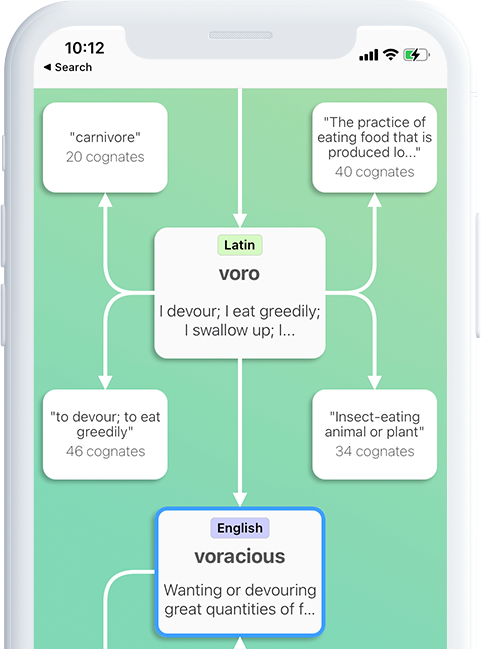
No word is an island, and the Family Explorer helps you uncover the hidden, and sometimes shocking, bridges between cognates. For example, ‘voracious’ is a cousin to ‘carnivore’! Check out millions of relations just like that in the app.
Children Explorer
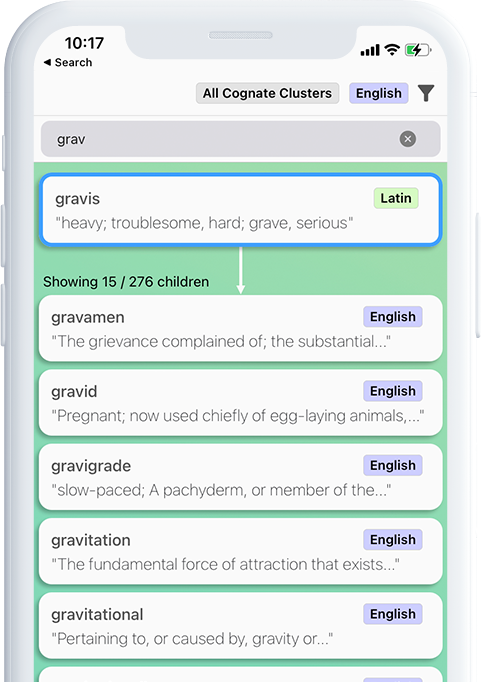
Words may start with a single meaning, but they expand and morph over time because of the need to explain our increasingly complex world. The Children Explorer shows how root words can give birth to thousands of different meanings in modern language. For instance, Latin ‘gravis’ (“heavy”) is the root of ideas like ‘gravity’, ‘gravid’ (pregnant), and ‘grave’ (serious).
Word of the Day Notifications
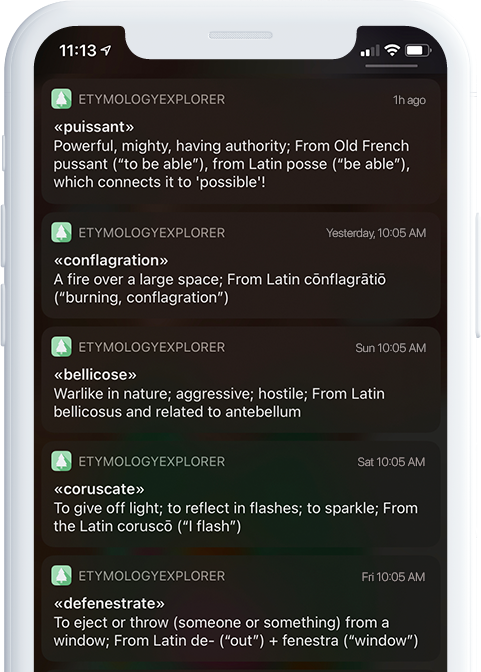
Each day get a curated etymology sent directly to your phone. Grow your vocabulary or learn something interested about a word you already knew!
Search over 13k languages
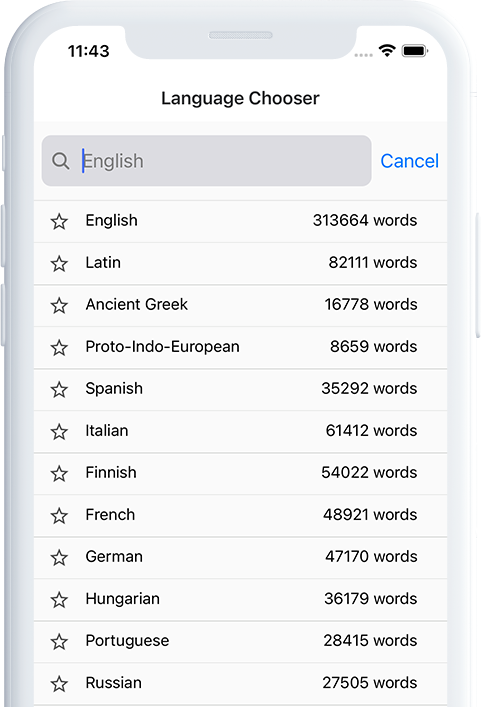
From Ancient Greek, to Tagalog, to Proto-Indo-European, and many more. Search directly in the language using the original script or the transliteration of the word
magnanimous
Audio & Newspaper Pronunciations
When I started looking up words, the IPA (e.g. “/mæɡˈnæn.ɪ.məs/”) was nearly indecipherable. So I’ve implemented audio and newspaper pronunciations for the majority of words. Now you can understand how to pronounce a word by hearing it, or by reading normal letters, none of the IPA jumble.