iPhone 7 Display Technology Shoot-Out
iPhone 6 and iPhone 7
Dr. Raymond M. Soneira
President, DisplayMate Technologies Corporation
Copyright � 1990-2016 by DisplayMate Technologies Corporation. All Rights Reserved.
This article, or any part thereof, may not be copied, reproduced, mirrored, distributed or incorporated
into any other work without the prior written permission of DisplayMate Technologies Corporation
|
� |
|
|
iPhone 6 |
iPhone 7 |
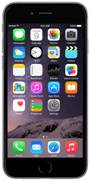
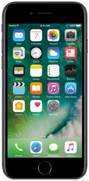
Introduction
The key element for a great Smartphone has always been a truly innovative and top performing display, and the best leading edge Smartphones have always flaunted their super high tech displays. It is the display performance that determines how good and how beautiful everything on the Smartphone looks, including camera photos, and also how readable and how usable the screen is in high ambient lighting. The display is the crown jewel of the Smartphone!
At first glance the iPhone 7 looks almost indistinguishable from the 2014 iPhone 6 and 2015 iPhone 6s. Actually, the displays are the same size and have the same pixel resolution. But that is as far as it goes... The iPhone 7 display is a Truly Impressive major enhancement and advancement on the iPhone 6 display... and even every other mobile LCD display that we have ever tested... note that I hand out compliments on displays very carefully. And for those of you thinking of Emailing that we got hand-picked units, the iPhones were purchased retail from Verizon Wireless.
What�s New
Below are just a few of the most important and interesting display enhancements and improvements on the iPhone 7 that we�ll cover in detail in this article:
� The iPhone 7 has Two Standard Color Gamuts, the new DCI-P3 Wide Color Gamut that is used in 4K UHD TVs and Digital Cinema, and also the traditional smaller sRGB / Rec.709 Color Gamut that is used for producing most existing consumer content for digital cameras, TVs, the internet, and computers, including photos, videos, and movies. What�s more, on the iPhone 7 both Color Gamuts have been implemented with Absolute Color Accuracy that is Visually Indistinguishable from Perfect. That�s impressive... Plus only three manufacturers currently have the new wider DCI-P3 Color Gamut on their Smartphones or Tablets, so it is a major competitive advantage. Other manufacturers will need to play catch-up fast...
� The iPhone 7 produces up to an impressive Peak Brightness of 705 nits when Automatic Brightness is turned On in High Ambient Light, where high Brightness is really needed.
� The iPhone 7 has a record high Contrast Ratio for IPS LCD displays.
� The iPhone 7 has a record low screen Reflectance for Smartphones.
� Given the exceptional performance of the iPhone 7 LCD display, there will be many consumers, journalists, reviewers, and even manufacturers wondering if Apple will actually be switching to OLED iPhone displays in 2017, as has been widely reported. We�ll examine this in the Conclusion.
We�ll cover all of these issues and much more, with in-depth comprehensive display tests, measurements and analysis that you will find nowhere else.
The Display Shoot-Out
To examine the performance of the iPhone 6 and iPhone 7 displays we ran our in-depth series of Mobile Display Technology Shoot-Out Lab tests and measurements in order to determine how these latest LCD Smartphone displays have improved. We take display quality very seriously and provide in-depth objective analysis based on detailed laboratory tests and measurements and extensive viewing tests with both test patterns, test images and test photos. To see how far mobile displays have progressed in just six years see our 2010 Smartphone Display Shoot-Out, and for a real history lesson see our original 2006 Smartphone Display Shoot-Out.
Results Highlights
In this Results section we provide Highlights of the comprehensive DisplayMate Lab tests and measurements and extensive visual comparisons using test photos, test images, and test patterns that are covered in the advanced sections. The main Display Shoot-Out Comparison Table summarizes the iPhone 6 and iPhone 7 Lab measurements in the following categories:� Screen Reflections,� Brightness and Contrast,� Colors and Intensities,� Viewing Angles,� LCD Spectra,� Display Power. You can also skip these Highlights and go directly to the iPhone 7 Conclusions.
Overview
In this Highlights section we will just focus on the new performance capabilities and features of the iPhone 7. For additional background information see our iPad Pro 9.7 Display Technology Shoot-Out, which has a similar high-technology high-performance LCD display.
Two Color Gamuts including the new Wide DCI-P3 used by 4K UHD TVs
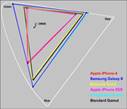
The iPhone 7 fully supports two important Standard Color Gamuts, the new DCI-P3 Wide Color Gamut that is used in 4K UHD TVs and in Digital Cinema, and also the traditional smaller sRGB / Rec.709 Color Gamut that is used for most existing consumer content for digital cameras, TVs, the internet, and computers, including photos, videos, and movies. All of the other recent model iPhones and almost all other Smartphones and Tablets just support sRGB / Rec.709. The new DCI-P3 Color Gamut is 26 percent larger.
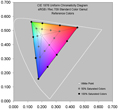
Since the iPhone 7 supports two Color Gamuts it needs to also implement Color Management in order to have the second smaller sRGB / Rec.709 Gamut to also appear correctly, which is generated from the wider native DCI-P3. Each display is individually calibrated at the factory. The iPhone 7 has a very accurate 102 percent of the wide DCI-P3 Wide Color Gamut and a very accurate104 percent of the sRGB / Rec.709 Color Gamut. See this Figure for the measured Color Gamuts.
In addition, the iPhone 7 detects content marked with the wider DCI-P3 Color Gamut and automatically switches between Gamuts so that content with the smaller sRGB / Rec.709 Gamut is accurately reproduced and not displayed with over saturated colors.
Display Brightness and Contrast Ratio
The measured Peak Brightness for the iPhone 7 is 602 cd/m2 (nits), the Highest Peak Brightness that we have measured for a Smartphone for all Average Picture Levels APL, including Full Screen White. That is slightly under the 625 nits that Apple lists as the Typical Peak Brightness for the iPhone 7. But on the iPhone 7 the Peak Brightness can go considerably higher when Automatic Brightness is turned On, which we examine below. But High screen Brightness is only needed when in High Ambient Light, so most of the time the Brightness should be set lower than the Maximum.
The Display�s Maximum Contrast is the Ratio between its Peak White Brightness (Luminance) and its darkest Black Luminance, one of the more important measures of LCD performance quality. The iPhone 7 has a measured (True not Dynamic) Contrast Ratio of 1,762, which is Very Good for a mobile display, and the highest that we have measured for any IPS LCD display. It is also 26 percent larger than the 1,400 that Apple lists as Typical. However, Contrast Ratio is only meaningful in low ambient light, which is seldom the case for mobile displays. See the Brightness and Contrast section for measurements and details.
When the display is viewed under ambient light, the light reflected by the screen results in a lower Effective Contrast Ratio that depends on the Screen Reflectance. Our Contrast Rating for High Ambient Light provides a quantitative measure for display performance in ambient light, which we examine below...
Even Higher Automatic Peak Brightness
On the iPhone 7 the Maximum Screen Brightness can go much higher when Automatic Brightness is turned On, so that users can�t permanently park the Manual Brightness slider to very high values, which would run down the battery quickly. High Screen Brightness is only needed for High Ambient Light, so turning Automatic Brightness On will provide better high ambient light screen visibility and also longer battery running time.
When Automatic Brightness is turned On, the iPhone 7 produces up to an impressive 705 cd/m2 (nits) in High Ambient Light, where high Brightness is really needed � the Highest Peak Brightness for a Smartphone for any Average Picture Level APL, including Full Screen White.
As a result of its high Brightness and low Reflectance, the iPhone 7 has a Contrast Rating for High Ambient Light that ranges from 137 to 160, also among the highest that we have ever measured for a Smartphone display. See the Brightness and Contrast, the High Ambient Light and the Screen Reflections sections for measurements and details.
Low Screen Reflectance and Performance in Ambient Lighting
The screens on all displays are mirrors that reflect light from everything that is illuminated anywhere in front of the screen (especially anything behind the viewers), including lamps, ceiling lights, windows, direct and indirect indoor and outdoor sunlight, which washes out the on-screen colors, degrades image contrast, and interferes with seeing the on-screen images. The lower the Screen Reflectance the better. In fact, decreasing the Screen Reflectance by 50 percent doubles the effective Contrast Ratio in Ambient Light, so it�s very important because it is equivalent to doubling the display�s Peak Brightness (Luminance).
To visually compare the differences in screen Reflectance for yourself, hold any Smartphones or Tablets side-by-side and turn off the displays so you just see the reflections. Those reflections are still there when you turn them on, and the brighter the ambient light the brighter the reflections.
The iPhone 7 has a screen Reflectance of 4.4 percent, the lowest that we have ever measured for a Smartphone. However, it is considerably higher than the record low 1.7 percent screen Reflectance that we measured for the iPad Pro 9.7, which has a very innovative AR Anti-Reflection screen coating.
Unfortunately, AR coatings still can�t be used with Smartphones, which have much higher abrasion and scratch issues than Tablets and other touch screen displays because they are small enough to be carried in pockets and bags that have all sorts of scratchy things inside. A number of companies are working on technologies that can produce both low screen Reflectance and high abrasion and scratch resistance. We covered this issue last year, but it�s challenging and also has to be cost effective. Since Peak Brightness can�t keep increasing due to battery power limitations and thermal issues, developing a low Reflectance screen will be the key to improving display performance in High Ambient Light.
Our Contrast Rating for High Ambient Light quantitatively measures screen visibility under bright Ambient Light � the higher the better. As a result of its high Brightness and very low Reflectance, the iPhone 7 has a Contrast Rating for High Ambient Light of 137 to 160, among the highest that we have ever measured for a Smartphone display. See the Screen Reflections and Brightness and Contrast sections for measurements and details.
Record Absolute Color Accuracy
Delivering great color with high Absolute Color Accuracy is incredibly difficult because everything on the display has to be done just right. In order to deliver accurate image colors, a display needs to closely match the standard Color Gamut that was used for producing the content being viewed � not more and not less. In addition the display also needs an accurate (pure logarithmic power-law) Intensity Scale, and an accurate White Point.
Since the iPhone 7 supports two Color Gamuts it needs to also implement Color Management in order to get the second smaller sRGB / Rec.709 Gamut to also appear correctly, which is generated from the wider native DCI-P3. Each iPhone display is individually calibrated at the factory.
The Absolute Color Accuracy of the iPhone 7 is Truly Impressive as shown in these Figures. It has an Absolute Color Accuracy of 1.1 JNCD for the sRGB / Red.709 Color Gamut that is used for most current consumer content, and 1.0 JNCD for the Wider DCI-P3 Color Gamut that is used for 4K UHD TVs and Digital Cinema. It is the most color accurate display that we have ever measured. It is Visually Indistinguishable From Perfect, and is very likely considerably better than any mobile display, monitor, TV or UHD TV that you have.
See this Figure for an explanation and visual definition of Just Noticeable Color Difference JNCD and the Color Accuracy Plots showing the measured display Color Errors. See the Color Accuracy section and the Color Accuracy Plots for measurements and details.
Record Absolute Luminance Accuracy
In order to produce an accurate image, the display also needs to produce an Accurate Luminance (Brightness) value for every color throughout its entire Color Space. Many displays produce Accurate Colors but produce them with inaccurate Luminance values, so the pixels in the image appear with a systematically incorrect distribution of color and Brightness, which distorts the appearance of the picture. Absolute Luminance Accuracy is a very important picture quality metric.
Every color in the CIE Diagram for a given Color Gamut and White Point has a particular Luminance value with respect to the Luminance for the White Point that must be accurately reproduced. We measured the Absolute Luminance Accuracy for each of the 41 Reference Colors in each of the two Standard Color Gamuts and analyzed the results. Since the eye judges Color separately from Brightness (Luminance), it is essential that Color Accuracy and Luminance Accuracy be measured and evaluated separately. Some reviewers use Display Calibration software that helps service technicians calibrate displays by combining both Color and Luminance into something called dE, but since it mixes both of them together, it is meaningless for evaluating either Color Accuracy or Luminance Accuracy.
For the iPhone 7 sRGB / Rec.709 Color Gamut the Average Luminance Accuracy is �2% over the entire Color Gamut for the 41 Reference Colors. For the Wide DCI-P3 Color Gamut the Average Luminance Accuracy is also �2% over the entire Color Gamut for the 41 Reference Colors. These are very accurate results, so all colors on the iPhone 7 are reproduced with very accurate Brightness (Luminance).
These Absolute Luminance Accuracy results for the iPhone 7 are excellent and are Visually Indistinguishable from Perfect. See the Absolute Luminance Accuracy section for measurements and details.
Night Shift Viewing Mode
The iPhone 7 Night Shift viewing mode is designed to change the color balance of the display in order to reduce the amount of Blue light coming from the display, which some recent research indicates can affect how well users sleep afterwards. In a separate article we have analyzed the performance of Night Shift, and then provide our own detailed recommendations for both consumers and manufacturers.
The measurements in that article are based on the iPhones and iPads with the narrower sRGB / Rec.709 Color Gamut like on the iPhone 6 and iPad Pro 12.9 and earlier iPads, however, the Blue part of the spectrum below 490nm for the iPhone 7 is almost identical to them as shown in this Figure, so the article results also cover the iPhone 7.
Viewing Angle Performance
While Smartphones are primarily single viewer devices, the variation in display performance with Viewing Angle is still very important because single viewers frequently hold the display at a variety of viewing angles. The angle is often up to 30 degrees, more if it is resting on a table or desk.
All iPhones and iPads have IPS LCD displays, so we expected the iPhone 7 to show very small color shifts with Viewing Angle, and our lab measurements confirmed their excellent Viewing Angle performance, with no visually noticeable color shifts. With its Dual-Domain Pixels, the iPhone 7 Contrast Ratio remained close to 1,000:1 at 30 degrees for both the Portrait and Landscape modes, which is the highest we have measured for LCDs.
However, all LCDs do have a strong decrease in Brightness (Luminance) with Viewing Angle, and the iPhone 7 showed (as expected) a 55 percent decrease in Brightness at a modest 30 degree Viewing Angle. See the Viewing Angles section for measurements and details.
Viewing Tests
The very challenging set of DisplayMate Test and Calibration Photos that we use to visually evaluate picture quality looked absolutely Beautiful on the iPhone 7, even to my experienced hyper-critical eyes.
The iPhone 7 excels due to its record Absolute Color Accuracy (1.1 JNCD), which is Visually Indistinguishable from Perfect, and is very likely considerably better than any mobile display, monitor, TV or UHD TV that you have. So photos, videos, and online content and merchandise will appear correct and beautiful. See Color Accuracy Figures and the Colors and Intensities section for quantitative details.
Display Power Efficiency
The display�s Power Efficiency is a major factor in limiting the display�s Peak Brightness (Luminance) and also the phone�s running time on battery. There are many factors that affect a display�s Power Efficiency, including its native Color Gamut, the type of the White LEDs that are used, the optics and optical films in the Backlight, the circuit technology in the LCD Backplane, the Pixels Per Inch, and the screen refresh rate.
The Backlights for almost all LCD displays, including the iPhone 6, have White LEDs, which are made by using a Blue LED together with a Yellow phosphor to transform some of the light for the Red and Green primaries, resulting in broad rolling spectra for these LCDs, which isn�t very efficient for light or power. However, Wide Color Gamut LCDs like the iPhone 7 instead use specially tuned Red and Green phosphors to optimally transform the light for the chosen saturated Red and Green primaries, which improves their light and power efficiency.
After measuring the power used by iPhone 7 and iPhone 6 displays, we scaled the results to the same screen brightness (Luminance) in order to compare their Relative Power Efficiencies. In spite of its much wider Color Gamut, the iPhone 7 is actually 7 percent more power efficient than the iPhone 6, which is important and significant. See the Display Power section and the LCD Display Spectrum Figure for measurements and details.
Conclusions for the iPhone 7:�� An Excellent Top Tier Display�
The primary goal of this Display Technology Shoot-Out article series has always been to publicize and promote display excellence so that consumers, journalists and even manufacturers are aware of and appreciate the very best in displays and display technology. We point out which manufactures and display technologies are leading and advancing the state-of-the-art for displays by performing comprehensive and objective scientific Lab tests and measurements together with in-depth analysis. We point out who is leading, who is behind, who is improving, and sometimes (unfortunately) who is back pedaling� all based solely on the extensive objective careful Lab measurements that we also publish, so that everyone can judge the data for themselves as well�
Conclusions Overview
In the Conclusions sections below, we first summarize all of the results, then review several of the most significant display topics, and then discuss the future of all Smartphone displays.
See the main Display Shoot-Out Comparison Table for all the DisplayMate Lab measurements and test details, and see the Results Highlights section above for a more detailed introduction and overview with expanded discussions and explanations.
An Outstanding Smartphone Display
The display on the iPhone 7 is a Truly Impressive Top Performing Display and a major upgrade and enhancement to the display on the iPhone 6. It is by far the best performing mobile LCD display that we have ever tested, and it breaks many display performance records.
The iPhone 7 has the following cutting-edge state-of-the-art display performance functions and features:
� The iPhone 7 has 2 Standard Color Gamuts, following in the footsteps of the innovative iPad Pro 9.7 that was introduced earlier in 2016. Most mobile displays only support a single Color Gamut, including all previous iPhones. The iPhone 7 has both the traditional smaller sRGB / Rec.709 Color Gamut that is used for producing most existing consumer content for digital cameras, TVs, the internet, and computers, including photos, videos, and movies, and the new wider DCI-P3 Color Gamut, which is 26 percent larger.
� The iPhone 7 has the same wide DCI-P3 Color Gamut as 4K UHD TVs, so it will be able to accurately display all of the new 4K TV and video content. Since the iPhone 7 has a Retina Display it doesn't need the 4K resolution because it already appears perfectly sharp at its normal viewing distances.
� The new wider DCI-P3 Color Gamut is really a big deal � it is what makes 4K UHD TVs deliver noticeably better color and picture quality than 2K Full HD TVs, which is why consumers are upgrading their TVs, and why they will want to upgrade their mobile devices up to DCI-P3.
� Only three manufacturers currently have the new wider DCI-P3 Color Gamut on their Smartphones or Tablets, so it is a major competitive advantage. Other manufacturers will need to play catch-up fast.
� We measured a very high Peak Brightness of 602 cd/m2 (nits), the Highest Peak Brightness that we have measured for a Smartphone for all Average Picture Levels APL, including Full Screen White.
� When Automatic Brightness is turned On, the iPhone 7 produces up to an impressive 705 nits in High Ambient Light, where high Brightness is really needed � the Highest Peak Brightness for a Smartphone for any Average Picture Level APL, including Full Screen White.
� The wider Color Gamut and much brighter display significantly improve screen readability and usability in high ambient light, which along with battery running is one of the most important issues for consumers.
� The Absolute Color Accuracy of the iPhone 7 is Truly Impressive as shown in these Figures. It is the most color accurate display that we have ever measured. It is Visually Indistinguishable from Perfect, and is very likely considerably better than on any mobile display, monitor, TV or UHD TV that you have. So photos, videos, and online content and merchandise will appear correct and beautiful.
The iPhone 7 matches or breaks new Smartphone display performance records for:
� The Highest Absolute Color Accuracy for any display (1.1 JNCD) � Visually Indistinguishable from Perfect
� The Highest Absolute Luminance Accuracy for any display (�2%) � Visually Indistinguishable from Perfect
� Very Accurate Image Contrast and Intensity Scale (with Gamma 2.21) � Visually Indistinguishable from Perfect
� The Highest Peak Brightness Smartphone for any Average Picture Level APL (602 to 705 nits)
� The Highest (True) Contrast Ratio for any IPS LCD display (1,762) � Higher Dynamic Contrast Ratios are phony
� The Lowest Screen Reflectance for any Smartphone display (4.4 percent)
� The Highest Contrast Rating in High Ambient Light for a Smartphone for any APL (137 to 160)
� The Smallest Color variation with Viewing Angle (2.1 JNCD or less)
See the Results Highlights section and Display Shoot-Out Comparison Table for all of the measurements and details.
iPhone 7 Display has Top Performance Across the Board
As we list in detail in the Lab Measurements Comparison Table section below, the iPhone 7 delivers uniformly consistent all around Top Tier display performance: one of a small number of displays to ever to get all Green (Very Good to Excellent) Ratings in all test and measurement categories (except for Brightness variation with Viewing Angle, which is the case for all LCDs) since we started the Display Technology Shoot-Out article Series in 2006, an impressive achievement for a display.
Comparison with the iPhone 6
The iPhone 6 has a Very Good display that we rated A� in 2014. However, in just about every display Lab test and measurement, the iPhone 7 shows from significant to major Across the Board improvements compared to the iPhone 6. See the main Display Shoot-Out Comparison Table for all of the Lab measurements and test details,
iPhone 7 Display Conclusion
Steve Jobs clearly always highly valued display performance and loved bragging about Apple displays, so he would definitely be extremely proud of the exceptional performance of the iPhone 7 display, but probably be dismayed at how little public attention Apple has given to their outstanding iPhone 7 display � which provides a major competitive advantage that most consumers and reviewers are not yet aware of... and other manufacturers will need to play catch-up fast because... The key element for a great Smartphone has always been a truly innovative and top performing display, and the best leading edge Smartphones have always flaunted their super high tech displays!! So do it...
Switching to OLED Displays for the Next iPhone
Given the exceptional performance of the iPhone 7 LCD display, there will be many consumers, journalists, reviewers, and even manufacturers wondering if Apple will actually be switching to OLED iPhone displays in 2017, as has been widely reported...
Both LCDs and OLEDs can produce exceptional state-of-the-art displays. But LCD and OLED technologies have different inherent native strengths and weaknesses, so neither display technology wins in all cases � it depends on the details of the specific application.
LCDs are a great cutting edge high performance display technology for Tablets to TVs, but for small handheld Smartphones, OLED displays provide a number of significant advantages over LCDs including: being much thinner, much lighter, with a much smaller bezel providing a near rimless design, they can be made flexible and into curved screens, plus they have a very fast response time, better viewing angles, and an always-on display mode. Many of OLED's performance advantages result from the fact that LCDs are dependent on transmitting the varying characteristics of their White LED backlight � but for OLEDs the sub-pixels are directly electrically powered to emit light, which can provide better color accuracy, image contrast accuracy, and screen uniformity.
Because of their very flexible power management capabilities, OLEDs are not only more power efficient than LCDs for most image content, but they now deliver much higher peak Brightness than LCDs because of this. However, for mostly all white screen content LCDs are likely to remain brighter and more power efficient for a while. OLED displays are now manufactured on flexible substrates, which allows the screens to be curved and rounded like on the Galaxy Note7 and earlier Galaxy Edge and Galaxy Round displays.
Apple�s reported move to an OLED iPhone is simply a recognition of all of the above, particularly as more and more competing Smartphones will be coming with OLED displays.
Comparing Top Tier Smartphone Displays
You can directly compare all of the display performance measurements and results for other high-end Smartphones in our Mobile Display Technology Shoot-Out article series by using a Tabbed web browser on the Comparison Table for each article. We have also included the iPad Pro 9.7 below because of its display similarity to the iPhone 7. The entries for all of the articles are mostly identical with only minor formatting differences, so it is easy to make detailed side-by-side comparisons by simply clicking through the Tabs for each Smartphone or Tablet.
Below are links for the Comparison Tables for the Smartphones and Tablets mentioned in the article:
iPhone 7 Lab Measurements Comparison Table
iPhone 6 Lab Measurements Comparison Table
iPad Pro 9.7 Lab Measurements Comparison Table
Galaxy S7 OLED Lab Measurements Comparisons Table
Galaxy Note7 OLED Lab Measurements Comparisons Table
The Next Generation of Displays� �� Better Performance in Ambient Light
The best performing LCD and OLED displays are now delivering impressive sharpness, brightness, high color accuracy, accurate image contrast, and great viewing angles. So what comes next? Essentially all published display specifications and factory calibrations are based on performance in absolute darkness 0 lux, but mobile displays (and even TVs) are seldom viewed in the dark. Even low levels of ambient light significantly affect the image and picture quality. For example, the 100 percent Color Gamut specified by many manufacturers only applies at 0 lux. At 500 lux, which corresponds to typical indoor office lighting, the on-screen colors are washed out by the reflected ambient light, typically reducing the on-screen Color Gamut from 100 percent down to 80 percent, plus the image contrast is also significantly affected. And it gets worse as the ambient light levels increase.
So here is what needs to come next�
The most important improvements for both LCD and OLED displays will come from improving their image and picture quality and screen readability in real world ambient light, which washes out the screen images, resulting in reduced image contrast, color saturation, and color accuracy. The key will be in lowering screen Reflectance as much as possible, expanding the native display Color Gamut as much as possible, and then implementing Dynamic Color Management with automatic real-time modification of the Color Gamut and Intensity Scale based the measured Ambient Light level in order to have them compensate for the reflected light glare and image wash out from ambient light as discussed in our 2014 Innovative Displays and Display Technology and SID Display Technology Shoot-Out articles.
The higher the ambient light level, the larger the Color Gamut that the display needs in order to compensate for the loss of color saturation from the reflected ambient light. All LCDs will need tunable Quantum Dots, special phosphors, fluorescent films or discrete Blue, Green and Red LEDs in order to implement the necessary large Color Gamuts.
The displays, technologies, and manufacturers that succeed in implementing this new real world high ambient light performance strategy will take the lead in the next generations of mobile displays� Follow DisplayMate on Twitter to learn about these developments and our upcoming display technology coverage.
DisplayMate Display Optimization Technology
All Smartphone and Tablet displays can be significantly improved using DisplayMate�s proprietary very advanced scientific analysis and mathematical display modeling and optimization of the display hardware, factory calibration, and driver parameters. We help manufacturers with expert display procurement, prototype development, testing displays to meet contract specifications, and production quality control so that they don�t make mistakes similar to those that are exposed in our public Display Technology Shoot-Out series for consumers. This article is a lite version of our advanced scientific analysis � before the benefits of our DisplayMate Display Optimization Technology, which can correct or improve all of these issues. If you are a display or product manufacturer and want to significantly improve display performance for a competitive advantage then Contact DisplayMate Technologies.
|
|
|
|
iPhone 6 |
iPhone 7 |
Display Shoot-Out Comparison Table
Below we examine in-depth the LCD displays on the Apple iPhone 6 and Apple iPhone 7 based on objective Lab measurement data and criteria. For comparisons and additional background information on other current Smartphone and Tablet displays see our iPhone 6 Display Technology Shoot-Out, our Apple iPad Pro 9.7 Display Technology Shoot-Out, and our Apple iPad Pro 12.9 and iPad mini 4 Display Technology Shoot-Out articles.
For comparisons with other Smartphone displays see our Galaxy S7 OLED Display Technology Shoot-Out and Galaxy Note7 OLED Display Technology Shoot-Out articles. For comparisons with the other leading Smartphone, Tablet, and Smart Watch displays see our Mobile Display Technology Shoot-Out series.
Display Specifications
|
Categories |
iPhone 6 |
iPhone 7 |
Comments |
||||||||
|
Display Technology |
���� 4.7 inch Diagonal IPS LCD with LTPS Backplane |
� 4.7 inch Diagonal IPS LCD with LTPS Backplane Dual-Domain Pixels Photo Aligned LCD |
The diagonal screen size. In Plane Switching Liquid Crystal Display Low Temperature Poly Silicon |
||||||||
|
Screen Shape |
���� 16:9 = 1.78 Aspect Ratio |
���� 16:9 = 1.78 Aspect Ratio |
�The iPhones have the same shape as widescreen TV video content. |
||||||||
|
Screen Size |
�2.30 x 4.09 inches |
�2.30 x 4.09 inches |
Display Width and Height in inches. |
||||||||
|
Screen Area |
�9.4 Square Inches |
�9.4 Square Inches |
A better measure of size than the diagonal length. |
||||||||
|
Relative Screen Area |
�100 percent |
100 percent |
Relative screen areas compared to the iPhone 6. |
||||||||
|
Color Gamut |
One Color Gamut sRGB / Rec.709 Color Gamut |
Two Color Gamuts sRGB / Rec.709 Color Gamut and DCI-P3 Wide Color Gamut |
sRGB / Rec.709 is the color standard for most content and needed for accurate color reproduction. DCI-P3 is a 26% larger Color Gamut that is used in 4K UHD TVs and in Digital Cinema. |
||||||||
|
Display Resolution |
1334 x 750 pixels High Definition+ |
1334 x 750 pixels High Definition+ |
Screen Pixel Resolution. |
||||||||
|
Total Number of Pixels |
1.0 Mega Pixels |
1.0 Mega Pixels |
Total Number of Pixels. |
||||||||
|
Pixels Per Inch |
326 PPI Very Good |
326 PPI Very Good |
Sharpness depends on viewing distance and PPI. |
||||||||
|
20/20 Vision Distance where Pixels or Sub-Pixels are Not Resolved |
����� 10.5 inches or more with 20/20 Vision |
����� 10.5 inches or more with 20/20 Vision |
For 20/20 Vision the minimum Viewing Distance where the screen appears perfectly sharp to the eye. |
||||||||
|
Display Sharpness at Typical Viewing Distances |
� Display normally appears Perfectly Sharp Typical 11 inches or more Pixels not Resolved with 20/20 Vision |
Display normally appears Perfectly Sharp Typical 11 inches or more Pixels not Resolved with 20/20 Vision |
The Typical Viewing Distances for these screen sizes are 11 inches or more. |
||||||||
|
Appears Perfectly Sharp at Typical Viewing Distances |
�� Yes |
�Yes |
Typical Viewing Distances are listed above. |
||||||||
|
Photo Viewer Color Depth |
� Full 24-bit Color No Dithering Visible 256 Intensity Levels |
�Full 24-bit Color No Dithering Visible 256 Intensity Levels |
Many Android Smartphones still have some form of 16-bit color depth in the Gallery Viewer. The iPhones do not have this issue. |
||||||||
|
Overall Assessments This section summarizes the results for all of the extensive Lab Measurements and Viewing Tests performed on the display See �Screen Reflections,� Brightness and Contrast,� Colors and Intensities,� Viewing Angles,� LCD Spectra,� Display Power. |
|||||||||||
Categories |
�iPhone 6 |
iPhone 7 |
Comments |
||||||||
|
Viewing Tests in Subdued Ambient Lighting |
Very Good Images Photos and Videos have Very Good Color and Accurate Contrast |
Excellent Images Photos and Videos have Excellent Color and Accurate Contrast |
The Viewing Tests examine the accuracy of photographic images by comparing the displays to a calibrated studio monitor and TV. |
||||||||
|
Variation with Viewing Angle Colors and Brightness See Viewing Angles |
Small Color Shifts with Viewing Angle Very Good Large Brightness Shift with Viewing Angle Typical for all LCDs |
Very Small Color Shifts with Viewing Angle Excellent Large Brightness Shift with Viewing Angle Typical for all LCDs |
The iPhone LCD displays all have a relatively large decrease in Brightness with Viewing Angle and relatively small Color Shifts with Viewing Angle. See the Viewing Angles section for details. |
||||||||
|
Overall Display Assessment Lab Tests and Measurements |
Very Good LCD Display |
Excellent LCD Display |
The iPhone LCD displays all performed very well in the Lab Tests and Measurements. |
||||||||
|
Color Gamuts |
�Accurate Color Gamut 101 percent sRGB / Rec.709 Color Gamut |
2 Very Accurate Color Gamuts 104 percent sRGB / Rec.709 Color Gamut 102 percent DCI-P3 Color Gamut |
sRGB / Rec.709 is the color standard for most TV content and needed for accurate color reproduction. DCI-P3 is a 26% larger Color Gamut that is used in 4K UHD TVs and in Digital Cinema |
||||||||
|
Absolute Color Accuracy Measured over Entire Gamut For 41 Reference Colors |
�Very Good Color Accuracy Small Color Errors sRGB / Rec.709 Color Gamut �� Average 2.6 JNCD Maximum 4.8 JNCD |
Record Absolute Color Accuracy Very Small Color Errors sRGB / Rec.709 Color Gamut �� Average 1.1 JNCD Maximum 2.8 JNCD DCI-P3 Color Gamut �� Average 1.0 JNCD Maximum 2.6 JNCD |
Absolute Color Accuracy is measured with a Spectroradiometer for 41 Reference Colors uniformly distributed within the entire Color Gamut. See Figure 2 and Colors and Intensities for details. The new 4K UHD TVs and Digital Cinema use DCI-P3. A Wide Color Gamut is useful in High Ambient Light and for some applications |
||||||||
|
Image Contrast Accuracy Logarithmic Intensity Scale |
�Excellent Image Contrast Accuracy Very Close to Standard Average Gamma 2.22 |
Excellent Image Contrast Accuracy Very Close to Standard Average Gamma 2.21 |
The Image Contrast Accuracy is determined by measuring the Log Intensity Scale and Gamma. See Figure 3 and Brightness and Contrast for details. |
||||||||
|
True Contrast Ratio at 0 lux For Low Ambient Light |
�1,592 Very Good for Mobile |
1,762 Very Good for Mobile |
Only relevant for Low Ambient Light, which is seldom the case for mobile devices. |
||||||||
|
Performance in Ambient Light Display Brightness Screen Reflectance Contrast Rating for High Ambient Light |
�High Display Brightness 558 nits 558 nits with Auto Brightness Low Reflectance 4.6 percent High Contrast Rating for High Ambient Light 121 Very Good 121 with Auto Brightness |
High Display Brightness 602 nits 705 nits with Auto Brightness Low Reflectance 4.4 percent Very High Contrast Rating for High Ambient Light 137 Excellent 160 with Auto Brightness |
Smartphones are seldom used in the dark. Screen Brightness and Reflectance determine the Contrast Rating for High Ambient Light. See the Brightness and Contrast section for details. See the Screen Reflections section for details. |
||||||||
|
Overall Display Calibration Image and Picture Quality Lab Tests and Viewing Tests |
�Very Good Calibration But White Point is Slightly Too Blue 7,241 K�� 2.0 JNCD |
Impressive Calibration Accuracy White Point is Very Close to D65 Standard 6,806 K�� 0.8 JNCD |
This is the overall Display Calibration Accuracy. White Point Accuracy is more critical because it affects the Accuracy of all Low Saturation Colors. |
||||||||
Overall Display GradeOverall Assessment |
Very Good Display� A� But only 1.0 Mega Pixels |
Excellent Display� A But only 1.0 Mega Pixels Innovative Two Color Gamuts Record Absolute Color Accuracy |
The display on the iPhone 7 is a Truly Impressive Top Performing Display and a major upgrade to the display on the iPhone 6. It is by far the best performing mobile LCD display that we have ever tested, and it breaks many display performance records. |
||||||||
|
�iPhone 6 |
iPhone 7 |
Comments |
|||||||||
|
Screen Reflections All display screens are mirrors good enough to use for personal grooming � but that is actually a very bad feature� We measured the light reflected from all directions and also direct mirror (specular) reflections, which are much more distracting and cause more eye strain. Many Smartphones still have greater than 5 percent reflections that make the screen much harder to read even in moderate ambient light levels, requiring ever higher brightness settings that waste precious battery power. Hopefully, manufacturers will reduce the Reflections with anti-reflection coatings and also the Mirror Reflections matte or haze surface finishes. Our Lab Measurements include Average Reflectance for Ambient Light from All Directions and for Mirror Reflections. All recent model iPhones have a bonded Cover Glass without an Air Gap. |
|||||||||||
Categories |
�� iPhone 6 |
�iPhone 7 |
Comments |
||||||||
|
Average Screen Reflection Light From All Directions |
� 4.6� percent for Ambient Light Reflections Excellent |
�4.4� percent Ambient Light Reflections Excellent |
Measured using an Integrating Hemisphere and a Spectroradiometer. The best value we have ever measured for a Smartphone� is 4.4 percent. |
||||||||
|
Mirror Reflections Percentage of Light Reflected |
�6.0� percent for Mirror Reflections Very Good |
5.8� percent for Mirror Reflections Very Good |
These are the most annoying types of Reflections. Measured using a Spectroradiometer and a narrow collimated pencil light beam reflected off the screen. |
||||||||
|
Brightness and Contrast The Contrast Ratio is the specification that gets the most attention, but it only applies for low ambient light, which is seldom the case for mobile displays. Much more important is the Contrast Rating, which indicates how easy it is to read the screen under high ambient lighting and depends on both the Maximum Brightness and the Screen Reflectance. The larger the better. |
|||||||||||
Categories |
�iPhone 6 |
iPhone 7 |
Comments |
||||||||
|
Measured Full Brightness 100% Full Screen White |
�Brightness 558 cd/m2 Excellent |
Brightness 602 cd/m2 Excellent |
This is the Brightness for a screen that is entirely all white with 100% Average Picture Level. |
||||||||
|
Measured Peak Brightness 1% Full Screen White |
�Brightness 558 cd/m2 Excellent |
Brightness 602 cd/m2 Excellent |
This is the Peak Brightness for a screen that has only a tiny 1% Average Picture Level. |
||||||||
|
Measured Auto Brightness in High Ambient Light with Automatic Brightness On |
�Maximum with Auto Brightness 558 cd/m2 Excellent |
Maximum with Auto Brightness 705 cd/m2 Excellent |
Some displays like the iPhone 7 have a higher Maximum Brightness in Automatic Brightness Mode. |
||||||||
|
Low Ambient Light |
|||||||||||
|
Lowest Peak Brightness Brightness Slider to Minimum |
�6 cd/m2 Very Good for Low Light |
3 cd/m2 Very Good for Low Light |
The Lowest Brightness with the Slider set to Minimum. This is useful for working in very dark environments. |
||||||||
|
True Black Brightness at 0 lux at Maximum Brightness Setting |
�0.35 cd/m2 Very Good for Mobile |
0.34 cd/m2 Very Good for Mobile |
Black brightness is important for low ambient light, which is seldom the case for mobile devices. |
||||||||
|
True Contrast Ratio at 0 lux Relevant for Low Ambient Light |
�1,592 Very Good for Mobile |
1,762 Very Good for Mobile |
Only relevant for Low Ambient Light, which is seldom the case for mobile devices. |
||||||||
|
High Ambient Light |
|||||||||||
|
Contrast Rating for High Ambient Light The Higher the Better for Screen Readability in High Ambient Light |
�121 Excellent 121 With Auto Brightness Excellent |
137 Excellent 160 With Auto Brightness Excellent |
Depends on the Screen Reflectance and Brightness. Defined: Maximum Brightness / Average Reflectance. The display�s actual Contrast Ratio changes with the Ambient Light lux level and is proportional to the Contrast Rating. |
||||||||
|
Screen Readability in High Ambient Light |
�Excellent� A Excellent� A With Auto Brightness |
Excellent� A+ Excellent� A+ With Auto Brightness |
Indicates how easy it is to read the screen under high ambient lighting. Depends on both the Screen Reflectance and Brightness. |
||||||||
|
Colors and Intensities
The Color Gamut, Intensity Scale, and White Point determine the quality and accuracy of all displayed images and all the image colors. Bigger is definitely Not Better because the display needs to match all the standards that were used when the content was produced. For LCDs a wider Color Gamut reduces the power efficiency and the Intensity Scale affects both image brightness and color mixture accuracy. The slightly Bluish White Point for the iPhone 6 results in somewhat higher Absolute Color Errors. |
|||||||||||
Categories |
�iPhone 6 |
iPhone 7 |
Comments |
||||||||
|
Color of White Color Temperature in degrees See Figure 2 for JNCD Measured in the dark at 0 lux For the Plotted White Points |
�7,241 K 2.0 JNCD from D65 White White is slightly Bluish See Figure 2 for JNCD |
6,806 K 0.8 JNCD from D65 White Very Close to Standard See Figure 2 for JNCD |
D65 with 6,500 K is the standard color of White for most Consumer Content and needed for accurate color reproduction of all images. White Point Accuracy is more critical because it affects the Accuracy of all Low Saturation Colors. JNCD is a Just Noticeable Color Difference. See Figure 2 for the definition of JNCD. |
||||||||
|
Color Gamut Measured in the dark at 0 lux |
�101 percent sRGB / Rec.709 Color Gamut Very Close to Standard |
104 percent sRGB / Rec.709 Color Gamut Very Close to Standard |
sRGB / Rec.709 is the color standard for most TV content and needed for accurate color reproduction. |
||||||||
|
102 percent DCI-P3 Color Gamut Very Close to Standard |
DCI-P3 is a 26% larger Color Gamut that is used in 4K UHD TVs and in Digital Cinema. |
||||||||||
Absolute Color Accuracy |
|||||||||||
|
Absolute Color Accuracy Average Color Error at 0 lux For 41 Reference Colors Just Noticeable Color Difference |
�Average Color Error From sRGB / Rec.709 Color Gamut Δ(u�v�) = 0.0104 �2.6 JNCD Very Good Accuracy |
�Average Color Error From sRGB / Rec.709 Color Gamut Δ(u�v�) = 0.0043 �1.1 JNCD Excellent Accuracy |
JNCD is a Just Noticeable Color Difference. See Figure 2 for the definition of JNCD and for Accuracy Plots showing the measured Color Errors. Average Errors below 3.5 JNCD are Very Good. Average Errors 3.5 to 7.0 JNCD are Good. Average Errors above 7.0 JNCD are Poor. |
||||||||
|
Average Color Error From DCI-P3 Color Gamut Δ(u�v�) = 0.0041 �1.0 JNCD Excellent Accuracy |
|||||||||||
|
Absolute Color Accuracy Largest Color Error at 0 lux For 41 Reference Colors Just Noticeable Color Difference |
�Largest Color Error From sRGB / Rec.709 Color Gamut Δ(u�v�) = 0.0191 4.8 JNCD for Magenta-Red Very Good Accuracy |
Largest Color Error From sRGB / Rec.709 Color Gamut Δ(u�v�) = 0.0114 2.8 JNCD for Blue-Magenta Excellent Accuracy |
JNCD is a Just Noticeable Color Difference. See Figure 2 for the definition of JNCD and for Accuracy Plots showing the measured Color Errors. Largest Errors below�� 7.0 JNCD are Very Good. Largest Errors 7.0 to 14.0 JNCD are Good. Largest Errors above 14.0 JNCD are Poor. This is twice the limit for the Average Error. |
||||||||
|
Largest Color Error From DCI-P3 Color Gamut Δ(u�v�) = 0.0103 �2.6 JNCD for Blue�Magenta Excellent Accuracy |
|||||||||||
Absolute Luminance Accuracy |
|||||||||||
|
Absolute Luminance Accuracy Average Luminance Error All Colors within the Gamut For the 41 Reference Colors |
Average Luminance Error For sRGB / Rec.709 Color Gamut Over the Entire Gamut 2 percent Excellent Accuracy |
Average Luminance Error For sRGB / Rec.709 Color Gamut Over the Entire Gamut 2 percent Excellent Accuracy |
The Luminance Error is the difference between the actual and standard Brightness (Luminance) for any specific color within the entire Color Gamut. Average Errors below 5 percent are Very Good Average Errors� 5 to 10 percent are Good Average Errors above 10 percent are Poor See Figure 2 for the 41 Reference Colors. |
||||||||
|
Average Luminance Error For DCI-P3 Color Gamut Over the Entire Gamut 2 percent Excellent Accuracy |
|||||||||||
|
Absolute Luminance Accuracy Largest Luminance Error All Colors within the Gamut For the 41 Reference Colors |
Largest Luminance Error For sRGB / Rec.709 Color Gamut Over the Entire Gamut 7 percent for Blue Very Good Accuracy |
Largest Luminance Error For sRGB / Rec.709 Color Gamut Over the Entire Gamut 5 percent for Blue-Magenta Very Good Accuracy |
The Luminance Error is the difference between the actual and standard Brightness (Luminance) for any specific color within the entire Color Gamut. Largest Errors below 10 percent are Very Good Largest Errors 10 to 20 percent are Good Largest Errors above 20 percent are Poor This is twice the limit for the Average Error. See Figure 2 for the 41 Reference Colors. |
||||||||
|
Largest Luminance Error For DCI-P3 Color Gamut Over the Entire Gamut 7 percent for Blue-Magenta Very Good Accuracy |
|||||||||||
Intensity Scale and Image Contrast Accuracy |
|||||||||||
|
Dynamic Brightness Luminance Decrease with Average Picture Level APL |
0 percent Decrease Excellent |
0 percent Decrease Excellent |
This is the percent Brightness decrease with APL Average Picture Level. Ideally should be 0 percent. |
||||||||
|
Logarithmic Intensity Scale and Image Contrast |
Very Smooth and Straight Excellent Image Contrast |
Very Smooth and Straight Excellent Image Contrast |
The Intensity Scale controls image contrast needed for accurate Image Contrast and Color reproduction. |
||||||||
|
Gamma for the Intensity Scale Larger has more Image Contrast |
Average 2.22 Excellent Very Close to 2.20 Standard |
�Average 2.21 Excellent Very Close to 2.20 Standard |
Gamma is the log slope of the Intensity Scale. Gamma of 2.20 is the standard and needed for accurate Image Contrast and Color reproduction. |
||||||||
|
Image Contrast Accuracy |
�Excellent |
Excellent |
|||||||||
|
Viewing Angles The variation of Brightness, Contrast, and Color with Viewing Angle is especially important for Smartphones because of their larger screen and multiple viewers. The typical manufacturer 176+ degree specification for LCD Viewing Angle is nonsense because that is where the Contrast Ratio falls to a miniscule 10. For most LCDs there are substantial degradations at less than �30 degrees, which is not an atypical Viewing Angle for Smartphones and Tablets. Note that the Viewing Angle performance is also very important for a single viewer because the Viewing Angle can vary significantly based on how the Smartphone is held. The Viewing Angle can be very large if resting on a table or desk. |
|||||||||||
Categories |
�iPhone 6 |
iPhone 7 |
Comments |
||||||||
|
Brightness Decrease at a 30 degree Viewing Angle |
� �44 percent Portrait ������ �57 percent Landscape Very Large Decrease Typical for all LCDs |
�54 percent Portrait ����� �55 percent Landscape Very Large Decrease Typical for all LCDs |
Most screens become less bright when tilted. LCD decrease is generally greater than 50 percent. |
||||||||
|
Contrast Ratio at 0 lux at a 30 degree Viewing Angle |
�1010 Portrait �������� 695 Landscape Very Good for Mobile |
� 980 Portrait ������ 956 Landscape Very Good for Mobile |
A measure of screen readability when the screen is tilted under low ambient lighting. |
||||||||
|
White Point Color Shift at a 30 degree Viewing Angle |
��� Small Color Shift Δ(u�v�) = 0.0037 �0.9 JNCD Excellent |
�Small Color Shift Δ(u�v�) = 0.0031 0.8 JNCD Excellent |
JNCD is a Just Noticeable Color Difference. See Figure 2 for the definition of JNCD. Same Rating Scale as Absolute Color Accuracy. |
||||||||
|
Primary Color Shifts Largest Color Shift for R,G,B at a 30 degree Viewing Angle |
�Largest Color Shift Δ(u�v�) = 0.0052 �for Pure Blue �1.3 JNCD Excellent |
Small Color Shift Largest Δ(u�v�) = 0.0061 �for Pure Blue �1.5 JNCD Excellent |
JNCD is a Just Noticeable Color Difference. See Figure 2 for the definition of JNCD. Same Rating Scale as Absolute Color Accuracy. |
||||||||
|
Color Shifts for Color Mixtures at a 30 degree Viewing Angle Reference Brown (255, 128, 0) |
�Small Color Shift Δ(u�v�) = 0.0046 1.2 JNCD Excellent |
�Small Color Shift Δ(u�v�) = 0.0084 2.1 JNCD Very Good |
JNCD is a Just Noticeable Color Difference. Color Shifts for non-IPS LCDs are about 10 JNCD. Reference Brown is a good indicator of color shifts with angle because of unequal drive levels and roughly equal luminance contributions from Red and Green. See Figure 2 for the definition of JNCD. |
||||||||
|
Display Power Consumption The display power was measured using a Linear Regression between Luminance and AC Power with a fully charged battery. Below we compare the Relative Display Power Efficiencies of the iPhone 6 and iPhone 7. The Power Efficiency values are also scaled to the same screen brightness (Luminance) to compare their Relative Power Efficiencies. |
|||||||||||
|
Categories |
�iPhone 6 |
iPhone 7 |
Comments |
||||||||
|
Maximum Display Power Full White Screen at Maximum Brightness |
1.07 watts 558 cd/m2 9.4 inch2 Screen Area |
�1.08 watts 602 cd/m2 9.4 inch2 Screen Area |
This measures the display power for a screen that is entirely at Peak White for Maximum Brightness. |
||||||||
|
Relative Power Efficiency Compared to the iPhone 7 Same Luminance 558 cd/m2 Same 4.7 inch screen area |
�� Relative Power 100% Relative Efficiency 100% 1.07 watts |
Relative Power 93% Relative Efficiency 107% 1.00 watts |
This compares the Maximum Power Efficiency by scaling to the same screen brightness and same screen area. |
||||||||
About the Author
Dr. Raymond Soneira is President of DisplayMate Technologies Corporation of Amherst, New Hampshire, which produces display calibration, evaluation, and diagnostic products for consumers, technicians, and manufacturers. See www.displaymate.com. He is a research scientist with a career that spans physics, computer science, and television system design. Dr. Soneira obtained his Ph.D. in Theoretical Physics from Princeton University, spent 5 years as a Long-Term Member of the world famous Institute for Advanced Study in Princeton, another 5 years as a Principal Investigator in the Computer Systems Research Laboratory at AT&T Bell Laboratories, and has also designed, tested, and installed color television broadcast equipment for the CBS Television Network Engineering and Development Department. He has authored over 35 research articles in scientific journals in physics and computer science, including Scientific American. If you have any comments or questions about the article, you can contact him at dtso.info@displaymate.com.
DisplayMate Display Optimization Technology
All Smartphone and Tablet displays can be significantly improved using DisplayMate�s proprietary very advanced scientific analysis and mathematical display modeling and optimization of the display hardware, factory calibration, and driver parameters. We help manufacturers with expert display procurement, prototype development, testing displays to meet contract specifications, and production quality control so that they don�t make mistakes similar to those that are exposed in our public Display Technology Shoot-Out series for consumers. This article is a lite version of our advanced scientific analysis � before the benefits of our DisplayMate Display Optimization Technology, which can correct or improve all of these issues. If you are a display or product manufacturer and want to significantly improve display performance for a competitive advantage then Contact DisplayMate Technologies.
About DisplayMate Technologies
DisplayMate Technologies specializes in proprietary advanced scientific display calibration and mathematical display optimization to deliver unsurpassed objective performance, picture quality and accuracy for all types of displays including video and computer monitors, projectors, HDTVs, mobile displays such as Smartphone and Tablets, and all display technologies including OLED, LCD, 3D, LED, LCoS, Plasma, DLP and CRT. This article is a lite version of our intensive scientific analysis of Smartphone and Tablet mobile displays � before the benefits of our advanced mathematical DisplayMate Display Optimization Technology, which can correct or improve many of the display deficiencies. We offer DisplayMate display calibration software for consumers and advanced DisplayMate display diagnostic and calibration software for technicians and test labs.
For manufacturers we offer Consulting Services that include advanced Lab testing and evaluations, confidential Shoot-Outs with competing products, calibration and optimization for displays, cameras and their User Interface, plus on-site and factory visits. We help manufacturers with expert display procurement, prototype development, and production quality control so they don�t make mistakes similar to those that are exposed in our Display Technology Shoot-Out series. See our world renown Display Technology Shoot-Out public article series for an introduction and preview. DisplayMate�s advanced scientific optimizations can make lower cost panels look as good or better than more expensive higher performance displays. If you are a display or product manufacturer and want to turn your display into a spectacular one to surpass your competition then Contact DisplayMate Technologies to learn more.
Article Links:� iPhone 6 Display Technology Shoot-Out
Article Links:� iPad Pro 9.7 Display Technology Shoot-Out
Article Links:� Absolute Color Accuracy Display Technology Shoot-Out
Article Links:� Display Color Gamuts Shoot-Out NTSC to Rec.2020
Article Links:� Mobile Display Shoot-Out Article Series Overview and Home Page
Article Links:� Display Technology Shoot-Out Article Series Overview and Home Page
Copyright � 1990-2016 by DisplayMate Technologies Corporation. All Rights Reserved.
This article, or any part thereof, may not be copied, reproduced, mirrored, distributed or incorporated
into any other work without the prior written permission of DisplayMate Technologies Corporation