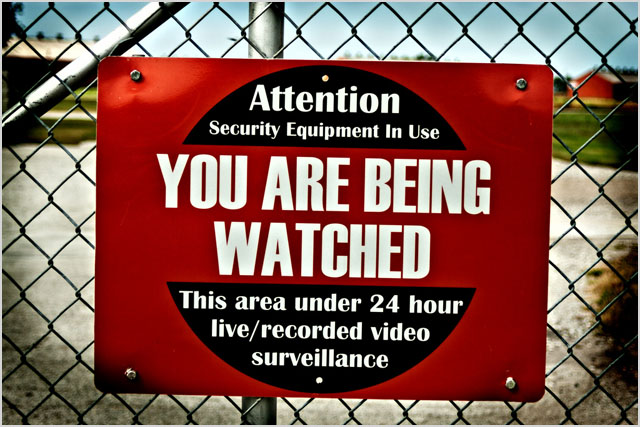
news Several of Australia’s most high-profile politicians in the telecommunications portfolio have publicly demanded answers from the governments of the United States and Australia in the wake of news that the US National Security Agency had obtained open access to private data held by US technology giants such as Google, Facebook, Apple and Microsoft.
Late in the week, UK newspaper the Guardian published classified documents created by the agency, which stated that the NSA was able to gain “direct access” to the servers of companies such as Google, Facebook, Apple, Microsoft, Yahoo and Skype. The access allowed US officials to collect information including search history, the content of emails, file transfers and live chats.
Subsequently, the New York Times reported that the US Government had used the system to collect information on non-US citizens overseas for nearly six years. The revelation of the move has caused outrage online, amongst the general public as well as those specifically interested in digital rights and privacy online.
In the wake of the revelation, Shadow Communications Minister Malcolm Turnbull and Greens Senator and Communications Spokesperson Scott Ludlam have demanded answers from the governments of Australia and the US, in relation to the scandal.
“Australians will be very troubled by the allegation in The Guardian and The New York Times that the US National Security Agency is engaged in large scale, covert surveillance of private data belonging to non-US citizens held by American companies such as Google, Facebook, Apple, Microsoft, Amazon and Youtube,” said Turnbull in a statement.
“I think Australians have always understood data housed on US servers is subject to US laws such as the Patriot Act, but the Guardian story about the so-called PRISM programme suggests there is extensive surveillance and interception of foreign citizens’ data without a court order and indeed without the knowledge of the internet companies themselves.”
Turnbull said he had “raised the matter with the US Government’s representatives in Australia and sought clarification”.
“These reports have potentially very significant commercial implications,” the Liberal MP said. “There is a massive global trend to cloud services. The vast majority of the cloud service providers are US companies. These companies have, with US Government support and endorsement, been promoting their services globally, and have sought to allay concerns that data hosted by them would have less privacy protection than it would in Australia.”
“Today’s reports elevate those concerns to an even higher level especially since it has been alleged that foreign-owned data hosted by US Internet companies has lesser protection than data belonging to US citizens.”
Similarly, Ludlam called upon the Australian Government to disclose whether or not it had access to private information on Australian citizens using the so-called PRISM program mentioned in the reports by the Guardian and the New York Times.
“A number of the tech companies are denying that they’ve ever heard of PRISM or that US intelligence agencies have installed ‘backdoors’ in their servers,” Ludlam said in a statement.
“Australians use these services to the point of ubiquity. Does the Australian Government believe it is appropriate that the US intelligence agencies appear to be engaged in warrantless realtime surveillance of the entire online population? Does the Australian intelligence community have access to this material? And is this the reason the Attorney Generals Department have been so insistent that Australian ISPs institute a two-year data retention regime?”
“This is a major example of the important role whistleblowers play, and it is unfolding with the trial of whistleblower Bradley Manning under way in the United States, and just one day before the anniversary of the publication of George Orwell’s 1984. It wasn’t intended to be an instruction manual,” Ludlam concluded. The Senator has filed the following questions to the Attorney-General on PRISM:
- Is the Australian government or any of its law enforcement agencies aware that the US National Security Agency and the FBI are utilising a back door program called PRISM to tap directly into the central servers of U.S. Internet companies to source meta and content data information without warrants?
- Has information obtained without warrant by the FBI or NSA on Australian citizens using PRISM such as audio and video chats, photographs, e-mails, documents, and connection logs or other material been shared with Australian law enforcement or intelligence agencies?
- Does the Australian Government believe it is appropriate that the US intelligence agencies appear to be engaged in warrantless real time surveillance of the entire online population?
- Are the communications and information held by Australian government, law enforcement and intelligence agencies also collected or is there an agreement to prevent the use of PRISM or other back door programs?
- Are the communications of Australian Federal Members of Parliament protected from or vulnerable to the PRISM program given the use of Microsoft programs in Parliament House and electorate offices?
- How do the Australian Privacy Principles apply to Australian customers of Microsoft, Yahoo, Google, Facebook, PalTalk, AOL, Skype, YouTube and Apple?
- Has the Australian government ever offered immunity from legal proceedings to companies that open their servers to data intercepting efforts by Australian intelligence organisations?
opinion/analysis
Nothing — nothing! — would surprise me about US Government Internet surveillance efforts, and I would also not be surprised to hear that the Australian Government — particularly the Attorney-General’s Department and the Australian Security Intelligence Organisation — had some knowledge of this.
We’re starting to see a pattern here. Over the past few years, it has become apparent that the security agencies of most first-world governments fundamentally see the Internet as a massive surveillance tool and an opportunity to stop crime, possibly even before it happens, through the mass surveillance of almost universally innocent civilians. The only thing we should be surprised about at this point is that there was a whistleblower courageous enough to inform reputable newspapers such as the Guardian and New York Times about the situation.
I don’t expect that we will get any real answers from the inquiries made by Turnbull and Ludlam this week, although it is always possible that either ASIO or AGD would have something to say on the matter in one of those compulsory Senate Estimates hearings that the agencies hate so much.
I guess at this point we have to hope that the exposure on this case in the US has the effect of helping to stop this comprehensive Internet surveillance. As a first step, I’d like to see companies such as Google, Apple, Microsoft and others come completely clean on just how they are cooperating with the US Government. These companies may be headquartered in the US, but they have just as much responsibility to global citizens who use their products as they do to US citizens. The use of a cloud computing service should not come with a compulsory NSA login to your account. That would seem to be a fundamental truth which almost everyone can agree with.
This issue also raises the question: Where is it actually safe to store your email, these days? The US cloud computing giants all seem to have backdoors to the NSA, and the Australian Government is making sure they can access all emails through the planned data retention initiative. Is anywhere safe from universal government surveillance? Perhaps Switzerland? Or perhaps New Zealand?