In this post, I’ll walk you through the steps of making and using the deer fly trap umbrella. In addition, there is a video I made in 2011 about my deer fly trap umbrella. The video demonstrates how to assemble the trap and shows it in use. Here is the link to that video:
The trap is simply a black-and-white umbrella that is adorned with blue plastic cups. The alternating black and white panels of the umbrella make the trap an irresistible visual stimulus for deer flies (which are strongly attracted to movement) while I walk around with the umbrella, rotating it as I go.

Each cup is attached to the umbrella with four twist ties evenly spaced around the perimeter of the cup's rim.

Here is a view of the current configuration of my umbrella with four cups attached. These fixed cups stay securely attached to the umbrella and do not need to be removed or replaced. The four loose cups that you see in the lower left-hand corner of the picture are used to support the sticky surfaces that trap the deer flies that are attracted to the umbrella.

This is the product I use to create the sticky surfaces that do the actual trapping of the deer flies.

Tangle-Trap is indeed very sticky, so I put on a pair of nitrile gloves before preceeding any further.

I cover each loose cup with a plastic sandwich bag.

The sandwich bags allow me to create a disposable sticky surface, so that the disposal of trapped flies is quick and easy and clean (you'll see that further down in this posting).

I tuck the extra length of each bag inside its cup. This prevents the bags from blowing off the cups after the loose cups are placed onto the umbrella trap's fixed cups.

The bag-covered cups are then evenly and thoroughly coated with Tangle-Trap.

I coat the tops ...

... and the entire side surfaces of the cups.

Once the Tangle-Trap coating has been applied to the bags, each coated loose cup is placed over a fixed cup on the umbrella, with the excess bag length tucked inside the coated cup.
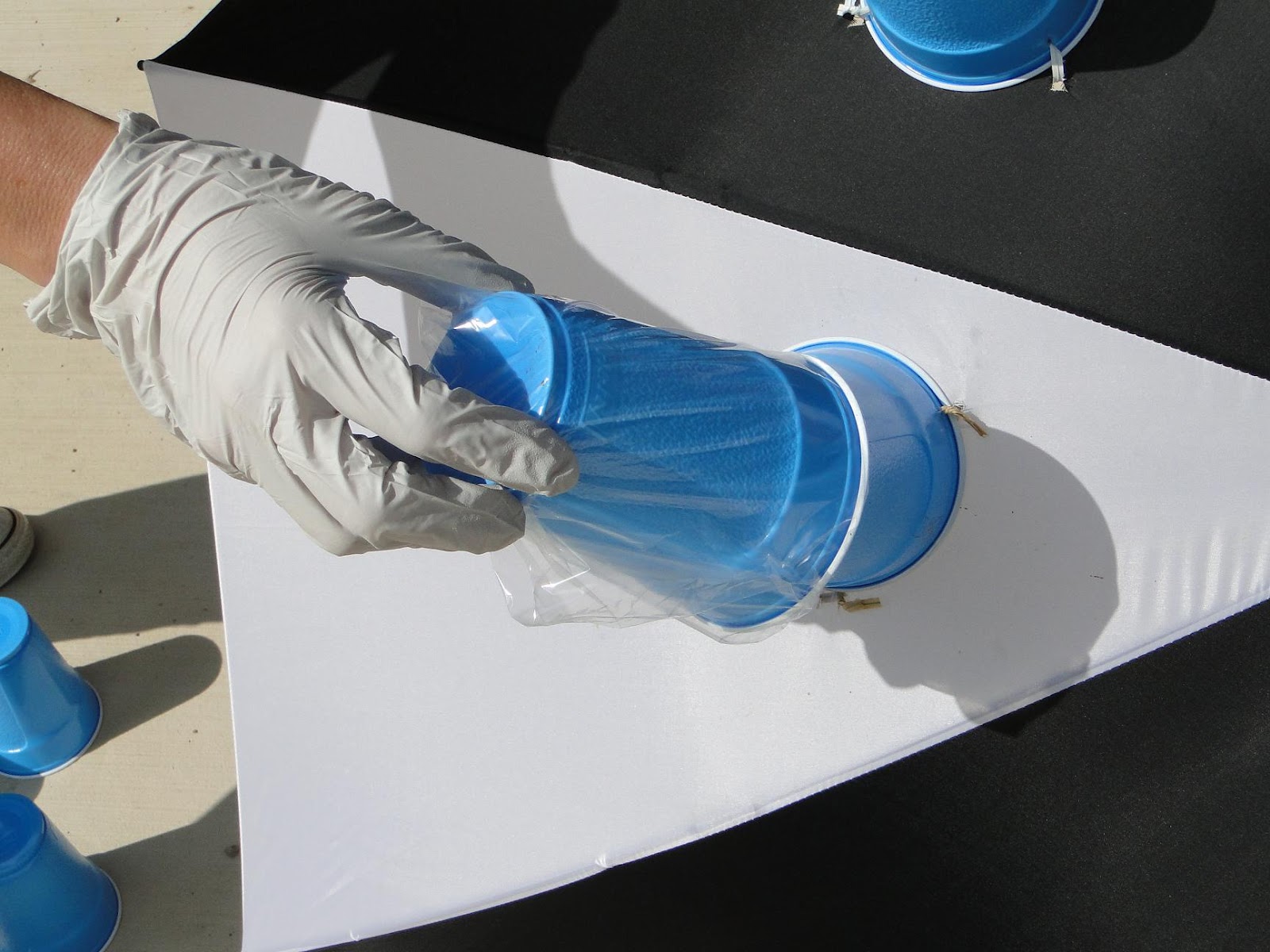
Each coated cup is gently pushed down until it is firmly seated atop the fixed cup.

Here is a picture of the umbrella trap all set to go with four coated bag-covered loose cups seated upon four fixed cups.

Once the umbrella trap is set up, all I have to do is walk around for a while and twirl the umbrella.

This is a picture of what I trapped after walking around for 15-20 minutes.

In order to get rid of the trapped deer flies and the used sticky bags, each loose cup is lifted from the trap (I use one hand to push down on the fixed cup in order to avoid undue stress on its attachment points) ...

... and the bag (with its attached flies) is removed from its cup and disposed of. The loose cups are replaced on the trap for storage (there is no need to dispose of them) until the next time I use the trap.

Because I love data, I count the number of trapped deer flies before I dispose of the bags. I actually do the counting while the bags are still on the cups, but here I have a bag placed over my gloved hand in order for you to easily see the trapped flies. This picture shows over 40 flies were trapped on one side of this bag alone.

In order to neatly dispose of the sticky trapped deer flies, I simply turn each bag inside out ...

... and then fold it in on itself ...

... numerous times ...

... until I've created a neat little compact ball ...
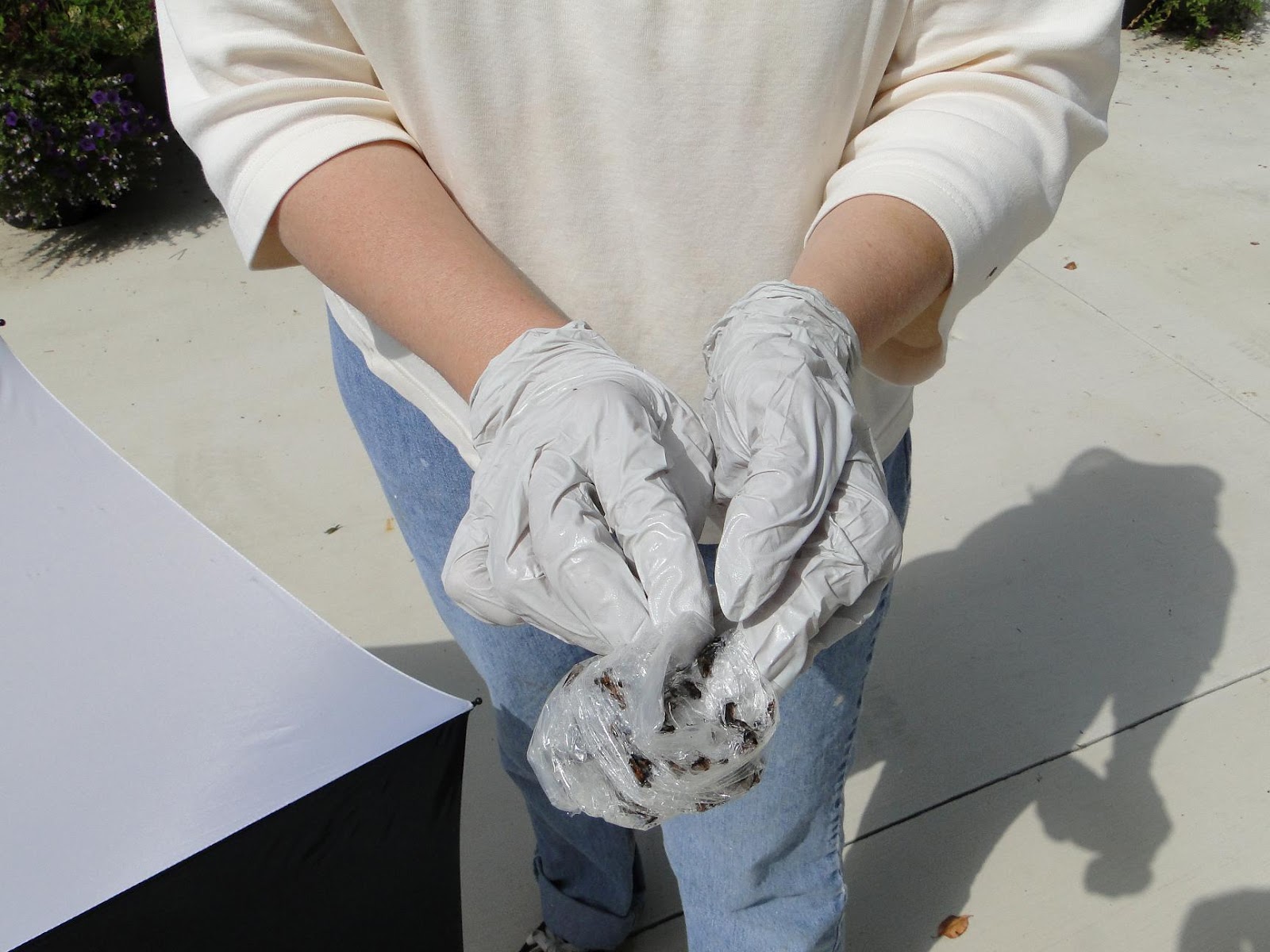
... that can then be easily disposed of.

In my next post, which I intend to publish within the next few days, I will present the data I've collected so far during the 2012 deer fly season here in Livingston County, Michigan.
Got questions? Got comments? Got feedback? Click the blue "# comments" link below and say something!