
I was quoted in "MUGGED BY A MUGSHOT ONLINE" in Sunday’s New York Times talking about the concept of the “long click” helping for-profit mugshot sites rank high in Google, but the Times article understandably left out a lot of the deeper SEO details. This post paints a fuller picture of what signals Mugshots.com, JustMugshots.com, and BustedMugshots.com gave off that allowed these sites to “monetize humiliation” and caused Google to unwittingly ruin people’s reputations.
First, to quickly recap the Times article, when someone is arrested, a booking photo (“mugshot”) is taken of them and kept at the police station. These mugshots are then made freely available online on the police departments’ websites for the civic good. Mugshot websites then crawl all these police department websites downloading all their mugshot photos and upload them to their own site. Those in the mugshot photos then find that these sites rank highly when they Google their name, hurting their reputation and being asked for payment if they want their photo removed. Worse of all, even if an arrest didn’t lead to a conviction or someone turned their life around since, these mugshot photos are always online and paying for removal on one site doesn’t mean the photo won’t pop up elsewhere. The reason for all this is SEO.
SEO is the process of influencing the signals that the search engine algorithm looks for when it matches pages to a searcher’s query and determines the order of those pages. A big reason mugshot websites are able to rank highly for names is because there’s not a lot of competing content on the web relevant to the name. Most people don’t have personal blogs (especially those most likely to get arrested) and the content that most of us create on the web is on social networks like Facebook which isn’t indexed by Google.
Furthermore, even when social media profiles like LinkedIn do rank on the first page of search results for a name, as soon as a mugshot result appears on the first page, often the mugshot result will start moving up. This is in part due to two ways Google measures quality:
- How often people click on a given result. A mugshots.com result is way more attention-grabbing than a LinkedIn profile or any other result. Even the title of their search result reinforces that this must be the person you Googled because it says their city (e.g. "Alfred Gene Wilsea Mugshot - Iosco County, MI"), or worse, something like "ERIC BUTKIEWICZ: Man arrested for allegedly selling Xanax on July 4th". It's the first thing anybody would click.
- Taking into account "long clicks" i.e., how long someone stays on the page they just clicked before returning to the search results. If you search for someone's name and click to a site like mugshots.com and see someone you know or are to meet, you probably are shocked and not going back to the search results right away.
These mugshot sites have over a million pages of photos though. How does Google even find them all and determine their importance from one another? The answer is good site structure and internal linking. For example, mugshots.com has a multi-level directory that ensures multiple pathways for search engine spiders to crawl all their content. JustMugshots.com has an XML Sitemap (http://www.justmugshots.com/sitemap.xml) that instructs search engine spiders about the page structure of their site, how often page content is updated, and when new content is added. Furthermore, they all have fresh content on their home pages to signal to search engine spiders to keep returning frequently for new content.
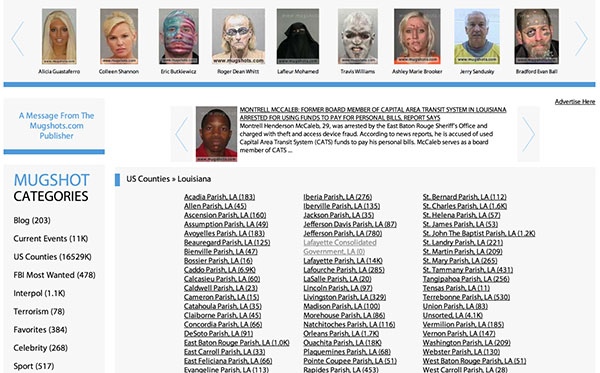
The last reason mugshot sites rank so well is that other sites with high credibility link back to them. Google likens the relationship to a democracy, whereby “sites have been ‘voted’ to be the best sources of information.”
Mugshots.com has the best backlink profile out of the 3.
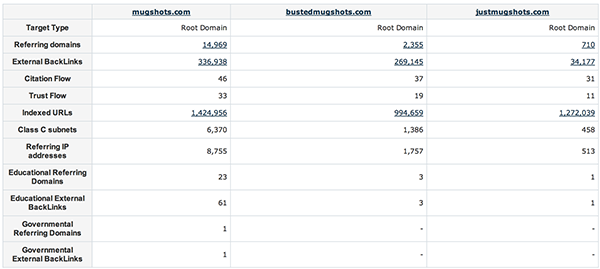
I'd sum up all 3 site's backlink profiles as a combination of: people angry with them, people in support of them (freedom of information ralliers), people using their mugshot photos as sources, and spam generated by the sites themselves (mostly comment spam which seems to have slowed). It's also interesting that there are some names that these sites specifically build links for. It seems to be a mixture of celebrities, gangsters, and people in the news like Tamerlan Tsarnaev. What they're doing is trying to rank for "[famous/infamous person's name] + mugshot" which is harder to do than ranking for random Joe Schmoe who got arrested thus link building is necessary.
The most interesting links though come from media coverage of the mugshot sites. By talking about how sites like mugshots.com impairs lives and is a paid unpublishing scam, they often link to the sites in question, passing the news organization's authority to them and in turn boosting their authority. Here's some big news sites that have made this mistake:
- How People Profit from Your Online Mug Shot and Ruin Your Life Forever by Gizmodo
- The Ethics of Posting Mug Shots Online by Poynter
- Hotties, Hunks, Beat Up, Celebrities: The Allure of the Mug Shot by The New Yorker
- The Internet Has Been Too Good to Sociopaths by SF Weekly
All these publications would have needed to do is use the "nofollow" tag on the link and it wouldn't have passed value. Instead, media coverage of mugshot sites resulted in negative manifestations of their original intent.
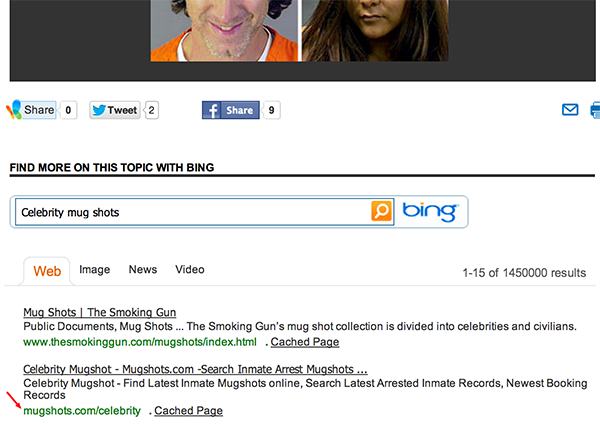
Another type of link that helped mugshot sites' authority were auto-generated links from The Huffington Post and MSN.
The Huffington Post
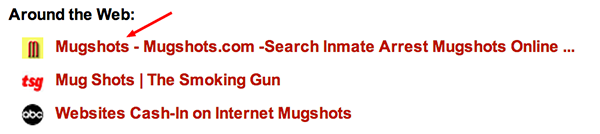
MSN
So despite no technical obstacles to indexation, an easy-to-understand site structure, relevant fresh content, and high authority, what made these mugshot sites "run afoul of a Google guideline"?
Though Google never says, I'd place my bets on violations of the duplicate content and little or no original content guidelines. A Search Engine Land opinion piece from February 2013 titled "Why Google Should Crack Down Harder On The Mugshot Extortion Racket" digs into the topic deeper.
Ultimately it was an "editorial" decision that Google had to make, says Emily Bell, Director of Tow Centre for Digital Journalism at Columbia Journalism School.
Point in @NYT mugshot piece about Google and MasterCard underlines how platforms make 'editorial' decisions all the time.
— emily bell (@emilybell) October 6, 2013
Do you think Google and MasterCard made the right decision? Will mugshot sites re-optimize to stay within Google's guidelines and come back stronger? Sound off below.