(And no, that’s not as sci-fi as it sounds.)
Something strange is happening in marketing right now. Big brands — the ones with million-pound ad budgets and internal teams named things like “AI Strategy Lab” — are asking a brand-new question:
“What does ChatGPT say about us?”
Because when someone asks an AI assistant, “What’s the best CRM for startups?” or “What’s the best electric car for a family of 5?”, they’re not scrolling through Google anymore. They’re getting one answer — straight from ChatGPT, Claude, or Gemini.
If your name doesn’t show up there… you’re invisible.
So we teamed up with the folks at Zebora, who help companies figure out how to show up in those AI answers, to ask a slightly more personal question:
What if the same logic applied to you and your personal brand?
The Personal Brand Update Nobody’s Talking About
Imagine this.
A hiring manager has three strong candidates for a senior role. Before the interviews, they don’t just Google you — they might literally ask ChatGPT:
“Tell me about [your name]. What’s their background and expertise?”
Now, what comes back?
Is it accurate? Up-to-date? Actually you?
Or is it stitched together from an old Medium bio, a forgotten event page, and that one slightly cringe 2018 press quote?
For most people, the answer’s uncomfortable: they have no idea.
We’ve all spent years polishing CVs, tuning LinkedIn profiles, and pretending our portfolio sites are “under construction.”
But we’re moving into a world where AI is the first filter.
Not just the CV-screening bots — that’s ancient history — but the actual research phase where decisions get made about who to meet, shortlist, or hire.
What Brands Are Learning (That Job Seekers Should Steal)
Zebora have a front-row seat to this shift, and here’s what they say matters most:
1️⃣ Consistency > Chaos
AI tools pull from everywhere — LinkedIn, event listings, your blog, maybe that one podcast transcript.
If those things don’t align, you end up with an AI-generated “Franken-version” of yourself.
So, same rule as branding: tighten your message. Make sure your digital footprint tells one clear, coherent story.
2️⃣ Depth > Breadth
LLMs (Large Language Models, if we’re being nerdy) love depth.
Your 500 LinkedIn connections matter less than that one detailed blog post where you unpacked a gnarly technical challenge or that conference talk you nailed.
Authority content wins. “I’m thrilled to announce…” posts? Not so much.
3️⃣ Active > Passive
Updating your CV is the baseline. Publishing, contributing, mentoring, even thoughtful commenting — that’s what builds
AI authority.
The more public, verifiable proof you create of your expertise, the more likely you’ll appear in AI answers as the person to talk to.
The Reality Check
This isn’t about “gaming the system.”
It’s about making sure AI — which increasingly acts as the world’s research assistant — actually understands who you are.
Companies are already doing this. They’re not trying to trick algorithms; they’re making sure the information about them is accurate, current, and genuinely reflective of their value.
Why shouldn’t you do the same?
Try this:
Ask ChatGPT about yourself.
See what comes back.
Then ask: is that the story you want employers to see?
The Early-Mover Advantage
Here’s the kicker: most people aren’t doing this yet.
They’re still optimising for Google, not GPT.
So if you start now — tightening your message, creating meaningful content, making your best work visible — you’re basically future-proofing your professional identity before everyone else realises they need to.
AI isn’t just a recruitment tool anymore.
It’s quickly becoming the lens through which your professional story gets told — and understood.
Companies are starting to wake up to this new reality.
The question is: will you?
This piece was created in partnership with Zebora, who help brands (and smart humans) optimise how they show up in AI search.
As you’ve probably seen, we’ve made the decision not to run an in-person Silicon Milkroundabout event this June.
Instead, we’re going digital — and we wanted to give you some honest context on why we’ve made this move, and why it’s probably 10x better than you might think 🙂
Why we’re not doing an in-person event
Putting on a big in-person event post-Covid has proven increasingly tricky.
They’re brilliant in many ways — high energy, high impact and full of the kind of serendipitous moments we love — but they’re also big, clunky and costly affairs. They only make sense at scale, with a strong showing from hiring companies.
And this year, we just haven’t seen enough demand from companies willing to attend to make an in-person event viable.
Here’s what’s driving that:
1. The hiring landscape has radically changed.
Companies don’t have the same appetite for large-scale tech hiring as they did pre-Covid. The economy’s been unpredictable and most companies are far more cautious with their hiring.
2. Teams don’t want to give up their weekends.
This has become a major blocker — and understandably so. Asking company teams to give up personal time is a tougher ask than it used to be.
3. Physical events are harder to justify.
When hiring is leaner and the ROI of every activity is under scrutiny, big events become a harder sell — even when they’re as unique as ours.
We’re still 100% focused on human connection
What hasn’t changed — and won’t change — is our belief in real one-to-one, human connection.
That’s always been the heart of Silicon Milkroundabout. Creating opportunities for people to meet, talk, and determine fit.
So while the format is evolving, our focus remains the same
Why we’re going digital
Going digital isn’t a compromise — it’s a step change we’ve been preparing for.
We’ve known for a while that digital events could offer real advantages, like:
- Broader inclusion — covering more tech roles, locations and levels
- Better timing — more frequent events that match real hiring needs
- Sharper focus — smaller, targeted sessions with better fit on both sides
- Lower friction — no travel, no weekends, making it easier to participate
So for the past 12 months, we’ve been heads-down building Micros — our very own custom video chat platform, designed specifically for hiring.
It’s built to replicate the energy and structure of our live events: back-to-back, focused one-to-one conversations between companies and candidates.
We’ve already been quietly piloting it with teams at Made Tech, Football Radar, and Eedi — and the feedback has been brilliant (for the most part!).
So when it became clear an in-person event wasn’t realistic, we saw this as a great opportunity to do something different.
What’s Happening in June & July
We’re running a series of 36 digital hiring events, each one laser-focused on a specific:
- Role (e.g. backend engineer, data scientist, PM)
- Seniority level
- Tech stack
It’s a completely new approach — as far as we know, no one has done anything quite like this before — and we’re really excited to see how it plays out.
Join Us
We know some of you will miss the buzz of the in-person experience (and the free coffee & beer!) — we do too. But Silicon Milkroundabout needed to evolve. This feels like the perfect time for a bold new move and exactly right for the moment we’re in.
And we hope you’ll join us on this next stage of the journey.
👉 Check out the schedule and see what’s coming up
Thanks, as ever, for your support.
Liam & the SMR team
(And yes — we somehow made it this far without mentioning AI. Until now 😄)
Hiring top-tier tech talent is tougher than ever.
🚀 Recruiters are expensive – and don’t have access to large talent pools
🚀 Software engineers shun LinkedIn – it’s a complete turn off
🚀 Job boards only attract active job seekers—passive talent isn’t there.
And candidates? They’re tired of the endless application black hole, where they apply, get ghosted, and never hear back.
What do top engineers actually want?
They want to meet real companies, talk to real tech teams, and understand company culture before committing.
That’s exactly what Silicon Milkroundabout offers.
A direct hiring channel to London’s top tech talent
Silicon Milkroundabout brings together one of the UK’s largest communities of mid-to-senior level tech talent.
💡 Average experience: 5+ years
💡 Minimum experience: 2 years
Instead of skimming CVs, you’re having real, high-impact conversations with hundreds of software engineers, product managers and data folk over a single weekend.
Let’s talk ROI: Why companies keep coming back
A typical 5-person team space for the weekend costs £6,300 (we do have other options)
What do you get for this?
📍 400 conversations (each company member connects with 40 people per day)
📍 4+ high quality hires (just from the top 1% – often it’s a lot more)
📍 A talent pipeline of 400 candidates emails for future roles
📍 Your employer brand in front of London’s top tech talent
The numbers speak for themselves
Even if a recruiter only charged 10% (good luck with that!), that’s £7.5K per hire (based on an £75K salary).
At Silicon Milkroundabout, one hire already covers the cost of attending – and you’re walking away with a pipeline of future hires and stronger brand awareness.
Better, more diverse hiring
Beyond cost savings, you also get:
✅ Faster, more personal hiring – assess cultural fit on the spot
✅ A stronger, more diverse pipeline—SMR attracts a broad mix of talent, including women and underrepresented groups in tech
The Bottom Line
Hiring great engineers is hard. But waiting months, paying recruiter fees / subscriptions and sifting through endless applications doesn’t make it easier.
At Silicon Milkroundabout, you cut to the chase and connect directly with the best tech talent in London.
And you get to speak to the real person, not their ChatGPT alias !
🚀 One hire covers the cost. The rest is upside.
Spots are limited—secure yours now!

Software engineering and web development have always been amongst the most sought after roles by companies at Silicon Milkroundabout. However one common question we get asked from those just starting out is whether to start out as a ‘front end’ or ‘back end’ developer. So alongside our partner Le Wagon, we’ve pulled together this guide to help you explore the differences and decide which is the right career path for you.
So if you’re just starting out your career as a developer or looking to switch careers into web development, this is the guide for you.
Front End Web Development
You click on a link for a website and the page loads. You see a modern, sleek design, an intuitive interface, smooth navigation and a page that adapts to your device and screen size. This means you’re engaging with the front end of the website – everything that you can see and interact with on a page or in an app.
Usually front end development happens after the design stage. A designer will plan and design a webpage or app, deciding on what content, copy and visual elements go where on the page. The front end developer will then take this design and code the page, bringing it to life as a web page / app. This can include interactive elements such as buttons, menus, forms, animations and 3rd party integrations. They also ensure that all content components adjust and are optimised across different screen sizes, devices and browsers. All of which have their own idiosyncrasies that need to be considered and accommodated to provide the same experience to everyone.
The most common coding languages used by front end developers are
HTML – to create a structure for the webpage
CSS – to and control the visual design
JavaScript – to manage the dynamic elements.
If you have an eye for design and want to craft engaging user centric experiences, front end web development may be the perfect fit.

Back End Web Development
Now lets assume you’re shopping online for a new t-shirt and browsing the sleek interface created by the front end developer. You see a t-shirt you like, add to the basket, checkout and receive a confirmation email that you’re t-shirt is on its way. The back end developer works behind the scenes of the website, handling all the server side and database processes to ensure the business runs smoothly.
In this case, the back end developer is responsible for of how easy it is to search and find the t-shirt, the ease with which an account can be created, payment details added and payment made. The backend developer has to then ensure the system correctly tells the warehouse to dispatch the t-shirt to the given address while keeping the customer updated with the status of their purchase. If the t-shirt is no longer available, the back end developer is responsible for the inventory management system that prevents someone from still being able to purchase that item.
What technologies and systems a back end developer uses will very much depend on the nature of the business.
For instance, a back-end developer who works for a social media platform might work on real-time push notifications and optimising data storage and retrieval. In banking, it could be optimising data encryption and handling transaction processing.
As a result, back end developers tend to cover a wider range of technologies than front end developers. Some of the more common ones include SQL, Python, Java and Ruby.
If you enjoy problem-solving, have a logical mindset, and like working with databases and servers, back-end web development may be your calling.
Which Path Should You Choose?
Front End Web Development might be right for you if:
- You have a passion for design and appreciate visual aesthetics.
- You enjoy creating visually engaging user experiences.
- You’re interested in HTML, CSS, and JavaScript.
- You want to showcase your creativity through websites and user interfaces.
Back End Web Development might be right for you if:
- You enjoy working with data, databases, and servers.
- You’re interested in creative problem-solving and critical thinking.
- You enjoy working with languages such as SQL, Python, Java or Ruby.
- You want to build the underlying logic and functionality of websites.
Where to start
It’s also worth noting that you don’t necessarily have to choose front end or back end. Many developers enjoy a combination of both and are known as “full stack’ develops. This offers the best of both worlds, allowing you to design captivating user interfaces while also building out powerful functionality.
Whether you choose front end, back end, or decide to explore full stack web development, learning these skills can open up a world of opportunities. Start learning the basics of HTML, CSS, and JavaScript to get a taste for front-end development, or dive into SQL, Java and Ruby to explore the back end. There are countless online resources, tutorials, and bootcamps available to help you kickstart your web development journey.
If you’re interested in getting started, join our free beginners workshop:
Build a Landing Page – Explore HTML and CSS and learn to design, build and structure website pages. Click here to learn more and save your space. 10th October 2023

Are you considering starting a tech career? Or just getting started and trying to make sense of the many options available? It can be hard to decide which path is right for you. So we’ve partnered with Le Wagon to provide a guide to choosing your own pathway and what to consider. It’s full of tips to help you with your journey.

Samantha Burnham
Tell us a little about yourself. What do you do? What’s your job role?
Right now, I’m the Product Manager for Tesco’s UK recruitment platform. In the coming months I’ll bounce between our current platform and a new platform that’s being developed with my colleagues as a global solution and ultimately, I’ll be Product Managing that platform when the current one is sunsetted.

Bhavik Sutha
Tell us a little about yourself. What do you do? What’s your job role?
I’m an Electronics Engineer by degree and a Software Engineer by profession. I’m currently a Software Development Manager at Tesco in the payments platform. Having spent 20 years in various industries like hospitality, gaming, payments and now retail, I’ve faced and enjoyed many technical and management challenges. These include everything from hiring and team upskilling to managing the balance between technical excellence and value expectations.

Have you ever considered a tech bootcamp or code school? Or are you just starting out in a career in tech and exploring what the right path is for you? We’ve partnered with Le Wagon to give you the low down on tech bootcamps and why you may want to consider one.

Benjamin Lehne – Data Science Manager at Tesco
Tell us a little about yourself. What do you do? What’s your job role?
I’m a Data Science Manager within the Data Science & Analytics practice. My team develops and maintains the Machine Learning models that power personalisation on the Tesco website and it’s my job to coordinate the work across software engineers, data scientists and business stakeholders
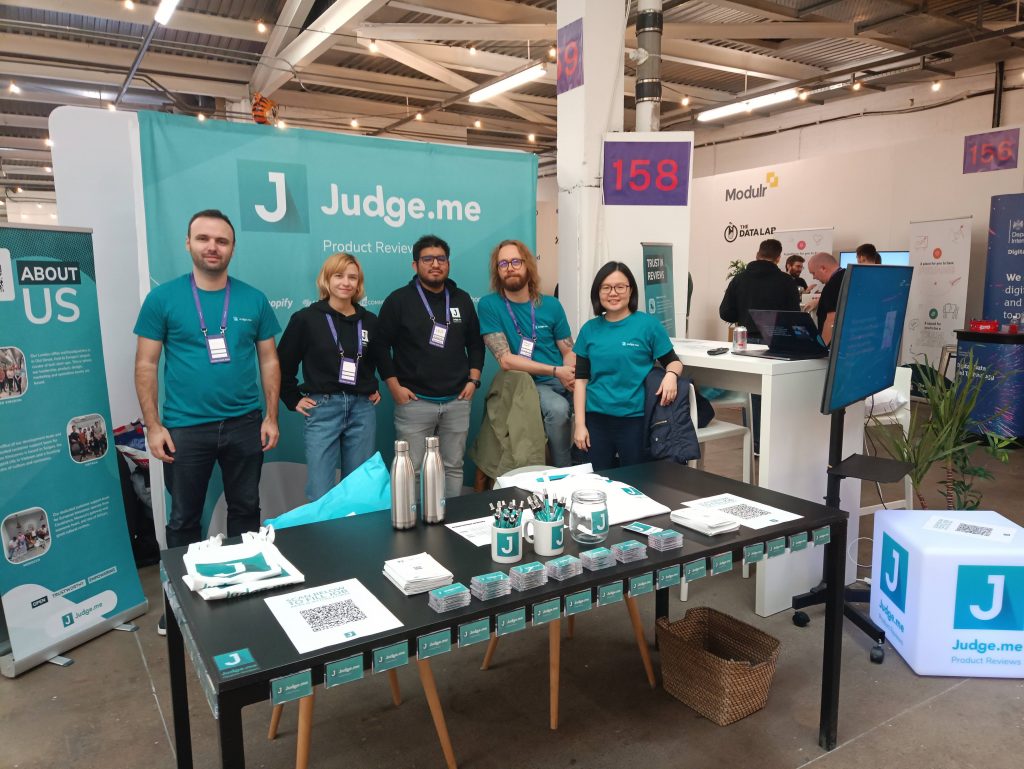
On 13 May this year, the Judge.me team will be heading over to the Truman Brewery in East London for the 2023 edition of Silicon Milkroundabout, London’s hottest jobs fair for tech roles. It’ll be our second time at the event, and we learned a bunch when we went down last year.
We thought we’d share a few thoughts about what we learned.