According to multiple participants in the month-long discussion, CryptoLocker is true to its name. It uses strong cryptography to lock all files that a user has permission to modify, including those on secondary hard drives and network storage systems. Until recently, few antivirus products detected the ransomware until it was too late. By then, victims were presented with a screen like the one displayed on the computer of the accounting employee, which is pictured above. It warns that the files are locked using a 2048-bit version of the RSA cryptographic algorithm and that the data will be forever lost unless the private key is obtained from the malware operators within three days of the infection.
“Nobody and never will be able to restore files”
“The server will destroy the key after a time specified in this window,” the screen warns, displaying a clock that starts with 72:00:00 and counts down with each passing second. “After that, nobody and never will be able to restore files. To obtain the private key for this computer, which will automatically decrypt files, you need to pay 300 USD / 300 EUR / similar amount in another currency.”
None of the reddit posters reported any success in breaking the encryption. Several also said they had paid the ransom and received a key that worked as promised. Full backup files belonging to Nic’s clients were about a week old at the time that CryptoLocker first took hold of the network. Nic advised them to comply with the demand. The ransomware operators delivered a key, and about 24 hours later, some 400 gigabytes of data was restored.
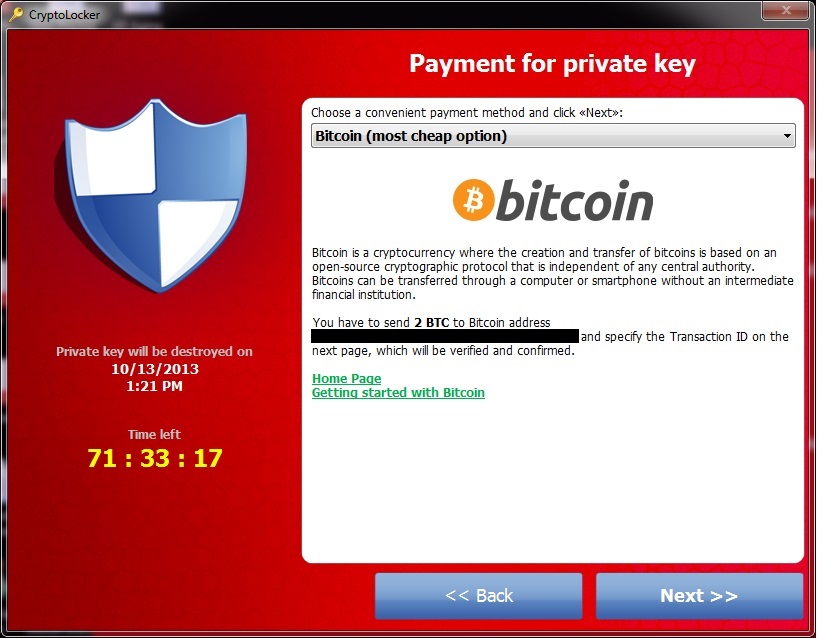
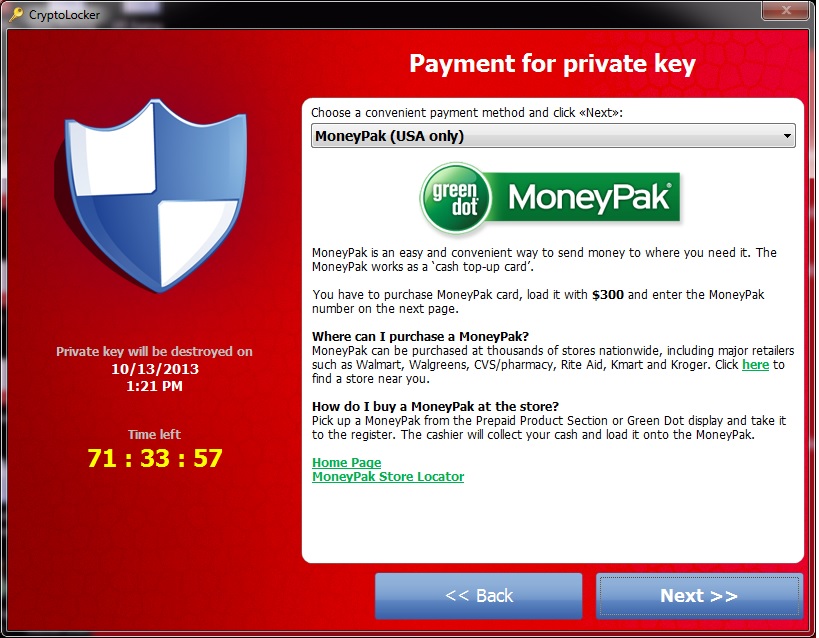
CryptoLocker accepts payment in Bitcoins or through the MoneyPak payment cards, as the following two screenshots illustrate.
The outcome hasn’t been as happy for other CryptoLocker victims. Whitehats who tracked the ransomware eventually took down some of the command and control servers that the operators relied on. As a result, people on reddit reported, some victims who paid the ransom were unable to receive the unique key needed to unlock files on their computer. The inability to undo the damage hit some victims particularly hard. Because CryptoLocker encrypted all files that an infected computer had access to, the ransomware in many cases locked the contents of backup disks that were expected to be relied upon in the event that the main disks failed. (The threat is a graphic example of the importance of “cold,” or offline backup, a backup arrangement that prevents data from being inadvertently overwritten.)