Windows XP will receive its last-ever security update on April 8 next week. After that, any flaws, no matter how severe, will not be patched by Microsoft, and one would be well advised to not let Windows XP machines anywhere near the public Internet as a result. In spite of this, 28 percent of Web users were still using the ancient operating system in March.
This seems unlikely to end well.
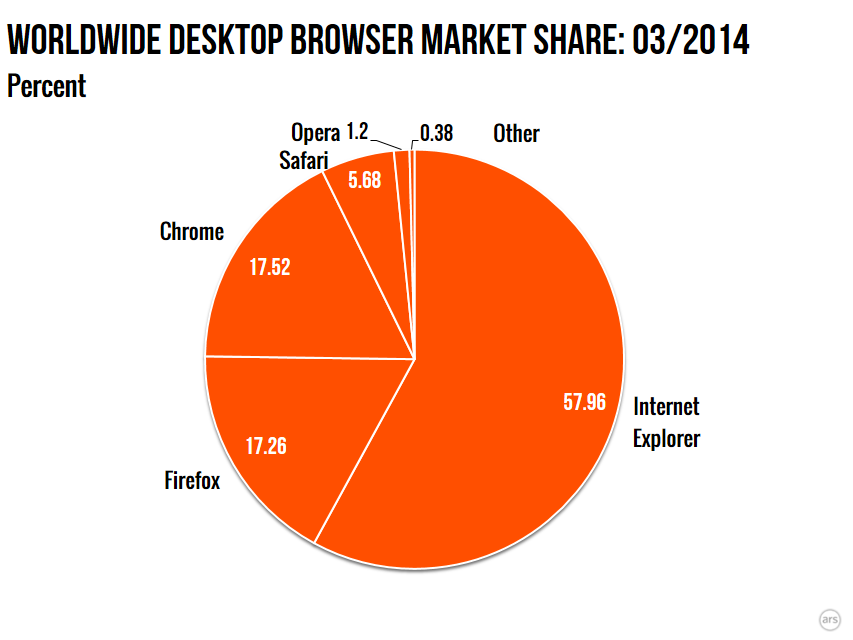

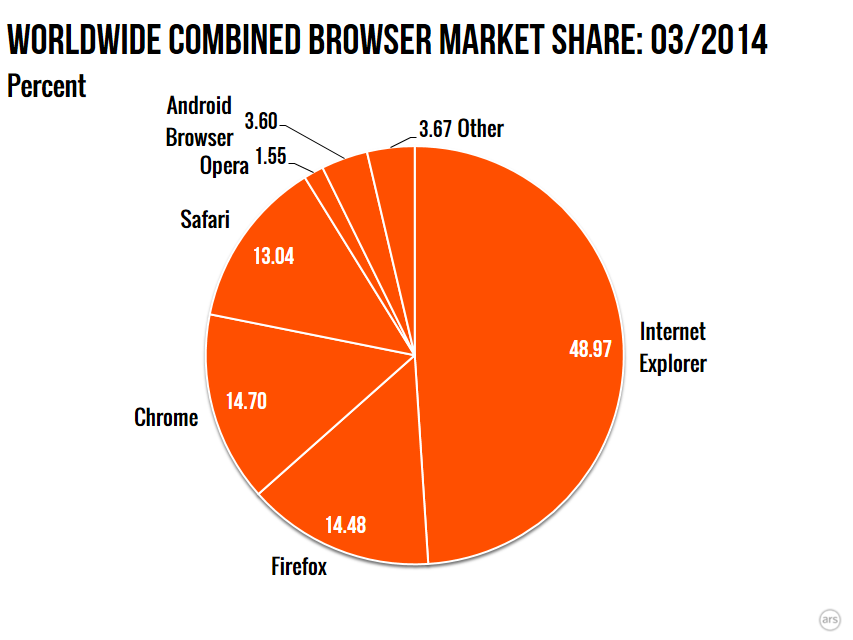
Chrome has come close to Firefox’s market share a number of times over the years. However, the market share tracker we use, Net Market Share, has never seen Google’s browser actually surpass Mozilla’s—until now. In March, Chrome finally overtook Firefox to claim the second spot. Internet Explorer dropped a quarter of a point, Firefox dropped 0.42 points, and Chrome reaped the reward, gaining 0.68 points. Safari was essentially unchanged, up 0.01 points; likewise Opera, dropping 0.03 points.
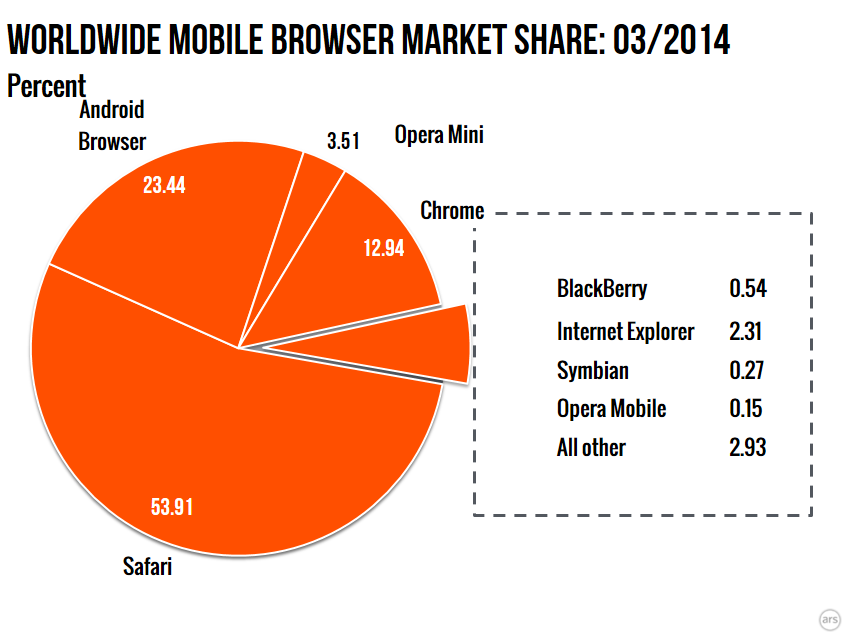
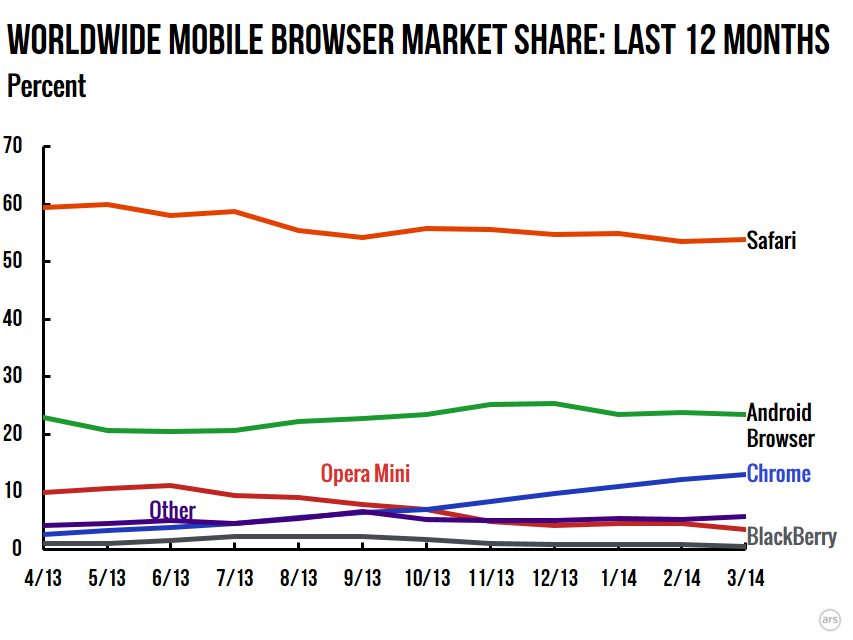
Safari gained 0.39 points, Android Browser lost 0.40 points, and Chrome picked up 0.85 points, as Google’s migration toward its Chrome-branded Android browser continues. There were also some big movements among the also-rans; Opera Mini fell by 1.06 points, and Internet Explorer approached historic highs as it gained 0.61 points.
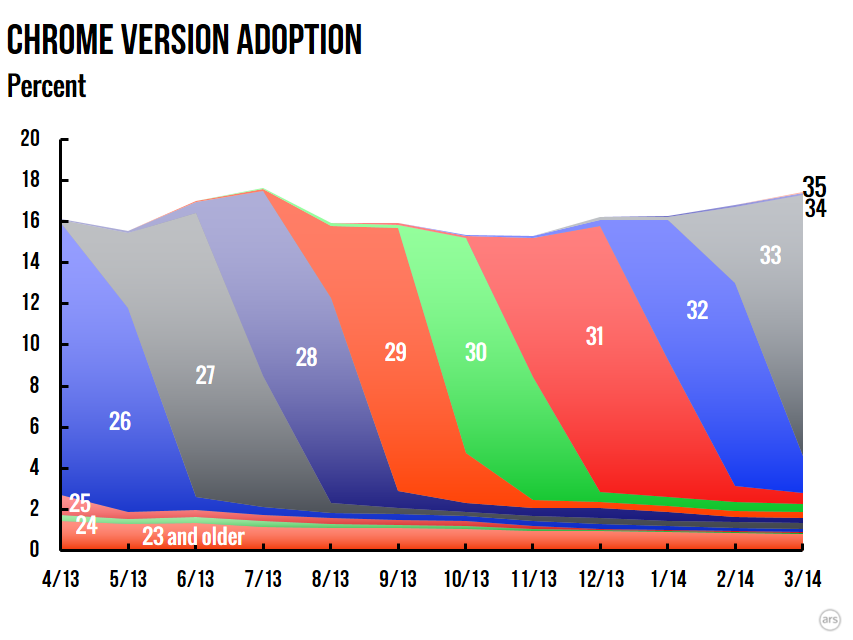
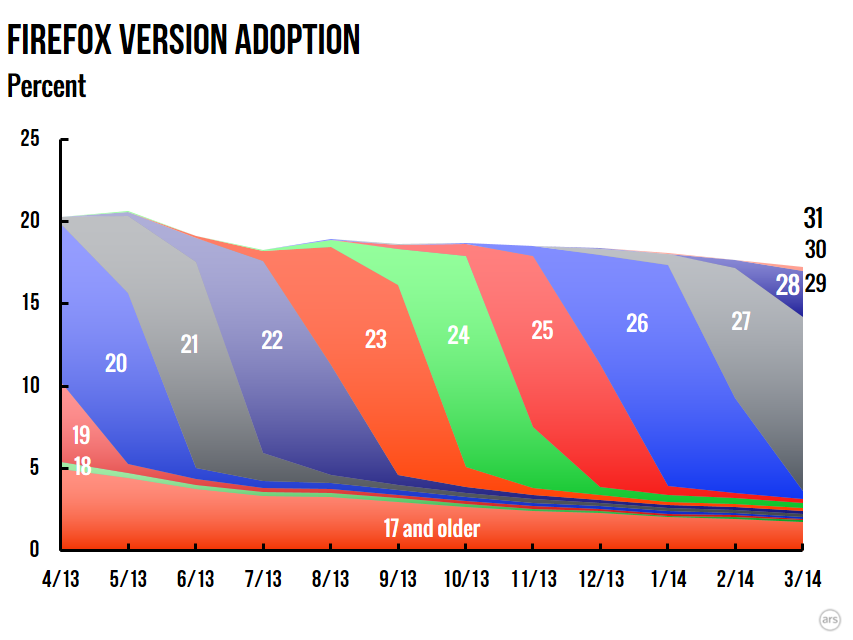
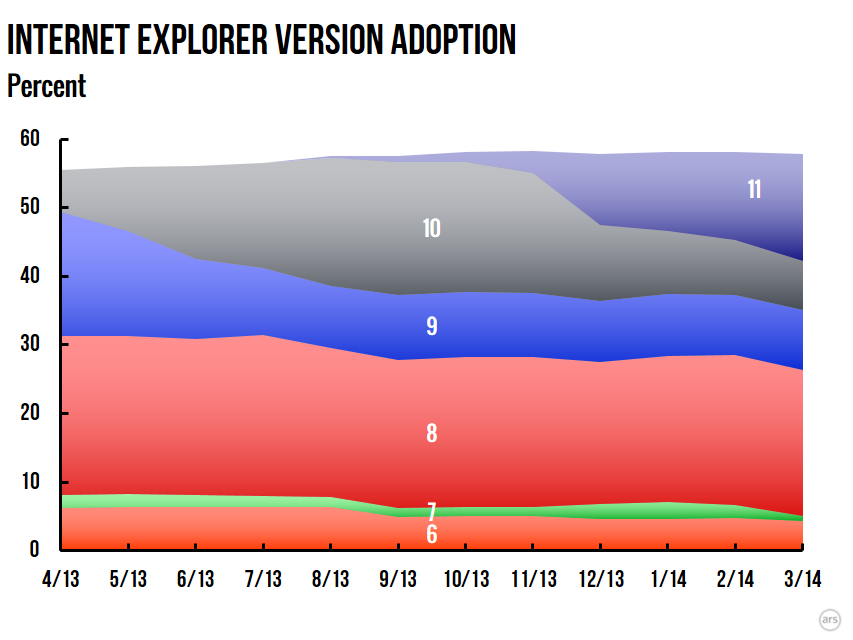
Internet Explorer 11’s take-up has picked up substantially. If Internet Explorer 10 users continue to convert to version 11, it could even overtake Internet Explorer 8 to become the most widely used version of Microsoft’s browser. The forthcoming update to Windows 8.1 may help stimulate this change, too, as it will include some changes to make the browser behave better when used with legacy intranet sites, many of which remain frustratingly tied to specific browser versions.