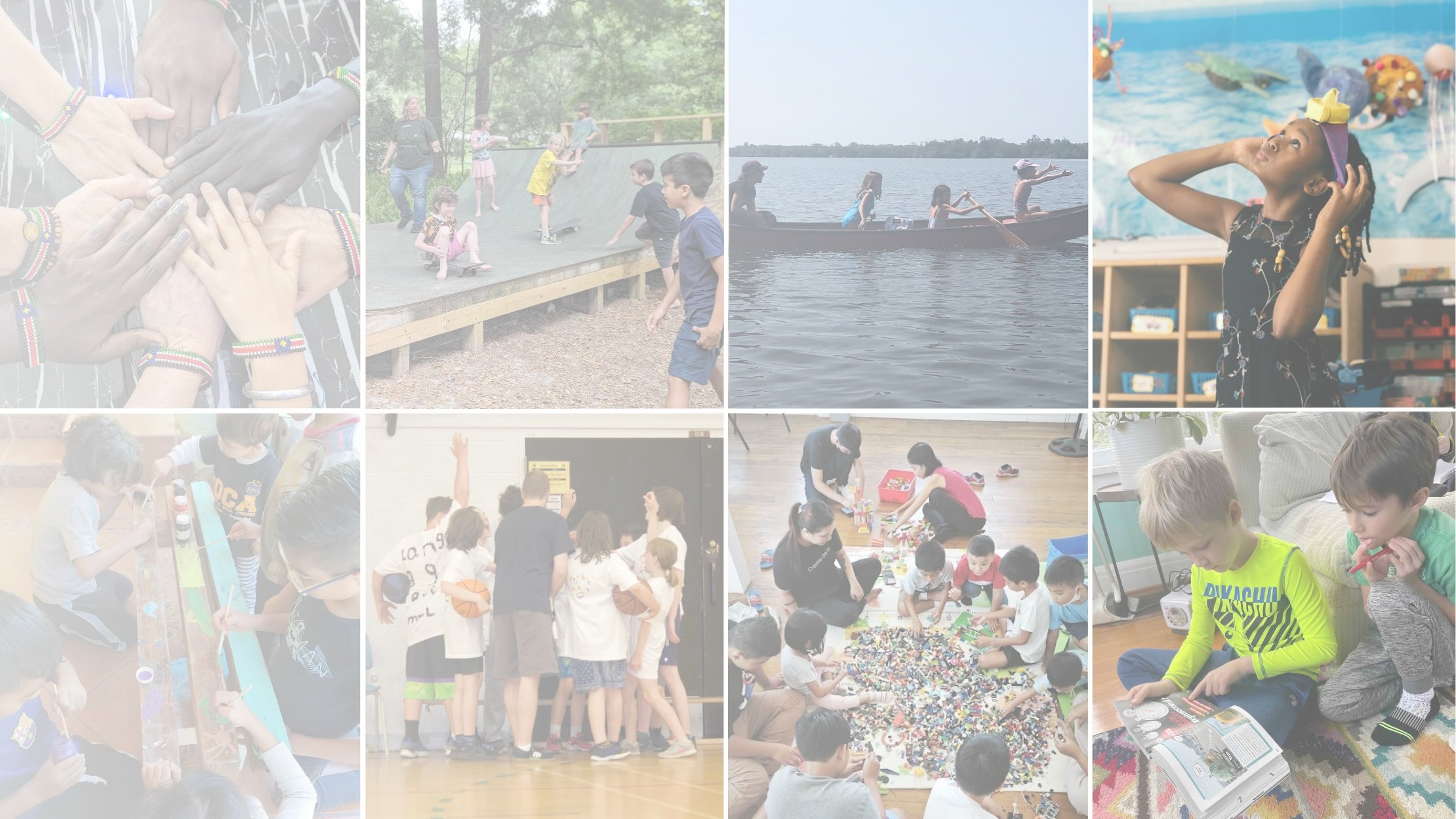
ALCs are...
The Agile Learning Centers model is a framework for learning communities rooted in trust, self-direction, and collaboration.
Children today will need to succeed in a very different world than any we’ve known so far – one completely outside the reach of conventional schooling.
The future is in the hands of the deliberate community builders, creative problem-solvers, emotion honoring space-holders, and daring entrepreneurs. The skills needed to be successful in any of these roles come from inquiry and practice over time, not from spending years obeying commands to “sit down, be quiet, and do what I say.”
Today’s children need spaces to develop their social, cultural, and technological fluency. They need time to develop their emotional intelligence and self-knowledge, to connect with their own sense of purpose. They need support – not interference – and the inspiration of a collaborative community as they make their way.
So what could education look like if designed in response to these needs?
Agile Learning Centers
Educational Model
While many elements are flexible and vary between communities, some things are central to what ALCs are about:
The soil we grow in is trust.

Learning is natural and happening all the time.
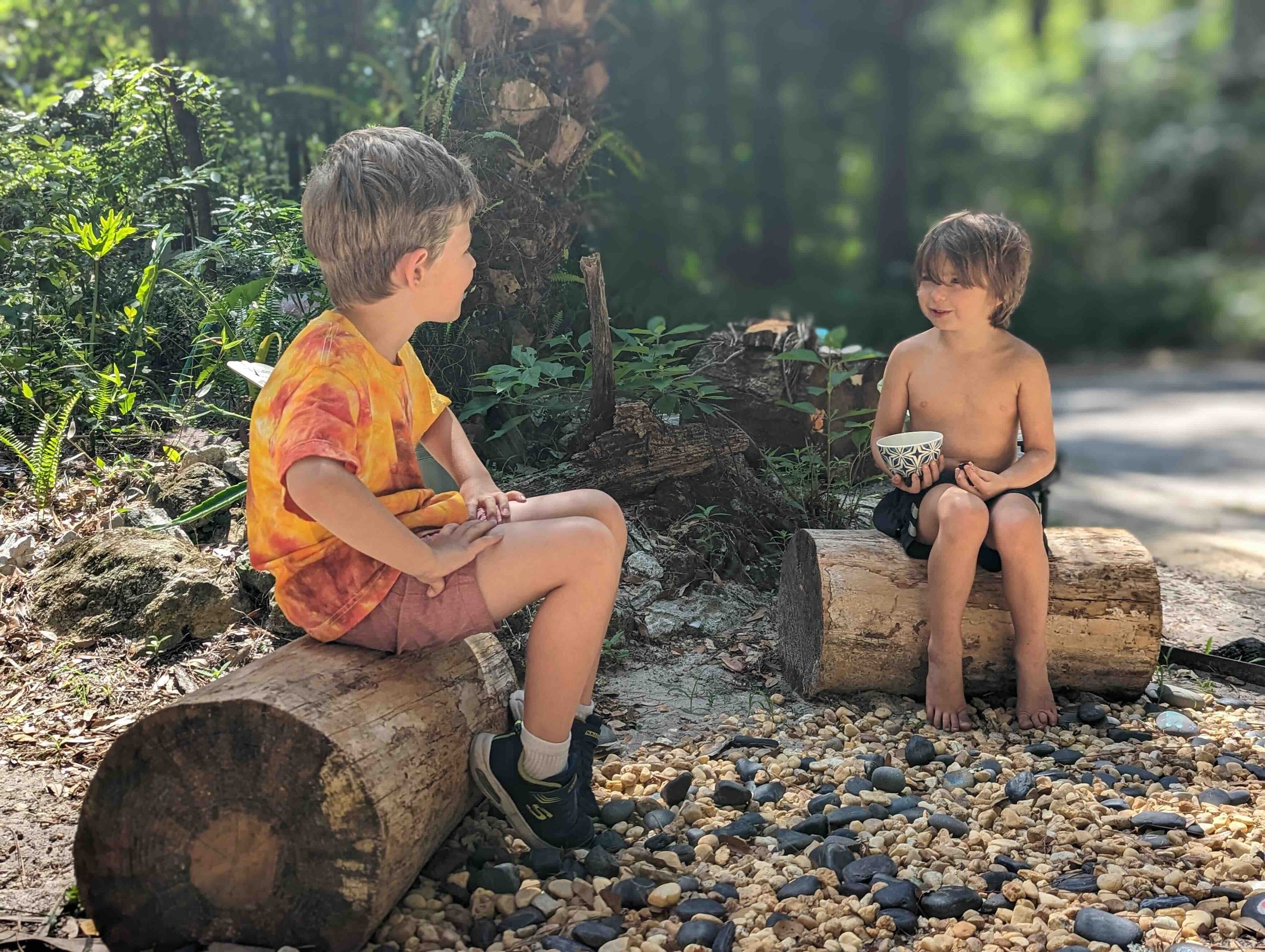
People learn best when they make their own decisions. Children are people.

People learn more from their culture than from the content they are taught.

Growth is catalyzed through cycles of intention, action, reflection, and sharing.

Principles of the ALC model
-
Agility
Make tools and practices flexible, adaptable, easy to change…and to change back again. Too much change all at once can be disorienting, so try making gentle changes over multiple iterations, pausing to see what’s working.
-
Infinite Play
Play infinitely, grow infinitely. Play is one of the most powerful paths to growth. The concept of infinite play reminds us that games aren’t about winning; changing rules and boundaries is part of playing. When players constantly expand the game to incorporate new players and stretch themselves in new ways, awesome things are possible.
-
Amplify Agency
Accompany young people instead of seeking to control them. Practicing self-determination helps them find themselves and prepare for the future. Ensure tools support personal choice and freedom, as well as responsibility for one’s choices. Make sure everyone has the opportunity to participate in co-designing and adapting community guiding structures.
-
Culture Creation
Acknowledge and work with the power of culture. A generous, curious, and encouraging culture is the strongest, most pervasive support structure a learning community can have. We leverage this by intentionally shaping the culture than shapes us. Focusing on collective practice, reflection, and iteration rather than restrictive rule-making keeps us agile and collaborating.
-
Facilitation
Model, connect, witness, and inquire. Don’t introduce unnecessary complexity or project your own agenda. Open space for kids to engage with friends and with the resources of their broader community, collaborate with them in problem solving, and accompany them in their learning as they grow. Stay curious. Embrace emergence.
-
Ongoing Feedback
Make the implicit explicit and decentralize knowledge. Write, draw, or record regular notes. Over time, sharing about our choices and outcomes reveals patterns, which we can reflect on to support adaptation and growth. Norms supporting sharing empower and build trust among community members.
-
Relationships
Be real. Be accepting. Respect differences. Authentic relationship is the basis of partnership, communication, collaboration, and trust between students and staff. Support self-expression, self-knowledge and self-acceptance, letting the experience of nurturing relationship teach the power of interrelatedness and community.
-
Support
Provide maximum support with minimal interference. Create helpful structures, practices, and environments without making young people’s decisions for them or managing their processes. Remember that “support” that interrupts practice or takes up too much space becomes counterproductive.
-
Respect Time & Space
Respect each other’s time, space, and processes. Hold no unnecessary meetings. Keep all meetings tight, productive and participatory. Honor commitments, as well as scheduled start and end times for happenings. Check-in before creating work for someone else. Be thoughtful about taking up shared space.
-
Full Spectrum Fluency
Embrace multiple intelligences, modes of expression, and learning styles. Nurture multiple literacies. A functional education for today’s world needs to focus on more than standard academics. Social, relational, technological, environmental, and other competencies are essential.
-
Safer Space-Making
Provide an environment of physical, social, and emotional safety. Set and keep critical boundaries. Foster great freedom within an appropriate frame of safety and legality, so that kids’ energy can be freed up to focus on learning instead of protecting themselves.
-
Shareable Value
Contribute learnings to the collective knowledge base, using logs, tracking systems, videos, blogs, illustrations, and other artifacts. By generously documenting and making time to share with others, we deepen our understanding of a subject and inspire others’ learning at the same time.
We believe that all people–and children are people–have a right to self-determination and freedom from oppression. Part of the work of a facilitator at an ALC is that of constantly seeking to remove obstacles keeping learners from realizing their full potential, obstacles from unmanageable shoelaces to systemic inequity.
Tools & Practices
The tools and practices in ALCs reflect the core principles of the model, transforming theory into practice and ideas into action. Designed to evolve and adapt to each ALC, these resources should be used when beneficial and discarded when not. Each ALC has the opportunity to tailor structures, practices, tools, and patterns to their needs.
The experience of being in direct collaboration with others committed to the same principles, creating differently in response to different contexts, is one of the most valued aspects of engagement in the ALC Network. We know that no tool is too precious to change, working with the people in front of us always matters more than rigidly following a specific process, and that welcoming a plurality of approaches increases our collective resilience and creativity.

Coordinating a myriad of possibilities can pose challenges in maintaining coherence and organization. ALCs employ diverse tools to highlight student interests and orchestrate daily, weekly, and ongoing offerings. Featured below are instances of these tools: physical scheduling boards for the Set-the-Week pattern, alongside digital platforms used to transform student interests into structured and shared activities.

Focusing on how we use our time is more about fostering an empowering self-awareness than it is about increasing productivity. Life is much more than being optimally productive. ALCs incorporate various patterns and practices to encourage introspection and mutual check-ins – setting and sharing intentions for varying timeframes and reflecting on our experiences.
Some ALCs engage in daily group intention setting, while others guide students in creating their own daily agendas. They practice balancing short and long-term activities, personal projects, and time for spontaneity. Reflection is integrated through daily gatherings or space at the end of an extended activity. At times, the entire ALC reflects collectively, reflecting on their experiences together to gain a more comprehensive, multi-faceted perspective.

When adopting documentation practices, it's useful to be explicit about the specific need the documentation is attempting to meet.
For young children, documentation may be a gift to their future selves, strengthening fond memories. For older students, it could be pivotal in creating portfolios or transcripts for future endeavors. ALC leaders and facilitators might want to enhance transparency with parents, or promote the ALC within the the larger community. Understanding the “for what, for whom” of documentation will help inform what form it takes.
Examples below include students utilizing physical kanban boards to plan and record daily activities, snippets from an ALC's weekly newsletter featuring reflections from offerings, and a segment from ALC Mosaic’s News Team Video where students report on ALC events in a news-style format.

ALCs each develop ways to cultivate and tend the ongoing evolution the community’s dynamic micro-culture. The culture we create together is powerful, so we are always seeking to refine our current practices and patterns… and to innovate new ones. It’s practice working with each other and emergence.
The principles and foundations of the ALC model offer orienting cultural objectives, with tools and practices serving as supports in achieving them. Below are examples of specific culture-tending practices, along with corresponding images.
Change-Up, a regular practice at many ALCs, is a process for evolving community agreements, rooted in the needs and desires of students and facilitators. Community members bring topics or questions to the group’s awareness, collaboratively surface any underlying needs, and brainstorm solutions that are "good enough for now, safe enough to try.” The group then tests the new agreement, reconvening later to review its effectiveness and make necessary adjustments.
Conflict Resolution Circles are gatherings of facilitators and students that take a restorative justice approach to addressing conflicts that arise in our spaces. Facilitators and peers support involved students in resolving disputes, often informally through dialogue. For persistent issues or significant harm, a more structured approach is adopted to foster understanding and healing. Overall, ALCs emphasize developing social and emotional competencies through collaborative, restorative conflict management.
Celebratory Rituals play a vital role in shaping a unique, inclusive culture within ALCs. Gratitude circles at the week’s end allow reflection on positive interactions and achievements. Birthday celebrations ensure every community member has a dedicated day to be acknowledged and valued. Other celebrations are often seasonal, aligned with holidays, or experience capstones.
Do you have questions about ALCs or the ALC educational model?Check out our FAQ page here.
Find an ALC

Join the Network

Training & Learning
