Demand Is Booming for New No Tech, Repairable Tractor
404media.coI'd love to see an Oxide Computer Company but for tractors. Open source firmware and tooling, but in this case the design would have to focus on repairability, transparency, and use of easily replaceable components for compute and sensors, similar to how the mechanical components are chosen.
Oxide goes to great lengths to allow you to own your servers and operate them in an airgapped environment. Could a tractor be built to operate airgapped even with onboard tech? Or to be able to connect to a local base station over e.g. LoRaWAN instead of the cloud?
There's no fundemental reason even a very fancy trsctor should need an Internet connection. Even with RTK GPS for ultra high precision positioning, you can operate a base station locally, and this is getting increasingly accessible. (You could do it as a hobbyist for about $400 worth of parts).
A single server rack in the back of the barn could run all compute even the most technologically advanced mega farm would ever need. No need for Internet
That's true as far as processing power goes, but software seems to be much harder (at least, more expensive) to maintain than the kind of machinery these tractors are built of. Maybe that's just because software isn't often built for repairability, or the kind of education that would be needed isn't as widespread.
John Deere’s repair monopoly
I's not the technology itself that they object to --- it's the fact that it is being used (patents, DMCA, etc.) to rape them on repairs.
While this is true, for many customers who aren't technical (in a computer sense, since they may have significant highly technical expertise in another field, such as agriculture), "tech" (meaning computers) just means what we'd call anti-features since from their vantage point everything with a computer (or with "tech") isn't respecting their ownership rights. And, even among people who understand the distinction, there's a reasonable expectation that computers embedded in products that don't specifically market otherwise will have such anti-features.
So, even if computers in and of themselves are completely valid in such product categories saying "No Tech" (which means "no computers") is a great way to market to people who really just want to avoid anti-ownership anti-features.
Lastly, I find it mildly amusing that a tractor (which is very clearly a form of technology, in the traditional definition of the word where fire and printing presses are technology too) is now being marketed as having no technology.
Farmers are not anti-technology, they are against technology that locks them out.
The issue that breaks the camel's back isn't just the cost of the repair--it's that farmers can't find enough service people during harvest time.
The timeliness of the repair is more important than anything at harvest time. Farmers have to be able to repair their own equipment or risk suffering an egregiously expensive loss.
it's that farmers can't find enough service people during harvest time.
Which is directly related to the restrictions and cost of repairs.
The problem is computer technology in its current state is fundamentally hard to trust. Without reading the source code and knowing the full source of all external services, and hoping the terms of service or external source code don’t change in the future, you really can’t trust anything. There is no authority that can guarantee “this will always work until it physically breaks, and even then be repairable”. Conventional parts and circuits can be more easily repaired and even reverse engineered if needed.
That's why you trust (or don't) the company behind the product, not the product itself. John Deere ruined their reputation for their business practices, not for using the automation.
Companies are fundamentally untrustworthy in the long term. You are always one management change away from the product being unusable or hostile to your use case. With old fashioned technology there is almost always a path to fixing it long after the company is dead.
How can you guarantee this patent-encumbered part that also requires specific (very rare) equipment and is purposefully made to be incompatible with anything is going to be produced after the company discards the product and/or becomes a patent troll? A company can be user-hostile in plenty of ways if it desires to.
It's just plain old vendor lock-in practiced forever and it's a market (or regulation) problem, not a technology one. I haven't yet seen a case where the lock-in was kept secret in the long run, you always have a clear signal that business practices of this particular company are user-hostile. There's nothing special about computers here either, you can always clearly tell that the company turns into shit. When a company starts doing something like this, stop trusting it. Or don't.
>they went out and bought machinery from 1987 so that it wouldn’t have a computer on it
That's fine and all but Deere still carries parts for that 1987 tractor, so you can keep it running. Ursa will probably be gone in 10 years?; it doesn't matter how mechanical the system is if you can't get new parts anyways.
Other people can start manufacturing the parts if the demand is big enough and the designs are available or can be reverse engineered.
Not familiar with this world, but they could use relatively standard, widely used parts to build the tractor. For example, Yanmar engines are widely used in the marine world. The engine choice is abstracted away from the boat (for certain types of boats) and you don’t rely on the boat manufacturer sticking around. Everything can be retrofitted.
I worked at the Henry Ford / Greenfield Village. They have a fleet of historical vehicles (Model T, Model AA, etc) and mechanics that are very passionate about the vehicles. They buy used and get whatever they can’t source made.
Metal 3D printers are getting cheaper by the year. We're not far from downloading parts and printing them out at home.
> Ursa will probably be gone in 10 years
Or worse, absorbed by one of the big manufacturers.
After reading the title, it reminded me of a high-tech bolt. I thought people were making even bolts more complicated, gradually finding ways to monetize them by integrating ads or unnecessary technology. Even bolts are becoming harder to use. It’s surprising to see that tractors are becoming less tech heavy now, as people prefer more usable and easy-to-repair technology again. MAKE ANALOG GREAT AGAIN(MAGA)!
SMART BOLT TECHNOLOGY:
Did they integrate a torque measurements into the bolt?
Remember tho that space programs use explosive bolts that are hardly dumb !
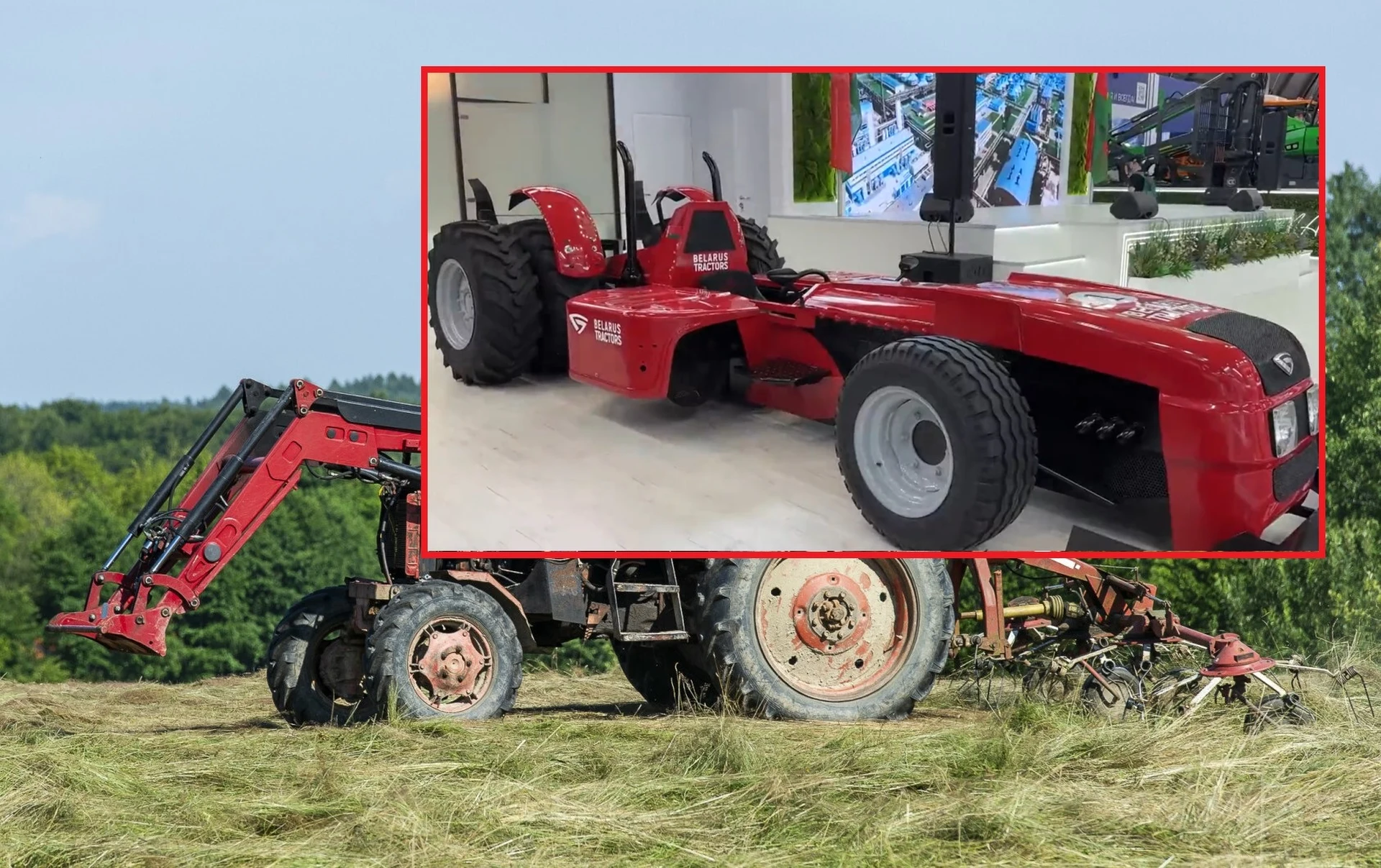
You can look into Eastern Europe - i.e. Zetor is building relatively low tech tractors, but importing something like this into USA is going to be a pain
> You can look into Eastern Europe
Looks at Eastern Europe [1]
Now do a no-tech highest quality repairable washing machine, no tech high-quality repairable refrigerator and no tech high quality HVAC!!
It is called industrial appliances, it costs fortune but will probably work forever with proper maintenance.