Bitter Lessons from the ISSpresso
mceglowski.substack.comThe flow diagram provided for fracture control is incredible. Quite a work of art. [1]
[1] https://substackcdn.com/image/fetch/$s_!AOMG!,f_auto,q_auto:...
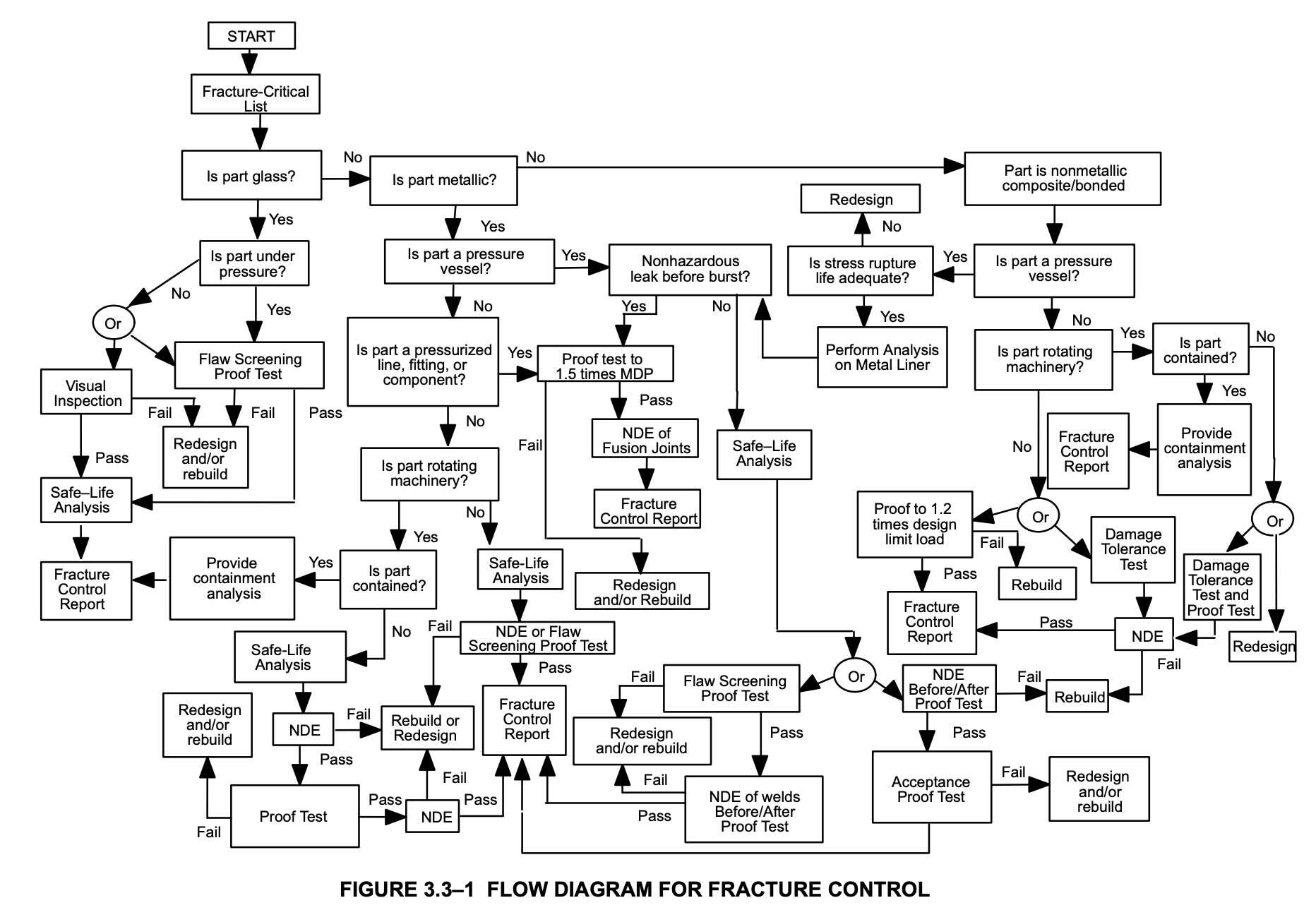
Update: After staring at this flow diagram for quite some time, I realize it's actually the most robust, "complete-seeming" finite state machine I have seen used in the real world.
I enjoyed reading this! But on one thing
> You and I will probably die before we’re allowed to take a bottle of water through airport security again
We could again bring water through airport security for some time in e.g. Rome's FCO (2 years maybe? It's been a while)
At London Heathrow too, the 100ml limit was scrapped early this year.
That was an excellent read for explaining why space isn’t just hard, but expensive.
Good read.
"Since that time, I’ve learned that small heaters (like coffee makers or kettles) can be kryptonite to an inverter, and that this is common folk knowledge among solar installers."
Is there any more on this? It can understand inductive loads maybe challenging inverters but resistive loads should be easy? Is it an issue of cheap inverter design, or something more fundamental?
> and that this is common folk knowledge among solar installers.
I think it's partially that people want to spend less money and undersize their inverter setup. The average end user non technical consumer (maybe a person buying an off grid PV system from an installer) may not fully understand what 1500W really is, and that something as boring as a $35 tiny space heater that sits on the floor can be a 1500W load.
People will be really surprised if you tell them that their tiny floor space heater uses the same amount of energy as charging twenty high performance laptops simultaneously.
It takes just a few high wattage single item electrical things to totally screw up the electrical load budget of a site, if somebody has something like a single 8000W rated inverter.
If you want to use electric space heaters and kettles and hairy dryers and hair curlers and such, along with the other regular daily load items of a house, you're looking at a setup with multiple 6000-8000W inverters in parallel with each other and synchronizing their output waveforms. Not many people want to spend the sort of money that'll get them 3 x 8000W inverters in parallel with each other all properly installed in an electrical room next to the PV stuff, breaker panels, etc.
From a quick Google that kinda makes sense, it’s just the strong, _sustained_ power draw that gives them issues. So I’d say fundamental AND inverter design — imagine pushing 2kW continuously through an inverter.
It’s funny, power use can be really unintuitive. Try convincing someone that using the big air conditioner for heating is more efficient than using that little plug-in bar heater. Or yeah, a power board with 8 tiny wattage wall-warts isn’t using a lot of power.
I could probably run my big fridge overnight off my portable battery generator, but it wouldn’t run my small electric kettle without putting it into a special mode and for nowhere near as long.
That doesn't make sense to me. On a cheap RV inverter maybe, but on solar for a house? The inverters should be rated to continuously output whatever the panel is generating. It shouldn't care whether the 2kW is going back on the grid or into your water kettle, it should be doing that all day every day.
Typical hybrid inverters have an output rating around half the theoretical max input of the panels. This is due to theoretical max of panel input being very rare or even impossible in normal earth conditions, the presence of an attached battery to soak up part of the input, and the general cost benefit trade off of solar equipment (more throughput means more heat, means bigger heatsinks, means heavier and more expensive).
You can definitely get equipment that can do symmetrical input/output, but if you actually model out the supply and demand curves on the system it's not usually going to be worth the extra up front expense since peak input is a small portion of the day and that extra hardware will mostly sit idle.
For that matter people often design systems where peak input can't even be accepted by the inverter and the extra power is just wasted, because it's more valuable to have a steady input over a long period than to maximize the daily peak.
Yes, my grid-tied system is like this. The panels are ~410W and each one has a microinverter with ~390W maximum or something. The more expensive inverters were not worth capturing the peak. You’re better off putting that money into more panels.
In the US, most home solar installations do not have a in-home battery. It is not uncommon for rooftop solar to be producing >90% of nominal max, for hours at a time.
I know multiple people with solar and have discussed their specs with them extensively. Zero of them have inverters or microinverters sized below the theoretical max of their array.
Are you thinking of a purely off-grid setup without actually saying so?
Nope but in a different market so makes sense, those are probably pure grid tie inverters, which I don't have a lot of experience with because it's not commonly used here. I do see the EG4 hybrid has a similar ratio (we have the same tech here under the Luxpowertek brand).
Even without a battery people usually choose hybrid, which can function on and off grid.
Also to be honest I'm mostly looking at larger inverters so maybe that colors it. Not many users here need 24,000 watts continuous outside a commercial context, for instance, so an inverter with that as an input but 12,000 watts continuous AC output doesn't seem weird since part of the 24,000 watts DC can be sent to the battery.
Ok, yeah that makes sense. Over here people usually get direct grid tie inverters, and if there's no battery, there's no reason for a hybrid inverter. The cheapest way to do it is panels -> inverter -> grid. No cutoff switch, so the inverters stop functioning if the power goes out.
Then it's just a race to pay back the panels, which are most of the cost, so undersizing the inverter is wasing energy and leaving money on the table.
On my case I have 4500Wp of panels. The inverter is sized at 4200W. The next step up 4800 or 5200 was twice as expensive adding about €600. Not sure if I ever would have made that back. I hit the maximum only a few weeks in spring.
Also just as a follow on my assumption is it's much easier and cheaper to scale the DC side since it's often at the 400-500v range (for example 10 panels in series with open circuit voltage of 49v and operating voltage around 43v) vs the AC side in the 230v range, since resulting amperage is half. So that may account for the ratio.
Assuming the heating element has a positive temperature coefficient (which seems likely), there will be inrush current greater than the operating current.
As an extreme example, a tungsten filament in a lightbulb would rise to 1500C (2700F) which with even a small temperature coefficient can mean inrush current 10x higher than the operating current.
The Pressurized Payloads Interface Requirements doc is kind of interesting. Lots of diagrams & such that would be great for art projects.
Why this ISSpresso machine was developed and sent into orbit at all? What scientific outcome does it have? Why was it necessary spending taxpayer's money developing it?
Astronauts can spend many months on the ISS, and it’s very important they don’t become irritable and kill one another before the research is complete.
Also it's really hard to get up in the morning when the days are so short
Are you sure Lavazza didn't eat the cost? It's great marketing material for them.
This could be similar to the fisher space pen. There's a common urban legend that NASA spent millions developing the space pen, while the soviets simply used pencils. Fisher actually paid for the development of the space pen.
The article assumes single digit million as cost. That is a drop in the water when it comes to cost of running ISS.
Additionally the technical paper claims psychological benefits for humans to have something familiar in a harsh and unfamiliar environment. Which will also come in handy for when humans travel beyond LEO.
Because, Espresso is a life elixer?
But seriously. As the article says, there are other needs for having high pressure hot water. The learnings from this can be used elsewhere.
As the siblings said, it can also have been paid for by Lavazza. Aside of the marketing value now, imagine securing the right/first mover advantage to make all coffee makers into the foreseeable future? Speaking of barrier to entry. ;-)