Oracle may slash up to 30k jobs to fund AI data-centers as US banks retreat
cio.comThe economy is going to go into a deep recession for years with the current economic environment.
There will be nobody left to spend money, just increasing corporate and ultra high wealth spend. The rest will be left with food and water.
We are destroying currently valuable jobs to allocate resources to electricity and silicon, concentrating wealth into 10 companies pockets.
I don't know what comes after, but when you combine this with the Iran war it's going to be closer to economic depression.
> I don't know what comes after
You start looking like South Africa, Brazil, India or other large economies with high concentration of wealth at the top.
All of them famous for top heavy bureaucracies meddling in industry and highly political byzantine rules for business, which is the current drumbeat the west is following.
Lumping "the West" as one thing in this argument is just wrong. The West is composed of so many different countries with their own legal systems, cultural baggage, bureaucratic and political processes which evolved differently over time that it makes your sentence meaningless.
From my own experience moving from Brazil, having ran businesses there, and later in life moving to "the West" (Sweden) there's simply no comparison between the hurdles you have in Brazil vs Sweden. No, not even the drumbeat is pointing in that direction, it's almost a literal different world.
You need to be more specific to make this kind of criticism, it is absurdly vague, and by that also quite unhelpful to any discussion.
That are exceptions but there is a noticeable trendline. The freedom of business index ranks Scandinavian countries pretty high. Norway, Sweden, and Finland tend to rank highest among Singapore and South Korea. Ireland tops it because it's a giant tax shelter but there's not much notable innovation there. Meanwhile UK, France, Italy, Spain are ranking poorly. The US has been declining there slowly, which is much more obvious when you factor in local/state/housing etc, federally it's long been more permissive but fiscally irresponsible.
My personal indicator is how many young (<50) entrepreneurs are building real stuff vs announcements of ex-bigco executives partnering with the government to jump on a new bandwagon.
Start?
It can get so much worse than what we have in the West.
Lack of density in the US means we at least get the mexican version of this not the indian/bladerunner flavor.
Neither South Africa nor Brazil are that dense, which is why I included them as examples.
heh, I guess "bearjaws" is a good name.
I don't see any doom or gloom, but what I do see is that tech companies massively ballooned headcount, and are now scrambling to return to sustainable levels, using anything as an excuse in order to avoid saying "we exercised poor judgment in 2020-2023". It must be AI! It's blockchain! It's tariffs! It's global warming! The list of excuses goes on and on, but just look at what the headcount was for these companies in 2020, and think about whether it makes sense for them to add that many new people.
Management screwed up.
I guess you can take this as a harbinger of Total Collapse, but I don't think that's warranted. Oracle added 30,000 people since 2020 and they are now realizing that this was foolish, given that Oracle's primary source of revenue growth is hiking license fees for legacy products. They don't need 30,000 new people. They don't even need the 130,000 people they had in 2020.
> The rest will be left with food and water.
Why? That's wasteful. The money for that should go to the shareholders, and the moocher problem will solve itself in a couple of weeks.
Read the history of just about any political revolution in history. Eventually, those oligarchs at the top find their heads in the guillotine.
I heard this canard my entire life. It’s been said for centuries. If you want maximum employment pass a law that says all grass must be cut with scissors. Otherwise let productivity gains diffuse out - that’s the only way to increase true wealth
You need to explain, from a systems point of view _why_ the gains must diffuse out as you suggest. We have analogs we can compare to: massive wealth injections through a natural resource such as oil. Now what happens to that wealth is not obvious; for some countries it's a curse with radical inequality and pernicious and robust power structures, in fewer it has been bestowed to the heritage of the people (think Norway)
Now, the nature of AI is to change the balance of the labour trade. We have a notion of the “economic value of the average person” which is presently very high in the western world.
What happens when the median figure drops through 0 thanks to AI?
Do the remaining wealth owners share their wealth? How often does this occur in existing systems we can compare against?
The cost of primary resources to products also goes toward 0, perhaps this offsets the decreasing economic power of the average person. But what forces protect them if their bargaining power is lost?
> _why_ the gains must diffuse out
Especially because there's no a priori reason to expect it to occur "naturally". Strong inequality arises automatically in mathematical models.
http://www.scientificamerican.com/article/is-inequality-inev...
> You need to explain, from a systems point of view _why_ the gains must diffuse out as you suggest.
Late 18th century France has a historical point of view as to why the gains will diffuse out if the median person has no food.
> You need to explain, from a systems point of view _why_ the gains must diffuse out as you suggest.
Do we? I mean, isn't "because they always have" enough of an argument on its own?
I am hardly a libertarian ideologue nor AI-first LLM jockey. But I do think people tend to catastrophize too much. Blacksmiths were killed dead by the industrial revolution. "Secretary" is a forgotten art. It's been decades since an actuary actually calculated a sum on an actual table. And the apocalypse didn't arrive. All those jobs, and more, were backfilled by new stuff that was previously too expensive to contemplate. We're eating at more restaurants. We can find jobs as content creators and twitch streamers.
Life not only goes on after rapid technological change, it improves. That's not to say that every individual is going to appreciate it in the moment or that regulation and safety net work needs to happen at the margins. But, we'll all be fine.
AGImageddon is, at its core, just another economic phenomenon driven by technology. And that's basically always worked to society's benefit over the long term.
The 1880s blacksmith didn't become a 1950s American suburbanite. They moved to shared housing in Manchester and a shorter lifespan working for poverty wages, lost fingers/arms in machines, maybe ended up on skid row, the section of town for failures who couldn't 'adapt' to the new modern world. Their children died in WW1 in a trench to industrial produced gas. Their children's children were transported around the world to die storming a beach in WW2. And their children's children's children lived on meager 1940-60 diets as the world rebuilt it's food stocks destroyed by industrialized war, eating new industrial food replacements like margarine and SPAM. There were hundreds of millions of industrial enabled deaths. There was industrial enabled famine and near famine.
That all gets waived away with 'always worked to society's benefit'. It took almost 70 years and the post WW2 destruction of the rest of the worlds economies/infrastructure to create that 1950s American suburbanite world. 'always worked to society's benefit over the long term' is just handwaving not based on the reality of adapting, or if those societies even wanted to join in.
Because not all peoples/nations even had a choice. Japan among many originally opted out. But they were forced to 'modernize'. Peoples around the world were forced into the industrial world by railroads and machine guns and the industrial need for rubber/banana whatever plantations or lumber or strip mines. Once one nation passed through the door, every nation had to follow or be subjugated.
To highlight one of your points: Adaptation is very different than dying and being replaced with a new cohort.
We have to be very careful about fallacies of division.
> The 1880s blacksmith [...] moved to shared housing in Manchester and a shorter lifespan working for poverty wages, lost fingers/arms in machines, maybe ended up on skid row
That's... just not remotely true, unless you're talking about it as a maybe-it-happened-to-someone story. In fact it's basically a lie.
Every income group in the US (and recognize that "blacksmiths" represent skilled trades workers who earned well above median and had for thousands of years!) saw huge, huge, HUGE increases between 1880 and 1950. I mean... are you high?
> It took almost 70 years and the post WW2 destruction of the rest of the worlds economies/infrastructure to create that 1950s American suburbanite world.
Again, big citation needed on this one. Western Europe was very close to US quality-of-life numbers by the 60's, and the more successful nations started to pass it in the 90's. (Also recognize that the US had already pulled ahead in the 30's, Germany and France were lagging even before the war). You're looking at something along the lines of a decade to rebuild, tops.
You need to tighten up before you call someone a liar. Manchester is the poster child city for the industrial revolution. The blacksmith moving to Manchester had a lower lifespan/quality of life, it's not in question or up for debate. He is who we will be in the AI disruption, not the person in 1950.
https://www.scienceandindustrymuseum.org.uk/objects-and-stor...
https://healthinnovationmanchester.com/cottonopolis-to-metro...
You don't think there are 70 years between 1880 and the end of WW2 and the real start of suburban American prosperity we think of when we think of the end results today? And I need a citation? Or are you saying I should use 1960 not 1950s as the point, since it took a decade to rebuild in much of the world?
https://en.wikipedia.org/wiki/Industrial_Revolution
https://en.wikipedia.org/wiki/Suburb#Postwar_suburban_expans...
Or are you arguing that butter use recovered over margarine before the 1970s? https://www.ers.usda.gov/amber-waves/2016/july/butter-and-ma...
> Manchester is the poster child city for the industrial revolution.
Which is to say, you cherry picked the data rather than looking at aggregates. Manchester industrialization being terribly managed isn't an indictment of steel machining or electrification, it means the government fucked up.
What you are claiming (that the industrial revolution led to lower quality of life generally) is simply false, period. And it won't be true of AGImageddon either, no matter how deeply you believe it. Economics just doesn't work that way.
Oh look, I didn't lie. No apology? Nope, just more attacks.
I picked THE Industrial Revolution city. THE CITY where it all happened. Did your high school not have a history class? I picked where it went wrong, the first go live site. That's what you do for analyzing things. You don't pick go live 500. That isn't cherry picking, that's what we do when we discuss scenarios that INITIALLY came up so they don't happen again. We don't just whitewash like you would like.
I claimed the industrial revolution led to lower quality of life for the blacksmith. The modern narrative when talking about AI implies they just turned into 1950s style suburbanites and waives away any thought/planning/discussion like you are trying to do. The reality, as it factually happened, was a much worse life and it is worth considering when implementing something that could be just as impactful.
People like you want to just handwave away the inconvenient fact that I am more likely to be the blacksmith in Manchester than to be born in some post-work AI Utopia that may exist in 70 years after things settle. why can't we even discuss this? Why do we have to stumble blindly into it, to the point you call me a liar/cherry picker for pointing out basic history taught in high school and basic root cause analysis concepts?
The reason that Manchester is taught about in American high schools is so that we learn from it and we understand our current world didn't just magically happen. Good and bad happened along the way, and that we have to work within that reality. Good can come in the end, be positive IF progress IS being made. Bad will happen, fix it don't just accept it, challenge it. Think about it. Look to history to prevent the easy things to prevent.
Just stop. Your ability to show a handful of negative externalities from industrialization doesn't invalidate the progress of the last century and a half, and to argue so (as you clearly did) is laughable.
And all the same logic applies to AI. Do we need to be willing to re-regulate and adjust as this is deployed? Almost certainly. Will it make us all wealthier? Undeniably.
We will need to re-regulate and adjust but talking about it ahead of time and moving forward intelligently is laughable? talking about how the last huge revolution played out initially is laughable? Come on. And yes, when you are talking about the start of something you normally only have a handful of examples. That is how things start, with a few instances.
You didn't know basic level history, called me liar, then a cherry picker for using the gold standard example.
You might want to check yourself before you tell people to stop, call them liars, cherry pickers, or make claims. No need to mis-represent me. My point is that 70 years of upheaval prior to the modern version of the world get ignored in the discussion. My point is that original people impacted, the proverbial blacksmith or buggy whip maker that 'adapted' had worse, shorter lives because of adapting.
This pattern continuing indefinitely without the need for analysis would be certainly nice but we do need to confront recent data. In the US, multiple metrics of quality-of-life peaked around 2015 and have declined since then, with some showing 11% decline while US total wealth has doubled! (with the majority of that decline pre-covid and pre-AI) [0][1][2].
What forces act on this trend? How can we make predictions? An interesting metric, which tracks the aggregate of many complex factors is the distribution of wealth, which could be seen as proxy for the distribution of power or agency of a person in their society. Median income as a fraction of total wealth decreased nearly 50% in real terms over this same period. [3]
Now inversely, during the period where life quality increased most the last century (1920 - 1980) inequality was _falling_.
How is super-human AI advanced through 2030, 2040, 2050 likely to affect things? Will it sharpen the inequality or relax it?
With AI the cost of raw resources to products goes down, but it's likely inequality increases. It's not obvious which force has a bigger impact on human quality of life as things shake out. However, I think the strongest argument – which also explains the steady improvements in QoL through previous changes you mentioned – has been to follow inequality, or median share of power in society.
- [0] https://www.numbeo.com/quality-of-life/indices_explained.jsp
- [1] https://www.socialprogress.org/social-progress-index
>This pattern continuing indefinitely without the need for analysis would be certainly nice but we do need to confront recent data. In the US, multiple metrics of quality-of-life peaked around 2015 and have declined since then, with some showing 11% decline while US total wealth has doubled! (with the majority of that decline pre-covid and pre-AI) [0][1][2].
>- [0] https://www.numbeo.com/quality-of-life/indices_explained.jsp
It's hard to take that metric seriously when the top city is Raleigh, NC. If that were the best city you'd expect people to vote with their feet and move their in droves.
There's an argument about the speed of change though, a society going through the technological evolution from blacksmithing to industrial metallurgy didn't experience it happening in the short-medium term (1-10 years), it had a gradient of change.
Over time with the speed of technological development compounding on itself, the rate of change becoming much more acute, there's a debate to happen on the "what if this change happens over 5-10 years"? Can you imagine a world where in 10 years most well-paid office jobs are automated away, there's no generational change to re-educate and employ people, there would be loads of unemployable people who were highly-specialised to a world that ceased to exist, metaphorically overnight in the span of a human life.
Pushing this concern away with "it happened in history and we're fine" leaves a lot of room for catastrophising, at least a measured discussion about this scenario needs to be had, just in case it happens in a way that our historical past couldn't account for. No need to be a doomer, nor a luddite, to have the discussion: can we be in any way prepared for this case?
I mean, arguably AI is faster (but it's equally arguably oversold, certainly we aren't seeing that kind of change yet). But the stuff I cited was faster than you think. In the rural US, in 1900, most routine transport was still done with horses. By the 20's it was basically all in trucks, and trucks don't need hand-forged shoes that the blacksmiths were making[1]. Likewise professional typists were still clacking away in 1982 but by the mid 90's their jobs[2] had been 100% automated.
[1] "Blacksmithing" didn't disappear, obviously, but it survives as an expert craft for luxury goods. That's sort of what's going to happen to "hacking" in the future, I suspect.
[2] Likewise, some of the best positions survived as "personal assistants" for executive staff too lazy to learn to type. Interestingly these positions are some of the first being destroyed by the OpenClaw nonsense.
Your example is flawed.
The professional typist' role evolved - to serving through other ways, as you say - by become executive assistants. Much like a Bank Tellers' role also evolved.
And its not because they (executives) are too lazy to type. They actually need people to manage their calendar, monitor emails etc. Moreover, the personal computing revolution led to an expansion of firms that needed more of said people.
Could this be disrupted by things like OpenClaw? Maybe. Personally I doubt it. Trust is a huge element that LLMs have yet to overcome and may never over come. Its the same reason Apple pulled "Apple Intelligence". I know this place is full of doom and gloom, but I am not a SWE by trade so I can see the bigger picture and not get bogged down by the fact it might affect my income.
Moreover, work is more 'fun' with people around. So to you it may seem irrational to keep employed for that basis (call it Culture) but to others, and in particular the executive class - nope. People will start realising things like this once the hysteria dies down.
> The professional typist' role evolved
The "role" might have evolved, but the jobs disappeared. There are, what, maybe two or three orders of magnitude fewer "executive assistants" than there were typists in the 70's? I was making an argument about economics, not job classification.
We can use technology to increase production and have a progressive tax. There is absolutely no reason we need to endure the extreme wealth divide.
If there is a need that people pay for, and it took 10 people, and technology comes and it can now be done by 1 person, that is a great thing. That’s not a bad thing at all. That’s exactly how the world progresses forwards. Everyone can get the need met, and at a cheaper cost, while freeing the other 9 people to do something else useful.
That is why we have the standard of living we have today
I genuinely cannot understand why this comment was killed. Even if you disagree with the position, there's nothing at all objectionable about how it's being presented.
I think it’s because it’s ignoring the impact of concentration and the range of affected jobs. When, say, people switched from animals as the primary source of motive power for shipping, relatively few people immediately lost their livelihood because the things now using engines still employed tons of people (a delivery guy had to learn to drive but the rest of the job was similar) and a bunch of new jobs were created.
Now we’re being promised a wide range of white-collar jobs all being affected at the same time, always in a way which reduces the number of total jobs and concentrates power in people with assets. The position that people will find new things is begging the critical question of whether those people will have the money to get started or customers who can afford to buy from them, especially when sharecropping using someone else’s models with no guarantee of non-competition.
Perhaps white collar employees have felt jobs not conducted in an office are beneath them. Because a wide range of physical jobs pay a lot more than office work already
Not many pay “a lot more”—your plumber is not taking home what she charges you—and that often comes with unpleasant working conditions, overtime, or extended time away from home. That’s like talking about tech salaries as if most people are L7 staff engineers at big tech companies.
Most people are not making that much in blue collar work, but even if they were, it’s also not like freshly-laid off people can just switch overnight. Lots of that work isn’t great for middle aged people, etc. and anyone retraining is going to need support for training, certifications, etc. but that’s happening when they have the financial obligations of a successful mid-career person.
For example, say Google actually developed AGI and canned everyone. What happens to the market in Mountain View when everyone is trying to enter construction work or become auto mechanics at the same time that those industries are hammered by a lack of customers, and the real-estate market suddenly has entire blocks for sale?
That last part might seem extreme but I saw it in San Diego in the 90s: the defense contractors laid tons of people off after the Cold War collapse, and that meant that entire neighborhoods went from having streets of engineers who worked at the same places all scrambling at the same time. Fortunately, that wasn’t permanent or every sector of the economy (and some of them were able to repurpose things like carbon fiber aerospace techniques into golf clubs and bicycle frames) but there were literally people with engineering Ph.Ds competing for $15/hour QA jobs just to have health insurance.
Great, just point me to the physical jobs that will hire someone over 50.
The govt can't spend money well
and (likely) your entire life we've seen concentration of wealth and resources in the west. It's not about maximum employment but about much more basic things like utilization and purpose. There has been no general productivity diffusion on a national basis. Gains have come from outsourcing the lower productivity jobs without acknowledging the cost: the destination subsidizes by not investing growth in their own people but by maintaining an artificially lower-cost region, and the outsourcer (i.e. the US) finances with their currency.
Who are you responding to? OP made a moral argument for sure but he wasn't pushing for maximum employment.
> I don't know what comes after, but when you combine this with the Iran war it's going to be closer to economic depression.
I follow your extrapolation in the first part, but this is where you lost me.
Why is the Iran war guaranteed to have long-term net negative consequences? It seems far too early to predict the outcome with any kind of certainty.
About 20% of the world's oil flows through the Strait of Hormuz, which is effectively closed right now. So far, the economy is coping by drawing down inventories elsewhere and praying that the strait reopens soon, but even then, crude oil futures are skyrocketing (up 50% in a week). If this lasts for a few months--and if a few oil tankers get blown up in the crossfire--this is going to be a repeat of the 1970's oil embargo. There is also the worry that the war is going to end up targeting and destroying a significant chunk of oil production facilities in the region, which will persist the energy crisis well beyond the end of active hostilities.
Combine that with the fact that the war is being led by a senile idiot who is unable to articulate a strategic purpose for the war in the first place and being prosecuted by someone who thinks that war crimes are aspirational, and you begin to understand that there is actually little prospect of this being resolved anytime soon.
One potential knock-on impact of the strait being effectively closed, is that at some point the gulf states will be forced to shut-in production as local storage fills up and production can’t be exported. That combined with war damage to critical transport/export infrastructure will cause a lag where production can’t meet global demand even when the strait re-opens. Turning oil wells back on is not like flipping on a light switch.
It's already happening: https://finance.yahoo.com/news/kuwait-cuts-oil-refining-outp...
Ignoring concerns about the wisdom of the war; there's about three directions this can go:
Fizzle out: Strait reopens cause Iran needs ocean shipping.
Continue as now: oil trade disrupted, but using lots of missiles and drones and things; increased munitions demand leads to increased manufacturing jobs.
Boots on the ground: oil trade reopened, long term quagmire, probably more munitions production.
The other Gulf States will now have to greatly increase military spending in order to protect their sea lines of communication against Iranian aggression. A lot of that spending will flow to US defense contractors. (I'm not claiming this is a good thing, just that it's inevitable.)
Not just oil but a lot of fertilizers goes through the strait as well, fertilizers that have to be applied at certain moments of the year. Missing a shipment by a few months will decimate crop yields across the world.
If you think food is expensive now, wait until fall!
Unrelated, Grapes of Wraith is a good read if you're looking for something to distract yourself with.
Iran's principle strategy is to impose severe economic consequences on the US and its allies, to tip the balance of resolve in their favour. This is easy for them to do, because closing vital shipping lanes and attacking energy infrastructure in the region is done at only the cost of a few drones -- whilst defending this is incredibly expensive. This asymmetry is the only one which is profoundly in Iran's favour, and their best strategy for forcing a diplomatic resolution. This is why they are attacking multiple US allies in the region.
The Iran war is symptomatic of what's to come. If the US/other major powers feel unconstrained to wage semi-limited disruptive conflicts at will - then the world will be much less stable.
Iran can close the straight of hormuz as retaliation, and there really isn't anything that can be done about it except for invasion. Other countries have similar capabilities or can acquire them readily. If Cuba wanted to close the gulf in retaliation for a US attack - they could, Denmark could lock the north sea to US shipping and naval traffic etc. etc.
Cuba has effectively zero capability to project military power beyond their territorial waters. They can't close the Gulf of Mexico or even credibly threaten to do so. They are in no way comparable to Iran. As an island nation with limited natural mineral resources they're also very vulnerable to blockade.
Shahed style drones are quite inexpensive, the straight between key west and cuba is only 90 miles. To my knowledge, it is practically impossible to destroy distributed shahed launchers from an air campaign alone.
To my knowledge it is practically possible to carpet bomb Cuba and just kill everyone on the island. And they have almost zero domestic manufacturing capacity to build long-range drones (or anything else).
turn it around. how is it possible that we interfere with a population, already inflamed with hatred because of past interference, and expect them to become moderate apolitical consumers. we kill more fathers, there will be more angry sons. that's been going on for more than 50 years. so no, it doesn't seem like there is any good outcome to be had by invading yet another country in the area and setting up another weak puppet government. what is the end game supposed to be here?
There's no end game. In foreign policy circles they refer to this as "mowing the grass". Whenever an adversary starts to become a credible threat then bomb them enough to knock them down a few notches and delay the problem. From a purely amoral geopolitical perspective this can be effective, although at tremendous human cost.
personally I think this is 'fair'. wave your stick around and threaten people and the community takes away your stick. But I don't really trust this administration to follow the wisdom of the elder Bush. it seems a situation primed to follow the course of the mideast wars of the last couple decades, where the US stayed purely for the reason of not wanting to own up to the obvious and attempt to force some kind of submission. I guess we can check in a couple weeks to see which way the wind the blowing.
When a country leader says "another country leader won't last without my approval", he becomes an imperialist driven by power and money
And, with this, the economic contagion begins.
Before this step, we had non-existent money loaned to build datacenters powered by non-existent power infrastructure to support future load that will never exist, with guaranteed revenue from companies that do not, and will never be able to pay.
Previously, this was propped up with circular revenue and investment. Now it's going to be propped up by dismantling the US tech industry.
This does not end well.
The future load might definitely exist, but will it at a sustainable pricepoint?
And will it be by 2030 or ten years later
If it is 2030, compute and software will vastly reduce requirements.
Nvidia has so much cash for R&D. You can bet they now have immense optimization and improvements in the pipeline, but why would they release anything groundbreaking right now?
There are no real competitors on their heels. As Intel did for decades, they will likely dole out improvements, only when necessary to remain ahead.
By 2030, I expect 10x improvement. We're also seeing stunning optimizations in trained models.
I imagine desktops running many of these local by 2030, even phones.
Will we need even 1/10 the datacenters for LLM in 2030? Certainly, privacy concerns are a thing.
When I read this comment all I see is: LLM at the edge - or close to it - will become available. And whoever provides the best eco-system across digital lifestyle and business wins.
Oh... Apple? lol.
Well that'd be funny wouldn't it.
Oh and dont forget Apple got rid of its reliance on Intel too. No reason why this can't happen again.
Could not believe how almost no-one saw this [0]. It was quite obvious that companies like Apple that are prioritizing local inference and potentially training have already won the race to $0.
I did lol. I can't speak for enterprise in totality, but I see a world where Apple is the dominant provider of products/services for consumer and SMB's.
Google's lack of investment in marketing, design and sales/distributions capabilities is going to hurt them badly. MSFT is no different in many respects - latching onto the investments in 'relationships' and 'switching cost' initiatives that have kept customers loyal to them.
Apple is in great shape.
There will be continued hyperscale AI in the datacenter for some use cases, and AI in the smartphone (or PC) for other use cases. It is guaranteed to split that way. Apple's remarkable capabilities around custom chips will enable it to continue to stay out in front in smartphones.
" It is guaranteed to split that way."
There's no guarantee whatsoever.
Why "funny"? Seems obvious to me that Apple is going to provide LLM at the edge. Who else would besides Google?
Oh lets see.
They were ridiculed for being 'behind on AI'. They haven't spent a dime on investing in AI-related infrastructure and so on...
And yet, they could stand to be the biggest beneficiaries if not the only. Given that they have plenty of resources in reserve and they are buying back stock - enabling insiders to have a greater say on actions in the future.
So tldr they are just standing by until everyone else dies? If this is the theory then they HAVE to be doing some serious AI things internally/R&D/in-secret so they're essentially "ready to go" ?
Of course they are.
I’m not an insider so I wouldn’t know the specifics.
I guess what's the downside though to getting into the game now and gaining users since they have loads of real cash anyways and a crash wouldn't really hurt them?
No downside. In fact, probably even better to wait another year and buy AI assets for nickels on the dollar instead of dimes on the dollar.
With 10x improvements, I expect we need 10x the data centers (Jevons paradox)
Is Oracle's headcount mostly sales? Not exactly tech industry decimation.
Sales are probably the last job to go in the ai job apocalypse.
Obligatory comic: https://www.globalnerdy.com/wordpress/wp-content/uploads/201...
But they are still a tech company. So it is likely that this will also affect tech workers.
So glad to no longer be working for these clowns
Tech industry in its shape is dead anyways. How many companies / startups work is just to visualize data with some charts to help understand a bit.
How may companies are just some custom data collectors
You can continue , we are at double pivot now. Code is a commodity. Not oracle db , but oracle business department for sure . You can build the same on the fly and curated.
At the same time to support old system you need 10x less people .
We will look back on this AI bubble 10 years later and see that alongside with the private credit market, the funding of data centers via dubious methods (circular financing, billions of dollars of loans / debt) on top of mass layoffs for the sake of so-called "AGI" to cover up the massive losses will cause a market crash beyond the tech industry.
It just takes a single surprise to shock the market into chaos. My timeline is before 2030.
I just want to skip to the moment where we get affordable hardware again.
that is not much of a timeline and not much of a prediction. first you need to define what “crash” means in real terms. over the course of 4 years there will be market correction (especially after a bull run like we are on) so just saying “ai bubble, crash bla bla” is too lazy (although there are probably 10k+ such “predictions” on HN in the last say a year)
If you're looking for a short term prediction, I expect with, let's say 80% confidence, that the OpenAI IPO later this year will be quietly cancelled or face a WeWork moment and be loudly cancelled. Too much of what we think we know about the economics of modern AI is built on trust in people who aren't trustworthy, and the presumption that VCs would check the financials carefully when we know they strap on blinders once they see a revenue graph they like.
My feeling is that some event will happen close-to-IPO that spooks investors, that results in OAI not IPO'ing. Remember if there are under-writers involved they will not want to go forward.
Then they will face financial distress, and questions over how they get the funding to continue as a going-concern. The only way that'll happen is via issues of shares at a lower price aka destroying the valuation of OAI compared with today.
Anthropic in comparison will be OK, as they have focused on building a viable business enterprise.
OpenAI (which is not a publicly traded company) will cause a market crash if they do not IPO or have lackluster IPO?
Only in the same sense that Lehman collapsing caused the 2008 crash. Nothing is monocausal, and crashes rarely happen all at once, but I expect it to be a big “uh oh” moment for investors.
Lehman was a huge part of US economy at the time it collapsed, OpenAI is a private company...
Lehman’s market cap was an order of magnitude smaller than the current OpenAI valuation, I think even in inflation-adjusted terms. The intuition that a private company is small and can’t pose systemic risks just isn’t true anymore.
Your response is over the top. Oracle isn't going to fire 30,000 employees to fund anything.
That's the story for Wall Street. Oracle went on a huge run in the market, that it did not deserve, and they're going to attempt to hold on to as much of that gain as they can. Wall Street will applaud slashing jobs if you can give them a good reason for it (and sometimes with no reason at all).
Amazon, Meta, Apple, Nvidia, Microsoft, Google are producing $700+ billion per year in op income. They have nothing else to spend it on. They will continue to fund a gigantic AI build out.
It does end well eventually, just as the dotcom era build-out ended well over the following decades. It ends with continued US dominance. Yes, the dotcom era saw a crash. The build out continued.
Browsers? The US won.
Ecommerce? The US and China won.
Search? The US won. China didn't win the search war, Baidu was supposed to be a serious global challenger to Google, that was widely hailed across tech circles as a known fact - it was inevitable. Nope. Google won. And Europe never did field a competitor at all.
China didn't win the smartphone war. Apple and Google won globally. Apple has produced trillions of dollars in profit on the back of that fact.
Cloud? China didn't even come close globally. The US won without any challenge at all. Europe never showed up. But but but Hetzner.
China didn't win the GPU war. Nvidia has the market, at least for this decade. That will produce over one trillion dollars in profit in just the next five or six years.
China didn't win the AI war. It was OpenAI's ChatGPT that shocked the world and set everything in motion. Now the US has the top three models in GPT, Gemini and Claude. Europe? Not even in the running (although they'd like to believe they are).
This all ends with the US remaining on top, with China as its only real peer.
Europe? There is no Europe in the equation, just as there wasn't for cloud or mobile apps or smartphones or personal computing.
Who cares about US vs. China. We're talking about jobs here and economy.
The death merchants need a new enemy to justify their existence otherwise we might start cooperating with China where both countries could prosper with massive clean energy infrastructure.
US tech jobs are paid x2 to x3 more than most chinese or european equivalents.
If you can get one. I'd even take 1x at this point.
I've been in this industry for >30 years and it's dead.
Continued US dominance in what? Slightly better/faster Llms? What is that going to help us achieve? Better propaganda?
What is this obsession with winning? Are you so scared?
Scared or insecure
I could not care less what nation the oligarchy I am beholden to lives in. Same end result for me in either case.
No.
At a national security level, the department of defense has already war-gamed mass unemployment. The defense sector would already have projected when the unemployment would happen and at what rate, I’m saying this to imply they had AI and judged its trajectory rather quickly awhile ago.
Data centers WILL happen, mass unemployment WILL happen, simply because, smarter people made it, assessed it, cannot deny it, and a large scale paradigm shift is occurring.
The data centers WILL get built (because the country needs it, don’t worry about why), AND you WILL get fired. Please await further instructions, thank you.
Try to stay in the same spot, oh, Covid helped with that remote work thing huh? See, this won’t be as painful as everyone thinks, it’s a nice smooth transition.
Edit:
I just want to add, the DoD is not going to let tech companies control the infrastructure of data centers either, too much of a security risk. So yeah, you better believe secret govt money is going to finance all of it, just like highways.
You’re welcome, now you don’t have to speculate.
Who will make use of all the servers in the data centers when very few people have any disposable income?
Edit: and how will these data centers be protected from people rioting against them because they can't afford bread?
Americans will use the data centers.
Bread and refreshments will be provided, borders will be closed. Planning will be around de-population, naturally, aging will take care of it. Then the economy will settle into what America really needs to become, a small European nation with nukes.
:) Cheers.
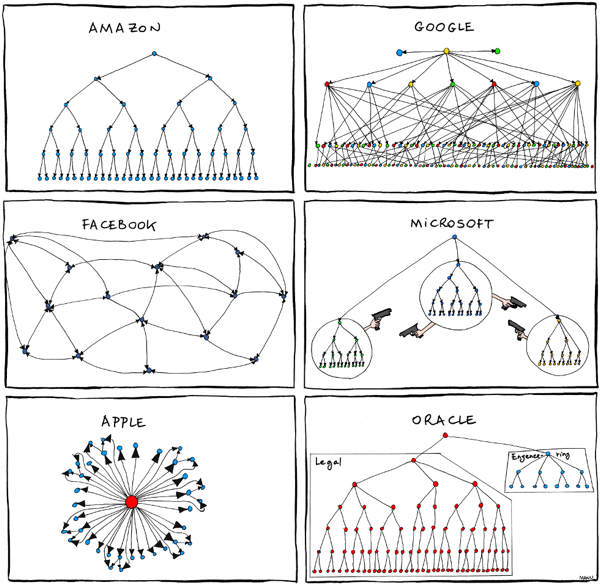
We will continue to be told this is because AI is driving efficiency instead of that it's driving CapEx and investors won't tolerate FCF collapsing.
I strongly believe AI will drive efficiency. I’m less certain about whether that’s already happening or will happen in the future and when in the future.
However, I’ve already seen a CTO of a F100 company explicitly state that whether AI is driving efficiency or not, the capital investment, and more importantly, the promises of efficiency to investors will mean some people will be let go.
Efficiency is output/input. The input is easy to measure. It’s cost and in this particular case salaries.
Output is a lot harder to measure, which means it can be fudged easily.
So you cut the easily measurable inputs and inflate the easily manipulable output.
One could imagine the reverse would also be possible, where you maintain inputs but inflate the output, but there is an asymmetry where investors will reward you for cutting costs even if there are no efficiency advantages that makes cutting inputs more sellable than inflating outputs.
> Output is a lot harder to measure, which means it can be fudged easily.
First and foremost, this is about Oracle. For the short period I worked there, my impression about culture and tech was: mediocre. Not excellent, not poor but just a around average.
Which raises the question: why is it such a successful company commercially? I believe it's being ruthless to customers, employees and suppliers combined with cooking the financials.
Which bring me to your remark about output being difficult to measure. Imho Oracle had been exceptionally good at manipulating and obfuscating their output. And this was true long before AI came to the scene.
Oracle is mediocre because it could be.
That's probably where you'll end up if you're a company where that's an option.
No one was ever going to switch databases to a better DB as long as:
1) they did the bare minimum to ensure no alternative existed where switching made any sense.
2) they never charged too much where it made sense to switch thinking along the lines these businesses made decisions.
It's like the resource curse played out on a company scale.
If you have no incentive to get better, you won't.
> Which raises the question: why is it such a successful company commercially?
Tons of mediocre enterprise software is built on Oracle DB.
Why enterprises are vendor locked-in? There are very few large enterprise players in every industry that implement all kind of ISO, standards, got an army of business analysts to generate million of requirement pages. Any new player must fight against that artificially overblown legacy systems, design and prove migration process is possible etc.
Here are just a bunch of industries my family/friends worked in and had first hand experience with these legacy systems - Airline (PSS), Banking, Healthcare, Hotel, Telecom.
Sad, but true.
And if they had it their way, Oracle would have similarly strangled every last customer of Java, MySQL, OpenOffice, Solaris, etc. to squeeze out every last dollar.
And then make it look like they're innovating.
> a CTO of a F100 company explicitly state that whether AI is driving efficiency or not, the capital investment, and more importantly, the promises of efficiency to investors will mean some people will be let go
That seems like an insane gamble to me. Lay off all the workers now and hope that AI can deliver on its promise to replace them some time in the indeterminate future.
I think we wont know until the true costs for ai are revealed. Right now were still in the vc growth above all things part of the cost curve. It will get worse quality as revenue demands increase (as all products suffer).
It will be another dependency for all companies to bear. Hopefully significant gains for humanity, tbd
… and in the background the next hiring wave slowly builds into a tsunami.
Sometimes I feel like the only person left who remembers the pre-dotcom vibe. OpenClaw etc. should have set off alarms that we are back in the land of the Quick and the Dead.
Yeah OpenClaw for me was the alarm sounding... not just because of the project itself, but the fight between Altman and Zuck to pursue him. It shows a fundamental lack of product sensibility/visionary thinking within OAI and Meta. Having lots of dosh clearly doesn't solve that problem in-house.
You don't even have to inflate the output. You just cut the dead weight, which reduces input without harming the output.
In Oracle's case this is part of their larger Oracle Cloud strategy - once you remove the scooby doo monster mask you end up finding much of Oracle's AI spend was connected with their larger bet on Oracle Cloud and becoming a tier 1 hyperscaler.
This is why they landed one of the mega cybersecurity companies (the one who's name starts with C) as well as a globally distributed ridesharing businesses with sweetheart terms.
Oracle Cloud already represents 50% of Oracle's total revenue, and the AI story helps them justify that capex needed to fund their pivot into becoming a hyperscaler.
Everyone is holding their breath praying AGI either will, or will not, come before the chickens come home to roost.
Not sure that makes sense. As amazing a technical feat as AGI will be, does it follow that s.tons of money will immediately be made? That's not really how humans act, historically. Any migration to new technology takes years, decades. There are still steam engines pulling revenue service trains.
Yes - if AGI is made, nearly immediately every knowledge worker’s labor value goes to zero over night.
This may or may not include AI researchers.
That seems like a wrong economic theory to me. The economy is based on differential of value. I can make furniture, so it's worth less to me than it is to you. Therefore we can trade. That's what supply/demand is. If AGI somehow exists, then the value of intelligence drops to zero for both of us, there's nothing to trade.
AGI would not make knowledge work valueless, it would move all the knowledge work value to the AGI companies.
> AGI would not make knowledge work valueless, it would move all the knowledge work value to the AGI companies.
Yep! That's the point :)
There still plenty to trade - you just don’t have any of it.
Those $300 billion dollar circular deals will become much more common.
Can you guys just say the quiet part out loud?
That you want slaves. You want slaves. This is what you are asking for.
Unless you're paying the AGI? Then why not just... pay a human that is already present? Much more efficient.
Not sure if you’re insinuating that I’m one of the capitalists? I’m not, that’s why I’m saying it out loud. I believe capitalism’s relationship with labor will need to fundamentally change if AGI and robotics takeover. I don’t know what that looks like but obviously the current capitalist overlords want everything to stay the same - just for them to have more power/money.
You are assuming that the AGI service is very cheap..
Based on current trends why wouldn’t it be cheap?
Why would an artificial intelligence want to do what you tell it to?
I don’t think AI in its current form and current track wants much of anything.
Why would it have any desire at all?
And probably not much longer after that, the bloodshed
Unless the benefits of AI get communalized (UBI, or some other form of sharing), ya.
How would that work? Taxes are already full of perverse incentives. Certainly anything resembling UBI will be just as bad.
You’re not wrong - I was just giving that as an example but not saying it’s the right thing to do.
I don't think there is any compelling reason to believe this will actually happen
It will drive capital into data centers, which is good for Oracle.
Or maybe it won't. If it can be made efficient like humans it might be at the edge mainly.
What is this "everyone" running from?
Collapse of return on investment
don’t forget that they will probably hire thousands off-shore
Maybe - but the larger issue is FCF - and you can't hire that many without it showing up on FCF.
why would they try to hide it? no other company does :)
You must not understand what FCF is. If you're cutting headcount STRICTLY to juice FCF, you cannot spend money offshore without hitting FCF.
you can if you are paying pennies on the dollar :)
Except we're not, in this case. Oracle is not hiding the fact that the cuts are due to rising costs and expenses, rather than actualized efficiency gains. This is in contrast to everyone else, ex. Dorsey's block, who are putting a brave face on cuts, saying it's simply due to efficiency gains from AI. The question is: why are their statements being taken at face value?
With the ASICs being so efficient at inference, I’m getting the feeling even the infrastructure investments are going to be severely outdated in a couple of years..
Jensen Huang put it quite decently: "When Blackwell starts shipping in volume, you couldn't give Hoppers away."
All of the current GPU investments are gonna hit zero, and probably a lot faster than the companies buying them realise. Definitely a lot faster than the investors realise.
When did Blackwell start shipping in volume? A H200 is still > $30,000.
I'd settle for some free 80GB A100 cards! ($7,000 2nd hand on ebay right now)
ASICs only work for very small and heavily quantized models. Moreover, they are fixed function hardware, so whenever you have a new model, you have to throw the current chips away and design and buy new ones. That's like buying a new CPU every time a new OS version comes out.
The latest strategies of etching weights into silicon seem like they can be generalized. We currently design gpu/tpu caching on the basis that the weights change frequently - if the weights do not change at all, or change very slowly - then there are other perhaps more efficient ways of laying out the memory on the chip which are somewhere between permanently etch a model onto silicon and use GPUs designed for graphics computation.
I'm assuming that they will do a silicon etching run once a year. Might be an interesting acquisition opportunity for Apple since that's the rhythm of their device release.
It's a good point, it would be a nice "upgrade story" to get the next generation model. At a fixed cost of ~$1000 per model, it wouldn't be a bad deal relative to current api costs.
That would be something like an FPGA. Which have been very unpopular so far due to high cost. And they also only support a relatively small number of weights.
That depends what kind of ASIC you’re talking about. Cerebras can run models like GLM 4.7 with 355B parameters.
Cerebras just uses SRAM instead of DRAM. An ASIC would instead hardwire the neural network.
Surely it's more of a spectrum? From a CPU, to a TPU, to a chip that hardwires softmax attention but lets you store arbitrary weights, to one that hardwires the weights directly.
Google’s training and running all their stuff on ASICs, seems to be working out well.
they're TPUs, same thing as GPUs but specifically for tensor ops.
TPUs are not ASICs if they can execute arbitrary models.
Forgive my ignorance but wouldn't a TPU be a kind of ASIC where the application is model inference? The TPU Wikipedia article also says it's an ASIC - we should update it if it's wrong.
In the limit, even a CPU could be called an ASIC because certain algorithmic operations (ALU etc) are implemented in hardware. CPU/ASIC are really poles of a gradient, with a CPU implementing very little in hardware and most in software, while an ASIC has very little software and lots of hardware. A TPU is presumably in between. I would argue however that it is closer to a GPU than to a full-blown ASIC, because the weights are stored in memory only, making them software.
> investments are going to be severely outdated in a couple of years
Compute in DCs already have an accounting lifespan of 3 years. The current trend of investments is a mix of expansion and well as upgrades on existing capacity.
This is why hyperscalers like Amazon, Microsoft, and GCP invested in inference ASICs a couple years ago, so they could migrate a larger mixture of their compute to these and offer services at better margins.
I've been thinking the same thing although not specifically about ASICs.
I was thinking any breakthrough in hardware (e.g. spintronics etc.), even if just partially effective, means all of this hardware would need to be replaced.
GPUs mean lifetime is around 3 years at scale. They are going to need to be replaced anyway
That’s okay by me. I’m ready to buy one or two on the cheap
By mean lifetime I mean “failure”. They won’t be any good
They don’t fail after 3 years, just a poor use of electricity once the next generation of silicon hits. It’s not economical to keep the old hardware running when it’s taking up rack space.
I assure you datacenter GPUs like B200 do fail regularly (within months in many cases), so much so that it's a problem for labs doing large training runs.
As long as they can be made to work in a consumer or homelab setting, they are still useful.
By “fail” I mean stop working
This article is over a month old. Why is it being shared now? Its also posted on reddit where it has some lift.
You don't have to share only new things, often people share things that are many years old too and that's also fine.
Not when the tone is that tomorrow worlds going to reboot or something similar
That's just all news these days. Gotta get the virals.
Rarely are they speculative news events.
I'd missed this last month, so im glad its shared
When there was an over buildout of fiber back in the dotcom boom, how did that turn out? Who were the winners and losers? At what timeline did new winners emerge from that bubble?
Oh do tell.
Why is oracle invested in ai at all? It seems entirely unrelated to the value they offer.
Line MUST go up. If it doesn't you get replaced by someone who will make it go up. There is very deep belief in infinite exponential growth. And not following that belief gets you replaced by someone who shows that belief. And then you stop being paid...
I think it's wrong to characterize this in terms of belief. This is the behavioural outcome of the influential pressure of a systemic structure.
Infinite exponential growth is something we ALL "believe" in when we put a dollar into savings and expect to get a dollar and 5c out the next year.
The problem to me seems more that we tie all sorts of OTHER structural societal constructs to this one. To the degree that if we want to feed ourselves, clothe ourselves, and ensure shelter and security for ourselves and our loved ones - those basic _biological_ needs shared by most moderately sophisticated mammals - we are forced to plug into this system and ensure it delivers on its promise.
I've incorporated that infinite growth expectation into my kid's education plans, into our family retirement plans.
This is not a they issue, this is a we issue. The systemic structure is some parts organic but many parts choice and belief driven by general people on the street.
> Infinite exponential growth is something we ALL "believe" in when we put a dollar into savings and expect to get a dollar and 5c out the next year.
Isnt that linear growth?
No, because you're not expecting to get 5c every year regardless of your investment. In this example, they want 5% of their initial investment. So, $100 becomes $105 the next year, the $105 becomes $110.25 the year after that, and so on. 1.05^years. The fact that economic growth is measured as a percentage implies an exponential.
You say this, but oracle, ibm, microsoft, google, facebook, intel, etc etc are obvious counterexamples. Nobody got fired for hiring whatever brand it is the phrase says people are supposed to hire.
> Why is oracle invested in ai at all
Oracle is using AI as a way to justify their pivot into becoming a Tier 1 Hyperscaler - Oracle Cloud now represents 50% of Oracle's overall revenue.
Becoming a hyperscaler is expensive (compute is pricey and a massive fixed cost), and by building an AI Infra story, Oracle can make a valid case as to why I should give Oracle money to expand their DC capacity.
Additionally, OCI has been landing marquee logos like a major cybersecurity company who's name starts with C and a global rideshare platform, and is taking advantage of enterprise customers who are price sensitive or investing in a secondary cloud provider to reduce vendor dependency.
What value does Oracle offer?
AI Data-centers and AI Hardware at cost or cost plus. OpenAI's deal with Oracle is more or less at cost...
OCI's infrastructure design is just good enough to work well enough most of the time, and you can't get cheaper.
A massive media conglomerate for propaganda generation and distribution
Indeed. And not only that, all this capex has wrecked their balance sheet. They were in the software licensing printing money business, now they are in the burn huge amounts of money building data centers hoping someone will use them business. Even if people did use them, the margins aren't that great anyway - especially compared to their former software business.
> They were in the software licensing printing money business
I mean what do you expect them to do, I'm sure the OracleDB exodus has been long ongoing and they probably saw the writing on the wall years ago
Think of AI more as a speculative vehicle than an actual tech.
They are a software vendor, and the theory goes all the software vendors will go away, because AI will just build your business software on the fly. So they are trying to "become AI"!
Also Oracle is owned by Larry Ellison and hes in a competition with the other tech bros.
Oracle is also OCI, oracle cloud initiative. My understanding/impression is that oracle is betting the company on its success.
Well, I'm sure they were when "cloud" was the latest buzzword in public company reporting. Now that its AI I'm sure the next quarterly will show massive (fabricated by reshuffling) growth in their AI initiative.
> because AI will just build your business software
No. AI will BE your business software
I'm pretty bullish on AI but Oracle's massive investments confuse me the most.
LLM are not real "AI", but are good at some types of problems like context search, and isomorphic plagiarism.
Regulatory capture to manufacture a monopolistic position is what many are planning. As gambling with other peoples money still has few fiscal consequences (see 2008), but will hurt Americans when the bubble implodes.
Note more cheap energy for home users typically means higher standards of living, and the Westinghouse electric economic cycle from the 1950s is now broken. Data centers are consuming the community infrastructure equity, and it will cost voters sooner or later.
Individuals can't stop trends, but one may profit from the predictable nature of both the unscrupulous and hapless. "Bulls make money, bears make money, pigs get slaughtered" as they say on wall-street. =3
"Memoirs of extraordinary popular delusions and the madness of crowds" (Charles Mackay, 1852)
https://www.gutenberg.org/files/24518/24518-h/24518-h.htm
"A Day in the Life of an Ensh*ttificator "
Oracle is building giant datacenters/cloud stuff for AI, not their own LLMs
The circular financing is not complicated with OpenAI, Nvidia, and Oracle. =3
I hope Larry screws up big time and blows up Oracle so it can go the way of Sun.
How dare you besmirch Sun’s good name for no reason.
The hollowing out of middle class continues unabated. The accelerants to this conflagration are continuing mass offshoring and simultaneous layoffs in America pinning the blame on AI driven efficiencies.
Just checked. They have 162,000 employees. So thats like 18% cut?
I don't even know what that company does. I'm sure it's valuable for a reason, just never understood what they do.
Edit: Google says they sell Database software. OK.
You don't know what Oracle does? What?
Yes, I don't know what they do and I'm totally not ashamed
I mean, it's a fair question. I think a lot of people would think of the RDBMS, but obviously they don't have 180k people working on that. They do all sorts of other stuff as well, of course, but I'm not sure people necessarily think of that when they hear 'Oracle'.
A database, plus American SAP, plus a sort of also-ran AWS-type thing, plus the sad remains of Sun, is about it.
they lease a lot of data center space to GCP/AWS/Azure effectively taking on capex.
They sell unsexy infra. For example, if you are a retailer everything from the POS system to the accounting system behind it to the ERP system that sits on top of that.
Absolutely terrible products to work with both from a user and developer standpoint, but once they are up and running they are built like tanks.
Ever heard of JDE?
AFAIK they mostly sue other companies and occasionally write some software.
While this article is old, there’s more and more noise that the lay offs is this month. That being said, I can’t help but wonder if the paramount deal accelerated these plans.
A friend was about to start this Monday. Last week Oracle called to rescind their offer
Wow that’s terrible. This is why people don’t give notices anymore. It’s safer to give no notice and start the next job the day of. You burn some bridges but is the safest option.
They will, not may.
I think you are about to see what post-AGI economics really looks like and it is not good at all.
So-called "AGI" has been hijacked and it isn't what you think it is.
Do tell. What is AGI?
Depends on who you ask.
This topic is in mainstream news again, too:
https://www.reuters.com/business/oracle-plans-thousands-job-...
Ellison has borrowed money against $80 billion of his shares:
https://www.reuters.com/business/oracle-plans-thousands-job-...
Banks are getting nervous. The reaction of a psychopath would be to fire people so Ellison can pursue his AI fever dreams. Due to abnormal wealth concentration and total lack of common sense there is nothing to stop anyone should they go senile or insane.
The risk for the entire economy and the job market is immense.
According to its website, Oracle has 162,000 employees. Cutting 30k people would be 18.5% of its workforce. That's huge.
I guess ai is putting people out of work just by funding issues and not actually replacing them
This is so dumb. But we’ll all end up with cheap LLMs I guess and maybe great cloud gaming.
But Jeevons paradox…
Clown shit.
Sell your ORCL while you can, folks
TFA was published Jan 30, and ORCL's recent peak was last September. The stock continued to slide until the recent minimum Feb 5 and in the month since then has rallied 12%. Any possible moment to respond to the story is long gone.
It has been on a run that is confusing after that peak, which is undeserving.
I would assume it's the mediocre people that will be let go first
The competent will ditch the sinking ship of their own accord.
The mediocre will be the ones most eager to use AI to generate their output, which will satisfy management's short term cost saving goals.
It's probably the people who were too busy working to play the office politics game that are let go first.