Japan Commits to Eliminating Nuclear Power
spectrum.ieee.orgI'm a German and therefore do have another opinion :p
The anti-nuclear movement is not based on anti-scientific and scaremongering - we have Nobel price winners who support that cause and wrote scientific papers of this very issue.
The question asked by them is different from the topic you guys are talking about currently:
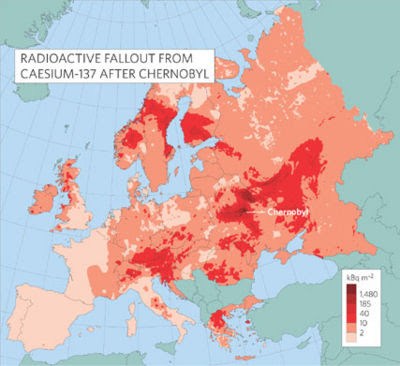
* What happens to the radioactive stuff that is created at the end of every of the energy producing process? We're not even able to keep information over thousands of years, how can we be able to big a hole and protect the environment (and our children's children) from radioactive rubbish? If this material is able to somehow get in contact with groundwater we do have a big problem for a whole region. In Germany we do still have forests that none is allowed to eat any fungi - because of Chernobyl which was about 20 years ago and hundreds of miles away...
The storage of radioactive material is a huge problem which isn't solved nowadays. Look at the amount of permanent disposal facilities: there is not a single one for that on the whole world. Even the USA do only have temporary facilities to store there highly radioactive material....
The 2nd problem is trivial: I do not assume that nuclear power plants are unsafe by default. I really do think that it's hard to crash one and bring it to the point of no return where everything blows up. But we saw a few times that it happened. That's technology, it's never a 100% safe. And that's also my problem. If something happens its not only an accident with a few people hurt but a massive disaster where several hundred people are radioactively contaminated, a whole region is uninhabitable and even your children's children have a great chance to give birth to disabled babies.
As I said...it's not that simple. There are a lot of questions still unanswered and this is what we currently see in Japan and saw in Eastern Europe 20 years before. The people will suffer and not only a few years but for generations. If we're able to build more efficient devices and to create other sources of power creation we definitely should do that as we're able to get rid of the (highly unlikely) chance that such a disaster is happening again.
If there are alternatives so why don't we use them? Let's see if it is enough technology out there to generative the energy we need. If no one tries, no one knows - there are studies for both sides of this issue but we do have to at least try it...
As knowledge increases we figure out ways to use the waste to create more power and decrease waste. blogs.discovermagazine.com/80beats/2009/06/03/could-a-new-generation-of-power-plants-turn-nuclear-waste-into-clean-fuel/
That's an ideal world scenario. In an ideal world there wouldn't have been a earthquake stronger than suspected possible. In an ideal world there wouldn't be incompetent people running nuclear power plants. We have no reason to believe that we can economicly transmute nuclear waste, let alone by using fission.
When you use a technology like nuclear that has such a big risk, thinking about the worst case you can imagine even isn't enough.
Scaremongering...
There are no such forests in Poland, and Poland is much closer to Chernobyl than Germany.
Look at the fallout map of caesium:
http://2.bp.blogspot.com/_wNICDkSSg1I/RuV773MrnDI/AAAAAAAAAA...
Poland was lucky with the weather.
> The anti-nuclear movement is not based on anti-scientific and scaremongering - we have Nobel price winners who support that cause and wrote scientific papers of this very issue
This doesn't necessarily follow, logically. In order to make the case, we'd need to go point-by-point.
> What happens to the radioactive stuff that is created at the end of every of the energy producing process?
Coal just puts it into the atmosphere.
Coal power plants filter radioactive substances, at least here in Germany.
but they spit out a bunch of other nasty stuff too. Plus: consider death tolls of each power source per KWh:
http://www.washingtonpost.com/national/the-human-toll-of-coa...
The more dramatic numbers are for old US coal power plants.
Newer or upgraded coal power plants have less effects.
But generally this is not a beauty contest. Coal power plants have to go. Unfortunately it will take a lot of time and money to replace (or even upgrade) the existing ones.
Power needs to be generated one way or another. Keeping nuclear for longer would mean we can get rid of coal sooner. Those numbers show that this would be a worthwhile trade.
And what happens with filters then?
Used as a material similar to concrete.
The fun thing about this argument, is that it's pro-nuclear. Nuclear fission reactors are the only thing on this planet that reduce radioactive emissions. By quite a bit even. Of course, after that reduction, we massively concentrate what is left and then store that absurd concentration in a really small spot, where "nothing can ever go wrong".
The problem with radioactivity is not nuclear power, it's the idiotic way we do nuclear disposal.
We should do what coal power plants do : simply process it into building materials. 10x thinner than background levels and just use it for anything and everything.
There are plenty of places on this planet where natural radioactivity levels are more dangerous than inside a modern nuclear reactor (Ramsar in Iran being the canonical example). A city built straight on top of radioactive rock, 200-500 times normal background radiation levels (like a constant dental scan, a little more than you'd get swimming in the primary coolant circuit of a nuclear reactor, 3 meters from an active fission reaction, without any separation between you and the reaction other than the water that sustains the reaction), yet you will not find a single trace of a nuclear power plant. And yes, they have a history of higher cancer rates (though not nearly as high as our radiation disease models predict they should be).
Good luck putting plutonium into building materials.
Which is fine, because those who get the cheap power breathe it, i.e. the risk/reward system is mostly local. As I have written several times before, nuclear power is a black swan type of risk with non-local risk realization, whereas coal has a more typical distribution of risk realization, and the effects are more local. This makes it hard to compare them by comparing average risk. As somebody from a country which decided against Nuclear by referendum just years before getting a lot of fallout from Chernobyl, I am also very sensitive to the fact that I have hardly any political influence on nuclear power plants that can affect me.
For all the scorn that creationists (justifiably) receive, scientific ignorance in the form of nuclear scaremongering has done and is doing far more damage.
Is it really scaremongering? Fukushima was a close call.
Considering the population density and the inherent risks (quakes) in Japan, I would say it's a wise decision. Who wants a population living under fear?
Fission is a good source of energy, but nuclear plants are obviously less reliable than expected. That will be a thrust to research better alternatives, including better nuclear plant designs, why not?
Don't forget that the Tohoku earthquake killed almost 20,000 people. The worst estimates for Fukushima predict it will cause 1,000 deaths. Median estimates predict a couple hundred deaths.
Even though management was criminally bad, Fukushima still killed fewer people than the equivalent number of coal plants run for the same time. Fukushima ran for 40 years, so that's 25 deaths per year worst-case. According to the CATF[1], around 13,000 Americans die each year from fossil fuel power plant emissions. There are around 600 coal plants in the US, so that's just over 20 deaths per plant per year. What's worse is you need more than one coal plant to make up for a nuclear plant. Googling around tells me coal averages 300MW/plant and Fukushima had 4.7GW of capacity. You'd need 15 coal plants to make up for Fukushima. That's 300 deaths per year.
So when the 5th largest earthquake ever recorded strikes, and causes a nuclear power plant to explode twice, and the cleanup is criminally mismanaged, it's still safer than burning fossil fuels.
1. http://www.catf.us/fossil/problems/power_plants/existing/
There are more than 600 power plants in the US that use fossil fuels, the 600 is just for coal.
As for the severity of the earthquake, it's far more important to consider proximity than absolute magnitude. A smaller one closer or right under could have been catastrophic. A few of us consider building plants in active tectonic zones to be the height of insanity. Building it right by the shore, in historical tsunami zones? Incomprehensibly stupid.
Of course, the alternative to nuclear isn't just coal. Renewables and efficiency should be considered first. Safer than both coal and nuclear, they also create more jobs.
Sorry, but you're wrong about the safety of renewables. The statistic you're looking for is called deaths per terawatt-hour. Nuclear wins by an order of magnitude: http://nextbigfuture.com/2011/03/lowering-deaths-per-terawat...
For the same amount of energy, renewables kill more people than nuclear. People fall off their roofs installing solar panels. Hydroelectric dams burst. Even windmills kill people.
For the next few decades, fossil fuels are the only alternative to nuclear power. Wind and solar aren't baseload sources. Hydro is, but we've already put dams in most of the economically and environmentally feasible locations.
Here in Germany we are now at 25% renewable energy for electricity. Without much hydro. Expect to see something close to 40% in 2020.
There are lots of environmental impacts of renewable energy, but generally the acceptance is higher than for nuclear or coal.
Yes, 25% of electricity produced in Germany comes from renewables. But Germany imports 2/3rds of its energy, so less than 10% of domestic consumption is from renewables.
Here's a tangentially-related fact: France is the world's largest energy exporter. 75% of their production comes from nuclear. Germany is still dependent on nuclear power, they just passed the buck.
Germany has an export surplus (!) of 10TWh electricity in the first half of 2012. We are among the world's largest exporters of electricity.
At an extraordinarily high cost to the taxpayer. Well above what any rational body would have/should have paid for getting to this level.
So someone proves an argument unsound, and you just say they're crazy? Nice.
The taxpayer is paying nothing.
Yes, an order of magnitude if you only count rooftop solar. NOT if you count wind. Maybe for efficiency, people replacing lightbulbs and motors are at risk of death.
Yet for both wind and solar, this reflects all known risk, while for nuclear we still have to deal with catastrophic risks as well as storage of spent fuel.
As to the only alternative to nuclear being fossil fuels, someone should tell it to countries investing in solar power (especially concentrated) or wind. Germany and China come to mind.
While I generally agree with your assessment, I'll make the small point that the radioactive-isotope contamination of the areas surrounding Fukushima will have subtler human and environmental effects over the course of the next 50+ years. Sure, these won't result in death, and perhaps not even serious illness, but they are effects that last long after everything is repaired.
Do I really have to point at the logical fallacy you're using here? You're basically saying nuclear power doesn't suck because coal sucks.
Let me tell you about how many people die each year from the hydroelectrics that power 90% of my country.
If an earthquake causes a bridge to collapse, killing people, do we blame the bridge or the earthquake? If an earthquake causes a dam to fail (which happened due to the Tohoku quake), killing people, do we blame the dam or the earthquake? If an earthquake causes a tall building to topple, should we build shorter buildings?
The Fukushima reactors were the most dangerous design currently still in operation in G-7 countries, and handling of the aftermath of the earthquake and tsunami was one of the most disorganized and most mismanaged in history. And yet for all of that the nuclear disaster still resulted in far fewer deaths than occurred in coal mining in that year.
Just to be clear, the handling of the Fukushima incident has been an absolute shit-show. The handling of the earthquake and the tsunami, in a broader sense, has been excellent.
Which didn't prevent the other power plants in Japan from killing more people than the nuclear disaster will kill.
http://www.youtube.com/watch?v=cZYT6BjfBro (1m15s in)
(death toll from that fire, explosions around it and people locking themselves in their homes, then getting enveloped by the smoke, was over 200. It was not the only oil disaster during the earthquake)
Fukushima was a freak event in an old power station with inadequate sea defences. Simply building another 2m on top of the wall would have been enough until the station lost its licence due to age.
Coulda shoulda woulda.
I'd like to think the right managers and authorities will do the right thing in such situations. But empirically, they didn't.
Perhaps it's a specific failing of the Japanese governance regime, and knowing their own affairs more than we do, they don't have sufficient confidence they can fix that failing before another 'freak' event occurs.
Exactly.
Had it been a gas plant or whatever, it wouldn't have mattered. But it was a nuclear plant, and in a nuclear plant any improbable event like that is a major f* up. That's the core issue.
> Had it been a gas plant or whatever
... it would have been doing damage constantly, just by operating, in the form of emitting carbon.
let me just remind the jury that, despite nuclear power being cleaner, there is still this big nuclear waste problem I don't recall us ever solving.
We have solved it, governments just don't enforce it because storing used uranium is cheaper than recycling it.
The numbers I heard a while was something like after first use uranium is 95-97% power, can be reused down to 15-25%. I haven't heard anyone getting this far with it, or even predictions of how radioactive it would be then.
Reprocessing?
The plant was built to withstand quakes. They handle quakes perfectly fine all the time (in Japan and other areas like California). It's the tsunami that caused problems.
The quake was far stronger than expected. It was still not very close to the reactor.
Reactors cannot withstand such earthquakes. After the earthquake most of Japan's reactors are shutdown. After such an earthquake you need to inspect them, for example to find problems in pipes, pumps, and various other installations.
What Fukushima showed was that a loss of power over a long period of time made problems. The power lines bringing outside electricity were destroyed. Roads were damaged. Other generators were not available.
It's not clear that a similar situation could not happen caused by an extremely strong earthquake much nearer to a power plant.
It's not that the plants are less reliable. The technology is great. It's the humans that aren't reliable.
If the humans operating the plants are not reliable, it means the plants are unreliable. You're running in circles with your argument.
I don't think you know what circular reasoning is.
Are you seriously suggesting that anything that isn't designed against every conceivable example of human incompetence, is a flawed design?
From a distance this seems like a horrible decision. Nuclear power is one of the areas that Japan leads the world, both in expertise and operation. It runs 50 plants, third to only the US and France. It is amazing that as a society they would abandon this advantage.
I'm no nuclear expert, but from what I gather very few people consider TEPCO or the Japanese regulators to have shown a high level of expertise in handling the Fukushima situation. Some of it was definitely bad luck, but most reports I see have pretty harsh criticism of regulators neglect of the situation prior to the event and TEPCO's handling of the situation after the event.
As someone close to me working with foreign countries and the Japanese nuclear energy industry said:
"Which country is willing to buy the products of our industry if we are not willing to buy them for ourselves?"
There are already a bunch of countries way ahead of Japan on renewable energy. But Japan is suffering from severe populism over the last years, nowadays it appears that taking responsibility for governing the country has become to equivalent resigning when the going gets tough. So, I don't think it is likely that they will stay the course and talk about safe and modern nuclear power.
We've yet to see how real this decision is. Only today it was announced that new reactor projects will still go ahead: http://www.japantimes.co.jp/text/nn20120915x2.html
Which seems... odd!
Japan will figure it out!
I personally think it's a good idea.
I don't have a problem with Nuclear energy (under the right conditions).
I can't help but remind myself that having so many older nuclear reactors in such a small country that is densely populated (relatively speaking of course) and also sitting on a fault line, is NOT a good area to be using nuclear energy
Whatever. Nuclear power is awesome when properly designed and implemented. They might as well use a combination of geothermal and hydrokinetic power from their volcano and beaches, and really cause harm to their Island.
Where else are they going to get portable, eco-friendly, and cheap (long run) power?
The Sun?
Here's where I'm at now on nuclear power, as someone who has lived in Tokyo for the last 7 1/2 years:
'Nuclear scaremongers' are right, that is to say they have a point, but for the wrong reasons. They are wrong that nuclear power is inherently dangerous, or that it's bad for the environment when compared e.g. coal, or basically whatever other anti-scientific bullshit they care to trot out to support their anti-nuclear stance. The science is clear - if you are an environmentalist you should fervently support nuclear power generation because it stands head and shoulders above everything else in terms of safety and environmental friendliness...
... when operated responsibly.
Therein lies the problem. After what's come out over the past couple years about the shit that has gone on at Tepco and the regulatory authorities, it is hard not to take the view that most of these assholes in executive positions should be put in prison. Hell, if Japan is so dedicated to the death penalty, some of them make prime candidates for it. That they could show such casual disregard not just for the safety of the towns near their facilities, but really their entire nation and even region, is profoundly shocking to the point that it starts to make you question your fundamental assumptions of human nature. Fundamental assumptions such as "human beings are generally not, as a rule, criminally incompetent psychopaths".
I'm sure most of the anti-nuclear crowd in Japan truly believes the bunk science that supports their stance. Others might be more cynical. At the governmental level, however, I think (and hope) something a bit more introspective is going on. Namely, that they have come to the realization that they can not be trusted to effectively regulate the nuclear power industry. Not when the consequences of failure are what they are.
> ...when operated responsibly
I also think this is the main point. And the big hard thing to swallow is that in Japan you have to trust a hell lot of people to operate responsibly, or you can't live there.
You trust house developper to not fake anti-cyclonic and aniti-sismic rules (and then you have the Haneha incidents, but you have to trust them anyway), you trust your locality to warn you when tsunami comes, you trust the government to evacuate you when volcanos blow up (there's a plenty in the south of Japan), you trust the dam makers to have taken enough security margins. And you won't live anywhere safe enough to not have to think about any of these risks.
And you know each of this big big companies must have their load of dirty filthy psychopaths, but you just believe deep in your mind that still most of the people will do The Right Thing. You can put more laws, more controls, more processes, but you'll still have to believe they won't fake the most part, and you won't know it until some more shit happens.
5 years Tokyo here. That is one of the most concise posts on the topic ive yet read, well done.
I see the problem as the time scales of events. If reactors blew up once ever 3-5 years everyone would be watching and monitoring, lobbying, training, drilling, ranting etc.. but they dont.
Humans just are not designed to train and prepare for 1 event in 20 years. Maybe if Buddhist monks were in charge of the reactors we might have some hope... but they are not.
It was clear to observers like myself prior to the tsunami that Japan just doesn't do safety culture ( http://en.wikipedia.org/wiki/Safety_culture ) for things nuclear.
It's not a universal Japanese thing, if what I've heard much less rigorously about construction scaffolding is correct, or you could look at the safety record of the Shinkansen ( bullet trains; http://en.wikipedia.org/wiki/Shinkansen#Safety_record "During the Shinkansen's 45-year, nearly 7 billion-passenger history, there have been no passenger fatalities due to derailments or collisions, despite frequent earthquakes and typhoons.")....
In Canada, we only had to look at the track record on construction and maintenance times, as well as budget overruns, to conclude that management was incompetent. So yes, in theory, nuclear is safer. But with those clowns in charge?
As far as environmentalists reading the science, you've missed out on renewables. Most importantly, a large part of our energy problems can be solved by reducing demand. This can be much more cost-effective.
Google the Rocky Mountain Institute and the concept of CO2 wedges; these ideas aren't new. Maybe some environmentalists are a lot more cynical and far-thinking than you gave them credit for?
Most importantly, a large part of our energy problems can be solved by reducing demand.
Has any civilization ever voluntarily reduced energy usage? You might as well ask people to breathe less.
EU does that. It's necessary.
And let's be kind about the result : they may actually survive the crisis ... right ? 50% chance ? What do you think ?
Right, the only real argument against nuclear is unfortunately a big one. Humans are simply not far-thinking and reliable enough to be trusted to properly manage all stages of a nuclear plant's lifecycle. But rather than give up -
Is there any research being done to automate as much as possible such that the required operators becomes small enough for it to be feasible to confidently vet that they are intelligent and scrupled enough to understand the consequences of cutting corners? And also make it hard to build it the wrong way by removing as many variables as possible?
Research that removes the human element from nuclear power operation? Like, AI and robot armies? Anything short of that and we can still fuck it up. The consequences of disregarding the safety and integrity of a nuclear power facility are well-understood. That is, the physical consequences are, as opposed to the legal consequences. The legal consequences, sadly, do not exist.
In the aftermath of the earthquake while the radiation scare was at a fever pitch, I could be found in various places around the Internet (including here) defending nuclear power. So it's been a long journey to arrive at this opinion. And it's had consequences beyond just what I think of fission.
Like, speaking of AI and robot armies, how are we going to handle that? We'll be able to build both eventually, and probably sooner rather than later. How will we react? I'm not talking about the Skynet scenario or whatever. Rather, when we build something that passes the Turing test easily and is, by all outward appearances, a sapient and sentient being, are we going to respect that creature's basic rights? I suspect not.
I think that nuclear power is merely the first in what will become a long chain of technologies that humans are incapable of wielding responsibly.