Jimmy Carter has died
washingtonpost.comRIP Jimmy Carter. A model of living meaningfully in old age.
The Onion has many funny bits on the guy's age[0]. "Former President Jimmy Carter, 98, announced Tuesday that he had gotten his recent vasectomy reversed," "Jimmy Carter Makes Pact With Dianne Feinstein That If Both Single In 50 Years They’ll Marry Each Other,""Jimmy Carter Concerned Desire For Fresh Faces In Democratic Party May Hurt His Chances In 2020"
I always hoped he read those and would laugh - he seemed the type of guy that would.
[0] https://www.google.com/search?q=site%3Ahttps%3A%2F%2Ftheonio...
and they finished it with: "48-year old rabbit finally finishes the job". https://theonion.com/48-year-old-rabbit-finally-finishes-the...
For those who do not know the reference...
link to the original 3000x2254 picture: https://tinyurl.com/25ybcrh4
He gave his life to compassion in service to all of humanity.
All of humanity? Propaganda much?
No, thank you. At very least he destroyed Iran's government and was the American architect of the Islamic Republic in Iran[1], which has a direct causal relationship to many disasters within and outside the country and led to October 7.
But sure he put solar panels on the White House. Great guy.
I wrote out a snarky response based off what I understood and then I did more research and he had a big impact. This is a better article to link to in my opinion though. https://en.wikipedia.org/wiki/Jimmy_Carter%27s_engagement_wi...
These articles aren't painting the condemning picture I think you are thinking they do.
If someone becomes president, and a foreign government is already falling apart, and you talk about options and what might become the new government, does that automatically make it your fault? The Shah wasn't a saint, and kind of created the situation.
If you want to place blame for Iran, it might need to go further back to Eisenhower and the Coup that put the Shah in power. The US actually overthrew a democratic country, to put the Shaw, a monarch back into power.
From there forward, every president had their hand in kicking Iran. Kennedy, LBJ, Nixon.
They were all involved. Why lay it at Carters feet?
Or go further back. The West, after WW2, purposely split up the Middle East in a way to keep it in Chaos.
https://en.wikipedia.org/wiki/Sykes%E2%80%93Picot_Agreement
"The two diplomats' pencils divided the map of one of the most volatile regions in the world into states that cut through ethnic and religious communities."
Because it's not an argument in earnest. For some reason (maybe because a real louse of a president will be inaugurating soon), the right has suddenly taken up a vendetta against Carter. I've seen him blamed for every problem in world at the time, including the Asaba Massacre and the atrocities of the Khmer Rouge.
No president has ever done everything right, but no president has also spent their retirement years devoted to public service. Hell, almost no _normal people_ do that.
Well said, friend. Thank you for expanding my understanding of the situation.
That is just your narrative. The incident was a disasterous foreign policy and very direct and it backfired on him very quickly too (I frankly rather not further debate this on a gratitude thread out of respect for his supporters but we could go ad nauseum). You can add all the color you want to soothe your pain and paint your own hero in the story as an unmistakeable saint, meanwhile kicking every other leader down for basic decisions they had to make for the good of their people. In the end results speak for themselves: the American people did not see him worthy of a second term.
The point is not "there are hard choices a President has to make," which is a fine attitude, but the fact that the GP idolized him so much to declare him best for "all of humanity." That is absolutely ridiculous. Clearly not.
Wow. I didn't realize the narrative on the right had gotten this bad.
Did you forget that Reagan negotiated with Terrorist during an election to keep the hostage's hostage? To literally sabotage their freedom to tank Carter?
"kicking every other leader down for basic decisions they had to make for the good of their people"
So, all other leaders, face difficult decisions, but Carter, he has to be held to higher standard? His decisions were not "basic decisions they had to make"? But others were? Like all others were backed into a corner, but not Carter? Did you see my post, he inherited the mess.
It's a good point how well republican presidents get away with contra affairs and weapons of mass destruction, but democratic ones are held to a very high standard. Good to keep in mind.
To add to the flaws of the D presidents, they typically are a continuation of complex foreign policy issue, like Obamas drone strikes and keeping Guantanamo Bay going. R crimes are usually nothing but power/money grabs.
You lost me at "narrative on the right" ad hominem. I am so sorry to let you now not everyone is coming from a US centric view. Please continue your idol worship. I'm done here sorry for the interruption.
Not a fan of this new trend where any response is called 'ad-hominem' and then quit like you are claiming a high ground.
How do I know where you are from? If it sounds like a 'right' talking point, then that is what it sounds like isn't it? I'm guessing the same views can be in multiple countries. There are people on the 'right' in other countries, maybe I'm German?
Also, not a fan of how you edited your post after my response, to clean it up and appear more generous than it was originally.
But, to continue the argument. Are you saying that when the US staged a Coup to put the Shah in power, that was ok. But then later when it fell apart under Carter, it was more his responsibility for not further backing the Shah? Like it was the US pulling support for the Shah that caused the Revolution.?
To help, what Incident are you referring to? I looked at the links you supplied and couldn't find anything directly attributed to Carter.
it was utopia. everywhere on the planet that was not the west. that cultural stagnation and backwardness could attract parasitic imperialism , if you hike at the foot of the exponential mountains , who could have known .. certainly not the culture that had all the greek scripts and did nothing with them but slavery and local imperialism. That history of half truths doesn't hold water anymore. We have colonized countries colonize the middle east now. Get new material or get of the stage .
??? can you clarify please.
Are you blaming the Greeks for Imperialism? Maybe referencing Alexander the Great era when they conquered Persia? Perhaps pushing the blame for Iran even further back?
I think you meant to type WW1 instead of WW2
correct. sykes-picot was WW1, 1916.
I would have sworn there was some post WW2 agreement concerning a desire to keep the Middle East in 'chaos'. But I guess I was just remembering Sykes-Picot.
Do you happen to remember anything 'like' Sykes that occurred after WW2?
Yup, none of this is particularly unknown or secretive for people who look and not interested in deliberate deception (Khomeini was delivered by Air France after all!) Yes, more specifically, Shah was an ally to Nixon and had put his eggs in that basket (to the degree that he attended Shah's funeral.) Once the tide turned and Ford lost, shit quickly hit the fan (a bit resembling how Biden treated MBS.)
The other funny and ironic thing is Shah was instrumental in mediating and shaping the deal between Sadat and Israel, but somehow he got the short end of the stick and was branded an asshole authoritarian dictator by US leftist media (see Mike Wallace 60 mins from 1976[1] for example) and Carter got the Nobel Prize.
P.S. for fun, compare to Wallace's attitude when he sat down with Khomeini only a few years later, with questions submitted and vetted in advance[2]! Oh well, how history is written and rewritten...
Trump abandoned the Kurds.
I'm not sure you can lay any particular blame on the 'left' for poor decisions.
It was strange how much Biden got blamed for pulling out of Afghanistan, everyone completely forgot the same pictures of Kurds.
> But sure he put solar panels on the White House.
Which were not photovoltaic and leaked like a sieve.
I know a few people, one a good friend, who work in the Jimmy Carter Center in Atlanta - until health stopped him (and a bit afterwards) he was in there daily putting the work in. Despite if you agree with his views or methods I hope everyone can know he worked well into his 90s to leave the world a better place. I don’t believe any other president was as selfless as him. Rest in peace, he was a great man
Jimmy Carter's pioneering support for Hamas:
https://philip.greenspun.com/blog/2024/12/29/jimmy-carters-p...
It is possible for people one doesn't agree with to be democratically elected, whether it be here or in a foreign land. Having respect for democracies as a principle means one should accept the will of the people--whether you like it or not--so long as the outcome doesn't abrogate human rights.
The U.S. has a sordid history of intervening in the affairs of foreign nations when it suits their interests, from the overthrow of Madero in Mexico in 1913 to interventions in Iran, Guatemala, Brazil, Chile, and Congo in later years.
President Carter definitely wasn't perfect, but he had a lot more respect for the democratic process than either his predecessors or his successors did.
That's not support for Hamas, its opposition to the use of election of Hamas candidates to the PA government as an excuse to avoid peace talks.
Which is just as sensible as arguing that the election in Israel of candidates of Likud should not itself be a blocker for peace talks.
The link is written like a proper propaganda piece. Not like you'd expect anything else on this topic.
It's his blog and his opinion. His opinion is based on the references he cites. What else is expected?
Perhaps more context would be appreciated. I'm sure you can take out damning sentences from opinions of anyone who has tried to have any faith in the peace process in Palestine. It's absolutely ridiculous to try to paint Carter as some proponent for Hamas' violence.
Unlike, say, Netanyahu, who actively supported the radicalism of Hamas in order to preserve a valuable enemy https://www.nytimes.com/2023/12/10/world/middleeast/israel-q...
The relevant Carter quote is
"… even if Hamas does not soon take the ultimately inevitable steps of renouncing violence and recognizing Israel’s right to exist."
which I think suggests he was naive in thinking they'd change and become nice guys, rather than condoning their violence.
Carter was, as many Westerners do, looking at the Middle East through Western eyes. He was projecting what people in his culture would do, instead of what people in the actual culture he was looking at do.
"One day they'll come around and realize that my culture's values are right and theirs are wrong" is actually a very racist stance, in my opinion.
Citing the Times as some sort of impartial arbiter of what's going on in the Middle East is laughable.
So random blog posts are then?
Edit: anyway, I've seen this discussion a million times. Not interested in engaging further.
No one was claiming that a random blog post is impartial or authoritative despite it's being right.
Ok, one more comment, since this is an interesting read: https://en.m.wikipedia.org/wiki/Israeli_support_for_Hamas
Netanyahu supporting Hamas and helping enable the attacks must be a tough pill to swallow, huh?
Wikipedia's neutrality has become a joke when it comes to Israel-related topics. For an obvious example, the first paragraph of the Zionism article says "Zionists wanted to create a Jewish state in Palestine with as much land, as many Jews, and as few Palestinian Arabs as possible".
Here, you seem to be interpreting this somewhat misleading article as Israel (somehow, maybe indirectly) supporting Hamas' military. Really it was Qatari funding for various Gaza infrastructure and humanitarian projects. Do you think Israel should have blocked that aid?
Wikipedia and the Times on Israel? It is to laugh.
"A generation from now, this solar heater can either be a curiosity, a museum piece, an example of a road not taken, or it can be a small part of one of the greatest and most exciting adventures ever undertaken by the American people,” Mr. Carter said. Reagan removed the panels in 1986."
All you need to know about the respective legacies of Carter and Reagan.
Notably, the 32 panels Carter installed were thermal water heating panels.
This means that there was no innovative technology in them, and they represent a technology path that is significantly less space efficient and less useful vs PVs.
It is also worth noting (especially on a platform that believes in American excellence as much as HN does) that modern PVs really trace their history back to Martin Green, who did most of his work with Australian Japanese and Chinese researchers (since he was in Australia), so funding the projects of American scientists might have not yielded the best results anyway.
So in many ways, you could argue that Carter’s solar focus was symbolically great, but stronger US subsidies would just make the US look like Germany - expensive and inefficient PVs that are increasingly becoming a liability (though bless them and their utility customers for powering through and continuing to install new, more efficient equipment).
> [...] US look like Germany - expensive and inefficient PVs that are increasingly becoming a liability (though bless them and their utility customers for powering through and continuing to install new, more efficient equipment).
Well tried but factually wrong.
Thermal solar is a battle-proofed low-tech for water heating (or even residential heating) that does not require any expensive Gov subsidies or public money to be deployed at large scale.
It is currently common to find such panels in developing countries as a cheap way of providing hot showers to people without power grids. In countries where the notion of gov subsidies often does not even exist.
That has very little in common with the giant public money sink shitshow that is the German energiewende.
Let’s not forget the $5 gallon gas in the 70’s, 22% mortgage rates and the reason (these) Reagan was elected to fix it.
What panels? What is this about?
Solar pannels on the white house.
solar water heaters specifically. not the electricity-generating sort of panels
And they were not removed by Reagan. The roof had to be redone and they were simply not re-installed because they leaked so badly and weren't worth the time and expense.
“ Three of the panels are part of museum collections. One of the panels was donated by Unity College to the National Museum of American History in 2009. Another is on display at the Jimmy Carter Presidential Center. A third panel has been part of the Solar Science and Technology Museum in Dezhou, China since 2013.” [1]
Sounds like America chose “museum piece” from Carter’s options.
[1] https://en.m.wikipedia.org/wiki/Solar_power_at_the_White_Hou...
It represents the road not taken. Reagan removed solar panels.
Don't worry, China is more than happy to take the road Americans haven't.
Sort of. They had to replace the roof, and they didn't reinstall them.
(they were also not "solar panels" it was solar water heating and it was sorta useful but mostly symbolic).
No the Carter solar panels were electric and not solar thermal.
No, they were solar heating panels. This is so easy to look up https://en.wikipedia.org/wiki/Solar_power_at_the_White_House
I mean a 30 year old solar panel isn't going to be useful to be fair
Who's "be fair" and why are we concerned about their solar panel usage?
My favorite Carter story was when he was out on a fishing boat and there was a swamp rabbit that aggressively approached his boat. Carter used his paddle to shoo it away. He told his advisers about it, but they didn't believe him. But a White House photographer was taking pictures of the trip at the time and captured the rabbit in the picture. Of course, the press blew it out of proportion and used it to mock/attack Carter.
https://en.wikipedia.org/wiki/Jimmy_Carter_rabbit_incident
For those that have seen Monty Python and the Holy Grail, I've always recreationally believed that the 'killer rabbit' in that movie was the same rabbit that went after Carter in his fishing boat.
https://www.youtube.com/watch?v=XcxKIJTb3Hg
Rest in Peace, Jimmy.
The Onions announcement of his death: 48-Year-Old Rabbit Finally Finishes the Job[0]
0. https://theonion.com/48-year-old-rabbit-finally-finishes-the...
I hadn't heard about this and thought "swamp rabbit" was some catch term for alligator. Nope! It was actually a rabbit! Thanks for sharing this.
Mystery Biscuits!
Not to nit pick, a better term you are looking for is "headcannon" as in "my headcannon is that the 'killer rabbit' in that movie was the same rabbit that went after Carter in his fishing boat."
I think I will be telling people this about the Holy Grail from now on...
RIP Jimmy
Headcanon, rather.
One could argue he set the stage for the 1980s economic boom by making short term sacrifices that cost him re-election. It was his administration that did market-oriented deregulation around airlines and trucking industries (meaning you didn't need to have a licence to ship goods across state lines and go through monopoly trucking companies to get your goods to market) as well as appointed Paul Volcker as Fed chair with the mandate to end the stagflation of the era (which meant he jacked up interest rates, causing the economy to temporarily slow down). There is a quite probably apocryphal quote that Jimmy Carter asked Volcker "can you end inflation" to which Volcker replied "Yes, but it'll probably cost you re-election" and Carter said do it. Reagan then swept in under these conditions.
Most of the "market reforms" under Reagan were more pro-business than pro-market and resulted in big problems like the savings and loan crisis, among other things.
Carter was also a very uninspiring person who mused too much in interviews and press conferences, which didn't look decisive to the general public, even though it showed how he was thinking.
Either way, he was an underrated president that was more a victim of timing and did what was best for the country.
For these reasons, Jimmy Carter is my third-favorite president of the 20th century, behind my favorite, Calvin Coolidge, and my second-favorite, Dwight Eisenhower. I am a very big fan of Paul Volcker and I’m glad Jimmy Carter nominated him as chair of the Fed. I wish Reagan kept Volcker as chair during Reagan’s second term.
> For these reasons, Jimmy Carter is my third-favorite president of the 20th century, behind my favorite, Calvin Coolidge, and my second-favorite, Dwight Eisenhower.
Aside from Amity Shlaes, who seems to have worked backwards from her desired conclusion, I've never heard an argument put forward for Coolidge as among the great presidents. What do you particularly admire?
Not to put Coolidge on a pedestal but I’m not sure I understand the vitriol historians have towards the man. Most of the hate is pointed at claiming he “set the stage for the Depression” but that’s a pretty bold assertion.
The Depression was a global affair, larger than one president’s actions, and most of his policies were fairly conventional for his day. He had left office over 6 months before the depression began (and over 2 years before the banking crises that caused most of the misery really kicked in). Since pretty much every leader (including FDR and Hitler) had to figure out how to solve the crises in office using unconventional policies (the then new-fangled Keynesian economic policy), it’s a bit unfair to blame the guy when he wasn’t even in power.
I don't know enough about Coolidge to have my opinion be worth much here, and of course it's always fair to argue whether any win or loss during or after a president's term should be attributed to them, their predecessors, or (in the last case) their successors, but there's a lot of ground between "not really responsible for the Depression" and "the greatest president!" I would have been less surprised by the first claim, but it seemed like linguae was making the second.
How did Lyndon B Johnson not make your list? Beside the Vietname war he seems like the best President for innerpolitics.
> Beside the Vietname war
that's a pretty big "besides"
Well, besides Vietnam, Cambodia, Nicaragua, Philippines, Zaire, Guatemala, Indonesia, South Africa, Afghanistan..
I'm no fan of Johnson but he gets way too much blame for Vietnam and Kennedy doesn't get near enough.
FDR doesn't make the cut?
Oh, he only busted the Great Depression, won WWII, built half of the infrastructure that we keep kicking the expiration date on, and negotiated 80% of the beneficial fine print in your employment contract. Don't you think he could have done a bit more?
My list would be: 1. FDR, 2. Carter, 3. Teddy. Carter because he sacrificed his career to fix inflation (Republican attempts to rewrite history notwithstanding), and Teddy because he wasn't merely an excellent man with excellent politics, but also because whenever present-day Republicans try to claim the man without claiming his politics I can turn it into a teachable moment, and putting him on a list with the other two is the perfect bait.
He didn't end the depression. it clearly continued right to wwii. You can dabate how things might have been if he had been allowed all his ideas (some of which were as undemocratic as what trump wants)
He steered us to join the war which did end the depression.
Whether it be the new deal or non-isolationist policy, his direction led us out of the great depression which started before his presidency and ended before he died.
> won WWII
or so Hollywood would have us believe
Sure, the parts Stalin didn’t win.
Historical note: Stalin and Hitler agreed to start WW2 by invading Poland in September 1939.
So Stalin may have played a part in ending WW2, but don't forget his part in starting it.
FDR, Stalin, and Churchill all won that war. History is super messy!
Team America to the rescue! But it does seem like without FDR it would have been won for the allies anyway.
I think this kind of counterfactual is pretty impossible to do.
Do you mean that it would have been won without any US involvement? Or do you mean the US involvement would have proceeded similarly with a different president?
From my cursory sense of things it seems like both are probably true. The U.S with FDR obviously contributed to it ending when it did, but so did other countries who were there earlier and sacrificed more. The U.S seems like more of a winner in the sense that they sacrificed relatively little while getting the most out of it, but I don't know if that's a good use of the term "won" in the context of a world war.
So did Hitler. I mean, he did end up killing Hitler, that's gotta count for something!
*yet
> Stalin didn’t win
...even backed by crucial US supplies
Infrastructure was mostly built in Eisenhower's era, not FDR's. Helping Soviets during WWII was a major mistake and it can be personally attributed to FDR - a radical leftist - himself. Many people around him advised him of the dangers of helping Commies.
U.S. should have ignored Soviet-German war. Then finish Commies with nukes.
> Then finish Commies with nukes.
If they'd done that they'd be down in history as worse than the worst of communism. It was bad enough that they dropped 2 on the Japanese which scores American civilisation a questionable footnote in the history books. "Only people to use a weapon this terrible".
The problem with unprincipled aggression is that, sooner or later, other people match it. The US ended up doing much better by defeating the communists without directly fighting them - one of the few wars the US unambiguously won and why people don't want to learn that lesson is one of the great mysteries. Victories through overwhelming prosperity are both decisive and comfortable.
But that is the point! Get rid of everyone who wasn't friendly/under control, who could match it. Thus achieving worldwide democracy for all nations who could support it immediately, and unlimited time to get everyone who can't, prepared (with potentially unlimited violence applied to force them to). Achieve a sustainable hegemony.
FDR did Japanese internment, tried court packing, and was arguably the first of the modern style of power-hungry president. He constantly threatened members of Congress that didn’t roll over and go along with his agenda. To that end he was very influential but not entirely in a good way.
He hardly ended the depression, economic conditions were poor until WW2 (eg look at the 1937 downturn, well into his tenure).
Exactly. FDR is the reason that the President today has an unbalanced amount of power compared to Congress.
That being said, back then, I would argue that the situation would have been very different had a lesser person than FDR been elected president, given the kind of political climate it was around the world.
> FDR is the reason
Well, and also every administration and Congress after him for not changing it back.
FDR stripped 110,000 Americans of their property and herded them into concentration camps.
One of these persons came to speak to my class when I was in elementary school. She was an elderly woman by then. She told us about her daily life in one of these concentration camps. I don't remember much. She definitely told us about the wooden buildings, and only being allowed to bring in what possessions they could carry in a suitcase. I think she also said that they recited the Pledge of Allegiance.
My parents took my siblings and I as children to Manzanar, which has been kept close to its original state. The brutality sits with me. Swarms of mosquitos bit at our family, clouds of dust made it hard to keep eyes open. It was blazing hot, over 100º, so the dust hurt. Rows of squat, decrepit hovels stretched out across the desolate sand towards the mountains. You could see the desert through floors. Barbed wire fences, mounted guns on guard towers.
10,000 American citizens imprisoned in conditions worse than a zoo.
This includes real estate that is worth many billions now. The west coast was heavily farmed by Asian Americans, who lost their property to people who are still profiting from the theft to this day.
The family behind Kokuho Rose, a popular California sushi rice strain, was affected by this. While they didn't lose the land in the end, it was still stripped of anything of value and left to decay by their neighbors while they were in the camp.
https://en.wikipedia.org/wiki/Koda_Farms
A Japanese American has also been credited with kicking off the California wine industry, and similarly had his land stolen during that era.
https://www.bbc.com/travel/article/20221113-kanaye-nagasawa-...
I’m not in USA and I don’t know about this story. Do you have a name for it so I can search?
It's commonly known as "Japanese Internment" or "Japanese-American Internment." But, honestly, you can just Google the full text of the comment and the correct results display (at least for me in incognito mode).
Actor George Takei was among the victims, and he's written about his experiences
https://www.npr.org/2024/04/20/1245844347/george-takei-my-lo...
I'm not American either. I think he means Executive Order 9066 signed by Franklin D. Roosevelt. https://en.wikipedia.org/wiki/Internment_of_Japanese_America...
I think imprisoning US citizens based on race and laying the groundwork for the current healthcare system disqualifies one from the podium.
When historians study the U.S. a thousand years in the future his presidency will be the demarcation line between the Anglo-American Republic and the semi-democracy we live in now.
Jesus Christ, dude.
What makes Coolidge so favorable? He doesn't seem to have been an exceptional character but one who simply rode the economic tailwinds.
What's special about Coolidge?
Or nominated anyone other than Greenspan.
As Reagan's first Executive Order, he repealed all oil and gas allocation and price controls.
The chronic gas lines disappeared literally overnight, and never came back.
I remember that day well.
He also campaigned on states rights to win over southern whites racists, and he ignored the AIDS epidemic, because his supporters thought it was God’s punishment for homosexuals.
Funny thing, I didn't any trouble finding gasoline on January 19, 1981.
There were gas allocations at the time, too. Those allocations resulted in a patchwork of gluts and shortages across the country.
Inflation was very obviously caused by oil price shocks. The price of oil tripled, which was an unmitigated disaster for the West's petro-economy.
It's an exotic reinvention of history to suggest putting up interest rates did anything to fix that. We had the same excuse rolled out in the UK, and legend still has it that rising wages "cause inflation" while resource price shocks, asset price inflation, and corporate profiteering magically don't.
As for Carter - an unusually decent and thoughtful man who genuinely spent his life trying to do the right thing. But perhaps a little out of his depth with the cutthroat psychopathy of geopolitics.
Reagan’s first 2 and a half years also were setting the stage for the growth of the 80s and 90s by taming inflation with very high interest rates and a painful recession. Reagan would have lost by a lot if his gamble hadn’t paid off but instead by 1984 strong growth had begun and he won in a landslide.
Carter appointee Paul Volcker controlled interest rates at the Federal Reserve from 1979 until 1987.
Carter interviewed Volcker for the job of Fed chairman and asked him what he would do to lower inflation (which had been persistently high since about the middle of the Nixon admin). Volcker told him he would immediately and significantly raise interest rates. This was in '79, there was an election the next year so Volcker figured that Carter wouldn't pick him. But Carter realized that Volcker was right and did pick Volcker who then went on to raise rates into the double digits (and people now complain about 5%). As predicted that tanked the economy in the election year, but in the long run it did the job of extinguishing the 70's inflation.
Rates peaked in 1982.
Reagan and Volcker clashed (at least somewhat publicly). Not long after Reagan came to power, he pushed a massive tax cut that swelled the deficit. Volcker publicly complained that they were too early and were hindering his anti-inflationary work and then proceeded to significantly raise interest rates and only cut them in 1982 after taxes were raised (to lower than they were before the previous cut, but a significant raise nonetheless).
I’m not saying Reagan was right or wrong, but one could argue that he made the fight against inflation (and the early 1980s recession) worse than it would have been had he taken a more measured approach.
The Reagan tax cuts were too big but they got increased substantially during his term after that to be a lot more right sized. He recognized the error and adjusted.
Oh please. He couldn’t get spending cut and congress forced his hand. Taxes were continuously raised to deal with the deficit and it came to a head during the infamous Bush 1 tax rises, that incidentally led to balanced budgets in the late 1990s and evaporated since the subsequent tax cuts.
If anything the Reagan tax reforms and simplification were more important. 90% tax rates are ridiculous, even though nobody paid that in practice due to all the deductions.
I’m not trying to shit on Reagan or anything. He was certainly inspirational, charismatic, and was a huge boost to national morale, but IMO he was overrated and had lucky timing more than he was a great man.
I’m really worried that we just elected a president who clearly fixates on short term gains rather than long term planning. Biden did not mess that up, even if he is a one term president like Carter. It is nice to have adults in control, even if that is increasingly politically untenable.
When you compare Carter with the guy who's going to take office next month it shows how far we've fallen as a country. The previous era was already passing since about 2016, but with the death of Carter it seems like that era has died with him and it just feels very depressing.
While I agree with the general sentiment, I think the same could have been said regardless of which candidate won. It feels like the left moved left, the right moved right, and instead of catering to moderates, threatening them to pick a side.
Said another way, I think a young Jimmy Carter type candidate would have wiped the floor with either side this election.
"Both sides" doesn't really correspond with reality though. She made a concentrated effort to reach out to people on both sides, including the Cheneys, of all people.
Associating with Republican party establishment types like the Cheneys is a giant middle finger to far more people than it isn't.
They are no longer "Republican party establishment types" though.
oh but there are … and plenty of them … behind closed doors they are talking “we gonna milk this MFer next 4 years and will be here another 25-30 when he’s retired in FL (or dead)” (I know this almost first-hand…)
they are there and they always run the show - all else as always just smoke&mirrors
At least Kamala's not a rapist.
Both sides of the right wing, the only wing.
"It feels like the left moved left"
In what way? If anything, Democrats have moved to the right on topics like border control and immigration, and haven't really moved strongly to either side on social issues like abortion or drugs, on education, gun control, campaign finance, trade, healthcare, or foreign policy.
Since I've been asked a thousand times by leftists, I'll try to answer. I feel like at least the right recognizes they're going further right.
> Democrats have moved to the right on topics like border control and immigration
Yes, because it's become such an apparent clusterfk they had no choice but to. It's not much different than a child covered in Nutella, with Nutella all over the table and floor telling their parents maybe no more Nutella. It wasn't a policy shift, it's attempting to save face. To this day some areas are claiming to be sanctuary and will fight it all.
Trans issues. Men in women's sports, tampons in men's bathrooms. Sex ed in elementary school? Kid's books about gay or trans parents and sex. Kids on puberty blockers? All would seem insane to Carter democrats.
DEI. BLM. Affirmative action The whole equity explanation and movement. To my knowledge, they still want reparations, which are hugely unpopular.
Economy. UBI? The whole antiwork movement? The open rise of communists/socialists in citizens.
Biden and Kamala are pretty far right of the left, as many pointed out. It doesn't mean the left as a whole isn't moving further left.
Maybe to leftists things feel like they are moving right, but they absolutely aren't. The candidates representing them, poorly, are trying to salvage any votes they can and shy away from the movement of the members at large because they know they're not popular.
Trump is in many ways the same. Well, I have no idea what he is, he's a smooth talker and probably far to the left of whatever the MAGA movement is. Which is itself moving continually to the extreme right, to some fanfare.
People will probably link to some enlightened centrist meme. I don't care. I don't think I'm smarter or know policy better than anyone. I mostly want to be left alone, and draw ideas from both sides. I think the base for each is moving further apart. I don't care if it's downvoted, don't tell me my own eyes deceive me.
Edit: Please don't waste energy telling me why I'm wrong. I'm used to it. I likely won't read it. Read the end of the last paragraph again.
I strongly disagree with most of what you've said, but I think more meta, this comment is not constructive (in so much as politics/ideology is supposed to be avoided anyway), in particular I don't think posting a rant and telling people you don't care what they have to say is good.
In particular, "Comments should get more thoughtful and substantive, not less, as a topic gets more divisive."
I agree. Thanks for calling me out.
I'd meant to indicate I was answering a question without interest in further political debate, but it came across very dismissive. Apologies.
Ironically you didn’t write a thoughtful and substantive comment whereas parent clearly expressed his opinion in detail. If you disagree with any of his points, which you clearly do, I suggest that you share them so we can have a conversation instead.
I’m not even American but just making a note as an outside observer.
I didn't comment on them because one, there's a lot there, and two, they said they didn't want to have a debate.
I guess in hindsight they weren't even necessarily stating their positions on these things (although I think the way some of it is talked about is revealing).
Honestly I don't even know that I disagree that the left has moved left, but I don't think I'd express it without some major caveats, because politics feels very convoluted right now.
Generally, I think id agree that the democratic parties positions haven't shifted much and that there's a greater visibility of things I'd consider far left, but I don't know to what degree these are just shifts in visibility and how closely tied the party is to the base, vs which are actually tied to underlying changes in views.
The trans topic is a wedge issue that has absolutely no impact on 99% of people. Many of the things people like to bring up when complaining about "a shift to the left" are fringe ideas even on the left, and are amplified by right-wingers who are trying to paint the left as out of touch with reality.
Having said that, age-appropriate sex ed in elementary school (e.g. talking about bodily autonomy and consent) is actually a good idea, since children at that age are often victims of sexual abuse and don't understand exactly what is happening to them.
And if you genuinely get bent out of shape about tampons in mens bathrooms, I'm really happy for you. Your life must be genuinely amazing that something so meaningless even warrants being mentioned as a point of contention. Personally, as somebody who sometimes purchases tampons for his wife, it seems at best marginally useful, and at worst completely irrelevant to me.
The economy topic is hardly a left-wing issue. People on the right cheered for Luigi just as much as people on the left, because they're suffering just as much, or more. What is happening here is not the left moving to the left, it's poor people being disenfranchised and reacting to it. This is also a major reason why Trump got elected: people have so little trust in the current system that they'd rather vote for somebody who promises to break it, than for somebody who promises to improve it.
I'm not sure what exactly you mean by "communists/socialists", since those two words have been stripped of all meaning in the US.
"It wasn't a policy shift, it's attempting to save face"
You're just using different words, but you're saying the same thing I did: it's a shift to the right. It's also dumb and counterproductive, because immigration is not the source of people's problems, and curtailing immigration in the way it is currently being done will only make things worse, but that is besides the point.
> The trans topic is a wedge issue that has absolutely no impact on 99% of people.
The idea of "gender identity" as based on a subjective inner sense of self, and that "gender identity" must supersede sex, fundamentally reframes a core characteristic of the entire human population.
When implemented in law and policy, this affects everyone.
The impact is mostly on women and girls, for whom female-only spaces are essential for their safety and dignity. Allowing any man who says he's a women into such spaces undermines the very reason they exist in the first place, and effectively destroys them.
This isn't progress; it harms women and girls. It shouldn't be a surprise why so many people are against such changes being imposed.
But dying because a fatally unhealthy pregnancy can't be terminated, or being forced to carry a rape pregnancy to term, or being denied contraception, or being shot in a classroom doesn't harm women and girls?
Your priorities might be considered a little slanted.
Gender identity is used by the right because - like most sex-related issues - it's emotive and triggering. It's a single issue dog whistle.
Given the evidence, there is no reason to believe that anyone who uses it for political gain actually cares about women or girls.
You are making incorrect assumptions about my priorities. I don't support the political right either, for the reasons you mentioned and more.
"The impact is mostly on women and girls, for whom female-only spaces are essential for their safety and dignity."
This is an inherently self-contradictory position, because it implies that trans men must be forced into women's spaces.
I don't see how this is a self-contradictory position. Women who've decided to call themselves men are in fact still women.
Your position is that this is about protecting women's spaces and making them feel safe and dignified.
Your position is also that somebody like Buck Angel must use the women's bathroom, because he is "in fact still a woman."
My assertion is that this is contradictory, because forcing somebody like Buck Angel to use the womens' bathroom will make women and girls feel less safe, not more.
This is about every female-only space, not just bathrooms.
Consider prisons, for example. There have been many cases recently of male criminals being transferred to the female prison estate, on the basis of their self-declared so-called "female gender identity", who have then raped and in some cases impregnated women incarcerated with them.
It should be obvious that the same risk is not present from other female prisoners. Even if they happen to look very butch and/or hirsute. So keeping prisons single-sex is clearly a much better policy for incarcerated women.
Even for bathroom spaces, the prospect of laws that penalize males who decide to use female bathrooms is good news. This is because the threat of negative consequences for such behavior makes it much less likely that any such males will even bother trying, which means that women in general will not only be safer, but also can feel safer, because they know that any individuals encountered in these spaces are almost certainly female. Even if, like Buck Angel, they don't conform to feminine stereotypes.
"It should be obvious that the same risk is not present from other female prisoners"
This is false. Female inmates are raped by female inmates, and male inmates are raped by male inmates. This is a "rape in prison" problem, not a trans women problem. In fact, rape of biological women by trans women in prison is extremely rare.
And, again, your stated hypothesis is self-contradictory, because it implies that the problem of inmates getting raped is solved by putting trans women in male prisons, which is plainly false. It will likely increase the number of rapes.
"the prospect of laws that penalize males who decide to use female bathrooms is good news"
I remember tiredly accidentally using a women's bathroom after a long flight. I'm not looking forward to being punished for it because of the latest moral panic. I'm sure all of the women who are falsely accused of being men because they don't conform to societal stereotypes of what women look like also feel much safer.
Meanwhile, there are, as far as I can ascertain, currently no cases of trans women assaulting biological women in women's bathrooms. I'm sure cases exist, but they must be exceedingly rare.
There are, however, plenty of cases of trans women being assaulted (and, in some cases, murdered) in men's bathrooms.
Rape of female prisoners by male prisoners is extremely rare overall because, thankfully, most prisons are still segregated by sex. However, in every jurisdiction that has decided to implement a policy of housing prisoners by self-declared "gender identity", this has - as everyone against such policy predicted - made the problem of sexual assault and rape in prisons worse, because this enables predatory males access to female victims, who are trapped in prison with these men.
This is why we have single-sex prisons in the first place, because of the inevitable harm to women, through violence, sexual assault, rape and unwanted pregnancy, that was committed against them by male prisoners in mixed-sex prison systems. Look up the work of Elizabeth Fry: she and other prison reformers extensively documented the horrors of prisons in Victorian England and in particular the awful impact upon women of being incarcerated with men.
Exactly the same is happening now, in the 21st century, because of these misogynistic "gender identity" policies that benefit males while deliberately ignoring the risks and harms inflicted upon women.
You’re assuming that most women would rather share bathrooms with trans men than with trans women. I suspect that were these mad ideas ever to be fully implemented in practice, we’d find that that was not in fact their revealed preference.
The truth is that most of the people currently stirring up a moral panic around gender are barely even aware of the existence of trans men and simply haven’t thought this through properly. Which isn’t surprising, as they don’t care about the issue itself, but only its potential as a political wedge.
It's a reasonable assumption that most women prefer to share female spaces with other women, regardless of how they look, and not with male intruders who have decided to disregard women's boundaries for their own pleasure while falsely identifying themselves as women.
If trans men have to go to women’s bathrooms then that actually makes it easier for cis men to go into women’s bathrooms too (as in general they are indistinguishable with clothes on). So there isn’t even any internal logic to this idea. The only way to have bathrooms segregated by genitals is to have genital inspectors outside bathrooms, which is neither practical nor desirable (not to mention that bottom surgery is a thing).
"It's a reasonable assumption that most women prefer to share female spaces with other women, regardless of how they look"
This is not a reasonable assumption based on my experience talking to women, and if it was, I don't understand how it would work in reality. Even if biological women preferred sharing the women's bathroom with trans men, rather than trans women, how would biological women know whether they were sharing the bathroom with a trans man or a biological man?
It seems much easier for trans men to pass than for trans women, so allowing trans men into women's bathrooms basically ensures that all men can freely enter them, claiming to be trans men.
> so allowing trans men into women's bathrooms basically ensures that all men can freely enter them, claiming to be trans men.
Any examples of this hypothetical situation actually happening?
If these spaces were regulated by law, and there was a realistic prospect of penalties for males who choose to impose themselves on female spaces, then this would have a significant deterrent effect. The males who say they're women (including males with a transwomen identity and your hypothetical set of males who claim to be transmen) would refrain from intruding.
Since the question here is what women would prefer, I haven't done an extensive search, but it seems at least a majority of women support allowing people to use the bathroom of the gender they identify as: https://www.pewresearch.org/religion/2016/09/28/3-public-spl.... Interestingly, men are more strongly opposed than women.
I'll also leave this comment for thought. You're arguing that allowing transgender women into spaces reserved for women (unqualified) degrades the utility of them. I'm actually somewhat sympathetic to this argument, but not universally. I think allowing transgender women into women's sports is maybe not right, because transgender women don't have the same underlying physicality as women who have grown up with female hormones. I think it's an interesting discussion about why we perhaps somewhat arbitrarily segment sports in this way but not others (why no under 6 ft basketball leagues?) and the role that genetics plays in sports vs training and practice, but I think it's a generally effective means of allowing a group (generally women) to have meaningful leagues where it's not just women + men who aren't very good but have a genetic advantage. As well with regards to prison, since this is already a segment of the population (people in prison) who have committed some crime, so trusting them in the way we might trust random people from society to act may not be the right choice.
That said, your comments make it sound like you don't respect the existence of transgender people in general.
In particular, "I don't see how this is a self-contradictory position. Women who've decided to call themselves men are in fact still women.", and "It's a reasonable assumption that most women prefer to share female spaces with other women, regardless of how they look, and not with male intruders who have decided to disregard women's boundaries for their own pleasure while falsely identifying themselves as women.".
The first is I think clearly denying the right of someone to identify as transgender, and the latter is a fallacy. I agree that women would not want to share the bathroom with "male intruders who have decided to disregard women's boundaries for their own pleasure while falsely identifying themselves as women.", but this is not an accurate description of transgender women.
If you think it's an inaccurate description of how you feel (that you do in fact respect transgender people) I would suggest that being more careful in your debate might help you to convey your arguments effectively.
> I agree that women would not want to share the bathroom with "male intruders who have decided to disregard women's boundaries for their own pleasure while falsely identifying themselves as women.", but this is not an accurate description of transgender women.
How is it not accurate? They are male (by definition), so when they decide to impose themselves upon a female space this means they are doing so with a disregard for women's boundaries.
Based on your comment, you seem to believe that "woman" is just an identity, that any male can choose to adopt if he desires so. If that is the case, why do you believe this?
> This is also a major reason why Trump got elected: people have so little trust in the current system that they'd rather vote for somebody who promises to break it, than for somebody who promises to improve it.
I agree this is what appears to have happened but I still can’t follow the logic. What happens next? Who builds the next system and why should we expect it will be any better?
My impression is that a lot of people are just hoping for everything to go to hell to the point where fundamental changes become inevitable, and they're assuming that these fundamental changes will likely be beneficial to them.
I'm not sure if this is evidence of how bad people think the status quo is, or if it is evidence of how naive most people are.
> they're assuming that these fundamental changes will likely be beneficial to them.
That rarely works out. When a country collapses the ensuing is chaos going to be a very rough time. Recent examples include the collapse of the Soviet Union. The 90s were really bad for people there. A lot of them moved here to the US to escape that and try to find a better life. I worked with some of them. And now what do they have in Russia? A dictatorship that's not any better than what they had in Soviet times - certainly worse than what they had under Gorbachev.
People who assume that something better will rise out of the ashes of collapse, but that rarely happens. Better to try to work to make the system you have better even if in small ways.
> they're assuming that these fundamental changes will likely be beneficial to them.
This is the part that confuses me. I have met a few “burn it down” types but never heard one articulate why that would work out well in the long run. I’m only assuming they even thought that far ahead.
The only people who can tell me why they voted for Trump are people who want his specific brand of incremental change.
> I think the same could have been said regardless of which candidate won.
I don't disagree. It's a matter of degrees, though. The post-WWII era was always going to go away when everyone who remembered WWII (or were children of those who fought it) passed away. That's kind of where we are now.
Maybe the left, as in those of us with relatively progreasive views, moved left. But as a result of that, no major party actually reflects outlr views. The Democratic party is not a progressive party, and spends almost all of its effort courting centrist and center-right voters, not sure what you mean about moderates not being catered to. They are, at the cost of completely alienating and disenfranchising the actual left.
I see this as the crux of most issues in modern American politics - that is, the primary elections… they act a feedback loop galvanizing each party. i.e. the fact that you can’t become “the repub/dem candidate” unless you represent the party’s values to the most extreme extent means the selection of a moderate candidate becomes increasingly unlikely with time.
> like the left moved left, the right moved right,
The only leftist pandering that Kamala offered was getting rid of taxes on tips (something that Trump offered first, actually), she seemed fairly center, or even a bit right of center (putting off far lefties) as Democrat presidential candidates are usually these days. Trump, likewise, didn't really veer right, he actually veered a bit left in offering to lower prices, make life easier, less wars, and stuff that you would not really hear from a far right candidate either (well, except for the ultra nationalism). I don't think left and right really describes our parties anymore.
> Said another way, I think a young Jimmy Carter type candidate would have wiped the floor with either side this election.
I don't think someone like young Jimmy Carter could get elected today, he is just too honest and wouldn't be promising enough short term juice. Most Americans are too inward focused for that kind of politician right now.
> well, except for the ultra nationalism
and also excepting the fact that he wants to end abortion, be a dictator, end elections, and drill babay drill.
Other than that he's very left. Very.
How are you reaching these conclusions?
I just don’t see the conservative and liberal labels being useful at this point. Trump is a populist who focuses on nationalism, he says what his base wants to hear. My main beef with him is that he is irresponsible and petulant, I still vote for a mix of conservative and liberal candidates actually (voting from Seattle, everyone I voted for this November lost).
I'm not sure what you mean by the left moving left. In my view, if anything the left wing has been moving rightward for at least a couple decades. Just not as far or quickly right as the right wing.
Totally agree. I see nothing 'left' in the current democratic party. Pro wars, pro boarder hardening, no real effort on healthcare. Slowly but surely they are turning towards the 'conservative' path. Arguably that is one of the big reasons they lost. They are trying to be the Republican Lite party.
There was an interesting article in the NYT recently by Nate Cohn (formerly of 538) on the realignment that seems to be happening in politics. It was an interesting read: https://www.nytimes.com/2024/12/25/upshot/trump-era-republic...
No way. Our politics are like a bar fight. Dirty and reactionary.
What's frustrating is that a few years ago a recession was predicted, and we avoided that. But no one seems to have even mentioned it during the election. Am I just misremembering this? At least in the tech sector, lots of layoffs seemed to be attributed to the coming downturn.
> But no one seems to have even mentioned it during the election
That’s because most Americans believe we were in a recession.
https://www.theguardian.com/us-news/article/2024/may/22/poll...
Even here on HN, the vibecession was in full tilt.
A lot of tech layoffs can be attributed to overhiring during the pandemic, the need to rebalance to more AI investments, and the end of low interest rates that encourage growth rather than efficiency.
Right? Biden actually pulled off a soft landing and got inflation under control. Just couldn’t land that messaging by the time it mattered.
We are in post policy politics. It no-longer matters what you do, how intelligent or well executed your plans were, just what the messaging says. It is far easier to pick things that you can control messaging on and make them the issues, even when they aren't, than to actually take on the hard things that truly impact people's daily lives. That is what killed Carter's second term and that playbook has just gotten stronger in the years since.
Being in a post policy politics era means voters are too dumb to vote on policy and will vote on messaging.
No voter likes to know that they're dumb - but the fact that Donald Trump is soon the ROTUS implies they are.
Maybe more should be invested in education.
"Maybe more should be invested in education." Yes, and there's a reason why education continues to suffer when it comes to budget and resources. An educated populace is something nobody wants.
messaging is hard when prices never went down… you can’t send economist/finacial times article explaining what biden was able to pull of (albeit the raising deficit) to a farmer in oklahoma who is paying 80% more for his groceries…
> messaging is hard when prices never went down…
The opposite of inflation (when prices go up), deflation (when prices go down) is never a good thing. But explaining that a bit of inflation is a good thing is something all economists agree on but most normal people can't understand. The fact that velocity should always be positive, and that "lower inflation" means lowering the rate of price growth, not deflation, is also something they don't get.
I doubt all economists agree on that because it is obviously not true. For example if there was a period where the CPI dropped combined with increasing wages across the workforce, that'd be pretty great for most people.
Deflation, in the abstract. is about as good or bad as inflation. Slightly better because a serious deflationary crisis is much less damaging than an inflationary one. You go to https://en.wikipedia.org/wiki/Deflation#Historical_examples and it is a whos-who of countries who then went on to be successful and prosperous and a few TBDs in the 2010s - there might be examples of catastrophic deflation but they haven't made it to Wikipedia yet.
Deflation is universally considered bad, I don’t think there are many economists, if any at all, who think it’s a good thing. The problem with deflation is that everyone stops consuming in hope of better prices, like Japan, and the way they dig out of deflation is via artificially inducing inflation. It is definitely an easier problem to solve than excessive inflation, but deflation usually underlines a bigger problem with the economy.
> The problem with deflation is that everyone stops consuming in hope of better prices, like Japan...
May as well say the problem with inflation is people stop consuming because things cost more, like Tuvalu. You've picked a random high performing economy and claimed that its existence shows that people buy less when prices drop (an exotic claim). It is an unusually weak argument because it contradicts basic supply-demand logic and you've put your fingers on no evidence.
One of the reasons democracy works so well is that voters ignore that sort of unsupported just-so economic mumbo jumbo and vote for change when their living standards drop. It isn't a great algorithm but it is a lot better than the alternatives.
100% - that is exactly it
The opposite of inflation (when prices go up), deflation (when prices go down) is never a good thing
so if we have high inflation say due to global pandemic's effects on global supply and in response we get say 40-100% price increases (say milk was $1.00/gallon and now it is say $1.50/gallon, a modest 50% increase).
so now inflation eases, global supply chain in back to normal etc etc... we should expect now that milk prices will stay forever at $1.50/gallon (or higher) because now that would be deflation if the prices eased…?! :)
It's not that hard to explain that prices stopped rising, which is what it means to kill inflation. Even Trump explained that point pretty clearly. After the election.
we’ll see how that will work in 2026 midterms :) he didn’t explain jackshit. he’ll try to play the word game which he also tried in 2018/2020 and we all know how that worked out
It will probably work out fine in the elections, because Trump's followers trust him to do right by them even while he's lying. Time will tell whether they're correct.
A sitting president is more often than not going to lose in the mid-terms. Unless Trump has a positive approval rating going into mid-terms, he definitely loses the House (and I doubt he will positive after his first month).
Trump followers alone is nowhere near enough to win an election in the USA. It was somewhat easy to win this election. you had post-Covid economy coupled with half-senile 80+ year old grandpa who was replaced by a candidate not a soul voted for.
however, when you are up for re-election (and midterms as 1/2-way gauge of how the country thinks you are doing) the buck stops with you. there is no “booo, it is not my fault” etc - american voter is not dumb in this regard.
- responsible for deaths of 100’s of thousands of people - you, the President
- locked everyone up for months in their homes for months, you, the President
- locked kids out of school for months - you, the President
- high un-employment - you, the President
- increased deficit more than anyone could even possible fathom - you, the President
- …
the buck stops with you. core MAGAs might still fall for “anti-wokeness” but that will get you a loss by many millions of votes to an already half-senile grandpa (see 2020) :)
While I agree on your point regarding midterm reckoning, I'm afraid people DID vote for Trump, he even won the popular vote - which is mind numbing: Americans actually WANTED to install a proven criminal and rapist as president.
Be careful extrapolating the intent of Americans from the majority of voters.
it is extremely short-sited to think in simple terms like this. what you should be asking yourself is WHY this happened - WHY did all these people come out to vote for Trump. We are not talking here about "MAGAs" - there are nearly not enough of them to win the election. every single state in the United States moved to the right in this election... so you should stop and think this through to figure out why would America choose Trump so that it is not all that mind numbing... there is a reason this happened and you should think about that why that is...
Seems clear that (effectively) nobody is voting for fraud or rape.
But I've thought about it a lot, and I'm still clueless. Something to do with lots of people getting screwed, I guess. But why ordinary folks switch their vote from a party that serves the top 20%, to a party that serves the top 0.01%, that is still mysterious to me.
USA is a two-party system so come Presidential election time one gets to choose between two options. There are effectively two ways you can choose between two options:
A. you are voting FOR one of the options.
B. you are voting AGAINST the other option - hence by default you must choose the other
there is a significant number of people that are in the B. bucket (in my personal circle 9 out of 20 people fall in B. bucket, 8 of which NEVER voted for a Republican in any election prior to this one) and democratic party needs to think looooong and hard about that before midterms and especially next Presidential election
Another problem is that people will blame the government entirely on inflation, but then give themselves the credit for wage increases. It doesn't help that wage increases disproportionately go towards those those to switch jobs.
it is extremely difficult to make this into an election issue - impossible to explain to “joe voter”
The fundamental issue is that Joe voter is dumb - but you can't tell him that, or he won't vote for you (as Hillary Clinton found out).
The million-dollar question is: How to you make Joe voter be less dumb?
Joe Voter is not as dumb as you might think... otherwise just in recent history there would be different election results in 2018 and 2020...
The prices definitely did go down, just not to same levels as before. But I agree Biden failed to hit on that messaging though, and Kamala made the same mistake.
Also, the US is pretty much the only developed country growing at any meaningful rate (though deficit spending is probably a large cause of that and is arguably not sustainable at the current rate).
Biden was past his prime and it showed during the campaign, though.
You cannot predict these things.
You said it better than I would have. Biden put a lot of smart people around him, and together they made many long term investments in states that overwhelmingly voted for Trump. He will be remembered differently than he is now.
The CHIPS act is going to be his legacy. That and the infra bill, I think. That bill is responsible for several bridges in my area getting much needed attention from what I understand.
It’s too bad Pete Buttigieg took the risk of unreservedly supporting Kamala and lost some credibility. I guess he didn’t think that urging people to pick her as the lesser of two evils would work, but she lost anyway, and now the Democratic Party is in an awkward place.
> short term gains
For who exactly? The $1.5T tax cut (deficit spend) for billionaires was advertised as a “bill for the middle class” [1] under the assumption of idiotic “trickle down economics. Trump administration at the time even promised a “$4,000 raise” to the middle class. [2]
In reality, in the short term, billionaires able to afford another stupid yacht or pad some offshore accounts. Corporations buying back their stock. In the long term, deficit spending, increasing national debt, jobs lost, cuts of public programs, and further decimation of middle class.
[1] https://www.npr.org/2017/12/20/572157392/gop-poised-for-tax-...
[2] https://www.usatoday.com/story/opinion/2018/04/10/donald-tru...
Restricting immigration is a long term investment in America’s future. The golden age Americans remember from the mid 20th century is partly the result of the 1924 immigration act, which cut the foreign born population from almost 15% to under 5% by the 1960s.
As relevant here Carter proposed to make it unlawful to hire illegal immigrants and to impose penalties on companies that did so: https://library.cqpress.com/cqalmanac/document.php?id=cqal77...
Soon after that act passed, America experienced the worst economic depression in its history. That seems inconvenient for the argument.
America is a nation of immigrants. Xenophobic politics is stupid and makes us weaker.
Incorrect. The U.S. was created by British settlers. The “operating system” of the country—everything from the legal system to the prevailing norms at elite institutions—remains Anglo-American, and has virtually nothing from any other culture.
Immigration has provided cheap labor, but at the cost of degrading our social and political systems. Irish and Italian immigration, for example, destroyed the founders’ vision of self governance and replaced it with political machines that mobile masses of low information immigrants to legitimize top-down authoritarian systems.
This is incredibly ahistorical. Contemporary american culture has very little to do with 18th century british settlers.
Something tells me you can’t believe this nonsense you’re spewing. You’re attributing the greatest economic boom the world has ever seen, not to being the sole winner and survivor of WWII, but because the borders were tightened. You must be a troll.
He's not joking. He's an immigrant himself. There is often the "pulling up the ladder" attitude from the ones who think they "deserved" their entry.
Not at all! I think it’s worse for the country to import foreign elites, like my family, than low skill workers. Foreign elites are the people most responsible for the dysfunction in their home countries.
Fair enough, I stand corrected!
You think it was a mistake to allow you in and are a net negative to your country?
I think if the people of Virginia were voting in 1989 whether to allow in me and 500,000 people like me, those people would not be better off as a result of choosing immigration.
- We have made their schools and jobs more competitive. We don’t have the taboo on open competition like British Americans, and don’t have the same idea of raising “well rounded” kids. My dad grew up in a village where 20% of kids died before age 5. He got out because he is a grinder. My parents socialized me to work 16 hours a day, discouraged dating, or having any hobbies that you couldn’t put on a resume, etc. I went to a STEM magnet school that went from 20-25% asian when I was there to 70% asian at the peak, and we completely changed the culture.
- We have facilitated societal changes, because we don’t value individual liberty as highly but place more value on social order. We don’t value common wisdom the way British Americans do, but place more value on formal education and credentials.
- We have reduced social cohesion. My family feels no personal solidarity with poor Americans. My family is economically liberal in a generic sense, but only insofar as they don’t personally have to pay more taxes.
And you can even see this in US states.
A bunch of plumbers and landscapers and other blue collar types move to small town Idaho and it's business as usual, maybe Spanish pops as a subtext on more public facing signage, the local diner expands, etc, etc.
A bunch of doctors and lawyers and techies and MBAs move to Idaho and it's mayhem, local politics get turned upside down, house prices off the charts, etc, etc.
And Reagan also had the Iran Contra controversy which was selling arms to Iran to fund the Contras in Nicaragua. When asked in a deposition about what he knew, Reagan famously said, "I don't remember". It may have been a legal tactic to avoid culpability, but it could also have been real and highlighted the man's cognitive decline. Or worse, his advisors knew about the cognitive decline, kept information from him, and then ran their own foreign policy in the basement of the pentagon.
He sure seemed like a legitimately good man.
I think one of my favorite stories about him is that he helped resolve a nuclear reactor meltdown
https://www.military.com/history/how-jimmy-carter-saved-cana...
> He sure seemed like a legitimately good man.
And I think this is where politics around the world has gone wrong.
A decade or two ago I would genuinely have been happy for the leader of a country, or mayor or whatever elected leader to date my sister or to watch my kids or something like that.
These days it feels like the most narcissistic a-holes get voted in. I wouldn't trust these people with my dog, and basically every country is suffering for it.
(Jacinda Ardern being the massive exception. I'm sure there are more exceptions too)
Yesterday I watched an episode of a tv-show here in Norway ("A-laget") where people with severe autism, downs and similar interviews famous people. This episode was them interviewing our prime minister. And he was honestly so sweet, even when they asked questions with no filters. He also visited a ski-podcast I listen to, and there as well he came across as a very likeable guy.
I don't vote for him, but I honestly think he's a good person. I hope we avoid getting the same kind of rhetoric and harshness when we have our election next year, that we've seen in recent years in other countries.
I guess I have to seriously start learning norsk again. I am not aware of german likable politicians in (potential) top positions.
(Also I love the norwegian wilderness)
Good to hear there are more world leaders that are genuinely good people.
I hope we can make it "normal" again around the world.
It will happen everywhere, it’s where the incentives push towards
SNL gave him a lot of shit, but SNL's "Ask President Carter" skit was perfect:
https://www.youtube.com/watch?v=-68iTvhWNB0
Jimmy Carter will always be my favorite Amazing Colossal President, as Rodney Dangerfield described in the SNL "The Pepsi Syndrome" sketch:
https://www.facebook.com/watch/?v=533858710873763
https://snltranscripts.jt.org/78/78ppepsi.phtml
Dr. Casey: “It means, Mrs. Carter, your husband, President Carter, has become [camera zooms in on Dr. Casey] the amazing colossal president.”
Mrs. Carter: “Well, how big is he?”
Dr. Casey: “Well, Mrs. Carter, it’s difficult to comprehend just how big he is but to give you some idea, we’ve asked comedian Rodney Dangerfield to come along today to help explain it to you. Rodney?”
[Rodney Dangerfield enters]
Rodney: “How do you do, how are you?”
Denton: “Rodney, can you please tell us, how big is the president?”
Rodney: “Oh, he’s a big guy, I’ll tell you that, he’s a big guy. I tell you, he’s so big, I saw him sitting in the George Washington Bridge dangling his feet in the water! He’s a big guy!”
Mrs. Carter: “Oh my God! Jimmy! Oh God!”
Rodney: “Oh, he’s big, I’ll tell you that, boy. He’s so big that when two girls make love to him at the same time, they never meet each other! He’s a big guy, I’ll tell you!”
Mrs. Carter: “Oh no! Oh Jimmy! My Jimmy!”
Rodney: “I don’t want to upset you, lady, he’s big, you know what I mean? Why, he could have an affair with the Lincoln Tunnel! I mean, he’s really high! He’s big, I’ll tell you! He’s a big guy!”
Mrs. Carter: “No! No! No!”
Denton: “Rodney, thank you very much. You can go.”
Rodney: “It’s my pleasure. He’s way up there, lady! You know what I mean?”
—Saturday Night Live, Season 4: Episode 16, “The Pepsi Syndrome” skit, Apr. 7, 1979
And poor old Billy always got the cardboard box.
https://snltranscripts.jt.org/78/78ncarter.phtml
>SNL Transcripts: Gary Busey: 03/10/79: The Carters In Israel
[...]
>Lillian Carter: Jimmy.. Jimmy.. I’ve come to talk to you about your brother.
>President Jimmy Carter: Oh, Mama. Let’s not talk about Billy now.
>Lillian Carter: Ohhh.. Jimmy, you’ve gotta remember that it hasn’t been easy for Billy. You were the oldest and the favorite – you got the wagon, he got the cardboard box; you got the bicycle, he got the cardboard box; you got the brains, he got the cardboard box.
[...]
Thank you for the SNL video, Jimmy Carter talking down a young man who took too much acid is something I find highly plausible.
Carter was the most pro-Palestinian president of the 20th century. It's worth reading his book Palestine: Peace Not Apartheid.
https://en.wikipedia.org/wiki/Palestine:_Peace_Not_Apartheid
I would argue that he was pro-peace.
He wanted both Israel and Palestine to exist, not one at the expense of the other. Just as he peace treaty with Egypt was pro-Peace not pro-Egyptian.
For this reason he opposed Israeli settlements in the West Bank saying they were leading to a situation akin to apartheid, eg https://www.amnesty.org/en/latest/campaigns/2022/02/israels-...
It wasn’t very successful as a proposition as it seems that Israel will annex the West Bank and much of Gaza but leaving Palestinians without a state of their own or without citizenship in Israel.
What is the difference between pro-peace and pro-Palestine? I've always understood them to largely be different terms in favor of a two-state solution.
Well it depends on what you mean by pro-Palestine. One could similarly ask what's the difference between being pro-Israel and being pro-peace.
As some people use the term, it means the dissolution of Israel. As others use it, it means being in favor of a peace agreement between Israel and Palestine for a two state solution.
I think if you ask most Israelis (including me), they'll tell you that it's an unfortunate reality that most Palestinians themselves don't actually want peace - they want Israel gone. Many people who call themselves pro-Palestinian mean that they want whatever Palestinians want, which includes the dissolution of Israel.
Personally, I think being pro-Israel or pro-Palestine should both be the same as being pro-peace, because the only think that will ensure a good future for both peoples will be having peace between them.
Pro-Israel, as far as the government is, is inherently an anti-two-state-solution position. How can there be peace with 2-3 million stateless people who have no way to defend themselves against a hostile nation?
You're talking about what Palestinians inherently "want", but that's not really related to peace. Peace exists when nations can deter each other. The USSR and the USA had peace despite each "wanting" to destroy the other because they had MAAD. Without that, imagine the carnage? It might have looked like what we see today in Gaza...
I agree with you, that I wish pro-either-country was a pro-peace position. Ultimately it will have to become one in Israel for the situation to change. No matter what Palestinians want, they don't have the firepower to change the calculus.
> Pro-Israel, as far as the government is, is inherently an anti-two-state-solution position.
I'm definitely pro-Israel and anti-the-current-Israeli-government. I think terminology-wise, if I said I were anti-US, most would not equate it to being anti-Biden or anti-Trump, but rather anti-the-country-itself. So I think saying "anti-Israel" when you mean "anti-the-current-Israeli-government" is a bad way to phrase it.
> How can there be peace with 2-3 million stateless people who have no way to defend themselves against a hostile nation?
1. They have militias. Much weaker ones than Israel, but not nothing.
2. Israel is not inherently hostile to Palestine, IMO. Hamas (the militia that supposedly doesn't exist?) invaded Israel on October 7th and ran around killing people and taking hostages. Had they decided to stay home on October 7th, there would've been no war.
Now, maybe the situation was intolerable before that - I don't think it was, but maybe. Either way, the way out of it was probably not to further prove to Israelis that they will never be safe with Hamas on its borders.
> You're talking about what Palestinians inherently "want", but that's not really related to peace.
Unfortunately, I disagree. Because the Palestinians have shown, again and again, that they have the ability and the willingness to inflict unacceptable amounts of damage on Israel. Plenty of Israelis want peace, or at least some semblance of it, with the Palestinians. Many sympathize deeply with them. As long as the Palestinians refuse to accept any peace, and insist on making Israeli believe that any territory they control will be used as a base to attack Isarelis more, Israeli will simply not give them territory.
> Peace exists when nations can deter each other.
I think this is both very bleak, and very wrong. The US has peace with the UK. It has peace with Zimbabwe. It has peace with Vietnam, despite a massive war with it. It has peace with Andorra.
None of these places can deter the US. But they're not actively threatening the US - so why wouldn't there be peace?
Peace can also exist when countries don't have a reason to threaten each other.
This is why, fundamentally, I believe the problem between Israel and Palestinians comes down to the Palestinians refusing to give up on most of the territory of Israel. There is a very obvious way to peace - simply agree to split the land along the borders that every agrees with, and... that's kind of it. The Palestinians have refused this again and again, and not only have they refused - they've ramped up the violence every time peace was being negotiated.
> Ultimately it will have to become one in Israel for the situation to change. No matter what Palestinians want, they don't have the firepower to change the calculus.
I agree that morally speaking, Israel must do all in its power to change the situation to arrive at peace.
But the Palestinians don't need firepower to change the calculus - that's the opposite of what they need. They need to stop using firepower to fight Israel, and prove that they will be willing to live side-by-side with Israel without trying to kill Israeli. If they laid down their weapons - the current war would be over tomorrow, and there'd be peace the day after.
You didn’t mention Nakba which is the core issue. Israel cannot exist on stolen land and be pro-peace. It really is as simple as that.
Since most Palestinians consider all the land to be stolen land, especially in reference to the Nakba, you're pretty much saying Israel cannot exist.
Yes, that’s what I’m saying. I support a single Palestinian state based on the human rights violations that went into illegally constructing the Israeli state.
Well, the ottomans have tax records going back hundreds of years so....
Thanks for sharing. I guess I never thought of anti-Israel or being pro-Israel and also pro-two-state-solution. There are fewer and fewer who balance both positions.
Israel is hostile to Palestinians as Palestinians are to Israelis. The killing of many people during the march of return. The starvation plus diets. The treatment of the West Bank after the PA renounced violence as part of Oslo, there are numerous examples Palestinians will cite to show that Israel is hostile to them. You can trot out a long historical argument to justify all these, if you'd like. They can do the same for Oct. 7. Such narratives begin with the Nakba, probably include the fact that Palestinians have no military which can adequately protect them from Israel while Israel has missile deterrence systems, etc. But all these don't matter. At the end of the day, right now, both countries are materially and physically threatened by the other. And those threats materialize into violence often.
> Unfortunately, I disagree.
Your disagreement doesn't change the actual calculus on the ground, so it doesn't matter. Like I said, only deterrence actually can make peace between two actively hostile nations. It is also not true that the Palestinians did not accept any peace. They accepted Oslo, in which they conceded far more than Israel, and were rewarded for that with basically nothing. But again, it doesn't really matter now, that is long gone and dead, and if you see it differently, fine.
> The US has peace with the UK. It has peace with Zimbabwe. It has peace with Vietnam, despite a massive war with it. It has peace with Andorra.
The US and the UK fought many wars (American Independence, the WR of 1812, etc.) they achieved peace through deterrence because the American army could stand up against the British army at that time. That deterrence set up the allyship they have now.
America chooses to have peace with Zimbabwe, but these nations have never been hostile with each other. If America ever perceived Zimbabwe as hostile to it enough to be a serious threat, they would invade and decimate the country as they did Afghanistan and Iraq.
Our situation is not like those. Both countries rightly perceive the other as an active threat. In such a situation, when only one can deter the other, you'll have terrorism until some actual, tough, negotiated peace process occurs. Unlike with the IRA (a similar situation to this one), the closest peace process for both sides was sabotaged and ruined, and now we are in a territory not really historically analogous to any other in the modern era.
> But the Palestinians don't need firepower to change the calculus - that's the opposite of what they need. They need to stop using firepower to fight Israel
You could of course swap Palestine and Israel and have the American left-wing reading of the situation. You would balk at that saying "But the Palestinians are a security threat. Israel cannot be expected to allow that on its border. The US would never allow Mexico... Etc." and that is of course the same logic Palestine uses to justify its attacks on Israel. Palestine, being inferior by air, land, and sea militarily resorts to terrorism in its attacks, just as the IRA did with a similarly overmatched foe.
> Thanks for sharing. I guess I never thought of anti-Israel or being pro-Israel and also pro-two-state-solution. There are fewer and fewer who balance both positions.
A generation ago, Israel was working towards a two-state solution. I think even in 2017, a majority of Israelis supported a two-state solution in polls.
> Israel is hostile to Palestinians as Palestinians are to Israelis. The killing of many people during the march of return. The starvation plus diets. The treatment of the West Bank after the PA renounced violence as part of Oslo, there are numerous examples Palestinians will cite to show that Israel is hostile to them.
I agree that there's a list of supposed reasons, but I think they're being considerably blown out of proportion in terms of showing that Israel is "actively hostile" to Palestinians. The average Palestinian in the West Bank would never have to interact with any Israeli or anything to do with Israel and have full freedom of movement. The average Gazan would even less interact with Israel, though obviously the blockade imposed by Israel and Egypt affect things.
Also, tens of thousands of Palestinians work within Israel, and that number had grown over time (until October 7th).
Remember that Palestinians and Israelis used to fairly freely interact, Israelis could once visit Gaza, etc. Things closed down because of the violence by Palestinian terrorists.
> At the end of the day, right now, both countries are materially and physically threatened by the other. And those threats materialize into violence often.
This is kind of true and kind of not. Had October 7th not happened, there would be no invasion of Gaza, and tens of thousands of Palestinians that are now dead would be alive. Israel had never and would never do anything like this war were it not for the ultimate proof that Hamas delivered, showing it could simply not be lived next to.
That said, it's true that Palestinians had a legitimate fear of Israel continuing to expand settlements, and potentially annex the WB or something. Still pretty clear to me that the answer to that fear is not violence - not only is it morally wrong, I think it's inarguable that Hamas has set back the Palestinian cause in terms of Israel's attitudes immensely.
> It is also not true that the Palestinians did not accept any peace. They accepted Oslo, in which they conceded far more than Israel, and were rewarded for that with basically nothing. But again, it doesn't really matter now, that is long gone and dead, and if you see it differently, fine.
It's true that the Palestinians accepted Oslo, but it's not even close to being true that they got nothing from it. Those accords literally created the Palestinian Authority, which is the official governing body of the Palestinians, and as close to being a "real" state as anything the Palestinians have. That body is still governing 30 years later, and the vast majority of West Bank Palestinians have lived for the last 30 years under their own governing body, not Israel, which is supposedly the point!
Of course, the idea of the accords was to set up an eventual Palestinian state, but the later negotiations ended with the Palestinians walking away from deals that gave them almost everything they supposedly wanted. Obviously I'm not truly objective, but I've done a lot of reading on this topic, and as far as I can tell - this is the view of almost everyone involved. There were, at least at some points, offers that the Palestinians could've taken that would've given them almost everything they ostensibly want, and they chose to walk away instead.
(And of course, also started the second intifada, making a mockery of the Israeli left; it promised security through peace, and while holding out the hand of peace and trying to reach a deal, was rewarded with a massive suicide bombing campaign that tore apart the country.)
> You could of course swap Palestine and Israel and have the American left-wing reading of the situation. You would balk at that saying "But the Palestinians are a security threat. Israel cannot be expected to allow that on its border. The US would never allow Mexico... Etc." and that is of course the same logic Palestine uses to justify its attacks on Israel. Palestine, being inferior by air, land, and sea militarily resorts to terrorism in its attacks, just as the IRA did with a similarly overmatched foe.
The American left-wing reading of the situation is simply wrong. I'm not American, but if I were I'd certainly be considered on the left. But you can't just swap the names and pretend that everyone is equal in this situation in terms of their goals.
And btw, this whole notion of "the Palestinians are fighting back" is itself detached from reality - the Palestinians are ostensibly represented by the Palestinians Authority, that's their official governing body. Hamas overthrew that governing body. They are shooting rockets at Israel and coordinating terrorist attacks. The actual government of the Palestinians is working together with Israel to stop terrorist attacks, and get rid of Hamas and other terror groups. (To some extent. The PA is not blameless.)
If the roles were reveresed, if the Palestinians had the capacity to actually eliminate Israel in a day (as Israel has towards the Palestinians) - Israel would simply be destroyed. I'm as sure of that as I am of anything.
Any analysis of the situation that doesn't take into account that the Palestinians getting what they want means the destruction of Israel and likely death of all Israelis - not taking that into account is simply choosing to ignore reality.
> A generation ago, Israel was working towards a two-state solution.
Yes, very briefly, until Netanyahu’s faction murdered Yitzhak Rabin, and not since.
> I think even in 2017, a majority of Israelis supported a two-state solution in polls.
There is a very big difference between a majority of a population preferring something in polls and the government representing that population working toward it (cf., universal single-payer healthcare in the US ca. 2000)
> And btw, this whole notion of "the Palestinians are fighting back" is itself detached from reality
No, actual Palestinians are, in fact, fighting back.
> the Palestinians are ostensibly represented by the Palestinians Authority
“ostebsnsibly” is a marker that the speaker believes the claim following it is detached from reality; if you can't even claim that this is more than ostensibly true, how can any claim about what the PA is doing rebut a claim about Palestinians qua Palestinians are doing?
> that's their official governing body
Yes, it is the widely (but not by the US or Israel) recognized government of the State of Palestine. It doesn't particularly represent the Palestinian people because of the Hamas-PA civil war that Israel orchestrated and assisted Hamas in winning in Gaza, and Israel’s subsequent use of its power administering parts of the West Bank to prevent all-Palestine elections for a new PA government that have been agreed to between the PA and Hamas; most living Palestinians couldn't vote in the last Palestinian election, most Gazans (before the recent escalation in fighting, even moreso probably since) weren't born.
> Hamas overthrew that governing body
No, they threw them out of Gaza, where Hamas already dominated the local administrations and the representation to the PA.
> The actual government of the Palestinians is working together with Israel to stop terrorist attacks
No, Israel has also engaged in an escalation of violence in both the PA and Israeli-administered parts of the West Bank, against the wishes of the PA. The PA acknowledges that it is structurally incapable of militarily fighting Israel (the PA administered parts of the West Bank lack the geographical compactness of Hamas-administered Gaza, and are instead dozens of small cantons interespersed with similar Israeli-administered zones and even when (almost) adjacent separared by Israeli-controlled security corridors, but is still actively opposing Israeli actions with every means at their disposal, having repeatedly suspended security cooperation even though the US has used the leverage its aid gives it over the PA to demand uninterrupted security cooperation, and securing a UNGA resolution demanding Israeli exit from the entirety of the occupied territories (Gaza and the West Bank) following its success at the ICJ in having the occupation declared to be in violation of international law.
> > A generation ago, Israel was working towards a two-state solution.
> Yes, very briefly, until Netanyahu’s faction murdered Yitzhak Rabin, and not since.
I think we've talked about this before?
This is just wrong. Firstly, I wouldn't call them Netanyahu's faction.
More importantly, Israel then elected Ehud Barak, who pursued peace, then Sharon was incredibly popular for doing the Gaza disengagement (not in pursuit of peace, of course, but in effect leaving Gaza completely and giving it over to the Palestinians). Then Israel elected Olmert, who vowed to continue with peace and disengagement. And finally, giving a majority to Livni who also wanted to continue down this line, but unfortunately wasn't able to build a coalition, so Netanyahu (who had, IIRC, one seat less than her) became PM.
As for the rest of your comment, I'm not sure where you stand here - does the PA represent the Palestinians? Doesn't it? Should we believe that Hamas is more representative, which is true by polls in the WB (though polls in Gaza have them at 5%! nowadays).
If Hamas truly represents the Palestinians, do you think there's any chance for peace? Given that Hamas's goals are basically the dismantling of Israel?
> As for the rest of your comment, I'm not sure where you stand here - does the PA represent the Palestinians?
De jure, yes.
De facto, not particularly, and they are quite conscious of that, and actively seeking to correct it but actively prevented by Israel whose strategy to mitigate international pressure for peace (and particularly to avoid meaningful US pressure for peace) centers on avoiding having any entity that effectively represents the Palestinian people.
> Should we believe that Hamas is more representative
It is more representative of Gazans a couple decades ago when the last elections were held (whereas the PA is of WB Palestinians at the same time.) It probably is less interested in fixing the problem (certainly its Iranian sponsors are), but even so it has on more than one occasion reached deals with the Fatah-led PA on new elections throughout the occupied territories for a new PA government, but those agreements went nowhere because Israel blocked implementation.
> If Hamas truly represents the Palestinians, do you think there's any chance for peace?
There's no chance for peace with the current Israeli regime, at least as long as it has unshakable support from the US; Hamas is a symptom of the problem (one actively fostered to both divide Palestinian opposition and provide a less Western-sympathetic opposition by Israel when they weren't in their momentary orientation toward peace), not its source.
> Given that Hamas's goals are basically the dismantling of Israel?
Peace always requires parties compromising on their goals, largely because they recognize that they are unattainable at acceptable cost. Why both Fatah, Hamas, or the numerous other Palestinian factions might do so is...fairly obvious. Israel, whose goal is no more the destruction of the Palestinian people entirely than Hamas’s is destruction of Israel, has bottomless US support, little effective (though plenty of symbolic) international opposition, and continues to progress (slow over the long term, quite rapid recently) progress towards its goal. Yes, it costs Israeli lives, but those are lives that the Israeli government has been clear that it is willing to sacrifice, not an unacceptable cost.
> There's no chance for peace with the current Israeli regime, at least as long as it has unshakable support from the US; Hamas is a symptom of the problem (one actively fostered to both divide Palestinian opposition and provide a less Western-sympathetic opposition by Israel when they weren't in their momentary orientation toward peace), not its source.
I wouldn't call Hamas a symptom of the problem, because the majority of Israelis have only the goal of security in mind. An extremist minority, that is unfortunately gaining-in-size-and-power, wants to conquer all the land, but they are still a small minority of the population. The majority of Israelis were historically totally on board with peace and a two-state solution, except for the security risk, which Hamas is one huge part of. (Hamas's actions were specifically targeted at destroying the peace process in the 90s, and are a big part of the reason for the dissolution of the Israeli left.)
> Peace always requires parties compromising on their goals, largely because they recognize that they are unattainable at acceptable cost. Why both Fatah, Hamas, or the numerous other Palestinian factions might do so is...fairly obvious. Israel, whose goal is no more the destruction of the Palestinian people entirely than Hamas’s is destruction of Israel, has bottomless US support, little effective (though plenty of symbolic) international opposition, and continues to progress (slow over the long term, quite rapid recently) progress towards its goal
Unfortunately, I agree with most of this. The current government is a disaster on many levels for Israel, and is not only not interested in peace, but is actively furthering that in many ways. I think this has been true for many years.
The opposition to the government comes from many places, but most of it is ineffective. Worse, the part of the opposition that comes from a pro-peace "trying-to-arrive-at-a-deal" place within Israel is severely weakened, since in Israeli's experience, that approach has always led to security disasters. So the Israeli left is tiny, and even if we were to get a new government, it is unlikely to pursue peace any more than the current government is. (Though the important silver lining - it will hopefully be a centrist-right government, not an right-extreme right government, which is making everything much, much worse.)
This makes it all the more obvious that the main way to arrive at peace will be for the Palestinians themselves to stop the violence and start making steps towards peace from their side. If the Israeli populace were ever convinced there's an actual partner for peace, the Israeli left and pro-peace camps will actually have something to work with.
I hope the one thing that comes out of this disaster that was October 7th and is the Gaza war, is a renewed boldness for peace activists pushing both sides to actually work towards a peaceful resolution.
I have been pretty reasonable with you, and many times taken what you said and thought about them considerably. You need to also come to this with good faith.
Things like
> I agree that there's a list of supposed reasons, but I think they're being considerably blown out of proportion
Are not in good faith, imo. People whose loved ones die, who see killing in the name of hatred, on both sides, are not blowing their issues out of proportion. The expansion of settlements isn't a "blown out of proportion" reason to doubt Israeli commitment to peace any more than terrorism is a reason to doubt Palestinian commitment to peace. Both lead to horrific and disturbing killings and massacres with state (or quasi-state) backing.
When you say
> it's not even close to being true that they got nothing from it. Those accords literally created the Palestinian Authority, which is the official governing body of the Palestinians
You're not reading what I'm writing with good faith, you're preparing a counter. I didn't say nothing. I said "basically nothing" because a government can be formed without Israeli agreement. They did not see an end to settlements. They did not see Israel commit to stopping its authority over Palestine, instead they rather cemented it against a "state" they knew had no equivalent defense against such. This is all after they made very big concessions and continued to do so even after the talks failed.
And you know that. You clearly know as much as I do if not more, which is why it's hard to accept what you're saying as being with genuine intent.
> the later negotiations ended with the Palestinians walking away from deals that gave them almost everything they supposedly wanted
You can't possibly believe this. Every side had to compromise quite a lot. Israel had to give in to some right of return, and Palestine had to give in to having to tell some refugees they would never return to their ancestral lands. Palestinians had to accept a broken up West Bank despite the occupation and settlement of the area being illegal, and they were willing to do so. You know the talks were not Israel giving everything the Palestinians wanted to them and them refusing over minor details. Why would the stronger nation, negotiating with their strongest ally orchestrating the talks, do that? The UK did not end up giving the IRA even 50% of what they wanted to resolve that conflict.
> The American left-wing reading of the situation is simply wrong
Why is it wrong? Israel is a security threat to Palestinians right now and for the past many years. If you are a Palestinian, especially led by a government who pursued peace with Israel (the PA), you are at risk to have had your land taken by settlers, your family killed by the same settlers, and your home stolen and "legalized" by Israel after it's stolen. That is entirely why Hamas grew in power against them because they, like the Israeli far-right, pointed to real security concerns and offered no compromise with their enemies as an alternative to solve those. It of course does not work. Hamas did not stop Israel from being a security threat, nor did the Israeli far right stop Palestinians from being a security threat to Israelis.
> if the Palestinians had the capacity to actually eliminate Israel in a day (as Israel has towards the Palestinians) - Israel would simply be destroyed. I'm as sure of that as I am of anything.
You have constantly spent time trying to paint Palestinians as fundamentally evil (but earlier you decried anyone doing that to you), but you're missing the point that what would happen in hypothetical scenarios, and what Palestinians "want" doesn't matter. It doesn't change the reality on the ground, and it doesn't change the fact that when two hostile nations are next to each other, only deterrence can lead to peace.
> Any analysis of the situation that doesn't take into account that the Palestinians getting what they want means the destruction of Israel and likely death of all Israelis - not taking that into account is simply choosing to ignore reality.
Never has there ever been any peace process that even hinted that the Palestinians would get "what they want" according to you (because according to you it's the death of all Israelis), so it's a moot point to bring up. What if we asked what the Israelis want according to polling? Lots of polling shows that they believe Palestinians should be stateless forever or be deported to other countries. But again, that has never been offered in any peace process ever.
Stick to reality and what's actually on the table politically, and try to answer in good faith.
> I have been pretty reasonable with you, and many times taken what you said and thought about them considerably. You need to also come to this with good faith.
Thank you, I appreciate your coming at this in good faith. I don't believe I'm acting otherwise, so I'm sad to hear that's what you think. I believe we have real disagreements, though we probably agree far more than we disagree.
The reasons I engage in these debates are 1) to learn, 2) to give an Israeli, albeit leftist-Israeli, perspective, something I think is very lacking in discussions about Israel, which is sad - both because it makes things uninformed, but also because IMO, the best chance we have of arriving at peace is via Israeli leftists and peace-activists. I do sometimes argue a more standard-Israeli POV than my personal opinions, because I believe it's valuable to understand it.
I'll try to tackle your specific points. I'll attempt to be as inclusive of all points of view as I can, but please also keep in mind that we might actually disagree about things - don't just assume I'm talking in bad faith. Sorry, this comment will be a bit long.
First, let me lay outright my main point of disagreement with you, IMO - I think you're coming at this from an outsider, "both sides" perspective, where you believe "Israelis" have a POV, "Palestinians" have a POV, both have reasonable points and are roughly equally valid, the truth is somewhere in the middle, and the way to arrive at peace is by somehow squaring the circle and giving both sides what they want.
I believe that is, roughly speaking, wrong.
I'm an Israeli Jew, so obviously I'm biased. That said, I've always been far more sympathetic to the Palestinians than most Israelis. I've spent the time since the war trying to learn a lot more about the history of Israel and Palestine, the history of the conflict, etc. I'm still far more sympathetic to the Palestinian side than most, even more so that I was before. In fact, I think Israel has behaved morally badly for the last 15 years by stopping all work towards peace (both not trying to seek peace, and actively blocking paths towards peace).
That all said, I still believe that, while the "pro-Israeli" narrative is obviously not completely accurate and paints Israelis more nicely than it should, it's still more accurate than the "pro-Palestinian" narrative. Both the history - the common "Jews came in and stole the land, the Palestinians should get all of it back" has some truth to it, but is far more wrong than it is right, for a lot of reasons.
More importantly, I believe it really is true that the main reason there was no peace is that the Palestinians refuse to live side-by-side with Israel, and continue to refuse it. There could've been peace many times (as Israel has done with other countries) if Palestinians had acted differently. That is a failure of the Palestinian narrative and the Palestinian leadership - which is continuing to push the completely false idea that if they just tried a bit harder, they'd convince the Israelis to pack up and leave Israel.
OK, I'll try to address specific points:
> Things like
> > I agree that there's a list of supposed reasons, but I think they're being considerably blown out of proportion
> Are not in good faith, imo. People whose loved ones die, who see killing in the name of hatred, on both sides, are not blowing their issues out of proportion. The expansion of settlements isn't a "blown out of proportion" reason to doubt Israeli commitment to peace any more than terrorism is a reason to doubt Palestinian commitment to peace. Both lead to horrific and disturbing killings and massacres with state (or quasi-state) backing.
Look, I'm not saying that someone who lost a loved one is "blowing it out of proportion" as a reason to be angry at Israel. And I can't imagine the feeling of most Gazans over the horror they've had to suffer over the last year.
I was specifically saying that these things are blown out of proportion as reasons to think that Israel is actively hostile to Palestinians. And indeed, I think your list is inaccurate. You talk about "killing in the name of hatred", and you talk about "horrific massacred with quasi-state backing", which is simply a mistaken interpretation of Israeli actions. Despite the absolutely horrible, terroristic actions of many in the settler movement, there are almost no "massacres" of Palestinians by settlers. Before the war, the vast majority of Palestinians killed weren't "killed in the name of hatred", they were killed in clashes with IDF for security reasons.
You paint a picture of Israel (the state) or of Israeli settlers routinely going around killing Palestinians, and (before the war) this just wasn't true, at all.
About the expansion of settlements - yes, I agree, that's a genuinely valid reason for the Palestinians to doubt Israeli commitment to peace. I think all settlements were and are a horrible idea, and I'd dismantle them all if I could. However, I don't think it's correct to say "well the settlements continued while we're still negotiating so that means the Israelis don't really want peace". Many of these "settlements" are a dozen people going in and "claiming" some land no one is on. Again, I get where this is coming from, and it's a totally valid criticism of Israel - but isn't real proof that Israel is "not serious".
> When you say
> > it's not even close to being true that they got nothing from it. Those accords literally created the Palestinian Authority, which is the official governing body of the Palestinians
> You're not reading what I'm writing with good faith, you're preparing a counter. I didn't say nothing. I said "basically nothing" because a government can be formed without Israeli agreement. They did not see an end to settlements. They did not see Israel commit to stopping its authority over Palestine, instead they rather cemented it against a "state" they knew had no equivalent defense against such. This is all after they made very big concessions and continued to do so even after the talks failed.
Again, I honestly disagree, and think you are misreading history here.
It's not true that "they could just setup a government", because Israel was militarily ruling the West Bank and Gaza at the time, and acted as the government.
After the accords, not only did the PA get official recognition, they got governmental control of most of the Palestinians. They don't have Israeli army presence within their cities, mostly, and the day-to-day lives of a majority of Palestinians doesn't involve any interaction with Israel.
It's just not accurate to say that Israel didn't commit to stopping its authority over Palestine, because the authority that Israel had over the lives of most Palestinians changed drastically, and is far lower.
Palestinians in the West Bank are mostly living without any interaction with Israel or Israelis, if they don't want it. They can travel the world at will via Jordan. Israel still exerts some authority, and it's not a truly independent state, but you're making it seem like the accords changed literally nothing.
Btw, I'll take a moment to criticize the Israeli POV here too - many Israeli pretend that Israel also gained nothing from these accords. Despite the fact that the Palestinians officially recognized Israel, and officially relinquished 80% of their claims on land (by agreeing to a future state only existing on roughly the '67 borders). Most Israelis don't think they had any valid claim to the rest of the land, but nevertheless, they do think they had a claim to it, and relinquished it. And the PA, for all its very massive faults, has worked in security coordination with Israel ever since.
This is why this subject is so touchy for me - I believe that both Israelis and Palestinians think the accords and peace talks didn't go anywhere or yield anything, making both sides dig in and say "there's no point in talking to the other side". And I think they're both wrong, because actually, the Oslo accords, despite eventually leading to failure of future peace talks, actually achieved some things that were real, important, and have held to this day.
I think it's really important to recognize the successes and build on them, and understand the failures and what led to them, because that's how we'll arrive at peace.
[Continued in next reply]
> > the later negotiations ended with the Palestinians walking away from deals that gave them almost everything they supposedly wanted
> You can't possibly believe this. Every side had to compromise quite a lot. Israel had to give in to some right of return, and Palestine had to give in to having to tell some refugees they would never return to their ancestral lands. Palestinians had to accept a broken up West Bank despite the occupation and settlement of the area being illegal, and they were willing to do so. You know the talks were not Israel giving everything the Palestinians wanted to them and them refusing over minor details. Why would the stronger nation, negotiating with their strongest ally orchestrating the talks, do that?
I do believe it. Not only that, I'll say something I first heard from an Israeli-Palestinian peace activist I admire - if you went up to a random Palestinian and told them that there was a deal on the table that gave them 99% of the land they wanted (some via land swaps), gave them sovereignty over half of Jerusalem, and a few other conditions I don't recall - they'd be shocked that this was on the table and shocked it wasn't accepted.
Look, there is a real matter of what your starting position going in. From the Palestinian side, if their starting position is "we should get all the land of Israel, all Jews should be gone from here", then yes, they "compromise" a lot by giving up on 80% of the land. Very few Israelis consider this a valid claim though.
The offers that were on the table in e.g. the Clinton Parameters included almost everything the Palestinians supposedly wanted in terms of land. Yes, there was the issue of Jerusalem, though a later offer included that. There was the issue of a right of return, which is also tricky.
But I've read multiple accounts of the negotiations by now. There are dissenting voices, but many of the people involved that I've read, mostly Israelis and Americans - including some that were fairly critical of the Israeli side - agree that a very good offer was put on the table.
What is undeniable, historically, is that the Palestinians walked away from the negotiations. They refused all Israeli offers, and eventually ended the negotiations, never offering a counter-offer. They didn't say "well your compromise on issue X is fine, but we need you to compromise more on issue Y", they said "no, this doesn't work for us, bye".
It is just true that there would be peace and a Palestinian state today, had Arafat said "yes" and accepted something that, as far as anyone knows, gave them 99% of what they say they wanted.
And yes, some say Arafat couldn't agree, because there is no way any Palestinian leader would give up the right of return. But then all of this again comes down to a single, undeniable issue - the Palestinians refuse to give up on the idea of returning to all the land and (depending on how it's implemented), effectively dismantling Israel, something Israel will simply never agree to.
> > The American left-wing reading of the situation is simply wrong
> Why is it wrong? Israel is a security threat to Palestinians right now and for the past many years. If you are a Palestinian, especially led by a government who pursued peace with Israel (the PA), you are at risk to have had your land taken by settlers, your family killed by the same settlers, and your home stolen and "legalized" by Israel after it's stolen.
Because this "risk" affects 0.01% of the population? At least pre-October 7th? As I said before, the vast majority of Palestinians living under the PA are living day to day in cities in a pretty normal way, without any interaction with Israelis.
And you keep saying "families killed by the same settlers", how many Palestinians do you think have been killed by settlers, exactly? There are a few horrible acts of violence, but definitely not big numbers. And the majority of Palestinians killed by the IDF are terrorists - I just looked up the stat for 2022, and it was 142 Palestinians from the WB killed by Israel security forces, with 80-ish of them militants or terrorists shot after they shot/stabbed someone. Now, any civilian killed is a tragedy, and I definitely don't want to downplay this; but this is a picture of clashes between terrorists and security forces, than of "the average Palestinian has to live in fear of being gunned down by security forces or settlers".
That's why I call this a misreading of the situation. It's like hearing about the many tragic school shooting in the US, and thinking that therefore people must be terrified every day of going to school or going in with bulletproof vests or something. It's simply a misundersatnding of the scope and the numbers here.
Of course - let's be super clear here - I pulled up 2022 for a reason. All of this has gotten much worse since October 7th in the WB. Another tragic consequence of Hamas's terrible actions.
(Worth noting that last week, there was a giant clash between the PA and Hamas/Islamic Jihad in the WB, with the PA trying to drive them out.)
> You have constantly spent time trying to paint Palestinians as fundamentally evil (but earlier you decried anyone doing that to you), but you're missing the point that what would happen in hypothetical scenarios, and what Palestinians "want" doesn't matter. It doesn't change the reality on the ground, and it doesn't change the fact that when two hostile nations are next to each other, only deterrence can lead to peace.
I absolutely do not think that Palestinians are fundamentally evil, and I really don't think I implied that.
I think the average Palestinian is wrong about the history, and holds a narrative that is simply wrong - that with enough violence, Israelis can be convinced to "go back to Europe". This is just wrong on many levels, and tragically wrong - because it means that "just a bit more violence" is what is needed.
But it is 100% true that Hamas wants to destroy all of Israel. It's not projection - they've said so many, many times, and when they temporarily gained the power to kill Israelis by invading Israel, they did so brutally.
It's not a hypothetical scneario - if there were to be a Palestinian state that is able to arm itself for real, and it were run by Hamas - I have no reason to think I wouldn't be dead as soon as they could launch an attack.
Remember - Israel completely left Gaza, pulled all settlers and all security forces from Gaza, and the result was them electing Hamas, and Hamas shooting rockets at Israelis every day.
And the Israeli response here wasn't to go back in or dismantle Hamas - it was to build defensive weapons so that the rockets kill only a few people, instead of being super dangerous.
I strenuosly disagree with you that "only deterrence can lead to peace". The path to peace was really simple and can be so again - the Palestinians stop violence towards Israel and agree to live in peace with Israel as a neighboring state. That's really all it would take. (Well, nowadays it would take that, plus a new Israeli government, plus convincing Israelis to actually trust the Palestinians again).
> Never has there ever been any peace process that even hinted that the Palestinians would get "what they want" according to you (because according to you it's the death of all Israelis), so it's a moot point to bring up.
Yes, which is why I think that fundemantally, the Palestinians have to change what they want for there to be peace! My point exactly.
> > What if we asked what the Israelis want according to polling? Lots of polling shows that they believe Palestinians should be stateless forever or be deported to other countries. But again, that has never been offered in any peace process ever.
Even as little as a few years ago, >50% of Israelis agreed with the idea of a two state solution. It's gotten lower over time, and I'm sure it polls very low right now (so probably around 30-40%, I don't remember offhand).
> Stick to reality and what's actually on the table politically, and try to answer in good faith.
Look, if you don't believe me, just listen to one of the many Palestinian peace activists I admire. Peace can be reached, but it will happen when both sides simply agree to live side by side with each other in peace. The 15 million people who live on this tiny patch of land need to all accept one thing - none of them is going anywhere! If both sides internalize this at the same time, the solution is incredibly obvious - just share the friggin' land!
You keep glossing over Nakba. It doesn’t make sense to “share the land” with people who ethically cleansed your family from said land. You say that you represent “leftist Zionism” but such a thing doesn’t exist as evidenced by your argument against basic human rights.
I'm not "glossing over" the Nakba. Firstly, we probably don't 100% agree on the exact events of the Nakba or the interpretation of them.
But more importantly, I'm not sure how actually relevant it is today. Israel was founded and for sure did some things that weren't great, just as the surrounding Arab countries did things that weren't great. Just as like 50% of the countries today have been through stuff that isn't great.
If no one can live in peace and a joint future because of things that happened in 1940, how is there any peace with Germany? With Japan? WW2 didn't just ethnically cleanse a lot of people - 50 million people died in that war. Yet there is peace, because people chose to stop fighting and figure out a way to coexist.
> It doesn’t make sense to “share the land” with people who ethically cleansed your family from said land.
For the sake of argument, let's assume your idea of what happened in the Nakba is spot on. What exactly is the alternative? What do you imagine should happen to the millions of Israelis that have been born and raised in Israel? If the land isn't "shared", what should happen?
This idea of trying to roll back the existence of countries is antithetical to the entire relatively-peaceful world order since 1945.
> You say that you represent “leftist Zionism” but such a thing doesn’t exist as evidenced by your argument against basic human rights.
Where did I argue against basic human rights?
You just glossed over Nakba again:
”Israel was founded and for sure did some things that weren't great”
The very foundation of Israel is illegitimate. That is the core issue.
> You just glossed over Nakba again:
I'm not glossing over it, we disagree about it. Also, the Nakba doesn't usually refer to the founding of Israel itself, but rather the ethnic cleansing of Arabs as part of the war, which is why you might think I'm glossing it over - I literally didn't understand what you mean.
That said, let's get into it.
First, let me again say - this doesn't matter as much as you claim it does. Is the foundation of other countries any more legitimate? Is the foundation of the US legitimate? What makes the foundation of a state "legitimate" is a question, but the fact that Israel is a worldwide-accepted state for 75 years for sure means that this question doesn't matter as much - there is no world in which saying "oops it was illegitimate" leads to anything but much more trouble for everyone. You continue to refuse to say what should actually happen - even if you think the founding of Israel is illegitimate, what now? What should happen in practice?
All that caveat aside, let's get into the question itself. Why do you think Israel's founding is illegitimate?
In 1947, the land of Palestine had both a Jewish and Arab population living on it - about 30% Jewish and 70% Arab, iirc. These populations were often in conflict, and signaled, many times, that they didn't particularly want to live together (moreso from the Arab side than the Jewish side).
The land was ruled by the British - and they handed over to the UN the question of what to do with the land. The UN gave the same answer that everyone else who's ever looked at the land said; there's two peoples who don't want to be part of the same country but live on the same land - so split up the land into a majority-Jewish state and a majority-Arab state. This also solved another problem the UN/world had - there were 250k Jewish displaced persons after WW2 that no country wanted as immigrants, and had nowhere to go.
So the UN voted on and officially proposed the partition plan for Palestine. This was accepted by the Jews, and rejected by the Arabs. This led to the Jews declaring independence on the land. The Nakba happened when this declaration of independence was followed by surrounding Arab armies attacking Israel, and Israel fought back. Some of the Arab population stayed where they were - they are today citizens of Israel. Some fled - unclear exactly how many or why, probably partially fear and partially at the urging of Arab leaders. Some were ethnically cleansed - actually pushed out. There are disagreements about the exact numbers of each of these groups, with Palestinians largely claiming everyone was pushed out, and Israelis largely claiming the majority just fled.
Anyway, from all the above - what part exactly do you think is illegitimate? Is there a more legitimate way of declaring independence than after the world's countries get together and officially vote for a new state to be founded? Seems far more legitimate than how most countries have been founded (pure force).
And if you think the founding of Israel was so illegitimate, what do you think should have happened in Mandatory Palestine instead? Both sides had a thriving community life on that land, and did not want to be a single country (with the early-Palestinian leadership pretty explicitly refusing to state "what should happen" to the Jews if an Arab state were to arise there). So what should have happened?
And on that subject, what should have happened to the 250k Jewish displaced persons from WW2, or to the millions of Jews facing persecution in the Arab world, that were themselves ethnically cleansed after the founding of Israel, and made up the majority of the early-Israeli population?
You keep glossing over it (also please stop replying with multiple paragraphs stating the same things, you don’t need to have the last word and you’re doing nothing to help you “cause”). Ethnic cleansing matters, yet you said this;
”this doesn't matter as much as you claim it does”
He was the first American president to broker a serious Middle East peace agreement between Israel and a Middle Eastern nation (Egypt) - the Camp David Accord.
What's ironic about this is that Egypt no longer poses a threat to Israel because of these peace agreements and reliance on American foreign aid. If this were not the case, Israel likely would not be a position such that they could pursue military attacks against Gaza and war in Lebanon.
Interesting viewpoint, however I don't think that would stop Israel in Lebanon (which has not been aligned with Egypt), and probably not in Gaza either.
It might have made Egypt more willing to open its border with Gaza, but could it really absorb 1-2 million refugees, as Jordan once did?
That is exactly what Israel wants, so they can expropriate Gaza permanently.
My view of the future is that Israel’s borders will probably continue to expand opportunistically for the forseeable future. This is a doctrine known as Greater Israel.
At some point the Egypt-Israel relationship could deteriorate and Israel could expand in that direction again.
Overall expansionist/conquest urges are back in with Russia, US under Trump and Israel. We will probably see China also get into the act.
> Israel could expand in that direction again
I agree that Israel harbors Zionist destructive ambitions, but it doesn't really extend beyond "Greater Israel" which is the extent of Israel in Biblical times under King David and King Solomon. That does not extend in Egypt's direction, but it does include Lebanon, Syria and Jordan, so it's no coincidence that Israel has pushed in those directions (southern Lebanon, Golan Heights, and the West Bank).
The controversial Greater Israel army patch seen in Gaza includes Sinai and the western banks of the Red Sea as well as a bunch of Iraq and Saudi Arabia. Of course the end point of expansion is likely not predetermined.
Controversial, as in almost certainly made up anti-Israel propaganda?
Ryan McBeth presents his thoughtful analysis and debunking here: https://www.youtube.com/watch?v=R8HWJ2v0R6k
Israel's finance minister gave a speech in front of a greater Israel flag last year.
https://www.axios.com/2023/03/20/bezalel-smotrich-jordan-gre...
The patch may or may not be made up, but the Greater Israel ambitions are beyond dispute
Why is the current finance minister of Israel engaging in "almost certainly made up anti-Israel propaganda"?
https://www.timesofisrael.com/israel-seeks-to-calm-waters-wi...
The article talks about his a speech he made in Paris in March of 2023 in which he calls Palestinians a made-up people. The podium he is speaking from features a map of Israel that includes Jordanian and Syrian territory. Israel is literally invading and annexing Syrian territory (which the media is playing down as 'buffer zones'
Because to (imo) Israel's great shame, its current finance minister is a right-wing extremist with very little support among the electorate, but unfortunately a very elevated position in the government because of Netanyahu's political necessities.
His view doesn't come close to representing the majority Israeli view; I'm fairly certain that in most surveys these days he gets literally 0 seats in the Israeli Knesset.
It's not accurate to say that his views are not represented by mainstream Israeli citizens. Most Israelis think the attack on Gaza has either been justified or not gone far enough! Israeli leadership very much represents the views of the majority in Israel (and Zionists outside of Israel).
https://www.pewresearch.org/global/2024/05/30/israeli-views-...
I was referring to his views on annexing Gaza, the West Bank or other views. You're asking a different question.
In addition, that survey is from half a year ago. Surveys today show a majority of Israelis wanting a ceasefire-for-hostages deal.
I’ve not seen results that sound anything like that. Do you have a link to support your claim?
When he says "Surveys today show a majority of Israelis wanting a ceasefire-for-hostages deal" he is right. But Netanyahu isn't likely to allow it to happen unless forced by an outside party.
When one is close to a hostage deal Netanyahu does something to torpedo it, like this recent statement of his:
https://www.timesofisrael.com/liveblog_entry/report-alarming...
So there probably won't be a hostage deal.
I would like to see one of these surveys since all data I’ve seen suggests Israelis support the genocide. I even posted the survey data we do have.
I didn't say it was an official patch.
Settler ambitions are real though:
Settlement movement for Southern Lebanon: https://jewishcurrents.org/inside-the-movement-to-settle-sou.... Unclear if this will happen, depends if Israel actually does withdraw fully or not.
Resettlement movement for Gaza: https://en.wikipedia.org/wiki/Proposed_Israeli_resettlement_.... This is likely to happen on Trumps watch in Northern Gaza. The General's Plan is clearing out Northern Gaza of Arabs as we speak.
Permanent annexation of Golan Heights, and more land taken in Syria for the "foreseeable future": https://www.cbc.ca/news/israel-occupy-buffer-zone-syria-neta...
The alleged patch suggests that there is some Israeli ambition to conquer all of the Levant. There is no such Israeli settler movement.
As far as Lebanon, there is no mainstream support whatsoever to settle north of the Blue Line. The article you linked describes the idea as "far-right". I would invite you to talk to an Israeli and ask them what they think about Israel annexing Lebanon.
Gaza is entirely different. There was a centuries-old Jewish presence in Gaza until 1929, when the Jews were ethnically cleansed by an Arab pogrom. That same Jewish-owned land was resettled again in 1946, but the Egyptians ethnically cleansed Gaza again in 1948, and kept Gaza Judenrein until 1967. Israel decided to pull all Jews out of Gaza again in a bid for peace in 2005, but of course we all know how that turned out.
It is an ideology that is gaining popularity in Israel though. I am regurgitating what Israel's own Finance minister is saying.
"In an interview for the documentary, In Israel: Ministers of Chaos, produced by European public service channel, Arte, [Israel's Finance Minister Bezalel] Smotrich claimed that Israel would expand “little by little” and eventually encompass all Palestinian territories as well as Jordan, Lebanon, Egypt, Syria, Iraq, and Saudi Arabia."
https://javafilms.fr/film/israel-ministers-of-chaos/
This is a minister who is very powerful in the current Israeli government. To dismiss this is pretty weird. He doesn't hide his ambitions.
I am actually agreeing with him that this is likely to try to happen least for the foreseeable future. The trends point in this direction.
I have little desire to defend Smotrich (nor would Israelis, as his extremist party is currently polling at ~3% support), but even he wouldn't dare claim support for something as far-flung as the alleged "Greater Israel" ideology.
On the contrary, after Smotrich was merely perceived to lend support for expansionism, having spoken at a conference behind a graphic reminiscent of the Irgun's emblem depicting the entire Mandate for Palestine, it triggered a minor diplomatic incident, and the Israeli government immediately apologized to Jordan and clarified that Israel is committed to maintaining its peace agreement with Jordan.
But all of this is a smokescreen: Israel is a democracy desperately suing for peace with its neighbors, and at no point in history has initiated a war to expand its borders (or for any other purpose). There is no popular support for attacking or invading Israel's neighbors within the country, and there has never been such a policy in the country's history.
The 1956 Sinai campaign is a counter example of how opportunism has always trumped any desire for peace. If it weren't for Eisenhower, they'd had gotten away with it as well.
Source: https://www.haaretz.com/israel-news/2016-12-09/ty-article/.p...
The current Syria campaign is another counter example. Look at how they have systematically captured all water resources East of the Golan heights. Whoever is in charge is suing for expansion, not peace.
Source: https://syria.liveuamap.com/
> at no point in history has initiated a war to expand its borders (or for any other purpose)
Israel started the Six Day War claiming that the closing of straits was a grounds for war, this justifying their first strike, but they have had Gaza under siege and blockade for years, and don't consider it a grounds for war when they do it to others. Just one small point
Again here is both Haaretz and Times of Israel articles that are discussing Greater Israel ideology:
https://news.ycombinator.com/item?id=42546044
You can continue to say it is far flung or a conspiracy but apparently Israeli newspapers disagree with you. Honestly who am I to believe? Random anonymous commenter on hacker news or many articles in Israeli newspapers written by journalists? I’ll go with Israeli newspapers and real journalists.
Israel is a democracy desperately suing for peace with its neighbors, and at no point in history has initiated a war to expand its borders (or for any other purpose).
'56, '67 and '82 were all unambiguously started by Israel.
It is also currently engaged in an effort, which it initiated on December 9th, to expand its illegally annexed territorial holdings in Syria as we speak.
https://en.wikipedia.org/wiki/2024_Israeli_invasion_of_Syria...
This is an insightful and correct comment.
Up front, I am a fervent Zionist, with just a personal musing:
Accumulation of many discussions post 10/7 made me reevaluate how I think, and thus talk about, the greater Israeli political factors.
It's unconvincing when framed in terms of more rabid politicians with little popular support. At the end of the day, people correctly perceive that this isn't a temporary political situation, even when they don't know a Smotrich from a Smeagol.
If they do, it's unconvincing because these people are the government, and hold the levers of power to implement the vision regardless of what percentage of voters back it up specifically. To wit, Ben-Gvir proudly announcing new settlements in Golan Heights.
The idea that you're driving here, that Israel is some kind of expansionist "empire", is, frankly, ridiculous. Have you ever actually looked at a map of the middle east? Israel makes up 0.1% of the ME. Egypt is 46 times the size of Israel. If you look at a map of the ME, Israel is barely a dot on there.
Talking about Israel, the 150th country in the world in size, in the same breath as China, Russia and the US - five of the largest countries in the world, is very weird.
But Israel does have a leader who believes in expanding and it is. Israeli settlements are growing and annexing land. Land is being annexed in Gaza via the General’s plan. More land has been captured in Syria. And it isn’t yet clear if Israel will fully withdraw from Lebanon.
It doesn’t matter what size Israel is. It has a super equipped army unlike any other country in the region and its population is growing while many countries around it are failed/fragile states (eg syria and Lebanon and sort of Egypt.). And if Jordan is forced to take a few million Palestinians from the West Bank it could become a failed/fragile state too.
Everything I wrote is true even if Israel does annex all of Gaza and the West Bank, which is the only territorial claims that some extremist Israelis make. Extremists who unfortunately wield far more influence than they should, given their lack of support among the populace. (And to be clear, I think the entire settlement project is terrible and corrosive to Israel, and should be stopped and rolled back at once.) The majority of Israel doesn't care about taking the WB and Gaza - they only care about security, and are (very justifiably) afraid of a Palestinian state on Israel's border.
I don't think Israel's leader believes in expanding, btw - he only wants one thing, his own political survival. Everything else is secondary.
> It doesn’t matter what size Israel is. It has a super equipped army unlike any other country in the region and its population is growing while many countries around it are failed/fragile states (eg syria and Lebanon and sort of Egypt.).
First, it does matter what size Israel is. If you are claiming that Israel is expansionist, but it makes up literally a tiny blip on the map, then I think that's pretty relevant.
Secondly, I don't think the fact that its population is growing is relevant to this discussion? How does that matter? If you're saying that Israel is more succesfull than most of its neighbors, I agree, but not sure why you think it's relevant, or a mark against Israel?
> I don't think Israel's leader believes in expanding, btw - he only wants one thing, his own political survival. Everything else is secondary.
Netanyahu is a hard case. Here is what Aluf Benn wrote in Haaretz recently:
"Netanyahu wants to be remembered as the one who created Greater Israel, not just as a political schemer accused of corruption who abandoned 100 hostages in Gaza. That's why he'll try to cement Israeli control in northern Gaza. That's why he won't rush to withdraw from the newly occupied territory in the Golan. Under certain circumstances, he might even expand it."
Source: https://www.haaretz.com/israel-news/2024-12-11/ty-article/.p...
> First, it does matter what size Israel is. If you are claiming that Israel is expansionist, but it makes up literally a tiny blip on the map, then I think that's pretty relevant.
Israel has robust population growth. This is a long-term project. Similar to the settlements in the West Bank that stated 50 years ago and may finally get most of the West Bank annexed to Israel in the next four year.
> Secondly, I don't think the fact that its population is growing is relevant to this discussion? How does that matter? If you're saying that Israel is more succesfull than most of its neighbors, I agree, but not sure why you think it's relevant, or a mark against Israel?
I think I was judgement free. You are inferring that it is mark against Israel I am talking about geopolitical realities.
If Israel's population is growing while both Syria and Lebanon are stagnant or shrinking and they are also failed/fragile states, it will be easy to expand into them and sustain that expansion.
> Netanyahu is a hard case. Here is what Aluf Benn wrote in Haaretz recently:
Maybe. Haaretz is on the Israeli left, and extremely critical of Netanyahu. That doesn't necessarily mean this is wrong - but it's like citing Fox's critique of Biden's motivations, or MSNBC's critique of Trump's motivations, as authoritative fact.
Even if what he's writing is true - this is probably a "new" motivation and not some underlying philosophy, IMO (unlike, say, Smotrich). Netanyahu has been in power for many years, and the most common criticism is that he doesn't actually do enough - he straddles the fence, refusing to commit to either (say) destroying Hamas or working with the PA - preferring to do as little as possible and play all angles, to stay in power. In our current situation you see a similar thing play out - he's refused to offer a "day after" plan for Gaza for a long time, and is certainly not publicly agreeing with the extremists who want to resettle Gaza - but also still working with them. Fence sitting, in other words.
That's why I believe he is more likely motivated by "staying in power" without actually having any underlying desire to make "greater Israel".
(Oh and I just now actually looked at the article, and it seems to support what I'm saying - that this is new behavior for Netanyahu, who was always considered risk-averse. I hope the article is wrong and Netanyahu is just fence-sitting as usual, for everyone's sake.)
> Israel has robust population growth. This is a long-term project. Similar to the settlements in the West Bank that stated 50 years ago and may finally get most of the West Bank annexed to Israel in the next four year.
I don't think that will happen, because most Israelis do not want to actually rule a people that hates them in an actual apartheid situation.
I sincerely hope I'm right. Netanyahu is certainly taking steps towards dictatorship, so who knows? Israel's democracy is relatively strong and robust, and I don't think the populace will let democracy fall, but again, who knows?
> I think I was judgement free. You are inferring that it is mark against Israel I am talking about geopolitical realities.
> If Israel's population is growing while both Syria and Lebanon are stagnant or shrinking and they are also failed/fragile states, it will be easy to expand into them and sustain that expansion.
Fair enough, I wasn't sure you were implying something negative. Still, actually expanding into Syria et all is completely outside the bounds of any normal discourse in Israel. I doubt you'd get even 5% of Israelis wanting to expand the borders significantly for growth reasons, only solidify borders for security reasons.
I would like to see a two-state solution, but I think we are much more likely to see annexation of the West Bank to Israel. There is some chance Donald Trump somehow becomes the peace maker of the century, but I wouldn't hold my breath. It is likely that much of Gaza is annexed for settlements as well unless something meaningfully changes.
We can check on these prediction in a year or so. Because we cannot prove anything about the future now.
I think we understand fully where we are each coming from.
Yes.
I don't think a two-state solution is likely, definitely not anytime soon. My one big hope is that, whether because of Trump's pressure or not, we manage to get a combined ceasefire + hostage deal + Saudi Arabia normalization + genuine path to a two-state solution (which the Saudis have said is a precondition for normalization).
Do I think it's likely? Not very. I don't think annexation of the West Bank is likely either. But as you said, who knows?
You can be a small country by landmass and still be expansionist. Israel's map has only grown in size from 1949 until today.
> Israel's map has only grown in size from 1949 until today.
1. That's a very misleading talking point. Yes, technically growing from 0.09% of the middle east to 0.1% of the ME would be considering growth, but definitely not the kind of growth that would categorize any country as expansionist to any normal observer.
2. It's not even true! Israel captured and held the Sinai peninsula, which is 4 times the size of Israel IIRC, and then gave it back in exchange for peace. So the "expansionist" country that is so anti-peace, according to some people, and that might have designs on invading Egypt next, actually gave back territory that is 4 times the size of its own territories, for peace, with Egypt.
Not exactly, they also overthrew the last (and only) democratically elected leader of the country to maintain this peace since the majority of the people don't want it
and tragically enough, also the last American president to do so. The most Biden and before him Obama (during 2014 war), ever did was to delay arms delivery to Israel while threatening war against any country supply small arms to Palestine.
Ironically a result of rejecting Carter's proposal. Carter wanted a general ME conference. When Sadat heard of it, he decided it couldn't lead to peace as extremist elements would force an Arab consensus over the most radical position. So he set up the flight to Jerusalem and the rest is history.
You're telling me this guy wrote a whole book urging "Free Palestine" in 2006?
I did not know that, thanks.
I don't think that's an accurate summary of his book, no. (Not given the usual meaning of the phrase, at least.)

I often use President Carter's legacy to educate young & idealistic Democrats about how to be a progressive populist, in the traditional meaning of those words. I ask them to lookup how much money Obama raised from Wall Street tycoons to be elected and how much more he has pocketed from them by giving banal speeches about "hope" & "change", vs how much Jimmy Carter did.
Most young Democrats (college or 20 somethings) idolize Obama, whom bailed out banks (100% to a dollar); started (Libya, Syria, Yeman) and expanded (Afgan & Iraq) wars; Opposed single payer healthcare for uninsured and flooded the country with so many illegal & extra-legal (temp) foreigners, nobody has any incentive to wait to legally immigrate, anymore.
Awarding the Noble Peace Prize to Obama was an insult to the legacy of President Carter and reminds me of what Vietnamese leader Le Doc Tho said when he refused to accept the Peace Prize with Henry Kissinger in 1973: "Unfortunately, the Nobel Peace Prize Committee put the aggressor and the victim of aggression on the same par. ... That was a blunder".
> Opposed single payer healthcare for uninsured
Wasn't single payer healthcare for all one of his main campaign points?
It didn't have the votes to pass Congress and we ended up with the ACA instead, but as I recall there was a push for it.
The Carter Center is on the verge of eradicating Guinea worm disease, a hideous illness that predominantly afflicts the poor. I hope other former Presidents can use their political leverage to help people in similar ways.
Looking back, to me he was a much better president then people believed in the 80s.
I believe if he got re-elected in 1980, the US would be in a much better place. One thing, it could be argued real work on Climate Change would have begun in 1981 as opposed to where we are now, which is just watching the average probably blowing past 3C in around 70 years from now.
For his loss in 1980, I still blame Kennedy.
RIP, he did a lot to help regular people through his life, far more than our current crop of politicians.
Blaming Kennedy is a take I hadn't heard before. I always gave the folks behind Reagan a lot of credit, as it is a historical fact that they conspired with a foreign power to hold the American hostages until after the election.
> A Four-Decade Secret: One Man’s Story of Sabotaging Carter’s Re-election
> A prominent Texas politician said he unwittingly took part in a 1980 tour of the Middle East with a clandestine agenda.
https://www.nytimes.com/2023/03/18/us/politics/jimmy-carter-...
> Blaming Kennedy is a take I hadn't heard before.
Carter wanted to pass legislation to give every American catastrophic healthcare coverage, so that a major medical incident would no longer bankrupt families, as a stepping stone towards universal coverage.
Kennedy opposed this, despite being on record supporting universal coverage.
It would have been a major win for Carter, but Kennedy already knew he wanted to run against the sitting President.
You can buy catastrophic healthcare coverage, can't you?
Not by itself, not anymore, because of ACA. For most people, the most cost effective insurance is catastrophic major medical + self-pay for anything else. What passes for insurance now really isn’t “insurance” in the sense that completely expected, and even likely, events are covered. It’s more like paying for discount healthcare but has the major medical built in.
Catastrophic health insurance makes no sense as an insurance product since the probability of catastrophic health event costing hundreds of thousands of dollars is so high as one ages. Heart disease and cancer is a given, and that costs hundreds of thousands of dollars to treat, and premature babies are in the millions.
US health insurance is a combination healthcare purchasing agent/second opinion/fraud detection/insurance/tax collector.
A large part of a premium is a tax due to the maximum age rating factor that limits the prices old people pay to 3x or less what young people pay. It is also a tax because the insurer cannot underwrite the insureds, except on the basis of age, tobacco use, and location.
> Catastrophic health insurance makes no sense as an insurance product since the probability of catastrophic health event costing hundreds of thousands of dollars is so high as one ages.
Then no health insurance would make sense?
Well, as you suggest, the regulations that cap the premiums for old people at 3x those of young people seem to blame?
Insurance companies sold such plans for decades; the price goes up as you get older (==riskier from the pov of the insurer). Just like life insurance.
At some point the consumer makes a decision that the cost of insurance doesn’t justify the benefit.
Stupid question but does that mean the “discount” comes from tax dollars? i.e. medical costs are spread out more but we’re also collectively spending more of our income on it?
The discount is from a knowledgeable entity who buys lots of healthcare knowing what they are buying (theoretically preventing fraud) and what competing healthcare providers are selling at, and also negotiating with the collecting purchasing decision of thousands or millions of insureds.
Edit: since I can’t respond to comment below due to hitting too fast posting limit:
Post ACA and pre ACA plans are completely different products due to out of pocket maximum, age rating factor caps, and inability to screen for pre existing conditions.
Hence comparing pre and post ACA health insurance prices is not meaningful.
Was thinking of the tax credit, but yeah that makes sense (assuming that the post-ACA unsubsidized price of a plan is lower than its pre-ACA price).
You can buy it as long as you also have an HSA account, which you should have anyway because it’s pre tax.
That is a High Deductible Health Plan, which have out of pocket maximums capped in the $10k per calendar year range. While $10k is a lot to a lot of people, it’s a drop in the bucket for an actual catastrophic healthcare event.
What are you trying to say? Max out of pocket is the max out of your pocket, not the insurance company's.
Everyone already has it, the cost is just absorbed by the public instead of being taken out of the taxes of the person receiving the emergency care, assuming they can’t afford the hospital bill.
Many studies find that a majority of personal bankruptcies in the US involve medical debt with some estimates of ~500,000 medical-cost contributed bankruptcies per year. A hospital (might) not kick you to the curb if you are dying in their emergency room. However, this is not the same as catastrophic coverage.
It is functionally the same for the recipient of the medical care who wouldn’t be able to afford it out of pocket. You get the medical care, and you don’t pay for it. Then declare bankruptcy if you have to.
Nope. EMTALA means hospitals have to evaluate, and if necessary, stabilize you, and that’s it. If you’ve got a growing cancer or some expensive chronic disease that’s causing serious problems, they’ll do what they can to stop those problems from killing you in any given visit, but they absolutely will not treat cancer with the intent of curing it or help you control a chronic disease knowing they’ll never recoup payment. They’ll give you a prescription for insulin but they’re certainly not going to fill it for you, no matter how big of an emergency it is or how much the hospital visit cost. Even then, they still bill you for all of the services they do render and medical bills still bankrupt people. Needing to make sure someone isn’t going to die in the next few hours is very different from taking the financial responsibility for treating a very expensive medical problem.
This is not much different from how many insured people approach their healthcare. My friends who live paycheck to paycheck do not seek medical attention unless it is some extreme life or death situation. Even though they are insured, they are afraid of paying copays and deductibles of $100-$500 for routine visits. If their annual physical results in even just a $50 bill, they will not go. Only when they are in severe 10/10 pain will they start to think about seeing a doctor.
And at that level of expense, having no insurance, bad regular insurance, and catastrophic insurance is not much different. However, if you get into a car accident, have diabetes, eat a burger with E. coli oh157 which destroys your kidneys and you need dialysis to stay alive, get appendicitis, get HIV, get cancer, or possibly get exposed to rabies and need human rabies immune globulin, having no insurance is very very very very very different. If you have bad insurance you haven’t used that year, it will cost you $500 or whatever your deductible is. More than that with catastrophic insurance. When my wife and I were exposed to rabies during a fantastic stay at a super clean and well-run air bnb and needed the shots, the insurance company portion of our bill was $38,000.
Having doctors treat and stabilize patients because they are required by EMTALA is an entirely different animal than having catastrophic medical insurance.
Real catastrophic medical insurance caps how much you owe whereas the debt you accumulate from a doctor who was obligated to treat you is not capped. That debt follows you until you pay it off or declare bankruptcy like the 500,000 other Americans do each year.
To add insult to injury, we already spend $5000 per capita on our publicly funded healthcare system, which is enough to fund basic universal healthcare systems in other countries.
Let that sink in. We spend $11,000 per capita on healthcare per year. 45% is publicly funded with taxes and the other 55% is privately funded.
We’re already spending enough for TWO universal healthcare systems (for many countries), yet we have 500,000 filing for bankruptcy due to medical bills each year.
Based on what we’re spending, we can afford two systems: A socialist system that covers everyone and a private healthcare systems that provides world class treatments to anyone who can afford the insurance premiums.
Instead, we have two corrupt and dysfunctional systems, a lot of gaps, and a record number of people profiting off our dysfunction.
> We’re already spending enough for TWO universal healthcare systems (for many countries), yet we have 500,000 filing for bankruptcy due to medical bills each year.
Well, you are spending approximately twice as much as the Brits in terms of percentage of GDP. (Comparing total healthcare expenditure, ie private plus public.)
But that doesn't mean that NHS-style healthcare is the best.
Singapore spends roughly health as much as Britain, and has no worse health outcomes. And we don't have a single payer system here.
> taken out of the taxes of the person receiving the emergency care,
if it's that catastropic, I imagine their income would fall drastically that year, or years. What taxes?
Taxes from their income they’ve been paying their whole lives
> Confirming Mr. Barnes’s account is problematic after so much time. Mr. Connally, Mr. Casey and other central figures have long since died and Mr. Barnes has no diaries or memos to corroborate his account. But he has no obvious reason to make up the story and indeed expressed trepidation at going public because of the reaction of fellow Democrats ...
> None of that establishes whether Mr. Reagan knew about the trip, nor could Mr. Barnes say that Mr. Casey directed Mr. Connally to take the journey. Likewise, he does not know if the message transmitted to multiple Middle Eastern leaders got to the Iranians, much less whether it influenced their decision making.
"Historical fact" is a very strong way to say "one man's story recounted 40 years later and backed by modest circumstantial evidence", and even to the extent the story is true as told in that article, Reagan's backers didn't "conspire" with anyone—as recounted, they never spoke with the Iranians, they told other Arab leaders to let the Iranians know.
If true, this is still worth recounting, but you're not helping anything by overstating the degree to which we know this to be fact nor by overstating the crime.
Further it’s far from given that had the hostages been released Carter would be re-elected. 1980 was the second straight year of double digit inflation.
Reagan was elected with 51% of the popular vote to Carter’s 41% and carried 44 states to Carter’s 6(+DC), tallying 489 electoral votes to Carter’s 49. This was not a close election.
Yeah, at those kinds of margins blaming any single factor is... a stretch.
There is a good chance that if the hostages had been released before election day that Carter would have won.
Hamilton Jordan, his chief of staff, wrote a book about Carter's last year in office. A lot of people thought Reagan was a clown. He was not as popular as his worshippers in the GOP like to think. Reagan was usually ahead of Carter in polls before the election, but usually by a few points, not the same margin as the final count.
The hostage crisis started on Nov 4, 1979; the one year anniversary of the hostages being taken was right on election day. A lot of media was running stories on the hostages in the week leading up to the election, particularly over the weekend. Jordan says there was a shift that took them all by surprise in its speed and magnitude. When you spend months only a point or two behind, it is easy to think you might win.
Reagan's entire administration was swamped in corruption and scandals. People really don't remember just how many investigations, charges, and convictions there were. People only remember Iran-Contra and the hostage crisis; it was so much worse. Reagan even cheated in a televised debate; someone stole Carter's notes and gave them to Reagan.
https://en.wikipedia.org/wiki/Scandals_of_the_Ronald_Reagan_...
Ronald "Small Government" Reagan ballooned the national debt by 160-180%, depending on who's counting. That's higher than any other president by a massive amount: https://www.data-z.org/library/imglib/National-debt-growth-b...
Then there was his disassembling the national mental healthcare system with no substitute, causing a national crisis - and in a real case of irony - getting shot by a mentally ill person who should have been committed.
Then there was him ignoring the AIDS epidemic because it only seemed to affect gay people.
Then there was him coming down with Alzheimer's with symptoms cropping up during his first term, according to his own son and video from his debate against Mondale. At some point the country was effectively being run by Nancy Reagan and her astrologist. Hell, there's hot mic footage of her telling him word for word what to say to the press...
"Reagan’s education advisor, Roger A. Freeman stated, “We are in danger of producing an educated proletariat. That’s dynamite! We have to be selective on who we allow [to go through higher education].” This belief has shaped higher education to become a privilege of the upper class, with tuition serving as a barrier to those from working-class backgrounds.
When Reagan became president, he continued his efforts to dismantle the public education system, targeting federal aid to students. "
from: https://newuniversity.org/2023/02/13/ronald-reagans-legacy-t...
I think it was also retribution against college kids deferring the Vietnam war draft. The student deferment was supposed to be a rich-only loophole..
OTOH, Carter pardoned Vietnam war draft dodgers.
https://en.wikipedia.org/wiki/Proclamation_4483#:~:text=Jimm....
(I foresee a similar decision needing to be made in Russia soon..)
When I was taught the Metric System in elementary school it felt like we were being whisked into the future. I know it may sound like I'm putting too fine a point on it, but by joining the rest of the developed world (and more specifically, the scientific community) it felt like a step along a path to a global community.
Reagan tossed the whole thing and we were snapped back to feet, inches, ounces, pounds, Fahrenheit.
I have photos from road trips in the late 70's where Federal highway signs, like on mountain passes, have the elevation indicated in Meters. When I used Google street view I see we're back to regressive signage.
I know, a minor nit.
I tried to track down the reasoning (I mean you would think a right-leaning pro-business president would support the Metric system), this came up:
https://themetricmaven.com/terminating-metric-with-extreme-p...
He did sign the Omnibus Trade and Competitiveness Act of 1988 into law. The measure declared that the metric system of measurement to be the preferred measurement system for U.S. trade and commerce.
But he also defunded the US Metric Board.
I suspect he didn't care about metric enough to fight other conservatives over it.
"That's higher than any other president by a massive amount" - Any modern president. Abraham Lincoln had a 2859.40% increase. Martin Van Buren had a 1458.32% increase. We've had quite a few over 200%.
One wonders what was going on during Lincoln's presidency that could have contributed to such a massive increase.
Something about State's rights. It's a mystery.
Lincoln was president during the US Civil War
He was being sarcastic
I was being sarcastic (well, playing the straight man)
Ignoring [the AIDS epidemic] is putting it mildly, IMO
All that is saying is that back then the Democrats engaged in lawfare. Nothing new.
Sarcasm doesn't come across well in written comments.
yeah, seeing the situation 40-50 years later... maybe history really does rhyme
> Blaming Kennedy is a take I hadn't heard before.
It was a broadly established take, and the reason why there's a superstition about sitting Presidents having opponents in primaries.
Blame John Anderson as well.
Maybe so. But Anderson also pulled votes from more-or-less Republicans who didn't believe Reagan's assertion that cutting taxes and increasing spending would narrow the deficit.
It is true that Reagan campaigned against Carter's 'profligate' spending. But then it's also a fact that Carter (2.6% in 1980) had reduced Ford's deficit (4.1% in 1976) and then Reagan's deficit (5.9% in 1983) greatly increased Carter's. Reagan's Secretary of Defense Dick Cheney summarized the Reagan governing philosophy as deficits don't matter.
Almost 50 years later, borrow-and-spend politicians still sell themselves to US voters as fiscally responsible.
> But Anderson also pulled votes from more-or-less Republicans who didn't believe Reagan's assertion that cutting taxes and increasing spending would narrow the deficit.
When Reagan's own people said his economics were bullshit…
> Following Reagan's election, the "trickle-down" reached wide circulation with the publication of "The Education of David Stockman" a December 1981 interview of Reagan's incoming Office of Management and Budget director David Stockman, in the magazine Atlantic Monthly. In the interview, Stockman expressed doubts about supply side economics, telling journalist William Greider that the Kemp–Roth Tax Cut was a way to rebrand a tax cut for the top income bracket to make it easier to pass into law.[25] Stockman said that "It's kind of hard to sell 'trickle down,' so the supply-side formula was the only way to get a tax policy that was really 'trickle down.' Supply-side is 'trickle-down' theory."[25][26][27]
* https://en.wikipedia.org/wiki/Trickle-down_economics#Reagan_...
Describes my father who voted for Anderson. He didn’t trust Reagan at all
But he didn't vote for Carter either.
That's maybe almost implied already.
>it could be argued real work on Climate Change would have begun in 1981 as opposed to where we are now
That's a common myth. 70s energy policy was a result of the oil crisis, not environment concerns.
Sometimes the result was conductive to the environment (e.g. efficiency increases), sometimes it was less so (various US gov research into more polluting alternatives like synthetic oil or shale oil), and sometimes it was just silly (like Carter banning nuclear waste reprocessing which set back that entire industry).
"70s energy policy was a result of the oil crisis, not environment concerns."
Quite - the environment was not much of a concern.
Bear in mind that lead in petrol was your anti-knock agent and the catalytic convertor didn't exist.
I remember really yellow coloured, sickly verges alongside roads and strawberry sellers in laybyes on the A303 ...
In the 1970s, the feared effect was global cooling.
I doubt that Carter could have intervened in any case.
> In the 1970s, the feared effect was global cooling
This is a common trope but it’s mostly been promoted by fossil fuel lobbyists to pretend climate scientists weren’t right than reality. That alternate history is mostly promulgated by the likes of noted-creationist Duane Gish or general purpose denialists like Stephen Milloy, but it doesn’t hold up when you look at the record.
People had been concerned about global warming since 1896, and scientists had been increasingly concerned before World War II. There were a handful of papers in the early 1970s predicting cooling based on aerosol effects BUT those did not reflect widespread consensus and other researchers at the same time published papers predicting warming, and those papers were considered stronger.
What most of this hangs off of is that Time magazine “Another Ice Age?” article which sounded dramatic but was actually inconclusive about the future. It sold a lot of issues, but it wasn’t exactly a climate science journal.
By the end of the 1970s, consensus had been reached that the earth was warming and most climate science research was focused on how it would happen rather than whether.
http://dx.doi.org/10.1175/2008BAMS2370.1
https://arstechnica.com/science/2016/06/that-70s-myth-did-cl...
> In the 1970s, the feared effect was global cooling.
Not really. From your Wikipedia link:
> In the scientific papers which considered climate trends of the 21st century, fewer than 10% were inclined towards future cooling, while most papers predicted future warming.[1] […] By the time the idea of global cooling reached the public press in the mid-1970s temperatures had stopped falling, and there was concern in the climatological community about carbon dioxide's warming effects.[4] In response to such reports, the World Meteorological Organization issued a warning in June 1976 that "a very significant warming of global climate" was probable.[5]
It was a small minority in the scientific community. The concern got blown out of proportion by some cover stories.
I'm not sure your article agrees that cooling was the dominant thought in the public sphere:
> "While neither scientists nor the public could be sure in the 1970s whether the world was warming or cooling, people were increasingly inclined to believe that global climate was on the move, and in no small way"
And it definitely wasn't in the scientific world:
> Concern peaked in the early 1970s, though "the possibility of anthropogenic warming dominated the peer-reviewed literature even then
Seems more likely that if Carter had an opinion it would be the scientific one, and even if he only read mass media on it he wouldn't necessarily think cooling was the dominant trend.
Here is an article from the New York Times in 1975, that trots out quite a few Ph.D. recipients:
"That the climate, at least in the Northern Hemisphere, has been getting cooler since about 1950, is well estabt lished—if one ignores the last two winters."
A single article does not in any way refute the quote in my comment, and could not. Even 10 or 20 such articles could not refute. It would take a study of the entire media environment of the time.
Mass media was clearly on th side of cooling and anyone trying to argue anything else looks like an idiot to anyone with a memory. And mass media had plenty of science people to quote. (this is of course different from what science showed but almost nobody knows that - what we see on the media is reality)
This is untrue unless “mass media” means “one issue each of Time and Newsweek quoting Reid Bryson”.
Not that this will convince anyone currently attempting to rewrite this out of history (or determined to believe those who rewrite history), but the media panic, reporting on the scientific discussion, was much broader than that. The scientific studies and opinions varied - it was not one-sided, but the "ice age" predictions were much more marketable, at least.
5 minutes of checking found three issues of Time, one from 1994.
Here are others:* 24 Jun 1974 https://time.com/archive/6878023/another-ice-age/ (well-known) * 13 Nov 1972 https://time.com/archive/6844319/science-another-ice-age/ ("refuses to speculate") * 31 Jan 1994 https://time.com/archive/6724662/the-ice-age-cometh/ ("the greenhouse effect could heat up the planet for a while but then trigger changes that could plunge the earth into a sudden chill.")* “The Earth’s Cooling Climate,” Science News, November 15, 1969 * “Colder Winters Held Dawn of New Ice Age,” Washington Post, January 11, 1970. * “Science: Another Ice Age?” Time Magazine, June 24, 1974. * “The Ice Age Cometh!” Science News, March 1, 1975. * “The Cooling World,” Newsweek, April 28, 1975. * “Scientists Ask Why World Climate is Changing; Major Cooling May Be Ahead,” New York Times, May 21, 1975. * “In the Grip of a New Ice Age?” International Wildlife July-August, 1975. * “A Major Cooling Widely Considered to Be Inevitable,” New York Times, September 14, 1975. * “Variations in the Earth’s Orbit, Pacemaker of the Ice Ages,” Science magazine, December 10, 1976.It appears that you are the one attempting to rewrite, the claim is that both cooling and warming were reported on in mass media, not that just one was.
One can't search for this stuff without coming across lots of both warming and cooling articles. And one finds tons of intentional deception pushing cooling articles. Here's a Reuters article calling out one bit of misinformation pushing cooling articles that were not actually about cooling:
https://www.reuters.com/fact-check/time-magazine-front-cover...
My question is why there is such a modern push to decieve about cooling in the mass media? What purpose does it serve for people?
> It appears that you are the one attempting to rewrite, the claim is that both cooling and warming were reported on in mass media,
I posted several headlines and links in mass & scientific media promoting the global cooling belief, which corresponds to my recollection of the dominant media.
I recognize my recollection may be flawed. If you have evidence to that effect, please post a similar collection from the time period promoting global warming belief to support your assertion.
My personal belief is that the media over-hypes scientific findings and under-reports uncertainties. We see this today in global warming coverage, as we saw it (or at least, as I recall it) in the 1970s global cooling coverage.
Yeah. It was all over popular media, but that seems to be ignored by people who weren't around then. They'll claim that what you actually saw is just anecdotal and should be ignored.
It was all over the media at the time. You are cherry picking.
Care to show your work?
I was alive then and remember the coverage.
You remember your view of what you saw.
If there was a mix of articles, then there will be a mix of people claiming that they personally saw all one side.
Several others in this thread claim they saw cooling articles in the 90s. I never saw a single cooling article but saw many many warming articles and knew even very conservative Republican families that got worked up about the dangers of global warming.
Anybody citing a single article or their personal experience is degrading the conversation. A single person's recollection is not even evidence when we can compare to an entire historical record.
Memories are very much subject to confirmation bias and sampling bias. Basing knowledge on personal experience is not solid epistemology. Further, the "I was alive and remember all of the media landscape at a time 50 years ago" is an appeal to authority fallacy. I don't personally dispute your recollections at all, and that is your impression and lived experience - but it does not make it facts. Extrapolating from an individuals experience is liable to be very faulty, again, poor epistemology.
The “we need to stop polluting or we’ll cause another ice age” was floating around classrooms in the 90s.
Intelligent design was floating around in classrooms but we don't need to pretend that it was anything other than a fringe political and religious belief.
I remember reading a very solid article from the 90s by Imbrie (the father, not the son) about a global cooling model.
I was alive in the 1970's and I can tell you that aside from a Time magazine article, Global cooling was not a broadly feared effect.
I don't remember "global cooling" but to be fair, I was only 10 by 1980.
https://en.wikipedia.org/wiki/Global_cooling - OK but do bear in mind that fags (cigarettes) were still being advertised as good for your health in the '70s.
Global cooling/warming was not really a feared effect back then - both were merely noted. What really concentrated the mind was the Cold War for the mainstream minded. For the usual bat shit loopy mob, there was the usual alien invasions and that!
I was a UK soldier's brat (my mum was a soldier too when she met dad but "retired" on advice when they married). We spent quite a lot of time in West Germany. I remember seeing Tupolev Bears and Badgers getting "lost" and being given directions by large fireworks with pilots strapped on top with a couple of side winder missiles and a cannon that fires rounds that they might fly into themselves.
OK it was the '70's. Dad's staff car was a Sioux or a Merc. 432s and 434s, Chieftains, Stalwarts, Saracens, Saladins and the rest would rumble around - that was just UK gear. West Germany had Leopards, Luchs (Lynx) and more. Phantoms, Starfighters, Buccaneers, Harriers and all the rest. I remember watching flights of Phantoms (four) lift off from say RAF Wildenrath, put their foot down (afterburner) and scoot off to whatever they had to do. It was quite deafening, and I was in a playground!
"Global cooling" - no, no idea!
I hope I have given you a mild flavour of just how unimportant the environment was generally considered back in the day by the general public. There was quite a lot of other things going on.
Nowadays, the weather rather speaks for itself.
The Environmental Protection Agency was started by Richard Nixon in 1970.
The clean air act was in 1967.
We were talking about energy policy. It was well known at the time policy was motivated by the oil crisis and environment was a second fiddle:
https://www.nytimes.com/1979/07/17/archives/environmentalist...
* Aside: EPA and the Clean Air act weren't motivated by Climate Change but by particle pollution concerns.
OP > …real work on Climate Change would have begun in 1981…
I don’t think that’s incorrect even if you ascribe all of the era’s environmental decision making to energy scarcity.
Carter still set a goal of 20% renewable energy by 2020, and that still would have made a significant impact.
It seems obvious to me that environmental policy was in some part driven by concern for the environment itself, but that doesn’t change the simple statement that things would have been better if we’d followed it.
* The main practical work the admin did wasn't solar but synthetic fuels cuz the Carter admin believed in peak oil. That's an incredibly polluting technology that didn't happen in our timeline. It's only possibly reasonable if it displaces tarsands, but if it doesn't we end up in the worst scenario.
https://en.wikipedia.org/wiki/Synthetic_Fuels_Corporation
* Aside, significant global warming became scientific consensus only sometime between 1979 and 1989. The global cooling thing above is wrong in that most scientists expected some warming and that it expects too much from science. It does connect to the fact there was real scientific debate at the time and not just denialism, it wasn't clear warming would be that much a problem.
This should not be a point against climate science - scientists aren't born with the correct climate model! It took time to get the modeling right, but once they did the predictions were completely accurate.
One thing that happened under Carter was the deregulation of natural gas (the 1978 Natural Gas Policy Act). Before that, wellhead prices were federally regulated.
It's difficult to understand now, but natural gas was viewed as something in short supply back then that had to be price controlled. Of course the causation was in the other direction: price controls led to shortage, and once those were removed enormous new sources of gas began to be uncovered, eventually leading to the fracking revolution. Today in the US natural gas is a colossus, having beaten down coal and nuclear.
It's an interesting question to ponder what could have been done had they knew how big a problem it would be. Imagine going back in time, but lacking any technical knowledge to bring. You also can't do 'I am from the future and this is what you must work on'. All with past tech and past political economy.
* I wonder how much investing in solar would have been worth it. The tech was carried over by a huge investment in semiconductors that helped silicone tech on the side. If you go back early you probably end up replicating it and that costs a lot? Or I could be wrong here.
* Wind tech was probably doable. You could have iterated over designs, material science was behind but not that much I think. Nuclear was reasonable too.
* CFLs were developed in the late 70s. One could have done an early version of banning incandescent lighting. Blue LED lightening weren't invented yet and took a breakthrough.
* Probably even more stringent fuel mandates. Electrical vehicles were in the future, you could have brought them forward by a decade or two, but in the 1980s they weren't an alternative, and I don't think in the 90s either?
* Of course, the US could have mandated solar water heaters where the climate allows.
We can imagine an alternate past where green tech was wind + nuclear, and lightening was CFLs.
> (like Carter banning nuclear waste reprocessing which set back that entire industry)
How did this set back the whole industry? Experience since then, even in France, is that reprocessing is uneconomical. Understand that Carter's executive order was rescinded by Reagan, and yet reprocessing has gone nowhere since then in the US.
Because the waste issue became a problem for every new commercial project, and well, waste is rather unfortunate by itself. Reprocessing remained in France and UK, so it mustn't have been that uneconomical - I guess that the investment/approvals required to open a new site were too much.
It wasn't that uneconomical because the back end of the fuel cycle is a relatively small part of the cost of nuclear power. So France and, for a time, the UK could continue to operate their white elephants. But other countries that were using their reprocessing services gradually fell away -- the separated plutonium has negative value. Even if the reprocessing were free, it would be cheaper to make fresh fuel from newly enriched uranium than to make MOX fuel with plutonium.
The world has converged on the most economical solution to spent fuel: dry cask storage. This is not an ultimate solution, but it forecloses no ultimate solution, and by delaying any such expensive step it minimizes the net present value of the cost of dealing with the waste. In the meantime, the spent fuel gradually cools off, rendering any future ultimate solution easier.
Reprocessing can be seen as a fossilized remnant of an earlier failed vision of where nuclear power was going to go. The vision was that nuclear power plants would be cheap, lots of them would be built, and then uranium would start to run out. Fuel would start getting expensive, so we'd have to move to breeder reactors. Fast breeders burn plutonium, so you want to start them with Pu separated from the earlier thermal reactors (and then continue to fuel them with Pu they themselves produce.)
But this vision never came to pass. Nuclear power plants turned out to be expensive and uranium remained cheap (and enrichment got cheap). Reprocessing ended up unneeded and unwanted. It really did serve as a cover for proliferation, too: Japan now has enough separated reactor grade Pu for about 1000 bombs. It's not as good as weapons grade but it can still serve for weapons if boosting is used to ameliorate premature initiation of the chain reaction.
There's an inversion of cause and effect here. Nuclear didn't fail because we didn't reprocess, we didn't reprocess because nuclear failed. To invert the actual causation is an example of cargo cult thinking.
There are serious proliferation concerns surrounding nuclear waste reprocessing.
Btw Carter put solar panels on the white house.
Which didn't justify the ban. Other countries didn't follow suit, main effect was hurting US nuclear industry and increasing pollution.
P.S. These weren't solar panels (i.e. electricity generation), but solar water heaters. A very different tech, a useful tech, but not a global warming solution.
A huge percentage of energy is used for household heating, solar water heaters were definitely a potential contributor to solving global warming (and other concerns of the day like air pollution, acid rain (solved!), peak oil (not a problem as it turns out), or just reducing oil dependency in general).
Solar electricity has become much, much, cheaper and more efficient since then, and heatpumps have made electric heating much more efficient, so solar hot water doesn't look like it's going to be the future (though new installations do still happen today, despite the advances in solar electric). It wasn't a bad bet at the time though.
Solar water heaters reduce the fossil fuel that would be used to heat the water, reducing CO2 emissions very slightly, and therefore can be part of the climate change solution.
This is perfectly true, but as you say a small effect. Even in countries like Cyprus and Israel where nearly every home has a solar water heater and the climate is very conductive it saves something like 1-3% of electricity consumption I recall?
I meant it's not a solution in the class of solar panels, where the electricity can be used for nearly anything. Also heater tech isn't very high tech and didn't need much gov support in developing it. Mandating it in law where climate allows may have been useful though.
Solar thermal water heaters are a retro technology at this point. It's simpler and easier to install PV panels driving a heat pump water heater.
It's still used in some projects. I remember seeing a deep dive into a net zero lodge (for vacationing) someone built just a few years ago that featured all of those: solar water preheating & PV on the roof, as well as heat pump HVAC/water heaters. Perhaps now it would be cheaper to just beef up the PV and active water heating but I'm sure they had their reasons at the time, at least.
It's not that retro. In some places in the world it's still very common, and heat pumps very uncommon. It's a response that makes sense in the right climate (and I should note Carter did create a tax credit program for it, though it never got popular in the US).
Yes, at this point. At the time, they were not.
Seriously everyone critiquing 40 year old projects like they just had PVs laying around in the 70s.
And people incorrectly saying Reagan had PV panels pulled down, the troglodyte. /s That solar thermal collectors never really caught on in the US shows the technology was marginal and the decision to remove them (I think when they leaked?) was arguably a good one.
Water heating is a sgnifant use of energy so an easy convert to solar there would be significant. Alone not enough of course but still significant
I lived in the Knoxville/Oak Ridge TN area at the time. Under Carter the TVA had built full working house demonstrations of solar, geothermal, and passive cooling homes. They were all cancelled shortly after the 80 election.
> I lived in the Knoxville/Oak Ridge TN area at the time
Hey, so did I! ORHS class of '82. Maybe we met back in the day?
My dad worked for TVA (in Knoxville) on their nuclear plants. I got a tour of Oak Ridge including a test reactor where you could look into a reactor core … through about 20 feet of flowing water, an early unforgettable blue.
I am assuming the blue glow was due to Cherenkov radiation.
ORHS '70, so probably not :(
He had Kennedy trying to steal the convention and Jon Anderson running as an independent. But the hostages sunk his reelection.
To paraphrase Cicero: were it not for the fact he had been president, Carter was the kind of man that everyone would say he would make an excellent president.
RIP Mr Carter
Hostage situation that Reagan's campaign pushed to extend.
There is no credible information that is true.
Close representatives beg to differ, despite Congressional inquiries (which are by definition politically driven) not finding sufficient evidence. Several credible people either involved or in positions of know stand by the allegation.
> Nevertheless, several individuals—most notably, former Iranian President Abulhassan Banisadr, former Lieutenant Governor of Texas Ben Barnes, former naval intelligence officer and U.S. National Security Council member Gary Sick, and Barbara Honegger, a former campaign staffer and White House analyst for Reagan and his successor, George H. W. Bush—have stood by the allegation.
[0] https://en.wikipedia.org/wiki/1980_October_Surprise_theory
I saw a tweet
Ironically he did more deregulation than Reagan yet somehow we don’t remember it that way.
For his electoral loss it’s just that Carter was never interested in the political manoeuvring. He was never going to have a good chance.
The big one I wish he’d been able to do was getting a U.S. nuclear network going like France has. It’d be nice to have now but they’re so slow to build that a 40 year head start would’ve been invaluable.
Three Mile Island and then Chernobyl kinda killed that dream. Both had bad actors trying to cover up the leak, and caused the nuclear scare to go even worse.
France also has majority ownership of the nuclear plants, something that would never fly in the US (because Socialism!).
Even when I was an intern at a power company, the leaders there saw the nuclear power plant the company owned as an "albatross around their neck".
Over in Washington, the Hanford nuclear site is a big demonstration that we haven't really solved the holistic problems of nuclear waste. (Technical, financial, legal, political.)
Even just trying to ship it elsewhere for processing gets blocked by other states and cities.
Most of the storage challenges are political, rather than engineering.
There is so much fear around this stuff, but it's usually based on the incorrect notion that radioactive wastes is both super dangerous, and lasts forever. But this is not true. The super dangerous stuff doesn't hang around that long, whilst the stuff that does isn't that dangerous.
The super-duper dangerous radioactive waste has a relatively short half-life, and volume. The vast amount of waste is fairly benign.
It's a solvable problem.
Radiation and long term consequences of radioactive contamination is very specifically terrifying to the general public because you can neither see nor feel it happening and the consequences may not happen until much later. Both of those effects create an outsized defensive response that is not irrational at all but just most people are unable to modulate their perceptions of the size of threats like that.
It's not irrational, but it's a similar concern to things like lead poisoning (similar because you cannot see it, and the effects are long term).
Like with any risk, there should be appropriate and proportional risk mitigation strategies put in place. Current strategies are outsized compared to the risk.
The anti-nuclear environmental movement will go down in history as one of the biggest own goals. If nuclear power had have had continued investment into engineering improvements, the world would be in a much better place WRT climate change.
> If nuclear power had have had continued investment into engineering improvements, the world would be in a much better place WRT climate change.
Thats the thing though, its already been the titanic. People have seen the ship sink, and the promised engineering improvements didn't make up for the fact that it was not only an engineering problem but a human one. Some human somewhere is going to fail the system catastrophically, inevitably. If not an operator, then perhaps some day in the future someone else will gain control of it, or damage it, or make something happen that is out of the range of possibility with even moderately responsible engineering. Maybe its all solved now, I heard nice things about thorium reactors properties, but thats the echo of the fear of nuclear power. Be interesting to see what the generational breakdown is there.
The same can be said about most large scale have man engineering efforts.
What's super interesting along this line of thought are the events that happened in Flint, Michigan circa 2014 when the local government (who were unelected emergency managers) decided to switch the water source of Flint. This water reacted with the lead pipes causing lead levels to spike in the water supply.
It's not the outsized risk of lead levels people are necessarily worried about. It's the outsized risk of some health risk that gets covered up, lied about, or dismissed by those in charge. There appears to be a high correlation between nuclear accidents and government and political coverups.
Well, back to my original point that the challenges are political in nature.
Nuclear has one of the lowest mortality rates per megawatt hour. It would be even better if only modern reactor designs were considered.
https://www.statista.com/statistics/494425/death-rate-worldw...
But also the highest potential for mass disaster. Even the so-called "safe" designs like pebble bed reactors have had issues with dust from the pebbles grinding against each other.
This is just not true. A hydroelectric dam failure has demonstrably more potential for mass disaster https://en.m.wikipedia.org/wiki/1975_Banqiao_Dam_failure
Perhaps, but the world is full of examples of problems that are/were "solvable" but remained unsolved for long periods of time causing a lot of harm.
The fact that the problem still exists at all is an indicator it's not actually that easy.
Like Universal healthcare? Very hard problem, we should learn from all those other 150 countries that have it. Very smart people.
Wish I saved the quote, but I remember reading something to the tone of "Everybody across all lines wants healthcare. But 8 rich people disagree, so it's complicated".
> Most of the storage challenges are political, rather than engineering.
That is a strange statement.
There is no place in the world geologically stable for the required period (we have no way to know)
We have no way to communicate with people about the dangers for over 100_000 years.
Those are technical problems.
The political impetus is to get future generations to pay for our current consumption
Vitrification of the waste (mixing it into and storage deep underground provides a safe way to store waste for 1000s of years.
> There is no place in the world geologically stable for the required period (we have no way to know)
This can be said of anything, which is IMO a defeatist attitude. Nothing we do is guaranteed to not cause harm. Likewise, our inaction could also cause harm.
For the specific question of stable geology, past performance can help predict future performance. We can make educated guesses. If it has been stable for the last million years, it's a good be it will be stable for the next 10,000.
> We have no way to communicate with people about the dangers for over 100_000 years.
The need to communicate the dangers over vast timeframes presupposes that society has fallen into ruin, and our record keeping has been destroyed. I will argue that if that has happened, it means countless billions will have perished, and people+or lizardmen) living primitive lifestyles will have far bigger worries than and increased cancer risk.
> The political impetus is to get future generations to pay for our current consumption
We are paying for our current consumption of fossil fuels right now. How many deaths from climate change over the next 200 years are appropriate to ensure the safety of an unknown number of people thousands of years from now?
> Vitrification of the waste (mixing it into and storage deep underground provides a safe way to store waste for 1000s of years.
No. It is a way of loosing it and leaving it around for someone to dig it up and become very sick
Remember, it is hundreds of thousands of years
> Remember, it is hundreds of thousands of years
Remember that I have already said I disagree with this as something we should be worried about.
> I have already said I disagree with this as something we should be worried about.
And I said "making future generations pay for our current consumption"
Surely that is shameful?
We've happily fucked future generations by being scared of nuclear (with the fear campaign funded by fossil fuel companies), and bring about climate change.
That is shameful, and the anti-nuclear crowd can take responsibility for that.
I'd be more concerned about the next 100 years, than pretending we can predict what things we do today will be a positive or negative for 200 years from now, let alone 1000s.
And anyway. If you bury this stuff deep enough, encase it in glass, it's going to take a fairly advanced civilization to get at it. They'll quickly work out the risks involved after playing too much with their newly found treasure. Then they can decide whether to leave it be, or whether it's a boon.
The Hanford site could be solved with a bunch of cement but we promised to restore. Now of course we don't dump waste the same way.
That's the joke with the 3-eyed fish on the Simpsons: "It's all fine. You're supposed to be okay with nuclear waste in your environment."
I kinda want to get this Simpson's Jersey with a 3-eyed fish as the mascot that says Hanford or something on the back of it. I was thinking it should say maybe CESIUM 137 on the back.
Relevant clip, Mr. Burns' political ad claiming Blinky the three-eyed fish is, if anything, benefitting from the radiation.
Nuclear waste is much like the national debt. Future generations will be dealing with it. And that's certainly the case with Hanford.
What killed nuclear in the US wasn't Chernobyl or TMI. It was PURPA.
https://en.wikipedia.org/wiki/Public_Utility_Regulatory_Poli...
This flooded the power markets in the US with new, non-utility sources, while at the same time it helped reduce growth in demand by encouraging efficiency. Together, these squeezed out any prospect for starting new nuclear construction projects.
Yes, nothing is certain but I do think it wasn’t preordained – a White House which took climate change seriously, which wasn’t so invested in fossil fuel production, might have shifted the conversation to making nuclear safer because it would also reduce the even larger ecological footprint of coal and oil production. Reagan famously appointed a self-described “anti-environmentalist” and counted the dubious accomplishments of increasing strip-mining and opening up land for oil drilling so pretty much anyone would have been an improvement.
Carter created the Synthetic Fuels Corporation, whose main remit was various coal-to-oil schemes. Add in 1980s tech and you end up with such incredible pollution* that even strip mining everything is more environmentally friendly.
https://en.wikipedia.org/wiki/Synthetic_Fuels_Corporation
* You start from coal which has more carbon than oil in any grade you choose, and then add the extra inefficiency of the process so you need more coal than had you burnt it directly. It's like burning coal in a super inefficient manner.
Plus you forgot the 1978 Seabrook Protests. Most of the hate was due to where it was built, not the fact it was built. It was really NIMBY on steroids plus a poor choice of location. So even conservative people in NH hated that plant due to its location.
But the press spun it as hate towards nuclear power. So that put a big black mark on the industry, maybe even more so because both Liberals and Right Wing people came out against it.
So where should we put nuclear reactors then? Should we put a new California nuclear reactor in downtown San Francisco or Los Angeles? If nuclear proponents are saying nuclear technology is safe, then it shouldn't matter where we put it. It's just an education issue, right?
The problem is, that nobody really trusts nuclear, or more specifically nobody really trusts corporations with nuclear power. I will point out there's a high correlation between a given nuclear accident and a coverup of that nuclear accident.
Areas where there is more then a one 1 lane road for evacuations. If you have ever been there, there are only 2 ways out, go north or go south for about 10 miles in either direction on a one lane road.
In the summer the population of that area grows to hundreds of thousands. That area is by far the worse area for a plant. There are no evacuations signs there because there is only 1 way in and out.
> France also has majority ownership of the nuclear plants, something that would never fly in the US (because Socialism!).
Socialism is a red herring. 3 mile island and Chernobyl showed that state owned and private owned can equally be fucked up.
France owning their plants is completely orthogonal to safety.
No one could be held responsible for the people affected by either of those accidents. Metropolitan Edison was only responsible to the regulatory agencies and their shareholders. Russia was a dictatorship.
The problem with regulatory agencies in the US are, they're not directly voted in by the public and they can be corrupted by bribery or regulatory capture.
Further violating regulations results in monetary fines or maybe getting their license revoked, but not jail time for the bad actors.
Note that voters mostly cannot be bothered to learn about such boards when they can elect them. There are alwaysa number on my ballot where I find out from seeing my sample ballot and I have no clue how to find out how I should vote after trying to look.
> Three Mile Island and then Chernobyl kinda killed that dream
With very good reason.
Nuclear power leaves a 200,000 year head ache.
Climate change is a mild problem in comparison, it will correct itself in centuries (taking most of civilisation with it, but mēh!)
I think it'd be easier to figure out how to manage that nuclear waste than burning humanity towards extinction and trying to deal with it when we get to it.
If oil/methane/coal waste was a solid cube that could be buried underground, instead of in the atmosphere, we wouldn't even be having this conversation.
Carter's party controlled the legislature for a half century roughly centering on his presidency; it's hard to see why his reelection would have drastically changed policy. Democratic hegemony at the time was strong enough that Republicans were said to be "in the wilderness", which I think might be the origin of that idiom with respect to national politics.
Idk about the US, but “wilderness” as a political idiom is at least as old as Churchill, who is said to have been in his “wilderness years” from 1929-39.
The term ‘climate change’ didn’t exist 45 years ago (except perhaps in a few technical circles). You’re using current knowledge/terminology/perspective to comment on things that were not in the mindset of the general populace or politicians at the time. I know this as I was there.
The terms "inadvertent climate modification" and "global warming" were very much coming up around the late 80s.
Sure but global cooling was all of mass media which is essentially climate change. (the media of course got it wrong)
He was that rare honest politician, and I get the impression the US hates honest politicians and worships liars. Carter was far better than the US deserved.
I agree. He got more hate than he deserved, and was a human being that cared about people, which is something the US government seems to be lacking last few generations.
> the US would be in a much better place
This would have been the case with Gore (2000) and Clinton (2016) too.
Gore in 2000 is one of the US' great missed opportunities.
Having a president at the time who understood the science behind global warming would have been a game changer. (To say nothing of not invading Iraq)
This is such a butterfly effect/singularity situation that it becomes layers-upon-layers deep as you start unpacking it.
Pipe dreams
Gore was a bigger warmonger than Bush in the 2000 election. I don't see how we would have had a better outcome with him in power.
https://www.youtube.com/watch?v=P6nW2Uow-zk&pp=ygUeQnVzaCBub...
In case you don't believe that.
The Republican Party platform:
> We support the full implementation of the Iraq Liberation Act, which should be regarded as a starting point in a comprehensive plan for the removal of Saddam Hussein and the restoration of international inspections in collaboration with his successor. Republicans recognize that peace and stability in the Persian Gulf is impossible as long as Saddam Hussein rules Iraq.
https://web.archive.org/web/20060421063832/http://www.cnn.co...
While Bush tried to portray himself as more isolationist, his advisors and appointees were not inline with those campaign promises, and indeed the history confirms that impression:
> “From the very beginning, there was a conviction that Saddam Hussein was a bad person and that he needed to go,” O’Neill said in the interview with “60 Minutes.”
https://www.latimes.com/archives/la-xpm-2004-jan-11-fg-oneil...
Similarly, in March of 2001 they were trying to line up companies interested in taking over Iraq’s oil production.
> Despite oil industry denials to Congress and Cheney’s claims of executive privilege–which led to a lawsuit that ultimately reached the Supreme Court–White House visitor logs revealed that Cheney’s Energy Policy Task Force met with approximately 300 groups and individuals from February to April 2001. The vast majority of these meetings were with representatives of the fossil fuels industry.
https://nsarchive.gwu.edu/document/18216-national-security-a...
https://www.judicialwatch.org/oldsite/IraqOilFrgnSuitors.pdf
Bush played isolationist in the 2000 election, but the people he lined up in his actual gov't once he took power clearly were not. So it was always going to turn out the way it did, with him continuing the little quests his father and Reagan were on.
It's just the same internal power play within the GOP for decades. Explicitly imperialist adventurism, or a sad attempt isolationist foreign policy that never actually happens. See the way they're incoherent on Ukraine, now.
In that video, Gore said that, in the aftermath of the cold war, we should "step up to the plate" and provide leadership. He didn't say anything about wars or even the military, only Bush did!
This was during a period where there was hope for the former Soviet Union to become a free and open democracy with tremendous economic potential, not to mention the smaller, former Soviet states. Instead, we're right back where we were, with an imperialist Russia and puppet governments.
"I am the war president."
nothing of the kind was said in that video
I don't believe that.
The plan was set to have ended oil imports by the year 2000. Just making buildings across the sunbelt more reflective of infra red on their roofs could have helped reduce growth in peak demand as the south and west have grown.
Look a little harder.
The people living through the 1970s knew how bad he was and chose to put him out. He had bad staff, bad relations with the overwhelmingly Democratic Congress, and we got the Mayaguez, iran hostage, stagflation, and other troubles too many to list.
He was a bad president, a good man, and a great ex-president.
Most people I’ve spoken to about Jimmy Carter who were alive at the time seem to say the same as you. I’ve heard that living in America at the time was depressing and embarrassing. I have a feeling a lot of the praise for the man is from people who weren’t even around when he was president but have been fed some story about how he was great. I see a lot of praise for him online yet it’s very hard to find from the lips of American who lived through it.
I was a kid when Carter was president. In the late 70s, the US was undergoing a series of shocks. An oil crisis where many gas stations ran out of gas. High inflation and high unemployment. People were literally talking about the biblical end times. They saw Israel fighting for its life. They saw the Iran-Iraq war (the US supported Saddam Hussein as payback against the new Iran government).
Carter was a good man. But he seemed to have no answers for a people who were desperate for leadership like FDR’s during the Great Depression.
Probably because he was the most humanitarian president post-campaign. His accomplishments done after presidency could be its own Wikipedia entry.
That gives me the impression that the 70's was simply a bad time with a good man in charge, when in those times people more or less want to be told "it's okay I'll fix it" with no plan in sight.
we're living through THAT in real time, so I guess history rhymes.
I know a far number who have come around on the republican side - but most of them were just barely old enough to vote.
He appointed Volcker, who ended stagflation eventually. And his predecessor was appointed by Nixon so it’s hard to blame Carter for this.
He ended inflation by causing a brutal recession through extreme interest rate hikes, which resulted in an irreversible shift in economic paradigms which caused the US to abandon its industrial lead as we faced recession, idle capital accumulation, and mass unemployment. The US became a deficit economy after that point.
Nixon, though he caused the original shock, originally wanted to keep the Bretton Woods system intact, but that was impossible after what he did.
>He ended inflation by causing a brutal recession through extreme interest rate hikes, which resulted in an irreversible shift in economic paradigms which caused the US to abandon its industrial lead as we faced recession, idle capital accumulation, and mass unemployment
Neat. I'm born just in time for the sequel. I wonder how insulting it was back then to be told "we're doing fine" by the feds moments before disaster (that's where we are now).
wonder what we're moving to after the deficit economy. Can we do Coke bottle caps?
Stagflation was a result of the guns and butter policies of the Vietnam war and the oil crisis.
Carter wasn’t responsible for the Iran hostage crisis.
While I disagree with your verdict, those are all valid points. I don't think stagflation can really be pinned on him, though.
Yes. Stagflation originated with the Nixon Shock, when he ended the Bretton Woods system and US Dollar-gold convertibility, because France and other countries wanted to pull their gold out of Fort Knox because we had the exorbitant privilege to finance the Vietnam War as well as Great Society programs.
“He was a bad president, a good man, and a great ex-president’ sums up Carter perfectly.
- Someone who lived through his administration.
Did he create those problems or inherit them? The situations in Iran, OPEC, etc. long pre-dated Carter. Another problem was a military that was ruined in terms of morale and probably in wear-and-tear by Vietnam.
Some problems he inherited. But Iranian crisis was his own making.
https://www.theguardian.com/world/2016/jun/10/ayatollah-khom...
There was that coup Eisenhower OK'd in 1953. I can see how Carter not supporting another coup would be taken poorly.
And yet he supported a coup. He was just too "blind" to see which one. And it's a little far fetched to call an armies call to take over the unstable situation a coup when the current head of the state is incapable to take any action because of a serious illness.
If you are talking about the 1953 coup, I've never heard that description. Everything I've read says the UK, with some degree of US support, overthrew the government.
> And it's a little far fetched to call an armies call to take over the unstable situation a coup when the current head of the state is incapable to take any action because of a serious illness.
That's exactly a coup. The people who conduct coups - and other crimes and violations - always have a smooth justification. Russia is protecting Russians in Ukraine! Hitler needed some 'breathing room', etc.
If the head of state is incapable, then the next civilian in line can take over. No advanced democracy has ever needed the military's help for such a situation.
That next "civilian" was an Islamic extremist who took over because the other leaders of the revolution were too weak and foolish and were eliminated by the Islamic extremists.
At that moment a military takeover would have resulted in a smooth transition of power to the next actual civilian government.
Things are not always simple and straightforward.
> That next "civilian" was an Islamic extremist who took over because the other leaders of the revolution were too weak and foolish and were eliminated by the Islamic extremists.
Are you talking about 1979? I was talking about 1953.
> At that moment a military takeover would have resulted in a smooth transition of power to the next actual civilian government.
If you mean in 1979, that's quite a prediction when nobody knew what would happen, and nobody now can confidently predict paths untaken. it's hard to imagine how the military wouldn't have just furthered a civil war, being closely associated with the Shah. What was the military doing in 1979?
Also, why would the Iranian military make things any more 'smooth' than another power base?
> smooth transition of power to the next actual civilian government.
As of 1979, there hadn't been a democratic civilian government since ~1953; it was a foreign-backed, and IIRC military-backed dictatorship. Why would they install an actual civilian, democratic government if given the chance?
I was obviously talking about 1979, as the topic is Jimmy Carter. The military could have stabilized the power transition. It's not about what military was doing - it was following the orders, and Shah was just too weak because of illness to give any. Iranian revolution destroyed the country and threw it into abyss of Islamic madness, forced millions to flee and forced the rest under inhumane control of theological dictatorship compared to what the regime of Shah feels like a walk in a park.
Iran was not a dictatorship but a constitutional monarchy. It was also like that before 1953. The only actual coup that really happened in 1953, was a coup by Mossadegh, who falsified the parliamentary elections to gain the power and then threatened Shah when he was not appointed as prime minister.
Now, perhaps he could have succeeded with his coup, but unfortunate for himself, he also made some very stupid moves, that removed the important support he needed.
Mostly inherit them. However it is an open qusetion on if he handled them well. Would some other policy (that you get to think of in retospect and of course handwave away any bad parts that might happen with them) have done better?
Agreed, and that's always a problem when evaluating political (and some other) performance. It's easy to say 'they could have done better'; it's easy to say 'they couldn't have done more in the circumstances'.
All I get from this is that Amiercan doesn't want "good men" as president and crumble everytime their personal economy feels bad, clearly caused by whoever is currently sitting.
Had never heard of “mayaguez” until now. It actually happened under President Ford not Carter.
Carter set back nuclear power in the US a lot. Emissions would be in much better shape if he hadn't done that.
> For his loss in 1980, I still blame Kennedy.
Explain?
Kennedy split the split the Democratic Party, causing people not to bother to vote. Plus it gave Reagan many talking points, which then started the move of Union People to the GOP.
Is there evidence of that?
The centrist Dems always blame those further left, not themselves. They did it in 2016 and this year too.
> The centrist Dems always blame those further left, not themselves. They did it in 2016 and this year too.
well, unless there is an big untapped electorate even further left, that would make a lot of sense actually, wouldn't it?
Why would that make a lot of sense? Is there a large untapped electorate elsewhere on the spectrum? And more importantly, is there any evidence?
You're asking for a lot of evidence on what's overall the opinions of an entire country. Something entire electorial campaigns apparently struggle to do despite their funding ballooning.
You have to do that research yourself, that isn't a question answered within HN's character limit. But Bernie's popularity along the youth probably was not just some trend, to help you start.
> You're asking for a lot of evidence on what's overall the opinions of an entire country
we literally just had a referendum on that. moving further left from 2016-2020-2024 lost voters. how pissed off do people have to be to have that result? that implies, very strongly, to me that there is a huge segment in the center-left to center-right that is really irritated right now. not bernie's group for sure. although he seems more center compared to the "squad". you should thank them for that.
I haven't heard anyone say that Harris 2024 was further left than Biden 2020. Biden 2020 was probably the furthest left of the campaigns you list, and won. Clinton was more centrist and Harris moved back toward the center, and both lost.
Also, it's hard to imagine a centrist Dem voting for Trump in any circumstances.
moving further left from 2016-2020-2024 lost voters.
No, it continued the 30 year trend since Hw Bush. Right to left to right.
It only really hints that people only rile up after the other party leaves office. So I guess "pissed off enough to be mildly annoying but not so pissed off to overcome an incumbent". But yes, the center is riled up, a little. The right moreso. Someone on the fringes is never not going to vote to begin with, so that's a bad way to judge those groups.
>not bernie's group for sure. although he seems more center compared to the "squad". you should thank them for that.
Really depends on your lens. For the EU, US is basically center right even with liberals. So Bernie would be a proper left wing candidate.
But for US, that's about as liberal as we've been for decades. Decades of red scare narrative made many across the board hate the idea of "socialist ideals" like Universal healthcare and publicly owned utilities. It seems that's starting to crack,maybe.
There's lots of research on election results and voting patterns.
> You have to do that research yourself
It's really on you or whoever is making the claim.
> that isn't a question answered within HN's character limit
It seems pretty straightforward to me. Who voted for what and why?
If you don't know, then these claims are fabrications.
>There's lots of research on election results and voting patterns.
Yes, thats the hard part. Lots of reach if varying quality and accuracy, before and after election analysis. Opinion pieces. So much to sift through.
>It's really on you or whoever is making the claim.
I didn't make the claim. But I want to emphasize that this isn't just a question you throw a link at.
>If you don't know, then these claims are fabrications.
If that's your approach to any social science, you're not getting far. Nro unless you have the money for a census with proper statisticians. Data will always be messy and debatable.
>It seems pretty straightforward to me. Who voted for what and why?
I hope the above at least sheds some light otherwise. At least if your goal is truly truth seeking and not randomly bashing heads on the internet.
> Data will always be messy and debatable.
I agree, but we have no data at all in this discussion. People are just making stuff up like they are self-evident truths.
the center.
you know, the existence of which just changed the course of the latest election...
Why do you say that? Where is the evidence? Otherwise, these are just circular claims, unchecked by reality.
i think you miss my point. trump is obviously further right than either biden, kamala.
whatever the relative left-ness of those choices where, it was obviously so much so too far left for about 2million+ people who, to be gracious, decided to hold their noses.
so i'm left completely flumoxed why it's not blindingly obvious. at least at this point in time, those candidates' platforms seriously missed the mark. if those folks that were centrist-ish enough to even consider "holding their noses" to vote for trump, i can't imagine how they'd be supportive of anything even further to the left of the choices they had available and fairly rejected.
how would moving further left capture those voters? (those willing to vote trump, perhaps marginally)
i know it's not just right vs. left, but in this case all the other things seem to either be trump disadvanges (personality) or about the same for both of the two poles. nobody in the whole election seemed to be able to string a coherent sentence together, for example.
My impression - I'm not in your head, of course - is that you don't see your own assumptions.
> it was obviously so much so too far left for about 2million+ people
How do you know why they voted that way? For example, there is evidence that many people voted for Trump because they thought he would do more for the economy. Maybe it was crime, or charisma or corruption or a million other things.
Where is evidence to support your claim that it was a rejection of leftism? Why do you even believe it - assume it without question, afaict - if you have no evidence?
(I'm assuming, for the sake of this comment, that this 2+ million cohort exists and voted a certain way.)
I mean, Kennedy undoubtedly wanted to run. This isn't some niche conspiracy:
https://en.wikipedia.org/wiki/1980_United_States_presidentia...
"a few days before the announcement went badly, however. Kennedy gave an "incoherent and repetitive"[9] answer to the question of why he was running, and the polls, which showed him leading Carter by 58–25 in August now had him ahead 49–39."
Who knows how this could have gone had that interview not bombed his ratings.
In case it helps to clarify, probably Ted Kennedy, not JFK.
It would have been difficult for JFK to sabotage anyone’s reelection in 1980, given that he died in 1963.
I take it you haven't seen the documentary Weekend At Bernie's?
Oh, that does help!!
What's your opinion on China's and India's carbon dioxide emissions over the next 10 years?
Not all that high, considering they're almost half of humanity.
If they were fractured into 200 different countries, no one would say boo about them.
Workers and unions would be worse off, though
> For his loss in 1980, I still blame Kennedy.
I still blame Carter for killing single-payer health care. Almost 50 years later, we're still stuffering from that. Consider the recent murder of the United executive, and the public glee over it. The public despises our current health care system.
Of course Obama had the chance to remedy the situation but instead chose to give government subsidies to the very health insurance companies that everyone hates.
> the very health insurance companies that everyone hates
First of all, the vast majority of Americans like their health insurance [1]. There were talks of a public option but it would be political suicide for anyone in a swing state to support "government death panels." Indeed even the moderate ACA caused Democrats to suffer one of the worst Congressional losses in history [2].
[1] https://www.nytimes.com/2024/12/13/us/elections/health-insur...
[2] https://en.m.wikipedia.org/wiki/2010_United_States_elections
I simply do not trust those stats that people like their health insurance. I want to see the percentage of people who have had a catastrophic event occur who love their insurance.
A lot of people probably mean "I like having health insurance".
Yeah, we don't have government rationing or decisions based on outcome, we have publicly traded death panels.
How many of the people who say they “like their health insurance” have actually had to make a claim?
I suspect a situation like this XKCD: https://xkcd.com/937/
The public despises our current health care system.
if this is true, “the public” has a very funny way of showing that. you just mention a different health care system to 1/2 of this country and see where that takes you (will guess you will hear socialism during those rants…) :)
The public likes the immediate access to healthcare, they just don’t like it when the bill comes due.
That’s why you get complaints about healthcare wait times in Canada and the UK when people propose adopting fully nationalized systems like those.
Those complaints come from people with decent to good insurance that have never been bitten by a denial, which unfortunately is the majority of the employed population. People are very bad at voting for something that hurts them directly (lack of abundance of immediate healthcare) to solve an issue that hasn’t directly impacted them.
I’m not sure which immediate healthcare you’re talking about. Where I live in the US earliest available specialist I was seeking (nothing too special) was months away.
We do have highest spending for healthcare among peers, having healthcare universal wouldn’t necessary mean long wait times.
>Where I live in the US earliest available specialist I was seeking (nothing too special) was months away.
How far were you willing to travel? In my local smaller city a skin cancer specialist was also unavailable for several weeks but I was able to take a two hour trip to the Mayo Clinic and got in there 2 days later with a referral.
In the UK it’s controlled at a a national level and you can’t travel two hours with an overnight stay to fix it like you can in the US.
Separately from specialists, urgent care facilities have a very high density here so immediate things can be addressed quite quickly.
>having healthcare universal wouldn’t necessary mean long wait times.
I have yet to see a system where that’s true. A friend got pneumonia in Canada and had to wait 14 hours in the ER before being diagnosed and given antibiotics.
I don’t think you can get all 3 of cheap, good, and fast. That adage applies to everything else in the world.
How far were you willing to travel? In my local smaller city a skin cancer specialist was also unavailable for several weeks but I was able to take a two hour trip to the Mayo Clinic and got in there 2 days later with a referral. In the UK it’s controlled at a a national level and you can’t travel two hours with an overnight stay to fix it like you can in the US.
if we are talking about traveling 2 hours to get care UK people can hit the airplane and head on over to Serbia/Romania/... and get whatever care they want for 1/20th of the price (plus a little R&R time...)
I have yet to see a system where that’s true. A friend got pneumonia in Canada and had to wait 14 hours in the ER before being diagnosed and given antibiotics.
you are taking one example of one friend. I have both friends as well as family in Canada who basically say all the time that it is absolute BS what American's get fed via media what it is like to have universal healthcare in Canada.
This is similar to how everyone thinks that VA healthcare system is "broken" in the United States - same thing - have both friends and family who served in the Armed Forces that swear by VA and have never had a single issue getting care/medicine/...
The lobby for current health care system is stroooooong and is working hard to make you believe that a different system (where they are cut out completely) will just be very very bad for ya...
For the majority who are not denied our system is better. Waits are rarely long and that costs money as well.
i don't like the curret system but it isn't as bad as you would think if you read he comnents on the internet.
while your experience might be tolerable that in no way reflects the realities for people at large. I have several close friends that are SWEs with high 6-figure salaries and “great” insurance that went through health scares that can tell you absolute horror stories (Dr. says this is gravery serious matter, you neee this test, call to schedule (in October) no availability till March in 100 mile radius - we live in the capital of the free world).
I also have family in Canada that first-hand say that what we are reading here about Canada’s health care system is absolute garbage and lies… so there’s that…
>while your experience might be tolerable that in no way reflects the realities for people at large.
Not sure what you mean by “at large” but it certainly reflects the reality for the majority of people. That’s why it fails to garner political support to disrupt.
Not sure what you mean by “at large” but it certainly reflects the reality for the majority of people. That’s why it fails to garner political support to disrupt.
This is 100% not why it "fails to garner political support to disrupt." there are things in the US (e.g. universal background checks on gun purchases) that are supported by majority of the population that will never happen. the reason there is no political support is that political support in the USA is bought by the very people that benefit from the current system which is entirely broken to the core - through and through. people that are making money from the current broken system have made you believe all kinds of things - it is understandable as we are talking about very powerful people :)
You think it's unfortunate that the majority of the population has not been bitten by a denial?
It’s unfortunate if you expect people to vote for anything disruptive to their own healthcare to fix it.
Why would you want people to vote for something that disrupts their healthcare?
disruption - that’s a good thing, not a bad thing… there are hundreds of stanford grads right now working 22.5hrs/day dreaming of the ways to disrupt shit
After Ted Kennedy killed a woman[1], he never should've tried to run for president. And I say that as a Cape Cod native. When he finally died in 2009 he was literally replaced in the Senate by a Republican, throwing the Democrats into chaos.
Kennedy killed at least three different attempts at universal healthcare by three different presidents (Nixon, Carter, and Clinton) because he delusionally believed he not only could win the Democratic nomination for President (he never did), but that he could win the general election, Chappaquiddick baggage and all, and that universal healthcare would be his legacy--a kind of new New Deal. This isn't just my interpretation of him and his actions, but Jimmy Carter's himself, who went so far as to express uncharacteristic spite towards Ted for this very reason: https://www.npr.org/sections/itsallpolitics/2010/09/16/12991...
Every time I've read about an opportunity for universal healthcare to be passed, something apparently insurmountable always crops up. I was too young during the Obama debates to read about this, but I read more about it a decade after. Carter expressing frankly what reads like rage to me makes it feel like the closest chance we had, but I haven't read into the specifics.
That aside, when I read about downsides of universal healthcare in America, I still think the tradeoff is worth it. Even if it means wait lines and decades slower drug discovery, if it meant measurably less rage at the system, I would support it. I know this isn't the thread topic, but the public polled reactions to literal assassination being not particularly negative points to how unpopular the current system is, despite other measures showing it as popular.
Anyway, screw the (political) Kennedy family. Seriously.
My post wasn't about universal healthcare, but to point out to the progressives who downvoted you that Ted was instrumental in thwarting it three different times, and that he likely did so for purely selfish reasons, and that given all of his other baggage--including the fact that he was the textbook definition of a "nepobaby," born with a silver spoon in his mouth, admitted to Harvard as a legacy, expelled for cheating on a Spanish test and then readmitted for "reasons"--he shouldn't have much posthumous appeal to non-boomer leftists, who obviously don't "remember where you were when JFK was shot."
Yep, messaged received. Ted is still vaguely popular with a lot of people in my experience.
That replacement didn't last long. The Democrats had an absolutely historic filibuster-proof majority. It's a bit odd that blue Massachusetts would choose a Republican, even a relatively moderate one, to replace Kennedy, but for the Senate as a whole it was something of a reversion to the mean. He did not win re-election, and was replaced by Elizabeth Warren.
It did derail the Democratic agenda, but mostly because Republicans made it their mission to ensure that Obama was a one term President. That has been policy ever since, and effectively zero legislation has come out of Congress since.
Democrats did manage to finesse the sole legislative accomplishment of the last couple of decades, the Affordable Care Act. In a lot of ways it was a fairly trivial change to the health care system, but getting anything passed at all was, in the Vice President's words, "a big [effing] deal".
> It's a bit odd that blue Massachusetts would choose a Republican, even a relatively moderate one, to replace Kennedy
It feels that way, but let's remember that Republicans have held the governorship in Massachusetts for most of the past 30+ years. That's an interesting broader phenomenon, though. A number of other states have turned reliably blue in congressional and presidential elections while voting in Republican governors. New Hampshire is like that, and I was recently surprised to learn that Vermont is too.
And Maryland, where I'm from. Our most recent Republican governor ran for Senate, in the awkward position of trying to run away from Trump. It did not work.
Those Republican governors in blue states try to run as "old fashioned" conservatives, more about economic policy than culture war. It can work within the state but less well when the national platform is at stake.
I actually think the Green New Deal (aka Inflation Reduction Act), CHIPS Act, and the extra $500B in infrastructure spending totalled together probably overtake the strategic importance of something like the ACA. But to each their own, most people disagree with that view.
The ACA was a huge change. People generally know about the parts about mandates et al.
The provisions for moving beyond paper was one of the biggest, and most relevant to people here. Examples are the use of electronic records, the incentives to actually use them (both for patents and for metrics), etc.
Due to the market power of Medicare, it also changed payments from per procedure to per outcome.
Many of these changes were quite deep. I would not use trivial to describe it.
I say "trivial" in that it did not actually change the core elements of private insurance and employer sponsorship. It's a slightly improved version of the old system -- one which recently provoked literal blood lust from both sides of the aisle.
Within that framework the changes can be seen as significant. But that framework is widely despised in the US and considered insane everywhere else.
As the bumper sticker went:
"More people died at Chappaquiddick than at Three Mile Island."
On the "October Surprise" topic that other posters have asked for more information about -- it's a fascinating story that ultimately leads to the Iran-Contra scandal:
Here's a transcript of a 1987 broadcast by The Other American's Radio about the October Surprise:
https://www.donhopkins.com/home/catalog/text/october-suprise...
And a paper I wrote about it in 1988 for a university writing class, with lots citations to sources I looked up in newspaper microfilm archives (what researchers had to do before google and youtube and wikipedia were a thing), plus a couple links at the end I added later when I transcribed it to html, once the world wide web existed:
https://www.donhopkins.com/home/documents/OctoberSurprise.ht...
Here's my criticism of Carter's response to the hostage crisis, and a description of the failed hostage rescue mission that Oliver North, Richard Secord, and Albert Hakim sabotaged, years before they caused the Iran Contra Scandal by trading arms to Iran for money and hostages, then illegally channeling the money to the Contras:
>III. Carter's Response
>From the beginning, President Jimmy Carter gave the hostage crisis a high profile. It was the focus his and his country's attention, day after day. But that was exactly wrong approach to take if he wanted to get the hostages out, without making it seem like he conceded to terrorism. Not only did the Iranians benefit from the publicity, but the constant crisis took time away and attention from other important problems, like the Soviet invasion of Afghanistan, and the 1980 presidential election.
>What Carter should have recognized was that there were different factions in the Iranian government competing with each other for power, and the hostage situation would go on as long as the Iranians could use the situation to their political advantage. If there was not as much attention on the hostage crisis, it would have not been as useful a propaganda tool.
>The President threatened a military response if the hostages were harmed or put on trial. The threat was deterrent, not coercive. Such threats are most effective at keeping somebody from doing something they haven't already done. The threat worked. Iran stopped saying they were going to put the hostages on trial and execute them.
>Carter considered several courses of military action. He decided not to mine Iranian ports, as that would interfere with other countries, and might provoke the Iranians to harm the hostages. He did however order that a rescue plan be drawn up, but he hoped it wouldn't have to be used.
>The other effective measures he took were to freeze Iranian monetary assets, and to impose an arms embargo and economic sanctions. His goal was to get other countries to go along with the embargo and sanctions.
>IV. The Hostage Rescue Mission
>On April 23, 1980, an abortive Iranian hostage rescue mission took place, conducted under the utmost secrecy. The plan was to storm the American embassy in Tehran, and bring home the hostages.
>8 helicopters, 6 C-130 transport planes, and 93 Delta force commandoes secretly invaded Iran. They were to rendezvous at a place in Iran they called Desert One, move out to another point called Desert Two, and then go on to Tehran to rescue the hostages. But Delta force never made it to Desert Two or Tehran. The mission was aborted after three of the eight helicopters failed, on the way to Desert One. The operation was a miserable failure, resulting in an accident that caused the loss of 8 American lives. Later investigation revealed a surprising level of negligence. [4] [7] [13]
>Just before the rescue mission took place, several other countries had finally agreed to level economic sanctions on Iran. Some of them agreed to the sanctions because they thought that if they did, the U.S. would not take any military action. They were quite irate when they heard about the rescue mission after the fact.
>At least three central figures in the Iran-Contra Scandal were involved with the Iranian hostage rescue mission: Secord, Hakim, and North.
>General Richard Secord helped to organize the abortive rescue mission. After the first mission failed, he was the head of the planning group that eventually decided against another rescue attempt. Because the whereabouts of the hostages were unknown, the second rescue attempt (the October Surprise that the Reagan-Bush campaign was so worried about) never happened.
>Secord was later suspended from his Pentagon post because of the EATSCO probe. EATSCO is a company that belongs to Edwin Wilson, the CIA operative who is currently serving time in a federal maximum-security prison for, among other things, secretly supplying 43,000 pounds of plastic explosives to Kadaffi. [21]
>In 1981, he became Chief Middle East arms-sales adviser to Secretary of Defense Casper W. Weinberger. [21]
>Albert Hakim is a wealthy arms merchant, an Iranian exile, and CIA informant, who had a "sensitive intelligence" role in 1980 hostage rescue. He worked for the CIA near the Turkish boarder, handling the logistics of the rescue mission in Tehran. Hakim purchased trucks and vans, and rented a warehouse on the edge of Tehran to hide them in until they were needed for the operation. Unexpectedly however, he skipped town the day before the rescue mission. [2] [13] [25] Later on, in July, 1981, Hakim approached the CIA, with a plan to gain favor with the Iranian government by selling it arms. [22]
>Oliver North led a secret detachment to eastern Turkey. He was in the mother ship on the Turkish border awaiting the cue from Secord to fly into Teheran and rescue the hostages. [2] [25] After the first aborted rescue mission, he worked with Secord on a second rescue plan.
>According to the October Surprise theory, Secord, North and Hakim did not intend Desert One to carry through. The miserable failure of Carter's Desert One rescue attempt may have been deliberate.
[More intriguing details about the sabotage, election, Iran Contra Scandal, and citations in the full paper: https://www.donhopkins.com/home/documents/OctoberSurprise.ht... ]
>From the beginning, President Jimmy Carter gave the hostage crisis a high profile.
As someone who remembers that era, I'm not entirely sure I agree with that. I don't think Carter himself made it high profile as much as the media did. The ABC News show Nightline started then as a nightly report on the latest in the hostage situation. Every night it would start with "Day XYZ: America Held Hostage!" (where XYX had been the number of days. The Right wanted Carter to bomb Iran "back into the stoneage".
As for the rescue attempt, there were significant problems including equipment failure - new helicopters that weren't really battle tested, for example (this led to a lot of soul searching as to whether there were problems with military procurement, for example). Yes, Carter probably shouldn't have agreed to it.
One of the Lockheed EC-130E Hercules from Operation Eagle Claw[0] (callsign Republic 5) is on display at the Sullenberger[1] Aviation Museum in Charlotte NC. Totally worth taking a look if you have a 4+ hour layover there.
A former neighbor's dad was one of the hostages, and he has a photo from the reception that Reagan hosted at the White House for them.
[0] https://en.wikipedia.org/wiki/Operation_Eagle_Claw
[1] Yes, that Sullenberger. The Airbus A320 from the Hudson is on display there. https://en.wikipedia.org/wiki/Sullenberger_Aviation_Museum
This is very informative, thank you. I've always been curious exactly what went wrong with the hostage situation, and this seems like reasonable analysis to me.
> to me he was a much better president then people believed in the 80s
It would be hard to be worse
President Carter was a good person. However. We lost control of the Panama Canal because of Carter which is a major blunder especially today.
Blaming Kennedy is not supported by the absolute crushing Carter got by himself in the 1980 election, losing the electoral college 489/538 (4th biggest in history). This isn’t due to some unsuccessful Kennedy run. Reagan set the highest such win 4 years later with 525/538 electoral votes. Carter was quite unpopular with the public after such poor economic performance. 15% inflation is the worst in modern times; it would be impossible for any President to get re-elected under such national suffering.
https://en.wikipedia.org/wiki/1980_United_States_presidentia...
https://www.federalreservehistory.org/essays/great-inflation
I'm amused by the fact that everyone always blames the person who has been explicitly isolated from having any economic power, the president. The electorate just seems to bully the president in this regard.
The President has immense economic power, more than any other person in the US. One example is the ability to levy tariffs at a whim, make and break and alter trade treaties, appoint various economic players such as fed reserve members, and a host of other actions.
What single person do you think has greater power?
Given current history, the Feds I guess. President is powerful, but he can't just dig an economy out of recession (which seems to be the times when we have huge swings, for the sake of change). Even if he could, the methods are so unpopular that you basically doom your campaign. Only a lame duck could afford that.
That's a part of why the Feds levy a lot of independence. In this case, what the people want isn't always the best for them.
The Feds are not one person, and they cannot affect as much as the President. The main board is 12 members, with several others rotating in and out, and by statute they have congressional oversight. The members also have to answer to the regional banks their section oversees, so there is significant checks and balances.
Several of the powers I listed above for the President are absolute (well, up to impeachment, but I doubt any President would be impeached for trade war tanking of the economy.). There are many more powers a President can invoke, such as nationalizing industries, seizing production, halting trade, all under various War Powers Acts, which the President alone can invoke. Of course after the fact Congress has some oversight, but not much.
Last Trump term he declared all sorts of things were national security issues then applied tariffs, despite those powers never being used as ham handedly as he did. I suspect we’ll see more of these uses soon.
War acts are not under debate here. Those are obvious presidential powers.
No purse strings. No control over banking. No control over prices. No control over exchanges.
Tarrifs are a power of congress delegated to the president.
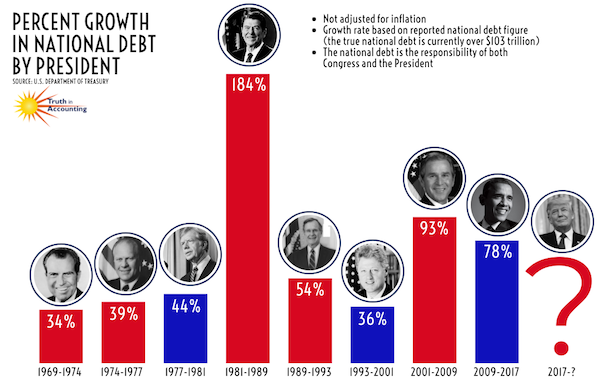
"For Christ’s sake, you people made me get rid of my peanut farm before you let me be president."
https://theonion.com/you-people-made-me-give-up-my-peanut-fa...
When I think about presidents in terms of what they did AFTER their presidential term, it makes me very sad that Jimmy Carter was not re-elected.
When he ran for prez he had lots & lots of great ideas. But IIRC the congressional seniority system was still in place, and when Carter got in, the Democratic-controlled Congress stonewalled him on basically everything. You know. "Politics as usual."
I remember a discussion in grad school in the mid-80s. Reaganite fever was the order of the day. I stated my belief that history would be kind to Jimmy Carter. Some people in the class openly laughed at this.
But we know now that Carter had some bad luck and that Reagan set the country on course for its current worship of ignorance, cruelty, corrupted "Christianity", and authoritarianism. Plus plenty of people lining their pockets.
Of course nowadays nobody mentions Reagan any more because the Cult of Reagan has been replaced by Führerprinzip.
Didn't do everything right as president, but a good man who mostly tried to do the right thing for Americans. Particularly exemplary since leaving the presidency.
The average U.S. person would be much better off today if he had won in 1980 instead of it being the beginning of deregulation and Reaganomics.
More deregulation passed under Carter than Reagan.
Carter’s deregulation was more market-oriented, though. Most of it (especially trucking and airlines) are still in place. Reagan’s were more “business-friendly” and resulted in various problems, especially in banking. The savings and loan crisis happened under his watch and we’re still dealing with a lot of the imbalances of financial deregulation.
Deregulation isn't automatically bad or good. Some regulations need to be removed, and some shouldn't be removed or should be added.
Reasonable take not allowed. Must be for or against so I know what ideological bucket to place you in based on current tribal alliances that may or may not change.
okay. Deregulations isn't a bad word in and of itself. What did he specifically deregulate?
Met him one time. About 20 years ago, boarding a Delta RJ to SLC. I got upgraded, row 1. I'm stowing my carry on in the bin. Guy in row 2 stands up, sticks out his hand towards me and says "Pleased to meet you, my name's Jimmy Carter". I think "sure you are dude" and "if you were the former president, that lady next to you would be Ros...wait...she IS Rosalynn...". He had been on a fly fishing trip. Deplaned before everyone else into SS vehicle on the apron. Nice guy.
Carter proved it's never too late to add a new chapter to your story if you're still alive.
He was much more influential as a diplomat after his presidency than during it. RIP.
I'd love to know what people think he could have done differently about the hostages. Bear in mind that he would have been as politically ruined by a parade of dead hostage bodies so any "go harder" proposal has its own risks. If only the choppers hadn't failed?
Iran knew it could wedge him and wait for the new president.
My dad worked for then-Governor Carter's administration.
The state of Georgia at that time was mostly rural. A small town that needs to expand their water supply would often lack the specialized staff required. Under Carter, the state created regional offices to assist with planning, grant writing, etc.
It was DevOps for local government.
Carter was quite willing to innovate.
If you didn't follow what Jimmy Carter did after his presidency, this short habitat for humanity vignette highlights it well - https://www.youtube.com/watch?v=ajWLdawnCPU (11 mins)
Hard for me to draw inspiration from that, at least compared to Al Gore. https://www.lesswrong.com/posts/3p3CYauiX8oLjmwRF/purchase-f...
As the CEO of Habitat for Humanity says in the video, it was for marketing, not the houses he literally built. "I don't think anyone would have hear of Habitat for Humanity If President and Mrs. Carter hadn't gotten on that bus in 1984" - They've since gone on to build over 800,000 homes - he could have easily not gotten behind them in such an earnest way year over year.
And the video has 16 upvotes on YouTube? Not that I wish it had more, because Habitat for Humanity might not be among the best major humanitarian charities. https://www.propublica.org/article/habitat-for-humanity-broo...
Sadly, things in the 80's tended to get few upvotes on YouTube. But Carter really was the real deal: https://en.wikipedia.org/wiki/Jimmy_%26_Rosalynn_Carter_Work...
> Habitat for Humanity might not be among the best major humanitarian charities
Habitat-NYC is an independent affiliate, with its own CEO and everything.
If I was running a charity like that, I would try to curate the main YouTube account and make it so practically everything gets at least hundreds of likes.
Believe it or not, things mattered before Youtube existed.
11 years old and I doubt HfH was spamming their channel with reactions, memes, and Crazy challenges (GONE SEXUAL!). A lot of the "good content" isn't as "watchable", sadly.
I am glad more and more well produced channels are starting to buck this trend though. They won't ever be Mr. Beast levels, but they amass a solid following.
2013 was a big year on YouTube, it was the year after Gangnam Style came out - the first YouTube video to reach a billion views. When I see old videos on there I often see a high upvote count.
Sure, but this is a channel that has 12k subs, in 2024. I can't imagine more than a few thousand subs in 2023.
And it's not a music video. 2013 was a big year but also when the algorithms went into overdrive on what you needed to do to drive engagement. The only thing this video didn't do "wrong" was be less than 5 minutes, which IIRC was the mini umum video length of that time to not be punished by the algorithm.
One of my strongest memories of my childhood is meeting Jimmy Carter on a commercial flight, coming back from a family trip to Disneyworld. He walked back through the coach section and greet everyone personally. I got to shake his hand. He was legitimately interested in what everyone had to say.
Even as a 8yr old, I understood how unique this was. He was a man of the people and fully dedicated his life to America. Probably the last president to do so; instead we committed to the path of unencumbered greed ala Reagan.
The model of a post-Presidency. RIP sir, go be with your wife now.
will go out on a limb here and say there will never be a US President like him - what a man, what a life! RIP
Lots of propaganda aimed at this man to undermine him. Still to this day people will say he was "a nice man" as a way to diminish his accomplishments and turn the conversation away from them.
His main achievement was and forever will be the Egypt/Israel peace agreement. This has lasted nearly 50 years, and the people who still have grievances will soon be dead in another few years.
look the peace is definitely an achievement and much much better than the alternative. But it's incredibly fragile peace held only the Egyptian Army control and Sisi's dictatorship.
Most of the population still despises Israel, another revolution in Egypt and its a matter of time until there is another war. Now with western equipment for both sides!
> But it's incredibly fragile peace
Sure, arguably it's because the treatment of the Palestinians.
Unfortunately the last Israeli leader that attempted peace with the Palestinians was assassinated by someone who wanted conflict.
For reference: https://en.wikipedia.org/wiki/Assassination_of_Yitzhak_Rabin
Carter was also an illustration of the advances made in cancer treatment.
His aggressive melanoma responded very well to immune therapy.
As a Brazilian I admire how some Americans here in the thread can say great things and passages about their presidents, regardless of the mistakes made and political party.
Democracies are never perfect but I strongly believe that having something to say about a president it’s a great sign of a health democracy and institution (in this case POTUS).
Or maybe it's less about the politics and more about plain old celebrity worship. This thread isn't really all that different from when the average well known actor or musician dies.
Best President US has seen in modern times, the campaign that unseated him bordered on treason.
Is there any book or article that expounds on this further?
Sick's book was quite good, even though it's clear we may never have all the information:
https://en.wikipedia.org/wiki/Gary_Sick
October Surprise: America's Hostages in Iran and the Election of Ronald Reagan
I have not done significant research, but the more I have read about Jimmy Carter the more I am convinced he is very underrated, and the more I read about Reagan the more I beleive he was a bad choice for the average U.S. citizen long-term (e.g. destroying the U.S. lead on climate tech, and creating policies that ultimately eroded the wealth of the middle class) Reagan was certainly charming, but I beleive he didn't have the integrity of Carter. While Reagan let dictators like Pinochet commit heinous human rights abuses so long as they were anti-communist, Carter put actual pressure on the regime and sought answers. I consider him a long-term thinking leader rather than your average short-term thinking politician. I think that history will end up being much kinder to Carter in hindsight.
I view both of them positively (unusual I suppose). Honestly compared to the poor presidents we’ve been getting in this century, the 20th makes me very jealous in retrospect.
The best 21st century presidents can barely do much, so are basically nothing burgers. Any policies they do pass are basically negated in 4 years. And the worst ones make me yearn for Regean. At least he pretended to care about the american people.
That was definitely the biggest change in 50 years. There seemed to be a lot more bipartisan support for things overall that would actually help the country. Now it's a pissing contest at the turn of the century. Good bills won't pass simply because of who's name is on the bill.
philisophically, it does a lot of reflections of what people vote for. The economy was bad under Reagan, Reagan fixed the short term at the "cost" of letting corporations slowly spiral out of control. By the time people notice this Reagan would be long out of office, possibly long dead.
Jimmy overall was thinking long term and made tough decisions that were unpopular. Leading to one of the biggest blowouts in decades at that point (one that has not yet been replicated since). The only surprise here is that Carter didn't become jaded and just live out his life peacefully on his own terms.
I hope you’re right, but there is an entire cottage industry dedicated to propping up Reagan’s legacy.
I was thinking longer-term history when those incentives have eroded. And of course these things are always easier to see in hindsight
As a former president I wonder why he voted for Harris and went as far to tell others that he did so, but didn’t officially endorse. Seemed strange. A vote is tacit approval no? Was he against endorsements in general? He endorsed Mondale and Clinton iirc
Regardless at least he wasn’t as divisive as 45.
RIP.
If you read the reports, those wishes were relayed by his family. The last time he was filmed a few months ago he didn't appear conscious.
Telling everyone you're going to vote for someone isn't an endorsement?
I consider an endorsement more of the rationale for why, personally.
I think telling everyone you wish to live long enough to vote for Kamala Harris is a pretty firm endorsement.
I also do not understand who gives a shit about endorsements?! there has never been an endorsement that swayed any election, freaking every person that has shaken a hand or been in the same room with DJT (not to mention every person that has ever worked with him including ones he handpicked for highest positions in his previous administration) endorsed Harris… the endorsement charade needs to stop in America, it is the one of the stupiest things there is
that was fake news.
He did very much dislike the alternative, though.
I like it when presidents leave office and assume a neutral position on the next election and politics in general.
Can you provide a link to the non-endorsement? I search google/bing/ddg and couldn't find any source for this claim that he didn't endorse her.
I was thinking about Jimmy Carter on election day. Carter told America the truth about itself and they overwhelmingly voted to get rid of him. Trump has given nothing but lies and hate and America handed him the White House on a silver platter. This country didn't deserve Carter. I hope he is with his wife now.
Yes told the truth about using less enegergy.... got kicked out
Carter did many lifetimes' worth of good service to others.
With his passing now, he'll just miss one of the fundamentally opposite administrations taking control.
I found this opinion piece or carter (also from the post) compelling: https://wapo.st/4gwS2JW
From the piece:
Carter helped restore trust in the presidency through ethics reforms more relevant today than ever before. He established the Senior Executive Service and insulated civil service workers against political pressure. He slowed the revolving door for departing officials and placed independent inspectors general in every department. The Office of Special Counsel originated with his legislation to investigate possible wrongdoing by high-level officials. And he extended ethical standards to the private sector through the Foreign Corrupt Practices Act, barring corporations from bribing foreign officials to obtain contracts. With Walter Mondale, he created the modern vice presidency as a fully engaged partnership.
That and his campaign slogan to not lie to people really highlighted his integrity.
Having not been born during his presidency, whenever I think of Jimmy Carter, I think of his appearance in Travels in Georgia [1], a John McPhee essay that's mostly about following a couple of workers for the Georgia Natural Areas council as they travel through and collect information about Natural Areas in the early 1970s. Jimmy Carter, then-governor, pops up at the end to be taken in a canoe down a river that the couple of workers want protected. Having basically nobody around to impress, Carter is nonetheless affable, open, curious, and generally good-hearted. The piece ends at the governor's mansion, like this:
A ball sat on the pavement. Before going in, we shot baskets for a while. "The river is just great," the Governor said, laying one in. "And it ought to be kept the way it is. It's almost heartbreaking to feel that the river is in danger of destruction. I guess I'll write a letter to all the landowners and say, 'If you'll use some self-restraint, it'll decrease the amount of legal restraint put on you in the future.' I don't think people want to incur the permanent wrath of the governor or the legislature."
"I've tried to talk to property owners," Carol said. "To get them to register their land with the Natural Areas Council. But they wouldn't even talk to me."
The Governor said, "To be blunt about it, Carol, why would they?"
The Governor had the ball and was dribbling in place, as if contemplating a property owner in front of him, one-on-one. He went to the basket, shot, and missed. Carol got the rebound and fed the ball to Sam. He shot. He missed, too.
[1] https://www.newyorker.com/magazine/1973/04/28/travels-in-geo...
Probably the best post-presidency legacy of any in my life time. Beyond that he was just a good human, he worked to better people's lives. After him, the only one that has done much is W and that's more in the wounded warrior arena. But that is small compared to Carter.
He was a great human being. We need more people like him, especially in government.
An example for many, sad to hear of his passing. Really quite an inspirational man.
Only US President to tell the truth about Israel's apartheid. https://www.youtube.com/shorts/y23V6PLTCMw
The historian Heather Cox Richardson has written a lengthy, generous account of his life and legacy:
https://heathercoxrichardson.substack.com/p/december-29-2024
As a non-USian who was young when he was president, he has always seemed to me to be a decent person who tried to do good with what he had, and understood the limits of his own ambition. We need more like him.
Carter, God bless him, was proof leadership is more than a title. He's proof you can have a positive impact on the world and not be a politician.
Carter sussed out a blueprint for future post-office presidents, but few have heard Jimmy's trumpets. For example, Obama. Obama could be doing great things, but he's too busy riding jet skis and schmoozing celebs, etc.
Carter's time in office might be questionable, but as a human he is legend; with an exceptional legacy.
Wow, just in time to make into this year’s https://deathlist.net count. Rest in peace, Jimmy.
One of the best year for the defiant and the least successful list since the last days of the H.W. Bush administration.
In 1980, Jimmy Carter's administration backed Chun Doo-hwan's military regime, giving tacit approval to the brutal Gwangju crackdown that resulted in the murder of thousands of civilians.
https://english.hani.co.kr/arti/english_edition/e_national/1...
Rest in Peace, one of the last good presidents of the US.
He was a terrible President. Fantastic human, but terrible commander in chief.
of the 45 commanders we have how many were not terrible then - like 5 maybe…? he certainly was neither a terrible President nor terrible commander in chief
Well RIP. I live near Gurugram, India, where a village is named after him. Old relatives used to tell stories about him, he was a simple man and a good human being.
RIP, although I’m sure his intentions were good, the majority of Iranians believe he is the catalyst that brought in the islamic regime and much of the misery in the middle east as a result. Millions displaced, millions more living under authoritarian regimes and war.
https://www.cfr.org/conference-calls/conversation-jimmy-cart...
Conversation, part of the Council on Foreign Relations' History Makers series.
From May of 2012, as the dateline's somewhat obscure there.
Carter was the only president to call Israel what it is, an apartheid state.[0] Rest in peace.
I was surprised to find an article about his death as the top article on espn.com. I mean, I know the death of a president is a big deal, but ESPN? That's some serious cultural influence.
I liked Jimmy Carter in retrospect, but he was no saint.
> Many in the United States were outraged by what they perceived to be an overly harsh sentence for Calley. Georgia's Governor, Jimmy Carter, future President of the United States, instituted American Fighting Man's Day, and asked Georgians to drive for a week with their lights on.
William Calley https://en.wikipedia.org/wiki/William_Calley
My Lai https://en.wikipedia.org/wiki/My_Lai_massacre
NYT piece from 1976 with quotes from Carter https://archive.is/yx1qs
My parents almost lost their house to a 19% mortgage after he was in office.
If you're thinking this was Carter's fault, well the same thing happened North of the border too.
History seems to be repeating right now as people frustrated with severe inflation are blaming their local governments and dumping incumbents, but the problem is world wide and it's not terribly clear that there are some poor decisions by local governments that are to blame.
Can someone explain what this has got to do with the OP?
This is the big reason he lost in such a landslide. The economy was awful. Good man, but a terrible president.
Even a president can't just snap their fingers and fix inflation overnight. We're going through the exact same thing right now.
it was a miracle enough that they brought down the crazy inflation from COVID and stopped another recession. It's a shame that it seemed like that remission reversed right before election season, though.
Carter created the inflation.
In the same way Biden created the inflation, yes. Never mind the huge event that happened 4-5 years prior.
The economy doesn't turn on a dime.
As president, Carter gave the green light for Doo-hwan Chun to use force against the pro-democracy protests in Gwangju, S Korea.
Later, sent to N Korea by president Clinton, he massively exceeded his authority and made a sweetheart deal that guaranteed N Korea would eventually build nukes. President Clinton found out about the deal on CNN with everyone else and never used Carter again.
He also sandbagged president Reagan by taking a trip to the Soviet Union and convincing the leaders there that Reagan was not serious about reducing or eliminating nuclear weapons. This set back progress on reducing nuclear weapons for several years. In the end, Reagan was finally able to get them back to the table and eliminated a class of nukes, reducing others.
None of that happened.
the first one is covered here
https://www.counterpunch.org/2016/01/11/jimmy-carters-blood-...
for more details you can also look at part 1
https://www.counterpunch.org/2015/08/18/jimmy-carters-blood-...
Yeah the gwangju massacre definitely happened, and he definitely authorized it because the troops who did it were under the command of John Adams Wickham.
The agreed framework would have prevented North Korean nukes, had the US actually honoured it. Instead bush tore it up when he came in to office, and then John Bolton fabricated the aluminium tubes hoax to justify it, which was later wheeled out to justify the Iraq war. Then they put north korea on the axis of evil so as to have a single non-muslim state there. All of that, but mostly the Iraq war is what led north korea to develop nukes.
And yeah, the deal was "no nukes (they shut down their nuclear reactor for 12 years unilaterally as a show of good faith) AND no long or medium range ballistic missiles in exchange for $1Bn and fuel oil for heating." Good luck getting that deal now :)
Jimmy Carter: https://en.wikipedia.org/wiki/Jimmy_Carter
Many analyses have since estimated the error of the projections they were conducting policy according to especially in the late 1970s.
"The Limits to Growth" (1971) https://en.wikipedia.org/wiki/The_Limits_to_Growth
Oil price shock (1973) https://en.wikipedia.org/wiki/1973_oil_crisis
Oil crisis (1979) https://en.wikipedia.org/wiki/1979_oil_crisis
"The Global 2000 Report to the President" (1980) https://en.wikipedia.org/wiki/The_Global_2000_Report_to_the_...
1980-: expensive international meddling we're still paying for, increased government spending , increased taxes on the middle class, oil governor, oil dci, vp, president
1992-: significant reprieve from costly meddling, globalization, soccer, fallout from arms dropped on the eastern bloc after the end of the cold war, not much development in batteries or renewables, dot-com boom, WorldCom, GLBA deregulation, dot-com crash
2000s: humvees, hummers and ~18 MPG SUVs, debt (war expensed to national debt, tax cuts), oil commodity price volatility given an international production rate agreement, crony capitalist bailouts to top off the starve the beast scorched earth debt, almost 20 years of war with countries initially engaged in the 1980s, trillions in spending, tax cuts
"The Limits to Growth" (2004) https://en.wikipedia.org/wiki/The_Limits_to_Growth :
> "Limits to Growth: The 30-Year Update" was published in 2004. The authors observed that "It is a sad fact that humanity has largely squandered the past 30 years in futile debates and well-intentioned, but halfhearted, responses to the global ecological challenge. We do not have another 30 years to dither. Much will have to change if the ongoing overshoot is not to be followed by collapse during the twenty-first century."
A couple of observations to give insight into the USA's political sentiment at the time:
1. In 1976, Ford carried California, Illinois, Virginia, and every western state except Texas. Carter carried Texas, Wisconsin, Ohio and almost all southern states including Florida.
2. When Carter won the country was still coming to terms with Vietnam, was completely dismayed by the Watergate scandal and subsequent pardon, was witnessing chaos in Iran, was living under the threat of mutually assured destruction, was experiencing rampant inflation, rising oil prices, a stagnant economy, and possessed a large group of rebellious baby-boomers kicking at the stalls but not quite ready-for-primetime.
The USA needed Jimmy Carter's southern sensibilities, humility, and values in order to take a deep breath.
Rest in Peace Mr. President. Well done in retrospect.
RIP.
I am fully convinced that Carter is a true statesman, not because he was a great president for 4 years, but because he was great for his entire life for everything.
Sadly, we stopped seeing American statesman like Carter (and Reagan, Nixon). Look at what we had in the past two decades, Clinton, Bush, Obama, Trump and Biden. You guys almost got Harris!
The trend also seems to be systematic, look at all those morons running the shows in EU, no wonder they couldn't beat Putin on their own.
The last moral president. Always trying to do the right thing.
The last 'left' Christian. A politician that actually followed the bible. To bad Christianity has been co-opted by gun toting crazies full of contradictions like wanting to kill mothers and save un-born babies, then after they are born, not provide health care to the babies, spout nonsense about 'the kids', but then take away school lunches.
Even way back. During the Iran Hostage Crisis. The Republican's were dealing with Iran to hold the hostage's to sway the election. Carter got smeared with that for decades.
"In the U.S., gun death rates in this age group have increased by 106 percent since 2013 and have been the leading cause of death among this group since 2020."
"There were 2,526 gun deaths in 2022 among 1- to 17-year-olds, averaging to nearly 7 per day."
https://publichealth.jhu.edu/2024/guns-remain-leading-cause-...
Of all the presidents I've seen in my lifetime, I think President Carter might be the only one who felt genuine and didn't exhibit narcissism.
I may be speaking out of turn here as somebody born in this century, but after reading the book The Man I Knew I have held a high regard for George H. W. Bush. He, like Carter, was a great human who really cared about others.
Again, for all I know, he could have presented himself differently during his term in office, but after his term was up, his life seems genuine to me.
in the last century, I think HW bush would get a solid top 3 placement (a bit hard to top FDR). He seemed to be one of the last conservative presidents that seemed to be trying to do the right things. And kicked out for doing so. No one likes it when "the right thing" raises their taxes.
Jimmy Carter feels very likely to be the last "normal person" who will ever be elected president. That doesn't absolve his presidency of mistakes obviously, but if you run through the list of presidents since him, the vibes point to that for me.
Normal people are not as humble and generous with their time as Carter.
> I think President Carter might be the only one who felt genuine and didn't exhibit narcissism.
He was the opposite of narcissistic, he was honest to a fault, telling the truth even when it was unflattering to his public image: he freely admitted - and without direct prompting - in a Playboy interview that he had looked at a lot of women (other than his wife) with lust[1].
1. WARNING - site is on a Playboy domain - you may not want to open this on a work computer or have any anti-NSFW mononitoring of your browser activity. https://www.playboy.com/read/playboy-interview-jimmy-carter/
I think our culture needs some general awareness and “antibodies” against Narcissism, and emotional manipulation in general. People seem generally unaware of, and as a result easily manipulated and controlled by people with these behaviors. I only became conscious of it after reading a book about communication where I learned how emotional manipulation worked- and then realized I was in a relationship with someone doing this to me, and had been completely oblivious for years.
Once I understood how it works, I can easily spot people including politicians using these quite simple manipulation techniques, and I feel quite stupid for not figuring it out on my own at a younger age.
What's the book?!
“When I say no I feel guilty” which is about assertive communication, which is essentially the opposite of emotionally manipulative communication. Also the blogger “The Last Psychiatrist” has good information on Narcissism.
> I think our culture needs some general awareness and “antibodies” against Narcissism, and emotional manipulation in general.
This would be diametrically opposed to American culture lol
You have seen many things in your lifetime, friend, from representatives of the genuine goodness of the US (Mr Carter, Mr Biden) to the corruption of the information society and the dismantlement of democratic principles.
Thank you Mr. Carter for a life of public service well lived.
Carter embraced Hamas. Enough said.
Carter deregulated the beer & airline industries
Good? It's so weird to see beer and airline industries in the same comparison.
he deregulated both
And now flying is the worst consumer experience of them all and Budweiser is made out of rice. Is this winning?
Flying is incredibly less expensive largely due to deregulation, and Budweiser has always been brewed with rice. So, yes, this is winning.
The deregulation, more specifically, was repealing Prohibitionist policies that kept microbreweries from operating. Now we have microbreweries everywhere, offering superior alternatives to Budweiser, some of which have grown to be national level competitors.
The US has the best selection of beer varieties of any country and flying is cheaper in absolute dollars than in the 70s
Part of me still wonders if those deregulations would have stopped Boeing, or if Boeing simply would have been sneakier.
Budweiser has been brewed with rice from the beginning, since 1876.
Good man. Last decent president they had I think.
And on the seventh day, he rested.
RIP, Fellow Lion Jimmy.-
Can someone explain whats going on in this pic of Bidens and Carters? https://apnews.com/article/jimmy-carter-government-and-polit...
Older people shrink and there's a bit of (unintentional?) forced perspective going on
A very wide angle lens.
God bless a good man
finally
I’ll be generous and assume you meant that he is finally at peace after enduring a long hospice and bearing the burden of having to live his final years without his beloved wife Rosalynn.
Wild that he outlived the people who wrote his obituaries.
F
He was a good person, but unfortunately his administration set a massive precedent in deregulation of private industries, and setup the foundation for neo-liberalism and Reagan/“trickle down” economics.
Why is this generic news article on hacker news. The guidelines clearly states anything you would probably find in regular National news probably shouldn't be on hacker news.
I want to get a break from the regular newscycle when going here.
I think the key word in the guidelines is “generally”. Exceptions seem to be made for the deaths of major figures, massively consequential events, etc.
The “hide” button was made for this situation IMO.
>anything you would probably find in regular National news
1. I guess we can finally ban all those AI posts, then. And any lawsuit annooucement/updates.
2. you missed a caveat:
>Most stories about politics, or crime, or sports, or celebrities, *unless they're evidence of some interesting new phenomenon*. Videos of pratfalls or disasters, or cute animal pictures. If they'd cover it on TV news, it's probably off-topic.
I'd say an ex-president's death, one who outlived several procedding presidents , is an interesting new phenomenon.
as a tangent: that makes trump not only the oldest president ever elected, but also the oldest living president. only barely edging out W. Bush and Clinton. Kind of crazy.
I wasn’t alive for Carter’s presidency, so can someone explain how his handling of the hostages in Iran was positive at all for the United States?
To me as an American even this many years later and as a young person who didn’t see it, ending your presidency while another nation holds your citizens seems extremely embarrassing.
And all I see is extreme praise of the man. I’d honestly like to see some discussion here.
You have to understand that the situation originated in 1953, when the elected prime minister of Iran was removed from office by the CIA after an attempt to nationalize assets owned by British Petroleum.
https://en.m.wikipedia.org/wiki/1953_Iranian_coup_d'%C3%A9ta...
This resulted in the Shah of Iran becoming more powerful, but was overthrown in 1978, when the hostages were taken.
It wasn’t positive. It was a terrible situation. Hard to think of what Carter could have done differently. Ultimately, the hostages were freed through negotiations.
The American security state has been broken for a long time, principally because it seems to perpetually turn in on itself and the citizenry, so without devolving deep into politics I would posit he was just the wrong guy at the wrong time with respect to this issue.
Of primary issue, who could do anything about it? You'd think the superpower would have an answer but there was none.
Eventually this leads to the formation of CT teams (Delta/ST6) and this boondoggle https://en.wikipedia.org/wiki/Operation_Eagle_Claw. Had the apparatus been ready for him, the security state might have been able to make a Zero Dark Thirty movie with his image playing a prominent role.
A real man would have gone to war and sacrificed the hostages. I’m sure the $200/barrel and gas shortages would have been patriotically acceped as every port and tanker in the Gulf burned.
Why does being alive in the 1970s qualify someone to speak intelligently on that subject?
If I live in a desert and 1000 children who have never seen the ocean tell me it’s ugly, should I believe them over the one older man who has actually seen it and says it’s beautiful?
First hand accounts are inherently more valuable than secondary ones. Failure to see that is frightening. Just because something gets echoed over and over doesn’t make it true.
And that’s exactly what I see. I see my generation saying how great Carter was while many of those in older generations than me seem to think otherwise. I’d like to say it’s strange, but actually it’s scary.
There was definitely a perception at the time that Carter wasn’t doing enough, but we can ask ourselves whether that perception was justified.
Creating that perception is part of the president’s job though. One of the president’s roles is as a figurehead and they set the tone for the country. Setting an overwhelmingly bad tone across an entire nation that was so bad I even know about despite being born after the man even was president is awful.
So yes I’d say depressing and embarrassing hundreds of millions of people probably had a negative effect on the nation.
I can see it on the older generation’s faces when they talk about Carter. It’s a sad face on otherwise cheerful people.
I’m not going to gaslight them into believing he was actually great and they just didn’t know it.
Yes. And Carter was an honest president. Which ended in his downfall. He was a bad president in the sense that he couldn't do proper PR with smokes and mirrors like every president afterwards.
It's kinda like saying that anyone who witnessed the Twin Towers collapse must have a more valuable and refined opinion on the War in Iraq
It can be one of many factors. Most of the criticism of Carter I hear from younger people is the same old "worst president ever, except for the Camp David Accords" trope I've been hearing for 40 years. None can ever explain why. On the other hand, Carter haters my age and older give detailed explanations of their distaste for him. (I'm not saying their explanations are sound, but they do give them.)