Measuring the impact of zoning on housing in a city
blog.jonathannolan.net> Planners do important work moulding how our cities grow.
Lost me at the first sentence. Let me fix it:
“Planners follow the flavour of the day while committing the same sins over and over, their failures recognizable only in retrospect once replaced with a new (also faulty) paradigm based on centralized planning. Despite their repeated failures, as an industry or field of study they show no contrition and continue to act as if they and only they know what’s best.”
I have personally been involved in a few planning and “traffic engineering” issues where I live. And although this comment is heavy on the sarcasm it is very reflective of my experience.
As a whole planning departments seem unable to defend decisions with relevant data and instead rely on indefensibly old manuals and standards. Some of which themselves use indefensible statistics- particularly traffic manuals (lets plan our roads based on a survey of a similar road in Atlanta in 1994!). Or worse municipalities follow each other in circles and trends.
This would all be fine if the downstream effects weren’t affecting investment with a floor of tens of millions dollars.
I don’t know what the answer is but Parking Reform, Strong Towns and Not Just Bikes are my north stars on this stuff. Do you have any others?
I am not actually intending to be sarcastic at all - I think the entire industry is morally bankrupt. I am a real estate developer (re-developer actually - specializing in heritage buildings and other complicated adaptive reuse projects), so I deal with planners, committees, official plans, zoning by-laws and the building code daily. It is painful to see indefensible requirements being thrust on projects - even those projects (like mine) that the municipality seems predisposed to desire (saving old buildings, intensifying the core, etc etc).
What’s worse, is to watch governments now rush to “fix” the mistakes that they are solely responsible for by punishing people - retroactively changing the rules - and costing average folk their savings. I refer to Canada specifically which made it so challenging to build housing for 40 years that we have a massive scarcity and housing crisis that is being “fixed” by taxing / fining people for having a second home.
> by taxing / fining people for having a second home.
I don't see the issue with this? The profits in Canadian real estate are not on the back of some new found resource. It's entirely an effective wealth redistribution from have-nots to haves.
If you have property, the vast amount of value in it is strictly from the fact that it is artificially scarce. To get into the "haves" you have to pay an artificial tax in the form of a grossly inflated price.
> I don't see the issue with this?
Consider the incentives the government has created here.
You can't build new housing, or it's extremely expensive because it's limited to specific lots and then you have to buy out whatever happens to be there even if they don't want to sell, and destroy a 5 story building in order to build a 10 story building, doubling costs while halving the increase in housing. Housing is thereby expensive.
So you tax people who own housing. Well, that doesn't lower rents, because there are still the same number of people who need somewhere to live but now fewer people to invest in new construction because it's less profitable with more of the money going to taxes, so that lowers supply even more and rents increase to cover the new taxes.
This an undersupply problem. You don't fix it by taxing suppliers.
> This an undersupply problem.
Every time I go looking for statistics to back this argument, I come away underwhelmed. In most cases I see little change in the ratio of dwellings to households over the past few decades.
Take a look at the first figure (HM1.1.1) in the following document - particularly those for the US, Canada, Australia, and NZ (all countries with prominent housing issues).
https://www.oecd.org/els/family/HM1-1-Housing-stock-and-cons...
On the other hand, I think there is a strong argument to be made for increasing underutilisation of housing (more second homes, short term rentals, etc).
> Take a look at the first figure (HM1.1.1) in the following document - particularly those for the US, Canada, Australia, and NZ (all countries with prominent housing issues).
These are country-wide numbers. The obvious problem is that there is existing housing in Detroit but demand for housing in San Francisco.
It's also somewhat self-defining. If millennials are forced to live with their parents because they can't afford their own home then this is counted as one "household" when there is demand for two.
> On the other hand, I think there is a strong argument to be made for increasing underutilisation of housing (more second homes, short term rentals, etc).
There isn't anything inherently wrong with short-term rentals or second homes, they're just another type of housing demand that requires supply to increase to compensate. Until it isn't allowed to.
Taxing people who own multiple homes and taxing people who own apartment complexes are two completely different things and shouldn't be conflated.
You do realize that if someone can avoid the tax by renting it out then they'll just rent it out to a friend for a nominal amount to avoid the tax?
I'm talking about the size of the building. An actual apartment complex. I'm not even sure renting homes in general is a good idea. Let the market figure it out for someone who wants/can afford to own it.
> I'm not even sure renting homes in general is a good idea.
Let's review the situation here. 1) The large majority of the land in the area is zoned exclusively for single-family homes. 2) Some people don't have the money to buy, e.g. no down payment or bad credit.
Where are they supposed to live?
If people (corporations) can't own infinity homes, the price of owning a home goes down.
That doesn't follow at all. If you reduce investment then you reduce production. The price only goes down if the cost of creating more of them goes down, unless you can remove so much of the demand that you no longer need to add more supply. The small percentage of single-family homes owned by corporations isn't that.
Nah. There's 30 homes and 30 people. 10 people own two homes apiece that they live in 50% of the time. That leaves 10 homes for the other 20 people to fight over, driving the price up. Pretty simple.
Your assumption here is that the number of homes is fixed and that there are otherwise enough for everybody.
Only ~5% of homes are second homes, not 33% as in your example.
Now suppose there are 25 homes and 30 families, better reflecting current reality. If you can't make more you're screwed. But you can create new housing. Zoning makes this expensive, because zoning requires it to be done in an expensive way. You have to destroy a large building to build an even larger one because multi-unit buildings aren't allowed where there are currently single-family homes. But you can do it. It just costs $600,000/unit as a result.
Since there are more families than existing homes, everybody bids up the price of housing units because they don't want to be homeless. When the prices hit $600,000/unit, construction companies build more units because now it's finally profitable. Then all the units stay that expensive because there are only just enough -- or not enough, but the remaining people don't have $600,000. But they don't go higher than that because that's the price at which more can be created under existing zoning rules.
If Richie Rich comes along and buys two second homes, that doesn't raise the long-term price, because the price is right at the threshold of profitability for new construction. So two new units get built at that price and the market price stays where it is -- at the cost of creating more units. If you want units to cost less, that cost has to go down, because units can't be added for less than that and eliminating 100% of second homes is not enough of a reduction in demand to shift from that being the price-setting factor.
Whereas if you could build new units for $200,000 then Richie Rich could buy a hundred of them and they'd still cost $200,000 because construction companies would just build a hundred more.
I'm pretty sure you lose a lot of tax advantages on rental properties (mortgage interest deduction, depreciation etc.) if you don't rent them at market rate.
If they rent it for a nominal amount, they're effectively losing money on the property and gambling on appreciation. If someone wants to do that, good luck to them.
You can't deduct depreciation on an owner-occupied house to begin with. The premise is that you're trying to distinguish between landlords and people who have a second home for themselves. But they can just rent it to a friend who in turn lets them use it.
If they're buying multiple homes to rent out at market rates to the general public then they're just an ordinary landlord -- the thing that wouldn't be paying a tax on "second homes" by design.
I thought the tax on "second homes" was a tax on landlording and speculation, not a tax on vacation homes. I think we might just be talking past each other here.
Why would taxing landlords reduce housing costs? It just increases housing costs for landlords, and in turn renters, as landlords become unwilling to pay for new construction until rents increase to cover the tax.
If landlords become unwilling to pay for new construction, that reduces the demand for new housing supply hitting the market. Which reduces its price and makes it more affordable to owner-occupants.
I don't know if it definitely works. But it's plausible. Tax what you want less of, right?
> If landlords become unwilling to pay for new construction, that reduces the demand for new housing supply hitting the market. Which reduces its price and makes it more affordable to owner-occupants.
Construction occurs until the point that it stops being profitable, which is a price point more than a number of units. Zoning rules make it so you have to buy a 5-story building, then knock it down and pay the cost to build a 10-story building in order to add 5-stories worth of units. That's much more expensive than putting a 5-story building where there is currently a single-family home or an empty lot, which is prohibited. So if landlords stop being willing to pay for that, it doesn't cost less, it just happens less, because at any lower price the construction doesn't happen.
Which is how rents increase. Suppose 100 new units would have been built and landlords would have bought half. They stop buying, so construction companies only build 50 new units because there are only 50 buyers at a profitable price. Then demand for rental properties increases over time but supply of rental units doesn't, so rents go up. Then the landlords start commissioning new units again, because rents have increased enough to make it profitable again, but only for as long as they stay that high. The price of the building stays the same -- it's set by the construction cost -- but the rents go up because the landlord has to recover the cost of the building and the tax, or they're not commissioning a new building.
> Tax what you want less of, right?
The trouble is you don't really want fewer rental units, unless you like high rents. What you want is maybe more owner-occupied units, but this is only a trade off when supply is artificially constrained -- otherwise you can build more of both, which is obviously better.
Whereas building fewer rental units without building any more owner-occupied units is quite useless.
The owner of a second home isn't a supplier though, they're a hoarder
But how are you proposing to distinguish them? It's all too easy to rent out a property on paper.
No, no, the government interjecting themselves into housing and creating an artificial scarcity, to aid their favoured voters at the time, is the problem. The idea that the solution to this is not to have the government step back but to have them become even more involved by redistributing this wealth distortion to their new favoured voters is a further level of madness.
This is my point above 100%. The government has been the sole source of these problems and now is desperate to solve them, steamrolling people without compensation.
The same, in my opinion, with inflation. Inflation has been caused by government monetary policy being too loose for three decades and effectively neutering its anti-competition authorities, but now they are getting tough on grocers as if the grocers are both the sole cause of the problem (false!) and that they made the problem in a vacuum (false!).
I have historically been extremely liberal, voting Liberal or NDP (even more liberal than the Liberals for those outside Canada) my whole life. The last few years of seeing our Liberal government fumble the ball so badly and point at everyone but the government itself (left and right governments of the current and past!) has made me realize the truth of the Reagan quote “government isn’t the solution to your problems, it is the source of your problems”.
Hayek’s Nobel speech on the pretence of knowledge is as accurate as ever.
The grossly inflated price comes from where though? I'd put it to you that a ban on usury where real estate was concerned would crush land values over night. Easy money (cheap loans) allow speculation, and speculation is one of the primary drivers of land value.
A far bigger driver of speculation is scarcity. Without that scarcity, loans would do nothing to drive land value.
Tight zoning is the primary driver of real estate value, because it further increases the scarcity of land. It makes small homes worth absolutely insane values.
Further, though eliminating cheap loans will limit the amount that people can pay for the real estate, it also reduces the ability of people to pay, so every person is back to the same place with scarcity. So though eliminating loans may change the face value of the cost of housing, in real terms, eliminating loans does nothing for ordinary's people ability to obtain housing where they want it. Only increasing supply by removing overly restrictive zoning will actually improve the material conditions for people.
All that said, we should definitely eliminate financial products in the US like the 30 year fixed rate mortgage, a government creation that does inflate prices, while reducing the ability of people to move. But we should get rid of it primarily because it reduces the ability of people to move by trapping them into the home they were in when mortgage rates were low.
What you call usury is also a government caused problem. It’s almost like 30+ year amortizations and ultra low interest rates… weren’t good for affordability. But now everyone but the government itself is the cause of this issue (in the government’s humble opinion). Blame immigrants, developers, AirBNB, investors… anyone but government! And if you must blame government, blame some other level of government!
Tbh, I think you nailed it. Policy largely drives the system in a law avoiding society.
What is your opinion on the recent SCOTUS decisions declaring that forcing developers to pay for community improvements qualifies as a taking? Do you see this having a material effect on housing development?
I am Canadian so haven’t followed this decision, but I 100% support banning municipal governments from funding pet projects with fees on developers. It’s a major component of any project’s cost structure and absolutely flows through to the end buyer or renter. Landlords aren’t just absorbing these costs because the demand for housing exceeds the supply so house buyers/renters are price takers and ultimately shoulder the tax/fee.
Worse, the fees reduce new construction, thus limiting supply and raising rents on existing units. It's bad public policy regardless of its legality.
Do you have a link to a summary? I missed it, if it ever made the front page news.
IANAdeveloper… if a developer is otherwise within code/zoning, SCOTUS is probably correct. If they’re asking for zoning changes, there should be room for negotiation on nearby improvements.
> If they’re asking for zoning changes, there should be room for negotiation on nearby improvements.
The problem is that in many areas (of Canada at least), zoning bylaws are horribly outdated and inconsistent with municipal priorities. But municipalities don’t have an incentive to change them because if they allow things to be done “as of right” with modern zoning, they can’t shake down developers to fund their pet projects. So everything is a negotiation, which again adds uncertainty and cost.
Governments need to get out of the way and let developers build, or accept that they are the source of the housing scarcity.
The takings clause was ratified in 1791. Unless the current zoning restrictions predate that, there is an element of cheating to imposing a restriction and then "negotiating" to remove it in exchange for something that would otherwise be a taking.
News article about it: https://www.cbsnews.com/sanfrancisco/news/supreme-court-ruli...
This is the ruling, thanks.
Any profession whose communities disagree on the very building blocks of their discipline is not a science, but an art. Urban planning, architecture and economics toe that line.
Over the last century, economics has build some of the necessary concensus to move closer to a science and architecture has moved closer to art + compliance, leaving the rest to civil engineers.
But global urban planning communities remain at each other's throats, and if anything, have diverged even further.
Traffic engineering is a joke because Uber and Google Maps run better traffic simulations than any planning committee in the country. The science has been available to those who want to find it. It's avoidance by planning groups (not blaming the engineers so much as the overall organization) evokes the incompetence/malice comparison from Hanlons razor.
The Urban planning outcomes of the anglophone vs the rest of the 1st world might as well be spitting in each other's faces. Given similar policy goals, cultural values and weather....one of them is wrong.
And I know I have placed my bets.
> I don’t know what the answer is but Parking Reform, Strong Towns and Not Just Bikes are my north stars on this stuff. Do you have any others?
I think you might like this planning talk given in the 90s. One of my favourite videos on youtube and quite hilarious at times:
The Lively & Liveable Neighbourhoods that are Illegal in Most of North America : https://www.youtube.com/watch?v=bnKIVX968PQ
The Suburbs Are Bleeding America Dry | Climate Town (feat. Not Just Bikes) : https://www.youtube.com/watch?v=SfsCniN7Nsc
In my experience, local planners usually try to do what’s right/best/useful. And then end up hamstrung by state law or state DOT. I’m in Fairfax County, VA FWIW.
I’ve seen them be quite proactive with plans near the Metro extension. But then VDOT does dumb shit like failing to build out multi-modal transit to meet the vision of the local planners.
What's your preferred solution? Laissez-faire development?
I think some of the discussion in this book - written by a former planner - is pretty sensible around what we should be doing:
https://islandpress.org/books/arbitrary-lines#desc
By getting planners out of some of the unnecessary minutiae of their jobs, they can, well, actually plan for things. Ensure that we have good street grids, land set aside for parks and schools that are harder to retrofit into a pure 'anything goes' system, and also try to do some planning to keep genuinely noxious uses away from where people live, rather than "keeping apartments away from the 'nice' neighborhoods".
Whatever Tokyo is doing is nice. I liked it. Mixed use is fantastic.
Yes. I think the canonical fear that there would be nuclear power plants next to daycares is nonsense and that private developers acting in their own interests would manage to identify market demand, experiment in fulfilling that demand, and the result would be the creation from the ground up of best practices for creating vibrant communities - until market preferences shift. And when those preferences shift I think private developers would be far quicker to adapt than central planners.
I find it wild how much the west abhors eastern communist central planning and then adopts it for the very fabric of its communities.
I personally tried to build more housing, I tried to buy 5 acres and build 5 homes on them. 5 acres could have easily held 5 large homes with big yards.
The city zoning board denied me, saying that that 5-acre plot had been zoned for ONE house and an ADU of no larger than 300 sqft.
That was when I realized why housing is so expensive.
In this case, it may not have just been that 5 acres was enough "room" for five houses. It gets into questions of building infrastructure for those houses -- sewers, water rights, etc. One development of 5 houses might not move the needle on that, but it then opens the door to neighbors doing the same thing, which could very much require major investment in infrastructure for the area.
> One development of 5 houses might not move the needle on that, but it then opens the door to neighbors doing the same thing, which could very much require major investment in infrastructure for the area.
But then there is a corresponding increase in property tax revenues to pay for it, so this should require no approval and just be something that happens. The city pays for the new infrastructure from the taxes paid by the new people using it.
> But then there is a corresponding increase in property tax revenues to pay for it, so this should require no approval and just be something that happens. The city pays for the new infrastructure from the taxes paid by the new people using it.
This is a conjecture that as far as I know does not match what actually happens, which is that the new infrastructure is paid by debt, and the 4 new taxpayers will not have paid off the debt before the infrastructure needs replacement, paid for by more debt.
If it was 600 new units rather than 4, maybe it works out that the corresponding taxes pay for the infrastructure, but property taxes just aren't high enough, and the people who live in these boondoggle houses aren't wealthy enough to pay the taxes for the infrastructure their houses need
> This is a conjecture that as far as I know does not match what actually happens, which is that the new infrastructure is paid by debt, and the 4 new taxpayers will not have paid off the debt before the infrastructure needs replacement, paid for by more debt.
If four taxpayers aren't paying the amount of taxes required to fund the infrastructure needed by four taxpayers then your city is already bankrupt and zoning and planning is irrelevant.
> If it was 600 new units rather than 4
If it was literally only 4 units then you shouldn't need any new infrastructure anyway. Nothing should be operating with margins that thin to begin with.
If it's 4 units here, 4 units there then it adds up to hundreds which is the thing you admit isn't a problem.
So the city has to build a new $50 million dollar sewage treatment plant in the hopes of getting that paid back over 50 years of property taxes, and gets no say in the matter or the cities budget? Sewage treatment plants have finite capacity, can't be built on a 'serves 20 units' incremental scale, and oftentimes new plants have much stricter requirements than grandfathered in one. Not everywhere is the bay area where they can scale up by just piping it out a few miles into the ocean and call it good.
> Not everywhere is the bay area where they can scale up by just piping it out a few miles into the ocean and call it good.
At least in the San Jose area, the sewage treatment was largely built 50 years ago, when it was doing a lot of agriculture, and flows are way lower with people than they were with food processing and other industrial processing. The new plant that's in progress needs and has way less capacity, even though the standards are much much much tighter.
At the one house per acre level though, you can likely manage with septic, which is incremental sewage treatment capacity, and not a huge municipal undertaking (there is record keeping and regulation and what not, so it's not nothing)
> So the city has to build a new $50 million dollar sewage treatment plant in the hopes of getting that paid back over 50 years of property taxes, and gets no say in the matter or the cities budget?
Precisely.
> Sewage treatment plants have finite capacity, can't be built on a 'serves 20 units' incremental scale
Nor would they need to be. If your sewage treatment plant has a capacity for 100,000 units and you have 99,981 existing units, you already need a new sewage treatment plant regardless of where you put the new units, unless your plan is to never approve any new construction anywhere in the city, which is manifestly unreasonable.
> and oftentimes new plants have much stricter requirements than grandfathered in one.
And whose doing is that?
How were any houses built at all originally? Surely there were no sewers once upon a time.
People used to live next to cemeteries and drink well water.
Yes, they also got very sick from doing this.
How were any houses originally built?
Well, sometimes they were just built.
It's a good thing we've learned a few things since then. Not that city planning is perfect. Far from it. But it certainly does serve a purpose.
Used to be that an acre of land generally had enough space for a proper septic tank and drain field. But I think in some places it is a little higher now. Depends a lot on local geography of course.
It depends on the area. In Michigan, for example, the area here is mostly swampland, houses with no infrastructure have to build their own. Usually that means running new power lines, and figuring out well water and septic. Septic is trickier than it seems, you need to have enough space for a leech field large enough to drain properly, it needs to flow properly (away from your home, away from your own well) and soil absorption has to be high enough (and the water line low enough) to handle it all. Having a lot of land isn't enough on it's own, it has to have enough natural drainage to be able to handle itself and anything you need to seep into it.
For example, you might have an acre of land, but if too much of the soil underneath is clay, or if the water table is too high, the wastewater might not drain fast enough, so it sits and stagnates or mixes with freshwater, despite having "lots of land". You generally need a surveyor to produce and sign off on a Topographical Survey to assess that.
So yeah, "there were no sewers once upon a time", sure. But if you try to build suburban-like densities out here without a solid plan signed off, you are likely to end up piping your own sewage right into your own water taps.
It seems like that's the method to build his 5 houses then, rather than denying it. It seems unlikely that the present number of houses is the precise optimal number.
I've looked at something similar. The path is to split the plot first via your county (or whatever) and then build.
Correct, but the zoning board people outright told me they would deny the request to split the lot because it had already been zoned as “single family”.
Strange, and frustrating sounding - 1a each is plenty to leave the resulting plots as conformant single family housing.
Where I'm at, our least dense zone is 1 unit per 2.5 acres. If the lot was almost, but not quite 5 acres, it couldn't be split without a variance.
In theory, the state requires the city to allow for 2x population growth, and the zoning process directs where the growth should happen. In practice, the city pushes back so hard on everything, that the growth is going to happen wherever whoever has patience and money to spend on fighting the council wants to build. Everyone else is going to be frustrated by the long process of back and forth on pulling permits over many years and many dollars that actually the city won't let you do whatever you wanted to do anyway.
Where are you? Generally you can petition for re-zoning, as long as your lot is urban enough to have proper power/water/sewer infrastructure, and meets the hypothetically split requirements. (They allow it maybe ~90% of the time here in Michigan)
Yeah usually they want you to build one house on one plot. Not build a compound. If you want to build 5 houses, you subdivide.
I'm not a real estate developer, and even I assumed OP was subdividing (and mentions that in another comment). Why would you assume otherwise? I also assumed that the zoning authority said, "nope, minimum 5 acre lot size", which is common. There is, after all, the possibility that someone actually knows what they're doing when they go before the zoning board.
Where he says "that 5-acre plot had been zoned for ONE house"
Would love if this could be built into a website that could analyze the distortions on any city automatically. probably a lot of issues getting an normalizing the data though.
> Giving up some aesthetic control means creating a city much more like Tokyo where building heights differ markedly even on lots next door to each other.
I've lived a ridiculous number of major USA cities and I'll never forget what Houston, which is the only one I can think of that had no zoning, looked like.
https://www.chron.com/news/houston-texas/houston/article/Wei...
Here is a good article on Tokyo zoning: https://urbankchoze.blogspot.com/2014/04/japanese-zoning.htm...
You'll notice that the model is additive instead of exclusionary. Basically if a block is zoned light commercial, you can put stores, apartments, or single family homes on it. Here is a nice chart https://1.bp.blogspot.com/-Lweabho82d0/U0HCJsQ3tbI/AAAAAAAAA...
Tokyo does zoning right, and the simplest first step to solve housing problems that plague major American cities is to just adopt a model of zoning that is proven to work.
> 1- Zoning is a *national law*, not a municipal by-law
A national zoning law is very interesting.
My biggest complaint about every city in TX I lived in (Houston, Austin, SATX, Dallas) was the lack of MDUs (among other things) causing them all to be painfully sparse. I lived in the densest neighborhoods I could find, usually Uptown or with Austin right off Guad by UT and 5th/Comal and my life now living in Denver which has a HUGE amount of MDUs/Duplexes/etc everywhere is so drastically different even though Denver has nowhere near the population of those. I haven't driven my car in months and nearly everyone I know lives in a 1-10 block radius.
What was my previous mountain view from my 4 story townhouse is now an 11 story office building directly behind me that glares down at my patio, though, so there's that. I think it's coming with 400-1000 car parking spots (underground garage).
We've been trying to get this (currently) low-traffic, low-mph throughfare street to completely ban car traffic and be turned into pedestrian/restaurant walking only, which it was during COVID and was wonderful, so that's probably dead in the water now.
The main thing you actually want from zoning is to separate noxious/industrial uses from everything else. Houston is weird if it doesn't even do that. None of that other stuff is a problem. Living in a single-family home next to an office tower isn't any worse than living in a condo tower next to an office tower. People just aren't used to it because it's prohibited nearly anywhere else.
> Living in a single-family home next to an office tower isn't any worse than living in a condo tower next to an office tower.
By the way, this is very common in many Latin American countries such as Colombia. When you walk through these neighborhoods it's at first a bit odd because you're not used to seeing single family homes next to towers (coming from the US at least). But then you realize it's totally fine and the neighborhoods are in many cases really really nice.
I feel like one partial solution for NIMBY brain is travelling to cities in other countries and seeing things are different and realizing that it's actually totally fine.
> I feel like one partial solution for NIMBY brain is travelling to cities in other countries and seeing things are different and realizing that it's actually totally fine.
I'd be surprised. Plenty of people would be horrified at the idea of living in a detached home next to a skyscraper.
That's sort of my point though. It's easy to be "horrified" by things in the abstract. But then you actually visit Bogota, Colombia or Buenos Aires, Argentina and go through these neighborhoods and realize they're actually really nice despite being different to what you're used to.
Would they be equally horrified at living in a skyscraper next to a skyscraper?
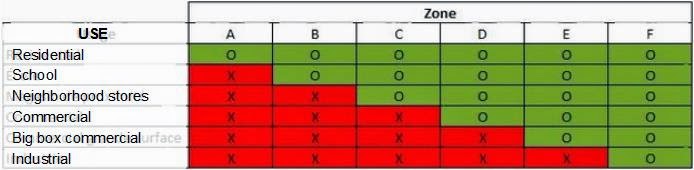
Now do the major cities in Canada and U.S.
Would love to see San Francisco