Proposal on implementing permanent time zones in the European Union
timeuse.barcelonaThis almost feels like a false flag of proposing the most disruptive plan possible such that it couldn't possibly be approved, haha.
Splitting & re-groupings are almost arbitrary and have no consideration for politics, business and culture.
Ireland & N. Ireland in different TZ? France & Corsica in different TZ? Pushing Ireland & Portugal into their own TZ and calling it Azores time? Bringing UK into alignment with Spain/France/Belgium/Netherlands, but pushing Germany/Italy/Switzerland into alignment with Eastern Europe countries but out of alignment with Western Europe?
A 2 step process by which some countries change TZ twice? Would love to write the code for that mess.
On Ireland, our biggest business partner in Europe is still the UK.
I don’t think we’ll be clambering to add friction to business with Northern Ireland and Britain so we can hang out with Portugal and Iceland.
Such European parochialism! Next you’ll be talking about how traveling more than 900 meters is an epic adventure.
Trust me. You can deal with 3 hour time difference without even noticing.
Look, a couple of hundred thousand people commute across the border on the island of Ireland and there's huge cultural issues around basically everything. The Republic of Ireland would never be in a different timezone to the UK as long as part of the UK is on the island of Ireland. It's just not going to happen.
That may be, but don’t call a neighboring time zone “friction”.
I grew up next to Indiana, a state notorious for screwing up their time. (Scroll down to “History” and each decade for past 70 years.)
Yeah it was a big shock to me when I crossed that timezone between Chicago and Indiana.
Look, it's a cultural thing. The reason that we have peace on the island is due to constructive ambiguity. Half the population can pretend they're Irish, the other half can pretend they're British. Anything that makes that more difficult is not a runner.
Trust me. A 3 hour time difference could be the greatest ever efficency hack that would 10x the majority of your workforce performance (10x's stack for your 10x employees as well).
The page does explicitly call out Ireland and Northern Ireland as an issue with the first draft of the map. This feels to me like the part of the process where you stand up a proposal to get refinement, since large deliberative bodies are rarely able to create such a proposal from scratch.
Duh, just put all Europe in UTC.
This but unironically.
(Actually don't, this is what china does and it's not a very good time (hah.))
I too would also love maintaining servers where the time changes according to some convoluted approach that no one really understands.
Sec becomes really, really easy. No one can access it at all!
We (Europe) shouldn't fragment time zones that much. We (NL) should stay on permanent summer time.
Reasons
- criminality is lower when there's longer light
- earlier darkness leads to more accidents. It's better to have longer darkness after the masses are RESTED (in the morning), opposed to when they're TIRED (in the evening)
- longer day-time for office workers, is more productive
- shorter time of year that has long after noon darkness. As humans are using artificial light to stay up longer, it's better to align the time of day with that
I live in Italy and I also want a permanent summer time: for the way we live it's far more valuable to have light in the evening than in the morning. Actually, I'd get double summer time March to October or at least April to September.
I know that we could just change our culture and habits and move everything we use to do one hour back, but that has an inertia that will make it impossible.
> We (NL) should stay on permanent summer time.
> Reasons
> ...
Why not just have time as close to solar as possible and move working hours as needed? I have always found arguments for permanent summer time very confusing. Just move working hours as needed, why do you need to deviate the entire clock from the solar time for that?
Because we no longer live in a pre-industrial society where people start work with the sunrise and go to bed at sunset, because the only available artificial light is candles. For the vast majority of people, noon is not the middle of the day.
So what does "noon" even mean? Why is it significant?
Maybe fix that? Make solar noon the middle of the day. Then clock can show any number.
Because many people for some reason don't strongly value the derivative of the solar inclination being zero and a local maximum within at most slightly over 30 minutes[1] of an analogue watch having the hands both vertical, on the few days a year that the equation of time is zero.
[1] Because the equation of time might not be exactly zero at noon, the Earth isn't a perfect ovoid and you could be up to 7.5 degrees of longitude from the centre of an hour-wide timezone, even if you drew them perfectly straight down the globe with no regards to national borders.
Because it's easier to adjust the clock than to get employers to adjust schedules and to adjust public transit etc. accordingly.
Public transit suffers from coinciding schedules: when all people rush at the same hour same minute, they create rush hour.
Interesting perspective. I'd like to use that and say that we should have solar noon in the middle of our "awake" hours instead of in the middle of our work hours. This would benefit even more. We're not in a society where your activities are from dawn to dusk, more so, it's usually from dawn to dusk+evening time.
So, let's take the assumption that the average awake time is 7:00 - 22:00. Gives us 15 hours of awake time.
Solar noon should be at 7:00 + half of the awake time: 7 + 15/2 = 14.5 = 14:30
To calculate sunrise on the longest day and shortest day we use: 14.5 - half of light time
To calculate sunset on the longest day and shortest day we use: 14.5 + half of light time
This means sunrise and sunset in Amsterdam:
summer, longest day, 16:48, 16,8 hours:
- sunrise: 14.5 - 16.8/2 = 6.1 = 6:06
- sunset: 14.5 + 16.8/2 = 22.9 = 22:54
winter, shortest day, 7:41, 7.683 hours:
- sunrise: 14.5 - 7.683/2 = 10.6585 = 10:40
- sunset: 14.5 + 7.683/2 = 18.3415 = 18:20
Given this reasoning, instead of being GMT+1, Amsterdam should be GMT+3 all year round
It's basically a coordination problem. Workplaces, schools, stores...
How do you expect stores to coordinate? If they worked during work hours, what's the point? People work during work hours, they don't go to stores. To solve this stores work around the clock or until 21 hour.
I don't. That's the whole point. Many/most stores, schools, companies, etc. are open about the same hours year-round. To the degree that people prefer those hours shifted relative to the sun at different times of the year, using DST provides that coordination at the cost of everyone having to change their clocks (or having a computer do it for them) twice a year.
> It's better to have longer darkness after the masses are RESTED (in the morning), opposed to when they're TIRED (in the evening)
Speak for yourself! I am definitely sleepier in the morning, and definitely feel less safe driving in the morning.
I prefer summer time, because I almost never wake up before dawn, but for most people, I think DST is actually the best. You generally want people to wake up at around sunrise. It means we could adjust office hours to sunrise, say, work starts 1h30 after sunrise and ends 10h after sunrise. Nice, but it would be a mess. Instead we are using clocks, but the problem becomes that during winter, you will wake up and even sometimes start to work at night, something that most people dislike, and during the summer, morning daylight is lost to sleep. So, how to fix the problem? DST of course. It is an approximation, but it means that as a whole, our lives more closely match the sun cycles.
So that's my opinion, keep the DST. It is added complexity compared to no DST, but we have been doing that for decades, we know how to deal with it. And while many people want to abolish DST, about half want winter time, the other half want summer time, there is no consensus, so we might as well keep DST.
Driving early in the morning (when compared to equal-darkness in the evening) has the extra risk factor of frost and ice, which both obscures vision and reduces grip. Those factors definitely contribute to accidents.
Criminals can't distinguish between 8PM and 9PM light because they don't operate on an hourly schedule
Potential victims sure do.
> criminality is lower when there's longer light
I just don't understand how anyone can think changing the clock creates more light. If that were true wouldn't everyone change their clocks, and by more than an hour?
All your arguments are just about people starting and finishing work earlier. It's so annoying that it has to be "change the clocks" instead of just "why don't we just start at 8 and finish at 4?"
Permanent summer time is fine for me too in Greece. The linked proposal of moving Greece to CET is a joke anyhow since even now in December in central Greece you have already twilight at 7am which is fine and more useful than having it at 6am and in the Summer without DST sunrise would be too early for any real use while the weather and culture (don’t forget that) makes more use of the sun light in the evening
> We (NL) should stay on permanent summer time.
I think the easiest way to permanently switch to UTC+1:00 will be to first try UTC+2:00 for a year; few people are going to accept only seeing the first rays of the sun at around 9:50 in winter.
I live in the Midwest and everyone I know would MUCH rather have light until 9pm than darkness at 4pm. Get up for work, it's dark. Finish work and get home. It's been dark for an hour. It's incredibly depressing. Everyone is at work at 9:50am, who cares whether it's light outside or not?
Summer time makes plenty of sense as-is, especially at fairly extreme latitudes like the Netherlands. Pithily stated, it is about keeping the wall-clock time (meaning the clock everyone looks at, the Schelling point in a society-wide coördination game) approximately aligned with sunrise/dawn. That way you always have sunlight in the morning, but the sun never rises too early making you lose sunlight in the evening.
> ...opposed to when they're TIRED (in the evening)
Morning darkness is way more dangerous. You don't want to have dark mornings when people are in a rush, commuting to work.
Morning darkness is unavoidable during winter unless you start working at 10 or so.
Unless you do what the Greeks did. https://en.wikipedia.org/wiki/Hour#History:
“Instead of dividing the time between one midnight and the next into 24 equal hours, they divided the time from sunrise to sunset into 12 "seasonal hours" (their actual duration depending on season), and the time from sunset to the next sunrise again in 12 "seasonal hours".”
I think that can work reasonably well close to the equator, but in Athens, the ‘hour’ already would vary from about 47 minutes to about 73 minutes. Feels too large for me for such a system to work, but that may be because I’m too accustomed to the current system.
And of course, going further North, the difference becomes very large.
Because of that, I think it wouldn’t work in large parts of the world in a society that has artificial light.
There also ‘may’ be some complications to making that change, though (would hourly wages still work, for example?)
> “Instead of dividing the time between one midnight and the next into 24 equal hours, they divided the time from sunrise to sunset into 12 "seasonal hours" (their actual duration depending on season), and the time from sunset to the next sunrise again in 12 "seasonal hours".”
It would be interesting to try this in the modern era. Though to do this really well you should probably vary the duration of the hour smoothly throughout the day (with no overly jarring shift at sunrise or sunset), so the difference would be felt quite extremely around noon and midnight whereas the hours around sunrise and sunset (6AM and 6PM with perhaps half an hour of dawn and twilight respectively in non-polar latitudes) would be close to normal.
"permanent summer time" yes, and have you checked how does that look like in winter, right?
It would mean a sunrise at 9h30 (given today's sunset/sunrise times)
Better than sunset at 4:30pm.
you're lucky, it is 3:30pm in Finland. Dusk at 3pm. Up north it is even worse, although they've got the Borealis and usually snow.
One element in timezone decisions is that kids should make the trip to school in daylight. But that is futile in Finland. Today's sunrise in Helsinki (very south) is nearly 9 o'clock.
Just checked my weather app and yup, sun rises at ~10am and sets ~2pm here in northern Finland
A bit difficult to fulfill that sunlight exposure every morning.
Winter and latitude, not longitude should of course guide the selection. Dublin today, Nov 30th, marks the start of the 6 week period where daylight is less than 8 hours, IMHO only wintertime (UTC) makes sense here. Oddly IST, Irish Standard Time and legal time, is UTC+0100. Sticking with IST all year round means 10:00 sunrise in late December for the north-western most parts of the country (Belmullet, for example).
Luckily most people have finally tired of this endless whinery and realized that summertime really isn’t a big deal and we have bigger fish to fry.
Counter argument: we need blue light from the morning sun to wake up properly.
Mobile phones, computer screens and LED lighting solved this problem.
Not actually supported by the science, which shows that the misalignment with our circadian rhythms is the most important consideration. Permanent standard time is the optimal scenario, and the one our bodies and minds are optimized ofor.
> criminality is lower when there's longer light
Correlation is not causation
What do you believe the causation is then?
If light isn't what impacts it, then it seems like the summer should have more crime than winter. Kids are out of school and there is no snow and cold.
(1) abolishing daylight savings time is great and should have been done years ago.
(2) the proposed time zones are really impractical, not necessarily in principle, but in their specific implementation. Germany-Netherlands in different time zones is strange, Dublin and Belfast in different time zones is stupid, Athens and Crete in different time zones is absurd.
I agree.
National borders is quite possibly one of the worst ways to do time zones. At least in the US time zone borders were specifically chosen to run through areas of low population, so you would minimize the number of people doing, say, living in France but working in Geneva one hour ahead.
Also it's kind of odd that Ireland and Portugal are in their own little time zone, when it probably makes more sense to just sync up with all their other neighbors.
Ireland and Portugal already are together in this time zone, but the UK is with them, which makes good friday sense.
Map of Timezones: https://upload.wikimedia.org/wikipedia/commons/8/88/World_Ti...
It would make sense to have Portgual and Ireland in the Western Europe time zone. They are right over the border from UTC but it makes sense to include them with neighbors. Especialy when they are currently in UTC. It is Spain and France that need to move.
For what it's worth, Spain and France were on GMT (as it was back then) before World War II.
(Technically French law referred to the time as "Paris mean time, retarded by 9 minutes and 21 seconds" - they had thought the Prime Meridian ought to run through Paris rather than London and were sore about losing that.)
Poor Yukon, skipping 2 time zones
Oh interesting.
Admittedly that map is a bit difficult to read as a colorblind person.
I wonder if with a plan like this, the borders would get adjusted a little bit so that the French suburbs of Geneva would follow Swiss time. You see things like this in the US, where for example the Indiana suburbs of Chicago follow Chicago time.
I share your opinion re: Ireland and Portugal. This is like, for example, in the US setting Maine to be in its own time zone.
But Spain being on CET is absurd too. They basically run on GMT anyway, it just shows a later time on the clock (that's partly why Spanish people eat dinner really late).
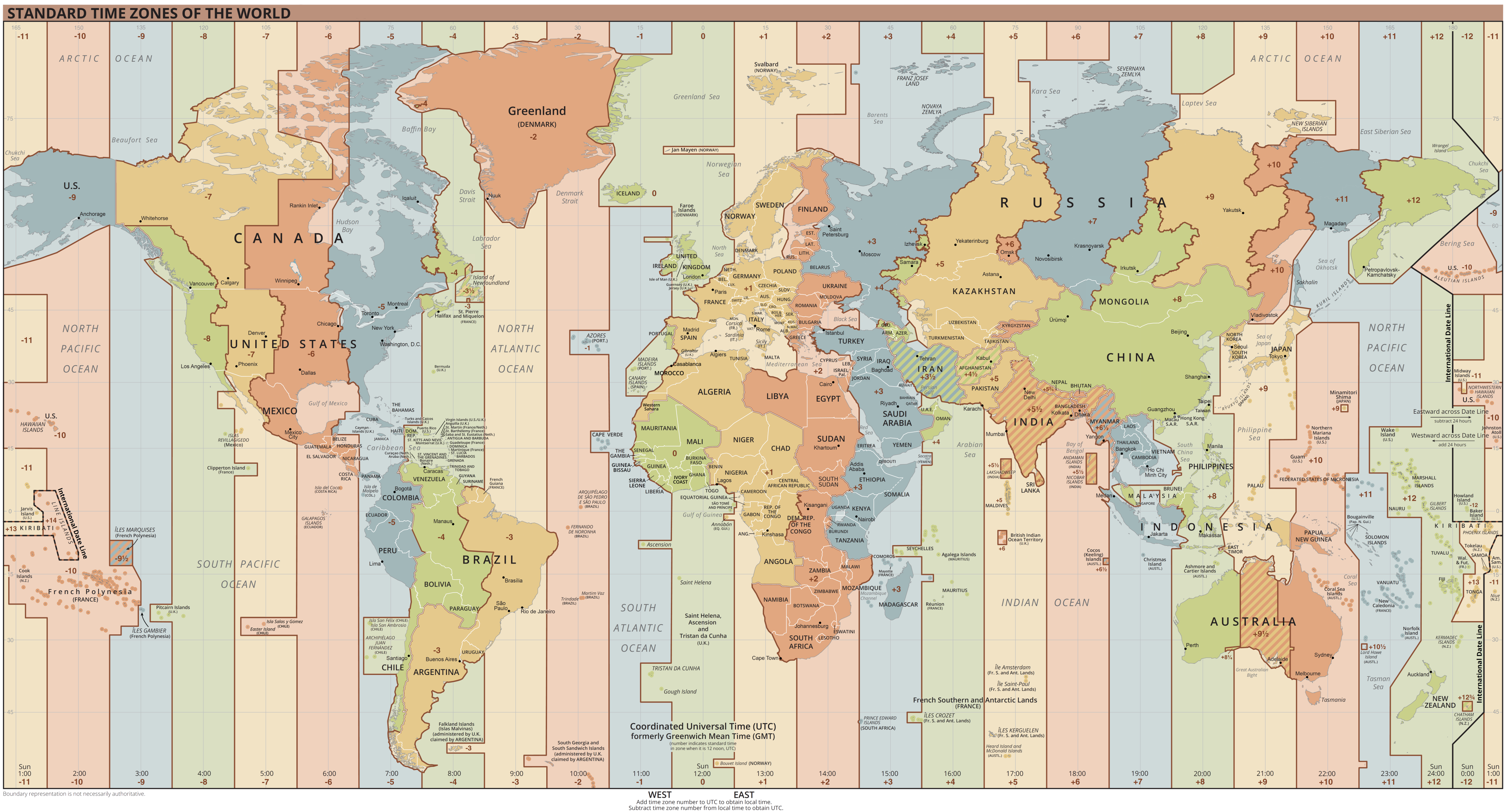
Putting Northern Ireland and the Republic of Ireland (AKA Ireland) on different timezones strikes me as political suicide for anyone proposing it.
But otherwise I am warm to the proposal. Some tweaks would make it more practical/politically acceptable (keep Portugal and Ireland on the Western Time Zone, don't split up Greece from the islands).
Yes, that's completely absurd. Ireland is more likely to leave the EU than accept timezone partition.
Nonsense. Ireland will never leave the EU. They more likely to accept a time zone difference than leave the EU. They wanted membership desperately in the early 60s but had to wait a decade partly because de Galle hated the Brits. They couldn’t join quick enough.
Are you aware of the accession path Ireland took and why it was linked to UK accession?
Ireland has the highest level of pro-EU sentiment in the bloc and it is still more likely that we will leave than accept a timezone partition with the North. It's not in question. Failure to understand this is a complete failure to understand the country.
I am. What’s your point ?
I know Ireland likes the riches that come with EU membership. They don’t want to return to being a poor country.
It would be a time zone difference, not a partition. Let’s not used such loaded language.
Edit: is the USA “partitioned” or any less united because of multiple timezones?
> I am. What’s your point ?
Then you know that Northern Ireland was a more important issue than EU membership and that remains true. Hence all the hoops jumped through for the Northern Irish Agreement after Brexit.
> I know Ireland likes the riches that come with EU membership. They don’t want to return to being a poor country.
What you're suggesting is risking descent into civil war.
> It would be a time zone difference, not a partition. Let’s not used such loaded language.
If you don't know why I'm using the term partition and why it would be the term immediately applied to this idea, you don't know enough to how know how little you understand this issue.
You condescension is off the scales.
Anyway, in this wild hypothetical, if you left the EU over a time zone difference, it would be funny to watch from just over the other side of the British Isles. It would be almost as ridiculous as Brexit
> You condescension is off the scales.
The irony is palpable.
Loaded language is _entirely_ appropriate when you're talking about a frozen war (which, let's be clear, is what we are talking about here).
The US would definitely be more efficient with fewer timezones. Really we should find a way to remove at least one between the 2 coasts. United, no, but the US is not the EU. America is united by default, Europe divided.
The number of timezones is pretty irrelevant. It's that there is a 3 hour time difference between the East Coast and the West Coast. (And an 8-9 hour time difference between the West Coast and Europe.) But the only real way to deal with that is to shift Pacific Time to Mountain Time.
I can't see how my message wasn't clear enough. This is exactly what I meant. Did you think I was suggesting to remove a timezone without adjusting the remaining ones to reduce the time difference between the coasts?
Not even one of the signatory experts is from UK/Ireland.
They could be completely clueless of what dynamite they are playing with.
Yeah, but given they seem to be proposing that the UK change from its current natural position, to what would be permanent BST, it seems daft. (It would help if they'd included the UTC offsets with their diagram)
I'd suggest that ain't going to happen, especially as the UK is no longer a member of the EU, and so this will be ignored.
As I recall part of the issue with the previous time this was proposed was that the UK intended to continuing observing Summer Time in the summer, and hence it would cause issues for Ireland if it had to stop switching.
I guess we can only wait and see...
>Yeah, but given they seem to be proposing that the UK change from its current natural position, to what would be permanent BST, it seems daft.
They're not, though? The UK would be on UTC/GMT rather than BST.
Same with corsica an hour ahead of continental France. This is idiotic.
All attempts to optimize society by changing time zones and adjusting for daylight savings time time should be abandoned. Let society set the schedule after a static time. With this I mean ordinary time zones and the same time throughout the year. Which approximately should correspond with the sun at its highest at noon.
If someone prefers brighter mornings and darker afternoons, and someone else the opposite, the solution is easy. Adapt your life to follow that. Don't expect the time to suit you, it is keeping track over the sun's trajectory over the sky, not your life.
> the solution is easy. Adapt your life to follow that
Those pesky employers are such traditionalists, though.
My employer might be flexible, but I am sure my daughter's school wouldn't let me just pick when her bus picks her up and drops her off.
I agree with this in principle but I also acknowledge that in practice it's not so easy. Changing the "official" local time means that every interaction is changed in a coordinated way. Otherwise you have times specified in contracts (eg. employment contracts), official school timetable hours, rush hour train schedules and a million other things that have settled together so that they coordinate, that is a huge social challenge to adapt in a coordinated way without huge disruption while that happens.
Yes, but I think that only makes sense when it is obvious that a very large part of society benefits of that way. I don't think that benefit is sufficiently clear, some people prefer one way, and others another. Then society should not interfer.
Honestly I would prefer to go even further - UTC for the entire planet, no offsets. Unfortunately I know most people won't go for that...
I don't see how that solves the problem.
When you travel (or call) somewhere new, instead of consulting a timezone map to set your watch or know if it's safe to call someone, you'll consult a guide to local "time equivalents" and set your expectations based on that. "Let's see, it's 08:00UTC now and my time guide says locals at that location usually each lunch around 17:00UTC, so if I call Bob there now, it's the middle of the night for him"
My ideal world would have no timezones and be entirely Anglophone (English is not my first language, so I'm not even biased in that regard). This is probably an extremely controversial take, considering how much interesting culture and history would be wiped out, but the thought makes me feel warm and fuzzy inside.
> Honestly I would prefer to go even further - UTC for the entire planet, no offsets.
The use of "tomorrow" and "yesterday" will be confusing in parts of the world where at 24/00 o'clock it isn't night. Convincing people will be difficult.
But for just the the EU it would work nicely.
That actually is a good point I hadn't considered; I think it would still make enough sense in the local context ("tomorrow" is "the next time most of us will wake up"), but yeah, it adds a lot of confusion for short term relative terms...
I could maybe argue "well, 'yesterday' and 'tomorrow' aren't very precise anyway - you need the entire context of the conversation to understand what they're referring to", but they're well established and understood... Darn.
Why not go just one step further and adopt Swatch Internet Time? I mean if we’re just going to go the mass upheaval route, we might as well ride that train as far as it will go.
Let's take it to its logical end: Unix time for the whole planet.
I'd rather go all the way, decimal time and dates. Liberté, Egalité, Fraternité
I see Monsieur prefers a bloodier revolution.
This!
It really seems the simplest way to go. But I guess because of history it's hard for people to conceptualize how it would work. (Outside of HNers that is)
From the Who We Are page of the site
> The Time Use Initiative (TUI) is the main non-profit organisation promoting the right to time all over the world. Its main objective is to encourage public discussion on how we collectively organise our time, seen as a way to improve citizen’s well-being through innovative time policies.
So this is not a proposal from an EU department, but it's a proposal to the EU. For sure they "encourage public discussion" as the comments here on HN demonstrate.
It is, however, endorsed by some EU department and a bunch of other entities (see bottom)
The only organisation related to the EU is the European Economic and Social Committee, which is[1]: a consultative body of the European Union (EU) established in 1958. It is an advisory assembly composed of "social partners", namely: employers (employers' organisations), employees (trade unions) and representatives of various other interests. ...ok? This does not strike me as a particularly important institution.
Some -- not all -- of the other cosigning entities are ridiculous. One of them (Normalzeit Leben) is literally the title of one person's blog where they talk about their struggles with DST.
[1] https://en.wikipedia.org/wiki/European_Economic_and_Social_C...
also, was it some formal declaration by this body, or just someone with an email address from the organization?
doubtless, the irish representatives wouldn't support any divergence between Dublin and Belfast, (especially considering this is wrong from a spatial perspective as population density is heavily skewed to the east of the island).
edit: i was curious enough to email all of the irish delegates to this organisation. some fairly heavy hitters, as a citizen with a keen interest in Dublin & Belfast being in the same timezone will be interesting to hear back!
This sucks, not only will Greece not stay on summer time, we'll actually go to one hour back from winter time? So not only will we not get one more hour of daylight in the evening (ie stay on summer time), we'll actually get one hour less than we have now?
That's terrible.
Also, the Greek islands will have a different timezone from the Greek mainland? This must be a joke.
That must be an error, there's no way.
Same with Portugal, moving to Açores time seems bad, specially for working with the rest of Europe.
Portugal is already an hour behind the rest of Europe.
1 hour behind central, now would be 2 hours.
"central" today being both France and Germany — according to the proposal would be 2 hours behind Germany but still same 1hr behind France.
It's a proposal not a law
After placing all of Europe on permanent winter time, going by the image provided, this proposal seeks to split Ireland's time zone from the UK's and place it a further hour earlier, thereby ensuring that the sun will begin setting at 2:30PM, and it will be pitch black out at 3:30PM in the winter, all in the name of achieving "permanent time zones as close as possible to solar time (natural time) in Europe."
Well done.
>"permanent time zones as close as possible to solar time (natural time) in Europe."
It doesn't even do that for most people in Ireland, according to its own map! As it appears to be based on land mass without regard to population density, the majority of the population would most naturally be in the Western European Time Zone, but they'd be pushed into the Azores Time Zone. A government in Dublin is not going to agree to a time zone change that wouldn't make sense for Dublin, and that's even ignoring the extreme political problems and potential violence and unrest involved with Ireland and Northern Ireland being in different time zones.
For that matter, Greece is understandably not going to agree to any change in time zones that results in a map where its islands that Turkey disputes are changed to be the same colour as Turkey, rather than Greece. Neither is Cyprus. It would be a bit like asking either the government of Taiwan to start using simplified characters, or the PRC to start using traditional characters, and simply saying that it would make language support on computers simpler.
I would support a reasonable proposal to end DST and have more natural time zones. But it has to at least consider factors other than just land masses and solar time, or it will never be a viable proposal. Their "full document" and "justification" doesn't include any discussion of the political ramifications or of population densities. They don't appear to give any justification of their specific country-level recommendations at all.
Exactly. This proposal is absolutely soul-crushing for most people. Having extended daylight hours when people are actually awake in the evening is critical for positive mental health.
Studies show that you want those daylight hours to morning less depressions and sleeping problems.
Are you following that we're talking absorbing a 2:30PM dusk to achieve this? That's worse than northern Finland. It's absurd and foolish. Those studies are failing to take northern latitudes' extreme swings into account when trying to legislate timezones...from Barcelona.
This is extremely at odds with what I actually want: longer evenings.
I live in Europe. As far as I remember, the proposal to abolish DST was already voted in the European parliament some time before the COVID pandemic, and the next steps were for the countries to chose their time zones and implement the change. Then the pandemic happened and this was put on hold.
Probably, there is also some analysis paralysis: it is just hard to chose between keeping the winter or the summer time. Just look at this thread: morning birds cannot agree with night owls, someone leaving a bit to the west disagrees with those leaving in the east of the same country...
I wish we'd just settle on any choice. At this point I care much less about "winter vs summer time", more about abolishing DST itself. Twice a year I have a small jet lag for nothing.
I’ve said this before and I’ll say it again: switching to UTC+0:30 will put a large number of countries in a common time zone without them deviating from their solar time too much.
And make converting time between different time zones/countries even more confusing.
India manages to deal with a fractional offset from UTC, as well as several other countries. It’s really not that big a deal.
That makes me wonder of the little adaptions they need, that we Minute-Zero-ians ;) don't notice... do many Indian desktops have world clocks, for example?
I just had a look through https://en.wikipedia.org/wiki/List_of_UTC_offsets, because I thought it was just India and some obscure little islands - but some fairly substantial countries (Iran, Afghanistan, Nepal, Myanmar, Sri Lanka) also have non-whole-hour time zones.
Regular people dont't have world clocks. Only people who need to care about this do.
and that 30 minute offset makes quick mental timezone math doubly hard and error prone. What is the benefit of merging timezones?
The EU is big enough and the CPU in your watch is fast enough that it won’t matter.
> CPU in your watch
I'm much more concerned about the one in my head.
But more work for programmers
As if DST isn't enough work - it messes up the linearity of time.
tzdata is a thing
I'm good for a 30 minute shift either way if we can forever stop talking about this.
I really like the extra hour of sunshine in the Summer time, I would miss it.
And to think this proposal would even take away an extra hour on top of that... Yikes.
Has someone calculated the optimal unique timezone for the EU given population distribution and the goal to minimize the sum product of number of people and solar time difference?
You can get a quick and dirty answer by assuming all of each country's population is at its center of population.
Centers of population of each country: https://cs.baylor.edu/~hamerly/software/europe_population_we...
Country populations: https://en.wikipedia.org/wiki/Member_state_of_the_European_U...
If I've done the math correctly (and this was very quick and dirty) you get something like +0:40 / 10 degrees E, roughly the longitude of Hamburg or Milan. Ultimately there's gridded population data that could be used to get a better answer but I suspect it's in this neighborhood.
This is a very special troll post, and I am all for this troll.
It’s not a troll post, I’m very serious: UTC+0:30 corresponds to the solar time at the geographical midpoint of the continental EU. The advantages are legion.
Non hour time zones are an abomination
Time zones are arbitrary and the result of a historical accident. If the standardisation of timekeeping were to have happened in Amsterdam (not unlikely seeing the history of telescope development[0]) the issue would have been moot as UTC would be what is now UTC+0:19:32.13.
15 degrees an hour is not arbitrary.
It’s an astronomical fact
HN, please explain why everyone is so upset with having a time offset in the city/region/country next door.
In Germany, there are 16 states. Many of them have different laws, e.g. regarding store hours and so on. Neighboring countrys like Austria or Poland have even more conservative laws.
The difference between sunrise and sunset in Palermo and Oslo is almost 90 minutes twice a year.
There are tons of cultural differences between Europeans. In southern countries, people tend to stay up later in the evening and sleep longer in the morning than in northern countries (at least that is my impression from traveling).
In the continental United States, there are four time zones, none of which even pay much attention to state borders.
Still, everyone manages to live their lives, talk to people on the phone, commute from one place to the other.
So why are Europeans so afraid that the people they talk to might be an hour or two off?
I find it kind of absurd that people claim that clock alignment has negative impact on their health. Studies show that but:
You do it only twice per year. But how often do you stay late up because of an event or whatever. And how often do you travel to another time zone, sometimes even >6 hours.
I think the latter effects outweigh the health impact of clock alignment significantly.
> You do it only twice per year
Your body has six months to get used to an hour difference, so it sets in nicely, for maximum impact 6 months later.
> But how often do you stay late up because of an event or whatever
Personally, not often at all, but I get the point. The time you're supposed to wake up doesn't change though, and that's what makes the difference.
> And how often do you travel to another time zone, sometimes even >6 hours
I can count how many times I've done that in my life on one hand, and I'm sure I'm not alone in Europe.
> I think the latter effects outweigh the health impact of clock alignment significantly.
Have to disagree. Like I said it's to do with having a set hour you're _supposed_ to wake up. Meal times are another big factor.
- Clock alignment has a negative impact on health for some people
- Waking up before sunrise has a negative impact on health for some people
- Going to sleep before (or just after) sunset has a negative impact on health for some people
We do not all have the same sleep cycles. Early birds and night owls are a real thing, and any solution will be an improvement for some, and a degradation for others. Health-wise, I think the best solution would be to abolish office hours. Don't look at the clock, look at the sun, and let people work at different times. Of course, economically, it would be a mess.
So yeah, no good solution, only compromises. The most we can ask for is fairness. I don't know what is the most fair, but I think the current situation (with DST) is close, as it is what people have settled with.
You find it absurd because you’re one of those people for whom the change isn’t hard. It’s hard for a good percentage of the population (like me). Please just stop messing with my clock!
Also just ask any parents of young children for a vocal opinion. Feel free to mess with the clock every other century or so, but not twice a year.
Especially because people only focus on the one time that the clock takes sleep. Certainly, studies show that heart attacks rise that day.
But also during the year, you gain an hour of sleep. Studies show that heart attacks fall that day. People always discount this one.
If you move Spain to UTC+0, then it would finally line up with Portugal. Why move Portugal over even further? It's accurate enough.
Ha why “Azores time zone” including Ireland and Iceland when the Azores are miles away. “Atlantic time zone” seems to make more sense.
In the Americas, "Atlantic time zone" refers to the time zone 1 hour before Eastern. Presumably Azores time is meant to avoid confusion with existing Atlantic time.
Also, Azores Time Zone is the existing name of the time zone.
This proposes that The Netherlands switch to WEST/UTC. There is already no clear consensus on whether to stay on permanent summertime (+2) vs wintertime (+1), and I would expect the switch to UTC to be even more challenging to adopt. Interestingly we switched from Amsterdam time (+0:20) to Berlin time (+1) during WW2, so going to +0 would mean a much earlier noon. Additionally policymakers have been saying to favour keeping the time with our major export market (Germany) in sync, so that wouldn’t fly with this proposal. Personally I don’t care that much for what offset is chosen, as long as we abolish DST.
I do like the idea of being in UTC and not having to worry about this timezone nonsense between my computer and any server application.
Unfortunately I've moved from the Netherlands to Germany and my family, a few longitudinal kilometers away, would have to do timezone gymnastics when we talk about any sort of plans, so needless to say, from my personal point of view I fully agree with you that NL and DE being in different timezones, instead of the sea being the timezone separator as it is today, is bonkers
> I do like the idea of being in UTC and not having to worry about this timezone nonsense between my computer and any server application.
It's an automatic watch. You do not have to worry about it. Communicate UTC timestamps with timezones between computers, but don't make people use those "because it's easier to program."
Japan Standard Time is funny: very early in the morning you have bright light, and you are in the darkness at 4pm in winter. But it’s the "Land of the Rising Sun" after all, so it makes sense.
I also want permanent summer time. Winter is so depressive when it's dark at 15:30 already.
We need a two-tier schedule for businesses and institutions. Summer time and winter time. So, when authorities switch from CEST to CET or viceversa and clocks are adjusted an hour, schedules are inverted to leave things as they were according to the Sun.
So if after the switch you are supposed to start an hour earlier, you just start one hour later, thus starting at the same time according to the sun.
This might sound crazy but the craziness of making people switch clocks is evil and cruel
The debate here shows why we'll be stuck forever with the status quo: It's a topic that can be endlessly bikeshedded, everyone has an opinion, and there are a million incompatible proposals (each with drawbacks that will make some groups strongly oppose them).
Meanwhile, I bet most even don't understand the effect of DST (minimizing how much the clock-time of sunrise varies, at the cost of increasing how much the clock-time of sunset varies, https://coolinfographics.com/blog/2012/11/6/daylight-savings...)
That line putting the whole Benelux, France, and Spain on one side of the divide (Western European Time) and Germany, Switzerland, and Italy on the other (Central European Time) makes this proposal just about dead in the water.
Central European Time in Benelux, France and Spain is basically Hitler time, see
https://news.ycombinator.com/item?id=38478402
If people would become aware of that the proposal might have more chances.
It's not a secret or anything. People won't care that the German occupation had anything to do with it, because before that Amsterdam Time ran 19 minutes and 32.13 seconds ahead of Greenwich! No one wants to go back to a timezone like that in the twenty first century.
Hitler actually did us a favour on that front.
This actually kinda sucks. I like not changing clocks. But I'm not happy about moving the timezones around.
I'm in The Netherlands and after this Germany will be in a different time zone than me. That's not cool.
I'm in the Netherlands too, and I can't understand this sentiment. You're the second commenter to say this. Explain?
I'd put Portugal and Ireland in the western zone.
Surely just getting rid of summertime would have most of the benefits without moving countries current time zones?
Serious question, why not adopt one timezone globally? For some of us sunrise would happen at 10pm, for others on 4pm. So what? Wouldn't we just get used to it? Is there any rationale for anchoring start of the day between 4am-8am?
Then you just need to implement a global system of determining how people's activities are aligned locally. What you end up with is timezones by another name.
Timezones are a lot less of a problem now that we are using calendar apps to book events. Better integration of tools to negotiate availability would make that even easier.
The problem that people largely govern their activities by the rotation of the earth and we are in different places on that globe doesn't go away.
But why I need to come up with system similar to timezones? You translate all hours once and that's it, no? It might be weird at first have business hours from 9pm to 3am, but those are just numbers. I don't find it any more weird than starting a day at 6am.
It’s not about local time. It is about a way to find out when someone at a distance is active and available. You need some method to know that. Timezones are such a method.
You would still need to remember to not call your buddy in LA at your "8am" when in NYC. Now you need to take into account what a 9-to-5 translates to for all parts of the world. Solves nothing.
It actually solves a lot, and I contact people on all continents multiple times per day. Currently when you want to schedule a meeting with a person in another timezone you need to do a bit of very confusing math (it's simple addition and subtraction, but one-off errors are rampant) and translate their time to yours. Most of the time both parties try to do it and it gets confusing. Lots of "your time or my time" questions. With universal time you both work with the same clock.
You're right. Let's completely change how humanity has done it for centuries so you and your friends don't spend 32sec looking up "current time in X" 2 or 3 times a day.
You would still need to do the effort of understanding what 10pm means for the other party. 10pm may be your lunchtime while it's the middle of the night for them.
Don't think people have been having calls across continents for centuries. Just 100 years ago the vast majority of the population would never have encountered another time zone.
You still have to know a bit about your buddy, though. You can probably assume he'll be awake at his midday, but what about 7:00? Is he an early riser? Or does he have other commitments at that time? In reality you'll just learn you can call around 16:00 your time. At that point it's just a number and doesn't matter what it is.
If things really were more complicated and you always needed to ask the question of "when can I call today", would it really be that difficult to incorporate schedules into contact records so your phone can tell you "available after 23 today".
Those schedules are just timezones in disguise
Sort of, but not really. I know what time is convenient to call my parents and they live in the same time zone as me. I don't work it out every time based on what the "normal" schedule is. And that's not to mention who actually calls people randomly over text now anyway?
>I want to call my Uncle Steve in Melbourne. What time is it there?
With timezones: google "what time is it in melbourne"
Without timezones: google "when morning starts in melbourne"
Didn't convince me a little
Yeah, sunrise/sunset can differ widely even in the same timezone.
I think a lot it comes down to pride. Nobody wants to be the country that works 23-7. We all want the "nice" numbers the UK picked for itself.
Well, I might be weird but I have zero problem with it. I also would happily learn a new language if the world would agree on universal one.
No I imagine not as mid day and midnight have meaning and that changes them from roughly 12 and 12
Midday and midnight should be based only on the sun. Midday is when the sun is at the highest and midnight is half way between middays. Whether midday corresponds with 12ish on the clock or any other time doesn't really matter. The point of your parent comment is people would just get used to midday being around 18ish or work starting at 03:00 etc.
Apart from the specific location issues highlighted in the comments here, the entire site can be summed up to "everything is better, just trust us". Zero arguments for any claim. Terrible.
Indeed, there is none. There is a FAQ though, but it is not supportive of any advantage. It just contains a handful of "But won't it ..." with rather shallow dismissals, but nothing to show an advantage of the proposed change.
And it contains "debatable" statements, such as "For most people, it is not a problem to sleep beyond sunrise." That's not my experience, and they don't offer evidence. It's followed by a worse one: "Having to get up an hour earlier due to DST the next morning, unable to finish your sleep, is what causes sleep deprivation." Yeah, that's one day, perhaps two. Very early sunrise is 2 months.
But if you shout loud enough, you get influence.
> Zero arguments for any claim.
You mean aside from the list of citations?
Time zones are geopolitical artifacts just like borders, laws, currencies, etc. They can't really be "permanent"...
They can be "more permanent" than changing twice a year.
Good luck convincing Greece to have two timezones. These are the people who made a Macedonia change their name to North Macedonia
Don't think it is workable. Changing clocks is annoying, but probably a good idea when you live in high latitudes.
Changing clocks only makes sense (to the little it does) in middle latitudes when there is a decent amount of both light and dark in a day in the worse case, as you can shift things around to use the light better (maybe). When there are only a couple hours of light/dark in the day it doesn't mater what the clocks do, you can't really do anything different.
See my other post in this discussion. Higher latitudes are dominated by the tilt of the earth https://www.timeanddate.com/sun/usa/seattle DST only harms them by making the latest summer sunset around 10PM.
>DST only harms them by making the latest summer sunset around 10PM
What's the harm in that? It still gets light in the morning at a reasonable hour.
No way RoI and Northern Ireland will be okay having separate time zones.
On the other hand, I'm glad to have Central European TZ.
In the last vote 80% peoppe wanted to stay at summer time permanently to have more aunlight after work. Wtf is this?
Half of greece having a different timezone that's kind of ridiculous
Why don't we reduce working hours to 7 also
How about 6 working hours for half the year and 7 working hours for the other half?
which half
6 for current half, 7 for other half
Longer in summers?
I never understood why you have to change the time zones, when you can just change the office hours
Crete not having the same timezone as the rest of Greece?
I have a modest proposal to end all time-zones forever: the fractalizing time grid.
Currently, partly due to a historical legacy of railroads, time-zones are longitudinal. That is, they help standardize time (and daylight hours) across east-west distances.
However, given that the number of daylight hours is even more starkly affected by north-south latitudinal differences, we should also implement time-zones in that direction. After all, what does "12:15am" really mean if its dark in London and sunny in Reykjavik?
So, in order to standardize daylight hours, we could implement north-south time-zones as well, producing time-offsets for each lat/long cell on the globe. We could standardize the number of daylight hours in a given 24-hour period (using the equator as reference) and standardize each cell to have the same number of daylight hours.
In order to do so, we would simply have to redefine what a "second" is (or really, all time measurements.) So, the further north you go during the summer, the shorter a "second" becomes (so as to preserve the same number of "seconds" per time-cell) whereas in the winter you would have the opposite effect. Therefore this also has the interesting consequence of changing the duration of all time measurements seasonally, with a greater delta the further away from the equator you are (a "second" would always have the same duration at the equator.) So the further away you are from the equator, the quicker the duration of time changes with respect to equatorial time as time passes seasonally. Still with me?
Good, because we can do even better! Why even have time cells? Time-zones were implemented as lines on a map because that was the technology that was available at the time. But now that we have the internet, we can instead standardize an algorithm that could be implemented into all RTC chips and run on reference servers a la atomic clocks. So instead of "crossing over" into the next time cell, all of your time measurements would be sped-up or slowed-down proportionally to your GPS-measured latitude (standardized to some number of significant digits.)
So all analog clocks would immediately be rendered useless -- unless you are exactly on the equator -- and we would live in a world where you could speed up time by running north, but only in the summer.
If you've made it this far without throwing your laptop/phone out of the nearest window in rage, thank you for your patience (and welcome to the time grid!)
Interesting tidbit from the full document:
"During the Second World War, Western European states were forced to adopt Central European Time by Hitler and Franco. After the war, this was not revoked, leaving the Western European states at a disadvantage to the Central European states due to the detrimental effects of misaligned clocks."
https://timeuse.barcelona/wp-content/uploads/2023/02/proposa...
This is absurd and absolutely detached from reality. Not one person on the island of Ireland is going to accept either a timezone border between Ireland and Northern Ireland or between Northern Ireland and Britain. Unsurprisingly not one expert or group on their list is Irish or from the UK.
No one is going to change the time just in the summer. That doesn’t make sense. It generates a additional time zone border between countries just in the summer. Just imagine the chaos this is causing with train schedules. Just imagine the problems this is causing for programming libraries handling time. And yet many countries do this every year.
this is just as ridiculous as the lengths countries have gone near the international date line.
just getting rid of dst seems most reasonable to me but iirc it has been prposed before without any success.
if the world is still ok with adjusting with time like taking 6 hour flights twice every year, then so be it.
"After agreement of a common date within the EU, we recommend doing the transition in 1 to 2 steps, depending on the member state:
Step 1: All EU countries abolish the clock change to DST in spring and remain on the clock time they use in winter. For those countries whose recommended time zone is their current standard time, no further steps need to be taken.
Step 2: Those countries whose recommended time zone is not yet their current standard time, additionally turn back their clocks one last time by one hour in autumn, in order to adopt their recommended time zone as their new standard time."
I really wish we could do this in the US.
Well we can't, and that's having tried! The replies do a great job of illustrating why really: there's no consensus. Some want permanent standard time. Some want permanent DST. Some are fine the way it is. In a big country spanning a lot of latitude as well as longitude and tens of millions on wildly different work and sleep schedules, messy compromise making no one entirely happy is what success looks like.
Basically time stuff is arguably one of the big Chesterton's Fences that comes up on HN a lot. We didn't end up where we are for no reason or because people in the past were stupid.
We legislate lots of things without consensus with 51-49 majorities.
People in the past had a very different time environment. I used to have 1 watch. Now I have a dozen different clocks in my apartment.
We also did not interact with other time zones nearly as much.
>We legislate lots of things without consensus with 51-49 majorities.
We really do not in the US when it's a matter of genuine controversy. Once in a long while something gets forced through if the status quo is just unsustainable or it's a core plank issue or something, but the system isn't designed to allow anyone hitting 51 to easily pass anything contentious. And that's with your implicit take that there is a 51-49, but that's the thing, it's not a dichotomy in the first place. It's more like 25/25/40/5/3/1/1. Plus this isn't some inherently critical issue, for most people it's at most a minor irritation twice per year. For some it's a minor enjoyable, "free sleep". And thus status quo rules :).
>People in the past had a very different time environment. I used to have 1 watch. Now I have a dozen different clocks in my apartment.
Indeed! Our clocks used to not have global sub-millisecond automatic time synchronization.
>Plus this isn't some inherently critical issue, for most people it's at most a minor irritation twice per year. For some it's a minor enjoyable, "free sleep".
I want to push back on this a bit. It's not just the moment of change itself, it's how wall time compares to the sun.
And the problem with that is business hours being stuck to wall time. Essentially the government controls how business hours relate to the sun, instead of expecting each entity to change their business hours with the seasons (or not) as desired. This goes back to the time when business hours posted on a door were much more important.
If you are stuck in a "9-5" job or otherwise are committed to what the clock says, the time change significantly controls your interaction with the sun.
Brazil abolished daytime change a couple of years ago. Our time is the same all year, no more +1 and then -1 hour.
It was mess on the day there should a change, many people arrived on their appointments one hour before or later. Many automatic systems changed their time, different clocks at home reported different hours.
This chaos lasted one morning. After some time, nobody now complains about not having it. Many people don't remember about the change anymore. The only people that complains about daylight change are the ones that work with people from countries that have that.
Abolishing daytime change is not the same as adopting an "universal" (country-like?) timezone, but shows that it is _possible_ to do on a "big country spanning a lot of latitude as well as longitude and tens of millions on wildly different work and sleep schedules".
Maybe the main issue is that many people fear change? (Which is quite "funny", as winter/summer time is a change in time...)
I don't really care any longer having a pretty flexible schedule and no commute. But living in relatively northern New England, the timezone tweaks for summer and winter really were pretty welcome. I suspect that most of those ranting about timezone changes wouldn't actually want sunrise at 4am or sunset at 3pm.
I feel the opposite way. I too have a flexible schedule and no commute, and I'd prefer not having to change time zones twice a year. It's annoying and doesn't serve any useful benefit to me. I don't care when the sunrise or sunset is in wall-clock time, I can get up later/earlier and go to bed later/earlier if I want. Yes, there are things that need to be done during normal business hours, but I have a full 8 of those to work with.
The main issue I see is that of kids' primary school schedules: they already have to get up so ridiculously early; having to be in school when the sun isn't even up yet is brutal. But that seems to be the case in some places regardless of whether or not we do a DST change.
And of course there are plenty of people who don't have my (our) flexible schedule and lack of commute. It does suck to have to drive to work in the morning when it's dark, or come home in the evening without any daylight left to enjoy. But, again, this is going to be the case for many people even with a DST change.
In my case, I don't have kids, I don't have a consistent schedule, and I travel enough than a one hour timezone shift isn't something I even notice--the early airport pickup is far more likely to affect my rhythms. My preference is probably year-round DST in the Boston area. (We're basically in the wrong timezone.) But I understand being in sync with the rest of the east coast.
I'd also pretty much be fine with year-round standard time at this point but the time shift just isn't really on my radar.
Expecting school and business hours to have a fixed clock time, and then trying to shift that to the sun, is exactly the problem.
Imagine if instead the school changed the start time a few minutes each week in order to maintain a fixed offset with sunrise.
Bonus points because you don't force an abrupt change to circadian rhythm that takes two weeks to adjust.
Of course the problem is that many parents are stuck in jobs that expect fixed start times too...
> The main issue I see..
you've 180° misunderstood DST, the sole purpose of which is to give you an extra hour in bed in the winter
I also live in northern New England and feel the same at this point. It may not be ideal, but nothing else would be either. And honestly technology has made the pain points pretty much vanish for me anyway: now every single time keeping device automatically switches over, and my smart lights that I made a program for a simulated sunrise and time-of-day based color temperature changes also switch which means my circadian rhythm adapts right away. I can absolutely empathize with those who feel differently but I think where we've ended up is pretty decent given the ginormously different circumstances and wishes. Until something can win a better consensus.
I live in Upstate New York, and care much more about the frustration, added stress, and provable loss of life that results from the twice-yearly changing of the clocks than I do about what the clock says when the sun is setting. If I want more sunlight during the time I'm awake, I can get up earlier in the morning.
Not everyone controls their schedule.
But I would hope that everyone cares about provable loss of life from extra heart attacks and traffic accidents.
They do not.
> Basically time stuff is arguably one of the big Chesterton's Fences that comes up on HN a lot. We didn't end up where we are for no reason or because people in the past were stupid.
We should all pretend to be robots and use UTC for everything. Problem solved!
I'd rather it be how it is in the spring rather than winter. When you get home there's at least a bit more time in the day to enjoy the sun.
If you live, vaguely, in the north (of the 45th parallel) you get that change either way thanks to the tilt of the earth.
I'd rather have the sunset start at 8PM and go over the horizon at 9PM (without DST) in the summer, than the current ends at 10PM in the summer. https://www.timeanddate.com/sun/usa/seattle
Now somewhere like Miami, FL https://www.timeanddate.com/sun/usa/miami with DST has a longest day of about 6AM to 8:40PM (civil twilight start / end), which without DST goes to 5AM and 7:40PM.
Just stopping the change at all would be a good start.
After that I suspect most people will figure out how to adjust their business / working hours to get the sun when they want.
For large parts of the US it’s probably dark by 4:30 so no, not really. I’m not in the US by the way.
Here's a map of the earliest sunset time: https://weather.com/science/weather-explainers/news/2018-12-... . There are parts of the US which have sunsets before 4:30, including some major population centers, but I don't know if I'd call them "large parts".
that map shows most major cities in North America have the sun set before 5PM (traditional work end time). New York, DC, Los Angeles, San Fransisco, Chicago.
New York, Boston, and Chicago all set before 4:30, a minimum of 10% of the population just there.
Right. Most people have sunset before 5 (there's not that much blue on the map), but not before 4:30.
I've never seen anyone propose moving in the opposite direction of summer time before. That seems needlessly awkward to me.
The point is to correct those locales that have gone way too far in the direction of summer time. Spain in particular is almost 3 hours off of solar time.
There's a societal pull in the direction of earlier time, even aside from anything about sunlight. Nobody wants to be "late" compared to their economic neighbors so they gravitate towards earlier time zones. This is correcting for that.
> Spain in particular is almost 3 hours off of solar time.
I suppose if you squint right at the western edge in summer time you could get there.
But the prime meridian runs straight through the country. I think a sensible reckoning would say that it's 1 hour off as a baseline and 1 extra hour during summer.
Despite the prime meridian crossing the country, Spain is the same timezone as Berlin. One hour more than London.
If you are interested, look for the historical reasons for that.
Edit: OK, a good source.
> On March 16th 1940, the clocks jumped from 23:00h to 00:00h to display the same time as Nazi Germany and other Nazi-occupied countries such as France and the Netherlands. This was an entirely politically motivated move to show support to the fascist government of Germany and showed no consideration for the natural cycle of the sun in Spain. According to the original 24-hour division of the world, Spain’s latitudinal position meant that GMT was the most natural time-zone for it to follow.
From: https://theculturetrip.com/europe/spain/articles/heres-why-s...
Spanish civil war was won by the fascists and Franco's dictatorship followed.
I don't think it is proposing that. From what I can tell their proposal is a (somewhat awkward) way of saying some countries will stick to their current summer (standard) time next time they switch to it. Other countries will stick with their current winter (DST) time when they next switch to it.
Look at the resulting time zones. They wrote it correctly. Every country is skipping the +1 to summer time, but several of them are still doing a final -1 after that. Several countries that use time zones X and X+1 would switch to X-1.
You got the 2 terms mixed up...
But yeah, assuming they want to do the magic in September: It would mean for countries where UTC+01:00 (standard time, winter time) makes more sense, they'd move to UTC+01:00 when the next switchover date in September shows up, whereas for countries where UTC+02:00 (daylight savings/summer time) makes more sense, they'd stay on that TZ past the September switchover date. They'd have to assign new names though, one can't have 1 timezone with 2 different names...
No, none of the countries say on summer time in the plan.
Every country that is currently UTC+01:00/UTC+02:00 ends up in either UTC+01:00 or UTC+00:00.
The idea would be to move Spain, France and Benelux to UTC. Currently all of Western Europe is on UTC+1/UTC+2, which is much wider than it "should" be.
I have no opinion on the idea, just relaying what they are proposing.
Ireland is on GMT/-1, and we're already pretty far west in the 15 degrees centered on 0.
The United States adopted summer time in the 70s but abandoned it because of complaints about the late darkness in winter mornings.
The sun setting at or before 5PM is so very much worse than morning darkness. Especially for kids. They need sunlight and their only real opportunity to get much time outside during the school year is the late afternoon and evening, especially as recess time has been cut post-NCLB (and public schools are absurdly timid about sending kids outside in the winter anyway). My kids are old enough that they won’t reap a lot of the benefits of the change even if it happens tomorrow, but I remain hopeful we can make this happen for their kids’ sake.
And at least morning darkness means you don’t start your day with a commute that involves having your eyes melted by a just-over-the-horizon sun.
Yeah, the argument made more sense in the 70s, but these days school districts have cut back on bus services so much that your child most likely wakes up in darkness anyways to catch a much windier bus route to school.
> I really wish we could do this in the US.
The US is about 4000 miles wider. That makes it hard.
here's an idea - UTC everywhere
That's so utterly absurd. So now I know that it's also 20:00Z on the other side of the ocean. Great. But, are they awake at 20:00Z there? Or asleep? Let me subtract the time difference...
I think it's mostly a sentiment from people who don't travel--or don't really communicate with other timezones at all. I need to know that someone in Europe is about 5 or 6 hours ahead of me whether it's a timezone or an informal UTC offset. And if I'm traveling, while there are cultural differences between countries (e.g. later dinners in Spain), I know that the workday is something roughly 9-5 and dinner is roughly around 7pm.
Abolishing daylight savings and keeping standard time.
If you’re going to abolish it, this is the way. None of this permanent summertime nonsense.
Yes people think they like summer time because they only use it in the summer. Most people will realize it sucks during winter more than “winter” (read: actual) time sucks in summer.
I want summer time all year. In winter it really doesn't matter if the sun rises at 8am or 9am and if it sets at 4pm or 5pm, it's depressing no matter what. But with winter time in summer, you rob working people of a chance to catch some sunlight in a meaningful intensity after work. It will just make people more depressed.
Dude. You are aware that the length of daylight naturally gets longer in the summer and shorter in the winter right?
Eliminating daylight savings means the sun goes down at 8pm in August, instead of 9pm.
yeah, it's depressing to start working at dark and stop working at dark. What a waste of life.
+1 for this proposal. It is just unhealthy to permanently live in a wrong time zone and this proposal would fix that at least in europe.
By that logic it would be unhealthy to permanently move from Portugal to Spain.
"Some activists believe that the mismatch between Spain's clock time and solar time contributes to the country's unusual daily schedule.[9] They believe that the relatively late sunrises and sunsets shift the average Spaniard's day later than it otherwise would be, and that a return to its original time zone would help boost productivity and bring family and work rhythms into better balance.[10]" https://en.m.wikipedia.org/wiki/Time_in_Spain#Criticism_of_t...
But both Portugal and Spain are living in the wrong time zone, which is at least one hour off compared to natural solar time. So it most probably don't make a difference health wise if you move from Portugal to Spain.
Certainly, it's a plausible theory that Spain being so far off its "natural" solar time (because Franco supposedly switched timezone in WWII to be in sync with Germany) leads to the late dinners--and one I've often heard. I suppose you'd have to look into pre-WWII Spanish dining habits. Whether it's a good or bad thing? <shrug> Personally, I like lighter evenings more than mornings.
DST is social terrorism at this point. "We" keep it that way because the herd is too scared to change. Never underestimate the awful raw power of herd thinking, it's the worlds greatest cancer.
Really? Perhaps you should checkout https://www.timeanddate.com/ to see when the sun rises/sets in the summer in various places. I.e. June 21st Stockholm - 03:30 and 22:08 with DST. The vast majority of people simply prefer evening sun to "useless" night sun.
So we should re-adjust timezones in places where it's not a problem because some different people have chosen to settle in places where the sun isn't as optimal... and their comfort outweighs the experience of the people who don't need timezone adjustment?
Because they made a bad choice on where to live and now they don't care about the unintended consequence on others?
Help me understand why "your" problem on the other side of the earth deserves to override what is best for me locally.
DST is not natural. Animals do not set their watches back and forth. It's a human construct. We only do it "because we've done it" for years and the general population is too herdmind to even consider changing it.
I simply gave you an example of why lots of people like DST, as a counter to your "hivemind" claim. Perhaps my example was too extreme, so consider southern Europe - June sunrise at around 04:30 and sunset at 19:50 without DST. I bet plenty of Italians rather have the sun set at 20:50 since very few get up before 05:30 anyway.
It seems that you also made a bad choice of where to live, since apparently it's a place on the other side of the earth where Europe has the power to imposed DST.
I do feel sorry for you, that you are so sensitive to these timezone changes, especially since it limits your holiday travels to mostly going north/south. Do be careful if venturing too far in either of those direction, as the sudden change in hours of daylight might also affect you negatively.