Electric vehicle battery prices are falling faster than expected
goldmansachs.comThis is very good news. Now I would like to see western car manufacturers lower prices of EVs in unison.
Remember how in the 90s the intel pc completely overwhelmed and completely destroyed several layers of computing competitors. Intel and their PC manufacturing bretheren did that by providing a decent quality product at the lowest price. Then they used the benefits of manufacturing scale to improve the price quality ratio to the point where the intel PCs were higher performance than even the fancy work stations that cost 10 times as much.
Well the chinese are about to do that with EVs. EVs are very similar to PCs in this respect, because they have a lot of potential for manufacturing efficiencies.
Western manufacturers (other than Tesla) should drop their prices and try to get to scale as soon as possible. Tesla is at scale but it has a bunch of other problems. Elon should stop his public stage embarrassments (latest having to do with antisemitism and neo nazis) and should concentrate on making cars people like.
People responding really don't know the state of Chinese electric right now.
For 2023, China's BYD has globally outsold Telsa by over 50% and 8 out of the top 10 brands for global electric car sales for Oct 2023 are from China.
The BYD qin plus, for instance, is about $20k, the Wuling Mini-ev is about ~$10k, Aion Y is $20k. They're eating everyone's lunch and expanding into Central America, Africa and Europe.
Cars like the Cherry QQ, which are $5,000 aren't meant to be compete with new cars but instead, to the vast majority of price-sensitive buyers who normally purchase used cars. Introduce a used-price new car, however ...
They're poised to do to the American auto market what Japan did 40 years ago and just like then, American auto seems to be asleep at the wheel.
This is a classic Clayton Christensen innovators dilemma formula.
Edit: Apparently factual statements are unpopular once again. The internet is so cool.
Maybe it's because your numbers are wrong? BYD is certainly a massive and growing force in the auto industry and all signs point to that continuing, but their BEV sales 'only' are about equal to Tesla.
The often quoted sales figures, that you appear to be referencing, that have them way out in the lead include ICE and Hybrid cars, so if you're going to include those you're really comparing overall auto sales not BEV sales.
https://www.investors.com/news/tesla-vs-byd-2023-comparing-e...
BYD stopped selling ICE last year but setting that aside, if we use exclusively your reference, the trends are still showing strong growth for BYD. The ΔX is certainly not favoring Tesla for the #1 spot even by this metric if you play out only the trends documented in this single article.
Christensen formula is still in play.
(For people reading that's not to say it's a good stock buy, btw. Please don't try to divine financial advice from this comment)
BYD is so ferociously competitive that India blocked a $1B investment from them in India because it was clear without massive protective taxation, they would run all local manufacturers out of the market.
The EV situation in Asia is changing rapidly, and would shock most Americans. The number of Ora Cats, BYD, and other unknown brands on the road would be surprising at first glance. When they see the interior, technology, and range of the cars is not at all cut-rate, they understand the reason why traditional manufacturers are frightened.
I read an article that said this all started with Tesla production in China needing local manufacturing to support. The Tesla way allowed Chinese brands to see what was being done and catch up almost immediately on the processes and technology. That was step 1. Step 2 was applying the better understanding of what the Asian market wants to the Tesla business model. VW was the largest Chinese manufacturer, but VW EVs have flopped and are by all measures worse than what is offered by say BYD. There was a VW anecdote about BYD having in-car karaoke and this never occurring to Germans as something people would want.
> There was a VW anecdote about BYD having in-car karaoke and this never occurring to Germans as something people would want.
"Sing mit die Hasselhoff zur die autobahn, jah!"
Knight rider was extremely popular you're hitting a nerve there, jawohl
0% chance that US lawmakers will allow low cost Chinese EVs to enter the domestic auto market. They’ll either implement protective tariffs or regulatory barriers or both.
Aside from US consumers, everyone stands to lose from cheap EVs flooding the market: oil companies, conventional domestic and import manufacturers, electric manufacturers like Tesla, dealerships, arguably even state and local governments who under current laws make less in tax revenue on electric cars.
Some positive names not on the list: solar importers/installers, electricians, auto repair techs who reskill to EV, everyone who breathes air (collective medical costs), EV charging networks operators, ... I'm sure there's more.
Also the American car buyer
Indeed... There are more car buyers than car sellers. Money talks, though.
There is a day when ‘affordable cars’ gets in the agenda but it won’t be 2024 as Biden badly needs the UAW vote. (Even though unaffordable cars may be a big reason why people perceive the economy to be bad and probably are a headwind for Biden.)
I’m more bearish of the idea of a major paradigm-shifting Chinese EV incursion to the US.
The US automotive market plays a completely different game than the rest of the world, with a bunch of protections and quirks that have a great potential to stifle a disruptive innovator.
First: the products themselves are regionally unique. The #1 selling vehicle in the US is the F-150, a truck that is a completely insane purchase for most of the rest of the world’s population. Japan may have disrupted the US market, but many of their vehicles they sell in big volumes are designed in America built in America sold primarily to Americans. BYD can’t sell the Qin Plus in America, they need to sell something more like the Rivian R1T. That means BYD needs a US factory to avoid the chicken tax…
Second: The US already shows high willingness to “chicken tax” EVs. All the vehicles that qualify for the EV tax credit are Ford, GM, and Tesla vehicles with high domestic part counts. The government can play this game until the cows come home giving the big 3 ample time to catch up.
So we’ve established that if you’re selling big volumes in America, you are producing cars in US factories. In that regard, China has a weak record of success. If they want to sell trucks in America they’ll probably have to have a UAW factory. The documentary “American Factory” comes to mind for me.
At best, this means that China won’t get the typical labor cost advantage that their entire export economy thrives on. What is their competitive advantage at that point?
Third: the dealer network. Operating in the US means dealing with independent dealerships often enshrined by law. Tesla had to fight an improbable battle to get to the scale it is now without independent dealerships.
Fourth: the incumbents have good tech and are high volume producers in their own right. BYD is big. You know who is bigger? Volkswagen. Toyota. GM. Ford. Even Tesla is bigger by global revenue. 17 other global automotive companies pull in more revenue than BYD, and 9 pull in more revenue than SAIC.
By the way, the “$5,000 used car killer” has been a legend for decades and will never happen in developed markets with strong safety regulations and demanding living standards. Americans literally do not buy city cars, new or used. Get back to me when the Cherry QQ more closely resembles the Ford Maverick.
A 25% import tarrif on a $4,000 car rounds it up to $5,000. Are you sure they have to manufacturer them in the US at that price point? There's no getting around the F150's dominance, but the Japanese Suzuki Samurai has an absolute cult following among the rural gearheads I know that also own F150s and 350s. I don't see why a Cherry QQ couldn't achieve the same thing in a different segment of the market on sheer price.
Now, I'm skeptical that, after all the US safety regulations are met, that it could still be made for $4,000, but the utter manufacturing advantage of paying Chinese workers in Chinese factories local wages is not to be underestimated.
How many labor hours could it possibly take to assemble a car that costs $5,000 retail? Probably a lot less than a more expensive car, right?
$1000 in tariffs can pay an American factory worker’s total compensation for something like 15-20 hours. But you don’t even have to pay that wage when there’s Mexico.
Find me a top 20 vehicle that’s produced outside of NAFTA: https://www.kbb.com/best-cars/top-10-25-best-selling-cars-tr...
The Suzuki Samurai’s cult following only exists because it was a vehicle that was literally discontinued for slow sales. This example of a winning formula is from an entire brand that left the US market for being too far downmarket.
Cheap city cars struggle to survive and most have exited the US market. Recently discontinued models include the Chevy Spark/Aveo, Mazda2/Toyota iA, Mitsubishi Mirage, Honda Fit, and the list goes on.
The low cost of gas, low vehicle taxes, plentiful infrastructure for larger vehicles, the high profitability of financing, and high median wealth has pushed the US auto market upmarket. Brands who try to sell a utilitarian experience tend to get burned. Brands that sell financing reap the profits.
Are the raw materials that much cheaper in China? I hope there is more than $4k worth of materials in any vehicle I drive or how long can it last?
Raw steel cost should be less then a pound per kg
I would be highly surprised if the raw ingredients for any car would be more then 4k, but that's also not a very useful metric.. i guess a cpu Would be a few cents
Yep, if folks want to catch up with the Chinese EV market, this is a pretty good channel - I had no idea that they were this far along:
https://www.youtube.com/@Wheelsboy
I'm really blown away with some of their exterior designs. Less so with their touch interfaces (which range from atrocious to outright dangerous).
Thanks, I had no idea they had so many models.
The car they bought looks really good too: https://youtu.be/kDRDNRuDnOA?si=DPzacq2fMcrJf-dj&t=250 (BYD Yuan PLUS, $21k, 480 km range).
That might be the converted us$ price in China but definitely not the case everywhere they sell the car. Here in Colombia the BYD Yuan Plus EV is 199.900.000 pesos or over $49,000 usd.
The Model 3 in China is only ~$30k.
Stuff is just cheaper in China.
I highly doubt BYD could sell a car in the US for $20k.
I doubt they would be allowed. Even European carmakers find the non-tariff barriers hard to navigate. There's all sorts of "gold plated" minimum requirements like wireless tyre pressure sensors that add significant cost for very minor safety improvements.
You say 'gold plated' I say 'written in blood'. Tomato to-mah-toe.
The US is not doing especially well on road safety: https://bigthink.com/strange-maps/road-deaths-us-eu/
This is because the "safety" measures focus on cars and drivers, while everyone is switching to "truck" vehicles that are less safe for pedestrians.
If the US were serious about road safety, they would change the roads and streets to be more safe and tax 1500+ kg vehicles into oblivion.
> I highly doubt BYD could sell a car in the US for $20k.
Yeah I see no way that happens. They have no dealer network to fall back on, so they have to either partner with someone already established, or they have to try and spin up a mobile service network like Tesla did. That costs money, and isn't going to happen while selling $20K cars.
Lots of variables at play here, so obviously this isn’t a perfect comparison. But… BYD has a presence in Australia. Cheapest car here is AUD$39K. Meanwhile a Tesla Model 3 starts at AUD$69K.
In NZ, MG (brand of SAIC) EVs are going great, because they're cheapest. (MG also sells hybrids still for the rural market here.) BYD is doing well too.
Great Wall Motors (Haval, GWM brands) is trying to push hybrids here. China already has its own legacy manufacturers like Toyota or Volkswagen.
Amazon enters the chat.
Or Walmart. Hell, even Costco could play well here.
i would buy the SHIT out of a costco car
What would you do with the rest of the car?
I doubt the US would let BYD sell cars openly in the US. China related company's no longer have level playing fields in the US.
I think Volvo is going to try to sell their Volvo EX30 in the US.
But yes; in practice the US have banned Chinese EVs by a combination of subsidy policies and import taxes.
The 2025 Volvo EX30: Priced to Tempt Americans
Volvo is a Chinese car company.
It is a multinational company with Chinese owners, headquartered in Sweden. Used to be owned by Ford.
That's a quite reductionist view.
Just because a Chinese holding company owns something doesn't mean it's a "Chinese company".
It's on its way to being a Chinese-owned brand.
Just like MG, which is now a brand owned by Shanghai Automotive Industrial Co. Or Jaguar Land Rover, owned by Tata Industries.
It's only a reductionist view in the very short term.
Both, Volve and JLR, are actually hreat examples of what can happen when the rich owner doesn't interfere with operations. JLR all of a sudden is doing great, building great cars as a kind of nieche luxury brand. Volvo the same. None did particulary well under Ford's ownership. Sadly, Saab was killed by GM before it could be saved.
In fact, JLR and Volvo were more "brands" under Ford ownership, as compared to now where both are independent car makers.
it's illegal for a chinese company to not have ccp drones as part of leadership.
Volvo's >80% privately owned by one Chinese guy (through a holding company).
So yes, it's a Chinese company, as much as the ownership of any large modern conglomerate can be attributed to a given nation. If that one guy wants all Volvo's to be shipped fluorescent pink it's going to happen.
Note that I was referring to Volvo Cars, the company that manufactures trucks etc. isn't owned by the same holding company, but they've got an agreement to share the "Volvo" brand.
Indeed. Nobody was calling it an American car company when Ford owned it. Once it formally merges with Geely, it will become a Chinese car company.
side-note: I saw the EX30 and thought that it was the 2nd gen Bolt GM wasn't planning to build...
The model 3 in china is also using chinese packaged LiFePo4 batteries as required for the deal Elon managed to work out (Tesla maintains 100% control of their chinese business). This reduces the price but at the cost of range.
It would make sense that the higher competition pushes all prices lower. If China had access the US market prices for all vehicles would drop there too.
If we can just for a second forget about Musk's politics - it's absolutely insane to think China would be dominating both the rocket and electric car industries if it wasn't for him.
(And yes, it is because of him, Blue Origin, Arianespace, and many others haven't been able to compete at the level of China, and neither have any electric car makers with BYD on a serious numbers level)
The BYD Qin Plus is over $30k in LATAM which makes it a luxury car for the region.
latam prices are in a bubble right now.
even a golf with typical latam striped down specs (no center console, no glove box, manual windows, non adjustable side mirrors, etc) is OVER $20k
it seems to point down now, but who knows?
> non adjustable side mirrors
What does that even look like? I've driven plenty of old US cars, and power mirrors pretty much weren't a thing, but the side mirrors always were mounted on some sort of swively thing so you can adjust them. Big truck mirrors might only adjust horizontally and not vertically though, but I've never seen that on a car.
> BYD ... expanding into Central America, Africa and Europe.
I saw a BYD logo on a vehicle on the roads of London UK a few days ago. I knew they were coming, and now they are arriving.
Geely is more stealthy, Electric vehicles from Geely subsidiaries (Volvo, Polestar, LEVC) have been around for years. The last, LEVC ( https://levc.com/ ), is the current London "black cab" taxi.
Assuming quality is good and the cars are actually safe (excellent crash test ratings, for example), I’m excited to buy one of these cars soon! I’d love an electric SUV/truck, but there’s no reality where I pay $80k. I’m interested in a $20-30k product though!
Also, even though they may be able to produce the car for some low amount, infrastructure doesn't exist in those new places. They can't "just expand".
Genuinely curious, what central American country are they expanding to?
Do we know if BYD have any plans to sell vehicles in North America?
Why wouldn't they?
BYD has a plant in California
https://en.byd.com/news/byd-and-the-city-of-lancaster-announ...
But BYD seems more advanced in getting consumer automobiles into EU markets than US markets.
They also make electric busses: https://en.byd.com/news/byd-receives-largest-battery-electri...
That will get them around the tariffs. I'm more curious how they'll pass the NHTSA & IIHS crash testing.
There's definitely a market for super-cheap cars - Malcolm Bricklin knew this when he arranged to import the Yugo GV[0] (peak sales was 48,000). But BYD has much deeper pockets that Malcolm had, so they may be able to invest in safety, a dealer network, and the market research to produce an EV that Americans will buy.
The pace of new model introductions from BYD may actually work against them - the cars may be regarded as disposable, with environmental concerns over recycling the plastics and batteries. If the Han[1] is only on sale for a few years, to be replaced with an entirely different model, that also creates a brand identity problem. Compare that with Honda who has been selling the Accord since the late 1970's.
[0] https://en.wikipedia.org/wiki/Yugo#In_the_United_States_and_...
Yes, a US plant is a necessary pre-requisite to not have import tariffs on the finished vehicles.
I would not make the link that BYD == "super-cheap cars"
BYD Han, EU price €69,990. High price.
BYD Seal, EU price €44,900 and up. Not cheap, lower-middle of the pack.
BYD Dolphin, E Price €29,990 and up - that's at the cheap end. But not "super" cheap.
BYD Sea Lion, coming soon, around €24K / USD $26K maybe?
BYD and other might (and hopefully will) go below €20K / USD $25K into the "super-cheap" category. But that's hardly the whole of or current reality of the brand.
Your video link has the title calling the Han a "luxury Sedan" so I don't know why you would talk about "super-cheap", or invent concerns about model name longevity.
YEs, BYD seems likely to be _in_ the super-cheap category. So will others.
Do people just find these facts inconvenient? Unbelievable.
It went deep into the negatives for a bit. Often, at least with me, people mistake my efforts at sincere analysis as some kind of advocacy.
I'm an American. I've never been to China or seen one of these Chinese electric cars in person but everything suggests they're on their way to a formidable auto industry in the electric and city-car/light use space - the demographic that Honda and Toyota captured in the 70s and 80s.
Of course if you've done any traveling you'd find many countries have a national auto-manufacturer that's deeply popular in country without much penetration outside (take Vinfast or Saipa for instance) and the Chinese auto companies have yet to prove they can stake a foothold outside of their home country at the Kia or Mercedes level but they just started.
BYD just entered Japan under 2 months ago and XPeng entered Europe only about 6 months ago.
Time will tell, but we could be seeing the very early stage of Chinese auto brands becoming household names.
Racism against US economic rivals has been the MO for decades on western social media. It's certainly widely known that the US has "embedded operatives" at the biggest tech firms. This is what they do with their time. Censor anyone that doesn't get dogpiled. The dogpiles then serve as a deterrent. I will never forget the racist "covid in russia" threads in /r/worldnews. Weekly renewed threads, old ones deleted, full of people expressing their hopes for a high number of covid deaths in Asia. Some used innuendo, some were quite direct. They were all rewarded with happy points.
History will treat these sites as the he modern equivalent of the hitler youth. For instance the recent US invasion and occupation of parts of Syria seems to be completely missing from peoples memories. Were Americans simply not informed in the first place? We got millions of Syrian refugees into the EU.
The term for this generally is american exceptionalism: https://en.wikipedia.org/wiki/American_exceptionalism
Essentially the US pretends like it's the only country. It's softened in the past 20 years with the rise of the internet but the bubble used to be extremely strong when I was younger.
Interesting. I studied propaganda academically (communicology studies) and would have argued it's gotten worse in the last 20 years, due to new technologies. That is not a strong opinion of mine and your post made me think. I'd like to better understand your point. Are you US American? Are you talking about cold-war propaganda as having been worse or the post 911 hysteria?
I'm an American.
There's many metrics for measuring this. Frequency of international travel is up for Americans, even normalized for immigration.
The consumption of foreign media such as anime kpop and bollywood films is up.
Classic white Americans have also become more multilingual and their cuisine choices have diversified.
It's not great but it's up from a baseline of terrible where people would be asked to point to England on a map and then point to, say, Japan or shown some Hangul text and think it's Farsi. They're not quite that awful anymore.
I'm familiar with the PISA study as being an objective measurement for what you're describing. If I remember correctly the US scored somewhere in the middle of the field, just above Croatia (technically a 3rd world country, as when it was part of Yugoslavia it was also part of the Non-aligned movement during the cold war or 3rd world. The phrase was later turned into a derogatory term by some pretty crafty spin doctors).
I remember the US getting constantly humiliated on the study and stopped taking it. I also remember it being a big thing here in the EU. Pretty much all national TV channels were covering their respective scores.
That was some time ago and I do believe you might be right and that things have improved dramatically. However how does one track this now-a-days? I tried the PISA website, but it seems to have been mostly discontinued, as the last published survey seems to be from 2018. So I'm basically looking for a source that compares education objectively by country with recent data.
American here, it has vastly eroded in the past two decades among the younger generations.
Be aware I am leading you on, but would you say that was more due to the spread of alternative ideas on social media (on covid and lockdowns, gender politics, race politics, geopolitics), distrust in the political system (politicians not being true to what they promised during campaign time) or something completely different?
I'd say it's largely due to the coming of age during the Internet era where there is much more visibility into the thoughts and inner workings of our political leaders and public institutions.
Plus some notable milestones:
2001 Patriot Act - very unpatriotic and anti-american
2008 mortgage crisis - huge bailouts for large corps, nothing for regular joes
2016 election of Trump - reality TV president, collapse of "norms"
2020+ covid response - unprepared and poorly handled, contradictions and backpedaling abound
Probably lots more I'm omitting but it's much harder to make the case we're #1 these days without adding caveats and qualifiers.
> Racism against US economic rivals has been the MO for decades on western social media.
Could simple nationalism (or something else) not be the motivator?
Hard to explain why Europeans, for example Volkswagen or BMW, are not treated similarly, then.
How sure are you that they aren't? Don't forget you are describing your/a model.
Most of the Teslas sold around the world, not the US, are made in China.
As it looks now (in Europe); the stigma associated with China is very strong and the brands that succeed likely will be western (at least in name) but made in China.
Such as volvo. The "ownership" is kind of a weird thing ... for my interests I think it's where was it mostly designed and tested.
GM is involved with Wuling for instance: https://en.wikipedia.org/wiki/SAIC-GM-Wuling but I think we call this Chinese, right? Transnational industrial capitalism is weird like that.
> succeed likely will be western (at least in name) but made in China
Not if they increase tariffs beyond the measly 10%. Which they should.
Tesla has margins on their EVs so they could afford to cut the price. The other Western manufacturers aren't there yet, so there's not sufficient competition. Maybe Chinese manufacturers will get into western markets and we'll get a real price war
They're already in Europe, and there is a price war.
In response, European automakers are both innovating and pressuring governments for restrictive measures.
https://www.reuters.com/world/europe/eu-launches-anti-subsid...
Why is it that we let China manufacture aosr everything else but cars are a restricted category?
The car industry is still massive in Europe, it's a big employer and in many localities, it's basically the only one.
China help its manufacturers a lot, regulations are lax around worker and environment rights, wages are kept artificially low, subsidies, tax cuts, export, creating an unfair competitive advantage to European cars.
Europe might never be able to compete fairly, and it's looking at ways to penalize the import of these cheap cars to rebalance the market.
I think that beyond the purely short term economics, there is a real danger that you are jeopardizing your sovereignty if you relinquish such a huge chunk of your transportation capabilities and become hostage to the whims of a country that doesn't value your vision of the world.
It becomes more than just being able to buy cheap cars and letting the market sort it out. It's about geopolitics, relevance and survival or your way of life.
Or Germans protect their biggest export.
Because we were stupid when it comes to the little things, but cars are expensive. And the gov't knows that in a pinch, a car manufacturer can figure out how to make tanks and planes. The last thing we want to do is let unfair competition from China kill off our native manufacturing ability.
Unfair competition due to fewer environmental regulations and fewer labor standards can be remedied by USA creating wage and environmental parity import duties/tariffs. This should apply to everything including iPods and rollerblades.
I am stoutly unconvinced of the notion that the United States is capable of formulating plans, much less executing on them.
The last thing the West needs is to allow China to gut another manufacturing sector. 1/3 of global manufacturing is already in China and they are far and away the single largest manufacturer in the world (comfortably beating the USA as well).
The loss of the ability to make large amounts of stuff at a certain point becomes a national security issue.
The problem is that China is the biggest market in the world and western auto makers sell more cars in China than in their respective home markets. Protectionism will only benefit Chinese car makers. I mean, BYD would love to have a captive 27 million car a year market by themselves.
People don't seem to realise this is already playing out with semiconductors. Huawei didn't go away despite crushing sanctions. Same for Longsoon. Both still need fabs, both are now captive customers of SMIC despite previously being huge customers of TSMC. SMIC now has the required guaranteed volume to sink money into new nodes instead of just making automotive/appliance level chips. This whole thing is going to go down as the worst blunder in geopolitical maneuvers of all time. While the West completely controlled the most important parts of the pipeline they always had innate advantage. Trump gave that up for a one time, single decade advantage forcing Biden to double down to try make the best out of a slow motion train crash.
Because in realpolitik the ability to make cars is the ability to make artillery and protect your nationstate from the anarchy of nations.
This. Australia subsidised Ford and GM(Holden) onshore production across the cold war to ensure a domestic tank and aircraft capacity. In modern times the minute the subsidies ended they shut down.
Because China doesn’t want to drop its tariffs on imported cars, and so the USA reciprocates. The more interesting question is why other countries don’t apply tariffs to imported Chinese cars (since they would still do the same), although it is probably a non-concern in countries without their own auto industries.
Because every nation that claims to love free trade is incredibly protective of its high-value-add heavy industry.
People complain about the cost of the transition away from fossil fuels, and then China offers to subsidize Europe ending its dependency on imported oil, and people are ungrateful?
While part of me is looking forward to affordable minimalist EVs that aren't trying to be self-driving smartphones on wheels, I'm certainly not looking forward to reliving no-name chinesium smartphone knockoffs with batteries that try burn your house down the first time you forget them charging overnight...
It goes both ways though. My brand name Chinese made iPhone is great.
The difference is that it’s not designed in China. Foxconn certainly provides input to the manufacturing process, but the engineers in the US keep the quality bar high.
Nope. Anyone can build iPhone quality devices in China. They will just cost as much as an iPhone.
What happpens is that there is a demand for cheap crap so that's what they design in China. If you were willing to pay Apple level prices for a Chinese brand they'd build you Apple level quality.
If you were willing to pay Apple-level prices for a Chinese brand, provide significant oversight at every step of the process, and constantly quality check every batch delivered, then you might get Apple-level quality.
What do you think Apple does to get that level of quality? :)
It's simple. It costs.
The times of inferior chinese products are pretty much gone. I would even argue that in some cases they are better.
I think it is still true that they have a higher dynamic range. They can build on the highest level of quality (iPhone, DJI) but also produce loads of cheap but dangerous stuff.
> The times of inferior chinese products are pretty much gone. I would even argue that in some cases they are better.
You and I must have absolutely zero overlap in our Amazon purchases.
Keep in mind that vehicle safety is heavily regulated pretty much everywhere, and once you've paid the money necessary to make your car safe you might as well make it not garbage as well or nobody will buy your product.
Since they're making cars for international markets they have to meet safety standards for the entire world, which are stricter than those for any one country and so harder to meet. You can't compare them to the shitty airpod ripoffs you get for $60.
For example, no car company would ever cheat on emission standards because regulations.
Heavy regulations are what produce the reputable finance and healthcare industries we enjoy today.
Have you heard about Dieselgate?
To what do you think I was referring? Did that comment need a /sarc tag?
> Since they're making cars for international markets they have to meet safety standards for the entire world, which are stricter than those for any one country and so harder to meet.
They'd have the scale to manufacture for individual markets, like any large auto manufacturer. Already I've seen videos/articles of people buying various (typically non-EV) cheap Asian vehicles that are not road-worthy in the US, but allowed for use on large parcels of land.
Some Chinese car models are now achieving top ratings on crash safety tests.
https://www.euroncap.com/en/press-media/press-releases/nio-s...
This is a very recent development, and only happened because China started importing talent from places that know how to make good safe cars.
That's not the Chinese products though, that's Amazon natively supporting the faulty knock-off market. Every country has rort factories, if you look hard enough. And Amazon's binning system is perfectly designed to platform them to captive audiences.
They cant control their own counterfeit supply chain, so we will never know until they do.
A friend who drives city buses says the BYD electric buses are reliable and perform well, and he prefers them to the European EV buses.
But these are sold with service contracts and so on, so it doesn't necessarily transfer to cars.
I can't find any similar reports of problems in Denmark, although it does seem to be the same model of bus.
> Maybe Chinese manufacturers will get into western markets
They already have - volvo makes nice evs but pretty pricey
Western market Volvos are made by the "original" Volvo with minimal Geely influence. For now anyway.
the design language and the consumer software in the Geely era are of atrocious quality
Hopefully the safety, mechanics and embedded software are still Volvo-engineered, but I wouldn't bet on it
I've heard much better things about the Zeekr infotainment software. I wonder if they'll consolidate. Then again, Lotus (Geely) also have their own. Not sure about the other car Smart #1.
All EVs by Volvo and polestar are made at one factory in shandong, so they are made at least with Geely manufacturing influence.
Nah.
The EX90 is being built in South Carolina for the US market. Polestar 3 and 4 will also be built there.
XC40 and C40 Recharge are built in Ghent, Belgium. The EX30 will also be manufactured there starting in 2025.
Somewhat complete list here[0], but it's not including the US-built Polestar 3 and 4 which were announced in 2021. Maybe those plans have changed, not sure. Also if the US EV incentives were to go away, see planned US production to diminish across the board.
The battery production plant joint venture (with Northvolt) is being constructed outside of Gothenburg, Sweden.
[0]: https://en.wikipedia.org/wiki/List_of_Volvo_Car_production_p...
That’s new. Even if the incentive goes away, the tariff will still make production outside of China (in Mexico or the USA) worthwhile for Geely.
Tesla is out on account of Musk being their CEO. They've locked in for now through licensing their plug.
Only in the US. Tesla and everyone else is CCS2 in Europe.
90's PC industry, so outsource everything little by little until it's funny overseas in the means of cost savings and efficiency, and then there's nothing but scraps left here?
That's the way of the world.
"Introduce a used-price new car, however ..."
This isn't necessarily true. A good case study is the Tata Nano which carried a lot of press around being the world's cheapest new car and ultimately flopped: https://www.autoweek.com/news/a1702021/tata-nano-failed-beca... . Arguably cars can be cost optimized to a point where people would rather buy a nicer used car.
It'll be interesting to see how the BYD Seagull and (even smaller) Chery QQ do in the next few years, then.
Curious how much those cost and how the quality is - at first glance those look quite nice.
The issue isn't necessarily how small it is, but if things get cost-engineered so much that people feel that the quality isn't there compared to a used vehicle.
PC manufacturing is wildly different than car manufacturing. Building a car requires like 20 different disciplines all working in unison, perfectly. Regardless of how cheap the battery gets, it's still complicated, difficult and expensive to make a car [that doesn't suck]. So it's unlikely prices will drop significantly just because one big component gets cheaper, and "scaling" production is still very hard. Just screwing up one assembly step can cause huge costs.
> PC manufacturing is wildly different than car manufacturing.
I would grant that PC manufacturing is wildly different than manufacturing an internal combustion engine car, but is it wildly different making an EV car? A lot of complexity disappears once you don't have to orchestrate thousands of tiny explosions, then transmit the thrust from those explosions to multiple wheels in different areas of the car. My understanding of EVs (which is limited) is that they are much simpler.
Yes, any kind of car is wildly more difficult to build at scale than a PC. The motor and transmission are only two of about two dozen systems in a car which need to operate flawlessly.
Just the paint alone is hard to get right. Wrong alloy with wrong paint, it chips and flakes. Wrong application, it fades or scratches. Introduce new colors and they might react differently. So now you need to be a paint expert, and be a expert at applying paint, in multiple phases, for multiple parts, many times a day, and never make a mistake.
Now do that for 23 other systems in the car and try not to make a mistake. Suspension, steering, brakes, air con, heat, ECU, brake controller, headlight controller, trim fitting, interior fitting, seats, signal and tail lights, seat belts, front/side impact air bags, bumpers, crush zones, windows, speakers, stereo, main electrical / battery, alternator/inverter, wheels, tires, etc, etc. If you screw up the torque on a bolt, break a clip, forget a fitting or connection, etc, the car now has a defect and needs to be repaired or your brand suffers from consumer complaints (in the best case) or down right safety violations or injuries (worst case).
Compare that to a small metal box which has about six breadboarded electrical components, a screen and a keyboard. The car has that too, plus everything else!
> Now I would like to see western car manufacturers lower prices of EVs in unison.
This is not even the interesting thing about lower battery prices. It may happen, but the interesting thing is that it enables different kinds of electric vehicles.
If the cost of the battery in itself rivals the entire price of a subcompact economy car, you obviously can't put one in a subcompact economy car and offer a competitive price in that market. So right now the electric vehicles with significant range are premium products. With cheaper batteries you could have a traditional subcompact economy car with mechanical controls etc. and an electric powertrain.
Likewise, trucks need large batteries to have adequate range while hauling loads. So this gets you to an electric version of the Ford Maverick, for example.
It doesn't just lower the price of the existing models, it allows the low-end models to exist.
Right!!! I would love some more competition in the electric riding lawnmower arena, or just a choice of electric lawn/garden tractors and UTV's in general.
The last chart suggests a linear growth in EV adoption even after 3-year-usage cost parity with ICE in 2025-2027 (2nd chart). This seems overly conservative. People care a lot about ongoing costs for gas and maintenance and will flip to EV as the default choice very soon after that. (This is particularly true in markets where long-distance car trips are less common.)
I predict more of an S-curve growth in EV sales. Probably >65% of new car sales by 2030, far more than the 47% in the ‘hyper adoption’ scenario in the article.
I wouldn’t hold my breath - there is still plenty of excess demand for new cars to be worked off before auto manufacturers will need to lower prices - evidence of this is the decline in used car prices, but now where bear back to “trend” levels… https://site.manheim.com/en/services/consulting/used-vehicle...
That's a very fast and loose description of the 90s PC boom you've posted. I do not think it compares to EV manufacturing very much, if at all.
https://en.wikipedia.org/wiki/IBM_PC_compatible#"IBM_PC_comp...
Yeah the prices are dropping already
https://www.wsj.com/business/autos/are-americans-falling-out... https://www.wsj.com/business/autos/ev-makers-turn-to-discoun...
Cars have an element of safety and reliability concerns where I just do not trust some of the newer automakers, compared to a computer! Also it is different purchasing a car for tens of thousands of dollars vs a computer.
> I just do not trust some of the newer automakers
I have little trust many of the older car manufacturers as well; GM, Chrysler, Ford seem to be 30+ years behind on shipping reliable technologies like variable valve timing or independent rear suspension. Have you seen the Ford Bronco crash test? The Kia key debacle has only recently taken over the fact that Chrysler was 20 years behind Japanese makers adding chip on key/immobilizer tech. The american makers put off tech like coil on plug, and port injection 8+ years compared to Japanese and European.
Cars have an element of safety and reliability concerns
Teslas are claimed to be the safest cars ever made. In fact, Tesla uses instrumentation to track accelerations many times a second during actual crashes, and gather statistics on what gets hit, and what goes where during a crash.
This is data of a quality head and shoulders above the competitors, and it shows.
On top of that, they are using similar techniques to have the car avoid the crash altogether. These comprise active safety measures which are included with FSD, but which are also standalone and included generally in Tesla cars.
I was really impressed with Tesla's safety when that guy drove his family off of a cliff in an attempted murder-suicide, and they all survived.
They were sued for making that statement by the NHTSA.
[citation needed]
I just googled, "NHTSA sues Tesla" -- Nothing!
Tell me one thing they’ve changed thanks to precise monitoring of what gets hit.
Here's an overview of the data Tesla gathers from a crash: https://www.notateslaapp.com/news/1272/the-power-of-data-a-l...
I recall they have changed the timing of triggered events that happen when the system has detected an imminent crash, and the timing of events that occur when a crash happens. I can't find the reference right now, however.
ChatGPT-4 uncovered this:
https://electrek.co/2021/10/12/tesla-unveils-new-crash-safet...
Advanced Airbag Deployment: The data enables Tesla to detect the type of crash within 10 milliseconds and deploy airbags optimally, considering the exact seat position and steering wheel position
Also, the crash data is used to create more accurate crash simulations, which goes directly into changes to the vehicle structure. Going off of what Sandy Munroe says about the rate of changes and improvments, this happens at the time scale of 1 or 2 months.
Aren't there safety conformance tests that every car is put through before being allowed to be sold? I seem to remember looking through these last time I bought a car.
Yes, but in the US at least (I don't know about anywhere else, sorry), it's way too easy. If I remember correctly, the test was made for cars back in the 60s and basically every single car gets a 4 or 5 out of 5. If you've got two 4/5 cars, then one of them will surely be safer than the other, but unless the car is able to get a 5/5, there's no difference in the score.
The tests have evolved a huge amount since the 60s. And even if a car just barely met the minimum legal requirement to be DOT legal, if it performs poorly on the IIHS tests then people are going to run the other way. And once your brand has -that- reputation, good luck coming back from it anytime soon.
Ah, well then it seems I was very mistaken! I'm so sorry about that, I should really do a bit of research next time before posting.
you have no idea how well protected the domestic auto industry is from foreign vehicles. people will cite Honda and Toyota but the rules were altered in a such a way to bring Toyota/Honda in and put downward pressure on the domestic industry but not kill them. Let's not forget GM went out of the business and our government bailed them out.
I believe your analogy with computers is incorrect. Prices are dropping not because of rabid competition that tries and succeeds in one-upping each other with better cheaper tech.
No, instead demand is rapidly drying up, because suddenly people realize most EVs are vastly, vastly inferior to what they were supposed to replace. The only EVs that make sense are small ones, small battery, for urban transport without the emissions, so you can keep the city air clean.
From that point on, the bigger you get, the worse it gets. Notice that although Tesla has sold several million sedan/compacts and... uhmm "SUVs" (really: just slightly bigger Model 3s), they keep postponing the CyberTruck and Semi. They've only made 90 Semis and avoiding mass production. CyberTruck also won't be in mass production for at least a year more as they test the market (expect several thousand sold).
That's because no amount of hype can hide the facts for too long. These cars are expensive to buy, but way more expensive to own. Insurance is shooting up to the sky as they have to write off entire cars over minor damage because they dented the battery and this sh*t can't be fixed.
EVs will also be increasingly a liability when parked tightly below residential buildings, malls, ferries and so on. If it catches fire, the whole parking lot is done.
The EV bubble is popping before your eyes. The future is not electric. The future is hybrid and I mean this in multiple ways. Diesel trucks, gas pickup trucks, hybrid family cars, and small electric urban cars and electric scooters.
> people realize most EVs are vastly, vastly inferior to what they were supposed to replace
I don't know how anyone with any knowledge of EVs whatsoever can make this argument in 2023. Maybe this was forgivable 10 years ago, but now? This feels like bad faith.
> The future is hybrid
The future of personal transport vehicles is battery-electric, full stop. Why? Because you no longer need any of the trappings of an internal combustion engine. People forget why cars were awesome in the first place -- because you didn't need a horse anymore. In the same way, the big gain in the BEV is NOT adding the battery and the electric motor, it's getting rid of the ICE.
People don't care about getting rid of the ICE. They care about power, enough range to get where they want (including recharge time, and the recharging network), and total cost.
Getting rid of the ICE is only an indirect benefit. It makes the car lighter and cheaper. If you don't need gas for anything, then getting rid of it is worth it. However if you need the gas for something (long trips?) then you need it.
Tesla owner in California since 2020. For the most part, you don't need an ICE car for long road trips anymore. Even in places like Big Sur, Mendocino, there are superchargers. Even in the worst situations, like near Carmel, rolling up to a supercharger on a busy weekend that's packed, with a line of a dozen cars, you're still in an out in an amount of time I normally see with rest stops. Biggest problem for me has always been just wrangling everyone back into the car!
I've almost never spent longer than 15 minutes charging on long car trips, unless we're also going to a restaurant. And even then, we usually don't have to, and could have made it a 15 minute stop if we wanted to. Most of the time, the car is done charging enough faster than we could stop for coffee, and I have to extend the charge using my app.
That said, there was one occasion in a trip through Big Sur, when the Ventana supercharger went offline, when I did a 45 minute charge session, and I drove 30 minutes out of the way to catch a supercharger on another occasion. So 2 occasions like that in nearly 3 years.
The situation is pretty good now. In another few years, it will be even better!
> Most of the time, the car is done charging enough faster than we could stop for coffee, and I have to extend the charge using my app.
This. The haters think that Level 3 charging takes 60+ minutes. There are times I wish it did. Instead, if I leave my car on the Supercharger next to Denny's and get seated right away, I will finish charging and have to move the car before my food comes. Every time.
Maybe someday we will actually have large numbers of free Level 2 chargers at shops and restaurants, so we can eat a leisurely lunch in peace while our cars charge.
> If you don't need gas for anything, then getting rid of it is worth it. However if you need the gas for something (long trips?) then you need it.
Seems likely that it won't be long until 90% of people won't need gas for anything. Just a single doubling of range from current levels, and a reasonably build out of charging infrastructure would do the trick. I'd be surprised if we don't see both of those in the next 20-30 years.
And of course for many people the tipping point will come earlier.
Getting rid of ICE was the #1 factor when I bought an EV. No stinky gas fumes in my garage, no more trips to a gas station to fill up. Worth the premium IMO. ~300 mile range, charge time, and charger network hasn’t been a problem yet.
> my garage
This is one of the big issues. EVs are for the class of people who own houses with garages, in the suburbs of large metros.
> People don't care about getting rid of the ICE.
People didn't care about getting rid of the horse at first, either.
Mostly because the horse was a rich person's toy that most people could not afford. Horses as farm animals was only really a thing for maybe 70 years, for most the ox was much better: it ate less and was more mild mannered. The American prairie need the faster speed of the horse to make the plow needed work, otherwise they wouldn't use them. Coyboys also used the horse for roundup, both niches that started in the mid 1800s.
My grandpa remembered the horses and didn't miss them at all. They had an ugly temper and you had to feed them daily even if you didn't leave the farm. They were purely a cost sink worse than a car or tractor.
I know it's beside the point, but that's surprising. I live with horses and draft horses by far have the mildest, most gentle temperaments. But then again, they aren't working.
I guess I'd get pissy too if I had to pull a plow all day long :-(
People disagree, people don't want to deal with ICE maintenance.
You bring it in for an oil change every few months, that isn't a big deal. Modern ICEs are very reliable in general, and there are many other parts on a car to break that are common to the EV.
It's one of those things you don't really get until you experience it.
No oil changes. No finding a gas station just to refuel. No worrying about whether the engine is warm enough for setting off in the morning. No smell before the cats light off. Instant heat. Instant torque. Dead silent. The list goes on and on.
After you get used to it, the idea of going back to ICE again is unfathomable. Why would I want to give up the convenience I have now? For road trips? Ha! I have both ICEV and EV at the moment and it is the EV that is the preferred road trip car, not the ICEV.
You actually don't want to wait for your engine to warm up beforehand unless you are going to immediately punch it or go on the highway. Your engine warms up multiple times faster under a light load than it does idling.
Sure, but you have to be aware that it's still cold and it affects how you drive. It affects how the car feels. Is it a huge deal? Nope, not by itself. But it's just another one of those anachronistic things you do today that you will chuckle about in the future.
Oil changes are a tremendous burden and expense and this is one of my top three reasons, almost the reason, I bought an EV.
$100 every few months is not what I'd call a tremendous burden. Even dealers when you pay extra for synthetic oil don't charge $100 for an oil change. Quick lube places are all over and are cheaper with no appointment needed.
A super-minor pain point, to be sure. But one that's just gone for me. That's pretty sweet, imho.
The EV still requires tire maintenance-- I think the trouble of dealing with that utterly dwarfs oil changes.
It's not a big deal, but that doesn't mean people do it.
Who changes their oil every few months?
Locations will become more difficult to find once society reaches 30% ev adoption, maybe even less. Much of the 100k mile maintenance programs is because people don't like making the choice.
I'm not sure you understood my point. I was pointing out that oil changes are less frequent than this. I take my ICE in once every two years, and my PHEV even less than that.
It may be true that when 30% of vehicles are EVs, oil change locations will be hard to find, but I doubt it. Even if dedicated oil change chains cease to exist, people will still need tires, alignment, etc, and those shops will presumably provide oil change services.
Regardless, it's going to be a while before 30% of vehicles on the road are EVs — isn't it like 1-2% of new cars sold? If vehicles stay on the road for 20 years, then EVs won't be 30% of the total fleet for a long time.
You change your oil once every two years ? Do your cars die at 40k miles ? ICEs in my experience deteriorate pretty rapidly if you keep driving them on dirty oil
We mostly drive our PHEV. The ICE gets maybe 4k miles/yr. I realize this is less than most, but my point was that changing oil every few months would be very uncommon (and either due to someone driving 20k mi/yr, or a misunderstanding about how frequently it’s needed).
> I realize this is less than most,
It's not just that it's a bit less, it's like a few standard deviations less.
The average US car goes a hair over 13,000mi/yr.
Every two years for the average US car is like 26,000mi oil change interval. Insane they think an oil change every two years is normal.
Synthetic oils can do that.
No expert is going to suggest any normal car should operate for 26,000mi per oil change. Even modern synthetics and modern engines recommend 7,500 or so miles, and can often be stretched for a bit over 10,000mi, but 26,000mi as a normal interval is way beyond that.
My modern car recommends synthetic changes at 7,500 miles by the book. Sending off samples to the labs, it looked good at that point but started to get some bad degradation at about 11,000mi. It would be sludge a little after 15,000mi and would have probably destroyed the engine before 25,000mi
Not all synthetics can do that of course, but some can. There are people who have gone several hundred thousand miles without an oil change and an oil analysis says they are still good.
Oil analysis is about the cost of an oil change for most people and sometimes says change the oil so most people just change the oil. For some it makes sense to do oil analysis.
Please show me a single car manual for an ICE advising a 26,000mi oil change interval or any normal motor oil sold advertising its good for 26,000mi.
Otherwise you're talking about extremely rare one-off cases where someone's car happened to be in just the right environment and built just perfectly the whole time. I'm not talking about "that one time one guy in a forum five years ago said his car lasted 120,000mi without an oil change", I'm talking about normal advice for normal car drivers.
https://www.amsoil.com/ their 25000 mile oil when combined with their bypass filter and regular oil tests.
No OEM car manual says this is recommended.
Crazy to see them recommend it, but they do:
> Normal Service – Up to 25,000 miles (40,200 km), 700 hours of operation or one year, whichever comes first, in personal vehicles not operating under severe service.
That said, this still goes against the person who I was originally commenting about. They suggested going 2+ years between oil changes, and while the mileage does fit here for the average car the timeframe doesn't.
You're also technically 1,000mi short from my ask but I'll grant if it actually is OK at 25,000mi it's probably still OK at 26,000mi.
Globally, 10% of sales are EVs. For the European Union it's 12% and the United States 6%.
The EU has a lot of variance (Sweden 32%) and I assume the USA does too.
https://www.wri.org/insights/countries-adopting-electric-veh...
Average car age in the EU is 12 years.
The stores I get tires from haven't offered auxiliary services for the last decade.
Agreed. My point was that the claim that it will become hard to get oil changes is laughable. Even if dedicated shops disappear, other places that offer adjacent services (and have lifts that would make it trivial to do oil changes) would start offering the service.
If oil change places start to disappear the cost for an oil change is going to go way up. Just about any shop will give you an oil change today, see how much more expensive they'll charge for their master certified mechanic to change your oil versus the barely trained fresh out of highschool grad that still needs to always stop and say "lefty loosey..." every time they pick up a wrench.
I don't follow. You think there won't be barely-trained people working in auto shops? The people who put put on tires and do alignments would be pretty similar to the people who do oil changes. They'll just do oil changes in addition to putting on tires.
Yeah, and go to a shop like that and see their prices compared to the places that only do oil changes. They're usually twice the labor price compared to low cost oil change places in my experience.
Even just putting the car on the lift and jacking it up is already more work, requires more training, and has more risk than having someone in the pit at a fast oil change place.
A pit is more risk than a lift. Both have their dangers, but a lift is easy to inspect and tends to have redundant safeties so that it doesn't fail and kill people. A pit by contrast can fill with deadly gas (from the exhaust of the car) that you can't tell are there until someone passes out.
People will keep getting ICE cars. Do you know why? Because IT DOESN'T NEED A BATTERY.
The battery is the single most fragile, heavy, dangerous, expensive, stressful ("range anxiety") and annoying component of an EV, and one which degrades at an alarming rate, just by using it normally.
Guess what, a fuel tank doesn't shrink every time you fill it.
And it doesn't shrink even FASTER when you fill it to the top.
Or let it go empty.
Or run in cold weather.
Or hot weather.
Or you drive fast.
Or too slow.
Or when you fill the tank too fast. Where "too fast" is dripping it in for 30 to 60 minutes a pop.
Or when you don't drive the car for too long.
On top of that, the starting range of the top BEV is half an ICE car. That's on a new car, before all the magical "shrinking" happens.
Batteries are WORSE than anything the automobile industry has from the past 50+ years. And people are slowly realizing that.
Batteries aren't worse than having to breathe in exhaust or having my baby wake up at 2am because some idiot decided to rev outside my house.
Ah yes. Nothing better than waking up in the morning and smelling lead, nickel and cobalt from a li-ion battery that caught fire somewhere in your neighborhood. Or in your garage.
I've had several neighbors houses burn down from ICE vehicles catching fire in their garage in my life. Never an EV though.
I've had multiple recalls in my ICE vehicles for catching fire while parked. Not my EV though.
About the same as smelling burning tyres and diesel from a car whose tank caught fire.
Not the same at all. First, a gas car doesn't simply catch fire while sitting in a dense parking lot. That's the most likely place for an EV to catch fire, as it's charging.
Second, when a gas car catches fire, it's almost always after a car incident. Firefighters arrive, and put the fire out easily.
Do you know what firefighters do when an EV catches fire? Nothing can stop this fire. Literally nothing. So firefighters have to evacuate everyone at least half a mile in radius. Then let it burn down. Which may take a full day. Or more. Read the protocols.
> First, a gas car doesn't simply catch fire while sitting in a dense parking lot.
What an absolute joker.
https://www.consumerreports.org/cars/car-recalls-defects/hyu...
https://apnews.com/article/chevy-silverado-recall-truck-fire...
https://www.nhtsa.gov/press-releases/jeep-cherokee-recall-fi...
https://www.nhtsa.gov/press-releases/recall-chrysler-pacific...
https://www.consumerreports.org/cars/car-recalls-defects/vol...
https://www.upi.com/Archives/1987/11/25/GM-agrees-to-recall-...
I could go on and on and on and on and on and on and on...
I've owned multiple cars which have had multiple recalls for catching fire while parked. I've had multiple neighbors have house fires from parked ICE vehicles. You're massively wrong for thinking ICE vehicles don't catch fire while parked.
The problem with BEVs isn't actually any single vehicle, BEVs really are good enough for anyone, today. The real issue is going to be scaling up battery manufacturing to the point that we make enough for everyone to have a BEV, which really is not as much of a given as people seem to assume.
EV sales are still at only around 20% of the market, which is a lot! But given that the majority of lithium batteries are already going into EVs now total battery production needs to go up by something like a factor of 5 by 2030 just to meet EV sales. That's a huge amount of growth for any industry, let alone high tech manufacturing.
I would not be surprised to see the relative growth of EV sales stall soon as manufacturers have trouble sourcing enough batteries, and in response we may see some Hybrids or EREVs coming onto the market to meet the shortfall. After all, a battery that gets you 50km is good for 90% of trips for a significant number of people, but you couldn't buy it without a range extender because of that last 10%.
> The future of personal transport vehicles is battery-electric, full stop.
If fossil hydrogen ever gets off the ground I still have hope for fuel-cell/battery hybrids. Since they generate water vapor as a side product they'd also be beneficial to a small extent for arid climates.
I'm not happy if the harvesting of fossil hydrogen harms the subterranean ecosystem, but then I'm not happy about the ecosystem harms of oil or mining either.
Hydrogen never took off for good reason. Actually, multiple reasons. Having to build yet another ecosystem for delivery might be the biggest one, though. Whereas we already have a vast network for the delivery of electric power. In fact, one of the most beautiful things about BEVs is that their energy isn't delivered via an expensive and inefficient physical supply chain, like gasoline and presumably hydrogen would be.
"If it catches fire, the whole parking lot is done"
haha well Luton Airport fire was not caused by an EV !! https://www.bbc.co.uk/news/uk-england-beds-bucks-herts-67077...
The risks are going in the opposite direction with lifepo4 batteries this reduces by a large margin (( far better than petrol and diesel )), then the next step is semi-solid state batteries and then solid state.
Just no contest...
"can't be fixed" well insureance companies will need to be forced to make sure they are fixed !!! it's poor regulations that are causing this not the tech!! standard and modular replaceable batteries problem solved and this also reduces prices.
In the same vein - I know just one person whose car has spontaneously caught fire, it was a Toyota RAV4 and this was just before any mainstream EV was available to purchase! They were driving on a motorway, saw smoke, pulled over and got out, and hadn’t been able to retrieve any luggage or anything before it was completely in flames.
Yes, there’s a risk with EVs, but there is plenty of risk with ICE cars too!
My tesla model s is about 10 years old now and it's cost of ownership is far lower than any gasoline car I have had. These cars were expensive to buy (but getting cheaper) but are far far far cheaper to own. You can look at the article you are commenting on and see that economists are predicting that total cost of ownership of EVs will be lower than gasoline cars by 2025.
>My tesla model s is about 10 years old now and it's cost of ownership is far lower than any gasoline car I have had... total cost of ownership of EVs will be lower than gasoline cars by 2025
are you saying your tesla's total cost of ownership is higher than gasoline cars you've had? Or that your car is somehow unusually cheap, given that you bought an expensive one and we are before 2025?
Or he paid through the nose for the upkeep of his ICEs, as it is often the case with certain German premium brands for instance.
The reduction in time, inconvenience, and headache going from ICE to EV is pretty amazing. I'll basically never have to go to another gas station, ever again! No more oil changes. My last ICE car? Toyota Corolla. No contest in convenience and reliability.
A quick Google search, and you'd have learned that US BEV sales grew 68% in the last year. You'd have saved the embarrassment of writing a huge argument on faulty grounds.
I'm talking about last quarter. The growth is done. Everyone is halting EV production and has full lots of brand new EVs collecting dust. They can't sell them.
Tesla is best seller outside China, but they're hitting a ceiling of demand as well, and they can drop prices only so much before they're underwater.
And in China, guess what? Most EVs sold are small urban vehicles. Which I covered in my embarrassing huge argument on faulty grounds. Watch what happens next. Or if you catch up slowly, the final outcomes will be in 2024.
Beginning January 1, 2024, the $7,500 EV tax credit can be taken at the point of sale, meaning you can use it as a downpayment or to lower your monthly payments. That's a huge incentive to delay purchasing until January, and, I think, one of the unacknowledged drivers of the 4th quarter "slow down."
https://www.nerdwallet.com/article/taxes/ev-tax-credit-elect...
Have a source? This [0] Disagrees with you
[0] https://twitter.com/JesseJenkins/status/1724395067224236182
"EV Demand (Growth) is Slowing" is like "Boat goes slower with 100mph headwind."
It's true but not because of the boat, it's because interest rates are up and the auto sector is notoriously interest rate sensitive. Not to mention it has a subprime crisis courtesy of the supply chain woes of 2021-2022.
The market is fine, people are seeding "EVs are over" stories in the press for _some reason_. You know what's still an issue? Lead times. For absolutely everything with chips in it. A worse problem for EVs.
The West can only hold back value Chinese EVs for so long.
> No, instead demand is rapidly drying up, because suddenly people realize most EVs are vastly, vastly inferior to what they were supposed to replace. The only EVs that make sense are small ones, small battery, for urban transport without the emissions, so you can keep the city air clean.
Vastly inferior?
I have one of the cheapest EVs that you can buy in the US. The quick charging standard is obsolete. And yet I'd rather drive it than most gas cars. Instant torque (even with a wimpy motor that's the size of a baseball), silent operation, zero time spent at gas stations. Free charging at work means I don't pay for fuel to commute (and it's more than 50 miles each way). But even if I did pay, it would be far cheaper than gas.
> These cars are expensive to buy, but way more expensive to own.
It's the cheapest car I've ever owned. I leased, then purchased after the lease. It cost about the same as an entry level Honda Civic. 4th year, $0 maintenance, other than a cabin air filter.
No oil changes, no emissions testing.
> the bigger you get, the worse it gets.
That's true for all vehicles, although you do have a point with power density requirements. SUVs and 'trucks' are only viable because US gasoline is still cheap even in CA peak prices and parking is usually plentiful. Notice how they are rare worldwide.
> Insurance is shooting up to the sky as they have to write off entire cars over minor damage because they dented the battery and this sh*t can't be fixed.
Insurance is fine for me. Again, non Tesla. Not all cars have the same design or have batteries that are structural - or batteries that aren't too different from laptop ones.
> EVs will also be increasingly a liability when parked tightly below residential buildings, malls, ferries and so on.
Statistics are hard to come by, but you'll find some manufacturers that have a higher incidence of fires. In particular, LFP chemistries are very, very tame. Heck, Toyota still uses NIMH for their hybrids.
By the way, you contradict yourself when you say the future is hybrid, but then go on to talk about battery fires. Even small hybrid batteries store a lot of energy, enough for a pretty serious fire if they do catch on fire. So which is it?
Many of your criticisms seem to be about Tesla. Tesla does a lot of things that are questionable. Repairs tend to be very expensive, for one. The Cybertruck makes no sense and the Semi is probably not viable. That's not about "EVs" though, that's a Tesla specific thing.
Which car did you purchase?
I'd guess Leaf or Bolt.
Insurance is shooting up to the sky as they have to write off entire cars over minor damage because they dented the battery and this shit can't be fixed.
I'm hoping we'll see improvements to the designs here, e.g. modular replaceable batteries, so that if the battery is damaged in a collision there's a $1000 cost to replace one of 4 battery modules, rather than a $40000 cost to replace the entire vehicle.
We don't need modular batteries, we need accessible cells. Train mechanics to find and replace the bad cell. Spot welding a new cell in is a skill, but one mechanics can learn. There are safety concerns with this, but high voltage spark plugs are not safe either and mechanics work with them all the time. However if the cells are not reasonably, or they can't find the bad one the whole car becomes scrap.
Some of this will come as mechanics decide they need to learn how to service EVs. However some of it depends on a good design for repair.
If modular batteries would work, we'd have them. If you recall Elon promised several years back that Tesla cars will have replaceable batteries. Go to a charging station, swap your battery and go. He didn't do it. Why?
Because batteries are HEAVY. A modular design means the batteries can't be structural, so you need more structure to support the car around the battery, and a solid structure holding the replaceable battery itself. Boxes in boxes in boxes in boxes. This makes the car heavier. Weight means less range. To increase the range you need more batteries. Which adds more weight. Which means less range.
Do you see what I mean? It's just physics. We can't fix this. Only some amazing battery breakthrough would fix this, but so far we have only sensationalist articles about something working in a lab supposedly and nothing out there in production.
> If modular batteries would work, we'd have them.
We have them. Nissan is one of the ones I know that can replace individual battery modules if any of them have faulty cells. That's completely different than a battery swap for charging purposes.
Batteries are heavy but they aren't ridiculously so in the grand scheme of things. Normal, not oversized trucks, with decent range are possible without structural batteries, and that describes a lot of (non Tesla) EVs.
> If you recall Elon promised several years back that Tesla cars will have replaceable batteries. Go to a charging station, swap your battery and go. He didn't do it. Why?
California had a subsidy for cars that had swappable batteries. Tesla opened a single station that was open by invite-only in order to qualify for that subsidy. Once it ended, so did the project.
> "If modular batteries would work, we'd have them"
China has them; automated EV battery swap stations by NIO: https://www.youtube.com/watch?v=1kZgG58zz8U
> If you recall Elon promised several years back that Tesla cars will have replaceable batteries. Go to a charging station, swap your battery and go. He didn't do it. Why?
Because Elon spouts a lot of bullshit that you shouldn't take seriously? Why do people still feign surprise.
That's not an indictment of EVs as a whole, and in fact none of your arguments are.
Cybertrucks being a failure? Well yeah, but not because it's an EV.
Expensive to buy? When M3s are going for $30K on sale after federal credits?
Expensive to own? I haven't needed a single maintenance other than windshield wipers after 50K miles.
That already exists. BMW sells you the modules for any of their EV batteries.
> they keep postponing the CyberTruck > CyberTruck also won't be in mass production
I'm not sure being an EV is the biggest hurdle for manufacturing that abomination. Tesla had troubles putting plastic panels together, so steel ones might be an issue. If they actually end up trying to manufacturing it at scale they'll end up having redesign it which will lead to significant delays.
If they actually end up trying to manufacturing it at scale they'll end up having redesign it which will lead to significant delays.
You just revealed yourself as someone uninformed about what's actually happening with Cybertruck.
If they actually end up trying to manufacturing it at scale they'll end up having redesign it
You're about a year or so late with this "prediction."
> You're about a year or so late with this "prediction."
Of course other much better informed people have said it before. Show what? What happens if they try manufacturing it at scale and every third car needs to be sent back due to defects?
Then again considering how tasteless a person needs to be to buy that thing might they won't mind a rough edge or two.
The nice thing, is we won't have to wait that long to see how this comment ages.
My prediction, over the next 2 years: There are going to be some rough patches to iron out, just like Model X. Then things are going to improve going forward. Eventually, production will be in excess of 100k/year. Every Cybertruck built will be sold.
We'll see who gets it right.
> Model X
Is an actually relatively well designed and practical car.
If the liability is the battery exploding, then how are hybrids any different? They still have the same type of battery, just smaller.
Color me skeptical - even if EVs were worse in every way (which clearly isn't true, cheaper to operate and maintain, for example, even if they're not the easiest for long road trips), we might still just have to suck it up and accept that we have to change? Most driving is short trips anyhow, so I tend to think it's just an illusion that everyone needs to be ready for an epic journey at any time - instead of yet another trip to the office or to get groceries. Just rent a diesel for the road trip?
Renting a car might be a viable option if the reality didn't completely suck. I.e. having a reservation doesn't mean you'll actually get a car when you go to pick it up. Or having to wait an hour while the overworked rental agent handles the queue of people waiting to get their cars. Or the agency just being closed because nobody showed up to work that day.
If your experience renting cars is after flying into an airport, then you may be pleasantly surprised when renting "at home".
I recently had cause to rent a people-mover, and did so from two separate, off-airport local companies (not chains).
The 3 rentals all went off either a hitch, service was smooth, no wait, returns was trivial, cost was very reasonable.
It definitely showed me that if i need a specific vehicle for an edge case this is a very viable approach.
I am somewhat dismissive of this idea of rental to cover for a mismatch in BEV vs ICE capability. It only makes sense when BEV is niche and you are taking advantage of slop in the current fleet composition. It won't help for a population-wide shift to BEV with synchronized demands, i.e. holiday periods where lots more people do their longest road trips per year.
I don't see how you can have middlemen like rental companies take on the burden of peak fleet capacity for the whole economy, anymore than everyone can afford to own their own long-range ICE alongside a more limited BEV. It makes sense for some people, sure, but it seems like across the whole fleet we really need BEV to catch up and be suitable to cover these demands.
Otherwise, we need to address how those demands can be replaced with something else, like airplanes or trains, with more limited BEV rental at destinations. It seems disingenuous to me to suggest everyone can rent an ICE to cover the gap.
I belong to a “car club”, where there are specific cars that live in specific locations (mostly residential streets - there are several within east access of my house). I can book a car using an app, and when it’s time, I can open the car and start my booking using it too.
If you have a neighborhood or off-site car rental location near you the experience is usually far better than airport locations. You also usually save a bunch of taxes and fees that only apply to airport locations.
My tesla model s is about 10 years old now and it's cost of ownership is far lower than any gasoline car I have had. These cars were expensive to buy (but getting cheaper) but are far far far cheaper to own. You can look at the article you are commenting on and see that economists are predicting that total cost of ownership of EVs will be lower than gasoline cars by 2025.
As far as the cybertruck ... this is just the stupidity elon musk has been affected by lately. The cybertruck body is supposed to be made by a fancy new method which Tesla has a lot of problems bringing to mass manufacturing. Rivian is making ev trucks and suvs that are quite popular.
I'd be very interested in Rivian if it wasn't such a luxury price. I've wanted an EV truck ever since that news article about the guy in Texas powering his home from an F150 Lightning.
But the price, coupled with the mass spying in every new vehicle... Looking like it will be used ICE cars for me pretty much indefinitely.
I wish the Bollinger trucks had worked out; that utilitarian design ethos really nailed it.
My family is sticking with our old Toyota pickup for the same reasons you mention. It would be nice to completely stop burning fuel, but in practice we've already electrified our everyday travel by switching to bikes and scooters.
Sorry for the double post. HN seems to be having issues ....
“Goldman Sachs Research estimates the EV market could achieve cost parity, without subsidies, with internal combustion engine (ICE) vehicles around the middle of this decade”
That would be quite the milestone
I’m curious at what point it will flip and EVs become cheaper than ICE
Shortly after 2025, apparently.
And this can keep going.
A big pending change: if the solid state battery with 10 minute charge time works, gas stations can become charging stations. Pull out the pumps and tanks, put in the chargers, keep the islands and the convenience store. Charging stations now look like gas stations, not parking lots. Transitioning to BEV does not require new real estate.
By 2030-2035, people with gas cars will be looking at maps to find open gas stations.
I think that gas stations will be harder to find sooner; 95% of the time, 70% of ev owners will charge at home, where the daily average commute is possible to charge on a 129v circuit.
With adoption already at 5%, that's a serious threat to gas station visits; imagine 10% fewer people stopping at a gas station a given week, or 20%. And this doesn't only apply to bevs, but to a smaller degree phevs too.
Service centers (fewer oil, brakes, coolant changes), dealerships (because engine and transmission failure decreases), and eventually auto parts stores will also see this volume of customers decrease.
Getting to 2030 is going to be wild.
I am confident the dealerships will be fine.
Manufacturers will find new ways to break "your" stuff, unless regulation is put in place to prevent it.
> Pull out the pumps and tanks, put in the chargers, keep the islands and the convenience store. Charging stations now look like gas stations, not parking lots. Transitioning to BEV does not require new real estate.
You really don't need to even do that. You can put a charger at every parking lot in front of the convenience store (Already happening in a few locations around me).
But also, most charging (at least early on) will be happening at home. There really is no need to convert every gas station into a charging station. We just need major throughways covered. The one missing piece is L2 chargers, We need more of those installed in more locations. For example, employers could easily put them in office parking lots. With 8 hours to charge, you could even do L1 chargers.
Employers are going to drag their feet I suspect. And so are apartment complexes and condos. If you don't own a home, charging is going to continue to be a fast charging proposition for most.
I predict the opposite with apartment complexes. Apartment management companies love additional streams of revenue.
EV charging companies will offer revenue sharing (if they aren't already) so that the apartment complex gets a cut every time a car is charged.
Prices will be marked up because only the apartment management company can offer the convenience of charging at home.
"I predict the opposite with apartment complexes. Apartment management companies love additional streams of revenue.
EV charging companies will offer revenue sharing (if they aren't already) so that the apartment complex gets a cut every time a car is charged."
Yes, this is exactly how it works at my (sort of) condo.
Yeah, this is where we need some gov incentives. In the US with the infrastructure bill, there's a bunch of money earmarked for improving EV infrastructure. However, it looks like the current admin is looking at mostly building out L3. I really wish they'd instead put out incentives for employers and apartment complexes to add L2 chargers. You could install hundreds of 240V outlets for the cost of a single L3 charger. And, the more common those become the more likely you are to see them become a standard feature of parking lots/apartments.
I'm not sure why we need government incentives. If they were profitable on their own, the problem would solve itself. If they aren't profitable on their own, then we'll undoubtedly end up with poorly maintained chargers and tons of wasted spending.
There's no reason L2 chargers can't be profitable. We'll be better off solving that problem.
> I'm not sure why we need government incentives. If they were profitable on their own, the problem would solve itself.
Government incentives and regulations are why every home has indoor plumbing and electricity. Those, I think, are widely seen as a good.
But to this, these things can absolutely be profitable. However, landlords may not want to take on the initial purchase price for fear that none of their tenants will use it or for dumber ideological reasons. A modest charge over the utility price would be all that's needed to indefinitely maintain these chargers.
> You can put a charger at every parking lot in front of the convenience store
Once charging drops below 10 minutes, it's all about throughput. You don't want people clogging the charging units. You want to get them in and out. Revenue per charging unit, that's what it's all about.
Charging is faster and more convenient at home. Theres nothing special about 10min fast charging vs the current 15min.
> By 2030-2035, people with gas cars will be looking at maps to find open gas stations.
That's a wild statement. Not everyone replaces their vehicles every year. Some people drive a car for 10-20 (+) years before ditching it. There will assuredly still be plenty of open gas stations in 2035.
When the costs of running those gas cars becomes irrational to continue, purchasing behaviour will accelerate. We keep being surprised how fast this transition is happening, those surprises are more likely to continue than not.
2035 is a long time away. iPhone was released 16 years ago and the world changed within the next decade.
When cheap cars and trucks really arrive the primary limit will be supply. ~nobody uses feature phones anymore. Electric vehicles could well be like that once we get real scale, and especially in countries that don’t currently have very high car ownership because they won’t be defending the old regime. Countries that embrace and accelerate this change will receive the most economic benefits.
The most irrational thing, cost wise, is to replace a working car that you've paid off.
Next time you take a drive, count the fraction of cars on the road that are >= 7 years old. Now imagine those cars are the only ICE vehicles on the road and everything newer is electric. Consider what’s that fraction, how much disposable cash do you think those folks will have, and how many inexpensive gas stations and mechanics will continue to stay in business to support those people?
Depends on the definition of "working". Modern cars are full of components that unexpectedly cost $thousands to replace. I prefer to replace my family's cars when the manufacturer's warranty expires, having been caught out a few times now with stupid repair bills for 4-8 year old cars.
Won’t argue. I had one car for 14 years.
But if the car is likely to plunge in value, I might choose to move faster to offload it. People will either do that or keep it until it dies. Enthusiastic countries will accelerate the process by increasing taxes on older vehicles.
People were used to switching their phones quite often when the iPhone came out, and the iPhone and other smartphones were about 100x cheaper than buying a car.
Expecting a similar transition period is extremely naive.
Once we reach about 40% of vehicles being EVs a lot of petrol/gas stations in more expensive areas in cities will become non-vaiable economically - It'll probably happen quite quickly.
Gasoline vehicles will become more expensive to maintain and run, and more of a hassle to refuel, so even people like me who like to keep their cars for ages will be forced to switch a lot earlier than normal - especially if you live in the city.
In some countries (Europe at least) there will also be anti-pollution regulations preventing driving ICE vehicles into cities.
These already exist for large trucks, buses, vans and so on. They are just starting to be introduced for the oldest diesel cars.
Logically, not all petrol stations are going to survive double digit percentage drops in business very long. That's basically what is happening shortly. And it won't stop at 20% either. As battery prices come down and production volumes go up, this is a trend that will accelerate and re-enforce itself.
Once the EV market share hits something like 50% (middle of next decade, ish), petrol business will be down much more than 50% from today. Many petrol stations will have disappeared. Most commercial fleets will be close to 100% electric at that point (or striving to be). Most long distance road travel will be electric. Because it's vastly cheaper than anything else at that point. Any heavy road users will switch sooner rather than later because of the cost benefits from going electric. As soon as they can basically.
EVs will be over represented in miles driven collectively. As in, people might still own ICE vehicles but they would not be driving them a lot as that would be costly. And hence not use as much fuel.
The average age of a vehicle on the road in the US is 12 1/2 years. We have a long, slow transition to EV and will be cohabitating for a while.
I think you will be shocked at how low the threshold will be in terms of EV adoption before gas stations start to close.
Yep, once we reach a tipping point, we’ll see a snowball effect where low-margin gas stations are forced to close, others have to push their prices up, BEV’s become even more attractive and so on.
With the number of cheap (mostly chinese) BEV’s available now and coming in the pipeline we’re already seeing some very cost competitive propositions.
I think that point is very close, maybe mid-next year if all goes well.
Y'all understand that gas stations make almost all their money from snacks right? They make maybe up to 10 cents a gallon on gas. It's always been a low margin business, but since gas can sit in a gas station's below ground tank for months at a time, it's not really a concern for them if people start filling up gas less and start super-charging more. They will simply have less fuel resupplies. That's all.
It's funny, in another thread I pointed out the convenience stores, arguing that it will incentivize shutting the pumps down sooner rather than later. At a certain point pumps need replaced, and won't do it if they're not going to pay themselves off.
A lot of stations will go out of business if they only have say 50% of the sales volume though. Or even 70%.
Places lake motorway service stations where people will supercharge will do just fine, but your local gas station will have to compete will home chargers, parking lot chargers, etc. Not a lot of people will choose to shop at an expensive gas station shop if they don’t have to.
People aren't going to stop eating snacks and munchies just because they get an electric car. And I don't know if you've ever been to a Wawa or not but a lot of convenience stores are starting to serve decent quality food as well.
No, but there's no reason to get them from a gas station if you're not getting fuel. You can just go to your local convenience store.
Low margin =/= unprofitable.
Selling gas is hugely profitable, labor cost for dispensing gas is zero. It's why legacy c-store operators like 7-11 and Wawa now include gas at almost all new locations they build.
It's not hugely profitable, its simply a draw for foot traffic to sell more snacks, alcohol, and food. 7-11 and Wawa have been serving gas since as long as I can remember.
Gas stations make about 10 cents per gallon gross profit on the gas pumped. That's before capital equipment depreciation, equipment maintenance, facilities staff, cleaning, etc.
It's profitable, but it produces a minority of the business's profit. The bulk of the profit is from higher margin snacks, drinks, alcohol, cigarettes, lottery, etc.
A switch from gas to electric is not going to affect most convenience stores.
> Gas stations make about 10 cents per gallon gross profit
According to 7-11, 39.75 cents per gallon in first half of 2022. Also, while same-store merch sales grew 4.9% y-o-y, gas gallons sold grew 44%. (page 25 of the link)
https://issuu.com/avantimag/docs/avanti_sept_oct_2022_final
> 7-11 and Wawa have been serving gas since as long as I can remember.
You must be young, Wawa was not traditionally a gas station. It opened its first store in 1964 and had over 500 by 1992, but the first with gas was in 1996.
7-11's history and relationship with gas is more complex, but most legacy stores were freestanding store only (no gas).
https://www.burlingtoncountytimes.com/story/business/2014/04...
So, EVs achieve parity with ICE on 2025/26, add 12.5 years.
2037-38 seems like a reasonable estimate for ICE vehicle market becoming smaller than EV, and all the accompanying things that go with it, like disappearing gas stations and more and more restrictions on ICE vehicles (e.g. city centers, commercial sales only, etc.)
I think there are quite a few reasons ICE cars bought now or recently won't get to their normal lifespan, especially in urban areas which probably would have already restricted them if there were economy EVs to help politicians deflect claims of elitism. They also have the tank liability and space issues that already burden downtown gas station economics.
If the diesel transition takes time, I think the gas pumps will also stay along the major truck routes, but one might feel like a NG fuel user looking for an airport station in regions with a lot of urban density.
(Even without these pressures, an EV is already 1/3 the price to operate so that pushes ICEs toward infrequent users which accelerates the downward spiral of gas stations and gas consumers.)
Using that stat is interesting; how many gas stations will close in 4 years, 30% of addressable market is a dark outlook for investors, 50% cut in 6 years will reshape many localities.
I'm thinking about other things that quietly disappeared.
film development, pay phones, radio stations, record stores, video rental, etc...
> There will assuredly still be plenty of open gas stations in 2035.
I am not sure of this at all. At the very least, we can bet by that timeframe the number of gas stations will be going down. Why? For the same reason I don't have a Boston Market or Pei Wei near me any more. Because capitalism.
Investors will not necessarily wait for even 50% of the cars on the road to be electric before they start pulling their money out of gas stations. And especially because most stations make very little at the pump anyway -- they make most of their money in the attached convenience store. I don't know how long pumps and underground tanks last, but I would expect that by 2030 some stations will be opting out of replacing warn out pump equipment. And I expect this to start in neighborhood stations in wealthy areas first, where EV adoption and land value are both high.
Yeah, I would guess 2035 is probably a little early for them to be actually scarce, but I would expect the downward trend to be well on its way by then.
We're at 5% adoption, that's already a lot of customers to lose for a low margin business.
And sadly, as older cars majority areas will reflect economic status and local crime, service deserts are more likely to develop.
I drive a 20 year old ice.
Remember how wild it was when Apple announced a $500 smartphone. They were literally laughed at and everyone thought it was utter insanity. Nobody could have ever predicted how rapidly society would adopt smartphones, and the massive changes our lives have seen because of it.
I expect the change to EVs will follow a similar path, and in ten years there will be "experts" looking back saying "It's unprecedented - we NEVER could have predicted this!".
>By 2030-2035, people with gas cars will be looking at maps to find open gas stations.
I'm already doing that now for true Diesel #2 in SoCal with my '15 VW GSW TDI SEL. Diesel was always hit-and-miss being at about a third of stations, but now it seems like two-thirds of the stations which had Diesel #2 converted to some B20-B50 variant or even R99.
I wonder how many diesel fuel systems are getting absolutely pwned by ignorant owners putting high(er) biodiesel content fuel in contact with gaskets which will swell and fail once the owners switch back to Diesel #2...
I'm pretty sure Tesla is already there, they are milking the profits right now though.
150 wh/kg sodium ion and 200+wh/kg LFP is going to be the workhorse of this price improvement. Sodium Ion should only be 30-40$/kwhr, and 2025-ish is when CATL expects to hit 200wh/kg sodium ion and 250 wh/kg LFP.
So its a double assault: higher density with cheaper materials. Waiting in the wings are solid state and sulfur techs among others.
IMO what is needed is a gradual phase-out EV price credit (not a tax credit) that starts at $10,000 and drops $1000 per year. Meanwhile, ICE cars should get taxed at registration $500 extra and that increases $500 per year.
$500 a year will take a lot of perfectly functional ICE cars off the road, to what end? And it would punish lower income families.
Gas prices alone are enough stick for this transition.
When will we see any consumer products utilizing sodium ion batteries at this price point? A 10kwh battery for less than 1000 USD certainly would change a lot of calculations around home solar.
Alas, those are the theoretical values. The demand for batteries is pretty much infinite at this point compared to supply. CATL is supposed to have them in some degree of mass production already.
The Sodium Ion battery should enable the cheap 200 mile city car that about 4-5 billion people in the world want. If it gets to the price point it is the true revolution of EVs, not fancy high-density stuff, although sodium-sulfur will obviously be a similar revolution if/when it gets figured out.
> I’m curious at what point it will flip and EVs become cheaper than ICE
If Tesla can pull off some of the manufacturing efficiencies and improvements they talked about at their last investor day, it seems very likely their up coming "smaller" vehicle will be exactly that.
I think the crossover point is pretty much here already, at least for certain models, and if you make price-sensitive decisions.
After I figured in gasoline costs and my commute in California, I worked out that my used luxury EV would save 100% of its purchase price in gasoline (even accounting for electricity costs) in something like 3-5 years.
Some Teslas are already cheaper than the median vehicle cost.
I feel like once the cost drops, it will be just in maintenance alone.
> it will be just in maintenance alone
Can confirm; >5 years on a Model 3 and other than tires $0 in maintenance so far. >3 years on a Model Y and other than tires, $0 in maintenance so far. Absolute huge cost and time savings compared to my ICE vehicles, even when I perform my own maintenance on them.
Tesla will also come to my house (or any other address I specify within their service coverage area) with a mobile ranger to do the service I don't want to do myself (brake fluid exchange every 2 years). I wish other automakers would offer this. Not EV specific, but a material improvement in user experience imho. Major work will still require a shop visit (dropping the HV battery pack, motor replacement, other major mechanicals).
(I am aware of YourMechanic and other similar services, but having the unified experience with a brand is nice and fancy, I can order it in the Tesla app and the maintenance records can easily transfer to the next VIN owner)
Its an improvement to you but a lost sales opportunity for the dealer.
Im surprised this isnt mentioned more, but dealers make a ton of money pressuring people who come in for maintenance to get a bunch of other stuff.
According to NADA in 202 49% of dealership profits came from the service and parts department, 36% from new vehicle sales, and 14% from used sales.
Service and parts averages 60-70% profit on the transactions.
While probably true, I would love to see the traditional car dealership business model go away. The only reason anymore to have a dealer is a place to test drive, and you do not need a huge lot full of cars for that.
Traditional brands sell many more SKUs than Tesla. It is likely they will need a large lot just to have all the variations in SKUs available for test drive. Tesla isn't particularly good at their so-called "demo drive" actually. Last time I tried to test drive both AWD and RWD variations of the same model but they couldn't do that. Needless to say I didn't buy a Tesla.
Great call out. They sell cars to capture future service revenue. This is why you can't sell EVs effectively with a dealership model. The product threatens their survival.
Printer manufactures sell printers to capture future ink sales revenue. This isn't unique here.
The time savings alone is the yuge factor IMO.
People talk about "oh I don't want to spend 15 minutes charging at a supercharger on road trips". Yeah, I'd rather do that once in a blue moon rather than the weekly drive out of my way to spend 5-10 minutes at a gas station with semi-sketchy people loitering the area. Or deal with the ever-changing gas prices that go up every time a dictator in the middle-east sneezes.
Can you not accept that other people have different needs than you? Some people do 350+ mile one way trips regularly, not "once in a blue moon" and EVs are just less convenent for them. I have trips like that at least monthly, sometimes weekly. I can do that on a single tank of fuel and not have to worry about finding a charger along the way or when I arrive or if my hotel will even have working chargers (I'm sure some hotels offer this but I personally have never seen it and I stay at moderately decent hotel like Hampton Inn).
You make a good point that different people have different needs, and everyone tends to argue from their own perspective. And, like you, I would not rely on hotel chargers.
However ... if you drive a Tesla, there are very few places in the United States where you would have to "worry about finding a charger along the way." Enter your destination in the nav, and it will pick a convenient Supercharger for you.
You're probably not planning on converting to a BEV anytime soon, but check out Tesla's trip planner on your monthly 350+ mile drive. I think you'll be surprised.
Yeah but if charging stations become as ubiquitous as gas stations, this becomes a lot less of an issue.
And quite frankly my 10-gallon tank has like a 400 mile range, and newer electric cars have like a 300 mile range, so the gap is getting pretty narrow.
95% of people commenting on this thread live within a short drive of the Amtrak North East corridor and absolutely should convert to an EV as fast as possible. For people who dont live in the NY megolopolis... the factors are different.
I'm commenting and I don't even know what that is. I'm guessing it's thousands of kilometers away from me.
Anyone have stats on the overall audience of HN? I'd have guessed it to be very west coast heavy.
It's a bit dated, but much more international than you realise, especially if you tend to read at the same time of day.
People who try to drive six, eight hours without a break put themselves at danger, but also everyone around them.
I suspect insurance companies see the forced 20 minute break every five hours as a feature not a bug.
Nobody has factored in the child tax!
You go to a gas station, kid is there, he wants a snack or magazine. Multiplied by the number of kids.
Charge at home and kid gets nothing.
>You go to a gas station, kid is there, he wants a snack or magazine. Multiplied by the number of kids.
There is a simple answer to that.
Oh here we go.
"I can just say no when the kid is unreasonable"
"My kid is not gonna have an iPad"
"My kid is gonna do his homework"
"My kid is gonna be polite"
What do you suppose parents have already tried?
Or did you mean don't have kids?
You can just say no. Sometimes they will have a tantrum. It’s not the end of the world.
On the other hand if you continually indulge them then you can only expect one outcome.
Rock and a hard place. Being unreasonable is a great negotiating position, and has worked for children as well as terrorists.
The number of times people have to wait 40 minutes for their 15 minute charge is definitely non-zero
Car maintenance is such a huge burden. I don't want see car mechanics out of job, but sincerely the amount of money wasted in parts is astonishing (included the high labour cost due to massive amount of parts and differences in configurations to deal with).
Once the average person knows the maintenance cost is that low it will probably provide yet another inflection in EV curve adoption.
And you’re being charitable here, because you are omitting the all-too-frequent case of work being done when it’s not necessary. That’s what bugs the hell out of me.
Yes indeed, this industry is filled with obscure improper and/or fake work because we rely on cars too much and are hostages.
Makes me think a tiny city open source hardware EV, with a pedagogical ecosystem, would be cool
So I love that, but here in the USA we have super tight safety standards. Any ideas on how to handle that?
Similar for 2014-2022 BMW i3 over 80k miles : about $200 maintenance total, other than tires.
Cost to go a mile varied between 1/5 and 1/10 of ICE, but had limited range (which worked for me).
I had to change the brake disks on my 2014 i3 because they rusted too much as I didn’t use them enough. Remember to brake once in a while if you live in an area with salty roads.
that sounds about right, but i was in unsalted territory!
>$0, so far
>$0, so far
Come now, amortize what the eventual service costs will be...
> Come now, amortize what the eventual service costs will be...
I've been driving one since 2018, 80K miles. I've had to change tires probably 30-40% faster than ICE cars of a similar caliber (FWIW I also have become more careful on tires too). I've had exactly a cost of $1200 on it so far (not counting tires).
I think that's actually pretty decent. I think people also switch cars every 5-6 years too?
> I think people also switch cars every 5-6 years too?
Maybe, but the average car is much older than 5-6 years https://bcarparts.com/wp-content/uploads/2021/03/INFO-AVERAG...
I wouldn't mind buying a 15+ years old ice. Buying a 15+ years old electric car seems like a complete gamble so far
Well, no oil changes, but I suspect long-term there may be big things like on ICE cars. 12v battery, air conditioner, coolant changes (fewer), motor issues, big battery. There are a lot of electronics. Crashes might be fewer, but it seems the cars are expensive to fix. Hopefully there will be parts long-term, and repair infrastructure.
I did have to have the 12v battery replaced on my 2018 Model 3, but I think they've now transitioned to Lithium-ion 12v batteries on the newer cars, so I'm not sure if that'll be an expected maintenance item much longer.
I think we should stop factoring our tires. EVs chew through tires because they’re heavy as hell.
If we play at being objective and get caught leaving bits out, people shut down and label you a liar.
I presume brakes and tires partially cancel out, depending on car model. Some vehicles do engine braking automatically (mine does).
SUVs are being sold like candy, and they are heavier than your regular sedan. This is especially so in the US, where it's not just SUVs but also trucks, and they are both bigger and heavier than in Europe. Being heavy is not exclusive to EVs.
Tire store source tells me it's not just the weight, but many drivers are aggressively regenerative breakers and enjoy their aggressive acceleration as well.
We didn't hear about tire wear as much on the Nissan leaf.
We've taken 5% of cars that had 7+ second 0-60 times and replaced them with 3 second 0-60 cars. And we've removed the most direct cost of that acceleration (fuel).
Tires are also super expensive. Reading my maintenance logs, in all but one year of the prior 5 of ownership with my ICE doubling my tire interval would have been more expensive than all other maintenance. 2016 4Runner for reference, and I do most of the labor myself.
> EVs chew through tires because they’re heavy as hell.
Nonsense most EVs are very similar in weight to their ICE counterparts. My Model S weighs about 2 100 kg, a comparable sized ICE car such as an S-class Mercedes weighs slightly less to slightly more depending on which options you specify.
Oh come on. EVs have many advantages, but "most EVs are very similar in weight to their ICE counterparts" is straight-up untrue.
Model S Long Range: 510lb heavier than a BMW 540i XDrive Model 3 Performance 379lb heavier than a BMW 330i XDrive Rivian R1S weighs over 7200lb. University of Leeds study (UK): electric cars are 312 kilograms (688 pounds) heavier on average than comparable vehicles powered by gasoline engines.
Link to the study?
The figure was published at https://www.autoevolution.com/news/bevs-could-also-damage-ro..., and of course they didn't provide a link to the study :(
The figure may be taken from the Large Cars section of table 2 in this study (though the average weight difference given in the table is actually 433kg): https://www.researchgate.net/publication/353150136_Comparati...
Why do you compare Tesla Model S to a luxury car? Model S is not comfortable, it is noisy, has low quality interior. Is it because it is expensive? Any Ferrari is more expensive and it is not a luxury car.
Tesla Model S has smaller interior than Camry.
Tesla Model S - 4,561 lb.
Toyota Camry - 3,340 lb.
https://www.edmunds.com/car-comparisons/?veh1=401921012&veh2...
Looking about how much expensive ICE cars have got isn't that difficult than 5 years ago.
It is a bit less of a milestone considering how inflated ICE prices became.
Once they normalise EV prices will be still really far off.
What makes you think they will drop ?
Generally this is unlikely the happen (obviously will depend on which EV and which ICE). The reason being is that consumers have generally accepted the cost for cars at a certain level. Rather than dropping the price for cars, they add more features or improve quality to justify a certain price point.
The average ICE engine hasn't changed, from a technology standpoint, has not changed in decades. What's changed is all the internal technology (entertainment systems, parking cameras) as well as trim that's become standard (power everything). These standards are defined by the market. Case in point: see what the standard for cars (both quality and price) are for a given market like US vs India.
It's unlikely they will lower margins so much as to make less money from EV's than from ICE cars. An analogous model are iPhones. The old iPhones could be sold today at a fraction of the price but instead they release new models with better features to justify the higher price point.
(This is all with a caveat that I'm talking about sticker price. Given that EV maintenance should generally be cheaper, without a doubt the target is to have the total cost of ownership be lower than an ICE car as that's how EV's are being positioned today.)
The traditional manufacturers might not, but EVs are lot simpler to make than ICE cars, and that might make it easier for new entrants to enter the market. At the moment that’s somewhat offset by the difficulty in and cost of procuring batteries, but once those become commodities I’d expect (some) EVs to be cheaper.
"new players" is the opposite of what I want for an EV
I want the 2cv/fiat 500/vw beetle equivalent with a nation wide network of mechanics. Tesla is already a pain tlin the ass in that matter and I doubt any "new player" will reach their scale anytime soon
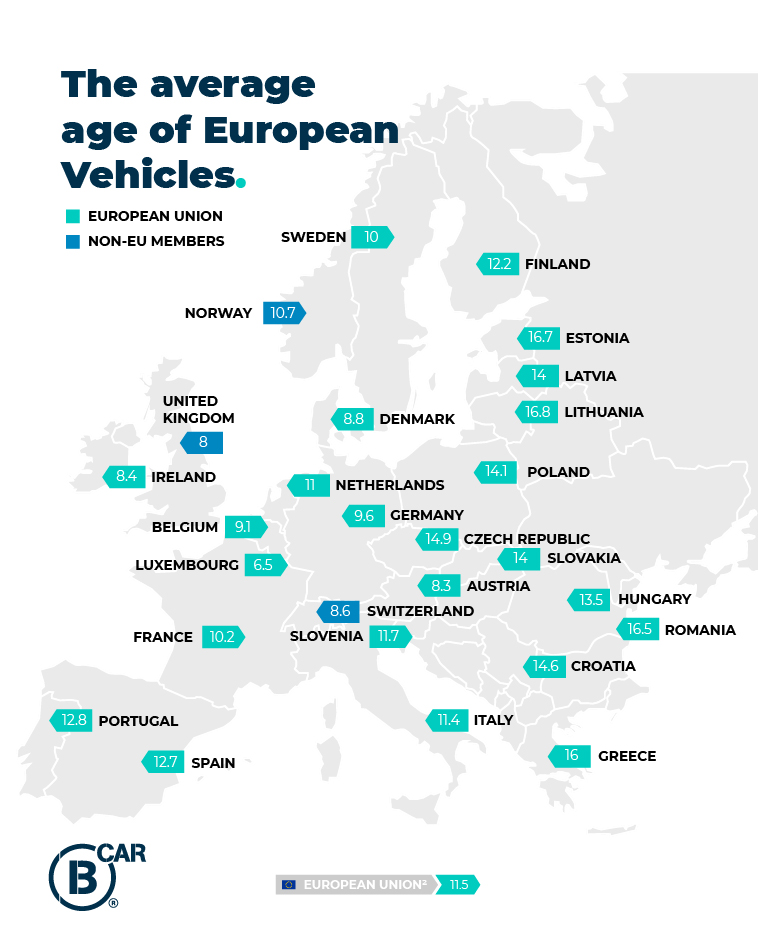
The article mentions lower cost of raw materials, but the other factor driving this is more efficient batteries. CATL is starting mass production of 500 Wh/kg batteries, about twice as dense as the ones used today, which reduces the need for rare materials as well.
This is exactly what we would expect to happen. There was a major supply crunch for batteries which incentivized people to build more battery factories which caused a projected crunch in the mining sector, but the mining sector saw the writing on the wall and started ramping production too.
Now the battery costs are falling and in a few years we will probably see an oversupply situation which will be good times for anybody who uses batteries. I'm a bit hopeful about decarbonization efforts for the latter half of the decade. I think battery prices will drop enough to make grid storage viable in more places and further allow the deployment of wind and solar generation. As this article mentions EVs will see a major price drop in their most expensive component.
Then of course a bunch of the manufacturers will go out of business because the prices dropped too low and then the market will consolidate into a couple of companies and prices will creep upward again as they fail to compete with each other. But that's a problem for the future.
For the next 10 years, I don't think we'll see an oversupply of batteries. There's simply too many ready to deploy applications for them that will accelerate as cost comes down.
Grid storage is the major one. As price starts to decline you are going to see power providers soak up any excess battery supply.
Battery recycling is also very good. Most all car batteries are recycled. Once you have enough lithium or whatever dug up, it'll just get cheaper to recycle for the most part.
EV battery recycling is WIP right now. At the moment it's still cheaper to dig up new lithium and cobalt, but I guess a lot of that is there just aren't enough old batteries available to recycle to cover demand right now.
There are companies that take old EV batteries and break then down. The steel and plastic is recycled. The valuable metals end up in one big lump right now, but as I understand they are storing them for future use as that part is still being commercially developed and they expect it to be valuable.
If we take a look at lead acid batteries, the majority of the lead that is used in the manufacturing of new batteries comes from old batteries that are recycled.
Yes, I remember reading that lead acid batteries are the most recycled consumer item. Something like 97% are recycled.
The other two things that are happening.
* LFPs are really starting to take off which pull a lot of pressure off higher capacity NMC batteries.
* Sodium ion batteries are just starting to hit the market which further reduce demands on Lithium.
The ramp up on alternative chemistries is playing a fairly good role here and sodium ion will likely push prices down even more aggressively.
Further, I expect that battery recycling will really start to be a major contributor to lower costs in the next 10 years or so. So I'd expect even lower prices as the battery market starts approaching saturation.
You seem to know a lot about battery tech. What do you read to keep up to date?
Oh everywhere really. It's something I've been interested in for quiet a while. A battery related article was something I'd click on every time it came up on slashdot.
Limiting factor [1] can be really good at breaking things down and covering current battery tech (they are fairly bullish on tesla). But I also get bits and pieces from google news feeds, renewable focused social media, and diving into anti-renewable social media :D. I don't mind reading into a critical piece to challenge my preconceived notions.
It does help, though, to simply know who the big players are and watch what they are actually manufacturing (and then read up on that tech). I mostly ignore the "this battery is 8 billion times cheaper than lithium ion!" news stories because they are sensationalist. An article about CATL building a solid state battery line and now I want to know what it is, how it works, and what the cons are.
CATL is probably the most interesting manufacturer to watch if you want to know where the cutting edge is. (Similar to TSMC being cutting edge when it comes to chip manufacturing).
Watch "The Limiting Factor" channel on YouTube. Seriously, it's like an engineering course crossed with an expensive besoke industry report.
Is recycling even economical today? Won't it become less so as new batteries become cheaper?
> Is recycling even economical today?
Very much so. I suggest watching the following video to see where we are at. [1]
> Won't it become less so as new batteries become cheaper?
Recycling will be the key to making batteries even cheaper. Getting already refined iron, nickel, and other chemicals will be far cheaper than trying to mine these materials fresh.
Very similar to how pretty much all lead acid batteries are recycled. Mining new lead is a lot more expensive than reusing old lead.
Recycling isn't always economical (see paper and plastic) but in the case of batteries, it absolutely is. The biggest problem battery recycle have is there's simply not enough batteries to recycles. Demand far outstrips supply at the moment.
Thank you, that was impressive!
I don't know about mass producing those. But they are definitely starting low volume production of those for the aviation industry.
For cars, they are pushing lfp and sodium ion as perfectly reasonable & cheap batteries.
> In addition, we will also launch the automotive-grade version of condensed batteries, which are expected to be put into mass production within this year.
That's not even the important stuff. CATL has 150 wh/kg sodium ion (aka a 300 mile car or better) that is 1/3 or less what cobalt chemistries cost, and LFP at 200+wh/kg (aka a 400 mile car) at about 1/2 what cobalt chemistries cost.
But the ultra dense stuff will also help as well, especially with heterogenous cell architectures and the like.
I am more interested how this is also bringing price of batteries down generally. With some chinese factories starting mass manufacturing sodium ion batteries this year. I think we are fast moving towards an electricity revolution because of how solar/wind and battery prices are falling and a lot of people have still not woken up to the fact. Cost of solar and battery is going to be half in 5 years maybe even 1/4 in 10 years. It is the similar thing as the doubling of processor speed we had for computer not as fast but similar.
Same rosey picture fluff. That's Hallmark of almost any piece on fusion, self driving, AGI, VR, electric cars, electric planes and quantum computers etc. Oh, available tomorrow. Done deal.
Find me a after the market Chinese cell phone battery that lasts 24 hours or an after the market laptop battery that lasts two hours on a charge and I'll be a devotee to Chinese electric cars for whole my life.
This feel good tech utopia of endless possibilities where wind can power terra watts, sunlight can do wonders and such sells well but otherwise is irrational and non scientific. At the moment.
Problems are harder than that.
See Peter Zeihans concise Electric Car breakdown on youtube.
Major EV Manufacturing expansion has been cancelled by automakers, including Tesla
The manufacturing costs that were propped up by cheap Chinese labor and exotics is ending.
Not enough exotics available for a long term plan to convert the US to EVs. Cost ends up driving EV prices too high for foreseeable future.
Not enough infrastructure in the US. This isnt changing anytime soon.
Money is tight and risk averse consumers avoid EVs, especially anything that isnt the current models.
This is car-centric.
Oddly e-bike prices have continued to rise without a real correction after the covid shortage constrained supply price spike, and the used market is kept from balancing it out through very high replacement battery pricing with various vendor lock in mechanisms. (eg: https://www.statista.com/statistics/1396568/average-e-bike-p...)
Vendor lock-in for batteries is a bad thing, but I'm pretty sure that e-bike prices would be rising regardless because demand is skyrocketing around the world.
I think e-car shipments has been growing faster still, but they have not been getting more expensive.
Eg this says the e-bikes YoY growth has been only 10% ish and forecasted to continue that way: https://www.statista.com/statistics/1261084/global-e-bike-ma...
According to this, e-bikes are outselling EVs in the US: https://electrek.co/2022/01/26/electric-bicycles-are-now-out...
And that's despite the fact that the US lags behind the Asian and European markets when it comes to e-bike demand: https://electrek.co/2022/02/08/us-electric-bicycle-sales-tra...
Without more data, I think it's too soon to conclude that EVs are outselling e-bikes, at least in terms of units shipped. And the fact that EV subsidies are expiring around the globe puts downward pressure on EV demand in a way that doesn't apply to e-bikes.
Right.. but isn't the relative growth of the respective EV classes more relevant to the hypothesis that it's demand outstripping supply? The prices and battery sizes are a tiny fraction of e-cars so the unit volume doesn't strike me as a like a weighty argument. If it were the other way around, with e-car prices rising faster, we could speculate that it was because of eg cosntrained battery supply.
It is interesting. I read recently that the next generation of BMW's (2026?) will have a 50% reduction on the cost of the battery. Hope it falls further.
> "Goldman Sachs Research now expects battery prices to fall to $99 per kilowatt hour (kWh) of storage capacity by 2025 — a 40% decrease from 2022 (the previous forecast was for a 33% decline). Our analysts estimate that almost half of the decline will come from declining prices of EV raw materials such as lithium, nickel, and cobalt."
It wouldn't surprise me if BYD, CATL, and Tesla were already there now. Not sure if there's public information on that though. I'd imagine they'd keep it a secret if they can.
Funny they mention nickel and cobalt, since they're not actually required. I think LFP cells are somewhere around half the EV-battery market these days.
> Funny they mention nickel and cobalt, since they're not actually required. I think LFP cells are somewhere around half the EV-battery market these days.
Agreed!
Cool. Let me know when I can buy a used one for 10k and expect to drive it for another 10 years.
You can buy a 2nd hand Zoe, e-Up, or i3 for under £10k - https://www.autotrader.co.uk/car-search?advertising-location...
Will they last 10 years? Probably too early to say. Battery degradation isn't the problem people thought it would be. But anything mechanical is going to need some maintenance.
I can't help but wonder if that's possible with a modern ICE car.
It's not like their quality is worse - far from that. It's just that they're engineered to last a very specific engine hours figure.
In Canada, it's also gonna be a rust bucket before then.
No surprise there. Increased demand -> increased economies of scale over time. What I'm really curious about is if a new battery with increased density heavily disrupts this. If you double density, then naively you need half the batteries / half the materials, or half the cost.
This works as long as the increases in density come from widening the range of voltages in which the battery is stable - that has happened in history with the advent of 4.35V cells (vs the previous figure of 4.2V@100% charge).
Current approaches like silicon-enriched or pure lithium metal anodes indeed use less materials, but they're decreasing the size of the less dense of the two electrodes, as the metal cathode is typically much denser and heavier than the graphite anode, so ultimately you're getting more density, but largely because you're decreasing the volume of the whole thing.
Lithium is the limiting component, since it carries the charge - there's a theoretical limit how little you can use and we're within an order of magnitude of that.
I was curious about the value of the theoretical limit, googled it, and found this paper [1] with this chart [2].
[1] https://www.sciencedirect.com/science/article/abs/pii/S24058...
[2] https://ars.els-cdn.com/content/image/1-s2.0-S24058297193110...
You don't think they might have though about "Increased demand -> increased economies of scale over time" when they made the original prediction?
I guess it depends on who "they" were. An awful lot of the people making predictions didn't want electric vehicles to succeed, and lowballed the degree of economies of scale.
About the only one who seriously committed to it was Elon Musk and his engineers. It may have been the last sensible thing he did, but it was a doozy.
> Increased demand -> increased economies
With the caveat that demand is decreasing right now. [0]
0. https://www.wsj.com/business/autos/ev-makers-turn-to-discoun...
I can’t read that article, but, EV adoption is growing like crazy. They went from 6% of new car sales in Q3 2022 to 8% in Q32023. I suspect demand is softer than expected but I am struggling to see how it is “decreasing”.
It's a decrease in the rate of growth, which of course means the industry is doomed doomed doomed according to a big oil guy at the Wall Street Journal.
In reality there were some pretty big price bumps in the past year that softened demand and now they're having to walk those back via incentives. In other words normal business shit.
> Dealers say part of the problem is that a wealthier group of early EV adopters have already purchased a vehicle. Now, the industry is confronting a more reticent group of consumers, who are already being squeezed by high interest rates and rising costs.
Seems like the cheaper batteries will solve that
Can't read the article but pretty sure demand is not decreasing, what is decreasing is the rate of growth. So still growing, but slower than before, which is a far different story.
The cycles aren't quite that tightly coupled, I think.
The current battery tech is responding to demand (and demand predictions) from a couple years ago.
That's a positive market move, because EV prices have been stupidly high and out of reach for most people in the market for a car. Manufacturers need to to focus on cost and scale, the thing they are, in theory, good at. Competitive pressures should drive the industry to achieve those things.

Headline seems to contradict the article? It's predicting that prices will fall in the future.
Yeah, but prices won't stay the same until 2025-01-01, when they'll all drop by 40% at once. It's linear, and they're dropping faster than expected.
I wish you could buy Chinese EVs in United States.
You can buy personal EVs directly from China today (e-scooters, e-bikes, e-unicycles).
You can buy a Polestar I think.
Polestar is Swedish. https://en.m.wikipedia.org/wiki/Polestar
They are designed in Sweden but Polestar (along with Volvo) is now owned by Geeley, a Chinese company.
The Polestar vehicles are manufactured in China (in addition to being owned by Geeley, a Chinese company)
If you check the vehicle info in the door, they note they're made in China: https://static.cargurus.com/images/forsale/2023/11/04/04/31/...
Yes — the Wikipedia article that I linked says so as well. But Polestar is headquartered in Sweden, and the cars are designed by Swedes in Sweden. It’s a Swedish brand.
Volvo are owned by the Chinese!?
Yes. Geely also own Lotus and started to produce heavy Lotus branded SUVs.
MG is also Chinese.
I wouldn't buy a Chinese ICE vehicle (besides maybe a Wuhan-made Honda). What makes you think EVs would be any different?
I too like to burn alive in a vehicle that'll disintegrate at 100kph or above.

Look at that chart. "40% by 2025 (from 2022)". That's pretty impressive.
Looks like I'll be waiting until at least 2035 to consider an EV or home solar system.
So this is going to depend a lot on your driving habits, the cost of fuel in your area, the cost of electricity, and what kind of car you want/need, but I bought a new car earlier this year and the combination of those factors meant that an EV was cheaper than all comparable ICE vehicles (admittedly the EV was slightly smaller than we wanted and similar ICE vehicles would have better matched the size we wanted).
The main thing is that the cost of fuel vs. the cost of electricity meant that we are saving ~$100/month and the difference in car payments for ICE vehicles vs EV was smaller than that.
Although I'm pretty sure this only holds for new vs. new. The "used" market for EVs is almost non-existent and the savings you get is not nearly as large in used as it is for ICE. So if you are willing to buy used, then yes, ICE is still going to have an advantage for a while. But for new vehicles at least, modulo all those factors up above, it's already the case that some EVs are cheaper than comparable ICE vehicles.
I can give a real datapoint: Family of 4 in TX, suburban neighborhood, and we drive a ton of mileage (~25-30K/year) running kids around town and the occasional roadtrips. ~2 years ago, we financed solar panels on the roof, and around the same time, bought a brand new Tesla Model Y. We came from a slightly-larger gas SUV before that. I also switched electricity plans, and opted for one with free nights (9p-9a) and a high rate during the day, which doesn't buy back any power from my solar, because the math works out better that way. So basically the car recharges for free overnight, and the solar helps offset a decent chunk of the daytime usage. When I net /everything/ out (electric bill changes, solar monthly bill, car payment swap, fuel, and maintenance costs), all total on average I'm coming out ~$700/month ahead from making these changes.
> So if you are willing to buy used, then yes, ICE is still going to have an advantage for a while.
It does depend on where you are. In the Nordics an EV is definitely cheaper than even a used ICE. Biggest reason being the reduced fuel costs, but also lower tax.
> The "used" market for EVs is almost non-existent
Depends
Here in New Zealand we get 3-year old ex Japanese vehicles at about half new price
In the US, a six year old Nissan Leaf goes for 2/3 of the price of a new one. It's a seller's market.
I'm guessing those "comparable" EVs don't actually compare on range on a full tank vs. range on a full battery.
Or on depreciation. When some battery breakthrough finally hits the market and unfucks EVs so they don't weigh twice as much as regular vehicles to go half as far, then you'll be left with $1-2k worth of metal around a worthless battery that nobody will want to buy anymore.
I've done multiple 10+ hour roadtrips (multiple tanks of gas/multiple full battery charges) with my EV and I'm happy with it's performance. I'm not really sure what else one could ask.
As for depreciation, I'm not one who really buys new cars very often. The vehicle I replaced was was over a decade old and it's resale value isn't that much higher than it's scrap value.
And for people who _do_ go through vehicles more often than I do, I think it's a bit too early to tell. I'm personally skeptical that the lifetime fuel savings for most people won't cover the difference in depreciation. But I guess we'll see!
I can understand waiting on an EV, but why wait on solar? An EPA subsidized "energy efficiency" loan will cover the cost of the installation, with a payment lower than your power bill. You save money immediately and break even in ~7 years.
I had solar panels installed a little over ten years ago, for environmental reasons, and I was surprised to learn that the economics were already good enough to make it work out as a benefit in purely financial terms. Equipment has only gotten better since then.
There are a ton of factors that go into making solar a sound decision.
Will the person plan on living there for the next 5-10 years? Will installation costs finally start falling three years from now? Will the government institute a large grid connection fee so as to significantly impact payback periods? Is the roof going to need replacement within the next 10 years?
Net metering is in practice a subsidy for solar owners and probably won't last long. Without net metering things are not as good.
Why wait? You can get good deals on the second hand market now.
Why invest in second hand equipment now when new, warranted, more efficient versions will be the same price in a few years?
Total cost of ownership. Easy to model in Excel in 30-60 minutes.
Save money now on fuel. I used to spend £130/month on diesel. I now spend £30 on electricity.
Save time, I used to spend time filling up my car. It now charges while I sleep.
In the case that opportunity cost calculations over the next few years dictate it, why wouldn't you buy now?
I would recommend getting quotes for solar from EnergySage and consider going without a battery.
Incentives and prices will vary over time. While there is new "tech" for solar in the pipeline, it will take time to reach market. As prices decrease, incentives will as well. Be mindful of how incentives and financing may stack, EnergySage will provide all the info you need to make an informed decision.
> EnergySage
I love it. Went there, and it gave me two options. One with a 17.2 year payback, and a second where I get a loan and my 20 year savings are -$27K. Ha! Seems like they should just replace that second option with "we calculated this one and it turns out you'd lose a bunch of money, it's not feasible."
Alas, 17.2 years is longer than my current roof has left before replacement, and almost certainly longer than I'll live here. Maybe the next house. Especially since I'm thinking of moving somewhere with enough open land that I can just DIY a nice ground-mount setup instead of mucking about with holes in the roof.
"Solar Loans" are pretty much always a bad idea. Power Purchase Agreements (PPAs) are even worse.
If you can't buy the system outright consider getting a Home Equity loan. This is exactly the sort of thing they are designed for and have much less overhead than any other option.
In the US we suffer from high demand in a small market allowing installers to inflate the system prices considerably. We should be paying less than $2/watt installed, but you see quotes for like $4-$8/watt all the time because these companies get to pick their customers.
> In the US we suffer from high demand in a small market allowing installers to inflate the system prices considerably. We should be paying less than $2/watt installed, but you see quotes for like $4-$8/watt all the time because these companies get to pick their customers.
While I agree in general, your numbers seem off. In expensive Northern California I regularly see systems running $3-4/watt, not $4-8.
> We should be paying less than $2/watt installed
Hmm, not sure how much prices have changed, but I installed my own ground mount 7kW array(s) back in 2020, and that was right around $2/watt with me doing all the work except a concrete mixer dump session for the footings.
Yeah, it'll vary a lot by location and time of year (end of year demand is highest for incentives).
Unfortunately, loans aren't quite what they were when I got solar over a year ago, 0.99% APR was one of my offers with the lowest cost quote. >10 year payback is quite high, mine is 4-5 years (not accounting for inflation or annual increases in electricity costs).
I am dubious of these numbers.
If I could really buy 1 kWh of cells for $130, I would expect to see them show up on eBay for not much more than that. (Or, even for less, because eBay has a lot of factory seconds, damaged goods, etc)
However, prices for new bare cells on eBay is more than double the numbers quoted in this article.
It makes me think there are market distortions going on, and the real price is differing from the advertised price.
Or the people getting those prices are carmakers with negotiated bulk discounts, and they don't have any reason to sell their cells on eBay.
> damaged goods
A damaged battery is recycling material, not a resale item.
"Our analysts estimate that almost half of the decline will come from declining prices of EV raw materials..."
Is Goldman confident this is a long term trend? I didn't see in their report that the decline in price is due to permanent increased supply or increased efficient extraction etc...
I know that Tesla, for example, has either reduced or eliminated Cobalt from their batteries. Changing composition can reduce material cost.
There's a lot of inventory right now in the industry, so there production cuts across the industry, thus lowering the demand for raw materials, decreasing their prices.
Headline is false. The data shows virtually no change over the last 4 years and PREDICTS prices will fall 40% by 2030.
Not total clickbait but close to it.
The article uses words like “expect”, “might”, “could”, and “hope” throughout. Look at where 2023 is on those charts: way to the left on the x-axis.
I hope batteries really do get cheaper in the future but this is optimistic prediction headlined as present-tense fact.
And a prediction based in a transitory problem with the market, where we have lots of inventory and production cuts. Of course the prices of the raw materials for batteries are going to fall if the demand fall. Is it an indicative of a longer term trend? No.
What does past data about car prices and car manufacturers’ responses to falling costs tell us about how manufacturers price vehicles?
Doesn’t matter the engineering approach is still all wrong.
Basic transport in the NEV class is far superior and benefits with tech true innovation.
Bigger heavier more shit to break is what I see Lincoln advertise meanwhile in Texas car payment insurance gas parking tolls (sound familiar?) take a huge chunk of income. It’s dumb. Fix this first.
This is incredible news!
EVs provide the sweetest kind of demand for a grid, they are parked 23 hours a day, can charge whenever power is free and less than free. Power prices go negative 200 million times/year[1]. Batteries, Solar and Wind and still in the early stages, as volume grows, both will get a lot cheaper. Batteries add the much needed gigantic-distributed-storage-reservoir, soaking up all the excess production that is currently wasted.
An insightful comment from a HNer (don't remember who), if there is excess production we have to either move it across time or across space. Across space requires building transmission lines (costly, takes a decade). Across time is easy, we just need more EVs, everywhere.
https://en.m.wikipedia.org/wiki/File:3-Learning-curves-for-e...

(2019 article) “Batteries will fall much faster than you are forecasting.” The key determinant of our forecast is the relationship between price and volume. From the observed historical values, we calculate a learning rate of around 18%. This means that for every doubling of cumulative volume, we observe an 18% reduction in price. Based on this observation, and our battery demand forecast, we expect the price of an average battery pack to be around $94/kWh by 2024 and $62/kWh by 2030: https://about.bnef.com/blog/behind-scenes-take-lithium-ion-b...
Learning rate for Solar is 20%. According to this article (https://ourworldindata.org/learning-curve), the price declined from $106 to $0.38 per watt in these four decades. A decline of 99.6%. It looks like modules are a lot more cheaper, its now $0.14 per watt for TOPcon(28% efficiency) and $0.12 per watt for PERC (24% efficiency).
A common critique that comes up is, we don't have electricity for all the EVs. This is nonsense.
(1) Renewable energy is currently curtailed. A lot of production is wasted, because there is no demand at that time. EVs absorb all that.
(2) See the calculations here: https://news.ycombinator.com/item?id=35845334
(3) Electricity is used heavily in fossil fuel and oil production. We simply shift it to EVs. No additional demand.
(4) Right now, everyone's energy is fragmented: natural gas for cooking, water heating, boiler for heating, gas for cars and electricity. When people switch to EVs, a lot of them switch to solar, consolidating all energy, saving ~$1000/month. And also lowering consumption from the grid.
(5) We somehow found a ton of electricity everywhere for bitcoin, 127 TWh. We can definitely find electricity for EVs.
But, more importantly, EVs can replace natural gas peaker plants (the costliest part of electricity) and make some money! Powerwall owners are making $150/day: https://electrek.co/2023/07/05/tesla-electric-customers-repo.... When virtual power plants start popping up, there will be a huge rush to buy EVs. A ton of people are buying homes for 500K+ to put them up on airbnb and they barely make 100/day. Owning an EV (replacing your existing ICE) and make $100+ per day just by opting in to participate in a VPP is the very definition of passive income.
[1]https://www.bloomberg.com/news/articles/2022-08-30/trapped-r...
New industries require a monopoly to create the infrastructure and standardisation to scale. Absent an Amazon or Apple-like private sector actor in EV's, it was the state which had to do it. Same goes with Small Reactor Nuclear, Solar / Wind / Wave, space exploration and the rest. Free market comes after