Apple doesn’t want you developing hobby apps
bennettnotes.comWhat bothers me about this -- and it bothered me enough to leave the platform -- is not fees, or "hobby computing," or "it's just for my own use," or trying to figure out why this or that would be in Apple's interest. What bothers me is that it feels like an offense against the entire notion of what a computer is.
I am, of course, aware that many (perhaps most) computers in the world are effectively appliances, but at some level, the great glory of this glorious, epochal machine -- the "personal computer" -- is one's ability to program it and make it do something new. It is not just a machine; it's a machine for creating machines.
Take that away, and . . . to what shall I compare it? It's like giving someone a deck of cards and telling them that these cards can only be used to play blackjack. You can't invent a card game, or change the rules, or build a house of cards, or do card magic. Putting such stipulations in place isn't just annoying or inconvenient. It's a kind of basic betrayal of the concepts and affordances that underlie the thing itself.
[edit: grammar]
First, you are right. Jobs himself said that he wanted to go beyond selling computers, and sell information appliances. In that respect, he and Woz were diametrically opposed.
When he was squeezed out of management in his own company, it is not a coïncidence that he elbowed his way into Jef Raskin's Macintosh project: Raskin was also interested in building information appliances, the difference between the two men was that Raskin was coming to the notion of an information appliance from the HCI perspective, and wanted to focus on simplicity and low cost. The UX he designed was text-centric and used high-speed incremental search as its navigation paradigm.
Jobs was infatuated with what he'd seen at Xerox Parc, and also wanted to build an information appliance, but he wanted it to be powerful and flexible and centered on the WIMP paradigm.[1]
Jobs was the boss, so Raskin left the project and the company. But Jobs never lost his vision that Apple should sell appliances, and people who wanted to "wrench their own devices" should buy PCs.
>But Jobs never lost his vision that Apple should sell appliances, and people who wanted to "wrench their own devices" should buy PCs.
You present an excellent historical case of how Apple got here, but here's where I see a dichotomy: Back in the day, tools like RezEdit, Hypercard, AppleScript came included. There were countless "apps" to reconfigure how the Mac looked and felt to create a personalized experience. Average users had developer-like tools that enabled them to become producers. Even today, things like Swift Playground send a message that Apple wants a technically-enabled user base.
Perhaps this is really an issue like centralized vs decentralized computing, states vs. federal, IE: there will always be a fundamental fight where some people within Apple want a black box appliance, and others want a fully customizable hackable device.
Speaking of HyperCard:
Inspired by a mind-expanding LSD journey in 1985, I designed the HyperCard authoring system that enabled non-programmers to make their own interactive media. HyperCard used a metaphor of stacks of cards containing graphics, text, buttons, and links that could take you to another card. The HyperTalk scripting language implemented by Dan Winkler was a gentle introduction to event-based programming. Steve Jobs wanted me to leave Apple and join him at Next, but I chose to stay with Apple to finish HyperCard. Apple published HyperCard in 1987, six years before Mosaic, the first web browser.
—Bill Atkinson https://www.folklore.org/StoryView.py?project=Macintosh&stor...
My recollection of HyperCard is that it was a grassroots success, Apple did not invest in it, Apple never made a compiler to turn stacks into Mac apps, &c. I personally did two professional HyperCard stacks. One was an internal tool used by a consulting client. The other was a configuration tool for a very successful (at the time) Java development suite. I wrote it in a weekend to meet a deadline, which is why it was written in HyperCard and compiled to run on all our supported operating systems using a third-party compiler.
My employer was aghast at this, our mantra was that if we’re selling Java tools, wherever possible we would write them in Java. I thought I was a decent programmer at the time, but no way I could bang out a robust customer-facing tool in a weekend using Swing or AWT or whatever.
It was eventually rewritten in Java by a co-op student, it took their entire work term. So eventually, everyone was happy. But HyperCard got the job done when shipping fast mattered.
speed is important to you. I can tell because you abbreviated an abbreviation.
> &c
for those not in the know, "etc" is an abbreviation for "et cetera" which is Latin for "and so on."
the Ampersand character itself evolved from the shape of the word "et" which alone is "and" in Latin.
what do you do with all the time you save? :D
Others may not know the origin of &c., so it's great that you explained. But here's a thought: Abbreviations are not about saving time typing for me. Other reasons for abbreviations:
1. Abbreviations, acronyms, and initialisms are a kind of jargon that compress long words into single tokens that communicate something in a single chunk. That is more efficient for _readers_ to parse... If they are in the know.
2. Speaking of being in the know, abbreviations, acronyms, and initialisms communicate which tribe you belong to, and this strengthens social bonds between writer and readers.
3. Some mediums have limited space available. Newspaper headlines, SMS messages, and the original Twitter tweets are examples of mediums with limited space. Abbreviations help compress longer messages to fit the medium.
I happen to be a very slow author compared to just about every professional I know. Since it takes me a while to think about what I write, I find that trying to find shortcuts is not helpful with code or the written word.
Cheers...
And these days, every Mac comes with a full Unix terminal built-in. Xcode is a free download (remember, if you wanted to develop Macintosh applications back in the day, you had to buy something like CodeWarrior!), and, as you say, they've developed Swift Playgrounds specifically to make a nicer onramp for people interested in developing their own stuff.
It's never been trivial to configure the Mac in terms of things like skinning, but third-party tools to do so have always existed for those who cared enough to look, and today, if you want to install Linux on your Mac, you can. If you want to install Windows on your Intel Mac, you can even do that. Those options were, at best, incredibly niche back in the pre-Intel days (though I remember toying with SuSE Linux for PowerPC in the early 2000s), and nearly nonexistent in the pre-MacOS X days.
So it's definitely not a simple case of "Apple in the '90s was in favor of customization; when Jobs came back, he locked them all down and made them toasters."
Even though its now probably 20+ years old, the CodeWarrior experience was vastly superior to XCode.
For a company with Apple's budget, XCode is a disgrace.
Oh my god, I’ve been using Xcode to make something recently and holy moly it’s where energy and ambition goes to die. The sheer number of bugs in both Xcode and in apple’s APIs is astounding.
Constant crashes, unreliable and underdocumented apis. Urgh.
I’ve been doing web programming for the last decade or so. When I started web programming, it was a mess of browser incompatibilities and jquery. But now I’d take modern web development over apple’s hellscape any day. MDN, caniuse, flexbox & grid CSS, modern bundlers, svelte and solidjs - this stuff is a delight in comparison.
Oh maaaaaahn, do I remember Metrowerks CodeWarrior[1] fondly! Thank you for bringing it up. I also remember using Lightspeed C, which later became Think C.[2]
Still got my Code Warrior tee shirt, showing a chunky dude holding a floppy disc...
The ironic thing is that today, Codewarrior is just a crappy reskin of Eclipse for developing for NXP chips.
I’m fleshing out these thoughts more in a longer form - but I think Jobs was heading the company into the abyss with the appliance model.
If it weren’t for the AppStore, it would’ve been the end of Apple. The iPhone wasn’t released with it at the outset - because this “make your own” wasn’t a part of the ethos. The Mac also suffered tremendously with no love to Final Cut, snipping Aperture, and leaving the hardware to bit rot for the longest.
iPod was a hugely profitable windfall and iPhone was too - somehow the AppStore slipped in there and became the lone remaining ember that reignited the hacker mindset - Swift I believe is that true rekindling; everything else follows M series, OSX continuities, etc
I’m starting to rethink everything I thought I knew.
It’s difficult to square creating both the most successful product and the most successful company in history with the idea Jobs heading the company into the abyss with the appliance model.
I'm fine with saying "the abyss of rent-seeking" even when rent-seeking behavior by corporations makes them a lot of money.
AppleScript was a far more effective way of scripting your computer’s GUI apps than anything on a competing platform (even if AppleScript the language was terrible, Cocoa and Carbon made it incredibly easy for GUI apps to add AppleScript support) further strengthening the idea thst Apple was in favor of making macs programmable by the average user, even under Jobs. Heck, the AppleScript language was terrible precisely because it attempted to be approachable to regular users and resemble English.
The Apple Macintosh was released in 1984. Jobs was pushed completely out of the company in 1985. When did RezEdit, Hypercard and AppleScript come out? Without looking it up, I would say after Jobs left Apple.
Yes, but MacBASIC was worked on under Jobs' leadership -- until it was taken at gunpoint by Bill Gates:
ResEdit: May 85
Jobs resigns: September 85
HyperCard: August 87
AppleScript: October 93
Counterpoint:
NeXTStep: September 1989.
And then there's Automator: April 2005
https://support.apple.com/guide/automator/welcome/mac
Apple between 1999 and 2012 seemed to put out one banger after another. But I could smell the garbage coming with the original iPhone. It's funny because the iPhone is lovely ... until you get down to the many many desperate attempts at vendor lock-in, the "meh" quality software (NOT compared to Android software, just compared to well-written computer software), and the way everything's locked down. Mehhhhhhhh.
Jobs called it "bicycles for the mind".*
Back in the beginning there was lots of talk of "toasters" as an appliance every household has and even a child can use (to the point there was a famous screensaver of flying toasters).
The Mac 512, Plus, and SE were embodiments of this. (The Apple //c with LCD attachment and carry handle was an earlier attempt.) Note that all of those included portability as a feature, while the all-in-one Macs (not the Apple //c) emphasized usability by non-tech and non-tech job people. Their spiritual successor is the last 3 years of iPad Pro w/ magnetic magic keyboard/stand.
It's pretty clear there's only a relatively short period of time the hobby shop and hackers are "changing the world", while the real shift comes when "everyone" can access and leverage the new tech (like a toaster, or fluoride in water).
---
* There's another subtle difference between "bicycles for the mind" and "a computer on every desk and in every home." One of those is vendor centric, the other is user outcome space.
I remember "Bicycles for the mind" well:
http://raganwald.com/assets/images/bicycle-jobs.jpeg
But as a metaphor, I don't think of a bicycle as an appliance. Mainstream bicycles are brutalist: The chain and gears are usually on display and user-serviceable. Parts like wheels, saddles, and handlebars are standardized in a way that allows users to mix and match components freely. In the days of steel frames you could make art bikes and trikes and all kinds of things from a bicycle.
The metaphor works well to describe a lever for the mind's own motive ability.
I wish they were more like an appliance. The fact that I constantly have to fiddle with the damn things is why I don't ride more. If they were more like modern cars or, indeed, iPads, that'd be ideal. Instead it's like "well, let's go discover what work I'll have to do on my bike before I can ride it...." Ugh. I do enough handy shit, I don't need a bicycle-maintenance hobby.
Pro-tip: I used to curse my bike: the chain fell off all the time, the gears slipped, the shifting was fiddly, the brakes were crap. Then I, by luck[1], stumbled on owning a more expensive mountain bike, and things stopped failing. Cheap bikes are crap.
[1]: I bought a mid-price mountain bike, nothing fancy, in the era before rear suspension was common. It got stolen within a year. I was part of my parents' grandfathered insurance plan that had unbelievably good coverage for bicycle theft. Insurance replaced the bike with one that had all the same features. Not price matching, matching checklist features. Number of gears, etc. It ended up having some extra features, too, because that was what was in the inventory. After that bike was also stolen within a year, they replaced that with one that had all the features that were in the second one. Plus disc brakes, plus many others, because nothing else fulfilled the checklist. The price of my bike more than doubled in two years. No, you can't get that insurance anymore.
> The fact that I constantly have to fiddle with the damn things is why I don't ride more.
Nothing turns more people away from riding bikes than entry-level bikes. Which is unfortunate. Yes, they're constantly needing work and adjustment and never quite shift or brake well.
It doesn't have to be that way though. Mid to top tier components are very reliable and work so much better, even when old. It makes a night and day difference in how pleasant it is to ride.
I think I'm kinda in the same place I was with computers, years ago: I've bought very-cheap, I've bought a notch or two above very-cheap, and I've seen both suck about equally, so it's damn hard to convince myself that the solution to my problem is spending more money. But it's probably true.
And I know it's not exactly fair but I can't stop comparing bikes to cars. The amount and preciousness of the materials, the level of stress, the complexity of construction, how long it can go before service, and so on, and damnit, I can't shake the feeling that 1% of the cost of a car should get a really reliable and near-zero-maintenance bike. But no, $200 won't do it. $300 probably won't, even. Not for a new bike, anyway.
> But no, $200 won't do it. $300 probably won't, even. Not for a new bike, anyway.
These days more like 5K to 10K+ unfortunately.
The trick is buying used. But for someone new to cycling, it's easy to get scammed into a bad deal when buying used, so that's not a great solution either.
If you're familiar enough with the components to evaluate them on a used bike, great deals can be had. My first mountain bike (which I still have) was a very expensive model when new (S-Works, which is the Specialized top of the line) that I got for cheap when it was 5-6 years old. It's almost 20 years old now and still everything works perfectly, buttery smooth shifting, etc.
If you want a low-maintenance bike, may I suggest a commuter bike?
Hub gear, Marathon Plus tyres, don't store it outside, and just drop it into your local bike shop every ~2000 miles or so as the brake pads get worn out.
> Mainstream bicycles are brutalist: The chain and gears are usually on display and user-serviceable. Parts like wheels, saddles, and handlebars are standardized in a way that allows users to mix and match components freely
That's a matter of perspective. If I create a simple bike drawing in crayon, it has none of those things, but everyone knows what the drawing represents if they had it. Maintenance and extensibility concerns are incidental. Framing things to be attractive, was one of SJ's talents.
I joke that modern devices with modern social media act more like a taxi for the mind.
Programming on an iPad? Forget it. Have you thought about doom scrolling instead?
> Programming on an iPad? Forget it. Have you thought about doom scrolling instead?
Current 13" iPad Pro beats original Macbook Airs for dev, plenty people used them.
I'd argue toolchains readily available on iPad Pro with real keyboard and trackpad today is better than any laptop any devs did work on two decades ago.
Stage Manager, in particular, lets you have main + 4 more windows open to swap with a thumb tap, not even counting you can have multiple overlapping panes and drive an external 4K screen with multi-tasking windowing.
Of course if you use Blink (mosh) you can ssh to anything, you can run VSCode or GitHub Codespaces or Cloud9 or any web IDE, you can use any VDI ... even if you don't like the Git file sync and local native Code Editor tools that are compatible-ish with Codea / Textmate / Sublime flavors of editor.
I completely agree that the latest iPad Pro is a powerful device that can handle development tasks with ease, but I'd like to offer a few points of consideration:
1- While VDIs can be useful options for remote development, I have found that the user experience can be negatively affected by lag or other performance issues.
2- I would not consider Cloud9 to be a recommended solution, as it might be considered outdated compared to newer solutions.
3- While Codespaces could be an alternative solution, it does not offer the same level of security as other options like VDIs.
One alternative that I would suggest exploring is the use of secure containerized environments (CDEs), such as those offered by Strong Network (https://strong.network/). I work there myself, so I may be biased. But from my experience, these environments offer a more secure and stable environment for development work, without the potential lag and other issues that can come up with VDIs or other web-based IDEs.
Of course, the choice of tool ultimately depends on your specific needs and preferences. If you're looking for personal use, GitPod handles things very well. And if you prefer to stay within the GitHub ecosystem, then Codespaces may be the way to go.
Hope that helps!
1984: A bicycle for the mind
2010: Post-PC age. cURL? Why not curl up on a couch with your favourite movie instead?
> Jobs never lost his vision that Apple should sell appliances, and people who wanted to "wrench their own devices" should buy PCs.
And honestly, I don't think information appliances are a bad thing to have in the world. It's not the kind of device I would choose for myself, but there's a class of users for whom a general computing device isn't just overkill, it's downright dangerous.
Android is fine for my use case, and while there are specific policies I wish Apple would change, I don't begrudge them the philosophy.
But it's worse than appliance. Appliance doesn't actively block you from using it for something not listed in instruction manual
If you feel around the margins, you can find exceptions for everything. e.g. You can cook a fish in a dishwasher. But while anyone can modify a toaster to do wild things, they aren't designed to facilitate that and it isn't a mainstream thing to hack your toaster.
PCs are hackable by design. It's a perfectly mainstream thing to build your own PC from parts. Hacking toasters, on the other hand, is not mainstream. Best Buy sells toasters, but not parts for toasters.
I personally wouldnt draw the line between information appliances and computers at whether the manufacturer actively blocks you (as Apple and John Deere do), but rather at some combination of what the intended purpose is, and whether hacking and customization is considered mainstream or fringe.
Hacking toasters and dishwashers and microwaves and refrigerators is possible, but fringe. Hacking cars and houses is mainstream.
I think a better analogy for the toaster would be blocking people from heating their waffles or fish sticks in it. And Apple takes it even further than limiting it to bread, it's only meant for gluten-free slices from San Fransisco. Anything else and you void your warranty. Also the cord stops working every 2 years.
Not to really beat an analogy to death, but a better comparison is Keurig. Its a coffee machine that JustWorks (tm) precisely because it packages up all the "hard parts" in custom stuff. If you buy their pods, you can just toss it in and its good. If you want to use your own coffee.. you need a custom pod that can accept coffee grinds, you need to refill it every time, etc. If you want to make espresso with steamed milk.. you basically can't use a Keurig. No one can really sell Keurig pods without a license, and they used to actively try and keep you from using unlicensed pods.
I have an espresso machine, and you need to calibrate the pressure, the temperature, clean all the parts regularly (far more than a pod machine), you need to fill the coffee grinds in a way that is distributed so the water runs evenly, you need a coffee grinder that makes less-coarse grinds, etc... its far more work, but the coffee is exactly how I like it.
> It's a perfectly mainstream thing to build your own PC from parts.
Is it? Most PC (or notebook) users buy whichever one is on sale at the store, or they use one provided by their company. This does not strike me as inherently different to how people buy toasters or dishwashers.
Of course, there does exist a niche of people who like building their own PCs, but this does not imply that this is the mainstream case.
An appliance is engineered to serve a narrow set of purposes, which can also be said for iOS. The only way in which an iPhone is worse is that it is an information appliance built on hardware that could be general purpose if run with different software. But if you consider the appliance to be both hardware and software, it is no more restrictive than any other appliance.
The difference is that iPhone is intentionally restricted by Apple to not allow you to use it in unintended ways, which "incidentally" brings a lot of additional profit to the company.
Relevant (and worth reading, if you haven't seen it):
"Unauthorized Bread" by Cory Doctorow
> there's a class of users for whom a general computing device isn't just overkill, it's downright dangerous
I am not sure if you are trying to come off as snobby, but that's how this reads.
This 'class of users' is in many cases very technical people who just don't want their phone to be anything other than an appliance. It's quite common to love tinkering with things, while not wanting to tinker with everything.
No, I didn't mean it at all. I was thinking of my mother-in-law, who I'm very grateful uses an iPhone.
Highly technical people may choose an information appliance as well, and that's fine! All the more reason for such a thing to exist.
Consider the impact on living standards for a person [0] who is capable of transferring money without understanding the consequences, ex a child or a demented person.
[0] https://www.npr.org/2023/01/30/1152448758/an-older-persons-m...
Except Apple's walled garden doesn't protect you from financial scams.
Apple is more like a television manufacturer that only lets you watch Disney+. The extent to which they protect their walled garden is not for the benefit of the consumer.
At NeXT it seemed like Jobs did the opposite, making workstations for professionals.
Always felt that was because there were a few things he wanted in the machine, power, high storage, high resolution, multitasking, networking, voice recording and the only way to achieve those was a price tag that could only be sold as a workstation.
I am not in a position to say why the original NeXT was so different in philosophical underpinnings than the Mac, but there are a few differences one can observe from the outside that may (and I only say may) have contributed to the final outcome:
1. When Jobs left Apple, he was barred from competing with them in the general computing/appliance market. NeXT when it launched was advertised as a product for higher education.
2. Jobs had to bootstrap a company from scratch into what was by then a much more sophisticated industry than existed when the Apple // or mac were launched. Building on top of Unix and Mach was way lower risk than trying to invent an entire operating system from the ground up when your interest was really in the user experience.
That's because there wasn't any Linux back then. Apple has basically given up on enterprise offerings.
> The UX he designed was text-centric and used high-speed incremental search as its navigation paradigm.
That sounds exactly like emacs with company-mode or ido-mode.
> offence against the entire notion of what a computer is
YES! I feel offended in Apple's ecosystem. Consistently.
When I can't upgrade, can’t even fix my own overpriced laptop because of soldered parts.
When I can't copy MY photos out of MY device, without uploading it to Apple's cloud.
When I can't buy OEM parts for older Apple devices because Apple put a noose around independent suppliers.
When (like the OP found) I can’t run MY CODE on MY DEVICE without notarizing and authorizing.
There's a much longer tail of issues I can fix and address myself.
These are fundamental, They eclipse all other (hard) things Apple deserves credit for like hardware quality and performance and integration with other Apple products. Despite their price gouging.
I am myself pulling away from Apple. I do not buy them any more. Don’t recommend Apple to any makers and hackers. The only persona I see happy using Apple laptops are ones who don't care about these. Those that got them handed down from work. They don’t tinker with them. They use them like appliances.
They don’t have my problems. I do.
> When I can't copy MY photos out of MY device, without uploading it to Apple's cloud.
Wait, what? (Not an Apple user - genuinely curious)
They probably mean from an iOS device to a PC/Android. It can be done without using iCloud, but you’ll need a macOS machine or special iOS app to do it.
I’m fairly certain photos are the one thing you can get out of an iOS device with relative ease. They just present themselves as a USB storage device with a DCIM folder. Music, Videos, etc require specialized tool but photos are the exception.
It can be. Sure.
And a house can be painted with a toothpick.
At the end of an export, I have a folder full of randomly named files. Now What about timestamps? Image names? Location? Timezone? Edits I made on the iPhone? Image quality? Is it heic, jpeg, png?
Apple forums are loaded with frustrations as this
https://discussions.apple.com/thread/252812655
At a $1000+ price point, I am a customer and I am offended.
"Windows: You can import photos to your PC by connecting your device to your computer and using the Windows Photos app"
This is still pretty bad, reminds me of using the iPod on Windows.
On my Android phone I can just send the photos directly to my MacOS machine via Bluetooth. No app required.
Bluetooth for file transfer in 2023?
You can setup a local web server and access all files using a Web browser from any device on the network. I have been using Trebleshot[0] on Android for this. Sadly the source code is archived now.
[0]: https://f-droid.org/en/packages/com.genonbeta.TrebleShot/
You can download photos on a Windows PC through iTunes
Can't you just send them on Signal or upload to Dropbox?
That's just using some other company's cloud. Why would you want to involve any third party for transferring files between your devices.
> What bothers me is that it feels like an offense against the entire notion of a computer is.
Yeah, as others are also saying, welcome to the 21st Century where they're not really computers anymore that they're selling. Your mistake is to still believe that they are.
I view the phone the way perhaps a ham (ham radio operator) viewed the transistor radio. For those of us where a computer is a tool to build with, a thing to tinker with, these new pocket devices are not for us. Too bad.
I've moved completely away from developing for "mobile". It's more of an afterthought for me at this point — "Hmmm, would this also make sense to port to mobile?" My thinking these days defaults to developing for the desktop and the web.
That's why developments like PinePhone are important - just yesterday I played with booting 11 different Linux distros on it. The only limitation is battery life but I guess some backporting from Android should resolve that one as well.
I want convergence so bad. To be able to just plop my phone into a dock after work and have my home linux user setup display on the monitors. The pinephone still feels so far away from the phone side of things, but succeeding in the computer side of things. I haven't tried the Pinephone Pro yet, but my Pinephone left so much to be desired.
I hope linux phone enthusiasts can keep their spirits up for the next 5+ years it feels like it will take to make a daily driver open hardware phone happen.
I agree wholeheartedly. It's why developing for phones isn't of interest to me, and why I stopped being a registered Apple dev.
Porting to mobile for my own projects means to build a web site that I can also use on my phone in Firefox.
What bothers me is that it feels like an offense against the entire notion of what a computer is.
Yep. One of the most glaring examples of this is the complete extinction of portable backups. Back when I was carrying around a PDA I could plug it in, hit one button, and have a total backup of everything on my device. Plug a blank device in, hit one button, and everything is restored. Today if you want a bulletproof device backup you have to pay Apple for the privilege, and even then you're completely crippled by your upload and download bandwidth. It takes a long damn time to back up 512GB of data at 10mb/s upstream. Nearly five straight days, in fact.
You don't need the internet to backup an iPhone. But you do need a ~Mac~ Computer.
Edit: Mac -> computer
Itunes on Windows supports device backups just fine.
Exactly! You can still backup/restore an iPhone locally offline just like the PDA example, even with a Windows PC:
> https://support.apple.com/guide/iphone/back-up-iphone-iph3ec....
I don't understand OPs problem with cloud backups being charged for? Many people (myself included) are storing terabytes of images/videos in their cloud backups. While I think the free tier could offer more than 5gb, its not unreasonable to charge for larger cloud backups, Android does the same thing.
Itunes backups don't get everything. No media files originating from the itunes store are backed up. Some apps are not backed up. Anything that's backed up to iCloud is not backed up with itunes. You essentially have to pick one: online or offline backups. If you keep your phone backed up to iCloud your offline backups are useless without an internet connection.
Why aren't you backing up locally? You clearly speak like you're used to it "back when you were carrying around a PDA".
I am. It's one of the reasons I only run a rooted android device. Most people aren't so lucky.
Sure, but you can also do one-click backups of an iphone using itunes on Windows or MacOS without rooting anything. It's a stock feature.
> 10mb/s upstream
Let me guess, Xfinity?
Yup, they are not "appliances", they are worse than that. My toaster doesn't care or complain at what I toast, my oven doesn't want $99 pizza baking license nor it doesn't want me to pay extra just because I cooked something for someone else in it.
Cory Doctorow’s Unauthorized Bread warns about such a future; https://arstechnica.com/gaming/2020/01/unauthorized-bread-a-...
And your toaster doesn't analyze your food to see if it's bad for you or prohibited or something.
A "personal computer" is a computer a person owns and controls. IMHO.
"Phones" can be beautiful appliances. We can admire them for many reasons. But calling them "personal computers" is a stretch, and honestly AFAICT no one does. FWIW, people refer to "phones" by other terms, such as "device". Mobile phones today contain computers, but that is about as far as we can make the comparison to the personal computer.
Arguably every new appliance does or will eventually contain a computer. That hardly means its owner will be able to control it. Good news is it's still possible to build a PC from parts and there are more small form factor development boards than ever before.
Apple reminds me of the diamond industry. How does it manage to charge such amounts of money for something that is so readily available. It sells people a story. De Beers is apparently now entering into the synthetic diamond businesss. Apple's next move should be similarly amusing.
An analogy to a deck of cards would have to include a means by which the company that makes the boxes for the playing cards collects data on how people use them, where the people travel with the cards, and so on, sending it to the box maker outside of the card owner's awareness because there is no longterm business viability for selling boxes to playing card companies, so the box maker becomes a front for a surveillance and advertising company.
I don't view the iPhone and iPad as "computers" or "personal computers" any more than I view my cable TV set-top box or Sonos speaker that way. Both are very powerful devices with Linux operating systems. But I don't expect to be able to program them.
The iPhone is an appliance that can download "apps" that Apple permits. When I want a "computer" I open up my MacBook.
> When I want a "computer" I open up my MacBook.
That Macs are still somewhat open is just a happy historical accident. Enjoy it while it lasts :/
This is slippery-slope fearmongering. In reality, Apple has gone out of its way to ensure that Apple Silicon Macs can boot other operating systems if the user so desires, and can do so without sacrificing security.
This is slippery-slope fearmongering
Apple has publicly said that macOS is unacceptably insecure because users have the option of running unapproved software (https://www.theverge.com/2021/5/19/22444353/mac-malware-not-...). It's not unreasonable to think that they'd be interested in fixing that "problem".
Yeah if apple was all about open they would publish specs so people working on build up the m1 Linus wouldn't have to reverse engineer so much. I guess what they do is let you boit other os'.
I actually mean all the little Vista-style popups that recent macOS versions introduced, on top of the quarantine and notarization bullshit which gets harder to skip in each release.
Just give me a simple checkbox in the system settings that this is a "developer machine and I know what I'm doing" which disables all that stuff and it would be fine.
Just install linux/OpenBSD and log in as root instead of using sudo. I do not find MacOS any more intrusive than my non-rooted Unices.
I gotta say, I moved from MacOS to GhostBSD recently and it was far easier than I expected. Even if the main reason my spare computer works well with BSD is the fact that its generic 10 year old Dell business hardware.
I assumed it would be much more frustrating than going back to Linux. Instead I've found fairly sensible documentation for solving nearly every issue I've run into, and a well stocked repo of applications.
Well, they can't make it a simple checkbox or everyone would just check it (see how many people already download Developer Betas of the OSes every summer). But if you really do want this, you can have it: disable SIP, done.
The problem with disabling SIP is that (AFAIK) it also does a lot of useful/important things (for instance protecting the system folders).
Simply disabling it globally isn't really a good solution to the problem. Neither signed nor unsigned, notarized or un-notarized apps should ever be allowed to write to those folders, no matter if SIP is on or off.
OTH preventing an app to read/write subdirectories in the user's home folder is definitely not a useful feature.
Malware teams would loooooove that checkbox.
Yes they would, and so would I... a developer who likes running unsigned executables and doesn't like having to jump through hoops to enable them... each time I download a new one.
Yup. And apple is trying to make an OS safe for typical consumers who make mistakes and can be tricked. Hoops for you are a necessary burden to protect them. If you hate them, lots of Linux distros meet your desires. I personally think they are right to not trade off the security of the majority for the convenience of the minority.
They also go out of their way to make it annoying to use applications that aren't signed by Apple under the $99/year developer plan.
Right-click open, click open one time ever is well below my personal threshold for annoying.
That's for signed apps. Totally unsigned apps can't be run without additional work.
The OP literally described the process for opening unsigned apps.
Didn't it change with Apple Silicon? That requires everything to be signed, albeit not necessarily by Apple.
How do you right-click on an iPhone or iPad? That's what his comment is about.
It wasn't and I'm not a guy.
It had to be because you can still develop for MacOS without the $99/yr fee. I think you also knew that no offense was intended because "him" is both masculine and for quite a while the gender-indeterminate-default, and it takes time to change habits. In case you feel otherwise, I wasn't intending to mislabel you, I was focused on the subject more than the genders of those I was talking with and will try to remember for the future.
People've been saying this crap since I started using Macs over a decade ago. They're always sure Apple's on the brink of locking MacOS down into an appliance OS.
They still haven't, haven't even made any big moves that way, but maybe eventually that crowd will be right in the same way that if you predict a recession every year, you'll eventually be right.
I'd argue that System Integrity Protection (SIP) on latest versions of macOS are that big move.
Why? Like similar things they've done, you can disable it. It's in the official docs, even.
I wonder why they do this. But regardless, it's much more interesting how open MacOS is than that some tiny fraction of a fraction of Mac owners may run Linux on their Macs.
It is NOT. Apple literally doesn't allow you to modify the root directory anymore. If you want to, you have to jump through some loops and lose access to FileVault!
How they have "gone out of their way" ?
I can't find it anymore, but one of the more recent updates on Asahi Linux pointed out that there were certain bootloader features that were more complicated to include than to leave out. They were unnecessary for macOS to boot, but they allowed for other OSes to run more easily. Basically Apple had to put in more effort in order to allow Linux to boot.
How does letting people freely sideload apps conflict with this philosophy? You can still use your iPad as the world's most expensive e-reader if you want, letting other people run Linux on it doesn't somehow ruin your experience.
I think what Apple’s afraid of is an app like Facebook tricking/forcing users to sideload in order to bypass privacy protections and get full access to user data. I don’t think they’re at all worried about hobbyists sideloading open source apps.
Everyone likes to say “but would Apple would lose the $100/yr from all those hobbyists.” How many hobbyists do you think are out there right now paying $100/year just to load some apps on their phone? Can’t be more than 1000. Even if it were 10,000 that would represent $1 million/yr in lost revenue for Apple. That’s less than a rounding error on just one quarterly report. They really don’t care about that!
> I think what Apple’s afraid of is an app like Facebook tricking/forcing users to sideload in order to bypass privacy protections and get full access to user data. I don’t think they’re at all worried about hobbyists sideloading open source apps.
Nah, they're worried someone might sideload a software with payment method that doesn't give them cut
Who wants another payment method? When something doesn't offer Apple Pay it's a huuugggee pain and a good reason to find something else.
The only thing simpler than a payment method is no payment method at all. A scary premise, judging from Apple's lethargic WebKit development.
BS, nobody wants to sideload another app store. If they want to pay for sketchy software they get it off a dark web site and sideload that. Even if you wanted to install recreational_drugstore.app to have the convenience of a wraparound consumer experience for designer dugs, would you really want a dark web originated app hooked up to your crypto wallet or fiat payment methods?
Get real, Apple's target demo is upper-middle class people who want a frictionless computing experience - the kind of people whose response to a massive avoidable security fail would be litigation and political/regulatory action.
That's not true. There are plenty of other stores on Android.
I doubt any of that was really considered, honestly.
Apple wants to fully control the devices they're letting people use. Allowing side loading can only be considered a reduction in control of their devices, thus it's against their main mission.
Steam charges you $100 per app that you upload to their store. That seems like a better business model. No App Store presence? No $100 required.
They are worried about both, and use the former to justify the latter. And in the case of Facebook, they are worried for good reasons (they care about user privacy) and bad ones (they are happy to hurt Facebook financially, because it reduces their ability to compete with Apple).
> I think what Apple’s afraid of is an app like Facebook tricking/forcing users
Apple treats their users like a nursing home treats senile people.
My philosophy is that Apple can do whatever they want (as long as legal and ethical).
They made a thing, and you bought it.
Why would anyone with a bent on free computing walk into what they know to be a closed ecosystem. Just buy an Android phone. It’s like flying to a foreign country and expecting everyone to English to you imo…
The excuse that freedom exists because one other market player is not a tyrant skates extremely thin ice. If Android went dark side too, where would we be?
This excuse is exhausting, lacks any principles whatsoever; these are general purpose devices, browsing the web & allowing arbitrary apps to be developed & squeezed into the world, if they pass through the tyrant's gauntlet. That one company offers some modicum of un-tyranny is a poor defense for locking down & excluding general purpose computing, for withdrawing the systems we have in our pockets from our own ownership & ability to control.
Citizens should have some options. The implications that the market is free to do whatever & citizens are free to pick from what's available seems presently somewhat tennable, but if we step back just a little bit here & look at the picture, it's horrifying. The inability to root most Android phones shows that actual freedom, real general purpose computing, is an extremely fine & narrowing little sliver, of the most important & most used general computing world.
>If Android went dark side too, where would we be?
Android went dark long ago too. All of the open source apps are abandoned and unmaintained replaced by closed source versions. The Play Store takes a 30% cut of things like Apple. Google decides what kind of apps are available on the app store and it closely matches Apple.
Not arguing but rather expanding: You may be thinking "He just ignored sideloading get real" but tell me, are there any porn apps? No there aren't. They have no distribution channel and are banned on 100% of the computing devices people run their lives with which is their phone. "But porn works just fine in the browser" well so does pretty much anything else even on an iPhone so why are we even chatting in this thread? To end users Android sideloading does not exist.
Apple and Google control what types of software humanity gets to use and there are no viable alternatives. Apple has fully embraced 1984 as these recurring threads keep pointing out but Google follows Apple in lock step on nearly every decision. There is no third choice except the increasingly crippled web.
Yeah there are porn apps. For example Wolf's Stash (yes, I am a trashy furry).
In terms of mainstream stuff, I think that's less of a "Apple & Google don't want you to have them" and more "society doesn't want you to have them, won't somebody please think of the childreeeeen".
Parents ignoring the fact, of course, that the 3 year old they gave a fucking tablet to with unlimited access can still end up on any of those sites via the browser.
The market has no interest in your individual freedom. If the citizens don't demand it,there is zero incentive to provide it. Don't try to convince Apple or Google or Microsoft or whomever to not be evil. Convince your fellow persons of the need to demand open devices.
Good luck.
Getting society to embrace sustainable, stable, non-tyrannical systems is hard. We dont really notice the slips & depravations as we fall away from Natural Science & observable world & into the infernal realms of legal, technocapitalistic, or other dominion, into man-maintained falseity. Trying to sell people on a future where we have options to see what happens, options to learn about the universe, where not all decisions made are fixed & immutable, where mistakes can be ammended - where possibility hasnt just fallen off & rotted away - is a hard sell; weirdly the biggest existential threat, the whole category of of stasis & inflexibility setting us on fixed courses, is one of the hardest freedoms to sell.
It should be an absolute no brainer to protect the species, to not close the book on possibility forever, to not let the species be limited & cajoled by impersonal & vast techno-captial-ocratic enterprises, that will hedge us in. But the short term wins arent super clear. "What is the use case?" "We dont know yet." We might have to enable possibility, act on principle, to find out.
The threat of living in a post science world, where the universe around us is illegibile because we made it that way, where we cannot learn or see or work some of the most important & connective matter around us, seems like it's worth all the cards, is a no brainer to go all-in to defend against. The war against general purpose computing is a slow & creeping infernal damnation.
Asking each person to individually be aware of & demanding of what humanity needs feels like a lot. The game is long & plays out in decades, and a lifetime of vigilance seems like a lot for the free market narrative to ask us all. It makes me think perhaps humankind needs representative bodies that can look out for & enable the future to remain open, that can steer us away from the irrevocable ever-narrowing paths, away from an incomprehensible state of being, away from the traps.
I finally bought an iPhone because I grew tired of all the tinkering I either had to do (or oftentimes just could do) to customize and secure my Android phone. Also, it seemed like no matter how much I spent on one, it would lose support within 2 years.
My phone is an appliance. I need it to provide 2 way communications and access to the information on the internet. Apple will provide security updates for the foreseeable future. That's all I want as I enter curmudgeonly old man age.
But yeah, I know I bought a locked down device and I'm ok with that. BMW is charging a subscription for heated seats. I'm not ok with that, so won't be buying one. Obviously, they expect some people still will. I agree with them.
What do you mean by securing phone? Latest Android are secure as iPhone. You don't have to constumize Android use default. You can choose Google pixel if you want long support
Apple can absolutely do whatever they want, until regulators block them off from the market for anticompetitive or anticonsumer practices. Then their profit motivation kicks in again, and they have to lick boots until they're on the government's good side again.
If you want an adversarial narrative between Apple and the people, you'll find no greater supporter than me. Europe seems to disagree with Apple's philosophy though, so maybe it's time they reassess their opinions.
> They made a thing, and you bought it.
That's the key point: I bought it. It's mine now and I have the moral the moral right to do anything I please with it that isn't immoral. Granted, there can be laws that trample that moral right or artificial technical barriers that attempt to restrict it, but both are unjust. Attempted word magic spells such as "by using this product that you just bought you agree that you didn't actually buy this product" are ridiculous, dishonest, incoherent, and not morally binding.
> I bought it. It's mine now and I have the moral the moral right to do anything I please with it that isn't immoral.
And ... you do? Is there some reason you can't do whatever you want with the device? This is like complaining that you can't use your xbox or television as a general purpose computing device.
You can legally hack your own iphone. Go for it. You own the device.
You can legally hack your own iphone.
This is true, but only due to DMCA exemptions that Apple strongly opposed: https://www.wired.com/2010/07/feds-ok-iphone-jailbreaking/
All it takes for Apple to be open is for consumers to put the money where their mouth is and be loud about it. Which didn't happen, so it isn't.
Give it a year of lower than usual profits and some twitter complaints and they will backpedal at mach 10
"Why would anyone with a bent on privacy walk into what they know to be spyware? Just buy an iPhone."
Oh, wait...
It doesn't, but that's not the point. Apple shares that viewpoint and they set the rules. If you want a tablet you can run Linux on, then the iPad isn't the tablet for you.
It creates the potential for unexpected support consequences and brand destruction.
For example, say I run a sketchy reseller operation that buys old or refurbished Apple equipment and load an iOS-ish/macOS-ish custom unix (and then falsely market it as an "Apple product"). For all intents and purposes, it may look exactly like an official Apple OS, but it isn't.
The untrained eye is oblivious to the differences and now, assuming the "sell" was that that person got an Apple device for cheap from some random seller, Apple now has the potential burden of supporting that. Considering their potential market is in the millions who might be duped by this, by allowing this one little change, they just introduced a support burden that nukes their profit.
> I don't view the iPhone and iPad as "computers" or "personal computers" any more than I view my cable TV set-top box or Sonos speaker that way.
Why should your personal view obviate the devices' nature?
These are all computers. *Whose* computers is the more important question. And from a look at a lot of these 'narrow focused computer devices' have the company you bought it from still exert control years after your purchase... It's almost like you unwittingly agreed to a rental that was misclassified as a sale. How many times were features removed at a later 'update'? How many features did the device support but didn't make available? How many features were kept because it would keep you from prematurely throwing it away to get the new thing?
Or better yet, with devices that have user-reprogrammable hardware means that the ecological aspect of "obsolete" hardware is that the new feature makes it nearly good as new, all the while keeping it out of the landfills. Sure, stuff going obsolete will still happen... But with repair and upgrades as options means the "Reduce, Reuse, Repair, Recycle" will lead to better outcomes for all. But that's not good for capitalism and profit.
> The iPhone is an appliance that can download "apps" that Apple permits. When I want a "computer" I open up my MacBook.
And, why is your opinion on what a "computer" is important? What criteria are you using? I ask this because we even have "Doom played on a pregnancy test" https://www.pcmag.com/news/yes-doom-is-playable-on-a-pregnan... . Basically any justification or rubric on what a computer is sure looks to me as artificial and gatekeepy.
Apple could allow personal hobby apps at basically no cost.
The obvious upside is that people who start off building hobby apps may well move into developing apps - and perhaps even associated hardware - professionally.
This is very likely to lead to increased goodwill and significant further purchases of products and other services.
Development of Xcode (not the best environment ever...) and Swift/UIKit will continue anyway. There is no sense in which a few thousand/tens of thousands of hobby developers are paying for that to any significant extent.
This does not require sideloading or loosening the security. It requires a slight relaxation of the provisioning system for single devices - something which exists already.
I don't care what the fanboi justifications are. Not doing this makes absolutely no commercial sense. Apple is gaining a somewhat imaginary $99 a year, which hobby developers won't pay anyway, and losing extra sales of hardware and apps which are potentially worth far more. It's also driving hobby coders towards competing ecosystems.
Instead of expanding the ecosystem this contracts it.
> Apple could allow personal hobby apps at basically no cost.
> This does not require sideloading or loosening the security. It requires a slight relaxation of the provisioning system for single devices - something which exists already.
They have always had that option. However it goes against the "You bought it, but we retain control forever" aspect that Apple exudes on every hardware line. And even though installing software outside of their "App store" is possible on the laptops, my guess is that soon will not be. Iron-fisted control is their modus operandi.
> The obvious upside is that people who start off building hobby apps may well move into developing apps - and perhaps even associated hardware - professionally.
The counter to that: by having a much of even lower class shovelware, like Android, devalues their platform. They want money developers and big name companies. And it's even better if your org is exclusive to Apple. Stay off those "green text bubble" devices.
> I don't care what the fanboi justifications are. Not doing this makes absolutely no commercial sense. Apple is gaining a somewhat imaginary $99 a year, which hobby developers won't pay anyway, and losing extra sales of hardware and apps which are potentially worth far more. It's also driving hobby coders towards competing ecosystems.
It makes commercial sense if you want to create a nearly impenetrable moat around your hardware, software, and userbase. The $100/yr dev license is also a signpost to everyone that "we mean business - we don't want riff-raff here". And combined with other anti-user and anti-developer decisions (soldered in ram; cpu; disks, and industrial glue on everything now) those devs are either biting the increasingly painful prescription of bullets, or they have already left to "lesser platforms", with low user numbers.
The problem is the computer has changed, it’s not a computer, it’s a node in a ubiquitous global network. 2003 and 2023 are very different and we’re feeling the negative impacts of global connectivity.
Look at the trackers like AirTag. A gadget to find your keys is incredibly useful, but can also turn into a device to aid criminal activity pretty readily.
Computers are still computers. They remain very useful without having internet connectivity. The majority of my machines never talk to the internet.
any tool can be used for good or evil. To stop people from doing bad things we need to focus on correcting people's behaviors not on crippling our tools.
This is generally correct. But at the same time, it's facile to ignore the existence of network effects that arise from increased connectivity, and the way they shift incentives. They are not just 'our' tools (qua individual owners), because they leverage a massive shared infrastructure of standards, data sharing, and re-transmission.
What you're offering here is not an argument but a mental block to actually thinking about the issue described. You don't offer any ideas for 'correcting people's behaviors': how do you propose to address the phenomena of greed, dishonesty and so on, given that people with those qualities are just as well able to make use of technology for their selfish ends?
specific remedies cannot be prescribed for abstract problems. We deal with those problems as we always have, through cultural and legal reinforcement.
Our culture informs us of what is socially acceptable (theft, greed, dishonesty etc) and meters out justice through our real social networks of family and friends. For issues that raise to a level of criminality we use the legal system.
I also think it's perfectly fine to make use of technology for selfish ends. That's the real reason competitive market economies function more effectively than command economies. When we all act out of our own self interest we buy the best value good and reward the most efficient producer. (Thiel argues with this and I admit this pattern does not hold in markets with monopolies, cartels, or regulatory capture)
When Apple is forced to allow for side loading, you’ll miss the old AppStore when the government moves in to regulate. You’ll have AppStore licensing within 3-5 years.
We have a market economy in this space. The platform companies recognize the risk associated with these platforms and try to control it.
People like Thiel are self interested. He welcomes government oversight because he can influence government - but cannot really influence Apple and Google.
actually I use Android and a third party app store called fdroid for many things like gadget bridge which I use to control my open source pinetime smart watch. I prefer this.
I love side loading apps on my oculus quest too. my quest will continue to provide me value after meta ceases support this year.
It's a bicycle for the share price.
A bicycle for sharecroppers.
This is nothing new under the sun; Apple's been doing this for the better part of the last decade.
You can program iOS devices to do something new, but there are a few limitations on how that is made available. You can develop full blown iPhone and iPad apps right there on the device on an iPad using Swift Playgrounds. There are numerous third party development environments available that run on the iPhone and iPad, in languages like Python, Lua and Basic, some of which you can even publish to the App Store. I’ve been programming little game in Pythonista for my kids for years. So sure there are some limitations, but also a lot of flexibility. These devices are actually highly programmable.
I would call that 'somewhat programmable' at best, but certainly not 'highly' so.
You don't get full access down to the hardware level, but equally the contention that these aren't general purpose computing devices and aren't programmable is just tosh. They're far more programmable, in the sense you can learn a huge amount more about programming on them, than the home microcomputers I learned to program on as a kid.
I guess I'm a bit younger than you, but on the computers I grew up with (Windows/Ubuntu/OS X), you were (and are) able to create and run any program you wanted. On an iPhone or iPad, however, you are limited to a sandbox; programs you write on it run strictly within the context of the IDE, and if you want to write any first-class programs (apps), you need to pay up.
In high school, I had a friend who was very talented at Game Maker, and he could compile his games as executables and distribute them to us via e-mail. That's impossible on an iPhone.
I'm probably older than you, but I agree with you and disagree with the other guy. I grew up with a C64 and Amiga, and that's where I learned how to program, I feel like it gave me a deep understanding of how to program and how a computer worked, plus they were also basically real-time machines.
But peak iPhone for me was a jailbroken device running iOS 5 or 6. Back then, everything was still Objective-C, which meant that every object could be introspected in the live system and swizzled which allowed for making tweaks to the actual system. You also had Unix underneath and could login to a bash shell and install a compiler.
But someone who learns to program Swift on an iPhone or iPad simply won't have a deep understanding of how anything works. Even if you pay the $99, it's still a rather unpleasant experience to program on iOS given all the restrictions.
I grew up at a time when a computer was a thing that any website you accidentally clicked on could totally and permanently hijack. I don't miss it. One-click zero-friction execution of arbitrary code with the full privileges of your user account was a bad and wrong design. Malware scanning, signatures, and heuristics were a hilariously inadequate answer to the risks. One of the best things that's ever happened in computing is moving beyond all this.
I think this is a false dichotomy.
Nobody sane is arguing for a vulnerable computer.
The desire is just less friction and fewer restrictions on what code can be written and executed by the owner on the device. Really this is what virtualization is for, and the only thing keeping mobile operating systems working as they do is that most consumers don't demand the same features as businesses, but in my opinion they should.
I'm not even seeing a false dichotomy, it's just wrong. Running arbitrary code from the Internet isn't at all the same thing as running arbitrary code that you yourself just wrote.
Most malware is executed by the machine's owner in some sense. The level of friction that establishes that the owner knows what's going on and actually intends to execute particular code with particular privileges is not small. It's important that it be surmountable, but it's not small.
In a properly virtualized environment it doesn't matter since all resources are decoupled from the environment the software runs in.
This gives all the control back to the user. Nobody should be bullied into just accepting all permissions the developer wants. The developer should be forced to gracefully degrade their UX when their dependencies are denied without preventing access to the core service and should be sued into oblivion when they violate this basic promise under accessibility laws.
From a developer perspective virtualization would also make accomplishing this much easier since they no longer have to be limited to crappy APIs that are not just sometimes vulnerable and incompatible but restricted on purpose under bogus pretense.
If the user can't determine what an app does with the resources it wants it should be trivial for the OS to mock the resources, see what happens, and report it back to the user. i.e. when enabling networking the app attempts to phone home somewhere shady, when enabling file system access it attempts to read/write outside its own directories, etc. I am pretty sure this would not scare off users, but make them curious.
That's the dream. But while the browser is now sandboxed well enough to stand up to the wide open internet, it can't compete with native on performance. And native can't (yet) be sandboxed as well as the browser without giving up its performance. Power-constrained mobile environments will likely be the last to fall on that one. I look forward to it, though!
There are child safety locks, and it is ok to have them as a default on computers as well, but there should be a way to turn it off and lose warranty. (And they should probably be renamed to something less inflammatory)
For me it is just a terrible feeling to not really own a device I bought, so I avoid them wherever I can. Annoyingly, this is getting increasingly more difficult.
As a potentially interesting aside, today lack of programmability seems to be a sign of a maturing market. I recently researched e-cigarettes that I can program to time me, those that have a computer in them basically all allow for writing your own programs. Same with the smart watch market, although Apple is trying its best to ruin that as well.
But the owner is able to bundle any arbitrary code into an app and run it locally on their own phone for 7 days.
Then it auto-deletes and there's nothing you can do about it.
The only class of malware that the currently-mandated friction is preventing is the kind that appears benevolent for 7 days then strikes on day 8.
The time limit prevents this from becoming a normal distribution channel for legitimate apps, which would condition users to click mindlessly through it. It an attacker wants to try, most people will think it’s weird and scary. But developers only need to do basic developer things (cut builds) to get around it. Pretty clever if you ask me.
> The level of friction that establishes that the owner knows what's going on and actually intends to execute particular code with particular privileges is not small.
That level of friction is $99 :/
let not be naive in saying that its still not possible. It is but a lot less. Companies have been getting better at bug bounties, education, and in general people working more with the technology
A huge part of the improvement has been sandboxing, code signing, and trusted distribution channels.
In the Windows XP era, a freeware game or utility you downloaded turning out to be a virus was 100% your fault. It wasn’t a defect in Windows that your whole computer got owned, that was just how computers worked. Crazy to me that people want to go back there.
Well, tech-competent people mostly survived that without scratch so they want same experience of actually owning machine today as they had 10 years ago.
The push for containerization and sandboxing is in right direction if user have control over it.
By all means run the new app I downloaded in nice little box and ask me when it wants to access any file from outside of it, but if I want to I should have option to give it permission to whatever I want.
> Crazy to me that people want to go back there.
It's not so crazy if you understand that there are people who want to be able to have complete control over their own machines. These modern security measures trade that control for security.
But there are many circumstances where that tradeoff is undesirable. Perhaps the machine will never be connected to a network. Perhaps the owner of that machine is willing and able to take responsibility for the security. Etc.
Then they can use devices and operating systems with that philosophy. A Linux sysadmin absolutely can and should be free to do whatever they need to their company’s servers. Instead people are angry about the existence of any consumer device with barriers to arbitrary code execution.
The broader problem then becomes the smartphone duopoly. You can choose Android instead of Apple, but this is a compromise in terms of privacy. You can also choose an alternative Android distribution or a Linux phone, but this is a compromise in terms of being able to run apps.
Video game consoles are just as locked down as iPhones, but ~nobody complains about that since you can just buy a PC instead. There is no good equivalent (in terms of compatibility and privacy) to iPhone/Android, though.
The fact that Android is a compromise in terms of privacy is not incidental to but because of its prioritization of app developers' freedom.
Does not track. Windows before Windows 8 gave developers freedom, was private, and was the most popular computing platform on the planet.
There was nothing to stop any .exe from reading all your files and phoning home with them, which is even worse than Android. It was private insofar as your OEM and all the third party developers whose products you downloaded were trustworthy, which is not too far off of Android.
Lenovo was one of the more famous abusers of its freedom [0] so sticking with popular and well known consumer brands did not save you, just as I expect it doesn’t now with Android.
OK, we are talking about two separate forms of privacy here.
You are talking about privacy from rogue app developers. I certainly laud Android (and iOS) for their approach here, and I agree that the situation is much better than on desktop operating systems.
I, on the other hand, am talking about privacy from the OS developer, i.e. from tracking that's built-in to the OS by the OS developer. The situation on Android is certainly much worse here than any other operating system.
(One could argue that the tracking is not built into the Android OS, but into Google's Play Services. Since all mainstream Android vendors ship Play Services, this is a distinction without difference.)
It is possible to make an OS which is private in both senses. De-Googled Android distributions and Flatpak/Snap prove this. So far, there has been no mainstream interest in this, though.
No, that was absolutely how Windows worked.
XP security was atrocious, and there were already better, functional models of how to structure things out there.
> and there were already better, functional models of how to structure things out there.
Even today, no file sandboxing solution I'm aware of really properly handles more complex file formats that don't consist of a single atomic file.
Only macOS goes beyond the simple "allow the user to pick a single file or directory and that's that" model, and even then according to the documentation I found it only handles simple sidecar files that only differ in the file extension from the main file, but still breaks down for anything more complicated than that.
Those are the same concerns I hear from my grandma.
Fortunately systems are designed for multi users, with sandboxes and access controls and heuristics now, and it's less of a problem for most people.
Our ability to sideload apps, or install pwa that are full featured doesn't need to affect your safe little bubble of protection. You'll be ok, I promise.
Couple this with the apples current and incoming payment/banking/loan apps and you have some seriously malicious we will control what you do and trap you in a debt cycle business tactics. The companies gross and arguably malicious in its business tactics.
Don't even start me on the symbolism of their anti workers rights bs.
> What bothers me is that it feels like an offense against the entire notion of what a computer is.
You said it better than I could.
The irony of this being Apple today. What would be the computer industry even be if the Apple ][ had existed under this twisted restrictive mindset.
I'm there too. My first computer started with a beep and a BASIC prompt. That's still my standard. I can forgive my phone because the screen is too small to type on, but still, I can program my phone in JavaScript if I want.
This is what is so great and exciting about the Steam Deck.
c.f., Vernor Vinge's novella _The Cookie Monster_
iOS devices are not "real" computers. They're more comparable to game consoles or TV set top boxes. They're special purpose computing devices that can only run approved software.
Apple does sell real computers under the Mac line.
> iOS devices are not "real" computers. They're more comparable to game consoles or TV set top boxes. They're special purpose computing devices that can only run approved software.
You can use this argument to justify anything companies want to lock down.
iOS devices are running a derivative of straight up macOS that your MacBook is running too. As computers, they are as real as any.
The "only run approved software" part is a restriction imposed by Apple. It is not because of a physical limitation that makes them not real computers.
So they are like set top boxes and game consoles then? Just like the person you replied to said.
Yes. Parent also said that they are not real computers. What I am saying is that they are.
With the set top box, the fact that there’s a computer in there is just an implementation detail.
Technically there’s a real computer in my refrigerator, my printer, and my headphones but I don’t have any expectation that these are general purpose computers that are available for me to compute on. I think it’s those expectations that matter and it isn’t always black and white.
I look at my phone as being similar to a PS5. I understood that both devices were somewhat locked down when I bought and in fact that’s part of the reason I bought them. If the PS5 had an authorized mode that could run any software it would be a worse device. If I wanted something more open, those devices are available and that’s what I would have bought (and have bought in the past).
The fact that there's a computer in there means that there's a computer in there, which is the OP's point.
Yes, we get it, those computers are intentionally locked down by their manufacturers. That lockdown is what the problem is.
This is, in a way, both a statement of fact as well as sarcastic. There is a whole range of computer systems, from very open, general purpose, to closed. Apple thinks phones are closed special purpose systems, but like the OP, many of us don’t.
Many of who? I'd wager that the us in this case is an extremely small, but drastically loud group of individuals.
A more common and descriptive term for this is "general purpose computer", (as distinct from "special purpose computers", e.g. rokus, ATMs, and iphones).
Apple can actually do anything on iOS, so iOS devices are computers obeying them, not you.
> It's a kind of basic betrayal of the concepts and affordances that underlie the thing itself
The flaw here is you're assuming that true general-purpose computing is free when it is not. You've heard the saying "constraints free, freedom constrains"? It's true. Artists often set artificial limits on themselves (such as only using one color of paint) in order to try to bring forth pure creativity without the added stress of making choices. Or perhaps you've read the classic essay "worse is better"? If not, you should. It's thought-provoking.
>> It's like giving someone a deck of cards and telling them that these cards can only be used to play blackjack. You can't invent a card game, or change the rules, or build a house of cards, or do card magic.
Millions of people buy cards that can only be used to specifically only play, say; 'Magic: the Gathering' (MtG).
You could probably invent some sort of new game with MtG cards, or do some sort of card magic with them (no pun intended); but MtG cards are very intentionally not designed to be 'general purpose' cards or tools to design new card games with. They have a very specific audience in mind.
Magic the Gathering cards are also much more expensive than a regular deck of playing cards I can grab from my local dollar store. They have a lot less utility than said cards I can acquire for a $1.15CDN, taxes in; and they also have a bit of a stigma from people who seem to not like MtG for various reasons.
Somehow, still; it's one of the largest and most widely played card or tabletop games in the world; easily - and it's got an enthusiastic community of passionate and fascinating people.
Is Magic: the Gathering ruining card games? It is 'an offence against the entire notion of' what card games are?
Fuck no. Apple isn't some offence to the notion of computers, either.
Maybe it's not to your taste, but just because a product is designed for a specific set of purposes or utilities that don't suit your preference doesn't mean you have to jump to the dramatic conclusion that these products are 'ruining' the entire notion of what a product is. It's just a different product. Get over it, and use a different one. Take a valium and realize people like and use different things, and that's okay.
On a side note, I develop hobbyist apps for WatchOS, iOS, MacOS, the web; and SEGA Saturn, all on my Mac; and I've never had any issues actually achieving the results I wanted.
> It is 'an offence against the entire notion of' what card games are?
It would be if a WOTC employee came to my table every time I tried playing, personally overseeing every turn of the game to ensure that I didn't break the rules, engage in unsportsmanlike conduct, use my imagination, taunt my opponent or profit unfairly with their platform.
No, that kind of thing only happens with Games Workshop games, from what I hear.
Even tabletop gamers are not gullible enough to fall for an agreement that bad.
You could probably invent some sort of new game with MtG cards
And people did, e.g. https://en.wikipedia.org/wiki/Magic:_The_Gathering_Commander, which is now the most popular MtG format. So yes, even in this case the freedom to explore and experiment is good.
Except that's not really a different game; it's merely a slight change of format. It changes the recommended card count (100 cards per deck rather than 60), adds two significant restrictions (one copy of each non-land card per deck; only colors that match those on the Commander's card), and one significant new mechanic (the Commander, who doesn't have to be in your hand to be cast), but otherwise it is played exactly as the standard 60-card game.
> Millions of people buy cards that can only be used to specifically only play, say; 'Magic: the Gathering' (MtG).
I love that example, since I have thousands of Magic The Gathering cards, but I have never played the game ever. The cards are very useful and I don't care what game they are meant for. Like many others I use Magic cards for print'n'play card games. Print out cards on regular paper, cut out, and put in sleeves with a cheap Magic card behind as backing.
Magic is such a weird example to use... People play their own games with it, with their own rules, literally all the time - https://en.wikipedia.org/wiki/Magic:_The_Gathering_formats
The above link is nowhere near close to exhaustive. Many of the formats on it were made up by fans, and then eventually made quasi "official" once a popularity threshold was reached, like Commander.
In fact, the entire premise, from the get-go of Magic: The Gathering was incredibly flexible modularity. Every time you change your deck, you're 'changing the rules' of the game. It's Turing complete, and people have made some really wacky stuff with MTG cards.
And, there's no small amount of proxying going on. Many, if not most Commander players allow a few proxy cards. High level tournament preparation involves 100% proxies. Online platforms allow you to play with any card in Magic's history for free, if you're willing to don the pirate hat; and if not, you can play MTGO or Arena.
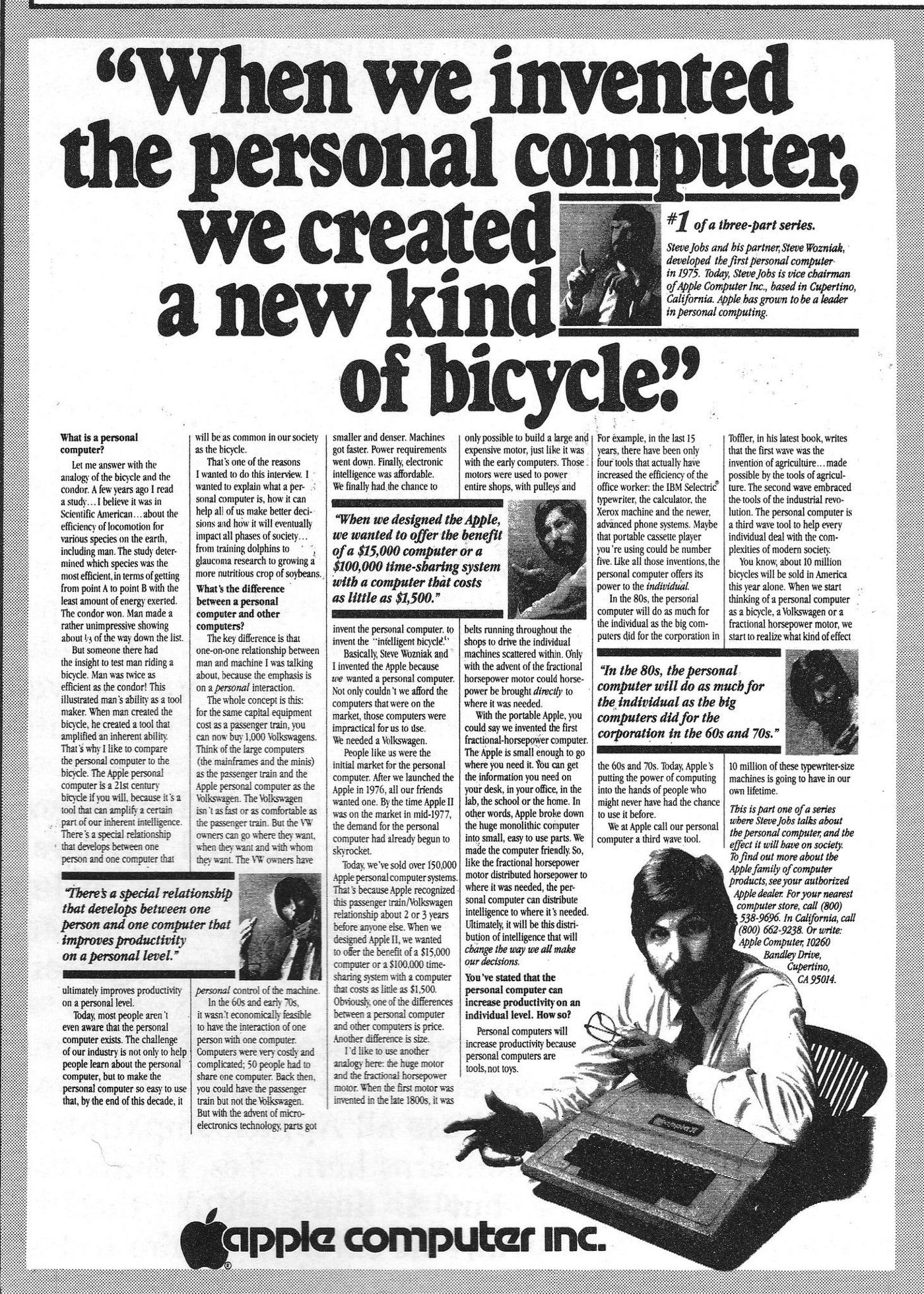
The relationship some developers have with Apple should be a case-study with multiple PhD thesis in psychology.
Not even in movies I've seen so many cases of children desperately chasing their emotionally unavailable parent.
Apple is a trillion dollar company, it's the "parent" who sells you +$40 dongles for everything. "Hobbies" are only good if they make them money AND doesn't increase their risk or any liability.
I've seen this developer-Apple dynamic at least since the late 90s. "Daddy Apple" was more available back then, but it's wasn't like it cater that much to the hobbyist-developer community ( unless we see the past with rose-colored glasses ).
The App Store is a multi-billion dollar business, like a moderately high-end mall, there is no place for hobbies in that world.
I hope for a time when developers understand this and stop feeding Apple execs for free. Ironically that would be the day Apple would be "nicer" to them.
I agree. The whole article left me feeling a resounding "well, duhhhhhh". The author has simply chosen one of the least hackable compute platforms for his hacking hobby and is then complaining about it (I mean "hacking" in the original sense, not implying anything about illegal activities).
If he were a farmer writing angry blog posts about how VW has made it damned-near impossible to plough a field with a VW beetle, it wouldn't be any more absurd.
The simple truth of the matter is that Linux and other open source OSes are the only compute platforms that can still meaningfully be thought of as providing "general purpose computing". ...maybe the JVM does, too, but that's more like a general purpose computing sandbox within appliances that's under heavy guard and for some reason tolerated by appliance makers.
Why shouldn’t he complain about it though? If nobody complains there’s no chance things will change. Sure people could vote with their feet, but not everyone is willing to do that. They should still be allowed to ask for improvements.
But his unwillingness to vote with his feet is the actual message here. He's basically saying: Here are the horrible things that Apple is doing to me and yet I'm still giving them my money and investing myself in their developer ecosystem. That's how much I love them, for some reason that remains unstated in the article.
That's what the parent commenter alluded to: There's some really weird psychology happening here, and that's the piece that's actually interesting.
I don't think that's fair assessment, it's equivalent to saying "You complain about the medical system and yet you still go to the hospital".
It's not much of a choice - and yes - Android exists, but in a duopoly of 2 shitty choices, Android is arguably the shittier one. Yes, you can install arbitrary apps there, but then you lose much more of your privacy, security, and long term support.
Voting with your feet doesn't work when every company in the segment is equally bad or very likely to become equally bad in short order.
Meh, bit of a knee-jerk reaction. Literally every bad thing that happens in one's life, triggering a complaint, could be met by the response: 'then just vote with your feet.'
Bad marriage? Find another partner. Bad employer? Find a different job. Crappy friends? Ditch em and try another.
Of course that's an option that should always be on the table. But I hope you agree the first approach is to try to fix things, to try to start a dialogue, to raise awareness and come up with solutions. It adds little to the conversation to just say: 'why don't you just ditch it altogether?' It's lazy and in fact it's often bad advise to throw the baby out with the bathwater.
Apple provides tremendous value to its customer base (hence the trillion dollar market value, that isn't just from consumer charity or corporate monopoly, but mostly from real value) and having to pay $8 a month for the 0.1% of Apple users who build Apps but don't distribute and cannot be bothered to renew a weekly certificate, is generally not a good enough reason to exclude yourself from using one of the world's most mainstream personal computing & communications platforms.
> There's some really weird psychology happening here
Sunk cost mentality. They have invested time and resources into learning a whole platform, only to find that it is not suitable for use, and they have to start all over again somewhere else.
I think people here need to stop questioning people's psychology. It's offensive and unnecessary.
You can be critical of Apple's App Store policies and still want to take advantage of the unique features of the platform.
There's no reason that Apple people can't move to Android, it's stubborn resistance. Just like Android people don't want to move to Apple for "reasons". But they love what they have. I use android but I want to figure out how to block Google from spying better.
Of course there are plenty of reasons not to move to android.
If you're used to Apple's ecosystem (laptop, tablet), your family also uses apple devices, etc it is not convenient to move to a platform that doesn't have all of the same conveniences.
Sure you may be able to get the same things done, but it's not convenient. doesn't mean people can't complain and want something better. People are allowed to just plain not like android. You don't give shit to people because they don't like to dress the same way you do.
I agree he has the right to complain, I call Apple "bad names" most of the time I log into App Store Connect!
But.. We also need to have some perspective. They will not change unless the incentive is there and even then they fight it with all their strengths ( ex: other payment services used to sell in-app stuff )
And frankly why are "we" so invested in changing Apple? They suck? they don't threat you well? Then fuck them.
> The simple truth of the matter is that Linux and other open source OSes...
...have zero presence on mobile
...don't spend a cent on marketing to developers, so the awareness isn't there
It's entirely hackable for free if you don't want to use the Apple SDK, though. His complaint is pretty narrow.
But things are certainly moving in this direction, i.e. all forms of unsigned code, sideloading, and so forth being fully banned and devices flat-out refusing to run programs that didn't come from the store and where developers don't have commercial-grade relationships with Apple, with the commensurate amount of money and power being handed over.
Microsoft has been moving in that direction too, leaving the Microsoft store basically a ghost town. -- Maybe games are an exception to this, but even here, Microsoft is a distant second to Steam, who are putting as much of their weight as they practicably can behind Linux.
That's the power of the developer ecosystem. It wasn't users who did this to Microsoft, it was developers.
But, for some reason, developers seem to be unwilling to do to Apple and Google what they did to Microsoft, and I don't get that.
It isn’t, though. People love to SAY this, but I see no evidence that it’s actually true. To make the case that this is an “Apple” thing, you conflate the two very different platforms.
iOS is and always has been a walled garden. That’s fine. You either like that (I do) or you don’t (you probably don’t).
MacOS isn’t. It never has been, and there is no evidence that it’s going to become one.
Yes, the default setting is to require signed code. This is a good default! Most people who buy computers should probably leave that option turned on — but turning it off is very, very simple. It’s just a system preference. This is not evidence of Apple wanting to lock down the Mac. It’s evidence of an increasingly complex world of code, and the rise of malware.
It’s not just Apple. The same dynamic plays out with most other hyped technologies. Apple’s fans may demonstrate this behavior most clearly, but cults of sycophants exist for many different companies: Microsoft, Tesla, Google, … this list never ends.
> Apple’s fans may demonstrate this behavior most clearly
I think that changed years ago. The iPhone made Apple very mainstream, which dilutes the fanboy effect considerably.
Tesla fans are much, much worse at this point. I say that as a two-time (and current) Tesla owner who is decidedly not a Tesla fanboy (and in fact going the opposite direction a little more every day).
> this list never ends
The list is different for everyone. Everyone thinks their own choices are the only rational ones.
Agree, Apple is the poster child, Tesla a close second because it targets most of the same people and markets.
I still remember when Satya Nadella went "all-in" with Linux and Open Source, the whole "running Linux on Windows", etc. Many people went nuts and in a matter of months Microsoft was the hot new "hip" company. Which anyone looking into Microsoft's business for 5min would laugh at all that non-sense. Just an example: MS makes around 2 billion dollars every year in software patents/royalties, and the list of Microsoft being Microsoft goes on.
My point is: This behavior is something more to do with the people than the companies themselves, they mostly cater and exploit it.
There are some pretty good reasons for wanting big parts of the status quo to remain. I bet if you took a few minutes, you could think of a few of them and that might give you a better understanding of why some of your tech friends are worried about Apple being forced to change.
> cults of sycophants
I think people like yourself should be more thoughtful more about why these products are so popular.
Instead of reducing these people who may simply like their products to being cult members who can't make educated, independent choices.
Do you realize how smug and condescending this comment is? As if everyone who happens to disagree with you is psychology broken and utterly stupid?
Let me give you another perspective as an apple user - I don't think about Apple at all.
I have a glass brick that sends 20 - 30 text message a day and a couple times I'll use GPS to go to a new restaurant. Sometimes I'll do crossword puzzles. This brick happens to do it best.
I don't think about Apple.
I agree, but... in my experience Android and Android devices suck in comparison to iOS and iPhones. Why can't anyone else create a true competitor to iOS and iPhone that is as open as Android? Is it because of Apple patents? Is it because they assume that if a company as large as Google couldn't do it then nobody can do it? Is it just developers are such a small part of the general populace that there is no money in creating something that will most appeal to them? That is, apple devices already have the mindshare of people who have no interest in creating their own apps and Android already has the rest of the populace, who can't afford apple products, tied up? So, creating a phone that is open while being as nice as iOS/iPhone just isn't a profitable endeavor?
> in my experience Android and Android devices suck in comparison to iOS and iPhones.
I wonder how much of this is "the thing I'm used to is the best thing?" every time I hear this sort of comparison (regardless of which type of machine the commenter thinks is "best".)
The thing that makes me wonder is because my experience is the opposite of yours -- I think Android is much superior to iOS. But I suspect much of my opinion is because I'm much more used to Android than iOS.
It’s because needs and preferences differ. There is not 1 objective evaluation that makes it the “best”.
Consider a minivan and a sports convertible on which car is the best car - many people will say my car is better and are optimizing for their own personal interests
> Why can't anyone else create a true competitor to iOS and iPhone that is as open as Android?
Nokia tried in 2009/10 with the N900 running a Linux-based OS. It flopped, partially because Nokia was about to jettison their entire software stack to shack up with Windows Phone OS. But also partially because it came way too early, at a time when Apple and Google were spending millions to tell consumers that smartphones without app stores were useless and dangerous.
> Why can't anyone else create a true competitor to iOS and iPhone that is as open as Android?
What is it about Android and Android devices that sucks? Does this apply to all Android devices? For example Samsung and Pixel phones get regular updates but the others don't.
> desperately chasing their emotionally unavailable parent
God, could you be any more snide? Please keep your personal vendetta against <whatever MacOS user harmed you> off of HN.
I'll keep writing it until we get it: HN desperately needs blocklists.
Yes, Great analogy. Remember the 2017 "Apple Commits to Pro Users" exercise? They flew reporters out for a boondoggle, gave them a tour of 'secret labs. With fresh competitive hardware coming 'real soon now'. Just spin.
https://daringfireball.net/2017/04/the_mac_pro_lives https://www.buzzfeednews.com/article/johnpaczkowski/apple-sa...
It would be easier for me to leave Apple if only their hardware wasn't so damn nice. I am so spoiled by these M1 (and now M2) Airs, they are the best machine I've ever bought and I've had quite a few! They do make incredible hardware, even if the dongles can be expensive, unfortunately.
I doubt this is "Apple doesn’t want you developing hobby apps", so much as "Apple doesn’t want dev accounts to be an easy backdoor for sideloading apps" and hobby apps are an acceptable casualty.
Sideloading should be allowed — that's non-negotiable for me. That's the main reason why I ended up with the configuration I have, a Mac but an Android phone.
Apple tries really hard to pretend they own the relationship between the app developer and the user because they made the iPhone and iOS, when in fact, for most developers, the necessity to publish on the app store isn't the godsend Apple thinks it is. It's an asinine obstacle they have to clear to get their app out to the world. I've seen Apple reject iOS apps for nonsensical reasons on many occasions. For most developers, the discovery aspect of the app store is, in fact, irrelevant. They do their own marketing and user acquisition anyway.
Mac shows this very clearly. There's the same app store, with the same rules, but with one exception: its use is not mandatory. So most developers end up simply ignoring it and doing their own app distribution. In other words, this model doesn't work very well when it's not the only distribution channel and when there's no draconian lockdown on the OS level. The notarization requiring a $100/year account is also optional. So you can, if you wish, distribute a Mac app without any Apple involvement whatsoever.
The casual use of the word "sideloading" is dangerous to society. It is literal newspeak with the intent to eliminate even the idea of "installing" and make it so people cannot even think of applications outside of a corporation (or institution's) walled garden.
Users installing applications is the default. Walled gardens are the weird dangerous thing.
Even the concept of 'installing' is rapidly disappearing. Most smartphone users aren't installing new apps or downloading music files. Most computer users don't install anything besides Microsoft Office, and in a lot of cases, it comes pre-installed and only requires activation.
Video games seem to be an outlier, as the enormous size of most games means it can't be streamed well just yet.
> Video games seem to be an outlier, as the enormous size of most games means it can't be streamed well just yet.
Stadia worked great until Google did its thing...
There was a time when you could only connect a Bell Telephone to the telephone network, too.
That's a distinction without a difference.
The difference is that not being able to develop hobby apps is a side effect of that policy, not that the policy's main aim is to prevent hobby apps from being developed.
The side-effect is in the eye of the beholder. Apple claims they lock down the App Store for security, and a convenient "side effect" is that their stranglehold on platform transactions makes them upwards of $80 billion annually. From the perspective of the shareholder, it's obvious that Apple's motivations are more driven more by profits than ensuring universal security. Regulators worldwide agree!
It's not obvious at all.
All of us who still have to help people in our lives -- particularly elderly parents -- are very grateful for a platform where the users are not expected to be sysadmins. Which they will do quite badly. We have a 25+ year history of trying to get most people to not install random spyware/crapware/viruses on their computers, and it's fair to say the results are a complete and total failure. Except for ios and sometimes android.
Which is not to justify Apple's attempt to tax every dollar that flows through their platform, but something can be two things at once.
iOS isn't impervious to malware either. Pegasus was deployed effortlessly to tens of thousands of iOS devices, and the App Store had nothing to do with it. Meanwhile, Apple still green-lights exploitative gambling and lootbox services as long as they're promised a cut of the loot.
There is merit in pursuing a more secure future for computing, but there is zero merit in doing so alone.
> iOS isn't impervious to malware either.
fortunately no one made this hyperbolic claim.
> Pegasus was deployed effortlessly to tens of thousands of iOS devices,
I can't stop a G20 nation or the people they pay from hacking my mum's phone to steal from her bank account, but I can offer to buy her an iPhone and have her be immune to nearly all real world attacks.
it's of course fine if you don't care about the security difference (or think Google does nearly as good a job with their first party phones), but not sure why you're making hyperbolic posts arguing against some strawman?
The original comment didn’t say that Apple was doing it for security, just that they were doing it so people couldn’t sideload apps easily.
I think you are both right. Apple wants to make sure all app sales happen through their App Store so they get a cut, and they are willing to make hobby apps difficult to load in order to make that happen. They don’t care about stopping hobby apps, but they care about making sure they get a cut of all sales.
Sure, it's a difference, but not one that is actually meaningful to anyone outside of Apple. An affected customer doesn't care about why the policy exists (nor should they have to). The effects are the same regardless.
It's just a comment on the title of the posting. The title assumes an intention that's possibly incorrect. If intention doesn't matter, then why is it in the title?
Actions speak louder than words.
The actions Apple has taken prohibit using self-written apps without paying Apple a relatively large yearly fee (and in many cases, also going through pointless store review).
So at best - Apple does not care about hobby apps (written by owner, for owner) because they have taken no actions to mitigate this impact if it truly is just a side effect and not intended. At worst - Apple is actively hostile to this usage and the policy is working as intended.
That distinction is mostly moot from the view of a user outside of the internal discussions at Apple regarding that policy. The impact of the policy clearly discourages hobby app usage.
Because the policy exists, a reasonable interpretation is that Apple does not want you developing hobby apps.
I'm not the author, so I don't know. But I would say the title is intended to be provocative and, in terms of what this looks like from the outside, isn't an unreasonable supposition.
But, ultimately, it's not an important point either way.
I think intention is important, and in many ways more important than the end result, and it's worth highlighting potential mischaracterisation.
If it's not important to you fair enough, but I don't understand the point of you both contributing to the discussion as well as saying the discussion isn't worth having.
Intention is very important in many circumstances, yes! But in this sort of thing, where a user is being adversely affected, intention is of very little importance to that user. Regardless of the intent, the user is still adversely affected.
> I don't understand the point of you both contributing to the discussion as well as saying the discussion isn't worth having.
I didn't say the discussion isn't worth having. I think it is, because it's interesting.
This isn't a comment on the magnitude of the effect, but on intention, though.
The thesis is: Apple are not doing this to harm hobbyists. That may be a side effect, but it's not the main effect.
For example: it's good to discuss the very real side-effects of drugs, but it would be silly to write an article called "Cancer Chemotherapy Drugs Exist To Induce Vomiting". I would equally push back on the misattribution of intention there.
Policies are often designed so that their main goal is seen as a side effect.
They probably can't say explicitly that they don't want sideloading, as this could turn an eyebrow of a regulator, but making it more difficult to create hobby apps, which achieves the same effect does not explicitly show an intent and may keep regulator at bay.
Talking about "side effects" in systematic policies is meaningless. There may or may not exist someone that wants those, and you are not inside everyone's brains to decide for yourself.
We don't know either way. The reality is they're being hindered
I would say "Apple doesn’t want dev accounts to be an easy backdoor for trash apps". It is all about quality of the app store.
Downside is that I see bunch of corporate apps that are total trash on app store.
Trash apps according to whom? Apple considers all browsers that don't use WebKit as "trash" as well as other entire categories.
Apparently the nanny state is repugnant to many, but nanny corporations that don't trust us to make our own choices, or have our own tastes and standards, is much more acceptable. The huge loss of customer freedom doesn't actually achieve the exclusion of "trash" apps nor malware.
Reasonably so. The last time the #1 browser in terms of market share did not abuse their position was Q3 1998.
This is a wrong take as these apps have nothing to do with the app store.
Where are the trash apps and malware in F-Droid or Linux repositories?
Almost everything associated with the iPhone is a casualty of "We need to collect our 15-30%".
They apparently strive for a superior user experience, and then go about destroying the customer experience of what they seem to consider is their phones.
Yes, Apple wants their piece and I for one would like to see it at least reduced. I would also love to see an option to opt-in to at least sideloading personally built apps.
That being said, what customer are you referring to when you talk about "destroying the customer experience." Hundreds of millions of users express very high customer satisfaction with the experience. The vast number of users have no interest in sideloading and they love the simplicity of the app store. Apple is bringing in about 85% of the smartphone market profits and they have huge repeat purchase numbers. That is not because those billion users are unsatisfied or feel the experience has been "destroyed." The numbers are just too overwhelming.
Many HN readers are not the target market if openness is of paramount importance to them. It is hard to avoid, but we need to try and avoiding generalizing our preferences to the broader definition of "customer."
+1 people who are largely consumers and not producers don't seem to understand the facets of filtering as a business. A necessary but practically essential part of staying successful as a business
The latest saga with Twitter's API going paid is a whole other can of worm, but APIs everywhere have been closing down and becoming more restricted in the past few years.
I guess the bot and scam usage of APIs cause more headache for companies than the hobby usage benefit they get.
Apologist reasoning imo. Developers experiment and there should be a policy that encourages experimentation on the platform.
Thanks apple for reminding me why I'll continue with the lesser evil for now.
The reasoning matters even if we agree the result is wrong.
The policy is, we want to control what you can install on your device so that we can make more money.
Both of the things you listed are side effects.
I’m not defending this, but after 15 years, I don’t see the point in complaining. We complain (rightfully) about the amount of crap in the App Store and Apple's capricious review policies that don’t stop the scammers, but for better or worse, the $99 fee IS a barrier to entry that I would argue has made the iOS ecosystem better than Android.
I’ve been paying $99 a year for early access to iOS betas and for my own test apps since the program debuted in 2008. I’ve never published an app in the App Store under my own account. But if I’m honest, I do feel I’ve gotten value out of that $1500 or whatever.
If it isn’t worth $100 a year to you, that’s fine. Plenty of people will sell you a slot on their account for less and give you a signing key. Or you can choose not to play. But it seems silly to bitch about something that has literally been the status quo since the inception of the App Store back in March 2008, when the iPhone SDK was released.
I should also note that the $99 in 2008 was significantly less than Apple used to charge for student access for Apple Developer Accounts for Mac before that. (Although those gave you nice Apple hardware discounts).
I wrote an Android app for my little programming news aggregator, and published that on the Play Store because it was basically free (IIRC there might be a one-time signup fee). $99/yr is a ridiculous sum for the "privilege" of publishing in Apple's walled garden, and it's just not something I'm willing to do.
The arguments for paying for review, distribution, advertising, search, etc feel so disingenuous when the company is worth so much money and these apps are contributing to its bottom line.
I really hope that the EU is the one that finally breaks down this annoying wall. I might consider using an iOS device at that point, but absolutely and definitely not before that.
I don't know where Apple went wrong -- third-party software made them as big as they are today, and they decided to turn on developers at some point and make them jump through hoops for nebulous "reasons". And yet the app store is still just filled with so many low-quality apps, scams and the like. They just look semi-pretty on launch and don't crash within the first minute or so.
> these apps are contributing to its bottom line
Are they, though? If you don't have the $99 for a dev account, you don't have a marketing budget either, so your app won't make money, so Apple doesn't care.
I think the best argument to be made for catering to hobbyists is to attract new developers to the platform, but I doubt Apple cares about that any more. Apple wants developers who care about making money. Developers who care about making money will come to Apple because of how much Apple users spend on apps.
> $99/yr is a ridiculous sum for the "privilege" of publishing in Apple's walled garden
It’s a token amount, just enough to prevent spammers from creating thousands of accounts. It’s $99 for your entire organization for a year. Go check what Microsoft charges for a Visual Studio license per seat, per year.
$99 doesn’t even buy you 1 hour of a developer’s time. Even if you develop apps a a hobby, this is not a large amount of money. Few hobbies are a cheap as this.
> It’s $99 for your entire organization for a year.
This seems reasonable when you look from the point of view of a corporation. But hobbyists are single individuals, not corporations. So this basically makes development a privilege for corporations or for people in the first world for whom $99 is nothing.
there are education discount programs for students etc..
> Even if you develop apps a a hobby, this is not a large amount of money. Few hobbies are a cheap as this.
Let me guess, you’re from a 1st world country and probably make 6 figures a year (pre tax), likely working in FAANG?
As a guy in a 3rd world country, $99 is a hell lot of money. Your comment comes across as quite tone deaf. If you grew up middle-upper class and relatively sheltered that’s not necessarily your fault, but trust me in many parts of the world $99 is worth much more converted.
Visual Studio Community Edition is free and quite capable for the individual hobby developer, same with VSC. Compared to developing for iPhone, which requires me to still have macOS (and legally Mac hardware) at my disposal somewhere to even get the app built completely, right? That would be the proper comparison between their approach to enabling developers on the tooling side, not the App Store fee. What’s the barrier to entry for the Windows App Store? I think it’s like $25 bucks and $99 for an org, or something very similar.
Obviously the glaring difference is that you can side load apps on Windows without using the app store at all. The day that becomes a serious barrier is definitely a line too far in the history of computing. But Apple has always been a very closed off ecosystem - going back to the nineties they were never very friendly to developers or third party hardware. To me this is just Apple doing Apple - their phone, IMO, is still miles ahead of anything else, though.
> few hobbies are as cheap as this
Quite true.
> that you can side load apps on Windows without using the app store at all
It's unfortunately not that simple anymore on Windows either with the SmartScreen popup getting in the way and the "Run anyway" button hard to find (not as bad as on macOS but still...).
Your executable needs a big enough "reputation score" for SmartScreen to remain silent, even when properly code-signed (unless it's signed with an expensive EV-certificiate apparently).
For a lot of people, including hobbyist programmers, $99 is actually quite a lot of money.
They "went wrong" to the tune of being a 2.4-trillion dollar company. If that's what going wrong looks like, I'd love to know what going right looks like. $100/yr may be too much for you, but there seems to be plenty of crap in their app store so it could be argued that it should be higher.
> $99/yr is a ridiculous sum for the "privilege" of publishing in Apple's walled garden
I think that what you buy with your 99$ is the privilege of asking for the privilege of publishing (which is not given at all).
For publishing to the the Play Store, it's a one time US$25 fee.
>> The arguments for paying for review, distribution, advertising, search, etc feel so disingenuous when the company is worth so much money and these apps are contributing to its bottom line.
No, they are not. We are talking about hobby apps and maybe free ones. Those don't contribute to their bottom line.
We might say they contribute to the platform. For hobbyist they make it viable. But for paying customers maybe they add a lot of low value junk to the store. If a developer doesn't feel their app is worth a few dollars, maybe it's not worth having on there at all.
This is the same disingenuous argument. The $99/year isn't preventing junk from showing up on the AppStore, and a lack of $99/year payments doesn't make the Google Play store a dumpster fire of garbage apps. [1]
The AppStore is currently filled with low-value junk published by people paying $99/year (1.8 million apps out there, of which most outside of the top X lists are terrible). Will hobby apps really decrease the average quality? I highly doubt it.
[1] I'll admit that this appeared to be the trend early on, but in the long term both platforms have converged to something similar.
>The $99/year isn't preventing junk from showing up on the AppStore
It's not "preventing junk from showing up on the AppStore", but it does prevent "a whola lot more of junk from showing up on the AppStore"
>and a lack of $99/year payments doesn't make the Google Play stor a dumpster fire of garbage apps
You'd be surprised. Google Play store is notoriously more insecure and loaded with junk, with estimates that close to 90% of mobile spy/malware are on Android rather than iOS.
"According to the whitepaper, Android devices were responsible for 47.15% of the observed malware infections, Windows/ PCs for 35.82%, IoT for 16.17% and iPhones for less than 1%" (Panda Security)
"Over 98% of mobile banking attacks target Android devices"
Exactly, the real reason that people don't want to realize is that the $99 is not to keep garbage out of the store, it is to take the $99 per year from each developer in the world.
> I don't know where Apple went wrong
They didn't go wrong. They are making money - the most important thing.
That they hurt developers that got them there in the first place? Who cares.
Then even few years ago I heard: "If you don't like that platform, create your own!" I wonder where that crowd is now.
> That they hurt developers that got them there in the first place? Who cares.
I mean this fee has been there since forever no? Early on not even the iOS updates were free. You can argue about the merits of the fee but don't frame it as some recent change that disparages early adopters.
My honest question is: What's the alternative.
I'm not an apple fan. Most of my personal devices run Linux, but I feel essentially trapped on an iPhone. It doesn't seem like there's a truly useful open phone out there. I don't like Apple, and I don't trust them or their ostensibly pro-privacy stance much, but I want as little privacy invasion and as little advertising as possible on my phone, and I think as bad as Apple is, they're still better than a fully Googled version of Android. Unfortunately, a lot of people, myself included, need at least some apps that require either an iPhone or a fully Googled version of android.
I suppose there's always the option to dual-wield and use a Linux or de-googled android phone for daily use and keep a second device around for the apps that won't run there, but that is both a pain I don't expect many people to buy into. I'm just about at the point of going this route for myself, but it does feel more like admitting defeat than anything else.
The solution is a de-Googled Android running an AOSP-derived distribution with an enclave (or 'second space' or 'multiple personalities') for those few Google or Google-dependent apps. You can either use one of the second space/enclave/container apps to create such an enclave or you can enable and disable the apps before and after each use (which is what I do). It is always worth trying those apps on a Google-free device since many of them work fine without having any Google services installed even though the complain loudly about GSF needing to be installed for them to work correctly - the Swedish BankID tool is one of the latter, it always produces a popup telling me it won't work without Google Services but does its job once that popup is dismissed.
Eventually there may be a non-Android 100% free software alternative but as it stands now the above solution works fine and keeps the data vampires from your door.
My question, building on that one, is: Can there be a true alternative?
This is a genuine question, not an attempt to paint Apple as the be-all and end-all or a paragon of perfection (for all that I'm an unapologetic Apple fan, I recognize that they have serious faults).
I think there is a strong case to be made that the limitations Apple has placed on the iPhone are instrumental in guaranteeing the privacy and (relative) freedom from crap that makes it as good as it is. There is also a strong case to be made that it should be possible to create a phone (or computer) with nontrivial privacy safeguards, but without the specific limitations Apple imposes.
I lean somewhat toward the former camp, as I believe that in a space like smartphone apps, bad actors are both willing and able to do whatever is necessary to make their unethical money, whether that's with extra ads, crapware apps, or just actual malware, scams, and theft. But I would genuinely love to be proven wrong, and I hope that there comes a day when we have a meaningful competition in the space without sacrificing our collective ability to use our phones without fear.
From a technical perspective, of course it is possible to give users control of the trust on the devices they ostensibly own, rather than giant megacorps, and I remain extremely unconvinced that this leads to a meaningful loss of security or privacy for those users. From a socioeconomic perspective, it's a much bigger question; the allure for those megacorps is far too strong and the economics of the industry makes it hard for society to wrest power from them, and for some reason people seem mostly okay with this status quo.
It seems to me that it's inevitable that if we let these megacorps control our devices, they will use it against us in one way or another. The only way for us as users to actually have freedom, security, and privacy is if we can control what entities the device trusts ourselves. We must create choice where the corps would rather we have none.
I will also point out that I consider Apple's rent seeking and censorship, that is more or less literally impossible to avoid, to be unethical use of this power they wield over users, and a pretty clear and meaningful way that users are harmed by it. In very concrete ways it can be considered more harmful than malware. But few seem to care enough to ask for control of their devices back, and in many of these threads more seem willing to jump to the defence of these practices than see them as a problem.
Oh, this is certainly a question primarily about the social aspects and second-order effects. The technical perspective is much more solvable, though still not, I think, a solved problem.
The problem with "I control my device" is, and always has been, twofold:
First, that when some malware gets in, it looks like you.
Second, that people who are not technically savvy will not be able to use that control to protect themselves, but will instead very often have it used against them.
The former of these is, in fact, a technical problem; the latter is social, and much harder to control for.
> First, that when some malware gets in, it looks like you.
I don't see what this has to do with trust. Whether or not there is a secure trust chain, malware can likely impersonate you.
> Second, that people who are not technically savvy will not be able to use that control to protect themselves, but will instead very often have it used against them.
If people are going to ignore the flashing red banners that pop up when they try to override the trust store that comes with their device, then that is a price we have to pay, IMO. We accept in the rest of our lives that some things are dangerous, and while we erect many barriers to make those things more difficult, we recognize that is the price of freedom. People will do them anyway, and some will be harmed. It doesn't have to be frictionless, it just has to be possible.
Is there a spate of malware going around that involves users installing new keys in their UEFI secure boot trust store? I haven't really heard of this. I also haven't really heard of a spate of malware using Android's developer mode that is pretty easy to enable, if you know how. I think the risk involved in giving users ultimate control of the device's trust store is greatly overblown.
This is what I'll be doing. There are no smartphones on the market that I feel comfortable with trusting, even a little, so I'll be shifting to using a dumbphone instead, and also carrying a real, honest-to-goodness pocket computer that doesn't have a cell phone attached to it.
The phone will be used for exchanging calls and texts. The computer for everything else.
Which pocket computer would you choose? Out of interest.
I haven't decided. The pickings seem slim, but I'm still working through the options (including the option of building my own).
> dual-wield and use a Linux or de-googled android phone for daily use and keep a second device around for the apps that won't run there
I was thinking about this but what happens with on-the-spot payments? This seems like a functionality that's really convenient (not having to carry a bank card) but that would be on the official device, not the daily use device due to security issues. But paying for stuff in person is a daily use activity.
> I was thinking about this but what happens with on-the-spot payments?
YMMV, but I don't (and won't) use my smartphone for this right now anyway. It's fine. Barely an inconvenience.
> Don’t get me wrong, I have no problem with this idea when it comes to apps that I plan to distribute. I’m using their servers, and their infrastructure to handle updates, reviews, payments, etc.
Even when you do plan to distribute it it's hard to justify that it's for a good purpose. The review process is so broken and infuriating that I often find myself thinking that _they_ are the ones who should be paying us to go through the stress of trying to publish an update to an app.
The review process is completely random. One day they accept your app completely, the other day your "iPad screenshot is a strechted iPhone image" or something. Its just frustrating.
It does seem random - I have submitted apps multiple times, and provided demo credentials for them to use (the app is gated, so you can't do anything without an account and logging in first).
In 80% of the cases they never even logged into the app before giving us the OK (all logins and actions are logged, so it is easy to tell)
I have a pet theory that the reviewers have some quota of rejection that they must meet, so they're encouraged to reject apps for bullshit reasons.
About 20% of the updates to my app get rejected for no reason other than that the reviewer clearly didn't bother reading the attached review instructions. I have a hard time thinking that _all_ of them are this stupid, so nowadays I started thinking they do this on purpose.
> I have a hard time thinking that _all_ of them are this stupid, so nowadays I started thinking they do this on purpose.
Wouldn't you just assume "about 20%" of them are that stupid?
Does the new(ish) “unlisted apps” feature allow for apps that aren’t useful to anyone outside a very specific audience?
Yes, but IIRC they still need to go through the regular review process.
They should be paying developers, yes, but not for the pain of going through review but instead for the simple fact that an iphone without any app developers is almost completely worthless. Apps make their platform more valuable.
> an iphone without any app developers is almost completely worthless
The iphone has plenty of app developers even if there isn't a single third party app anywhere. Those app developers just work for Apple instead of a third party. I don't think Apple cares about having a thriving third party app ecosystem.
Not caring enough about that (or being too incompetent to do something about it) is why Microsoft products keep dying an early death:
Windows Phone, Zune, etc.
It is frustrating that HP got this right with WebOS and still fucked it up. Having a touchpad was a sublime pleasure for a few years.
> I don't think Apple cares about having a thriving third party app ecosystem.
And that's how you know a platform is obsolete.
I'm not so sure. Apple's selling point is tight control over the entire stack so that the experience is consistent everywhere on all of their devices. It seems like there is a substantial market segment that wants that and doesn't care what Apple has to do to get it.
> I should be thankful they don’t make me pay a yearly developer fee for making python apps on my Macbook.
Apple exec scribbles furiously
I doubt we are far from this.
From what I've seen, a lot of startup are Mac-only - with the local dev stack and built system being built specifically for OSX. It's only a matter of time before vendor lock-in become so strong that companies would pay another four-figure a year fee to unlock development on OSX.
Apple could sell the security angle on this too.
> I doubt we are far from this.
I do doubt it. Apple has specifically been removing language runtime environments but doesn’t stop you from installing them. And as far as I know they’re on good terms with (at least) Homebrew. Stopping you from running Python—which they ship to /usr/bin/python3 as part of the free Developer Tools—would have consequences on your other binaries.
I was positively surprised when Shortcuts for macOS shipped with specific support for AppleScript and other language runtime environments. I was convinced they would just not do it as the feature is not available on Shortcuts for iOS and that they’d use that as a way to add another nail in AppleScript’s coffin. The fact they did ship the feature commits them to support it. Maybe not forever, but removing it would require a non-immediate deprecation.
It feels like Apple doesn't even want commercial indie developers on their platforms either.
The whole process around entitlements and app review is absolutely maddening for small teams that don't have insider connections at Apple.
For context, there are things that your device is capable of, but the OS will prevent you from doing without Apple's blessing (an "Entitlement"). Even in test code that you're not shipping to the app store. Most apps you'll use day to day will use a bunch of these entitlements.
A pretty common scenario is that you want to be able to remove a notification that is no longer relevant. The process to do that is: 1. Pay the $99 (ugh, okay) 2. Build marketing materials for your app (even if you're the only user) 3. Write a proposal to Apple explaining why you need this entitlement and this is a good user experience. 4. Wait 4-8 weeks for Apple to deny your request without actually reading the proposal. Seriously, they only skim read what you write. 5. Go to 4
If you want to publish your app, you'll go through this all again with app review.
This process is absolutely maddening and is extremely time consuming. Apple's policies assume you have a large team to manage them, create marketing assets etc.
At bigger companies you escalate thus via your Apple internal contacts who chase things up for you. Indie developer? SOL.
That's the conclusion I came to as an indie developer years ago. There is so much artificial busywork with each new iOS release that is a PITA for a solopreneur. I had several testflight releases rejected by the moderators- like, bitches, who the f are you to reject an internal release? I decided I had enough of that shit, and now I'm done doing any development for Apple devices.
2 weeks ago I created a prototype in SwiftUI to present at work this week and I was going to use my phone. An hour before the meeting I decided to open it and do one last run-through to refamiliarize myself with it.
I got the same notice.
Had to scramble to rebuild/provision and re-install on my device from my Mac that was in another part of town - for which I had to drive.
And then I got some strange errors because apparently I had to update either my OS or XCode?
Ended up just showing the Android version and that worked fine of course.
It's very annoying indeed, but at the end of the day, complaining probably won't get me anywhere, it's been this way since, what, 2007?
P.S. Developers complain about a bunch of things on the Andrdoid platform too, particularly Google Play, so it's hard to win.
> An hour before the meeting I decided to open it and do one last run-through to refamiliarize myself with it
Apple has plenty of reasons for people to be upset, but testing your live demo an hour before going on is not their fault.
If I load a demo app on my device, test the demo, and then turn the device off, I expect the everything to work exactly like it did the next time I turn on my device.
I agree that the $99/yr stops me from making side apps (that could blow up into the next big thing, who knows) for Apple, I’ll just focus on the web platform instead. Sorry to go on a tangent here to the bird site, but I can’t help but think how hysterical it is that the bird site wants to charge developers 12x the cost of the Apple developer program. $100/mo for twitter api access
Apparently Twitter plan to allow limited API access for $8/month? Still kind of silly, but more defensible.
I really don't understand your take. not one iota.
To me, it seems that you're complaining about something that was once free, isn't anymore. It's a business and it's their data, electricity, servers, users, etc...
They're not Twitter's users. They are independent publishers publishing their information on the open web, and Twitter is rentseeking.
It'd be the same as a web host prohibiting certain browsers, or trying to block you from publishing RSS.
- They have a Twitter account?
- They use Twitter resources?
- They use Twitter's platform?
- If Twitter went down, they wouldn't be able to post their Tweet?
> It'd be the same as a web host prohibiting certain browsers, or trying to block you from publishing RSS.
You have a wild imagination.
Is that a good comparison though?? I mean, an API is a luxury if it’s exposed to the outside world for free, you’re still free to screen scrape Twitter. Or cross post your own feed to RSS. Twitter, like any company, isn’t obligated to facilitate programmatic access by third parties for free. Usually that kind of thing is done to build an ecosystem but obviously Twitter feels they get less value out of this deep access now than third party developers do. Not sure how this is anything like “a web host preventing you from publishing RSS”.
Huh? Publishing a website “on the open web” costs money. I pay Google to host my website. If I hosted it on my own machine I’d still pay domain registration and ISP fees plus electricity and hardware costs. It’s not totally indefensible for Twitter to charge a small fee for access, although I’m not sure it’s a good idea in this case.
One of the reasons I never buy apple products. They seem to control everything and cannot support such a company
What are some other examples of "controlling everything" that Apple engages in?
I mean, I ask, because I haven't found that to be the case with OS X at all. iOS is indeed a walled garden, and I think it's a stronger platform BECAUSE of it (though I understand that this view is heretical at HackerNews).
If I wanted to build Apple apps, yeah, I'd pay the $99. I don't do that now -- no time -- but I have in the past. I can install any software I want on my Macs. I have greater control of my experience on the Mac than I do on the abomination that Windows has become, and I still get access to software with a level of finish that remains super rare under Linux.
How do you get around it though? Genuinely asking. I guess you try to source your own parts outside of controlling companies and only work on open source OS's and software run by super transparent groups? It just seems like a ton of work for something that might not even be viable. I don't know how I could possibly operate outside of apple, microsoft, google, etc. all of which have massive ethical issues.
To be very clear I'm not saying "it's hopeless why bother you're wrong" etc. I'm just curious what your solution(s) is. I'd love to decouple myself from these groups as much as I can over time.
These are general purpose computers. It ought to be possible to access their compute in ways that are not influenced by their manufacturer.
For instance, even though I hate google with a passion, I got this $150 android tablet and I've been using https://github.com/t184256/nix-on-droid to access pretty much the same tools that I use on my Linux desktop. I have the same setup on my Android phone.
I was at the university library the other day, surrounded by windows machines (I'm no fan of Microsoft either), and I wanted a big screen and keyboard, so I ran https://github.com/yudai/gotty on my phone and used a browser on the windows box to access the nix-enabled shell on my phone, which had everything I need, configured how I like it.
Other times I'll use a google cloud shell, clone my nix config, and have the same experience there.
Sure, I'm relying on Google and Microsoft in some capacity here and there, but I've reduced my reliance on software that they wrote to the point where they're pretty much just a dumb pipe between me and the hardware. They might be able to break my workflow, but that's about the limit of their control.
Unlike Apple, they'd rather attempt to control me in other ways so they don't break my workflow. They're ok with failing a certain percentage of the time, after all they're still getting my money. Apple doesn't seem to be able to let go to that degree.
> How do you get around it though? Genuinely asking.
Parent only talked about Apple so it could be that they're running Windows on a "PC" instead.
But Linux is also perfectly usable. If you're someone who tinkers with hobby projects, I don't see how it could be a real impediment. Everything that you would do on a mac is available to you, except for Xcode which is mainly for projects that target Apple devices anyway.
I'm a video producer (and do a lot of editing) so codec/NLE compatibility is absolutely paramount. I've always been weary of swapping to linux because of that.
It all depends on how far you're willing to go. If you merely object to Apple's iron fist approach, you've got Windows for desktop/laptop and Android for mobile. For some of us, that's not good enough and so we opt for a fully open source (typically Linux) solution. The advantage is that this gives you a world of options (think SBCs and all sorts of IoT-scale doodads) but often has the disadvantage of lacking polish and being on your own when things go wrong especially if you opt for one of the lesser used devices/platforms. (i.e. non-x86/ARM or a unique configuration/form factor)
One thing that will absolutely not work: buying Apple products and thinking they'll change direction on this. They are immensely profitable so from their vantage point everything is fine. Short of large numbers of customers jumping ship or government action, things are going to keep going in the current direction.
I use Android and Linux. I selfhost my cloud services using cloudron to avoid the big g. I will be the first to admit that the end solution is substandard compared to apple but freedom has its price (and i am happy to fight the fight)
You try step by step. Run grapheneOS, use f-droid, try open source alternatives and so on.
Its not complete, you still need a pixel which is made by google, and might also need google services for some apps, but its still better than doing nothing.
I've gotten off chrome and now use firefox + Proton VPN, so browsing I've done to some degree. I think Gmail is the next thing to go then Gdrive. The issue I'm having is ditching the Apple ecosystem. I've been editing on Apple machines for over a decade in Premiere/FCPX/DaVinci Resolve/etc. and the idea of breaking it all down - losing probably 70% of my plug-ins due to licensing restrictions, for instance - and moving over to /rebuilding on Linux or something is just so intimidating. Not to mention I have to buy/build a new computer. It just seems like so much work and I worry it will threaten my ability to do my job.
I am a Linux user, I will say just save your time and stay on macOS.
Unless all you use is just davinci resolve (PRO), which works on Linux well (RHEL/Rocky with more steps needed for others), Creative apps on Linux are still not good enough.
Appreciate the insight!
Apple products are good but not unique. Plenty of alternatives exist. There are some people who prefer to be friends only with other friends whose iMessage bubbles are the right color. That problem solves itself through attrition.
Developing for that ecosystem is a tougher question, because Apple has made it hard to do so legally without buying their products. But if your objections are based on personal values, presumably you'd also avoid supporting their ecosystem by developing for it.
The upside of an ecosystem that thrives on brand exclusivity is that it's really easy to exclude it.
>Apple products are good but not unique. Plenty of alternatives exist.
It's less about Apple and more that I need to be able to stably/reliably run Adobe Premiere, FCPX, DaVinci Resolve, and more + plug-ins
As someone else pointed out, your reply expanded the parent's concern from anti-Apple to anti-all-big-tech. My reply continued with the original "I never buy Apple products" sentiment. I'm not an Apple fan. I don't have much of a problem with the other companies.
Switch to Windows. All those programs are available on that platform (I have never heard of FCPX, so that might be an exception). You'll be just as productive, and you won't find the ecosystem as stifling as Apple's.
FCPX = Final Cut Pro X, Apple's NLE.
Almost all the same functionality can be found in the other NLEs, but if your workflow involves handling client's FCPX (and/or iMovie - which is very popular on iPhone) projects, you're forced to use macOS.
> How do you get around it though?
In a limited capacity, web apps might help. They won’t be able to cover all cases, but to have a viewer or a remote access/control cases, they are free to use.
It sucks because in so many other ways they're the least evil, but somehow I have a harder time tolerating:
> You can't do that
When the others are all shouting:
> Hey do this irrelevant thing
You have a harder time tolerating the first option because the power is taken away from you, whereas in the second it still lies with you.
I am fan of the philosophy free for personal use and money for professional use. Because, when I make money of somebody else work, I should give some of that somebody else (what ever 'some' means).
That said, there is a lot to consider for companies like Apple in this world. Yes, it is not only Apple that does this. Apple is just apparent as with the iPhone it became so ubiquitous.
Apple wants to be known for a clean platform for consumers without worrying about viruses and such things. Ever heard about a ransomware on your shiny iPhone? If you want to maintain this, then you need a strict enforcement of who can run what on the platform. These days such enforcement is done via certificates. At first Apple was somehow lax on that enforcement. That allowed side-loading of apps on your iPhone. For development purposes good. Of course for personal use great. But the first actors appeared and used that to distribute their apps. I remember when Google Ingress where a thing way befor Pokemon Go. Ingress was Android only. No iPhone. Because it was from Google. Then some people came along and build an iOS app, which you could download from Github. Then when some shady actors got banned from the Appstore they distributed their apps via shady websites. I assume at one point the decision grew that they need to do something to prevent this.
Another thing is, the development tools are not free as in free beer. Maintaining development tools costs resources. That's why I need to buy the development tools. If I do embedded I may need to buy a Keil compiler. If I do FPGA I may need to buy Altera or Xilinx. But the Apple tool chain is free of charge. Maintenance costs resources. That's why in the past you needed to buy the Development account to have access to the tool chain at all. Now, these days, the tool chain is free-of-charge. So you could ask "Hey, they are such a money maker, why can't they just cross finance that?" That is valid. On the other, why? Why shouldn't that business unit finance itself?
So there are many different things to consider.
> the [Apple] tool chain is free of charge
I don’t see it that way for iPhones specifically. If I want to build an iPhone app, I’m technically required to have Mac hardware and MacOS, so that’s a pretty hefty cost barrier if I otherwise have no need for that platform. Yes, there are virtualized, rentable, and legally dubious workarounds to this, but on paper the requirement is still there. And it’s entirely a case of vendor lock in, right?
> But the Apple tool chain is free of charge.
Good? It's built on free software like LLVM and Clang, if Apple charged for that it would be like pricing CUPS as an additional MacOS feature.
If Apple cares about security, they should build it into their OS, not their services. You can paint this however you want, but regulators have already seen the marketing side of it. Now they want to bring the world's largest company to heel.
I'm the author of several macOS-specific open source projects, and of several cross-platform open source projects, as well. This has been the case for several years.
Apple effectively decides what can run on macOS, and if you don't pay their yearly toll and jump through their hoops, your apps won't run on users' macOS installations. If you don't pay them, Apple will make it seem like your app is either broken or malicious to unsuspecting users.
It's a racket and it's not worth the trouble to deal with it.
Users don't understand why they can't run the un-Notarized apps they want to run. Those are the people who suffer.
> All of this just smells of greed.
Apple is a for profit company.
I could turn this around and say that it's greedy to expect a company to offer these tools for free. There's an investment on their end as well.
They aren't not offering something for free, they are actively obstructing the localised and personal exploitation of an inherent device capability by its owner.
>All of this just smells of greed
The line between making a profit and greed is often the subject of vigorous debate on HN. At heart it's a philosophical question. I'm reminded of discussions about price here often centering on Teenage Engineering's products, and whether their stratospheric prices are justified or not.
You can be a profitable company without being greedy.
This response reeks of entitlement.
This types of replies aren't really helpful, unless your goal is to elicit some form of "And this response reeks of bootlicking" styled response. Which I can't imagine was your intent.
How so?
This opens up the can of worms that is the state of Apple’s dev tools and documentation and whether they are putting the money to good use.
Except that they structured the system to provide no choice. If you want to develop on ios you have to use their tools, their systems.
They don't have to structure it any other way. It's their product. It's their offering. There are alternatives whether you like them or not.
I'm not saying I'm happy that it's so closed. I wish it weren't, but I also respect that they have their own freedom to choose as well.
That is a choice.
It really does suck. I made a stupid little companion app for a video game just to help track my own progress and it was so depressing to learn that I could only use it for a week at a time. So backwards.
I feel this developer's pain, I remember writing a vituperative blog post about Apple's habit of buying or building their own clone of some independent app and muscling developers out of their market. With time I've mellowed. Running a business means that you have to say "no" to a bunch of things for which there is a perfectly plausible and rational reason to say "yes."
The reasons for saying "no" to good ideas are sometimes incredibly important, such as "Putting more wood behind fewer arrows, i.e. Focus." And sometimes they make no sense that anyone can discern from reading the tea leaves, but they aren't fatal to the business and so there's no incentive to figure out how to say "yes" to them.
I am in no way saying that I like living in the world where Apple treats ISVs and hobbyists as irritations. I remember having to pay outrageous amounts of money for photocopied developer documentation in the late 80s and early 90s... From Apple! I remember flying to Cupertino for OpenDoc training that cost us three grand a developer. Outrageous, were they trying to recruit a developer ecosystem? Or gatekeeping so that the only OpenDoc developers would come from companies that were already behemoths?
But sigh... OpenDoc failed, Copland failed, Pink was spun of as Taligent and failed... Easy to criticize Apple's choices, but nevertheless they survived and here we are decades later dealing with the fact that throughout its history, Apple has always had a love-hate relationship with hobbyists and ISVs.[1]
And throughout that time, we've all complained. We're not wrong, but then again, we're not right, either.
———
[1]: Guy Kawasaki, Apple's first developer evangelist, wrote at length about how he was trying to drum up interest from indie developers to write software for the Mac. It was a good fit, as being an indie means you can jump into a new platform and exploit first-mover advantage, without any baggage from your existing success to hold you back.
Corporate always shit on that, they wanted big announcements from Microsoft and Lotus and Wordperfect and Ashton-Tate. And how did things play out? The "killer app" turned out to be PageMaker from Aldus, a company nobody had heard of. Later, people wrote business apps for Mac. Did they build them on top of Ashton-Tate's popular database? Nope, they built them on top of something called "Silver Surfer" from France of all places, which was eventually renamed "4th Dimension."
Apple's disdain for small developers is in their DNA.
> I remember writing a vituperative blog post about Apple's habit of buying or building their own clone of some independent app and muscling developers out of their market.
Microsoft has done this many, many times as well.
The difference between the PC and the Mac through time is a study in contrasts of how to engage independent developers though.
As OP said, going back decades Apple has never been a hobbyist platform because of its closed nature to software and hardware.
The love affair of developers for MacBooks after Apple went BSD was a rather surprising turn in their fortunes and experience (and a highly valuable wake up call to Microsoft). I understand how a kid coming of age in that environment might see Apple as a developer’s company through this association. But it’s anathema to Apple’s longer term track record, IME, demonstrated by the difference from the traditional relationship apple has had with independent developers and to which they seem to be bending back towards.
This ^^
Between Apple's "monetize the developers" versus Google's "monetize the users" I think I prefer the monetization of the developers. I hope a successful alternative to either method comes along however.
While you can develop personal apps on MacOS, in contrast to iOS, without the nuisance of expiring provisioning certificates, there are other maintenance issues endemic to both platforms. I have been masochistically maintaining two applications that I originally coded on NexTstep (1992) and OpenStep (1997) for MacOS. While they still run, over the years I have noticed a large amount of unnecessary API churn. Of course there are benefits to API improvements which build new functionality, but in addition, Apple is unique in its penchant for random deprecation of mid-level APIs that serve only to induce bit-rot into applications intentionally. I imagine the cost of this practice is very high to organizations that support Apple applications. I once worked as a professional Apple ecosystem developer (and this practice is one of many reasons I no longer do so) and we typically set aside large amounts of project scope for annual Apple API maintenance.
I really feel the author's pain. Apple is so developer-hostile that it's a wonder they have anyone developing for them at all. Maybe my bones are just too linux, but the AUDACITY of requiring that you pay money just to even get a foot in the door, but you also have to use their accursed operating system on your real computer? Disgusting. I can tolerate running iOS on my phone, which for pragmatic purposes I've already temporarily conceded is a necessary privacy and freedom nightmare. But it'll be a cold day in Hell before I do my actual development in their garden.
So to this end I've been trying to connive a way to develop an app for iOS without actually having to use a mac for anything I consider actual development. I'm ideologically opposed to buying a mac just to be able to sign, but not practically or monetarily.
Right now, it's looking something like this:
1. Develop my app in Godot (my app is technically a game but I think you could develop pretty much any non-game app in godot afaict)
2. Buy a mac mini. Shove it in my rack with a dummy monitor hooked up. Use VNC to remote control GUI for when I need to poke UI things. Configure SSH.
3. Develop my app in godot like normal, using their built-in runner for normal dev-test loop.
4. Set up a script to pull my app on the mac mini, build it, sign it, and deploy it to either prod or my test device.
As the author mentions, test apps expire periodically. I wonder if I can automate re-installing it every week/year.
I haven't tested any of this out yet, I'm mainly still making sure I like Godot enough to use it for my game. Then I'll expand out, testing out the mac stuff.
And all of this is hedged that if I for some reason switch away from iOS, I just export my game to android and continue with my day. (or at least something close to that, instead of having to rewrite from scratch).
> I wonder if I can automate re-installing it every week/year.
There are some third-party programs like AltStore that could help with this.
Interesting. So it's at least possible! That's good to know.
Apple is greedy, as all corporations are. But to me, more so than being defined by greed, I'd just say that the App store has been a badly managed product in many ways that hurts Apple's ability to make money.
Think about how many Mac Developers have been criticizing many of the policies and features surrounding the App store for their business for years. There's been kerfuffles about lack of update pricing, forced API updates for perfectly working software, bad search functionality, horrendous App approval stories, and many more complaints about features and policies on the App store that causes Apple to make far less money than they should.
IMO, the reason for this is that running a marketplace isn't Apple's core competency.
> Don’t get me wrong, I have no problem with this idea when it comes to apps that I plan to distribute. I’m using their servers, and their infrastructure to handle updates, reviews, payments, etc.
I do. Isn't that what their extortionate cut is supposed to cover?
If you're talking about developing a hobby app, I'd recommend using something like react native. The DX on react (not react native necessarily) is unmatched, and easier to pick up than iOS development from the ground up. After that, you can publish the app through Expo, which is an app on the App Store. No $99 fee that way, great DX, deploying is easy and quick, a great middle ground for hobbies.
Alternatively, make a website like you normally would and in Safari you can "Add to Home Screen". You don't even need a domain name, just save the IP to your Home Screen. Native APIs for websites come a long way.
Except for when you want push. Because Apple doesn't allow web notifications.
> I should be thankful they don’t make me pay a yearly developer fee for making python apps on my Macbook.
Don't give them ideas.
Full PWA support can't come soon enough!
It's basically here. We've been using it in production for our clients for almost a year now.
The #1 reason we are moving away from iOS native to web app is because of Apple's policies and how convoluted the signing experience is.
Push notifications and install prompt have not landed yet/enabled by default AFAIK. Once that happens, I am seriously considering leaving the App Store.
I hate the review process, I hate having to use capacitor, I hate their billing APIs, and I hate having to have a Mac build pipeline.
> Push notifications and install prompt have not landed yet/enabled by default AFAIK.
"In Safari 16 in macOS 13 or later, Safari supports web push — push notifications that use the cross-browser Push API, Notifications API, and Service Worker standards."
https://developer.apple.com/documentation/usernotifications/...
Do PWAs have access to system things like being able to do background uploads and send system notifications?
We haven't encountered this use case yet with our product.
The only thing we ask for permission to use is the camera for purposes of imaging barcodes & documents. This seems to work really well, with the only caveat being that iOS will not grant access to most (any?) privileged resources unless the site is secured with TLS.
For some random definition of "full PWA support" which inevitably includes Chrome-only non-standards.
Meanwhile Android is 70% market share worldwide with that desired "full PWA support". Where are these amazing PWAs?
Why you ever need to if you can just ask user to install app and collect more data? Google never seems to limit the system from allowing app to extract unnecessary data from user properly.(whatever it is intended or just incompetent)
There should be a option like: tell app that it can get my phonebook but don't actually give them. And give app no way to tell which option is actually selected.
They do this to discourage users from installing 3rd party apps. I know it is still greedy, but that's the reasoning behind it.
There are TONS of 3rd party apps in the app store. This has nothing to do with 3rd party apps. It has to do with side loading open source / hobby apps.
I meant installing 3rd party apps through other means than the app store
In 2008 I applied for the program just to learn and write hobby apps. What put me off was after paying I had to prove to Apple who I was by sending a scan of my (uk) passport. As a non US citizen my data has very little protection, so i requested a refund. It took a long time, but got a refund and made a small profit thanks to the exchange rate.
Look at Google Play store then. Most of apps are just scammy, clones made by assholes trying his best to steal and earn from ads.
I've developed a little app (mostly for myself). After one week, I encountered the same and was a bit annoyed.
I'm waiting now for the new EU regulation that should open the apps store. I hope this also includes side-loading self-compiled apps.
One remark in favor of Apple: They provide a pretty good dev. environment. So a fee for distributing something could be acceptable.
The one and only reason I've had an Apple Developer account is to accept Apple Pay payments through Stripe for my small business' web site that has existed since 2008, and I can't get them to accept my perfectly good credit card for the $100 annual fee for that privilege. This time around I just threw in the towel.
>All of this just smells of greed
I don't think so. All of this is a statisticall error to their profits.
This just smells of a use case (hobby devs wanting the iOS dev kit but not to distribute apps) they don't care about, and wont do anything to cater for.
Over the years I figured out that developing an app targeting a particular device is not a good use of your time. You're probably just working for a particular company (Google, Apple, MS) for almost free. The best approach is to use a language that is as free as possible from companies (C++, Common Lisp, for example) and develop your code independent of the device. Then, if you really need, pay somebody else to create a UI for a particular platform. This may be more difficult in the short term, but your code will at least survive for more than a couple of years and you'll not go crazy.
This, combined with the locked-down nature of iDevices, are the main reasons why I don't own iPhones. This isn't a slam against iPhones at all -- it's just that I'm clearly not their target market.
The annoying part for consumers is that now installing apps on iOS is arguably even more spammy and full of nuisance than the early Android days. It used to be that iOS apps were $1 and high quality, and Android apps were free and crappy or full of malware. Now, EVERY small utility on iOS wants me to sign up for a subscription. I wanted a simple calendar countdown widget the other week and all of the top promoted search results were apps with subscription models. For a countdown (eg. 37 days until X)! This to me to worse than sifting through malware and ad spam on Google Play.
What's worse: there are a lot of developers (like me) who develop Mac apps and don't even publish them in the App Store, so the 99€ are ONLY to get the app notarized. IT'S SUPER FRUSTRATING.
"I should be thankful they don’t make me pay a yearly developer fee for making python apps on my Macbook."
Just wait a few years... I predict that they'll charge to develop anything.
It used to cost $1000 for the compiler for your Unix workstation. GCC helped kill that nonsense. I think you're right, in the general sense. I'm sure many people inside Apple are doing studies to figure out where they can extract more money from their users, and exercise more control over the ecosystem. One thing I think we can all agree on: it's not going to get more "free," in any sense of the notion.
Not sure if this is a joke or not.
What makes you say this? Is there any reason they would do that?
The fact that you can’t tell whether this is a joke or not is itself exactly the right commentary.
I’m running two hobby apps and I don’t have a paid developer account. You can sign a limited number of apps without one.
There’s a hell of a lot of misinformation in here and the original post.
Don't you have to re-upload the app every week as this article is complaining about?
There was a somewhat recent change that "on-device testing" only requires a regular Apple Id account (and you even get the privilege to report bugs for free to Apple! /s).
Only works for up to 8 apps per device installed at the same time (which sucks for my case because I have dozens of small demos to test).
But yeah, those "on device testing apps" expire pretty fast if I remember correctly (I mostly just debug on the simulator these days).
Also see (search for "Benefits and resources": https://developer.apple.com/support/compare-memberships/
That's very interesting, but holy crap they've made it difficult to find information about that. I cannot find any other references to this outside of the page you linked with the details.
Perhaps this is a "regulatory interference" play to say "hey look - we have a free version!"
Mine tend to get fixed or broken quicker than they expire.
Apple is extremely hostile to anything that isn't "get the app from the App Store".
Hell, deploying your app to your phone without a developer license used to require that $99...
Something smells here.
Does he or does he not want to publish to the App Store?
And it is kind of weird. Apple only wants signed applications on their devices. They grant a one-week exception for developers because they expect that application to be in constant flux. You should never need more than a week.
But you need to sign your code to run it on a more permanent basis. I look at it more like buying an SSL certificate.
Whether that's right or not for a smartphone/tablet, that's another discussion.
It would be nice if I could compile my own little demos onto my own iOS device for showing them to others, and not have to care about doing this every single week. There's simply no justification for such bullshit.
> But you need to sign your code to run it on a more permanent basis. I look at it more like buying an SSL certificate.
SSL certs are free now.
SSL certificates are not the same thing as code-signing certificates. I'm not aware of any service which hands out free certificates for code-signing (and AFAIK on Apple mobile devices at least, you need to purchase the code-signing certificates from Apple only, via the $99 developer fee).
> SSL certificates are not the same thing as code-signing certificates.
The parent post was arguing that they see it as an SSL cert, however.
> I'm not aware of any service which hands out free certificates for code-signing.
Once you pay the one-time fee, Google does, effectively.
> The parent post was arguing that they see it as an SSL cert, however.
True, I was mis-reading/mis-understanding the parent reply.
Just because the cost is baked in somewhere else, it does not mean you are not paying for an SSL certificate.
> You should never need more than a week.
Oh, come on. Don't say "never" just because you have no need or want here.
If you are developing an application and there is no change at all to it over an entire week, the most likely scenarios are either you haven't worked on it or it is effectively complete.
Now, if you've let it lie for a while, I can see wanting to run it cold just to refresh your memory of the state of the application, but other than that, I can't think of anything that wouldn't be a very uncommon edge case.
An app[1] that I'm making with my little brother will earn 100 USD in about 6 months of being in the app store. That and the 30% fee, that apple's making more than us. However, I can see how it prevents that crappy apps seen in the Play Store.
[1] https://apps.apple.com/us/app/gif-memes-maker/id1644501716
> That and the 30% fee…
Enroll in the Apple Small Business Program to cut the commission rate to 15%.
https://developer.apple.com/app-store/small-business-program...
If there were a flourishing market of indie apps on Android/Windows (since they don't have these restrictions), you would have a valid point and then Apple would need to compete.
What you have is 'I don't want to pay because Apple is rich'. That's not a valid argument. By your logic, all big profitable companies should either lower their prices (to what, I wonder, breakeven?) or be called greedy and bad.
There is a flourishing world of indie/hobby apps (often “games”, at least loosely) on Android and Windows (parts of which are a “market” in the strict sense, but a lot of which is not because hobbies often aren’t about making money.)
> All of this just smells of greed. But then again, I guess this is why Apple is a trillion dollar company.
Apple is a 2+ Trillion dollar company. So yes, they are greedy.
I remember having to save up in high school to buy the Windows 2.11 SDK. I think it was $500, which took me a month to earn. Later on, I got into doing apps on Palm, and had to buy Code Warrior. Then, commercial Unix where they charged extra for the "developer workbench".
The $100 is a decent value compared to an inflation adjusted $500. But I do agree with this being an affront to all that is good and decent.
I don't think it's fair to compare the pricing of 1990 with that of today.
To get started developing my own stuff on Windows or Android, the tools and SDKs are free today. I can do whatever I want locally and don't have to pay a dime to anyone.
Android is not much better since you can quickly go down the Kafka route and end up not having your app on Google Play for various ridiculous reasons. I believe one of my hobby apps is still not available because there is always one more thing to fix. The app was on GP for years and somewhat popular before all the shenanigans started. I rather pay and it works than being left out hanging.
The way apple is dominating computing hardware with closed, user hostile software may lead to a generation of kids that are worse at programming than the previous generation for the first time. They will be growing up tapping not typing, on devices that are hostile to any kind of creative work. Sad state of affairs when Apple could have made just as much money without doing this.
It's probably to prevent sideloading/pirating etc.
Assume you could freely push a build onto your device: there would be many secondary stores and pirate platforms providing almost single click ways to download, build, and push apps to your phone.
Apple wouldn't want that. I don't think their intention is to break hobbyists but more like a side effect of their App Store policy.
Buying a new PC for development and a used (or cheap) Android device to run your hobby app would have been the fraction of the cost.
What if their motivation is creating a higher than normal barrier to entry? This alone probably reduces the number of scammers and malware cross section because those types will shift their focus elsewhere, knowing there is rigor involved with distributing their app.
It doesn’t eliminate it, it just makes is more difficult to even enter the property.
> So basically, I pay a yearly fee to get access to their SDK? Most manufactures provide that to you for free because they really want you to build apps for their platform.
That actually used to be the case with Windows. Windows SDK, MSDN, and Visual Studio we’re all paid options with prices greater than $100.
I poured a year of my life into an app written in Swift for iOS before I ran into a brick wall trying to figure out how to use Apple's stuff to encode frames into an mp4 video. It's a pretty slick thing that uses low-level APIs like Metal, Core Audio, CFRunLoop, etc. https://github.com/realtaraharris/arezzo
I accidentally spilled a latte into my M1 MacBook Pro, which cost me $2000 to buy. At that point I decided to just forget about Apple and their entire ecosystem because it is designed to abuse everyone. $99/year, no source code for any of the stuff I'm struggling with, no access to any of the people that can answer questions about the black boxes? No thanks.
What am I doing now? I am rocking a ThinkPad T440p from 2012, which only cost me $285. I spend all my time writing apps in C++ for Haiku OS and I have never been happier. Instead of pouring more of your life and energy into a corporation that has labored tirelessly to destroy your freedom, please consider contributing to the commons instead.
There is an argument that making and publishing free macOS apps is a lot more "contributing to the commons" than writing C++ for Haiku that will be used by 100 people maximum.
I put up all my code. I wonder why I'm getting downvoted?
And how is Apple ever going to change if no one makes a credible competing open solution? I believe Haiku is going to get a lot more popular with creators. Unlike Linux, no corporations control it, and it's also more Mac-like than the thing the Mac has become.
One of the biggest improvements coming to Haiku is hardware-accelerated Vulkan graphics. I am so excited for this! https://discuss.haiku-os.org/t/vulkan-lavapipe-software-rend...
You could have been building apps on a cheap Mac Mini; even cheaper if bought used. You (like me) choose to buy an expensive MacBook Pro.
Back when I developed iOS apps, I experienced a lot of pain (especially when everything was covered by an NDA). But I find it pretty bizarre to abandon an ecosystem because you spilled coffee on your expensive device.
The coffee damage was the last straw. I was fighting the language (Swift), the lack of documentation (WWDC videos are not a substitute for documentation), and the general lack of any attention paid toward the needs of small app developers.
I spent a lot of time building my own stuff to render pen strokes because Apple refused to supply an API that gives access to the underlying stroke data. SwiftUI was similarly crippled: developers have no access to internals, which made it impossible to write tests that would inspect the view hierarchy. I understand that Apple wants to retain flexibility with their APIs, but they took away far too much. I have no interest in an expensive platform that treats me like a child by locking me out of everything I actually need from it.
Android has its big share of problems, but at least they allow you to build APKs that you can just run on your phone, and even use 3rd-party stores.
I've never understood the reasons that would push a developer to use an Apple device, given how unreasonably constrained they are.
the future of interaction with computers is not programming languages but App stores. Want to print "hello world" in your terminal? gotta buy the app, or be 'subscribed' to your operating system.
Gotta get ready to have to pay a 'microtransaction fee' to edit one image one time in my own computer. While also paying a subscription for: the hardware, the electricity, the internet, the operating system/app store, and finally (coming soon) each click (or however the most profit is made) on the actual app/program for image editing.
not looking forward to getting triple (then quadruple, and so on until we revolt?) charged (hardware, electricity, internet) for doing things with "my own" computer. then again, it's just like taxes.
While I'm not defending Apples practises against Hobby/personal apps (I wish these restrictions were not in place), you can use altserver to auto refresh side loaded apps which removes the major headache of having to refresh the apps once a week.
I don't know.
Yes the restrictions on being able to install your own apps on your own devices suck.
On the other hand, the headline is over dramatic. Apple was including Xcode with their OSes without additional cost when MSDN was charging several k/year for the same.
The idea of focusing my energy into that locked ecosystem seems completely absurd to me in 2023. I struggle to remember the last time I saw true innovation or true disruption and success from an App Store app in the last 5 years.
HN: "I can't do whatever I want with this Apple product. It's too locked down. It's terrible!"
Also HN: "I can do whatever I want with this Apple product. It's insecure. It's terrible!"
There is no cloud provider that is large that wants you building hobby apps. Google, AWS, Azure, Heroku, etc. all want you to build large apps, small apps are not their market and they actively don't want you.
Isn't there a case going through the EU courts that will allow sideloading a separate app store on iphones? I switched to android specifically because I could install any .apk I damn please on my device.
Apple stuff is dumb and overpriced and I don't see why anybody bothers to buy it.
I've never owned an Apple product in my life, and this is yet another reason to stay far away from the Apple ecosystem.
> I don't see why anybody bothers to buy it.
It's fairly obvious. I've exited the Apple ecosystem and I still see the appeal. "It just works." It may not be your cup of tea, but for millions of others it does the job without a lot of fuss.
> Most manufactures provide that to you for free because they really want you to build apps for their platform.
I just looked it up, the Windows Developer Program seems to still charge fees to join.
<shrug> just reinstall after 7 days. Big fucking deal.
To be clear, you're OK buying the SDK for a piece of hardware, since the SDK for the nRF52 costs about $30-100.
https://www.nordicsemi.com/About-us/BuyOnline?search_token=n...
So why is hardware "worth it" and a software platform "isn't?"
I just log in with my developer account which I don't pay money for, download Xcode and install any app I want to create on my devices. ¯\_(ツ)_/¯
I do wonder how much of this will change with the recent EU ruling about Apple allowing side loading if they're going to continue to gate this.
Is this a surprise? I want to do some work on WireGuard for iOS but I cannot because a personal license does't allow the VPN endorsement.
This is the only thing keeping me from iOS. I shouldn't need Apple's permission to run apps that I develop on my device...
They don't. So stop paying them and using their devices.
Too hard ? Well, they know that, which is why they know you will pay regardless.
The logic here if flawed. Here's the key point:
> So basically, I pay a yearly fee to get access to their SDK? Most manufactures provide that to you for free because they really want you to build apps for their platform.
This is a classic case of hyper-focusing on the bottom-line cost of something, and ignoring all of the other costs. Windows 11 comes with ads in the search box. Do you see how that's related to XCode costing $99/year? No? It should be obvious.
> Windows 11 comes with ads in the search box.
Apple’s apps have ads for third parties (App Store) and to upsell their own services (Music, iCloud). They’re also allegedly working on adding ads to Maps: https://www.macrumors.com/2022/08/15/apple-could-bring-ads-t...
Microsoft does the same thing. Apple hardware is also said to be overpriced compared to comparable Windows hardware. So, how much do these factors play into Apple charging $99/year for XCode, and Windows having a free IDE? Or can we just give up on trying to track a few dollars through a trillion-dollar company already? Sheeesh.
> Microsoft does the same thing.
Yes, I responded to and directly quoted someone making that point.
> Apple charging $99/year for XCode, and Windows having a free IDE?
Apple doesn’t charge for Xcode. It is free and you can get it as a direct download or from the Mac App Store. The $99/year is so you can sign software.
> Or can we just give up on trying to track a few dollars through a trillion-dollar company already?
I don’t understand the point you’re trying to make.
My point was pretty clear. Apple is a huge company, and allowing every single developer on earth to skip the $99/year fee is unlikely to make any difference to their bottom-line. So why do they do it? There's some obvious reason that this article is missing, because it's focusing on this tiny monetary amount as though it's a huge onerous fee (which might be true in the author's country, to be fair). If you look at the bigger picture, there's more to it than Apple making $99 bucks off of devs.
Being a full Apple user, this guy is the victim of his own enslavement...
This is similar to why i stopped publishing music on iTunes store as well. I didn't want to pay TuneCore etc a yearly fee to be listed when i was making more off ad revenue hosting my own music, now I just don't care and post it for free wherever i can.
The walled gardens have seriously screwed up the open internet and i'm kinda salty about it.
Apple is the worst company but its shareholders and fan boys present it as a great company.
Actually Apple made it possible to develop hobby apps for free few years ago. So I don't really agree to this article. I don't know if they cared about hobbyists or just new developers but you can write software and run it on your iPhone for $0. Yes, it'll work for a week but few years ago you couldn't do it at all.
It might simply make more sense to just buy an Android phone for hobby apps.
> frees up a programmer's mental resources and enables her
Am I the only one that found it weird to assign a gender to "a programmer". 'Him' & 'her' are both weird sounding. It should be 'them'.
I appreciate they're trying to be woke, but it falls flat.
A writer can't win these days. People get all worked up about they/them, too. Not all writing needs to be parsed through a political lens.
Apple doesn't want you not paying Apple money.
I hope the upcoming EU and US rulings fix this.
When the mac came out in 1984 people had very much the same complaints as it was the first microcomputer to be released without software development tools.
There were hardly any free compiler toolchains outside the UNIX world in the 80's. But it's not the 80's anymore, time has moved on.
Every micro in the early 1980s came with BASIC except for a few very early ones that only had a front panel machine language monitor.
True, but BASIC on home computers wasted so much potential that it was more or less just a gateway drug (about 100x slower than hand-written assembly code - and even assemblers cost money - so for free options you only had the choice between a very slow BASIC program, or typing hex opcodes into the machine ;)
PS: ok, except Acorn/BBC BASIC which had a frigging inline assembler :)
I remember C compilers costing $1000 in the 90's, before GNU software compiled with GCC came along to disrupt that nonsense.
On the Amiga it was a bit better, I bought my first C compiler (DICE-C by Matt Dillon of DragonFly-BSD fame) for something like $99 in the early 90's.
Matt Dillon has done a lot of great stuff, but to me he is somehow still Matt Dillon of DICE-C fame. :-)
this is why i dont' have an iphone. I'm not asking for permissions to write code for a computer i own.
I agree with this restriction, actually.
Didn't the EU decide to finally break up Apple's abusive monopoly of a walled kindergarden?
Develop on the Mac?
Maybe you should stop using the overpriced Apple products, mh?
I somewhat believe that it’s also a paywall for access to a bunch of IP, a “real” barrier of entry seems reasonable to me.
Hi tata
Seems reasonable to me.
Apple's main feature is being locked down.
Yes, Apple likes to sell products and services for money.
Most developers can easily earn over $100 an hour. Why is $99 a year a problem?
Because you already paid for the phone and the platform it comes with.
Why are you running Apple if what you want is FOSS?
If I want to develop freely on my phone I'll use a OS made for that.
With that said after experiencing "hobby" quality android apps (and worse) I am fine with the higher bar of entry to iPhone. iPhone just works, android can be tinkered with.
Accept them for what they are designed to do and use the one that suits you.
$99 per year is pennies if you are truly spending time with the platform. Apple could charge 10 times this and still make away like bandits, I think $99 is a good price point because it weeds out folks looking for an easy system to hack at. This is good.
The problem is not the $99, it's the fact that you can't publish anonymously. You must show ID to pay and participate, because of payment cards and the dev program signup.
Why should Apple allow anonymous publication on a marketplace which they are ultimately responsible for?
Because there is no alternative that users can choose instead of Apple's marketplace, and with only one source of apps for a billion+ devices and no way to configure those devices to use any other, Apple has effectively banned anonymous publishing for a seventh of Earth.
> no alternative
20 years ago we didn't have app stores. I'm not sure where your level of entitlement comes from, Apple doesn't have to allow anonymous publishing and I fully understand why they have put reasonable barriers to entry into their ecosystem. You don't.
I'm going to take your claim at face value.
The sense of entitlement comes from the purchase of the device, which is then remotely controlled by a party who has no property interest in the device following purchase.
If you bought the phone, you should be able to run all the apps you want on it, not only the ones Apple and the various regional governments say you are allowed to. Surely you see the abuse potential (which is not theoretical - iPhones in China cannot type or display the flag of Taiwan or install VPN apps) there?
Why do people defend vendors remotely disabling functionality in devices end users have bought and paid for?
The article is specifically about apps that you don't want to distribute through Apple.
Apple's choices are specifically about security and longevity of the marketplace. You can disagree, but they don't owe anyone anything.
Lots of people in the global view don't have that kind of disposable income. Apart from low income economies also the disadvantaged, teens/kids, etc.
It's $8.25/mo if you save up for it each year.
Let's say you are from Egypt (~$1400 median income) or South Africa (~1600). You have already saved for a long time to get a used iPhone for $100. It might be possible with enough effort but you can't say it's not a big barrier.
If you can find any Apple developers from Egypt or South Africa making median wage, I will happily pay for their yearly developer fees. Good luck.
It's about not gatekeeping the people who are future devs, wanting to learn, want to try making their own hobby apps to share with others, maybe prospective employers. Also, the credit card requirement brought up in a sibling comment is a barrier.
> It's about not gatekeeping the people who are future devs, wanting to learn, want to try making their own hobby apps to share with others, maybe prospective employers
I assure you that Apple and this developer program has very little do to with the barriers those folks face.
That is 20% of the monthly minimum wage in some countries.
> if you are truly spending time with the platform
I don't think folks who make $500 a month are going to have an Apple computer and the time to develop. Why are you using illogical examples to make your point?
A few years ago I was earning less than $500 a month (based on exchange rates), had an Apple computer (years behind the latest) and had time to develop. I've left the country now.
If I remember correctly, I discovered this timeout existed when I tried to show someone a mobile game I had built with Unity3d.
Privilege is blinding.
Exceptions are not rules.
Perhaps you are just blind to the fact that I _offered_ to pay for anyone's Apple developer fees in a similar situation to yours.
Pretty ridiculous all around, you'll stay poor with a mindset like that.
Now they're just exceptions? You couldn't even think of the existence of exceptions earlier. See the problem? The Apple world is designed to work in a certain way and that is ok but people are saying some exceptions exist and those exceptions should be 'handled' instead of assuming they don't exist.
Also, to be clear - I said I was earning $500 a month a few years ago. At that point, I could afford the $99 fee but discovered the superficial constraint imposed on local development in an unexpected situation. The figure is also beyond the minimum wage I mentioned earlier. Essentially, your $500 hard line doesn't reflect how people can adjust their cost structures depending on their local economy, preferences and ambition.
I initially ignored your offer because I'm not from the two countries mentioned. There's a dev talent program I know of that occasionally gives out PCs and Macs to people who are getting started in tech but can't even afford a decent PC/Mac - can I link you up so you can donate?
I'm sure they can also target those that have already benefitted from the free devices to meet your specific intent.