Remote work saved workers 72 minutes per day in 2021 and 2022
axios.comThat could be the difference between being in shape or not. Or having written a book or not. Even just feeling tired or not. I don’t understand how people can be against remote working.
Lifters and leaners.
Those who do productive work like WFH, those who ride on coattails of others like in office.
I used to walk to work, it took me 10 minutes. I miss going to the office and all the social interaction that came with it. I’m not against other people working from home but I personally want to get a job that has an office again with coworkers who work in office. Same sentiment from some of my friends.
Because they don't understand that what works for them doesn't necessarily work for others. They assume "I work better in person, so everybody else must do so too!"
Why have many companies become anti remote work?
I noticed increasing hostility towards remote workers in companies that have mixed working models.
I’m a manager who works remote. The problem isn’t the senior engineers or even the engineers with 3+ years of experience. It’s the junior engineers. They struggle to ramp as quickly while remote. That being said, my strategy is to get more senior engineers rather than juniors as I don’t want to commute either.
Because middle managers and other late stage capitalist hellscape garbage.
A lot of companies seem deeply invested in corporate offices and office complexes. It helps them with expense write-offs, depreciation etc. If you suddenly stop using those facilities, it's a dead asset.
In some countries, running employee services like the cafeteria, transport, taxis, facilities management, security etc are usually hived off to family members of the promoter, allowing for invoicing at inflated rates to reduce tax outflow of the main business. If the offices didn't run many found it difficult to hide actual incomes.
Every day I have to go into the office means wasting 4 hours driving to/from an office so that I can call into the same meetings I would be calling into if I hadn’t been forced to waste those 4 hours.
Return to the office is easily a 20% pay cut in terms of $/hour comp.
Pretty crazy commute times even for folks who are in close proximity to an office. I work from home basically exclusively but have a company office ~8 miles from my hours where I can go into whenver. When using the light rail it's still about 15 mins to get to the station and probably minimum 30 mins of transit/waiting - probably about the same++ to drive/park on a work day not considering parking.
> Workers also spend less time grooming and getting ready for work when they're remote.
Yes, dehumanize the workers more.
I understand what you're saying, but I don't think that's what they are trying to say.
I think they are saying you /need/ to groom less, and that's objectively true. 720p webcams just don't pick up the scruffiness you can see standing less than 6 feet from someone.
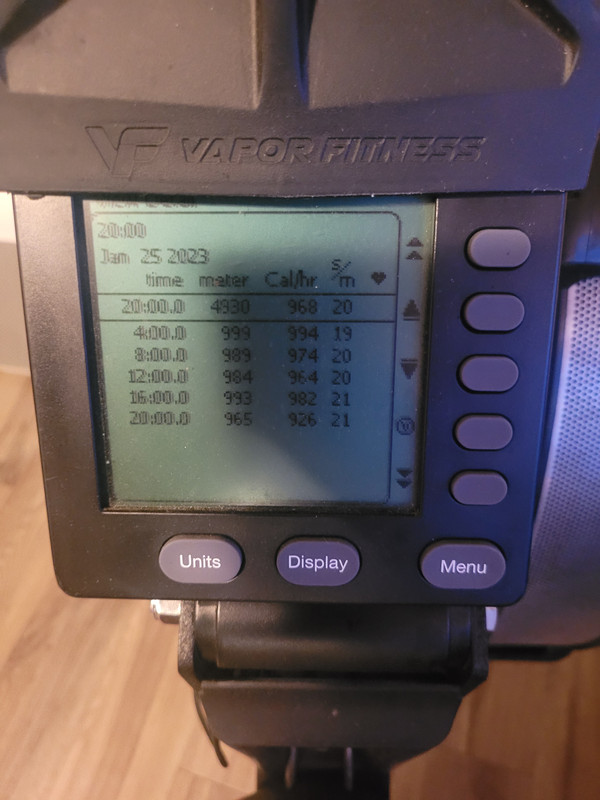
All the time, during lunch I will squeeze in 60 minutes of steady state on my rowing machine, I row competitively, that's about 1000 calories burned. I don't always take a shower right after.
https://i.postimg.cc/nh51xtSr/20230125-214014.jpg
What I love about this is during lunch-ish, I can be maxed out on caffeine. As I understand, you want to slowly ramp up your caffeine over several hours. Can't normally do that before work, or even after work.
> Zoom out: The value of the commute time saved is even greater than the numbers suggest, write the paper's authors, for three reasons:
> Remote work saves money. (No more spending on gas or trains or buses.)
> Workers also spend less time grooming and getting ready for work when they're remote.
> Working from home gives people more autonomy over their time during the day.
I know exactly what they are talking about!
Just doing some quick math, for a relatively well paid dev at $120 per hour with 260 work-days in a year saving about an hour a day that equates to about ~$31k needed to justify going into the office on a purely pecuniary front.
Marginal cost of an hour increases with each hour, at increasing rates.
If the extra time spent is causing one to lose sleep/exercise/time with kids/hobby time, I could see it being worth quite a bit more than a standard work hour.
There is also morbidity and mortality risk of commuting and commuting costs to take into account. In a car, I would put that lower bound at $0.50 per minute.
((72*260)/60)/24 = 13
That is 13 full days of time per year. That is a vacation. Or a long training course to learn a new skill. An hour+ a day to hang out with your kid or friends or dog or laptop or car.