Japan's hydrogen strategy does nothing for decarbonisation: study
hydrogeninsight.comI find it weird how hostile to hydrogen the "renewable energy gang" is.
The story of how renewables take over the world and displace fossil fuels and nuclear totally relies on storage, in some cases seasonal storage, IE overproducing in summer and holding on to the energy til the end of winter.
Does hydrogen work for it? Well, maybe, it could, there are unresolved issues but hey we are trying to do science here. It's not like batteries work, they are fine for short term storage, but even then, they aren't displacing, say, pumped hydro. And yet hydrogen bad, batteries good. And don't even get me started on nuclear.
It feels like the "save the planet" movement, or at least some shards of it, come with a very specific notion of how exactly it is ok to save the planet, and what fails on style points.
I am not a fan of hydrogen, because I once worked with a former NASA robotics engineer. We were looking for a way to power terrestrial robots, and we asked him about hydrogen.
He told us there were extremely high efficiency hydrogen systems at the time. But they all suffered from similar problems:
- Hydrogen is highly flammable (or explosive) in an oxygen atmosphere.
- Hydrogen has truly awful power storage density—unless you compress it to a couple of hundred atmospheres pressure.
Nobody wants to store potentially explosive fuel at 200+ atmospheres. I'm not aware of current hydrogen technology at all, but that's a fundamental physics challenge that needs to be addressed somehow. And it needs to be addressed in a cost-effective way at each step of the distribution chain.
The problem with high density energy storage is that you're putting a huge amount of energy in a tiny space. Gasoline is flamable, lithium-ion batteries are notorious for ugly fires, and even flywheels can fail catastrophically. A good power storage system needs to manage this risk somehow.
(There was some really interesting work being done with carbon-fiber flywheels and maglev bearings in a vacuum about 20 years ago. Apparently that had decent power density, and it could charge off electric charging infrastructure. But car insurance companies weren't convinced it was safe. Which would also be a problem for hydrogen.)
There are ways to work around those limitations, basically removing the "very small and very reactive" part of hydrogen. You can bind it with Nitrogen to gen ammonia - which is till very dangerous, but much easier to contain or work with.
The problem with H2, ammonia, biofuels and other synthetic fuels is not that they have some limitations, it's that they are not accepted by the green energy dogma. Some green energy activists would like to see the gas stations go away, for example, and that is not going to happen if you keep needing to go somewhere to re-fuel, with any fuel.
The problem isn't "dogma," it's inefficiency. Throwing energy away is counterproductive, and Energy-to-Hydrogen-to-Energy throws away lots of it.
If there were no alternative long-term storage plans this might be acceptable, but that's simply not the case.
If you're using hydrogen to smelt steel or make ammonia fertilizer, then there's no energy loss (beyond what's needed to decarbonize petrochemicals anyway). The article aptly refers to these as "no regrets" uses.
Gas stations (ie ground vehicles) are fighting a losing battle. BEVs will eat the sector. They're simply so much less expensive [than hydrogen]: for the vehicles themselves, for the infrastructure, and then of course for the wasteful energy use in operation.
ICE vehicles conquered the world with abysmal efficiencies, they were around 10-15% when they already ruled the roads and the world. That is after we drill for oil, ship it, refine it, distribute it. Even today, manufacturers boast about engines with 40% efficiency in ideal conditions, which still translates to a meager 20-30% in real world driving.
Looking at efficiency alone is not enough.
> They're simply so much less expensive
Not yet they aren't. The upfront cost of an EV still makes it more expensive than an ICE vehicle. Also, they batteries are guaranteed to degrade, so the used market has very bad prices for EVs. At some point, they will probably be less expensive for most automobiles, but hydrogen can still play a part in trucking, trains, planes, boats and specialty operations.
Only about 64% of oil is used for transportation [1] and out of that, only about 50% for automobiles and light trucks [2] (even though for light trucks, motorcycles and other applications, EVs are not going to win probably). So BEVs could replace about 30% of all oil usage. The rest of 70% is up for grabs, so why not pursue hydrogen investment as a possible alternative?
https://www.eia.gov/energyexplained/oil-and-petroleum-produc...
https://www.eia.gov/energyexplained/use-of-energy/transporta...
>ICE vehicles conquered the world with abysmal efficiencies, they were around 10-15% when they already ruled the roads and the world.
Fossil fuel comes out of the ground with the energy already in it, hydrogen doesn't exist in a free form and the energy must be put into it coming from somewhere else.
Most hydrogen now comes from natural gas at maybe 75-80% efficiency through reforming, then it must be compressed, then it must be burned at similar efficiencies to fossil fuel or used in a fuel cell with slightly better efficiency than ICE.
It's way worse in efficiency than fossil fuels, you could just use the natural gas directly in a combustion engine and be way ahead. Solar/wind/nuclear to electrolysis is even worse, just charge a battery.
Hydrogen is a energy storage mechanism like a battery not a source of energy like fossil fuel.
Look at well to wheel efficiency BEV are far ahead of hydrogen.
Ulf Bossel got it right ~16 years ago. No significant change since then, other than steady improvement in BEVs.
Battery technology has utterly stagnated. There has been basically no changes in energy density in over a decade. All "progress" has been in the form of reduced cost, but even that has ended.
PS: Please don't post some Bloomberg article about this. They are wrong and did not correctly reference the state of battery technology back in 2010.
> more expensive than an ICE
The (relevant) comparison was H2 versus BEVs — ie comparing decarbonized solutions apples-to-apples. I have edited to make that more clear.
> why not pursue hydrogen investment as a possible alternative?
Because hydrogen, for all its marketing, doesn't solve the problems people have with BEVs. Better BEVs do.
I see a variety of BEV motorcycles and light trucks available. The same can't be said for hydrogen.
Neither solution is really decarbonized. It is also wrong to say only carbon leaves an ecological imprint. Recycling of batteries will be a huge logistical challenge or leave a high ecological impact itself.
Still, either a vehicle is more or less drives continuously or batteries will be the better alternative. But that is only for that sector.
Fossil fuel transport is fundamentally carbonized. BEVs are currently about 50% better, but at least it's feasible to achieve full decarbonization.
Recycling of batteries is very efficient at >95%[1], and will only get better with time.
As for addressing only one sector, welcome to the world of high-complexity problems. Climate change is a "1000 cuts" type, not a "magic bullet" type.
[1] https://techcrunch.com/2021/09/14/jb-straubels-redwood-mater...
>Fossil fuel transport is fundamentally carbonized.
Exactly, and I wish I understood why people thought this was a smart point.
EVs are a link in the chain that in and of themselves have no fundamental energy dependence on fossil fuels. They have an incidental reliance on fossil fuels to the extent that electricity is generated from fossil fuels. But they're a piece of the infrastructure puzzle that in and of themselves is fully solved and compatible with decarbonized infrastructure. I would like to think that one goal in advancing public understanding of EVS should be educating people to the point that this particular talking point never gets used ever again.
> Because hydrogen, for all its marketing, doesn't actually solve the problems people have with BEVs. Better BEVs do.
I guess it depends on the definition of "people". If you mean private automobile owners, then I agree that batteries will eat hydrogen's lunch. For everything else(70% of oil use), it's an open question. In the future, you might even see a migration of H2 technology from large applications to small automobiles, like we've seen with diesel engines.
> I guess it depends on the definition of "people". If you mean private automobile owners
I'm just following your lead. You were the one who brought up "gas stations."
>For everything else(70% of oil use), it's an open question
Not really. Road use is ~50% .[1] It's all going BEV, like it or not.
Agriculture is another 10%. Ditto.
The technology improvement curves speak for themselves. ICE and H2 have both plateaued near their theoretical limits.
I intentionally said "ground vehicles," not private cars.
[1] https://www.statista.com/statistics/307194/top-oil-consuming...
Even for non-ground vehicles my understanding is that the future of H2 is very murky: small aircraft have proven some efficiencies with battery electric that H2 cannot match, other than possibly as a generator to top up a large battery and if the large batteries themselves hit certain densities (which seems increasingly likely as BEV car production picks up and economies of scale start to take effect) it won't be worth the weight for an H2 generator and liquid H2 tanks. I've heard at least one scientist flat out state that carrying liquid H2 is about the dumbest efficiency possibility for air travel because if you are going to carry all that H2 anyway at least carry it as a gas and get free ballast from it. The only efficient H2 air travel is exactly the one we've known about for centuries: dirigibles. But we know that's a PR minefield in current popular culture to even suggest. (Which yes, we probably should have more dirigibles for other efficient air travel options.)
If battery densities end up meeting the needs of airplanes they meet the needs of ships easily enough. Plus, there's interesting new research on wind power for ships, which I find is a lovely irony to see ships return to wind power after all these years (though it may look quite different than the classic age of sail with primary propulsion still being electric turboprops).
>Looking at efficiency alone is not enough.
In general I would say I actually agree with this. It can be perfectly feasible to use an energy source that's terribly inefficient in some intuitive sense, but as long as it's economical to do so, poses no environmental harm, and you're getting significantly more energy out than you're putting in, you can be as inefficient as you want.
Now that said, I don't think that this kind of general truism is terribly responsive in this particular case, because it's nevertheless going to be true that inefficiency, and whatever sense you construe it, can indeed be a deal breaker and I think that's what GP is intending to communicate with respect to h2, biofuels, etc.
> Throwing energy away is counterproductive, and Energy-to-Hydrogen-to-Energy throws away lots of it.
Energy to plants to biofuels throws away nearly all the energy. More than all of it, by some accountings.
What are the alternatives for those use cases in which batteries are infeasible?
Pumped hydro (water) is about 81% efficient and easy enough to build with centuries of experience at this point.
There's also battery systems outside of Lithium Ion formulations which have other use cases. Thermal batteries are an interesting alternative in some use cases, particularly where fast access to heat in addition to electricy is handy (such as in collaboration with building HVAC and water heaters).
But also in general as we keep finding new density scales in the Lithium Ion formulations (and as we have hope to potentially discover even more formulations beside that) the number of use cases where batteries are infeasible keeps shrinking.
You'll never hear me defend biofuels.
The alternatives are mostly
* better batteries
* heat pumps to replace oil burners
* methane or ammonia for the remaining uses (eg trans-oceanic); globally shipping and aviation together account for only 8% of petroleum use
With a universal carbon tax everything would automatically self-organize into the most efficient solution, but of course we can't do that.
Off-road land use probably accounts for another few percent. It's hard to imagine heavy forestry, farming, and earthmoving equipment being powered by batteries.
Why not?
It seems like the real problem is a lack of imagination.
Are there some challenges? Of course. Are they insoluble? I can't see why they would be.
Isn't the whole point of cheap and plentiful renewable energy that inefficiencies in processes like this are irrelevant?
Why would long-term storage matter if wind and solar can produce so much energy that we cannot feasibly consume it all? What other long-term energy storage plans are there right now?
I would not write off fuel stations just yet. There may well be a future where some renewable fuel powers vehicles.
>Isn't the whole point of cheap and plentiful renewable energy that inefficiencies in processes like this are irrelevant?
No.
You're thinking of "too cheap to meter," which never came to pass, and (as it turns out) was just a marketing line.
>What other long-term energy storage plans are there right now?
https://news.ycombinator.com/item?id=34429623
There was a great article a few days ago about "factories as batteries" (pointing out that aluminum smelting is uneconomic but hydrogen works) but sadly I can't find it.
Cost would be an obvious factor. An inefficient electricity derivative fuel is always going to be more expensive than charging a battery directly from all that cheap/plentiful renewable electricity eliminating the "middle fuel". Especially when vehicle usage curves have a beautiful inverse to electricity demand curves and vehicles are generally parked for hours when electricity rates are at their very cheapest.
> Throwing energy away is counterproductive, and Energy-to-Hydrogen-to-Energy throws away lots of it.
The current process needs 55kWh of electricity to produce 15kWh of electricity on the other end. Not very efficient at all.
Look at how much energy is on the other end of the oil flow: 20% efficiency and still the ICE car is king, without subsidies, EVs would go nowhere. The hydrogen back and forth is still better than that.
Talking about efficiency is a losing battle, people don't care about that, they care about total cost, safety and convenience.
> Talking about efficiency is a losing battle, people don't care about that, they care about total cost, safety and convenience.
Without subsidies it is ICE that would go away overnight on two of those three factors and then the third shortly after the market catches up to the overnight shift. EVs already have lower total cost and higher safety (than carrying around a tank of explosives and actively igniting those explosives during travel). ICE looks more convenient with current refueling infrastructure, but if ICE subsidies disappeared and demand plummeted we'd see how fast ICE range anxiety returns when companies quickly en masse decide to not sell such a low margin loss leader. (I do mean "returns", we know from history that ICE vehicles were the original range anxiety and EVs were the reliably ranged household cars until enough gas stations existed. AAA was in part founded because of ICE range anxiety.)
(H2 cannot compete with EVs on any of these three. Total cost is higher. H2 tanks can dangerously explode, even if fuel cells are not themselves at least using a burning process like ICE. H2 refuelling seems convenient if you discount the fact that there's no general, ubiquitous H2 refuelling infrastructure and likely never will be, especially with how badly H2 leaks in all attempts at long distance shipping and long term storage.)
How about binding with Carbon and getting methane (CH4)?
that's exactly what I meant by "other synthetic fuels", but I was refraining from using the explicit words, because of the stigma, and I didn't want to derail the discussion.
At that point, why not just separate the hydrogen from all the methane we seemingly produce?
The internet says storing hydrogen in metal hydrides is safe and offers similar kwh/kg as lithium ion batteries.
It seems to me Japan is going all in on their new high-temperature gas-cooled reactor (which supposedly cant melt down)it transports the heat with helium in stead of water which allows for temperatures that allow for hydrogen production.
Just repeating what I read and hear online. This isn't an endorsement and I have no idea if it lives up to the hype. If it does it would be quite the game changer.
Yes, bonding the hydrogen with something could really change the tradeoffs dramatically.
For example, the main ingredient in gasoline is C8H18. It has good energy density at atmospheric pressure, and the fire risks are manageable. We already use carbon/hydrogen systems today!
I think one of the candidates for metal hydride fuel cells is MgH2? It apparently also has decent energy density. Of course, magnesium poses some risks of its own. And I personally have no idea what a complete supply chain and refueling system would look like, or what it would cost.
Still, I fully expect that any portable energy storage is going to come with tradeoffs: cost, pollution, rare materials, and always the risk of catastrophic discharge (via fire, explosion, or messy kinetic failures). We should pursue multiple alternatives and invest in basic science, because portable energy is incredibly useful.
I would also guess bonding and then using that adds two conversions worth of losses to the equation and are not free.
I totally get the risk. As a consumer I feel similar fear about EV car batteries. Even if you can find the escape hatch in a pinch (some EV doors aren't normally manually opened), your house could still burn down or there could be other life changing property damage. It's a small risk but still feels like a real risk.
This problem is mostly solved by LFP batteries, which have a much lower risk of fire. So much so that you're more likely to have a petrol car spontaneously combust.
> (some EV doors aren't normally manually opened)
That screams regulation waiting to happen. like, have a lever or something on there. there is no more obvious or easily accessible place to flee a vehicle than the door.
also, which "some". is this just another tesla quirk?
Yes, Teslas have buttons to open the doors, but there are also mechanical releases as a backup [1].
The backups unlock the doors "no questions asked", so to speak, which includes possibly damaging the windows (because they don't get lowered out of their seals). For the front doors they are so intuitively placed that pretty much all of my first-time passengers have already used them before I can tell them to press the button instead.
Models other than 3 also have mechanical releases for the rear doors, apparently, but using those involves removing floor mats (according to the owner's manuals, no personal experience).
[1]: https://www.tesla.com/ownersmanual/model3/en_us/GUID-7A32EC0...
I thought the article was fairly to the point:
> There is a “common understanding worldwide that hydrogen should be limited to applications where it would be difficult to achieve decarbonisation with other methods”, says the report by the Tokyo-based non-profit think-tank Renewable Energy Institute (REI), but Japan has instead laid out a vision of a “hydrogen society where hydrogen is used in every sector”, while promoting and subsidising the use of highly polluting grey H2.
The "save the planet" bunch are unsurprisingly not fans of plans that don't "save the planet".
edit to add: batteries are now at the point where a new pumped hydro scheme from scratch (i.e. no pre-existing dam) would be challenged to be a viable business case versus spending the same amount on renewables and batteries, even if you have a suitable geographic site for the water.
The "vision of a hydrogen society where hydrogen is used in every sector" is probably motivated by a desire to become technological leaders in this field. Japan has fallen behind in battery technology, and Toyota was an early leader with its hybrid vehicles, but when it comes to fully electric cars, Japanese car makers are also falling behind. So I suspect they are trying to find a niche where they can develop technologies that they can maybe export later. From that point of view, where the hydrogen is coming from is not that important. And: a battery electric car is also not really helping to "save the planet" if the electricity used to charge it is coming from a coal plant...
This was a plan from 2017, before (and possibly part of the reason) they missed the chance to lead on battery vehicles. So it just needs updated, as the article suggests:
> The report outlines three key areas where the government’s strategy is severely flawed:
1) The selection of low-priority applications;
2) Prioritisation of fossil-fuel-based grey and blue hydrogen; and
3) The lack of focus on domestic green hydrogen production, leaving Japan lagging behind other nations.
> Japan has fallen behind in battery technology
If you could say a little more about this, I'd appreciate it. Sanyo (Panasonic) and Murata Manufacturing (Sony) still produce top quality Li-ion cells, among the best there are, and the best NiMH cells in the world are still made only by FDK Corporation.
The attraction to hydrogen by the automotive companies of Japan is that it would preserve their balance sheets. An ICE car produces various revenue streams for auto makers. First, the sale price, then the oil changes, and plenty of ongoing maintenance. While a straight up EV would shrink an automaker's balance sheet tremendously. The motor has one moving part that is very resilient. The motor doesn't require a transmission. Regenerative brakes means a long time between needing new brakes. And then of course, other industries that support ICE transportation. Oil refineries, gas stations and all of that.
Conveniently, a hydrogen fuel cell in a car replicates almost of that. The fuel cell is a hot, complex finicky source of power that needs maintenance and sophisticated manufacturing to create. Storing the hydrogen itself is very tricky as it tends to eat metals. It still needs normal brakes.
You can see why the CEO's of Japanese car makers could allow themselves to be deluded about how much better fuel cell technology is than EV tech. EV tech is just a battery, an electric motor and regenerating braking. This is technology from a hundred years ago and needs very little regular maintenance other than tires, a wall socket and wiper fluid.
BMW is considering charging for heated seats in a subscription model.
"No maintainence" EV cars are just platforms for subscriptions.
Hydrogen vs battery isn't about farming dollars and cents, that can be done other ways.
Have they considered ad-supported seat heating? Along with crypto mining?
But pumped hydro schemes are targeted at frequent charge / release cycles (like once a day). I think what the post you answered to you pointed out is that Hydrogen could be used as long-term storage (storing overproduction from summer to be consumed in winter). This is where batteries are maybe not the best way forward.
I have not looked too deeply into Hydrogen myself, but even this [0] fairly critical post classes longterm storage as a B (scale A: very good, G: absurd). Even though there is other alternatives that are mentioned.
[0] https://www.linkedin.com/pulse/clean-hydrogen-ladder-v40-mic...
Summer storage for winter will not be a thing.
Tropical solar farms synthesizing ammonia for export to high latitudes will be.
Pretty much nothing in the renewable sector is a "viable business case" without some sort of government interference. You're speculating that batteries will be better buffers than hydrogen, but in truth nobody can predict the technological trajectories and neither presents a solution in the foreseeable future. If there really is an upcoming climate catastrophe, it would be stupid not to hedge your bets, which includes supporting hydrogen, nuclear, synthetic fuels and many other avenues. The fact that mainstream climate activists reject so many potential alternatives out-of-hand tells me that they don't truly believe in the catastrophe. They believe in fighting the monopoly man.
> Pretty much nothing in the renewable sector is a "viable business case" without some sort of government interference.
While not 100% a flat faced lie, this is intentionally misleading.
All energy production is heavily subsidised by the state, but of all methods of producing electricity as of Jan 23 2022, renewables are the cheapest.
Issues with storage, human rights, environmental impact, are a mixture of lies and red herring. How many human / environmental tragedies resulted from fossil fuel extraction?
People against battery storage don't actually care about that but they know that you do. "The card says moops"
You're arguing against a strawman. No one is seriously against battery storage. But if you take a serious look at the raw materials and supply chain issues it seems unlikely that we will be able to build enough grid-scale storage in the next couple decades to maintain reliable power for heavy industry. Some other solutions will be needed. That probably means building other storage systems plus continuing to operate many fossil-fuel power plants (at least on an intermittent basis).
> All energy production is heavily subsidised by the state, but of all methods of producing electricity as of Jan 23 2022, renewables are the cheapest.
That's not an honest assessment, because the major renewables are either geographically limited, or their production fluctuates heavily. To compare them against fossil or nuclear, we'd need to factor in the cost of the buffers, which completely changes the equation. If buffers + renewables were still cheaper, everybody would already be doing that and nothing else. People whose beliefs are challenged in this way tend to resort to conspiracy theories surrounding the fossil fuel lobby (disregarding the fact that renewables have a big lobby too).
> How many human / environmental tragedies resulted from fossil fuel extraction?
My point is purely economical.
> People against battery storage don't actually care about that but they know that you do.
I'm not against battery storage, but simple back of the envelope calculations show that production capacity is orders of magnitude away from solving just part of the problem (stabilizing the grid). Moreover, batteries do not last forever. It may well be the case that a combination of natural gas and renewables is the most effective option even from an CO2 perspective, especially if we have a way to turn surplus energy into negative CO2. Hydrogen happens to fit into that scheme, because natural gas plants can easily be converted to hydrogen plants. Then again, maybe there's a breakthrough in battery technology instead. You can't predict these things, it's therefore unwise to dismiss alternatives that don't check all the boxes of solarpunk fiction.
I find there is a selective black and white perception of the world.
For example, renewables right now rely heavily on quick-to-dispatch gas plants - and that's fine as a stepping stone to a carbon-free future. Though the plan fo eliminating it is still vapourware - maybe better batteries, maybe larger grids, maybe something else.
But creating a hydrogen economy that somewhat relies on fossil fuels, with a clear pathway to eliminating the fossil fuel component? Anathema!
I have nothing at all against renewables and batteries, it sounds neat but remains incomplete here and now. But until it's clear it can replace all our uses of energy, I remain baffled by people who would like to shoot down any potential different path to that same goal.
You are correct. This discussion is about ideological purity. Meanwhile we are still are the experimental stage to determine what technologies will actually work in the real world. Instead of "letting a hundred flowers bloom", we are railing against those who dare to violate the "little green book".
It just makes the Green movement look like extremists.
It's not about purity, it's about removing carbon from the atmosphere. All the existing industrial scale hydrogen production gets hydrogen from carbon based fuels, using other energy. There doesn't appear to be an option at this time for producing carbon at any reasonable scale without using carbon fuel sources. If we get fusion power, really cheap power, instead of splitting water using that free energy we could just directly run electric cars. There is a cynical pushing of "green hydrogen" from the companies that want to preserve their internal combustion industrial infrastructure (notably Japan), and from carbon fuel producers but calling the result 'green hydrogen'. The issue is there is no clear pathway. When/if that happens, there's still the issue of the infrastructure to manage carrying around hydro to refuel or making it at the source. There's no there there.
Did you read past the headline? It's not anathema because of aesthetics, it's anathema because it doesn't work. There's nothing wrong with shooting down an idea that you have studied and found to be counterproductive.
It doesn't say anything like it, and your comment doesn't address mine either.
1. That particular approaches don't work is irrelevant. TFA focuses on a particular Japanese policy, which may or may not be misguided. The article is light on discussion, but let's take it at face value. Should we say wind+solar is stupid because Germany is currently in an energy mess? I don't think so.
2. I don't think it's dumb at all to experiment with various synthetic fuels via fossil fuels initially. With both hydrogen and battery storage, the real devil is in the details, in particular in seasonal storage. If we can make battery, or hydrogen, or ammonia economies work, then we know how to produce things, and thanks to cheap intermittent renewables we can do it. Frankly, efficiency hardly matters at this point. If, as predicted by renewables evangelists, energy will be almost free soon, storage efficiency matters not. All that will matter is long term storage cost, an open question for any approach.
3. Regardless, my comment is aimed mostly at other comments. "Duh everyone knows batteries are better", "hydrogen is a dead end".
The part of my comment you tacitly ignored is that burning fossil fuels is somehow ok en route to renewables+batteries without a viable concrete plans on how to decarbonize fully, but not for other synthetic fuels such as hydrogen.
There's one key problem, making hydrogen without creating more carbon in the atmosphere. If they solve that, then it's worth considering. If we have fusion providing endless electric energy (which could be used to split water), then we could just use it to fuel electric cars too. There's the classic problems of lack of energy density, and hydrogen fires not being visible. I think we can probably make hydrogen containment systems better, and figure out how to make fires visible. To me it all comes back to getting the fuel. When we can do that we can consider it.
https://www.powermag.com/fukushima-hydrogen-energy-research-...
> For the past two years, FH2R has consistently been ranked as one of the world’s largest projects of its kind. According to project participants, FH2R uses a 20-MW solar PV array built on a 180,000-square-meter site along with grid electricity to power a single-stack 10-MW-class electrolyzer. Its developers say it can produce, store, and supply up to 1,200 Nm 3 /hr of hydrogen at rated power operation.
This is a "its not completely there yet but this is where its trying to go."
I hope to give a little context on this. I have been fairly active in trying to immerse myself in the CO2 problem of the planet and what I have seen is that there are companies-interest groups that are lobbying for some technology solutions that require outsized investment. Hydrogen and Nuclear come to mind.
They are solutions which will soak up massive amounts of capital for years-decades before they will start paying off. They also know that if they don't market themselves as "the one true solution that solves all" they might not get the capital required to build out their vision. So they HAVE TO oversell it to cover all use cases where they could possibly be applicable and try to get money flowing into alternatives for themselves, otherwise they would not be feasible.
So this is at least one of the reasons for hydrogen problems. They try to create FUD about BEV so they can say hydrogen is better. Meanwhile fossil companies are like really happy about this:
- slows BEV adoption
- while alternatives are not there sell their own stuff
- hydrogen is also massive molecule shipping infra so they will bid for those projects
People who actually look into hydrogen will find lots of issues with the marketing:
- "green" hydrogen is nowhere to be seen in quantities
- real world round-trip efficiency comparable to ICE engines
- which leads to massive need to overbuild green electricity generation (== 2-4x bigger NIMBY/capital problems for nuclear/wind)
So the immediately deploy-able solutions of batteries and PV-solar that have no scale threshold are making their projects riskier.
In essence both nuclear and hydro require governmental funding to get started. So the same sales pitch is now also on political level. Lobbyists etc doing their dark FUD spewing things.
Bottom line of building out hydrogen from governmental monies means that the projects which absolutely have to use hydrogen to be green (steel and some other industrial processes, maybe flying too) will be cheaper because it has been subsidized by nations by having bought into other stuff which will not be used in scale because other market technologies are so much better for those use cases.
For example: I have a BEV and the range is good for me, home charging is 10-100x cheaper than hydrogen, I don't need to go to a hydrogen station etc.
> It feels like the "save the planet" movement, or at least some shards of it, come with a very specific notion of how exactly it is ok to save the planet, and what fails on style points.
This has always been a pain point for me. If you feel the world is facing an existential crisis (and I do), then it seems weird to go down the list of possible ways of avoiding utter catastrophe like you're at a sushi bar:
Solar: Ah, yeah.
Wind: Of course.
Nuclear power: Nope.
Geo Engineering: Hell, no.
I don't know how you can believe that we are facing millions, if not billions, of deaths and the possible collapse of civilization and then "tone police" the solutions.
It is not "tone policing". That is an accusation guaranteed to derail any discussion.
Nukes and geothermal simply cost more than solar and wind: nukes, many, many times more. Spending a billion dollars gets you N GW of solar or wind, and N/M, M>>1, of others. Generally, if you need a steam turbine to keep working, you will trail behind anything with zero opex.
Hydrogen has a plausible place in long-term (i.e. strategic) underground storage, in steel refining and other manufacturing processes, and (as LH2) in the future direction of aviation. It might have other roles, such as an intermediate form when using ammonia. Trying to force it where it is a bad fit adds noise.
> Nukes and geothermal simply cost more
They only cost more because of "environmentalists" fighting both new reactors, fuel element transport and waste storage tooth and nail in a way they don't fight coal ash ponds or heavy metal tailing lakes...
(The average lifecycle cost of nuclear power at scale in France - where plants were built before anti-nuclear hysteria - is about 7 cents per kWh, same-ish as the cost of solar or wind fleet, and with fewer intermittency problems. Solar might be cheaper in Hawaii and California, but most places are not blessed with 3,000 hours of sunshine a year.)
False. As has been explained in detail too many times to count.
Please do not try to resurrect old falsehoods.
Funny somehow France had green energy decades ago and France had low energy prices for decades. Really crazy how expensive nuclear is.
Specially now where you have Germany who spend lots on renewables using many 100s of billions to buffer the impacts of their policies. For that price they could have just transformed to nuclear.
Germany could literally have spent the same amount of money over the last 20 and next 5 years and have done what France did in the 70/80s and they would be almost 100% green by now. But nuclear is expensive of course.
And of course those reactors would work for the next 80-100 years, but I guess its much better to rebuild wind turbines 4 times over during that time.
> in steel refining
Far better to use the technology the Boston Metal uses.
> in the future direction of aviation
Questionable. Either use batteries or just go with full synfuels.
France is better known for high taxes than for low energy prices... Maybe there is a connection. No one, anywhere in the world, has ever fielded a nuke not massively propped up by public money.
Germany would today be in a much worse position if they had spent what they did on renewables on upgrading their ramshackle old nuke contraptions instead. France, notably, imported power through summer.
> France is better known for high taxes than for low energy prices... Maybe there is a connection.
No there isn't actually. The French pay high taxes because of their social services.
If you actually inform yourself you would know that the cost of the nuclear fleet went on the books of the utility, not the French state and has been paid down by the utility for 40+ years now DESPITE the very low energy prices.
> Germany would today be in a much worse position if they had spent what they did on renewables on upgrading their ramshackle old nuke contraptions instead.
Germany was actually one of the best operates of nuclear power. Their reactor had amazing uptime.
> France, notably, imported power through summer.
And the reason is that the Anti-nuclear idiots who were in power in the French state for the last 30 years took cheap green energy for granted and instead of doing the needed maintenance, they forced the utility to invest in solar and support fossil fuel (yes really).
And in fact in 2015 the French state literally basically forced threw a law to turn off large parts of the nuclear fleet in 2025. This lead to even more maintenance not being done.
This is a case of the French state shooting itself in the foot and taking for granted what their fathers gave to them and them treating the fleet like shit and just believing the magical pixies of renewables would reliably produce 10s of GW of power for them within a few years.
Germany is literally spending up to a 500 billion $ on a plan to mitigate all the issues with their energy policy, for that they could literally have built a nuclear fleet 2x the size they needed to be 100% green on nuclear.
And it would start to come online in 2035. They would burn coal the whole time until then, while renewables cost continued on down below $10/MWh.
They are more expensive only when compared to a marginal kWh put at time of solar/wind’s convenience into the grid that is stabilised by other means (mostly fossils). Look up how much electricity went up in Texas last time the generation dropped by iirc just ~20%; solar goes to zero every night, and wind regularly dies down across Western Europe for days or even weeks. In those circumstances and without fossils to fall back to, nuclear is infinitely cheaper than solar/wind.
We can’t plan our grids or judge the costs according to not just best, but even average scenarios. We have to plan once-in-decades anomalies, the long tail. Non-dispatchable energy sources get exponentially more expensive once you start doing that.
The "stable grid" argument is well past its sell-by date.
In the future we will need to build out storage. Before there is enough renewable generation to charge storage, building it would be foolish. After, we will need storage, and build it.
And, we will always need liquid fuel. As cost for renewables continues exponentially downward, ammonia synthesized at solar farms in the tropics will undercut NG. In the meantime, shortfalls will be filled by burning an ever-decreasing amount of NG.
We will need a hell of a lot of electric ammonia synthesis in coming decades.
I don't understand why do you think it's "past its sell-by date". The wealthiest country in the world had a statewide blackout when generation dropped really mildly compared to intra-day, intra-month, and intra-season variability of solar/wind, and you just dismiss it? On what basis?
If the storage will need to be built out, then your argument about costs is disingenuous in the world without fossils, because those costs are currently masked by fossil generation.
Texas, artificially cut off from the wider grid, exhibited its domestic governance failings once again. This has no wider implications for energy policy than that grid connectivity covers for multiple sins.
Need for fossil generation backing will decline naturally as storage is built out, but will take a long time to go to zero. Pretending otherwise makes bad policy. Building storage without renewable capacity to charge it from would be stupid because charging storage by fossil fuel burning would be monumentally stupid.
It is a nice demonstration of an impact of a fairly mild unexpected drop in generation. Renewables, as things stand, are that, all the time, on steroids.
You don't need as much storage if you have nuclear and you can't compare the two without accounting for (potentially weeks or months of) storage. "Building out storage" is not an unavoidable expense that just happens automatically, it's a requirement to have a reliable greed that is mostly based on non-dispatchable renewables, and thus a part of their cost.
Seeing how you outright ignore this point, I suspect you are arguing in bad faith.
Seeing how you are promoting instead a thoroughly dead alternative that no one will ever again spend another cent of their own money on...
Good day, sir.
You yet again ignored the point and instead appealed to authority.
It's also factually false.
* UK approving Sizewell C for £20bn https://www.ft.com/content/11ca7193-f7d8-496f-bb90-d3270b2cf...
* about 60 reactors are being constructed as we speak https://world-nuclear.org/information-library/current-and-fu...
* the US just allocated $2.5b to support the demonstration of two advanced U.S. reactors by 2028 (X-energy and TerraPower) https://www.powermag.com/updates-on-five-big-nuclear-energy-...
* just a few days ago NuScale's SMR got approved https://www.energy.gov/ne/articles/nrc-certifies-first-us-sm...
All public money. NuScale is a particularly egregious example.
Solar and wind are variable. Putting them in the same category as nuclear without including the storage costs is disingenuous. This is a super basic issue and you tut-tutting with this deeply flawed by oft-repeated talking point is why this comes across as “tone-policing”.
https://pris.iaea.org/PRIS/CountryStatistics/CountryDetails....
There is not a single reactor on this list with an operation factor (proportion of hours delivering any energy) over 85%.
Storage, backup, and overprovision are part of any system. 24/7/365 nuclear is a myth.
Once you acknowledge that reality it becomes a calculation of total costs vs. total emissions abated. VRE is about 5x as effective by this metric without even using any strategy other than minor overprovision, existing w2e/hydro, and fossil fuel methane backup, because generating even the mythical 100% green energy starting in 20 years is far worse than generating >80% green energy starting in 2 years.
Even if the long term plan is all nuclear (this doesn't work with commercial technology, there's not enough U235) it's still optimal to max out the VRE pipeline first. The VRE will pay back before your nuclear reactor is done just by the money saved on coal and gas.
It ain't the money cost, we have money coming out our ears.
It's the time cost. Nuclear takes far too long; geothermal merely takes too long. Same with fancy long-distance HV transmission proposals.
Can it be built and commissioned in a year? Do it.
> Nuclear takes far too long;
And yet nuclear is the only tech that has proven to decarbonize a major industrial economy within just a few decades. But of course it takes to long.
When in reality it has not been proven that anybody has ever used solar and wind to de-carbonize a major economy. But somehow everybody knows that it is 'fast'.
Germany could have literally gone to 100% nuclear within the last 20 years and it would likely have cost them 250 billion $ or less. Reliable energy for 100 years. Almost no cost for the grid because you can just build nuclear plants next to coal plants.
> Can it be built and commissioned in a year? Do it.
What is this obsession with short term thinking? When you build major long term infrastructure like trains tunnels, you simply don't do it in a year.
If France could do something in the 70/80s, finishing nuclear reactors multiple reactors every year. Germany could have done the same and they would be done by now.
That circle you're running around with the goalposts in is getting very small. Multiple countries are installing more new renewable generation every year than new nuclear has ever gone online.
Also it didn't decarbonize france's economy. It partially decarbonized its electricity, this is well under half of the goal. Numerous countries have achieved more with wind and hydro, and the list of countries with higher VRE percent than france's nuclear is growing longer by the month.
> It partially decarbonized its electricity, this is well under half of the goal.
Literally no country uses renwales to produce transport fuel.
France decarbonized electricity and has a very high rate of electricity heating in homes. So they are ahead there to and they did that on the back of the nuclear fleet.
> Numerous countries have achieved more with wind and hydro
And even more country have achieved more with hydro and nuclear, such as Sweden or Switzerland.
> Literally no country uses renwales to produce transport fuel.
So didn't decarbonize its economy then. And sweden prodices about as much wind as nuclear.
... and would be in the position France is in now, with a fleet of obsolete contraptions that will cost further billions to decommission, and with nothing on the horizon to replace them.
France fleet is not obsolete. They can survive for another 40 year easy. Sadly the French 2nd generation pissed away all the great work the first generation did and neglected the fleet they had. They are treating the fleet lie the giving tree.
Ironically because the French were so blessed with so many reactors, they were one of the few nations that didn't use their reactors very well. The Germans were actually better at using their reactors.
The French since the 90s are just as anti-nuclear as everybody else and they have done everything to destroy the amazing fleet they have, and only now realize how incredibly fucking stupid that was. They even forced the utility to collect money from the nuclear fleet and invest in solar. And they forced the utility to sell of nuclear base load at bargain bin prices and then force them to buy that power back at high prices.
And its amazing how anti-nuclear people can look down on France when literally every day they produce green cheap energy for all their people. And they have been saving CO2 for 40+ years, and that is worth more then any CO2 we are saving now.
Almost every other country should envy the French position.
Yet, in just a few years all the French reactors will be mothballed because they cost several times as much to operate as buying off the grid.
Except that will not happen and no French govenrment will be so fucking stupid.
Nuclear is providing cheap long term stable power supply and if they stop forcing their nuclear fleet to support solar and fossil (literally things the French government forced them to do) and do proper maintenance French will have cheap carbon free energy for the next 50+ years.
Funny how nuclear is so expensive and yet somehow people in France and places that nuclear reactors have mostly cheap power while Germany is spending absurd money prevent their population from feeling an even worse hurt from the policy they have inflicted on them.
In total the Germany population over the 50 years has paid way more for energy and getting way worse outcomes. That's a simple fact.
Just the cost for the measure Germany has to take now to buffer from this whole Russia fuckup would have been enough to pay for a whole fleet of nuclear reactors for Germany. Instead they are gone spend another 15+ years using coal and gas and then have to manage an incredibly unstable complex grid while having to replace all those wind plants they put up in the next 20-30 years.
And the French reactors will still be running and still provide stable carbon free power for a low price.
I love how it's simultaneously cheap, but selling a small portion of the energy for the price they claim it costs is a completely unfair burden that is "supporting solar and fossil".
"It can be cheap! All you need is free loans, a liability cap less than the cost of one reactor, money from the military, exemption from any democratic process as to where they go, underfunding decomissioning, cheaping out on materials, never doing maintenance, charging more than the claimed cost, operating at a massive loss, creating a debt you foist on the public, build up billions of unpaid maintenance costs, and then not selling it for cheap! Oh, and you still need to overprovision and build backup."
Point. We are in a race against global civilization collapse.
But the race is, at base, to displace atmospheric carbon release. So displacing more, faster is the measure of merit.
Hydrogen is a less efficient energy store than a battery, requires high pressure systems, leaks are dangerously explosive, distributing it is more difficult than petrol or electricity. It has applications, but in general, its often significantly worse than any other greener alternative.
> requires high pressure systems, leaks are dangerously explosive
Is this different in some way from natural gas? Why can't we use the existing storage and distribution infrastructure for natural gas for handling hydrogen?
Hydrogen is a much smaller molecule, so it leaks out of much smaller holes. It leeches into metals and causes hydrogen embrittlement. It is about 1/3 the energy density per volume of natural gas.
Natural gas distribution infrastructure is far leakier than you expect. It's a massive problem. We really need to get away from solutions that involve pushing gas through pipes.
> We really need to get away from solutions that involve ...
Halt! Propose a working alternative first, we'll talk about banning later.
Electricity. It doesn't leak from cables.
Now: we need to get away from solutions that involve pressurised gas being piped or transported around the world. =)
> Electricity. It doesn't leak from cables.
https://en.wikipedia.org/wiki/Corona_discharge
"[...] Corona discharge from high voltage electric power transmission lines constitutes an economically significant waste of energy for utilities."
https://en.wikipedia.org/wiki/Overhead_power_line
"Transmission higher than 132 kV poses the problem of corona discharge, which causes significant power loss and interference with communication circuits. [...]"
It might be unexpected and surprising, but yes, electricity does leak from cables!
My impression was that it's possibly acceptable for on-site storage but less for transport or transportation applications.
> Hydrogen is a less efficient energy store than a battery
Less energy dense, but not less efficient
Yes but batteries contain toxic materials and rare earth minerals, require lots of energy to make, lots of energy to recycle, etc...
So energy to mine the materials, energy to assemble the battery, energy to recycle the battery after it's useful lifespan (5-10 years)... None of these are ever counted in people's calculations. I tried to find data on energy required to produce the batteries and they still didn't count the mining cost.
I'd wager that hydrogen is more energy efficient over the entire lifespan of a vehicle.
https://www.theguardian.com/commentisfree/2021/jun/14/electr...
Lithium mining is expensive and you need to move a lot of dirt to get a little lithium...
100 billion tons of waste and never mind the waste aspect, it takes a lot of energy to move a ton of dirt.
Li-ion batteries don't contain rare earths.
Recycling li-ion is currently a booming business because it requires much less energy than processing raw ores - see Redwood Materials for more info.
Everyone takes these calculations into account because batteries come under intense scrutiny from people with ulterior motives.
I can't wrap my head around how much lithium or other rare earth metals will need to be mined to transition entirely to solar, wind, and electric cars. What countries are these mined in? What percentage of the US grid is from wind or solar? Like 10%?
> What percentage of the US grid is from wind or solar?
That question needs to be qualified with a date and time. It's a moving target. Generally: number go up.
26% of electricity generated in Texas in 2021 was from wind. Installed wind and solar capacity has grown quite a bit since 2021.
Here is a nice infographic of one years mining output for perspective
https://elements.visualcapitalist.com/wp-content/uploads/202...
No lithium or "rare earths" (which are not anyway at all rare) are needed for a transition to solar and wind for power.
Electric cars use lithium, just now, and a bit of rare-earths. (They are used in wiper and window motors.) Cars are their own thing, which we would be better off with less of.
Obviously before you have built out wind and solar, you don't have much yet. It is a vacuous observation. Instead, look at the rate of deployment, which follows a classic exponential curve.
what does the li in li-ion stand for
I don't know if you have glanced at a Periodic Table recently, but Lithium is on the far left hand side and far distant from anything marked "rare earth" much less the "rare earth metals" (which are primarily just right hand of the center-line). As element number 3 on the periodic table it's also per some basic interesting Big Bang statistics the third most common element in the universe. Admittedly most of the universe's Lithium at this point has settled into various compounds which are regularly called "salts" (a short, common name, because they are so common), though household table salt is usually Lithium's "big brother" on the periodic table Sodium, but Lithium itself is still just about as common as dirt on this planet even if don't tend to sprinkle it haphazardly on our foods.
I was misremembering how the term "rare earth metal" is used, my apologies.
Most of the mining waste you refer to is related to COAL. They produce roughly 5 billion tons a year of coal for which many times of that is waste rocks.
5 billion tons of coal gets mostly burned up.
Meanwhile 50 THOUSAND tons of lithium is produced per year. For which maybe millions tons of waste gets created.
More context here: https://twitter.com/visaskn/status/1616813002547773444
https://en.m.wikipedia.org/wiki/Lithium
Hmmm, 500,000 litres of water per ton of lithium. Electrolysis required to create lithium metal. Plus the required dirt being moved, water being moved, energy for electrolysis, etc...
Sounds very energy efficient...
/s
I know you are a sarcastic troll.
But still, that 5 billion tons of coal gets mined, transported and then burned to produce energy once.
A kg of coal contains about 8kWh of energy which it can release once. This is the best kind of coal. Also you only get about 40% of it as electricity.
A kg of lithium will store about 1.1kWh energy in a battery .. thousands of times before it needs to be RECYCLED.
Your efficiency is off by many orders of magnitude.
That just compared coal 'to produce energy once' to batteries which have no inherent energy. These are different things.
Coal is an existing form of energy reserve which has stable long-term storage and can be consumed once. Batteries are not native energy, though batteries can be manufactured and then charged to temporarily time-shift energy.
Sure, same goes for hydrogen. I don't think there are any hydrogen deposits that can be readily used.
But important distinction nonetheless.
Yes, I also see hydrogen as a energy storage medium. Compressed air and pumped hydro and hydraulic accumulators have similar functions.
Sometimes the media conflates energy production, storage, and transport. This leads to confusing arguments.
Who's comparing coal to batteries? We're talking the lifetime energy cost of producing batteries from the ground to the recycling depot.
Coal production is terrible and I'll never support it.
You compared them to coal. You put out 100 Billion tons of waste number. Biggest share of that is from mining coal.
So why are you attributing the coal mining waste to lithium then?
If you actually look at the numbers the benefits of mining for lithium FAR outweigh its downsides.
> So energy to mine the materials, energy to assemble the battery, energy to recycle the battery after it's useful lifespan (5-10 years)... None of these are ever counted in people's calculations. I tried to find data on energy required to produce the batteries and they still didn't count the mining cost.
This is a standard component of LCA databases and puts the ESOI in the 50-100 range for the first generation of batteries. Subsequent generations are higher.
Electrolysers also require mining, as do fuel cells, as does any source of heat for reverse gas shift or similar.
Your fud about rare earths is also a lie for any chemistry proposed for grid storage. None of them involve rare earths in any measurable quantity (nanoscale films on semiconductors for controllers and such are insignificant)
Hydrogen (or rather hydrogen derived molecules) are a viable method of seasonal storage, but that doesn't mean most of the hype doesn't exist to greenwash gas or that your talking points aren't propaganda.
Hydrogen cars are worse than BEVs and much worse than transit or active transport.
> This is a standard component of LCA databases and puts the ESOI in the 50-100 range for the first generation of batteries. Subsequent generations are higher.
Yes that's the number I found WITHOUT accounting for mining the materials... Just manufacturing the battery.
> Electrolysers also require mining, as do fuel cells, as does any source of heat for reverse gas shift or similar.
Yes but there's far less of those materials required than the sheer amount of battery cells being produced for automobiles.
> Hydrogen (or rather hydrogen derived molecules) are a viable method of seasonal storage, but that doesn't mean most of the hype doesn't exist to greenwash gas or that your talking points aren't propaganda.
Greenwash gas? The whole point of hydrogen is to create it using renewable sources of energy... The whole problem with renewables is storing the energy since they don't produce reliable baseline energy. Hydrogen accomplishes that.
> Yes that's the number I found WITHOUT accounting for mining the materials... Just manufacturing the battery.
Are you sure you are reading the study right 'manufacturing' in standard LCA methodology also includes embodied enery/carbon of the ingredients?
You can also fermi analyse it. The absolute cheapest form of energy is lignite burnt at the mine front which is about $5/MWh. Before shortage induced price hikes, the 100 or so grams of lithium in a 1kWh battery was worth $1-2. The battery can store around 5MWh in its lifetime. This puts a fairly hard upper bound of 4-8% of the cycled energy. Phosphorus and iron are less scarce, copper might be significant. Any cost that isn't the cheapest possible energy pushes the lower bound down.
Green hydrogen is fine in niches where it's suited, but most of the hydrogen-for-everything schemes rely heavily on fossil fuel derived hydrogen whenyou look under the hood and ignore the amount of methane, CO2, and H2 that will escape at various stages. H2 is not a greenhouse gas on its own, but it makes methane much worse.
> Yes but there's far less of those materials required than the sheer amount of battery cells being produced for automobiles.
And if you look at the quantities required to replace the role of BEVs rather than as an adjunct, it's worse.
The people who like hydrogen should show us all that we're wrong.
- First hydrogen fuel cell: 1842
- Earliest li-ion battery: 1965~
You've had a 100 year head start, and yet hydrogen fuel cell cars are terrible. Hydrogen planes? Some prototypes are being worked on.
I can go buy an entire car with a massive li-ion battery in it right now. I can get batteries to power my house during an outage.
Hydrogen? "There are some unresolved issues"
"Why is everyone so hostile to hydrogen" Like, release a product already. Everyone is moving forward on green energy without you.
So, the context is: various organisations are researching how hydrogen storage might work. And a gaggle of, hmm, commentators goes "omg did they not get the memo? Hydrogen is stoopid. Batteries much better soon".
I'm glad research is funded, because you literally never know where the breakthrough will come. Solar was painfully expensive for most of its history, now it's super-cheap.
As far as I'm concerned, a battery+wind+solar grid is just as much vapourware with serious barriers to success. I'm glad they are worked on though...
EDIT: for example, I'm quite excited about gravitation nal storage in disused mines (coal ones often, in fact). By the same token, should that be sacrificed on the altar of batteries? Or actually pursued, possibly to a happy end?
The organizations researching it /funding it tend to be oil/gas. They are usually more focused on staying relevant and greenwashing themselves. With hydrogen they are interested because they see potential to extend the life of their natural gas assets - and not necessarily in a "green" way.
In regard to your point that we ought not to be cynical - it is true that these organizations can do great research. For instance, they knew all about global warming in the 70s.
Funding it is fine.
Funding electrolysers is fine.
Credulously accepting 1 electrolyser as a justification for 10 fossil fuel hydrogen reformers is not.
Accepting hydrogen busses and trucks as green before they actually run on green hydrogen is not.
Letting fossil fuel hydrogen steal funding from renewable projects is not.
Gravity storage in weights held far above the sea floor is probably more viable than in mineshafts, because you cannot share the motor/generator and winch between multiple mineshafts, and most mineshafts do not go not very deep.
There is a lot of seabed.
> - First hydrogen fuel cell: 1842
> - Earliest li-ion battery: 1965~
You just limit to lithium-ion to mislead. Battery vehicles predate all of that:
> The invention of the first model electric vehicle is attributed to various people.[7] In 1828, the Hungarian priest and physicist Ányos Jedlik invented an early type of electric motor, and created a small model car powered by his new motor. Between 1832 and 1839, Scottish inventor Robert Anderson also invented a crude electric carriage.[8] In 1835, Professor Sibrandus Stratingh of Groningen, the Netherlands and his assistant Christopher Becker from Germany also created a small-scale electric car, powered by non-rechargeable primary cells.[9]
-- https://en.wikipedia.org/wiki/History_of_the_electric_vehicl...
That's not really the strongest argument though, you may as well compare whatever happens to be the most recent version of a hydrogen fuel cell to the original battery developed by Volta.
I mean the whole cathode / electrolyte / anode idea hasn't changed much, we just found better materials for all three.
This is disingenuous. Batteries are more convenient for everyday electronics, but not necessarily better for big storage. Reason is, that you can't easily scale a battery storage, while hydrogen can be scaled just by putting more steel tanks.
Will not the H2 tanks scale better than batteries for large scale storage?
Battery capacity scales linearly (n) to material requirements , while a gas tank's capacity scales quadrically to material requirements (n^2, because of only using a surface of materials to store a volume).
I'd also assume the energy required to keep the tank cold relatively lower as the tanks gets larger.
Why keep it cold? Just fill an enormous balloon...
Seems like only a few years ago people were saying that battery powered cars weren't possible, you'd never be able to fit a big enough battery in there, they'd never have the range, weigh too much, be too expensive...
> weigh too much
This is still a problem we'll have to face. Road tear and wear grows exponentially with weight, and tire pollution (both noise and particles) is also nothing to be disregarded.
Also batteries require all sorts of raw materials with problematic provenance (e.g. lithium mines destroy the nearby environment, cobalt comes from child labour in terrible conditions, etc.). Cars with batteries are better than cars with internal combustion engines, but still expensive, inefficient, polluting and wasteful as the main means of transportation of every human being on the planet.
> Road tear and wear grows exponentially with weight
Road wear actually grows with the 4th power of weight, not the weight in the exponent, but that is a really bad argument regardless because trucks exist.
> Road tear and wear grows exponentially with weight
I thought something like 90%+ of road wear and tear was due to tractor trailers, dump trucks, and other massive vehicles. Meanwhile cars were a rounding error. Do EVs change that?
99%+. So, no.
100+ years ago someone in France build a tunnel for horse and carriage with a propeller and a steam engine on both ends. The tunnel went down at the start helping acceleration and up at the end to slow the cart down.
It might not be incredibly fast or even useful it does show we don't need to put the engine on the vehicle (entirely)
I just imagined a hilarious contraption using slow moving water in a canal. A screw is inserted in the stream driven by a wheel on the road. As long as the speed at which the road moves is different from the speed of the water you can keep extracting more speed from the flow. (haha)
Which does not change the fact, that mining and refining of raw materials to make batteries so you can repeat the cycle again in 10 years does not scale as making steel tanks.
>It feels like the "save the planet" movement, or at least some shards of it, come with a very specific notion of how exactly it is ok to save the planet, and what fails on style points.
That might be how things appear from a view from 10,000 ft perspective, but once you zoom in, there's serious logistical problems that are unique to hydrogen, and they are problems that can't be brushed away by saying "gee why can't we all get along." I'm far from an expert here, but off the top of my head, hydrogen is uniquely difficult to store, and while it scores relatively well as an energy source per unit weight, it is not nearly so effective per unit volume.
Meanwhile the practical highly scalable applications for the more mainstream renewable sources have already arrived at our doorstep.
If we were in a situation where people loved wind, loved solar, loved geothermal but were randomly against, say, tidal power I could see your point. But this isn't that.
Hydrogen has a lot of issues. It is hard to store. As gaseous it has terrible energy density. As liquid it needs to be stored at extreme cold, 20 Kelvin (-250C or -420F). Compare to balmy 110K for methane. It leaks out of tiny holes. Electrolyzers and fuel cells (currently) need expensive platinum group metals. Round trip efficiency is bad.
There absolutely should be research and prototypes, there I agree. But companies are already looking for massive amounts of government money for large projects.
Because decarbonization is being combined with all number of other social and technological changes. For instance, there is a strong connection between those who promote EVs and those promoting self-drive cars (ie Tesla). And there are connections between EV proponents and those who want to see fewer cars on the road. (Interesting doublethink there as reducing the cost of owning/operating a car won't exactly reduce their use.) The anti-nuclear crowd is tied up with many who simply want to reduce all forms of energy use. They generally dislike all large projects and want us all to run our own off-grid solar systems. I've even heard people rant about nuclear from a purely anti-mining perspective, not to mention those who cannot envision much difference between nuclear reactors and nuclear bombs.
Hydrogen is coming, just maybe not directly to cars for a while. The airline industry (big planes, not Cessnas) sees hydrogen as one of two options, the other being zero-emission hydrocarbons (fuel from air). Every airline exec dreams of the day they might generate their own fuel from water at plants right beside the planes. Airbus is working on a hydrogen demonstration rig inside an A380. Once airlines start generating their own hydrogen supplies locally at airports, a hydrogen fueling infrastructure for cars might just appear overnight.
If batteries has problems as a long term storage, hydrogen is even worse. If you store liquid hydrogen, you have to let the gas escape or risk explosions. Keeping things below -250ºC is not easy. Worth watching: https://www.youtube.com/watch?v=AouW9_jyZck
Every single actor is pushing for their own interests and highlighting the flaws of the competitors. You cannot say in good faith that hydrogen, nuclear or fuel are supporting the "renewable energy gang", or that they are not a gang themselves. In fact, my opinions is that nuclear gang was so against renewables that they missed the bus of "renewables + nuclear" friendly mix, letting the gas gang conquest "renewables + gas".
> I find it weird how hostile to hydrogen the "renewable energy gang" is.
Really? I usually just see the "vroom vroom gang" hyping up hydrogen as the ultimate power source for their overpowered cars, while completely ignoring the huge amount of energy needed to produce that stuff. They're glorifying Toyota for their decision to invest heavily into hydrogen cars.
I'm fine with using it as some form of storage, combined with renewable energy. Maybe even in certain applications for mobility, like trucks (which i think could be replaced by trains anyway, at least here in Europe) or other things that need plenty of power and flexibility. But not in the car of the average Joe, who just uses it to drive to our equivalent of a burger place 500 meter away.
We can not discuss these important issues in a football fan like culture of mutual hostility. We need to collect facts and count numbers and compare which solutions are really helpful in reducing CO2. Hate speech against "the others" does not help at all.
> collect facts
The physical properties and limitations of hydrogen are well-known. Many people repeat them in other posts in this thread.
Here's a very factual explanation of why hydrogen internal combustion engines won't work: https://www.youtube.com/watch?v=vJjKwSF9gT8
(In summary, you can't compress hydrogen enough to fit in a reasonably-sized tank. The energy that it takes to compress hydrogen will be expensive.)
Not sure if that's the point you are making (or the opposite) but it's precisely how I perceive the discussion: football mentality. A vocal group of people, whose background is not strictly energy production/storage, shouts down anything but solar/wind/batteries.
Maybe it's the optimum (I'm not convinced). But to narrow down on one approach that doesn't even quite work seems premature.
If you wanted to just throw money at the problem, I'd just throw it at nuclear - reliable, carbon free, well tested and doesn't need much storage. But hey I guess that's the wrong answer to some.
My background, FWIW, is also not energy, so I'm just happy to see the research net cast wide and well funded throughout.
>A vocal group of people, whose background is not strictly energy production/storage, shouts down anything but solar/wind/batteries.
And most global warming activists aren't climate scientists.
Meanwhile the military industrial complex, who DGAF about the environment but crave lavish taxpayer subsidies for a nuclear economy, is shouting down solar, wind and storage - largely because it competes for subsidies and its low cost renders it a no brainer alternative.
They are louder, richer, more persuasive (cynically leveraging environmental messaging) and considerably more powerful than people who care more for the environment than military supply chains.
As with global warming itself, appeal to moderation doesn't work - the best solution doesnt lie half way between these two extremes.
I think I see your point, but let me please interject that your proposal contains itself some hostility.
> which solutions are really helpful in reducing CO2.
There, you have already decided that lowering the amount of CO2 should be our concern, but should it?
I say: let's collect facts and count numbers and compare which solutions are really helpful in enhancing the quality of our life.
I think it is mostly people who are invested ($$$) in Lithium batteries who are so loud. It is honestly annoying.
Hydrogen (also including power-to-gas, e-fuels, Ammonia) is the only technology of its kind that we have; a way of storing energy compactly and long term, and also be able to transport it relatively easy.
It is also the only solution to have carbon-neutral aviation, and many industrial processes can also not be easily electrified.
Imo, it's a good idea we are not putting all our eggs in one basket when it comes to renewable energy. To determine what works best requires testing, and testing all the possible options out there is probably a good thing. Who knows, maybe with enough development hydrogen will be a good alternative. We won't know until we see it in practice on a large scale though.
It is pretty simple:
1. To make hydrogen you need energy 2. If you just put the energy in a battery you lose less energy than you do if you make hydrogen
So hydrogen only makes sense if #2 should change, and that is fundamentally impossible, or if for whatever other reason no battery exists that is suitable for the application.
The issue in Japan that hydrogen seems to have an advantage is the storing of that energy and the time/space required to to transfer that stored energy (be it hydrogen or electrical energy) into a vehicle.
Things like "most homes in Japan don't have a convenient place to put a DC charger or external electrical outlets" and "the larger scale Tesla charging places don't fit in existing infrastructure."
This sort of home parking places (https://www.google.com/maps/@35.6772271,139.70988,66626m/dat... ) don't match the American style "room enough for a car and space on the side with power for lights and a garage door opener.
On the flip side, a h2 station in Japan has about the same footprint as a regular gas station ( https://youtu.be/UHft5Lbf2Ho ). That doesn't present a "it takes 40 minutes to get an 80% charge at a dedicated super charger station" but rather something closer to the "fill up the tank" of ICE cars.
If this switches to the US, the H2 infrastructure compared to electrical infrastructure (Note: Japan is kind of weird there too - https://en.wikipedia.org/wiki/Electricity_sector_in_Japan#Tr... - "Electricity transmission in Japan is unusual because the country is divided for historical reasons into two regions each running at a different mains frequency. Eastern Japan has 50 Hz networks while western Japan has 60 Hz networks."), population density, and the ability to charge at home makes the idea of a H2 based vehicle throughly impractical.
I think there's a growing sentiment that we need to be decarbonizing our economy right now. We don't need any new technology necessarily (though some technological advances might make it cheaper and/or easier), we just need the will to do it.
In that context, betting on hydrogen is a way of smashing the snooze bar: the technology isn't quite ready, so we'll do some research projects and so on, and maybe we'll have something ready as a mainstream product in a few years, or perhaps a decade.
Same thing with nuclear fusion. I'm all for fusion if it pans out, but we should treat it as something that will make decarbonization a lot easier if it works, but in the mean time we should plan as if we don't expect it to save our bacon. There's an idea that "if climate change is a problem, some currently non-existent technology will save us so we don't need to change what we're doing now." That's what many of the climate-aware public are reacting against.
Hydrogen has some additional problems as well: almost all hydrogen comes from cracking natural gas, so it's effectively a fossil fuel. Green hydrogen is a thing, but it's not very energy efficient to use electricity to make hydrogen from water, and get the energy back by turning it back into water. Lithium ion batteries are in the high 90's percentage in terms of energy out/energy in. Hydrogen is, what, about 60% or so? Or maybe less? That's a lot of lost energy, so anywhere there's a viable alternative that doesn't waste huge amounts of energy we should use that.
As far as storing months worth of grid power: that's a really hard problem but I'm not convinced it's one that we even need to solve. Perhaps we need grid storage more on the scale of 12 or 24 hours to buffer solar variability. For seasonal variability we need better grid interconnection, including long distance HVDC lines to enable buying and selling electricity across time zones and perhaps even between the northern and southern hemisphere if that's what's needed. Keeping fossil fuel plants online as an emergency backup to be used in rare circumstances is also an option, we just have to make sure the rest of the system is able to handle the load the vast majority of the time.
I am not sure if you are pretending to be oblivious or not but it isn't "weird" at all. Batteries make Elon money. Hydrogen fueled machines do not. If you are online in an English speaking forum expect the majority to support Elon, pied piper de jour.
>I find it weird how hostile to hydrogen the "renewable energy gang" is.
Well, hydrogen is essentially a scam and giant energy sink.
>The story of how renewables take over the world and displace fossil fuels and nuclear totally relies on storage
Sure, and compressed hydrogen is a terrible battery
>Does hydrogen work for it? Well, maybe, it could, there are unresolved issues but hey we are trying to do science here.
Hydrogen isn't being pushed by "science", because it's a bad idea at the physics level. It's being pushed as a greenwashing/scam by the oil industry.
I should add that a lot of the pushing happens from Toyota's CEO. He really thinks electric cars are a fad, and as a result has directly advocated within Japan's government for hydrogen and hybrids.
I wonder if these people have investments in battery tech. If you want answers follow the money.
Hydrogen doesn't work at all. Ammonia might.
Doesn't burning it create NO2, which causes acid rain?
I think you can mitigate the NOₓ the same way diesels do - excess ammonia.
>It feels like the "save the planet" movement, or at least some shards of it, come with a very specific notion of how exactly it is ok to save the planet
Yes, it does. It a very thinly veiled anti human movement. Ultimately, there is a loud sub section of environmentalists whose only acceptable solution will be "less humans" and they dupe a number of their fellow travellers with endless "but what about X" problems so that realistic solutions to climate change and pollution will not be enacted, and thus the only outcome left will be "fewer humans".
They are despicable people. Also, they can safely be ignored. Anyone who's anti human does not have your best interests at heart, and thus shouldn't be listened to.
Not sure I understand your thinking here. Are you saying that the current number of humans is exactly the right amount? Or are you saying that we should maximize the number of humans on the planet?
It’s pretty obvious that many environmentalists don’t want solutions. They just want to feel superior to others because they have solar panels on their roof and others don’t. Anything that could potentially render those solar panels unnecessary is very aggressively opposed.
You are not saying anything relevant about "environmentalists" here, but a lot about your view of the world and your approach to problem solving.
Even if solar panels are used only for domestic energy consumption (ie. Electric appliances) it's worth it. Entirely different subject than BEV vs HEVs...
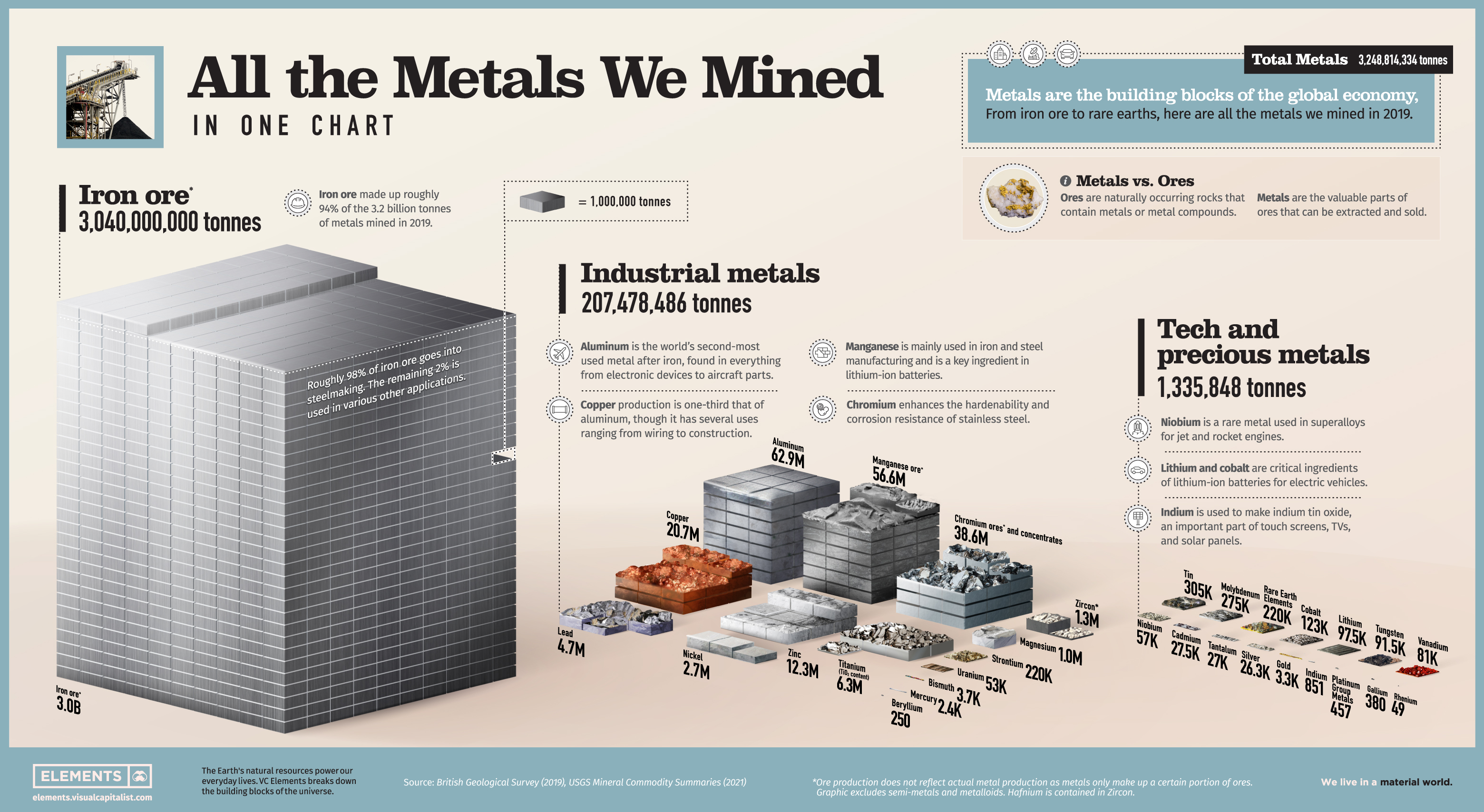
Hydrogen is 100% an attempt by fossil fuel companies to remain relevant in a "green energy" world. The primary source for hydrogen would be from methane in natural gas, and they could then sell this as a "zero pollution fuel" while continuing their non-renewable energy business as normal.
If you read between the lines and look at the companies involved, they're always linked to fossil fuel companies directly or indirectly. That, or fossil fuel powered vehicle manufacturers that are reluctant to completely retool their factories.
Hydrogen has a few legitimate use cases, such as iron ore refining and chemical feedstock, but that's about it. In all other scenarios, battery-based technology is vastly superior along multiple metrics.
I didn't know Toyota was a fossil fuel company, or was owned by one?
Japan is uniquely trying to make this thing work. They have no domestic oil production, and so few coal mines as to basically be irrelevant: all their fossil fuel is imported. Anywhere else on the planet: sure, this might be another way for big fossil to push for relevancy, but in Japan's case, hydrogen would be something that they can produce themselves, literally freeing them from fossil fuel dependency, which is a big part of why they keep trying to make it work.
And yeah, the math says it's physically impossible to make it work without constant refueling, but again: it's Japan. The very idea of "my car needs to go 300 miles on one charge/tank" just isn't a thing there.
Hydrogen, despite this article's claim, is actually perfect for Japan. Any tanker of import fuel saved is CO2 saved both on the tanker's transit, and on that fuel getting burned, but at the same time: it's also perfect much perfect only for Japan.
This doesn’t make sense to me. Hydrogen is not an energy source — it’s a way to store energy and make it portable. So Japan could import hydrogen (which is not obviously any better than importing LNG or oil), or Japan could make it from domestic or imported energy sources (nuclear, solar, wind, imported oil, imported LNG, etc).
Turning electricity into hydrogen and then into motive power for a car is dramatically less efficient than using a battery, and car commutes in Japan are on the short side, so huge batteries wouldn’t be as necessary. I don’t think petroleum-derived hydrogen is much more efficient, if at all, than just burning the petroleum in an ICE.
So the only way this seems like a win for Japan is if electricity were cheap, battery EVs were not economical, and the loss associated with electrically synthesized hydrogen didn’t matter.
Green hydrogen is made from electricity. The cost of green hydrogen is currently high, but it is dropping faster than pretty much any other energy storage technology. Hydrogen storage is an order of magnitude cheaper (or more) than any other tech. It is expensive because of the cost of electrolyzers/fuel-cells that convert between electricity and H2. These costs are dropping fast at efficiencies of 80%+ along with the cost of solar and wind. If you project the cost declines into the future the economics of producing hydrogen at remote solar wind farms, generating hydrogen, and transporting the H2 by tanker or pipeline are compelling.
Abu Dhabi already sells solar electricity for 1.35 cents/kWh. That price will drop by at 3-5x as solar reaches maturity. Natural gas plants sell power for ~6cents/kWh. Green hydrogen will have at least 5.5cents/kWh ($1.80/kg) of wiggle room to generate returns.
Many people consider batteries to be superior to hydrogen for all business cases. This isn't true for applications that need more than ~10 hours or so of capacity. Sub 10 hours is a huge market and encompasses almost all transportation, but there is a vast market for storage beyond 10 hours.
The Achilles heel of batteries is that the power of the battery and the energy stored by the battery are linked. An Li battery can easily discharge itself in one hour. If you want 10 hours of storage you need to buy a battery that could deliver 10x the power you're asking it to. This dramatically increases the cost and sheer tonnage of materials required to make the required system. Green hydrogen systems only require equipment that can deliver power at 1x the requirement with a storage tank that holds 10 hours of fuel. This means that there is always a crossover point where hydrogen becomes cheaper than batteries. My projection for the future is that this number will be around 10-20 hours.
This makes hydrogen the best choice for many applications and is the reason why lots of governments are into the idea. Transportation is only around ~20% of the energy we use, much of the rest might come from renewable hydrogen in the future.
Japan plans to make hydrogen using high-temperature nuclear reactors (HTGR or HTTR).
See: https://www.jaea.go.jp/04/o-arai/en/research/research_03.htm...
Nifty. The chemical process involved appears to be:
https://en.m.wikipedia.org/wiki/Sulfur–iodine_cycle
50% thermal efficiency from nuclear to hydrogen sounds very good.
Except nuclear steam generators have to run at well under 830 degrees and at low head because of two loop cooling and corrosion issues so odds are pretty good this will be about as reliable as every other gas cooled reactor and be shut down in 10 years.
High temperature hydrogen electrolysis is a proven cheap tech. The main problem is the cost of nuclear in my opinion.
While one could easily do arm chair criticism the author of the top article thought it more convenient to just ignore it?
Unfortunately 'green hydrogen' currently isn't.
"Under baseline conditions, the greenhouse gas (GHG) emissions are around one-quarter that of the currently dominant process for hydrogen production, steam methane reforming (SMR). However, sensitivity analysis shows that GHG emissions may be comparable to SMR under reasonably anticipated conditions. "
https://pubs.rsc.org/en/content/articlelanding/2021/ee/d1ee0...
I think this type of analysis fails to project the future. GHG emissions from solar cell production will decline as the inputs and processes used to make them begin to use renewable energy.
Green hydrogen decouples H2 generation from hydrocarbons, and industrial uses of H2 will be critical in decoupling more processes and industries from fossil fuels. That's the whole point.
The other part of the abstract suggests that grid energy will be required to buffer intermittent renewables. This argument assumes that it is not possible to design H2 electrolyzers that can rapidly adapt to a change in electrical input, which is simply a relatively straightforward engineering challenge.
I find it hard to believe that the authors of this paper didn't already know all of this.
> Turning electricity into hydrogen and then into motive power for a car is dramatically less efficient than using a battery
This is true —- but the total quantity of battery storage potential is utterly dwarfed by the storage potential for gas, in subsurface storage reservoirs and salt caverns. You can store days worth of energy in batteries; you can store a winter’s worth of energy in gas.
It’s not a matter of efficiency, it’s a matter of quantity. We do not, and will not, for decades, have the kind of battery storage required to support the grid.
Storing hydrogen is substantially harder than storing stuff like methane, or CO2, or even O2.
Hydrogen's atoms are so small they try to pass through the crystalline lattice of metals, making the hydrogen-enriched layer which is more fragile [1]. Your regular polymer hoses are much more permeable to hydrogen.
Hydrogen gas burns with entirely infrared flame, not visible to human eyes [2].
Hydrogen, even highly compressed, is still very lightweight, so storing significant amounts requires either very high pressures, or liquefaction. Liquid hydrogen requires an uncomfortably low temperature of 20K, but starts to freeze into solid state at 14K.
Hydrogen is the most efficient rocket fuel, there's no denying. For all other fuel applications, it's pretty problematic.
Hydrogen is far more energy dense than batteries. For example: for a 800km truck, the difference can be as much as 2 tonnes. https://www.umicore.com/en/newsroom/news/fuel-cells-battery-...
Also, there are ways of storing hydrogen in metal hydrides at room temperature and pressure. This makes a LOT of sense for people who may want to have an option of buying stored energy - such as those who live in apartments without access to the terraces where solar panels can be deployed.
If these metal hydride storage is used similar to how changeable batteries are used, it is conceivable that you could drive up to a place like a fuel station just to change out your metal hydride storage in a matter of a couple of minutes and perhaps even get additional supplementary units packed at the back of the vehicle if they intend to go on a long journey.
https://www.frontiersin.org/articles/10.3389/fenrg.2021.6161...
In terms of cost, it is also now possible to use Boron Nitride for storing hydrogen - very cheaply and very safely.
https://www.geelongmanufacturingcouncil.com.au/2022/07/innov...
Which is why the current proposals to significantly expand the global per annum hydrogen production via green solar hydrogen production are looking to transport Ammonia (Three Hydrogens and a Nitrogen) across the planet for use in large baseload generators.
Less storage problems, more options (higly compressable gas, or pure liquid, or "liquor" (dissolved)), and no mucking about with fuel cells.
Just straight up movement of energy (with losses to be sure) from places with an excess of sunlight to those that are short.
This. Is there even one power2anythingelse that does not have hydrogen as its first step? Hydrogen storage will be important, as the input queue for whatever step comes next so that only the hydrolysis capacity has to be scaled for being able to take in supply peaks and idling the rest of the day/week/year. But hydrogen storage won't be involved at all anywhere in transportation or distribution of energy (with a few possible exceptions in large very high energy density requirement applications, I wouldn't completely rule out hydrogen aircraft being less infeasible than e-fuel powered aviation at scale)
What's the benefit of ammonia vs. turning hydrogen into methane via carbon capture?
Carbon capture is hard, nitrogen is truly abundant. That is unless you happen to have a source of highly concentrated CO2 at hand. Which is certainly true now, but won't be in the endgame. Methane (or something with an even lower H-per-C) will surely be part of the picture, but it can't be the mainstay. I'd expect hydrolizer capacity to cluster around storage opportunities (like salt caverns) within convenient grid range from energy sources, large ammonia plants to continually work from that hydrogen buffer and higher-value H2 consumers to opportunistically tap into the same buffer whenever their "other ingredient" is available. That "other" could be metal ores, iron oxide returning from an oxidization energy cycle or CO2 from biomass burning or waste incineration. But there's always hydrogen as a first step, and the (centralized within grid range) hydrogen storage as the buffer that solves the dispatchability problem.
Fun observation: If some of the hydrocarbons created this way make it into plastics that isn't passed back into incineration (or a better form of recycling) you'll have true carbon-capture for the fraction of the carbon that came from biomass. Without we trying.
Thanks for the detailed reply
> not obviously any better than importing LNG or oil
True, because transporting hydrogen is obviously much worse than transporting LNG or oil. Hydrogen is an impossibly huge pain in the ass, and should be avoided if at all possible, because
Hydrogen
leaks through the smallest gaps.
burns in concentrations ranging from 4 to 74 percent.
burns clear in daylight.
reduces the ductility of metals exposed to it (embrittlement).
has shit energy density to boot.
>This doesn’t make sense to me. Hydrogen is not an energy source
Hydrogen is often compared against batteries. Those aren't an energy source either. I haven't seen anyone seriously propose hydrogen based powerplants. I have seen plenty talk about hydrogen fuel cells as a potential alternative to BEVs and a potential way to get around the multiple short comings of lithium batteries. Fuel cells of course have their own problems. But we've yet to come up with an alternative to gas engines that are as long ranged, quick to fuel, reliable, cost effective, safe and performant while also being net zero or negative carbon.
>So the only way this seems like a win for Japan is if electricity were cheap, battery EVs were not economical, and the loss associated with electrically synthesized hydrogen didn’t matter.
I feel like you are handwaving the issues with BEVs while focusing on the issues with hydrogen. I'm not sure which at the end of the day will turn out to be better. But right now BEVs are incapable of becoming the defacto solution for the simple fact that the battery packs wear out and replacing them will total the car. You can't develop a working used market this way. And lower income individuals simply can never afford to use them. The fact that car markers are going out of their way to design platforms with batteries that are difficult to replace exacerbates the problem. But even if they were easily swapped, their high cost and the fact they are tied to the vehicle means a large chunk of the market can't afford them. And nobody is talking about this.
> I haven't seen anyone seriously propose hydrogen based powerplants.
Well, Japan has. You may have read about it recently in the article linked at the top of this comment page. Here's another source from Japan itself: https://www.meti.go.jp/english/policy/energy_environment/glo...
> Accelerating the commercialization of hydrogen power generation turbines in Japan by supporting the early demonstration with actual equipment, with a view to capturing the global market in the future
> Assuming that the price of the 100% hydrogen-derived electricity retail menu and the price of the 100% natural gas-derived electricity retail menu are the same, and assuming that only the latter retail menu has a price hike of about 1.8 yen/kWh (based on the time when the cost of LNG-fired power generation was at its highest), a standard household would be able to save about 8,600 yen/year.
Japan's plan has been to import hydrogen. Probably from Australia.
Nuclear is unpopular since Fukushima, and Japan doesn't have great renewable resources. The country is extremely land constrained -- and although the "renewables require too much land" argument is silly on the American Great Plains, it does hinder Japan.
Additionally, the solar irradiance is mediocre, and their offshore wind would have to be truly floating wind turbines (which are more expensive) because the continental shelf drops away so quickly.
Japan’s government actually just decided to revitalize nuclear power and support among the population is growing.
And, FWIW, Japan plans to use high-temperature nuclear reactors to produce hydrogen with very high efficiency.
See: https://www.jaea.go.jp/04/o-arai/en/research/research_03.htm...
If you can manufacture pure hydrogen by hydrolysis from Australia solar power, then they should go the next step and create methane (CH4). If you can extract carbon from CO2, that would be a crazy good win. (Probably horribly energy inefficient, but that is the future, I guess.) Anywhere with huge deserts and access to ports can become rich on this path: India, Chile, Australia, North Africa, Middle East. (China has big deserts, but very far from ports.)
People are talking a lot about batteries in this HN discussion, but there are industries that are so much simpler to run on burning gas/coal (steel, petro-chemical, etc.). Japan has massive heavy industry, similar to Germany, that 100% depends upon imported methane. Someone also told me (not sure if true) that the infra required for hydrogen is much more expensive than methane because it is "more leaky". Thus, equipment tolerances are way higher for pure H2 vs CH4.
Last: The "we don't like nuclear" view will only last until the next energy crisis. The current PM (Kishida) is already talking about re-activation. Yes, there will be billions to spend to upgrade existing reactors, but Japan never shies away from infra spending! It doesn't get much attention in the media, but plenty of infra (bridges, tunnels, etc.) was upgraded after the 2014 earthquake.
»Turning electricity into hydrogen and then into motive power for a car is dramatically less efficient than using a battery, and car commutes in Japan are on the short side, so huge batteries wouldn’t be as necessary.«
Which is why Japan is favoring high-temperature hydrolysis here using high-temperature nuclear reactors.
See: https://www.jaea.go.jp/04/o-arai/en/research/research_03.htm...
They're a car company committed to keeping the internal combustion engine. They are market leaders in hybrid cars, but have been surpassed in all electric. So they're not a fossil fuel company but their interests are aligned.
> They're a car company committed to keeping the internal combustion engine.
A vehicle running on hydrogen isn't an ICE. These are fuel cells.
https://en.wikipedia.org/wiki/Toyota_Mirai
This is an electric vehicle which generates power through hydrogen fuel cells rather than storing it as electrical energy in a battery (though it has a battery too).
> Toyota's latest generation hybrid components were used extensively in the fuel cell powertrain, including the electric motor, power control and main battery. The electric traction motor delivers 113 kilowatts (152 hp; 154 PS) and 335 N⋅m (247 lbf⋅ft) of torque. The Mirai has a 245V (1.6 kWh) sealed nickel-metal hydride (NiMH) traction rechargeable battery pack, similar to the one used in the Camry hybrid.
A question for Japan is "how do you store and refuel a car?" With a hydrogen station, it's a lot like a regular gas station in terms of space, process and time spent. They don't quite have the space for making large charging stations ( e.g. https://electrek.co/2022/05/19/tesla-building-new-worlds-lar... ) which take longer and in turn require more land per car.
There's also the "charging at home isn't as viable". https://www.google.com/maps/@35.1913767,138.6480478,3a,75y,3... or https://www.google.com/maps/@35.1913767,138.6480478,3a,75y,3... or https://www.google.com/maps/@35.1888588,138.697268,14z
You can make a Hydrogen ICE. BMW even leased 100 of them about 15 years ago. https://en.m.wikipedia.org/wiki/BMW_Hydrogen_7
There are a few issues with that car. https://youtu.be/AouW9_jyZck
On the backdrop of the first thing - the part that caught my eye was "Liquid H2 Tank" which... well... yea.
That's a different approach than a hydrogen fuel cell.
I'll also note that is a German car company and not Toyota (or other Japanese car company).
Right, but if they're essentially incompatible with fossil fuel ICEs, what relevance is there to this conversation? The only thing that binds them is that they combust, but there's no clear reason why fossil fuel companies would favor one technology just because it involves combustion.
They are compatible and relevant, GH2 can be fed to a gasoline ICE through a carburetor with minimal changes.
New productions of existing ICE models therefore can be converted into a Hydrogen variant much easier, without redesigning the platform, or having to burn bridges with ICE and transmission factories.
... while storing a tank of atmospheric pressure liquid H2 such that you can't store it in an enclosed space and will be nearly empty if you don't run it for 17 hours and has a range of 120 miles.
On a technical note, it's still an ICE. And Toyota's absolutely trying to show that it can actually be pretty much the same ICE but reinforced to deal with the much higher pressures from having to work with compressed hydrogen. But, while there is still internal combustion happening the major difference is that a hydrogen ICE produces heat and mostly water, rather than heat and mostly CO2 (). You just can't go as far on hydrogen mostly because the amount of dead weight required for hydrogen is so much higher than for fossil or electric.
) With the usual caveat that of the hydrogen product itself is currently not green, but as always, putting all the pollution in one spot, at scale, means far less pollution per car than if every car's running its own fossil furnace
For Toyota Mirai - the https://www.toyota.com/mirai/
Is it an internal combustion engine? https://youtu.be/qWMqZgiFhQY
This isn't a one off "hey we can do it" as a proof of concept for a race but an actual production car that you can buy.
> You just can't go as far on hydrogen mostly because the amount of dead weight required for hydrogen is so much higher than for fossil or electric.
To which https://www.toyota.com/mirai/2023/mirai-features/performance...
> Up to 402-Mile Range
> When fully fueled with hydrogen, the 2023 Mirai XLE has an impressive manufacturer-estimated 402-mile driving range rating * and the 2023 Mirai Limited has a 357-mile driving range rating.
Their main approach to Hydrogen might be fuel-cell, but they have had one-off sports cars with ICE using Hydrogen.
https://en.wikipedia.org/wiki/List_of_hydrogen_internal_comb...
I wouldn't completely discount the idea of them pivoting from the fuel-cell in the face of ever-stronger competition from other types electrical generation components.
A hydrogen fuel cell engine relies on completely different principles than an ICE and would still require complete retooling of their powertrain manufacturing. If anything, their hybrid powertrains are closer in design to BEVs than FCEVs
There are good reasons for hydrogen over batteries, like better range and short refuelling times. I'm not sure why there's a need for some nefarious motive.
Fuel cell (and tank) is a different tech but car industry believe that it can be still manufactured at competitive cost and quality in Japan. It's hard to compete with Chinese massive amount of cheap batteries in Japan.
Japan together with South Korea was a leader in NiMH and Lithium based battery chemistry during this period. So that wasn't the reason.
Make it massively and cheaper is different to developing better one. So they now try to developing solid state battery but who knows will it success.
Unless they had insight into the future, Toyota has been exploring this technology a long time[1]. They started a developing fuel cell propulsion in 1992 --way before there was mainstream antipathy for fossil fuels.
The more likely explanation is they sought alternative fuels and settled on Hydrogen and so, now, despite evidence and viability of battery electrics, they keep on pushing "their" solution probably with lots of influence from the sunk cost fallacy.
[1] Recall "peak oil", before Fracking became viable, was a serious concern since the '70s and people thought fossil fuels would eventually become unaffordable to everyday consumers.
Their various significant investments don't strike me as being committed to keeping the internal combustion engine. Rather, they're simply evolving and the internal combustion engine influences their evolution. But I see no evidence that they're committed to it because they like it in particular. It's just what they've been good at already, and hydrogen interfacing with it may make sense.
Toyoda himself has publicly stated he's an internal combusion fan and is not interested in all-electric vehicles:
https://www.autoblog.com/2021/09/21/toyota-toyoda-questions-...
https://www.msn.com/en-us/autos/news/how-the-world-s-most-va...
https://cleantechnica.com/2021/11/15/toyotas-team-japan-aims...
https://www.hotcars.com/why-toyota-is-investing-383-million-...
If you read the articles, his point is that the industry cannot completely switch over to EV production and bans aren't the right solution, considering how rapidly japanese cars have reduced their CO2 emissions.
There simply isn't yet the battery production capability to ban ICE yet. Their hybrids and hydrogen are part of the all-in approach.
Considering that, he claims, cars have cut CO2 by 24% in 20 years, the onus belongs on other industries to catch up, lest you hurt more people for less gain.
There also enough power production. To give an example, the Tokyo governor invited people to lower their heating devices and wear turtle necks to avoid exceeding the current capacity.
This. They've been fighting the EV transition tooth and nails, it really needs to be called out.
I mean, how nice an EV would that new Insight of theirs just released have been? The design is gorgeous. Instead we get yet another hybrid, which makes sense in a good few use cases I guess - primarily related to charger availability - but just puts them further behind on the EV development experience curve.
Edit: And their investments in Hydrogen, doubling down on it along with the Hybrid tech is indeed a great sunk cost fallacy example. Check Toyota's market share in Norway over the past few years for a fun example of consequences.
I’m curious how the calculations work here. I know that any individual battery electric car is better in terms of GHG emissions than any individual hybrid car. However, given the limited number of battery electric cars, and the limited production, battery electric cars will remain the minority of all cars at least until the end of this decade (probably even longer). Now my question is, en masse, since the production of hybrid cars are a lot more capable then battery electric, are we not better off (in terms of total GHG emissions) with as many hybrid cars as we could get? That is, don’t hybrid cars shave more GHG emissions just by the shear number of them?
Of course I believe this is a moot question because we could save way more by focusing on public transit, and simply have fewer cars. After all: battery electric are more efficient than hydrogen, which are more efficient then hybrids, which are more efficient than ICE but transporting 20 people in 15 battery electric cars comes nowhere close to the efficiency of transporting these same 20 people in a single ICE bus.
I can't find it right now, but a toyota engineer has actually discussed this. Toyota looks at it this way, especially since you are wasting significant battery capacity on BEV's that don't get utilized daily if the battery supports significantly longer range than daily commute.
I often wonder, since we are in a climate emergency, and we are still increasing our GHG emissions, and we need to electrify so much as quickly as possible. And we have these lithium ion batteries which work pretty well for that, but the production capabilities are limited, so you would think we would put them where we’d get the most use our of them, but alas, most we get is a bunch of Tesla SUVs and maybe a Hummer EV.
There's nothing wrong with internal combustion per se, if electrolysis+ICE works out cheaper than battery in terms of lithium/rare earths/whatever there is no fundamental objection to it.
The fundamental objection is quite real: Distribution. Hydrogen, due to the small size of the atoms, requires perfect seals and even then can slowly penetrate even metal containers. Cooling it enough to liquify it requires extreme temperatures and pressures as to destroy any efficiency gains.
Someone has to build that infrastructure, and do it on a national scale, for hydrogen to have even a chance at beating EVs/Hybrid/Gasoline cars. Say what you will about EVs, at least we already have an electric grid.
Worse, hydrogen permeates most metals and embrittles[0] them, too.
Synthetic methane produced by electricity is likely still superior to hydrogen with both suffering terrible inefficiencies, at least methane is easy to transport.
That seems completely implausible though based on the losses. An ICE tops out at 25% efficient or so. A hydrogen fuel cell is 40-60% and efficient and that's likely to rise. If you're bothering with fueling cars with hydrogen gas, you might as well make them electric and get a huge range boost for free (and way more torque, less maintenance etc.)
There's just no logical reason to try and burn hydrogen in ICE engines.
> There's just no logical reason to try and burn hydrogen in ICE engines.
In commenting in another spot - https://youtu.be/AouW9_jyZck goes through many of the engineering and practicality reasons behind that.
Wouldn’t ICEs be worse for local pollution?
There is a hypothetical internal combustion engine that burns hydrogen directly. I think that the other poster was talking about that. Unfortunately, it is not just inefficient, but also has a major rust problem. It also would still generate NOx.
What pollution would hydrogen/oxygen combustion produce?
NOx is formed from combustion in air, from the nitrogen that makes up much of the air. If you could feed it pure oxygen then you'd avoid that but nobody's going to want a car with an oxidiser tank onboard.
It was my understanding that they were surpassed in all-electric because they weren't trying to compete in all-electric. Moreover, truck manufacturers like Volvo and Mercedes are aiming for hydrogen, their reasoning being that batteries aren't feasible for commercial trucks. Be honest: your "%100" figure was just made up.
It's less that they're committed to keeping the ICE, and more that they've seen that the market has passed them by with the push toward full-electric (I suspect they thought we'd be doing hybrid ICE-electric for much longer, which they're very good at). Hydrogen is their bet on being in on the ground floor of the Next Big Thing.
> the market has passed them by
Sorry? Pure EVs are still below 15% of new sales in almost all major markets. Sure it's growing quickly but it's far from certain it won't peak at around 25%.
A lot of people will probably re-evaluate their options in the next few years, where it looks like prices for charging stations will go up (no more credit-financed hypergrowth) and in some markets home electricity prices will stay high.
> I didn't know Toyota was a fossil fuel company, or was owned by one?
> Japan is uniquely trying to make this thing work
You have conflated Toyota with Japan there. Even in a society dominated by it's megacorps, they are not necessarily the same thing. After all, Nissan brought us the first mass market EV (and yes, they promptly punted on their first mover advantage).
> Anywhere else on the planet: sure, this might be another way for big fossil to push for relevancy, but in Japan's case, hydrogen would be something that they can produce themselves, literally freeing them from fossil fuel dependency,
Any domestic production of hydrogen in Japan would have to be via water electrolysis with electricity, since they have basically no natural gas production. Since that's the case, why not just use the electricity directly and not pay the 40-50% penalty of electrolysis?
> The very idea of "my car needs to go 300 miles on one charge/tank" just isn't a thing there.
> Hydrogen, despite this article's claim, is actually perfect for Japan.
The first statement contradicts the second, because one of the benefits of hydrogen over batteries is that range isn't much of an issue and refueling is fast. That's why the only place it might be viable in ground transport is in long haul trucking in the US.
In Japan, a 200 mile EV would probably be more than sufficient, even for longer trips, for exactly the reason you state.
Hydrogen will be the only thing that will work for long-haul aviation and large scale container shipping, in the form of ammonia (see https://www.forbes.com/sites/nilsrokke/2021/10/05/ammonia-a-... ). that isn't synthetic fuel which is ridiculously inefficient to produce from electricity, even more so than hydrogen. Japan being an island, this might be important to them. Zero Avia (http://www.zeroavia.com) is the leader in the hydrogen aviation space currently.
The other thing about hydrogen is that you can refuel quickly. Otherwise, you're going to need a ridiculous number of charging stations to have the same amount of transportation just to deal with charging time alone. Can you imagine how long it would take to refuel a long-haul container ship and/or what kind of electricity infrastructure would be needed for that?
What does any of that have to do with passenger EVs?
> why not just use the electricity directly and not pay the 40-50% penalty of electrolysis?
because EV battery disposal can be a huge environmental problem. electrolysis is zero waste.
EV batteries are recycled quite easily. The lithium alone makes recycling worth it, but pretty much everything about it can be recycled.
that's like saying plastics can be recycled quite easily. only in theory - the real effects on the environment are staggering.
But in this case recycling is straightforward and incentivized enough that it happens in almost all cases. If the battery is still in working condition, it will be repurposed. Otherwise it will be broken down to get at the precious metals and used in a new battery production. Yes, this requires energy and materials are invariably lost, but it doesn’t get more ideal than a battery from a recycling perspective.
The primary materials in batteries, mostly metals, do not degrade like plastic. Metals are extensively recycled today, unlike plastic. Furthermore, each battery cell has a potential lifetime after EV usage as part of a stationary storage system, before any recycling.
https://cen.acs.org/materials/energy-storage/time-serious-re...
"But very little recycling goes on today. In Australia, for example, only 2–3% of Li-ion batteries are collected and sent offshore for recycling, according to Naomi J. Boxall, an environmental scientist at Australia’s Commonwealth Scientific and Industrial Research Organisation (CSIRO). The recycling rates in the European Union and the US—less than 5%—aren’t much higher."
Until and unless this recycling rate is provably 50% or higher at the time of an EV sale, you should not diss on a 50% loss of efficiency in electrolysis for an FCEV.
> only 2–3% of Li-ion batteries are collected and sent offshore for recycling,
> Until and unless this recycling rate is provably 50% or higher at the time of an EV sale, you should not diss on a 50% loss of efficiency in electrolysis for an FCEV
Most lithium ion batteries are still not used in car batteries but rather in phones, computers, cameras, power tools, and other personal electronics. Should we be running those on hydrogen instead?
The recycle rate of EVs out of commission is already very high (since the amount of money the battery is worth is high). But what you are asking for is a point where at least 50% of the EVs ever sold have been taken out of commission and are eligible for recycling, which isn't going to happen for a decade or so.
> The very idea of "my car needs to go 300 miles on one charge/tank" just isn't a thing there.
Citation needed. No, you don't need to go 300 miles on one charge/tank if you live in a big Japanese city, in fact you don't even need a car in that case. However, if you live in rural areas or need to travel long distances, 300 mi is not a lot to ask for: the main island of Honshu is >800 mi long and 300 won't even get you from Tokyo to Osaka.
People seem to forget that Japan is not only Kanto and Kansai. I live in Aomori and here everybody needs a car. I have to drive around 500 km per week, and I would really appreciate if my car would have better mileage.
On your use case, you just need to plug in everyday, instead of go to gas station every week. Who often drive above 100km per day is rare in Japan even in rural area.
Well, the only problem is that I don't have where to plug it, but sure, it is feasible. My neighbor drives a Nissan Leaf, and we had a co-worker with a Tesla, so I know it is possible.
More lies and more deception:
Japan has huge deposits of methan hydrate on sea floors it wants to mine.https://de.wikipedia.org/wiki/Methanhydrat
And this is why hydrogen is on the shit list, all the roads lead to ever more mined carbs, blown into the atmosphere in one way or another. The roads to green hydrogen are riddled with conversions that make it economically unviable.
Its the equivalent of a addict switching from heroin injection to a fetanyl patch. Yes, the process is cleaner, less dangerous, but the longterm bad effects are still there.
No, it's more like a nation that was rolled into having a fuel dependency on other countries as suppliers trying to come up with ways to no longer be (as) dependent on countries like China or the US to keep the lights on and the cars going vroom.
Also, pretending that emission reduction isn't worth the effort because it's not zero-emission is a perfect example of advocating for the worst possible solution by denying the merit of a transitional solution just because it's not the ultimate solution. The world's not going to improve with that attitude.
>literally freeing them from fossil fuel dependency, which is a big part of why they keep trying to make it work.
Exactly. Freedom isn't free. It's always mind boggling that HN doesn't get this despite this being a community in which paying more for energy sources we like is highly popular.
The key here is Toyota is biggest employer in Japan and when you add its suppliers it's even bigger. Toyota very much wants an Hydrogen future so that they can retain those jobs.
I read this analysis last year about why Japan is so behind with EVs. The number of parts required is less then combustion and Japan's government is concerned about maintaining employment levels
This article talks about the filler jobs and how the economy is stuck in the past.
https://news.yahoo.com/japan-future-stuck-past-220130554.htm...
Annoyingly I can't find the source that went into why they are pushing EVs.
Edit: To be clear that was the hypothesis of the source and they presented evidence that the government that backed it, like stressing job creation and the importance of the automotive industry, but there wasn't a smoking gun.
Yup that is correct. I know what you are talking about. Japanese govt(MITI) is very much involved in Totyota’s future goals.
I imagine that Japanese labor laws are a major motivator for Toyota. From what I have heard of Japanese labor laws, salaried employees in Japan appear to be guaranteed employment for life. The result is that Toyota will not be able to fire its employees even if their jobs become obsolete, so finding a solution that keeps those jobs from being made obsolete is extremely important for Toyota.
Not uniquely Japan. China, Japan, South Korea, Germany, in that order, lead the world in hydrogen fueling stations.
That's not what I said, though. China and Germany have massive coal supplies, and oil pipelines at their disposal. They don't have to literally ship (with actual ships from other countries) anything in just to keep the cars going vroom. They'd benefit way more from real batteries rather than using hydrogen as the battery of choice.
> I didn't know Toyota was a fossil fuel company, or was owned by one?
huh? what did i miss?
There is no doubt fossil fuel companies want to keep selling more fuel, and current hydrogen is a prime client for that. At this point I don't think anyone is arguing that fossil fuel companies will push anything to continue making money through different venues while touting to help progress.
Now, hydrogen in cars isn't just about how the "fuel" is produced. People try to reduce it to CO2 emission number, but to me there's a lot more nuance. Petrol fuel burned by thousands of vehicles in the middle of a city isn't the same as petrol fuel burned in an hydrogen plant. The CO2 numbers might be similar, but the effect on people's life is completely different. EVs achieve the same goal, but if all vehicles can't be EVs (I think it's reasonable to expect cases where EV won't work), the rest being hydrogen or other low pollution alternatives is I think important.
Car makers themselves aren't touting hydrogen as the end all be all either, most makers in the game are using it as diversification to not put all their eggs in the EV basket.
Battery based technology requires rare earth minerals which only a few countries control from what I understand. It is also not feasible due to weight to ship batteries to transfer power, you can only use them near the power source, is that not correct?
Desalination is desparately needed, one byproduct is hydrogen: https://scitechdaily.com/efficient-seawater-desalination-and...
Solutions that solve multiple problems and don't disrupt the norm are ideal are they not?
I mean, by all means, go to war with fossil fuel companies if your goal is only that but less people to fight means more practical change. I am hoping micro nuclear reactors become all the rage but even then a light fuel you can transport easily (despite the difficulty of efficiently transporting hydrogen) is sort of a battery except you can send lots of it continually.
EV batteries don't actually contain rare-earth metals (but fuel-cells and catalytic converters in ICE cars do). Some types of electric motors use them (in the permanent magnets), which is where a lot of the confusion probably comes from.
Electric cars are one thing I disagree with after driving one. I trally think sustainable public transport is ideal for day to day urban tranport needs and charging cars for any longer than 5min in a long roadtrip is not pleasant. But even if EVs are the right approach, hydrogen hybrids that convert hydrogen to battery stored energy or plain hydrogen powered cars where you fill them up like gas make more sense and are less disruptive to existing infra and consumer desires. Just one small example: I don't see a car charging solution for the majority urban people that live in apartments anytime in the near future. I will never sit 45min on a good day or scramble to find a free charging station in random neighborhoods again! Or be stranded because the battery level display doesn't consider X miles means steep winding mountain roads.
Let's not make a religion out of energy sources.
Fuel cells based in anionic exchange membranes (AEM) don't require rare metal catalysts. They run on nickel-iron catalysts. Latest gen systems meet or exceed the capabilities of proton exchange systems (that require pt or ir).
Also, since anionic membranes aren't made of complex fluoropolymers they can be synthesized much more cheaply. Scaling to under 100$/kg. 1 kg of material is around enough to make a megawatt fuel cell unit. Batteries are definitely going to capture the entire wheeled vehicle market but hydrogen tech is set to take a large fraction of the overall energy market.
>Hydrogen is 100% an attempt by fossil fuel companies to remain relevant in a "green energy" world. The primary source for hydrogen would be from methane in natural gas, and they could then sell this as a "zero pollution fuel" while continuing their non-renewable energy business as normal.
while there is a strong degree of green washing going on in hydrogen there are REAL, Concerted efforts for 100% GREEN HYDROGEN in place as well.
Calling all hydrogen a green wash is doing the job of big oil for them stop ignoring the real efforts for a green hydrogen industry by calling all hydrogen a greenwash. Its not the reality. Be a positive force in the world.
Why is it so enticing for people to act like edge lord? I hate this tendency in myself too. Thanks for being cool.
These few legitimate use cases should not be dismissed though, from the perspective of sizing an energy grid: for example reducing iron ore with hydrogen rather than coal works out to about one nuclear reactor for one furnace. No idea for chemical feedstock, but it's likely to also be huge.
I don't think anyone pushing for hydrogen in cars in Japan has done even a back-of-the-envelope calculation of how many nuclear reactors/wind turbines/solar panels Japan would need to migrate their fleet... So the plan is likely to make it from natural gas, import it, or -more likely- there is no serious plan at all, only subsidies being collected.
Note that in I have a very similar feeling with regard to wind turbines in Europe (at least in Germany and France): behind each wind turbine field there is a very real gas turbine or lignite power plant, and a lot of hand-waving regarding storage... Heard jokes (pre invasion of Ukraine) about Gazprom being behind every wind turbine sale. The situation is different in Northern Europe though, with lots of wind turbines in Denmark, and pumped storage in Norway.
There is a double standard here because any back of the envelope calculation for migrating the entire fleet of any sizeable country with battery electric cars will also turn out to be an impossible task with current technology and industrial manufacturing capabilities.
If your standard of passing as a technology is that it has to replace the current one in its entirety, you’ll always find it lacking, even with battery electric cars.
No, to stop fossil fuel pollution we need many technologies to come together, a lot of infrastructure and some societal change to happen gradually while not to slowly.
Indeed all the current battery electric cars (even adding every one that will be produced this year) are only providing a tiny relief for the climate disaster relatively speaking (if any). I bet that you don’t have to add together many bus and metro lines in Mexico and Brazil to sum up to all the electric cars in terms of climate relief.
> behind each wind turbine field there is a very real gas turbine or lignite power plant
But isn't it still better to be using wind turbines 75% of the time when it's windy, and gas/coal only 25% of the time when it's not? Surely even without adequate battery storage that's an improvement?
It’s not replacing gas/coal but nuclear, so CO2 wise it is a major step back…
Germany first replaced nuclear by lignite, then lignite by wind + lignite/gas, so if you only look at the second step it doesn’t look so bad. But if you look at the whole picture it doesn’t look so good.
France is coming from 75% nuclear and 25% hydro, and has no business adding and firing up gas turbines.
Of course I’m painting things in broad strokes… reality is always a little bit more subtle.
They are not competitors, they are complementary. Hydrogen is cheaper and easier to store than electricity is. Hydrogen provides resiliency because of this and is better for long range vehicles because it can be produced and stored relatively easily.
For long term energy storage (seasonal) hydrogen is vastly cheaper than batteries.
> Hydrogen is 100% an attempt by fossil fuel companies to remain relevant in a "green energy" world. > Hydrogen has a few legitimate use cases, such as iron ore refining and chemical feedstock, but that's about it.
I don't see how these two statements are compatible.
Thank you very much for your information.
Unfortunately you invalidate your own work by not providing the sources of your knowledge. The internet has a cool feature called "URL", it is meant to provide the source of some information so that your readers can access your sources, too. Just use it!
In a mature, scientific discussion you always want to provide these sources.
Just saying something without sources is an internet discussion style of the past and should not be accepted by modern humans.
For Japan, it reeks of highest scale sunk cost fallacy in action
Toyota may or may not be reluctant to do a massive retooling, but have you looked at a Mirai? It’s an EV that happens to be powered by a fuel cell.
> reluctant to completely retool their factories
Whenever they release a new car model, they have to re-tool their factories, just saying. I don't think this is a good argument.
»The primary source for hydrogen would be from methane in natural gas, and they could then sell this as a "zero pollution fuel" while continuing their non-renewable energy business as normal.«
No, that’s wrong. They’re planning to produce their hydrogen from high-temperature reactors like the HTGR in Ibaraki prefecture.
See: https://www.jaea.go.jp/04/o-arai/en/research/research_03.htm...
Do you hate fossil fuels or do you want to save the planet? I feel your words seem prejudiced against allowing fossil fuel companies to help us fight climate change
At this point, the idea that fossil fuel companies are actually interested in trying to help save the planet in any way more than is mandated by law and public opinion is not supported by evidence. They have shown, time and again, that they will lie about science, falsify documents, and try to get laws changed to allow them to pollute without limits. They have lost all benefit of the doubt.
Anyone trying to argue that they have any genuine interest in helping to save the planet is making an extraordinary claim, and needs to back it up with extraordinary evidence.
> saving the planet
It's not about saving the planet, it's about saving humans. The planet will be completely fine and will adapt (painful though it may be). The ecosystem has survived much worse, it's just us humans that don't have a few million years to wait for everything to re-balance.
We need to stop using fossil fuels. Both their extraction and they use are ecologically disastrous. They power they provide is all op ex, rather than cap ex as with solar or wind (or nukes for that matter).
How does this have anything to do with the question posed by the parent? You want the whole world to stop using fossil fuels, but clearly the world isn't ready for that. In the meantime, what's wrong with fossil fuel companies using some of their profits to fuel (heh) renewable energy projects?
Those companies have a half century history of lying about the science. We have no reason to believe they aren’t lying now about this technology’s feasibility or the carbon emissions in their production process — or that any profits wouldn’t be used in part to fund their political lobbying to prevent action or dodge the consequences of their actions.
>We have no reason to believe they aren’t lying now about this technology’s feasibility
It'd be a pretty big lie for them to pull off. It's one thing to spend a few million funding some climate change denying think tanks. It's a whole other level of deception to spend hundreds of millions on a technology in the hopes that others will fall for it.
>the carbon emissions in their production process
This seems like the weakest possible argument. Either the chemical reaction they're proposing generates carbon or it doesn't. It's very easy to validate. Are you expecting them to build an entire "green" hydrogen plant that claims to use a process that doesn't produce co2, but is secretly burning oil? That seems extremely risky to pull off and very easy to discover.
>or that any profits wouldn’t be used in part to fund their political lobbying to prevent action or dodge the consequences of their actions.
So you would rather shoot ourselves in the feet (metaphorically) when it comes to the green energy transition, because you can't stand the thought of the bad guys making money in the process? Do you also think that we should drag out the pandemic a bit longer because a bad guy[1] might be making money in process?
> It's one thing to spend a few million funding some climate change denying think tanks. It's a whole other level of deception to spend hundreds of millions on a technology in the hopes that others will fall for it.
First, anti-science campaign they’ve run is on the order of billions - there were individual “no big deal” ad campaigns measured in millions. It’s truly hard to appreciate the scale of that half-century committed effort to influence the public and politicians around the world, so I would urge extreme skepticism before relying on any of their claims which hasn’t been validated by truly independent sources. Their later green campaigns have been well-publicized but the actual work has been a tiny fraction of their total R&D expenditures.
One of the big things to keep in mind is how often they’ve talked about carbon capture or sequestration far in advance of what the actual technology is capable of. They do that because it allows them to say they’re doing something but just can’t stop business as usual until it’s ready. A key part of this is that they often fund genuine research where the academics involved are really trying to make progress but it’s just a hard problem.
What I would worry about with hydrogen is continuing what we’ve seen since the 1970s: big promises but no meaningful impact at reducing use of fossil fuel. That comes in two forms: the most obvious is simply that there aren’t many hydrogen cars you can buy and the logistics are daunting so most people don’t buy it (or literally cannot because e.g. they don’t live near one of the few dozen stations in the entire state of California). Things like storage and transportation still have significant unsolved problems before they’re ready for mainstream adoption.
The second would be more subtle: currently, almost all hydrogen is produced from hydrocarbons. It is very easy to imagine a campaign selling the image of solar powered electrolysis but relying on fossil fuels “at first”, where the companies know there’s a huge gap before the process doesn’t depend on things which emit CO2. That’s the scenario I had in mind, where there’d be a likely legal defense that they were just too darn optimistic about being able to switch.
How will you make a battery-powered semi? Tesla claimed to have one then got super-quiet about it.
Do the calculation for joules of power to move a fully-loaded tractor-trailer. Do a joule/kg calculation for modern batteries and calculate the series you get due to the rocket fuel problem (it takes a lot of battery to haul your battery).
You find that the towing capacity of that semi is miniscule vs an ICE engine. Same problem applies to heavy equipment (even if you completely dodge the issue that heavy equipment works out where stable power usually isn't readily available).
Hydrogen offers a solution to this that batteries can't offer.
I don't know if the specs are public, but from what people have seen, it seems to perform mostly as advertised. Frito Lay is using them in earnest and happy with the results so far: https://insideevs.com/news/632312/tesla-semi-megacharger-at-...
"Tesla has failed to produce a battery EV semi truck" is not strong evidence that it is impossible to produce one. Tesla has been having quite a bit of trouble in recent years, as its not-a-founder-but-wants-you-to-think-he-is makes promises reality can't deliver.
Now, it may be that you're right—that battery-powered semi trucks are unfeasible to build.
But a) this doesn't mean we should go all-in on hydrogen, either, and b) maybe what this really means is that we need to eliminate the semi truck as a common feature of our roads, and do most of our cross-country shipping by rail, which is massively more efficient no matter what means you use to power it. (Yes, that requires more investment in our rail infrastructure, but that would also be a very good thing on several levels.)
According to [1] US freight rail already transports 40% of long-haul freight and is the plurality of freight transport.
[1]: https://www.aar.org/facts-figures a biased source probably
You really notice the difference when you go to a country like Germany, which uses a lot more trucks to haul freight. The rail percentage is about 19% currently. [0] The Autobahn is packed with trucks. The percentage of rail traffic is lower in other EU countries apparently.
[0] https://www.mckinsey.com/industries/travel-logistics-and-inf...
The EV semi is in testing with real loads and works fine.
Yes it works with less than half of the 20-25 tons of cargo that a regular semi transports.
> power they provide is all op ex, rather than cap ex
And hydrogen is the same: producing it, transporting it, getting it to end consumers... lots of op ex. Whereas with pure electric you just need wires and batteries, and there is none of the efficiency loss of converting energy into hydrogen and having to transport it as mass and worry about leakage.
But for rent-seeking old-money megacorps, the inefficiency is a feature, not a bug. They can take a percentage of all that waste and complexity as profit.
We’ve seen enough of the fossil fuel industry’s shenanigans and political lobbying efforts to know how that will go. The anecdote about the turtle allowing the scorpion on its back to cross the river comes to mind. It’s in their nature to sting. It’s their entire incentive structure to sting.
this is a very good question, I never thought about it this way. I think it explains a lot of the debate, some people just want to see Exxon, Shell and Chevron crash and burn, rather than switch to green energy production.
>> Hydrogen is 100% an attempt by fossil fuel companies to remain relevant in a "green energy" world.
You are assuming that ship has sailed and it has not. Depending the political climate both here in the United States and abroad green energy, at least in automotive applications, will have to compete of functional merit alone. If the elections in a couple of years go the way Republicans would like, fuel will be down at $2 a gallon again and frankly unless there are breakthroughs in range and safety battery powered cannot compete except in certain categories.
> fuel will be down at $2 a gallon again
Absent an American state oil company, zero chance. Even the majors are treating oil as a semi-stranded asset.
I'll go one further: Hydrogen does nothing. It's a bad battery.
After following this for more than a decade (starting with a bit of undergrad research on possible alternative fuel cell electrode materials -- albeit not a field that I'm in any way involved with any more), it just feels like there's been very little progress on fuel cells, or on storage and transport. Meanwhile, progress on Li-based batteries has been slow but steady. It's not really clear to me what advantages H has over Li as an electron donor, at this point.
Hydrogen is a battery with very particular uses cases.
In particular: hydrogen is bad for use cases with large numbers of charge/discharge cycles, because the "cost of inefficiency" is proportional to the number of such cycles.
However, for use cases with small numbers of charge cycles, like seasonal storage or backup against rare grid outages, hydrogen's big advantage -- the low cost of storing it, vs. typical short term storage technologies like batteries -- will dominate. Storing hydrogen underground in caverns has a per energy capacity capital cost of just $1/kWh, two orders of magnitude cheaper than Li-ion batteries.
Let’s assume at scale you’re buying seasonal power for 0$ so efficiency doesn’t matter and selling it at 10c/kWh given 1$/kWh and a once a year discharge you might break even in 10 years which looks fine except...
1$/kWh is only storage for already existing hydrogen. For this application you also need equipment to both produce and burn it which adds to these costs. Hydrogen generation can’t depend on 0$ prices for very long each week in the off season so you either need a lot of excess equipment that’s rarely used or be willing to pay more for electricity. Further, nobody building a grid would be willing to depend on seasonal storage running out on the last day it’s needed. So you need a large guaranteed storage surplus alongside redundancy in your generating capacity.
Start running the numbers and the annual ROI doesn’t look to be even enough to pay for the interest on your setup costs let alone profit. It might have some ultra niche applications but the economics don’t seem to work out for large scale deployment.
Yes, but the producing and burning is not proportional to the amount of energy stored, but to the rate at which the hydrogen is produced or consumed.
In the 100% renewable grid, electricity actually will be in surplus a good part of the time, because so much excess capacity would be installed. This is not the case now, so you can't use the current frequency at which curtailment occurs as some sort of baseline.
Yes, you'd need excess storage so it doesn't run out. Fortunately hydrogen storage is cheap. This is another argument for hydrogen over batteries.
You can run the numbers and see that in a hypothetical system for providing steady power in Germany, including hydrogen storage can cut the total cost nearly in half (subject to assumptions, of course.) Doing it with just wind, solar, and batteries ends up being far more expensive.
The amount of energy stored or is still limited by the rate it can be generated.
The absolute best case for seasonal storage is 1kW * 9 months = 6,480 kWh per 1kW of equipment if you are willing to pay unlimited prices per kWh.
However if you are depending on 0$/kWh which hypothetically occurs 1% of the time you are down to 55kWh per 1kW of equipment. In a world with mass storage wholesale prices will spend less time at 0$ so what matters is the prices when you’re operating not historic prices before you build these facilities.
PS: Conversely, if you’re using that stored energy the grid isn’t going to have a deficit 24/7 the entire winter at your maximum production rate. If you average 8 hours a day for 2 months that’s 480 hours of operation per year. Gas turbines are cheap but not that cheap.
Here in Europe peak electric prices have been far above $1/kWh, rising to around $7/kWh in the worst-hit regions.
Due to the build-out of wind power we have also had a few nights of negative electricity prices in recent months.
If we had a hydrogen energy storage facility, it could probably have recouped quite a portion of its capital costs this year, depending on its scale. Europe will not be building much base load power in the coming years, so the imbalance of the grid will only continue to rise, allowing for more business opportunities in the energy storage sector.
Europe is experiencing those prices due to a dependence on fuels it doesn’t produce and a lack of daily energy storage.
Extrapoatgng prices to stay the same when you swap energy sources and introduce two different kinds of large scale energy sources is clearly wrong.
Ultra low or ultra high prices will represent a small chunk wholesale prices after you construct long term storage. You can’t build equipment that’s utilized 0.01% of the time and expect significant profit.
>hydrogen's big advantage -- the low cost of storing it
Hydrogen by its very nature, due to it being the smallest atom, embeds itself into the walls of its container. It will rot the metal walls you use to hold it long term.
Look up "hydrogen embrittlement"
It's stored underground in caverns, not in metal pressure vessels. This is a demonstrated technology. It's also the same way natural gas is stored. The cheapest option is solution mined cavities in salt formations. Europe (for example) has enough salt formations to store many petawatt hours of hydrogen.
What’s the pricing compared to stored energy like pumping water up a hill? I get that it’s not exactly a universal strategy but not like underground caverns don’t have the same issue
The main issue with pumped storage is you need a lot of water. Imagine a elevated water tank like that used on farms. 20,000 gallons (75,000 litres) of water elevated at 18 feet (5.4m) has 1.1kWh of potential energy.
Or a lot of difference in elevation. With 900m head you can get 8 MW from only 1.5 m^3/s in a pipe less than 2 feet in diameter.
900m is a huge elevation difference. The highest pumped power dam currently in Japan (by hydraulic height, after looking at almost all the Japanese hydro pages on English Wikipedia) is about 780 m; the median is just under 400 m. Presumably most of the other hydroelectric dams have already been investigated for pumped power, but lack a sufficiently large lower reservoir.
Seasonal storage is an interesting idea. Rare grid outages seems pretty easy with batteries if the South Australia example is anything to go by though, and for medium-term storage there's also pumped hydro -- not sure where that compares in cost?
Rare prolonged outages are bad for batteries, since the capital cost is too high. You want something that has very low capital cost, even if it burns a fuel. Simple cycle gas turbines power plants might cost $0.50/W.
Existing battery technology works best when you don’t charge to 100% or discharge to 0%. On top of this you want oversized batteries to deal with battery degradation over time. This means any large scale battery system includes a buffer beyond normal use which you would only use if wholesale prices spiked.
On top of this grid operators want generation redundancy in case an individual power plant goes offline for whatever reason. Combining both you get quite a lot of excess capacity compared to the current grid.
> Rare prolonged outages are bad for batteries, since the capital cost is too high.
You could subsidies that by using your batteries to energy to peak load times?
Batteries sufficient for short term leveling would run out too quickly. If you build enough batteries for prolonged outages most of them would be unused during the leveling of short term fluctuations.
How long can south Australia power their load from batteries? I thought they had the one 100MWH battery so basically could power 100k house for an hour? And that battery was over 100 million dollars.
South Australia’s incredible week: 104.1 per cent wind and solar over seven days
https://reneweconomy.com.au/south-australias-incredible-week...
It would appear they are aiming to export excess renewable power to Victoria (neighbouring state).South Australia aims to reach 100 per cent “net renewables” within a few years – over a full year – but in the past week it has already done better than that.I thought we were taking about battery capacity preventing a blackout during a major grid outage and not installed renewable capacity meeting the demand.
.South Australia had (maybe still has) the "world's largest battery" (installed by Tesla | Musk) which is an integral part of the SA state power grid that carries it through night times with no wind . . .
If there's "a major grid outage" no large scale battery (or gas fired plant or coal fired plant, etc) will prevent blackout .. as there is "a major grid outage" preventing power from being delivered.
Individual homes would be left to do what individual Australian homes do during bush fires, floods, tree falls, etc and turn to gas lanterns, home generators, and any community hubs that feed local rooftop solar through a local small scale battery (not common as yet, but they're about and increasingly so).
Fuel cells might end up better than batteries if you consider the cost/lifetime of batteries. Energy density and safety are also valid considerations, the batteries are already at the limit of what you'd want to sit on top.
Hydrogen isn't really anything you'd be more keen to sit on top than other batteries, or is it?
Hydrogen by itself has the energy density of zero. Batteries are nearing the energy density of high explosives (and for some types, such as Li-S, exceed it), and, unlike hydrogen, have all the components required for energy yield within micrometers of each other.
> Hydrogen by itself has the energy density of zero.
Not sure how you measure that? Oxygen from the air is plentiful.
Energy density. I'm not sure exactly what it is for lifepo4 but it's lower than 1,406.6 kWh/m^3 for hydrogen at 700 bar, i think roughly half.
Both compare poorly against diesel though so I'm left wondering if synthetic fossil fuels produced from renewable inputs might not actually be the way to go. In the beginning it seemed like efficiency was going to be important and a limiting factor to all this, and batteries definitely have an edge on fuels produced from renewable sources. But now it's seeming like actually producing large amounts of energy isn't as much of a problem as ensuring that it is available at the point of consumption economically and logistically. Synthetic fossil fuels that pull carbon from the atmosphere would be carbon neutral and fit neatly into the existing system with no other modifications.
It stands to reason there's a threshold at which the cost of production is so much lower than the cost of transmission and storage that it makes sense to take efficiency losses for storage and transmission gains.
Hydrogen is the way to send energy from sunny places, like Australia to not-so-sunny places, like Japan. You can't send batteries, and you can't lay a cable that long. You can try to pack that energy in a different form of chemical energy like ammonia, or methylcyclohexane, or methanol, or synthetic methane or gasoline. The jury is still out. Europe is investing big time in hydrogen too, so chances are that hydrogen makes sense.
You absolutely could lay a cable that long, and IMO we should. There is no reason not to export abundant renewable energy today while we can, and figure out the long term storage issues as we go.
Hydrogen can be manufactured anywhere you have seawater and electricity, so it would be a much better use of resources to lay a subsea superconducting cable once and let Japan store power by generating hydrogen locally.
One large LNG carrier of class Q-Max carries 260000 m3 of liquefied gas. If we stitch to hydrogen, that contains 2.2 million gigajoules of energy, which is 614 GWh, or a bit more than 25 GWd. If we assume a conversion efficiency of 60%, then that's about 15 GWd of electricity after taking into account all the losses. If one carrier arrives every 15 days, then this can produce a sustained 1 GW of electricity, which is about the same as a full size nuclear reactor. The transit from Australia to Japan takes about 30 days, so it would take 4 carriers to arrange for 1 to reach Japan once every 15 days. Such a carrier costs about $200 MM, so you get to invest about $1 BN to get a sustained 1GW of electricity in Japan.
How does this compare to submarine power cables? [1] is an example of a 1200 km power cable that will cost about $1 BN for a capacity of 2 GW. This power cable will be across the Mediterranean Sea, much shallower than the Pacific, but let's ignore that. The distance between Australia and Japan is about 6800 km, so you'd need a cable 5 times longer than the one above. This would translate in about $2.5 BN of capital investment per 1 GW of electricity.
[1] https://www.submarinenetworks.com/en/power-cable/a-1-208km-e...
Except H2 carrier won't carry 1/2 LH2 as LNG but 1/4, liquefaction will consume 35% to 45% of the LHV energy, 9 times more leaks than LNG, completely new infra, and all existing H2 carrier have issues we are nowhere near building them as the same size of LNG and it will cost way more :
Your right, but...
- I never mentioned H2 carriers carry 1/2 the energy of LNG. I used the 8.5 MJ/m3 LHV density of H2, which is 38% of the one for LNG, of 22.2 MJ/m3 [1].
- the 35% to 45% liquefaction energy cost. [2] is a paper written by the Department of Energy stating that the range in the industry (as of now) is 10-20 kWh/kg, which is 30% to 60%. Which means 30% is possible. If we massively scale up this industry, lower values are conceivable
- 1% losses to leaks per day. This number is pulled out of a hat (you didn't mention it, but the tweet you linked to did). The leaks of H2 are not very well studied, so 1% is just a conjecture, and probably a very pessimistic one. [2] is a review of the literature done in July 2022. It finds estimates for lifetime leaks of between 0.2% and 3%. Not daily leaks.
- existing H2 carriers have issues. Of course. The economy is geared towards LNG carriers at this point. 20 years ago LNG carriers were a curiosity, and now they are an essential part of the world's energy infrastructure. LH2 carriers are not needed at this point, since the H2 production is just a drop in the bucket compared to natural gas.
- the H2 infrastructure. We don't need to replace all the natural gas infrastructure with H2 infrastructure. As you may have noticed, there's been some noise recently about retiring natural gas stoves for homes. The move is towards replacing a lot of natural gas infrastructure with power cables. H2 will just be needed at the receiving terminals, where it's going to be stored locally, and converted to electricity based on demand.
[1] https://en.wikipedia.org/wiki/Energy_density#List_of_materia...
[2] https://www.energypolicy.columbia.edu/research/commentary/hy...
What about the cost of the supporting infrastructure for cramming that 1GW into hydrogen and back to electricity? Well, with fuel-cell cars you don't need centralized infrastructure for converting back, but then you need infrastructure to distribute it inland. You still need the supporting infrastructure on Australia's side for the electrolysis.
Of course the power cable would also need supporting infra, other than the length of the cable, but I have a hunch that it would cost way less. I have no numbers though.
4 carriers is not enough if you need this to be reliable. That’s a long trip across an ocean on a route that gets some bad weather.
There was literally an article in the news today about all the problems they are having building a cable from Australia to Singapore
https://www.abc.net.au/news/2023-01-23/sun-cable-demise-show...
From the article "Crucially, he argued the subsea cable was likely to be its steepest hurdle, pointing out that it was more than five times longer than the world's biggest, the 767-kilometre Viking link between the UK and Denmark currently under construction"
They are building a cable from Australia to Singapore. Going to Japan is in a similar order of magnitude.
Nope.
The length was fine .. the single breakable deeply submersed part where it crosses multiple faultlines in an earthquake rich volcanic region was bonkers.
See:
Atlassian CEO's bonkers scheme to pipe electricity from Australia to Singapore collapses
https://www.theregister.com/2023/01/22/suncable_collapses/4,000km extension cords are hard to build
>and you can't lay a cable that long
Sure you can, and at megavolt DC levels it is _extremely_ efficient to move GW of power that way.
It also makes a lot more sense to scale up the grid and battery manufacturing than to try and invent entirely new infrastructure for hydrogen production, storage, and transport. I had an open mind about hydrogen in decades past, but it increasingly just seems like a scam to get money to develop something that doesn't work and isn't economically viable in most cases.
I think it's actually significantly worse than just a scam. It's a way for oil companies to create a value added product that can be sold by moving the carbon emissions out of one country and into another. They can then sell the hydrogen as "green" by washing the hydrogen with other sources even though it came from oil.
I think most of the enthusiasm lies in the toxicity or safety of the energy store. Lithium batteries are toxic waste that doesn't get recycled well yet and requires minerals currently produced by child laborers in appalling conditions. Hydrogen fuel cells produce pure water as their byproduct and could theoretically be loaded with hydrogen fuel produced through green-powered electrolysis. They both explode on a bad day, but one rapidly oxidizes in a more environmentally friendly way.
> Lithium batteries are toxic waste that doesn't get recycled well yet
Actually it does get recycled well, especially with larger batteries. There's just been very little that actually needed recycling that was sufficient to run a business. There's many smaller size businesses making healthy profit off lithium battery recycling already.
Here's two examples:
Disagree - the biggest nominal advantage of hydrogen is mass storage. In theory, tanks scale up in capacity more easily than battery cells (perhaps to the point of seasonal storage). In almost every other respect hydrogen would be worse than lithium batteries (requires complex infrastructure for power conversion, terrible roundtrip efficiency, etc)
In the end, the shortfalls of hydrogen are turning out to be simply too insurmountable.
Batteries are not going to work on things like bigger airplanes, or where you want to transport energy very long distances.
Hydrogen does have niche applications, but it's clearly not a mainstream solution.
> It's a bad battery.
I think there are use cases where it's a very good battery if small enough devices are created. Specifically, an empty cell on its own is going to be much cheaper than a lithium battery. I could swap and store many cells in my garage, but I can't do that with a typical mounted battery. This means the capacity of cells would be limited by physical storage space. And if my solar system produces a lot more electricity that I could use on a normal day, it could make sense for a rainy day.
Japan’s hydrogen strategy is based upon the high-temperature reactor HTGR in Ibaraki prefecture.
This reactor doesn’t use electricity to produce H2 but high temperature hydrolysis.
See: https://www.jaea.go.jp/04/o-arai/en/research/research_03.htm...
I'm lost, I thought hydrogen is the goat. Many manufacturers (eg Benz) push it no?
Hydrogen automotive technologies are a research scientist’s dream. Basically, it represents life long employment with no need to produce useful results.
Management at many automotive companies likely love it for that reason too, since putting money into it makes it look like they are doing something to change when in reality they are not doing anything at all.
Here is a neat fact about hydrogen vehicles. Fueling them causes the nozzles to cool to below freezing temperatures. Try fueling vehicle after vehicle and the nozzle will freeze to each one. Coincidentally, hydrogen vehicle refueling is a sadist’s dream.
this is conspiratorial - businesses place big bets on projects that might go nowhere, but they're not trying to burn money to look busy
What researcher wants to accomplish nothing?
It is an observation and it fits the data very well. Automotive use of hydrogen has severe feasibility problems and no amount of research is likely to fix them. Not only does it require conversion of useful energy into it at a loss, but it’s transport, storage and use is extremely expensive. You are basically fighting physics to try to get a sane result. Meanwhile, we have a very promising results in battery electrics that far exceed the best case results from hydrogen, yet people want to continue pouring money into the money hole that is a hydrogen economy. Hydrogen’s best attribute in automotive applications is that it will go nowhere.
As for accomplishing nothing, if it put food on the table, it certainly did accomplish something, just not what was being promised to the people who funded it.
It has good power/weight ratio in theory, esp. if you're burning it (c.f. space shuttle), but hard to store or transport it both densely and safely in a practical way -- i.e., unless you're comfortable dragging around cryogenic lH2 in your sports car
The more you need to care about the weight of energy storage the more hydrogen is useful. For land vehicles hydrogen is basically completely pointless and for stationary storage it's truly pointless. Hydrogen makes some sense for aircraft but not for anything on land.
It is a bad battery (along certain dimensions). But there is serious doubt as to whether the world actually has enough Lithium and other rare earths to actually meet battery demand indefinitely, even assuming we get the supply chains and infrastructure to where the materials are infinitely recyclable.
Lithium is not a rare earth metal (neither is cobalt). There is actually quite a lot of it, but it's evenly distributed so needs a lot of demand to be worth extracting from seawater. On the other hand, if we got a lot of cheap lithium we could use it to improve everyone's mental health like those fluoride conspiracy theories.
Notably people think Tesla gets lithium from Bolivia because Elon made a joke about it once, but I think it actually comes from Australia.
Dr. Goodenough’s new battery design allows people to use either sodium or lithium. Given that the entire world has adopted his previous battery designs, I would not be surprised if sodium based batteries are next. Sodium is so incredibly prevalent in the earth’s crust that scarcity should not be a problem.
Lithium would just get more expensive in that case, until other materials and techniques (including perhaps hydrogen storage) become more viable.
This article mostly quotes a report by a Tokyo-based think tank. The report is here:
https://www.renewable-ei.org/en/activities/reports/20220922....
Thanks, in this day and age it's so weird to post an online article, and mention the source title without linking to it when it's also an online publication.
Linking to source material should be a journalistic standard for online news publication.
On the context of the report which this whole piece is about, skybrian linked to it, here's the english partial translation:
https://www.renewable-ei.org/pdfdownload/activities/REI_Japa...
I was wondering what this "renewable energy institute" was, and it's founded and chaired by Masayoshi Son, who's latest notable investments includes huge solar projects here and there.
Perhaps there's a lot of valid ideas in it...and I'm all for more renewable energies, but I'd take a lot of this with a shovel of salt.
Renewables like solar and wind could be used to charge a battery or to electrolyse H2. This report argues against the latter. Or rather, against the Japanese government's current implementation of an H2 policy.
I don't think we need to be cynical here. The report can be read on its own merits.
From the report:
> The government’s strategy neglects green hydrogen and prioritizes fossil fuel-derived gray and blue hydrogen. It neglects the development of renewable energy sources, reflecting the government’s skewed energy strategy that has set low targets for the deployment of renewables for both 2030 and 2050.
Basically, they’re saying: stop allocating resources to alternative H2 production methods, focus all the money you have on the renewables, the field we are massively investing into.
On the face of it sounds like a decent argument, but I doubt the reality is as simple as they put it. In particular how much renewables will be able to cover Japan’s energy consumption is largely up for debate (the reports pans the slow pace of H2 technology research, but we’re not there yet with the renewables either).
“stop diversifying your efforts and put all your eggs in one(our) basket” is always a dubious message IMHO.
Diversifying is worthwhile only amongst good options. It's more like "stop buying broken eggs, they are useless."
The report is really all about the failure of H2 policy, and is persuasive. There may perhaps be some political story about budget allocation between alternatives, but there is little indication of that.
We can't give up on hydrogen. A transfer to EV will not be practical for all current fossil fuel vehicles so we need an alternative for them. Hydrogen is not practical now but it has potential. I think electric and hydrogen are the only alternatives to fossil fuels. Are there others?
I agree. I bet on hydrogen by purchasing a new Toyota Mirai two months ago. The reason I purchased a Mirai instead of a BEV is because I am an apartment dweller with no convenient charging options available to me; my landlord has no plans to install any charging units anytime soon and relocating is very expensive (I live in Santa Cruz County). My employer also lacks chargers. Hydrogen-powered cars are good in situations where BEVs would be impractical or inconvenient, such as those who lack charging options at home or at work. In addition, I'm concerned about the effects of proverbially "putting all of our eggs in one basket." We should have a mixture of energy sources to accommodate the wide range of use cases that drivers have.
Unfortunately at this time hydrogen is extremely expensive. A kilogram of hydrogen, roughly equivalent to a gallon of gas in energy, costs $26.75 at True Zero hydrogen stations, which is extremely expensive and is a massive price hike from $19.70/kg back when I purchased my Mirai two months ago. I'm still thinking whether purchasing a Mirai was a good financial decision for me, but I hope things will turn around in 2024.
While not currently realistic, Reliance is aiming to produce clean hydrogen for $1/kg. More importantly that would increase scale. I think you're going to notice that sooner in 2040 than in 2024 though.
> With help from Stiesdal, a European clean-technology firm, Reliance is building a large factory in Jamnagar to manufacture electrolysers. These devices, powered by clean electricity from Reliance’s planned solar farms, will then be used to manufacture green hydrogen. Mr Ambani asserts that these investments will make India the first country to produce green hydrogen for $1 a kilogram, within a decade. (The current cost is more than $4/kg.) He dismisses doubters, pointing to his recent success in delivering data to mobile telephones at the world’s lowest cost.
https://www.economist.com/briefing/2022/10/20/will-india-bec...
I don't have a stake in any race and haven't had a need to drive a car in years, but a combination of three energy sources sound ideal to me. Batteries for two-wheelers that keep the weight low and commercial vans & buses, grid solutions for static highly efficient routes (AKA trains), and something like hydrogen for long range non-static infrastructure (transport trucks). The road network where I live is of a high quality, and currently road maintenance for fully electric vehicles is fully subsidised to promote adoption, but eventually we'll have to choose between our roads and the funds. (I am not someone with any expertise in this matter)
> A transfer to EV will not be practical for all current fossil fuel vehicles so we need an alternative for them
That's my impression too. It seems to be hard for some people to accept this as one solution for a narrow aspect of a complex problem. This is a problem I see a lot with "green energy" sceptics. The wind doesn't always blow, the sun doesn't always shine. If there isn't a one size fits all solution, it's not a solution at all.
Almost as good as the old adage of electricity not being clean today, therefore electrifying cars doesn't make sense. Nevermind that switching to renewable energy can be achieved asynchronously and is not something we need to wait for.
> A transfer to EV will not be practical for all current fossil fuel vehicles
But we can transfer most of them to EVs, including nearly the entire light duty vehicle fleet and short haul trucking, which is probably good enough. There will always be niche cases for ICE vehicles, like driving across Siberia, or military vehicles. But the vast majority can be electrified.
Flight is a different story, perhaps hydrogen will be a viable path there.
> But we can transfer most of them to EVs, including nearly the entire light duty vehicle fleet and short haul trucking.
No we can’t. We don’t have the industrial manufacturing capability. Not even by a long shot. And even if we did, we don’t have enough minded minerals to supply the manufactures, and even if we did, we don’t have enough electrical infrastructure to charge all the electric cars.
Note this also applies to hydrogen, and even if we had both, each technology relieving the stress on the manufacturing capability of the other, then we’d still need the infrastructure capable of supplying to both.
The best path forward for immediate success is public transit, using whichever technology is available (hydrogen, battery, overhead wires, diesel, whatever).
> No we can’t. We don’t have the industrial manufacturing capability. Not even by a long shot. And even if we did, we don’t have enough minded minerals to supply the manufactures, and even if we did, we don’t have enough electrical infrastructure to charge all the electric cars.
We don't have it today, but none that it is out of reach within a decade or two. Also, EV manufacturing is strictly less complicated than ICE manufacturing (as many engine parts suppliers are discovering). That's part of the reason you see so many EV startups (Aptera, Canoo, Lightyear, Rivian, Fisker) able to bootstrap vehicle manufacturing. That hasn't happened since the days of Preston Tucker.
The claim about never having the electrical infrastructure is similarly unfounded. We don't have the infrastructure for all 100M passenger cars in the US to switch to electric today, but with enough time we can certainly evolve the grid to not only charge them, but also utilize them for the purpose of grid stabilization.
> The best path forward for immediate success is public transit, using whichever technology is available (hydrogen, battery, overhead wires, diesel, whatever).
I agree that public transit is the ideal - and follow through by being a daily public transit rider myself. We absolutely should be providing better alternatives to individual car ownership, but that won't happen overnight, and it frankly requires a cultural change in much of the US that is a generational project. We can't make the perfect the enemy of the good, so in the meantime, we need to evolve the current paradigm - passenger cars - away from ICEs.
I don’t think we have a decade or two. We are already at 1.2°C and over 420 PPM CO2. We are already witnessing one of the warmest summers ever despite there being a la niña year. We can’t afford the luxury of a generational shift, and we can’t afford to wait for the production capabilities of electric cars to catch up to demand. We simply have to take what we have and implement it with money and policy. The alternative is a total disasters, what is already a disaster but infinitely worse. And what we have is a tiny bit of electric battery cars (even fewer hydrogen cars) and a lot of buses and trains.
What about methane?
There are already commercial processes in place to capture it from landfills, and there are industrial processes that can produce it from hydrogen with an 8% energy loss. So if the green hydrogen problem is solved that could be used here.
A lot of Asian countries already have cars that run directly on CNG - from the factory -, as it produces less smog than petrol or diesel. I visited India recently, and I'd say 80% of vehicles I saw ran on CNG (they have a hazard label).
Maybe the most important thing is the infrastructure to distribute it is already there in most countries.
Methane is a greenhouse gas. It's more polluting than c02. Removing it from the environment is a good thing but creating more is not a good thing for global warming. I suspect for it to be an alternative to oil, an such, we would need to create it not just remove it from landfills.
Compressed natural gas is mostly methane but we are trying to move away from fossil fuels so it's not a long term solution.
Here's a link that gives some info on it:
https://www.reuters.com/article/us-usa-gas-climatebox-explai...
I don't think that is a good comparison. Fossil fuel is a carbon sink. Extracting methane from fossil fuels in the ground releases the carbon from the sink and into the atmosphere. If synthesizing methane from hydrogen grabs carbon that is already present, it is carbon neutral.
EVs for land vehicles is a solved problem and is practical for all of them. Hydrogen makes sense for aircraft (though I'd argue artificial jet fuel production from algae makes more sense). Hydrogen has very narrow use cases that make it beat using batteries.
Sabine Hossenfelder recently made a video on hydrogen: https://www.youtube.com/watch?v=Zklo4Z1SqkE
Spoiler alert, this is the fate of all Hydrogen strategies not based on massive investment into nuclear.
But since when did physics ever stop anybody from believing in fairy tales?
If your strategy involves massive investment in nuclear you don’t need hydrogen in Japan.
Northern Europe and Canada have very seasonally-dependant energy demand that inversely correlates with solar availability. Japan has hot humid summers that require the use of air conditioners, so energy demand doesn’t vary nearly as much over the year. In most of the country you also don’t get cold enough to worry about heat pumps becoming inefficient, either.
Given that, nuclear, short term storage, a bit of hydro would do the job just fine, without the round-trip losses of hydrogen.
You still might well want hydrogen for other purposes (fertiliser, steel making, clean shipping, possibly long range trucks etc).
Counterpoint, there is an argument to be made for Hydrogen-fueled IC engines. Massive investment in nuclear does not solve the issue with lithium required for batteries (nevermind the environmental impact of such).
I seem to recall Mazda doing a thing around their RX-8 with dual-fueling, but that went nowhere a decade and a half ago.
But hey, why go for a significantly cheaper from a cap-ex perspective option where retrofititng existing vehicles to hydrogen (which can be done), and developing that tech, instead dumping more cash into rare earth development and going about hydrogen power in the most asinine way possible, because somebody is gonna get (more) rich off of doing this.
Yeah, in theory you can run existing vehicles off hydrogen, but hydrogen internal combustion engines have, thus far, sucked. BMW tried this with a hydrogen-fuelled 7 series V12 back in the mid 2000s. They could only get about 150 horsepower out of that massive V12. They got well over 400 out of the original gasoline version of the engine.
As for lithium, I’m old enough to remember when many were convinced Peak Oil was going to be a Big Problem.
Peak Oil itself (which has almost certainly been reached) was never going to be the problem .. it's the downhill run that follows, and there's every reason to think that will bring problems and conflict, all the more reason to shift to non fossil fuels.
For interest; Predicting the timing of peak oil
https://en.wikipedia.org/wiki/Predicting_the_timing_of_peak_...
Mazda got about 80% power in their rotaries, so they got a ~110-120 hp out of their 160-180hp rotaries. Seems like a BMW problem.
I think original report is written well, but it's written by pro-renewables anti-nuclear institute so they don't want to mention that nuclear is useful
How so? It costs more per kwh than renewables. If you are going to store electricity, it may as well be from renewables (which also benefit the most from storing power in a practical sense)
What's the total ROeI (return on energy invested) to engineer, build, deploy any piece of renewable? Multiple decades. What is is with nuclear? A day? A few weeks at most?
That's why I point out the physics bit. This isn't about the cost, this is about being able to generate energy, not just try to build what is in essense a perpetual motion machine.
The EPBT of new solar (<160 micron wafer monocrystalline on simple stakes) is 4 to 18 months depending on how far you ship it and what the weather is like.
New onshore wind is about 6 months.
The nuclear plant is a few months to a couple of years, but each load of fuel is up to 3 months in every six years depending on where it comes from and how it is enriched.
All are firmly in the category of "you're lying and spreading fossil fuel propaganda".
It’s on the order of a few years for solar and wind, if I recall.
It sounds hilariously optimistic to me that ROEI for nuclear would be days/weeks. The amount of infrastructure required to support a nuclear plant is huge.
Regardless, so long as ROEI is reasonably positive, then cost is all that really matters (and regardless cost should include the effects of ROEI anyway)
Look up an LCA or fermi estimate it yourself. It's roughly on par with solar (4mo-2yr depending on just how unreliable it is).
The biggest part they don't usually include is a couple thousand people driving to and from and working for 20 years, but even that is tiny.
The mines (especially in a mass expansion scenario) are a little worse. Each fuel load takes up to a few months to pay off from a low yield open pit mine. The industry always uses Ranger or Cigar Lake for comparison which are anomalously high yield.
Hydrogen from nuclear will be more expensive than hydrogen from renewables.
I figure the heat cracking is more efficient then electrolytic. It’s called Red Hydrogen. I don’t know if the actual match checks out.
No one has ever been able to make it work economically and for prolonged periods. Engineering around high temperatures is difficult, especially when corrosive chemicals are involved. For example, the cycle the Japanese have been trying to make work involves sulfuric acid heated to 850-900 C. This high temperature step is the one that evolves the oxygen, so you've got very hot surfaces exposed to oxidizing conditions.
I don't doubt that it's difficult. I would hope that the people investing large sums into it know what they're doing. I guess we'll find out.
This is nearly a ludicrous leap of logic with an ad hominem attack only slightly disguised.
Call me when the energy produced by solar and wind and hydro can produce enough hydrogen to fuel the needs to even maintain the existing solar, wind, and hydro.
So fun to see hydrogen landing on the front page of HN again. We have a team of software engineers working in a hydrogen company (focused mostly in medium to ultra-heavy duty sectors). Curious if people would be interested in an AMA? For questions we don’t know the precise answers to, like the actual financial modeling for hydrogen use cases where it makes sense, we can also easily pull people sitting, virtually, across the hall.
Seems like the “sunk cost fallacy” Wikipedia page might need an update.
The choice to pursue hydrogen-fuelled combined heat and power is particularly mystifying, given that Japanese companies are market leaders in heat pumps. Tokyo’S climate is also ideally suited for heat pumps, given the need for air conditioning in summer and the fact they’ll heat just fine in the coldest conditions greater Tokyo ever experiences.
I suspect one man’s “sunk cost fallacy” is another man’s “attempt at regulatory capture with patents in their back pocket”.
Hydrogen cogeneration system called Ene-farm is just an efficient replacement of gas water heater. It uses only hydrogen from gas and just emit CO2. Gas company don't want to switch from gas to electric heating for obvious reason. Also there are many houses/apartments that is small so can't have heat pump water heater. It's weird solution and similar system can be built with ICE, but fuel cell is sounds clean for advertisement. I don't know is govt focused much on it.
Most homes in Tokyo already are equipped with heat pump air conditioners FYI
For example, Toyota makes good reliable cars, and saw massive success with the Prius because it was the only good alternative to a full internal combustion engine.
Now, years after that success, Toyota has only a very limited selection of fully electric plug in vehicles, and all their competitors are a decade in front of them because they continue to chase some pipe dream of hydrogen, is just disappointing.
> and all their competitors are a decade in front of them
This feels overly pessimistic to me. I feel like just a couple of years ago people were saying that Tesla was a decade ahead of "legacy" automakers. Fast forward a couple of years and there are lots of great EVs available from a number of legacy automakers, and Tesla's stock is down almost 70% from its peak in Nov 2021. Ford even beat Tesla to market with a compelling pickup. A lot can change in a few short years.
Toyota still hasn't released a compelling EV, and their Mirai looks dubious at best. But they are putting hybrid engines into more and more models, and I think there will continue to be a strong demand for HEVs and PHEVs for years to come, until prices come down on EVs. And of course demand for ICE vehicles is still strong, too.
> I feel like just a couple of years ago people were saying that Tesla was a decade ahead of "legacy" automakers.
I saw a fair amount of that but it seemed to be more a reflection of Musk’s success at building an online fan club than sober analysis. The car people I know were bearish, noting that electric cars are relatively easy to build. The outlier was FSD, which would have been much harder to match if it hadn’t been at least a decade premature.
I'm curious how far ahead are Toyota's competitors.
For instance, how many more EVs are they selling than the Toyota hybrid plugins ? (and I mean that not just in the US or Norway, but globally)
To my knowledge the EV field is still a very small and restricted market, and the makers are all about the same advancement technology wise. I mean, Tesla for instance sources its batteries from Panasonic, which isn't much more advanced than Toyota I think.
[edit] Panasonic is a Toyota partner in battery development https://global.toyota/en/newsroom/corporate/31477926.html
I think this is the right way to look at it. How many cumulative tons of batteries has Toyota shipped to end customers and for how many years have those cars been on the road? This is proportional to the amount of fossil fuel burning foregone. That's a benefit.
Toyota has shipped 20 million hybrids over 25 years. Tesla has shipped 3 million EVs, mostly in the past few years. Which strategy has cumulatively avoided more GHG emissions?
They’re capable of building electric drivetrains, batteries are sourced from suppliers, IMO if they decided to mass produce and sell an EV lineup it’d probably take less than 5 years to hit full stride.
RAV4 Prime is awesome and huge wait list. PHEV is a great solution, it doesn't require these huge heavy batteries.
But it does require hauling around an engine, transmission, gas tank, etc that you aren’t using half the time and require periodic service. The question really is, does adding that weight and complexity offset the weight and cost of moar battery? Especially as the charging infrastructure continues to improve in more populated regions?
Toyota RAV4 ICE weighs 3450 lbs, the RAV4 Prime weighs 4,250 lbs., and a Tesla Model Y long range is 4,416 lbs.
Maybe ICE is best for the environment. :)
I would imagine somebody has floated this idea before, but I wonder if the distraction of hydrogen rather than electric cars was a ploy by Japanese automakers to give them time to build up the cars / supply chain etc to switch to electric. Typically cars (at least in the US) take around 4-5 years of development to get to market, so rather than assuming the Japanese policy makers just made a dumb decision, it could be that they wanted to wait until domestic electric cars were widely available before pushing heavily on the transition.
I’m not sure I understand this. If you want to build up electric cars you invest in building electric cars. Investing in some other third technology does not get you to electric cars faster.
I think he means that they are intentionally trying to get the government to push hydrogen for the next few years while they are secretly working on electric cars. If the government focuses on electric and spends money building electrical infrastructure, the domestic automakers stand to lose a lot of ground to foreign companies that have already developed electric technology. They don't want a repeat of Tesla installing a supercharger network and controlling the infrastructure.
There's no need for that, the government can just give its domestic car industry special treatment; that's pretty common in a lot of countries and industries.
Perhaps they are saying this but it still does not make sense to me. Nissan is a Japanese company and has been selling popular EVs since 2011. Japan built out a network of chademo chargers. I just don’t see how focusing on a bad technology could actually be a secret way to invest in EVs. Openly investing in EVs seems like the best way to do that. It just sounds like Occam’s Razor applies here: the people in charge are out of touch and made a bad call.
Toyota started dumping money into hydrogen vehicle R&D more than 25 years ago. They just picked the wrong technology, and they’ve been advocating for their horse in the race ever since.
It was not just Toyota. GM made headlines with their Hy-Wire concept car. At some point after that, I learned to stop listening to whatever these companies said about the future of automobiles.
The difference is that GM wasn’t all-in on one technology. The Hy-Wire was over a decade after GM’s first EV concept and half a decade after their first production EV. Those were held back by battery technology but they got plenty of experience to prepare for their successful current generation.
Toyota seems to be missing that second step: where’s the follow up to the Prius which forgoes the cost of the gas engine for people who don’t need extreme range?
hydrogen has no use for personal cars, mayhe heavy industry or similar makes sence
This is the board of directors behind the entity that publishes this website [1]. I can see mostly Norwegian people, so I suspect there's Norwegian money powering this website, hence Norwegian interests. Norway is very active on the renewables energy market, i.e. it has lots and lots of interests on that market. All that to say that I wouldn't take this article at face value, just another way to try and shift opinion in order to make more money for its owners.
Later edit: The chairman of the board from that website is this lady Anette S. Olsen [2], who's sole proprietor of this company/group, Fred. Olsen & Co. [3], which interests also include the energy market. The company/group is into renewables, this is their website [4], lots of wind farms on their website, I suppose they're into selling that, not hydrogen. As I said, it's easier to follow the money.
[1] [1] https://www.nhst.no/en/about-nhst/board-of-directors-holding...
[2] https://en.wikipedia.org/wiki/Anette_S._Olsen
The EV push is marketing. It's someone trying to sell something. If countries were interested in solving anything they'd just install more electric trains. Even less of a commitment would be just use diesel commuter trains until the electric comes online. Until this happens everything else is just someone trying to sell stuff.
Yeah, I think the long term solution to decarbonization is to focus on making it possible to get around without a car which includes a heavy focus on legalizing mixed-use and transit oriented development which for the United States and Canada are basically illegal last time I checked.
This is a pretty lazy take. I could also characterize a push for trains as someone trying to sell something.
Someone is going to be selling something. Does the thing reduce carbon and pollution or not, is the question.
Building trains is simple, getting/forcing people to use them is the hard part. Making them viable in a lot of american cities requires a complete refactor of how the cities are laid out. Easy to say very hard and expensive to do. Americans also turn to violence at the suggestion of a paper mask, so forcing won't be simple.
But if you build a badass EV, they will buy it, and pollution is reduced somewhat.
Hydrogen powered vehicles are like natural gas vehicles, but worse. Pressurized fuel tanks expire, and your vehicle becomes a pumpkin, because parts+labor to replace the tank on 15-20 year old vehicle doesn't make sense. But hydrogen is even harder to work with than natural gas. And it's yet another fueling network to build.
15-20 year old cars are already worth just a small fraction of new ones. So losing the remaining value after that time is a negligible part of the equation.
Isn't 15-20 years of full capacity better than a battery that slowly degrades over time?
If you do not care about costs, there is no need for another network. Just attach an electrolyzer to tap water and you can get hydrogen.
If you do care about costs, you would probably not be going down this road in the first place.
NIST actually figured that "electrolyzer at charging station" might actually be most cost-effective option, with combined EV/Hydrogen charging stations.
Hydrogen I think has a few good advantages over batteries. Storage is cheaper and faster. Quick charging would be good for buses, trucks and trains. The cheap storage is good for things like ships. Also long term storage for the winter - you could use sunny & windy seasons to build up gas supplies for winter months.
But for personal cars it does not make sence, too complicated. Besides, japan has good solar illumonation all year, do theybreally need seasonal storage?
Is Japan’s political power just completely captured by industry at this point? I live here and I can often not distinguish between pr and matketing of private interests and pr and policy directions of government.. I'm not even really trying to be rhetorical here.. I want to understand this beter.
I wonder if it’s the other way in this case? It seems to me that Japan’s advocacy of hydrogen is geopolitical, and the corporations like Toyota are getting dragged along to make poor business decisions, favoring hydrogen over electric.
Japan has no significant sources of fossil fuels or lithium (for a potentially lithium-based future), so they would prefer that the energy of the future were hydrogen, which they could produce themselves. Of course they would prefer to live in a future where they could make their own energy, rather than be at the mercy of imports. Corporations are getting dragged along to support this dream, even if it does not look like a great business decision.
Here is an interesting but sad documentary from 2020. (1h40m).
It addresses the concerns about hydrogen.
"Michael Moore presents Planet of the Humans, a documentary that dares to say what no one else will — that we are losing the battle to stop climate change on planet earth because we are following leaders who have taken us down the wrong road — selling out the green movement to wealthy interests and corporate America. This film is the wake-up call to the reality we are afraid to face: that in the midst of a human-caused extinction event, the environmental movement’s answer is to push for techno-fixes and band-aids. It's too little, too late. "
It also contains a lot of misinformation and outdated talking points, not really worth watching. A whole lot of scientists and activists have spoken out against the documentary. I'm still confused as to why Michael Moore made it.
One thing opposition to any chemical electricity storage (hydrogen and other fuels) doesn't answer is: _how to transfer electricity across distances?_
HVDC are typically presented as the solution, but even if technically possible, they do not seem to actually materialize. Constant cooperation and reliance between countries for their energy seems like a bad idea in 2023. There are numerous solar project plans stuck because of lack of such transmission lines.
We did not start our current energy infrastructure with expensive pipelines. We started with batched shipments (tankers), and when supply and demand were stable enough we built a gas pipeline. Not sure why electricity requires the optimal solution or nothing.
> One thing opposition to any chemical electricity storage (hydrogen and other fuels) doesn't answer is: _how to transfer electricity across distances?_
For some countries this isn't even a problem so it doesn't need to be talked about. For example the amount of reusable energy available in the US covers all the needs in most areas.
Also you need to compare the reduced efficiency of building the renewable energy locally versus the energy lost in transporting that hydrogen and creation and use of the hydrogen. Creating the hydrogen is an especially inefficient process for example.
And the rest of the world? And when extra energy is needed because of a cold/heat-wave, new project, or just an event in a forest?
These scenarios, both large and small, are covered currently by fossil fuels, and are not answered by permanent grid solutions like HVDC.
The generation price of solar energy is ~$0.02/kwh. Even with 33% overall efficiency hydrogen could be very competitive at $0.06/kwh electricity. , But overall efficiency is a red-herring. The important thing is COST. With solar, the cost of energy itself is the smallest part - providing it at the desired time and place are the more expensive parts.
Fossil fuels are very inefficient, yet for hundreds of years they have been a cheap option (and thus widespread). The same argument applies to hydrogen - if it's cheaper, in terms of money, time and pollution, efficiency doesn't matter a bit.
> The generation price of solar energy is ~$0.02/kwh. Even with 33% overall efficiency hydrogen could be very competitive at $0.06/kwh electricity. , But overall efficiency is a red-herring. The important thing is COST. With solar, the cost of energy itself is the smallest part - providing it at the desired time and place are the more expensive parts.
I'm not sure what you're saying here. Hydrogen produced with green energy necessarily also includes the price of that green energy. So hydrogen produced with solar has a price floor of the solar energy with all the inefficiencies of hydrogen electrolysis and use of hydrogen in a fuel cell on top of it.
It's very simple - there is a need for a dispatchable and transferrable form of energy. So far, this need has been fulfilled by fossil fuels, and if arguments against P2G solutions prevail, will probably continue for a long time.
But at least we will be physically efficient.
1) How would we compare Porsche's gasoline experiment [0] with Hydrogen? Because the Hydrogen article seems to suggest that it's useful just not expedient in the entire landscape of energy.
2) The hydrogen insight has what looks to be interesting articles. I'm going to read through them more.
[0] https://arstechnica.com/cars/2022/12/porsches-synthetic-gaso...
Hydrogen is just a "mobile" energy storage... but a really hard one to deal with, actually so hard it may be not worth it (too dangerous, and not long term enough) in the end. See Sabine H. video about it, I am sure she'll show you things about hydrogen storage you did not think about).
Ofc, we are talking about the "lowest green-house gas produced" hydrogen (hydro/solar/wind/nuclear).
That said Japan is maybe one of the only countries in the world serious and rigorous enough to pull that off.
Hydrogen is a storage technology. When I looked at it last, it was largely planned to be produced by electrolysis, so the greenness of that depends on the power source for that operation. So it could be green if powered by solar? Or brown, if powered by coal.
Hydrogen can also be "reformed" from other fuels, most particularly natural gas, or through carbon capture and storage (CCS).
There are trade terms that have emerged, including "black", "brown", "grey", "blue", and "green" hydrogen which ... aren't especially clear or consistent in my experience.
WEF have a 'splainer, though I'm not sure the classifications are universally accepted:
<https://www.weforum.org/agenda/2021/07/clean-energy-green-hy...>
Apparently NG -> H2 is "grey" or "torquiose", and CCS is "blue".
"Green" is hydrolysis from renewable electricity.
Weirdly, not a single mention of the "Red Hydrogen" plans. Apparently, Japan plans to use nuclear to produce H2 at scale, and it makes lots of sense from a cost-effectiveness POV.
This youtube video does a good job explaining a few problems about hydrogen in cars.
Maybe, but https://www.youtube.com/@EngineeringExplained is probably a better person to ask to explain why this is just not going to work, through his "The Unfortunate Truth About Toyota's Hydrogen V8 Engine" [1] and "BMW's Hydrogen V12 Engine Is A Hilarious Engineering Stunt" [2] videos.
[1] https://www.youtube.com/watch?v=vJjKwSF9gT8 [2] https://www.youtube.com/watch?v=AouW9_jyZck
"Hydrogen Will Not Save Us" - https://news.ycombinator.com/item?id=34386155
The developing world, where Toyota sells a lot of cars, isnt going to EVs anytime in the foreseeable future. It's only the G7 countries that are really pushing it.
Both EVs and hydrogen fuel cells really need modern nuclear power to make sense. Hydrogen is less efficient, but storage is much cheaper and easier than it is with batteries. They're complementary technologies, not competitors.
People need to get over the idea that aggressive decarbonization will ever spread past the 500 million citizens of the G7 states. That's delusional. We should really be more aggressively planning mitigation than Hail Mary green transitions with multiple substantial challenges.
> Hydrogen is less efficient, but storage is much cheaper and easier than it is with batteries
And storage is even cheaper and easier with gasoline and diesel. More likely that developing economies will stay on ICE engines until batteries+electricity+chargers become cheaper than ICE.
Hydrogen doesn't have a future outside of location- and weight-sensitive applications like carbon-neutral air travel.
I heard somewhere that trying to make hydrogen from water was like trying to make wood from ash. It doesn't make sense.
You can make hydrogen from water with a simple electrolysis reaction. It happens as a side effect in gel electrophoresis.
It might not be cost competitive, but it is much more doable than making wood from ash.
Michael Liebreich's clean hydrogen ladder is a good reference here: https://www.linkedin.com/pulse/clean-hydrogen-ladder-v40-mic...
It ranks hydrogen use cases by their economic feasibility. The core issue in Japan: they are focusing on things with the least economic potential at the bottom of the ladder and they are doing it with dirty grey hydrogen even.
It's a double fail. Basically they are expending more carbon to magically become cleaner. Which isn't working for obvious reasons and quite obviously so. And then they are using that hydrogen for the least economical use cases. It's not an energy strategy but a let's bail out our car manufacturers strategy.
This article is stating the obvious: this isn't working. Not even a little bit. There's nothing there. Hydrogen cars are a fantasy. Nobody is buying them and even the world's largest hydrogen cheer leader (Toyota) of these things is barely producing and selling any. And as reluctant as they are to produce and sell battery electric vehicles, they still sell more of those than hydrogen cars.
Hydrogen for domestic use also ranks at the bottom in the hydrogen ladder for very good reasons. Yes you can do it. But it's just stupidly inefficient in terms of hydrogen generation and transport losses.
These are not problems you can just wave away with some innovation magic. There is no magical solution just around the corner that will make all of this go away and improve things by 10x. The issues are pretty fundamental and have to do with hydrogen just having a very low energy density by volume (it's the first element in the periodic table), energy conversions having a cost (second law of thermodynamics), and the bonds between hydrogen and carbon or oxygen atoms being very strong.
It takes more energy to break those chemical bonds than you get back in the form of hydrogen. There's a theoretical maximum efficiency to that. Once you have hydrogen, you have to convert it again to do something useful with it. That too has a maximum theoretical efficiency. These inefficiencies multiply. What happens if you multiply two fractions? You get a smaller fraction. Compressing and cooling also takes energy. And if you introduce conversion to ammonia or some other susbtance, that's another conversion, which is lossy. That just multiplies the problem.
So, that means hydrogen should be prioritized for those use cases where you can minimize the losses. Anything involving transporting hydrogen over long distances is a problem. Because of the volumetric density. It's just not very efficient. You need to move a lot of volume of it. And it's a tough substance to contain. Leaky valves, boiling of liquid hydrogen to keep it cool, etc. The losses accumulate rapidly. And even when you contain that, you need to ship about 18x more of it in compressed gas form to match a single tanker of petrol or about 3x in liquid form (cooled to near absolute zero). Compression and cooling take energy btw.
Because of all that, the vast majority of hydrogen produced right now, is produced and consumed on site. Mostly for things at the top of the hydrogen ladder like fertilizer production or use in various chemical processes.
That's the beauty of it!
Green hydrogen, blue hydrogen, grey hydrogen, clean hydrogen.
I’m glad everyone agreed English words are meaningless now. It makes trying to understand articles so much more fun.
It’s industry jargon. The IT industry has plenty of its own.
My then-wife and I had this conversation 20 years ago about IT jargon. I pointed out how many different words we have for “chair”.
Nothing a quick search doesn’t explain given its industry jargon and well contextualized in the article (Gray hydrogen == upstream pollution)
https://www.weforum.org/agenda/2021/07/clean-energy-green-hy...
Sabine Hossenfelder recently made a video about hydrogen. Her point is that it is not a good choice for decarbonization, but as part of the video she goes though the various "hydrogen colors" and their meaning.