More than 1M fewer students are in college, the lowest numbers in 50 years
npr.orgThere are three problems that colleges need to fix.
1) Skilled trades pay better than most bachelor's degree track jobs. My kids can make more money with a six month apprenticeship than they will with all but a few 4 year degrees. If you can drive a forklift, you can make $45K/yr... which is identical to what an firsty year teacher makes.
2) There are better options than college for many. One of my daughters did a six month digital marketing bootcamp. She made $45k year one, and a year later is the director of marketing at her company making over $100k/yr.
3) College is way over priced. They claim graduates make 40% over their lifetime vs. non grads. JP Morgan Chase did a study two years ago that shows kids that had a job, any job before age 18 make 35% more than their peers over their lifetime regardless of degree.
4) Student loans are a horror that needs to stop. Young people should not be put in debt-bondage. Imagine America's financial health if we let young people start families and careers debt free.
Im very skeptical of this post:
1. Many trades also pay like crap and have a very limited window in which you can do it. In addition many are not welcoming to women at all, regardless even if you take the highest paying trades, do they pay more than the highest paying careers that require higher education?
2. Which boot camp? How many people ended up like your daughter? How much was it? Without these facts no comparison can be made.
3. Some colleges perhaps, smart people can get full scholarships and even without that community college plus a cheap state school isn’t expensive. Link to your study? Did these people not go to college?
4. As you’ve already demonstrated college is hardly required let alone loans.
I’m surprised this is the top post.
Average College grads make more money over their lifetime, period.
https://www2.ed.gov/policy/highered/reg/hearulemaking/2011/c...
The study you linked is over 10 years old. Furthermore, it is using lifetime earnings as the core metric, which means they are pulling in data about people who earned their degrees like 50 years ago.
All the data that currently exists shows better outcomes for students that go to college. One would expect this even if college had no benefit to students because the population of students that go to college is pre-selected. Before they attend, students that go to college, on average, demonstrate better analytic skills than the students that do not go to college. They also, on average, have access to more existing wealth and other resources through their family.
In the absence of perfect data (which is almost always the case in sociology), it is reasonable to look at case studies to try to make sense of reality. It is not bad practice. It is what Harvard Business School does. It's what product managers and UX designers do when creating products. It's what marketing teams do when selling products.
Feel free to disagree with the interpretation of anecdotal data, but statements should not be dismissed out-of-hand because no p-value accompanies them.
You acknowledge that the data is rather clear on this: education is well correlated with income: https://www.bls.gov/careeroutlook/2020/data-on-display/educa...
And while I have sympathy for your story, it isn't much more than what you want to be true. As an example: even a rather stupid medical doctor will tend to earn a lot of money. So, assuming you are capable of getting the degree, it will likely pay well.
Another large group goes into teaching, where income is also set mostly by your degree and tenure, not individual skills.
None of that is definite. I'm just trying to show how you can spin a story either way. But refuting the data which is clear on this across time and many countries requires more than a good story.
The question why you'd want to believe that is rather natural, as are your emotions. The mythological welders with 6-digit incomes are a staple on HN, so it isn't really unusual. I guess it's part of a cluster of attitudes best described as anti-elitism.
Read this:
> "Before they attend, students that go to college, on average, demonstrate better analytic skills than the students that do not go to college. They also, on average, have access to more existing wealth and other resources through their family."
This is a classic example of the concept of "correlation does not equal causation". This is when two things are related, but one does not lead to the other.
Read this:
> "But refuting the data which is clear on this across time and many countries requires more than a good story."
We all know correlation does not equal causation because we went to college. Or have read a single thread here. But it's still empirical data and, as such, slightly better than motivated storytelling.
It's not slightly better if you are trying to determine causation. I'm not sure what you think "correlation does not equal causation" means if you think this is the case.
> slightly better
I'm not sure what story you think I'm trying to tell. My main point was that anecdotal data can be valuable when the empirical data doesn't tell the whole story.
I agree with your point about the doctor. It's a good point that uses storytelling which is the thing you seem to be against.
As for what I believe personally, I think college is still the right choice for most students who want to pursue a STEM field or study business. I went to college, studied a STEM field, and it worked out well.
You say that empirical data is always better than storytelling based on anecdotes. I disagree. Misleading empirical data can be actively harmful and worse than no data at all.
For example, if students assume from the existing correlations that college will automatically raise their income, regardless of their intended career, they might be left with no career prospects, crushing amounts of debt, seemingly no hope of ever owning a home, seemingly no hope to ever support a family, etc. It's very depressing and what many of my peers are facing now.
That is why it may be better to evaluate the statement "college improve your lot using median outcomes" using outcomes for college graduates that do not come from wealth and that are not skilled enough to get into top-tier universities on merit (use median to avoid outlier sub-groups skewing the average).
Basically, if you do not already have a force multiplier is the reward of college worth the huge loan that can't be dismissed in bankruptcy?
There are studies that already do this and show that regardless of your socioeconomic background you college improves lifetime earnings. Check out my post history for the link.
I disagree, the overemphasis of anecdotes is why so much misinformation is running rampant these days.
Nothing is wrong with going to trade school or boot camp or whatever, or even just being a laborer.
Show me the study that shows that people in this thread are taking it personally. Or did you just rely on anecdotes to determine that?
There are a lot of things wrong with doing manual work:
Pay sucks dick.
Unless you bust ass and work overtime/meet management's obscene expectations (you won't unless you're on meth), your pay is going to suck.
If you want a more relaxed environment (residential stuff, "small," few employees, lifestyle biz) your pay is going to be even lower.
Commercial pays better, but it's more soul-sucking and kills your body quicker.
If you're not in a skilled trade (big 3: plumber/pipefitter, electrician, or HVAC; physical IT/wire-pulling) it's even worse.
If you don't have a family/friend connection, good luck breaking in to anything worth anything (that includes a union. If you're non-union, you're basically screwed, unless you're high-skilled/massive amount of certs and can negotiate for yourself).
LUNA (or whatever the labor union goes by nowadays) is pretty decent if you've got a lot of problems in your life, but can come to work sober (and on time), do the work without bitching, and be productive. All the other unions worth anything are, once again, almost impossible to get into (unless you wait years, have a connection, or have a track record). Everyone wants to be an electrician (so much so, that even non-union shops aren't accepting any "apprentices,"---cheap labor---that don't already have experience; this is no different from the unions).
If you get in, it's a golden meal ticket for the uneducated; but pay caps out quickly (and any white collar professional with a shred of ambition will surpass you in pay in their 30s).
Hours are uncertain.
You can sometimes be working 2 hours a day, and sometimes 12. Overtime is cool, but it doesn't beat getting home and having a few hours to do anything at all, instead of passing out on the couch and waking up at 5am to go back to work.
Past that, any other jobs that pay better (tow truck operator, lineman, etc.) have even worse/more dangerous conditions. Your body will start hurting in your twenties, and you'll feel like you're 60. This won't go away unless you stop doing any physical labor for a while, but if you do that, you won't make money, nor gain "hours" (for those sweet union pay bumps after you pass a certain amount of hours -- regardless if you're the most efficient and most experienced apprentice, you'll still be getting paid the same as the bumfuck nephew of the owner who's only there because family takes care of family).
If you're a citizen of the U.S., there's no real reason to do manual labor, unless you really don't care that much about money or starting a family (most people in manual labor). For illegal immigrants, the pay is fucking amazing compared to what they get paid back home. They can work for a few seasons, save up their cash, then go back home where American dollars let you live like royalty.
I work in tech now. I get paid more than 2,000x what I did being a tradesmen, my body feels amazing now, I can fuck around all day doing whatever I want because I'm remote, and---in comparison---I barely do any work. These are my anecdotes.
Another reason why unions are cancer. Why should some suit get to tell me if I can work in a trade?
Question is: did you go to college?
Went. Dropped out for a variety of reasons. Never went back. Don't have a degree.
Definitely made finding a job as a SWE difficult. Pretty hard to break in. I got lucky.
I never had any connections/family worth anything, so I learned how to sell/market myself, and I talked my way into all of my early jobs.
Pretty straightforward once you figure out the process. Took a long time of eating shit to get there though.
I'm also lucky that I was adopted into an upper middle class family, and went to good schools, and interacted with children from successful families.
Even if those relationships have done zero for my career prospects, being surrounded by those sorts of people rubs off on you. If I grew up in a working class area, around working class people, my sense of values and my perspective on the world and so on would be a lot narrower, and less likely to lead to great financial success.
Some people never had a chance. The communities they're born into, and the people that imprint onto them, can snuff out any hope of moving up and out.
Re 1, at least in the US, it's very dependent on market and path.
I have two family members who have been pipefitters for 20 years. Both make more than I do as a software engineer. Another is a doctor, and makes more than they do. But another does boat repair, and makes more than the doctor.
If the last decade is any indication, skilled labor - especially those not afraid to own their own business, are set to make a killing. It's nearly impossible to even get people to come out for normal household jobs anymore - they're all way too busy with more lucrative clients.
I'm sure there are some pipefitters who make a lot of money, but we should go by averages, not outliers.
The average for "Plumbers, Pipefitters, and Steamfitters" is $56,330 per year, according to the BLS. For "Software Developers, Quality Assurance Analysts, and Testers" it's $110,140 per year. For "Physicians and Surgeons," it's $208,000 per year.
We also need to consider that running your own business is a lot of work, and doing physical labor can be hard on the body. One of the benefits of office jobs is that you get high pay, stable hours, relatively low stress and get to work in an air-conditioned room. So I would still prefer that over skilled trades even if the pay was the same.
> One of the benefits of office jobs is that you get high pay, stable hours, relatively low stress and get to work in an air-conditioned room. So I would still prefer that over skilled trades even if the pay was the same.
One of the downsides is your job can be easily outsourced to a country with lower wages, and with remote work here to stay (IMO), that is going to be even easier than before.
There are no remote plumbers.
I firmly believe that if you show up on time, are pleasant, and are competent at your work, running your own business is a slam dunk and you can charge whatever you want (within reason). Because my experience is that it's nearly impossible anymore to get all of those things.
> can be easily outsourced to a country with lower wages
There are shops that specialize in "re-shoring" projects after cheap offshored contractors end up spending the complete project's budget without shipping anything working.
Their salespeople would talk to potential clients, get the project's duration, then quote them a reasonable price for domestic developers, get laughed out of the room as the company decide to go with much cheaper "best cost countries". Then a few months before the end of the contract they would contact the same company again and most of the times (assuming the company was still alive, a lot of badly capitalized startups just shut down at this point after having wasted all their runway) end up re-doing the project.
But hey, this time, it’s going to be different!
Reminds me of when a plumber was installing an RO system in my house, was swearing for half an hour about the PEX, then forgot to shut-off the lines while a PEX fitting fell off and poured 200 gallons of water on my crappy fake wood shaw floor causing it to ripple. He then claimed it was my condos fault for using PEX in the first place. Holy crap you can't be more right.
I'm of the firm opinion that residential tradespeople are the Law of Lemons at this point. If they were better: they'd be doing commercial.
Consequently, if you find someone who doesn't do commercial, beware.
Exception: someone over the age of 55 who continues doing skilled work as a "pro-hobby."
I just want to emphasize your exception. Old tradespeople are the best! I have had nothing but good experiences with them. Young hotheads are everywhere in the trades and they can be so bad you have to call the police on them. Old guys who have survived for many years tend to be extremely knowledgeable and efficient in their work.
Related: Treat them better than you would a normal contractor. Because, honestly, they are probably doing you a favor. Which is to say, they could make more money doing another job with their skills, but are choosing to do yours.
Software has been outsourced since the 1990s and still wages continue to increase.
that will certainly never change.
It won't change until people learn how to write better requirements, which means it will probably never change.
Software development in practice is rarely about how to build a thing, but very much about what to build.
And I have yet to see an outsourced shop that's good at solving that problem. (Sadly)
yeah neither will the skill trade. make sure you go all in.
Do you think we are moving away from needing software any time soon?
One of the downsides is your job can be easily outsourced to a country with lower wages, and with remote work here to stay (IMO), that is going to be even easier than before
Only if PII isn't an issue. Which it still is for a large number of remote jobs. You have to do the work inside US borders because of liability or security issues for an incredibly large number of remote roles. If you don't believe me, just roll over to weworkremotely.com or any of the other remote job boards and check out how many current openings specify "USA only."
"easily outsourced" haha, not it cannot! This is also a skill on its own (to successfully manage an offshore team. And noone wants to do it frankly, too much work, too little appreciation.
A big point is: (1) As an employee X, the employer knows how much X is making and will try to keep that down, while (2) a person X who owns their own business that happens to be a good business can just rake in the money with nearly no one else the wiser who can stop or slow X.
E.g., while I was growing up, a guy in the neighborhood was doing really well. He was in the peanut vending business, you remember, put in a coin, turn a crank, and get out some peanuts. So the customer, how do they know how much money the peanut vendor is making?
Well plumbing has problems as well: cognitive requirements are not especially high so in theory many people can do it if they are trained. Many immigrants to the U.S probably consider it.
Software development is a team sport. It’s as much about having proper work cadence, communication, etc.
It’s really hard to outsource.
That doesn't stop management from trying, though.
If we can get AR/VR into the mainstream I bet there will be remote plumbers that essentially pilot you to diagnose and fix things.
Try pulling a broken cartridge out of a 20 year old shower faucet after the handle snaps off. I'll give you the pliers you need. You get one try and if you fail, you will now need the tools to remove tile or cut drywall, cut pipes, solder, etc.
Heh, so I installed a new faucet in our kitchen sink and thought I’d done a good job, I had hoses snaking all over the place and my wife was like “I can’t even use the pull-out sprayer because it won’t go back in once I pull it out.” So a few months later I call my plumber and ask if he can replace the valves under my kitchen sink because they’re old and the tolerances are outside my skill level for trying to saw them off and replace them. He comes out, spends an hour replacing the valves and then he’s like “oh yeah, I fixed all the hoses under the sink for no charge, the last guy did a horrible job, you can’t even use the sprayer!” I look under the sink and it’s like NASA came in and rerouted everything, tons of room, no crazy hoses hanging down, and the sprayer works!
I had plumbers out recently to replace a water heater.. after they left I went down to find out they had pushed the new one right up against the outlet the sump pump was using so I couldn't unplug that without moving the whole water heater. I'm not usually the one to complain that people don't take pride in their work but... it was a pretty visible and egregious error in a spacious and well conditioned utility room! Still haven't found anyone that goes above and beyond even for simple tasks.
Never mind 20 years old, I use a puller for much younger cartridges. Saves me needing the pull and pray method.
This is one of those things I believe to be more about feel.
That plumber has done this 1000 times and will make it look easy.
They can pass you tools, walk you through it, give you as much help as you can possibly receive, but you'll struggle a ton anyway. Or, as you say, break it.
Practice makes perfect. Sometimes it is still cheaper to get somebody who knows what they're doing. We can't yet remote that in.
Interesting idea, and maybe we already have a step toward remote piloting in the form of Youtube videos that explain how to do various tasks: plumbing, home improvement, auto repair, hvac, and so on.
Maybe for simple things. Have you ever tried to plaster a wall or ceiling? You can watch 100 videos of how its done, if you don't have the motor skills and muscle memories it's not so easy. And even 'simple' DIY might be doable for a sample of the population but there are also people who struggle with putting together flat pack furniture. Are they going to be brazing their plumbing after watching a youtube video?
Personally, I see society going in the opposite direction.
Back in the 1980s there were a lot more jobs in manufacturing, doing things like manual machining; and every driver had to have basic mechanic's skills because cars needed constant tinkering.
We've got many more youtube videos showing how to use a hacksaw - but far fewer people who use hacksaws on a daily basis.
I love all the downvotes for something that is definitely going to happen. YouTube how-to videos are just the beginning.
Just beginning... since 1979.
On-demand makes a huge difference. Most people aren't going to memorize how to fix everything that might go wrong. Youtube lets you search for how to fix something when it breaks.
Like a library?
Like a library with free video that's in your pocket and open 24/7. You don't think that makes a little bit of difference to the practicalities of what happens when e.g. your boiler stops working one evening?
Call me delicate, but until AR/VR is advanced enough to shield me from coming into contact with black- and grey-water, I'll stick to paying a pro.
Spoken like someone who is just itching to do their own dentistry.
The downvotes are warranted but being “piloted” over the internet is a really interesting idea. There was a similar idea in the Black Mirror Christmas special.
I guess all the tools in his pickup is not needed then?
They will be but that will be delivered to your home for rental.
At that point, you may as well just get a plumber delivered with the tools too.
Tools tend to be cheaper than trained humans.
In this scenario the trained human is being paid to operate a VR device. Instead of paying a human to send you tools and operate a VR device as you do the repair you might as well pay them to fix the thing.
I imagine that you can guide multiple people at the same time.
From another country, at scale.
Not affiliated but this AR tech seems promising:
I'm sure the local governments and their inspectors will have a bit of a say in that.
AR/VR does not make one experienced.
Diagnose and fix things with what? Most people don't own plumbing tools.
There's a lot of misleading information out there. On this site I once saw a carpenter say he was making more than he used to make as a $300k software developer. But I had some carpenters working for me and somehow I figured out they made around a tenth of that. In reality some of the outliers making a ton of money are wearing many hats as sales/marketing people, employing and managing subcontractors and employees, perhaps running their own website and SEO, and to truly get the gravy train running they nail some big sale where they sell some huge contract for an overpaying corporate client.
My dad has run a skylight installation business since 1979, and at least over the past 30 years, has kept a payroll of about 10 employees.
His business grosses about $2M per year, apparently after payroll and supplies he nets $500k. He was claiming something like $300k back when my mom stopped working in the late 90s.
For some odd reason, my folks have next to nothing to show for it, at least not to retire comfortably as he's about to turn 75. They dson't live extravagantly aside from going on a few nice vacations a year that might total $30k. The condo they rent is $3500 month. They mostly eat at home or family style restaurants. They have a couple used Audi A4s w/ lease/insurance/gas maybe $2k total per month. You'd break even making maybe $180k
Even being extraordinarily bad w/ money, there is no conceivable way my father makes more than half what he claims.
My purely anectodical experience with this is that when people that own these kinds of businesses say they make $500k a year they mean in their best year they made $500k. What they don't say is that for every year they made $500k they had 4-5 years where they were just barely scraping by. Construction is incredibly cyclical and there are a lot of lean years. I've also found a lot of them aren't great at managing the financial side of the business. A lot of the time they don't actually know how much they're making.
Maybe you don't know about his drug/gambling/hooker habit?
Possibly :)
I've asked repeatedly for access to financials and to get more insight into my parents' retirement accounts and have met resistance, which is frustrating as I may have financial burden for their care coming up soon.
Maybe your dad can sell the business one day and retire on that?
It's been discussed many times, he's had it appraised and it's not as much as one would think - high 6 figures at best. Would pay for ~5 years at their current spend rate. But yes, that will likely happen and with their retirement savings and social security they'd have to move to a LCOL area.
Basic point is, if my father had truly earned the income he claimed for decades against the lifestyle lived, they should have a retirement nipping at 8 figures; living out retirement in relative luxury and going on fantastic vacations on the regular. Instead they will have to economize and there may be a point where I have to kick in financial assistance.
You want to look at median numbers, not average numbers.
Also you want to look at real earnings, which take into account cost of credentials, tooling, ongoing education, things like that.
In particular, pipefitters make a significant amount more money than plumbers, so I'd gather that that number is skewed downwards.
> doing physical labor can be hard on the body.
otoh sedentary labor can be hard on the body
> One of the benefits of office jobs is that you get high pay,
you get high pay for a high paying job, and low pay for a low paying job. office or not is independent.
> stable hours,
maybe, but it again is down to the job itself, not just where you do it. the most stable hours i've ever gotten was working in a fab shop.
> relatively low stress
well, depending on the job. also, tge sedentary nature of the work in an office can be, besides hard on the body, a huge source of stress, and one that might be hard to identify until you've separated yourself from it.
> and get to work in an air-conditioned room.
thinking back to shitting in a portapotty at a quarter to six in the morning in winter-- i can't argue with this point!
> We also need to consider that running your own business is a lot of work, and doing physical labor can be hard on the body. One of the benefits of office jobs is that you get high pay, stable hours, relatively low stress and get to work in an air-conditioned room. So I would still prefer that over skilled trades even if the pay was the same.
On the flip side you stay in better shape, and therefore are healthier. When you work a physically demanding shop you exercise all day every day. With your typical office job, we’ll I have health issues from sitting too long.
I don't think that for this specific leaf of this thread that averages are what we're talking about actually. The immediate grandparent was referring (naively imo) to the differences between the highest possible reaches of academic financial performance. Otherwise I generally agree, except that my friend went from having zero prospects to being a pipefitter with a good enough salary to support a family of 2 and a house in a very short time. That's what seems most relevant. Who gives a shit about highest theoretical financial output.
> but we should go by averages, not outliers.
Or to be a little pedantic, by mean, not average. When Bill Gates walks into a dive bar the "average person" is temporarily is a billionaire.
Median?
That was my intent, but looking back on that post I really mangled the text when editing it. (Just look at that "is temporarily is".)
Well, too late to fix it now, I suppose it's a lesson on the perils of inadequate sleep and the risks of video-conference calls with people in wildly dissimilar timezones.
The average and the mean are the same thing.
Correct, "average" usually implies "arithmetic mean". I just accidentally the words before coffee enough sleep with meeting.
But I'm perfectly fine now, ossifer.
No worries, I know I could easily make the same mistake.
It's kind of a political meme that welding is the key to everyone getting a middle class lifestyle, because good welders get paid a good amount.
The joke ofc being that there is a 'shortage' of welders because it's actually very hard to become a good welder. If, somehow, we got a bunch of people to become really good welders, it would just go to being a low paid profession.
its very hard to be become a good welder and it usually takes about a decade to master that craft, so 10 years gone. Very similar to medical school except you are making money during that decade instead of paying it to schools and residency.
And you can fail to get a residency even after $300K to get through medical school.
The best people in any field make the most money in general, and it takes a lot of experience and work along with intelligence and natural ability to be among that group.
sounds just like programming ... I know! let's invent object oriented welding to lower the barriers to being able to make a weld that holds.
If you're welding without regard for the objects or their orientation you're probably going to have a bad time.
It probably won't be proper functional welding either.
How old are you and how old are they? If we’re talking anecdotes I guarantee I know people that make more than all the people you’ve mentioned combined and went to college. It doesn’t mean anything. Let’s talk medians here.
We're all within 7 or so years of age, except the boat repair who is considerably older.
This isn't a contest IMO, we all do more than OK. But it's definitely not fair to say that college pays more than trades. Both have huge swaths of pay ranges, from effectively zero, to millions. But if you're optimizing for making as much money as possible, I'd argue you're doing it wrong anyways.
The details matter - 7 years is medical school and some residencies for example.
To not take into account the age is silly. And the entire point of the original post is arguing about earnings, so…
Median income and age don't paint the whole picture, though, either -- you need to take into account things like student loan debt, or benefits, or even taxes (because it is not uncommon for trades, even for those personally pulling in 6+ figures, to be paid a good chunk of their compensation in cash that's not necessarily recorded anywhere).
Learning a trade and going to college for a white collar job are two different routes entirely, in my opinion. Even assuming that the skillsets were interchangeable, a lot of trades people would never trade their job for an office job and vice versa.
> taxes (because it is not uncommon for trades, even for those personally pulling in 6+ figures, to be paid a good chunk of their compensation in cash that's not necessarily recorded anywhere).
some good points, but I wanted to call this out specifically. when we're discussing at a high level what career paths should be encouraged, possibly via policy, I don't think we should price in the ability to evade taxes.
Oh, I completely agree we should pay our taxes– but this swings the other way too, for stocks/equities, which themselves under long-term capital gains can be taxed at much less than income (which a certain segment of US population would consider a form of legal tax evasion) or at a certain point borrowed against ad-infinitum without paying taxes, and the fact that tradespeople will often pay much more in sales tax than office workers. What is legal and what is not in terms of paying taxes _is itself_ a high level policy decision meant to incentivize a certain way of work/living– just look at the tax policies around W4 employees versus 1099 contractors, or NSOs vs ISOs, filing jointly vs married, child and education tax credits, or really anything the IRS makes a decision on ever.
My point is it's just not at all a 1-1 comparison when determining "total compensation" across sectors like this, and that median income is a bad metric to use on its own to determine whether someone would be better off going to college or learning a trade.
"It's nearly impossible to even get people to come out for normal household jobs anymore"
Yup, residential clients are bottom feeders - avoid them at all costs - nothing but a hassle. The good money, and work, is with commercial clients.
What then should a residential client do? (Assuming they haven't yet found "their electrician" that they have rapport with.) Get a recommendation, overpay if necessary, pay promptly, then hope they'll take your call and not overquote next time?
Two of my tradies (painter and gyprocker) I actually found by having them do work at my office building, and then contacted them for work at home.
As a self-employed painter (and a good list of other trades prior to), I'd say that references work both ways -- You, as the client, want the tradesman to have good references, but in my little neck of the woods, everyone knows everyone -- And we also use references to 'feel out' if we even want to work for someone.
Who do I want to work for? Someone who appreciates the end result, but is reasonable about timelines and a 'structured but not fully firm' timetable.
In the trades, we are usually doing a fine dance between other tradesmen doing their thing, then it is our turn to do our thing. So many phases in the process of a new build or remodel effort requiring all these different trades to line up correctly, usually between at least a few projects going on at the same time. When the plumber is 3 weeks behind, it bumps the insulators, which bumps the drywallers, which bump the painters, which (can) bump some finishing details, etc.
So, I'd say honestly, the understanding of things being delayed (within reason) is my primary "will work for them again" metric. Obviously we all work to get paid, but being paid isn't the reason I do what I do. Taking pride in work done is how I'm able to 'stare at walls' all day, and be fine with it.
That being said, throughout the thread I see people stating that no one wants to deal with the residential work. I primarily focus on residential work. It's probably easier to bill to the moon and skip some corners in the commercial world (ie. 'make more money') but as mentioned above, I've zero interest in that - It's a combination of being compensating fairly and pride in the work.
Find someone that does good work, for a fair price, and be civil -- It will be remembered. I'd dare say that most trades people that I know/knew have no problems with the 'stress of work', but the interactions with over-demanding clients are what cause them never to be willing to take a call again.
OR bill out the nose, hoping they don't even get the job, as it's just not worth it. (irony is, most of these stories end up with them getting the job, anyway).
The last time I used "my" painter, he was a day short of finishing the job and had to duck off for a charter fishing trip for a friend's bucks party. He came back and finished the job when that was over. Fine by me! He's a great guy, does the job, quotes fairly and is easygoing - happily recommend him to anyone.
That's a tough question. A recommendation from a friend is probably the best bet. And when they do come and do the work, offer them drinks and snacks, make them comfortable. They will remember that since 90% of customers don't do that. You can also give a tip. I do all of those things and its worked out well.
This is why the GP linked a source with the national average for college graduates and non-grads. Certainly there are tradespeople who make a ton of money, but usually they make less than degree holders.
Average isn't useful though. Your expected pay after med school is very different from a music degree. Sure a few in music make millions per year, but most struggle to make anything, and a significant number who do get a good income are not in anything related to music.
There are many different trades, with different income expectations. And of course if you are willing to own the business (not easy) is a factor, some business are more conductive to owning your own business.
We need to be honest with kids: it matters what degree or job you presue. While I can't predict the future perfectly I can look at trends and say some engineering jobs are better than others. Med school looks really good too. Music on the other hand should be a second major or a minor if you study it at all. Likewise in the trades some are better than others, though I'm not sure what to get into.
Med isnt immune to automation or remote work as well (telemedicine)...its surprising a bit. I would be really surprised if there isnt tons of automation 10-20 years from now. Nurses are pretty well protected though.
>Certainly there are tradespeople who make a ton of money, but usually they make less than degree holders.
I wonder how much of this isn't also driven by the reduction in private union membership. I've worked white collar jobs in organizations with strong unions and I'm willing to bet the blue collar workers were probably almost surely, on average, more than the average white collar workers elsewhere. And when I worked in areas with weak union membership, the converse was true.
The difficulty in the former was that it was hard to get into the union, but once you did, you were probably making many multiples of the average household income for the locale.
This is what some people call a never getting old story of a builder who arrives to fix up your house in a Ferrari. It's a myth. Sole traders are sole traders. Some will pull in more,some will do less. Fantastic incomes aren't happening that often. If they start employing people- that's a business, exactly the same as if some dev would get a bunch of others under his ltd corp.
> If the last decade is any indication, skilled labor - especially those not afraid to own their own business, are set to make a killing.
It's almost always been this way. I remember a reading a quote from a prolific 19th century author (whose name I can no longer find online, thanks to broken phrase searching in Google) complaining about enterprising carpenters earning more than his government salary.
The issue is that it's not an apples to apples comparison. Small business owners who provide blue collar services can make significantly more than salaried white collar workers. However, runnig a small business requires a completely different set of skills, and the percentage of blue collar workers who can do their trade and run a successful small business is far lower than the percentage of people doing blue collar work.
My dad owns a business (one man shop) adjacent to the construction industry. He makes as much as I do, and I work for FANG with a PhD. My dad trained a family friend to do the same thing in under a year. He now makes substantially more than I do. Nine extra years of school is a pretty substantial opportunity cost, debt or not.
Obligatory Shop Class as SoulCraft drop - https://www.thenewatlantis.com/publications/shop-class-as-so...
> 1. Many trades also pay like crap and have a very limited window in which you can do it.
I'm not sure what you mean by limited window unless we are talking about professional athletes and some categories of manual laborers.
> In addition many are not welcoming to women at all, regardless even if you take the highest paying trades
This is rapidly changing. Also, there are also skilled trades that are mostly women (e.g. cosmetologist, many medical roles).
> do they pay more than the highest paying careers that require higher education?
When we factor out jobs that require 8-12 years of education, in general, yes the trades aren't a bad deal.
> 2. Which boot camp? How many people ended up like your daughter? How much was it? Without these facts no comparison can be made.
I'm not turning this into an ad for the school my daughter went to. Cost was literally 1/2 of he first year salary over $40,000. It was capped at a maximum amount. She ended up paying about $6k, but it was contingent on her getting a job that payed better than $40k.
3. Some colleges perhaps, smart people can get full scholarships and even without that community college plus a cheap state school isn’t expensive.
I have five kids. My first was straight As, great test scores, and we still ended up with $6-8k of expense per semester after the full ride scholarships paid for tuition at a small private college.
Ok, here is the biggest community college in the US: Ivy Tech. $2,400 per semester for 12 hours, plus fees. It's not that expensive, but they also have less than 20% of students complete their degrees...
> Link to your study? Did these people not go to college?
It didn't matter what education level they attained, across the population the outcome was consistent. Having a job while young made a huge difference - almost as much as having a degree.
4. As you’ve already demonstrated college is hardly required let alone loans.
Yep.
With regards to 1
A lot of the trades are hard on your body. By the time you are 45-50 your knees could be wrecked and that makes it hard to do service work like electric/HVAC.
There are an argument that desk work isnt healthy either but that is a different discussion.
As a 46 year old I agree, but I'll say that most tradesmen I knew have either moved on to owning/managing or have switched careers. Overall they've done very well.
Also, IME, tradesmen always have the nicest houses regardless of income because they or someone they can trade with will do top quality work for barely any compensation.
> As a 46 year old I agree, but I'll say that most tradesmen I knew have either moved on to owning/managing or have switched careers. Overall they've done very well.
Suvivorship bias?
I imagine that those that are still in the trades are managers/owners. Those that have blown out knees, but don't have the skills to manage/own/washed out a decade ago... Are not.
There's not enough room in the trades for every person who did work in their 20s to manage/own in the 40s, unless you have a lot of attrition.
Isn’t that covered by “switched careers?” Anyway, just to add to the anecdata here, my wife was a hair stylist in a nice part of town. Women/men would trade a weekend at their beach house (concert tickets, private jet access, etc) for hair cuts and color. She’s now “just a kickass mom.”
Point is, for a time, we had access to some 0.1er% shit that’d I’d never get to utilize in my “office job” while my wife would trade for some truly spectacular experiences with the spouses of CEOs and CTOs. Heck, she’s half the reason I got the network I have these days. There’s something to be said about someone saying nice things about you to a captive audience :)
Suvivorship bias?
Definitely. There are a lot of young guys in the trades who no one should hire under any circumstances. They do drugs, drink, and even start fights on the job site. They get fired frequently and just move to the next job. There are so many of them that it makes for a toxic workplace for anyone getting into the trades.
And what about all the 40-50 year olds who are on SSA disability because of 20-30 years of manual labor?
alot of engineers(and other tech employees) are forced out of the field due to ageism by 45-50 so its a wash.
Not unless they're dogmatic about the language they're developing in, they aren't. I ran into people ALL THE EFFING TIME as a recruiter who refused to train in another language or environment because they were going to make less money if they moved on, even as the market for their current skillset dwindled to nothing.
That's a completely different issue from having injured your back or shoulder or knee so often that you need surgical corrections just so you can remain functional at a resting state.
My neural network was ground down to a nub for a variety of reasons. I could not leave the cozy confines of this react and typescript stack until winter had ended
Do you mean software engineers specifically? It seems like other engineering domains are kinder to oldies
I’m an aging engineer. Have not witnessed this.
If you're unable to work "in the field" as a trades(wo)man, you can always switch over to supervisory or inspection works or go the fully office job route (=planning, architectural offices).
You definitely can (and you should if you have the ability!) but there are by their nature fewer supervisory roles available and the skill sets, at least my experience, don't overlap that much.
> This is rapidly changing. Also, there are also skilled trades that are mostly women (e.g. cosmetologist, many medical roles).
As a woman who likes trades like manual work as hobby - a lot of those do actually depends on physical strength. At hobby level it does not matter that much, but to achieve actual commercial productivity is simply much harder without all those muscles.
When I did longshoreman for the summer there were but 2 women in the bull pen.
One was a heavier older lady, imagine a burly dinner lady and you’ve probably got her. The other woman was maybe in her 30s and looked trim, but she had arms gnarled like branches and you could see a six pack through her tshirt.
Mad respect for women who choose a profession like that, but it needs to be a lifestyle and it will consume you. As an untrained man with a normal (assumed) amount of testosterone, my body adapted over two shifts of swinging 70lb metal bars around.
> I'm not turning this into an ad for the school my daughter went to. Cost was literally 1/2 of he first year salary over $40,000. It was capped at a maximum amount. She ended up paying about $6k, but it was contingent on her getting a job that payed better than $40k.
You already have. I want to see the graduation stats.
> It didn't matter what education level they attained, across the population the outcome was consistent. Having a job while young made a huge difference - almost as much as having a degree.
Where’s the link?
Sorry but your point is way too centered on your anecdotes. Fact remains that college graduates make more money.
https://www2.ed.gov/policy/highered/reg/hearulemaking/2011/c...
I can provide hard data on this if the original commenter doesn't want to. I went to a bootcamp called Hack Reactor.
My salary immediately doubled and has since quadrupled in the 5 years since I attended. It isn't be a great option for everyone, and not every attendee has had a great outcome. But it can work for those with an affinity for analytical work and willingness to work 70-hour weeks for 12 straight weeks.
Hack Reactor has made their outcome statistics public. https://www.hackreactor.com/outcomes
Do you like to argue just to argue?
I'm pretty sure not, I'm pretty sure this person is going to argue until someone helps them justify their education expenses to themselves, or their teaching profession. They're fishing for a "you're right, college is the only thing that's worth it."
As opposed to the other person, who laid out their anecdotes to make themselves feel better by not providing sufficient information to refute it?
Come on. The stats support colleges. You need to provide more than anecdotes to be taken seriously. I could just as easily blurt out that I make more than all of his 5 kids combined because I went to college and boom, anecdote refuted. This isn’t how it’s done in conversations worth having.
If the stats supported colleges you wouldn't have this huge nationwide movement of people looking to make college free because they're burdened until retirement by debt they can't pay off. That's not anecdotal, that is a major political platform point.
This isn’t really relevant. You can make more money and still be burdened
Which is the problem with your presented stat. "People with degrees make 40% more over their lifetimes on average" is useless because it tells us nothing about whether it's worth the capital expenditure. Just making more money isn't the point, having a better life is the point.
So it is very relevant, and your statement here is basically an admission that your 40% stat I keep seeing in these threads is equally irrelevant. "You can make more money and still be burdened" equates to "making more money won't necessarily make your life better." If that's true, what the hell is the point of going to college? To make 40% more?
We are talking about salaries, not some philosophical discussion. If your goal is to maximize lifetime earnings college is worth it as shown by college vs non-college graduate earnings - including the cost.
I’m not sure what your point is.
We are talking about whether college is worth the investment in unearned capital and time, we are focusing on the capital expenditure. "Paperclip optimizers are great if you want to optimize for paperclips" is not a strong selling point for paperclip optimizers in the real world. Is college worth the investment? It's not purely philosophical at all, it is very practically relevant. Will my life be better for doing it?
If it's worth it, they can pay for that burden themselves.
Yes, and most college graduates fully pay off their debt. The issue is overblown. The average student debt is 30k
https://www.usnews.com/education/best-colleges/paying-for-co...
It’s not some insurmountable number.
The typical horror story of insurmountable college debt of hundreds of thousands of dollars comes from people who go to grad school, where the loans are uncapped, so that they can reach as high as fifty grand a year or more, as opposed to undergrad, where loans are capped to around ten grand a year. Colleges for that reason have to be more generous with financial aid to undergrads.
Unfunded grad school is pretty much never worth it for that reason, especially for non-STEM fields (but even for STEM, it's still pricey enough that it probably isn't worth paying full price). Med school is also pricey, but high salaries make up for that, and what I've heard of law school is that it isn't worth the cost if you aren't going to a top 20 school.
But as for specifically undergraduate education, I do think the financials make it worth it in many cases, but it's misleading to generalise across all majors. 30k of debt for a computer science degree is likely worth it, sure. Is it worth it for an English degree? Debatable, but 30k of debt at least isn't going to financially hobble someone for the rest of their life. Is it worth paying full sticker price (if e.g. the student doesn't qualify for financial aid) for a sociology degree? I think that would be dubious.
The degree obviously makes a difference but, regardless of the degree what’s more important is what you’re trying to do.
Many college grads complete degrees without a strong reason for it nor have they explored the potential opportunities.
Even an English degree is fine if you have an understanding of what you’re trying to do and set yourself up properly, e.g journalist, technical writing, marketing track vs the degree and no clue
Sure, but if we go back to the initial statement:
> Skilled trades pay better than most bachelor's degree track jobs.
Well, it's hard to tell whether this is true for 'most' bachelor's degree track jobs (this depends on what one means by 'skilled trades' which I don't believe there's an objective definition for), but I would say it's probably true for at least some of them. It seems that electricians, for instance, have higher starting pay than English degree holders, as well as higher median mid-career income. So in that respect it's misleading to say that everyone should go to college because going to college raises their income by 40%.
I’m not telling people to go to college, I’m saying that college grads make more money than non grads
Discovering an asset’s value is marked down is tragic for the owner, but the reality of a free market. A college degree is the new taxi medallion.
It's beyond a taxi medallion. Before uber you had to have one. With college that's never been true. The thing that propped up the whole industry was high school counselors scaring kids into thinking they'll be burger flippers and ditch diggers for the rest of their lives without it, and that's never ever been true. The number of young people I've known who had existential dread at the thought of not going, beyond reason, peoples lives were destroyed by all this.
There are a lot of companies out there that mandate a degree for roles that don't require one. That creates artificial demand for an expensive credential, and of course a loan industry happy to issue debt for said required credentials (it's a racket). I put forth that if you exposed companies to the cost of that credentialing in some way (a tax of some sort on roles that mandate higher education), those roles would suddenly not require a degree, or on the job training would replace it.
The taxing of credentials is an interesting concept I haven't heard before. What do you think some potentially unintended consequences be?
It made me think of the way some professional licenses work. The payment to keep the credential is essentially a tax. Some employers won't list the credential on a job description because then they'd be required to pay for it. But they only hire people with said credential, essentially shifting the tax on the individual and creating a kind of shadow job hiring process where the people being turned away may not be sure that getting the credential would open the door for them.
That's true, but it's largely the result of a glut of degrees in the job market, as well as high unemployment. As people start figuring this out, and as demand for work outpaces supply (both are starting to happen) you're going to see the smart employers drop these shenanigans and the dumb ones go out of business or start paying degrees what they're worth if they insist on it.
Is it arguing to ask for sources now? LMAO
> post random fact
> source?
> no source, but here's more random facts
Nah, but I don’t like claims without evidence. That’s how misinformation spreads. I’ve already laid out my source for believing college grads make more money than non college grads.
Sounds like Lambda School.
> Average College grads make more money over their lifetime, period.
Stop this. The most accurate predictor of a person's lifetime income is the income of their parents. Children of wealthy parents are more likely to go to college. It's like saying "People who drive expensive cars in high school make more money over their lifetime, period".
I question the statistical literacy of people who make the argument that going to college has a significant causal impact on future earnings.
> Stop this.... I question the statistical literacy...
Ugh. Why?
You asked for a statistically grounded conversation, so let's do that.
Let's start, for example, with pdf page 25 (and surrounding context) of https://davidcard.berkeley.edu/papers/causal_educ_earnings.p...
The analysis done in that paper is a good starting point for a productive conversation. We could discuss the bounds on various coefficients and decide whether the conditional statements about those coefficients made in the paper have clear answers in either direction. Or we could critique the various modeling assumptions. Etc.
Section 3.6. "Family background" of the pdf you linked to discusses the impact that parent's educational attainment has on how much money someone earns as a result of going to college, not whether they attend college. It's not used as a control in a way that's relevant to this discussion.
Do you have another study?
Either way, it's a fact that parental income is the best predictor of future income. Not educational attainment.
> best predictor
But why? What are the CAUSAL relationships between parental earnings, educational attainment, and child earnings? The children of doctors are more likely to become doctors, but saying that educational attainment is therefore less related to doctoring than parental occupation is obviously a bit absurd. Just because a parent paves the path doesn't mean that educational attainment is irrelevant to walking that path. And anyone who makes it through med school and residency has the option to enjoy high earnings, regardless of parental income.
The MD example, for the curious and humble reader interested in Truth rather than Winning, makes it abundantly clear why section 3.6 of the linked paper asks a question that's directly relevant to untangling these causal links.
> Do you have another study?
There's an entire literature base on exactly this question. "lifetime earnings parental earnings education" returns 130K results on Google Scholar. But, to be blunt, I don't think you're interested in learning anything. I think you're interested in Winning the thread. So I'm not posting for your benefit; that would be futile. I'm posting for the benefit of intellectually curious readers.
This is a particularly pernicious misunderstanding because it leads people to believe that they have to take out loans to go to college or they will earn less money. Saying "People who do X make more money" can have consequences if that statement isn't necessarily true.
What you want is a study that shows that people from lower income quintiles that go to college have a higher lifetime earning than people from the same quintile that didn't go to college. Maybe that exists? if it did, I'd imagine the pro college people would be waving it around everywhere.
Using Google Scholar to find relevant research is a great habit. but you really have to read it to make sure it says what you think it says
> What you want is a study that shows that people from lower income quintiles that go to college have a higher lifetime earning than people from the same quintile that didn't go to college. Maybe that exists? if it did, I'd imagine the pro college people would be waving it around everywhere.
Yes, there is a large college wage premium for students in lower income quintiles. The most that can be said is that it's smaller, but still quite large.
I assumed the point of contention was a more nuanced question about causation, since the above is just a simple factual question that can be checked without any sort of analysis.
I agree "people who go to college make more money" is not a helpful thing to be telling kids, but I think it would be much more fruitful to pose the question as comparing the outcomes of different fields of study (which could also include specific trades), rather than questioning the utility of college entirely.
> What are the CAUSAL relationships between parental earnings, educational attainment, and child earnings?
Social network, safety net, family experience with college, etc.... There are plenty of reasons why class mobility is imperfect. [Edit: I, for example, had access to summer jobs in highschool through my parents' professional network that were not as easily available to other people.]
> There's an entire literature base on exactly this question. "lifetime earnings parental earnings education" returns 130K results on Google Scholar.
Yes, but you chose a specific article to post to refute a specific claim. The article doesn't address that claim, so it is entirely reasonable to ask for a citation that does actually back up your argument. Your response here amounts to: "just go read the all the literature until you see I'm right" and is not constructive, even without the name calling.
Edit: You seem to have substantially edited your comment. Thanks for removing the name calling but generally ghost edits like this are frowned upon here.
> Yes, but you chose a specific article to post to refute a specific claim.
Yes it does! I think you're misreading OP's post.
What was OP's claim?
>> The most accurate predictor of a person's lifetime income is the income of their parents. Children of wealthy parents are more likely to go to college. It's like saying "People who drive expensive cars in high school make more money over their lifetime, period".
OP's assertion about "best predictor" is true but irrelevant. The interesting question is why?
OP asserts that the answer to that question is literally "for the same reason that rich kids drive BMWs".
OP is asserting that college has the same causal effect as a parent purchasing a BMW for a child. I.e., none at all, it's just a proxy for parental wealth.
That strikes me as an unlikely causal hypothesis.
Could there perhaps be a reason other than parent income that the child of an MD drives a BMW to school? Probably not.
But could there perhaps be a reason other than parent income that the child of an MD does well in their premed program? Seems likely.
And indeed, the above article establishes a causal link that's directly relevant to falsifying that assertion, that college == bmw in terms of causal effect.
Elsewhere, OP asks if the college wage premium persists across family backgrounds. I think perhaps something related to that question is what you perhaps read into their post. But that's not actually the claim they are actually making in that post.
(BTW: CWP and PEP are positive for students from low income backgrounds... these are just numbers you can look up... why am I the thread secretary for basic statistics?)
I simply do not see a anything in that study that refutes that college is just a proxy for parental income. The study only discusses parental background in terms of parental education and I don't see any controlling for parental income (though those two factors are clearly correlated, but are not identical and conflate them in several places.)
In reality, a significant part of the correlation between of college and is indeed due to college being a partial proxy for parental wealth. At the same time a significant part of the correlation between parental wealth and child income is to the that same proxy.
Even when you control for parental wealth, there are large heterogeneities in the effect of college on income in different groups. This makes it hard to argue for a simple, direct causal link between college and income.
While I think you and me tend to agree on this subject, I think you should focus less on being the "thread secretary" and more on understanding the opposing argument and clearly explaining your argument rather than posting dense statistical papers with no analysis and using abstruse acronyms.
Let's say there's a social norm to "go to college if you are smart enough or hard-working enough" for lower income families and "no matter what" for the wealthy (since all you need to be successful anywhere is wealth). If that were the case, they would be self-selecting into college on the basis of their own perceived ability to succeed there, confounding other related measures.
I'd guess that the why is irrelevant too.
Why? The parent got their child a tutor. Why can't poor kids have that? They're parents can't afford it.
Over and over again, better food, better housing stability, not having to work while doing school, etc.
The cause still comes back to some parents being wealthier than others.
It's classist to think wealthier parents are more virtuous in some way than their poorer peers
I think focusing just on resources misses part of it.
Upper class parents know how to raise children to present as higher class because they have the benefit of having been raised and lived in that class.
Being able to spend time on my kids helped, but they also entered school at a high level in math and reading and with the diction of a higher class because I knew how to teach this to them.
Some of the knowledge of how to succeed in education and develop children's minds is unevenly distributed, and it's not something easily fixed by just committing resources. (Though committing resources surely helps).
Just have to say, what a shitty way to end your comment. You've poisoned the conversation, and I think you read into something that wasn't there. The other commenter took the high road by ignoring it.
> Either way, it's a fact that parental income is the best predictor of future income. Not educational attainment.
Sure, but they are interrelated factors and they way they effect the distribution is complicated. This study was linked elsewhere and does control for parent's income: (I didn't vet the methodology or data, just looking at what their reported results say.)
https://research.upjohn.org/empl_research/vol23/iss3/1/
One of the reasons that parental income is such a strong predictor of child income is because parental income has a strong effect on how much college will increase your income.
Interestingly enough, that effect is quite disparate based on more than just parental income.
The study says that low income whites see only a 12% boost to income from college while high income whites see a 131% boost to income from college. Interestingly, blacks show an even higher boost to income from college, 175%, and parental income had no statistically significant effect on this boost.
Also interesting is how those effects play out when you look at different parts of the income distribution. Parental income increases the average effect of college, but doesn't significantly affect the median effect. Thus a lot of the increase to the effect of college on average incomes [edit: for children of higher income parents] is from gaining access to the long tail of very high income outcomes.
So the answer is if you are a poor white male, college is far less valuable than if you are female, rich or black (in increasing order of college effect size.)
I didn’t say there’s a causal impact, I said that average college grads make more money.
The kid that's driving a new BMW at age 16 will make more money than everyone else too. Do you suggest that kids buy BMWs in order to increase their lifetime earning potential?
I don’t see the relevance - even among the poorest college grads have higher lifetime earnings:
https://research.upjohn.org/empl_research/vol23/iss3/1/
again, college grads make more money across all demographic groups. Not sure what you’re arguing
Yes, but is this causal?
Is it the college education itself that explains all of the earnings difference?
Or is it that the most adept of each income block are more likely to complete college education, and some of the later income difference is because of intrinsic ability rather than the benefits and signaling advantages of a college degree?
> 1. Many trades also pay like crap and have a very limited window in which you can do it.
Which is why the parent comment specifically mentioned "skilled trades". If you're not familiar with the term, think plumber or electrician instead of roofer or outdoor landscaper. The working window for skilled trades is also far greater than software engineering.
There are skilled trades that don’t pay well. In any case there’s no canonical list of “skilled trades” to begin with.
I fail to see how you can be an electrician longer than a software engineer, but even if that was true there are far more careers a college degree enable that pay more.
imo a "skilled trade" involves a hard to learn skill that is in high demand. Consequently, the demand yields a higher salary than a commodity "non-high skilled" trade that is not high in demand.
> I fail to see how you can be an electrician longer than a software engineer
Because electrical components and systems do not evolve and change as fast as software constructs, neither does plumbing.
> but even if that was true there are far more careers a college degree enable that pay more.
That's debatable when you account for student loans paired with less marketable degrees. Otherwise, I feel that student debt wouldn't be an issue.
Many skilled trades are not that hard to learn, those who know it just pretend they are hard to keep people out.
Of course with an engineering background I know how to read all the different tables and understand where the numbers came from. That might give me an advantage, but I can learn to do most of them pretty quickly if I want. (they are faster than me because they tend to have the tables memorized)
> Many skilled trades are not that hard to learn
If they're not hard to learn, then imo it's not a "skilled trade".
> those who know it just pretend they are hard to keep people out.
> Of course with an engineering background I know how to read all the different tables and understand where the numbers came from.
If you're an EE and you're referring to electricians, I would argue that electrical work is not an easy concept for most of the population which is one reason for its market demand.
Most "skilled trades" are gated by some form of licensure, not actual difficulty.
It’s “gated” to ensure that the individual actually possesses those skills and can perform theses tasks safely and comply with safety standards. As someone who's immigrated from the developing world, I can tell you horror stories when it's less regulated. I'm not a fan of regulation, but there is a minimum level needed to ensure trust.
That is half true. It is gated, but the difficulty of getting a license doesn't match the difficulty of the work. Years of apprenticeship before you can go on your own. Of course some need those years, but not everyone.
There is reason for a license, but they have a system to ensure only so many get one thus keeping supply down
There's a great Milton Friedman test: if license requirements benefit consumers you would expect to see consumers at the statehouse demanding legislation. But this is not what you see in the modern day. It's true very instrumental organizations like the FDA were funded based on public outcry, but now most lobbying done to or affecting those organizations is done by people already in the market.
You must not have never interacted with something like, say, AC install. It's regulated and you're not supposed to buy the parts yourself. You can, but some stores shut you out, they won't take your refrigerant back that legally needs to be disposed of, and so on. Recently I fixed some AC units that just needed a soldering touch up where "real repair companies" wanted to do a full new $10k install.
Similar stuff for locksmithing.
> if license requirements benefit consumers you would expect to see consumers at the statehouse demanding legislation
They are. You're just living in a bubble were regulations have already been set.
https://thediplomat.com/2020/01/the-bigger-problem-behind-ca...
https://www.ilo.org/global/topics/geip/WCMS_614394/lang--en/...
> Similar stuff for locksmithing.
https://www.bbb.org/article/news-releases/22797-bbb-scam-ale...
https://www.gvlock.com/blog/how-to-spot-avoid-a-locksmith-sc...
I agree that over regulation is not a good thing, but I strongly feel that there's a need for basic licensing
How are those links at all relevant? With experience in two licensed things -- HVAC and locksmithing -- I say the current red tape is red tape.
In the first set of examples, you have unlicensed work by unlicensed contractors killing people. Survivors are then angry enough at politicians to demand either more strict regulations or better enforcement. It’s a response to your freidman quote
The 2nd example highlights what happens when you have a bunch of unlicensed individuals posing as locksmiths ripping people off because they don’t know how to properly deal with locks. Instead of picking them, they use a drill to destroy the lock and overcharge their victims with new locks. It’s a big problem.
Ie Some regulations are useful.
I've seen unlicensed and licensed work by licensed contractors kill people. Contractors aren't structural engineers and all of them will try to cheat you.
Locksmiths in my area have a proclivity to drill locks because it's cheaper than picking, save very cheap locks. Some locks can't reasonably be picked even by most locksmiths -- they have other things to do than teach themselves how to pick 1 specific type of lock.
You don't really understand the markets for these things and think you can regulate them.
Regardless it passes the Freidman test.
Also not enough people have the time or inclination to pick locks or learn enough about a trade to discern good vs bad contractors. My points still stand.
I feel that you need to live outside of the bubble of a developed country to get a better perspective of things.
The drill to destroy locks is proper security theater. If people knew how easy it was to pick a lock they wouldn't trust security. Drilling takes time and makes the lock look better than it is.
The same thing is true of many high paying white collar jobs. Lawyers, physicians, CPAs, PEs all have to pass exams to become licensed. Many of these are gated by non-optional schooling. E.g., in most jurisdictions, you cannot just pass the bar and become an attorney. Others, like physics and architects, are additionally gated by mandatory apprenticeships.
Gatekeeping is not some thing that just the scare quotes skilled trades do.
> without that community college plus a cheap state school isn’t expensive.
UCLA is 13k per year, *if* you are from California. Classes are likely impacted (even upper division) so even if a person goes to UCLA just for the last 2.5 - 3 years they could easily owe > 30k
The real cost
- rampant corruption (in california, if they ever opened the books on the non-profit entities it would be a major stunner and awakening for many people). Last I saw there was ~100 non-profits serving ~20 campuses . You can read more https://www.calstate.edu/csu-system/auxiliary-organizations/.... But what they don't tell you, those books are private and not shared with the public. Rest assured, they are money laundering machines.
- rent seekers like Pearson and Mcgraw Hill (fun fact, did you know the 2 joined forces to run a company called Follets that runs most campus bookstores (how is that allowed?)
- administration bloat
I think 30K is quite a reasonable cost. Parents have almost two decades to save the money, plus they can do so with a 529 plan and avoid capital gains taxes. Even saving $100 dollars a month invested in the market will net 42,000 after 18 years (assuming 7% return).
European here — that is an insane cost for college fees from my POV. I attended one of the most highly rated courses for my profession in Europe and only paid about €3K per year.
But your taxes are also much higher. You would pay more than 30K over 18 years most likely.
You'd be surprised at how in some places in Europe the differential in taxes compared to the United States is not as significant as you would expect. When you factor in state and federal taxes it's not that unusual to pay upwards of 35-40% in annual taxes. The difference is at least a lot of the European countries have something to show for it (subsidized education, universal healthcare, etc).
I’ve lived in Germany for a number of years. My taxes were around 42% if I recall correctly. Plus 400 euros a month for health insurance. Oh, and don’t forget 25% of capital gains.
I do agree with you though: you get your money’s worth in Europe.
Yeah, I live in SF now after moving from Europe. The tax difference is not really that different for me (high earner), but what you get in return in really depressing. Good weather and astronomical wages make it worthwhile.
Taxes don't just go to one thing... We spend more on healthcare and education than European citizens and that's not counting better public transit.
> assuming 7% return
Tuition has been increasing at 8% per year.
You don't have to go to UCLA or the UC system.
You can also go to the Cal State system. SDSU, for example. You can also put in two years at a community college and then transfer across.
Graduating from an ABET accredited engineering school is just fine.
Pitt and CMU engineers used to have this debate back at Westinghouse and the general consensus was the primary difference between the engineers was 10 years extra to pay off your student loans.
> - rent seekers like Pearson and Mcgraw Hill (fun fact, did you know the 2 joined forces to run a company called Follets that runs most campus bookstores (how is that allowed?)
This makes me furious. ALL of the universities I know lost their really nice bookstores that you could browse through.
The problem is that the bookstore has two spikes of book profitability and the rest of time the books are a waste of space. That's "inefficient"--so everybody outsourced and now the "campus bookstore" is just a gift shop with a small wing to shuffle online book orders at the beginning of the term.
It's even worse. You're only counting tuition there: https://admission.ucla.edu/tuition-aid/tuition-fees
The current total cost for UCLA is $36,297 per year for California residents, $28,408 if you're living with relatives. That is for the 9 months per year fall/spring session, so summer school/housing/etc is not included. This is also only for your direct educational expenses. In that budget your "personal" expenditures are set at about $5/day which includes entertainment, recreation, clothing, etc.
And perhaps the biggest problem of all is that it is intentionally made exceptionally easy to take out additional loans, generally just clicking an extra button while setting up your schedule/financing for the next semester. As most college age individuals (let alone those attending a decent university) expect they're going to be millionaires at some point, it is an exceptionally exploitative system feeding off widespread completely unrealistic life expectations. It's easy to rationalize how much nicer $xxxxx would make your life today, while how little value it will have tomorrow. But for most, tomorrow will never come.
1. So does many degrees (ie: Art and Humanity?). At the upper-level with Skilled Trades, you usually go by your own company/name and then you can make substantially more.
2. Probably a little. These boot camps are mostly a scam like many colleges today.
3. You can do college cheap. You can also get a scholarship if you qualify. You can do college the expensive way if your parents will pay for it. Taking a $100-200k loan for it is stupid.
4. Yes.
Which leads me to the conclusion: College degrees used to get you higher pay, people overbought that and someone filled the market, people now can't sell their college degrees for money. Worse, many of them have raked up debt to get that college degree.
Sounds familiar? This is like people buying the top in a crypto, realestate, stock-market bubble. But you add a few steps and the thing sounds legit. (Did you ever wonder why people buy MLM and not go directly and buy a Ponzi Scheme).
> In addition many are not welcoming to women at all
Economists are now finding that as more women move into a profession, the pay goes down. Similarly, when computer programming moved from a female dominated profession (early days) to male dominated (now) the pay went up. Medical fields that have higher proportions of women have lower pay. Along these lines, as college skews more female (college grads are like 60/40 female/male now) the "college grad" professions are having a declining wage premium compared to non college grad jobs.
Would love to read more about this phenomenon, do you have links to articles or places to start?
Edit: Found an article[0] that links to a study[1]
[0] - https://www.nytimes.com/2016/03/20/upshot/as-women-take-over... [1] - https://academic.oup.com/sf/article-abstract/88/2/865/223534...
Correlation is not causation. It's possible that as fields pay more, they attract more men (because due to gender roles imposed on men, men lose more status from low income than women do) and conversely as fields pay less, men abandon them for other higher paying fields.
Economists are now finding that as more women move into a profession, the pay goes down
How much of this is just labour side supply/demand? If you have an all-male profession suddenly open up to women then that effectively doubles the pool of candidates. You would expect wages to go down (a lot) in that case.
Source on programming starting out female dominated? Also, I'm curious what a programmer's job looked like in the beginning.
Back in the 1930s - before computers existed it was considered boring women's work (sexism intended). There wasn't much demand because of course computers were a room full of people running this by hand. In the 1950s when computers were invented males discovered programming was interesting and took over.
As such it is more the image is programming will be women's work than a reality because the reality is there weren't many programmers.
https://www.history.com/news/coding-used-to-be-a-womans-job-... is a bit superficial but gives a decent summary
I don't know of a solid source, but I've heard anecdotally that computer programming and operation roles in major corporations of the '60s and '70s tended to be dominated by women, partly because the kinds of tabulation and collation that big business wanted were extensions of existing secretarial work, but also for the more immediate practical reason that the average female office worker of the time was far more likely than her male colleagues to already be an experienced typist.
“Programmer” used to be the name of a job turning flowcharts into punch cards, because hiring someone to use a keypunch was much cheaper than computer time. They were replaced not by men but by compilers.
“Systems analyst” used to be the name of our job.
Not in direct answer to the question, but as an interesting aside, the conditions of space didn't allow for normal memory implementations in the Apollo missions back in the 60s. An alternative form, called core rope memory [1], used the placement of copper wire along a rope to encode ROM-style instructions into blocks of memory. This memory was literally woven by a team of older ladies for the purposes of use in the guidance systems. Great anecdote from the annals of comp sci history.
A women (Ada Lovelace) is "often been cited as the first computer programmer" [1]
Also the term "Computer" was actually an occupation (that was dominated by women) before the modern usage [2]
[1] https://en.wikipedia.org/wiki/Ada_Lovelace#First_computer_pr... [2] https://en.wikipedia.org/wiki/Computer_(occupation)
Is there any evidence for a grammatically feminine version of “computer?” “Computress?”
I've met many trained by IBM COBOL developers.
1. Trades are overwhelmingly what people do when they don't go for a BA, and often have houses and children far before college graduates. Many more mechanics, plumber, hvac, electrical, welders, pipfitters, etc than we give credit for.
3. Scholarships are not based on intelligence. They are based on access to resources. Many good scholarships require references, achievements, good writing, and lower income. Hard to do that in a city school, if at all. Those that get the scholarships come from parents that know how to game the system. This leaves first generation students far out of the equation. To add to that, judging students based on their high school is a terrible method of educating.
4. A degree has become more required if you don't have the resources to already live in a major city for your work. For example, you can work in software if you live in cali cities far easier than if you live in Utah. If you're coming from Utah, you have to pass the "I'm a drone" test of getting a degree. Many people would like to work in something other than trades, hence university.
University no longer functions like we think it does. Large amounts of it are now online, auto-graded, with instructors barely doing any work other than showing up. Housing and tuition costs have skyrocketed with far less scholarships than ever before. I recall a 40,000 scholarship 8 years ago that simply doesn't exist anymore, along with a number of others. Many of these are funded by various communities or collaborations of companies, and over time the over corporatization, lack of funds and lack of community have lead them to just not offer scholarships anymore. Why give away free money? A really easy way to upset a number of teachers, especially high school teachers, is to tell them to try to locate applicable scholarships for their students. They can't. Perhaps a couple that maybe add up to $800 one shots. Half of that being a local scholarship. They get very hand wavey and think 1 of 3 scholarships from Microsoft or Google is reasonably obtainable, yet realistically it would be similar to winning the lottery.
There are many bright and hard working students I meet daily that simply cannot get the support they need and cannot devote their time to learning what they need to. It is absolutely brutal the number of hours some of these students are working just to survive. We give the largest amount of support to students whom are already well off and tell those that have to work for what they have to go away. That's American education as I see playing out as we speak.
>Trades are overwhelmingly what people do when they don't go for a BA, and often have houses and children far before college graduates.
Having a house and children as soon as possible isn't a win. It's what happens when you lack imagination. There's so much more to life than pumping out kids at 21 in your 3/2 in fly over country.
Not for most people there isn't, degree or no degree. Most people lack imagination, live boring lives, and want financial stability and a rewarding family life. Your last statement is very condescending.
If your goal is generational wealth, leaving your kids better off than you, return on capital investment and things like that, owning property as early as possible that you can afford to own puts you miles ahead of people that don't do it, again degree or no degree.
I don’t think it’s condescending at all. It’s a tough pill to swallow at best. I’m not saying those things are wrong to want or that they have no value, only that doing it as soon as possible will have you miss out on a lot of experiences and opportunities that may not be present after you settle down. Therefore, doing it earlier is not a win, as implied in the original comment.
Edit: This is an example of the classic marshmallow test.
Yes it is an example of the marshmallow test, but not in the way you think. You failed the test, and the people you mock passed it. They are willing to make sacrifices in the present in order to create a better future, while you chase instant gratification.
You’re making a lot of assumptions about me knowing nothing about what I do or will do in the future. For the record, having kids is not a noble deed and does not automatically result in a better future. Overpopulation is a burden on society. Having kids is a mostly selfish act because most people would rather have their own kids than for someone else to have more kids and they have none. Besides, who is going to finally enjoy this better future? Or are we just supposed to perpetually kick the can down the road until climate change kills us all?
If everyone thought like you then there would be no future as humanity would go extinct. It only takes one generation of everyone subscribing to your philosophy to kill us all versus the uncertain future of climate change, where there is no scientific evidence that we will all die. Unfortunately, too many people in the West think like you, which is why overpopulation isn't a problem in the West; in fact, the reverse is and governments are covering it up by increasing immigration. If you're concerned about overpopulation on a global scale, you better be prepared to address it (possibly violently) in Asia and Africa.
Unless you are an Einstein-level genius (who by the way, had kids), the best contribution you can make to society is to have kids. Kids are multipliers as their achievements can not exist if they are not born. There is no "experience" that is worth dooming humanity to extinction, and I also doubt you can name any experience that a parent has not had at some point in their life.
"Flyover country" is very condescending, belittling and arrogant.
What exactly are they missing out on? Perhaps you're missing out on what they have as well?
Telling people what their priorities in life ought to be is absolutely condescending. It's not a marshmallow test. It's a question of personal priorities and values. Looking down on people because they have different priorities and made different choices than you, telling yourself they missed out in doing it, it's really just a way to convince yourself you're happy with your choices and nothing more.
Having children as soon as possible may not be a win, but having a house surely is. How could owning a valuable and necessary asset not be considered a win?
Because owning a house makes you reluctant to move to pursue great life opportunities, some of which are career based that would earn you more money over your lifetime. Of course that has changed with the adoption of remote work but let's be honest, no one saw that coming.
Owning a house doesn't necessarily make you reluctant to move to pursue other opportunities somewhere else. Renting or just re-selling the house is always an option.
Also, anything good in your life would make you reluctant to move somewhere else. But you wouldn't say, for example, that having a significant other is bad because it makes you reluctant to move.
Both renting and re-selling are major sources of friction. I'm a first-time homeowner and I find the prospect of moving today far more daunting than when I was still renting, because of these factors. The risk feels much higher, so I need a much greater promise of reward before I'm willing to take it.
Sure, but would you prefer to have your house or to not have your house? Selling your house for free (or more realistically, way under market value) would not have as much friction.
Having a house and children only happens when you have the resources. People burdened by college debt can’t do these, or at least not usually in the fashion they want. For those people who even want houses and children, the sentence was directed at trades being a quicker route. Perfectly possible to live alone and waste income on rent with trades, and if you’re not heterosexual you’re not usually “pumping” out kids regardless. Digital nomad and similar lifestyles, not so much, but I’d argue that’s preference as much as imagination. Some people like family and community.
“Flyover country” is readily considered condescending. Might be an accurate description, but accuracy is not what makes it condescending.
>Having a house and children as soon as possible isn't a win. It's what happens when you lack imagination. There's so much more to life than pumping out kids at 21 in your 3/2 in fly over country.
Really??
Just as a counter-example, if you have your kids in your young 20s, then they are out of your house when you hit your mid 40s.
In your mid-40s, you tend to have much more money and a much better sense of what you want out of life.
So assuming you have children at some point, when is the best time to be child-free, in your 20s or in your 40s?
And what about the joy of grandchildren?
When society tells you to wait until you are 35 to have kids, how is having kids at 21 "lacking imagination"? Going against the crowd requires imagination.
> There's so much more to life than pumping out kids
I think it's pretty hard to argue this is true while literally making "life." Yeah you don't usually get a shiny new car and an unnecessarily large house having kids at 21, but the life you're talking about is a negative for humanity.
What does it matter when you're happy and have everything you need to survive and provide anyways? That's what a "win" is.
>Yeah you don't usually get a shiny new car and an unnecessarily large house having kids at 21, but the life you're talking about is a negative for humanity.
This is so far from what I’m talking about that it’s closer to what I’m arguing against than for it. I am not talking about materialistic things. I am talking about experiences, relationships, and outlook-defining memories.
> What does it matter when you're happy and have everything you need to survive and provide anyways? That's what a "win" is.
Eating buttered potatoes for the rest of my life isn’t a win to me even if it will technically sustain me.
You can do more. You can be more. You can experience more. And most people don’t even try. Sad.
> I am talking about experiences, relationships, and outlook-defining memories.
And "pumping out kids" as you put it does this for many people. Sorry it doesn't for you, but saying that it isn't a "win" for some people is short sighted.
> You can do more. You can be more. You can experience more.
Many would say the same of those in their 30s and 40s with kids.
> Sad.
Again, many would say the same about your aspirations. Insulting, isn't it?
My point being, what makes you happy, doesn't make others, so don't cast someone who has kids at 21 with a home and ability to provide for them into a bucket of not "winning" at life.
>And "pumping out kids" as you put it does this for many people. Sorry it doesn't for you, but saying that it isn't a "win" for some people is short sighted.
Who says it doesn’t for me? I’m not against kids. I want kids, I’m going to have kids. But I’m going to finish getting some bucket list items out of the way first, when they’re possible and practical to do.
>Many would say the same of those in their 30s and 40s with kids.
Some things are either not possible or not responsible to do once you have kids. And once they’re adults, you’re too old.
>Again, many would say the same about your aspirations. Insulting, isn't it?
Not at all! I’m okay with that. Everyone’s living their own life and others can have an opinion on it if they want to.
>My point being, what makes you happy, doesn't make others, so don't cast someone who has kids at 21 with a home and ability to provide for them into a bucket of not "winning" at life.
Again, I started a more involved discussion, but the original comment strongly implied that earlier is better and I disagree. Sorry you’re taking it so personally.
"You can do more. You can be more. You can experience more. And most people don’t even try. Sad."
I had a lot of experiences before I had kids. Traveled the world, great jobs, career, friends.
But those all seem pretty empty by comparison. I'm glad I did all that, but a lot of it (while very exciting at the time) I see as been-there-done-that. (Though I still get a lot of satisfaction from my career.)
But at some point I realized that human relationships are just a lot deeper than a trip to a faraway temple. And, though I like my friends, marriage and kids is just a much deeper relationship, full stop.
Also, I figure it's time to let the next generation experience things for the first time. I'd rather share those experiences with my kids then do another experience for myself and my friends for the Nth time.
I suspect that you are young, and you might also change your mind at some point. For me I just got to the point where I realized that I could go pretty much anywhere I wanted -- enough vacation time and money. And I just didn't want to.
Professional accomplishments are also great, so I don't criticize you if that's where you find meaning. But retirement might be pretty painful if so.
>But retirement might be pretty painful if so.
There are many careers that don't require or even suggest retirement. I've heard of professors dying mid semester. That's how I'd like to go - in the midst of doing what I live for.
>Eating buttered potatoes for the rest of my life isn’t a win to me
Speak for yourself!
> Average College grads make more money over their lifetime, period.
And yet incomes have held stagnant through the entire rise of college attainment. That contradicts the notion that there is more money to be made.
Within a given population, those who are born more capable will earn more than those who are less capable. Those who are born more capable are able to go further in school and be more productive in the workplace for the same reasons. Someone born with a crippling disability that forced them to drop out of high school also struggles to find gainful employment for the same reasons.
However, over time, those in similar standing seem to end up making the same amount of money no matter what. If the existence of college and everything associated with it were to magically vanish, those born more capable would still earn more money over their lifetime than those born less capable.
> However, over time, those in similar standing seem to end up making the same amount of money no matter what.
Cool claim, have any supporting evidence? Personally, I don’t believe that. The opportunities that you have as a result of the skills that you have can create great divergence in lifetime earnings. You’re making a pretty extraordinary claim.
Supporting evidence that incomes are stagnant? The aggregate data that is compiled from tax return information will naturally be your most accurate source, although I'm sure you can find thousands of articles that distill that further into a more digestible form as it seems to get reported on regularly.
I quoted the part I’d like a source on.
Which you will find by looking at the income data, or any news article that covers income stagnation if you want the distilled version for easier reading.
Why don’t you post the data you’re referring to so we’re on the same page?
Something tells me you won’t show any that supports the quoted assertion.
By the way the quoted assertion has nothing to do with income stagnation.
> However, over time, those in similar standing seem to end up making the same amount of money no matter what.
> Why don’t you post the data you’re referring to so we’re on the same page?
Like, you want me to link to it? I wouldn't know the URL off the top of my head. That is an oddly specific thing to memorize.
> Something tells me you won’t show any that supports the quoted assertion.
No doubt. You can tell someone is just looking for a fake argument when they start asking for someone to have memorized an arbitrary URL that is likely a deep path structure and not reasonably memorizable.
> By the way the quoted assertion has nothing to do with income stagnation.
Especially when they think they have it all figured out, free of misinterpretation. The intent of what I said has everything to do with income stagnation. If you have interpreted it differently, I'm not sure what to tell ya.
Lol ok - so you got nothing. A shame I was interested in reading. Thanks for clarifying.
I do not have URLs memorized, no. If you are legitimately interested in reading, you can easily find what you are looking for on Google, I'm sure.
No time to waste looking up claims other people made unfortunately - especially when I don’t believe then to begin with. Good luck.
Feel free to find the link for me and edit the post though if it’s legit.
Should I be concerned that you don't believe me? You've mentioned that a couple of times. I guess I'm not clear on what value you are trying to add to the discussion.
What? you slam that post for not supplying the information and yet state >[trades] are not welcoming to women at all / last time I looked at ANY trade, they are begging women to come WORK. Maybe that's what you meant though
What do you mean by "last time I looked at ANY trade, they are begging women to come WORK."? By looking at trades, do you mean look at a website claiming to want women to work in them? The PR/advertising spins on jobs don't always align with the working conditions driving anyone with standards or a family away. See how "essential" workers have been treated during the pandemic. If you listen to the radio, they are being begged to work. But that work is conditional on bad pay and conditions often.
Edit: I'm not trying to claim there aren't good trades, just that the "word on the block" about how easy it is to get a job doesn't always reflect reality.
Working in the trades and seeing tradesmen. Specifically large scale commercial construction. The more laborious the work the lower the participation rate by women. But, there were many women working as electricians and project managers.
"cheap state school"...
The state school where I live charges $18K/year for tuition and housing. That sure isn't cheap, especially for a mediocre school. Graduating with $72K in debt from this school would be a waste of money if you aren't doing a STEM program, and if you are, there are far better schools.
> 1. Many trades also pay like crap and have a very limited window in which you can do it. In addition many are not welcoming to women at all, regardless even if you take the highest paying trades, do they pay more than the highest paying careers that require higher education?
Exactly.
These types of post often ignore the actual work being done.
A graduate student might make a comparable hourly rate to an amazon warehouse employee, but he or she can also go to the bathroom and sit down.
Working in an Amazon warehouse would not be considered a "trade" by most definitions. It doesn't require much if any training and amost anyone in normal physical condition can do it. It's more of a pure "laborer" job, these have always paid less than skilled trades.
You've missed the point. Very obviously working in an Amazon warehouse isn't a trade. The point isn't that working at an Amazon warehouse is a trade, nor the job's actual wage...
The point is that two jobs with superficially equivalent wages can be far from equivalent in things like the toll it might take on one physically...
The same could be said for the starting salary of graduates with undergraduate accounting degrees and entry level plumbers ($40k-$50k annually)... Similar in terms of wages, far from equivalent in terms of physical demands...
I don't know man - graduate student might be the only job that's more demanding that amazon warehouse employee.
"Average College grads make more money over their lifetime, period."
Your "period" makes me think about more questions, not less.
1) Will that still hold in 2070? Kids who are now 18 are likely to be working at least until then. How do the developments over time look like? Won't the increasing shortage of tradespeople drive up their compensation?
2) How does a finer division by majors look like? I would be surprised if every major out there made more money than, say, an electrician.
3) Lifetime is a very long timespan. College grads are deeply in their debt in their 20s and 30s, so they can afford starting a family less. They will be better off when they are 50, but in the meantime they possibly sacrificed a an unborn kid or two to their tuition debt. This is a nasty tradeoff.
It is obviously a bogus statistic. You would need to compare those that went to college vs vs those in the exact same situation but didn't.
"On average, smarter people make more over their lifetime than less smart people bro, that is a fact!"
You’re buying into the propaganda:
1. Can’t predict the future.
2. How does the finer division by non college jobs look like? Electrician is one of the top- how does it compare to a doctor accounting the medical debt?
3. Average college debt is 30k. Hardly crippling.
Which propaganda?
1) You cannot predict the future, but expecting that current situation will hold indefinitely isn't a safer bet either. I think the best you can do is observe the trends.
2) Of course, I would recommend anyone to take the more compensated route, trade or college but it is probably easier for someone of average academic aptitude to become a good electrician than a good surgeon or a good programmer. That is the point.
3) What are the interests? I heard quite a lot of horror stories regarding the interest rates on college debt. Interest rate for non-trivial principals is the most important parameter of any debt.
> 2. Which boot camp? How many people ended up like your daughter? How much was it? Without these facts no comparison can be made.
Plenty of coding bootcamps have great placement rates and great salaries. For example, the median salary at Boston's Launch academy is $72k. The median salary for Fullstack Academy Grace Hopper in NY is $90k.
https://static.spacecrafted.com/b13328575ece40d8853472b9e0cf...
https://static.spacecrafted.com/b13328575ece40d8853472b9e0cf...
This organization verifies outcomes independently: https://cirr.org/data
I know several people who have gone to both of these, the data is legit, that's the outcome I saw from the graduating class.
> 3. Some colleges perhaps, smart people can get full scholarships and even without that community college plus a cheap state school isn’t expensive. Link to your study? Did these people not go to college?
Even "cheap" state schools aren't so cheap https://educationdata.org/average-cost-of-college We're still talking on average $25k/year. But that depends heavily on the state. In some states, you pay $14k in others $30k. Either way. Not cheap.
The rise in cost has been amazing: https://nces.ed.gov/programs/digest/d07/tables/dt07_320.asp In the 1960s total tuition + room + board inflation corrected was only $1000!
2. Your stats are incomplete- how many of these people already have degrees? What’s the breakdown between that and wages? What’s the median pay for college graduates who go into the same professions?
3. Not cheap compared to what exactly? College graduates generally get paid more money over the lifetime.
Not perfect, but it’s the only attempt I’ve seen to try and answer the question about pre-boot camp education.
https://www.coursereport.com/reports/2020-coding-bootcamp-al...
(Difficult to read on mobile)
This shows that 1% have no high school diploma, 5% have graduated high school and the remaining 94% have gone to or graduated from college.
15% have 1-4 years of college and no degree, 6% an associates, 55% a bachelor’s, 16% have a masters, 1% doctorate, 1% a professional degree.
Data from 2018,2019,2020 is collected from the surveys.
Average Wages: No college degree: $61,836 Associates: $57,762 Bachelor: $71,267 Masters: $74,774 Professional: $66,619 Doctorate: $83,250
Not clear if this is the first job only or if this includes the results of second and third jobs. There is a section showing average wages for first job is $69,079 and average wage for third job is $99,229.
Also 15% of the graduates have never been employed from the boot camps. (16% for 2018 grads, 15% for 2019 grads, and 37% for 2020 grads.)
There are a lot of other insights in there as well.
Unfortunately the reporting doesn’t generally show quantiles or other information about the spread in wages. There are a few results where mean and median are shown.
As it’s a survey and self-reported there are always going to be some limitations. If others have alternative data to offer up, please share!
A comment doesn't necessarily need to be accurate to reach the top, it could merely confirm the biases of enough people so they think "yeah, sounds right to me!"
I find it amusing your comment was greyed out when the the insight was so good.
I feel like another caveat to college is that it is mentally exhausting. I went to a state college for 2 years and dropped out and pursued IT certifications. In my career and I am currently sitting at 75k after a year of experience. I'm also more knowledgeable than my coworkers who finished their graduation by a longshot. My 6 certifications covered more than their entire curriculum. The current college system is very broken.
> In addition many are not welcoming to women at all...
There's a long way to go on this, but there are definitely people pushing back on it in various ways, including a number of women welders, electricians, bricklayers, etc all posting about themselves and their experiences on Tiktok:
I think #1 needs to factor in cost of living. In many urban areas, 45K is near or even below the poverty level for a single worker.
Well , one thing to consider is who more likely need to stay in urban area. I think it is required more for college educated compared to tradespeople.
To find white collar employment? At least before remote work became prevalent recently, I suppose so.
On the other hand, the infrastructure for a large urban area doesn't run itself! Trade work is definitely needed to keep the roads paved and cars functional, the warehouses and stores stocked, the buildings in repair, etc., I would hazard even more so than in less urbanized areas.
I think what I'm getting at is that it seems a little too facile to say uncritically that anyone can just go drive a forklift and expect to make a reasonably liveable income.
Yea, I am skeptical about top comment also. This is anecdotal, but I have a brother who is a welder w/ bunch of AWS certifications. For several years he worked at union and non-union shops here in Los Angeles. His experience is virtually the same in every shop - low pay (~$25-27/hr), physically challenging work, very limited vertical mobility. It was a sad struggle to observe from a position of someone w/ a FAANG job.
I ended up loaning $80K to him, so that he can open his own small welding shop. It is likely that money is gone forever without return. Even now with his own welding/metal fab business it is a constant struggle - winning bids inconsistently, short cash runway, $28/hr, can't afford to pay for his medical insurance, late night work to ensure new projects are coming in, abuse from general contractors who exploit small subcontractor welders, big boys clubs (small subs can't get those projects), etc.
I'm not surprised at all - people with degrees try to find reasons to think they're better then the rest.
1. Many trades also are your own business, and can immediately scale for income - many plumbers, electricians, etc are millionaires with a small team of employees less than 15.
2. Google offers free marketing certification for this reason as well, it's not impossible for marketing/seo people to make 100k annually. It's very, very common.
3. Many colleges are not worth it and is debt- look at most state schools and you'd see a semester costs minimum $45,000. Yes there's community colleges.
4. Even community colleges require loans, and have programs of financial aid that is really "apply for fafsa, apply for stanford loans and then have pipelines for private debt.
You're way off on 3. You're saying that tuition alone at a state school costs $45k per semester, which would be $90k per year. This site says that the average in-state public school is ~$25k all-in for a year. That includes tuition, room and board, books and transportation.
https://www.valuepenguin.com/student-loans/average-cost-of-c...
That is not accurate at all
https://admission.ucla.edu/tuition-aid/tuition-fees 56k 9 months.
https://www.ohio.edu/financial-aid/cost
34k 9 months
9 months is considered 2 semesters.
per semester.
wouldn't consider ohio personally though. but beats your average by a good 30%. Not sure where it can get cheaper than Ohio.
You can’t say “most state schools” and then cite UCLA, which is one of the top public universities in the world.
But those are for out of state students. By your own links...
UCLA is ~36k all-in / per academic year for in state students Ohio is ~24k all in / per academic year for in state students
It's not cheap or something you can cover on a part time job anymore but its nowhere near the numbers you are citing.
You literally said "look at most state schools." How can most state schools have a cost that is higher than the average. Also, even your own case proved it. These schools are charging 56k or 34k respectively for 2 semesters. Therefore, a single semester would be 28k or 17k. Far from the 45k you allege in the original post.
Did you misread your own cite? UCLA is $36k for 9 months for in-state students, not $56k. Ohio is $24k for in-state. Anyone looking at these schools out of state is either not paying full price, due to scholarships or other aid, or is not worried about how to pay for it (bank of mom and dad).
> Not sure where it can get cheaper than Ohio.
Apparently lots of places, since the national average is substantially lower than the Ohio numbers.
But, more importantly, both UCLA and Ohio University are flagship R1s. Likely literally every other public university in Ohio is cheaper than OU, and I'd be unsurprised if UCLA is one of the more expensive public options in CA (wouldn't know, never lived in CA).
e: sure enough, the total cost at Youngstown State is 22K (tuition 10K, the rest is food and housing).
As an aside, including room and board in college prices always struck me as a bit odd (except in cases where living in a dorm is required, I guess, but that's somewhat rare). Do non-college-students not eat/drink/sleep?
Colleges/Universities and expensive enough and screwed up enough that exaggeration isn't necessary.
Ohio State is an R1. Ohio is an R2.
Thanks. In any case, I'm not sure why we're discussing cherry picked datapoints when someone already posted national averages...
Is that meant to support your earlier claim that “most state schools...a semester costs minimum $45,000”?
Stafford loans are not a thing anymore since 2010.
1. You can also start your own business with a college degree. Let’s compare like for like here.
2. Where are the stats?
3. Sure, many colleges are worth it too. State schools don’t cost 45k a semester. Don’t know how you can spread misinformation.
4. Community college can be very cheap, it depends on where you are and how poor you are so it’s hard to draw broad strokes here.
> 1. You can also start your own business with a college degree. Let’s compare like for like here.
A degree is not required at all to start a business. Evidence: Microsoft, Dell.
For someone who is finding holes in the OP’s reasoning, unfortunately, your linked post and statements lack rigor.
“ Average College grads make more money over their lifetime, period.”
There are huge selection effects in play. It is true that even after controlling for these effects, college has economic value. But the statement about making more money isn’t the right framing at all. There’s a whole chapter on this in the book called “Mastering metrics”. You might want to pick that up - it’s a coffee-table book for the quantitative-minded person.
Yeah the parent comment is trying to make college very cut and dry as a bad choice. That’s not true and removes the complicated aspect: college is still a very very good choice for most, and yet it’s horribly overpriced. Besides if you read the article, it’s not like kids are making hyper rational decisions about their future earning potential. They just want to avoid online classes and got hooked on making cash.
>2. Which boot camp? How many people ended up like your daughter? How much was it? Without these facts no comparison can be made.
Bootcamps charge a lot upfront and success rates as measured by good-paying jobs are low.
The PDF you linked cites lifetime earning data collected from the previous century. It might tell you about how things were 1950-2000. But says little about our current Internet-driven world.
> Average College grads make more money over their lifetime, period.
That's a claim none of you sources can or even could support. Past performance is no guarantee of future returns.
So why are the babies crying that they can't afford their loans?
> In addition many are not welcoming to women at all
Many universities aren't welcoming to men at all.
> Average College grads make more money over their lifetime, period.
So that doesn't mean that if those people hadn't gone to college they wouldn't be making that extra money.
No one is saying that people that go to college are less valuable, what's in question is exactly what is college attendance adding that can't just be created in a less expensive, less elitist and more efficient environment.
Period.
Sure, but the parent post is talking about salaries here.
And no one is going to run an experiment on their own life but observationally, yes, that’s what’s happening in aggregate.
> Skilled trades pay better than most bachelor's degree track jobs.
The impression I get from hanging out a bit in the welding subreddit is that a lot of people get into welding thinking it'll be a lucrative profession (because that's what people on the internet say about plumbers and welders and electricians and so forth), and what they eventually discover is that while it's possible to make a lot of money as a welder, that really only works if you own your own business. If you take a job working as someone else's employee, the pay usually isn't all that great.
That isn't to say that people shouldn't get into welding, it's just that they should have the right strategy and expectation going in.
You don’t need to be an owner management in welding (though that is definitely the better path), but you have to be great welder and you have to be willing to work long and hard (most people I know wouldn’t make it through a shift working on a refinery turnaround in PPE on the gulf coast in September).
> (most people I know wouldn’t make it through a shift working on a refinery turnaround in PPE on the gulf coast in September).
I think this can be applied to a lot of successful professions; they require commitment and, in the case of software engineering, a level of talent. You can't just go to a college or bootcamp and earn tons of money if you don't have the knack, if it doesn't click with you.
The issue here is survivorship bias; the people that earn a lot of money end up talking about, or getting reported on how they make their money, but the 95% earners below that don't get the mention because their jobs and earnings are average and unremarkable.
I mean part of me wants to reach out to a FAANG or hip startup and look for opportunities to see how much I could in theory earn there. But I don't think it would be a match because I don't have the sigma male leetcode grindset.
Exactly on the dot. In the trades you _have_ to move up to management / or above in short order due to the toll it takes on your body.
But not everyone can be a manager, I think we need better protections for the doers (unions, etc.). A lot of naive kids go into trades and trash their body only to end up with nothing or a life addicted to painkillers.
Just because you own a business doesn't mean you're a manager, I know plenty of people who work independently and work alone or have one or two guys working with them.
It's surprisingly similar to software development in that regard, once you get skilled enough you can get better money contracting than being employed and right now there's so much work that the "safety net" doesn't concern you.
I'd really like to do the same, although the lack of healthcare in the USA makes me hesitant. I'll probably do it anyways and just roll the dice, but hoping things change here soon.
"Skilled trades pay better than most bachelor's degree track jobs. My kids can make more money with a six month apprenticeship than they will with all but a few 4 year degrees. If you can drive a forklift, you can make $45K/yr... which is identical to what an firsty year teacher makes."
With the forklift you will stay at 45k forever and probably make less every year whereas for the teacher this is a starting salary and will go up. Talk to real blue collar workers and from most you will hear a not very rosy picture. Pay stagnates, management treats them like crap, terrible working conditions, very hard on the body so getting older is difficult.
Unless you are a business owner or in a very good union blue collar jobs aren't much fun.
I mean, ok, but let's not base our entire view on one trade, if you can even call forklift operation a skilled trade. Plumbers, electricians, carpenters, HVAC techs all have upward mobility from apprentice to journeyman to foreman to owning their own businesses. Apprentice level electricians make about $75k in Alaska with zero experience. Foreman electricians managing commercial electrical jobs make about $175k. YMMV per state or metro but that's some decent growth IMO, especially considering no college education requirement.
I agree that the jobs are tough in the apprentice years. You are literally doing the grunt work for that trade, but a) you are getting paid to learn, and b) if you start right out of high school you are still young and able-bodied. Apprenticeships only last 2-4 years typically. You could be a licensed electrician at 22 years old.
While I'm not denying the value of trade jobs, it feels like cherry picking. An electrician in Alaska? Wouldn't his salary be inflated by high COL? Couldn't be the case that most people don't want to live there, and skilled workers are hired by oil and gas industry that can offer high wages?
Foreman earning 170k - how many of them are there? Acsdemia is a really tough job market, maybe except for CS, and nobody claims that scientist is a great career because there are professors who make good living. After all, everyone knows how many PhDs and postdocs leave the academia because of lack of tenured positions.
If you're briliant and top 5%, then you're going to succeed in every job and every trade. The question is what kind of jobs are left to the 95%?
You are describing good Union work. Anecdotally these jobs appear tough to get into from family who work in various trades, in construction such jobs are tough to get into and tougher to hold onto ( eventually the work dries up as construction dwindles )
Unionized manufacturing does much better, with steady employment that can exceed 200/hr for the right work. These days you can pretty much only get such jobs via connection as they aren’t creating more of these jobs very frequently.
Source: The 200/hr figure was based on underwater welding for USN ships.
> kids that had a job, any job before age 18 make 35% more than their peers over their lifetime regardless of degree.
I'm surprised by the magnitude but I can see why this would be the case. Working teenagers probably correlate with having parents who value work. Plus it teaches some valuable skills early on. An entry level job can throw all sorts of uncomfortable challenges at you, which you are expected to handle in stride.
I'd say there's a societal benefit as well, due to the empathy it promotes. Most people work very different jobs as an adult than they would as a teenager. Having more perspective on what other workers experience makes one more kind and reasonable in general.
You're probably also more able to work if your folks make enough money to have a stay-at-home parent (so you don't have to watch your younger siblings), buy you a car to get back and forth from your job, etc. Without seeing how they actually did this study, I'll go ahead and chalk most of this up to generational privilege.
Hmmm I'd want to see some data on this before drawing any conclusions, because my anecdotal experience is the opposite. The poor teenagers I knew pretty much all had jobs, in large part because they needed the money. Their only option to be able to buy new clothes or a used car was to earn the money themselves. Well off kids didn't have that same sort of pressure.
My first job as a teen was delivering newspapers (not sure that's really an option anymore, though). I also cut lawns in the summer. All of that was on foot or bicycle. Didn't have a car until I was 18.
If you for example do some open source projects between 15 and 18 and then get a job after finishing high school.. by the time the other person graduates college you will already have 4 years of experience and be a mid level/senior developer.. so you have a start of 4 years in terms of money as well as experience
We only look at college degrees for people without experience... for people that have experience, we don't care about the college sine it is all outdated stuff anyway... the interview will tell us what we want to know
This reminds me of some research I've seen supporting this effect. I can't remember the exact study but basically a large factory shut down putting a lot of people out of work, who were then offered free schooling to learn a new trade. After some number of years they looked back on those individuals and the ones who took the free training had actually done worse on average than the ones who had turned it down.
The effect seemed to be just what you're describing. Even though most of the non-schooling group got worse jobs to start, they had several years of lead time to build experience and get pay raises which ended up being more valuable than the certificate or degree the other group got.
I don't think the first two are problems colleges need to fix I think its more of a matter that we need to change our mindset about who should be attending college maybe some people would be better off going the trade school route.
Part of the problem is the social stigma of not having a college degree. Not sure how to fix that
I'm in my early 40s. I dropped out of university. I've been programming professionally, in a wide range of contexts and in various industries and niche markets, for over 15 years. I still deal with the stigma associated with not having a college degree. It's not as frequent today as it was when I was at year 1-5, but it still comes up often enough that I get the sense it will never go away.
Curious how it comes up? I’m 42 and dropped out at 16, and it has just never come up, nobody has ever asked me once. I’m not doubting your experience, just curious where our paths differed since it’s such a stark contrast. I’m not a programmer but worked in ops, then product management, then CPO. Maybe it’s something to do with that?
I'm a Senior II and tech lead at work and I've always been on the programming track.
Around ~22 months ago, I had a cold call from someone in HR asking me, "Did you finish your degree?" It was unusual. I'm not sure where they got the idea that I was "working on it" in the first place. This was happening around the same time that we had been acquired, so I imagine that it was related.
More recently, around the end of last summer, a mid-level on my team had apparently heard from someone else that I didn't have a degree and was probing me about my experience, etc.
It also came up in conversation during the Christmas holiday, with some friends, while playing an online game. This group of friends is also in tech, though they're a little younger than I am. In that conversation, they were surprised to learn that I didn't have a degree but held patents in the CV space (work done on a bootstrapped start-up that myself and a friend/co-founder worked on in the early/mid 2010s).
There are other examples from the past but I don't really hang onto these sorts of things.
I would add that I don't think any of these were bias or malicious or anything like that.
I wouldn't call it stigma then.
Sure, it may rarely come up in discussions but it doesn't imply someone is inferior to someone else.
The kind of people who believes formal education trumps everything are not in touch with the reality of education.
You probably did way more learning in your professional career than most graduates do during their degree.
That's probably a fair call out. I don't think that I can point to any recent personal examples of clear bias / stigma.
It is stigma because many people like these are in positions of power and they get to decide who passes the CV filter, for example.
Interesting, thanks for sharing your experience.
Possibly enterprise development. In my experience they are a lot more credentials driven then startups and boutique development firms. There are outliers like Microsoft, Netflix, Google. But you have a to be a truly outstanding developer without a degree rather than a pretty good one with a degree.
Yes, most of my work has been in fields that are highly credentialed.
I'm with you. In my professional career, I've had 2 bosses that never went to college. Never been an issue.
Maybe it's just your social circle. Nobody likes university in mine - and in the last 15 years no company I worked in required a degree. I met a few CTOs (in real companies, not startup "CTOs" with 3 engineers) without degrees.
I took my degree in CS while I was working (lots of sleepless nights and ill prepared exams) and just because I didn't want to preclude myself from the opportunity of working for some big company with antiquated requirements.
Step one would be to re-asses what happens in highschools. I remember a decade ago when I was in highschool we had to do college prep stuff mandated by the state government that all but said that College was the only route.
This! When I was in high school, the school barely mentioned Running Start or the local trade school. My high school computer classes consisted of me learning from the way-underpaid and overworked IT guy, and not any actual teachers. The high school only had classes on Keyboarding, 10-key, and a handful of Macs that had some Photoshop on them for the photography students...
Meanwhile Running Start gets you your 2 year degree by the time you graduate, so 2 years less debt, and 2 years ahead of everybody else. The trade school had game programming classes, automotive, electronics classes... which were things I was actually interested in learning at the time and were not remotely available at the HS itself.
But if you do either of those two things, the high school loses and FTE count, and the money gets diverted to the other school. So the HS tends to hardly tell anybody about them. Not to mention, they made the trade school seem like a place where delinquents go who can't handle high school and get into college. Looking back, I wish I had known more about the trade school, because there were so many more interesting classes there!
Let's start with having the President not pledging for "college for all"
https://www.forbes.com/sites/prestoncooper2/2017/01/17/obama...
Meanwhile in most of Europe, college is free. I wonder how their attendance rates have fared in comparison.
It is my understanding (based on what I know of Germany) that only certain degrees (mostly STEM) are free, and available to students who qualify (academically).
That’s fair. If someone wants to get a degree in a “field” that is not contributing to the society’s GDP, the degree is most likely only good as a signaling device for its holder. Paying their signaling cost out of the tax payer’s pocket is lunacy.
I recall that in France and Italy, tuition wasn't free, but it was on the order of ~200-300 euros per year. STEM degree tuition cost more since those students had more expensive facilities like laboratories.
Take this anecdata with a grain of salt; it's nearly 20 years old.
It's free if you're poor, otherwise it's cheap (think 3-5k€ per year).
The European governments didn't distort the market to make universities as grand and expensive as the American ones (where the price raised 1500% since the 80s).
European universities are sad places which get the job done for relatively little money. You're still spending 3-5+ years of your life though, and that's a currency you can't earn more of.
European universities are sad places? That's a broad and completely unfair brush to paint an entire continent with.
He said European universities are sad places, that get the job done. American universities are totally awesome places, with $10 million student centers and $20 million athletic facilities, they get the job done at a far, far higher cost to students.
These aren't colleges problem. US institutions are 300 years old, they will survive this 60 year old meme, and go back to being meeting spots for the well-money and influential who also become the learned population.
> the social stigma of not having a college degree
People have been saying this for decades, but is it still really a thing? Perhaps on the coasts? If you're in a small or mid-sized city in the midwest or the south, it's almost exactly the opposite...
It absolutely is but it depends on the field. My first few years in software were filled with questions like, "Why didn't you finish?" We also continue to interview in ways that are more accommodating for college graduates and attendees, regardless of whether it's needed or not.
I see. Makes sense. I was thinking more about "general social status", rather than job-specific stuff, because that's how I interpreted OP.
> We also continue to interview in ways that are more accommodating for college graduates and attendees, regardless of whether it's needed or not.
Wouldn't Leetcode-style interviewing be more egalitarian? Assuming self-taught people know their stuff, I guess? The alternative in other engineering disciplines is to just check the degree and do some soft interviews, right?
Or do you mean something else?
The DS/A stuff that's taught in schools as well as math aids a lot in leetcode style interviews. Consider that material to be a very large hill to climb to understand solving these problems in a time-boxed manner. Additionally, most of the time these problems have nothing to do with your day to day work - which begs the question: why do they exist in the first place?
I'm in an awkward situation because I'm in R&D, so every job I've had uses DS/A style stuff intensely every day. The engineers I hire are mostly there to help me with my work, so they need the DS/A style stuff. I don't really care about someone having a college degree, but they do need a level of maturity equivalent to an upper-division algorithms course to be productive/useful.
It is odd that jobs which don't require this knowledge test for it.
Your job sounds super niche. I work in R&D and we definitely don't use DS/A most of the time. That said, most of these FAANG and start up jobs are just like mine. They test for those skills anyway.
It’s not so much a social stigma as it is different socialization. People who went to college use the experience to relate to one another long into adulthood.
More than anything that’s why students go to college (source: college students).
As in, we went to college together therefore we're friends and we refer each others / pass each other clients?
That doesn't ring true for my case. I'm sure it's incredibly anecdotal but college level networking lasted 2 years top for me - and it was all ex-coworkers from there on.
No, what I mean is that people who went to college share a similar socialization process. I'm not talking about networking, I'm talking about culture. It's the same as people who went to high school versus people who were home schooled.
Everything from bonding (or not) with your roommate, to going out late at night with your hallmates, to meeting boys/girls and dealing with the strange dramas that ensue, your first off campus party, cramming in the libraries at 4am for exams, hanging out in the [insert major] lounge and complaining about your professors, tailgating at football games... just all the little incidental things that are part of college life. People who went through college can automatically bond over their separate experiences of these things.
I'm sure in some social circles or professions it is, but after college I've lived in Seattle, Boston, Brooklyn, and Las Vegas, and outside of the context where the existence of my degree is a necessity by virtue of state law in order to undertake the profession I was in, it really doesn't come up, ever. In part, it's probably because facebook had us all list our education particularly my cohort who needed a .edu email address to sign up, but even after I got off facebook and changed careers entirely, it's just not something that comes up. I don't know if there's simply a presumption that I'm "one of them" or because I have a social circle that isn't entirely homogeneous educationally, but I can't even really think of how the subject matter would come up, or why anyone should care.
Yep. The GP thinks parents consider their child being a forklift driver vs teacher as equivalent outcomes if they pay the same?
Would you be ashamed if your child was a forklift driver? The world needs people to do useful things, and we shouldn't shame people for doing useful things.
Not ashamed, but forklift driving will be automated sooner than teaching (probably way sooner). I'd prefer them to run the most lucrative business they can operate and accrue capital.
I think at some point we'll all be screwed by automation (including teachers, developers, baristas and doctors) and too poor people won't have a reason to exist.
Better to get rich and independent from society before we can print human-like workers in a factory.
No shame, I don’t care what people do as long as it doesn’t harm others. People should enjoy their lives.
But, many (most?) people are status-conscious and equal pay != equal prestige. College is primarily about opening doors to higher prestige.
It is a crime that teachers are paid so poorly. No judgement was intended about career choices (I'm the GP).
Income over the next 4 quarters is, of course, the only factor by which one can distinguish occupations.
My degrees are not in CS related fields at all (both in Architecture). I know that just being able to "check the box" has gotten me in the door. Only a small handful of the places I've interviewed with over the last 10+ years have cared that my degrees weren't in CS. In some cases I've corrected them, "no, building architecture, not software architecture", and no one's seemed to care.
While you don't have to have a degree to get into tech, having one certainly makes things easier
It depends on the context: having a college degree is stigmatized in some places.
I solved it by starting my own company :-)
Yeah we I read somewhere that in Germany 60% of students go into trades and they have seriously beefed up their programs. But yeah there is a stigma here in the US about trades, I think that's partly due to the social consequences of having insane wealth gaps and worshipping billionaires.
Not only that, but depending on which state you are in in Germany (and Austria) you get routed at around 4th grade. If the teachers decide that you are academically fit for it then you go on to the Gymnasium, which prepares you for college, often with some focus for your class (e.g.: mathematics, arts, or science). If those same teachers decide that you are not up to college, but are still smart enough for something skilled, then you go on to Realschule, which still has some focus on academics, but is steering you to something like being a secretary, or a generic office worker. And finally there is the Hauptschule track. Here you are being groomed for something more involved with labor. The academics are not nearly so rigorous, and there is almost always the expectation that you will be steered into an apprenticeship for the final 4 years of what we (in the U.S.) would have as High School. Some of these apprenticeships can be quite prestigious (e.g.: the BMW technician school in Munich), but many of them are pretty pedestrian (e.g.: learning to run agricultural equipment).
For most people this routing when they are 10 (or so) decides what routes are open to them later in life. There are exceptions to this (my host sister went to Realschule, and later took the Abiture, the the test that got her into college), but they are pretty rare.
I have always been a bit leery of choices made so early in life, but it works pretty well in Germany.
It actually doesn't work that great in Germany. The college dropout rate is about 28% (https://researchgate.net/publication/267340378_Student_Drop-...). The Hauptschule and Realschule routes seem much better designed than the US, but in terms of predicting who is suitable for college Germany isn't doing a very good job.
28% is much lower than the ~37% failure rate to graduate in 6 years in US.
In somewhere like Iran you may see very high graduation rates in part because you may need to be selected as best student (a former employer I interviewed with, the owner got into college because he was best math student in a class of something like 1000 children.)
Dropout rate because of failure to adapt, of course, would be a good thing. Those who aren't fit for a career in engineering for instance were rapidly ejected into a different program from my public college I went to (like 25+% ejected first year, memory says it was more like 50%), which meant very few people wasted lots of money on a dead career path.
Iran uses comprehensive standardized exams to sort university admissions (the population of the test takers vary between 100k and 600k), but pretty much anyone with a STEM high-school degree can get admitted to some university. The worst universities are for-profits (still pretty cheap though, except a few very good programs in state universities that admit a few people by money), and they basically give you a degree for giving them your money and showing up on classes. Since the universities get a more homogeneous level of talent, the standards they set is compatible with what most of their students can achieve, hence the high graduation rates.
Another factor is that people take life more seriously in Iran (based on my very limited data on non-urban Iranians, and the US). There is virtually no social bubble that does not think degrees are important. “Engineer” is used as a general title of prestige, used as an umbrella term for anyone rich who is not a medical doctor.
The point of the split for Gymnasium is supposed to be to only admit those students who would successfully adapt, though. Attending college also requires passing the Abitur, which shows skill in the areas you are planning to study. A failure to understand engineering topics should show up in the topics chosen for the Abitur. (Similar to the choice of A level topics in the UK.)
Somewhat relatedly, college in Germany is more focused on the theoretical than it is in the US. A lot of engineering college programs in the US would be closer to a German technical school than a German college.
I understand. I worry that the more you lower the false positive (accepted to college but uncapable), the greater you raise the false negative (denied college path but capable).
I very much appreciated the way my public college worked. Very few who started electrical engineering finished. But they would accept damn near anyone. The few that survived had the world in their pocket.
>A lot of engineering college programs in the US would be closer to a German technical school than a German college.
Must depend on the college. My experience, as well as most my peers, was that engineering was about 60% raw mathematics. There was so much math, I only use a small fraction of it today. Maybe 10% of the engineering degree was practical labs. The engineering technology programs are maybe what you're thinking of? They flip those numbers on their head. It's hard for me to imagine any 4 year degree except mathematics and physics having more math than engineering programs I'm familiar with.
> I worry that the more you lower the false positive (accepted to college but uncapable), the greater you raise the false negative (denied college path but capable).
Sure, but if you're trying to avoid false negatives the German system is already poor. In the US work is the goal and there's a lot of talk about finding a job you love. The German system is mainly focused on minimizing the number of people who can't find work. In Germany there's also less of an income gap between professions than in the US (a German doctor or highly paid computer scientist only makes 2x what a tradesperson or retail worker makes https://www.iamexpat.de/career/working-in-germany/salary-pay...).
> My experience, as well as most my peers, was that engineering was about 60% raw mathematics.
Was the mathematics mainly proofs? My US university required a minimum of 2 classes with a significant programming project for a Computer Science degree, and many students took 6 or more courses with significant programming projects. My semester studying abroad in Germany, there was only 1 course offered that even had a serious project component. There was a heavy focus on proofs, and all the hardware architecture courses offered were entirely structured around formal verification of hardware.
>My US university required a minimum of 2 classes with a significant programming project for a Computer Science degree,
Computer Science and Computer Engineering are typically significantly different curricula. Engineering is generally part of a school of engineering. Computer science is generally in college of science. This is a generalization of course. This is purely pedantic, but most ABET engineers consider a CS major a scientist while a computer engineer as an engineer. My comments were limited to engineering programs.
To be super pedantic, because I think it's interesting: At the US the Computer Science major was in the college of Arts and the Computer Engineering major was in the college of engineering, but besides general education electives the majors only differed by 1 CSE course and 1 or 2 low-credit math courses (most CS/CE majors took the CSE courses required for both).
In Germany, the equivalent major is Informatik, which literally translates to English as Information Science but is basically Computer Science. There are some colleges that offer technische Informatik, which would be Computer Engineering, and a degree in engineering, but as far as I can tell that's rarer.
Computer Science isn't officially an engineering degree, but I definitely wouldn't consider it a science degree. The only scientific experiments were in gen ed physics courses.
Distributing children of age 10 into groups based on their predicted future academic achievement works about as well as you would expect (i.e. not very well), but the redeeming feature of the system is that it is reasonably fluid and you can change tracks. You could, for example, do Abitur after completing Realschule and then move on to university. It is also possible to change directly from Realschule to Gymnasium at basically any point, if you meet certain standards. (You can also take university classes while in Gymnasium without too much trouble.)
There is also the Gesamtschule, which combines the three tracks (Hauptschule, Realschule, Gymnasium) into a single school.
I heard that this year, at least in some regions, they're doing the Gymnasium assignments randomly (!) I know someone where their child qualified for Gymnasium but apparently it's not guaranteed this year due to lack of spots so there's going to be a lottery (!).
This is in North Rhine-Westphalia.
This would never be allowed in America. the notion of “merit” in the US is associated with white supremacy and the idea that you can divide kids by their skills/grades will get you in trouble, especially if you do it that early.
If for whatever reason the demographics at each track are not the same as those of the nation it will get called racist and shut down quick.
> the notion of “merit” in the US is associated with white supremacy
In Germany, our system is far more inclusive at all levels which means we don't have that much of a problem with early stage ethnic discrimination. Not to say we don't have any problems at all (far from it, in fact!) but it's nowhere near as bad as in the US, and additionally for once we Germans don't have historical baggage that's keeping us down.
You can't make something up and apply it to an entire continent.
Huh? From Peter Thiel to Bill Gates to Steve Jobs to Zuckerburg, most billionaires don't push the college propaganda and have shown/encouraged path without college education.
It's only the pseudo-social scientists who can't do proper data analysis (finding out the real confounding variable) that push the college propaganda
That's true I should've said wealth. I think many people don't see many paths towards wealth if they aren't entrepreneurial, college used to be a good way towards upwards mobility. I think we're all realizing it's not really the case now
Don't forget Elizabeth Holmes!
Asian migrants (east, south) lok down on trades. Not core US middle class looks down on such.
> kids that had a job, any job before age 18 make 35% more than their peers over their lifetime
Just as with claims about college, there is a huge selection bias in this observation. (A substantially higher proportion of youngish Americans obtain a bachelors degree than have a job before age 18.)
Edit: Let’s be clear: there is obviously a huge selection bias when talking about college as well, which should not be ignored.
> A substantially higher proportion of Americans obtain a bachelors degree than have a job before age 18.
Is this true? I got a job as soon as I was legally allowed to and so did every one of my friends in high school. Where I'm from you were seen as kind of a loser if you didn't work over the summer, at least. I'd guess it was something like 90% of kids at my school worked at some point in high school.
Edit: Here's a chart [0]. These numbers are much smaller than I expected (although keep in mind this is a snapshot, not the percentage who at any point in high school will have had a job), but what's really surprising is that the number of high school kids working has collapsed since I was in high school.
[0] https://www.statista.com/statistics/477668/percentage-of-you...
Interesting. I'm also surprised by those numbers. I had a job in high school and so did most of my friends. Maybe not 90% of them, but I'm sure it was >60% of people I knew.
Here's something more detailed from BLS. https://www.bls.gov/opub/mlr/2017/article/teen-labor-force-p...
It suggests the difference is more teens in school. One can also imagine more focus on extracurriculars etc. within a certain demographic over a job flipping burgers.
Wonder what the cause is for the drop off from ~30% to under 20%?
Speculation but maybe boomer money allows their kids not to need to work as much as past.
Or more competition from older workers for entry-level service jobs, after the 2008 recession.
Maybe it's whatever is causing a more general decline in labor force participation?
The 2008 recession apparently caused a precipitous ~7% drop in 25–54 year-old male labor participation rate, and it took about a decade to almost recover, then nosedived again during the pandemic. It has substantially recovered since the pandemic low, but we’ll have to wait to see whether it ever recovers to 2007 levels. It’s clear the initial government response to the great recession was too little, too slow, and insufficiently directed toward working people. Blame GOP senators and the Bush II White House.
Overall the US has seen a half-century of flatlining wages, massive growth in executive compensation, substantial decline of unions, financialization of many industries, business consolidation greatly reducing competition throughout the economy, outsourcing of many kinds of jobs, relaxation of labor laws, hollowing out and regulatory capture of federal agencies, an almost complete elimination of any limits on corporate/wealthy campaign funding, massive cost increases for housing and healthcare and education, etc.
Not really surprising that constantly empowering capital at the expense of labor for decades leads to long-term structural problems.
* * *
As an aside, it would be very helpful if these labor participation rates were broken down by age in smaller buckets. Such large buckets make it hard to disentangle demographic factors from changes for each age group.
Yes, but it is interesting which bias gets ignored and which one gets pointed out.
> Collage increases earnings!
"Yay lets send everyone to collage and give out >1T$ of loans"
> Early work experience increases earnings!
"Confounding factors and selection bias!"
That’s the point?
> 2) There are better options than college for many.
I agree there are better options than college for many. Thought if I were a betting man, on average, College is the better decision.
> One of my daughters did a six month digital marketing bootcamp. She made $45k year one, and a year later is the director of marketing at her company making over $100k/yr.
I'm curious how old she was when she completed that bootcamp, and if she had a degree in another field, and/or experience. I just cant fathom a 20 year being a marketing director making $100,000.
In nearly 20 years professionally, I have worked with MANY people between the ages of 18-22 (many of which themselves attend or attended prestigious schools), and none showed the aptitude, skill and leadership required to be director at that time.
Chances are she is working at a very small company, so "Director" doesn't carry much weight. Otherwise I would be similarly baffled.
The title inflation would make sense, but also paying director of marketing at a small company $100,000?
Glassdoor has that salary around $75k on average for a small company.
It's just a combination of being in the right place at the right time, knowing the right people, and making a good impression. There are a lot of people in the world, some of them are going to fall upwards.
The real question is whether or not this path is scalable for an entire generation to successfully replicate. I suspect it's not.
The purpose of college is partly workforce training but also just general education. To see college as solely providing competitive dollar careers seems to misunderstand a large part of higher educational purpose. In theory at least, the liberal arts are something far more than just "can I work at FB".
Which is why far fewer people should be getting them. The immediate needs of most people far outweighs the desire to learn about liberal arts.
Which is why these degrees were sold with the promise of good pay. If you want to blame someone for framing college solely from a wage earning potential perspective, point the finger at the people selling college degrees to kids.
There should not be guaranteed student loans for degrees that don't provide competitive dollar careers.
Yes, thank you! I find the point of view where college is just job training so myopic.
I think this view is indicative of a massive failure of cultural expectations.
At what point in the past 50 years did we start expecting academic liberal arts institutions to start churning out people with vocational skills? These are entirely different things.
The fact that an average 1970's college graduate was highly employable has nothing to do with those colleges having good vocational training programs, and everything to do with selection bias of those who attended and the economics of the time.
If you need vocational skills, you should enroll in a vocational program.
>At what point in the past 50 years did we start expecting academic liberal arts institutions to start churning out people with vocational skills? These are entirely different things.
The point where they started taking in about half of each rising generation as freshman instead of 5%.
And whose fault is that? It's the parents and advisors that said "go to college and you'll get a good job" when they weren't cut out for it (or didn't even want to do it). It's the voters who pushed for students loans "to give all of our students a chance".
If you give people who aren't cut out to do something, a chance to do that thing, it's expected that more people will fail. We are now living with the predictable result of pushing unmotivated and uninterested kids to "just try it out", and handing them a credit card to do it with.
>And whose fault is that?
The universities were happy to take the money, from the elite-but-useless private schools to the underfunded but more practical public engineering colleges. Only changing the incentives will change the results.
Universities certainly have the incentive to take money when people are lining up to give it to them. I don't blame people for doing their job to grow their institutions.
You'd think students would be incentivized enough not to dig themselves into thousands of dollars in debt, but students are also incentivized by the wishes of their parents and the promises of a good future. Incentives don't have to be in someone's best interest to be motivating.
The real problem is the guaranteed federally-backed loans that aren't dischargeable. Remove that and the tuition fees and attendance will come back down to earth.
I doubt that reducing the consequences to borrowing will lead to less borrowing. The opposite would happen.
Universities don't care if you default on your loans, they've already been paid.
If they're dischargeable, rates will just go up, or the government will have to subsidize them further. 17 year old kids aren't choosing whether to go to college based on whether the rate they get on their loan swings a few points in either direction.
Exactly my point! It's the responsibility of public policy to align incentives with what's actually good for people over the long run.
The bad public policy in this case is a symptom of cultural expectations, not the other way around.
If a politician runs a campaign on “reducing student loan assistance” they will have committed political suicide and it won’t change the minds of any mother pushing their 17 year old son to go to college.
> 1) Skilled trades pay better than most bachelor's degree track jobs.
I fail to see how this is a problem, and whether it should be fixed. The very idea that people that went through college deserve more is insulting for tradespeople as well as the source of bad incentives to go to college. If anything, the society would probably benefit from colleges focusing on transmitting and advancing knowledge, rather than being paid fast-lanes for people who only give a fuck about the payckeck.
This idea that some works deserve fair pay and some work deserve abuse (the worst being "burger flipper", "student job", etc.) really need to die. If you don't think it deserves fair pay and respect, you don't deserve the service.
Fully agree, and the implication is that even fewer people should go to college.
Well, not necessarily.
College currently mostly exists as an early-life service, but alternative paths exist: in the US, people in the military can go to college later in life. In some countries, people can get college education at evening courses. We could envision that some people starting early in life in physically hard jobs may want/have to retire years earlier, and use that time to go through college our of personal interest.
This isn't really possible with an onerous college system mostly dedicated to social layering, but an university system with scholarships for everyone and flexibility in the time and way people enroll is not an impossible goal.
I for one would really like to return to university after I retire, for instance.
There shouldn't be a divide between skilled trades and bachelor's degrees. If I could add a creative writing minor to math degree, why was it impossible for me to add an aircraft maintenance certification through my school?
> why was it impossible for me to add an aircraft maintenance certification through my school?
Because schools can't bullshit maintenance certification curricula and aren't willing to pay qualified faculty.
See also: the alarming number of schools where CS and Data Science courses are still taught by mathematics faulty (because they can't find CS faculty who are willing to work for $70K).
This model of "pay unqualified people to teach a good enough version of the course and hope our consumers don't notice they're being shafted" only works in unregulated fields. Most trades are not unregulated.
For most schools CS is literally in the Math Department. And traditional CS is a lot more math than the contemporary CS, which should really be called SWE.
My alma mater finally merged CS and SWE, then moved the new CS/SWE degree to Engineering because engineering basically prints money.
> Because schools can't bullshit maintenance certification curricula and aren't willing to pay qualified faculty.
Yeah, the crucial thing that most people miss in these discussion is that most schools don’t actually effectively teach what they claim to be teaching. Teachers and students go through the motions, but the students don’t actually end up learning much of anything, and the teachers who nevertheless give them passing grade face no consequence. If a typical high school started offering aircraft maintenance certification, instead of increasing the graduates value on job market, it would simply make the certification to be held as worthless.
Because the AMT course is typically 24 months long by itself (for a combined airframe and powerplant certificate)? It’s 30 months of relevant, supervised maintenance work experience or a qualified AMT school program, which are often 24 months full-time.
That’s far more time than a typical creative writing minor.
You've not really addressed the spirit of the question, they're not asking about aircraft maintenance really, they're asking why academic courses and more hands-on practical/technical courses can't be mixed?
I guess in the UK you'd try for an apprenticeship with day release to college for the academic elements (or take a job in a technical field and do an Open University or other distance learning course for the academic side?).
I tried to and answered the way I did because I think a lot of people vastly underestimate the time and effort required to get certified for a trade. “Why can’t I just add an MD to my engineering degree?” seems like a ridiculous question, but “Why can’t I add a plumber’s or electrician’s or AMT license/certificate to my degree?” is treated as “well, that’s a good question; you ought to be able to!”
(They specifically asked about a certification not just “some coursework”.)
I don't think this is right, basic domestic electrician training in UK takes 2 months. Many trades don't have a lisence, i.e. bike mechanic.
I think the problem is in the culture of these institutions, they are not prepared for getting iut of a classroon and getting their hand dirty.
Certification time varies greatly.
A pretty good set of AWS welding certs can be done in 6wk of night classes.
You can't get paid money to install a toilet in some states until you've started as the jobsite bitch, worked your way up and payed years of your life into the system to get in a position to even be eligible to take the test.
The latter tends to only happen after regulatory capture.
they're asking why academic courses and more hands-on practical/technical courses can't be mixed?
I think they did answer this: it's because hands-on practical/technical skills are hard to learn and people who can teach them are generally expensive.
I'd add that while a full certification is quite hard to learn and takes a lot of time, schools absolutely have hands on courses. I have a mechanical engineering degree and two of my courses were very hands on with machine shop and building something for a contest.
Education is also expensive, arguably what the hell are we paying for then?
Unfortunately a lot of this is because many faculty of 'liberal arts' colleges/universities believe "we are here to give an education and open student's minds and broaden their horizons" but even more often I have heard "liberal arts are not intended to be job training institutions"
so it is a much easier sell a creative writing major in a faculty senate or something similar than Aircraft Maintenance. And when you do get Aircraft Maintenance it usually gets tucked into the engineering or business schools in order to survive.
also: https://thedispatch.com/p/we-are-less-educated-than-we-think
There aren't colleges problem. Its coincidence that for the last 60 years people felt like they needed college, while colleges insist that people want to be there for obscure higher education for the sake of pursuing obscure higher education. Turns out this was true for hundreds of years before inclusion was even a concept, and will exist for the next hundreds of years as people find another option.
The colleges were willing to jack up the price to take advantage of the government giving out loans. They are a major part of the problem as well.
And those that did, used the funds to build new campuses and cutting-edge programs. And students overwhelmingly chose to go to these more expensive and larger schools while smaller and more modest schools struggled to attract students.
I suggest you look at the ways universities ACTUALLY spend money. Yes, many, including my alma mater, spent lavishly on fancy new buildings. No question about that. But the primary growth of expenses at universities has been the huge growth in administrative positions. Administrators want to get paid more, and what better way to do that than to pretend you need more people working UNDER you. There is zero reason why every other industry in the world has reduced their administrative overhead with technology except higher education. And you will never see a bigger group of useless fucks than university administrators. Not unlike the Wall Street "bro" douchebags, they are just talkers with no real skills, inserting themselves into a corrupt system to collect a chunk of the dollars flowing past them.
Yes, of course, when people are at the door with a blank check, it's easy to waste too. I'm not saying these schools spend all their money wisely, I'm saying that people could choose to go to cheaper colleges but often don't, and choose schools that appear to have more resources.
There is evidence that there is an educational benefit for everyone just alone to the fact that people get challenged with academic problems.
But people should also be made aware that universities do not train a craft and not every academic discipline translates to an occupation. The final training will probably happen in the companies that want to invest in academics.
>There aren't colleges problem. Its coincidence that for the last 60 years people felt like they needed college...
Colleges - especially for-profit colleges - have certainly contributed to that feeling.
I agree that many parties have seized on the opportunity presented, and I am just as apathetic to which institutions will cease to exist in any disruption to their finances. the concept will remain around.
Government needs to get out of the student loan game entirely.
Medicare in the US has negotiated rates they will pay for medical services. The "retail" price is very often extremely high but knocked down to what the government agrees to pay for Medicare patients. A similar system for college loans would allow the government to still offer loans but with caps on how much colleges could charge for tuition to students with government loans. The problem is uncapped tuition and loan terms that allow lenders to offer tremendously large sums of money to students in a low risk way because the students can't declare bankruptcy or discharge the loans in any easy way.
Many of the largest schools in the US are government institutions. There's no need to negotiate prices, state legislatures can just set the price.
One big issue with making a no-college a viable option is that in the US the school education is absolutely atrocious. In many colleges the first year of science or engineering degree classes focus on providing a decent background that should have been taught at schools.
This needs to be fixed for the school-only path to be viable.
Public schools in the US vary from "absolutely atrocious" to "absolutely great" depending on where you live. The colleges that select students only from the latter do not waste time re-teaching high school material.
I think I did not express myself well. The problem I was referring to with the schools is not that some teachers are better and some are worse, class features, etc. This matters, but there are bigger problems as US lacks a uniform school program. The selection of materials is done more or less at the teacher's discretion.
This means that even in the same school the math teacher for kids entering grade 8 does not know what material was covered before. Some kids may have been exposed to a particular topic, some may have never seen it. So teachers have to go over the basic material again and again and again, which makes it very hard to give a solid course.
In Europe (at least in some countries), there is a standard program, so the teacher in grade 8 math knows that all prerequisites have been seen by every student. So they give a very brief refresher at the beginning of the year and can turn to the new material. Even better, when a topic is covered in a physics class, the physics teacher knows that the corresponding math tools have already been covered in the math classes.
Every state I've lived in has official curricula required by state governments, and the AP courses that are typically recommended to college-track students are standardized across the entire country.
> which is identical to what an firsty year teacher makes
Education degrees and Journalism degrees rank near the bottom of pay.
If you want a good starting salary, invest in a STEM major.
Above all, google "starting salaries for major XXXXX" before picking one. Sheesh!
> She made $45k year one, and a year later is the director of marketing at her company making over $100k/yr
If OP's daughter got a CS degree after two years she'd have made $0 and be $30k in the hole for state school tuition ($100k+ for private school). By my calculation she's $100k minus boot camp cost out of the hole.
According to Google the median income for a bachelor's degree is $100k, which includes experienced people in their working prime. So I think OP has a pretty good counterexample.
Also, not everyone wants to maximize their income. Comp sci now is what finance used to be, but not everyone has the moral framework or dedication to money where they can just Google highest paying jobs and choose the top one.
The point is, don't pick a major, spend 4 years and $$$$$, and then complain that one didn't know what the starting salaries would be.
This is easily the best advice in this thread.
In response to your problems:
> 1) Skilled trades pay better than most bachelor's degree track jobs
This is a problem that the colleges cannot fix. It's not the college systems fault teacher pay is being held back so much (unless by that you mean they should dramatically increase professors' salaries, so that the higher rates in academia trickle down.)
> 2) There are better options than college for many.
This is point 1 again. Digital Marketing is just a different skilled trade.
> 3) College is way over priced.
Isn't that because tuition has been a larger and larger portion of their income?
> They claim graduates make 40% over their lifetime vs. non grads. JP Morgan Chase did a study two years ago that shows kids that had a job, any job before age 18 make 35% more than their peers over their lifetime regardless of degree.
Sure, and? That's not relevant to the discussion, because they just isolated one variable. If both statements are true, you would expect a college educated person who had a job before 18 to make 89% more than someone who did neither.
> 4) Student loans are a horror that needs to stop.
I agree. But it's not the college system's fault that public support (financially) nosedived over the past couple of decades.
there's been a proliferation of administrators in colleges. the ratio of administrators to professors/instructors has been steadily climbing since the 70s. I see this as a form of corruption.
Apparently this is where most of the tuition cost is going
> She made $45k year one, and a year later is the director of marketing at her company making over $100k/yr.
That...is one heck of a promotion. Good for her!
>1) Skilled trades pay better than most bachelor's degree track jobs. My kids can make more money with a six month apprenticeship than they will with all but a few 4 year degrees. If you can drive a forklift, you can make $45K/yr... which is identical to what an firsty year teacher makes.
I'm not sure universities can fix this, or want to fix this.
Many of the people opting for university degrees aren't looking to perform work that needs to be done, but seeking a role that makes them feel powerful/smart/elegant/influential etc.
In a market-based economy that rewards meeting the needs/wants of others, I'm honestly surprised that many college grads are paid anything at all.
> Skilled trades pay better than most bachelor's degree track jobs.
Is this a problem that needs fixing? We don't have enough plumbers & electricians (for example), many in those fields are retiring and until lately there haven't been enough people entering those trades to replace those retiring. Now we're probably going to start seeing people enter those trades at a higher rate than in the recent past. These are very good paying jobs and often it's hard to find a plumber or electrician when you need one.
Your first three points are very strong and insightful, but I somewhat object to your fourth. Individuals get loans for things that pay off in the long-term regularly - cars and houses, for the most part. I don't see any reason why college should be different, especially because the alternative is for taxpayers to subsidize it.
The real issues are twofold: first, student loans are underregulated and very predatory in a way that car loans and mortgages are not; second, like you said in your third point, college is way overpriced, with the cost of it going up about an order of magnitude over the past few decades with no discernable increase in quality (see the excellent Consideration On Cost Disease for more[1]).
If education was 10x cheaper and student loan rates were 3-5% a year, you wouldn't need the public to fund education - and even if you wanted to, it'd be a far easier time selling that idea than trying to convince people to fund undergraduate degrees to the tune of $100k+ per student.
[1] https://slatestarcodex.com/2017/02/09/considerations-on-cost...
There's much more to higher education costs than Baumol's cost disease. Public universities have much higher tuition because state subsididies to universities have decreased. In 2005, the state paid 3/4 and students paid 1/4 of the cost of instruction at my university. By 2019, those numbers were reversed, with students paying 3/4 of the cost. Total cost of instruction remained the same within a couple percent over that time period.
On the other side, elite private universities are in ever greater demand, driving higher tuitions. Higher tuition is a signal of their elite status, and such universities want to keep their tuition close to that of their competitors. They use financial aid to produce a sliding scale to collect as much money as they can from those who can afford to pay. On the other side, because of that financial aid, raising tuition an amount x may only produce an increase of income of 1/2 x, because the rest goes to increased financial aid. That factor increases the rate at which they raise tuition.
"the alternative is for taxpayers to subsidize it."
You already are subsidising it by providing loans that cannot be paid off before death.
Just need to add debt prisons and we'll be back at 18th century class society.
I think a third real issue is also important, the 'undue hardship' burden necessary to get rid of student loans through bankruptcy needs to be dropped.
Exactly, people get loans for houses and cars, and the banks make damn sure you're a good credit risk. For college loans, it's literally the opposite. Since the loans are so hard to get rid of, the only incentive is to increase the number and size of the loans.
The issue is that if lenders looked at creditworthiness for college loans the way they do for mortgages, either the price of college would have to decline precipitously, or they would trust far fewer people with that amount of money.
I've been shouting this from the rooftops at anybody who'll listen for several years.
The trick to fix our college system is simply allow student loans to be discharged through bankruptcy, like any other loan. It is a simple incentive shift that changes the whole dynamic of the higher learning industry. All the problems with it that we talk about nowadays will right themselves and everything falls into place with this one weird trick.
If you complete your degree and declare bankruptcy, you still get to keep your education. So what's to keep every student from going to college, getting a diploma, discharging their debt, then getting a job?
I'm not pro-student debt, but I don't see how this is sustainable for colleges either.
If all you want is an education, that can already be obtained for free. No need to take on debt for that. The value proposition colleges claim to bring over education, and why you might consider debt to obtain it, is an associated certification. Certifications can be revoked.
Very good points - I had no idea of this crazy situation for student loans.
So, perhaps, "student loans" need to go (in the sense of all of the awful regulation (or lack thereof) around them), but not necessarily "loans to students to earn a four-year degree".
> Young people should not be put in debt-bondage. Imagine America's financial health if we let young people start families and careers debt free.
I agree college is far too expensive and the rate of inflation of college tuition is rather absurd. The reasons for such, are best debated in another thread. However, I'm skeptical that eliminating student debt would ultimately result in significantly better financial outcomes for young people. Instead, most of the "savings" would be swallowed up by higher real estate and rent costs. The pandemic should serve as prima facie evidence -- give a huge swath of the population more cash, real estate will eat much/most/all of it. Let's say that instead of student debt, the typical 22-32 year-old professional has approximately $500 more spending power. All that means is that they will compete with each other to purchase housing, pushing rents and housing costs up -- not just for themselves but also for everyone else.
This doesn't mean we shouldn't try to reduce student debt (not via forgiveness, but by reducing education costs to begin with) -- but doing so is not a panacea.
There is another option, make degree status a protected class so that degrees cannot be an in-name-only qualification.
This would remove the FOMO of college and significantly increase trades and bootcamps.
An idea partially inspired by this blog: https://slatestarcodex.com/2015/06/06/against-tulip-subsidie...
Most people, both in the real world and on HN, cannot differentiate education from certification. That must be super disappointing to come to grips that you overpaid for a 4 year certificate when the self taught guy sitting next to you spent that time building out their career earning money.
A bachelors degree is not a license to practice or guarantee of employment. That is not the point of education.
Out of interest, could you please point me in the direction of the digital marketing bootcamp that your daughter toook?
>3) College is way over priced. They claim graduates make 40% over their lifetime vs. non grads. JP Morgan Chase did a study two years ago that shows kids that had a job, any job before age 18 make 35% more than their peers over their lifetime regardless of degree.
Having a job before 18 and getting a bachelors degree are not mutually exclusive, in fact, recent data suggests that about half of all people attending undergraduate school are employed. I personally was employed by 16 and went to college at 18, keeping a job for the entire time to offset some of the costs.
I do agree that student loans are a heinous tool though, even moderate loans accrue huge interest during a formative time in your career and prevent you from saving for retirement during the vital years when your investments have the most time to mature.
> 1) Skilled trades pay better than most bachelor's degree track jobs. My kids can make more money with a six month apprenticeship than they will with all but a few 4 year degrees. If you can drive a forklift, you can make $45K/yr... which is identical to what an firsty year teacher makes.
For decades clueless counselors pushed kids that were not successful academically or with behavioral issues into "the trades"... Only for the kids to realize they do need good reading and academic abilities to be able to succeed as a skilled tradesman. And that it takes disciplines to work in those fields.
We keep hearing about the successful tradespeople (notice how they are all their own bosses and own their shops) who made it but not the auto-repair schools’ dropouts.
> 4) Student loans are a horror that needs to stop. Young people should not be put in debt-bondage. Imagine America's financial health if we let young people start families and careers debt free.
Nobody has forced anyone to take a student loan. In fact, many young adults would probably learn a lot about life, financial management, and restraint if they saved for college and waited till they could afford it instead of going straight to college and going into huge amounts of debt. Generally society doesn’t condone going into debt carelessly in other situations so I don’t understand how we give (or want to give) students a free pass for racking up thousands (or hundreds of thousands) in loans.
You're right. Nobody forced me to sign on to student loans at the age of 17. I did it voluntarily. I couldn't buy beer, or cigarettes, or lease an apartment, and my brain wasn't fully developed. But yeah, nobody forced me to make a foolish decision and give a bunch of money to an inherently corrupt, predatory industry that employs more and more administrators every year while every other industry has used technology to reduce their admin numbers. I just got tricked. And my degree was fairly good as well. I double majored in Mechanical engineering/applied economics. (I know, it's a dumb combination, but I thought I could get a job in the ME field, and found economics interesting.). I couldn't get a job at all doing mechanical engineering, and instead the degree just demonstrated to potential employers I could do hard stuff and math. Something that could have been evaluated far easier with some form of test or hands-on interview that we use in our industry to screen talent.
Hah, similar story here but biomedical engineer with physics & EE minors instead. I wouldn't say that at 17 our brains were too underdeveloped, but that without real world experience there was too much we didn't understand -- that our universities are training more qualified applicants than there are jobs for our fields, so companies can have their pick of the litter. And I sometimes see people talk about university as a path to scholarship, professorship, tenure, etc.. and that kind of discussion is so foreign to me because even when I was in school 10 years ago it was very obvious that those positions were too competitive, so the school was training us for industry instead.
But when you're that age, it's impossible to weigh the economics of how many MRI / CT / medical imaging engineering positions are going to be available when you graduate in 4 years, vs how many other fresh grads will be applying for them. The only thing you know is that if you diverge from the path expected of you too much, the other fresh grads will have a competitive advantage over you so you just have to take the gamble that what you're studying will be employable.
> Skilled trades pay better than most bachelor's degree track jobs.
My startup is trying to help this in the flooring industry. At https://gocarrera.com we have made a platform for contractors to connect to companies and vice versa. We will roll out a feature shortly for people unfamiliar with the industry to be and to find add join other contractor teams to help them get started in the industry. It's really exciting and pretty shocking how complex the industry is.
> She made $45k year one, and a year later is the director of marketing at her company making over $100k/yr.
Hate to say it, but sounds like a diversity promotion to me.
> Skilled trades pay better than most bachelor's degree track jobs
To me this is just a sign that the market is working correctly. The world needs more forklift drivers, plumbers, electricians, and mechanics than it needs teachers. The idea that teachers deserve to be paid more is elitist, IMHO. The problem is that our culture incorrectly assumes college degrees are the only way to “learn” productive and valuable skills.
The problem with the trades is that they burn out your body. And quickly — you have about 25 years of good work in you, so if you start at 18 your body is done by your mid-40s. From there it’s either moving on to manage / start your own shop, take a job for less money at a hardware store / parts desk, or collect disability checks and barely scrape by in early retirement with a broken body.
While your (completely valid) points address the economics of college, it misses the connections and friendships you make through college. It's the best way for most people to be thrown around thousands of people to find and build their community.
All that to say, if the economics of college were better, even I (mid-career) would consider going back for a couple of degrees to continue expanding my community.
> My kids can make more money with a six month apprenticeship than they will with all but a few 4 year degrees. If you can drive a forklift, you can make $45K/yr... which is identical to what an firsty year teacher makes.
That's too short sighted. What's the lifetime earning potential of a forklift driver vs a teacher?
BLS lists median forklift driver salary around 37k. This is not starting, it's median. Starting is much lower everywhere I look. And forklifts are being automated by many companies right now.
Median starting pay for a 4 year degree is over $54k at the moment.
That's a massive difference.
I encourage you to reexamine your position and perspective on things. It's too much to unpacking one reply, however every one of your points suffers from a kind of perspective shift that skews your perspective on things.
Yes, the whole system is utterly convoluted, twisted, and perverted into dysfunction; but I also find it astonishing that you claim it's some kind of debt-bondage, right after clearly making the point that you can just go into a skilled trade or to a marketing bootcamp and that just alone the drive and work ethic of someone who has a job before 18 will set you up for success.
The real issue is that the upper class has colluded to corrupt the whole education system, largely for self-enrichment, which has also have an exorbitant impact on America's competitiveness by inefficient allocation of human resources into ever increasingly useless degrees. It is not a coincidence that all these changes have correlated the increase in communistic/socialistic type policies and mentalities.
What do teachers and forklift operators make after 10/20/30 years?
My wife has a doctorate in occupational therapy and works as a hand therapist, when pay is the only metric looked at you really do miss a lot.
The body condition of construction workers, fork lift operators and even welders is worn down and in pain.
Not to mention, they have to live with unfair medical standards. When she does hand strength assessments for workers comp the number is based on natural average. So lets say a normal office worker squeezes on the test at a score of 100, a construction worker squeezes at 320. Workers comp says they can return to work if they can squeeze at like 120. Which terrifies the construction workers but they won't get any more time off.
Yeah, the only winning options long term, as a skilled worker is to get out before 40 and either start your own company or become a sort of project manager at a bigger company.
Neither options are super easy.
With interest rates so low these days, are student loans still problematic? Seems like a nice way to defer having to pay while in school, but I'd love to learn more about the issue.
I wouldn’t consider the rates here [1] low at all. Parent PLUS loans are sky high at 6.28%. I suppose you are talking about private loans but they have their own set of downsides.
[1] https://studentaid.gov/understand-aid/types/loans/interest-r...
> Parent PLUS loans are sky high at 6.28%.
PLUS loans are supplemental loans with a higher rate than regular direct undergraduate (3.73%) or graduate/professional (5.28%) student loans.
Your point #3 just looks at two different things. They don't contradict each other at all.
Maybe had a job before age 18 implies later went to college for instance.
One question I’ve had is if tuition paid via student loans can go to a college endowment. That should end immediately, if so.
Tuition money is fungible. If a school gets 20% of it's funding from loans (no idea what the real number might look like) and uses 30% of tuition money to fund their endowment, then the accounting will show that all of the loan money went to fund operations and only cash payments went to the endowment.
We've already seen this in every state where lottery funds "go to education." The new money doesn't increase the budget for education, it only frees up some money to be spent on something else.
I’m sure that no moral hazards emerge out of that arrangement.
Also, a degree may have a negative contribution. Is the ideological bend of some college degrees potentially harming mental acuity through confusions and bad mental habits?
E.g. if you take a math degree that teach "2+2 != 5" this degree is likely to reduce mental acuity. You'll be a great activist, but not a great mathematician or teacher.
I meant to say “2+2 != 4” :D
Director of marketing after one year in the field is wild. Congrats to her.
She runs her own TikTok.
I'm kidding but really the job title doesn't necessarily mean much.
Which boot camp? I’m asking for an interested family member.
Related to #4 is the insane amount of over staffing in the average uni. The formula is…
1. Create needless procedural requirements, each alluding to serve some sort of qualitative intent
2. Hire people to service these requirements
3. Profit?
My biggest regret about my 4 years at Virginia Tech is the opportunity cost. I could have been spending the years of my life where I could learn at a vastly accelerated rate compared to present learning useful things.
Instead, my double major in mechanical engineering/applied economics was heavily loaded with highly inefficient, archaic classes in subjects I cared about combined with a heavy dose of mandatory humanities type courses that were essentially ultra-leftwing indoctrination courses. For example, my Latin American history course was a non-stop "Latin America is a crappy place because it doesn't have enough Marxism" course.
I was assigned various books, and as long as I wrote about the books with identical conclusions to the professor, I got an A, no matter how horribly written. If I wrote eloquently about why I thought the book about Gaitan's socialist movement in Columbia wasn't as angelic as depicted in the book, I got a D. Another book that was assigned reading was "Pedagogy of the Oppressed" which is essentially a handbook telling you how to get otherwise happy people to realize they are oppressed and embrace Marxism.
This was the early 2000s, and the predictions about Columbia, for example, couldn't have been more wrong. It's a vastly improved place compared to then, despite the depiction in the class of a sinister, evil, predatory capitalist society. No matter what South American country you discussed, if it was communist/socialist, it was a paradise. If it wasn't, it was a dictatorship. The teacher wouldn't stop talking about how amazing Venezuela was, and how Hugo Chavez was "misunderstood."
Another class I took was called "Economics of Poverty". The professor is a person I can't forget, because long before I had ever heard of Elizabeth Warren, she was a fair skinned, blue-eyed white woman who claimed to be half Native American. I never believed that for a second, and it was obvious she made this claim to advance her career. My favorite moment with her was when she told the entire class that "most of you will graduate from this school and be unable to find meaningful employment. Our economic system doesn't value what you've learned, and you need to fix that." It was a soul-crushing, disempowering experience and I'm furious about how much I bought into her and her colleague's bullshit back then. Pessimistic losers who've never left their bubble ruining young minds as they themselves live off of the oppressive debt the students are taking on.
I don't have a problem with nutbag activists, but I deeply resent the Federal government subsidizing them and their foolish causes, on the backs of 17 year olds signing away their lives for debt.
May I ask which Bootcamp that was? I’m interested in learning more about marketing :)
In the short term I agree with you that trades pay very well, $250,000 a year even at the higher end. Even more if you're willing to risk your life on power lines or windmills.
But that's a starting wage in tech in Seattle or the Bay area for an engineer that's in demand and it only goes up from there. Those engineers that are in demand all have undergraduate degrees, it's a huge virtue signal for hiring for now. A new college graduate with one year of industry experience got poached for $400k by a competitor. And that doesn't begin to cover what AI superstars make straight out of school.
Ironically as someone in the later phases of my tech career, I am increasingly interested in trade skills over tech skills. And doubly ironically there's a lot of intellectual overlap.
Re: numbers 3) and 4). It's a hard trade-off. I believe in equality of opportunity in education, which infinite guaranteed government loans do provide to someone willing to take on that burden (which often ends up being a bad decision for most people). However, the very act of guaranteeing unlimited loans to everyone creates a very simple economic effect in which colleges will grow in expense to meet the supply of money. Look at all the ridiculously nice buildings, statues, grounds, and administrator salaries at even C-tier colleges.
The alternative, IMO, is to make state run schools tuition free, but there's no guarantee you'll get in. Use some relatively objective metrics like the SAT and relative standing in high school class to determine eligibility. Then get rid of federal lending altogether. Apparently this is more similar to some of the European models. Under this model, any highly gifted but poor person worried about debt can get a higher education. Granted, the gifted person is also generally okay in the current model, because they probably end up making enough to handle their debt. It's the less gifted person who still wants and benefits from a higher education, but can't get into the free state school, who benefits in this model, because the removal of unqualified lending will bring down prices of less competitive colleges.
But in the end, college as we know it, as great of an experience as it is for many of us, is likely becoming obsolete (in its current form, that is) with the rise of the internet and the ability to learn just about anything in your garage with an internet connection and a computer.
I have 3 college-aged kids and one nearly there. Their universal concern is the cost. It has become prohibitive.
Colleges assumed the trend of charging $25k to $50k per year would be sustainable. They were dead wrong, especially given the horrendously predatory loans backed by the government and barred from bankruptcy.
If we fix the college financial system, enrollment would likely skyrocket.
The loans are exactly why the colleges were able to continue jacking up the prices. As with homes, people will pay as much as institutions are willing to loan them. In both cases the currently low interest rates allow the loan principal to be much higher (given that folks calculate cost based on recurring payments). If you remove the student loan system then tuition would become cheaper. However that does unfairly impact those from economically disadvantaged households.
Also, in-state tuition for state schools is much less than $50k/yr so try going to Cal and/or your best local public school and supplement with self teaching (e.g. via public/free lectures from MIT)? The self directed learning/motivation is the hard part for many people of that age, but few have said living frugally should or would be easy.
It's not just loans, it's COVID.
If I were college-age and I were planning on going to college I would certainly do one of two things. I would postpone college until the COVID issues died down -or- I would use the fewer applicants to get into a more prestigious school banking on a better 3 year experience (out of 4) starting in the fall of 2022 and more impressive degree going forward. Either way, I can imagine admittance numbers falling off.
Tend to agree. I did my Masters degree (pre-Covid) as part of a predominantly online program at a large university. It worked out well, but I cannot even begin to imagine doing an undergraduate program remotely and missing out on the campus experience. There's much more to "going off to college" than taking classes, and I fully understand why 18-22 year olds would not want to shell out tens of thousands of dollars to miss the bulk of that experience.
I'm currently about 2/3 through an online Master's degree: Georgia Tech OMSCS. Same as you?
For me it's been a drastically different experience compared to my in-person undergrad. Whereas my Bachelor's degree was full of camaraderie and formative life experiences, my Master's has been more or less bereft of social or personal growth and focused entirely on course material. This is okay for me since my primary goal is to develop a deeper technical background, but I would not recommend such an experience for your average 18 year old kid who is about to start their first university experience.
Agreed. About 50% of the value I got out of uni was outside the classroom. Though now I’m good to take online courses as I’m looking for skills, not personal transformation
I hope there will be student towns with mostly students taking online courses for the camaraderie and learning by helping out each other.
Apart from the labs, I do not see a reason to go to college to learn.
> I hope there will be student towns with mostly students taking online courses for the camaraderie and learning by helping out each other.
You just described a campus.
This makes a lot of sense. I took a couple online classes when I was in college, and despite my efforts, I definitely didn't learn as much as I would have otherwise. THere's something about someone telling you something in person that makes it easier for my brain to absorb, even if it's in a giant lecture hall and you don't go to office hours. I can recall accounting principles (taken in person) far better than material from my project management class (taken online). I took the former for an easy minor and never use what I learned, but the latter has proven much more important in my career, yet I managed to forget it all.
And my online classes were explicitly taken online, with professors who had done online stuff before, not hastily moved online in the midst of a pandemic. Knowing how computer-averse some of my professors were, I can only imagine the transition to online was rough, and I bet I'd be scared away from online classes in college if I had to go through high school like that, even if I got a full ride.
And, as others have said, going to college isn't just for the degree. Yes, that's a big part of it (the expensive piece of paper at the end), but just being able to be away from your parents really helps you grow up and become independent.
> And my online classes were explicitly taken online, with professors who had done online stuff before, not hastily moved online in the midst of a pandemic. Knowing how computer-averse some of my professors were, I can only imagine the transition to online was rough, and I bet I'd be scared away from online classes in college if I had to go through high school like that, even if I got a full ride.
Universities are moving into a new space by taking so much online, and people will realize that some institutions are better at this than others. MOOCs can be done well, but it is largely not those traditional institutions that will be doing that.
I'm very interested to see if some education disruptors come out of this time.
I do applicant interviews for my alma mater (MIT). The number of students applying has skyrocketed, and it sounds like it's the same for peer schools.
https://thetech.com/2021/03/18/regular-admissions-2025
Tuition has doubled since I went there, but at least they can afford good financial aid for those who can get in.
Yeah I suspect people have wised up to the fact that the alumni base of a program matters more than pretty much anything else. So unless you’re at a prestige program at a prestige school, college probably isn’t going to pay off as well. Thus the piling in to elite universities while overall enrollment drops off.
You've hit the nail on the head here.
Education is primarily a prestige product. Secondarily, the social and alumni effects of the network around you when you attend. Thirdly, it is the college campus experience. Fourthly, it is what you actually learn.
If you just price the value of each of these four pieces, the dynamic in the market is completely explained. Community college still provides learning, but not much on the other three factors. That is, it has become poor value for the fees it charges despite them being lower in absolute terms than prestige schools.
The prestige is all that matters. It’s really the only chance someone has to achieve class mobility; i.e. a kid from the working class might get into an Ivy League prestige program and rub elbows with the children of rich and powerful people, thus getting access to that network.
But if you’re going to a second-tier state university I really wonder if any of those students are getting a positive payback.
Prestigious schools are seeing record numbers of applications, and record low in acceptance rates. If there is a hit in college attendance, its not happening at the top of the food chain.
True, but prestigious schools are playing games. For example, my alma mater is currently waiving the application fee for students they know will not get in simply so they can reject them. It is incredibly fucked up.
Why? To juice application numbers?
Couldnt it just be wanting to waive fees for those it would help? How are they supposed to only waive fees for those who have a shot at getting in?
Yes to juice application numbers. Acceptance rate is something heavily considered by the AP in college rankings.
Sadly, the ship has sailed on that one. Apparently college applications have been unusually cutthroat this year.
The problem is, the pandemic has been in full swing for the past two application seasons, and you can only take so many gap years.
There is a large backlog of very talented students. It's not a good time to be an applicant.
I suppose a lot of people opted for a gap year in the 2021-2022 school year for the same reason, and they're applying now.
>. I would postpone college until the COVID issues died down
What would you do instead?
Work. Save money.
Here's what I don't get -
Where the hell is the money _going_?
Are Colleges and Universities pocketing the money? Are they publicly traded and distributing dividends? Are they building rockets?
I know some of it goes back to financial aid, and some goes to football coaches...
But we're talking about so much freaking money, and I just can't visualize where it's going.
Salary of full-time faculty at American colleges and universities:
1970-71: $81,798
2018-19: $88,703
Mean salary of American college and university presidents in 1983: $160,640 (2018 dollars).
Median compensation of private college and university presidents in 2018: $668,000.
Median compensation of public college and university presidents in 2019: $495,808
More, and primary source links:
https://www.lawyersgunsmoneyblog.com/2021/03/university-admi...
Now add the Athletics programs to that and you have a pretty good idea of the issue.
The marquee athletic programs (football and sometimes basketball) generally are cash-positive.
nvm
The post declares near the top:
"ALL FIGURES ARE INFLATION-ADJUSTED INTO CONSTANT 2018 OR 2019 DOLLARS."
Yup, I didn't look at your source only what information you posted. The "(2018 dollars)" on only one line implied to me the other numbers were unadjusted.
Two biggest drivers are 1) massive declines in public support (for public universities, obviously) and 2) more administrators.
Much of the growth in administration is driven by a significant rise in the costs to comply with federal regulation. Those regulations are not bad--it's the cost of complying with things like disability laws, Title IX, etc--but they require collecting and reporting significant amounts of data, and that isn't free.
There's other stuff too; some colleges do have the lazy rivers and fancy dorms, many colleges lose money on their football program, etc. But those aren't the fundamental drivers.
By the way, in case anyone is wondering, the money is definitely NOT going to faculty salaries. Salaries for full-time faculty have been stagnant for decades even though an increasing percentage of classes are taught by poorly-paid adjuncts.
> Much of the growth in administration is driven by a significant rise in the costs to comply with federal regulation. Those regulations are not bad
Similar things happen in healthcare. My SO works in pharma and the amount of red tape they are required to navigate significantly increases the complexity of their administrative work and decreases the cost-efficiency of their business, partially passing on the costs to the price of drugs.
Again, like you said, the regulations are not bad (like regulating the types of communication they can have with doctors), but there is a price to pay to keep them.
Also, prices aren't visible before hand, so it is more difficult for price competition to work.
Also, medical profession trade unions/cartels (aka AMA) constricting the labor market for medical work.
These things probably could actually be resolved by governmental regulation.
> These things probably could actually be resolved by governmental regulation.
They could, but I wonder if it would actually improve the state of things. We would then need to increase the size of the bureaucracy (in the government and in each institution that does any of these things) to meet these regulations, and given that a bureaucracy becomes less efficient with size it may not actually make things any cheaper.
No, I think public prices would definitely make things cheaper. It would also incentivize keeping bureaucracy lean, there is little to no price incentive to do so now.
Armies of administrators, shiny new amenities to attract more students (competing on quality of education is too difficult / more expensive). There's probably some good that it goes towards too, but its hard not to be cynical about it.
I was a one of two developers at a small relatively unknown private college (costs over $70k and wasn't even top 5 in this state) in a communications (see: marketing B team for admissions, mostly PR and crisis response) department of around 15. I cannot emphasize how inept and slow everyone was. Simple tasks took 10x longer than they should. There were 3-4 people dedicated solely to managing contractors for the bi-annual magazine that likely gets tossed by 90% of the recipients, then people whose sole job was to manage an ad agency in a committee with at least 4 other people. They were in the 6 month process of launching a 5 page WP site for the newly funded careers institute that had ~15 employees to try and help graduates find jobs paying more than $15/hr with their newly minted liberal arts degrees when I finally left. Their solution for making soon/new graduates more employable? Linkedin courses for specific skills like digital marketing, Excel and microcertificates through external resources.
Then there are other leaks, like $50k/yr hosting bills for a CMS serving under 200k pageviews per day, or other ancillary a11y compliance tools that cost nearly as much. If there is budget, it has to be spent.
In the past, people with sinecures could just go home and spend their time painting or composing poetry or inventing scientific disciplines or something else not-entirely-useless. Now they’re managing contractors by committee! How soul-deadening.
Pournelle's iron law of bureaucracy at play again.
At this point, my feeling is that the local maximumizations that have driven us to this point are irrecoverable. There is no “fixing” this system. It will carry on for a while yet out of momentum, but something disruptive will dethrone it eventually.
A lot of it is going to the administrative staff. They have massive departments, many buildings, and many unnecessary staff members with high salaries. Meanwhile, a lot of the teaching faculty is making a pittance.
Buildings are traditionally paid for by a benefactor who gets their name on it. And the school often ends up with higher costs as a result (and one less parking lot or green area). Such donors are kind of a mixed bag.
Some percentage of tuition dollars are effectively cross subsidizing other students (e.g., masters candidates subsidize PhD students, wealthier undergraduates subsidize other undergraduates receiving institutional grants or discounts, etc.), but the biggest factor in private education has to be the increase in administrative staff and facilities.
The one place is almost certainly not going its faculty salaries. The industry's shift to adjuncts has been great for university endowments but terrible for those who got their PhD in the last couple decades
It is indeed interesting. Most major universities look to maximize adjunct faculty and honestly new professors make much less than you think.
My point is I don’t think the money is going to university teaching staff at least…
Can't speak of all schools, but at my local state school (which I attended) - which as far as sports teams is way down on the list of being considered important (i.e. you'll never see them on TV), they constantly bringing in coaches making $1M/year, who then hire a bunch of assistant coaches making $200K a year etc - and then when the teams don't do well - like losing 80% of their games - they fire the coaches (paying out the rest of their contracts) and hire the next million dollar coaches, rinse and repeat - and this is at a state-run school; I would imagine at private schools with top tier teams, its even worse.
There is so many overspending problems its not even funny - and yet the people actually teaching the classes are TA's, probably getting $20K/year, while the professors work on their 'research' and are rarely available to students.
Starting to think the whole higher-education model is hopelessly broken.
Sports are generally separate from the rest of the university budget. It's not tuition dollars that are paying the coach, it's season tickets, TV contracts, and donors. Men's football/basketball makes obscene money for the big schools, and the little schools get paid to be beat up by the big schools. The reports that sports don't make money are like how movies don't make money, it's largely creative accounting not actual losses.
Hollywood accounting only works because the producers are taking the profits out by spending the money on outside firms that they get a piece of. That does not work in college sports: they are just plain losing money... except for the coaches and he staff who are making it hand over foot (even on the small schools with horrible records).
The vast majority of college sports programs in the U.S. are losing a lot of money for the school. They are operating at a detriment to the school's main goal of learning.
They "lose" money because they offer more than men's basketball and football. Those two sports finance everything else, it's easy to document millions in losses for swimming, soccer, track, field, baseball, softball, tennis, golf, and everything else.
Also a Universities goal of learning is research, not teaching, especially not undergrad teaching.
This has always seemed like a weird defense of college sports to me, because college swimming, soccer, etc. are still an elite cadre of extremely physically fit young people.
Maintaining physical health is huge, but the demographic that needs to be targeted is lower performance level that club sports. Even THOSE are quite competitive. Even the (very fit) people who participate often cease physical activity and healthy eating soon after graduation.
On the other hand, subsidizing college gym facilities does tend to reach most of the student body. Required athletics classes is even more effective and pays long-term dividends (if they haven't been canceled due to COVID by now). But even more-so than that, consistent physical activity for grade school and high school would be even better from a whole society perspective.
this is a conscious calculation to attract alumni donations — people who are into their college teams donate more than others, and even more when the teams do well
It's going to the facilities and the staff needed to support them.
When I was an undergrad in the mid 1990s, the dorms were square rooms with cinderblock walls, concrete floors, metal frame beds, and a simple desk, the cafeteria was like an oversized high school cafeteria, and the gym was a basic weight room. A couple of years ago I received a brochure from my alma mater asking for donations and showing the modernized campus - the dorms were now luxury apartments, the cafeteria was a gourmet eatery, and the gym looked like a Lifetime.
Room and board is entirely separate from tuition though. That said, when I was leaving college in 2002 it was essentially a giant construction zone as they were building facilities all over the place. This was not unique- there was something of an arms race to make the glossy brochures even better than the competition. This was a large state school with a good but not really elite reputation and was trying to change that.
> But we're talking about so much freaking money, and I just can't visualize where it's going.
I'd bet a lot of it comes down to how modern values are implemented.
Being kind and embracing meritocracy should be completely free.
But adding a department of "Diversity, Equity, and Inclusion" isn't.
Administration salaries and buildings. Just because that new building cost $200M, it doesn’t mean the guy’s name who’s on it donated all of that.
Where football coaches have very large salaries (EDIT: compared to peer schools), those salaries are paid by athletic department revenue and boosters.
The guy probably did donate all of that but keeping these buildings open running and maintained with university maintenance workers is expensive as heck
A college charging $50k/year does not mean it actually gets $50k/year from said student. The amount paid is often much less than the sticker price.
> Are Colleges and Universities pocketing the money?
They are. Why wouldn't they? Kids and parents can get massive loans from the government, it would be silly for universities and all their admin staff to pass up the opportunity to enrich themselves.
Universities have started to compete on which ones have more gyms, clubs, luxury dorms, various interest groups. Well, the basket weaving club needs an instructor, a secretary, a janitor, a new facility, a maintenance person for it etc. Some of them may be friends and cousins of the existing administrators, but you're not supposed to notice that too much.
I couldn't stop laughing when I visited my alma mater, a decade later and seeing how they had build a brand new gym with a huge lazy river around it. In my head I could hear the enthusiastic tour guide "Your child can type their homework while floating around in a lazy river, isn't that great!". But then, of course, I realized that it was my tuition that has paid for the lazy river.
The answer I get from my friends in the higher ed business are that the costs are covering decreased investment by state level government in colleges and universities.
On one hand, I am not sure I agree. My son is going to the same state university I went to, and it's substantial more expensive, but they 've also built a ton of infrastructure that I find questionable.
On the other hand, I don't really have data and when I look for it I find articles like https://www.cbpp.org/research/state-budget-and-tax/state-hig... :
"Deep state cuts in funding for higher education over the last decade have contributed to rapid, significant tuition increases and pushed more of the costs of college to students, making it harder for them to enroll and graduate."
I feel like it's a bit of a Pandora's box. Once the student loan box got opened and administrators began to realize the incentives at play (for the lenders, e.g. most student loans cannot be discharged in bankruptcy), they saw dollar signs. It's easy to justify tuition hikes when you know most of your students are already taking out loans which they'll basically always get. And since each student is usually only there for about four years, the increases while they're there don't seem significant because their frame of reference is so small. And even if they do realize the highway robbery taking place, what are they gonna do, transfer half their credits to somewhere cheaper and spend even more time in school to finish their degree?
> The answer I get from my friends in the higher ed business are that the costs are covering decreased investment by state level government in colleges and universities.
I’d take that with a big grain of salt. They love to play up this angle but I just don’t see where funding has been cut at the same rate as tuition has increased.
I remember back when I was in school, one year the state government asked for some belt-tightening, to the tune of a 2% budget cut. Y’know, asking the school to go back to the budget they had like two years prior. The admin started going nuclear, “there’s no fat in our budget, these cuts will go straight to the bone!”, saying they’d have to cut the entire music department, 10% of all class sections, etc. Even got the students riled up enough to march on the capitol building. Even at the time, being significantly less jaded than I am now, I knew this was complete BS. Ever since I’ve been very wary of this narrative that colleges are driving up tuition because of state budget cuts. And it didn’t help shake my belief when I went back to campus a few years later and saw that they did a complete renovation of the library to include multiple gaming kiosks (!) and other such creature comforts.
Simply put, the schools can basically charge whatever they want and students will pay because any 18 year old with a pulse will get approved for unlimited money so long as it goes toward college. Put limits on student loans and you’ll see the situation change quickly.
On a related note - who in their right mind thinks donating to their college is a good decision? I don't understand why rich people keep donating buildings rather than donating parks to their communities. When I begin to donate money for serious, colleges are getting exactly $0. The money will go to places and people that actually need it.
When you have an organisation full of people creating worth that you can cream off, you've bought a few houses, yacht, fast cars. You get to a point where you realise you're not leaving anything of value behind and think "if I pay for a university building then I've created a legacy of education for generations to come".
TL;DR it's like a shiny name plaque for billionaires.
I get it - and I agree with the reasoning - but I want to leave a shiny new park with my name on the plaque, not a building in an overpriced university.
Very few people would see the park compared to the University building.
I disagree - more people would see and use the park. The building is for a rarified group.
Depends on whose respect you value more. The average park goer or the people who work/study at the University.
Also such donations kind of guarantee your kids will get into the university, so some additional perks are there too
FWIW, major college football programs are usually net positive for the school. In some cases they subsidize the other athletic programs.
https://247sports.com/LongFormArticle/Ranking-college-footba...
As far as where it goes, I think a ton goes into new buildings and amenities. I went to Auburn a decade ago and the campus looks completely different. Everything is new and shiny. I assume there are also a ton of administrators.
https://en.wikipedia.org/wiki/List_of_colleges_and_universit... is certainly one destination.
I remember when my public college was banned from starting new building projects due to state wide budget restrictions. The year the ban was lifted, half a dozen projects immediately kicked off.
I don't necessarily agree with SSC, but he dived a bit into this as 'cost disease' years ago: https://slatestarcodex.com/2017/02/09/considerations-on-cost...
Endowments. They are lining their pockets with it. A lot of Unis are becoming investment firms that happen to supplement their income with a school attached to them.
Sports team boondoggles are a popular way to spend tuition money.
Administrative salary and staffing bloat.
there's been a proliferation of administrators in colleges. the ratio of administrators to professors/instructors has been steadily climbing since the 70s.
Adding to all the other comments: Universities in the US are profit companies that pay taxes like if they were charity NGOs
Here in Canada the government simply dictates to universities how much they can charge. It seems beyond insane to me to do it any other way, seeing as our entire societies are dependent on getting enough people educated to perpetuate a service economy.
To be fair, this kind of means that universities should be completely public. And although they are for all intents and purposes, in theory they are still non-governmental entities. And that's strange as well.
The department of education in the USA kind of does that too. The amount of government-backed loans a student can receive for undergrad is capped at ~$35,000 (it's unlimited for graduate school). It's also graduated, so a freshman can only receive ~$4,000 their first year, and it goes up from there. Grants are given to freshman to cover the shortfall. Also, students/parents are expected to contribute, based on household income.
Most public state schools keep their pricing in line with these caps ($35k in loans + ~$5k in grants). I just picked on Iowa because, and here's a list I found:
https://www.universityreview.org/iowa-colleges/
You'll notice that in-state tuition for all public state schools is around $8k a year. Here's the same for Tennessee:
> The amount of government-backed loans a student can receive for undergrad is capped at ~$35,000 (it's unlimited for graduate school). It's also graduated, so a freshman can only receive ~$4,000 their first year, and it goes up from there.
I believe this only applies to the subsidized federal student loans that don't collect interest while you're in school. The limit on unsubsidized federal loans that start collecting interest right away is much higher.
When I started college in 2009, I got $9,000 in federal student loans for my freshman year.
https://studentaid.gov/understand-aid/types/loans/subsidized...
Perhaps you were classified as a independent student?
I was independent, for sure. I was 29 and living in my own apartment when I started college.
with federally backed student loans the US government has told universities here they can charge as much as they want.
Would it really penalize disadvantaged households? I’d imagine that many such students lack a co-signer for these predatory loans, or would be further disadvantaged by a 200k degree that doesn’t meaningfully change their economic outcomes in 2022. To make college work you need to pick a dwindling number of high leverage disciplines such as CS, even picking something technical like Chemistry won’t yield a return on a 200k degree.
From what i hear you need at least a Masters degree in Chemistry to get lab assistant style jobs at entry level now :(
And no, they do NOT make good money.
I think the only tenable solutions are 1) a ceiling on the loan amount tethered to public college costs to increase price elasticity and prevent runaway costs, along with a quota on loans to address the 'future ability to repay' issue with many majors/low caliber schools 2) free public college (or equivalent private college voucher)
Giving out loans with no cap on how much schools can charge and with no ability-to-repay check is a recipe for catastrophe.
I think option 2 is the best equitable outcome but is probably politically unsavory given the heterogeneity in public school costs/quality across states (which typically aligns with political divides).
Option 2 is the only tenable solution. Option 1 is just more of the same we have now.
Either society puts their money where their mouth is and actually pays for people to be educated, or they can choose to keep taxes lower and let people fend for themselves. Either of these options is fine, but the bullshit blank check taxpayer funded loans non dischargeable in bankruptcy is only good for politicians and taxpayers today at the expense of taxpayers and members of society tomorrow.
The pertinent question of where the money goes needs an answer. Afaict universities are simply spending money on more things because they can or taking on debt to drive prestige projects.
We know college can be cheaper, Brigham young goes for 5k/yr, European and Canadian schools still charge less than 10k/yr.
The answer would be investigated and evident if proper underwriting had to be done and there was not an unlimited guarantee from future taxpayers to make good on the debt.
Brigham and Women’s will be delighted to know they acquired a university. Didn’t know they turned Mormon though.
Oof updated, should be Brigham young
What do you mean educated. Like 80% of degrees are useless. My Econ degree is a primary example of useless degrees.
> The loans are exactly why the colleges were able to continue jacking up the prices.
This is partly true. The US also DID use to subsidize more University tuition.
However: Agreed. The loans are dumb. They feed into the issue in exactly the way you describe. They should be interest free as long as you are making regular payments.[1]
> Also, in-state tuition for state schools is much less...
This is so thorny... I have a younger cousin, and what he ended up doing was going to a community college for two years, then transferring. It worked out well for him! But it was a gamble.
When I was in school my parents were very obsessed with me "having the college experience" even though we were much less well-off than they were in uni and were not able to support me financially[0]. I say this to point out: I am not advocating for this. College should not be fun! If it is: Great! Glad you had a good time. But that is not necessarily the reality you should expect.
However: I have noticed a lot of people made a lot of friends in Uni, and those develop into professional relationships later in life.
Additionally, if you are an ambitious person, going to community college has the risk of failing to prepare you for higher level university teaching.
Finally: I am an extremely extroverted person. I found the community aspect of going to class, studying with friends, etc. extremely helpful in my motivation and understanding of the material. I've tried to do the MIT classes and such, but it rarely sticks.
0: Not their fault, not whining. Shit happens!
EDIT:
1: AS A VERY MODERATE ACCOMMODATION. I'm not advocating for this policy as the end-all-be-all, but I feel like this is a very reasonable suggestion.
The issue with student loans no one talks about is that the interest collected on them is already earmaked to help pay for Obamacare and Pell Grants.
If you wonder why Democrats get so hesitant to do anything about the situation there is one of your reasons why. (there are alot more reasons but thats a decent reason)
Also AP classes and dual enrollment while in high school. You can knock off 1 - 2 semesters of college level coursework in high school that way.
I’m not American, but there are lots of stories on here I’ve seen of people being able to dual enroll in a local community college or university in grades 11/12 and shorten the time spent in college.
That completely shifts the blame to bureaucracies, and that isn't fair. Loans are where they are because students prefer newer dorms, amenities, programs, and research opportunities. Student competition leads to prestige, leads to demand from employers for graduates from a specific institution. It is a self-reinforcing dynamic.
The fact student loads have special bankruptcy treatment is bad. But absent Sallie Mae (or Navient, whatever it is now) students would be paying whatever Harvard or Stanford asked, and that would determine pricing for the next tier of schools.
It's a little rich to blame 18 year olds for college costs skyrocketing don't you think?
Of course students prefer newer dorms, amenities, programs and research opportunities. But asking someone who might have been getting $5/week allowance to figure out how much a newer dorm is worth when the prices are in the 10s of thousands is an impossible task. They don't know how much money is worth.
And then to tell them that they can't discharge it in bankrupcy because they knew what they were getting into is very much bullshit.
And I don't say all this because I have student loans. I was very lucky, I went to a state college with a full tuition scholarship. But I've seen a lot of my peers struggle with student loans because teenagers don't understand fiscal policy, and shouldn't be expected too.
The demand for top tier education drives prices, just like the financing structure for loans for that education drives prices. Excluding one or the other is a false choice. Maybe if risk of default were factored into loans that would change the trajectory of the tuition cost curve. But taking away agency the consumers in the model doesn't lead us to the insights we need to actually fix the underlying problem.
I have a vested interest in this problem. But saying popular things for upvotes isn't going to change the underlying problem of how to allocate scarce resources.
I disagree with you on "teenagers don't understand fiscal policy, and shouldn't be expected too.". This isn't fiscal policy. This is a pretty straightforward introduction to being an adult and budgeting. I went through it, too. A mortagage was harder and more daunting. Rental terms on apartments were more predatory. The fact that people even discuss bankruptcy to discharge student loan debt is a horrible sign, given how much of ones' life potential one i throwing away to recover prime loan eligibility.
Also, "And then to tell them that they can't discharge it in bankrupcy because they knew what they were getting into is very much bullshit." - what part of where I wrote, "The fact student loads have special bankruptcy treatment is bad" is unclear?
I'm not trying to make it black-and-white, there's certainly some degree of personal choice weighing in here - but it's not the core issue and it's probably a distraction. When we realized cigarettes were bad it was partially about informing people, but the main thing was to change marketing laws so you could make sure that wasn't undoing all the good info.
If I give you two loan options with bad terms and you have to choose one, then that is a fiscal policy thing and your choice is ultimately pretty inconsequential. You may be slightly better off than the person who made the other choice but the bad policy is affecting both of you.
Ultimately it's both a policy and a personal choice thing, but as with most society-wide issues the personal choice aspect falls away pretty quickly and we need to get realistic and figure out what a solution is instead of just blaming individuals.
It's a simple economic argument. If students care only about quality, Universities will only care about it also. And improving quality leads to higher price.
This is an institutional problem and they should be blamed though.
It doesn't really matter what students "prefer", if a bank doesn't do their due diligence and a student isn't able to repay their loan, then the bank should be losing that money as a bad investment. They won't give a $1M mortgage loan to buy a 50k lot, and likewise won't give it to someone that doesn't seem like they could pay it back. I do think there's value in people getting degrees that don't pay well - but then you shouldn't be getting a loan to do so.
> students would be paying whatever Harvard or Stanford asked
I don't think this is true - people simply can't go to a school they can't afford and people don't have infinite money. We gave the banks the freedom to tell children that they will indeed be able to pay back loans that they often cannot, so it's the bad actions of one organization(banks) enabling another(school). Ivy league schools may be like Veblen goods where increased prices also increase demand - but that can't be true for all schools and we've seen tuition increases across the board.
The solution that seems best to me is to first fix the bankruptcy issue - if someone can't pay back a loan that is a risk the bank is accepting by giving the loan, just like any other loan. I think that alone would probably have enough of a chilling effect that way less people would be able to attend colleges at first and they would be forced to lower tuition rates. That would correct the market going forward, but it doesn't really help people that already fell victim to this system. That seems like it could be remedied by either making interest rates 0 or capping total interest to some amount relative to the principal (e.g. the total amount can never grow to more than 110% of the principal).
Similar to healthcare, I don't think education shouldn't be profitable in the short term - it's a long term investment a society has to make in itself so you can't really track it as an individual investment in any one person. If someone else becomes a doctor I'm still benefitting from that so it makes sense that I'd pay into some of the cost to educate that person. Unfortunately in the US at least we seem to be totally unable to do anything without a short-term and concrete path to profit regardless of the amount of good it would do.
> won't give [a student loan] to someone that doesn't seem like they could pay it back
I wonder what groups of people might be harmed by such a policy, but I would bet it won’t be middle and upper class families who are willing to co-sign for loans.
Yeah I think the initial motivation behind setting it up this way was good - "let's try to get as many people into college as possible". I'm narrowly making an argument against loans that are not dischargeable by bankruptcy or death.
Changing that in isolation would almost definitely have an effect where low income families can't afford college. I see that as a gap the govt should be filling either through public colleges or directly funding people to go to school, probably both. The core issue I see here is we're letting private companies make bad investments without liability, into something that probably shouldn't be profit-driven to start with
I agree with you except for your thoughts regarding paying to educate doctors. Indeed we do benefit from people becoming doctors and they are well paid, have prestige, and are generally one of the most well respected professions. This should be plenty to incentivize one to pursue medicine. You will be paying them when you receive care, exchanging money for their service, directly via billing or indirectly via insurance.
They care so much about dorms and the food programs that schools have to mandate that the student live on campus and pay for on campus food their first year!
Students don't usually get a choice of dorm, it's often a lottery program.
Research is usually grant funded.
Students tour campuses and look at facilities, including dorms, and that factors into their decisions.
Research may be funded. But research salaries are high as are facility costs and upkeep. There are numerous costs to support a top tier research program and maintain it that are not covered by grants.
> Also, in-state tuition for state schools is much less than $50k/yr so try going to Cal and/or your best local public school and supplement with self teaching (e.g. via public/free lectures from MIT)?
Unrelated question: does "Cal" mean Berkeley here? Do you really need to "supplement it with self-teaching"? I don't really understand why state schools are viewed that way, since Berkeley consistently ranks world top-10.
Right, that suggestion was more for folks in states with lesser public school systems.
Yes, "Cal" means UC Berkeley, the first University of California.
Yes, exactly. One way to help college-age kids go to college if they want to without having the impact that you describe is to just give everybody ages 18-22 $20k per year in cash to do what they like with it. This still preserves their incentive to choose wisely, compare prices and consider alternate options.
I wonder what would happen if banks could deny student loans. Students would need to prove that they are a good investment but it also means that colleges would have to prove they are good investments as well.
> given that folks calculate cost based on recurring payments
That’s very true for mortgages, but in my experience this isn’t how student loans work. Nobody I knew before college had any idea what their loans would cost on a monthly basis once they went into repayment, and I don’t think it was disclosed to me (or I forgot).
Also unlike my mortgage, my loans have trivially changed repayment plans. I changed some of them several times based on my economic circumstances without refinancing, which makes nailing down a single payment kind of hard, even if the interest rate hasn’t changed.
At least in a house loan they will check your income and job before giving you the loan. For college they will give anyone a loan for an immense amount of money without verifying anything.
The problem comes in when you try to verify someone's ability to repay the loan. It's not just one's choice in major — for example, the graduation rate for Historically Black Colleges & Universities is only 35%. There are significant deltas between GPA, test scores, and college success rates between various ethnicities. Further, there are significant differences in the repayment of student loans between various ethnicities.
I would not want to be on the team that does a risk assessment with these facts as inputs, because the results would be politically untenable.
Yes, it's quite clearly this.
Millennials have been out there for nearly a decade yelling on social media about how ridiculous their student loans are. Kids on the precipice of college have started paying attention. Combine that with the restrictions for Covid, and you have a lot of kids who don't think that taking on tens of thousands (if not hundreds of thousands) of dollars in debt is worth it for some Zoom classes.
Plus the amount and quality of alternative learning resources is very high, at least in some fields. I know coding bootcamps get a bad rep, often justified, but at the same time my buddy went to college for a degree in HR and I went for STEM. He ended up hating HR, did a 9 week boot camp, managed to get a job, and after a few years of experience is in roughly the same place as me and is thriving. It took him a little longer because of the time spent in HR, but ultimately he ended up with the same skill set I did between the 9 weeks of intensive study combined with on the job experience. Meanwhile I got a broader education, but the majority of it isn't very relevant on a day to day basis, if ever.
It's a single anecdote, but between online resources and alternative training programs, it seems harder to justify spending tens of thousands of dollars on college.
It may seem right now like someone who did a 9-week bootcamp is in the same place as you, but the differences will start to show up after a few years. I have degrees in both CS and Math, and I often say that I got the most benefit from my CS degree in the first ~5 years of my career, and from my Math degree since then. The tech your buddy learned in bootcamp will get stale and he'll have to start over; meanwhile your deeper level of knowledge will help you contribute to the development of the next era of whatever you're working on. This is assuming other factors are roughly equal; of course if your buddy spends more time on self-learning than you, this might not come true.
I graduated 10 years ago, and I don't feel like my degree benefits me much other than marginally in reputation.
I learned more practical skills from free online classes and tutorials than I did from my entire university program, and I can think of maybe a handful of times I've thought about complexity analysis. But I've also entirely avoided whiteboard interviews, so perhaps myself and prospective employers have selected for my weakness in academic computer science concepts.
> Plus the amount and quality of alternative learning resources is very high, at least in some fields
Out of interest, what are other fields besides IT?
It's a single anecdote, but between online resources and alternative training programs, it seems harder to justify spending tens of thousands of dollars on college.
The evidence suggests that bootcamp grads struggle at finding good jobs, and also bootcamps charge a lot up-front, whereas collages have more aid and other programs to defer payment.
From what I can see, new graduates also struggle to find good jobs. And while they may require more upfront, the actual costs still pale in comparison to college tuition and fees.
It’s not a panacea, but it’s a decent option when compared to going to college for 4 years, going tens of thousands of dollars into debt, all to get an education with a lot of material that is fairly irrelevant to a career, while not having much better job prospects, particularly after getting the first job in the field.
>Meanwhile I got a broader education, but the majority of it isn't very relevant on a day to day basis, if ever.
While I agree with your core sentiment, my opinion is that this is a symptom of a cultural/societal problem and not one of the schools. Modern Universities are certainly ripe with problems (largely driven by adopting business structures), including generally poor quality courses and curriculum within them, but I think you've identified a larger societal problem we have.
Why is it that broad education which is generally, at the very least in my opinion, clearly valuable yet so lowly valued in society? It's my opinion that we have institutional structures that, given a lack of opportunities, value specialized and specific knowledge over general knowledge.
Meanwhile, if you have the capability to escape these institutional shackles, general knowledge becomes far more valuable. On the labor side, labor markets are all about jobs and specialized roles with efficient production from that role. On the capital side, you need more general knowledge to see, connect, and sieze opportunities. It seems to me that most lack enough genuine realizable opportunity where general knowledge becomes valuable (say, seeking entrepreneurship) and in such a set of constraints, it makes complete sense why people specialize and chase demand of specialization because it's their most optimal strategy for financial success.
I work in R&D in startup-esk environments and my general knowledge is fairly well valued, however even here leadership sometimes fail to see how some book or article I read years ago, course I took, project I worked on years ago, etc. was critical to making the connection that made this research thing possible.
They value the general subset of knowledge I have that made their thing possible (oh boy you know A, B, and C and those saved us!!!), never mind the hydrology work I've done, it's irrelevant (D, or so they think, even though I may draw on concepts from such domains opaquely) or perhaps hours of video gaming (E, which lead to a game theoretic intuition about approaching an underlying problem). That knowledge was only appreciated after the fact because it made someone a pile of money or positioned a large contract.
I remember hating taking geology in college because "I'd never use it," then I did a lot of applied science and R&D in the fossil fuels industry and suddenly a lot of "silly" things I did in geology gave me a foundation to jump from and to build upon. That silly geology course made me boatloads of money in retrospect. Throughout my career I always like to look back when I have a problem and say "ah ha, I sure am glad I studied or read about X years ago, that's one less thing I need to internalize now to do this thing." I'm always surprised how much old general knowledge I draw upon for new problems and how valuable they truly are.
I'm glad that there is much more awareness and consideration around cost.
When I was in high school and applying to colleges around 2011, the advice given to us was to not take cost too seriously. Many authority figures (like high school counselors) told my peers and I to, "follow your heart" or "go where you think you'll fit in best".
On top of that, student loans and interest rates where not explained to us very well. Very few of us understood that borrowing 160k-200k to go to an out-of-state/private school could very well mean you were signing up for a lifelong debt.
Looking back, its insane we could make such a life altering/hindering decision with so little oversight from the "adults".
Are student loans really such an issue?
85% of graduates have less than $50,000 in student loans. Paid off over 20 years, that’s really not much. https://www.rclco.com/wp-content/uploads/advisory-student-de...
Additionally, those that have much higher loans are usually medical students who make $200,000/year at the entry level.
If you are in the US and know people who are aged 30-50 and not software engineers, this is almost all that they talk about. Some people manage to pay them off, others (due to high interest) owe more than when they started. It is a huge problem.
Yep, I'm a software engineer and just about to pay them off (I slowed down because of the deferred loans, could have had it done in 2020).
Meanwhile my wife only makes an appreciable dent in hers whenever she gets a gift from family members, and she's still paying $900 a month to not do much more than tread water. She did get it paid down a bit more thanks to the past two years of deferrals, but she still owes a lot more than I ever borrowed (two years of my school were paid for by a scholarship).
It's been a steady drag on our income since we've been together. At least mine is just about to go away, mine was $400/month as well... that $1300/month is almost as much as our mortgage payment.
I have multiple friends that have just given up on ever paying off their student loan debt in their lifetime and only pay enough to keep it where it is (or slowly increasing even). You wonder why people aren't buying homes and having children, there it is. I guess the solution to overpopulation is just saddle everyone with a bunch of debt, then.
Do you have sources for this, because the numbers don’t reflect this.
Obviously I don't have statistics on the people I talk to at that age, but to get a sense of the scope of the problem, 6,100,000 people are behind on payments. https://educationdata.org/how-many-people-have-student-loans
Sure but 85% of those have loans less than $50,000 and those that have more have entry levels salaries of $200,000 usually.
That seems rather small for such a huge debating point?
It would if it were true. But in reality, there are lots of people with $40k starting salary jobs (example: a librarian, which requires a masters degree!) paying off $50k loans with 8% interest rates.
It's probably my Canadian experience talking, but this sentence:
> 85% of graduates have less than $50,000 in student loans. Paid off over 20 years, that’s really not much.
It is pretty terrifying that you manage to mentally justify going in debt for 20 years over your college education. I understand that given a good job it's easy to pay it back, but I never even borrowed even a tenth of that to complete my engineering degree and I've probably paid my education back several time in taxes to the government.
But there is no magic you are paying higher taxes and that’s not for 20 years it’s forever
There are two sources of "magic":
1. Efficiency. Canadian universities deliver similar/better products at much lower cost. Not just cost at point of use, but actual "amount of money spend annually to deliver education".
2. Financing model. Taxation allows you to fund things without paying interest to a middle man. If you pay off a set of loans whose principle is 50K, but with 5%-7% interest rates, then you're paying a lot more than 50K. So even if the products were equal in price, the taxation model might work out ahead.
thats great in theory the thing is though that US student will make 15K more after tax so break even will be 3.3y
1. That number seems way off. What are your assumptions?
2. I haven't looked at the data, but I'm going to go out on a VERY short branch here and assert that the entire delta between US and CA tax rates is not consumed by higher education.
this would obviously depend on the field but generally there is significantly lower comp in Canada vs US for the same job. Taxes are lower in US too.
> but generally there is significantly lower comp in Canada
Right, I figured. This is entirely orthogonal to the discussion about the problems with higher ed in the us...
Honestly (I know that's not true of all states) but I worked in California and the taxes I was paying there were higher than my taxes in Quebec/British Columbia.
Yes taxation is higher, but I still feel like we get a lot more bang for our bucks here.
Well that's one exception but in CA public Unis are good and fairly cheap.
Part of the issue is that you can get these loans regardless your program. Chemical engineering? Here you go. Studying gay romances in 14th century literature? Yup, here's your 50k too.
One of those people can pay that loan off in two years. One of them is likely never going to pay it off without a career change.
Of course, we probably don't want loan officers picking what poor people can major in either.
The person studying gay romances in 14th century literature is probably a PhD student with a stipend and full tuition remission. They're getting subsidized by MBA tuition dollars, not by loans.
Sure, but they go through an undergrad in English or something similar before they are a PhD, for which they take the loan, then they don't earn any money (just enough to subsist) while the interest on their undergrad loan accrues. Or the interest may be deferred but the loan is still there.
The chemistry undergrad has similar career prospects sadly
I'm an advocate for requiring career counseling before taking out student loans.
I would not say that people should be denied based on their chosen major, but prospective students should be shown statistics on the average salaries, unemployment, and usage rates of the major they're interested in and compare it to the projected costs and resulting loan debt.
A $50,000 loan with a high interest rate is not good AT ALL.
Exactly. The fellow above is foolish to think that even $10k is manageable for people in entry level jobs. Even good coders have to strain to pay off $10k-20k.
Plus, you're right that the interest rate is insane when banks are paying 1%.
"Below $50,000". And student loans have low rates unless you go private. Of course, who is more likely to need private loans they may not be able to pay? Probably not the trust fund kids.
"Low rates" here meaning 8%?! It's lower than credit card APR, but would you take a large installment loan at that rate?
The interest rate especially shocking when you consider that interest is supposed to pay for the creditor taking on the risk of default, which is almost impossible with student loans.
You hit on a key point. Lender sees non-dischargeable loans as FREE MONEY.
They're pushing these onto kids who are barely adults because its FREE MONEY to them.
Federal loan maximums for dependent students is $31,000. Huge numbers of students need to dip into the private loan kitty and get fucked.
By that logic there should be much more outrage about credit card debt, car loan debt.
Unlike student loans, those debts can be discharged in bankruptcy.
Spoiler alert, many people think these are predatory too
Federal guarantees for the $120+ billion in annual new student loans that the DOE boasts of in its annual letter are still one of the primary drivers of tuition inflation - with tuition increases compounded over decades that increases costs for both those who take loans and those who don't.
Yes, we shouldn’t penalize people for getting an education and becoming better citizens. Many are drowning in the non-absolvable debt for student loans. And the entry level out of med school is a residency making a third of that number.
I know someone who's about to a Physical Therapist, doctorate. she's gonna leave school owing 200k+. yet starting salary will be 85k that I made coming out of state college as a CS grad.
this times 100x. The problem may seem really bad, but wages are high enough that college grads still earn more than high school grads even after accounting for inflation and student loan debt.
you have a lot of kids who don't think that taking on tens of thousands (if not hundreds of thousands) of dollars in debt is worth it for some Zoom classes.
Yeah, but you are assuming people only go to college for its educational value , ignoring that college grads tend to have much higher wages and lower unemployment compared to high school grads. If you look at FIRE subs for example, almost everyone who attains early retirement has a degree. The college wage premium is amplified by both higher wages and higher returns from investments by investing said wages in rapidly appreciating stocks and real estate (the post-2009 bull market in real estate and stocks, on an real basis, exceeds even the '80s and '90s).
You’re implying causation - that a college degree is the cause of these outcomes. I’m not convinced that’s true, and in my mind, it might be one of the most damaging beliefs.
It could be that people who are driven or passionate, on average, want to pursue higher education, or that they take on risks, exercise their brains in learning endeavors, and it’s their effort and drive that leads to success.
It’s entirely possible that high earners have college degrees because they were told that to be successful, they had to go to college. It’s a belief they were raised with.
I think it’s highly misguided that we give college so much credit. And we also demonstrate survivorship bias where those who went to college but didn’t get the pay off are blamed for having made some wrong decision.
We treat higher education as a silver bullet and put it on a pedestal when it’s not.
Yup, it's certain traits that lead people to go for certain degrees and we use the degree as a quick and fair signal for those traits. If you have a problem with that signal, try develop another one which is at least as quick and fair of a representation of those traits as a degree is.
Also if companies gain a substantial advantage using other signals outside of degrees, you can be guaranteed that their competitors in their industry will follow. In media and marketing, degrees have long been abandoned for other signals such as portfolios and social media engagement
This may be true, but at the same time, if the goal is to make a lot of money, rich parents and other luck aside, a college degree in a high-paying major is probably the best shot at it, instead for example trying to copy Garry Vanverchuck or Steve Jobs. Drive and effort apply for all professions, but it's just that college grads will get a higher return for their effort.
> you have a lot of kids who don't think that taking on tens of thousands (if not hundreds of thousands) of dollars in debt is worth it for some Zoom classes.
> Yeah, but you are assuming people only go to college for its educational value , ...
But that's exactly the point, a huge expectation of going to college is the whole college experience: building independence, lifelong friendships, extracurriculars, etc. 50k for Zoom? Fuck that.
Keep seeing “the experience“ over and over in this thread.
Children literally taking out 5 and 6 figure loans for a glorified multi-year vacation with some half arsed “education” strapped to it.
It’s mind boggling how bad student loans are looking back at it. It was just normal to spend $100k over 4 years.
I finally paid mine and my wife’s off in 2020 and when I did the math, combined we paid $216k over 7 years post college. We were both lucky enough to have well paying jobs, but so so many people don’t. Some of these people even with decent jobs will be paying $500-$1000/m for nearly the rest of their lives.
> Their universal concern is the cost.
I have a senior in high school right now and although I think you're right - he's concerned about a potential quarter-million dollar tuition bill before this whole thing is over - he's also concerned about the whole selectivity of it all. From the outside looking in, you never know what's important and what's not. He has this feeling (and I'm not sure I can dispute it) that the only degrees that matter are degrees from hyper-selective ivy league schools and if the only school he can get into is Texas Tech, he might as well just give up and go into a trade. I remind him that I went to a no-name school and I'm doing fine but he says "things are different than when you were young", and I'm not 100% sure he's wrong.
> give up and go into a trade
Exactly this, without the "give up" part. Why is going into a trade giving up? It's choosing a different path than the one that has been shoved down all our throats like it is the only respectable option. University is not for everyone, and not everyone can go there. There's simply not enough room.
I think going into trades is what I want my son to do. I love Mike Rowe's thoughts on this - you can make excellent money, get started fast and be working for yourself by the time you would get a precious 4-year degree. And trades are in serious need of new people; seems like a great opportunity.
I have many family members in the trades. "The trades" is not a homogenous group of jobs. Some of them got lucky and got good union jobs. Most of them work hard jobs that are hard on their bodies. They have an income that's enough to live on, but money is always tight. I know very few tradesmen in their 50s and 60s who would tell their children to follow their career path, other than the relative few who have managed to work their way up so that they are managing tradesmen, not working as a tradesman.
If you have a very specific career in mind then sure go for it, but just telling people to "go into the trades" is probably harmful.
The average debt for recent college grads is around $30-40k, quarter-million figures are outliers . Doctors may accumulate hundreds of thousands of dollars of debt, but they easily make up for it in income.
About 7% (3.2 million) of federal student loan borrowers have over $100,000 in debt. Many of these are likely law (avg $145,500), pharmacy ($179,514), veterinary ($183,302), medical ($201,490), and dental ($292,169).
right, and those jobs also tend to pay the most
Law is very bimodal. The median engineer likely makes more than the median lawyer.
Pharmacy: If you get a doctorate and work in a hospital (e.g. in ER), you'll get good pay. The average pharmacist in the pharmacy: Not as much in the future. And there's been a lot of wage pressure due to:
1. Amount pharmacies have to pay to obtain the drugs (i.e. what drug manufacturers charge).
2. Amount insurers will pay for medicine. These are contractual. So if you have insurance and go in, there's an upper bar on what the pharmacy can get from you.
The profit a pharmacy makes is between these two numbers, and that margin has shrunk a lot in the last decade. The upshot? Pharmacies are cutting staff, and cutting hours. In my state, there are towns with no pharmacies at all - they had to shut down as they were losing money.
If you want to be a college grad hired by Google, college name matters. If you want to move across the country, college name matters. If you want to stay in the region/state, not choose a garbage tier college is all that matters. It's not Ivy league or bust, but choosing top 100 university for chosen field is a good bet.
If he doesn't want to be in the trades, he should go to Texas Tech. The degree will serve him just as well as a degree from any other school, bar a handful of elite institutions.
Texas Tech is a fantastic school. If he chooses to go there and majors in a STEM field, he'll have a bright future.
The degree is only part of the value proposition of a college, though. The actual education you get (not just the paper proving it), the meaningful experiences you have, the social connections you forge, and the opportunities you encounter in the environment are all hugely important.
I went to college and dropped out, so the value of my non-existent degree is literally zero. But I got a ton of value out of my time there. I met a lot of friends, grew significantly as a person, and found a job opportunity that started me on my career path.
I still think college is way too expensive these days, but if you think of it as only purchasing a degree, you're missing a lot.
My cousin seemed to have it worked out. Do as many relevant AP classes for credit as possible, finish the first two years worth of credits at a community college for $cheap and then transfer to a brand-name school for the final part.
My general impression is "has a degree with min GPA x.y" is a HR check-box that is necessary to get past an initial screen for a lot of large company roles. After you've got a couple of years experience no-one on the interview panel likely cares about the school you went to (and if they do, maybe give that firm a miss) compared to what you've done in the past 3 years.
There is a lot of defeatism floating around these days that isn't really warranted, there's good evidence that what you study matters as much as where, e.g. https://www.air.org/news/press-release/when-it-comes-your-pa...
Barely scraping through an engineering degree or getting a degree in architecture at texas tech is certainly a bad idea, but the average engineering graduate is doing better than the trades.
More of this data is public now on graduate outcomes, e.g. https://www.collegesimply.com/colleges/texas/texas-tech-univ...
I feel the key bit here is to look at the outcome of the education. He is right to be worried about a quarter-million dollar tuition bill, and there is absolutely no point in doing so for a path with poor job prospects.
There are some paths where the university choice does matter, others that don't.
Going into the trades is not a bad idea I think, but again it needs to be a conscious decision for the pros and the cons.
I think the key bit is do some research, try and get a week long internship in the job that he is looking for and/or try to speak with seniors/grads.
How many people are getting into selective schools? It cant be more than a few thousands, so indeed there are opportunities for those who go to non-selective schools. It depends in the end.
Problem is we always keep hearing about these selective schools in the media and that colours out perception a lot. Of course try as much as possible to get into a selective school, but if one is unable to, there are still opportunities.
>How many people are getting into selective schools? It cant be more than a few thousands,
Much more than that. The ivy league admits ~20k a year. That number jumps to a few hundreds of thousands if you extend to flagship state schools & the Dukes, Northwesterns, and Stanfords of the world.
I know some pretty good biotech start ups spun out from Texas Tech - I wouldn’t dismiss it out of hand
They are not that different. I graduated from a no name school a few years ago and am doing fine.
Thought it's not as glamorous as a 4 year college experience, I highly suggest going to a Community College for the first two years and then transferring to a state school.
I did this and through I resented it at the time, I existed college with around $30k in student debt versus my friends that all has something in range of ($40k to $80k). IMO 30k in student debt is very manageable, currently have the thing paid down to like $12k and I like knowing I can reach into savings at any time and wipe out this debt if need be.
If you happen to live near a decent community college, this isn’t a bad idea. But I know a lot of people who did 2 years at community college, and then got screwed over by transfer credits enough that they ended up doing 3 years at a normal college. So the savings isn’t quite ideal. I actually went to community college instead of a senior year at high school, and think you should really inspect the quality of the programs at your community college before trying this. For instance, my community college only had a couple of token CS classes, and they basically taught C++ in a C-style (all declarations at the top of the file, no object orientation) as the only style of programming. Not a great way to get a head start on a CS degree. But the math, humanities, science, and social science programs could probably give you a very cheap head start on those degrees.
For the truly frugal student, I would probably recommend something like what I did: take community college or AP classes aplenty in your senior year. Go straight to a college that has the best program for your interests (keeping in mind your interests may change). Graduating in three years is easy enough if you have a semester’s worth of transfer credits for gen eds, and classes like calculus and linear algebra in particular are really easy to cover before you go to college. Administration will probably try to make graduating early as hard as possible, but they really won’t be able to stop you if you have the credits already.
A lot of community colleges have comprehensive transfer agreements with four-year schools in the same city and/or state. You can generally avoid getting screwed on transfers if you do a little research.
> But I know a lot of people who did 2 years at community college, and then got screwed over by transfer credits enough that they ended up doing 3 years at a normal college
This was the case for me, though I wouldn't classify as being "screwed."
I attended a private tech school, and they were upfront they would not accept credits for any engineering program pre-reqs (Math, Chem, CS, Tech Comm, etc). However, they would accept "humanities" credits an apply them to any electives required for our chosen degree.
Luckily, I had participated in our schools "running start" so I earned those credits while in high school, and my only intention of taking math at the time was to fulfill my highschool math requirements. I did also take 2-years of mandarin, which my school gladly accepted and counted towards my electives.
All that being said, in Washington state, all publicly funded schools must accept all credits from Community Colleges, AND guarantee admission, so if you are a student looking to attend a state school in Washington state, community college is a very attractive route.
>>IMO 30k in student debt is very manageable, currently have the thing paid down to like $12k and I like knowing I can reach into savings at any time and wipe out this debt if need be.
Absolutely - $30K in debt is completely reasonable imo; if after 4 years in college you have not improved your job prospects enough to cover that payment, then you probably didn't work very hard, or didn't pick a marketable major.
Most of these 'college debt is out of control' stories being pushed in the press, are usually focusing on outliers - i.e. people that borrowed $250K for multiple useless majors and now work at Starbucks because they chose badly. Public policy shouldn't be based on edge cases like this; not do we want to reward people for making bad decisions.
Last I read, the median college debt that people owe is less than $20K, and should be more than manageable for most people.
If we want to fix the college debt problem, focus on getting the college costs down - anything that tries to make it easier to pay for, without controlling the cost side of the equation, will almost certainly cause the cost to go up even faster then before.
Assuming 20k in debt is more than manageable for most people really says more about you than it does others who can't pay that back.
The OP said he could just "reach into savings" and whip out 12k. That is an INCREDIBLY privileged position to be in and I would urge you both to re-evaluate your perspective.
People taking care of their sick mother, or paying for expensive medication for chronic illnesses, or living in a poor job market area, or have poor credit due to narcissistic parents taking out loans in their name, battling mental illness, or are paying child support, etc; are not "edge cases". They make up a considerable number of people who are struggling with the compounded failures of the system layered over of them.
It was Margaret Mead who said something to the effect that "The earliest sign of true civilization, was that of a healed femur." This was said because a femur is not something that can be healed without assistance from someone else to bandage you, care for you, and fetch food for you.
What is the point of civilized society and public policy if not to ensure that "edge cases" are treated as equitably as the general public? Why do you not have the same mentality when somebody breaks a leg? Why should society care for the outcomes of poor decision making: for example, such as playing contact sports, that results in a broken leg?
Also please quit spewing the nonsense of "didn't choose a marketable major". I see this a lot with STEM grads, shitting on the arts, and then turning around and watching DUNE on HBOMax. Everybody enjoys the work of "non-marketable" majors, but nobody wants to pay for it.
People are obviously willing to pay some price for the arts, but perhaps not enough to support all the people who want to work in them at a very high standard of living. It's generally not been a very well compensated field throughout history for a reason.
Most of these 'college debt is out of control' stories being pushed in the press, are usually focusing on outliers - i.e. people that borrowed $250K for multiple useless majors and now work at Starbucks because they chose badly. Public policy shouldn't be based on edge cases like this; not do we want to reward people for making bad decisions.
That's quite the story you've created for yourself. I'm sure it makes it easy to dismiss the issue out of hand.
Not a story at all - check for yourself what the median student debt is - people who owe $250K are outliers, not the average college graduate.
Pushing these $250K horror stories, is self serving to people who want all loans forgiven - even for those people who owe much less, and who can easily afford to make payments; of course people who owe money, would prefer to get let off the hook, who wouldn't.
I did community college, got a guaranteed transfer agreement to UC Davis, but was admitted to UCLA and so went there instead.
The quality of teaching at the community college often exceeded that at UCLA. Researchers are not necessarily the best teachers.
In my department there were a number of community college transfer students. They were almost always the most ambitious, and ended up going the furthest. YMMV.
I had a similar experience. Much better teaching at the two-year school than at the four-year. One of my upper-level professors didn't even teach at all; he just threw us a book, said "read this," and then we didn't hear from him again until the end of the semester.
Also, you're more likely to get a smaller lecture for Calculus and maybe some of the Physics or Chemistry at a junior college because they're higher level courses there. At a university, those are lower level courses and may be in giant lecture halls, which is not great for Calculus anyway. For science, lab sections are usually small because you can't fit that many students in a lab, so you get some smaller class size stuff there at least.
But certainly, not all community colleges are alike. If you want to transfer to a bachelor's program, you want to find a community college with a competent transfer program that is hopefully aligned with your destination and at least has a track record of transfering students who go on to get their bachelors. Some community colleges aren't great at that.
Also, California community colleges are very affordable, but some states don't have that. If community college has costs in line with 4 year schools, then it might not be a great choice.
yeah, plus you have to knock out some random 100 level courses anyway. If you end up burning a semester of cc on some topics you end up hating it's a less expensive mistake.
If you can reach into savings and wipe out your student loan, you absolutely should before they start charging interest again.
I've heard tales of people with interest rates of 7%+ on student loans, and the official rates are not incredibly low either:
https://studentaid.gov/understand-aid/types/loans/interest-r...
Any loan that is charging 6.28% interest and also cant be discharged by bankruptcy is just usury with current interest rates.
I recall that in 2016 First Marblehead (now Cognition Financial) was offering interest rates of up to 13% (!) and averaging 11% (!!) on NYU tuition ($60k/yr for a 4 year degree). I recall during my application that they were very heavily pushing for me to finance my degree there. Thankfully, I went elsewhere.
The chair of NYU's Board of Trustees at the time was William Berkley. Perhaps coincidentally, he also headed the board of First Marblehead. I'm sure there was no conflict of interest, though.
> Any loan that is charging 6.28% interest and also cant be discharged by bankruptcy
The interest rates are high because so few loans can be discharged by bankruptcy. You can refinance your mortgage with anyone. Far few companies will refinance your student loans.
Meanwhile, it makes prefect sense that bankruptcy cannot discharge student loans. Otherwise, every single student would have crappy credit from 21-28 and no student loans ever.
If "makes perfect sense" solution to college is usury, we have serious problems with our higher education system.
It's time to start funding these schools adequately so that they do not immiserate everyone except those with wealthy parents. It's the opposite of a meritocracy.
Schools will increase their expenses and tuition to fill loan capacity plus public funding, as they've already been doing.
I'm not sure if the spending or funding side is bigger issue, and surely this depends somewhat on the school, but both must be brought in line rather than forcing it onto our future workers.
The one thing we can't do is stop funding because we have pre-decided that it won't lower tuition. It's easy to attach strings to money, let's do that.
> Schools will increase their expenses and tuition to fill loan capacity plus public funding, as they've already been doing.
I'm not sure there is evidence of that at all. Do you have some statistics?
I would start by looking at variance in state funding pre-covid. Reducing funding: increasing tuition to market limits, then cutting expenses. Increasing funding: increasing expenses and increasing tuition to market limits. Tuition has roughly on an 8% track and historical circumstances vary, so pricing and spending reactions aren't immediate.
Here's a high level report showing some of the state funding changes. https://www.cbpp.org/sites/default/files/atoms/files/10-24-1...
They should be dischargable after 8-10 years. If you are willing to declare 8 years after graduating, you should be able to get your debt restructured or forgiven.
They are currently discharged (without bankruptcy) at 20 years. Yes that's a big difference, but it is an important point.
This Happened to me on loans taken out between ‘07 and ‘10. The liquidity crises meant that banks stopped lending to students, and everyone assumed that interest rates would rise. I got locked into 7.25-8% fixed on roughly 80k in debt which I paid off over the next 10 years. Unfortunately a bout of unemployment in 2010 prevented me from refinancing.
Me too, I’m still stuck with 10k at (now 10.5%) taken out then
An interest rate on something that is entirely uncollateralized and granted to someone with no income and often no credit history nor assets is usurious at a rate of around 2x that of an owner-occupied house with 20% down, an income of >3x the monthly payments, and a 740+ credit score? That is quite far from obvious to me.
If they have to make it undischargable in bankruptcy, that is a pretty big clue that the loan is usurious, IMHO.
How much money would you personally be willing to lend to a high school senior with no collateral, no credit, and no job who plans to study for 4 years and then file for bankruptcy?
That’s why they’re not discharged in bankruptcy: to make them possible to be made en masse.
Bankruptcy isn't a get out of debt free card. You can only get debt that you can't realistically repay discharged. The new graduate with a job at Google making $150k isn't getting their student loans discharged.
So the answer to your question is as much as I think they could reasonably repay based on their earning potential after graduation. Which is a reasonable answer to the whole problem except that it hands a huge advantage to rich kids who's parents can write that tuition check.
I'm not disagreeing with that point, I'm disagreeing that these sorts of loans should be legal at all, much less that they should be a common method of funding the education necessary for the knowledge workers of the future.
If you’re going to have people study for 4 years past grade 12, someone’s got to pick up the tab for their rent, food, entertainment, and clothes/supplies at least.
If we disallow lending, that would tend to limit the attendance at “away from home” colleges and universities to the upper middle and upper classes. I don’t know that outcome is obviously “better”. It would be a massive boon to the wealthier families as compared to today.
I benefited massively from student loans and Army ROTC scholarship; I don’t want to see that taken away from future generations (even if removing that would benefit my family).
Rather than loans, we should reinvest in state universities, which in general have been massively defunded over the past decades, and also tie that additionally funding to reduced student costs so that the money goes where it should. The decision to attend university should be made more on the basis of student capabilities and available slots than on having big loans or ROTC access (and ROTC experience is a great thing, that has its own wonderful merits)
I had 11% interest rates my first two years, but I had to take out private loans.
>horrendously predatory loans backed by the government
What's predatory about public loans. They all qualify for income based repayment, which means you'll never pay more than 10% of your disposable income (any income over 1.5x the federal poverty level). If you make below that amount, you'll never be required to pay back anything. And they are cancelled after 20 years.
Theoretically you'd owe tax on cancelled debt, but only up to the point of solvency. And a borrower who hasn't made enough income to pay back a student loan after 20 years probably isn't solvent, so won't pay anything. This also assumes that as more and more people reach this point, there isn't demand for congress to change the tax code.
Public loans make up about 92% of all student loan debt as well, so the vast majority of loans are going to qualify.
> What's predatory about public loans.
It distorts prices and results in a suboptimal allocation of society’s resources, and results in people complaining about having a “degree” and having to sling coffee cups as their career.
That's not what the word predatory generally means in the context of loans.
The predation is from voters today to taxpayers tomorrow.
Politician A says they want to help students by paying for their education, or at least some of it. This requires cash flow, which results in more taxes, or at the least, entries into the government’s debt figures. Either way it shows up on the balance sheet and can affect tax liabilities today.
Politician B says they want to help students, but they will instead have the government lend money to them, with zero under writing other than the “school” needing to be credentialed by some entity. The cash is spent, but an even bigger asset in the form of the debt is recorded, actually improving the balance sheet. Then you can whittle down whatever taxpayer subsidy is being given to the schools as is, and they can make up for it with tuition increases. Either way, government finances look good, and taxes can even be reduced.
Again "predatory lending" is a standard term, that has a commonly accepted meaning. What you're describing doesn't fit.
Yes, it is not the traditional use of the term. But for me, lending an 18 to 21 year old $200k +/- $50k to get a degree in literature from a non top school would qualify as predatory lending.
The probability of that person digging themself out of that hole and being able to achieve the common expectations of a family, house, vacations, retirement, weekends, etc is pretty low.
You can't get a public loan for $200k. Public loans max out at around $60k. The OP was talking about government backed loans being predatory.
And someone with $60k in public loans most certainly can dig themselves out of that hole, because repayment is capped at 10% of disposable income, and it is cancelled after 20 years.
I was under the impression that private student loans were also guaranteed by the government, but based on my searches trying to source my information, it seems Obama administration changed this since I went to college.
Here's what happened. Federal loans have existed for a long time. The Federal government would guarantee loans made by private organizations. However, these were always "Federal loans", the Federal government controlled the interest rate and the maximum amounts available.
The government under the Obama administration changed things so that "Federal" loans instead of being made by private organizations and backed by the government, were directly distributed from the treasury.
However even before this, there were separate Federal and private loans, and the only way to get to $200k (for undergrad) was to get unsubsidized private loans that weren't backed by the government.
Thanks, I did not know that. What is a subsidized private loan be unsubsidized private loan?
>>What's predatory about public loans.
To some folks, having to pay off their loan, is considered predatory.
The predatory part is the pushing kids who don't understand finances into taking massive loans with high interest rates.
I've passed on a traditional uni for this because I want to avoid debt, and still get "why don't you go to uni?"'d every so often by family and acquaintance's.
And if the argument is "well, if you don't make enough to pay it, just don't!", as GP appears to be, I don't like spending other people's tax dollars dishonestly - especially not on textbook companies [0] and an expanding administrative staff.
[0] Which bribe and cut-throat their way into forcing $100+ payments per student per class per semester. Pirating or buying second hand doesn't even work half the time now - you need the "online access", aka DRM.
>The predatory part is the pushing kids who don't understand finances into taking massive loans with high interest rates.
There's literally lectures and a quiz you have to pass before you can take the loans that explains how repayment and interest rates work.
For public loans the actual amount doesn't really matter because payment is income based. And the cap on lending is around $60k for 4 years, so I'd hardly use the word massive.
>"why don't you go to uni?"'
Of course all this only applies assuming you're American, which I'd guess your not since your friends call it uni.
> There's literally lectures and a quiz you have to pass before you can take the loans that explains how repayment and interest rates work.
Yes, but they are told their whole life "after college, you'll make enough to pay it off easy, no problem!"
> For public loans the actual amount doesn't really matter because payment is income based. And the cap on lending is around $60k for 4 years, so I'd hardly say it's predatory.
60k, with an extremely high interest is most definitely a problem.
> Of course all this only applies assuming your American, which I'd guess your not since your friends call it uni.
Nope, I live in Texas. Anecdotally, my group of friends all flip between "school name"/School/Uni in conversation. In this case, I picked uni because I'm on mobile and typing is hard.
>Yes, but they are told their whole life "after college, you'll make enough to pay it off easy, no problem!"
If anything, the predominant messaging today is the exact opposite of that. It also doesn't matter because public loans qualify for income based repayment, so it doesn't matter. If you end up stuck working at McDonalds for the rest of your life, you'll never pay back a dime.
>60k, with an extremely high interest is most definitely a problem.
Current undergrad rates are fixed at 3.73%.
>Anecdotally, my group of friends all flip between "school name"/School/Uni in conversation.
Interesting, (as an American myself) I've never heard an American use uni outside of conversation with Europeans.
> If anything, the predominant messaging today is the exact opposite of that. It also doesn't matter because public loans qualify for income based repayment, so it doesn't matter. If you end up stuck working at McDonalds for the rest of your life, you'll never pay back a dime.
Unless you do get a job in your field, with enough income that you're supposed to pay it back, but can't. This probably will be less common with the current rates, but as recently as 2012 the interest rates were at 6.8% .
> Current undergrad rates are fixed at 3.73%.
Indeed. I was operating off of the rates from those who took loans in 2012 or before, the current rate is much more reasonable.
> Interesting, (as an American myself) I've never heard an American use uni outside of conversation with Europeans.
I probably picked it up from the internet and spread it to the group, I like saying less syllables :P
>Unless you do get a job in your field, with enough income that you're supposed to pay it back, but can't. This probably will be less common with the current rates, but as recently as 2012 the interest rates were at 6.8% .
There's also the fact that now (even for someone who took out loans before 2012) you'll never pay more than 10% of your disposable income, for more than 20 years. Up to a max of about $500 a month (which is the 20 year payoff rate for a $60k loan at 6.8%).
There are ways you could end up paying more. Say if you spent 10 years unemployed running up interest and suddenly got a job paying $100k, but even then you're talking $700 a month for 10 years before it gets cancelled.
You also get credit for going into public service as well.
In addition there is COVID which means a lot of online learning and none of the college social experience. I know of a coop on my team is considering pausing finishing his degree because he hates online learning and does not feel like he's getting the education he paid for.
What's the alternative? Wait for this to "blow over"? We've been waiting for two years now. Maybe omicron will be it. Or maybe not. We simply don't know. One thing we do know from past experience is those opting-out of college or putting their degree on "pause" rarely return to complete their degree. You simply reach a point where you're focusing on your career, maybe start a family, and so forth and the next thing you know there's simply no time (or money) for college.
The better alternative is to immediately return all students and staff to full in-person education with no mandates or restrictions. Yes that will incur some small but acceptable level of additional risk.
Your comment is the epitome of "some of you will die, but that's a sacrifice I'm willing to make".
Real life is full of risks. I despise this modern culture of safetyism and fragility. We should teach our youth to be stoic and resilient in the face of danger.
I think the youth are plenty stoic and resilient. They have to be in response to increasing inequality, a shrinking middle class, climate change, and increased authoritarianism. They have never known a time without war and terrorism. School shootings are no longer newsworthy and they grew up drilling for a lone shooter.
What human activity has 0 risk?
For all of human history, there's been a chance that a child will die in a car-accident or be abducted by a child predator on his way to school every day. We haven't said that kids should stop going to school because of this, have we?
There's a non-zero chance people will die traveling to and from work today. We haven't said that people should stop working to save lives, have we?
I think that most people being bad at understanding risk-management is at the core of why there's there's such big divide with how to react to Covid.
We have grown to depend on automobiles for modern life and the economy to function. People can function with kids in masks and home learning, just about. Their quality of life compared to my childhood/teen years is trash though. Additionally society cannot live with hospitals operating at reduced capacity because of COVID overflow. I mean, that alone is reason for managing the risk aggressively.
> We have grown to depend on automobiles for modern life and the economy to function.
So when it comes to cars, what you're saying is that "some of you will die, but that's a sacrifice I'm willing to make". Am I reading that correctly?
PS: The above is obvious sarcasm. See how ridiculous bad risk-management calculations sound?
> Additionally society cannot live with hospitals operating at reduced capacity because of COVID overflow.
Color me skeptical about the severity of this risk for 2 big reasons.
1) Look at actions, not words. Think about how governors and hospitals are acting. If there was a genuine fear of the hospitals collapsing, they'd be putting out daily public service announcements begging for retired doctors, people with any medical training whatsoever, or even random nuns to come and volunteer to tend to the sick and dying. Instead they're mass-firing healthy "health care heroes" who refuse to get a vaccine. Is that the act of people who are genuinely concerned about overwhelming the health care system?
2) This sensationalism has been happening every cold and flu season: see pic-related. Hospitals are designed to perpetually run at close to full capacity for financial reasons. https://i.imgur.com/50eqkXq.jpg
Point #2; Your only source is a screen shot and exclusively focusing on the NHS, which is notoriously underfunded anyway. COVID certainly isn't helping the NHS which as you have observed struggles in regular flu seasons.
Point #1 government is doing everything they can to prevent that collapse scenario. I'd need to understand more about the machinations of the hospital policies you mentioned. No link to your sources, but I imagine it's not as black and white as you are suggesting.
I find it interesting that some people are like "it's not that bad, why do we need these restrictions? Everything is functioning, what's the problem?"
The thing is "it's not that bad" because of all the restrictions and vaccines. If we did nothing hospitals would absolutely be fucked and people would be dying in the halls.
Model me a world where we didn't bother with masks and other measures, then let's talk.
> Your only source is a screen shot and exclusively focusing on the NHS, which is notoriously underfunded anyway.
Here's a few American, Canadian, and European news stories detailing similar sentiments from well before the Covid mass hysteria programming.
https://www.westernjournal.com/2018-flu-bad-hospitals-treati...
https://www.texastribune.org/2018/01/11/flu-levels-rise-texa...
https://www.reuters.com/article/us-usa-flu-idUSBRE9080WD2013...
https://www.beckershospitalreview.com/patient-flow/2-healthc...
https://www.nytimes.com/2004/01/18/nyregion/full-emergency-r...
https://www.latimes.com/archives/la-xpm-2000-jan-09-mn-52273...
https://www.ctvnews.ca/health/health-headlines/hospitals-ove...
https://www.france24.com/en/20170111-french-hospitals-cancel...
> government is doing everything they can to prevent that collapse scenario.
Deeds show intent better than empty words.
If they were genuinely concerned about the healthcare system collapsing due to a flood of sick people, they would be screaming daily begging for more health care workers: not firing healthy workers to have Covid positive health-care workers work.
Citations:
https://abc7.com/asymptomatic-california-health-care-workers...
https://afn.net/medical-health/2022/01/12/jab-or-job-califor...
Society has been sold a false bill of goods.
Here is the thing, if COVID is like the flu even with heavy measures to prevent the spread, what would it be like it we just didn't bother with restrictions? Seasonal influenza is not as lethal as COVID and hospitals stress to accommodate it. COVID is being controlled world-wide and still hospitals face the potential of being rapidly overwhelmed. The deeds you are looking for are all around you, from vaccines to masks, limited capacity venues, rapid tests, and so on.
None of your sources talk about hospitals being "designed" to run at full capacity for profit. Canadian, UK, and most other EU hospitals don't run for profit, so that leaves the US. I doubt you'll find a medical director that claims the way to maximize profit is to design a hospital that is on the edge of meltdown every flu season.
"they would be screaming daily begging for more health care workers"
Ahem:
https://www.webmd.com/lung/news/20210812/hospitals-struggle-...
https://www.bloomberg.com/news/articles/2022-01-07/hospitals...
https://www.aamc.org/news-insights/hospitals-innovate-amid-d...
https://www.washingtonpost.com/health/staff-shortages-hospit...
There are many more sources citing hospitals struggling to find nurses, your last two citations demonstrate how desperate hospitals are by re-hiring folk who refuse to get vaccinated or are asymptomatic. How desperate do you have to be to put patients at risk of getting infected from their health care worker? I mean talk about rock and a hard place, that's a fucked up position to have to be in and shows that there are very few other avenues to go down.
> Here is the thing, if COVID is like the flu even with heavy measures to prevent the spread, what would it be like it we just didn't bother with restrictions?
There's 2 movies on 1 screen when it comes to the actual stats surrounding Covid-19, so I'm not going to argue that with you.
I'll just ask you about what's serving as the "control groups". How are, say, Amish Country PA and Florida doing? Forget any stats about "cases" you can come up with for a moment: how are normal peoples' actual lives going in places where masks and most preventative measures are less common? Are people living their lives more or less normally, or are these regions wastelands of disease and death with survivors roaming the streets begging for medical attention?
> Forget any stats about "cases" you can come up with for a moment: how are normal peoples' actual lives going in places where masks and most preventative measures are less common?
Forget stats about cases in order to understand stats on cases in areas with fewer preventative measures? What kind of crazy is that?
If you do care to look at stats on the Amish community there is this paper: https://pubmed.ncbi.nlm.nih.gov/34117598/
And I think we all know how Florida is doing: https://www.miamiherald.com/news/coronavirus/article25729082...
I don't know how else to understand COVID impact without data and factual, meaningful statistics.
Yes, forget the stats and look at peoples' actual lives.
Life in these places is more or less the same as it always has been, other than it passing the peak of cold season. People go out without forced masks and having to show their medical histories to enter buildings. Yet these places haven't collapsed. Why not?
If the Covid narrative that we had to mask up everywhere and check your papers to ensure safety or society would collapse is accurate, why is this "control group" (for lack of a better term) not collapsing?
Hello from the UK where we've mostly followed a policy of "let it rip", albeit that's sometimes been disguised.
We're fucked.
We've had very high rates of death, and we've destroyed our economy.
> the UK where we've mostly followed a policy of "let it rip"
Please correct me if I'm wrong, but hasn't the UK implemented vaccine and mask mandates?
The 3rd calendar year into this this, I'm willing to make that sacrifice. Everyone who wants to be vaccinated is vaccinated. Young people will overwhelmingly be fine. The old should make sacrifices for the young, not the other way around.
I think for him pausing and perhaps just having a career is the best of a bad situation. His education doesn't work for him as is.
Doesn't it vary pretty wildly depending on the school?
I also was very concerned about cost when going college, so I went with the cheapest route possible and also worked a job during college. I went to community college for 2 years while living at my parent's house, which was very cheap, it cost about $1000 per year for that. Then I transferred to a cheaper in-state school, in my case it was one in the California State University system (CSU) which is way cheaper though not quite as well known as the UC system (UC Berkeley is part of that system), which cost me about 10k per year for the final 2 years.
In all I was able to get through college with no debt and a degree in Computer Science for a total cost of 22k. I think there is a mindset that students should always attend the best possible school that they are admitted to, but this seems pretty dumb to me as they are usually expensive for big brand names and in the end you receive the same degree and learn the same things.
What I did also happened in California, I think some states have even cheaper paths through college if you go with the community college + in-state university route.
If you go to a big name school the aid packages are usually much more generous, so total cost may even be below $22k (depending on your circumstances). Also, I’d push back on the idea that outcomes are comparable across schools. A degree from most Ivies has a measurable impact on future earnings, even controlling for parental income and academic aptitude.
I’ve been looking at going back to school for some years, and it’s finally looking like I’ll be able to begin the process this year.
I can do the first two years of undergrad, through a community colleges while still working, and grad school can be figure out later if I decide on it, but I’m still concerned about how much I need to save for those last two years of undergrad.
Tuition is one thing, while generally expensive, I’m in a state that’s not too bad if you can get in-state tuition. It’s still probably expensive, but nothing unmanageable (doesn’t seem much worse than financing a new car). The main concern is living expenses.
The financial aid system is a bureaucratic joke as far as I’m aware, and “estimated family contribution” seems like a delusion in the case of most people. I half-joked with some friends about living in a car for the last couple years, and one thought I was crazy, responding with an anecdote about how “you don’t have to do that, I worked 3 jobs to pay for my education” which to me almost seems more miserable at this point.
> Colleges assumed the trend of charging $25k to $50k per year would be sustainable.
Barely anyone pays full tuition.
Look up the statistics for any of the big colleges that share numbers. It’s usually less than 10% of students paying full tuition. Significant numbers of students pay under $10K and many pay basically nothing at all.
It’s still too expensive, but the myth that everybody is paying $50K/year at these colleges needs to die. It ends up convincing a lot of people who shouldn’t be paying that much that everyone else is doing it and therefore they should too.
Can I see your source?
Here's mine [1] -- at UIUC, full tuition is 35-50k depending on residency. 30% get free tuition (given their family's net worth <50k/gross income < 67k) and 40% got some form of a loan averaging 20k.
Assuming very generous loans (unlikely), 30% of people paid full price, or about 10,000 students (undergrad class size is 30-35k). That's not trivial, but definitely off your 10% claim.
(Here [2] it is more succinctly, and not in a large picturesque landing page advertisement fashion)
Now some anecdata-- I paid 35k. Every college friend I knew also paid full, except one, who had crazy interest rates on her loan. I recognize my friend group may be a bubble, so I preface this with "anecdata" and gave you some sources on my own.
I honestly think keeping people in debt so they have to work more & for longer is considered a feature of the system by a majority of the people running it
> If we fix the college financial system, enrollment would likely skyrocket.
Enrollment was at record numbers immediately preceding the pandemic, and this was a trend that held for several years prior as well. Lots of colleges had been expanding their campuses like crazy in the Before Times.
I don't think the pandemic will result in a long-term shift away from this trend. By-and-large, college education remains is a worthwhile expenditure, despite the costs. You even agree, hence why you have three kids in college!
I can appreciate not going to college right now. Classes have been randomly cancelled, there have been lockdowns/classes going remote, professors aren't grading/lecturing at the levels they should be, students are doing the work, etc, etc. But once society reaches some level of normalcy again, I believe enrollment numbers will explode back to record levels.
Plus, cost-conscious students have more options than ever. A lot of community colleges are starting to offer 4 year degrees.
> Colleges assumed the trend of charging $25k to $50k per year would be sustainable.
It's worth noting that the vast majority of students don't pay the sticker price because financial aid is provided early and often (beyond just loans). Very few students are actually paying $50k.* [0]
The average net price at a public college last year is $19,230 and the average net price at a private college is $33,720. Note that this doesn't just include tuition, but also room and board. So if you're going to public college you're probably paying $20k to eat, sleep, and learn. Plus you generally get some kind of health insurance too.
These averages can be significantly lower still for in-state public colleges and community colleges.
No doubt the massive inflation in college prices is driven by the government loans, and the federal government's policy around them should be modified at best. But we should speak in reality instead of the hyperbolic articles that often just look at tuition which is what most people are familiar with. Colleges below the top tier compete on their "discount rate" which is what percentage of the sticker price does the average student actually pay because almost no students pay the sticker price.
* "The average grant aid awarded per student was $8,100 at public colleges and $23,080 at private schools."
0: https://www.collegedata.com/resources/pay-your-way/whats-the...
Cost is the primary reason I dropped out of college, with not knowing what I wanted to do with my life being the secondary reason.
It was about 15 years ago, I was 19. At the time, I was attending community college because I had no idea what I wanted to major in, or what I wanted to do with my life as far as careers go, but I had so much societal pressure telling me that I had to go to college in order to be successful. I'd tried steering myself towards a few subjects that were hobbies/passions of mine, but every time I dipped my toes into doing something with them professionally, I quickly became concerned about money/profit/work/bosses bastardizing my love for them and opted to keep them as hobbies/passions. 15 years later, I am still enamored by some of those same hobbies and am happy I kept them as such.
While the "goal" was to transfer to a university from the community college, I consistently found myself thinking, "I'm seeing a ton of my friends, and people who graduated HS a few years before me, taking out these massive loans. Why am I going to go into debt if I don't even know what I want to do?". It just made no sense to me, so I stopped. I've been incredibly lucky that I found a career path in an area that I'm good at, and have risen to a level in my career that I'm happy with, but I absolutely did have to work really hard to get here.
All that is to say, not only do I think we put far too much pressure on people to know what they want to do when they're still too young to truly have that figured out, but I also completely agree with you that cost is the primary concern here. If I didn't have to go into so much debt in order to have continued my college education, I have a feeling I would've opted to keep at it and figure out what I wanted to do along the way.
Aren't state colleges must cheaper than that?
When I went to Colorado State University (by no means prestigious) tuition ran around $2,300 [1] and is now almost triple [2] per semester, I could rent a 2 bedroom apartment and live alone for $735, where as that's now sharing a 3 bedroom apartment. Renting the apartment I had is closer to $1,300 per month, or nearly double what I paid. It's not very affordable, whereas I could relatively easily afford it.
[1] http://irpe-reports.colostate.edu/pdf/tuition/Tuition_Fees_H...
[2] https://financialaid.colostate.edu/media/sites/38/2018/05/Un...
Without room and board, University of California fees are around $20k. And none of the college towns have adequate housing, so any sort of housing is absolutely through the roof.
“The University of California is the world’s leading public research university.” [1] So $20k/yr seems like a steal. Meanwhile, if you’re price sensitive then you can go to one of the 26 Cal State campuses for ~$8k/yr (Cal Poly SLO is an outlier at $10k). [2] If you’re really looking to keep costs down, head to community college for two years to finish a Cal State transferable AA, then have guaranteed admission to a Cal State school and only two years there to finish your BS/BA. [3] It should cost <$20k in total to do community college and cal state if you did it in 4 years.
Housing and supplies are still expensive, and _yes_ it’s still very expensive to go to college, but there are affordable options out there for college.
[1] https://www.universityofcalifornia.edu/uc-system [2] https://www.calstate.edu/attend/paying-for-college/Documents... [3] https://www.calstate.edu/apply/transfer/pages/ccc-associate-...
In my experience, "Research universities" are a joke for undergrad students. All it means for most of them is that their classes will be taught by graduate students because the "professors" are too busy doing research to be bothered with such trivial work.
You need to be pretty lucky in your final years or actually going for masters or PHD to really be exposed to the research side of things.
It's a steal alright, but I cant say I agree with who is coming out ahead.
I guess my point was that the price of a school system that touts itself as a world-leading research university may not be the best baseline for the cost of college—even if it’s a public university system. The Cal State system has always been the “affordable” public option for college in California.
Yeah, that is fair. I guess my gripe is with the idea that research universities charge undergraduates more at all. If anything, most students get a much worse experience and learning environment as a result.
My own experience was that professors who were not currently research oriented tended to have a much more personal interest in actually teaching- not just the material, but in the practice of pedagogy overall.
Compare that to researching professors (or worse, their grad student substitutes) and it is often a night and day difference. All you're really paying more for is often the name on your diploma at the end of the day.
State colleges can be cheaper, but they're not as cheap as they used to be in a lot of places. Many states cut back funding for their universities.
"Overall state funding for public two- and four-year colleges in the school year ending in 2018 was more than $6.6 billion below what it was in 2008 just before the Great Recession fully took hold, after adjusting for inflation."
"Between school years 2008 to 2018, after adjusting for inflation:
https://www.cbpp.org/research/state-budget-and-tax/state-hig...* 41 states spent less per student. * On average, states spent $1,220, or 13 percent, less per student. * Per-student funding fell by more than 30 percent in six states: Alabama, Arizona, Louisiana, Mississippi, Oklahoma, and Pennsylvania."Many now make room and board mandatory and when you factor that in with tuition, books, etc you can get to $25k total cost even with in-state tuition. I don’t know how common this is exactly but Ohio State does this for freshman and sophomores now.
There's tuition and there's room & board. In my state the tuition is $10K/yr but the room & board is $15K/yr. It doesn't help that the largest public college in my state doesn't have enough dorm rooms for all their students so by Junior year you have to have moved out. Have you seen rent lately? Taken a look at your grocery bill? There are many costs factoring in to the high cost of higher education.
It would also help to encourage and support people choosing to attend regional colleges for many fields of study, particularly given that educational content from state universities can easily be made available at the local level.
Public schools average about $10k per year for in-state students. That's a far cry from the $25k-$50k per year people tend to quote when arguing against the cost of college. How important that difference is depends on which state a student lives in. In California there are literally dozens of options including several prestigious ones, whereas many states only have a couple of middling schools to choose from, and out-of-state public tuition averages around $25k/year.
Public schools average about $10k per year for in-state students.
That seems low to me. Are you only counting the cost of tuition (and not books, room and board, etc)?
I just grabbed some numbers for NH, one site says the average for tuition alone is $10k, with another $1.5k for books/etc, and another $15k for room/board. So, unless you are able to commute from your parents, looking at closer to 25k+ in loans, per year.
I also checked UNH specifically, where the numbers are roughly $20k for tuition/fees and $33k all in.
> Public schools average about $10k per year for in-state students.
Where is that? At my school (Oregon State University) in-state tuition is $13k, and room & board is an additional $13k (which is way overpriced -- more than double what you'd pay in rent & groceries living off-campus, but all first-year students are required to live in the dorms). And out-of-state tuition is triple the in-state rate. So that $25k-50k estimate is exactly on-point here.
Depends how you look at it. If you're from a poor state, you can get into a solid flagship school (including medical school) even if you could never get in to places with single-digit admissions (like the top tier ofCalifornia schools). Whereas people who would be able get into the high-ranked California Universities can probably get full scholarships to solid out-of-state private schools too.
You're thinking of 20 years ago.
Most state schools are easily $20k for in state students once you add in the room and board. Then they try to get $50k from the out-of-staters. Top flight state schools like Michigan, Cal Berkeley and Cornell start at $75k+ for out-of-staters. Of course financial aid does enter the picture for many students.
No, I am not thinking of twenty years ago, I accurately stated the cost of tuition today, which generally does not include renting a place to live, on-campus or otherwise, or a meal plan.
You didn't say "cost of tuition" in your original comment.
Further, I think it's disingenuous to only consider tuition. Cost of living in e.g. Berkeley is ridiculous, literally more than tuition. [1]
(I understand that living is not something Berkeley can fix, but it's very much their problem and a concern on students' minds, regardless of whose "fault" it is)
To only consider tuition is a cost-shifting marketing tactic that these schools use so you don't focus on the bottom line. Their goal is to get you to attend. Period.
Let's look at a less prestigious school-- UCSB tuition is about 12k, but total cost might be 24k (official estimate says 32k [2], but I have the random fees they have to not be applicable, e.g. "campus fees" or "books")
I went to UIUC and paid ~$6k / year in-state (not including living costs). That has now increased dramatically to ~$20k/year. And, obviously, you still have to pay for living costs while you're a student and the part-time jobs typically available to you don't pay very much.
Having a place to live and food to eat seems to me to be pretty important part of your education.
But is explicitly not tuition. If you weren't in school you would still need to eat and live somewhere.
But its still a cost you have to pay for somehow, and since you are, hopefully, going to classes, studying, and doing homework, you are largely preventing from having a job lucrative enough to pay for those things completely.
The administrative fees are outrageous. Administration staff effectively getting paid from student loans just to set more guidelines and procedures in place for students to follow and for themselves to gain more power is perverse incentives.
https://www.wsj.com/articles/stop-feeding-college-bureaucrat...
My nephew did community college (free) for two years and transferred in state to the UC system which is about 14K a year. He qualified for some grants/scholarships which covered more than half the cost for each semester. He was able to pay off his school loans in his first year out of college. School costs are insane, but there are easy ways to save considerable amounts of money.
Absolutely true. And many of the degrees don't lead anywhere. The smart kids are the ones that aren't in college.
When I hire now, I always look for kids who are willing to teach themselves and learn from all of the good sources on the Internet. Places like Coursera, Udemy or even YouTube. They're reasonably priced.
I am convinced college is more or less priced off of prestigious private high schools where the parents simply pay cash. For the wealthy it is acceptable to pay 60-70K per year for their kids. Clearly this represents the wealth gap in this country.
Knowledge and education should be free of cost and barriers. Any society that thinks otherwise, will not be able to sustain and expand knowledge in the long run.
in addition to cost, there is also a feeling I didn't get ANY value from the curriculum. Some majors are great but many give you 0 skills for the real world. I majored in communications cause I had no idea what I wanted to do in life. By the time I figured out I loved software, I had graduated.
The best lessons I learned in college were off campus and developing my social skills (which is important).
Yes, this is the issue right on the head. At a $0 income, federal and state grants + student loans will not cover tuition and housing costs at the most affordable of in state universities.
We can't just look at tuition, but housing costs. The cost of housing sometimes rivals tuition. A fun fact is they make freshmen have to buy $2200 meal plans for their first year. They also prevent freshmen from better housing where they can cook for themselves and save money through food stamps.
Ontop of this part of those grants are work study, you have to work to receive that money. This is again even if you're dirt poor with nothing. You will have to take a second job if you need to buy personal items like deodorant.
The vast majority of students don't fit into this, they come from middle class parents and have to take out private loans. Students have to pay on private loans, so, again, more and more work. I know students working 30 hours a week just to meet living costs and pay what they owe to the University so they are not barred from signing up for classes. These students are not learning what they should be, even though they are very bright hard workers it's wasted because we let universities charge these ridiculous amounts.
It's not as if the unis are using it responsibly, either. They're not funding extracurriculars or programs students can learn more by being involved in. I recall one of our programs having to be funded by professors themselves to go anywhere. There are many different administrative workers that simply don't need to exist. The system has become lazy and inefficient. I recall in HS teachers spent hours grading. In uni - it's largely automatic. Yet we continue to have multiple teachers per subject and give professors just 1 or 2 classes.
If we defund universities they will shape up quickly. Defund, regulate, start firing people.
>The vast majority of students don't fit into this, they come from middle class parents and have to take out private loans.
Private loans only make up about 8% of total student loan debt
https://www.nerdwallet.com/article/loans/student-loans/stude... https://educationdata.org/student-loan-debt-statistics
The bill infront of me isnt lying. The amount of student loans is not enough to cover the costs, therefore requiring private loans or someone else to pay it. So either all these parents are paying it, or they're taking out private loans. Or, more likely, the stats are collected poorly as they typically are. Same as how unis are allowed to lie about job placement rates.
The fact that you are forced to take out private loans isn't evidence that the vast majority of students are.
College tuitions and housing prices vary wildly, many students live with family, many students have merit based scholarships. Many states have copied Georgia and have lottery funded scholarships that covers the majority of in state tuition for students with a B average in high school.
>Or, more likely, the stats are collected poorly as they typically are.
The stats are widely available along with the data collection methodology. If you want to stick with your confirmation bias that's fine I suppose.
I've done enough work in data collection and stats to know that generalized statistics are almost always associated with false conclusions that avoid context of their data. An org will not advocate against itself willingly because it's workers like their jobs. Therefore, I trust the bill that many students have. The evidence I have readily available concludes that scholarships are rare, student loans aren't enough, and students have become cash cows.
>I've done enough work in data collection and stats to know that generalized statistics are almost always associated with false conclusions that avoid context of their data.
There's no context that changes this. Private loans make up less than 8% of all student debt. There are numerous sources available. This isn't in dispute by anyone (except maybe yourself).
Given that fact, the only way your premise, that the vast majority of students take private loans, can be true is if most students take very very small private loans of less than a few thousand dollars.
And even that is demonstrably false. Because we have data that clearly shows that the vast majority of students don't take private loans.
https://research.collegeboard.org/pdf/trends-student-aid-201...
>...that scholarships are rare...
More than 75% of full time students receive at least 1 scholarship or grant. Most of them aren't enough to cover the full tuition much less room and board, but they aren't rare.
And in many states have large scholarship programs as I've mentioned where tens of thousands of students in the state get that scholarship.
>The evidence I have readily available concludes...
Confirmation bias is something to watch out for. There's no evidence outside of your personal experience to support the conclusion that "the vast majority of students take private loans."
I've always been curious about who's winning the lionshare of the pie of these gluttonous institutions. Is it administrators? they're an easy scape goat. Does it fund more research, so presumably the PHDs and their research assistants?
They are an easy target, but I would argue justifiably so. My ( supposedly non-profit mind you ) university had a president, who paid himself a salary in line with regional bank's president; he was kicked out. Current one is paid less but still high 6 figures. And this is not some prestigious university, where you could reasonably argue he really, really deserves it, because he is running it so well.
I don't know a full answer, but I believe we can start with administrators and work our way through the system. Something has got to give. This system cannot stay as it currently exists.
In state tuition at public schools has still been reasonable all this time
I remember reading a while back something like, "It used to be that you could mostly pay for college with a summer job. Today, the only summer job that could pay for college is being Elon Musk."
>Colleges assumed the trend of charging $25k to $50k per year would be sustainable.
I understand that commuting to schools is not available to everyone but State schools are affordable. Entertaining the idea to go away for school either leads to higher costs or more debt. A 4 year degree from UT Dallas landed my oldest a 110k + first job in DFW. His entire degree cost approx 45-50k and that included gas, books, etc.
College cost less than a brand new car, yet does not lose a third of its value when you drive it off the lot, but rather gains value due to the wage premium and better job prospects overall. There is no crisis of car affordability yet people talk about college being unaffordable even though student loans are cheaper and have much better terms than car loans. Same for credit card debt. Also the price actually paid on tuition , especially after accounting for generous aid and other programs, is much less than the sticker price.
College was once to be reserved for the rich elite.
But central bank and government policies starting in the 70's gutted US manufacturing and took away most of the non-information worker jobs - so there was little else for the middle class to go for a career except first to college.
Hence today.
However, today it's easier than ever to live off the nanny state WITHOUT a career.
What should the role of college be today?
>However, today it's easier than ever to live off the nanny state WITHOUT a career.
In what way?
Welfare payments supplemented wages by about 8% in 1960.
That figure has risen to about 36% today, a 3.5x increase.
Chart: http://www.mygovcost.org/wp-content/uploads/2011/03/governme...
Source: http://www.mygovcost.org/2011/03/14/the-u-s-as-welfare-state... (the first random example I found on Google)
This chart includes Social Security and Medicare. I don't think it makes sense to include retirees in a data set when making an argument about "welfare."
You don't have to be retired to receive Social Security or Medicare.
Anyway, do you have some alternate data to consider?
Yes, I'm aware, but that doesn't actually affect my objection. And no, I don't have any alternate data, and I don't feel it's my responsibility to come up with any. You're the one presenting this data set to make an argument; you do the work.
Like the way corporations do, I guess?
PPP was a boon - 'Here is a loan that converts to freebie money for millions of companies'. Where'd the money go? Buying Lambo's and the like.
Or, when can I get a tax abatement for 10 years? COmpanies can because of this mythical 'they create jobs' tripe.
Just look up corporate welfare. And if I was permitted to, I would.
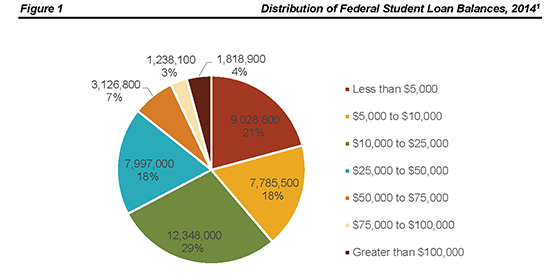

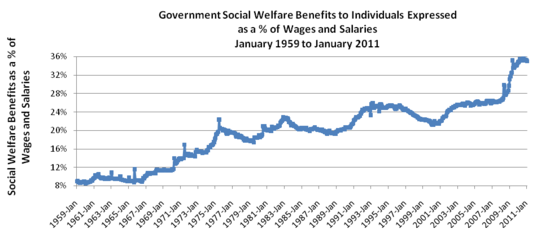
This is nearly a strictly American problem. Much of the rest of the world has realized that society requires and is capable of supporting advanced education for all -- after all we want humanity to be advancing, right?
America is still stuck in this alternate universe where it's a great privilege to have the opportunity to learn, which is of course true to some extent, but they really put it on a pedestal there.
Compared to the rest of the world, I think they over index on attending prestigious out-of-state and thus expensive, regardless of public or private, instead of building a really strong system for locals.
I think of my (non-US) classmates, maybe 1-2 per 100 were from a different region or country? I paid a total of $20k over five years which I easily covered with internships/summer jobs. Can you say the same in the US?
>Much of the rest of the world has realized that society requires and is capable of supporting advanced education for all -- after all we want humanity to be advancing, right?
the number of STEM degrees in the US has basically been flat for decades, majority of degrees being handed out are effectively useless in terms of boosting productivity and "advancement". Go around and ask people with college degrees how often they actually use them, probably 90% admit it was worthless, I know mine was. Luckily I had academic scholarships so I didn't have any debt
kids are effectively being propagandized and brainwashed into chasing worthless credentials while racking up debt that will impact their lives for years. The amount of emotional manipulation around college is disgusting
My theatre degree has been useless from a compensation standpoint for me. It was somewhat helpful when I was in sales but I only got it because it was the easiest degree that required the least amount of maths.
I went to college because my parents forced me to. Thankfully I got out without any debt. I cant imagine how upset I would be if I racked up 100K is debt and ended up with a useless degree like many of my friends did.
That being said... I cant really blame my parents for forcing me to go. It did seem like the best option at the time. No one told me, or I guess them, about alternative educational programs or trade schools. I'd probably be a carpenter now if someone had. I had pretty much zero plans for my life post high school so college at least gave me something to do while I figured it out.
"the number of STEM degrees in the US has basically been flat for decades"
Between 2008 and 2015 the number grew by nearly 50%.
https://nces.ed.gov/programs/digest/d16/tables/dt16_318.45.a...
> kids are effectively being propagandized and brainwashed into chasing worthless credentials
They also force each other into "worthless credentials", as many college graduates will only date other college graduates.
Paying for the Party is a good book about this issue of STEM degrees being flat and money being pumped in by students doing marketing, PR, communications, and business management degrees.
> I paid a total of $20k over five years which I easily covered with internships/summer jobs.
You paid with five years of your life. Even if college were "free", it still wouldn't be the optimal thing for everyone to do. It is the best choice for some, but unfortunately those who make other choices are often looked down upon in much of the world unless they're an outlier success.
The cost of US schools is a massive problem, but the increasing assumption that everyone needs to take multiple years out of what could be the most productive phase of their life to engage in a tracked cookie-cutter experience is an even bigger problem.
Schooling and education aren't the same thing and the first doesn't always lead to much of the second.
This is an important point that isn't being made enough in this thread. Must we all trade our youth for what amounts to a cost sunk fallacy that commits us to a path we may not even like?
Think of college as a social experience for children of privileged backgrounds. Four years of minimal responsibility, ample social activities and idle study. I would love to have that now.
It's expensive, but nice work if you can get it
As has been mentioned in this thread countless times. Any kid can get loans no question asked for college. Not just the privileged.
This is nearly a strictly American problem. Much of the rest of the world has realized that society requires and is capable of supporting advanced education for all -- after all we want humanity to be advancing, right?
I think foreign colleges have stricter entry requirements and fewer amenities compared to American colleges. So yes, college may be free in Japan, but also much harder to be accepted.
College is, overall, cheaper in Japan than in the U.S., but it isn’t free [1]. You might be thinking of some countries in Europe.
The top schools in Japan are indeed quite competitive, but there are also universities that admit almost any high school graduate. A few decades ago, a lot of new universities were established just when the birthrate was starting to drop. Now some lower-tier private universities are struggling to attract enough students to survive.
[1] https://schoolynk.com/media/articles/245ea105-7e5e-49db-ad13...
In Germany, the overall entry requirement is a not horrible high school degree (type of high school intended to prepare for an academic career) for engineering. You can just go and sign up to the university of your choice. The flip side is that you then sit there with hundreds of other students that will be weeded out by a harsh curriculum and zero advisement. That said, whoever gets through that system will be worth their price later on when you hire them.
>I think foreign colleges have stricter entry requirements and fewer amenities compared to American colleges. So yes, college may be free in Japan, but also much harder to be accepted.
Yeah this is problematic, on one hand you have people who work harder for it pass the entrance exams and get in (like in France for example where some engineering schools like Polytechnique and ENS have a super difficult entrance exam but then you know everyone studying there earned it), but on the other hand you get some people who are just lazy or not good at physics get filtered from top tier positions in CS because the entrance exam had Math and Physics equally attribute to your grade.
> after all we want humanity to be advancing, right?
I don't know how much our reams of communications, generic business and English majors are advancing humanity. (Granted, I studied finance [and engineering] in undergrad.)
Communicating with eachother, knowledge of business, and understanding language seem like things we would want more of in society. Not sure why they would be demonized. Is the goal of higher-education to promote learning and build a well-rounded citizenry or to create worker drones?
> Not sure why they would be demonized
Because they're in large part neither functional nor artistic. Both force one to think in novel ways. The certification-for-its-own-sake majors do not.
There are reams of low-grade degrees in which the majority of teaching is in memorization, not mastering new ways to think. That doesn't advance society, particularly when it burdens young people with debt.
> There are reams of low-grade degrees in which the majority of teaching is in memorization
I have a degree in physics with a minor in literature. I took one upper div lit class a quarter. I never memorized a thing. Instead I read a ton, both assigned and peer review, and wrote a ton, both essays and creative. My lit classes are far more memorable than my physics classes because I learned the skill of communicating my ideas. "Low-grade" creative writing taught me that my ideas will never be conveyed as I hoped; good criticism can be immensely helpful; and rewriting my work is when something truly useful comes together.
This sounds like a bias working backwards to find a justification. Is there any studies or data that support your stance? Which are the "good" majors? Who gets to judge that?
> There are reams of low-grade degrees in which the majority of teaching is in memorization, and not mastering new ways to think.
The biggest complaint from anyone I know who studied medicine/pre-med is the sheer amount of memorization involved. Must be a useless field of study.
> biggest complaint from anyone I know who studied medicine/pre-med is the sheer amount of memorization
This is a straw man. Nobody said memorization is verboten.
A certificate granted for mainly memorization, where no new modes of thinking or doing were involved, is not worth tends of thousands of dollars. If a med school matriculated students who never did practical and had never deliberated treatment modes and tradeoffs, et cetera, yes, it would be close to useless.
>A certificate granted for mainly memorization, where no new modes of thinking or doing were involved, is not worth tends of thousands of dollars.
And here is your straw man. Nobody said they were worth that much. You haven't demonstrated that a significant portion of any major exhibits these traits.
> Nobody said they were worth that much
Four years of a young person's time is worth tens of thousands of dollars. So beyond the direct cost of education, that is the opportunity cost, to the individual and to society. I think that's money well spent for e.g. a proper liberal arts degree. It isn't for a piece of paper pursued for its own end.
You haven't presented evidence or sources that any individual major is "A certificate granted for mainly memorization, where no new modes of thinking or doing were involved."
This is the basis of your entire point, and you haven't backed it up with anything of substance. You can keep tossing red herrings, but this hasn't been addressed.
Anecdotally, I have a friend who recently retired from teaching psychology and linguistics at a university level, and his observation over twenty years at the same institution was that standards were aggressively lowered to move more paying customers through the system. Not sure you'd say that's substantial or not, but I'm inclined to believe him.
> Not sure you'd say that's substantial or not, but I'm inclined to believe him.
I would certainly believe that person. However, saying "this major at this school has low standards" is not the same as saying "a bunch of majors at all schools have low standards and are thus worthless."
> Both force one to think in novel ways. The certification-for-its-own-sake majors do not.
What exactly do you think an English major is like? Humanities majors absolutely force you to think in new ways, and I'd argue much more so than engineering or CS majors.
> What exactly do you think an English major is like? Humanities majors absolutely force you to think in new ways
I agree, and was on the edge in not including that major, but did so because there are English majors and there are undergrads who got a degree in English. At a lot of tier 2 public universities (e.g. the one I went to), the latter dominate. A student showing initiative can get a top-notch liberal arts education. But the average student won't. They'll skim, read the SparkNotes and pass through unchanged because the point isn't studying literature but getting a diploma.
Students who want to learn anything should be given the opportunity. I strongly believe that. But more people with degrees doesn't make for a better-educated population. And driving money into encouraging that doesn't necessarily advance society either.
Stephen King was an English major. Word art, literature, helps people advance cognitively.
English is an unowned cultivated intellectual property that greases communication which greases all other human endeavors. I think its underappreciated.
Not all education needs to advance the frontier, much of it is about maintaining what we've already claimed and passing it on to new generations.
What kind of argument is that. For every 10,000 English majors there is maybe 1 Stephen king or anything close to ti
I think it's a quite good argument, and at very least one that doesn't rely on colleges literally producing a larger number Stephen Kings, as if something about the quantity produced could matter at all (really curious how you even arrived at that counter).
It’s not a good argument. Zero good writers learned it in college.
If one did, do you realize your argument fails?
No. All learned to write by sitting down by themselves and writing.
Regardless, creative writing is but a subset of the discipline of English, if not an entirely separate department in a lot of schools. Most of it is studying what has already been written, making connections and forming articulations that understand our human world.
If you see the study of any humanities at all as only possibly measured by what success you gain in the domains of social status or notoriety, then I wonder if you apply that same rubric to STEM fields? Please be mindful that just because you dont know about something, doesn't make it dumb, bad, or pointless. At the very least, don't wave away so simply an entire discipline!
Future authors don't need a college program to "...study what has already been written, making connections and forming articulations that understand our human world".
They can do this by reading books. There are even books of criticism that help you learn about other books.
If you're comprehension of my reply is any indication, you could of probably used more English classes.
Or could indicate you need to work on your communication skills...
For those who work in adtech now, there's some hubris to be had. That industry was founded by people with those very degrees.
> Much of the rest of the world has realized that society requires and is capable of supporting advanced education for all...
I don't know about all of the rest of the world, but many countries require you to "test in" to college (and then it's free). The US basically lets anyone go to college if they can pay.
You can argue one is better than the other. But you should be honest/aware of the difference.
Yes I can say the same in the US. My state paid full tuition for B average and above students if you went to a college in the state. After a little over a year I took off and went back to school while working at a later point. By that time I qualified for federal tuition aid but lost my state one. It wasn’t much over $20k for 5 years out of pocket for me.
What state does that? B average and above is probably ~50% of high school students so that’s full tuition for half of all high schoolers.
Georgia’s hope scholarship did in the 2000s. Now Hope doesn’t cover everything but there’s something called the Zell Miller grant that you can get in conjunction with Hope that pretty much pays most of tuition like the old program. Hope is funded by the lottery.
Some of the 'let's saddle students with debt' vibe seems to have pollinated the Netherlands, though for reasons that I applaud but don't quite understand pretty much everyone now considers it a bad idea.
I have no data, I'm simply stating my beliefs to give you an understanding, since I feel I'm one of the people you happen to be surprised about.
Free education levels the playing field. Moreover, I feel guilt. I have been a beneficiary of free education. Free transport, free college tuition, free books and some paid assistance with living somewhere else. Coming from a working class family it has given me an amazing boost in:
* Career (master computer science)
* Spiritual knowledge (one Buddhism course was enough)
* Outlook on the world
* Network
University isn't perfect, but if I wasn't given this chance then I would not be able to replicate certain pivotal experiences simply by using the internet and my own wit. In that sense, I still believe it levels the playing field by quite a bit.
School was always meant as the great equalizer and I think it still should be, as imperfect as it is.
I’m attending a state school in the US, and my degree costs about $13k/year + books + housing.
It's different and worse than you say. We put it on a pedestal, decided it was worth any cost, decided everyone should have the ability to go, but that they should all have to shoulder that burden themself. A large part of the issue right now is the system we've built allows any student to obtain a predatory loan to cover the entirety of the outrageous costs, and any political effort to change this is likely career suicide because it will be seen as keeping underprivileged students out of the best programs and therefore stunting their futures.
> America is still stuck in this alternate universe where it's a great privilege to have the opportunity to learn, which is of course true to some extent, but they really put it on a pedestal there.
I think the facts don't really support the idea of it being a "great privilege" in the sense of being inaccessible to most. E.g. if you look at this table of tertiary education by country, in OECD countries plus a few others, the US is in the top 10. https://en.wikipedia.org/wiki/List_of_countries_by_tertiary_...
In the section below that, if you look at 4-year degrees or higher, more Americans have a 4-year equivalent than Israelis, Swedes, Canadians, Norwegians, French, German etc.
We're not an outlier in how many of us go to college, just in how much of people's lives they end up paying for it.
> This is nearly a strictly American problem. Much of the rest of the world has realized that society requires and is capable of supporting advanced education for all -- after all we want humanity to be advancing, right?
Yeah subsidization of education, of mostly useless degrees will solve all problems of humanity, totally.
I don't know in which non-American worldview you subscribe, but America has a higher rate of tertiary education achievement than practically every European nation (source: https://en.wikipedia.org/wiki/List_of_countries_by_tertiary_...). European countries have more selective and restrictive advanced education requirements, they just don't charge for them. This is the literal opposite of "supporting advanced education for all".
To be clear, I think this is a more sensible system than what we do here in America, where anyone can get an advanced education because even if you can't afford it, the government will guarantee loans of arbitrary size.
For the 25-64 Segment but try the 25-34 and suddenly you have a different picture.
There is little hope anymore for actual advancement anyway, just a tendency downwards, punctuated by small spurts of different kinds of enthusiasm.
We get a new iPhone every once in a while, or a UI refresh of twitter, to simulate a feeling of advancement, but we all, deep down, know it's just that, a feeling.
How could anyone even really want advancement when we know that finance thrives on predictable cycles.
The word for the next centuries should be 'humility,' not 'progress'. Humility is the only thing I think we can possibly achieve anymore
Our state has a program that covers tuition if you are in-state, received good grades in high school, and continue to maintain those.
Of my (undergraduate) classmates, I believe 60% were out of state, including out of country. Unfortunately, most that came from states with similarly ranked public schools did not have access to a similar program in those states.
My payments to the university totaled $60k for 7 years, undergraduate and masters. (I lost full tuition coverage my first year.)
I've lived in the U.S. my entire life, and I agree with you. Our culture somehow misses the fact that as a society we benefit from educated citizens. There's even a segment of the population that fetishizes ignorance as a virtue, and knowledge as leftist indoctrination.
There also seems to be a deep seated fear that any sort of public investment in people is seen as a slippery slope to soviet-style authoritarian government.
Academia is a hostile environment for a right-leaning person. When less than 5% of professors identify as conservative, why would you gravitate to it, as a conservative? That's half the country, by the way. Maybe that has something to do with low engagement. Consequently, the institution suffers dramatically from its own groupthink.
That being said, there's a difference between academic education and other forms of education, such as vocational or work experience. One is not better than the other. I'm weary of people that think they're smarter or better than someone else on the basis of what school they went to or how long for. Academia does not have a monopoly on knowledge. Particularly in the information age, but even well before the age we find ourselves in, there's always been value in the pragmatic experience of less intellectual pursuits.
I'd say the U.S.'s slant towards pragmatism and away from intellectualism is one of my favorite things about the country. I'd say it showed itself pretty well on the Covid response. Red states were more quicker to re-open, quicker to drop restrictions, and quicker to move on to living with Covid and in spite of it. People knew intuitively that you wouldn't be able to control a virus more infectious than the common cold.
And many people know this, intuitively as well, that's why New York loss record population last year and why Florida and Texas grew dramatically. The intellectuals running New York and New York City probably have tons of education and not one bit of common sense, because all they know is conformity. When an ordained expert says jump, they ask how high?
That doesn't even begin to cover the other part of it, which is how poorly adapted academia is for the 21st century. Even if it were free, it wouldn't fix that problem.
> how poorly adapted academia is for the 21st century. Even if it were free, it wouldn't fix that problem.
I can agree with you on that.
> knowledge as leftist indoctrination.
Almost all of my classes had leftist brainwashing. In my machine learning class, the professor would use voting republican as a classifier making the wrong decision. Given that people had made it this far in education to be good at repeating and learning what ever the professor says and that the professor is in a position of power over the students, this is very bad.
> There also seems to be a deep seated fear that any sort of public investment in people is seen as a slippery slope to soviet-style authoritarian government.
Well, we now have to show our papers to go to restaurants, bars, work, etc and are now required to mask our faces in public. its considered an act of terrorism to raise your voice at a school board meeting, and we're being censored on internet platforms. so yeah, you already accomplished your soviet-style authoritarianism.
Americans have one of the highest rates of higher education in the developed world.
America just wants new grads to be indebted to motivate them to get to work.
> after all we want humanity to be advancing, right?
Hell no! Life is a zero-sum game, so if I'm hurting other people, that must mean I'm winning! Besides, if we all collectively come together to make the world better, those people might have nice things too! That would make me so angry! I'd rather live in poverty than see those people do well in life!
Sarcasm, obviously, but at least 100 million Americans believe all of the above. They are single-issue voters, and their single issue is hurting other people.
Some people hate college and only go for the degree. College should be accessible to everyone but not everyone needs to go to college.
How is it not accessible? Federal loans are given no questions asked. Where are these good students who can’t get into college
Which country? I don't know of any that get close to "advanced education for all".
https://en.wikipedia.org/wiki/List_of_countries_by_tertiary_...
There is a rapidly growing list of increasingly dire "strictly American problems". I wonder when and how it will break.
The bizarre thing with higher education costs that no one's really explained to me is why schools simultaneously spend more and more on administrators (who are full time staff), and push more and more teaching to adjuncts. The claim I've heard justifying the growth of administration staff is that regulatory compliance becomes more onerous over time. But no school is judged on their regulatory compliance. In industry, we often want to make sure that the core value is staff, and stuff that you have to do but won't distinguish you, you may as well contract out. So why aren't administrative compliance obligations contracted out to some overseas firm?
We've gotten to the point where it would actually be cheaper for students to hire their own adjunct to each them 1:1, than to go to some universities.
Updating with numbers:
- USC tuition is >$60k/yr
- Adjunct professors in CA apparently earn $34-$43k/yr
https://admission.usc.edu/learn/cost-financial-aid/
https://www.salary.com/research/salary/recruiting/adjunct-pr...
A lot of universities are openly hostile to tenured professors, unless those professors are gigantic names in the field they can use for marketing. Many Universities would be a-okay with ditching tenure all together.
The reality is many universities have gotten out of the game of offering quality education. They still offer education, but they are largely indifferent to the quality of the education, so adjuncts will do just as well as any professor.
Instead, universities have spent enormous money and effort to protect and emphasize the college/university "experience." Thus you get an enormous amount of handholding and bureaucratization in higher-ed because they're functioning like giant weird resorts with health services, legal services, financial services, extra curricular services, and a whole lot of other crap with education as only the implied "reason" the students are there.
> But no school is judged on their regulatory compliance.
To a certain degree this is untrue. Student complaints and/or payee (parent) complaints for things like Title IX violations, as one example, mean a potential loss in federal/state funding and negative press. So institutions seek to bureaucratize the whole process from the tip of the root to the highest leaf. Higher-ed in the US has become a kind of ride into adulthood.
but aren't "good" universities (also) judged by their research output? Or formulated in another way...isn't the majority of the budget of a good university research where tenured staff matters?
It’s interesting because universities over-produce academics for the number of tenure-track jobs available, so they then hire those phds back into adjunct positions, which is often the only academic job available to them, especially if they don’t want to move across the country to some small college in the middle of nowhere. So many phds just suck it up and take the adjunct jobs teaching undergrads. Actual professors at research universities aren’t really even doing teaching as their primary job. Their primary job is to do research and publish, which is how they progress in their career. But universities need people to teach so they hire adjuncts to teach undergrads, especially the entry level courses.
In regards to admin costs, just look at UC Berkeley, they now have a $25 million dollar diversity department that hires nearly a hundred staff, all making over $50k and getting access to the pension system. Lots of people will say departments like this are a good thing, but there’s no question these departments cost a lot of money and inflate administrative costs. Berkeley has 1 staff member for every 2 students at this point.
Look at this: “ Establishment of a Supplier Diversity Program at an institution is required when an organization is receiving federal funding for contracts or subcontracts as dictated by the Federal Acquisition Regulations (FARS). The delegation of authority to manage the program is issued through the Office of the President (UCOP) policy.” Talk about regulation causing bloat, to take federal contracts you need to establish an office that tracks and reports the diversity of your contractors. No wonder costs have skyrocketed.
But, isn't there a huge gap between:
A) tracking and reporting the diversity of your contractors (which I think a techie might accomplish with a google form and a spreadsheet),
B) "establish an office" that performs A,
C) a "$25 million dollar diversity department that hires nearly a hundred staff"?
It does make you wonder though whether this spending is actually bad though. IE, does admin bloat improve university outcomes? If a PI has better resources, is their research output improved?
IMO the discussion focuses entirely on cost-to-student, which is of course important, but is possibly missing some important details. A doubling of productivity among research staff at a university like Cal would no doubt correspond to some insane GDP multiplier 20 years down the road.
> Berkeley has 1 staff member for every 2 students at this point.
Fascinating. Got a citation for this?
Well, the most obvious answer is that the administrators are the ones that hire the adjuncts, if you follow.
All uni’s I know of in the U.K. have hired hordes of admin staff. I think this is largely due to centralisation, eg rather than have an exam admin in each department, you have a team in a central building. This sounds like it will be more efficient, deduplicate effort etc, and also has the added imagined benefit of presenting all the courses in a similar way, so you can have a “uniform” and “unified” student experience.
But this is a fantasy.
The reality is that different departments and different courses need to be run according to their specific needs. So the central administration then either fails to address this or hires more people to compensate. And once you remove people from their actual job (ie take them out of the department and change the job from “helping lecturer X get this exam done” to “execute processes A B C” then the potential for bloat and empire building skyrockets. You end up with all sorts of strange initiatives, buildings, and job positions, that seem far removed from simply administering teaching and research.
At the same time the U.K. gov slashed funding, moved to a reliance on tuition fees, and pushed universities to run like businesses. Their ostensible purpose and the incentives they face are now dramatically misaligned, so it’s no surprise that the outcomes we see make no apparent sense. It’s far more important to bring in grant funding than provide good education, for example, when you know students will keep paying regardless.
As the father of a 16-year old, I can say that the current generation of teenagers has heard a lot more about the issues of college debt than previous generations did. Partly because it's a lot higher, partly because even if newsmedia doesn't report on it, there are enough adults out there saddled with it that they just hear about it from a relative or friend. It used to be a no-brainer; you go to college if you can. No longer.
Any industry that sees nothing but expansion for decades, has a rough time when it stops. I think higher ed is in for a rough time.
No. Things are just going back to the way they used to be: higher education is for the elites. Once upon a time we understood that higher education was important for all and having a well-educated public was good for the Republic. Now that view no longer holds - the politicians have learned that their flim-flam doesn't work as well on a well-educated public and so they've been making cuts to higher education for the past 20 years. We're just now getting to the point where the cuts are having a serious impact to the middle class being able to afford college. Don't worry though - the elites will be just fine.
Hanlon's Razor: "Never attribute to malice that which is adequately explained by stupidity".
It's enough to assume elites were greedy (and/or dense) and didn't consider long-term effects, you don't even need a decades-spanning conspiracy for it.
The elites won't be as fine once they realise much of their wealth stems from the rest of the republic, but that seems to be the circle humanity is caught in for eternity.
it is my vague impression from history that in real yet slow-moving crisis, those that are able to command and control high-value resources do in fact continue to thrive while others fail in increasing numbers. This works, until it doesn't, to make a cute phrase, because in dynamic systems, either the system re-stabilizes in a new and different composition, or there is sudden, increased failure.
If I understood you correctly, you're describing the efficiency-resilience problem: A system that is efficient is highly specialised for their environment, and thus susceptible to failure if the environment changes; a system that is resilient will not be as efficient, but can adapt to a changing environment.
This seems to apply to all kinds of things - people, organisations, software, religions.
I guess as often in live, balance is important here :)
What does this say about economics and supply chain failures during a pandemic? I think you’re on to something.
True, and you might be interested in Peter Turchin's "Ages of Discord" for a more in-depth investigation into how and why that happens.
That's an interesting take, but I disagree.
The reason colleges cost so much is that they've expanded their administration, facilities, and sports programs to soak up all of the available loan money.
I went to a state school that focused on STEM. The acceptance rate was low, class sizes were small, and the tuitions were reasonable. The buildings dated from the 60's. We didn't have extensive athletic programs, and our gym was falling apart. The school didn't spare expenses on things that didn't contribute directly to education.
We still had access to full machine shops, doppler radar installations, flow cytometers, BSL-3 labs, electron microscopes, wind tunnels, robotics facilities, and a boat load of really cool stuff. But it certainly didn't feel like an ivory tower.
Though our school wasn't losing money, the state board of regents decided to merge it into a much larger "liberal arts" school. This was done so that it could hit the student body requirements in order to qualify for building its own division I football program.
They built lots of fancy buildings for their dance program and theater productions. I can't even count how many stadiums and sports facilities they've constructed - it feels like two dozen! They're also purchasing lots of expensive real estate to enhance the size of the main campus. Meanwhile tuition has quadrupled and fees have gone up 1,000%.
It's bloat. That's why everything costs so much.
I wonder if there's a market for schools that specifically don't have a sports program. I suspect the atmosphere at such a place would be attractive to a large minority of prospective students.
A lot of students who may not play sports competitively still enjoy playing sports recreationally and really, given the sad state of American's health these days, we really need to be promoting the development of both mind and body.
Could somebody explain to me (Australian) why/how sport and higher education became so closely linked? We certainly have university sporting teams here, but they are not really notable and certainly don't have the political clout that they do in US schools.
In Europe all the football teams have their own junior teams that are separate from education. Eg there are Chelsea/Real Madrid/Bayern under-10s teams that kids attend after school and feed up to the seniors. In addition, the leagues in Europe are a pyramid. Part-timers play at the bottom, superstars at the top. There's relegation and promotion, and players can develop at lower league teams to get bought by the top clubs later.
In the US they don't have that. AFAIK, there's no "Green Bay Packers U-18s" football team that is integrated with the professional club and promotes young players. Baseball does have a farm team system called the Minor Leagues.
The NCAA which runs university athletics in the US managed to make a junior league feeding all the professional leagues in various sports. The progression for an American athlete is then to get a scholarship to play at some university, and then get drafted by a professional team once they finish.
It's just a market failure.
Student loans are government-guaranteed and cannot be absolved by bankruptcy. This IMO creates a perfect storm whereby under-informed teenagers can get massive loans they have no hope of repaying. Without the government/no bankruptcy components to this equation, the market would not support this kind of debt market.
Fortunately, this is easy to fix. There are two simple options (and probably many more complex ones):
1. Make it a free market. Make student debt absolvable by bankruptcy. Don't give government guarantees. Private loans will account for the viability of student's repaying those loans, while allowing bankruptcy helps ensure that unfair or predatory loans will be costly to the loan-issuer.
2. Make it a government service, like K-12. The government will actively manage the tertiary education market, thus making "the cost of college" a policy decision.
IMO the first one is not particularly desirable because it will limit college access to the upper socio-economic classes, further exacerbating wealth inequality and reducing social mobility. That leaves us with the second option, which is both straightforward to implement and has many case-studies abroad.
The administrative bloat helps cover the fact that their graduates aren't able to get jobs upon graduating. Parents and prospective students feel good that 99.7% of the graduates got a job within their first year of graduation and don't realize 7% of that was as an administrator for the college.
> the politicians have learned that their flim-flam doesn't work as well on a well-educated public
Looking at recent graduates are we sure that this system is truly preparing them for the realities of the real world and how to understand it.
Feels more to me that a whole generation is being scammed into paying for broken tools.
not only the higher costs of education but my generation (millennial) learned that most degrees offered provide no real jobs that can contend with massive rise in cost for every significant thing that constitutes a decent life (housing, childcare etc...). Things look even bleaker for younger generations. The people who were born just in time to ride the swelling wave greatly benefited, if you were born when the wave is crashing down, unfortunately your life will be much much harder. We have this notion that everything we earn is based on merit but as i get older i see how much external context greatly influences the opportunities for merit as well as the outcomes.
I can relate to info/knowledge about that edu debt, went to undergrad in the 90's and while I might be naive, I can say I didn't comprehend the debt side of things. And my edu debt pales in comparison to today's students. Fortunately I grew up, buckled down, and paid it off but there were some lean years right after school. Now? I can't even imagine.
And I also agree: how will these institutions scale back? What if tuition was cut significantly? What programs are on the chopping block?
Businesses and industries that have never had layoffs (or not in a long time), tend to do them badly (more unfairly and in a more disorganized manner) than ones which have had them recently.
Exactly. 1M fewer people will be in poverty from student loan debt
This is probably related to teenagers enrolling in college not only for an education but also for the amenities that come with college life (think of greek life, moving away from parents, college sports, freedom to explore your identity, etc.) The pandemic has put a stop on most of all non-academic stuff, making enrolling in college less appealing to this group of students.
It will be interesting to see a follow-up analysis that parses out enrollment behavior by subgroup (e.g., by SAT/ACT score) as it will be easier to understand who is choosing not to enroll in college.
Another follow-up could be to see which institutions are losing students. It is known that college enrollment is counter-cyclical to the economy and that enrollment declines at community colleges and open access universities when people can get a job right out of high school.
Most of the amenities you speak of are not available at community colleges, which have seen the biggest decline. The pandemic definitely figures into this, but I don't think amenities can account for the large decline in certificate and vocational training this represents.
Community college has also gotten really expensive. I was looking at the price for my alma matter, tuition has more than doubled since I graduated in 2010. The price has gone up faster than my university’s tuition, making the community college less competitive. I wouldn’t be surprised if economics also is contributing to declining community college enrollment.
Community College still absolutely offers a social experience even if it’s just being in the same classroom as other people.
And Zoom interactions are still terribly inferior to real life in-person ones regardless of what kind of college you go to.
Maybe it just got too damn expensive. I make pretty good money and I'm still planning carefully for how I'm going to deal with it for my kids (who still have 7-9 years left before college).
I'm hoping that online school really takes off, and that colleges follow Georgia Tech's lead on pricing for it. OSU still wants full price for online classes, which is bogus.
Beyond that, I'm going to strongly incentivize my kids to stay home the first couple years and hit the local community college for the first half of their degree, just because it's dramatically cheaper than what it'll cost to send them to live at a university.
I thought college was expensive when I was going in the 90s. Now it's just ridiculous.
Aren't state colleges relatively affordable (while mostly OK academically)?
Relatively, yes, I believe so. But Oregon State still tells me to budget 30K/year for a resident undergrad. About half of that is living expenses, half is school.
The dynamics of this play out different on various campuses but at my alma mater we had a bunch of "right off campus" apartments that competed heavily with the dorms. Well, it wasn't much of a competition, if you calculated your monthly rent based on what you paid for room and board, you got about $700/mo to live in a dorm with 3 others.
By comparison you could go off campus and rent an entire 1bd for like $750/mo. A similar living situation off campus with 3 roommates would set you back $300-400/mo and $550 if you really wanted the nice place.
The thing that always bugged me about dorms is they aren't treated as regular residences. School having a week long break? You have to be out of your dorm during the break with no where to go but back to your parents. Also that 30k for a year only covers two semesters, about 6-7 months of actual housing, which works out to $2.5k/mo for board if we take half of that 30k you mentioned.
I don't know where this college is but I'm going to bet that you can get a seriously nice place, probably a small house for that amount.
I don't understand how we've accepted $30k/year as relatively affordable...
In my undergrad, when I was living in dorms, it also came with a meal plan (I think ~2 meals a day covered). So for in state, 10-15k was tuition. The rest was rent + meals. So 15k / 12 = $1250 a month, which is not cheap, but considering it includes food is really not bad at all.
But you can't divide it by 12 since school is only in session for roughly 9 months. During summer session you're on your own for food and housing. That makes it more like $1666/month. That's nuts.
Oh true you right
Well, your house's value went up 30% the past two years, so you can now take out a larger loan against it...
/sarcasm (in case it wasn't obvious).
That's residence pricing, so:
$1250 a month housing
$1250 a month on education and staff
The numbers aren't crazy with the housing prices we're experiencing right now.
$15K for living expenses in a year sounds pretty alright tbf. Although I did believe state school charged less for tuition. I guess time changes.
WTF. My wife did the online OSU program and all we pay is in-state tuition (even if out of state!). She's an international student too!
You will not be paying 30K a year for OSU e-campus. More like 10-15K a year or so.
> You will not be paying 30K a year for OSU e-campus. More like 10-15K a year or so.
Yeah, last time I looked it is the same tuition as if you were using the in-person facilities. I think that's too much for an online program. I paid less than $10K for my master's degree at Georgia Tech. That works out to about a third of what OSU is charging for the online undergrad CS degree, if my math is right. For online videos recorded once and watched many times, I think it should not cost anywhere close to what sitting in a room with a professor does.
This is because the degree granted does not mention if it was earned online or not (and this is why we choose OSU). It gives literally the same degree as if you earned it in person.
Well they said they were told to budget 30K a year, half for school expenses, and half for living expenses, so it sounds like their experience isn't contradictory with yours.
Living expenses for online?
I'm losing the thread of this conversation. The original poster said that OSU costs around $30K per year, with $15K for tuition and school fees and $15K for living expenses. The person who replied said their wife only paid about $15K per year for online courses, which is in line with the above mentioned costs.
Despite an online education, the student must still remain living somewhere. $1200/month seems a reasonable estimate for a college life.
Yes and OSU is in a relatively rural and affordable part of Oregon. So even with the insane housing market explosion - $1200/month is probably doable for a bare minimum type of living situation for a student. It’ll be just enough if the student has no emergencies. $600/month rent for a room. $400/month for food. $200 for misc.
If this was not a college town or somewhere as rural - you’d likely have to make it closer to $2000+ just because that’s how expensive it is these days to live in cities unless you were able to buy a house a couple decades ago.
Yes and no. I used to work at a state university recently. The cost of most state universities (in my state) has stayed largely the same over the last 10 years. However state appropriations (tax dollars from the state government) has been going down each year. So students are responsible for more of the bill.
Back in the 70's and 80's state appropriations covered between 70-80% of tuition. Now my state covers roughly 35-40% of funding for most public universities [1]. Part of this is the university offering more programs - athletics, counseling, therapy, other student services, which all need additional funding. The other part is that state funding is going down due to a variety of political budget reasons.
[1]: https://www.house.mi.gov/hfa/PDF/Summaries/21h4400h2cr1_Educ...
I started college almost 20 years ago, so I don't know the current situation. Back then the state schools had acceptance rates of only 20%-30% because so many people wanted to go to state schools to save money. There wasn't nearly enough supply to meet demand.
I never applied to any public school, but I was legitimately worried about not being accepted. I wouldn't depend on it.
I'm really glad I went to a private college in the end. People who went to state schools said class sizes were huge (like 150 students per class) and they were being taught by TAs. I really don't think I would have succeeded in that sort of environment - At my private school we didn't have any TAs and I never had a class over ~30 people, which was important because classes were very interactive.
Florida used to (still does?) guarantee admission to state college if you have a 2 year (AA) degree.
My state school (Washington State) nearly doubled while I was attending. Of course I was there between 2009 and 2013 which is where all colleges really jacked their prices up.
I'm keeping my fingers crossed for scholarships.
We have to do something about what people think college is to an employer. I'm excluding courses where you specifically need the degree: medicine, law, and maybe some others. Clearly you can't be a doctor or lawyer who hasn't passed his exams. Also if you are going to be a professor or phd naturally you will need to have studied whatever it is.
For everyone else, all college does is shows people that you are diligent: you read the books, wrote the essays, passed the quizzes.
Now, the thing is most jobs are not directly related to any particular degree. For example if you become an option trader like I did, nothing on my Engineering/Econ/Mgt was relevant. Even the finance parts of the management course were not relevant. You learn on the job. Think about it, you are at work 50-70 hours a week the whole year vs splitting your time at uni over a much shorter calendar. At work you sit next to an expert, at school you sit next to novices.
So the whole idea that college qualifies you to do something is bogus. It's mainly a signal that you're teachable, and a weak signal that you're interested in some particular broad area.
I would guess that the great majority of jobs that people with degrees take could have been done by the same people without their degree. You'll never get people to admit that if you aren't friends with them, but that is generally what people think as well.
Are there other benefits to college? Certainly. You get to socialize, mature a bit away from home, and for most people it's the last time they are exposed to the great ideas that mankind has found over the centuries. Those things can all be done separately without paying for it, but currently the system is broken and everyone uses degrees as a social status marker, which is self-reinforcing: you still need a degree because if you don't have one you can't get those jobs that you don't need a degree to perform.
A degree is just a filter. If you get 200 applications for a job listing, you are going to prioritize those with relevant degrees.
A huge number of jobs have no relevant degree. What's the degree for being a management consultant? Or a pharma sales person?
The number of jobs that are just "general business role" is enormous.
A college degree is a filter that someone is reasonably diligent, socialized to some level, and compliant enough to play the game. Most employers don’t want some self-taught “I learned the same stuff for $1.50 in late charges at the library” type. If only 1/3 of people attend college, and 1/3 have a high GPA, employers get a filter for the top 11% of compliance & diligence without much effort.
> Are there other benefits to college?
I think I learned a thing or two at university.
Most comments here are completely missing why this is happening now.
Students don’t want to pay tens of thousands of dollars for remote learning. They could watch Khan Academy videos instead for free, and they’d be better quality.
Funnily enough me and my peers usually end up watching Khan Academy videos anyway since they do a way better job of explaining topics than university content.
Mayhaps by design. Who would you rather hire to run through an obstacle course? One who has a certificate of having run a course of hoops for 4 years, or one that looks fit enough to run it? Arguably both may work. Can you measure which one is more likely to cost you your job? Depending on your obstacle course you may be looking for more specific qualifiers.
Bingo. If I graduated in the last two years, I would have gone to work at a grocery store while taking a couple core classes online while I waited for colleges to get back to normal
I was surprised how low this theory was in both the article and in this comment section! The article even opens with talking about the trend continuing fall 2020 (the first school year that began since the shutdowns hit the US), and yet it takes almost halfway down the article to mention "remote learning" and then another big chunk before the word "pandemic" is used (I didn't see "virus" or "COVID" either before then). I'm not saying all the other issues discussed in the article and elsewhere in this comment section aren't there, but given the timeline I feel like any convincing theory has to first address why that isn't the dominant factor.
While hiring for junior software devs, I found that degrees were next to worthless. People coming in with a long list of qualifications but somehow can't answer the most basic questions about the stuff they are certified in.
I found people who did self directed online learning combined with having some projects to show in the resume were the best and had real world experience rather than having memorized a hundred java design patterns from the 90s.
Start by lowering tuition fees. University administrations have become bloated, profiteering from the truism that you gotta go to college to get a good job.
I got my B.A. in 1968; I owed $800 balance on my student loan ($6,400 today).
My plumber just charged me $430 to install a sink, about an hour and a half's work. That doesn't include the cost of the sink. Are Gender Studies majors making this kind of money?
Government dollars went a lot further when a smaller percentage of people were enrolling in college. And there was unmet demand for college educated professionals (which is true in some fields today, but probably not as broadly true), so there was more willingness to spend government dollars educating people.
I realized the absurdity of this when I found out that my university's president earns more than the president of the United States
colleges have been expanding with zero constraints for 20+ years - demand for degrees increased significantly, enrollment went up and up, student loans being federally backed were given out to anyone for any amount so tuition naturally increased substantially. seemingly limitless growth opportunity?
now many are massively bloated organizations with declining utility and the need to maintain their perpetual growth - who wants to cut costs? the downward spiral is only going to accelerate, IMO. and that doesn't even account for declining birth rates. my feeling is the next 20 years will see the higher ed industry contract rather quickly and the universities that remain will deliver either on quality (increasingly difficult to hold an advantage) or accessibility (inexpensive, contemporary workforce training since employers no longer do that).
Enrollment in higher ed decreased 7% from 2008 to 2018. It’s not true that colleges have been expanding with zero constraints. The increase in tuition at public colleges and universities has occurred with the decrease in public funding per student. At my system 20 years ago roughly 60% of the cost of education was publicly funded and now it is 40%. We’ve correspondingly increased tuition.
thank you for linking stats. going back to 1998 there is clearly huge growth. total enrollment might already be taking a hit but i am referring more to the expenditure side of things - dorm buildings, campus luxuries, etc. the figures from your link display this, IMO. especially the expenditures.
https://nces.ed.gov/programs/digest/d19/figures/fig_12.asp
but to be fair, yes the stats do indicate a decrease in enrollment. however degrees conferred has increased despite a decline in enrollment, any guesses as to that?
There was growth in enrollment up until 2010. Colleges have been struggling since then. They need bodies and need to attract students. Standards for acceptance have gone down and grade inflation has gone up. Though grade inflation has been a thing for many decades now.
As to your question. It’s easier to get a degree now since standards have been lowered since we need to retain students. The cost of acquiring a student is much higher than retaining a student so a lot of effort has gone into retention. What this boils down to in my opinion is the need to pass students. Not failing students is the easiest way to retain them.
makes sense, i hadn't thought about the grade inflation aspect. somewhat akin to the prevalence of fraud in asset bubbles.
i also wonder if something like the power law is in play - larger schools fairing better with a larger student base to allocate acquisition costs over, vs smaller specialty schools. anecdotally i have seen one or two small schools close to me close/merge with other schools.
That's average, but when you look at what happens on the ground, the winners, like the name brand schools you've probably heard of before, are all expanding and building new dorms and labs and athletic facilities, and the losers, those random liberal arts schools in the middle of nowhere in new england and such, are closing down and selling off their property. It's hard to find a major university that isn't constructing some massive donor-backed capital project as we speak, and acceptance rates at major state schools across the board has been dropping like a stone; even schools like Cal State are becoming very competitive.
The population of the US has increased all this time too, and so has foreign student enrollment.
Not the college-age population, however.
I know a lot of the comments here are from the lens of money input (as a cost, to pay for education) and output (as a return, on the investment, in the form of a job / career).
However, I wanted to take a step back and offer a different perspective. College does more than teach one a trade. It should, ideally, help the student become a better citizen of their own culture, of the world, and of their community. College taught me deeper empathy, and different kinds of empathy, it taught me more about literature, history, cultures, anthropology. There is so much today that could be improved if, for example, philosophy was a core requirement of every CS curriculum.
Outside of coursework, It taught me how to make friends, and how when I did bad things, I would lose friends. In a way, it is a continuation of high school except with the training wheels off, with all the consequences of adulthood to be tasted for the very first time.
I know it is a privilege to say this, and it is why I am such a huge proponent of free education, but to miss college is to miss more than some academic study in a field. It is to miss a whole chapter of life. To go from high school to labor, without that sweet blissful blend of freedom, stress, and discovery feels like a life not fully lived.
I would love for everyone to experience this, so from this personal perspective, I find that this framing (of money), on the whole, a rather negative thing.
My kids are going to college in an EU country where their BA degrees take three years, but each class is related to their major. In the US, our inane curriculum wastes two years retaking general ed classes that they should have learned in HS.
Borrowing to pay tuition to take general ED classes is dumb, and yet, this is the path that is pushed on our best and brightest.
At the least, kids should gen ed in Community College. At the best, we should reform or horrible curriculum.
US colleges have many students from foreign countries on visas. I wonder what the impact of the pandemic is on that segment of the student population.
This isn't likely to hit community colleges, which the article touches on. Just trying to point out that digging deeper might show some interesting details.
> US colleges have many students from foreign countries on visas. I wonder what the impact of the pandemic is on that segment of the student population.
The elephant in the room is that those foreign students are also the ones paying sticker price and subsidizing college for the other students, even at public schools.
From what I've seen , international students who are supposed to attend colleges in 2020 were affected the most:
* Some abandoned their international studies plan and attended local colleges instead.
* Some took a gap year to wait until 2021.
* A minority pushed on and took classes online until they're able to come to the US.
Certainly has to be a factor, but not many of them were headed to community college, which has seen the biggest drop.
Theirs a few factors.
First birth rates are generally down. Not only in America,but worldwide.
>Wages at the bottom of the economy have increased dramatically, making minimum-wage jobs especially appealing to young people as an alternative to college.
This isn't an ether or situation. I worked full time while going to school full time. In fact this was my entire senior year of college.
I actually got to 6 figures without a degree, but the entire point of college for me was getting away from my horrible family. It's still a good way to get distance.
This is great news overall. Tuition will have to drop and schools will offer more flexibility to working students.
In my home state of California the UCs are hostile to anyone with a 9-5, I hope this changes.
1. School loans are not dismissable in bankruptcy. This is only shared with criminal monetary punishments.
2. Interest is charged, which is abhorrent at any rate. Especially the 8%.
3. PPP "loans" to the tune of almost 1t$.. which were forgiven. Just run a few sham job ads for software engineers at 10$/hr and NobOdy wAnTS tO wOrk!
4. University doesn't really provide job skills. They allude to, but then say they dont.
5. Jobs say they need a degree, but that's primarily due to https://www.naacpldf.org/case-issue/griggs-v-duke-power-co/ and easier to exclude black people with a 'degree'.
6. Most programs do NOT need expensive schools, labs, etc. Non-lab based classes can easily get by online.
7. School costs are stupid, because "Its what the market will bear"
8. Even public higher ed schools are stupid priced, because the public aspect has been surely ripped away from them.
9. Even if you DO go, you're guaranteed only one thing: undismissable debt. I failed out due to medical reasons. I have the debt, and no degree to show for it.
As a millenial, higher ed is a bad bargain. And if you're younger, DO NOT LET HIGH SCHOOL threaten you with "if you dont go to school you will work as a grocery bagger for the rest of your life". Teach yourself IT. Get into an area, double down, learn it inside and out. Find a few hot tech areas. Learn them well. And off you go.
I love how the solution is always to do tech. What about the other things?
Well, the other things are likely not worth it. You can tell because they try to hide outcomes from prospective students. The things that will yield good outcome for an individual all lead with the outcome. The things that don't always lead with some sort of identity-nonsense: "You will be a well-rounded individual" but don't actually show the median example of this well-rounded individual post-degree.
Really? Tech is the only career that’s likely worth it?
CS and IT have very low barriers of entry.
Hardware is cheap, especially if going back a gen or 2. Software is free if open source'ing it. Piracy is also cheap too. Books and resources are plentiful, and predominantly cost time to experiment and do. And you can get hold of the developers pretty easy in open source, or dev with them.
Science has costy expensive lab equipment, knowledge is less shared and more guarded for their guild, people are harder to get to.
Engineering, depending on discipline, isn't even legal to teach yourself (professional engineer). Or it requires more expensive lab equipment in the ranges of 10's of thousands (think good oscilloscope, signal generator, rf anything). It's possible but really hard.
Math is possibly just as 'easy' as CS/IT. However, it's a super elite group. They have their own in-language that's near impenetrable for outsiders. And the people who excel are not at all easy to get in contact with.
Outside of STEM, there's other possible avenues. But given that Marx said that a capitalist society trends towards money-making activities in mathematics, science, and technology (STEM), the other avenues are probabilistically a bad bet. And yea, that sucks. But we also like to have enough money to live and enjoy life.
I’ve been recruiting for US startups since 2008, probably recruited over 100 folks from engineers to C-level.
I have never considered a candidate’s college or if they even attended one. The only thing I evaluated is what they accomplished in the last 1-2 years. That meant hiring some brilliant engineers straight out of high school.
Most of these candidates were early stage hires for dozens of companies that went on to become billion dollar public companies or get acquired for 8-10 figures.
As far as a springboard for a career, I haven’t seen colleges come close to worth the price of admission.
Almost your entire career value is dependent on how well you can self-learn and self-motivate. The one important piece that school might teach or give you exposure to is how to collaborate effectively with others.
I can attest to universities not being useful for helping you get in to a career, besides resume writing. I attended one career fair sponsored by a university I attended. There were about 60 different booths, and two of them were tech companies. The first offered 40k/yr. They had already reached out to me prior to the career fair and I declined to move cities for a 40k/yr position, there were plenty of state jobs paying that. The second was Amazon. I asked if they had any SWE roles. They said there were only warehouse jobs.
> As far as a springboard for a career, I haven’t seen colleges come close to worth the price of admission.
This right here.
The strongest argument against the status quo is that the juice isn’t worth the squeeze.
In aggregate college graduates could achieve equal or greater levels of learning, relative to their chosen profession, and cost, with education regimes other than the typical four year state college experience.
My ideal college would be 2 years of straight up technical computer science/math, followed by straight going into the industry. If you want to learn theory in depth, that is what grad school should be for.
That's exactly what I'm studying right now at holberton school in tunisia, it's project based and we dive into the fundamentals pretty well for a year and then choose a specialization in the other year, it's pretty good so far.
That might be true for CS but it's incorrect for Engineering specializations.
Here is a solution that avoids the 'noise' university environments create.
Ideally: 1. Attend an in-state university. 2. Look at your school's graduation report, which surveys students by major on their starting salary 3. Choose a program with a high starting salary 4. Take all general education classes online at a community college, starting the summer after high school graduation
This is the most probable way to achieve a high roi on college, for an average american.
There are a lot of people blaming federal loans for the inflation in college costs, however, private secondary school (high school) tuition has also grown at a comparable rate (maybe even faster). There are not, to my knowledge, federal loans for private secondary schools. Does anyone have an explanation for this?
Edit: clarified that private secondary school = private high school. Of course federal student loans are available for accredited private colleges/universities.
Not sure the reliability of this source but the trend is there across sources: [0] https://educationdata.org/average-cost-of-private-school
When I was in school the loans were called stafford loans: https://en.wikipedia.org/wiki/Stafford_Loan
I guess they've since changed to https://en.wikipedia.org/wiki/Federal_Direct_Student_Loan_Pr...
They are very much for private schools. There's no real limit on them. They tend to cover the difference between what a family can pay and what the tuition is. They're generally low interest and you don't need to start paying them back until you're done with school.
Since the loans always cover the difference the impact of tuition costs going up isn't immediately felt
These are for college, not high school.
Private high school costs have gone up as fast or faster than college. This cannot be explained by the availability of federal loans.
There do appear to be federal loans for private schools- Baylor is a private school in Texas, here’s their site on loans: https://www.baylor.edu/sfs/index.php?id=963417
Baylor is not a secondary school. Secondary school = high school.
This is a good thing. Too many people are entering college and taking on enormous debt to get something which is less of an edge for getting a job.
Worse, many get saddled with debt and don't finish for various reasons.
Meanwhile tuition and books keep skyrocketing as schools divert more of their attention away from academics and toward more profitable uses of institutional time and capital.
But in a bit of good news, more jobs are ditching the degree requirement as workers as more scarce. I am glad the pandemic has opened the eyes of employers to realize that a degree is not the indicator it once was.
Opinion: the self-taught are just as capable in the workforce and college degree requirements are gatekeeping.
Strongly disagree, a less educated society is nothing to celebrate. This isn’t a problem being solved, it’s a country giving up.
Sure they are gatekeeping, but that's the problem. The gatekeeping will continue, artificially limiting access to highly paid jobs to the upper class.
Universities are places where you go for intellectual pursuit of your interests, which is why majors like "study of russian history", "Anthropology And Archeology" exists. The major may be useless for employment, but the study helps preserve history and can be very interesting for the students who are passionate about it.
Somehow, society wrongly started associating universities for corporate job preparation.
I think people are starting to realize that if you want to get prepared for work, you should go to a trade training (like bootcamps). If you are priviledged enough to pursue your interests, then universities are a great place to be.
I have two boys in post-secondary education (it would be SO much easier to say 'college', but one is in a community college and the other is in a Technical school)
During a parent/student College night, the perky 20-something group of presenters did a GREAT job of showing the schools, the perks, the ways to knock a little off the top (every student gets a scholarship! every student gets in-state tuition!)
They didn't count on me being good at math, and my reluctance to add nearly $600k in family debt over 4 years...that's double my mortgage, and I have 30 years to pay that off.
I decided as the patriarch that our family didn't need to prop up a broken system. I'm hopeful that I'm not scuttling my children's chances by doing so.
So I'm footing half the bill, and the boys are acquiring $20k or so a piece in student loans. I'm hoping that's enough for them to get their first job, because in my experience, that's the last time the sheepskin had any impact on my career.
Personally I would not have gotten any value of university in COVID times where there is virtually no 'campus life' and extra curricular.
I've heard this from a lot of kids going through this and I would not be surprised if that's the main driver versus this article's main point of short term work $ versus long term career $.
One of the interviewed kids said "he was tired of remote learning."
I can't find any surveys just googling around if anyone has a source?
for me, education alone would not be worth private school $, or even University of CO money (not science or maths). I barely learned anything from my major subject classes.
I learned a ton from living on campus, doing my sport, student government, being an RA, interning and then working on political campaigns. probably some HN bias I think most here are probably more self starter, more intelligent.
Plus college is about learning about yourself. Hard to become an independent adult when you're living in your parents house doing Zoom all day.
I hope this catches on: https://www.wsj.com/articles/instead-of-tuition-students-giv...
If we can align the incentives of colleges and students to find jobs, it will also be a win for the economy. Let students bargain with their future earning potential, if they don’t make anything, the school doesn’t make anything.
Here's my counter: what if, instead of taxing students after their graduation, we taxed all adults income, then used the tax proceeds to make university tuition cost-free. The advantage would be that more students would attend, we'd have a more educated society, and alumni would not be worried about having to take the best paying job instead of one that they desire.
It's win-win-win, taxpayers get free access to universities for themselves and their children, students avoid debt or garnished wages in the future, and universities get government support and can shut down complicated administrative overhead for helping students navigate financing.
Now I know your thinking - does it scale? Yes! We have data from secondary and primary schools with the same cohort of students, who attend school for no cost. Attendance and graduation of these schools is closely correlated with life outcomes and success! We could apply this existing financing model to universities and solve the problem of tuition fees with by reusing the ideas from other tuition-free primary and secondary schools.
Prob a bit long for an elevator pitch, but hey.
the linked article describes a percentage-based income sharing scheme. the student isn't necessarily incentivized to get a higher paying job than they would otherwise. the school definitely is incentivized to guide students into more lucrative jobs, but that's probably a good thing for the median student.
as for the free college idea, this seems like a solution for the wrong problem. I'd argue a large chunk of students are already wasting their time getting a credential that shouldn't be necessary for the work they plan to do. I'm not convinced it's automatically good for more people to graduate college. four years is a long time to spend doing something without a clear, concrete reason to do so.
skin in the game exposes what outcome a particular party is truly interested in. schools will avoid this like the plague, IMO.
A big reason for going to college is socializing so.. makes no sense to go now.
I have a son in college. The services that his school offers are greatly reduced, but the tuition continues to climb year on year.
If his major/career had the choice of degree vs work, the latter would be a really good choice right now.
I believe the socializing/networking thing is over-sold unless you go to a top-tier uni where students may be from wealthy families and are therefore well socialized, or do something non-cs like business studies. Everyone i studied with were introverts (gamer-types). High school was way better for socializing. Oh and there were like 2 females total in all of my CS classes.
> Everyone i studied with were introverts (gamer-types).
Trick is to find ways out of the engineering department. I did Latin as an optional, and I was in a sports team where nobody was an engineer. Plus presumably you aren't living in an engineering-specific halls?
study in the education library...
Socialising, sport, arts, drama, many people meet their spouse at university, yeah lots of reasons that don't apply any more.
You can do all of those without incurring crippling debt.
Obviously, but a university packages it up into one integrated community. You can't pay to create a community. Maybe that's worth it to you or maybe it isn't. I spent eight years in university in total and really enjoyed it.
No no no, the decline predates covid by many years.
Good. It’s a scam. It is a horrifically inefficient knowledge delivery system enabled by predatory loans, with tremendous societal pressure to participate, and a tribal mentality that causes former participants to pressure their kids and friends into making the same mistake they did.
Easy explanation, who wants to pay for a masked/zoom college experience? Add jab requirements every couple months, “covid” surveillance and contact tracing, and intentionally minimized social activities/opportunities and why would anyone pay 50k/yr for that?
I also think millennials were the sacrificial generation who were forced to find out the hard way that college isn't the magical path to a great, well-paying career like they were promised. They did everything right, exactly as the generation before them who it worked for. They got expensive degrees, sunk themselves into crippling debt right as they were entering adulthood, only to find out most of the degrees they were sold are worthless. The new generation that's supposed to be entering college now can clearly see how badly millennials got scammed, why would they do the same thing as them? Not to mention the absolutely deranged politics that are taking place in academic institutions these days.
The current sales pitch of college is "give us tens of thousands of dollars so you can watch some online classes with information you could find freely on the internet, we'll occasionally get you to write essays about how you were born inherently toxic as a person, and then at the end we give you a piece of paper that won't get you a job." No shit, attendance is going down.
Unless you have a very specific plan for a career you want to get into, and you know it's a job that would actually be worth the money spent (like a computer science degree so you can get into a software career), it's just such an obviously horrible deal.
Sure enough the American college system is rotten, but let's also shed some light on financial literacy. We'll use "Brian" from the article.
Brian can't be bothered to enroll into college because he's tired of remote learning.
Yes, remote learning sucks. Doesn't mean you should stop. I'm bothered by this optionality. Later in life you're going to do a lot of things that suck, but have to do anyway. Further, at such young age, I would expect some hawkish parent to "help out" with the choice, but I guess I'm old fashioned.
Fine, though. Delaying enrollment whilst earning some cash in the meanwhile is not the end of the world. And so Brian starts work at Jimmy's sandwiches.
Then comes his mastermind move: he starts work at an Amazon warehouse for slightly more pay, yet needs to buy a car to get there. For which he takes a loan.
I imagine many Americans don't even blink at this, but it's absolutely moronic. The very point of the break from school was to earn cash. Instead of saving it up, he's now in debt for the car, works a shit job, and comes short both for his "needs" and for college.
Brian seems to have some self awareness at this point:
"It's so hard," he says. "I'm just like, 'Wow, if I go to school, I'm going to take time off and I'm not going to have any money for things I need.'"
Yeah, Brian, Wow indeed. Typical for American consumer culture: spending above your means from the very start.
Might be a good think. You're not going to be overburdened by debt. You don't have to spend some of your time learning worthless topics. You might not meet as many women, which let's face it is a big reason to go to college. At least in programming you can train yourself to make well over 6 figures without any formal education. You might need a mentor. If there are any high school grads not going to college who are looking for a tech mentor, reach out.
I feel sad for those doing a fully remote learning experience.
The product colleges sell is guaranteed entry to the middle class. Since they no longer can provide that, especially at the two year college level, their market is shrinking.
What we need is a better life for the working class, not more college. Start by getting serious about wage and hour laws, and start throwing employers in jail.
If I had it to do over again, I never would have taken out such big loans; instead I would have opted for the cheapest community college. But I was young and had never managed money before. I had no understanding of what I was signing up for. I actually went to a super overpriced art school ($30k/year) and realized about halfway through that I was never going to be able to pay it back. So I left and started working. That was probably the right decision because paying back $60k plus interest has been insane. I've spent all this time (15 years so far) paying back everything and still have $30k left (all interest!) and I can't imagine if I had to pay back $120k + interest. If I had stayed, by this point, I would have fled to a third-world country and changed my identity to avoid having to pay it back long ago – or killed myself.
It is criminal what they have done to people. Absolutely criminal.
"I never let my schooling interfere with my education." -Mark Twain
My biggest gripe is the astronomical cost and debt burden that has vastly outpaced inflation. The university system in the U.S. has been taken hostage by greedy interests that push all kinds of bullshit costs on to students and have lost sight of exactly why the university exists in the first place - to educate. Not to house, not to entertain, not to keep fit, but to educate those that want to learn. If universities would stop with the non-sense "campus life" and focus more on a their core mission (like universities in Germany, for example) they might not have ended up in this predictable mess.
This level of enrollment decline only means one thing for universities: Layoffs and shrinking budgets. You can't squeeze any more blood out of these students.
Why does the market not work for colleges?
There are plenty of adjunct professors who don't earn much. Why don't they join forces and create their own university?
If they focus on education and limit spending on administration and sports, they could offer high quality, affordable education.
Three things:
1. There actually aren't many low-paid adjuncts in hot fields. The CS and Eng departments subsidize the Math department, and STEM+finance+premed+nursing subsidizes all of the humanities. A philosophy adjunct is probably doing way better ad juncting than they would off on their own. And the instructional staff in the in-demand fields are generally well-paid.
2. The low paid (and usually not that low paid) adjuncts within in-demand departments are generally there as a retirement gig... if they wanted a stressful empire building type of job, they'd go into industry.
3. Runway. Adjuncts who aren't semi-retired have no access to capital and here's a really long lead time until an institution is regionally accredited. You can't take a dime of federal grant money, GI bill money, private scholarship money, student loan money, etc. until you're accredited.
It’s easy to say that the crippling cost of higher education is behind this drop. And while college admins are slowly turning the screw on American students, this is more of a gradual process. The immediate drop here is from foreign students deciding to stay closer to home as a result of the pandemic, visa restrictions and a drop in value of actually getting to experience the culture: https://www.usnews.com/education/best-colleges/articles/decl...
Expensive, but low tier, private schools are the problem. They’re all over the Northeast. Schools that cost as much as Harvard, with way worse financial aid, with worse programs than Rutgers. It’s a scam with a quad.
This is just a symptom.
College in America is an example of a market failure induced by government intervention.
Federal loan guarantees and special rules around student loans (critically, they are not absolvable via bankruptcy) have caused a distorted market, whereby the colleges are incentivized to compete with each other for these guaranteed loans. Remember the student is a child, likely 17. They almost certainly have never supported themselves financially, and almost certainly have no conception of what a $200,000 loan will look like 10 years down the road. So you have colleges who are _guaranteed_ to get $200,000 from these poor students. You'd have to be some crazy altruist not to exploit that!
However, imagine a world in which no such federally-guaranteed loans existed (and critically where absolvable by bankruptcy). In this case, no rational bank would loan a student 200k. The financials simply aren't there. Now students have to look around for funding options in the private market, which is only going to cut loans it believes will turn a profit: that is, loans to students who they believe will be able to pay them back.
We have built a flawed economic model here: it is guaranteed to fail. The only solution is to overhaul this market either via novel market design or via nationalization.
The choices of individual schools is mostly irrelevant: as market players, all they can do is play the game. The game is bad, and so the schools' decisions have bad outcomes.
I’m surprised nobody has proposed tuition caps, with the consequence of not being allowed to give out loans if total costs exceed some amount.
The dean of students at my daughter's university (Montana State) has been pretty upfront about this mostly being demographics- Gen Z is smaller than the Millennials.
That being said, both of my daughter's had drilled into their heads how expensive college would be by their HS teachers and staff. We're continually telling them not to worry about it, it's our responsibility to pay, not theirs, don't feel bad for not going into STEM, etc. Doesn't help that we live out west where anti-intellectualism is the default and a degree is just seen as a piece of paper.
I live in Colorado. I don't see a lot that I would "anti-intellectualism" since I live close to Denver but I definitely see a much higher value placed on skills than degrees
Well, it won't surprise you that I live a little south of you. But even in Denver try telling people that your daughter is double majoring in history and classics- the looks I get mostly range from "she's crazy" to "you're an idiot for letting her do that". Nevermind that her 'hyper expensive education' will cost less than their dually F-250...
Most of the college graduates I know ended up not using their degree because they majored in something no one cares about like communications, philosophy, journalism, etc. Maybe some people are figuring out that flipping burgers or literally just hanging out at home is a better use of their time from a financial standpoint than spending 4 or more years taking various prerequisites to get a degree that only results in more debt. Bell curves gonna bell curve, so it's not like all of these people are gonna have what it takes to instead become doctors, lawyers, and politicians.
As far as I'm concerned, besides the fields that deal with the fate of a person's life (like doctors and lawyers), the whole idea of going to college and getting a masters in whatever your heart's desire deserves to be imploded. I see no sense in those saying that we need to "fix universities". Honestly, fuck universities for acting they're worth as much as they are while still pretending their priority is the students. Everything I learned in college and the different schools I went to can now be learned online or at the library for free or for $29.99. In a few generations, universities will be naturally replaced with more practical alternatives. So why try to prop up these archaic institutions for the sake of the average person rather than the exceptional? Such a desire is more of a fetish for an image of what universities represent.
>something no one cares about like communications, philosophy, journalism, etc.
Excuse me? No one cares about fields that employ 2.8 million workers [BLS.gov 2020] ? No one cares about work that provides information, entertainment, and shapes political views? FYI your doctors, lawyers, and politician's biggest expense line items usually include money going to communications and media professionals.
I and many others resonate with the notion of 'useless degrees', but you chose some terrible examples. That said, there is more value to education than vocation, and your inability to see that shows that you missed quite a bit in yours. The classical liberal arts education could and should be continually reimagined for a changing world, but to wholly discount its importance is capitalist orthodoxy that misses much of what life is about. Read a goddamn book.
> Read a goddamn book.
> [...] to wholly discount its importance is capitalist orthodoxy
Touched a nerve, eh? You have no clue what books I've read or how many.
I didn't "wholly discount" the importance of so-named classical liberal arts. But there aren't many good reasons for putting one's self into debt to get a degree in such things. Be honest, liberal arts isn't heart surgery. Liberal arts can be learned for free if it is the knowledge itself that is of highest importance. The cost of majoring in these areas of studies are hardly congruent with how well they prepare someone to become a part of the world outside of academia and the cost that they bear. Perhaps to certain individuals the cost still is justified by the end result they are aiming towards, but to assume that everyone going into the liberal arts is in college not because society is cajoling them into it would be highly ignorant.
You're mistaking my valuation of the degree for a valuation of the subject mater itself. Are you familiar with the growing amount of student debt in the United States? Liberal arts are no exception, and there's nothing I'm aware of about fields it encompasses that justifies the expense in both time and debt. It appears to be a racket.
> Touched a nerve, eh? That you did heh... I am a pretty ardent advocate for journalism and the people who do it, paid or unpaid. I've also worked in digital advertising and communications, and even spent a semester as an adjunct teaching a mostly vocational course in the same, so I suppose the $1500 they paid me in 2014 makes me a semi-interested party. That said, I've also spent the intervening time with self-directed, mostly free education that has helped me transform into a developer with a Principal Engineer title and I'm all about embracing that form of learning as a general practice.
The ROI for many degrees is abysmal. There's been some really great research on in this area, including my favorite report here: https://public.flourish.studio/visualisation/7583742/
The worst cases from that data approach -$1M ROI. Ouch. Those institutions deserve to be held to account, they are doing a disservice to their students and society for putting people into such economic peril. The term leach seems to apply. I'll even concede that prescribing classical liberal education for all is somewhat paternalistic, even overly anglo-centric. We can do better. Still, I think education is critical for democracy to be functional and as a society its worth investing in.
We're generally on the same page as far as I can tell. But yes, I will become quite cranky if you call journalism useless :)
-1M for a religion degree from Talmudical Seminary of Bobov... where tuition after aid is $7,549.
...how do you even spend $1M on a religion degree that costs less than $10k/yr?!
Surely this is just actual straight-up white-and-black fraud, or some sort of weird data entry error, right?
The methodology is explained here: https://freopp.org/how-we-calculated-the-return-on-investmen...
This model definitely doesn't account for how compensation for clergy works, which typically includes parsonage and nontangibles. And the $1m isn't based on cost, but opportunity cost of missing working years, investing the money elsewhere, and more. It definitely doesn't work right for these and other outliers, and even some of the salary data doesn't make any sense. For instance: GA
Savannah College of Art and Design
Manufacturing Engineering.
Earnings at Age 25: $27,068 Earnings at Age 45: $30,387 ROI (Before Completion Adjustment): -$353,221
Yet salary.com shows salaries at $64-$153K, median $108K. The tuition is $38K / year for a bachelor's degree, so I could see how somebody would be in the red for a while, but it also seems that it would have a positive ROI if one were to stick with the field for their career.
https://www.salary.com/research/salary/general/manufacturing...
Thanks for your research. That makes a lot more sense.
this type of discourse doesn't belong on HN. you should take it somewhere else.
This article is predicated on the assumption that immediately going to college after graduating high school is important. The pandemic skews the decision calculus greatly for many students ranging from safety to finding short-term employment enough for their current situation.
If college is important factor in improving economic outcomes, it shouldn't matter if you go to college at 18 or take a few years go at the age of 21 or even later in life. We have this stigma around adults who get a college degree later in life. I've met a several people who went to college as older adults (one at the age of 26 and the other at the age of 30) and ended up having highly lucrative careers. My mom got her masters at the age 55 (and rightfully lorded over my sister and I that if she get her degree with straight A while holding down a job, being a mom and in her 50s, then we have no excuses).
I believe college is valuable (though greatly overpriced in the US) but you don't need to be a young adult to attend. In terms of the labor effect of having fewer college graduates available for the labor market, honestly most jobs don't really require a college degree (including office and white collar jobs). Employers tend to use college degrees as cheap filtering signal instead having better hiring processes. Most entry level jobs have onboarding and training where college knowledge is not a perquisite for success.
I believe strongly in education but most colleges are just money grabs. They charge ridiculously high rates that most people will take decades to pay off if ever. It's quite disgusting how we trick 17-19 year olds into taking on huge amounts of debt before they really have any idea what they are getting themselves into.
On top of that, for certain professions, what is taught in colleges is an absolute joke. Computer science at my college had zero connection to what happens in the real world and I'm being completely honest when I tell you I can't think of a single thing I learned in college that I use in the real world. Even some of the more advanced types/concepts would be better taught in a ~1hr tutorial or video than how it was taught in my college.
I'm all for giving people a broad education (I think I liked my non-technical/math/science classes more than the ones pertaining to the major I was working towards) and I think college should do a better job preparing people for the "real world" (budgeting, meal planning, conflict resolution, etc - So should high schools).
I dropped out my junior year after being frustrated at feeling like I was wasting my time in classes that didn't prepare me. It was one the best decision I've ever made. I still got saddled with 3 years of debt but better than 4 and having no advantage at the end of it. I've never had an issue finding a job over the past decade+ and I'm making very good money (more than people I know who did graduate).
We need massive college reform in this country.
Based on experience interviewing many job candidates over the past 5 years, college degrees are no longer an indicator or knowledge, abilities or intelligence. It seems like a four year degree today means almost nothing, I'm not sure what they are teaching these days beyond woke activism, but it's not working. On average I'd rather hire someone that received high school diploma in the 1990s and has a little experience than recent collage graduates.
Children of affluent parents are still going to college at very high rates. The people suffering most from the expense of college are those who would benefit most from a college degree. Whatever the causes, people with college degree earn much more over their lifetimes than people without degrees. The trend in lower college enrollment seems like it will only exacerbate wealth disparities.
Why go to college when bootcamps can be faster and less risky? They can have better terms then a lot of college debt with set time limits and payment amounts for debt. Colleges are so behind the times... I'd recommend them more for social skills and networking then anything though. I'm not against colleges just think a lot of them are out of touch and not worth it. I make a good salary now in STEM but never got around to a 4 year degree. I'm not against it but certainly understand why people don't go, it just takes a while and can be hard to tell if it's worth it. If it's affordable and you have don't have much else to do I'd recommend it, moreso if you come from a well off background. If you don't have a lot going for you though, take a trade school route or find a bootcamps with terms you think are agreeable and do a lot of side projects. Then decide if college is worth it. The eariler you make money the less stress you'll have long term.
From the source [0]: Higher education enrollment fell a further 2.7 percent in the fall of 2021 following a 2.5 percent drop in the preceding fall. Continued enrollment losses in the pandemic represent a total two-year decline of 5.1 percent or 938,000 students since fall 2019.
In the linked PDF, they note they don't have complete data on international students. "In recent years, IPEDS enrollments in the nonresident alien category have accounted for nearly five percent of all IPEDS enrollments."
   Fall 2017 Fall 2018 Fall 2019 Fall 2020 Fall 2021
  All Sectors -1.0% -1.7% -1.3% -2.5% -2.7%
  Public 2-year -1.7% -3.2% -1.4% -10.1% -3.4%
  Public 4-year -0.2% 0.0% -1.2% 0.2% -3.0%
  Private nonprofit 4-year -0.4% 2.4% -0.6% -0.1% -1.6%
  Private for-profit 4-year -7.1% -15.1% -2.1% 5.3% -9.3%
Most of the comments here are attributing this to costs, but that isn't clearly true (at all) from the article. This seems to be the result of a long term downward trend in enrollment which has rapidly accelerated during the pandemic. The fact that it has accelerated so rapidly during the pandemic is not likely due to costs, but due to other factors.
The article itself posits that it is tangentially related to costs as kids are choosing to work rather than pay for school. However, that association feels pretty shaky and doesn't hold up to scrutiny as to why these changes accelerated so rapidly during the pandemic.
I don't have a data-driven answer, either. However, my guess would be that students are uninterested in an online college experience and don't see the value in spending to attend a lucrative school so that they can then sit at home on their laptop. If I had to bet I would guess that enrollment ticks back once all these restrictions are abandoned.
The article doesn't mention population changes either.
A significant part of the recent downward trend could be because there are fewer college age people in the population. Just eyeballing it looks like fewer 18 year olds every year for the last 15 to 30 years? [1]
A more interesting statistic might be students per capita within the college age bracket.
[1] https://en.wikipedia.org/wiki/Demographics_of_the_United_Sta...

How come none of the top comment threads talk about what a complete joke university education is currently due to ridiculous corona restrictions?
Everyone is vaccinated, everyone is boosted, everyone wears their little masks, and they're still going remote, quarantining, and forbidding students from doing pretty much anything except sit in their dorms and watch remote teaching material.
Is it any wonder that a lot of students walk away? Everything that makes college fun is forbidden. Why the hell would you put up with that? If I want to sit in my room, not party, and watch education videos all day, why would I pay $50k for the privilege?
This is bullshit, and students aren't idiots, which is why a lot of them are dropping out and postponing their education until universities get their shit together.
Since statistics statements can look very misleading, I kneejerk-thought
"it could be there are fewer people and thus students, due to population growth slowing or reversing, or it could be it's unaffordable or unpromising?".
I hope it's from slowed population growth, but suppose it's the cost.
For some perspective, in Germany we've seen rising number of university students since 2007: 1.94M students in 2007, 2.94M in 2020. From 2020 to 2021, numbers have stagnated (+0.1%).
There's few private colleges (mostly international business schools I guess?), a large majority of students goes to the public universities. The eduction is free, but you pay a few hundred Euros per semester in administrative charges, which usually includes a ticket for city or state public transport.
You can get a loan from the state (BAföG) to cover living expenses, which you will pay back after finishing, when you have a job (well of course things are more complicated, but that's the gist). The maximum amount you have to pay back is 10.000 Euros, even if the size of the loan was larger.
We have a family member who's decided to sit this quarter out, they sat last quarter out too. I'm curious how universities are juggling the leaves, I know they always permitted limited leaves but the must be facilitating the process to some degree I'd think.
My oldest daughter is in pre-nursing and is applying to nursing school at her university for next year. I know of no other way to get into nursing but though a typical university. Thankfully the state of Texas is paying for her education due to the Hazelwood Act.
My middle daughter wants to study art (she is an artist and sees a future in it for herself). My benefits will expire by the time she applies to college. So she’s not likely to end up at a four year university.
I have a hunch my youngest daughter may want to study computer science. Unless the cost of school changes I may put together a program for her myself mixed with online schools and traditional CS resources.
You can't become a doctor without going med and there are many other degrees like that however for like Physics, maths, CS etc... collage is rather like a big club in its ways and it is not for everybody. Rather it is for very few people actually. In countries like mine people go to collage because job quality is seriously low. It is ridicules that in first comment someone complaints about forklift jobs pays as much as first year teacher. That is really what needed so the people who shouldn't be a teacher doesn't go to collage for economical reasons so people who should be a teachers become a teacher.
Might be in general, but for Ivy League and higher schools, they've seen record application numbers. I got denied from MIT and was told that they won't even refer due to the enormous amounts of applicants.
Down 28% since 2012 (19.8 M to 14.4 M) as stock market booms. Long term issue.
"It's very frightening,"
No, it isn't. A tight labor market which provides more opportunities for on-the-job training is positive for everybody except those who made their money selling fake tickets.
College simply isn't the most effective way to be learning these days. Especially for undergraduate degrees, places like Kahn Academy, Qvault.io (mine) and FreeCodeCamp are working really well
The only reason you should go to college if you're not getting a pre-professional degree is to network.
I made the mistake of thinking that the purpose was to get what is essentially a certificate stating that you went to a good school and got good grades.
I do think it was a net positive overall, but in reality I think I would've done just the same by going to school and networking, partying my ass off for 4 years, and then figuring it out after.
If you can do those things without going to college then it's a no brainer _not_ to go.
One month it's "too much student debt...blah, blah, blah" the next month it's "a significant number of student-aged people are no longer willing invest in something that results in too much debt and not enough return."
It can't be both ways. Unless of course you're the Higher Edu Industrial Complex and you know NPR and their ilk have no memory and no integrity.
Yes, there's some concern. There always is. But that doesn't make shamelessly crafting two opposing narratives.
China is on the opposite, for example, there will be over 10 million college graduates in China in the coming summer.
However, Chinese graduates are in a similar situation as US college graduates.
It's hard to find a decent job with a college degree. The college degree was once the premium but now more like a baseline in many industrials. Now China wants to push more young men to go to the professional education track.
But the challenge is there are more issues in professional education than in college education here.
People are weighing the worth of a college degree versus the cost of obtaining one (both time and money) and the scale is tipping towards going to work without one.
This is probably because the tuition fees have become so inflated that most people cannot recuperate the costs during their working career.
Whether this is good or bad is still an open question. I'd claim that we have too many college-degree professionals and that companies claim they need them, when they really don't.
Good. It's a waste of money for most people, and not worth literally living in poverty. It's great that students have stopped falling for the scam.
Down 6.6% from Fall 2019.
This is likely some combination of Covid making college temporarily less attractive (the social connections are just as important as the education) and lower-income students who have families that need them during the pandemic (community college enrollment dropped by a higher 13%).
I would expect enrollment (at least at 4-year universities) to fully recover once the pandemic is well and truly over.
What is also problematic is the gender imbalance on campuses which was further exacerbated by the pandemic.
See https://www.theatlantic.com/ideas/archive/2021/09/young-men-...
In my geo-region this trend extends back at least 7 or 8 years in Community colleges. Roughly a 20% decrease. Only about 1/3 of that since COVID. At the same time traditional 4-year schools have been mostly flat on enrollment.
Whatever is causing this, it's ok part of a much bigger trend than can be explained by COVID, which has exacerbated but not caused this trend.
This isn't necessarily a bad thing. University isn't for everyone, and thankfully many instead pursue skilled trades (which benefits society as well as the tradesman).
If the mantra is that everyone should go to university, then it becomes an extension of high school, and the credentials less valuable... and mostly the student loan industry thrives.
I checked the tuition fees for my university CS degree and it's now just over $10,000 CAD per year for a bachelor. That's actually not that bad of an increase considering I was paying around $6,000 CAD about 15 years ago.
I presume there are cheap colleges and universities in the states as well that are just as educational as the big name schools.
I've read that more Americans start college than in other developed countries but that the fraction of college graduates is similar. This suggests that there are too many unqualified students attending college in the U.S., and if the declining enrollments are coming primarily from that group, it's a good thing.
I am rather certain that, at least when I attended a decade ago, my university leaned into this as a revenue source.
My school, Michigan Tech, is in Michigan's Upper Peninsula, a remote location averaging over 200" of snow per year with the nearest major city over 5 hours away, and most students traveling 8+ hours from their parent's homes in SE Michigan. The application was 4 pages long: 1 page of info, 2 pages for me to fill out, 1 for my guidance counselor. No essays. So, very easy to be accepted to, 90%+ acceptance rate.
The second year return rate was below 70% at the time, and anecdotally many freshmen didn't return for second semester after going home for Christmas. Not only is it remote, cold, and not sunny, but there was a dearth of women and some tough weeder classes (chemistry, calc 2).
If you can finish, you're in a great spot. Eng degrees from there are quite well regarded regionally (competitive with University of Michigan) and graduates had lower debt than any other school in the state. It seems obvious that the university avoided a more stringent up-front filter so it could soak kids for a year or two before forcing them out due to grades or environment.
I'm not sure that's entirely unreasonable, as I'm not sure how they could predict who would leave due to environment, but I also knew many freshmen who were obviously not setup to succeed academically, and didn't.
I went to a state school with a similar strategy: accept basically everyone then thin the herd with some brutal weed out courses. I don't think it was some cynical strategy to raise revenue though; they also offered tons of remedial courses to give ill-prepared students a chance to catch up.
imo this is an appropriate way for a public school to operate. everyone gets a shot, but people that can't make it get failed out early. way less debt for the student than dropping out years later, and more frugal with public funds too.
... friends, a comment from Boston, Massachusetts
Welcome to Merry old Boston The Land of the Bean and the Cod where Lowells speak only to Cabbots and Cabots speak only to G*dMaybe.
Some people fail out of college because the work is beyond their capabilities, but I think a significant percentage of people who start college but don't graduate do so for reasons other than being simply unqualified.
I admit it's anecdotal, but very few people I know who started college but didn't finish didn't finish due to academic reasons.
And now there are movements to eliminate SATs or similar standardized tests, allowing more unqualified students to enter college.
Enrollment might also be down because of COVID. For many, I think, college is more about getting away from home and living in a fun-filled alternate world for a few years with dorm rooms, frat parties, etc. With remote classes and restrictions, why bother?
(I'm imagining here -- I commuted to a local 4-year college on a public bus while also working. Then got my Master's degree in the evening while working full-time, in the early 80s.)
SATs are the dumbest thing I've encountered in testing. In the US scoring high in some SATs will even qualify you for Mensa(gifted stamp).
There are a handful of companies that own a huge margin of the standardized testing market(Pearson being one of them). From selling new test learning books every year, to the massive global standardized testing training market.
Maybe the movements to eliminate SATs have a different agenda, but generally the main reason you need those SATs is because the average education level in the US is so horrendous. Instead of fixing that problem there are a handful organizations acting as money printing machines and gatekeepers for higher education. It's frankly disgusting.
If you ever had to take ANY kind of industrialized generalized test, whether it's ISC2, PMI, 6 Sigma, TLA+ or just SAT's or IELTS/TOEFL GRE or even just normal US university multiple choice as a non American you might find the whole ordeal infuriatingly insulting(unless you studied medicine, in which case it's similar across the globe)
It's a lazy cop out for not giving teacher enough resources to actually teach.
College admissions officers need some way to decide which applicants to accept. If they don't use SAT scores then what should they use instead? SAT scores have pretty good correlation with college academic success (although not perfect). High school grades can't really be compared between schools due to inconsistent grading standards.
It used to be common for selective colleges to administer their own proprietary admission exams. But that was a huge burden on students applying to multiple schools, hence the switch to standardized testing.
> If they don't use SAT scores then what should they use instead?
The answer depends on institution type.
Highly Selective Institutions: the admissions process is so hands-on and personal that I could believe they are able to get a good sense of each candidate without testing. E.g., I absolutely believe Harvard's admissions folks have the bandwidth to compare grades between high schools (not that they need to). And they do all sorts of stuff that gives you a better sense for the candidate than test scores (alumni interviews, essays, rec letters, delving into performance in highly competitive extra-curriculars, exceptional community service work, etc).
Non-Selective Institutions (let's say admissions >70%): Standardized tests are kind of a waste of time and money for all involved. These institutions are functionally admitting everyone who can manage to fill out the admissions paperwork and didn't systematically fail high school courses. It makes sense to make test scores optional, because there might be a few diamonds in the 30% "oof" pile who can pull off a decent SAT score to compensate for their D-average-no-honors-courses transcript. But requiring the SAT/ACT is silly when your admissions standards are extremely low.
Moderately Selective Institutions: I definitely see utility in these universities still using the SAT. But notice that this is actually a very small set of institutions. Perhaps 100-300 the US's 3K+ colleges fit in this category.
--
FWIW, my opinion on SAT/ACT is somewhere in the middle.
I think standardized tests can be an excellent instrument when some form of assessment is necessary but more nuanced assessments of merit are cost-prohibitive. So for places like competitive state flagships, I think getting rid of testing and replacing it with an admissions process that works at least as good as testing is probably more expensive than it's worth.
However, I also think the pro-testing camp is often extremely hyperbolic. Testing is just one way of assessing merit. It has all sorts of flaws. Tests are a model, and all models are wrong.
As an aside, I'm not surprised that so many pro-SAT-the-sky-is-falling folks are mathematicians. That entire field is completely fucked up when in comes to testing. Math as a discipline is bad about intellectual peacocking in general... if you think Mensa is insufferable, spend an afternoon in a math dept. Math professors are exactly the last set of people in the world I would trust to have a healthy attitude toward the ability of testing to suss out real merit. They literally talk about their prelim exams the same way frat bros talk about hazing rituals. Systematic misuse of testing is the second biggest reason that people choose to do phds in math-adjacent fields instead of math. (The biggest reason is job prospects.)
The average is not great, but it hides the underlying cause. If you look into education scores more closely you will find that subpopulations have greatly varying results. This implies that it isnt just about schools.
The same goes for infant mortality. People cite infant mortality as evidence that our healthcare system sucks. But really infant mortality is clustered in certain sub populations.
The same goes for murder rates and gun violence.
Unfortunately the problems cannot be fixed until people admit and are willing to talk about the underlying actual root causes.
I would have had a hard time recommending that someone start college during the pandemic given the option to defer for a year (or more). Of course, alternative activities weren't in a great place either.
I also have first-hand knowledge of a fair number of students who took some time off during the pandemic.
Those student lones are worth a lot to the govt, lifetime additional tax.
Where did you read this? Just curious, I'd like to share with someone I know that works in this field.
Community college
according to Hege Ferguson, director of admissions for Florida State University, as of January 7, 2022, they have received 67,291 first-year applications for summer and fall semesters. That is a 21.2% increase compared to January 7, 2021, when they had received 55,500 applications.There aren't many mentions of international students, many of whom are struggling very hard to get visa appointments abroad. US Embassies are still barely functioning and are not able to provide even the minimum of services they did before covid, if they're even open to the public at all.
Is it telling that there is no breakdown by gender? Men seem to have been abandoning education for a while now.
Yeah I feel the current education system is set up to support women more.
When gender doesn't exist then that breakdown no longer matters...
Neoliberalism at its finest. Trim the fat until you cut into the bone. And we wonder why we have a staffing crisis in our medical field!
This is BAD. NEWS. for us Americans. How are we supposed to compete on an international scale if we are not training the next generation of knowledge workers[0]?
Part of the thing I always hated about Uni is that it felt very... kamikaze. You have one shot. I had to work during the day and go to school at night and going an extra year was NOT an option for me. It sucked to be on the hook for so much money when society didn't really make any room for me to actually learn and excel in that environment.
I suppose you could join the military. However, the military isn't for everyone. I don't know if would have had the mental fortitude to make it. Also, you lose out on some extremely productive years.
I know a lot of ex-soldiers who have severe disabilities, both mental and physical, from their time in training / on the field. Also, forcing everyone who wants to go into higher education into a propaganda mill isn't exactly a great idea either.
Also, the military doesn't just give you a credit card to go to any school you want. I had friends in school who struggled with the gi-bill system.
0: A term I an loathe to use, because I do not think other work is "dumb work", but it is a useful short-hand for workers who are working in jobs that require advanced education.
I can interpolate. It has dropped with about 2 million students in 6 years, that is 3 millions per year. There are currently (according to the article) 14.4 million undergraduates to it will reach 0 in about 43.2 years.
Zero undergraduates in 2065. You heard it here first! /j
I just came here to complain about the grammar of "More than 1 million fewer", it took me way too much wheel-spinning to parse. I would have gone with "Over 1M fewer" or even just "1M fewer" - we can handle the lack of precision.
- It got very expensive
- Depending on what you choose it might not even be rewarding
- You'll be saddled with crippling debt forever
Nah.
You're better off paying a couple of thousand for a coding bootcamp and have a better chance of finding some work and actually pay off the smaller debt you might have incurred.
Finally, people got to realise the college is bs and is only designed to suck money out of them, putting them forever in debt. What's the problem about it?
It will help those who choose college, too - as demand for education falls, so will the prices.
I’m noticing a paradoxical trend across multiple goods where the food is somehow becoming too expensive to be used.
- Housing - Education - Healthcare
If costs are too high for students to afford, why doesn’t the price fall? If it’s scarce why isn’t more of it produced?
Each of those is high cost for different reasons.
Do they though? All of them are financed via debt at some point in the chain. Healthcare through insurance providers, education through student debt, and housing via mortgages.
If our monetary system is broken, and debt is artificially cheap - then you would expect price of these goods to rise above what consumers can pay.
> "That could be the beginning of a whole generation of students rethinking the value of college itself."
Given the cost of education in the US, the value of college is questionable indeed.
I feel that for many people a good trade school would offer the best future and as we are seeing shortages in some important trade work it would be useful for society as well.
Yep it's going to get worse as well and it's not trades its inequality, how can someone making $10-15/hr pay for $10k tuition and astronomical rise in CoL..
Not sure how to feel about education and healthcare being a trillion dollar industry. When will we realise that people's lives are far more important than money.
I still haven't seen a real analysis why college has become so f....ing expensive over the last decades. I find it hard to understand why this is being accepted.
I think most of us can agree that the bandaid fixes aren’t work for young Americans. The system needs a significant overhaul, both financially and culturally.
Cost and COVID hitting guaranteed in person learning is what I imagine. I remember thinking online learning was as waste in the mid-2000s. Has it improved?
I wonder how this compares to, say, a basket of European countries, which don't suffer from some of the cost problems that US universities do.
Wow! I don't blame today's students. The virtual environment would not be what one expects when dedicating their life to schooling.
An estimate to replacement a house window for me was $3K. I asked if they were hiring and they were - starting hourly rate $35 / hour.
Don’t get me wrong, parents and guidance counselors should be looking out for kids, but I agree, colleges are mostly to blame.
Good! There is an oversupply of graduates and the debt bubble is just growing. This is a step in the right direction.
Even computer science education does not prep the median student for successfully passing interviews these days.
This headline is worded in a way that makes it quite hard to grasp its meaning.
I guess I just like simple language.
The cost is simply not worth the value, but some state/community schools are more affordable.
And now we hit the difficult question, is every degree really worth the value people pay for it?
It's Covid. Nobody wants to go to college on Zoom. People have postponed their education because of this stupid boomer shit so expect a boom when restrictions end.
Did people really expect no consequences of asking students to pay full price to watch videos?
I'm sure this will cause Colleges to lower their admission price right... right?
I can see this being a problem for colleges & universities.
Is this a problem for society?
Why not wait until COVID hysteria is over? Seems like the right call.
Feels sensible to not go to college in a pandemic though?
The news has also been about record numbers of people quitting, changing careers, and going to school. Something is being misreported
I don't see this as a problem. We certainly have a case of elite over production in the west. Where people study liberal arts and except a high paying job, and any job that they get will not ever pay the off the loan.
Obama explains it the best. (Ignore the right wing title its a good video of him on his first visit to Kenya)
https://m.youtube.com/watch?v=fItxli7-uU0
Starts at 15:13
because it's a joke lol
I'm not sure why it's so surprising that college enrollment is down when 30% of the country thinks colleges teach cultural marxism and want to turn their daughters into lesbians and their boys into girls
I'm not convinced this is a bad thing honestly.
50 years? Weren’t the baby boomers still in college 50 years ago? Is this just natural from fewer babies being born in the early 2000s?
Less than 3k kids under the age of 24 have died from covid since the start of the pandemic [0] yet they have some how wound up with the harshest restrictions.
These kids will never get these years back. What a disgrace.
[0] https://data.cdc.gov/NCHS/Provisional-COVID-19-Deaths-by-Sex...
In my college system I’m responsible for cleaning my classroom after each use. If I forget to do this and a student gets sick then I’m personally liable. I’m not paid enough to clean classrooms and teach and I’m not taking on the liability. Thus, I haven’t taught in the classroom for the last 2 years.
That is outrageous if true. An airborne virus is best treated with ventilation (i.e. opening windows). Surface transmission almost never happens [1]. The irony of course being that having a cleaner go in and out of rooms poses much greater risk of spread.
[1] COVID-19 rarely spreads through surfaces. So why are we still deep cleaning? https://www.nature.com/articles/d41586-021-00251-4
I went to the hospital two days ago. Plenty of COVID warnings were posted all over the place. One was a sign, last updated in February of 2020, that suggested you leave if you’ve been in contact with anyone who recently travelled to China, Korea, Iran, or Italy.
>That is outrageous if true
It's not true.
Consider that some colleges asked students to sign liability waivers to go back to the classroom. I don’t have the memorandum the chancellor sent to us at the beginning of the pandemic so I can’t prove that my statement is truthful but it does appear plausible given that some colleges asked students to sign waivers.
I don’t know if the rules that my system put in place at the beginning of the pandemic are still in force. They may have put that rule in place just to make sure we all went online when this mess first started. I just know I’m not going back to the classroom until most of my colleagues do too. My college is still almost entirely online.
EDIT: Chancellor’s memorandum was about cleaning protocols. The union advised us on liability issues and said that we could be liable for sicknesses if we fail to follow the protocol. My union membership includes a $1 million liability coverage for the classroom. They might have brought up this as a way of saying that our classroom insurance does not cover this possibility.
https://www.insidehighered.com/news/2020/08/03/students-aske...
And yet we are 2 years into the pandemic with 0 successful lawsuits over personal liability for poor cleaning. There's just no realistic legal liability in the situation described.
I didn’t claim there were any successful lawsuits. I just claimed that potential liability was one of the reasons I’m not teaching in the classroom.
that's too bad, surface transmission has been debunked for almost a year now.
https://www.cdc.gov/coronavirus/2019-ncov/more/science-and-r...
> the relative risk of fomite transmission of SARS-CoV-2 is considered low compared with direct contact, droplet transmission, or airborne transmission
How on earth could they possibly identify your lack of cleaning with someone's infection? Seems like something that sounds scary but the real world implications are meaningless.
I don't think it's Covid related. The graph in the article clearly shows a steady decline that pre-dated Covid. Covid may have accelerated it a bit, but it's not a fundamental shift.
eye-balling from the graph: the drop in the past 2 years is as much as the drop in the 4 years before that (2015-2019)
but yes, I agree education was in a sorry state prior to the pandemic as well
"I'm young and healthy, I should be allowed to spread a new virus to the entire planet. The health of my society is not my responsibility. What a disgrace."
In other news, "Children are Infrequently Identified as the Index Case of Household SARS-CoV-2 Clusters"
https://academic.oup.com/cid/article/72/12/e1146/6024998
> In analysis of the cluster index cases ... only 3.8% were identified as having a pediatric index case.
> These pediatric cases only caused 4.0% of all secondary cases, compared with the 97.8% of secondary cases that occurred when an adult was identified as the index case in the cluster.
> Clusters where the asymptomatic/symptomatic status of the contact cases was not described were excluded from the analysis. Even with this broader definition, 18.5% children were identified as the index case in the household clusters.
You’re missing two key points:
1. COVID was always going to become endemic to humans.
2. Young people are part of society — and you’re blatantly disregarding harm to them in your appeal to the “health of my society”.
You talk about young people as if in their own world able to act autonomously away from the rest of society. Young people have parents. And they frequently rely on them into their mid-twenties. Many young people lost one or both of their parents from this (and other people they loved dearly). As has been repeated elsewhere, dying isn’t the only thing their parents and loved ones have to worry about having had COVID. The purpose of the lockdowns was to try to prevent this.
And so I can ask the same question, why are you disregarding the harm done to them (them being the young people)?
We have vaccines now, we aren't in the same situation as the beginning of the pandemic.
The purpose of the lockdown wasn't to prevent deaths, it was to prevent the hospital systems collapsing.
>wasn't to prevent deaths
>it was to prevent the hospital systems collapsing
Can you please apply this logic a little further as to what would occur if the hospital systems collapsed? Do you want me to spell it out for you?
Yea, it would have caused more deaths from lack of treatment from additional surgeries, heart attacks and cancers which would have been left untreated. It would have put an absolutely devastating consequence on social care that would have a long lasting impact.
It would have also prevented scaling of health systems due to a distinct and dramatic shortage in staffing and long term backlog.
The decision above was purely economic. You would have to be really stupid to think the people in charge would shut down trillion dollar industries because the parents of some children died.
None of that is what could be derived or implied from your statement you condescending prick. If that is what you were implying, maybe you should get a better grasp of English so that your point could come across clearer.
I apologize for adding unnecessary flame to the conversation. I shouldn't have responded the way I did and should have instead clarified my position. I'm a little tired of reading COVID anecdotes and brought that into my response to you. That's on me.
>The decision above was purely economic.
I think it's hyperbolic to say that it was purely economic. Everything we do has some connection to the economy. Everyone in this thread, including myself, is basically making an economic argument facaded by an emotional one. But to say it's purely economic forgets the connection we have with people and the reason why we want the hospitals to be open for people who need care. A real sort of "collapse" happened for some rural family members. They don't have a hospital for their whole county and have to rely on another county's hospital. After they ran out of beds, the people in that town just had to wait and hope whatever ailment they had could be resolved elsewhere.
Back to the economy, obviously bad mental health has long lasting effects and that has secondary effects on the economy. I'm not so sure the alternative, the one where everything is kept open, would have worked. The "hospitals will collapse" scare tactic was only one aspect of what would have been a much larger collapse. Not just economic, but societal.
>You would have to be really stupid to think the people in charge would shut down trillion dollar industries because the parents of some children died.
You mean the hospitals? With a health system collapse, they just wouldn't be able to handle a lot of cases like you said. It wouldn't shut down in the sense that it would be 100% ineffective, just that
Your first point makes no sense. The logic follows that we should have let the original and more deadly variants rip through society?
Young people are part of society so they are obligated to protect it.
The only reason we locked down initially was to "flatten the curve". This doesn't mean eliminate the virus, it meant slow it down long enough for the hospital system and government agencies to catch up in preparation. But even then, it was understood that this virus was going to be endemic and that elimination was never a possibility.
> Young people are part of society so they are obligated to protect it.
The point is that the part of society being protected is largely confined to older parts of the population, while much of the costs of doing so are disproportionately coming down on younger people. It's easy to say "do your part to protect society", but when the part of society being protected is the mental, social, and emotional development and well being of young people, as well as technical skills and future job prospects, older people seemingly have no problem casting it aside for what benefits them the most.
You're not the same person I was replying too or is it an alt account?
Either way, I didn't say anything about eliminating the virus. Hospital systems are still at risk of being overwhelmed... that's why restrictions are still in place.
You're acting like younger people are the only people affected by the restrictions.
I’m not an alt account, I just agree with them and disagree with you.
> You're acting like younger people are the only people affected by the restrictions.
I’m not, but I’m saying the calculus of restrictions only makes sense for the older parts of society. Younger people are getting a raw deal. They are far less financially secure, established in their careers, their education, their social lives, and even in their personal development. Immense damage is being done in all of these areas to protect society from a disease that isn’t actually a threat to the young in any large degree. Older generations are sacrificing less due to the restrictions, but are reaping all of the benefits. This is especially galling considering the availability of effective vaccines that prevent severe disease and death, meaning that whatever risk does exist for these older generations is largely mitigated for them except for those who refuse vaccination.
So yes, it is enormously selfish for our society to throw young people under the bus to protect the most selfish portion of older, more well-to-do generations who refuse to protect themselves.
> The logic follows that we should have let the original and more deadly variants rip through society?
I participate in two communities - one that completely ignores COVID (except for a couple months at the very very beginning). They don't test, they don't care if someone is positive. Lots of people are vaccinated, but lots aren't (they all had COVID, they can't think of any reason to get vaccinated since they already are immnune).
And another one that is freaked out about COVID, mask wearing, vaccine or you are excluded from everything, social distancing, keep everything closed.
Somehow the longterm death rate is the same in both - except for those first few months. But the mental health in the open community is far better.
It's over. COVID is over. It's time to stop closing everything. Take the vaccine (or don't if that's the risk you chose to take), and stop this meaningless theater.
Anecdotes are useless. And my experience has been the opposite of yours. Nil deaths, one infection, same mental health for the cares-about-COVID community. The community that doesn’t has had 3 deaths, dozens of infections, and worsened mental health from the deaths of loved ones.
So why am I supposed to give more of a shit about your anecdote than my experience again?
>It's over. COVID is over. It's time to stop closing everything.
Uh we know. We’re talking about what happened in the past. Everyone has been using past tense verbs.
I don't care about your two communities to be honest
Like that number isn't horrendous in and of itself, but let's not forget that many young adults that have had Covid likely gave it to someone vulnerable as well.
It's not just who dies directly from Covid. It's also the spread of it to vulnerable populations.
It boggles the mind that this still has to be repeated. How many 22 year olds coming back from spring break will kill one of their parents or grandparents?
I can understand your opinion to a perspective, but I feel the position has changed dramatically. At this point, vaccines are available.
There is almost no feasibility in eliminating COVID at this point in time. It will mutate, and hence we need to be talking about the possibility of 'living with the disease'.
As such, how much damage are we doing damaging the education, and critical periods for these youths?
If the problem is protecting the parents and grandparents, why not do that, and isolate them rather than permanently damaging the youth.
That's what the vaccine is for.
And if you're really concerned about spring break, then add all these restrictions 2 weeks before spring break.
Do you not understand “vulnerable population”?
There are actually people that the vaccines won’t help. They are immunocompromised. They can only be protected by high vaccination rates and zero exposure to Covid.
Yes, but those people will never stop being vulnerable. Covid is never going away, period. Anyone saying otherwise has been living in a fantasy for nearly 2 years at this point. So completely distorting society to ensure zero Covid exposure has not only proven itself to be relatively ineffective, but it would be required to be done forever.
The situation will be no different in a year or 5 years than it is from now, so continuing to argue for societal shutdown is completely untenable.
So your plan is to harm millions in order to protect tens?
People who are immunocompromised have a tough life, but we can't shut down the world for them. COVID is here to stay. Forever. You can't shut the world down forever.
The temporary financial harm of everyone in exchange for ending the pandemic or ignoring the pandemic, hoping it goes away, but because so many people are unvaccinated, it keeps morphing and costing us billions of dollars anyway.
Hmmm....which seems better?
I'm trying to imagine some other cause of death where 3000 over a couple years is regarded as acceptable. I think covid has broken people's brains, because we have gone to war, spent trillions, and sacrificed the lives of thousands of people in the US for about that size of human loss, within recent memory.
Covid is a one time risk. Overtime the average risk of death goes to zero.
People's brains were already broken. People are bad at statistical risk.
People are afraid of flying despite driving be much more dangerous.
https://www.worldlifeexpectancy.com/usa-cause-of-death-by-ag...
https://www.cdc.gov/injury/wisqars/pdf/leading_causes_of_dea...
Under the age of 24, vehicle fatalities, suicide, and homicide lead in >3k deaths each year.
https://www.foxnews.com/us/fentanyl-overdoses-leading-cause-...
Meanwhile, 18-45 79k have died from fentanyl overdoses in the past 2 years vs. ~50k covid deaths in that time frame.
You don't need to imagine 3k deaths being acceptable, it's in the data for all to see.
Yeah, fentanyl is terrible! So are cars, and I spend most of my non-family, non-work time advocating for city planning that will let people who chose so to avoid cars.
That does not lessen the impact of 3000 deaths among people who did not take on that risk.
What kind of plans do you advocate for?
Are any of them on the order of magnitude of measures we've taken against covid?
The level of car blindness in the US is at such insane levels that any advocacy for living that isn't car dependent is pretty much a completely radical take that people reject out of hand. So political movement is often limited more by what is possible rather than what the right course of action is.
But these are not equivalent things, cars are nowhere near as deadly as Covid, this pandemic is likely going to cause 25 years' worth of car deaths because of a subset of the population is too morally and logically weak to adopt small measures.
I dont disagree with the sentiment on lost years but I think its very easy to say that in retrospect. At beginning of 2020, no one knew how severe the pandemic is going to be. We did not have a vaccine and we did not know which age groups are going to be most vulnerable.
I think that's a fair point.
The problem with highly infectious diseases is those who get it also infect others. The professors are likely in the age bracket that has a higher risk than the student.
The Professor is guaranteed to get it. A Professor comes in contact with way too many people to even have a chance of not getting it.
You're just pretending that you can actually do something by making restrictions, you actually can't.
China has been very successful at preventing the original variants from spreading. So they provide an existence proof that it is possible, at least pre-Omicron.
I'd rather live with ineffective American lockdowns than effective Chinese ones, but the Chinese example falsifies your statement.
Yeah I wouldn't believe anything related to the virus coming from China, especially numbers that make the CCP look good. They have too much of an incentive to lie, even more so that its finally not taboo to believe that the Wuhan lab was responsible for the outbreak.
So take your information from reports that make the CCP look bad, like the extreme measures taken when an outbreak is detected.
Stop the cringe, China does not live outside of the World. Plenty of occidental people live in China and they would report if any member of their entourage was getting covid.
Also it's proven at this point that covid came from bats.
Good. The entire college infrastructure is junk. It probably has its place but no in its current iteration.
The onus for training needs to be put on the businesses themselves. This is better for everyone including the businesses themselves. Putting in training requirements and a probationary period where new hires have to meet a certain threshold or be let go. The individual can then decide how best to learn.
Americans are such colossal idiots. I can say it because I’m an American. They think, god what kind of evil and stupid person would EVER send their kid to private high school? It’s stuck-up, snobby, and the education at the free public school is just as good! Oh but in college my children must have nothing but the best and make connections with lots of important people and if it costs us hundreds of thousands of dollars then it’s worth every penny and anyone who doubts that is a fool. The disaster that our colleges are in is caused by this fear of missing out, the mental disease of the common idiot. If I had kids it would be the best private schools and tutoring up until college and I wouldn’t pay a penny for college unless it was a physics major. If you truly educate your kids from 0 to 18 then they really don’t need college.
It’s just embarrassing to be educated but not well employed (a dignified job). The tide had to shift the other way.
why bother? you enroll to a college, you collect a huge debt that the government is not going to cancel - they prefer to give money to corporations instead. covid-19 disrupted in-person education and it's not gonna away any time soon. at the same time there are plenty of crypto startups that don't give a sh*t about education and could be pretty lukrative
the government will actually cancel your student debt eventually (25 years) if you're on an income-based repayment plan
I always chuckle when someone on HN inevitably rails against education in a post with bad spelling, grammar, and expletives.
You think expletives are a sign of poor education? How dull.
Yeah, when combined with the bad spelling and grammar.
Dude I am not a native English speaker and I don't give a flying fck about spelling and grammar and people complaining about it.
You must care, or you would have typed the full expletive.
Expletives are a sign of creative intelligence.
Bad spelling/grammar are mostly just due to modern technology where people communicate differently. Those things aren't as important as they once were. You'll see "highly educated" individuals making the same mistakes.
Lastly, there's the possibility you're speaking with someone who is not a native English speaker. Obviously, with your high IQ you should have been able to consider that scenario though ;)