Oracle Moving HQ to Austin
sec.govLikely irrelevant, but reminded me of this[0]: """Basically, we’re moving because of William Whyte‘s rule: virtually all corporate relocations involve a move to a location which is closer to the CEO’s home than the old location. Whyte discovered this principle after an extensive study of Fortune 500 companies that left New York City for the suburbs in the 1950s and 1960s"""
Tesla will likely move its HQ to Texas following Musk's move (if it hasn't already), which would seem to be in line with Whyte's rule. However, it is likely both would have the same underlying reason (legal, financial, taxation or otherwise), rather than just "making it more conventient for musk".
I wonder if Elison or Katz have also moved to Austin recently ......
[0] https://www.joelonsoftware.com/2003/03/28/finding-an-office-...
Don't forget that often (but certainly not always) CEOs will look ahead and try to get a feel for which locations may be a good fit both for their personal and company affairs. Usually due to taxation, regulatory, hiring, cultural, cost of living and a range of other realities. They may make the move themselves ahead of their company's move making it seem like the company later moved merely because of the CEO's new location, but they'd already made the decision that the company move would follow as the sensible thing.
You've already hinted at this, but it's not just selfishness - CEOs are much more mobile than companies. Both the CEO and the company as a whole are subject to similar incentives, but companies are big ships and execs' families are comparatively nimble.
Same with the Amazon "HQ2" relocation, all of the options that were considered happened to be places where Jeff Bezos owns a home.
Damn I’d just like to own one lol
Back to the salt mines with you!
At a specific place or anywhere?
I would like to own one of Bezos’ homes. Doesn’t really matter where as I assume they are all nicer than mine.
Very weak correlation, and hard to prove that "all options" <-> "owned a home"
Is that true? Why would any of that be limiting for a person who could by any home in a given city?
Because even Bezos can't afford to build a city one would want to live in, around any home.
But he probably bought homes in cities he thought were good cities with a future.
I'd guess that Musk personally moved to TX because he's planning on moving SpaceX and (possibly) Tesla HQs to TX.
TX has lots of cheap land, low taxes, business-friendly politics, low cost of living (for employees)....CA is basically the opposite and getting worse.
SpaceX and Tesla cannot move with the ease of software companies due to the facilities and equipment needed to build, test (and in SpaceX's case, launch & land) their vehicles.
???? You can keep factories open in other places and relocate corporate staff comparatively easily. Not to mention you can also build new factories and facilities close to the new HQ once the move happens.
It's particularly interesting given Ellison and Musk have become close in recent years, with Ellison buying a large chunk of Tesla and joining the board (now a $9.5 billion personal holding). Zero chance these moves weren't widely discussed between them over time.
That sounds like a big personal holding. But if he bought it in Early and mid 2019, then he probably spent under a billion for his stake. Which for him isn’t much.
1.5% of the company is still a solid portion. Especially if Musk ever needs to sell shares for some reason and needs an ally with substantial ownership to align with him for continued control
Interesting, hadn't heard about Whyte's rule. I'm sure it is a valid observation, but I wonder whether at least part of it could be explained by a lot of corporations being headquartered on either coast. If your first HQ is as far west or east as you can go, then most places you could move are going to be closer to your CEO's home.
Seems like a good time to invest in some Austin real estate
This is exactly how California was a red state during the silicon boom and then turned into a blue state thereafter. Everything gets expensive and then people look to the government.
Big difference between CA and TX: no Prop 13 in TX. That alone will have a massive impact on how things play out.
are you sure you are not flipping cause and effects here?
Don't believe I am unless you have a convincing argument I'm not aware of.
What was the typical tenure of a Fortune 500 CEO in the 1950s?
Both of those people probably have several homes and easy for them to commute in private jets so don't matter much.
Interesting, somehow I don’t think how companies where run in the 1950-1960 translates to today
Look at the google ML firing/resigning storm, in the 50s someone fired end of story not the CEO saying they will investigate (honesty transparency aside)
>Interesting, somehow I don’t think how companies where run in the 1950-1960 translates to today
In some ways maybe.
In the 50s your wife stayed home to work while you worked a blue-collar job, probably having only a high school diploma (if that), and your blue-collar job supported a family of 2.1 kids, your wife, Rex the dog, a car, and a mortgage in the suburbs. Oh and it probably came with a pension. Everyone smoked indoors. Companies felt obliged to look after their (male) workers and sexual harassment of female employees was routine and casual racism was baked-in to the culture.
Over the years CEO pay has risen something like 1000% and worker pay less than 20%.
Now companies spy on their workers and engage in union-busting while paying their workers a pittance such that even a person working two minimum wage full-time jobs is barely able to sustain a family in the USA and Canada. We don't smoke indoors any more. Sexual harassment of female employees is still routine and casual racism is institutionalized but perhaps less overt today.
I guess society can pride itself of the smoking thing but we've either made no progress or regressed in a lot of ways.
>someone fired end of story
Take off your rose-coloured glasses.
> Sexual harassment of female employees is still routine and casual racism is institutionalized but perhaps less overt today.
Please define what you mean by routine here.
Can you expand on what you mean by “casual racism is institutionalized but perhaps less overt”?
Aside from this being a somewhat strange example to bring up, it's not true.
See, for example, http://online.ceb.com/CalCases/CA2/174CA2d184.htm, a Supreme Court case concerning wrongful termination from 1959.
Not clear on what you are trying to say, the point I am making is today companies bow to public opinion, and the actions of companies spread fast
In the 50s Google would have been unionized and firing would have been harder, not easier, than it is today, all else being equal.
In the 1950's without modern media, social networks, etc., it was a lot easier to sweep some scandal or other major bit of unpleasantness under the rug.
They're not really going to investigate. Then as now, people say what they have to, and then wait for it to go down the memory hole.
"Firing/resigning" which is it, two different events there.
> “Firing/resigning” which is it, two different events there.
Which of those is the case is hotly debated. The legal concept of “constructive termination” recognizes that detailed inquiry into the history leading up to the end of employment may be necessary to distinguish those two things, and in this case its even debated whether it was firing or resignation in the superficial sense, as well as being debated as to whether it was constructive termination even if superficially resignation.
Relevant text: Oracle is implementing a more flexible employee work location policy and has changed its Corporate Headquarters from Redwood City, California to Austin, Texas. We believe these moves best position Oracle for growth and provide our personnel with more flexibility about where and how they work. Depending on their role, this means that many of our employees can choose their office location as well as continue to work from home part time or all of the time. In addition, we will continue to support major hubs for Oracle around the world, including those in the United States such as Redwood City, Austin, Santa Monica, Seattle, Denver, Orlando and Burlington, among others, and we expect to add other locations over time. By implementing a more modern approach to work, we expect to further improve our employees’ quality of life and quality of output.
What does this mean ? What does a HQ mean when people are permanent WFH ?
It means less taxes and less strict labor laws.
How does labor law impact anything when everyone is WFH ? Also, do taxes really have anything to do with your HQ location ? All corporations are registered in Delaware.
Company still pays most of its taxes in HQ.
And many of those taxes are based on things like now many distinct offices you have for employees. This is one of the reasons we saw the death of private offices and a shift to the whole open workspace bullshit. Because you’d get taxed per office, whether it was being used 5 days a week or not.
Do you mean number of private workspaces that are called an “office” in a building affects how taxes are calculated? So reconfiguring the floors in a corporate building might affect how they file taxes? I’ve never heard of that before...
Yes. And it can be impacted at a municipality level, as well as a state or county level too. So the city of Seattle might have a different way they tax these things than the city of Redmond, in addition to whatever taxes are levied by King County or Washington State.
ETA: there are very real reasons big companies have reconfigured workspaces and it isn’t about worker efficiency studies or even fitting more people into a space, but about taxes.
This isn't true. The move to the open office was NOT because of a city tax on the number of private offices. For this to be remotely true someone would need to audit each building / floor.
Could you point to a government website with additional information?
It’s not the only reason. It’s certainly a reason in certain areas. Research B&O tax laws and loopholes and the intricacies therein.
This is news to me. Could you provide some reading material on this topic?
Look up B&O taxes. There’s often a square footage requirement to it and depending on where you are, there can be a surcharge or additional fee for what they deem distinct workspaces. So if it has a door, that’s a new place. Whereas open and more disparate spaces do not. Again, all of this is extremely dependent on where you operate and can vary based on what type of business you’re in, etc. etc.
I wish I had more direct information. I was informed of this by a tax attorney, when I was complaining about how our shared employer was shifting away from individual offices, which had been a hallmark of the company and corporate culture. He told me that there had been some changes to the local B&O tax law that helped make the argument to to shared/team/open spaces. I did some research and found he was right, though again, the specifics are going to differ depending on where you are, what business you’re in, the size of the business, etc.
I’m entertained that the euphemism “arranging deck chairs on the Titanic” is not actually useless, in this context.
I would be interested in reading more about this, as well, but am uncertain how to go about searching for it.
Often (maybe always?) employees pay income tax in the state where their company's headquarters is, or the local office in which they work.
Is that ever true? I'm pretty sure you pay income tax in the state in which you work, regardless of where HQ is.
You're talking about the employee while the GP is talking about the employer. Both have their income (personal or corporate) taxes, so both statements are true.
Are you sure?
> employees pay income tax
I am not a tax attorney obviously, but the information I've been given (by many sources) is that this year I'll pay taxes for the state in which my employer resides, not where I've been living. I think the decider is "state in which you work", which is what I meant by "local office" (i.e. I'm still considered to "work" in NY).
New York is attempting to do that, true. Usually it is your state of residence and the state in which you physically work that tax you (both, if they are different), but New York’s novel claim is unlikely to succeed for work by non-NY residents that doesn't occur in NY.
NY’s position right now is ridiculous. I hope the courts rule that NY has no right to tax income for someone who hasn’t stepped foot in NY since March.
Nope nope nope nope.
Generally, it’s the state where you work.
It can be complicated when you live in one state and work in another.
But the location of your corporate office is absolute irrelevant for where an employee pays taxes.
Usually, the place of the employees residence and the physical worksite; rules for interstate travel for work and state income tax are different per state, with some applying tax on the first day of work in the state, others having a number of days threshold.
The employer’s HQ generally has no effect, independently of it being a worksite for many employees.
HN really needs an AMA on this so people stop repeating these false claims
AFAIK, WFH employees have CA tax obligations when the company HQ is in CA, even if they’re working from other states.
So all non-CA employees have less of a tax burden as a result of the HQ relocation.
This is not correct. I work for a CA based company. I work from home in a different state which is my legal residence. I do not file or pay CA taxes.
How do you get health insurance? Does your company have an office in your state? If not, do they give you Californi-based coverage, with most providers being out-of-network?
(I am in the same position, working in not-CA for an employer HQ'd in CA.)
> How do you get health insurance?
Through my employer, like many employees.
> Does your company have an office in your state?
Yes, though I've not seen the inside of it with my eyes since March.
> If not, do they give you Californi-based coverage, with most providers being out-of-network?
While your question was conditional on the office, no, the CA-specific health plans are only available for CA employees. Non-CA employees have a different set of options. (Sadly: I was rather fond of Kaiser.)
Thanks for the responses.
I was asking because my son works for a tech company and was told that he could only move to states where they had an office, because that's where the company already has health coverage.
Since insurance doesn't cross state lines, if had wanted to relocate to South Dakota they would have to get him coverage with Blue Cross of South Dakota (or whichever carrier) which would require cost and administrative effort. Maybe they just didn't want to go through the trouble for one employee.
My employer provides PPO insurance for out of CA employees. HMO is CA only.
I don't think this is true. Employees pay taxes based on residency requirement. So if you are not a resident of CA, you don't pay taxes, regardless of where your HQ is
If California can claim the work was done in or for California. They’ll tax it. If you work remote from Texas but hr says your desk is in California. You owe California taxes.
This is categorically false. If you're a Texas resident, working for a California based company, but doing your work remotely in Texas, you absolutely do not owe taxes in California.
The concept of "work done for California" does not exist. If the work is done in Texas (at your house), you pay Texas taxes (no income tax).
He's right when he says that your desk location (your main office, not necessarily HQ) according to HR is what matters. That's where your withholdings go. You could maybe fight with the State of California for the refund next year, but in the meantime you'll pay taxes in the state if your paycheck says so. If your desk is in NYC, but live in CT or NJ, you'll pay taxes in two states, even if you haven't set foot in your office for months. You can try changing your residency to e.g. Texas as you say, getting assigned by HR to a new office or marked as remote, but you can bet that the original state will try everything in their book to keep some of your money.
Some states are more aggressive than others. Although you're right in general, there is actually a history of CA going aggressively after the money of residents of other states, like the screenwriter in AZ that did a lot of work for a California customer: https://ota.ca.gov/wp-content/uploads/sites/54/2019/08/18032...
>He's right when he says that your desk location (your main office, not necessarily HQ) according to HR is what matters.
Incorrect, you kind of have this backwards. If you're a resident in another state (Texas), and are conducting work in that state (Texas, home office), then HR has to make sure they're conforming to the labor laws of that state (Texas), not the state of the office where you used to work (California).
>You could maybe fight with the State of California for the refund next year, but in the meantime you'll pay taxes in the state if your paycheck says so.
That's why it's pertinent to change your residency as soon as you move, and then update HR the same day. Else you're fighting an uphill battle for no reason.
>If your desk is in NYC, but live in CT or NJ, you'll pay taxes in two states, even if you haven't set foot in your office for months.
No longer true if you no longer actually work there.
>You can try changing your residency to e.g. Texas as you say, getting assigned by HR to a new office or marked as remote, but you can bet that the original state will try everything in their book to keep some of your money.
And you can give them the middle finger because they're wrong. Spending $300 to get your taxes prepped by a CPA will stop 99% of this shenanigans.
>Although you're right in general, there is actually a history of CA going aggressively after the money of residents of other states, like the screenwriter in AZ that did a lot of work for a California customer
That's because he was deriving his income as a unitary business from entirely California sources: https://www.forbes.com/sites/robertwood/2019/10/22/now-calif...
Again, a lot of states have similar laws on the books (VA, NY, etc.).
Source: I used to be a paralegal, and have worked remotely for a long time in various states.
There is some nuance to this. CA deliberately defines anybody who is in CA "other than for a transitory purpose" as a CA resident (for tax purposes). So if you happen to reside in TX but come to Redwood City for a couple weeks and work there, for example, CA can come after you. I am fairly certain this will happen more often once increasing numbers of people vote with their feet.
Even this is not entirely correct. They do not consider you a CA resident, but they consider the income you make while (more than transiently) in the state taxable.
Many states have similar clauses (NY, NJ, etc.), CA is not unique in this aspect.
CA is actually more generous than a number of states, which do not exempt transitory presence for work, so if you do earn any money at all for work while in the state you owe income taxes (and your employer is obligated to withhold for the State.)
This is simply false. I’ve lived in California, been hired for a California company, allowed to work from home, and moved out of state.
The moment I left California the state I paid income tax to changed.
Think of it this way: all of the government services I use are in the state I reside in. I use literally $0 in California services. Not police, not fire department, not roads: nada.
California had a reputation for being very strict about whether you are a “resident.” But it’s not infinite.
Once you’re gone, they can’t tax you.
There are some exceptions for people who live near in a neighboring state, but work physically in California.
> If California can claim the work was done in or for California
In yes, for no.
No, you only pay for time worked in CA. The only exception I found are options/RSUs granted in CA and vested after you've left, these may be taxed in proportion to the time originally worked in CA after the grant.
RSUs are taxed in state where granted
Non-Quals are prorated
ISOs are taxed in state where exercised
For CA, ISOs and RSUs are prorated if holding requirements are not met. https://www.ftb.ca.gov/forms/misc/1004.html, it has a summary at the bottom
It means less taxes and less strict labor laws.
Not for people that remain in CA, WFH or not. For those that move to TX, what you said applies.
This can also paint a target on non TX workers. I have lived through that. HQ of a company I worked for in the past moved to TX and anyone that was not willing to relocate was part of the layoffs. Of course, it didn't start off that way. People were initially told they would be fine where they were. Our California office went from several hundred to six people.
Let me guess.. hp?
I read this as the US Central time zone is convenient for working with people on both Coasts and those working remote.
Name anchor link to this text: https://www.sec.gov/Archives/edgar/data/1341439/000156459020...
Interesting this sentence is at the end of this 40+ page document under the section "Other Information". The very first page says 2300 Oracle Way Austin, Texas but their previous quarterly reports shows 500 Oracle Parkway Redwood City, California
That seems represent the actual event that occurred, ie a changing of HQ address.
Yet many are assuming that employees will be moving from CA to TX, despite no indication of that.
Funny that the don't mention Bangalore, where they have more people than HQ
I live in Austin, Oracle has a huge campus here that looks as big as an airport building with terminals/gates and all the trimmings.
It's a beautiful building that gentrified the whole area, for better or worse. I ate there a couple of times, it's nice inside too!
I love biking/walking around the Oracle campus area because they made a bike path and the area is safer than it was before. That being said, I know a couple of people who work there and they don't like their job - it's thankless - but I think that's the same with all big companies where you're just another number.
When the pandemic hit everyone started working from home and this mega-building was pretty much empty. I am not surprised they're gonna move their HQ here. That's because they got plenty of office space to fill amongst other reasons. Also with favorable taxes and lots of space to expand (if they ever need to) as they hire more and more people. Good thing for those who purchased homes near the campus! Their value will keep increasing as more "execs" move here after the pandemic settles.
>I love biking/walking around the Oracle campus area because they made a bike path and the area is safer than it was before.
That general area of the Town Lake trail was always my starting point for runs. My favorite “section” was definitely the trail on either side of the dam. I would park in the lot across the lake from the now Oracle campus and start most of my runs there. I ran thousands of miles with that as my starting point (I was training for ultramarathons) and never felt unsafe. That started in 2010 so I can’t speak to safety before then.
I liked the character of those neighborhoods and everything they had to offer. The JuiceLand on Cesar Chavez always brought out the most interesting characters in various states of mind on Saturday and Sunday mornings. There was always a pickup basketball game going at the Metz Neighborhood Park, and sometimes I would take a break there to refuel and watch for a few baskets. The Oracle campus is on the other side of the lake from there but I think it still had an influence on the neighborhood even that far removed. I won’t say it was a completely negative influence, but it definitely made things less interesting to me. The east side in general was trending in that direction though, so I’m sure it wasn’t all at the feet of Oracle.
I don’t live in Austin now. It was nice to reminisce about long runs on Town Lake so thanks for that!
I live downtown/East facing. It's a shit show now. All the good things like:
- Small bars/businesses
- Parks/Green areas
- Free parking
- Playgrounds
are being deleted from the map one by one
and they're being replaced with: - Hotels/Large apt. complexes
- Huge buildings for big corp/large comp
- Paid parking/parking lots
- New age bars and posh restaurants
- Homeless camps
but it's safer to go out out at night at least...if you stay on the main roads
Oh I’m sad (and totally unsurprised) to hear that.
I wonder if there will ever be an exodus from Austin similar in scope to the influx of the past decade. If I could time travel I would definitely visit Austin through the years to see how it was and how it ends up.
Which park or playground is gone?
Wow, just seeing this thread now. Ran on Townlake 4x a week for 2 years. I also love the dam section! My personal favorite is the boardwalk in near Oracle and then the stretch in front of Auditorium Shores- so much going on there and the best water fountains.
Made my day to see this!
> That being said, I know a couple of people who work there and they don't like their job - it's thankless - but I think that's the same with all big companies where you're just another number.
No, that is specific to Oracle. Here's some references [1]. The other day on HN I read a quote: "What is the difference between Larry Ellison and God? God doesn't think he's Larry Ellison". Can't find it though.
10 years ago or so I started a job at a big corp. and I felt the same after 6 months, I stayed 23 months in total and I said I would never go back unless I had complete "creative" control over my career. I haven't ever been tempted to go back, but those terms still remain if I ever get a call from someone from bigcorp.
That quote is actually a book: https://www.amazon.com/Difference-Between-God-Larry-Ellison/...
> That being said, I know a couple of people who work there and they don't like their job
I’m not surprised. I haven’t met anyone who deals with Oracle because they want to, only because they have to.
Oracle was a fantastic place to work for me. I had a private locking office with a mountain view as an intern - many people on here say they'd kill for that kind of respect and working environment! And they paid me a full senior salary while I did my PhD. Really can't argue with that.
I also had that experience at apple. For two weeks. Then was moved into a shitty shared cubicle. Don’t miss working there.
Before WFH I would have been envious of a shared cubicle (assuming it means a cubicle with 4 walls that is shared by 2 people)
You mean you'd be envious of the getting to share a cubicle with someone, or you'd be envious of only having to share with only one person and nobody else? Can't tell :)
It's the latter. 2 people surrounded by cubicle walls is better than a giant room filled with desks and no partitions.
The worst I've seen so far was at Amazon. When some people wanted to get up from their desk, they had to ask their desk neighbor to stand up so they could pass through.
After an aggressive post sales upsell call: "You must buy more licenses" I laughed at them, dropped them, and they went on my "I Don't Work With Bastards" list. Of course one doesn't always have a choice, but with that list in mind, I often end up with more choice than expected. See also: last man on earth, ten foot pole.
I dealt with them on a large project once, ended in a lawsuit. Because
1) Their sales demos (which we recorded) pitched functionality that literally did not exist or was EOL'ed from the system without a replacement before we implemented.
2) It was a fixed-price contract, and when they screwed up & couldn't deliver on their benchmarks, they refused to continue working without additional payment
3) Paid customizations were developed in bad faith & without the contracted specs. In one example, there was a simple requirement: Users could enter a long blob of text, and clerks could review it as part of the user's record in Peoplesoft. They delivered the first part, not the second. When we asked where that functionality was, they said they didn't need to build anything more because the data was available to clerks via the assistance of a DBA.
The implementation failed, we got a settlement, and chose a different vendor while out Legacy system limped along for a few more years.
Oracle Redwood Shores (Old HQ) is one of the most beautiful campus of tech company in Silicon Valle with trails etc and a lake where the America's Cup winning Catamaran is parked. Wonder if they will move that to Austin as well.
I agree, beautiful campus. Fun fact: the buildings were designed to resemble the symbol for databases in logical diagrams.
Another fun fact, the San Carlos airport nearby has an FAA identifier of SQL: https://www.airnav.com/airport/KSQL
And a fun subfact is that it had that code before Oracle existed. https://en.wikipedia.org/wiki/San_Carlos_Airport_(California...
The campus was beautiful but the inside it was a cubicle farm.
not in the last few years, it's very modern and open office in many buildings.
Watch out, Lake Travis.
How long before all the Californians make Austin the exact same place they fled from?
"Californication" (yes, as referred to in the Red Hot Chili Peppers song) has been a thing for almost a century now. Oregon literally tried to ban immigrants from California back in the 1940s, and Coloradoans have a notorious saying from the 60s "Don't Californicate Colorado" (it used to be a pretty common bumper sticker) due to this effect.
Go to Wyoming or Idaho and people feel the same way. California has unfortunately been exporting its ridiculous cost of living and lifestyle to the American west for decades, Austin is just the latest to feel it.
Somewhat related, Austinites used to also have a fairly common saying "Don't Dallas my Austin" (also related: "Keep Austin Weird"), referring to wanting to keep the "corporate" feel of Dallas out of Austin. The ship's sailed on that one too, though.
"Go to Wyoming or Idaho and people feel the same way. California has unfortunately been exporting its ridiculous cost of living and lifestyle to the American west for decades, Austin is just the latest to feel it."
It seems like that but the actual phenomenon is simply the slow, increasing urbanization of the United States.
There are, of course, actual Californians moving into places like Austin and Bend and Colorado Springs but with or without them, the American expression of 21st century urbanism is what we're actually witnessing.
California the place just happens to be 15-20 years ahead of most of the rest of the country on that path to urbanization which is why it's so easy to mistake it for "Californication".
As evidence I would put forth Minneapolis: this is not a place that many Californians are moving to and yet they are experiencing the same kind of anti-zoning housing movement, they bemoan exploding housing prices and they aspire to the same cultural and societal progression that everyone in the Bay Area would recognize.
I maintain they are not experiencing "Californication" - they are experiencing urbanization.
Meanwhile Minneapolis is handling their housing crisis much better than we are. They responded to rising housing prices by liberalizing their zoning code in the hopes of attracting more construction. Portland has done the same thing this year by legalizing the construction of multi-family dwellings on almost any parcel in town. This, of course, is also the secret to Houston's low cost of living.
California today is, for practical analytical purposes, a state with a fixed number of houses. This means we're currently operating in a regime where only the most successful and luckiest people can remain here. Unless we restart our housing production, this will continue.
My take is that its because Texas at least has no natural barriers to contain sprawl, so its just sprawls outward as far as the eye can see. I suspect Minneapolis has similar geography.
Both Northern California and Southern California on the other hand have hills/mountain terrain which constrains suburban development.
"They responded to rising housing prices by liberalizing their zoning code in the hopes of attracting more construction."
Yes, that is what I was referring to when I spoke of an "anti-zoning housing movement". That is a political movement that, I believe, has its roots in California.
And yes, I agree with you that it has progressed further in Minneapolis than it has in, for instance, the Bay Area.
I was both agreeing and disagreeing. In MN they have an "anti-zoning housing movement" but in CA we still have an "anti-housing zoning movement".
How does a state export a cost of living? Or are you referring to price increases due to increase in demand? If so, that does not seem like a notable phenomenon.
Californians in LA/SF are used to paying $800k for a house, and the Cali salaries are high enough to support it. A Texan in Dallas/Austin is used to paying $250k for that same house, and has a relatively lower salary to match.
The Californians, after years of having higher salary, more savings, and a job that lets them move, goes to Texas and offers $400k for that same house. The Californian thinks it's a great deal, because they get the same size house they previously lived in for only half the price! And the seller thinks it's great, because he now suddenly gets a huge premium on his previously-valued-at-$250k-house. All of the real estate responds in kind, expecting to get $400k+ from all the Cali transplants. However, the average Texan, who doesn't have that high paying salary, gets priced out and can no longer afford a house in their city.
This has been happening en masse to the northern suburbs of Dallas, as well as many neighborhoods in Austin. It's gentrification, more or less, and it comes with all the same problems.
I remember in the mid-90s, living in Seattle just as one wave of "californication" was drawing to a close and just before the tech boom would start an even crazier rise in housing costs there .... listening to some local talk radio show. A caller was complaining about Californians coming to WA/Seattle and doing just what you describe. The radio host said "well, it takes two to tango, those prices going up reflect the actions of both buyers and sellers, not just buyers".
The caller was indignant: "It would be un-American not to try to get the highest possible price for your property"
The defense rests.
Doesn't seem like mid-90s property appreciation in Seattle could have been pinned on Californians anyway. Wouldn't it have been more related to Microsoft, a gigantic and extremely successful company with an in-house Porsche dealership among other perks?
I see a similar defective thought process right here in Berkeley, CA. Everyone here blames housing demand on peninsula companies like Facebook, Apple, and Google but it's a fact that employment right here in the city of Berkeley has been allowed to double in the last 30 years while the city built zero net dwellings. We can try to blame it on distant villains but the gentrification, to borrow a meme, is coming from inside the house.
Microsoft in the mid-90s didn't seem like it was having much impact on Seattle itself. If there was a staffing explosion, it just wasn't evident in town. Redmond and the rest of the 405 corridor? Yeah, maybe. But not so much Seattle itself.
By contrast, the "Californication" period (say, 87-94) and the tech boom actually took place in the city itself. Keep in mind that in the 87-94 period, Boeing and UW were still the two largest employers in Puget Sound. Companies like Microsoft were "good" for the economy, but they weren't quite the behemoths that they became as the tech boom happened (and, coincidentally, as I left :)
Yeah I would expect that Microsoft in the late 1980s was paying much more modest salaries for software developers. That job didn't really start paying crazy salaries until the VC money arrived with the Dot-Com wave.
I'm curious if you are old enough to remember this stuff first-hand. Microsoft employees were importing ships full of Porsches. Not a joke. Here is a 1992 NYT article about how Microsoft HQ had at least 2200 millionaire employees.
https://www.nytimes.com/1992/06/28/business/microsoft-s-unli...
Not really. Was in my early 20s around then, but didn't live anywhere around there. My experience with programming/IT work at that time, was that it was very much a "normal" job. It was a good, solid white collar job, paid decently well, but nothing you'd get really rich doing. That didn't change for me until the late 1990s when I got a dot-com gig for a couple of years (of course we remember how that ended up).
Were the MS people buying ships full of Porches with equity earnings or salary?
Equity, naturally. In those days it was options and not the grants we mostly see today. You're right about programmer salaries being about in the same league as other professional careers, but I don't see how we can overlook the fact that the stock options existed.
Doesn’t Microserfs go into this?
One thing I don't understand, if dwellings weren't built while population grew, where do people live?
You seem to be assuming that all habitable spaces (houses, apartments, etc) are fully occupied all the time. This isn't the case.
> The Californians, after years of having higher salary, more savings, and a job that lets them move, goes to Texas and offers $400k for that same house. The Californian thinks it's a great deal, because they get the same size house they previously lived in for only half the price! And the seller thinks it's great, because he now suddenly gets a huge premium on his previously-valued-at-$250k-house. All of the real estate responds in kind, expecting to get $400k+ from all the Cali transplants. However, the average Texan, who doesn't have that high paying salary, gets priced out and can no longer afford a house in their city.
That makes no sense. If the housing prices in a market go up, it is because there is more demand without an increase in supply. Not because a certain group is paying almost double the market value for absolutely no reason.
The supply of housing isn't a problem in Texas, but "supply and demand" isn't the end of the story. When two Texans want the same house, a bidding war is artificially capped (at, say $300k) because that's all the average Texan can afford. But when a Californian moves in with high net worth and a higher paying job, they can bid much higher, and they don't mind doing so (the mindset I have personally heard from most CA transplants to Dallas is that they don't care if they paid more than the average Texan pays, because at the end of the day they're still paying less than half what they were paying in CA).
And then there's the issue of property taxes. A Texan lives in his nice $250k house and pays $X/year in property taxes. Then someone comes in and buys the house next to them for $400k/yr. Suddenly this neighborhood is now appraised at a much higher value than before, and the Texan's property taxes are now twice as high, bordering on the edge of unaffordable. I've personally seen several people be priced out of an area due to this.
> And then there's the issue of property taxes.
That seems like a Texas problem being blamed on Californians.
I'm sure a lot of Texans are very happy that their houses have shot way up in value.
> I've personally seen several people be priced out of an area due to this.
Ask a Californian about prop 13 ;-)
Which is the root cause of the majority of urban/suburban California's issues.
Texas won't become California, even if 100% of CA's population moves there, because they don't have the same pants on head dumb proposition system.
From the outside I like the proposition system, but not prop-13 specifically.
Individuals overpaying is not enough to raise average values of houses in a market. In you example the person who owned the 250k house got a nice windfall selling their price above market value but that is not enough to raise the value at large of houses in that market. It would take people systemically overpaying and overpaying in large volume for it to affect housing prices and there's simply no evidence of that.
Feels like the solution here is to pay income taxes instead of property taxes. ;)
Yes, all the no income tax states are severely regressive and are bad for people with low incomes and good for people with high incomes, obviously.
> they don't care if they paid more than the average Texan pays, because at the end of the day they're still paying less than half what they were paying in CA
I don't understand not caring about 6 figures of money. Is that really the outlook of the average California tech worker?
The average California tech worker maybe not, but plenty of them are sitting on $500k+ in cash with yearly incomes in that same range. At that point what does $100k mean? $100k makes no difference in the person’s day to day life. If you like the house and you end up in a bidding war, the $100k is more than worth it.
Only a very small fraction of the housing supply is up for sale at any given point in time. Prices are set at the margin.
The real estate market (and well, most real markets) cannot be completely explained by simple supply/demand calculations covered in a high school economics course. Nor can they be entirely explained by a highly-trained economist. There are many factors at play that complicate matters.
Like what?
For example, Prop 13 in CA caps property tax increases on primary residences, which keeps people in their homes longer than they would otherwise stay, which in turn reduces the for sale inventory.
Another example is Trump's Tax Act, which capped "SALT" deductions (State and Local/Property Taxes). This impacts housing prices relative to rents because you can't deduct the full amount of your property tax in high value states like California.
These are two examples...
>The Californians, after years of having higher salary, more savings, and a job that lets them move, goes to Texas and offers $400k for that same house.
Nobody pays more for something just because they have more savings. They pay more because they might be getting outbid by someone.
I don't see the purpose of characterizing that as "California exporting higher costs of living".
People with more money outbid people with less money all over the world all the time. You can say "Americans are exporting higher cost of living" by purchasing avocados from Mexico, or factory capacity in China, etc. and depriving the locals who can't afford to pay the same.
I'm sure the people in the poorer neighborhoods of Dallas and Austin are complaining about the richer neighborhoods exporting a higher cost of living.
>Nobody pays more for something just because they have more savings. They pay more because they might be getting outbid by someone.
No, they pay more because they can afford it. When a bidding war starts between a Californian and a Texan for the same house, the Texan loses every time because they can't bid as high as the Californian.
It isn't just housing, either. When a new grocery store opens up in one of these neighborhoods, do you think they just sell their goods as cheap as they always have? Of course not. They want to make a profit, so they up their prices because they know the Californians are more than willing to pay for it. The Texan who now struggles to make ends meet because food is more expensive? They get pushed out.
> You can say "Americans are exporting higher cost of living" by purchasing avocados from Mexico, or factory capacity in China, etc. and depriving the locals who can't afford to pay the same.
Yes, that is exactly what is happening. Have you ever been to any of these countries where Americans-with-money swoop in and starting buying up goods or property? They hate it, just as much as Texans hate the Californians who are moving in.
It seems like we're saying the same thing, except that I am claiming it is unremarkable, or trivial. People with more resources have been outbidding people with fewer resources since forever, and whether they're from China or California or Kansas or the other side of town is irrelevant.
If you think discussing the effects that people moving from CA to Texas has is irrelevant when we are literally in a thread specifically about the effects of people moving from CA to Texas, I dunno what to tell you.
That is true, I did lose sight of that. I think the more interesting statement would be California is exporting lots of high income / net worth people, which would prompt the questions of what causes CA to have lots of high income / net worth people, and what causes them to leave?
E.g. Are CA's policies more conducive to wealth creation, and then are people taking advantage of arbitrage opportunities elsewhere to guard that wealth?
At least in Denver, it's common to see Californians come in and for the first offer drop down 20% over asking. No bidding war. They want to guarantee they get the house _without_ having to deal with a bidding war, and have enough savings that the marginal cost of each of those dollars is less than those living and working in Denver.
The extra 20% is the bidding war. If they thought there was a reasonable chance they would be able to purchase without the 20%, they would.
The term "bidding war" doesn't typically apply to initial offers.
The concept of bidding war includes having to pay more than someone else to obtain something. If a market is so hot that the seller has no reason to even wait for competing offers, then the initial offer has to be high enough to make it worth their while. The initial is your bid, and because you predict other buyers will be able to satisfy the seller's demands, you bid defensively by bidding extra.
A single shot isn't a war.
A single shot that decides the outcome is an assassination, and that's generally done to avoid a war that will have worse outcomes, if we want to stretch this metaphor to the breaking point.
As a seller if I got an opening offer 20% over my ask, I'd counter at 40%. Might as well take while the taking is good.
Yeah, I mean people with money buying stuff in the free market and prices going up because of increased demand! Yikes! That's California Communism coming to Texas clearly right there!
It's almost like the cost of living is driven by MONEY, and problems result from income inequality, more than left-vs-right policies - and if the Californians getting priced-out of CA still have more money than where they're moving, then it cascades.
I moved from Austin to SF in November 2019 (horrible timing, I know). Before I left I was at a piano bar downtown and some of the bartenders had shirts that said "Don't forget to leave" written on the back, I also worked with some native Austinites, this mindset is getting stronger.
If people had more freedom in being able to live and work -from- wherever they wanted, we'd have more enclaves of different lifestyles based on like-mindedness and choice than circumstance.
That songs gonna be stuck in my mind the rest of the night
All I can say now is Keep Houston Weird.
You're confusing supply-and-demand-driven cost of living with liberal vs conservative politics.
NIMBYism and desires for high-paying jobs cut across the American political spectrum.
(Existing property owners in Austin, however, may be ecstatic if their property is suddenly priced like SF value... but that doesn't mean they're gonna want to relax zoning and increase density and change the shape and character of their neighborhoods, like we're told is the answer for SF.)
(And of course, fleeing higher prices by nature means that *demand is overall higher in the place you're leaving. Which makes it hard to say it's been "ruined.")
The locals have been mostly gentrified. There is no Prop 13 in TX, it’s a low-service state, so it all rolls down to property valuation and tax rate.
I am not sure what you mean by “low service.” I have lived in both places and I greatly prefer not paying $800 a year to register my car. And the roads in Texas? Far better than California. And gas prices? Dramatically cheaper.
If low service means that, then yes, sign me up. I don’t see much value in California “services.”
I'm not sure what you're saying. Do you think those things make Austin immune to any problems that could be caused by increased income inequality?
When I went to UT, you could be poor. You could be retired and live in Travis Heights. You can’t do those things now, because there’s no rent control, and your 1400 sqft bungalow is valued at $1.5M and your tax rate is $2/$100 valuation and going up 20% next year.
The difference is Gov. Abbott will eventually drive those icky poor/homeless under the overpass out by taking over APD and busing them to CA. Progress. /s
I was thinking that Austin didn't have zoning, but that's actually Houston.
No, I'm specifically worried about things that coastal California residents tend to support, beyond things like increasing cost of living. Higher taxes and firearms restrictions are probably the two highest among them.
Wait until they learn about cedar fever. Juniperus ashei pollinates in the winter, starting right about now through February. Pollen levels are still relatively low, but by January the trees explode and people are miserable. Last January they were reporting almost 28,000 cedar pollen grains per cubic meter of air in the Austin area. Misery. Pure misery.
https://www.kxan.com/top-stories/cedar-pollen-reaches-highes...
Just northwest of the city it’s crazy. When the wind gets up in January there will just be thick yellow clouds of pollen blowing off the Mountain Cedars, and everything is covered in it.
Heh, exactly where I live. It about kills my wife.
Why suffer through that.
You left out scorpions.
In 12 years in Austin I have encountered zero scorpions indoors, and maybe a single-digit number outdoors. This despite essentially constantly walking barefoot in both. In my entire life in Texas I've been stung by a scorpion exactly one time.
We get about one or two a month here in the summer, in the house. There’s plenty more in the yard. We found one in our daughter’s crib and another stung my wife while we were asleep in bed. We’ve got brown recluse, black widows, and rattlesnakes too. Welcome to Texas!
I’ve lived here 6 months and already found 2 in my house. Depends where you live I guess!
There's a reason we wear shoes indoors in Texas...
And a reason we turn our boots upside down before we put them on!
Average high/low temperatures in the summer for Austin are:
June. 92° / 72°
July. 96° / 74°
August 96° / 74°
Average high/low temperatures in the summer for Cupertino are:
June. 75° / 55°
July. 76° / 58°
August 76° / 58°
Austin will never, ever be like Silicon Valley because of this. The freedom you get from cooler weather is great from an energy utilization stand point and for allowing safer and more desirable conditions outdoors. Not to mention you have much more beautiful choices of nature in Northern California. Think about whenever you travel to Austin for conferences, it's oppressively hot and you basically travel from one air conditioned building to the next. Now imagine 10 years time of increased global warming. California will still be coastal to one of the coldest waters in the world at this latitude, which is a natural air conditioner. To me this spells the end of Oracle's supremacy in anything other than selling smaller and smaller volumes of mainframes.
Bay Area had 99 straight days of poison air in 2020 and there's no reason to expect 2021 to be any better, especially considering that so far the 2020-2021 water year has been the driest ever recorded in human history.
In the midst of the pandemic, it is easy to overlook California's yearly water supply. The snow-pack numbers this year do not bode well for next year.
It's easy to forget about the drought when the pandemic is raging and half of the states are trying to get the Civil War started again, but for a Californian the drought should be the main thing on their minds. Large municipal water systems are likely to be fine, at least next year, but just due to the nature of stochastic processes we can expect at least a few small municipal water districts to go dry, and some irrigation districts are probably not going to get any water deliveries at all.
Texas - Famous for not having wildfires.
Right, and how many have we had since one of the most exceptional years on record? Also our flatter land tends to avoid temp adversions that trap smoke and really reduce air quality.
That said, the pollen is terrible.
The worst one in history was 9 years ago and 4 million acres burned.
That’s almost as much as California this year. If you have that much hubris as to think another event won’t happen like that in Texas with increasing frequency, then I guess enjoy Austin?
How much forest is left to burn at this rate?
> Think about whenever you travel to Austin for conferences, it's oppressively hot and you basically travel from one air conditioned building to the next.
Commentary from someone who only visits Texas in the summer is bound to be one-dimensional.
> To me this spells the end of Oracle's supremacy in anything other than selling smaller and smaller volumes of mainframes.
True because average regional temperature has always been a solid predictor of company success, which is why companies like 3M, Cirrus Logic, Dell, Indeed, National Instruments, and Silicon Labs all collapsed after establishing their headquarters in Austin due to talented employees leaving en masse for the beauty of other regions /s
Used to live in Texas for several years. 3M has little in common with Silicon Valley but those other companies are legit so I am willing to say I don’t know enough and I am eager to see how this turns out. I was trying to appeal to others experiences of Austin when mentioning conferences. I assume more people visit than live there on this site. For me, Austin would be pretty awful to live in year in and out by comparison to Silicon Valley even with having to wear N95 masks during fire season.
Also just wait for Analog Devices to buy Cirrus and relocate them back to SV. (Totally kidding)
> Not to mention you have much more beautiful choices of nature in Northern California.
You're making the mistake of assuming access to nature is a priority for everyone, which I think is a consequence of the cultural bubble that Silicon Valley is in. Most people who are part of the scene are into nature stuff, and they assume everyone is because they don't know anyone who isn't. I have definitely heard of people who moved to SV/SF for a job and then being looked down on and sometimes even bullied by coworkers for not having any interest in nature activities. There is very much an attitude that if you don't partake in the Standard Silicon Valley Hobbies then something must be wrong with you.
By contrast, I've lived in Texas all my life and I don't know many people who's really into going hiking and stuff all the time. A couple of people, sure, but most people I know are content to only do the kinds of activities you can do in an air-conditioned room.
I would imagine there are a lot of tech people who moved to NorCal for work but aren't comfortable with the culture there. They don't care about nature and would be happier if they got to socialize with coworkers who had similar interests, and so they might be much happier if their employers relocated to Texas or something. And while I can't really speak to Austin, my experience in Dallas is that the tech scene (which is thriving and active) is much more enterprisey and doesn't really attract people who would prefer a more SV-like culture.
I don’t go out nearly as much as I should but if I lived in Texas (as I have for several years previously) I would never enjoy being outside other than in the winter. That’s just not healthy.
In Austin I can go golfing on Christmas Eve and play outdoor basketball that afternoon. Yeah, it’s hot in the summer, but 96 isn’t oppressively hot and by the time you’re out of work at 6pm the weather is in the low 90’s.
I agree with most of your post but the last bit is really a non-sequitur. There is no relationship between Oracle fortunes and Californian weather; if there ever was, it has definitely not been a factor for 20 years. What matters is what they buy and how they repackage it. Mainframes are not even on their map, really. Their HQ in California was basically an empty white elephant for years, I believe most of their programmers are in other (lower-cost) countries by now.
This won't last much longer for the SF Bay Area. The climate has changed already and average temperatures are rising. The place where I live used to be foggy. It hasn't been like that for over 7 years now. It's much worse in the southern part of the Bay Area. Air conditioning is starting to be requirement.
It will get warmer in the bay area, but unbearably hot in Austin. Temperatures are rising there too rapidly:
"Austin Makes Top 10 List Of U.S. Cities With The Greatest Increase In Hot Days" -> https://www.keranews.org/2019-08-22/austin-makes-top-10-list...
Not just temperature but also humidity, isn't Austin unbearably humid in the summer?
re: the nature access - to add to what others have said about this ... I suggest you get out and explore Texas state parks. There's a lot of things I don't like about Texas (I don't live there, but spent a few months there a few years ago), but wow, the state park system is just amazing. So many incredible places, and with frequently pleasant winter weather meaning that they are still enjoyable in February.
My favorite are the river parks in New Braunfels and there are a lot of other beautiful areas that all pale in comparison to California.
>Now imagine 10 years time of increased global warming.
Wow, 0.1 degrees more, that will really tip the scales
You realize this is BS, right? That's an average.
I live around Oakland. The number of days, in the last decade where I wished I had AC went up 10x. I literally had days where I camped out in my basement. With a fan blowing on me. That never happened a decade or more ago. Ever.
> How long before all the Californians make Austin the exact same place they fled from?
That is a concern.
But part of SF's problems is structural: transportation and new construction are constrained by water. That is much less of a concern in Austin.
Have you ever been to Austin? It has the worst transportation network in the entire state of Texas, and that's a really low bar. The bus network is mediocre at best, the rail system (actually only one line) is practically useless, and there's only two highways that are notoriously gridlocked at all hours, even in non rush-hour.
The context of SF and Austin are obviously entirely different in terms of direction, momentum, it makes sense Austin wouldn't yet have a great public transportation system.
Austin TX wasn't rich 20 years ago, where was the money going to come from to build a nice transportation network? It's booming at present and will be very rich 20 years from now (most likely). It has a bad transportation network because it was underdeveloped for the prior decades as with much of Texas. The question going forward is what they'll do with their growth and rising affluence, how they'll utilize that (or not).
Yeah, but they just passed Project Connect so expect that to change quite a bit. https://www.capmetro.org/project-connect
I'm excited about Project Connect, but let's not kid ourselves: construction on the rail lines and highway improvements isn't even going to begin until 2024, with completion dates (barring no delays) in 2029, with most of the completion dates in the mid 2030s.
At Austin's current rate of growth, by the time Project Connect makes any material progress, it'll already be obsolete and overburdened.
New construction in San Francisco (and basically everywhere else in the United States) is constrained primarily by policy. If it were legal to build more, then developers would surely build more.
Yes and no. For increasing density of existing areas, yes, that's basically a universal in the US, not a Republican-vs-Democrat thing, but in Texas cities you can (and do) keep going outward, so you can (and do) keep building single-family-homes. Can't do that within commuting distance of SF anymore.
Is public transit good in Austin?
LOL no. SFMTA alone carries almost 10x as many weekday riders as Capitol Metro and that's not even counting BART, which is seems like you'd need to count BART to get to an equivalent service area population.
Not really but a big transit bond just passed that intends to expand the light rail system, eventually linking the airport to downtown and downtown to more of the central area. There's going to be some sort of huge construction project on the interstate that bisects the town but the particulars have not yet been decided on that.
Will probably take 10+ years to build?
Just get a big truck like everyone else and you’ll be fine.
It’s brutal.
It's a relevant worry, at the same time I think political inertia is a thing.
Just look at NIMBYISM in California, that's not the product of the newcomers, but of people that have been there for 40/50 years. So it takes time. Maybe in SF the turnover is faster, but not necessarily in the whole valley
People show up in new area because its better than where they left and decide to vote for the same politicians that screwed up their old area. Happens all the time as logic is hard.
or to put it like one of the folks here: "you peed in your pool and moved to ours, don't do that again"
The high cost of living in California has almost nothing to do with liberal politics or whatever you're trying to insinuate.
The high cost of living is almost entirely driven by land use restrictions and zoning. I don’t know if that’s “liberal politics” but if San Francisco adopted the housing and zoning of Houston it would be way cheaper.
If anything you could argue that's an anti-liberal attitude. It's great the Bay Area is so tolerant of different folks. Except that doesn't help out the black transgender teenager from Mississippi who can't move there, because he's priced out of even the lowest-end apartment. All because some millionaire home owners don't want to see their property values appreciate at a slightly lower rate.
> The high cost of living in California has almost nothing to do with liberal politics or whatever you’re trying to insinuate.
It has a lot to do with economic success and the wealth produced thereby. The extent that has to do with the distinctive local politics of the state is another argument.
Yes, that's a much better way to put it. It just seems ironic to me that after decades of policies leading to a wealthy California the same detractors are claiming that the liberalism was the problem. My most charitable interpretation they think recently the policies have gotten too progressive and that's causing the exodus, as opposed to the wealth causing the high COL.
A lot of places are more wealthy or as wealthy as California. Why don't they have the same cost of living or higher?
Can you name such places? Someone mentioned Houston, but I honestly don’t know if their zoning laws are more liberal than ours (LA).
> "you peed in your pool and moved to ours, don't do that again"
The book _Ishmael_ had an interesting perspective on that.
"They ideas are good, they just happen to be implemented wrong every time. But this time is different"
SV resident and former Austinite here: During the time I lived in Austin large developments full of McMansions sprang up. The answer to peoples' question "Who can afford all these places?" was "Californians."
Also, if you saw big new house with a wall of glass facing the sunset, an Austinite would ask "Don't they realize how high the A/C bill will be? Who would buy such a place?" The answer" "Californians."
If the typical person leaving California for Texas is doing so explicitly for the lower cost of living and lower tax burden, why would they vote for policies that go against that goal?
You could argue that it's the longtime locals in the Bay Area, those who bought homes cheaply in the 60s/70s, that are usually the NIMBYs voting for the policies that caused the current state of things.
Those same people are the least likely to be the ones leaving for Texas.
I think people moving may like the politics of where they're moving to, in the abstract. But they get there, and they decide they'd like something between where they are and where they came from - say, 25% California and 75% Texas. But that's still trying to move Texas, not all the way to California, but in that direction. To those already in Texas, that raises hackles.
Anecdotally I've heard just that come out of peoples mouths...
"It's cheap here in Texas but why don't you have ___thing that costs millions in tax dollars___"
I mean, Austin is pretty close already. Their housing prices have been sky-high for a while now, especially compared to Dallas and Houston.
Consider this as load balancing. It is freeing up space in the bay area.
Oracle's leaving will free up office space for Snowflake to expand into. They're taking business, might as well take offices too.
Judging by the increase and pervasiveness of homelessness, reduced police funding, and rent increase in the city this is already done. Fortunately for Texas it is limited to just Austin.
Living on the perhiphery of "Mormon Land" a while back had Californication-immunity as a benefit.
So sad for the Texans, but they had better not relocate to the Ozarks...
This is a popular joke among conservatives, of course, but the reality is the opposite.
There are two types of people moving from Cali to Austin: people who can't afford living there anymore, and people who can easily afford it but are tired of paying high taxes. The latter group tends to be on the more conservative side (essentially the FYGM section of the political spectrum) and their wealth does give them the ability to influence local politics.
So, if anything, Austin, one of the most liberal cities in America, is more likely to shift to the right as a result of these migrations from California and other blue states.
edit: downvotes by conservatives are laughable lol, keep them coming guys!
But with much worse weather.
Migration from California is why Texas is still a Red state. Native Texans vote Blue.
Joe Rogan was talking just about this[1], how he doesn't want to disrupt the culture and environment and hopes all the people fleeing California don't try to impose the same values and politics that caused them to flee California in the first place.
[1] https://www.youtube.com/watch?v=iajyvVaeFS4&ab_channel=JRECl...
Some people lament the decline of Silicon Vally companies like Tesla and Oracle moving out. I argue it could be a good thing. These giant enterprises are not really a pinnacle of entrepreneurship and innovation anymore. Let them move elsewhere and keep the Bay Area nurturing new entrepreneurs and startups. It is huge cubicle farms vs. garages and coworking places kind of distinction.
I don't think Tesla and Oracle belong in the same category. Tesla, for all its foibles, is still innovation driven and seems to be an active part of the tech ecosystem. Oracle seems more of the consulting/cubicle farm/enterprise driven company you describe.
There's still no support for Apple Carplay or Android Auto in any Tesla. So I very much doubt they're part of the tech ecosystem.
That’s an interesting conclusion to draw from that.
But a valid one. Sadly, people don't like to hear this at all.
I'm going to go ahead and say Tesla is in the same boat as Oracle or HP, as a company where its biggest innovations are in its past. It will likely join Oracle in moving to Texas as a way to save money but not attempt to make further innovations.
Another consideration is that non-competes are not valid in CA but are valid in TX. I believe moonlighting is also protected under CA but not TX law.
This is one of the reasons I'm staying in CA. It is a rude awakening when you get the employee contract and it claims ownership of all your ideas and output produced at home. Good luck making a startup in those conditions.
Drawing experienced personnel from established firms has, as I understand it, long been a big driver for startups in the region. While some established firms leaving isn’t a problem, if it becomes too common, its a problem for entrepreneurship.
OTOH, a few established firms with large campuses leaving also means a lot of space without the usual problems involved available for other established firms that get into lots of conflicts with other local constituencies when they try to expand.
While this is true, there's also a good side to the bigger tech companies leaving, even if it is a lot of them: less wage competition.
If I'm a SV startup I already have problems with office rent, taxes, cost of living, etc. It's expensive to be in the Bay Area. And on top of that, most of the engineers I hire will either be of worse quality than FAANG or I'm going to have to pay them more than FAANG. While this is great for the employees, it's really hard to fit into the budget for many startups and the tradeoff becomes existential when the cost of your engineers starts adding up but you haven't found market fit yet. And the ever-increasing wages being used to draw people from one company to another just keeps making the Bay Area more and more unaffordable so the problem keeps compounding.
It works nicely when there's just one or two big companies to draw employees from, but there's just so many big SV companies now with billions of dollars in their pockets, I don't see how any true startup could possibly compete. If you don't like Google, you go to Uber. Or Facebook. Or Splunk. Or Airbnb. Or Yelp. Or Twitter. Or Facebook. Or Salesforce. Or Workday. Or Juniper. Or Autodesk. Or Nvidia. Or Palo Alto Networks. Or...
There's just too much competition from the billion-dollar companies. Sure innovation and entrepreneurship still happens in SV, but I'd argue it would be better for the area if it were easier for smaller startups to compete.
Haven't heard of many startups founded by ex-Oracle employees (ex-Google, ex-Facebook is a different story). I doubt this will improve when Oracle moves.
Snowflake ($120bn)
I interned on their SQL engine team and maybe half of the long-time employees were ex-Oracle, including two of the three co-founders (Thierry and Benoit).
Ah I forgot about that database in the cloud
Salesforce ($205bn)
Have you ever tried to "draw" somebody who spent last 20 years working for HP into startup? In most cases these people are not flexible enough, stuck in a ways things have been done at their previous job and having difficulty adjusting. I recall hiring one such engineer for then 5 person startup and he asked who will be the IT guy to set up his computer! Disclaimer: of course there are exceptions.
I worked with folks that worked and both HP and Oracle... As large companies, they have a large contigent of H-1Bs, some of which are very good engineers, who prefer to stay in a large company (and put up with it) until they get their green card...
after they get their green card, they fan out to smaller companies/startups....
so, yeah, it is a loss.... (albeit small) for the bay area
Start up or large corporate I see that same behavior in certain technology segments. The difference is more a factor of leadership than size or establishment.
Tesla and Oracle have no similarity in this regard.
HP?
When companies cannot innovate, cost-cutting becomes important
Exactly. No one was starting companies in the Bay Area because of how inexpensive it was.
Except nobody can afford a garage anymore. And even if you could, regulations make it pretty hard to build anything in that garage.
Tesla didn't move. Elon Musk moved, the company didn't.
True. The concern is that new development will no longer be in California.
Job openings are still aplenty for Palo Alto based location, so what would these new + all the existing employees in HQ do?
That is a static snapshot of the world. Over time, I would expect job openings in Austin to go up and for them to go down in the Bay Area. Those new + existing employees in Austin would be doing the jobs of the former employees in the Bay Area.
I'm super curious how this will WFH Covid-era will play out for the Bay Area. I think the question I haven't figured out is job mobility. Pre-covid, even if you lost your job here as an engineer, finding another company thats interesting with the right pay isn't too hard which is one of the best appeals of SV. I wonder how this will play out in terms of this dynamic.
I'm curious about how it plays out... everywhere. I live in what's being called a "Zoom town", with lots of remote workers who seem to want a smaller town with more outdoor access (Bend, Oregon if you're curious). House prices are going through the roof.
But Bend was already hot, and on people's radar. Yesterday I saw an article about housing heating up in Baker City Oregon. This is a small town of 10K people that is certainly in a nice area, but hasn't been known as much of a 'hip' place to be.
https://www.bendbulletin.com/business/realestate/baker-count...
There are quite a few smaller towns here and there throughout the west. It'll be interesting to see if the dispersion to these kinds of places is fairly uniform, if people stick more to already 'hot' places, and of course what happens when the pandemic is mostly played out.
If I was mayor of a small town I would be rolling out fiber like there is no tomorrow and zoning everything to allow for detached units like these [0].
Interests rates are at their lowest and the rise in property value should more than pay for it.
[0] https://www.dwell.com/article/prefab-home-office-accessory-d...
You also have to be in reasonable distance to an airport, Trader Joes/Costco/REI/restaurants/breweries/etc other stores the higher income crowds like, and outdoor activities. Bend happened to have all of these.
Although Bend's internet offerings are extremely sad, and I'm surprised the political power of the tech crowd hasn't forced municipal fiber to be a thing yet.
Airport is the toughest one.
The rest is a chicken and egg problem. If you start attracting high income remote workers there should be more stores setting shop.
For me a bike shop and brewery would be the 'minimum viable amenities'. Even Lakeview has a bike shop. Baker City has both - and the beer is supposed to be pretty good: http://www.barleybrownsbeer.com/ .
I think some people are more comfortable with less of that stuff. I could get by without Costco and REI.
Most towns won't do this because most of its existing tax base will hate it despite it being a good idea. And they vote!
I don't see what they have to lose. Their house and land might be worth more.
The sleepy town that they grew up in and love.
The Mom & Pop coffee shop and hardware store.
The ability for their children to live down the street, because they have been priced out of the market.
There are many things that change when your house and land are worth more money.
Roseburg, Oregon/Douglas County wouldn't even cough up the money to fund their library system. Some places are not very, uh, forward thinking.
Is funding a library forward thinking? Honest question.
I'd flip it around: not being able to keep a basic library system open is for barbarians.
New Orleans mayoralty needs to hear this loud and clear...
The people are all olds who barely want to pay for sheriffs. See also, Damascus in Clackamas County.
I really wish we could choose between libraries and sheriffs...
For some people their house and land aren't a crop to raise and sell, maybe they like their hidden gem for what it already is. See the lamentations on Austin's growing pains in this thread.
no idea why but that page is essentially unreadable here on both firefox 83.0 and chrome. I do use ublock origin and 68k lines in /etc/hosts to block stuff, but still ...
Seems like the AdAway hosts list blocks assets.dwell.com for some reason... Not entirely sure why.
Yep, that was it. Thanks for that. I'll remember the next time something like that happens to search for the domain in /etc/hosts
If people are looking in smaller-town Oregon, I nearly bought a house in Pendleton and http://prodigalsonbrewery.com/ was contributing to that. They have stouts, porters, and reds on their beer menu instead of just whatever it is Cool Beer People are drinking these days, and their food is really solid pub food.
Good place to stop if you're passing through to Baker City :)
I don't fancy living in either Pendleton or Baker City, but I cannot wait until it's ok to travel around in a carefree way again. I'd love to have a relaxed visit to both places. Being cooped up in Bend is ... not terrible, but it's still 'cooped up'.
Baker City? Wow. I'm rather shocked.
I mean, yes, nice place. Not near anywhere. If you like ranching/farming communities with mountains nearby, it's pretty good. But how are internet speeds? And if you need to come back to "civilization", where's the nearest airport with commercial flights?
Probably not a great location for a travelling salesperson.
But you can buy a lot of house for the same amount of money that would get you a dumpy, nondescript place in an anonymous part of Bend:
https://www.realtor.com/realestateandhomes-detail/2405-2nd-S...
To say nothing of the Bay Area.
It doesn't take a lot of people moving in to start changing prices in a town that small.
Last Sold$ 35k in 2005
I hope Enterprise gets spared.
That place is so remote that I doubt it'll see many people moving in. I don't have a good handle on their economic situation, but there are a ton of these former mining/logging/ranching towns that could absolutely use an influx of money and people who are excited about living there.
Companies will say "Everyone can work remote!" for a year or so, but small startups will work together in an office, and they will be more productive. As they make progress and competition increases, all other companies will drop WFH and enforce going into the office.
There's a large swath of people who want to work in an office for many different reasons. I don't think it's going away.
Me too. In my opinion the Bay Area has nearly nothing going for it except the abundance of high paying jobs and all the effects of that line networking, visibility to early stage investors, etc. The weather is nice. Which is a lot. A whole lot. But if it becomes apparent you don’t need to be there to start a technology company (or rather there aren’t as many advantages) or to reliably find the best jobs due to the open location policy companies could move to, it begins to lose that.
NYC is still NYC for example. It will suffer for awhile but people will continue to want to be there because being there is different than anywhere else. It doesn’t rely on an industry or on locality of an industry. It will rise as it has many times before as a capital city of the world. The surrounding suburbs in NJ and CN are well served by trains which the Bay Area can’t really say.
The Bay Area is just another sprawl of highways, strip malls, and parking lots. You could be anywhere if it did t happen to be there.
I think there will remain a certain prestige in the Bay Area though. But maybe not a monopoly like today. Sort of like how Wall St. is more a legacy than an actual locality that matters in the finance world.
> The weather is nice. Which is a lot. A whole lot.
Except when the annual wildfires make the air unbreathable for days or weeks at a time.
This was not a regular occurrence before 2017. Climate change is coming at us fast.
Not just the weather - the money part too. Especially that.
I'm curious what it will do to tech salaries as well. Will developers working remotely for SV companies from LCOL areas be compensated the same as those in SV? Will smaller firms elsewhere have to raise salaries to compete with locals taking non-regional salaries?
Short term:
People working remote in other locations will have higher salaries from SV companies since they are used to paying those salaries.
People moving from SV to other locations should expect moderate drops (10-20%). In my own experience moving to a 0% state income tax state, it effectively canceled out the savings from CA tax but the cheaper housing more than made up for it.
Longer term:
Tech salaries will come down as employers hire from a larger talent pool that is cheaper on average. This will make it hard for people in SV to work remote as they won't be as competitive. This probably means SV will become more affordable.
> be compensated the same as those in SV?
Generally speaking no, compensation has an aspect of location. Companies are going to have a harder time paying SV rates if they know you are in a cheaper area.
I think the longer term will come to pass faster than many people realize, like 2-3 years fast for new college grads and people moving jobs. Big companies are already signally they will adjust pay based on location, and it's a small leap from there to "fix the glitch"
You're looking at it from the wrong side. Developer supply for SV companies just expanded to include potentially everyone who for various reasons did not want to or was unable to relocate to SV. Tech salaries will fall for SV companies, though it might initially be a bump up from what those non-local developers could get in their local areas.
> Will developers working remotely for SV companies from LCOL areas be compensated the same as those in SV?
Some will, some won't! Truth is, those who decide to offer compensation based on value added instead of a magic HR approved formula will get interest from everyone else. I expect some companies to use this CoL-based compensation as a way to let go underperformers and others to attract talent that was previously unavailable.
> Will smaller firms elsewhere have to raise salaries to compete with locals taking non-regional salaries?
They'll have to.
> those who decide to offer compensation based on value added instead of a magic HR approved formula
You're leaving out "what the candidate will accept"
> Will developers working remotely for SV companies from LCOL areas be compensated the same as those in SV?
No. At larger companies, they already have these types of adjustments and will just be making more of them. For smaller companies, they’ll very quickly start to implement these types of adjustments.
Depending on where you go, the trade-off can still work in your favor, even with a lower salary. But COL calculators aren’t perfect and don’t change as often as the areas can. So you can be in a position where your COL rises but your salary, per the calculator does not.
When I moved to Seattle from NYC, I got a lower salary because of COL differences, even though the real COL is the same (and in some ways, is higher than NYC). Yes, rent in Seattle is going to be lower when directly compared to New York City (so same type of area/amenities/size), but your options are lower too, which can push you towards a higher priced house or apartment than you might choose in New York. I pay a lot more in rent in Seattle than I did in NYC. It’s a nicer place and the equivalent in Williamsburg would be higher, but I’d have more options that were less than what I pay in NYC that still fit my needs and are close to the places I need to be. Food prices and cost of good are the same (sales tax is higher in Seattle and there are fewer food options for delivery). It’s the state income tax that is the differentiator. That’s 10% of my income a year I don’t lose as I did in New York. And that can be significant.
If I left Washington for a place with LCOL, I’d need to calculate my lower salary against the real-world costs of the new place, plus any additional expenses (like owning a car and gas money and maintainable/insurance), and the tax implications of the new place. Going from California to Texas will be a big change tax wise, but going from Washington state to Iowa, which has a 9% state income tax and a LCOL, I’d need to calculate whether that lower salary would be a good enough deal for me to leave. And of course, you have to factor in the cost you personally value the place you live from a culture and opportunity point of view.
I like big cities. Cities have suffered tremendously with COVID because all the things we love about cities have gone away. But I’m still (perhaps stupidly) bullish on cities. I grew up in the suburbs of a major city but haven’t lived outside of a major metropolitan area since I was 18 years old. I have no desire to live in suburbia, even if the housing prices are low and space is plentiful. That just isn’t my thing. So the trade-off to do that would be require a significant increase in compensation.
But I don’t have children and I understand that lots of people don’t have the same affinity for big cities that I do. They are happy with those tradeoffs. To be able to buy a home or a condo for under $1 million. And for those workers, going from a $300k SF salary to something like $180k might be just fine.
But anyone expecting to make that $300k in Montana or Texas is fooling themselves. There will always be outliers who will be compensated more or the same, regardless of where they live. But those are outliers. It’s not the norm.
There are some that predict the move away from big cities will depress tech salaries in general. I think there might be some of that, but it just depends on how many people actually move. Part of the reason you have hubs in various industries like SF and Seattle and NYC and DC and Boston and LA is because that’s where a lot of the talent has decided to congregate. And talent!= company HQ. Atlanta probably does as much production work as LA does, but Hollywood and the film and television and streaming industries are still centered in Los Angeles. No studio executive is moving from Malibu to Buckhead (an actor or producer might buy a second house there, sure).
For tech, maybe there will be a wide dispersion. But I don’t think it’s a guarantee.
I'm sure it's also easier to hire/lay-off people when they're just remote "zoom employees". Virtual employees seem way more disposable. My team hired college-grad engineers since march and managers still don't actually know their names.
Once its safe, you can be sure I'll be going into the office every day getting IRL "facetime" with managers.
I have heard that a large chunk of the employable software engineers in the United States are located in the Bay Area. Because of this, it is almost a requirement that if you are a company in a hyper-growth phase, you need to be in the Bay Area, otherwise you will struggle to hire enough people. Maybe that will change post-COVID, but I doubt it. Certainly we can expect more companies to be supportive of remote work, and I think that's a good thing.
That seems kinda unlikely to me, do you have a source perchance?
I am interested and don't yet want to pick a side yet.
I love to see my colleagues face to face but I also hate the commute time to the core.
I think there are many people who are in the same shoe as I am.
If the COVID situation brings the whole corporate world to accept a level of flexibility, where proximity to the team is encouraged but not necessary, that would be a win for everyone, IMO.
Well presumably you'd have af least the same opportunities as before, they just won't require that you move to the bay.
Depends where you go, it's not like there are no other tech companies in Austin for example.
If rents and prices fall to 2014 levels, would anyone notice?
Should be even better? Now instead of finding another SV job you can find a job anywhere in the world.
Shouldn't the republican party be worried? If the trend continues and a lot of companies move from California to Texas bringing along a lot of liberal employees with them, won't that tip the already narrowing margin towards the democratic party?
It won't be a problem for local republican politicians as long as people keep moving to already democratic locations like Austin, whose impact has already been gerrymandered away.
https://www.texastribune.org/2020/11/13/texas-redistricting-...
Gerrymandering makes districts extremely sensitive to population changes. The country was heavily gerrymandered by Democrats until the 1990s, and Republicans managed to flip it around within the decade: https://upload.wikimedia.org/wikipedia/commons/thumb/e/e6/Po...
The chart shows the House popular vote compared to the number of House seats. When Biden entered Congress, Democrats were winning 10 percentage points more of House seats than their share of the popular vote. But those districts were extremely sensitive to fluctuations and after redistricting based on the 1990 census many flipped rapidly.
The Republican party was the party of the "wealthy elite" back then. They rebranded themselves as the standard bearer of Christian values to boost their voter base. Now their base is so hooked on this tribal identity they will vote for candidates whose behavior is antithetical to the stated party platform.
The Republican Party has been a fusion of business elite and evangelical Christians since its inception. The two groups not only broadly overlapped, see https://en.wikipedia.org/wiki/Quakers, but both had adverse interests to the slaveholding south. The religious segment opposed slavery, and the business segment favored economic policies favorable to manufacturing industry (e.g. a strong currency, tariffs, and infrastructure) versus the weak currency and low tariffs favored by the agricultural south.
The strength of each faction waxes and wanes depending on what’s dividing the electorate. During the mid-20th century, both parties embraced “Christian values” (https://content.gallup.com/origin/gallupinc/GallupSpaces/Pro...) so economic issues dominated. Since Clinton, the parties are generally both on board with neo-liberalism, so religious and social issues dominate.
I really don't think that one can draw a line from the Quakers to the modern evangelical Christians. The Quakers were/are probably the closest Christian denomination to the actual lived beliefs expressed in the New Testament.
Maybe I just miss this, but that doesn't seem to match up with current evangelical support of the Republican party.
You can't gerrymander the senate though, and the 2020 election was 53-44.
Given that the parties are increasingly stratifying along class lines, and the working class is getting redder every year, I'd guess Hispanic immigration will trend in the Republicans favor and outpace upper-middle class migration from the coasts, which favors Democrats.
Of course that would require the Republicans to get out of their own way and stop playing into the Democrats' hand at every turn regarding Identity Politics. So who knows.
> I'd guess Hispanic immigration will trend in the Republicans favor and outpace upper-middle class migration from the coasts, which favors Democrats.
This was the RNC's prediction and former goal for future growth. It was correct until Trump disrupted it. The only place where this is still true is in FL.
Until Trump loses his grip on the Republican party, Hispanics by and large will be flocking to the Democrats.
Trump increased his base with every ethnic group except Non-hispanic Whites this election, so I fail to see how that is accurate.
Looking at the data, you're right.
Yes and no. It makes the electorate a bit more liberal but the Democratic Party more conservative. You saw this happening with the 2020 election. Flipping Georgia and Arizona is good in the sense you win, but now your tipping point voter is a Romney Republican in the Phoenix suburbs: https://www.theatlantic.com/politics/archive/2020/11/gop-wom...
Maybe, but it's also a bit like Cubans in Florida, who tend to be quite conservative - they left Cuba because they didn't like the political situation there, similar to why a lot of Californians who move to TX are coming here.
I doubt it. It looks the people in IT who leave California for Texas are fiscally conservative but socially liberal, who traditionally vote democrats anyway.
Personally I don't see what's wrong with liberalism. What is wrong in the US is that the left prefer narratives over facts and data, and think that censorship would never one day hurt themselves.
> Shouldn't the republican party be worried? If the trend continues and a lot of companies move from California to Texas bringing along a lot of liberal employees with them, won't that tip the already narrowing margin towards the democratic party?
Shouldn't the democrats in california worry also? If so many democrats are moving to texas?
Oddly enough, just a few decades ago, texas used to be a democrat state and california was a republican state.
Lyndon B Johnson was a democrat from Texas and Richard Nixon was a republican from california.
I wonder if texas and california might flip in my lifetime. That would be so strange to see.
That’s only a concern if the Republican Party makes no gains elsewhere, and Florida is looking less purple and more red these days, and the “blue wall” is looking a bit more purple.
I'd caution making this conclusion.
Trump was a huge driver of turnout. I don't think the republican party is quite as strong without him on the ticket.
Considering this was an almost surgical removal of an unpopular President without a total rejection of the President's party, I feel pretty confident in my statement, but who knows, anything can happen between now and 2022 and 2024. It certainly wasn't the blue wave anybody thought it would be this year, nor in 2018.
One thing I'm not holding my breath for in 2022 is seeing the Democrats in the House leverage their decreased majority into a larger majority, or even retaining the House considering mid-terms are always a bad time to be a member of the President's party. That, and after this past election there is a net increase in the number Republican trifecta States, an increase in the number of States under Republican Governors, and redistricting season will soon begin.
> unpopular President
Who set a record for votes. He wasn't unpopular, he was the 2nd most popular candidate ever.
People like to undersell how well the democrats did in 2018 and in 2020. Georgia going blue, Arizona going blue, and the blue wall getting rebuilt...it's pretty impressive. They kept the house, and may yet still win the senate.
The districts are already stacked against democrats as is. Republicans won't gain much from redistricting.
> Who set a record for votes. He wasn't unpopular, he was the 2nd most popular candidate ever.
You have a point, but let me ask you: if a bag of rice had been the Republican Presidential incumbent in place of Donald J. Trump, do you think Biden would have received a record-setting number of votes?
Maybe I'm wrong about this, but it seems to me Trump's unpopularity was as much a factor in Biden winning as anything else that, and maybe that's because I live in a blue bubble, but even conservative outlets I followed were expecting the Republicans to be absolutely crushed this election and to go down in flames with the President, and they weren't. Not even close. Republicans didn't regain the House, but they saw net gains, and they retained a full 50% of the Senate. Harris's vote is only relevant if the Democrats can win in the Georgia runoff on January 6th, not just one, but both seats, otherwise she's just another President of the Senate without a vote. Considering that election is still an open question, it is a bit early to be calling Georgia a blue state. Elections are more than just the President after all, and Red and Blue States are only really Red and Blue after they've demonstrated a continuous unbroken Red or Blue streak for a few cycles.
So again, if the Republican Presidential incumbent was a bag of rice, would we have 1. seen record-breaking turnout in favor of both candidates and 2. a loss by the incumbent? I ask, and maybe this is just because I live in a blue bubble inside a blue bubble, because it seems to me much of the public turned out to register a vote of no confidence in the President more than they turned out to vote specifically for Biden. I wouldn't say most of Biden's votes were this, but enough to swing the election in a few key States? I think that's plausible.
I think, by and large, you look at polls, and set your expectations. You say "I expected the republicans to be crushed, they weren't, so it must be true that the democrats didn't perform well." I think a lot of democrats did the same - but it wasn't truly realistic.
I'd say the republicans were beaten pretty badly. I think they are at their worst point in decades. They managed to get their largest turnout ever, and didn't even flip the house. States that were red for decades flipped blue. And if the two runoffs are losses, that is a devastating blow, losing all levels of the federal government. 50% is not 50% without the white house.
I don't think the memory of Trump will go away that quickly. This election mobilized a lot of young voters, and now that they've seen their vote got rid of him, they will be more motivated to vote again for more progressive agendas, or against more radical right wing ones.
I don't think the rural republicans (Which is really where trump got most of his boost, anyway), will come out the same for a Mitt Romney. They want the guy who isn't afraid to tell it "like it is", be anti-BLM, etc. That is a major rift in the republican party that will further impact who they put up as candidates - and more rejection from the suburbs and cities will come.
> I'd say the republicans were beaten pretty badly. I think they are at their worst point in decades.
Nah mate, I don't think so. 2008 was worse by far, I think you're reaching a little too hard for that one. If the Democrats had expanded their lead in the House, taken 60 Senate seats and expanded their hold on Governor's mansions, then this would be close to 2008, but even in that case Obama's margin of victory over McCain in both the Electoral College and the popular vote was a fair bit higher.
Yeah, the Republicans had their best turnout ever, but so did the Democrats! This was a record-turnout election all around. Turnout was so high that just a little less enthusiasm on one side or a little more animosity or apathy towards another side was enough to flip it around.
The only election in which the Republican Party was "destroyed" was the contest for the White House, and they saw some net losses in the Senate but not by anywhere close to the margin anyone thought. They actually gained in the House. 2008 this was not, not even close. Turnout was a lot higher, but the outcome is very different.
>> Trump was a huge driver of turnout. I don't think the republican party is quite as strong without him on the ticket.
Neither are the Democrats without a clear enemy. Many left-leaning people voted Biden as an anti-Trump vote.
For anecdata, I'm right-leaning and I too voted for Biden because he isn't trump.
(This is all conjecture) Whether or not Texas "purpled" because of Trump or population dynamics is an open question in my mind. I think a person's political identity is mostly environmental rather than principled. Yes there are some beliefs which are ingrained in us but mostly those beliefs don't enter into the political arena much.
Californians moving to Texas make it blue-er and themselves red-er. Who knows how this effects the electoral calculus into the future.
> Californians moving to Texas make it blue-er and themselves red-er.
That depends on the Californian. I don’t think Larry Ellison or Elon Musk moving to Texas make Texas bluer. It might make them redder though. Californians on average may be bluer than Texans, but the migration is a randomized sample of Californians.
>Californians moving to Texas make it blue-er and themselves red-er.
Not if people are just sitting in their home all day. They won't be influenced by their environment but will still vote the same. Dockerized voters.
Texan here. Yes and no. The three major Metro areas of Dallas Houston and Austin/San Antonio already are Democratic strongholds. The suburbs and rural areas vote Republican. The big issue here is the demographic growth of Hispanics. Both parties are trying to win their vote.
> Shouldn't the republican party be worried?
There is no stopping Texas turning into a blue (Democrat) state. The demographic changes in the US guarantee that outcome under all scenarios, short of the Republican party rapidly becoming a split Hispanic party. It's the only sustainable path forward for that party, so we'll see if they adjust accordingly or increasingly weaken. The future of the US is Hispanic / Latin American, so either the Republicans will adapt or they'll lose the popular vote by ever greater margins.
Tell that to the RGV Trump trains.


I wonder when HN gets to the stage that all the negativity is directed towards Austin instead of San Francisco, and when we see all the posts about how tech is ruining Austin.
If you live in Austin, you will already see a lot of anti tech sentiment. That said... the locals dislike everyone who isn't local, and the city attracts people in many different areas and not just Tech.
Austin is huge and there is no shortage of land and no pesky regulations (or at least less of them) that it can continue to support the influx for quite a while now. I don't expect it to be the next SV until we see a few Austin-incubated startups really make it big and hopefully kickstart its own substantial startup ecosystem.
I think this is a major news for Silicon Valley. Schwab, HPE, now Oracle. I hope that this would give somebody in California Legislature a pause.
Considering that one of the most prominent legislators literally told Elon Musk to get fucked on Twitter, I doubt anyone is listening.
Fortunately the Bay Area already has a billboard for their future from which they can borrow:
https://i.imgur.com/OTFSSFF.png
https://www.historylink.org/File/1287
Tech business will be persistently pulled out of the Bay Area and into other states, Europe is about to see a large tech boom (courtesy of US venture capital) that will considerably harm the dominance that Silicon Valley has enjoyed the past several decades, combined with China continuing to make inroads in most aspects of tech. It's all pointing south for Silicon Valley, it's going to be a very ugly decade there.
I agree. I'm not really sure about how much Europe will benefit but I can see other US cities becoming new tech hot spots in few years, not even in a decade. BTW, I tried writing to you via email mentioned in your profile.
Assemblywoman Gonzalez is somewhat notorious for being a blowhard on Twitter
California is absolutely prime real estate especially for the rich. And if you're a billionaire you're going to have to pay for the privilege.
We'd sooner install our own state digital currency before allowing dollar billionaires to bully us.
Actually, I think the reverse.
Some of the people who are just sitting in those companies collecting a paycheck have to make a choice now. They either leave the state or leave the company.
The good ones are likely to leave the company rather than move. That's going to be helpful to Silicon Valley as it's going to unlock a bunch of brainpower that was sitting mostly idle.

If your town or city wants to be the next silicon valley
Petition your state to change laws nullifying non-compete clauses
Texas seems intent on grabbing all the deadwood valley companies. What's next ? I predict Cisco. Meanwhile, SF just had two IPOs worth $200bn
Those companies were founded 7 and 13 years ago. Wait a bit.
Cisco is already here fwiw
Devastating news. My thoughts and prayers go out to Austin.
Disclosure: I live in Austin, and long ago lived in South Bay area of SV.
In general, I am skeptical that the pandemic will cause permanent changes, except insofar as it speeds up things that were happening anyway. But, in regards to an exodus from the very-highest-priced places to live, towards places where things are merely expensive, I wonder if this is going to be a lasting change. I had been seeing "SV/NYC is so expensive it's crazy, businesses will all leave if something doesn't get done" for so many years, I had more of less stopped waiting for it to actually occur. But this year, I wonder...
At Microsoft they are starting to track your business travel days in other states and are going to WITHHOLD STATE TAXES (!!!) for the days that you spend in those states.
Wonder if all of this is related.
That’s been the law forever; most people fail to file those taxes.
One thing that comes to mind in all this relocation commotion is that California isn't just a bureaucratic hassle but its actual physical environment is becoming a health hazard
Totally valid point about California fires, but Texas is arguably worse off.
Travis county’s economy will probably be OK, but they’ll soon regularly have “high wet bulb temperature” days where going outside will kill you.
Also, their agricultural yields are projected to drop 67%, so any vegetation in the parks, etc will probably die off.
https://projects.propublica.org/climate-migration/
(Type “travis county, tx” in the search bar toward the middle to see the projections.)
I wonder whether that could lead to a measurable decline in 101 commute time if some of their office space remains empty. Subjectively it always felt to me like some of the most congested stretches of 101 were next to Oracle building clusters, but that may be selection bias talking.
From what I hear, Austin traffic is worse than the Bay Area. Can anyone from Austin confirm?
I35 and mopac certainly seem worse than my experience with all types of Bay Area morning commutes while working as a consultant.
That being said it is common advice to avoid 35 at all costs. It is always terrible as it only has 3 lanes through the core urban area.
As for urban driving, I think SF is easier because of its grid system but I usually take a Lyft so can’t really say.
I've never been to the Bay Area but I can confirm Austin traffic can be a nightmare.
Shorter commute to https://en.m.wikipedia.org/wiki/United_States_District_Court...
> The filing of such cases in the Eastern District of Texas dropped after the 2017 Supreme Court decision in TC Heartland LLC v. Kraft Foods Group Brands LLC, which held that for the purpose of venue in patent infringement suits, a domestic corporation "resides" only in its state of incorporation. Meanwhile, the filing of such cases in the United States District Court for the District of Delaware increased.
Just ship every aspect of your business from CA, NY, WA to TX. Zero income taxes to the state plus the city (Austin) will even give you millions of dollars in the form of tax breaks assuming you have an "in" with the city council.
Plus you consider where the world is going in terms of reversing global warming (ie, not very well), LA, SF, NYC will be under water due to the rise in sea level. Planning long term stays in these low lying areas is simply not smart, unless you don't plan to stay in business past 2050.
Not sure where Larry's going to moor his yacht in Austin.
He can take his helicopters to the coast.
A helicopter is just an upside down lawnmower.
More like jet.
You need your helicopter to get to your jet.
Is _this_ the point where everyone and their grandpa has finally figured out that Austin is cool, and therefore it is automatically not cool anymore?
What's the next hip town?
Hip is where you make it. Sometimes the best communities form in places where you wouldn't expect it. Freaks, hippies, and weirdos seem to stick together better in conservative places where they have a common enemy.
It's always dynamic. Being near some success is good for artists and creators because they can tap into the revenue stream without being priced out. Too few customers and the density of innovation can't exist. Too much success and only the most successful and profitable ventures can survive.
Perhaps Boulder, unless it's already too late?
10 years too late.
Just moved from Boulder because it had priced out the people that brought it's whimsy.
I’ve been also hearing a lot about Miami.
NY -> Miami
California -> Austin
I think you could probably chalk a lot of this up to where company leadership has their vacation homes.
You are being downvoted for a seemingly flippant remark, but someone should really check whether senior execs conveniently are already well positioned to move there.
They are being downvoted because people who live in Austin think it's laughable that execs are moving to Austin because it's some cushy vacation spot. Execs are moving to Austin from CA for the exact same reason a huge chunk of the rest of the techies are moving to Austin:
1. No state income tax.
2. Comparatively cheaper home prices, though with news link this perhaps not for long, centrally located Austin single family homes are incredibly expensive now.
3. Vibrant tech and VC community - not at the same level as SV but a not-too-distant second-or-third.
I would be very interested to see data and analysis about migration within the US by income deciles. I suspect outside of the tier 1 cities, the biggest migrations for higher income populations are to WA/NV/FL/TX/TN due to no income tax.
This Bloomberg article had a chart showing change in adjusted gross income from 2017 to 2018, but I'd be interested in something going back a few decades.
https://www.bloomberg.com/news/articles/2020-12-05/even-befo...
https://assets.bwbx.io/images/users/iqjWHBFdfxIU/iPUtINXvmFd...
> 3. Vibrant tech and VC community - not at the same level as SV but a not-too-distant second-or-third.
Uh, no.
Austin has a lousy VC community. There are countless articles about it.
And, as for tech, for software it's mainly only Tivoli alums--and a lot of the best ones decamped for greener (read: better salary not in Austin) pastures. IBM as a technical presence has been gone forever (the Advanced Workstation Division was quite amazing and IBM Somerset was one of the PowerPC development arenas). Apple just came in so hasn't spun anybody out yet.
Totally disagree. In software you have vibrant alumni communities from Trilogy, Indeed, HomeAway/VRBO, etc., not to mention tech giants that have large engineering outposts in Austin, e.g. Google, PayPal.
I was being downvoted. I kinda want the downvotes back. Makes me feel like a rebel.
Lol, like people have "vacation homes" in Austin.
I can think of two in my extended network just off the top of my head. One is a run-of-the-mill general practitioner and the other is a brilliant entrepreneur. And these are people I live near in out here in East BFE.
That does seem to be how Bezos chose HQ2 after a nation wide search.
No one has vacation homes in Austin.
The house we bought was a vacation home for a little old couple from Omaha. A remote place on a hill overlooking Lake Travis, 30 minutes from downtown. Amazing sunsets, the weather is in the 60s and 70s in January, the springtime wildflowers are unreal, there's great food, good live music, lots of charming little hill country towns just a short trip away.
My sister is building a vacation home there.
Uh, yeah they do. Just because the climate isn't as nice as the Bay Area doesn't mean people don't have homes there. For one, the culture/night life is incredible there.
It doesn't make sense from a weather perspective, since Austin has brutally hot summers and cold winters.
based on the skyrocketing real estate prices in Phoenix, I suspect many Californians are moving to AZ.
About 60k people moved from CA to AZ last year (latest available data), making it the #2 destination.
Of course, California is also by far the largest destination of people who move out of Arizona. They are adjacent states after all and Phoenix is, let's face it, basically in Los Angeles already.
What was #1? TX?
Yep. The state-to-state flow tables for 2019 are at:
https://www2.census.gov/programs-surveys/demo/tables/geograp... [an XLS file]
Really? Never been in Phoenix but I saw last summer they had some heat waves reaching temperatures around 120F (on top of being very humid). Why is it popular?
Phoenix is a very dry heat, very little humidity. 120F is toasty, but its nothing a pool and margarita can't solve :). Our winters are fantastic. We have 300+ days of sun shine! We are 2-3 hours to the Mexican beaches, 2 hours to snow for snowboard/ski (flagstaff), lots of golf, lots of hiking, lots of Tech work (Motorola was a monster back in its day, Intel has a huge presence, Godaddy, Paypal, the list goes on), Baseball Spring Training is awesome!
Oh right it's dry, confused it with Houston :) But still, an average high above 100F for 4 months is pretty brutal. I'm guessing people don't spend much time outside during the summer months (during the day at least), unless it involves some water activity.
A lot of people don't spend time outside in most places :|
I personally like the heat (over the cold). I mountain bike with my kids at dawn in summer. We camp in Flagstaff which is 30-40 deg cooler (7500ft elevation) and only 2 hours away.
Enjoy the water while it lasts.
But Bay Area has all of that and more? You just gotta pay for it with a higher COL.
Somewhere in the Southeast would be my guess. Nashville, or in the Carolinas, maybe.
Asheville would be my guess in that space. Huge beer and art scene. Still a blue dot in a very red state.
Maybe Raleigh/Durham?
New Orleans, if you dare.
Austin has been dead since 1990. I leave it to you to remember why.
Why?
pretty harsh to blame austin dying on richard linklater!
^^^ winner
CA can save the strong lose the weak
Bloom County ended? ;p
The next hip town is wherever you happen to be as long as you are doing something interesting.
The idea that location matters is so last 20 years.
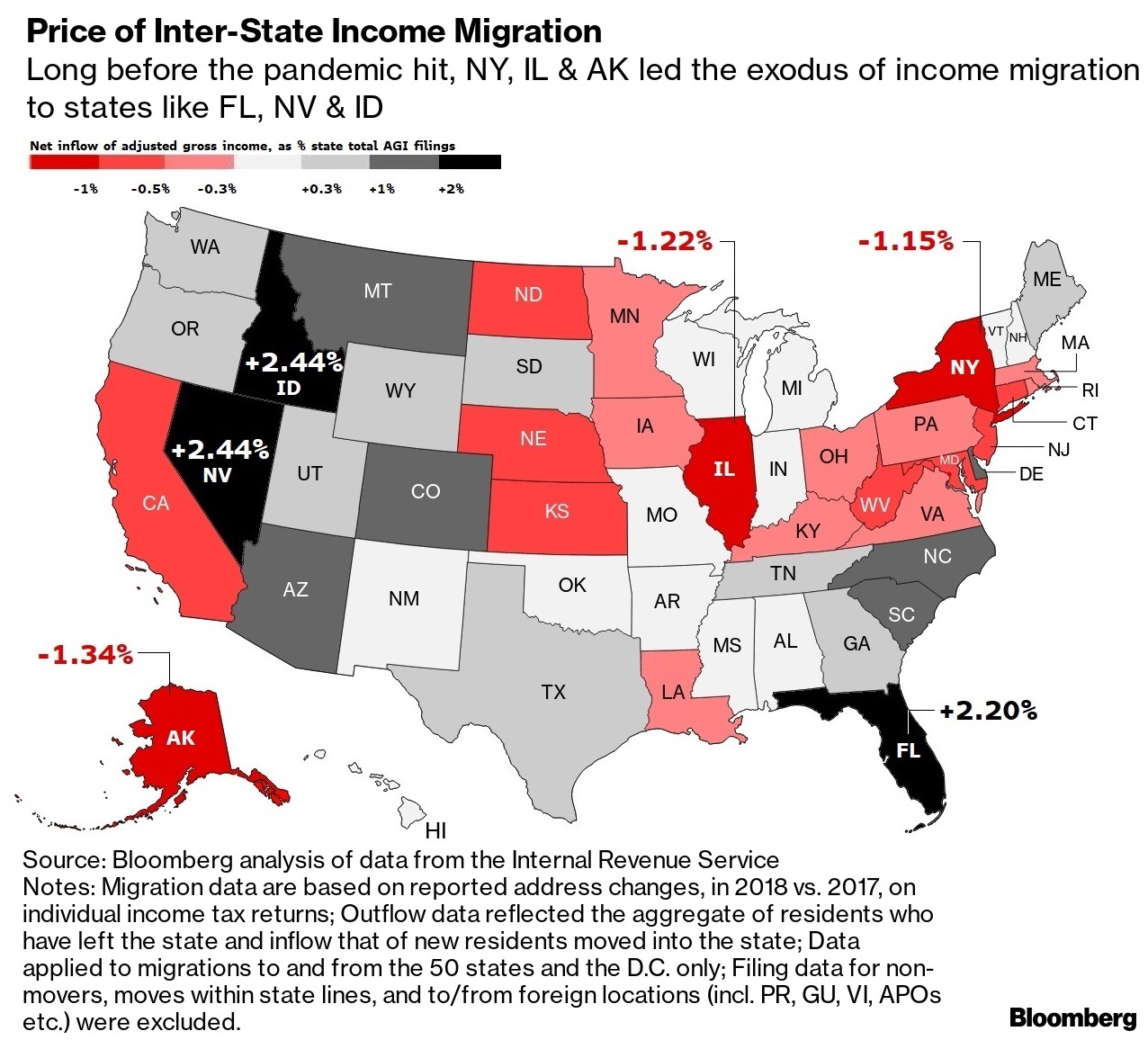
Setting up their future as a patent troll as well.
Underrated comment
Interesting that Oracle's move got a lot more attention here on HN than HPE's announcment it is moving it's HQ to Houston a few weeks ago. https://news.ycombinator.com/item?id=25271263
Interesting to see companies starting to move to TX. And the state being one of the leaders on renewable energy growth for a few years now. Is it the new eldorado for companies? Dystopic thought but what if the companies push the TX secession efforts to get their own land.
eh, I'm not sure this really spells the end of anything - Bay Area growth has been extremely high for years, decades even. And yes, California has a huge problem with building homes & infrastructure, but even so, it's been growing at around 8.5% for a while. At the same time people have been leaving all along and it's inevitable that changes like this will happen. I honestly think that Oracle doesn't even benefit from being in the SF area anymore anyway, they sell maintenance contracts to fortune 500 companies, you can do that from anywhere. And no one is being forced to relocate, so anyone with school-age kids or an employed spouse is likely to stay anyway.
When companies cease to grow because they no longer innovate their only option is to find other ways to increase profits. This usually means mining the low hanging fruit of reduced taxation. I doubt Larry will be moving to Texas.
If the Bay Area is Silicon Valley what is the hub nickname for Austin? I’m not aware of one.
Isn't it Silicon Hills ?
I assume - together with TikTok - from this article in september:
https://www.texastribune.org/2020/09/22/tiktok-texas-trump/
President Donald Trump said Saturday that he tentatively approved a deal between the Chinese-owned social media app TikTok and Oracle and Walmart that could bring the new joint venture’s headquarters to Texas. The deal, though, still faces much uncertainty.
“All of the technology will be maintained here,” Trump said at a North Carolina rally. “They’re going to move probably to the great state of Texas.”
...
If approved, the new entity, TikTok Global, would contribute $5 billion to an educational fund based in Texas, according to the Austin American-Statesman, though Walmart said in a press release the money would go to the U.S. Department of the Treasury. Trump had previously requested that there be a contribution to the U.S. government in exchange for helping to arrange the deal. Walmart did not respond to a request for comment.
Congrats to all the lawyers in Austin...the job market is going to be great
Good. Let the exodus continue.
As I pointed out regarding Musk's move, it's the companies with the strongest links with reactionary politics (and Trump): Thiel/Palantir, Musk, Ellison/Oracle. Does HPE somehow fit that mold?
For the sake of their many stakeholders, I hope the CEOs are not overreacting to the reactionary idea bubble - that they are not taking too seriously what is political rhetoric - or acting for political purposes. Many people do not share their political views.
It also matches the corporate outrage / take-my-ball-and-go strategy: If someone dares to regulate or tax a company - the outrage! - they say they are leaving. Think of Amazon in France and other places (IIRC Philadelphia passed a law requiring businesses to take cash and Amazon threatened to leave, then backed down). Think of Uber and Lyft in California. It's childish and I think if someone called them on it, it would be revealed for what it is. It's not clear to me how it's good for society that they don't have to contribute and pay their share.
Finally, where will these companies recruit from? The University of Texas is pretty good, but not close to the level of Berkley and Stanford, two of the top ~6 schools in the world. Also, many more people want to live in the Bay Area than Austin in general, and IT professionals want to be in SV where the center of their industry is. Austin is nice but simply is not real competition.
Why is it so hard to realize that people want low taxes and light regulation? And that woke culture with it's free speech curtailment are a kind of 1984 environment where someone is watching your words constantly.
California and NYC were great great states, and after decades of democrat governments, companies decide to move thousands of kilometers so they can leave these states in favor of Republican states.
There's so many of individual decisions along these lines.
YEt, I am not aware of anyone leaving a red state to live under the woke shackles.
Ree-hee-hee-ally? California is far and away the #1 destination of educated and wealthy domestic migrants, especially from "red states", by which I assume you mean states that habitually vote for Republicans. Pick any MAGA-infested den of ignorance that you prefer, and the story is the same. I choose Sioux Falls, SD, which has an overall negative net domestic migration that is extremely negative among people with some college, college degrees, and post-graduate educations but positive among people with high school diplomas and high-school dropouts. Bay Area domestic migration is the complement of this process: very positive among post-graduates and college grads, very negative among high school and less.
Same basic story if you break it down by income levels.
Why is this? There are large classes of people who can't stand to live in the MAGAsphere, and I mean huge classes of people like females, people of color, homosexuals, and non-christians. Whenever these people scrape together enough money to do so, they escape to a jurisdiction that recognizes their personhood, whether that be New York, California, or Austin.
New Orleans checks all your positive boxes and Louisiana still has the migration pattern you attribute to SD.
New Orleans is rapidly sinking into the ocean because of climate change (hurricanes) and poor management of the delta.
You're arguing about people leaving Democrat states in a post about people moving to Austin? Do you think Austin is a republican area? Austin is about as blue as it can get.
No one is leaving Democratic states to go to some hell-hole Republican area. They are leaving Democrat cities to live in OTHER Democrat cities, the only difference between cost of living. That's it, simple as that. It has nothing to do with "wokeness" etc. It's basically, Austin cheap, San Fran expensive.
Sure Austin is a little blue bubble in Texas. However, most laws that impact employers are made at the state level, and Texas is a much friendlier climate and has less regulation. This does change the situation for residents of “blue” cities like Austin.
Tons of people are moving to Arizona and Texas from the Midwest and California. Now these states are turning blue, but the policies that made them attractive to those people (less regulation, resulting in more housing built and more jobs) are definitely not “democrat” policies.
Well your political fantasy happens to be wrong. California experiences a net influx of highly skilled workers draining them from the rest of the US (https://www.jec.senate.gov/public/index.cfm/republicans/2019...) and red states mostly lose their brightest people or absorb California residents from older failing industries who can’t afford the rents. The majority of this is about cost of living not taxes. Corporate taxes and income taxes have not really changed in recent years and California overall ranks in the middle of US states by EFFECTIVE tax rate (not the top marginal which few people pay but conservatives love to cite)
Go read that study by the government on internal US migration.
These “shackles” you’re talking about took me from someone who used to live in a ghetto to someone in the top 1%. The taxes are a small price to pay. Obsessing over marginal income tax rates is the wrong variable to optimize in life.
Do what you love, where you love, because it’s your passion, not because you can shave 3% off of your effective tax.
Most entrepreneurs don’t obsess over taxes, they’re focused on growth and solving problems, profit comes later.
The constant hyper focus on marginal tax rates is a form of bean counter myopia. It’s what you do when your company is effectively in maintenance mode and beholden to the bean counters on Wall Street, not when your trying to win your market space.
Wake me when Apple decides To move its HQ to a red state.
There's a chicken and egg situation. Companies do choose to locate in California because of talent, but talent also chooses California because of great companies. If enough great companies leave, the talent will leave, too.
But is Oracle a great company? :) [I'm a former employee, and my opinion is, it is not]
SpaceX and Tesla leaving CA are bigger loses, but they haven't left yet, and it's unclear he'll move them, other than opening up more plants elsewhere. Boca Chica/Austin might eventually become the new locus of new hiring for example, but the Dragon/Falcon business might remain in CA for example.
HP leaving is basically a zombie company leaving on life support, it would be like IBM or Kodak leaving.
The real power of the Bay Area is the startup economy, and I think it will be hard to dislodge that, just like it's hard to dislodge Shenzhen, because of the "nexus" effect, or chicken and egg as you mentioned. If all of your customers and workers, and supply chain, and investors are in one spot, as an entrepreneur, you're going to gravitate there, even if the costs are high.
I mean, you get can Silicon Hills, and Silicon Alleys elsewhere, but I don't think they'll overtake the Bay Area.
However, I could see Texas, Arizona, Nevada, becoming the "Mars Plateau" in the future. Realistically, Musk needs a coastal port for logistics, ability to mine resources, and a state that would be complicit in dealing with angry laborers or neighbors who don't like Sonic Booms going off all the time.
CA's just not going to let him run as roughshod as he wants, e.g. the worker safety and labor issues at his plants, the environmental impacts of what he's doing in Boca Chica, etc. That slows down his time schedule a lot, I don't blame him, he wants to get to Mars quick, but then again, if I were living near a Starship test area, I'd also be annoyed by all of the traffic, tourists, and explosions, so I don't object to him trying to get as far away from regulated residential areas as possible.
> YEt, I am not aware of anyone leaving a red state to live under the woke shackles.
University graduates and skilled workers?
Still waiting for the great FAANG from Texas.
Indeed.com is not FAANG scale but appears to be a big player in the jobseeker market.
Whataburger
NYC isn't a state
Its ridiculous how these companies took advantage of california, paid nearly no taxes, then left to texas leaving california in massive debt !
Average high/low temperatures in the summer for Austin are:
June. 92° / 72°
July. 96° / 74°
August 96° / 74°
Average high/low temperatures in the summer for Cupertino are:
June. 75° / 55°
July. 76° / 58°
August 76° / 58°
Austin will never, ever be like Silicon Valley because of this. The freedom you get from cooler weather is great from an energy utilization stand point and for allowing safer and more desirable conditions outdoors. Not to mention you have much more beautiful choices of nature in Northern California. Think about whenever you travel to Austin for conferences, it's oppressively hot and you basically travel from one air conditioned building to the next. Now imagine 10 years time of increased global warming. California will still be coastal to one of the coldest waters in the world at this latitude, which is a natural air conditioner. To me this spells the end of Oracle's supremacy in anything other than selling smaller and smaller volumes of mainframes. They've started focusing further and further on cost reduction.
Edit: For those downvoting me, Texas is a wasteland of has-been tech companies that couldn't cut it when in competition with the west coast and the rest of the world. Oracle isn't going to change that.