New system76 laptop: Oryx Pro
system76.comI own one of these as my daily driver. Its... fine.
Pros
- dead simple to upgrade the hardware. I was able to get 32GB of RAM and 3 1TB hard drives installed with no hassle or voiding of warranty.
- its a beast of a machine when you spec it out capable of any workload you throw at it.
- linux support is 1st class (obvs)
- all aluminum chassis
- the display is nice even tho its only 1080p
- the keyboard key action is nice. I have a thinkpad for work and they are similar feel.
- PopOS is amazing.
- the backlit keyboard is cool
Cons
- you cant use external monitors without the NVIDIA card enabled which requires a reboot. This is the single largest failing IMO and is more annoying than you'd think it is.
- you only get about an hour of battery life with the NVIDIA card enabled making it totally useless to keep on unless you plan on using this thing like a desktop all the time.
- its a rebranded Clevo laptop and kinda ugly. It feels cheap to me despite the aluminum chassis.
- the keyboard layout is weird. The number pad is unnecessary.
- the speakers suck. Seriously. Like my headphones lying on my desk sound better
- web cam is crappy
- the screen itself feels flimsy
- I dual boot into windows and its a second rate experience there.
> - you cant use external monitors without the NVIDIA card enabled which requires a reboot. This is the single largest failing IMO and is more annoying than you'd think it is.
> - you only get about an hour of battery life with the NVIDIA card enabled making it totally useless to keep on unless you plan on using this thing like a desktop all the time.
With these 2 caveats I'm surprised you still think it's fine! I guess it depends on your work situation and pain tolerance. If I had to toggle graphics cards and reboot every time I detached or re-attached my laptop from/to my desk-with-external-monitor setup... Well, I wouldn't be happy about that.
>With these 2 caveats I'm surprised you still think it's fine!
I have a Macbook Pro for work. It is functionally a desktop that I can take home with me every day. If Apple shipped a Mac Mini with a built in 10 minute battery that auto hibernated the machine when i unplugged it, it would make sense for work to provision me one of those and save $800~
If this was my personal laptop, it'd be untenable though.
Check out the DeskMini series. It doesn’t have the battery thing you mentioned but it’s what I wish the Mac Mini was. You can fit 4 hard drives in it! 2 PCIe and 2 2.5”.
Well, I specifically need a computer that is easy to yank away from my desk and take home, and vice versa.
It's actually more of a technical problem.
A lot of laptop wired the external output to NVIDIA card, so if you are only using Intel it won't work, as is the case here. Wiring to NVIDIA can more performant, as wiring to Intel requires copy-back from NVIDIA to Intel when NVIDIA is active (which is what is being done for the internal monitor).
As for reboot, well, I still don't know why NVIDIA doesn't have auto-switch in their Linux driver yet.
The NVIDIA issue is the biggest problem with any kind of linux laptop. It's not system76's fault and unfortunately right now there is no way around it. If you need more than intel or amd integrated you have to work with that and it's 100% NVIDIA's fault. The hardware can work the right way but they refuse to work with upstream to actually implement the capability.
There are Linux laptops with 2 video cards (one of them being NVIDIA) which has none of the issues mentioned (like for example HP zbooks). So definitely not a problem with every linux laptop.
Not systen76's fault but they decide to use NVIDIA's GPU for Linux PC (or pick a base model with NVIDIA GPU from Clevo)
> The number pad is unnecessary.
I'd pay a 100 Euro extra to remove the number pad and center the keyboard and the touchpad. Having to slide any laptop to the right is so annoying (the space bar must align with the center of the body, no matter what.)
Mandatory Numberpad in a laptop is shibboleth that shows that a laptop designer has no human factors design or testing, but chases "checklists" of features. If a laptop has a Numberpad, it's going to have a lot of other usability problems. The only thing worse is a seller who pushes a 15" laptop "because it's bigger" but puts a 768p display in it.
To me personally, 14" is the sweet spot for laptops. I used to want the numpad on a laptop, but more recently I've noticed that my desktop keyboard doesn't actually sit centered in front of my monitor--the right side of the keyboard is usually more or less lined up with the right side of my primary monitor, almost centering it.
I have a Dell Precision 7510 with the same sort of layout: off-center touchpad/spacebar and a numpad.
Personally, I find the numpad to be incredibly useful (and it's nice having it be there without having to lug around some extra gadget just for that purpose), and the fact that the touchpad is off-center is pretty irrelevant (as in: I don't think about it, and it doesn't really affect anything at all).
It does help, though, that even on a desktop I have a tendency to shift the keyboard somewhat to the left relative to my body (in fact, that's how I'm typing right now), so I guess I'm used to it. Still, switching between the Precision and my work ThinkPad (which lacks a numpad, and therefore doesn't need to offset anything) gives me no trouble at all.
On that note, I have exactly three requirements when shopping for a "mobile workstation" like that:
1. A numpad (even if it's one I access by holding down some Fn key to change the behavior of other keys)
2. A Trackpoint or equivalent
3. No NVIDIA GPU (ain't nobody got time for proprietary drivers)
My Precision passes all three of those with flying colors. This Oryx fails all three of those AFAICT.
Agreed - you should upvote here: https://github.com/system76/laptop-suggestions/issues/22
This would be a deal breaker for me, too, particularly given that a lot of competitors don't seem to include the numpad.
IMO they should remove the number pad and use the extra space to add some decent speakers on this thing.
That said, they don't have as much control over the hardware as I would hope. As I initially said, this is a rebranded clevo so they are kind of stuck with whatever they source from them.
While I do like my Gazelle a lot, to add to the GPU issues: It is capable of running 2x 3440x1440 with the internal screen on, but not if one of them is used vertically. As in, it will work, just not rotate. Once you close the lid (and disable the internal display), it suddenly works. That is something that just amazes me. Does it take that much more GPU power to run a large screen rotated 270 degrees?
Maybe it's reserving resources for the total 'bounding box'?
So 1920:1080 + 3440:1440 + 3440:1440 => 8800:1440 (12,67Mp)
But 1920:1080 + 3440:1440 + 1440:3440 => 6800:3440 (23.4Mp)
EDIT: with the laptop screen off, it would just be:
3440:1440 + 1440:3440 => 4880:3440 (16.8Mp)
> While I do like my Gazelle a lot, to add to the GPU issues
In any case, this seems to be an actual GPU issue instead of an issue caused by the laptop's design. Something that would happen with any laptop using that nvidia card.
My boss is a Linux lifer. The kind of guy who compiles his own kernel and knows this stuff in and out. I mentioned that I got my first Linux machine to him and that it had an integrated GPU. First thing he said to me was "that was a mistake". From what I've seen I would agree. My machine is way glitchier when I enable the Nvidia GPU. If I had the option to run multi monitors without it on, I'd probably never use it save when gaming.
Could this be fixed with xrandr?
> which requires a reboot
This is crazy. The hybrid graphics approach has been around for a decade, and I had one of the very early ones in 2010, running Windows 7, and even that one didn't require a reboot to switch. It switched automatically based on load, just like Macbook Pros do (it had a bit of a display blink when doing so, but still).
Is this some kind of limitation with Linux itself?
> Is this some kind of limitation with Linux itself?
Definitely not. I don't know the details of the grandparent's hardware, it's possible that there are some limitations with specific NVIDIA hardware, given the fact that NVIDIA does not have open source drivers.
I have had working hybrid NVIDIA graphics on my work laptop for eight years now I think. Basic functionality such as using one of the display outputs requires the dedicated GPU. The open source tool for controlling NVIDIA hybrid graphics is Bumblebee. NVIDIA's proprietary technology is called Optimus.
I'm using a similar System76 laptop (Gazelle 14") with hybrid Intel/NVIDIA graphics—though running Debian, not Pop_OS!—and at least hardware acceleration works fine under both GPUs without rebooting. I'm using the primus-vk-nvidia package and a simple "pvkrun" prefix when starting a command will run it using the NVIDIA graphics card rather than the default Intel card. This passes the rendered framebuffer from the NVIDIA GPU to the Intel GPU via the Vulkan APIs, which are better suited for handling dissimilar GPUs simultaneously then the older OpenGL-based PRIMUS implementation.
As for the external displays, HDMI out seems to work on my system through the default Intel controller. I haven't tried the DisplayPort or USB-C interfaces. I do know that the proprietary NVIDIA drivers are incapable of efficiently scanning out graphics rendered on the Intel GPU using the standard Linux interface (xrandr --setprovideroutputsource). The NVIDIA driver can use outputs provided by other GPUs but won't provide its own outputs for other GPUs to use. All the guides I've seen say that if you want to output on the ports controlled by the NVIDIA card you have to make that your primary GPU, which of course impacts battery life.
Technically there are open-source drivers for NVIDIA cards (nouveau). And they do support the standard interfaces to let other GPUs control the outputs. They just aren't on par with the proprietary drivers performance-wise, and normally performance is the reason you want hybrid graphics in the first place. However, if you just to use the extra video output ports while rendering on the integrated GPU then the nouveau driver is a viable option.
> they do support the standard interfaces to let other GPUs control the outputs. They just aren't on par with the proprietary drivers performance-wise
Some softwares don't work on nouveau. For example, chromium GPU acceleration and QtWebEngine
That's fine. Those apps would be rendering with the integrated GPU (probably Intel). The nouveau driver would only be responsible for driving the outputs by scanning out from the buffers the other GPU rendered.
> The open source tool for controlling NVIDIA hybrid graphics is Bumblebee.
Setting up Bumblebee can be painful. And not guarantee to last.
I have a nice bumblebee setup with CUDA working, but when I updated the HWE (I think I go from zero HWE to 18.04.4 in one go), bumblebee broke down completely. And I stopped caring and just use prime-select.
>Is this some kind of limitation with Linux itself?
No it's Nvidia refusing to work with upstream to implement optimus properly( and wayland and drivers in general). They are very hostile to open source.
Nope, it's based on the hardware design on how the GPU is connected. The new method, which as you mention has been ubiquituous for many years, works pretty well on Linux. Not sure why they're using the old method.
> the display is nice even tho its only 1080p
What's worse, they have zero information about the quality of this screen. It's almost certainly not HDR. Does it even cover the sRGB gamut? Plus there's no option for a glossy coating, no information about viewable angles, no option for 4K, etc etc.
One of the primary ways I judge the quality of a laptop offering is by the quality of the screen the manufacturer is willing to put in it. If they're not skimping on the screen, it's a good sign for the quality of the rest of the product. And every single Linux-first manufacturer has fallen down here. The general expectation from them seems to be that you'll pay mid-level Mac prices for mid level Dell-quality products, in exchange for first class Linux support.
It's really too bad, because I'd pay the premium for a high quality build with great components that would last me a decade. Not so much for this, though.
If I am not mistaken, Linux is known to problems with higher rez screens. Honestly this is the best looking laptop screen I've ever used. My previous machine was a retina screen too. Its bright and crisp and easy on my eyes. I have some complaints about this machine but the display quality is not one of them.
> its a rebranded Clevo laptop and kinda ugly. It feels cheap to me despite the aluminum chassis.
I've been interested in buying a System76 unit for awhile (specifically a Darter Pro), but I've always been concerned about their sourcing from Clevo. I previously owned a Sager which was also sourcing from Clevo at the time and the build quality was absolutely horrible.
Can anyone who has used a System76 for awhile chime in regarding the longevity of the hardware?
I had a Galago from 2013 or so. It was very cheaply built.
It shipped with an infamously bad keyboard that was basically unusable due to unregistered key strokes. They eventually replaced them, but they still weren't perfect.
The screen was very flimsy and pressed into the keys when it was closed and any sort of pressure was applied (for instance being in a bag), leaving an unsightly mark across the middle. I ended up sticking felt pads around the bezel to create some room to accommodate the flexing.
Once a screw came loose in the screen hinge, preventing it from opening. I had to send it back for repair.
On the base where my wrists laid while typing, the finish wore down through the paint leaving two big brown oval marks.
The battery life eventually went to nearly zero after a few years.
The battery eventually started swelling and, before I realized what was happening, pushed up the trackpad actually fully breaking it away from the surface.
All in all, it was super flimsy. It got me through grad school, but almost no longer and with zero resale value afterwards, and even then I never felt completely confident in it during that time.
I have a System76 that lasted 9 years. It's just too slow now, and I didn't bother replacing the battery so it doesn't hold a charge.
I have a System76 that is still going in year 6. No issues, but I don't use the battery in that one much -- it sits on top of a stereo serving as a music source, mostly.
I have an unbranded clevo from 2013. About 2 years ago I accidentally shorted a thing powered on usb, so all power delivery over usb was fried (as in: most thumb drives work. External HDDs don't. The computer still works.
Apart from the keyboard more or less falling apart at this point and that the touchpad is megashit by today's standards I have been a happy user. It has survived a lot more beating than my wife's MacBook which seems to break when you look at it wrong.
This year I demoted it to be a home server with built in power redundancy (and screen and keyboard). I am very satisfied with that purchase.
Could you get a dock with an external graphics card?
> the display is nice even tho its only 1080p
This is absolutely crazy why are we still putting screens into laptops that would be disappointing on a CRT from the year 2000? How can you work with just a thousand lines?
Not sure if this is sarcasm or not, but, I think 1080p is a totally reasonable resolution for a laptop. I have a 4k display on my laptop and it's way overkill. I've had it for a few years now and regret spending the extra money on it.
I'd rather spend less money getting the 1080p option and have longer battery life.
Do you not find text (which is mostly what I use my display for as a programmer and author) is extremely blocky and blurry at this resolution?
A 27 inch 1440p monitor has a PPI of ~108. These are what all high end consumer displays like the Apple Cinema displays, Dell U2711s, etc had before they all moved to 4K.
A 27 inch at 4k has a PPI of ~163. This is basically industry standard for high end consumer displays. Sure there are a few 5K screens, but they are not common. I've also seen a lot of folks use 32 inch 4k displays which would have even lower PPI.
A 15 inch 1080p screen has a PPI of ~146. So not as good as a 4K screen at 27 inches, but still MUCH higher than the 1440p monitors.
> These are what all high end consumer displays like the Apple Cinema displays
Yes, in 2004. That was 16 years ago, a lifetime for some HN users.
Sure, but they only discontinued the form factor in 2016!
Nope. 1080p has enough pixels to display most text nicely.
No. I specifically buy laptops with 1080p displays and avoid hidpi if possible due to compatibility with various apps, as well as power consumption/battery life issues. I have a hidpi MacBook for work and a 1080p System76 machine for personal use, and I vastly prefer the System76 machine.
I accept that others see it differently, but I have this lingering suspicion that the whole hidpi movement is mostly marketing. Most folks simply don't need it, or even really benefit from it, as far as I've been able to tell.
That's all nice but from my experience when you go outside the common 1080p 60fps stuff starts to break in funny ways even on windows. Heck, I have a 1080p 144hz display and while scrolling on most stuff is super smooth and 100% worth the premium( or the sacrifice from going with a TN panel), it's also really blocky in some apps.
I use a 13" 4k at native resolution (no upscaling/doubling) as my daily driver. I get that you don't see the use for more than 1080 at 15", but for some of us the choice to have more is needed.
>1080p was quite rate in the CRT era.
https://www.lifewire.com/crt-computer-monitor-buyers-guide-8...
I have no idea what makes chrisseaton so passionate and adamant that CRTs commonly had resolutions higher than common LCD panels today but I had basically this exact same argument several days ago. I actually remembered it because they wrote almost the same comment word for word. For some reason they are convinced that all old CRTs were commonly 2k and 4K resolutions and the existence of cheap 4k LCD panels doesn’t excuse the fact that it’s still possible to buy a 1080p screen (which is I guess a bad thing?)
Some people have unusual passions I guess.
1600x1200 is only about 10% fewer pixels than 1920x1082. The former was quite common twenty years ago.
1600x1200 was for a 20" CRT; why does he want the same or higher resolution on a 15" laptop?
At a given resolution, CRTs pixels made for much more readable text (provided the refresh rate was sufficient; I found 60Hz nigh unbearable, 90Hz tolerable, and 120Hz preferable). LCD pixels are much more precise, which means that they appear much less smooth, so that you want a much higher resolution. CRT pixels were fundamentally imprecise, and that was actually really good for text. It’s about a decade since I last used a CRT, but my feeling is that text would look better (be smoother and more legible) on your 1600×1200 20″ CRT (100dpi) than on a 1920×1080 15″ LCD (141dpi). I think that the last CRT I dealt with much felt fairly similar in legibility &c. to my first laptop, and those were 1280×1024 19″ at 120Hz (~86dpi) and 1680×1050 15.4″ (~128dpi).
That exact resolution? Yes I guess so.
But XGA (768 lines) was the most common in 2002 https://en.wikipedia.org/wiki/Display_resolution#2000s.
WUXGA (1200 lines) was also very common.
Why haven't we progressed more than a couple hundred lines in 20 years? What's going on?
Because it's not that needed? I'm fine with 1080p on my laptop, i don't feel the need for 4k.
> How can you work with just a thousand lines?
The answer is super simple. Because I'm not you. Which means I'm not sensitized to the same things that you are sensitized to.
For example, I can't stand working in a room that is not brightly lit, which isn't a problem at all for most other people.
Work bought us System76 Gazelle laptops [1]. Quick thoughts after six months of use, coming from a MacBook Pro user:
* Chiclet keyboard feels nice to type on
* Plastic fake brushed-metal case is
* Battery life is about an hour, almost unusable away from a charger. If I were spending my own money on this laptop, this would be a dealbreaker.
* Built-in display sucks. It's allegedly matte, but still has incredibly high reflectiveness. 1080p resolution and just okay LCD color reproduction
* Fan noise is a serious issue. I made the mistake of un-muting myself on a video call while the fans were going and other people on the call immediately muted me. They thought I was in a wind tunnel.
* Webcam quality is low. Video calls with an open window behind you mean you will be washed out by backlighting
* Performance is great. Runs a bunch of simultaneous headless Chrome browsers in Docker and completes our unit test suite pretty quickly.
* The trackpad is truly horrendous. I use tap to click on my MBP, and I had to turn that off on the Gazelle real fast. Palm rejection is nonexistent - had false clicks every 15 minutes. That is not an exaggeration.
* Keyboard is backlit
* USB-A, HDMI, ethernet means it's easy to use it as a desktop
* Built-in speakers sound tinny and low-quality
* Large and clunky, but weight isn't bad
I'm torn: Ubuntu and GNU/Linux generally are excellent developer environments, but the laptop hardware is horrible. It feels like the $600 Windows machines my friends used in college.
About the fans noise and the microphone, Nvidia RTX Voice is great to remove noise. I wonder whether an open-source alternative for Linux exists. But if you work on windows and have a Nvidia RTX GPU, I can recommend it.
I love that this is a professional laptop that comes with a 144hz screen. But 1080p? Not even 1920x1200? Boo..
I want to replace my aging MacBook Pro and move to Linux, but finding a non-gaming laptop with a good screen seems to be an impossibility.
Edit - To the people recommending laptops in this thread:
Thanks for the suggestions, but none of them so far have had a 144hz screen. It's very hard to go back to 60hz after using a higher refresh rate monitor, even for simple things like literally moving a mouse around the screen and looking at the cursor.
The only 144hz laptops I've found are 1080p, and that extra 120px of vertical room is a luxury I'm not yet willing to part with.
Does the developer edition XPS work? https://www.dell.com/en-us/work/shop/overview/cp/linuxsystem...
I have the 2019 XPS 13 with the hidpi screen. It runs Linux beautifully. I used to run Ubuntu 18.04 and now run Manjaro. Both work without a hitch. I use GNOME, so the hidpi performance is really great. I strongly recommend the XPS 13 line.
I've been very pleased with my 2018 model of the XPS 13 Developer edition. Highly recommend.
Does the graphics system hold up? I wasn't able to find anything with reasonable CUDA cores (I do parallel algorithm development). Anyone have experience with Precision mobile workstations? Still seem quite slim form factor.
> I love that this is a professional laptop that comes with a 144hz screen. But 1080p? Not even 1920x1200? Boo..
Yeah. 16:9 screens are frankly unprofessional. They're for gaming and movies, not work. Give us a 16:10 (like Apple and a handful of other vendors still use).
Give us an LG Gram 17 with a little more oomph and better speakers. The 17" 2560x1600 screen seems like it would be perfect for development - same resolution as the 13" MBP but a little more space to spread it out.
https://www.lg.com/us/laptops/lg-17Z990-RAAS8U1-ultra-slim-l...
Agree, but as well a big "normal" keyboard (incl. a keypad). Basically like a lenovo p70/1/2/... but thin (and without discrete GPU nor superfast CPU). I just want a big screen & keyboard :(
Or 3:2. I got a Pixelbook on a whim a couple years back and the 3:2 display is one of many things I absolutely love about the hardware.
If only I could do something about the software...
You can. Buy or solder a SuzyQable[1] to unlock the firmware, flash MrChromebox's coreboot build[2], and install linux on it. I'm typing this message right now on my pixelbook running Arch Linux. So far the only problems I have with it is the audio does not work and I can't change screen brightness. The screen brightness is because linux refuses to use DPCD when the PWM line is connected. On the pixelbook the PWM line is connected but doesn't do anything. There are kernel patches you can apply to force DPCD but personally I'm just hoping someone eventually commits a fix upstream to let us toggle it.
> So far the only problems I have with it is the audio does not work
Well that's kind of a deal breaker for me, lol
Still, good to know there are options, and that cable looks handy; thanks for the links!
I actually wanted a 1080p screen, because resolution scaling support on Linux may not be all that great. At least it broke somewhat on a 4k laptop I used.
I like the freedom of Linux, but I find the best support to be for the least common denominator of feature sets.
How about the Dell Precision 5550 or 5570?
https://www.notebookcheck.net/Dell-Precision-5550-5750-First...
* 1920x1200 or 3840x2400 * 64MB RAM, ECC w/ Xeon CPU
I second that. Why is it so hard to have something similar to a mac pro? My wish list: Good screen, around 15", 4k or at least more than 1080p, non-glare or glare-reduced, good, large touchpad, not too thick or heavy, usb-c charging, webcam.
Get an X1 Carbon with a 4K screen perhaps.
Maybe? Any (recent, 8th gen and up) 's' model Thinkpad would be fine, especially with a WQHD screen. 4K would bludgeon their battery.
The X1 Carbon (and the XPS 13) use the less powerful U processors.
Agreed. Not a powerhouse (get the X1 extreme if you need discrete graphics), but its an excellent product nonetheless.
Really wish they would get rid of the numpad layout and center that touchpad or make it bigger. Really bothers me that the touchpad isn’t centered, makes it awkward.
Maybe I'm weird, but when I bought my current laptop 2 years ago I specifically looked for one with a numpad, as I occasionally need to insert numbers into spreadsheets (working on replacing this workflow but I have a feeling it's still going to be manual number input overall, and some documents I extract numbers from are not copy-paste-able).
I found it convenient to have the numpad available at all times and the muscle memory I developed while typing on it makes the process less frustrating than looking all the time at the number row on the main keyboard body. As I understand it, the laptops with no numpad have a toggle that turns keys on the right side into a numpad, don't remember how exactly, might be vendor specific, some even have numeric markings on those keys, but the keys are laid out slanted, not in a square grid like the real numpad, so it's less precise that knowing you can feel the bump on the no. 5 key and to get to the others you just have to move straight up/down/left/right.
The fact that the touchpad is not centered never bothered me at all; I use a macbook for work, which is centered, and I felt no difference in hand position or comfort. In fact, the inverted position of CTRL and FN were (and still are) way more frustrating to deal with, even the switch to ISO keyboard from ANSI was less frustrating that that, but the off center touchpad/keys, never.
Sure, numpad is great for data entry. But that's a rare specialist use case, especially for a mobile laptop where you can't use an external numpad (since data entry is usually copying data from some device or paper)
This is exactly the use case that laptops, docking stations, and multi-use ports are meant to solve. Not everyone wants or needs everything crammed into their portable machine and some people have weird needs. So laptops should have the features everyone needs and then allow you to plug in your own features as needed. Like Ethernet, floppies (they’re still in use, believe it), disk drives, etc.
But some people get very mad when a laptop is released that doesn’t have exactly what they need and don’t want to hear that there is a plugin that enables that use case. While others get very mad that there are extra things on their laptops.
Social media is fun.
On Dell [1] it is
right under touch typing right hand, J has a bump, activated with Fn. Slanted feels good for right hand - it grows from shoulder. Squire grid works best with wide keyboard (like traditional numpad).7 8 9 0 U I O P J K L : M +Head naturally centers on the screen, it helps if palms lay on center too.
[1] https://kbimg.dell.com/library/KB/DELL_ORGANIZATIONAL_GROUPS...
I've never expressed this wish anywhere before and I'm pretty sure it will never happen[0] but, anyway, here it goes: Can laptop manufacturers please standardize their laptop<>keyboard hardware interface, so that we can finally have custom laptop keyboards? (Think ErgoDox for ThinkPads.) Actually, I'd already be happy if only Lenovo did that with their ThinkPads…
[0] Especially not given the current trend for laptops to become thinner and thinner.
Good idea but agreed that it would never happen given the trends.
What I'm really disappointed by is laptop manufactures pretty much only go two routes now on laptop keyboard layouts: 1. The one with numpad on wider laptops like this one, 2. The compact one with smaller arrow keys and no nav keys (Home/End/Pgup/Pgdown) in a reasonable place. (typically hidden behind Fn+arrows)
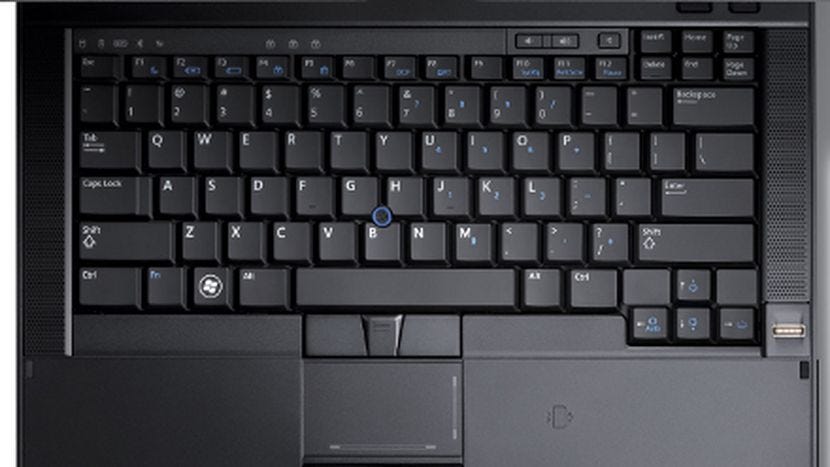
I used to have this old laptop, Dell Latitude E6410, that had pretty much the perfect laptop keyboard for me to write code with. It looks like this [1]. I use Home/End keys extensively while coding and it's part of muscle memory to reach for them directly vertically above arrow keys. This is the only laptop with a keyboard layout like this that I know of. (the full size arrow keys also help)
1: https://miro.medium.com/max/1400/1*pDN_eHnop3QdkRbjkxRSFQ.jp...
I also use Home/End a lot while writing code, and interestingly (at least to me!) I've become totally accustomed to using the Fn+arrows. It's like having to hit Shift to type curly braces and other common symbols—it became completely automatic and subconscious after a while.
HP nw8240 had a similar layout, nw9440 had the full size
Now that laptop tech is well established and single board computers (like the raspberry pi) are common, I wonder if there time is right for someone to create a laptop standard similar to what ATX was for desktops.
It would be great to have a standard chassis that could hold an upgradeable pi-like board and a custom keyboard.
https://www.crowdsupply.com/mnt/reform MNT Reform is a step in that direction (+ open hardware!) The CPU and RAM are on an easily replaced SO-DIMM, so you could have a variety of system configurations use the same laptop-peripheral-complex.
My hope is that something to that effect comes about with the growing use of SO-DIMM-like form factors for SBCs (e.g. RPi Compute Module, SOPINE, etc.). Unfortunately nobody seems to be cooperating on a standard pinout yet, but if we can get to the point where they're interchangeable that'd be a boon for all sorts of things (be it popping a module or two into a laptop or popping dozens of 'em into a server).
This is the reason I use the surface pro. I carry around 60% keyboard with so I have a great keyboard experience whereever I go.
Mixed feelings.
They might have chosen that due to their intended audience. The numpad is pretty handy for many professional applications. Let's say you are using Blender - there are many keys bound to the numpad. You can work without those, but it's awkward. Not to mention applications requiring lots of numeric input.
You could plug in an external numpad(or better yet, a bluetooth one). But this is a laptop, it's one more thing to carry.
I personally don't require a numpad these days - I'm typing this on a mechanic keyboard without one. Have I missed it occasionally? Yes. Would I prefer a laptop without one? Yes. Give me more keyboard real state and a better layout.
Now, the off-center small touchpad is the biggest offender here, IMHO. This is a design reminiscent of early 2010 cheap 15.6" laptops. Maybe it's a good touchpad. But I am already prejudiced against it, because it looks like the old synaptics (or the even worse competitor I forgot the name). They don't provide any details in the specs, they just say "multitouch".
Strongly agree. I was scrolling down the page thinking excitedly "hey, this might be nice!" until I saw the keyboard and touchpad then my brain did a "record skip sound" and it was off-putting enough for me that I just said "whelp" and closed the tab.
Yeah, if I'm not centered with the screen on a laptop I hate it. Tried twice with HP and it just bugged me too much.
Unfortunately, numpad keyboards and 16:9 are the most common, cheapest options. They would have serious trouble sourcing non-common keyboards and 16:10 displays from, well, anywhere.
For the price, I think one could live with it. High end workstations from HP/Dell (their own design, their own suppliers) went for $5,000+ a decade ago. They stopped doing that recently.
Nowadays only Apple seems to have enough pull to get uncommon features on their machines.
Yeah it seems strange, like is this better for right handed people or left handed people when using the touchpad somehow I feel like it would depend on whether you use your right hand or left hand... I know in my case on a macbook pro, I use my right hand to mouse around and that is a stretch for my hands to reach down and to the left from my right hand which is ackward... as a vim user I value the idea of moving my hands as little as possible so the touchpad is definitely better then a mouse but still a last resort feature... still if it's further from my hand i dont' see how that could be good... but having it on the left side maybe if i was left handed the stretch would be somehow more optimized... but seems odd most people are right handed right? At least 70% from one google search indicates this is the case so yeah it makes no sense to me why a touchpad should not be centered or if anything biased towards the right side or ideally a configuration option...
I've just always practiced mousing with both right and left hands. It's good to have some balance in one's life. :-p
(I follow this philosophy in my martial arts as well. Which turned out well enough when on my black belt test I accidentally did all my techniques lefty and still passed!)
Blender use without a numpad is awkward, so disagree strongly.
Yeah, other than keyboard/touchpad this looks perfect (especially matte screen and really good RAM). My current laptop, a Dell Latitude E7440, has many shortcomings but got this right and I have a lot of trouble finding a replacement because I don't want to give up on all that:
* centered touchpad (edit: well, kinda)
* touchpad with physical buttons below _and above_, including a _middle button_
* trackpad, though I don't use it much
* no numpad so there's more room for the rest of the keyboard (it's a 14" laptop) and it feels great
* arrows slightly out of the keyboard layout, with adjacent page up/down
* keys feel great, but I guess that's common now
Some more notes:
* old-school docking system, which I prefer over usb C and such
* (this one's a con) weird home/end button position, but nothing serious
I came here to say the same. Otherwise this is a lot of laptop for the price.

Up to 64GB RAM (more than more people need), up to 4TB of fast NVMe SSD storage (more than most people use), an NVIDIA 8GB RTX 2080 GPU (you know, for training deep learning models on the road, if you ever feel like it), every port you could ever need and more (includes USB 3.2 Type-C w/Thunderbolt 3, USB 3.2 powered and unpowered, SD Card Reader, Wired Gigabit Ethernet, HDMI w/HDCP, Mini DisplayPort 1.4, regular Thunderbolt 3 -- it can be connected to everything), all in a fairly slim 4-5lb package. Not bad.
How long does the battery last?
> NVIDIA graphics currently unavailable when dual-booting Windows
How the hell did they manage to do that?
My guess is firmware issues.
It's awesome to see Coreboot on a laptop with discrete graphics.
Sadly, though, this is a bittersweet deal imo, since you will get NVIDIA's trademark Linux experience, including binary blobs that occasionally prevent you from updating to the latest stable kernel and practically being stuck with Xorg for the rest of your life. I understand that NVIDIA simply has the best options (or at least, that would be my guess) but it's hard to still not be a little disappointed since I've been having a great time with AMDGPU on my desktop, running Wayland, up-to-date kernels and having great system stability.
In my niche at least (ML, data engineering) one of the main reasons to go with a Linux laptop instead of MacOS is so that you can run GPU accelerated ML workloads (i.e. CUDA) in development without shipping all your data to the cloud. I've been a happy System76 customer for years and I think this use case is fairly common for them -- they even ship a fantastic "out of the box" TensorFlow/CUDA setup (https://support.system76.com/articles/install-tensorflow/) that has saved me days of dev time over my career so far. It's totally reliant on NVIDIA's products of course, but unlike AMD, Nvidia has heavily invested into the deep learning community so there's not really an alternative.
Yes this is a fair point and understood. I am not a user of ML so it’s irrelevant to me, so I’ll just hold out for hope eventually. I’d probably be okay with an AMD APU, but I have no idea what the Coreboot status is (has AMD made good on their promises?)
System76 is likely going to fab their own laptops (instead of using Clevo as an ODM) within the next 2-3 years (just a hunch I have based on how long it took for them to go from talking about fabricating desktops to doing it).
They've started asking people to share what they want here: https://github.com/system76/laptop-suggestions/issues
If you really want a great Linux-first laptop, copy/paste all of your complaints/desires for hardware from here into that repository.
Top of the list for me:
- High powered laptop (e.g. 47W TDP CPU) without a graphics card.
- Centered keyboard without a numpad.
- 14" 1080p option for high-end laptops.
Edit - Formatting + I used to work there, but this is NOT based on anything from when I did - just speculation. It was an AWESOME place to work as a Linux nerd though. :)
> System76 is likely going to fab their own laptops
I've been hearing this for years, and System76 keeps on charging a premium for rebranded cheap Clevo laptops.
Don’t forget that part of what’s wrapped into that premium is excellent support & warranty along with the development of firmware and Pop!_OS. It’s more than just the hardware. It’s ensuring you can rely on that hardware to work end to end.
> Don’t forget that part of what’s wrapped into that premium is excellent support & warranty
So you buy a cheap Clevo with support & warranty, for the same price you buy a high-end laptop from other OEMs.
It's still a cheap Clevo, right?
> along with the development of firmware and Pop!_OS.
I don't see where Pop!_OS is a selling point when compared with mainstream Linux distros.
> It’s more than just the hardware.
Is it really? I mean, besides the colossal price tag hike for a rebranded Clevo.
If all you want is a cheap Clevo then you can get the same end result for much less.
I know, I know - getting a laptop with linux running natively is great, but seriously folks - just go buy something like an XPS 13 or Razer Blade for the same cost and put Linux on it.
You'll get an infinitely better piece of hardware.
The Blade tops out at 16GB of ram and the XPS 13 only allows integrated graphics.
I've heard complaints on HN about S76's keyboard and display choices before but this categorical dismissal of them feels remarkably unfair and frankly, false.
Sorry, I should have been specific. You are correct the Blade Stealth 13 comes with only 16gb of ram but I don't think it's in the same class as this S76 laptop because it doesn't have a 13" size equivalent.
The Blade 15 comes with 32gb standard and I thought that was a fairer comparison but should have been more specific. It also comes with much much better display options, is lighter, larger battery, user upgradable Wifi, hard drive and ram (up to 64) and is frankly just a much higher quality build.
My bad on the XPS 13 suggestion, I meant to say the XPS 15 which also does come with a Nvidia graphics card.
With this machine, I think you're paying a premium for a rebadged Clevo laptop here that runs Linux out of the box. If you are willing to spend a day you can get a Blade running Linux on much better hardware.
I bought an Ubuntu XPS 13 and Dell mailed me a Windows XPS 13. I spent some hours on the phone with support to asses if I should keep the device or return it. The support techs (many of them) seemed to agree I would be running into multiple significant troubles if I installed Ubuntu on their Windows XPS 13. I returned it.
Now I'm on a System76 Galago Pro. It isn't perfect but gosh it has served me well these years.
On my third XPS 13 now, each of which came with Windows, but I've been running Linux flawlessly on each since day one.
So not sure what the techs would be referring to.
I have to ask, do people really use number pads that often that it's worth having the main key section off center?
Solidworks users do for certain. But then again, they are running Windows.
Yes, almost any time I type a number. It's much more comfortable, less of a stretch for my hands. Also a lot faster.
I do. Particularly useful with spreadsheets.
blender users do
Is serious blender modeling done on laptops?
Why does blender modeling have to be serious in the first place?
why then ask this question when discussion is about purchasing "serious" laptop?
Yes
I bought a system76, because I didn't want to give MS money. It was janky and broke a year later. It had a lot of problems with the wireless connection dropping.
So I bought a zareason laptop. It was basically the same hardware, it was janky and lasted two years.
So then I splurged on a Thinkpad via LAC Portland, and it's been pretty wonderful. I just wish I could buy them from Lenovo directly.
you can't buy thinkpads from the lenovo website? TIL
You can't buy thinkpads loaded with Linux from Lenovo. This is the service LAC Portland provides.
Didn't they recently announce they'd be available with Linux?
https://news.lenovo.com/pressroom/press-releases/lenovo-brin...
Yup
> Display: 15.6" or 17.3" FHD (1920x1080) 144 Hz refresh rate, Matte Finish
WHY?!? Why do they keep using outdated, low res panels? I want to like system76 but can't with their bad displays.
This is almost ideal for what i'm looking for in a laptop. I wish there was an option to get a better screen and no nvidia.
I might be in the small group who wants this, but i wish it was easy to find a 15" laptop with a CPU like the one in oryx but without an NVIDIA gpu. I'd like to have a better cpu and i don't mind a laptop that's larger than the xps 13 or carbon, but i don't need/want a dedicated nvidia gpu. While we are wishing for things, please make more laptops with higher dpi screens. There are a lot of options for 1080p or lower, but very few good options (outside of macbooks or dell xps) that have high quality UHD displays.
I'm on the market for a new laptop and the screen quality is the only reason i'm even contemplating a macbook.
Doing a search by laptop spec [1], there is exactly one laptop model, the Lenovo Legion Y740S-15IMH [2] that has an i7-10875H CPU, a 4K display, and no dGPU. Sadly, it seems to have pretty limited region availability so far (see the PSREF listing to check).
If you're willing to forgo the 4K display (a 15.6" 1080P screen at 24" is >60ppd, so it should be close to a "retina" display [3]) then you might have another option (the one I've been looking at). The latest AMD 4800H processors perform neck and neck with the i7-10875H (with much better power/perf) [4] and there's one ODM, Tongfang, that has a Renoir refresh (model PF5NU1G) that looks like it might be the best option available this generation (I'm looking for much the same thing as you - the highest CPU power possible, no dGPU for better battery life and less Linux hassle). It's using the same (1.5kg 15") chassis as their older Picasso model (see the Schenker VIA 15 NBC review for a good overview [5]) but with some notable improvements:
* Improved dual fan, dual heat pipe cooling means it can boost to 65W and sustain 54W CPU performance
* Dual channel, dual DDR4-3200 SODIMM slots (but the tradeoff is now only 1 M.2 slot)
* slight display upgrade from N156HCE-EN1 [6] to a NV156FHM-N67 [7] - matte, 300nit, 100% sRGB, dE<2, 1000:1 contrast ratio FHD screen w/ DC (not PWM) dimming
* USB-C PD (Power Delivery) support added, but no DP (DisplayPort alt mode); but has HDMI 2.0 support for a single 4K@60 external output
It's currently on-sale already in China as the Mechrevo Code 01 for ~$750 [8] and is supposed to be coming to Schenker/Tuxedo soon (lots of technical details and an interesting discussion in DE here [9]). Eluktronics should be bringing it to the US soon as well [10]. I'd expect a price point of around 1000 USD/EUR.
[1] https://laptopmedia.com/specs/?q=&hPP=20&idx=laptops&p=0&dFR...
[2] https://psref.lenovo.com/Product/Legion/Lenovo_Legion_Y740S1...
[3] http://phrogz.net/tmp/ScreenDensityCalculator.html#find:dens...
[4] https://www.notebookcheck.net/i7-10875H-vs-R7-4800H_11949_11...
[5] https://www.notebookcheck.net/Schenker-VIA-15-Laptop-Review-...
[6] http://www.panelook.com/N156HCE-EN1_Innolux_15.6_LCM_overvie...
[7] http://www.panelook.com/NV156FHM-N67_BOE_15.6_LCM_overview_4...
[8] https://item.jd.com/100013420504.html
[9] https://www.computerbase.de/forum/threads/mechrevo-code-01-n...
[10] https://www.reddit.com/r/eluktronics/comments/gs9e89/will_el...
What is the reason for "NVIDIA graphics currently unavailable when dual-booting Windows." ?
Their new open firmware was developed on Linux. Windows support may or may not happen.
That was disappointing when this thing also has the specs to be a decent gaming laptop if the GPU was usable in Windows. Not to say there aren't some great games available on Linux, but they're still the minority.
I suspect those of us outside of System76 can only speculate, but it definitely has to do with the firmware. My best guess is the firmware must be initializing the GPU enough to get it up for Linux but not Windows, or dual booting requires a boot path that does not currently support initializing the GPU. I believe, from my limited experience hacking with laptops, that rather than use the traditional mechanisms for initializing PCI cards, video cards on laptops, particularly hybrid graphics ones, need special initialization on the laptop firmware itself.
Something like that, yes. Coreboot lets the relevant driver in the Linux kernel do most of the hardware initialization. The firmware does comparatively little, just enough to make the driver recognize the hardware and configure it so it functions. The Windows driver for that hardware probably needs more handholding from the firmware.
It's refreshing to see the tables turned for once. GNU/Linux first, Windows secondary :)
What is the difference between buying a Clevo and installing PopOS versus buying a System76 laptop?
As a Linux user, I'm generally just looking for a nice piece of hardware with good Linux support, and I have never felt Clevo /Sager were particularly good quality.
The difference is likely just whether or not you financially back/support all of the firmware/software/support services offered by System76
Fucking Nvidia, again.
It's ridiculous that the most "Linux focused" laptop maker doesn't offer AMD GPUs.
It would surprise me if the majority of the market for "linux laptop with fast discrete gpu" wasn't really just a subset of "devs that want CUDA support".
I remember 5-10 years ago, Nvidia was really the only option for Linux if you wanted reasonable performance (albeit with proprietary drivers).
I know they just came out, but I am a little disappointed this laptop doesn't feature a Ryzen 4700U instead.
Their Serval Pro laptop has a Ryzen option
I like their OS, but I will be interested in their laptops when they build their own chasis like they did with the Thelio desktop[0] & offer something other than Intel CPUs.
Is this worth it? I've eyed System76 laptops for a while, just to see what the experience is like to run a laptop build with Linux integration in mind.
On eBay, you can get a 32GB RAM, mid-range i5/i7, with RTX-2060 6GB for ~$1,300 used.
It looks like ~$1,800 for the same specs (though brand new, and with a better CPU since it's 10th gen i7).
I'm not a hardware guy, can anyone here weigh in? Would really appreciate it.
Don't have a ton of money, I've been using a $650 Acer Nitro 5 with 8GB RAM + GTX 1060Ti (absolute steal) for few years but it's been freezing multiple times a day recently (lots of containers, my IDE, etc) so trying to future-proof best I can for max value.
You're running into freezes mostly likely because you're running out of RAM. You should be able to upgrade your memory to 32GB for about $130. You can use this to help check compatibility: https://www.crucial.com/store/advisor
Oh I didn't know you could upgrade laptops. Thanks, it appears I can upgrade both memory and SSD on this model from the site you sent me =D
Maybe I'll go that route for now, appreciate the reply.
I do wish System76 could sell a Lenovo P53 and/or the new Dell XPS 17, but with pop installed with all the right drivers etc. It's worth the premium IMO to get a laptop you know will work well with linux.
The Lenovo P series is now certified for Ubuntu, though I’ve had bad experiences with a recent ThinkPad, so that certification better mean something.
I have a P1 Gen 2 with Ubuntu installed. My USB-C ports on the left side of my computer don't work for some reason (might be a cable issue). There really isn't any support from Lenovo for Linux. I'm fine with it for now, but I think the certification is for a specific build of the OS + (one? idk) run from Canonical, as opposed to a comprehensive test from an OEM (e.g. like those monitor color/brightness reports you get during unboxing).
My biggest peeve with System76 is how much they charge for extra chargers. An extra one for my Galago was $75 plus shipping, and this one is $125!
Although not in the same league, all I think is that the Pinebook Pro is only $199.
This one appears to have a USB-C port. Is it usable for charging?
Did they actually make this, or is it another rebadge?
Of course, it's a Clevo/Sager/whoever makes them design/chassis. Coreboot however, is a golden feature - not for everyone, but I really appreciate it in today's RSA encrypted, locked down BIOS times...
I wish they were higher quality tbh, HP and Dell hardware is still well ahead :/
Whoa wait, what is this hybrid graphics magic?! Has anyone tried it and does it work well? I might migrate to popOS just for this feature!
Optimus has been around for a while. The most common setup is nVidia GPU running through the Intel IGP, and only powering up when the IGP is at full load (well, 70-80%). It works quite well, I guess. I never had a problem with it, but earlier driver versions were problematic.
I did not know about this! I wonder how it works with eGPU. I really want to load all my GPU power into certain apps only.
eGPUs were always iffy but Optimus does work on some laptops that already have an nVidia/Intel hybrid setup. At least on Windows.
You need a Thunderbolt/PCI-E enclosure and an nVidia card, then you can basically replace the internal dedicated card with your eGPU and it works in hybrid mode as normal.
It's only DIY stuff, but it's using nVidia's own Optimus drivers, so it's probably stable.
Sadly, System76's implementation doesn't work with Windows (likely due to them using Coreboot) but it does work with Linux. I actually find that impressive, must've taken a lot of work to make it... work.
I worked at a startup and we had three System76 machines. 2 of them were DOA. Mine (a Serval Pro laptop) had a lot of issues with the display and getting support was a nightmare and it took so much work to get a replacement even under warranty. The other machine had a problem with the SSD. That was enough to convince me not to purchase a System76 for my next machine.
I've bought a couple of System76 laptops used on eBay and they did have some hardware issues but they were still under warranty and while I had to ship the laptops out they were both fixed promptly and continue to work to this day. Its also nice to have Linux be supported by their support and who help you avoid all of the hair pulling insanity that can come with getting various drivers to work on any operating system. My Oryx Pro is one from two generations ago and yeah it is closer to a portable desktop than a mobile laptop but it is nice having all of that power in one box. I mean Linux power management on a core level hasn't received the love that say optimizing Linux server workloads has, so battery life is always going to be somewhat lacking especially with a massive GPU, so you have to keep it plugged in.
Coreboot but Nvidia? Who's the target audience? Open boot firmware fans who also like Nvidia's proprietary driver?
Edit: I looked at their website and I still don't understand what the marketing term "linux laptop" actually means. Does it power management that follows specs? Do they offer open source firmware upgrade tools that work on linux?
Drives my anti off-center homonculous up the wall to have the numpad pushing me over to the left (I know, I know). Would pay extra/same for a tenkeyless version.
I bought one almost two years ago. It is a pleasure to use and software is kept updated. I would buy another, when the time comes.
I want to buy a System76 laptop, however I can’t justify the purchase with a 1080p screen :(